
Introduction
Due to Japan’s rapidly aging population, dementia has become a major public health concern. The psychological burden on unprepared family caregivers is widely recognized in the literature (Boots et al., 2015; Lee et al., 2019). At the core of this burden are the behavioral and psychological symptoms of dementia (BPSD). These symptoms, such as agitation, aggression, apathy, and wandering, affect up to 90% of people with dementia (PWD) (Anantapong et al., 2025; Kwon et al., 2021). BPSD are a primary predictor of significant caregiver stress, depression, anxiety, and burnout, threatening both caregiver well-being and the quality of care provided. In this context, virtual reality (VR) technology, which provides a high level of immersion, has emerged as a promising educational tool for enhancing caregivers’ skills and empathy.
VR enables users to vicariously experience the perspective and perceptual world of PWD, thereby fostering the empathetic understanding necessary to prevent and manage BPSD (Kokorelias et al., 2024; Morganti et al., 2024). However, the dominant paradigm for developing such technologies still has significant methodological gaps. Most existing VR educational content has been developed using an expert-driven top-down approach (Ahmad Basri et al., 2024; Jeon & Park, 2021). While this paradigm ensures the scientific accuracy of the content, it may also fail to capture the real-world context and implicit needs of end users. Here, “implicit needs” refers to the need for caregivers to intuitively understand the subjective experience of PWD in order to prevent the onset or escalation of BPSD. Similarly, “real-life experiences that hold essential value” denotes PWD’s perspectives on environmental factors (e.g., a calm atmosphere) that help relieve distress. Such knowledge is inherently implicit and cannot be easily verbalized or captured through conventional surveys. In contrast, in the interdisciplinary field of gerontechnology, which aims to develop technologies to support the independence and social participation of older adults, participatory approaches are gaining attention. Representative examples include user-centered design (UCD) and human-centered design, which collect feedback from end users at each stage of product development and aim to improve usability. These methods excel in focusing on user needs through iterative testing. However, the extent of user involvement remains limited. According to Arnstein’s (1969) “Ladder of Citizen Participation,” the role of users in these approaches often remains at the level of “consultation” or “information provision.” In other words, users act as information providers rather than research partners, and the final decision in the research process often remains with the developers. In their systematic review, Merkel and Kucharski (2019) found that many “participatory” approaches in gerontechnology involve users only in fragmented parts of the process, such as the initial requirements definition or final evaluation, rather than fostering consistent collaboration throughout the process. This “fragmentary participation” risks allowing mid-stage decisions to proceed without continuous user input, potentially overlooking core needs and resulting in a product that is technically sound but experientially flawed.
This dual challenge—the gap in end-user understanding in expert-led development and the lack of decision-making authority and fragmented involvement in UCD—creates a significant methodological gap, particularly in dementia care. In this context, the meaning behind the behaviors of PWD and the tacit, difficult-to-verbalize knowledge inherent in caregiving hold essential value. Community-Based Participatory Research (CBPR), which involves the complete transfer and sharing of power at every stage of the research process, is recommended as an ideal framework for bridging this gap. However, in academic research involving advanced technological development such as VR, institutional and structural constraints inevitably exist, necessitating that universities and research institutions take the lead in project initiation, research design, financial management, and institutional review board review.
In response to this challenge, there is growing interest in participatory approaches such as “co-production” and “co-design” in public health and health services research (Grindell et al., 2022; Jukić et al., 2019). Co-production transforms participants from mere passive subjects into active agents (Kara et al., 2026) and is often applied practically as “co-design” during the phase of developing complex interventions (such as VR) (Fusco et al., 2020; Grindell et al., 2022). However, co-production in academic research is fraught with challenges such as the sharing of power and ambiguous boundaries (Kara et al., 2026). Particularly in development involving advanced technologies or research funded by official grants, structural constraints exist whereby universities are compelled to retain ultimate accountability and decision-making authority (van der Zouwen et al., 2025).
We believe that it is more important to transparently describe the quality of stakeholder engagement rather than engage in debates over the definitions of the terms used (Kara et al., 2026; Mays & Harris-Roxas, 2022).
Therefore, this study is not a “CBPR” in the strict sense; rather, it aims to describe and evaluate a “co-design” process in which deep partnerships are built with PWD and their family caregivers to develop VR educational content within a framework where the university retains the lead role and ultimate responsibility. In this paper, while acknowledging the reality of asymmetrical power structures, we detail how, within these constraints, the experiential knowledge of stakeholders transformed the core focus of the VR product (a shift from Dialogue to Atmosphere).
The objective of this study is not to evaluate the effectiveness of the completed VR content. Rather, following Kara et al. (2026), it aims to clarify how co-design was practiced under asymmetrical power structures through naturalistic conversations and project meetings. It also examines how diverse stakeholders (PWD, family caregivers, experts, and researchers) experienced this collaborative process.
Materials and Methods
Study Design
In this study, we adopted the “co-design” approach, which is increasingly being used in health services research to develop complex interventions such as VR educational tools (Grindell et al., 2022). While rigorous “CBPR” requires full sharing of authority from conception to dissemination, this study acknowledges the structural constraints inherent in grant-funded academic research, wherein the university ultimately retains formal accountability, financial management, and final decision-making authority (van der Zouwen et al., 2025). Therefore, prioritizing a transparent account of practice over definitional purity (Mays & Harris-Roxas, 2022), we position the methodology as a “co-design” process driven by a complementary partnership within an asymmetrical power structure. Within this framework, we adopted a qualitative approach focused on capturing “naturalistic conversations” that arose during committee meetings and interviews. The primary objective was not merely to define VR requirements or evaluate the technical efficacy of the product, but to understand how the co-design process unfolded and how diverse stakeholders experienced this collaboration (Kara et al., 2026).
To analyze levels of participation, Arnstein’s (1969) “Ladder of Citizen Participation” was employed. This ladder was used not as a static tool for coding isolated moments of feedback, but as an analytical lens to assess the overall quality of the partnership, structural power dynamics, and the distinction between superficial consultation and meaningful collaboration throughout the project. By critically examining naturalistic interactions, including those involving the researchers themselves, we ensured reflexivity regarding inherent power imbalances and highlighted how the lived experiences of community partners fundamentally transformed the VR product.
Setting and Population
This study was conducted at University A and Dementia Café B in the Fukuoka Prefecture, Japan. In Japan, a dementia café is a community hub where PWD, their families, local residents, and care and welfare professionals gather to exchange information and deepen mutual understanding (Fukuoka City, 2025). With more than 5,800 locations nationwide, dementia cafés are operated through collaboration between residents and existing community organizations (Ministry of Health, Labour and Welfare, 2025). Such spaces, where lived experiences can be shared among locals, provide an ideal environment for diverse stakeholders to co-design complex interventions while maintaining strong social ties and authentic engagement (Kara et al., 2026).
Building a Foundation for Community–Academic Collaboration and Co-design
The success of co-design depends on trustworthy and sustainable collaborations between community members and university staff (Kara et al., 2026; Mays & Harris-Roxas, 2022; van der Zouwen et al., 2025). The collaboration in this study was supported by the leader of “Dementia Café B,” a highly regarded dementia care expert who has built deep, long-term relationships within the local community. Researchers collaborated with nursing students from University A and, through continuous participation in café activities, cultivated sustained relationships to build the trust necessary for formal collaboration.
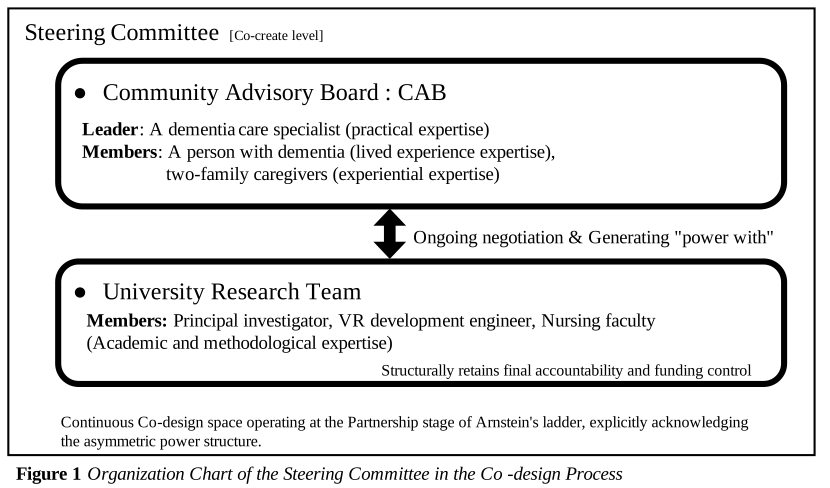
In accordance with the principles of co-design—which involve bringing together diverse stakeholders as active partners to promote dialogue and collaboration (Grindell et al., 2022; Kara et al., 2026)—a Community Advisory Board (CAB) led by the community leader was established (Figure 1). The committee was intentionally composed to represent key perspectives: two family caregivers (the café representative and vice-representative), one PWD, and one dementia care professional. This composition was intended to ensure that their direct lived experiences formed the basis of all decision making. As recommended by van der Zouwen et al. (2025), the research team positioned this CAB as a “Steering Committee” serving as a microcosm of the entire system and proceeded with the research process in collaboration with them. Here, university researchers (nursing faculty and researchers), who tend to hide behind the anonymity of academic papers, are also clearly positioned as part of the group.
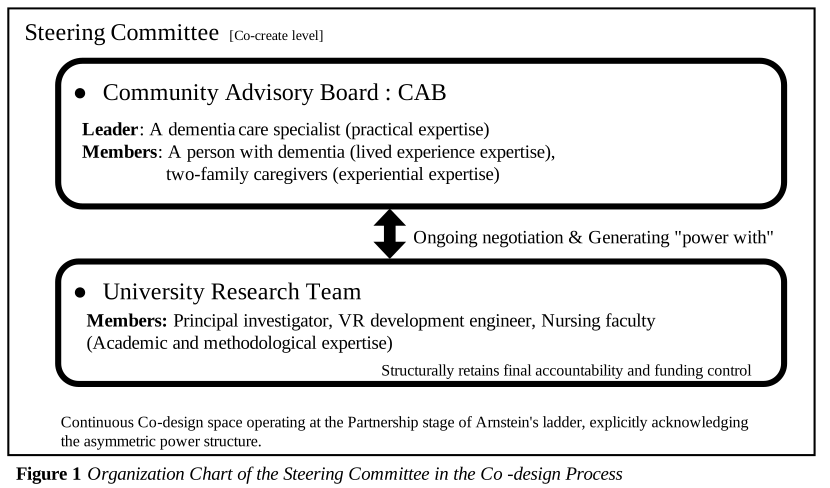
This project was conducted within an asymmetrical power structure in which the university retained ultimate accountability and decision-making authority based on grant funding (van der Zouwen et al., 2025). Recognizing this power imbalance, the researchers endeavored to flatten the hierarchy as much as possible. Specifically, based on the findings of Kara et al. (2026), the researchers made a concerted effort to eliminate jargon, ensure psychological safety, and flexibly adjust the pace of meetings. Throughout the project, this steering committee served as a forum for ongoing negotiation of university objectives and local priorities.
Sampling and Recruitment
The co-design process in this study consisted of a two-tier structure comprising a “Steering Committee,” which continuously guided and led the project, and “External Stakeholders,” who provided input based on diverse life experiences at each phase. The total number of participants was 29 (8 Steering Committee members and 21 External Stakeholders) (Table 1).
As van der Zouwen et al. (2025) point out, in large-scale intervention development, a core group—which serves as a microcosm of the entire system—retains ownership of the process, while involving wider circles of engagement as needed.
1. Steering Committee (Continuous participation throughout all phases: eight members total)
The Steering Committee consisted of eight members: four members of the CAB (one person with dementia, two family caregivers, and one dementia care specialist) and four members of the research team from University A (nursing faculty and researchers). To avoid the problem common in traditional participatory research where researchers remain anonymous and retain power as “external observers,” the university researchers were positioned as a visible part of the decision-making group. These eight members participated continuously throughout the project, from Phase 1 to Phase 3, maintaining the quality of the partnership even under the constraints of an asymmetrical power structure and determined the project’s direction.
2. External Stakeholders (Consultative and evaluative participation by phase: 21 participants in total)
To ensure the project reflected the diverse needs of the local community, the principal investigator and the CAB leader consulted and recruited 21 external stakeholders (PWD, family caregivers, support providers, nursing and social welfare professionals, and nursing students) from one medical institution, three self-help groups, and two universities. Following the objectives of each phase, their involvement was structured as follows
Phase 1 (Needs Assessment): Five participants took part in this phase. They served as an independent group in the “Consultation” role to identify broad challenges during the early development stage.
Phase 2 (VR Filming and Production) and Phase 3 (VR Evaluation): Overall, 16 participants took part (8 participated in Phase 2 filming, and 12 participated in Phase 3 evaluation. Of these, 4 participated continuously in both phases, while 8 were new participants in Phase 3 to evaluate the prototype from fresh perspectives [Test]). This variation in external participants across phases was not intended to be fragmented participation, but rather a deliberate co-design approach aimed at integrating prototype testing and diverse insights (Consultation and Testing) within specific contexts.
3. Considerations for the Participation of PWD and Characteristics of Participants
To enable PWD to meaningfully engage in decision-making as CAB members and in evaluations as external stakeholders, we provided specific support in accordance with the recommendations of Kara et al. (2026). We eliminated jargon and used plain language, flexibly adjusted the pace of meetings, and removed barriers to participation by basing the process at the “Dementia Café,” where psychological and physical safety were ensured. Note that two individuals living with dementia participated in this study at different levels of involvement. The participant who continuously participated in all phases as a CAB member responsible for decision-making had young-onset dementia with mild cognitive decline and possessed the ability to verbalize their own experiences and engage in smooth conversation with others. Meanwhile, one person with moderate Alzheimer’s disease participated as an external stakeholder in the on-site filming (prototype testing) during Phase 2. Rather than providing explicit verbal feedback, this individual made a meaningful contribution by helping to create the café’s natural “atmosphere.”
Information Collection
External Stakeholders
Data collection from external stakeholders was conducted primarily through focus groups or individual interviews for the purposes of “Consultation” and “Testing” of the prototype. Focus groups consisting of 2–8 participants were facilitated by the principal investigator, and individual interviews were conducted with those who could not attend. Demographic data such as gender, age, and occupation were collected from all participants, and additional information such as the duration of caregiving and employment status was collected from family caregivers. Interviews were conducted using pre-tested open-ended questions. In Phase 1 (Needs Assessment), participants were asked, “(1) What should one learn to prepare for dementia and caregiving? (2) What would you like to experience in VR to deepen your understanding?” In Phase 3 (Evaluation), we asked for “suggestions and proposals regarding (1) VR content, (2) the VR experience, and (3) improvements to camera angles and filming techniques.” To ensure that all participants, including PWD, could speak candidly, interviews were conducted in a comfortable and psychologically safe environment, eliminating jargon in accordance with the recommendations of Kara et al. (2026). After obtaining consent, all sessions were audio-recorded, and nonverbal reactions were also documented. Signed consent forms were strictly stored separately to ensure confidentiality.
Steering Committee (CAB)
Data collection from the Steering Committee (CAB and university researchers) aimed not only to determine VR specifications but also to evaluate the quality of the co-design process and partnerships among diverse stakeholders. Therefore, the data included not only responses to structured questions but also, following the methodology of Kara et al. (2026), we collected audio recordings of “naturalistic conversations” from all three Steering Committee meetings. These recordings included the decision-making process, conflicting opinions and negotiations, as well as the “researchers’ own remarks and behaviors” in facilitating the meetings, serving as data to visualize interactions under an asymmetrical power structure. Furthermore, at the final steering committee meeting of Phase 3, to evaluate the entire process, we avoided questions using academic terminology (e.g., “Regarding the principles of co-design”) and instead used plain language, such as “How did you feel about this process and experience of university researchers and community members collaborating to create VR?” to encourage participants to reflect on their own experiences and the quality of the co-design.
Data Analysis
The purpose of the data analysis in this paper is not to determine the specifications of the VR product, but rather to evaluate the co-design process and the quality of partnerships among diverse stakeholders. Therefore, this analysis focused on verbatim transcripts of all three steering committee meetings, along with audio recordings of naturalistic conversations from stakeholder group interviews conducted in each phase.
To avoid confusion in the analytical process, a distinction was made between the rapid summarization used to determine VR content requirements during the project and the analysis conducted for this study’s retrospective process evaluation. For this paper, we conducted a qualitative thematic analysis, drawing on the methodology of Kara et al. (2026).
In the first stage, we extracted insights from the naturalistic conversations that occurred during the meetings regarding how decisions were made, how conflicts of opinion and tensions were handled, and how participants interpreted their own involvement (e.g., experiences of powerlessness or empowerment). In the second stage, we used Arnstein’s (1969) “Ladder of Participation” not as a static or fragmentary coding tool, but as an analytical lens to evaluate the “structure of power distribution and the quality of partnership” throughout the entire project.
Furthermore, to ensure genuine reflexivity, the analysis critically examined how power imbalances between the university and local partners manifested and were addressed, including the researchers’ own remarks and behaviors during the meetings.
Procedure
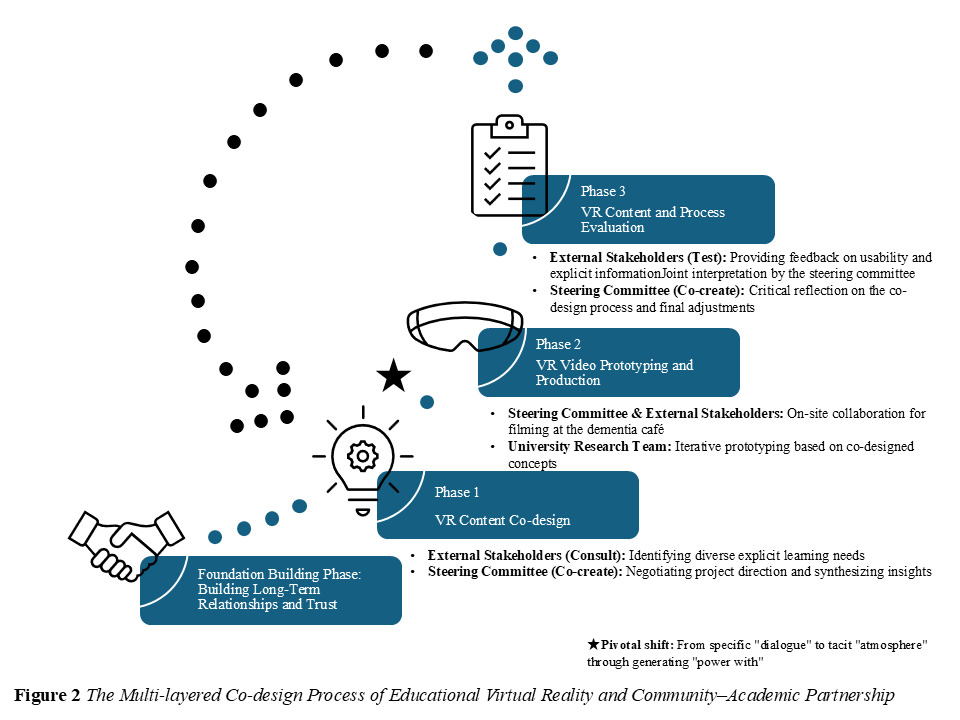
Figure 2 illustrates the co-design process for educational VR content and an overview of the collaboration between the local community and the university. This project was conducted from May 2023 to October 2024 in three iterative phases: (1) co-design of VR content, (2) production of VR content, and (3) evaluation.
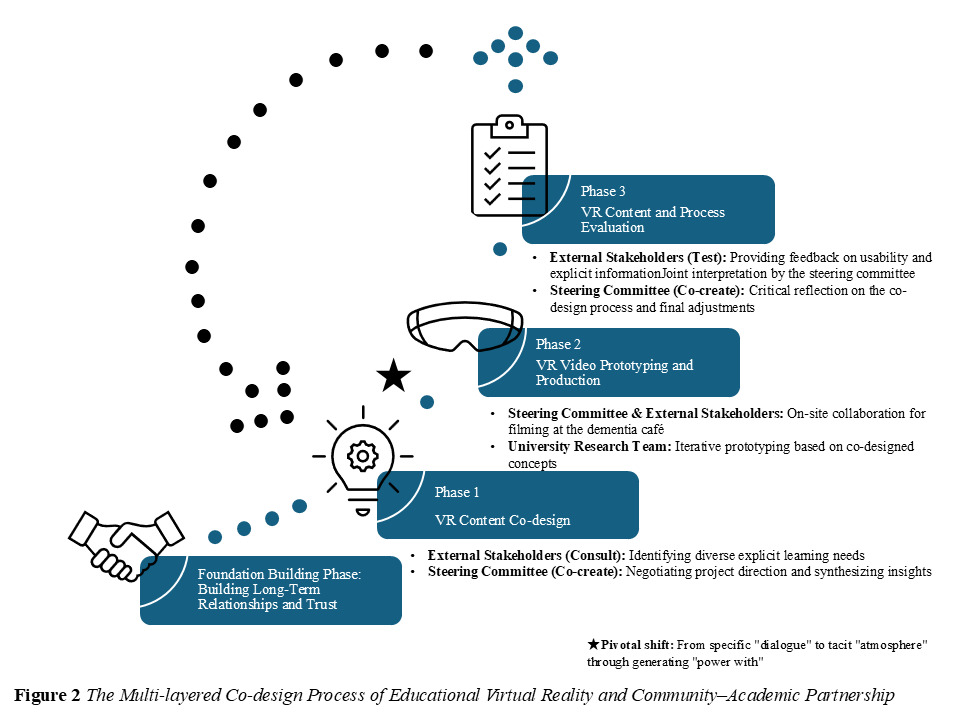
To manage the complexity of the co-design process, we adopted a multi-layered engagement strategy (van der Zouwen et al., 2025) and implemented core principles to ensure meaningful collaboration (Table 2). The “Steering Committee” composed of CAB members and university researchers participated continuously throughout all phases, sharing responsibility for overall direction and decision-making (the “Co-create” level). In contrast, external stakeholders were intentionally engaged at specific stages to provide a broad range of perspectives and feedback on prototypes (“Consult” and “Test” levels).
Phase 1: Co-design of VR Content (May 2023–May 2024)
The objective of Phase 1 was to identify learning needs and design the core concept of the VR content. To capture diverse lived experiences, two group interviews were conducted with external stakeholders, including family caregivers and nursing professionals (Consultation).Concurrently, the Steering Committee held two meetings to synthesize these findings. Rather than having researchers unilaterally define requirements, the university team and CAB members negotiated the project’s direction. This collaborative dialogue resulted in a crucial shift in focus: from specific care “dialogues” to capturing the overall “atmosphere.”
Phase 2: VR Video Production (July–September 2024)
Based on the co-designed in Phase 1, we filmed and edited immersive VR content for educational purposes. Filming took place at Dementia Café B., located within a residential care facility. This café provided a psychologically safe and naturalistic environment. CAB members, external stakeholders, and the university research team collaborated on-site throughout the production process, striving to accurately capture the café’s authentic atmosphere.
Phase 3: Evaluation of VR Content and Process (September–October 2024)
In the final phase, we evaluated the developed VR prototype. To gather feedback on the VR experience and content, we conducted one individual and two group interviews with external stakeholders (Test). Subsequently, a final steering committee meeting was held. This meeting had two objectives: first, to review stakeholder feedback and make final adjustments; and second, and more importantly, to encourage participants (both community members and researchers) to critically reflect on the co-design process itself and their experiences within the partnership.
Ethical Considerations
This study was approved by the Ethics Review Board of the University affiliated with one of the authors (U23-05-002). All participants were fully informed of the study’s purpose, procedures, potential for publication, and confidentiality of the data. They were also informed of their right to decline participation and provided written informed consent before the interviews.
Results
In this section, we present the results not merely as the final specifications of a VR product, but as a narrative of the co-design process itself. By focusing on process evaluation, we reveal how differences in participation levels elicited distinct types of knowledge (explicit and tacit) and fundamentally transformed the core assumptions of the project.
Participant Characteristics and Multi-layered Engagement
Overall, 29 stakeholders were involved in this study under a multi-layered engagement structure. The “Steering Committee,” consisting of four CAB members and four university researchers, participated in all phases to co-create the project. In contrast, 21 external stakeholders recruited from medical facilities, self-help groups, and universities were intentionally involved in specific phases to provide the perspective of the broader community through consultation and prototype testing.
Power Dynamics and the Quality of Partnership
Using Arnstein’s “Ladder of Participation” as an analytical lens and conducting a thematic analysis of naturalistic conversations revealed clear differences in power dynamics and participation levels among the groups. The involvement of external stakeholders symbolized the “Consultation” stage. While they provided highly valuable feedback on pre-set questions and prototypes, they did not possess the decision-making authority to alter the project’s fundamental direction. Conversely, collaboration within the Steering Committee functioned at the “Partnership” stage, where power was redistributed through ongoing negotiation. Since structural constraints required the university to retain ultimate accountability, the project did not achieve full “citizen control” or “empowerment.” However, dialogic interaction between researchers and the CAB fostered a form of “power with.” The nature of this partnership had a significant impact on the type of knowledge extracted and the trajectory of the project.
Phase 1: The Emergence of Divergent Knowledge—Explicit Needs vs. Tacit Contexts
Rather than a list of fragmented learning needs, the analysis revealed that differences in participation levels yielded distinct yet complementary types of knowledge.
Insights from the “Consultation” Level: Explicit Skills and Environmental Factors
Group interviews with external stakeholders (at the consultation level) yielded “explicit knowledge” focused primarily on observable care skills and specific environmental factors. A key theme was the need to maintain appropriate physical and psychological distance to respect the remaining capabilities of PWD and avoid excessive support. Stakeholders also emphasized the importance of empathetic communication that fosters “understanding” rather than “persuasion,” and identified practical solutions to everyday challenges, such as the early detection of meal-related issues to prevent choking risks. These findings provided concrete, actionable elements to incorporate into the VR scenarios.
Findings from the “Partnership” Level: Tacit Knowledge and the Shift to “Atmosphere”
In contrast, ongoing, negotiated dialogue within the Steering Committee (Partnership Level) elicited a higher order “tacit knowledge” rooted in deep personal experience and systematic understanding. CAB members emphasized the essence of care that respects individuality and diversity, the importance of early detection, and the unparalleled value of sharing the “lived experience” of actual caregiving rather than expert-led instruction. Notably, the CAB challenged the researchers’ initial expert-driven premise that “VR should simulate specific ‘correct’ care dialogues.” Instead, the CAB strongly argued that leveraging their own lived experiences, the implicit, comprehensive “atmosphere” of a safe and supportive space is far more critical for learning and for the sense of security of PWD. A key shift in the project occurred when the research team incorporated this insight and redirected the focus of the VR contented from “dialogue” to “atmosphere.” This transformation was made possible because decision-making authority was genuinely negotiated within a true partnership, allowing context-rooted tacit knowledge to reshape the project’s core assumptions.
Phase 2: Materializing Tacit Knowledge—A Paradigm Shift from “Dialogue” to “Atmosphere” and Co-Design
The central challenge in Phase 2 was to translate the learning needs identified in the previous phase into an immersive VR prototype. Analysis of the naturalistic conversations within the Steering Committee (CAB and researchers) during this phase revealed critical negotiation and decision-making processes that shook the very foundations of the project.
Initially, the university research team operated under the expert-led premise of filming “correct dialogues (scripts)” defined by experts. However, CAB members, drawing on their lived experiences, strongly argued that “the key to learning lies not in the ideal situations envisioned by experts, but in the natural interactions we experience in our daily lives.”
The point at which the research team abandoned their initial plan and adopted this insight from the CAB marked a decisive stage in which “partnership” was enacted within the co-design process of this project. Although full “citizen control” was not achieved due to structural constraints—such as the university retaining ultimate authority and accountability—this decision was not merely a matter of “listening to opinions.” Rather, it was the culmination of “power with” (Farr, 2018), born through negotiation via dialogue. As a result, the focus shifted fundamentally away from a policy of scripting specific dialogues toward capturing the “overall atmosphere of the café”—an implicit quality that is most crucial for the sense of security of PWD.
Stakeholders also collaborated to define how this tacit knowledge of “atmosphere” should be expressed in the VR prototype. The members agreed that, rather than focusing on specific conversation content, the “free and relaxed environment” itself—where participants naturally enjoy conversation and show consideration for one another—constitutes a vivid example of intentional communication. Discussions also addressed the “appropriate physical and psychological distance” required for caregivers to provide necessary support without compromising the autonomy of PWD. CAB members provided context-rich insights unique to those directly involved—specifically, how to delicately judge when to intervene and when to step back during everyday collaborative activities (such as preparing lunch or doing crafts), and how to strike the delicate balance between excessive support and maintaining too much distance. These insights were incorporated as the core of the VR scenario.
Final VR Prototype and On-Site Collaboration
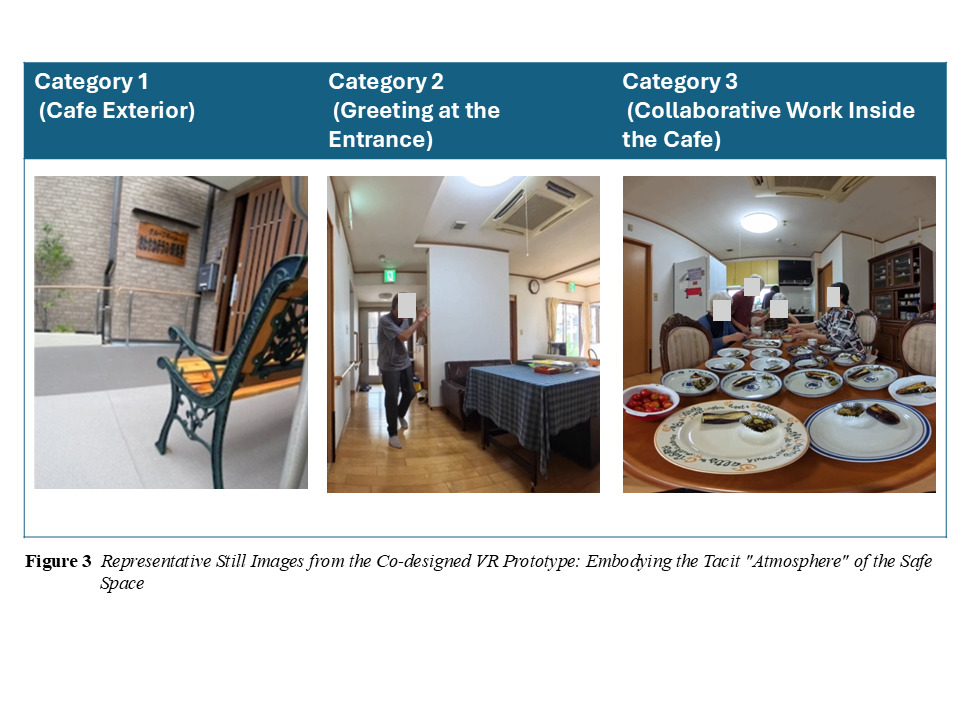
As a result of this CAB-led vision and negotiation process, an 11-minute, 1-second VR experience was ultimately co-designed. As Grindell et al. (2022) point out, prototyping is effective in transforming diverse knowledge into a practical and easily understandable form. This VR content was intentionally structured into the following three categories to serve as a narrative journey that immerses learners in the atmosphere (Figure 3)
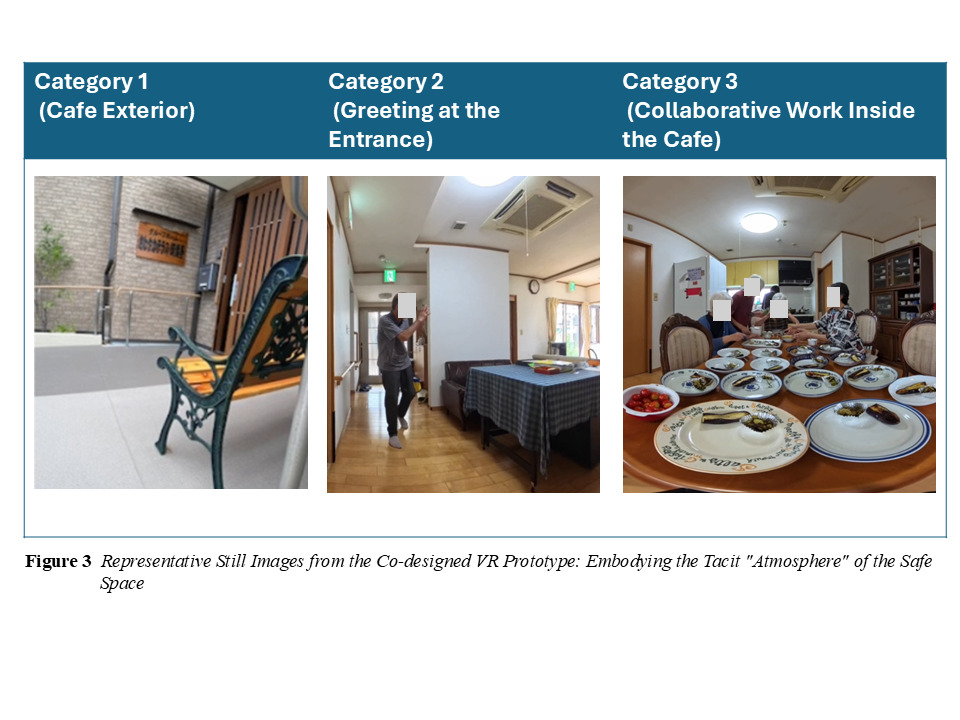
Category 1: Images of the building and its exterior. These help learners orient themselves and provide a sense of security. Category 2: Scenes at the entrance and interactions upon arrival. These provide behavioral models of welcome and acceptance. Category 3: Activities inside the Dementia Café. This is the core of the learning experience, immersing learners in the atmosphere and demonstrating how principles such as interpersonal distance are organically practiced.
The actual filming took place at Dementia Café B, where psychological and physical safety were ensured. In addition to four CAB members, eight external stakeholders (Table 1) participated for prototype testing and consultation, along with a university research team, all of whom collaborated on-site. Visual presentation techniques, such as positioning a 360-degree camera at eye level to create an immersive first-person perspective, were also determined through dialogue with the stakeholders.
Phase 3: Testing the Prototype and Evaluating the Co-design Process
During the evaluation phase, the significant differences in interpretation of the VR prototype between external stakeholders and the Steering Committee (CAB and researchers) highlighted the intrinsic value of a multi-layered co-design process.
Insights from “Testing” by External Stakeholders
The external stakeholders who conducted the prototype “Testing” highly valued the café’s free and relaxed atmosphere but provided feedback that focused primarily on usability improvements and the “explicit information” they felt was lacking. For example, to gain a deeper understanding of the interactions between characters, they requested the addition of specific content (audio) from casual conversations and further variety in the activities taking place in the café. Practical insights were also provided regarding technical usability. While the technique of aligning the camera height with the characters’ eye level and the natural recording method using a 360-degree camera were highly praised for “significantly enhancing the sense of presence in the virtual environment,” challenges such as some elderly participants losing their sense of direction were also pointed out. Nursing students suggested that “it would have been easier to understand if there had been an explanation (orientation) at the start of the VR session regarding who this person was,” emphasizing the need for pre-experience orientation and in-session facilitation. While this feedback did not alter the project’s fundamental direction, it provided crucial practical insights (outcomes at the Consultation/Testing level) for enhancing the implementation and safety of the VR experience.
Process Review by the Steering Committee and Evaluation of “Partnership”
In contrast, CAB members of the Steering Committee who had co-created the project did not view the lack of explicit dialogue (voice) as a flaw; rather, they interpreted it as an intentionally designed outcome intended to convey tacit knowledge—specifically, “atmosphere.” One CAB leader explained this design principle as follows: “We thought it would be better not to understand what was being said in order to convey the atmosphere.” This statement summarizes the success of the paradigm shift in this project, which prioritized context-rooted, tacit experiential knowledge over explicit linguistic information.
Furthermore, during the “Reflection on the Co-design Process Experience” held at the final meeting, CAB members found strong significance in the quality of this partnership. One family caregiver stated
“This wasn’t just about voicing opinions. We were treated as experts in our own experiences. It was a very powerful experience that the discussion about the “atmosphere” of the café became a central part of the final deliverable. Our efforts will live on and help others.”
Due to structural constraints, ownership of the final data and decision-making authority were not fully transferred to the community; therefore, this cannot be strictly termed “empowerment” or “citizen control.” However, as this reflection indicates, the fact that their insights as experts in lived experience shaped the core of the product demonstrates that a genuine “power with” (Farr, 2018) was generated between the researchers and the community members. The fact that they viewed the VR content not merely as a research artifact but as a meaningful extension of their community’s own initiatives serves as evidence that, even under asymmetrical power structures, the practice of sincere co-design can foster deep relationships and a sense of ownership.
Discussion
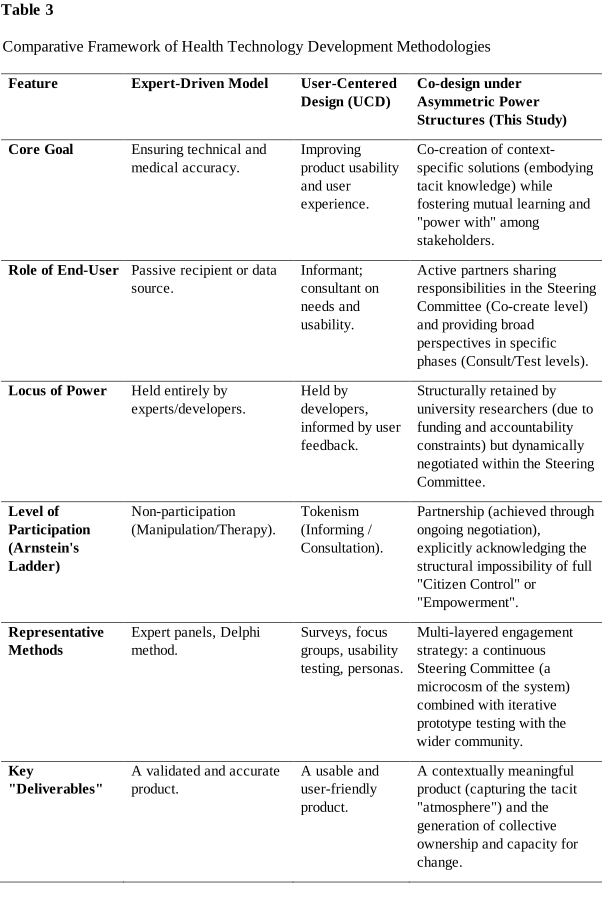
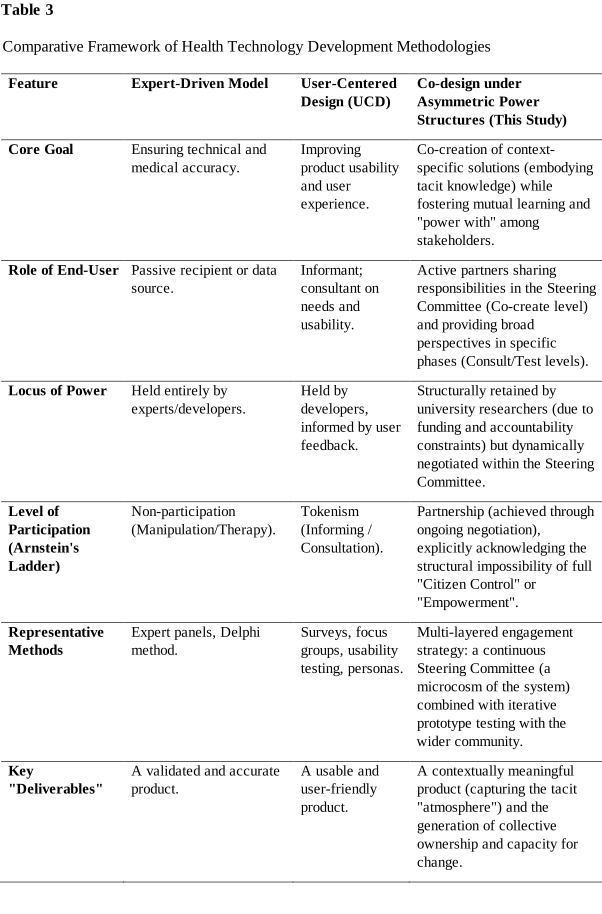
In this study, rather than employing CBPR in the strict sense, we collaboratively created VR educational content using a co-design approach that directly acknowledged real-world structural constraints. The main contribution of this study is that it presents a detailed and reproducible process model demonstrating how to collaborate with stakeholders and translate deep contextual knowledge into VR educational materials, even under an asymmetrical power structure where control over the research process remains with the university (Table 3).
Methodological Contributions: Multi-layered Engagement and Quality of Knowledge
The most significant methodological contribution of this study lies in demonstrating the effectiveness of the “multi-layered engagement strategy” proposed by van der Zouwen et al. (2025) in addressing the long-standing issue of “fragmented and tokenistic participation” in the field of gerontechnology. Many participatory approaches remain limited to “fragmented participation,” in which users are involved only in the early (requirements definition) or final stages (evaluation) of the process (Merkel & Kucharski, 2019). In contrast, this study adopted a deliberate design in which the Steering Committee (CAB and researchers) oversaw all stages at the “Co-create” level, while external stakeholders took on “Consult” and “Test” roles at specific stages.
Furthermore, this study presents a key methodological insight: the depth (level) of this participation determines the type of knowledge that becomes accessible. Feedback from external stakeholders who were involved intermittently provided “explicit knowledge” focused on improving existing frameworks. In contrast, the Steering Committee, which was deeply involved throughout the entire process, generated transformative insights—such as the idea that “atmosphere, not dialogue, is what holds value”—that overturned the project’s fundamental assumptions. This could not have occurred in a standard UCD process (Abras et al., 2004). It is sustained partnerships, where decisions are negotiated, that hold the key to unearthing “tacit knowledge” rooted in context—knowledge that cannot be reached through superficial discussions.
Reflexivity on Power Dynamics and “Power With”
As Mays & Harris-Roxas (2022) and Kara et al. (2026) point out, high-quality participatory research requires moving beyond definitional disputes over terminology to reflexively describe the complex realities of power-sharing. In this study, it is a fact that the CAB exerted decisive influence over the philosophical and design principles of the VR content. However, in formal processes such as the management of research funds, applications to the ethics committee, final ownership of data, and the writing of academic papers, university researchers retained the initiative and final decision-making authority.
We explicitly acknowledge this limitation, recognizing that this study did not reach full “Citizen Control” or “Empowerment” on Arnstein’s (1969) ladder. Nevertheless, even under structural constraints that made a complete transfer of power impossible, the relationships forged through dialogue between researchers and the community—along with efforts to eliminate jargon and ensure psychological safety—certainly generated the “power with” described by Farr (2018).
Furthermore, the “power with” generated through this collaborative process led to deep reciprocity and capacity building that extended beyond the scope of the project (Kara et al., 2026). Being respected as “experts by experience” in the co-design process gave CAB members a firm sense of confidence in their own practices. This newly gained confidence led them not only to serve as guest lecturers in classes for nursing students at University A but also to voluntarily share their practices and insights through presentations at various local workshops and seminars. This dynamic demonstrates that this study functioned as a partnership in which community members received meaningful returns—in the form of personal and professional growth—rather than merely serving as subjects for unilateral data collection by the university. Recognizing that power is not a singular possession, but a force dynamically negotiated within the partnership, and transparently disclosing its boundaries, is an essential prerequisite for sincere co-design research.
Implications for Experiential Learning through VR
The VR content developed in this study offers unique value in supporting the acquisition of practical skills, such as spatial awareness and nonverbal communication, that are difficult to convey using conventional teaching materials. In addition to fostering empathy, which has been emphasized in previous research (Festari et al., 2024; Morganti et al., 2024), the VR in this study also enables learners to experience the impact of caregiver involvement on PWD and environmental factors such as the overall “atmosphere” (Petrovsky et al., 2023). As Grindell et al. (2022) point out, co-design methods such as prototyping open a powerful mechanism for converting and conveying experts’ tacit knowledge, which is difficult to verbalize, into a practical form (the VR medium).
Limitations and Future Directions
This study has some limitations that future co-design research should address. First, because this study was a project dependent on a grant with limited duration and funding, it did not achieve long-term commitments such as full co-ownership of data, co-authorship of the paper by the participants themselves, and sustained community benefits after the project’s conclusion (Kara et al., 2026). True collaboration requires investment in relationship-building that extends beyond a single funding cycle (Mays & Harris-Roxas, 2022). Furthermore, the asymmetry in compensation between paid researchers and community members participating as volunteers is a structural issue that must be addressed in future grant systems and research designs (van der Zouwen et al., 2025).
Second, there are limitations based on the level of involvement of PWD. While PWD with moderate dementia participated in the Phase 2 testing stage and made meaningful contributions, the cognitive decline among PWD who continued to participate as CAB members at the “Co-create” level—responsible for decision-making in the process—was limited to mild (early-onset dementia). Moving forward, a key challenge in co-design research will be to ethically and effectively include individuals with more severe dementia in the decision-making process, rather than merely as test participants.
Third, the long-term efficacy of the developed VR content has not been established, and future studies should include longitudinal analyses to evaluate this. Furthermore, the results of this study are limited in their generalizability because they depend on a specific local community (Kara et al., 2026). Therefore, when applying the multi-layered co-design process presented in this study to communities with different cultural backgrounds or to the development of different types of medical technologies—such as mobile apps and AI diagnostic support tools—it is necessary to carefully adapt the communication and consensus-building processes to local conditions.
Conclusion
This study presents a concrete co-design process model for building partnerships with diverse stakeholders, particularly in situations where a complete transfer of power is difficult to achieve. Even under an asymmetrical power structure, we demonstrated that the “power with” (Farr, 2018) generated through sustained negotiation enabled a pivotal shift in the project’s core focus—from expert-led “specific dialogues” to the “overall atmosphere” grounded in the participants’ lived experiences.
These findings can serve as a practical and innovative solution to the problem of fragmented participation in the field of gerontechnology. The concrete application of this model requires careful adaptation to different cultural and technological contexts, as well as overcoming structural challenges such as securing long-term funding. However, this reflexive collaborative creation process, which confronts the reality of asymmetrical power relations, provides reproducible guidelines for researchers and practitioners to incorporate tacit knowledge from the field into technology development and design more ethical and effective interventions, thereby contributing to the strengthening of the methodological foundation of participatory research.
Acknowledgments
We express our sincere gratitude to all individuals involved in Dementia Café B for their contributions to this research, as well as to the external stakeholders who participated in this study. This study was a part of a larger research project funded by Grants-in-Aid for Scientific Research (KAKENHI) from the Japan Society for Promotion of Science (Grant Number JP 22K11106) from 2022 to 2025.