
Introduction
Artificial lighting has become an essential component of contemporary environments, shaping them across both indoor and outdoor settings. Consequently, its impacts on people and the environment are increasingly recognized. Poorly planned or excessive lighting creates challenges that are difficult to ignore, including light pollution, ecological disruption, adverse health outcomes, and negative social experiences such as reduced perceptions of safety and comfort (Kyba et al., 2023; Tavares et al., 2021; Zielinska-Dabkowska et al., 2023). At the same time, lighting supports daily activities, enhances visual performance, and shapes how spaces are perceived and experienced, influencing atmosphere, behavior, and wellbeing (Boyce, 2019; Ebbensgaard, 2014; Trop et al., 2023). Balancing these benefits and adverse effects is therefore a significant challenge in lighting research and practice. As lighting is fundamentally designed for people, it becomes essential to account for their experiences, behaviors, and needs. However, traditional lighting approaches have largely prioritized technical performance and energy efficiency, often overlooking subjective experiences and user perspectives (Yang & Kalms, 2022). In this context, participatory approaches offer a way to incorporate lived experience and user knowledge more systematically into lighting-related research and design.
Participatory Design (PD) is a research and design approach rooted in collaboration and co-creation that aims to include users’ perspectives during a project’s development to secure that outcomes align with the needs and experiences of those directly affected. It has been widely applied in fields such as urban planning, healthcare, education and digital design, where stakeholder knowledge is progressively recognized as essential for producing context-driven and socially relevant outcomes. In the process of engaging diverse stakeholder groups, such as residents, designers, and community organizations, PD methods can support innovation and promote more inclusive decision-making in both indoor and outdoor lighting contexts (Smith & Iversen, 2018). Furthermore, international organizations such as the International Network of Cities on Urban Lighting (LUCI) and the International Commission on Illumination (CIE) highlight the importance of public involvement in urban lighting design activities (Commission Internationale de l’Eclairage, 2019; Ross et al., 2023). According to them, community participation enables context-driven lighting solutions, brings valuable insights from lived experience, increases acceptance and legitimacy of interventions, and strengthens relationships between cities and their citizens.
Although the benefits of participatory approaches are acknowledged, their application in lighting research remains uneven. There are research projects that include PD methods during data collection or design interventions but rarely sustain participation throughout the entire research process. Previous studies have noted that participatory activities often concentrate on mid-project development of activities, in the form of workshops, interviews, or focus groups (Light & Akama, 2012). Thus, early and late stages of research tend to remain researcher-driven, leading to a limited understanding of how PD methods are distributed across research stages and the extent to which participants influence outcomes. In addition, there is a lack of systematic approaches for analyzing and comparing participation across these stages within lighting research.
To address this gap, the present study focuses on reviewing lighting-related research published between 2019 and 2024, focusing on how PD methodologies are employed across four research stages: (1) locating and defining issues or problems, (2) collecting data. (3) interpreting data, and (4) reporting findings. The theoretical framework developed and published by Kaulio (Kaulio, 1998) is adopted to categorize participation into three levels. These are defined as follows: research for, research with, and research by, mapped to different degrees of stakeholder involvement.
The objective of this paper is to analyze the distribution of participatory methods across these stages and levels of involvement, identifying where collaboration is most prevalent and where it remains limited, by attempting to answer the following question: How are participatory design methods distributed across different stages of lighting research, and what levels of participant involvement characterize these stages?
The findings aim to provide insight into how participatory design can be systematically integrated throughout the lighting research process, thereby enhancing inclusivity, relevance, and communication between researchers and future end-users.
Theoretical Framework
Participatory design research (PDR) builds upon principles of collaboration and co-creation, aiming to include users’ perspectives and feedback throughout the research process. Within lighting-related studies, the integration of participatory design methodologies has become important for researchers to align outcomes with end-users’ feedback and needs. By actively involving participants in the research process, PD enhances both the relevance and the practical applicability of findings, while also fostering a sense of ownership and engagement among stakeholders. PD methods are inherently iterative processes that allow to be implemented in various stages of a research project (Bjögvinsson & Hillgren, 2012). The iteration and constant implementation of participant-informed solutions corresponds to the model of design thinking, which highlights the progress from problem definition to design proposal (Dorst, 2011). By implementing both feedback activities, researchers can refine project goals and methods based on stakeholders’ input. A central tradition informing this approach is Scandinavian Participatory Design (Gregory, 2003), which emerged during the 1980s and is grounded in principles of democratic participation and user empowerment. This approach emphasizes that participants should be active co-creators rather than passive informants, ensuring that design outcomes reflect shared values and collective decision-making.
While participatory approaches are increasingly applied in lighting design, there is a lack of established models for systematically analyzing levels of user participation within lighting research. To address this gap and analyze the levels of user participation, this study adopts the theoretical framework proposed by M.A. Kaulio. The framework was selected as it provides a clear and widely used conceptualization of different forms of user involvement, distinguishing between varying degrees of participation in design and development processes. Although originally formulated in the context of customer involvement in product development (i.e., in terms of design for, design with, and design by), in this study, the concept is extended to refer more broadly to participants, users, or citizens involved in lighting research. In Kaulio’s model, these categories reflect increasing levels of involvement, ranging from no direct user participation (design for), to consultative or collaborative involvement (design with), and to active user-driven contributions (design by). This allows the framework to be applied across diverse participatory contexts while maintaining a consistent structure for involvement analysis. The adapted model’s levels of participant involvement that can occur across research and design processes are described below:
-
Research for refers to studies conducted on behalf of future users, without their direct involvement or collaboration. In this level, researchers explore lighting-related problems independently, and outcomes are developed for the benefit of participants rather than with their input. In this study, this category serves as a baseline representing the absence of direct participation.
-
Research with represents collaborative research that includes active engagement and partnership between researchers and participants. Stakeholders contribute to one or more stages of the research process (e.g., data collection, and analysis) through collaborative activities with researchers, leading to co-created insights that inform both research and practice.
-
Research by describes projects that are led and conducted primarily by participants, with researchers taking on advisory roles. This highest level of involvement empowers participants to take ownership of the research process and its outcomes.
Table 1 summarizes the three levels of involvement with corresponding definitions, explanations, and examples adapted by the authors to lighting research contexts. This framework provided the foundation for analyzing how participatory approaches and methods are employed across the selected studies and identifying opportunities for more integrated collaboration throughout the research process.
The three levels of participation are applied in the present study to evaluate how participatory methodologies are distributed across four stages of research. These stages provide a temporal and methodological structure for analyzing when and how participation occurs. The four stages are described as follows:
-
Locating and Defining Issues or Problems. This initial stage corresponds to the pre-design phase, where the focus lies on identifying key issues, formulating research questions, and defining project goals. Participatory methods such as interviews, surveys, and workshops, which can focus on co-design and co-creation, can be used to capture users’ needs, preferences, and constraints. Collaboration at this stage helps ensure that research problems are based on real-world contexts and reflect the perspectives of those most affected by lighting interventions.
-
Collecting Data. This stage bridges the pre-design and intervention phases. The data are gathered to support the development and refinement of design concepts. Participatory data collection methods (e.g., observations, participatory mapping, usability testing, etc.) enable users to contribute directly to the evolution of design ideas. This iterative process strengthens the link between user experience and design implementation.
-
Interpreting Research Data. This stage corresponds to the intervention phase and involves the implementation and assessment of design solutions in real-world settings. Researchers, practitioners, and users collaboratively interpret data to evaluate how interventions perform in practice. Through feedback sessions, evaluation workshops, and discussion sessions, participants assist in identifying successes and potential challenges, enabling a deeper understanding of how lighting interventions can potentially affect comfort, perception, and behaviour among other factors.
-
Reporting Research Findings. The final stage corresponds to the post-evaluation phase. After interventions have been in place for a sufficient period, researchers gather additional feedback to assess long-term impacts, user satisfaction, and the sustainability of design solutions. Reporting in participatory research extends beyond traditional academic dissemination, and often includes community presentations, participatory exhibitions, or co-authored publications, ensuring transparency and recognition of participants’ contributions.
Together, these four stages provide a structured lens for examining how participatory approaches are integrated throughout the research project’s lifecycle. They enable a systematic evaluation of when and to what extend participa- tion occurs, complementing Kaulio’s model of participation levels. This integrated framework offers a comprehensive basis for analyzing participatory engagement across the selected studies as described in Table 2. This analysis aims to identify opportunities for more inclusive and collaborative research practices.
Although the integration of Kaulio’s (1998) three levels of participation with the four research stages provides a structured approach for evaluating participatory engagement, it is important to highlight certain limitations. Achieving the highest level of participation (research by) across all stages may not be feasible due to practical or resource- related constraints. Moreover, research by carries a pedagogic and educational character, in which participants are actively learning and co-producing knowledge. As a result, only projects explicitly designed to educate and empower participants are likely to implement research by participation consistently throughout all four stages.
Methods
This paper reviews research on participatory approaches in lighting, built environments, and related contexts. The focus is on identifying whether and how participation is present across different research stages, as described in the previous section. The included studies span a variety of spatial contexts, including urban lighting, pedestrian environments, educational spaces, elderly care and ecological or animal-focused lighting, as represented in the identified papers.
Papers were selected from the Scopus database using the following search string: (“participation” OR “participatory design” AND “lighting”). The search was limited to documents published between 2019 and 2024, including both journal articles and conference papers, and restricted to publications in English. The selected timeframe aimed to capture recent developments in participatory design within lighting research, reflecting the increasing emphasis on user-centred approaches during this period. After the initial search, the results were refined using additional keywords, [(lighting, light, participation, participatory approach, participatory design, artificial lighting, artificial light at night, artificial light)] to ensure relevance to the research topic. Both indoor and outdoor studies were included in the final selection. Following the initial stage of paper collection, abstracts were evaluated to identify the most relevant studies (Table 3). In addition, key references cited within the selected papers were also reviewed and included in the analysis when applicable.
Each study was analyzed individually to extract key information on four dimensions. First, the context was noted, capturing the type of environment or application addressed in the study. Second, the participation methods employed in the study were recorded, including approaches such as intervention or field studies, workshops, observation, or interviews. Third, the level of participation was categorized according to a conceptual framework informed by Kaulio (1998). Finally, the reported outcomes or insights related to participation were noted, including improvements in usability, safety and learning as described in each paper.
After extracting these details, the studies were compared and synthesized to identify patterns and gaps across the literature. This synthesis was organized around three aspects. These were (a) the context, to highlight trends across different built environments and lighting applications, (b) the participation methods and levels to reveal common and under-represented approaches, and (c) the reported outcomes of participation, to identify repeating themes and areas where participation had crucial effects. The analysis is limited to the studies included in the reference list. The classification of participation levels relies solely on the information provided within these papers, and no additional studies or datasets were considered. These limitations are taken into account when interpreting the findings. The classification process was conducted by two reviewers independently, to ensure cross-checking and discussion of categorization decisions, enhancing the consistency of the analysis. Furthermore, the reviewed studies represent a variety of participation approaches, research contexts and conceptualizations of participatory methods.
Results and Discussion
The review of twenty-two lighting-related studies shows that participatory design (PD) methods are most commonly applied during data collection, while early stages (problem definition) and late stages (reporting) remain largely researcher-led. Most mid-project-stage activities correspond to the “research with” level of participation, while early and late stages correspond to “research for” levels. Only a few studies demonstrate “research by” participation, where stakeholders lead the research process. Contexts such as urban lighting, elderly care and pedestrian environments show higher engagement, while technically oriented studies tend to limit participant involvement. Overall, the findings indicate that while PD is recognized as a valuable methodology, its application is uneven across the research lifecycle, highlighting opportunities for more systematic stakeholder participation in all stages.
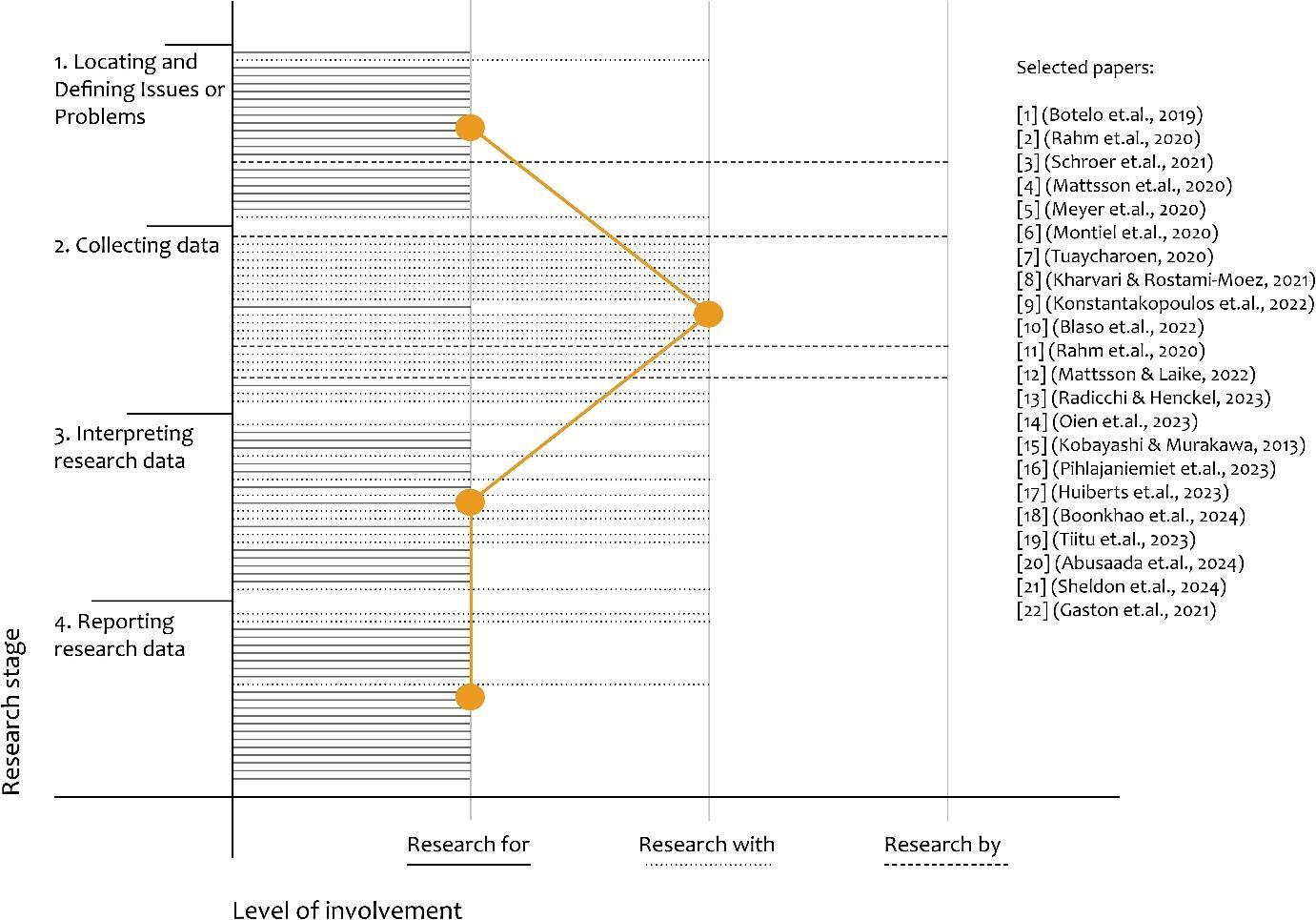
Figure 1 illustrates the distribution of participatory design (PD) methods across the four research stages identified in this review. The horizontal axis represents the level of involvement based on Kaulio’s (1998) participation framework, while the vertical axis indicates the research stage. Each horizontal line corresponds to one of the twenty-two reviewed studies, and the orange path traces the average level of participation observed at each stage. The figure illustrates that participatory design methods are most frequently applied during the data collection stage, where participant engagement tends to reach the “research with” level. In contrast, the early phase of problem definition and the final stage of reporting findings remain primarily researcher-led, aligning with the “research for” level of participation. Only a small number of studies demonstrate “research by” participation, where stakeholders take an active leadership role in defining, conducting, and evaluating the research process.
This pattern suggests that collaboration and co-creation are primarily concentrated in the middle phases of research projects, particularly when gathering and interpreting user input, while stakeholders have limited influence over the initial framing of research objectives or the dissemination of outcomes. Examples include Rahm, Sternudd and Johansson (2020), who engaged residents through observations and interviews to assess perceptions of safety, and Schroer et al. (2021), where multi-stakeholder workshops informed insect-friendly urban lighting strategies.
The early and late stages largely incorporate activities linked to the “research for” approaches, where researchers independently define problems and report findings, as seen in studies of adaptive indoor lighting (Konstantakopoulos et al., 2022) and lighting energy assessments (Blaso et al., 2022). A smaller number of studies corresponds to “research by” participation, such as Kobayashi & Murakawa (2013), where residents led street lighting experiments, exemplifying participant-driven research in the urban lighting domain.
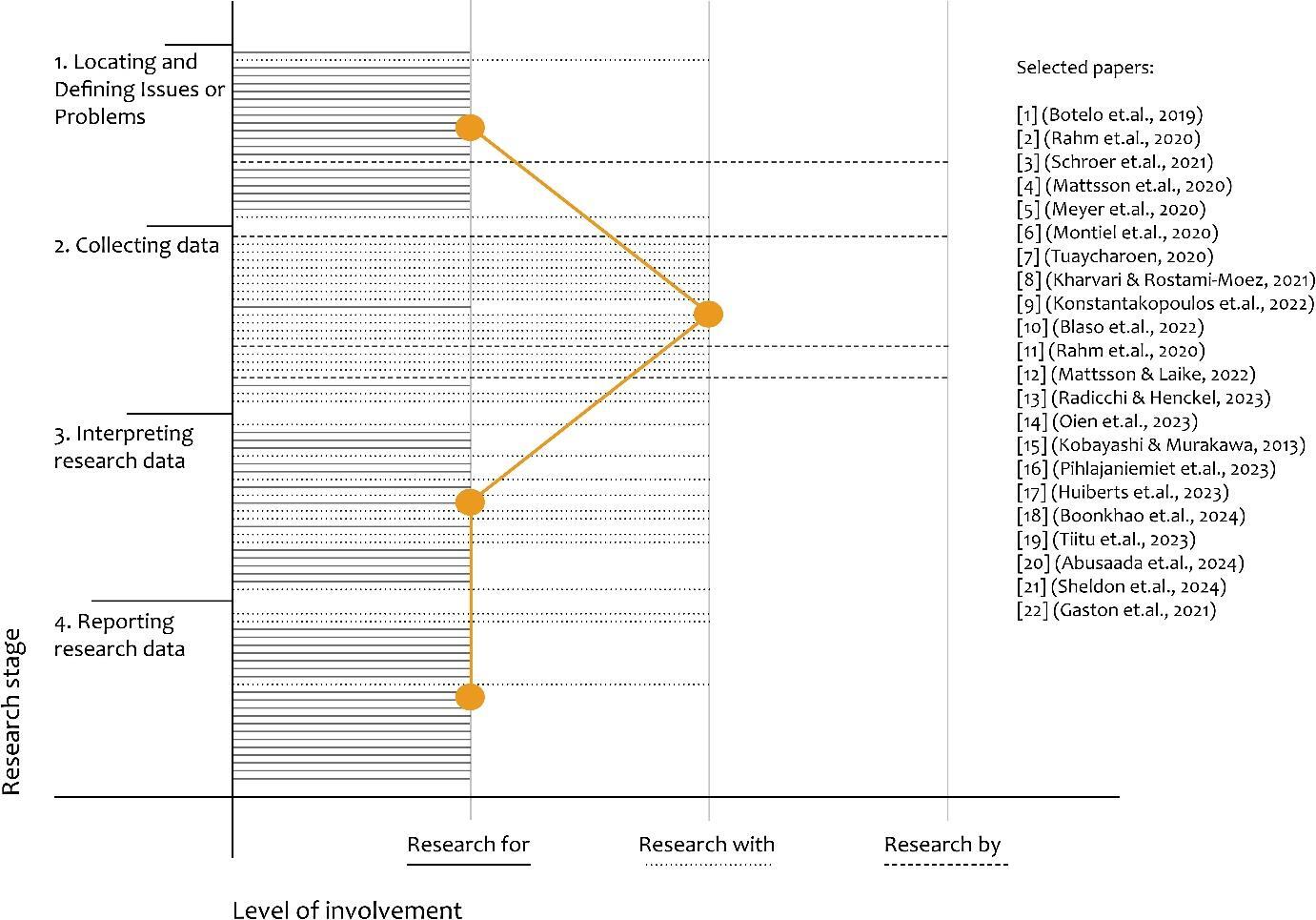
Overall, the distribution shown in Figure 1 reveals that while the importance of participatory design is increasingly recognized in lighting research, its application remains uneven across the various stages. Participation is strongest during implementation and evaluation but relatively limited in defining and reporting phases. This imbalance highlights opportunities for future studies to adopt a more systematic and integrated approach to stakeholder collaboration, ensuring that end-users and communities contribute meaningfully to all stages of the research process.
Analysis of contexts (Tables 4, 5) showcases that participatory methods are applied across diverse settings, however, the frequency and nature of participation vary. Community-focused projects, particularly those addressing safety or accessibility, tend to involve higher levels of engagement, whereas technically oriented studies, such as adaptive lighting systems or energy evaluations, often limit participant involvement to observation and feedback. Schroer et al. (2021) demonstrates a highly collaborative “research with” approach through multi-stakeholder workshops, whereas Konstantakopoulos et al. (2022) represents a predominantly researcher-led technical evaluation, illustrating the diversity of participatory practices identified across the reviewed studies.
The prevalence of PD during the data collection stage suggests both advantages and constraints. Engaging participants in mid-project allows researchers to gather contextually informed insights that can potentially improve usability and comfort, as reported in studies by Mattsson et al. (2020) and Tuaycharoen (2020). However, it is important to highlight that limited early-stage participation may reduce alignment between research goals and user needs, and minimal engagement in reporting restricts participants’ influence on the interpretation and dissemination of findings. Integrating participatory methods in problem definition could ensure that research objectives reflect user priorities, while involvement could enhance communication and ownership of outcomes.
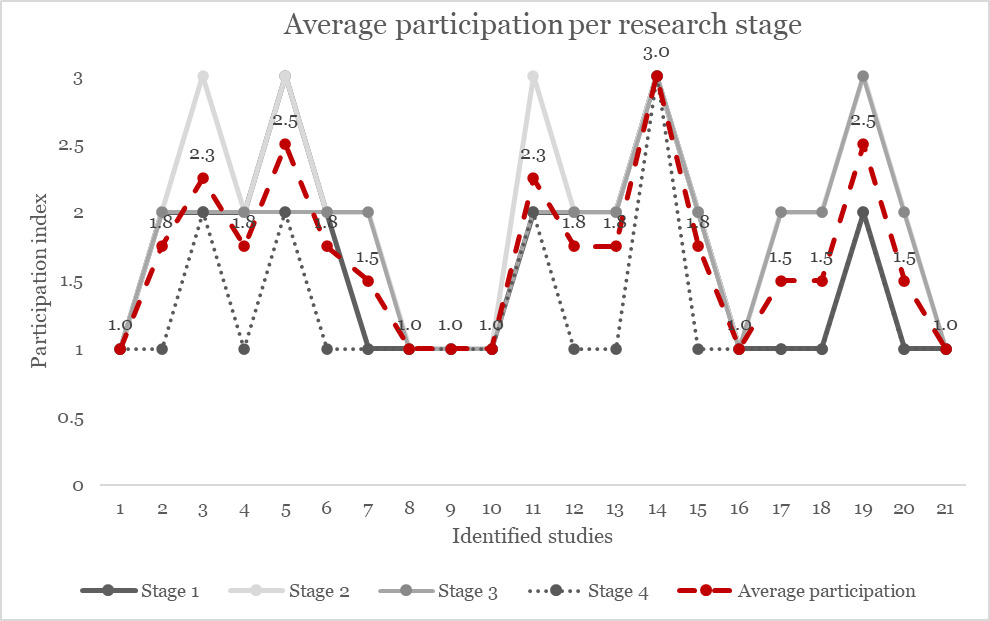
Figure 2 illustrates the variation in participation level across the four stages of the research process. Considering the limited number and heterogeneity of the reviewed studies, Figure 2 should be interpreted as a qualitative illustration of general tendencies rather than a quantitative measurement of participation levels. Each grey line represents one research stage, and the dashed red line indicates the average participation level to summarise overall trends among the studies. Participation is lowest (see Fig.2) during Stage 1 (µ=1.6) and Stage 4 (µ=1.3), increases during Stage 2 (µ=2.1), and remains moderate in Stage 3 (µ=2.0).
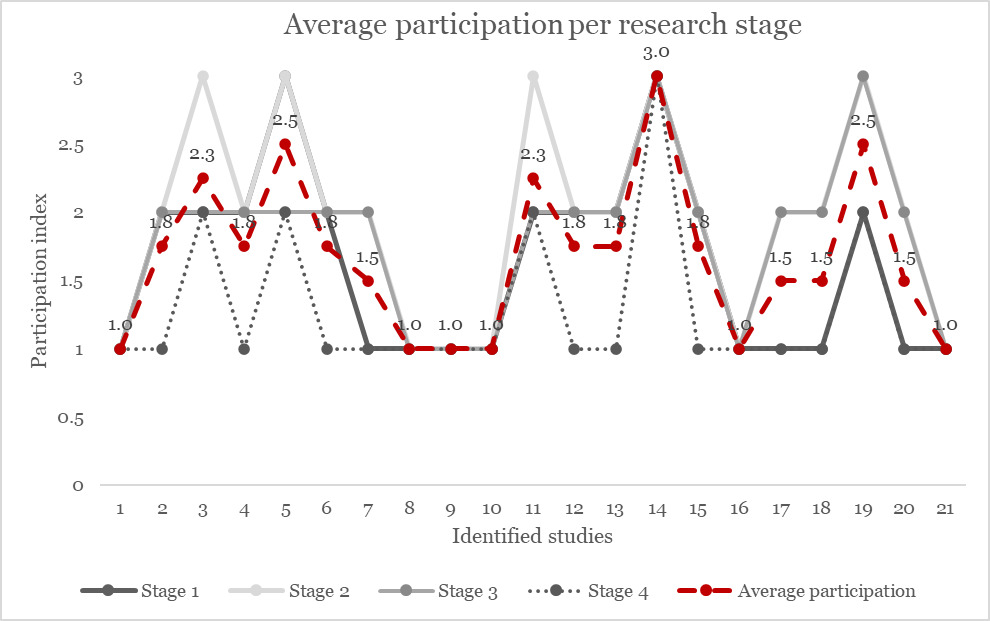
Overall, the results demonstrate that there is a need to extend PD across the full research processes to achieve more holistic and inclusive outcomes. By increasing participant engagement in early and late stages, researchers can better align objectives with user perspectives, co-create actionable insights, and strengthen collaboration between stakeholders and practitioners.
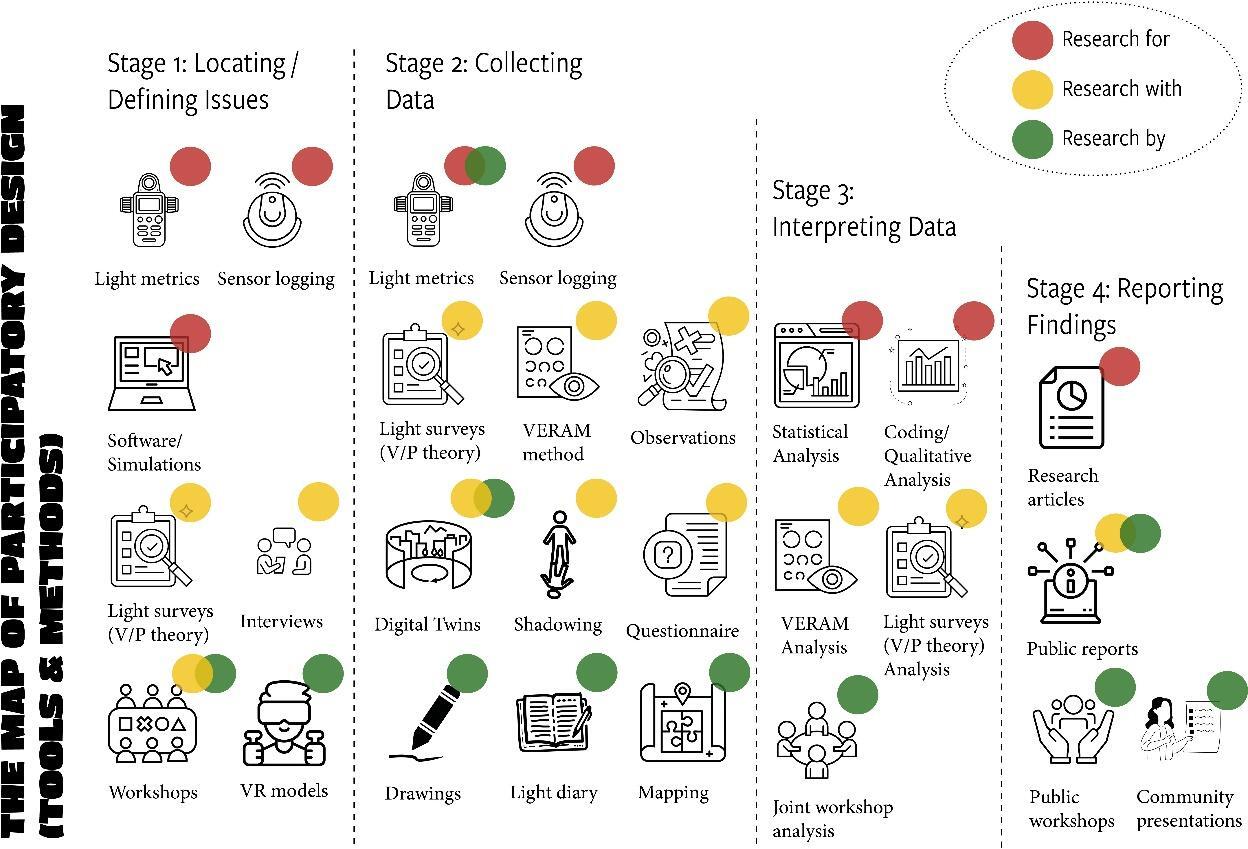
Figure 3 presents a mapping of tools and methods categorized across four stages of a research project. Each stage consists of a range of qualitative and quantitative methods. Colour coding (red, yellow and green) is used to further distinguish the level of participant involvement. This visual mapping showcases the continuity of participation within design research. The map provides a practical and conceptual guide for selecting and applying methods that align with the goals of participant inquiry, facilitating more inclusive and context-responsive research and practice-based proposals.
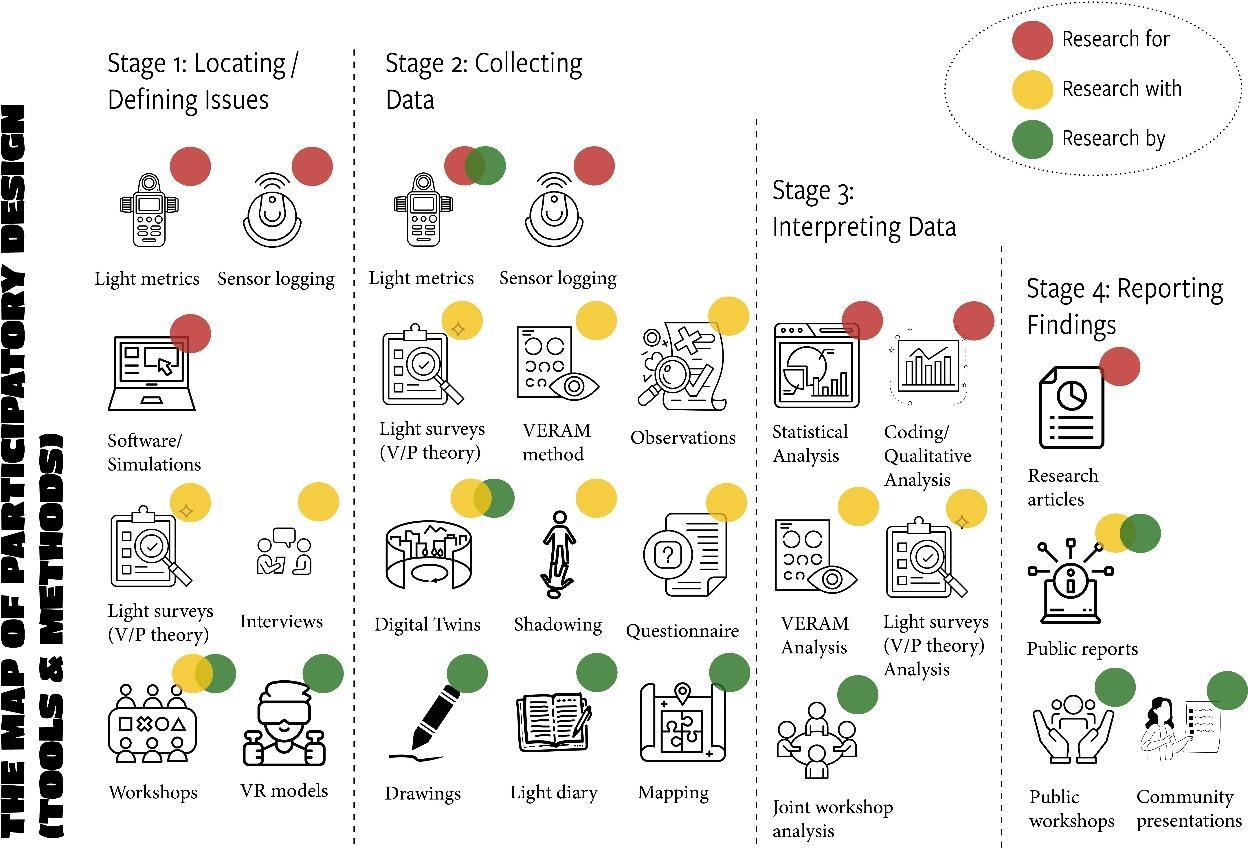
It is important to note that the diversity of participatory approaches and research contexts that have been identified in this review has further implications for the way these findings can be interpreted. While the analysis reveals research patterns in the way participation is distributed across research stages, the heterogeneity of the reviewed studies limits direct comparability. Thus, the results should be understood as indicative of general tendencies highlighting structural patterns and gaps in the current use of participatory design methods in lighting research that can further inform future work.
Implications for lighting research and practice
The proposed combined framework can be used to structure and outline future studies by identifying which stages and participation levels are used in a limited manner. Researchers can plan studies to increase engagement in early and late stages or justify why some stages should remain researcher-led. Involving participants in research by mode of research has an educational value, enhancing knowledge about lighting, energy efficiency or accessibility. Lighting research in schools, community projects or public spaces could use participatory design not just for data collection, but as a learning experience for stakeholders, potentially influencing behaviours and policy adoption.
Expanding participation and engagement to the early and late stages of lighting research raises important questions of feasibility and complexity. In early stages, such as problem definition and framing, participation can potentially support problem framing and contextualization, while improving the relevance and legitimacy of research. However, it may also introduce practical challenges, including increased demands on time, resources, and coordination, as well as conflicting stakeholder views. In the later stages, such as interpretation and reporting, participation can enhance the validity of findings through dialogue and translation of results into actionable insights. Although these processes can be resource and time-intensive, they can also result in different interpretations between researchers, practitioners, and participants.
This study contributes methodologically by applying a structured analytical framework to a heterogeneous group of studies. The combined use of participation levels and research stages enables the identification of patterns across diverse lighting projects. Furthermore, the approach involves interpretive decisions, particularly when studies do not explicitly define their participatory processes. The classification was performed by two reviewers, whose assessment was cross-checked for ambiguous cases, however, it relied on the methodological descriptions provided in the Methods section.
Limitations and Future Work
The present analysis is based on a limited number of studies within a defined timeframe (2019-2024), which may not capture the full range of participatory approaches in lighting research. In addition to the number of articles, their heterogeneity is acknowledged as a limitation. The articles differ in research context, participant groups, methodological approaches and intended outcomes. As a result, the categorization of participation levels required interpretive assessment, linked to two reviewers (i.e., the authors) independently, enabling cross-checking and discussion of categorization decisions in cases of ambiguity, thereby improving the consistency of the analysis. Thus, recurring trends across the reviewed studies suggest that the analysis provides a useful overview of how participatory approaches are currently applied in lighting research. Furthermore, research projects often produce multiple publications that represent different stages of the same study, therefore, the papers analyzed in this work correspond to specific phases rather than complete research cycles. Establishing a system to track and link related publications would allow for a more comprehensive evaluation of participation across entire projects. The ambiguity of participation in certain research stages, particularly during the problem definition phase, where the level of user involvement is not always presented and described in each publication.
It should also be noted that the reviewed studies cover a period that overlaps with the COVID-19 pandemic, during which participatory activities, particularly in-person engagement, were often constrained. This may have influenced the extent and form of participation reported in the literature, potentially contributing to a lower representation of participatory approaches in certain research stages. In addition, the review is limited to academic publications, which may not fully capture participatory practices occurring outside formal research contexts. In particular, participant-led or informal forms of engagement may be underrepresented, as such processes are less frequently documented in peer-reviewed literature.
Future research could expand this work by identifying the particular techniques used and examining whether they rely on digital or traditional tools, thereby providing deeper insight into methodological diversity within lighting-related participatory design. Additionally, exploring factors that influence participation levels, such as project context and resource constraints, could further clarify why engagement tends to concentrate in mid-project stages. Addressing these limitations would help inform more systematic integration of participatory design throughout the research process. The visual mapping of methods and tools across the four stages could be further developed to include open-access tools (e.g., surveys, questionnaires or observation logs) for lighting practitioners, to better communicate and suggest ways for participant involvement, while taking into account time constraints.