
INTRODUCTION
Transgender, nonbinary and gender expansive (henceforth, trans) youth engage in sexual behaviors at rates comparable to cisgender (cis) peers, yet face higher rates of negative sexual health outcomes, gaps in healthcare engagement, and heightened experiences of social discrimination that intersect with mental health and sexual health risks (Andrzejewski et al., 2020; Bradford et al., 2019; Maheux et al., 2021; Tordoff et al., 2021). Sexual health is often conceptualized as “women’s” or “men’s” health services that excludes trans youth from being a part of the discourse around sexual health and prevents them from seeking this care (Lunde et al., 2021). These exclusions extend to research, which has been constrained by the lack of representative measures that capture trans individuals’ identities and experiences, in addition to limited community involvement in developing measures (Bauer et al., 2017).
Sexual health education for trans youth is an emerging area of research that reveals significant gaps and unique needs, many of which are currently under-addressed in most school-based curricula and healthcare settings (Haley et al., 2019a; Hobaica et al., 2025; Jayne et al., 2024; Maheux et al., 2021; Tordoff et al., 2021; Warwick et al., 2022). While research is growing around appropriate sexual health education resources for trans youth, most knowledge measures are still oriented towards cis-heterosexual youth and do not reflect the experiences and needs of trans youth (Bradford et al., 2019). Previous qualitative studies found that sexual health curricula adapted to be inclusive of lesbian, gay, and bisexual youth were still exclusionary for trans youth due to gendering of sexual anatomy and differences in pubertal trajectories resulting from pubertal blockers and hormone replacement therapy (HRT) (Haley et al., 2019a; Tordoff et al., 2021). Given the constantly adapting and fluid nature of gender identity, the language in these existing measures needs to reflect the changes in experience, which is most readily understood from community expertise. For sexual health education programs to be assessed for effectiveness, there is an unmet need to develop sexual health content relevant for trans youth, appropriate instruments to evaluate that content and assess knowledge, and for trans youth voices to be centered in the decision-making process (Bradford et al., 2019; Tordoff et al., 2021).
Community engagement via community-engaged research (CER) or community-based participatory research (CBPR) is a key tenant for instrument development and adaptation, particularly for LGBTQ2S+ populations. Youth participatory research, referred to as youth-led participatory action research (YPAR) (Ozer, 2016; Wallerstein et al., 2018), is grounded in principles of equity by having young people act as advisors and co-researchers on studies that seek to understand problems relevant to their own lives, including experiences with healthcare and education (Horgan, 2017; Ozer, 2016; Shook et al., 2025). Youth engagement via participatory co-design facilitate youth empowerment, give voice to marginalized perspectives, and work to shift power dynamics in research (Marcu et al., 2016; Poole & Peyton, 2013). Trans-inclusive sexual health measures that center community perspectives are necessary to better understand sexual health disparities and address gaps in sexual health education for trans populations (Tordoff et al., 2019).
The scope of this work falls under a larger parent study by a team of researchers at the University of Washington, Seattle University, and Seattle Children’s Research Institute (SCRI). That project was developed to address gaps in trans-inclusive sexual health education by a) co-designing with trans youth a fully functional online interactive sexual health education tool and b) developing outcome measures to use as part of the tool’s assessment. This paper focuses on the community-driven collaborative development of an outcome measure to assess sexual health knowledge acquisition, as part of a larger process to identify, adapt, and validate outcome measures for the pilot study.
METHODS
Community Engagement Approach
This project utilized CER/participatory research approaches to co-design and content validate the resultant sexual health knowledge measure (Mikesell et al., 2013; Wallerstein et al., 2020). Using an equity-driven co-design process, we incorporated the perspectives of trans youth advisors aged 16 to 25 via a youth advisory board (YAB) (Donetto et al., 2015; Marcu et al., 2016; Poole & Peyton, 2013; Reisner et al., 2016). The YAB included 20 selected members (12 currently active), representing a broad range of gender and racial/ethnic identities and residing in 14 states representing all 5 regions of the United States (US) (Shook et al., 2025).
The YAB convened monthly via Zoom to allow for national involvement for study-related activities, including co-designing the tool, outcome measure adaptation, recruitment, and interpreting and disseminating results. The YAB members were compensated $450 annually for their participation (Shook et al., 2025). The YAB was involved in all major decision-making of the project, with the project centering around trans youth’s needs. This project falls somewhere between “community participation” and “community initiated” within the CER continuum given that the YAB played an active role in the research and led some research priorities, while the research team conceptualized the project and worked to ensure the study was appropriate by responding to specific asks from the community (Key et al., 2019).
Ethics Approval
Ethical approval was received from the Seattle Children’s Hospital Institutional Review Board in August 2022. An IRB approved waiver of parental permission allowed involvement of YAB members and participants under 18 years of age. Notably, in Washington state RCW 9.02.100 (RCW 9.02.100: Reproductive Privacy—Public Policy, n.d.) allows minors aged 13 and older to independently consent for sexual health intervention without parental consent and RCW 70.24.110 (RCW 70.24.110: Minors—Treatment, Consent, Liability for Payment for Care, n.d.) allows for STI testing without parental consent. All enrolled participants provided electronic informed consent and consent for publication, after informing them about the study purpose and their rights to confidentiality, privacy, and withdrawal from the study. In-depth discussion of the recruitment and ethics review process for YAB members has been detailed elsewhere (Shook et al., 2025).
Co-Design Process
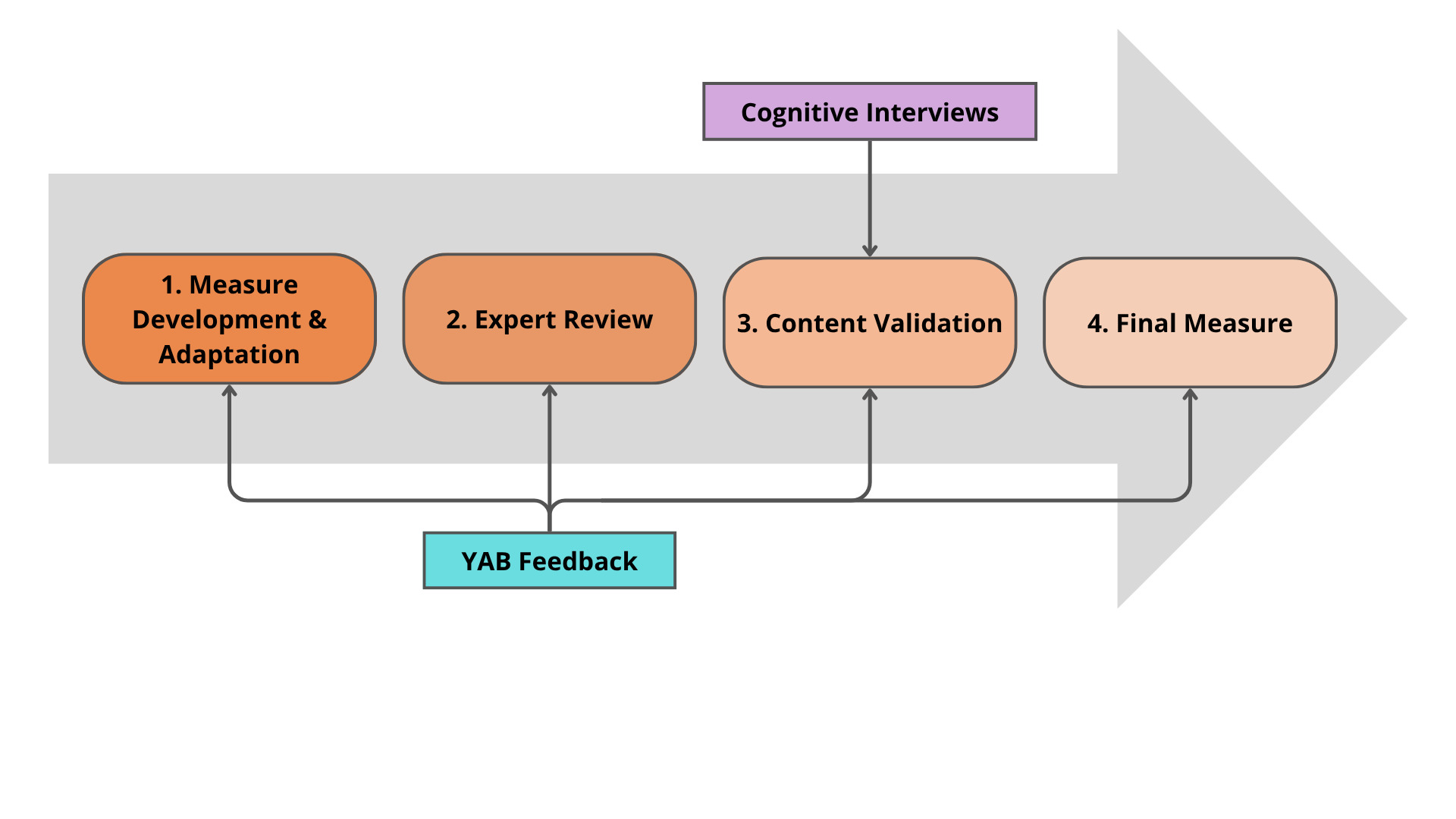
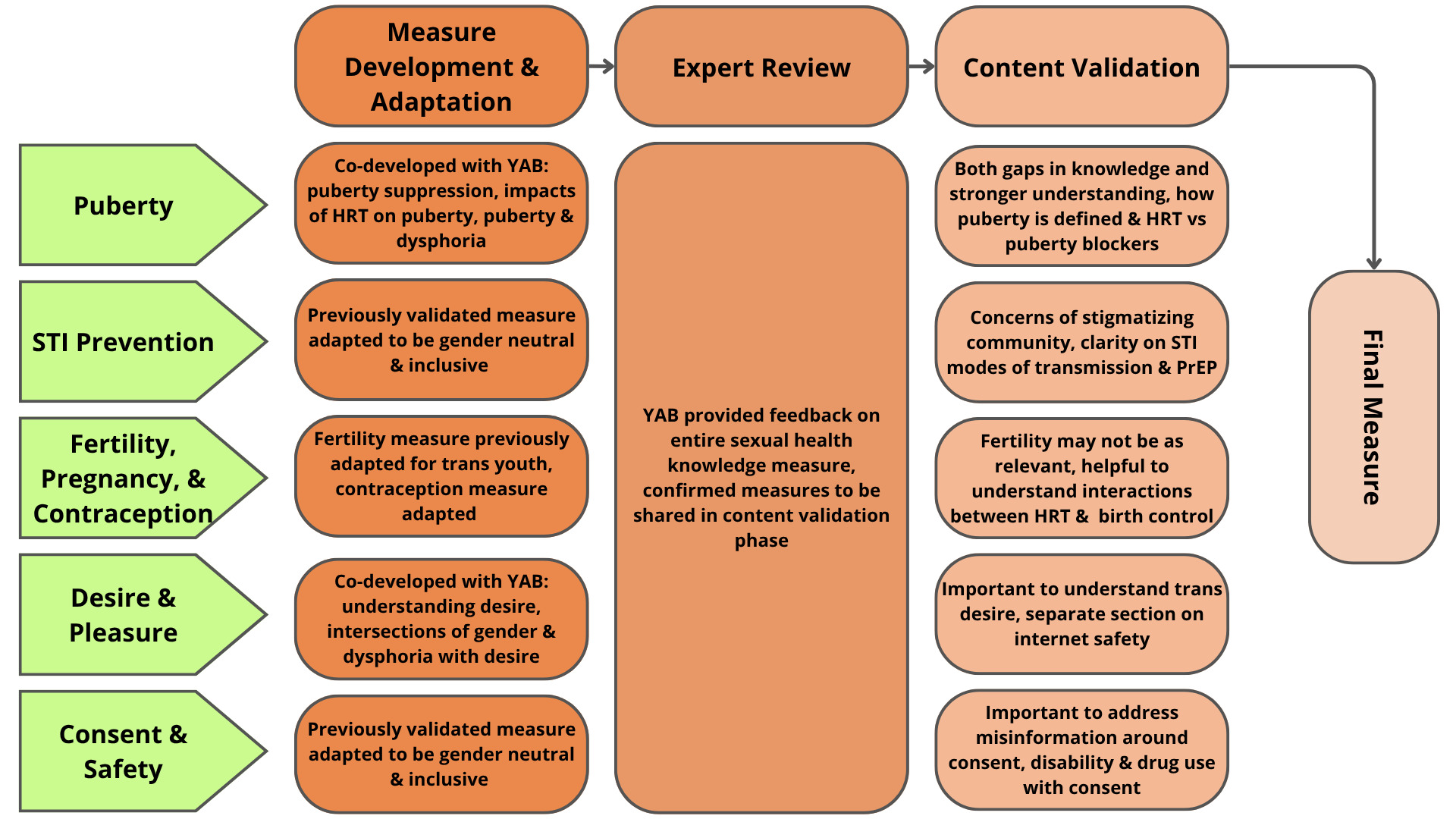
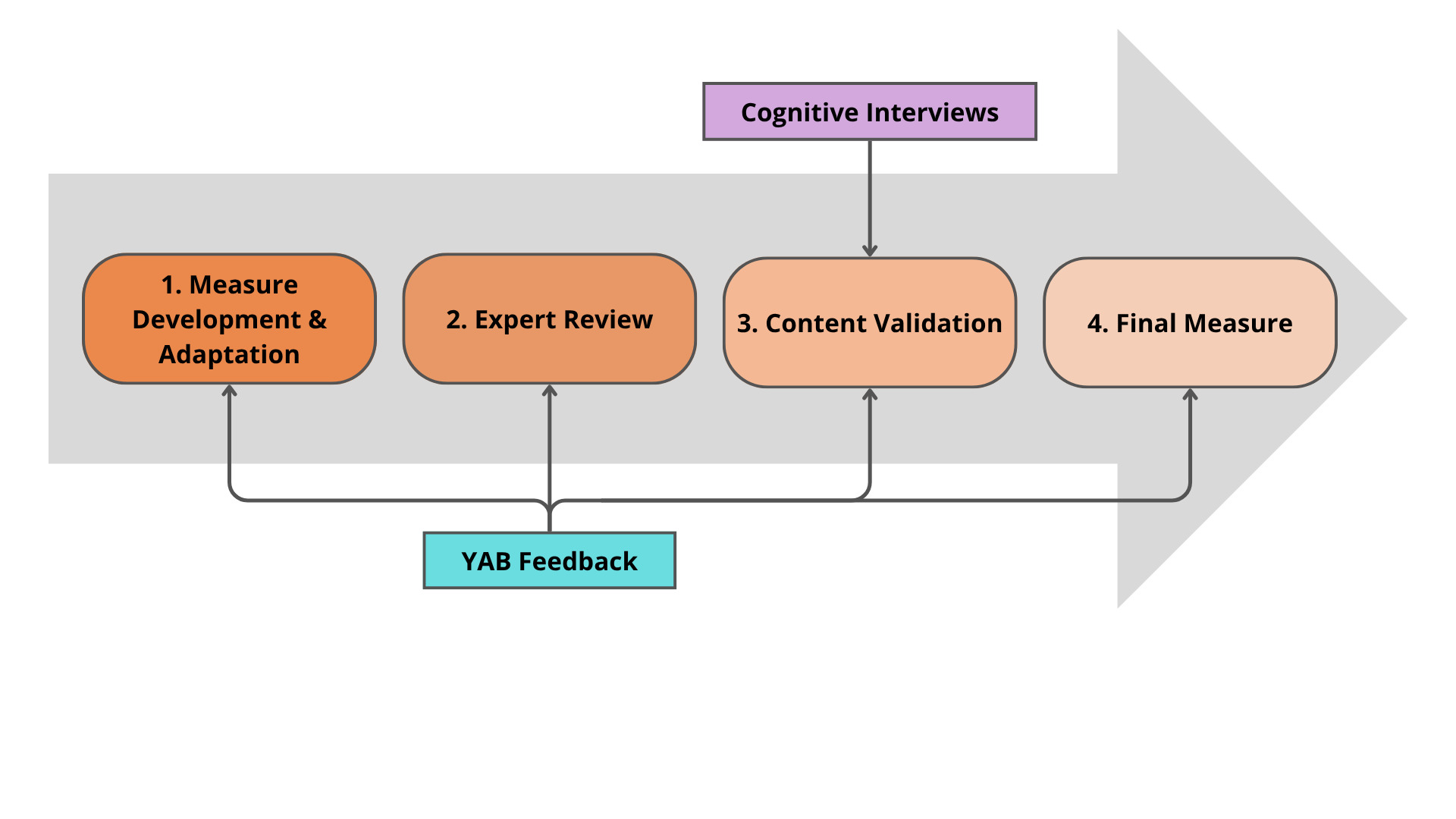
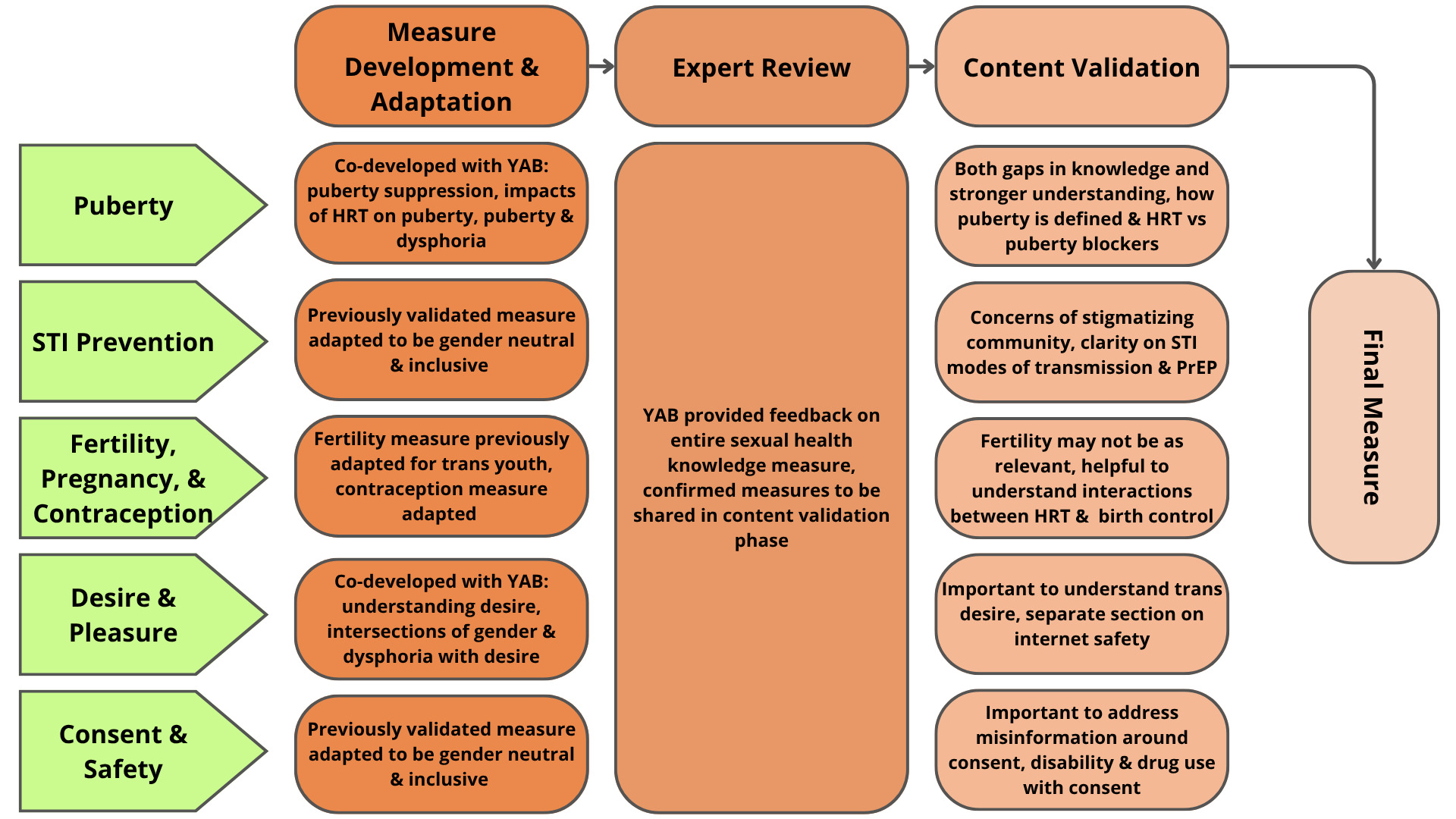
Process steps for the sexual health knowledge measure included 1) measure development and adaptation, 2) expert review, 3) content validation via cognitive interviews, and 4) final measure approval from YAB (Fig. 1). A summary of findings for each content area are described in Figure 2.
1. Measure Co-Development and Adaptation
A key part of the larger project was creating a set of trans-specific sexual health measures to assess outcomes specific to the online tool. Formative work prior to parent study inception included both a series of focus groups with representatives from community organizations across the US to develop a recruitment strategy and identify sexual health needs of trans youth in Washington State (Haley et al., 2019a; Shook et al., 2025; Tordoff et al., 2021). Preliminary qualitative studies conducted by members of the research team identified several needed trans-specific sexual health content areas (Haley et al., 2019a; Tordoff et al., 2021). The focus groups (Shook et al., 2025) were used to inform national recruitment of the YAB.
Specific sexual health content areas identified by the YAB and formative work included: Puberty; STI Prevention; Fertility and Pregnancy; Contraception; Desire and Pleasure; and Consent (Haley et al., 2019b; Tordoff et al., 2021). In preparation for the intervention, the research team conducted an extensive literature review to identify relevant content and outcome measures applicable to the project, informed by the key sexual health content areas identified by the YAB (Haley et al., 2019a; Tordoff et al., 2021). Many existing measures examining these content areas were imperfect, using outdated and gendered language (e.g., describing “women” to explicitly only include cis women and ignoring trans women and nonbinary people; assumptions of sexual/romantic partner(s) gender, anatomy, and sexual activity) (Moseson et al., 2020). With the research team expertise, literature review, and interactive feedback from the YAB, we identified relevant existing sexual health knowledge measures for some of the content areas that could be adapted for this context, as well as identified the need for development of new measures for areas without existing instruments in the literature.
The research team partnered with the YAB to adapt the identified sexual health knowledge measures and develop new measures for content areas without identified measures (Table 1). As part of the parent study, the research team regularly met with the YAB to brainstorm and generate content ideas for the tool, building upon the six content areas identified from prior work. For the instrument development process, the research team asked the YAB about granular details to better understand what aspects of each content area were necessary to know. The research team then identified and/or created items that fit those content areas and shared with the YAB, using virtual interactive methods (e.g., FigJam) to collaboratively review and adapt these items in real-time. The YAB additionally provided input on response options (e.g., multiple choice, true/false, written text) for each item. Based on YAB preferences, a mixture of quiz-type, scenario-type, and confidence in knowledge (assessing self-perception of knowledge on a topic) questions were utilized for the sexual health knowledge measure. Below describes the findings of this process for each of the content areas.
Puberty
The section around puberty was co-developed with the YAB as there were no identified measures in the literature that were appropriate to adapt for trans youth. Items were developed to address the key concepts highlighted by the YAB, including puberty suppression and impact of HRT on puberty. YAB members expressed a need for describing what puberty would look like for a trans person and navigating puberty in the context of dysphoria.
STI prevention
Questions in the STI prevention section were adapted from a previous measure (Jaworski & Carey, 2007) assessing knowledge of sexually transmitted diseases. Items were chosen based on relevance to trans communities and adapted to be gender neutral. These measures were previously validated and showed good reliability in the original measure; however, there were issues with language and potential for stigma that were identified by the YAB. Additional topics emphasized by the YAB include reducing stigma regarding STIs within and outside trans communities, as well as understanding testing and treatment options. Additional items were created to address these topics.
Fertility, pregnancy, & contraception
Questions in the fertility, pregnancy, and contraception section were adapted from previous measures (Haynes et al., 2017; Strang et al., 2018). One measure was already adapted for trans youth around fertility and not changed prior to content validation (Strang et al., 2018). An existing measure for contraception was utilized for assessing knowledge in this area (Haynes et al., 2017); this measure was significantly adapted to be more relevant and inclusive to trans communities. YAB members suggested specific content such as impacts of HRT on fertility and pregnancy, and general knowledge around fertility and pregnancy options. There was also a need for information around contraception options and impact of contraception on HRT (and vice versa).
Desire & pleasure
No existing measures were in place related to desire and pleasure. Questions involving desire, pleasure, and safety were co-developed with the YAB, including understanding desire, recognizing the diversity of gender identity and intersection with desire or pleasure, as well as navigating desire in the context of dysphoria. Safety questions were originally included in the first iteration of the measure but ultimately included as a sub-section under consent based on YAB feedback. Important topics for YAB members around desire and pleasure include understanding what desire and pleasure might look like, engaging in desire and pleasure safely, and navigating dysphoria.
Consent & safety
Consent-related questions were adapted from a previous measure (Richards et al., 2022). Items were adapted to be gender neutral, inclusive to trans communities, and updating language to be generationally appropriate and relevant. Additional adaptations included avoiding using binary language around partnerships, and stigmatizing language. Consent for YAB members included defining consent, consider age of consent and rights, consent in the context of contraception and STI prevention, and navigating consent with substance use.
2. Expert Review by YAB Members
Prior to content validation, YAB members were invited to comprehensively review and provide feedback on the complete draft of the sexual health knowledge measure, including items within each content area. YAB members were given the option to synchronously (via Zoom) or asynchronously (via electronic REDCap survey) review and provide feedback of the full sexual health knowledge measure. For synchronous feedback, members of the research team joined the YAB meetings to facilitate discussion. Items within the sexual health knowledge measure were refined, revised, and/or removed during this stage, in preparation for cognitive interviews.
The YAB provided feedback on the entire sexual health knowledge measure, which mainly consisted of changing the language in existing measures to be gender neutral/trans-inclusive and ensuring appropriateness with the current generation. The expert review process confirmed the draft of the measures to be shared in the content validation phase.
3. Content Validation with Participants with Lived Experience
Cognitive interviewing techniques (Schilling et al., 2007) were used to content validate the trans-specific sexual health knowledge measure to ensure it was inclusive and appropriate for trans populations. Between October 2024 to August 2025, we recruited trans youth as content validators through a screener form via REDCap. Participants were recruited by word-of-mouth through the YAB, utilizing the list of interested participants from when the YAB was formed (those not selected), the research team’s community networks, and posting at community organizations and clinical settings. Participants were included if they: (1) were aged 14-24 years; (2) resided in the US; and (3) were able to participate in English. The screener form collected additional demographic information, such as gender, race and ethnicity, and geographic location (state) to inform purposive sampling approaches. Individuals who expressed interest in other project components will be reached out to for future intervention delivery.
Participants who consented to participate were invited to individual 60-90-minute cognitive interviews via Zoom to review the sexual health knowledge measure and ensure it was inclusive and appropriate for trans populations. Individuals who were not able to provide synchronous feedback were offered the option to provide asynchronous feedback via an online survey. Topics focused on navigating identity, sexual health knowledge, STIs, consent, disclosure, and relationships. Participants were asked to review these items as though answering based on their personal experiences and consider overall importance of the topic, relevance to their specific communities, understandability, or anything missing from each of these questions. The following prompts were provided while reviewing sections:
-
Are these questions relevant/important to your personal experience? How so?
-
Are these questions relevant/important to queer and trans communities? How so?
-
Is the wording clear/understandable?
-
Are there any topics missing?
-
Do you have any comments or suggestions to improve the measure?
While the interviews were not recorded to ensure confidentiality and safety to youth participants, the interviewer took extensive notes during the interviews. Participants were compensated $40 for their involvement in content validating these measures.
Cognitive Interview Demographics
A total of 12 cognitive interviews were completed synchronously or asynchronously (Table 2). Among those, one-third of participants were under the age of 18. In addition, majority were White (67%), nonbinary (50%) or transmasculine (50%), and resided in the West US (58%).
Overall, cognitive interview participants found all measures relevant, important, and understandable, but noted items that could be added or modified to improve each measure. Participants provided feedback on survey sections, response options, and wording or grammatical changes. The majority of revisions included wording or grammatical changes (n=15), followed by the addition or removal of questions (n=11), changes to response option type (n=3), then addition of examples or descriptors (n=2). Other feedback identified by participants included perceiving some items in the measure as a “trick” question (e.g., definition options of puberty). Specific feedback to each content area is noted below.
Puberty
For cognitive interview participants, some felt there were gaps in knowledge around puberty for trans folks, while others believed trans folks had a stronger understanding—especially for those wanting to medically transition (“there isn’t a trans person that doesn’t know puberty can be stopped”). Participants wanted more clarity around how puberty was defined in the measure, as well as more clarity around differences between HRT (estrogen vs testosterone) and puberty blockers.
STI prevention
Participants urged caution about focusing too much of the content around STI’s given concerns of stigmatizing the community further. Participants appreciated more clarity on STI risk with different modes of transmission (e.g., anal sex, lube use), in addition to more information around HIV prevention such as pre-exposure prophylaxis (PrEP).
Fertility, pregnancy, & contraception
For participants, fertility may not be as relevant for folks (“maybe relevant for some trans folks but not majority”), especially given the existing pressure around fertility preservation prior to transitioning as a young person. Participants said that some individuals in the community believe hormone therapy is an effective form of contraception (“a lot of people think that HRT is good contraceptive and never learned that is not the case”), and said hormonal birth control interfering with HRT is helpful information to know. Participants suggested more information on different types of birth control and potential side effects.
Desire & pleasure
Participants noted that this was one of the most important sections, especially to consider desire outside of sex for a trans person. As one participant pointed out, “trans people not only have to figure out gender identity [but also] what they are comfortable with in a sexual context.” Nearly everyone expressed a need for a separate section on internet safety, and expanding on internet safety to understand differences between assessing internet safety versus enacting internet safety.
Consent and safety
Participants believed an imperative need to debunk “tropes” and misrepresentation of consent. One participant pointed out they have heard from others that “they didn’t know sex wasn’t supposed to hurt.” Regarding disability and consent, participants were cautious about ableism and avoiding infantilization of people with disabilities, since disability is not necessarily an indicator of whether someone can or cannot consent. There was also a need to consider partners engaging in sex while engaging in drugs and its relationship to consent. Participants also suggested questions around internet safety to be expanded and included as a section alongside consent.
4. Final Measure
In line with CER and participatory co-design methods, the research team met with the YAB to discuss feedback from the cognitive interviews. The YAB led decision-making on the best approaches to incorporating feedback and the final measure was adapted per YAB recommendations. The final measure was then shared back with the YAB, who provided final approval on suggested changes.
Table 3 describes the final sexual health knowledge measure based on the five content areas. The final measure includes a combination of quiz-type multiple choice, true/false, Likert scales, and free-text questions, in addition to confidence in knowledge questions for each section. A grading rubric was also developed for the quiz-type questions to assess knowledge.
DISCUSSION
Our community-driven study addressed gaps in trans-inclusive sexual health knowledge educational tools by using CER methods to co-develop and content validate sexual health knowledge measures for trans youth. The research team collaborated with the YAB to inform content and give final approval to the measure, while cognitive interviews provided feedback on specific changes and evaluated the relevance of measures. This iterative, community-led process allowed for feedback from multiple groups to give opportunity to capture a wide range of experiences and perspectives. Broadly speaking, participants believed all the content was important and relevant for themselves and their community but suggested some modifications to the measures to capture additional important information and ensure inclusivity.
Participants consistently mentioned receiving inadequate sexual health education, especially around queer and trans sexual health, and found significant value in discussing these sexual health topics. Many trans youth report difficulty accessing scientifically accurate, trans-specific sexual health information and rely on multiple sources of information regarding sexual health which vary in accuracy and comprehensiveness (Haley et al., 2019a). One qualitative study recruited trans youth aged 14 to 18 years in the Midwest found consistent lack of acknowledgment or active refusal to address sexual and gender minority sexuality in sex education, as well as topics being limited to puberty, reproduction, and disease prevention (Bradford et al., 2019). Prior research has also found limited awareness of PrEP/HIV prevention knowledge, concern about interactions between hormone therapy and PrEP, and a need for trans-inclusive resources to engage in HIV prevention for trans youth (Fontenot et al., 2020; Rodriguez et al., 2023). Additional gaps in knowledge described by trans youth include diverse narratives of trans experiences, medical and non-medical gender-affirming interventions, and resources for peer support (Kantor et al., 2023). These studies are limited, however, by not including the perspectives of nonbinary youth (Warwick et al., 2022) and focusing on filling knowledge gaps for parents (Kantor et al., 2023). Much of the work with trans youth centers around individuals within a gender clinic already receiving care, which requires parental support (Holt et al., 2024; Sequeria et al., 2023).
The sexual health content and knowledge measures co-developed with the YAB in this study contribute to the few evidence-based sexual health resources created for trans youth. Sexual health issues specific to trans youth include a range of unique medical, psychological, and social considerations, such as the impact of gender-affirming medical interventions on sexual desire and function, vulnerability to social stigma, harassment, and familial rejection, and fertility preservation. Sexual health education for trans youth should include standard topics, including STI prevention, contraception, and relationships, reframed in a trans-inclusive way (Haley et al., 2019a). In addition, trans-specific topics (e.g., gender-affirming medical interventions, use and safety of binders, packers, and sex toys), and universally important topics frequently absent in traditional curricula (e.g., consent beyond penile-vaginal sex, relationships, emotional and psychological aspects of sexuality) are needed to enhance the quality of sexual education for both trans youth and youth broadly (Bradford et al., 2019; Haley et al., 2019a).
Community engagement via CER/CBPR approaches is a key tenant for instrument development and adaptation, particularly for LGBTQ2S+ populations. Other studies have utilized similar approaches to what we describe in this study. Altman et al. (Altman et al., 2023) developed a community-led survey to capture the experiences of LGBTQ2S+ individuals receiving perinatal care. The authors describe methods to develop their survey by co-creating the survey instrument with community partners, being intentional in including the wide array of pregnancy experiences across LGBTQ2S+ families. The authors note that the instrument was limited to being inclusive to all members of the LGBTQ2S+ community while sacrificing the ability to be more gender-specific to different identities, such as trans communities. Moseson et al. (Moseson et al., 2020) developed a customizable electronic survey to measure experiences with contraceptive use, pregnancy, and abortion for trans individuals assigned female or intersex at birth and cisgender sexual minority women. The authors engaged with a community advisory team to provide feedback on survey domains, question wording, recruitment strategies, and planned analyses. The modification of these measures centered community experiences and offered inclusive approaches to measurement of sexual and reproductive health (SRH) outcomes (Moseson et al., 2020). While their study was limited to the experiences of sexual and gender minority adults assigned-female-at-birth, these findings may serve as a guideline to expand this work to trans youth.
To our knowledge, this is one of the first studies to use community-driven methods to co-develop sexual health knowledge measures relevant to trans youth. The use of community-oriented or “bottom-up” methodologies via qualitative and community-engaged methods offer advantages over traditional “top-down” approaches to instrument development and adaptation, including: 1) community-centered language and terminology that better reflects their experiences, allowing greater content validity; 2) the measure that is developed is of relevance and in line with its purpose, rather than relying on previous research that may have different objectives; 3) the instrument is more likely to be completed by the participant, given that the language is appropriate and inclusive of their experiences, and ideally will not cause negative reactions to the questions being asked (Schoch-Spana et al., 2019; Stevens & Palfreyman, 2012). Addressing cultural issues related to adapting and developing measure in diverse contexts, including trans communities with a broad range of lived experiences, requires cultural humility and appropriateness. Language choice used in measures for trans communities is of particular importance, especially when considering topics around sexual health and anatomy that may be dysphoric for individuals. Measurement development must be responsive to sociocultural context and be a collaborative process that involves both academic and community experts, which is also integral to CER/CBPR approaches (Gonzalez & Trickett, 2014).
Strengths and Limitations
Our study was strengthened by using community-engaged methods and by centering the experiences of trans youth in the development of the measures. Despite this, there were some limitations that impact the generalizability of the developed measure. We attempted to recruit a diverse sample of youth across a broad spectrum of gender and ethnoracial identities given that youth with different identities have unique sexual health needs. However, we were limited by having missing voices and perspectives in our sample, including Black youth and youth residing in the South/Midwest.
Due to the change in the US federal administration and recent Executive Orders (EOs) targeting trans populations and trans youth in particular, in the middle of the study a termination letter was issued that resulted in pauses to study recruitment. On the same day of the termination letter, a federal judge issued an injunction limiting the enforcement of EOs related to gender-affirming care for minors. Our team worked closely with the Washington State Attorney General’s Office to substantiate evidence and support our efforts. Based on a contempt of court proceeding arguing that termination of our grant was a violation of the injunction against the gender-affirming care ban, grant funds were later reinstated. This necessitated changes to communication with the YAB driven by increased scrutiny from various states around trans identification. Our team strived to maintain transparency with the YAB. Ultimately, the decision to resume study activities came down to the YAB’s comfort and willingness to continue. The process ultimately changed how we reached people and communicated risk, and it impacted our ability to recruit additional participants into the study.
It is important to note that while the research team attempted to center community knowledge and expertise by having the YAB be the key decision-makers of this project, CER/CBPR methods are imperfect. Not only are the youth involved inherently faced with more risk in being involved as a result of the existing political landscape, there are also power dynamics involved with youth-adult partnerships and with power held by academic institutions (and therefore, researchers) (Felner, 2020). For most community-engaged studies, CBPR can be difficult to implement due to the considerable time commitment required for high quality CBPR as well as conflicting expectations and agendas of community/research partners. Furthermore, whether community partners can achieve the same equitable benefits from participatory research as academic partners comes into question.
CONCLUSION
Sexual health care is essential healthcare for all youth, including trans youth (Mehringer & Dowshen, 2019). Barriers to receipt of comprehensive and trans-inclusive sexual health education for youth heighten disparities in SRH outcomes (Haley et al., 2019a; Tordoff et al., 2021). Access to trans-inclusive information around sexual health is needed for youth to feel empowered in their healthcare decision-making and as agents of their own lives, particularly in the context of ageism, medical saviorism, and other power imbalances (Mehringer & Dowshen, 2019). For researchers to develop studies that resonate with the lived experiences of participants and establish trust, community collaboration is critical (Moseson et al., 2020). While this was not within our study scope, future studies should continue exploring ways to engage both youth and parents in discussions around sexual health (Caldarera et al., 2023). These measures can be utilized to support future research examining both content and quality of sexual health education for trans youth. The resultant measures will be pilot tested and undergo psychometric evaluation across a larger sample in the next phase of the larger study.