
Introduction and Historical Pathway
Since the 1990s, our rigorous qualitative research has been guided by a central ethical question: to what extent is it justifiable to collect data solely for academic purposes without contributing to the well-being of the populations studied, particularly vulnerable groups? At the same time, we have explored how participants’ voices can strengthen both the relevance and ethical grounding of research, while also informing efforts to improve their circumstances (Hutter & Fenenga, 2020a, p. 50). This paper reflects on the integration, or, as we describe it, the blending, of participatory approaches with traditional qualitative research. We argue that such an approach fosters more ethical, relevant, and socially responsive inquiry. This paper offers insights into participatory research blending into qualitative research and offers guidance for researchers, professionals and students seeking to incorporate participatory methods into their own work.
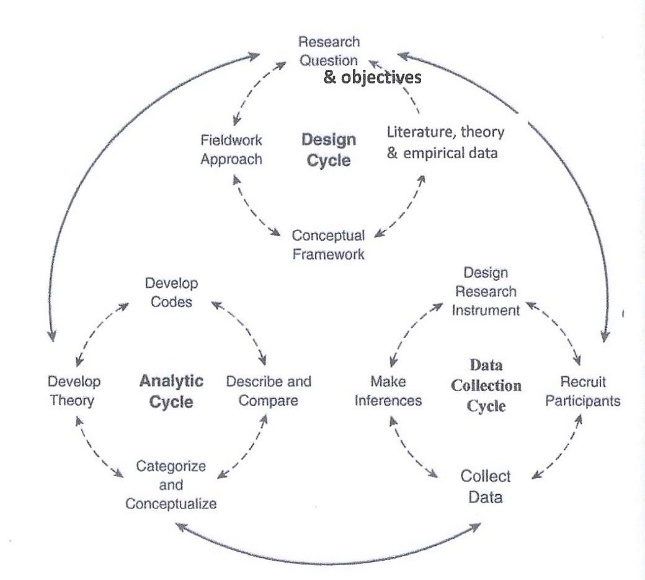
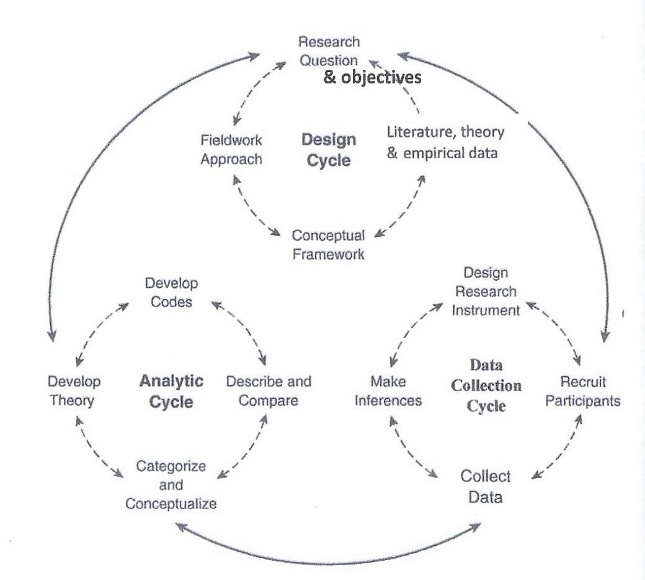
A textbook on qualitative research (Hennink et al., 2020), first published in 2011, presents qualitative research developed on basis of several training workshops in qualitative research in the Netherlands, UK, Kosovo, Uganda, India. This book introduces a qualitative research approach for disciplines that are traditionally dominated by quantitative methods, particularly demography and public health. Grounded in key research paradigms, principles, and ethical considerations, it provides practical guidance on qualitative data collection and analysis. The authors present a step-by-step framework for conducting rigorous qualitative research through the Qualitative Research Cycle, which comprises three interconnected sub-cycles: Design, Data Collection, and Analysis (see Figure 1; detailed explanation on p. 11). Widely adopted in universities worldwide, the textbook serves as a valuable resource for teachers, students, and early-career researchers.
The second edition of the textbook (2020) includes two new chapters describing a Participatory Approach to qualitative research (Hutter & Fenenga, 2020a, 2020b). The chapters are developed based on several health and well-being research projects in diverse communities in India, Ghana, Uganda, Malawi, Kosovo and the Netherlands. In our participatory approach, we use “participants” rather than “stakeholders” to emphasize active engagement and co-creation. Participants’ voices and experiences shape the definition of social concern, the research questions, and the co-creation of actions (see Box 1).
Co-creation thus goes beyond involvement in research to include shaping the research itself. Accordingly, researchers are not detached observers, as in traditional qualitative research, but part of a collective subject studying itself. This reconfigures the researcher as situated (Harding, 1991, 2015), relationship (Smith, 2021), and co-producer of knowledge (Freire, 1970), with boundaries between researcher and participant actively negotiated rather than assumed.
To provide a similar guide for learning how to stepwise blend the participatory approach in the Qualitative Research Cycle the authors added two new cycles to the model: a Participatory Design sub-cycle and a Participatory Action cycle (Hennink et al., 2020, pp. 61, 276).
Five years after publication of the second edition and following completion of several additional participatory qualitative research projects, we revisit in this paper our approach to elaborate, deepen, and critically reflect on its contributions. To substantiate the relevance and rigor of our participatory qualitative approach, we draw on existing literature, our own research experiences, and individual interviews with five colleague participatory researchers and professionals who shared their participatory experiences with us. The rich insights from our international colleagues and ourselves are included as illustrating case studies (26 examples) throughout the paper. Despite their diversity, the examples share key features that underpin our participatory qualitative approach.
Section 2 discusses paradigms, approaches, and principles underpinning both qualitative research and participatory research; and subsequently summarizes the characteristics and principles of our participatory approach to qualitative research.
Section 3 introduces the Participatory Qualitative Research Cycle as a guide for learning, outlining the distinct steps and processes through which participatory approaches can be blended into qualitative methodologies.
We present the updated model, the Revisited Participatory Qualitative Research Cycle, and illustrate several key steps of the process through rich examples drawn from fieldwork experiences.
Underlying Paradigms, Approaches and Principles
Underlying Paradigms
The qualitative research approach, as outlined in both editions, is rooted in the interpretive paradigm, a post-positivist paradigm. The interpretive paradigm focuses on the subjective meanings people assign to their experiences, contrasting with the positivist paradigm’s emphasis on observing objective facts. The interpretive paradigm seeks to understand (or rather Verstehen: understanding the world according to the view of the other) lived experiences from the perspectives of “the other” (individual or collective), in anthropology often referred to as the emic or “inside” perspective. As Snape and Spencer (2003, p.7) note, qualitative research aims to understand “subjective meaningful experiences” and “the meaning of social actions within their context” (cited in Hennink et al., 2020, pp. 15–16).
The interpretive paradigm thus stresses the importance of observation and interpretation in comprehending the social world and recognizes people’s reality as socially constructed as their experience within cultural, historical, and personal contexts (Prasad, 2005). It acknowledges the existence of multiple perspectives on reality, challenges the notion of truly value-free research, and highlights the influence of researchers’ backgrounds and values on data collection and interpretation. In other words, interpretivism emphasizes the inherent subjectivity of both researchers and participants in creating research data (cited in Hennink et al., 2020).
Many of these principles of the interpretive paradigm apply to Participatory Qualitative Research as well: it is also normative, values diverse perspectives, prioritizes participants’ perspectives, situates participants within their own environments and recognizes participants and researchers’ subjectivity. It acknowledges that reality is socially constructed, and that knowledge is context dependent and cocreated through iterative interactions (Howell, 2013).
What makes (Community-Based) Participatory Research different is that it -by designation- recognizes the community as a unit of identity and builds on its strengths and resources; puts great emphasis on equity, power-sharing processes, equitable relations, capacity building and emancipatory objective (Israel et al., 1998, 2008; Minkler & Wallerstein, 2008; Nikolaidis & Raymaker, 2015; Wallerstein & Duran, 2008). These aspects reflect two of the -most important- underlying paradigms of Community-Based Participatory Research (Guba & Lincoln 1994 cited by Israel et al., 1998, p. 176): constructivism and critical theory (see e.g., Fine & Torre, 2021 on Critical Participatory Action Research).
In the next paragraph we elaborate on the characteristics and principles of our blended participatory qualitative approach, based on an evaluation of several different participatory approaches.
Qualitative and Participatory Approaches
The qualitative research approach, base of also our participatory qualitative approach, thus relies heavily on the interpretive paradigm as described above. Theoretical frameworks adopted by the authors are theories of culture (D’Andrade, 1984, 1992, 1995; Kleinman, 1978; Strauss, 1992), networks of trust, civic engagement and social capital (Putman, 1993; Woolcock, 2001), and socio-psychological behavioral models (Ajzen, 1991; Ajzen & Fishbein, 1980). Wishing to understand insights or emic perspectives of individuals or groups, key principles of qualitative research are the establishment of rapport (i.e. co-creating trust) with participants, hearing their voices and situating them in the context in which they live. Equally important are empathy for, listening and asking open questions to participants, and an observing interpretive attitude. A further distinctive feature is predominantly inductive reasoning in data-collection and analysis (and deductive reasoning in design, interpretation, analysis as well) where reflexivity on the positionality of the researcher vis a vis “the researched” (awareness of differences in power), is important to balance subjectivities of the researcher (Hennink et al., 2020, pp. 14–21).
Qualitative research also refers to research methods which focus on understanding and interpreting experiences and behaviours through a range of methods (e.g. ethnography, interviews, focus groups, observations). The general purpose is to generate in-depth insights and producing scientific evidence that can contribute to science and/or generate new ideas for research.
When critically reflecting on qualitative research, we can identify some limitations. One such limitation is that research questions are typically defined by the researcher(s) self, thereby often failing to encompass the full scope of locally perceived societal concerns and risking that research results may not be fully relevant for the participants studied. Another concern is the ethical issue of collecting research data solely for academic purposes, without directly contributing to the well-being of the communities studied (Hennink et al., 2020, p. 50). See further Box 2.
Like Vaughn and Jacquez (2020), we understand participatory research as both a process of inquiry and a catalyst for action. We (Hutter & Fenenga, 2020a, pp. 51–52) built our participatory approach by evaluating the traditions of Participatory Action Research (PAR) and Community-based Participatory Research (CBPR) by scholars such as McIntyre (2008), Chevalier & Buckles (2013) and Minkler & Wallenstein (2008); of participatory qualitative research (Higginbottom & Liamputtong, 2015) as well as the critical pedagogy of Paulo Freire (1970) and the regulative research cycle of Van Strien (1997). The approach was further informed by African participatory scholarship, including Le Grange (2001), Mash (2014), Isobell (2016) and Mabetha (2023). The resulting participatory elements blended into the qualitative approach are described in the next paragraph.
Characteristics of our Participatory Approach to Qualitative Research
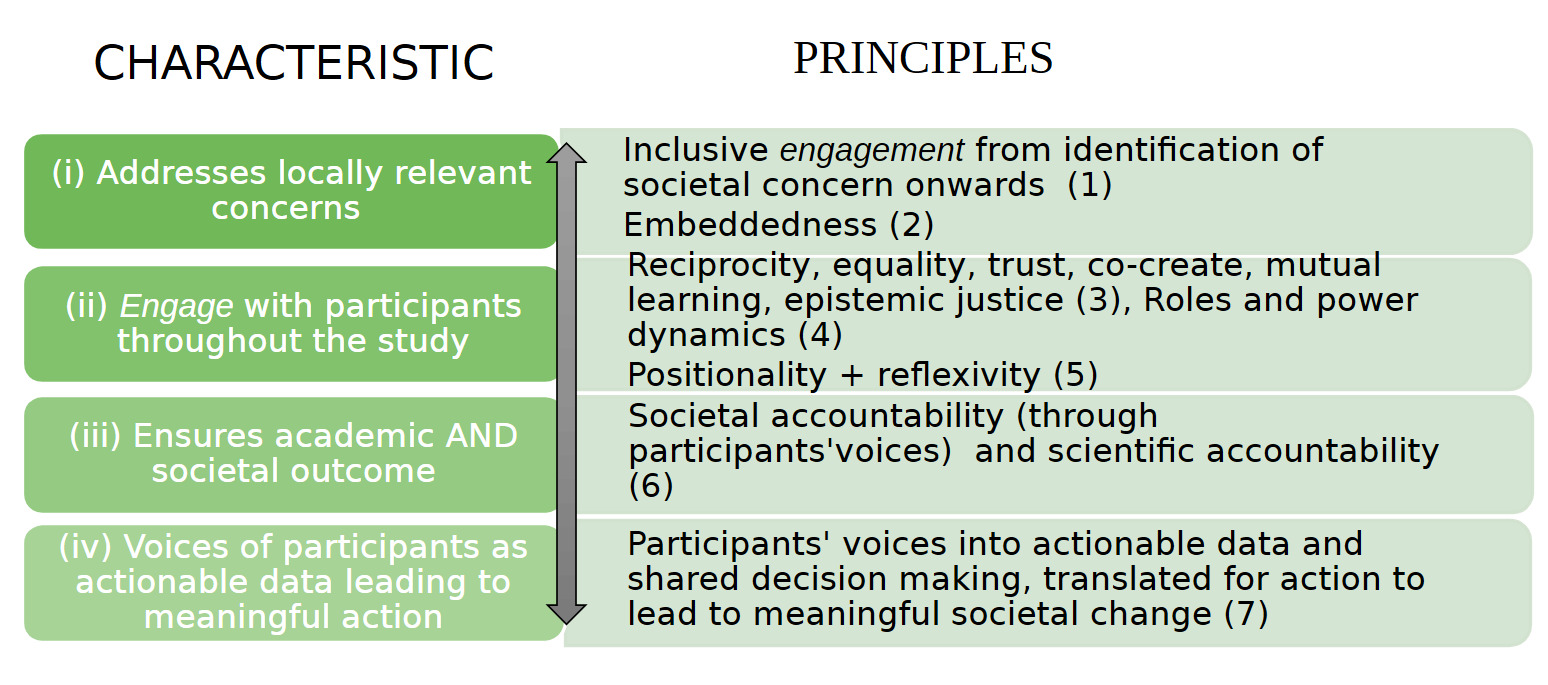
The objective of our participatory approach to qualitative research is not only academic but -from the beginning- also societal change (Strien, van, 1997). We therefore believe that participatory qualitative researchers bear a crucial responsibility to ensure that:
-
Rigorous qualitative research work addresses locally relevant concerns and
-
Participants engage from the very beginning and throughout a research project.
-
Research outcomes are not limited to academic results, such as scientific publications, but also consists of concrete actions.
We add a fourth element to our participatory approach, emphasizing its qualitative orientation:
- Explicit inclusion of the locally embedded voices and stories of participants, validated by participants and translated into actionable data, which is taken as basis to drive meaningful action for societal change.
The last point is an important feature in our participatory research, because researchers often assume that other actors- such as governments, policy makers or NGOs – will amplify the voices and narratives captured in their study. We argue this is rarely the case; hence inclusive translation of voices and stories requires particular attention. In this, we follow Paulo Freire (1970) who concluded that:
“to start with the people themselves …. The point of departure must always be with men and women in the “here and now”, which constitutes the situation in which they are submerged, from which they merge and which they will intervene. Only by starting from this situation -which determines their perception of it- can they begin to move” (Freire, 1970, p. 58, cited in Hutter & Fenenga, 2020a, p. 53).
Principles of our Participatory Qualitative Research
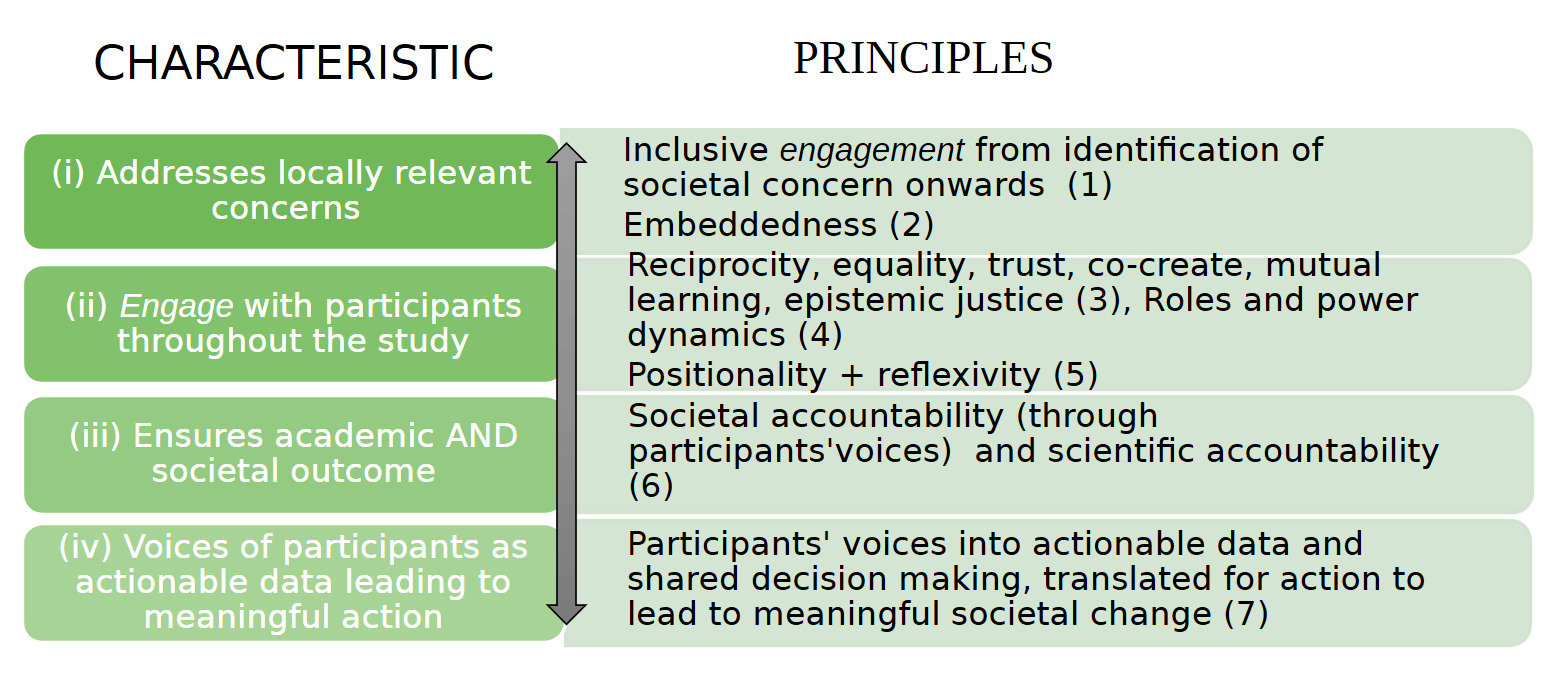
In this section we present the principles of our approach to Participatory Qualitative Research, which reflect the characteristics described above. The principles refer to the fundamental values “how” to implement. The figure below illustrates the four characteristics (left column) and principles (right column) which will be subsequently elaborated.
1. Inclusive Engagement from Identification of the Societal Concern Onward
Participatory research starts -from the very beginning- with the engagement with (institutional) participants and a joint identification of the societal concern (Fenenga, Nketiah Amponsah, Bailey, et al., 2015). Engagement is defined in the literature as follows (Box 3):
Deriving from these definitions, we say that engagement involves equitable and fair relationships between researchers and participants. These relationships are reciprocal, respectful, mutually beneficial, and involve emotional commitment. Partners jointly consider and care about the societal and academic outcomes and the co-creation of new knowledge. Some of these aspects are explored in more detail in the following sections.
Within our participatory research approach, the positive effects of engagement are multiple: it firstly increases relevance and accuracy of the identification of the societal issue (Fenenga, Nketiah Amponsah, Ogink, et al., 2015). Engagement is also contributing positively to building relationships and trust and strengthen social cohesion (Fenenga et al., 2018; Fenenga, Nketiah Amponsah, Bailey, et al., 2015), while at the same time engagement will nurture the sense of ownership. We will note further benefits in the next paragraphs of this section as engagement occurs throughout the research process, though in varying degrees of intensity and shape, see e.g., the participation ladder of Arnstein (1969). Also, Vaughn and Jacquez (2020, p. 6) identify different participation choice points in the different phases of the research process: to inform, consult, involve, collaborate and empower.
2. Embeddedness
Another important principle in Participatory Qualitative Research, like in qualitative research, is embeddedness. In Participatory Qualitative Research however embeddedness is even more important and refers to the researcher’s deep integration within the social, cultural or organizational context of the (institutional) participant. Embeddedness and context are often used interchangeably (Wigren-Kristoferson et al., 2022). Embeddedness emphasizes that researchers must situate themselves in the participants complex local context, their lived experience, lived reality, to build trust, understanding and relevance in the research process. This again aligns with the earlier conclusion of Paul Freire (1970).
By engaging deeply with participants’ environments and realities, researchers can understand and capture the cultural, historical, social factors and power dynamics that influence experiences and perspectives. Contextual understanding of nuances and context-specific dynamics will facilitate relationship building, collaboration and active contribution of participants. Wigren-Kristoferson et al. (2022) specify this by concluding that social interactions take place in terms of culture, cognition, and emotion, between contexts and across levels.
3. Reciprocity, Equality, Trust, Co-creation, Mutual Learning and Epistemic Justice
As mentioned, trust and mutual respect are important principles of engagement in Participatory Qualitative Research. An environment in which reciprocity and equality in relations exist, will contribute to equitable collaboration and co-creation (Pearce et al., 2020). The mutual beneficial exchange of knowledge also implies acknowledgement of each other’s knowledge and mutual reflective learning. Hence acknowledgment of a diversity of positionalities, diverse knowledge systems (epistemic justice) (Cummings et al., 2023; Fricker, 2009) and co-creation of new knowledge are essential parts of the participatory approach.
Example 2: In research in India on nutrition and health during pregnancy, conducted from an academic perspective, women’s own knowledge and perceptions on nutrition, health, pregnancy and delivery - as partly based in the cultural meaning system Ayurveda- became evident. A subsequent co-created educational programme combined their local embedded knowledge with our academic knowledge (Hutter et al., 1996).
A colleague participatory researcher reflects on not using the concept of stakeholder:
Example 3: ‘Lately, I was invited to talk about stakeholder engagement, and I indicated that that is a wrong concept. It sounds you are engaging only with a clear objective, while it is about building relationships. And beforehand, you don’t know how they will work out. You might invest a lot in a relationship while later it turns out that they haven’t be so useful. But one doesn’t know, when starting the relationship. Basically, it is all about trust!’
The quality of the relationship between researchers and participants thus matters in Participatory Qualitative Research. A colleague researcher noted this often to be more personal and caring than in ‘normal’ (Qualitative) Research as reflected in the following example:
Example 4: ‘this is for me simple said participation: you care about each-other; you care for each other and respect each other. You both aim at a knowledge objective. I work with him (a participant) because we both want to make the city safer. That affective aspect, I should have mentioned it before, that is essential (in participatory research): as researcher one builds rapport. But that is not the same. One builds a close relationship with someone. If something happens to him, I will really feel bad. In a very short time, we built this relationship, where he shared things honestly, and I share things in an honest way’.
4. Roles and Power Dynamics
In Participatory Qualitative Research, roles of both researcher and (institutional) participant thus are active and interconnected. At the same time, they are distinct. Table 2 describes these similarities and differences, as seen from the researcher’s perspective.
In Participatory Qualitative Research, the power dynamic thus is more equalized, allowing for a more inclusive and community-driven approach to knowledge generation and action. Note that these roles and relationships of researchers and (institutional) participants are not static but negotiated and renegotiated. Chung & Lounsbury (2006) argue that a lack of reflection over power differentials can lead to disempowering outcomes even after achieving a seemingly participatory process. Other critical publications indicate that participatory projects could ‘actually reinforce certain power relations by including established societal groups and excluding those who are often excluded’ (Cooke & Kothari 2001 cited by Bacquet, 2024, p. 4). One can also wonder, as the same author concludes, to what extent it is possible to create completely equal partnerships as Bacquet (2024, p. 24) concludes about his research in co-creation with students in university:
Example 5: ‘I do acknowledge that this transfer of power was a difficult, if not an impossible, task. This was certainly not because unwillingness on my part; the structure and constraints of a university setting where the study was carried out were difficult to overcome, and the hierarchical differences present in the teacher/student relationship were always evident’
Our experiences demonstrate that the participatory research approach is less likely to succeed without a strong support from higher authorities, either national politics or institutional.
Example 6: In research for the Ministry of Education in The Netherlands, a participatory research approach was applied in a rural primary school with a management team that already supported such an approach; while at an urban more elitist secondary school the participatory process turned out to be more difficult to implement as from start onwards participatory space was more limited (Visser & Kreemers, 2020).
Example 7: Similarly, a participatory bottom-up study on maternal health seeking behaviour conducted in Malawi could be successful as it was embedded in the country’s decentralized and systematic bottom-up approach to development and planning. The project was embedded in a governance system of representative bodies such as Village Development Committees, Village Health Committees and participation by village headmen and their counsellors. This made it much easier to start the project from listening to the voices of women themselves (and their communities) about their maternal health issues and their possibilities for further empowerment (Sibande Kumwanje & Hutter, 2011).
Example 8: The participatory study on well-being of older inhabitants in the Northern Netherlands would not have been successful without the initiative and subsequent great support by the director of the institution. She started the project with the sentence: ‘we are doing fine here, but still, I miss something; I think we should base our care on the stories of our inhabitants’. In this case-study, our participatory research would also not have been successful without exemptions from the rules provided by the Ministry of Health (Klaassens & Meijering, 2015).
5. Positionality and Reflexivity
An important contribution to the earlier mentioned embeddedness is that it encourages researchers to reflect on their positionality: how their background, values, and biases may shape the research process. By engaging with participants’ perspectives and contexts, researchers can challenge assumptions and refine their approach based on lived experiences. Reflexivity on subjectivity, and on positionality, is a key criterion for high-quality qualitative research. However, in participatory research, where co-creation occurs between researchers and participants, positionality becomes even more important. In both qualitative- and participatory qualitative research, it is common practice to articulate one’s positionality through a position statement as a participatory researcher (Bacquet, 2024). Below, we reflect on our own positionality in relation to our participatory research.
The academic researchers and professional policy workers involved in developing this paper were invited to participate in individual interviews, conducted either in person or virtually. Following a brief introduction to the paper’s aims, they were asked to describe their PAR projects and reflect on the steps taken and key aspects of the process, including learnings, challenges, and unexpected outcomes. This was followed by a discussion of the conceptual model (Figure 2), during which the interviewees were invited to suggest adaptations; their input informed subsequent minor revisions of the model.
6. Voices of Participants and Academic and Societal Accountability
Accountability is a core principle in participatory research, requiring researchers to be transparent, ethical, and responsive, primarily to participants, not just academic peers. It involves aligning with participants’ needs and values, respecting their time and knowledge, and ensuring their voices are accurately reflected. When participants see their input valued and used responsibly, they are more likely to stay engaged and support follow-up actions through feedback and monitoring (see also 7).
7. Identifying Voices in Actionable Data, Shared Decision Making and Translation to Meaningful Societal Change
This is the final principle in our participatory research. In this step of the research, all the above-mentioned principles need to be considered (i.e. participation, equality, inclusion). This requires the researcher to ensure that the gathered and validated voices and stories of participants lead to informed and shared decision-making about an actionable plan for data-informed societal change. Such co-created and co-decided plans may include, i.e., the development of inclusive policies, interventions for capacity strengthening or others, ultimately resulting in tangible improvements in participants’ and other people’s lives. It should allow for monitoring, gathering feedback and adaptations of strategies over time.
Example 11: A nice example of societal accountability and translating voices into meaningful societal change- as we can call it- is the PhD research by Kayla Green (2024) at Erasmus University Rotterdam, which she not only defended in a regular academic committee at university, leading to her PhD degree, but also in a societally engaged PhD defense at a secondary vocational school (in collaboration with the university). Committee members consisted of practitioners who judged the PhD thesis on societal relevance. The defense focused on actionable insights, rather than theoretical debate; and focused on how the research could directly inform policy, education and community initiatives. About Kayla Green April 2025
Blending Participatory Approach into the Qualitative Research Cycle
The Qualitative Research Cycle
While the Qualitative Research Cycle (QRC, see Figure 1, page 2) illustrates the different steps involved in the qualitative research process, which can guide the researcher in an iterative and reflective manner through the research process, we will now illustrate how our participatory approach can be blended into the QRC through a similar stepwise learning process. We will term this the Participatory QRC (ParQRC).
Important for both QRC as ParQRC is that the process of moving through the cycles is not linear but cyclical: researchers may need to move back and forth between different stages, continuously checking the coherence and alignment among them. While doing so, the earlier presented characteristics and principles described in section 2 and Table 1, are continuously considered and applied.
We begin by describing the QRC.
1. Design Cycle
The qualitative research process begins with the Design Cycle, where qualitative research questions and objectives are formulated and situated within existing literature. A theoretical background and conceptual framework are established, and appropriate qualitative research methods identified. This cycle employs primarily deductive reasoning, progressing from theories, conceptual models, and secondary literature toward empirical data collection.
2. Data Collection Cycle
The Data Collection Cycle involves designing research instruments (e.g., interview guides with open-ended questions and probes, focus groups or observation lists), recruiting participants, and initiating data collection and collecting the stories of research participants. A key feature in this phase is the use of inductive reasoning from the outset. As Hennink, Hutter & Bailey (2020, p. 5) state, inductive inference is “the pivotal point that makes data collection into a circular process that characterizes qualitative data collection.” This iterative process allows insights from initial data, the stories of participants, to refine subsequent data collection, hence generating richer, more nuanced, rich and saturated findings.
3. Analysis Cycle
The Analysis Cycle continues this inductive process, where collected data are transcribed, coded, described, and compared, ultimately contributing to a grounded theory, a theoretical framework emerging from participants’ narratives. Deductively derived concepts may as well inform the analysis; this phase often integrates both inductive and deductive reasoning to synthesize findings. Below we discuss how we blend participatory principles into this guide for learning.
Blending Participatory Characteristics
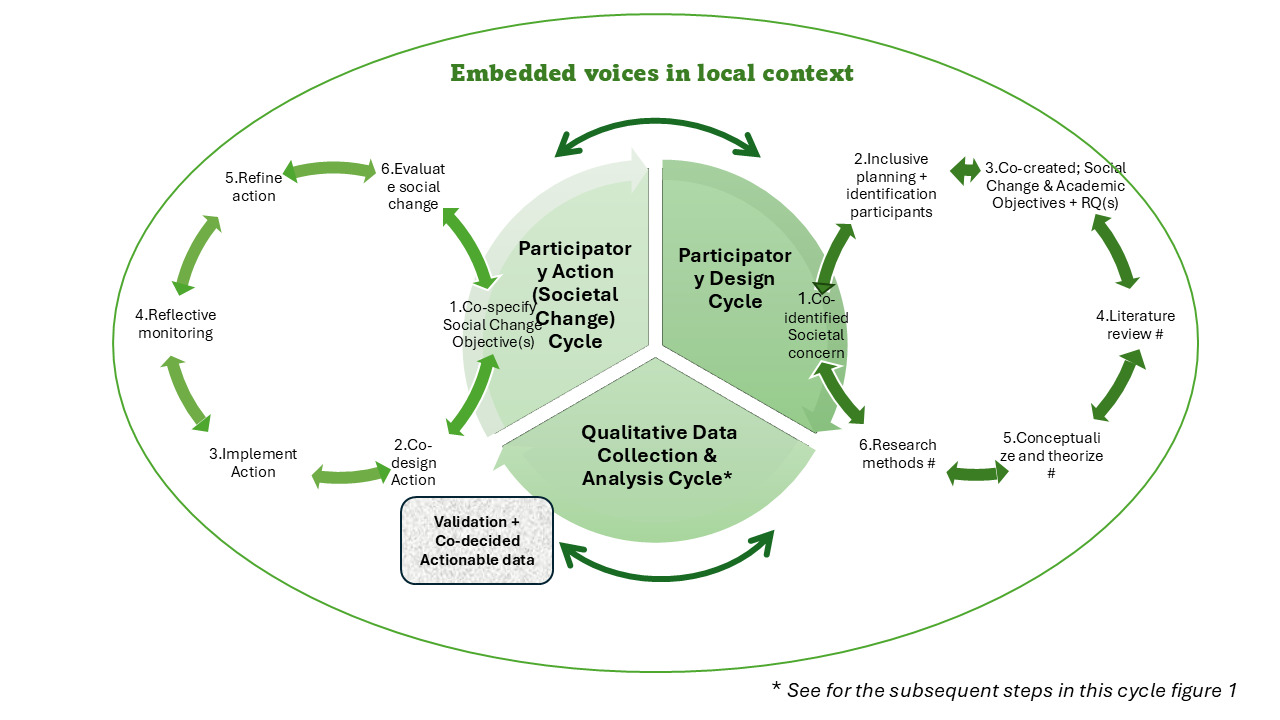
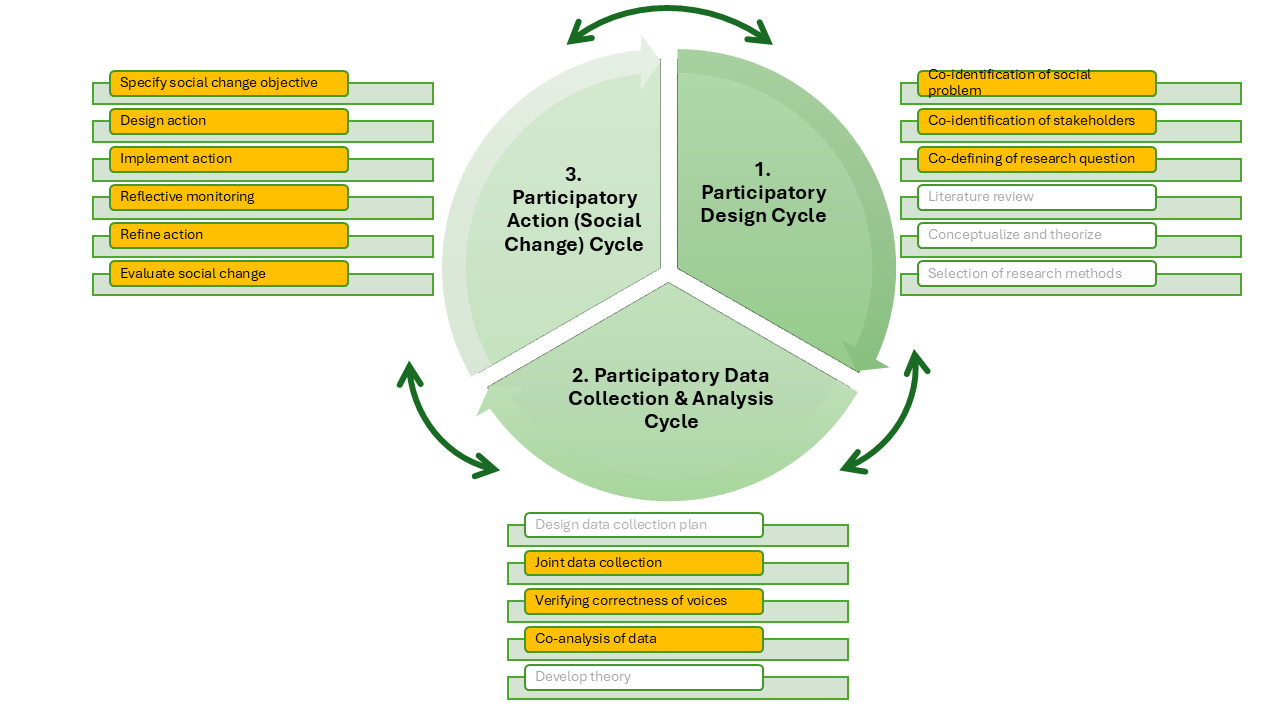
The second edition of the textbook on qualitative methods introduced an initial version of a participatory research cycle (Hutter & Fenenga, 2020a, 2020b). Here we refine the guide for learning and blending participatory characteristics and principles (as described above) in the QRC and distinguish a Participatory Design cycle (1) and Data Collection and Analysis cycle (2). The distinct additional step before moving to the last cycle is the validation of voices and co-deciding on actionable data (3), which is taken along to the Participatory Action cycle (4). Principles of the participatory approach are featuring especially in the examples.
Like the QRC, the ParQRC (Figure 2) is a model to guide researchers -with participants- stepwise in the Participatory Qualitative Research process, a process that is – here even more- not linear but iterative and includes participatory elements throughout. Also, no participatory project is like the other: there will always be differences in e.g. participants, degree of participation (as mentioned earlier by Vaughn & Jacquez, 2020), the societal theme identified, embeddedness and the way in which different steps are taken. Coherence between the different steps remains very important: e.g. between societal concern and academic and societal objectives; between participants included, methods of data collection, and co-defined intervention. We briefly describe the different steps included and provide several examples.
_based_on_hutter___feneng.png)
1. The Participatory Design Cycle
In the ParQRC, it is especially the design cycle that requires more engagement and participation compared to QRC. The ParQRC early and ongoing engagement with of relevant (institutional) participants. This incorporates:
-
Co-defining the societal concern(s)
-
Inclusive planning and identification of additional (institutional) participants to be involved
-
Co-definition of project objectives, ensuring both academic rigor and societal relevance, aimed at societal change and co-creation of research questions.
These first three steps in the Participatory Design cycle emphasize the need for strong engagement between researcher and (institutional) participants from the very beginning. This is a significant difference with the regular Qualitative Research cycle where (institutional) participants only engage and often are seen as objects rather than subjects participating in the research during the Data Collection cycle.
In the subsequent three steps the role of (institutional) participants diminishes a bit while the role of the researcher as academic participant becomes more pronounced. The researcher takes the lead -with input from (institutional participants)- in:
- Conducting a literature review to specify and refine research questions
- Conceptualization and Theories for further refining the research question(s), and
- Identifying participatory research methods that align with the regular Qualitative Design cycle, ensuring academic rigor.
The steps are explained in the paragraphs below.
i. Co-identification of the Societal Concern
A participatory research project begins with the co-identification of a societal concern. Examples below illustrate that participatory projects can be sparked off in different ways: i.e., by the researcher (example 1 India); by an institutional participant (example 2 Ghana; or by a participant (example 3 Nigeria). Consequently, the role of the researcher can differ as well: being lead-participatory-researcher or participatory researcher who shares and provides academic expertise ‘on demand’ to support a question from societal partners. We focus especially on the first (being lead-participatory-researcher) but also provide examples of the latter. As also described in the examples below, in certain cases the defining of the core problem requires more time and more participants to assess the needs, which may involve more formal needs assessment processes.
Example 12: in India, maternal nutrition is a broad issue within the larger framework of safe motherhood. To determine the specific aspects requiring participatory research, engagement with local policymakers, NGOs, and communities was essential. A feasibility study of six weeks was conducted by the researcher in collaboration with a local NGO, and observations, focus groups, interviews and key-informant interviews were conducted among women and members in their family and community. This multi-participant approach ensured that research remained contextually relevant, reflected the needs of women in the community, while partners were involved throughout the subsequent participatory research phases including an intervention. The engaged research-and-action project lasted six years and was followed by another six-year project that focused more on action and less on research (Hutter et al., 1996).
Example 13: In Ghana, Ghana’s National Health Insurance Authority (NHIA) stepped forward with a question for the researchers: their anecdotal evidence regarding challenges in uptake of new members and retention of existing members needed to be studied more in-depth. Together with participants from two villages (men and women), patients’ organizations, the healthcare staff, and representatives from Ghana National Health Service and National Health Insurance Scheme (NHIS), the societal problem (barriers to access healthcare and health insurance care) was jointly discussed and defined during a workshop. The (institutional) participants subsequently co-created the research questions and objectives, which iteratively refined, while the researcher facilitated the inquiry as co-learner and collaborator in the process. The design included agreements on roles of locally recruited and trained interviewers familiar with the context and communities in the study areas and roles of participants in monitoring progress of the research activities and later interventions. The entire project, including a preparatory year with stakeholder meetings and joint proposal development, lasted five years (Fenenga, 2015; Fenenga, Nketiah Amponsah, Bailey, et al., 2015).
Example 14: In Nigeria the researcher through his daily working experience in an NGO had regular exchange with colleagues and health and education authorities. He himself was a participant in the process of observing and experiencing a societal problem. Through an iterative process of discussions with colleagues, policy leaders and trainees of courses for health workers the actual formulation of the problem was further refined: an ineffective training approach to capacitate health workers.
Effective collaboration relies on mutual engagement, trust, and shared interests, supported by curiosity and a willingness to contribute knowledge and skills, and the wish to learn from each other. Participatory Qualitative Research often takes more time than traditional research, as it involves ongoing collaboration. To support this, an advisory group of key institutional participants is often formed early on to guide, advise, and sustain the process. This leads into the next section on inclusive planning and identifying who to involve.
ii. Inclusive Planning and Identification of (other) Participants
After having co-identified the societal concern, the next step is to define which (other) participants need to be included, to gain diverse insights into the topic and prepare a supporting basis for later actions and interventions.
In section 1 the concept of embedding was explained. This includes identification of the relevant (institutional) participants. For this, employing inclusive mapping is a useful tool. Mapping the participants helps to visually plot the diverse participants, who have different interests and levels of influence regarding the societal concern and the way to address it. Conducting this with an already identified small group of participants (ad.1) will ensure that the research engages the right people. Through reciprocal communication a (lead-participatory) researcher facilitates the research process and manages the expectations of the (institutional) participants.
Example 15: Identifying all relevant participants is not as easy as one may think. This is illustrated by a researcher from Nigeria, who explained that after he and his team carefully identified all relevant participants in a participatory study in Nigeria, he found a critical, influential organization missing. He noted this during one of the interviews. Fortunately, this happened early in the study, so he was able to engage this influential organization from that point onwards throughout the study.
Example 16: In a multi-country healthcare intervention study on communicable diseases in East African countries, the researchers observed and experienced clear differences between the countries in the level of engagement of (institutional) participants. While in two countries the collaboration between (institutional) participants and the research team appeared to be very good, featuring mutual trust and reciprocal learning, in one other country there was considerably less interest and active engagement of specifically institutional participants. This made the availability and active engagement of participants in the process of co-creation and implementation of the participatory research challenging. Reflecting on these differences, the researchers noted, as possible reasons, the cultural differences, the stronger hierarchical structure in the health system, political sensitivities, differences in seniority levels of participants, and convergence of focus on donor requirements in the project.
iii. Co-created Societal and Academic Objectives and Research Question(s)
From the earlier two steps, co-created research questions and objectives are derived. Participatory research is to explore the societal problem and to propose ways to address them and drive societal change (Fenenga, 2015). The former step of mapping and selection of (institutional) participants is important, as different (institutional) participants may require tailored specifications or recommendations for societal change and hence specified research questions and objectives.
Hence, in this step academic and societal change objectives and research questions are co-defined. The latter is sometimes easier than said, illustrated by the following example that exemplifies the role of the researcher.
Example 17: In a participatory health project in the Caribbean, the partners jointly identified the societal concern to be included in the project. After this concern was identified, the researcher was requested by the partners, to 'put an academic sauce on it’. He was asked to define from the defined societal concern the specific research questions and objectives. As a researcher, they reasoned, he knew better how to do that for the funding agency.
iv. Literature Review
Proceeding the subsequent steps in the Participatory Design cycle, a literature review contributes to create a full insight in the scope of the societal concerns and in results and recommendations of earlier qualitative and quantitative studies which will also help to refine the participatory research objectives and questions. Participatory research makes use of academic literature but also grey literature and reports that shed light on a diversity of experiences with the societal topic. Thus, academic knowledge is combined with professional knowledge, illustrating the principle of epistemic justice in participatory research as described in section 2. This is further illustrated by the following case.
Example 18: In Ethiopia, the participatory study was an additional component of a larger research project. The problem and research questions were defined through an iterative process, followed by a search of both scientific and grey literature. Searching beyond standard (mostly Anglophone) databases was crucial, as many African studies are not published in high-impact journals. As a result, theoretical models developed for certain African contexts may mainly only be found in local databases or grey literature. The Ethiopian study adopted a locally developed conceptual framework on acceptability, which was well-suited to the context.
Example 19: In an assignment from the university to develop an organizational strategy on culture and leadership, not only a huge amount of policy documents was included as background but also results of surveys on employees’ experiences on well-being and development possibilities in the organization, as were students’ reflections on safety and unwanted behaviour.
v. Conceptualization and Theories
As mentioned in the last example, scientific literature allows the conceptualization of the research, relevant for the academic purpose of the study and for the evidence-base of societal change activities. Theories guide the data collection and analysis. These might not always be easily applicable and may require adjustments, using an iterative process, moving back and forth between theory and new data. The more recent scientific literature but also the participatory process of voices of (institutional) participants as new data are leading. Some participatory researchers call this moving back and forth between theory and data the process of abduction (Timmermans & Tavory, 2012).
Example 20: A researcher in a participatory project in the Netherlands indicated that indeed, they as researchers were responsible to identify and apply the theoretical framework for the participatory project. However, when they shared the adopted theoretical framework, the involved societal partners indicated that they found the model chosen was too simple. They objected the use of it, wanting to adopt a theory that captured the complexity of their health care work in a better way. After several meetings, a compromise was found.
vi. Identification of Methods to Gain Knowledge and Enhance Engagement
The regular Qualitative Design cycle includes the planning of a fieldwork approach including the selection of data-collection and analysis methods. Qualitative methods then could be selected and applied in the Data-Collection cycle, such as individual interviews, focus group discussions, participant observation etc as described in Hennink, Hutter & Bailey (2020). The primary goal is to hear participants’ stories in their own voices, to get to know their knowledge and how this is embedded in their context. Still, qualitative methods sec can have an emancipatory effect as well:
Example 21: To a Nigerian researcher, trust and listening to lived experiences of participants is key in his study. He experienced the participatory qualitative methods used as emancipatory, stimulating a process of self-reflection on his own views and voice. He pointed at the value of empowerment: 'by interacting and listening to each other’s 'lived experience ‘we help them [participants] to make them see who they are, that their voice matters’.
Example 22: The Stichting (Gelijk)waardig Herstel (Equitable Recovery) is a foundation founded by parents, adolescents and children affected by the childcare allowance affair (2005-2019) in the Netherlands. Parents were ordered by the tax authorities to repay childcare allowances. This often involved enormous sums, and those affected were prone to end up in poverty and misery. They accumulated debt. They and their children were severely affected. After many years, it became clear that they were entitled to these benefits. The foundation collaborates with independent experts on the (equal) recovery of victims and strongly advocates for humanity, personal autonomy, trust and independence. To this end, the foundation uses a participatory and qualitative interview method. A Listening Writer (a trained volunteer) facilitates the conversation and the (re)construction of the Narrator’s story, the victimized parent. The Narrator is in control: the Narrator tells the story, and the Listening Writer asks in-depth questions, using a structured interview schedule. The story and the information are “saturated” when the Narrator indicates this. After drafting and submitting their story, the Narrator enters the part where a damage expert from Stichting (Gelijk)waardig Herstel will read the story and calculates the material and immaterial damages, in categories with standard amounts derived from Dutch personal injury case law and practice. Parents regularly indicate that telling their own story to a volunteer who really listens, without judgement, and helps to reconstruct their life story together, has helped them to regain their self-confidence step by step. Listening Writers indicate that they are moved by the story; urged to reflect on their own lives and the position/role of rule of law of the constitutional state.
In the Participatory Design cycle, the researcher bases the selection of methods on the co-created objectives and research questions. The researchers also ensure that the methods are aligned to what the (institutional) participants contributed to the design.
Example 23: As a working group Culture and Leadership at the university, the team was asked to draft ambitions and priorities for the new university strategy of becoming a truly Engaged University. The working group, consisting of both academic and professional services staff, decided to adopt a participatory approach and conduct Appreciative Inquiry dialogues in the organization. To collect voices and opinions of members, to learn from each other, and to facilitate community building and joint ownership. Findings of the Appreciative Inquiry dialogues later were analyzed by the researchers through grounded theory; and participants’ stories were presented in informal reports and shared with the participants as well. The findings were basis – together with background information (see example 19)- for the new strategy that includes background information and relevant concepts and quotes derived from participants.
We come back to Participatory Data Collection and Analysis in the next paragraph. In the following table (Table 4) the two types of research, regular Qualitative Research and Participatory Qualitative Research and their distinct features in the Design cycle are summarized. Note that in practice some principles of Participatory Qualitative Research may also be used in qualitative studies, meaning that the distinction may not always be so clear as presented here.
2. The Participatory Qualitative Data Collection and Analysis Cycle
The Participatory Data Collection and Analysis Cycle is (almost) similar to - and follows the subsequent steps in the Data Collection and Analysis Cycles of the QRC (Figure 1): e.g., qualitative data are collected and analysed according to scientific principles. The voices and stories of participants are the gathered data. The interpreted data, needed for academic publications, forms simultaneously the rigorous scientific information for evidence that is basis for co-created actions and interventions.
i. Participatory Data Collection Methods
Besides qualitative research methods (see Hennink et al., 2020), specific Participatory Qualitative Research methods such as appreciative inquiry (Cooperrider & Whitney, 2005), photo-voice (Budig et al., 2018), focus group with co-creation (Robinson et al., 2024) and others can be applied.
Participants may engage in data collection as local research assistants who not just collect data but contribute their knowledge (epistemic justice), receive training and learn and develop their own potential. The level and timing of participation may differ. Some participants will be closely involved throughout the entire duration of the study, while others will participate at specific stages or engage collectively in reflecting on periodic updates regarding the research process.
ii. Participatory Analysis Process
The Participatory Analysis cycle follows the Qualitative Analysis cycle with identifying themes and codes on the transcripts and ultimately coming to a grounded theory of the participants involved. Participants may engage in the process of identifying themes and codes, in co-interpretation of the findings, as the example below shows.
Example 24: 'In the analysis stage, we sometimes involve participants. A kind of ‘kickstart’, discussing with the participants the themes that came up in the analysis, to ask how to interpret certain things. An example, we got the feedback that we had been too negative about a person or role and that our story was too one-sided. We discussed this together, more than an hour, to understand their point and see how we could bring in more nuance. Or we got some recommendations: have a look at this other document. But we don’t sit together in our analysis with coding and Atlas TI. It is a kind of zooming-in and zooming-out’.
However, it is mostly participatory lead researchers (see also example 23) who are in the lead to conceptualize and induce grounded theories based on the data. These in turn are shared with and validated by participants, as described below in the next section.
3. Validation and Co-decision on Actionable Data
Following the Data Collection and Data Analysis cycle, our ParQRC includes an additional step: validating findings with participants and identifying actionable insights to carry forward towards action for social change.
Example 25: In Ghana, each of the selected project areas, convened a two-day workshop with (institutional) participants—community members, healthcare providers, and insurance staff—to validate and discuss findings from a participatory study on perceptions on healthcare and health insurance services. Small-group sessions, separating institutional participants from community participants, were realized to foster open dialogue, build consensus, and strengthen confidence ahead of plenary discussions. Despite this structured approach, plenary sessions often exposed the power imbalance between healthcare providers and community members, the latter showing reluctance to voice concerns about service delivery. However, prior consensus-building within community groups helped participants to speak up with the support of their peers. Notably, much less comparable imbalance emerged between community members and insurance staff, suggesting that insurers were perceived as more responsive to clients, whereas healthcare providers appeared to maintain more traditional, hierarchical provider–patient relationships (see example 6).
The second part of the workshops focused on intergroup exchange, addressing questions, and agreeing on actionable data that would feed into defining priority actions for social change (Fenenga, 2015, / Fenenga, Nketiah Amponsah, Bailey, et al., 2015).
4. The Participatory Action and Societal Change cycle
This cycle is a defining feature of our Participatory Qualitative Research and distinguishes it from conventional Qualitative Research. It is based on the social change objectives, defined in the design phase. It is subsequently refined based on the collected, validated actionable data and shared decision-making. Researchers serve as facilitators and stewards of the process, while participants take the lead in shaping and implementing actions. The following example builds on Example 25 and illustrates the key steps of the Participatory Action and Societal Change Cycle.
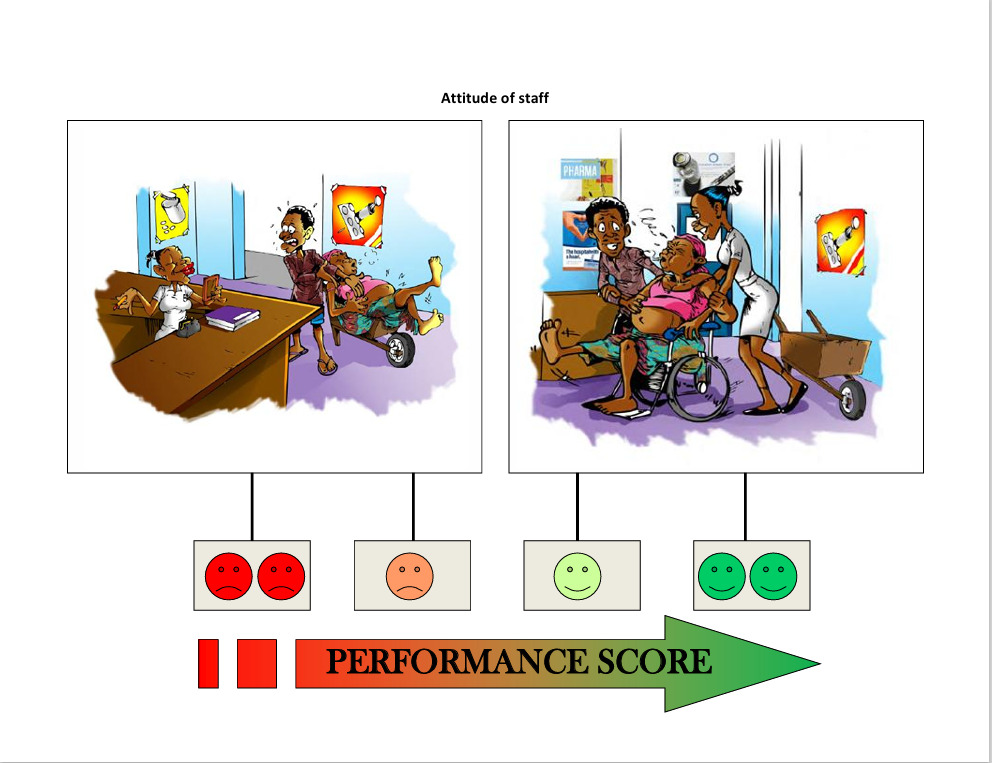
Example 26: For the design of action in Ghana, workshop participants (community members, healthcare providers, and insurance staff) were divided into three mixed groups, each facilitated by a researcher to ensure balanced input from all participants. Reflecting on the original research objective, they specified the key objectives for action (i): strengthening clients’ roles in their care through regular monitoring service quality and improving NHIS re-registration by digitalizing card production and decentralizing registration points. Participants co-designed interventions (ii) (e.g., client panels, community review groups, client quality assessment) to enhance clients’ voice in monitoring and evaluation, addressing their prior marginalization. This shift required commitment from both healthcare providers and the NHIS to become more client centered. Tools and materials for interventions were outlined (and later refined), including culturally appropriate cartoon-based MyCare scoring cards developed by a Ghanaian artist, with a four-point scale (poor, insufficient, good, excellent) (see example - Figure 3).
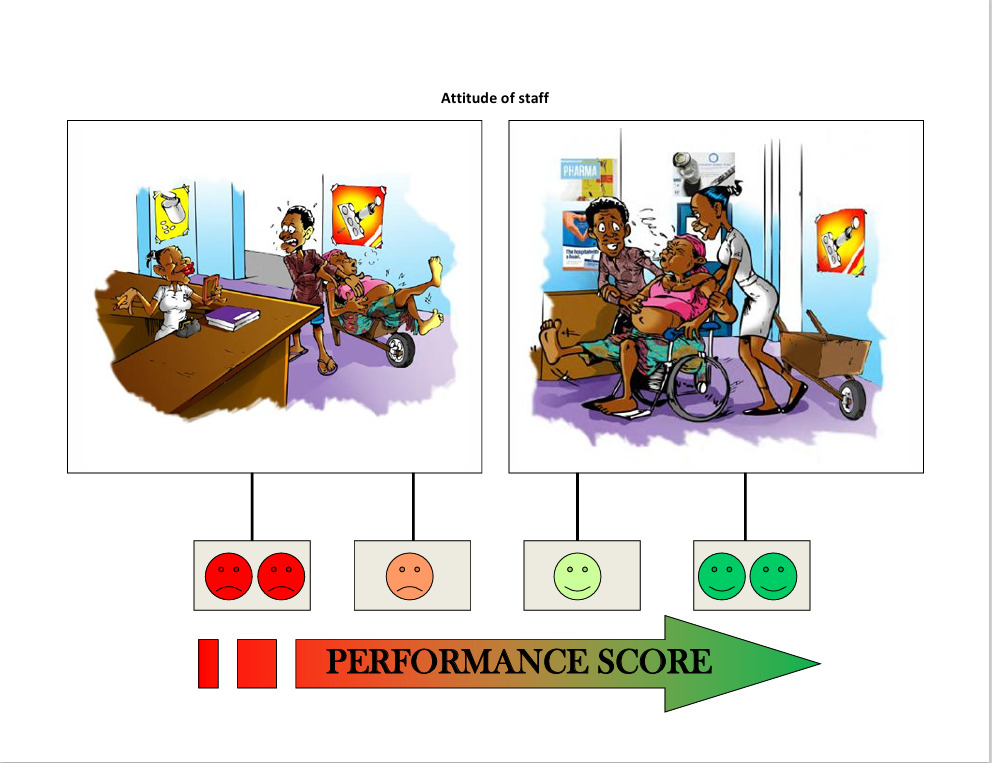
The full research project took four years. The researcher was familiar with the context and the stakeholders before the research project started, which made relationships and trust building easier and less time consuming.
Planning, Implementation (iii), and reflective monitoring of social change activities require clearly defined roles and responsibilities among (institutional) participants. The co-designed plan includes a timeline and milestones aligned with the intended change objectives. Implementation is led by the participants, with researchers playing a minimal, supportive role when needed, for example through periodic consultations on progress.
Participatory Monitoring and Evaluation (iv) methods—such as Most Significant Change (Davies & Dart, 2005; Sharma et al., 2024), Outcome Harvesting (Wilson-Grau, 2018), and reflexive practices (e.g., diaries or Reflexive Monitoring in Action) (van Mierlo et al., 2010)—enable participants to track progress, capture learning, and Adapt Interventions (v). Applied iteratively, these approaches support continuous Evaluation, Learning and Improvement of the Societal Change Process (vi).
Figure 4 presents the ParQRC 2026, visualising the participatory elements.
_with_specified_(predominant)_participatory_elements.png)
Evaluating the Success of Participatory Qualitative Research
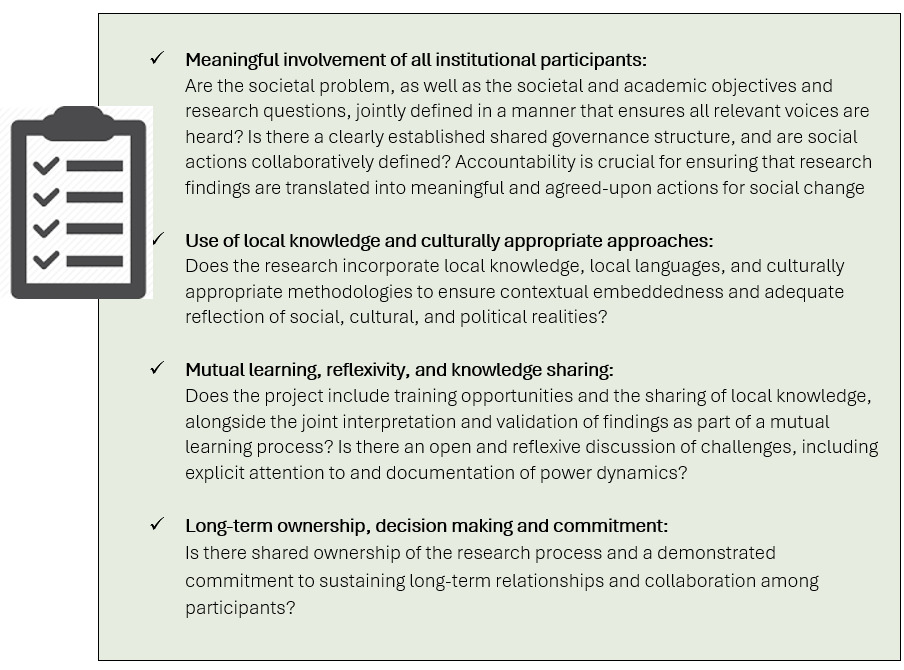
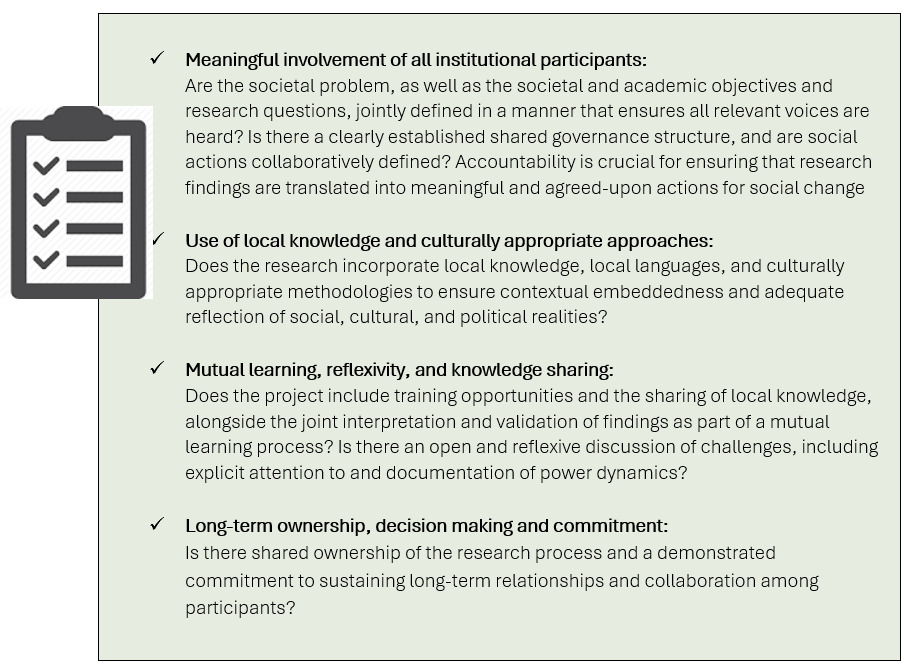
To determine whether the participatory research project was successful we can distinguish three areas for evaluation, using the illustrated checklist (Box 5):
-
Did the co-defined social action lead to tangible benefits or changes for the (institutional) participants? (impact); the participatory methods for evaluation are indicated above.
-
Has the entire research process been implemented in good quality according to the Participatory Research principles? (process).
-
Is there coherence between the different steps taken in the Participatory Qualitative Research process as represented in the ParQRC?
The components in the checklist refer to the principles of Participatory Qualitative Research as presented earlier in the paper. The indicators for evaluation can include:
Summary and Conclusion
This paper aims to demonstrate, through a range of examples drawn from Participatory Qualitative Research practice, how Qualitative Research, as outlined in Hennink, Hutter & Bailey (2020), can be made more ethically grounded, societal relevant, and contextually embedded through blending of participatory approaches.
While Qualitative Research and Participatory Qualitative Research share a common epistemological foundation and several methodological characteristics, including qualitative approaches of data collection and analysis, participatory qualitative research is distinguished by its specific focus on co-creation with societal partners within a transdisciplinary framework. Its primary aim extends beyond the generation of academic knowledge toward fostering meaningful societal change informed by rigorous and context-sensitive research processes. By jointly identifying societal issues, Participatory Qualitative Research becomes more closely aligned with participants lived realities, priorities, and experiences. This collaborative process enables evidence to be validated and translated into actionable insights for societal change. Researchers therefore have an ethical responsibility to support the use of evidence in informing and advancing meaningful societal change.
At the same time, the difference between qualitative and participatory research is often less clear-cut in practice. Many qualitative researchers claim to use participatory approaches, while just incorporating very few or incomplete participatory principles. Participatory research should therefore be understood not as a fixed methodological blueprint, but as a continuum of engagement, shaped by contextual conditions and practical constraints. In real-world research settings, factors such as limited funding, institutional requirements, and time pressures ask for pragmatism and methodological flexibility. However, such constraints should not undermine maintaining high standards of ethical integrity, reflexivity, and research quality.
Importantly, participatory research requires substantial investments of time and relational work. Building trust and rapport with participants, jointly identifying societal concerns, and collaboratively defining objectives for social change and action are iterative and time-intensive processes. This challenges dominant academic models that prioritize efficiency, rapid outputs, and individual scholarly achievement.
Furthermore, participatory research demands competencies that go beyond conventional academic expertise. Researchers must be able to engage across social and institutional boundaries, communicate in accessible and contextually meaningful ways, foster equitable collaboration, and critically reflect on issues of positionality and power. Such work requires ongoing reflexivity regarding whose knowledge is recognized, whose voices are amplified, and how decision-making processes are negotiated throughout the research trajectory. Accountability, therefore, extends beyond academic audiences and peer communities to include the institutional and societal participants with whom knowledge is co-produced.
In conclusion, participatory qualitative research offers significant potential for producing knowledge that is not only scientifically robust, but also socially responsive, ethically grounded, and transformative in practice. Its value lies in its capacity to bridge academic inquiry and societal engagement, thereby contributing to more inclusive, democratic, and action-oriented forms of knowledge production. Drawing on extensive fieldwork and insights from fellow participatory researchers, we show how the original model on qualitative research methods (Hennink et al., 2020) has matured. This evolution is captured in the current updated ParQRC. The revised model aims to help students, researchers, professionals and students who want to embark on Participatory Qualitative Research, especially those new to the field, to understand foundational differences between qualitative and participatory approaches while at the same time offering practical, step-by-step guidance to blend them in their work with communities and organizations toward societal change.
Future directions
As Participatory Qualitative Research continues to evolve, several areas deserve further attention and will be taken along in our next research. We will just elaborate briefly on four areas.
-
Embeddedness: is central to our participatory qualitative approach and as principle warrants further elaboration. This includes a more detailed explanation of the concept itself, as well as illustrative examples demonstrating how economic, social, cultural, and psychological dimensions of participants lived realities can be systematically incorporated into Participatory Qualitative Research. Expanding on how these contextual factors shape both the research process and the interpretation of findings would help clarify the practical application and value of this approach.
-
Levels of Participation: better insight is needed into the different levels / forms of participation that can occur throughout the research process. Participation is not a binary concept but exists along a continuum: from consultation to shared decision-making. Frameworks such as those proposed by Arnstein (1969) and Vaughn & Jacquez (2020), combined with our ParQRC, provide useful information and could be used for the development of a tool to assess the quality and depth of participation. Such a tool can also help researchers to critically reflect on the extent to which participatory principles are realized in practice.
-
Essential Social Skills, Values, Emotions: conducting high-quality Participatory Qualitative Research requires competencies that go beyond traditional academic research skills. Researchers must be able to facilitate group processes, build trust, manage power dynamics, negotiate conflicting interests, communicate across diverse stakeholder groups, and support collective decision-making. All of these are embedded in value systems and go hand-in-hand with personal social skills and emotions. Reflexivity, cultural sensitivity, and the ability to foster meaningful collaboration are therefore as important (or even more) as scientific theoretical and methodological expertise.
-
Process beyond Research: Organizational Development. The application of our Participatory Qualitative Research approach has expanded beyond research settings into organizational development and improvement processes (see e.g., examples 19, 22, 23). In such contexts, participatory approaches can support learning, innovation, and organizational transformation. While researchers traditionally focus on generating evidence, professionals and practitioners may use the principles to facilitate collective problem-solving and action within organizations. Other examples include participatory evaluations of health services, co-design of community programs and organizational learning initiatives. These developments highlight the potential of Participatory Qualitative Research not only as a research methodology but also as an approach for fostering evidence-informed organizational and societal change.
Acknowledgements
We want to thank our fellow participatory researchers and professionals whom we interviewed, and for sharing their experiences, illustrative examples and critical reflections. Your contributions have been instrumental in the enrichment and continued growth of our participatory research. Thank you: Suleiman H Abdullah, Robert Borst, Sanne Huesken, Anne Schoenmakers, Celinka Roovers-Werkman. We also want to thank Monique Hennink and Ajay Bailey for their critical reading of the first draft of this paper.
Conflicts of Interest
We have no known conflict of interest to disclose
Corresponding Author
Correspondence concerning this article should be addressed to: hutter@iss.nl