
Introduction
In the United States (U.S.), people living in rural areas experience poorer health outcomes compared to those in urban settings. Contributing factors include lower socioeconomic levels, limited access to healthcare resources, and environmental and occupational hazard exposures (Weeks et al., 2023). These inequities are complex and interconnected, spanning multiple social systems (Cheney et al., 2018). Addressing such challenges requires innovative and collaborative approaches that actively include rural populations and center their perspectives.
Traditional policymaking approaches often fail to meaningfully engage those most affected by policy decisions (Welton & Mansfield, 2020). Community-based participatory strategies, which involve active collaboration from affected populations throughout the process, might better promote health equity. Individuals’ lived experiences and community knowledge position them to anticipate and assess the potential impacts of interventions (Payán, Zawadzki, et al., 2022; Shalowitz et al., 2009; Welton & Mansfield, 2020). Moreover, partnering with local groups and populations can help identify health policies that are both responsive and relevant to the community’s specific public health needs.
Community-based participatory strategies in public health include community-based participatory research (CBPR), which is a widely known approach that seeks to bridge the gap between research and practice by equitably engaging communities to reduce disparities in population health (Cyril et al., 2015; Wallerstein & Duran, 2010). An example of a CBPR approach is citizens’ panels, which prioritize engaging stakeholders and community members to tailor research projects and interventions to address health inequities (Subica & Brown, 2020). Citizens’ panels are meant to engage members of the community to tailor research and interventions with the goal of reducing health inequities (Subica & Brown, 2020) that are either created and/or exacerbated by structural racism (Oetzel et al., 2022).
Citizen panels aim to center the perspectives of local residents and prioritize their concerns. The approach also engages participants in a shared learning process and reflection about data on the scope of the issues identified. While citizens’ panels have previously been adapted to an online modality to assist with cardiovascular research (Siira & Wolf, 2022) and for a variety of health burdens (i.e., those at risk of and affected by HIV/AIDS), this approach has largely been used with minoritized communities in predominantly urban or metropolitan settings and not in rural communities, which face unique intersecting challenges. The under-resourced nature of rural communities, including those in California, means that interventions must be adopted and implemented under severe resource constraints, including limited healthcare facilities and provider shortages. Despite their longstanding, multigenerational ties to place and demographic significance, rural communities continue to be treated as a monolithic population rather than active partners with distinct regional needs and priorities (Jensen et al., 2020). Given these distinct contexts, modifications to deliberative approaches may be needed to foster dialogue and action. These modifications can lead to improved engagement and participation, and ultimately, to actionable policy ideas that are feasible in rural communities.
This article describes how we adapted this approach (citizens’ panels) as part of an academic-community collaboration to prioritize local perspectives, cultural alignment, and policy feedback in a rural California setting (Merced County). We begin with a concise overview of the original Subica and Brown’s Citizen Panels for Health Equity framework and method (Subica & Brown, 2020). Next, we provide details for each step of the citizens’ panels. We describe specific adaptations to tailor the process to foster alignment with the community partner and to be responsive to regional concerns and needs. Finally, we highlight key lessons learned, which may guide others seeking to replicate or adapt the citizens’ panel approach in their own communities to address health equity through participatory approaches.
Study Setting: Merced County, California
The study setting is Merced County, a rural, agricultural region in California’s San Joaquin Valley (SJV) with notable demographic and economic diversity, where the economy depends heavily on a farmworker labor force that faces significant hardships. The population size is 282,447, predominantly Hispanic or Latino (63.9%), with 26.1% of residents being foreign-born (United States Census Bureau, 2019–2024). Economically, the county faces greater challenges relative to the state of California as a whole. The county’s median household income is $64,044, approximately $31,000 below the state average of $96,334, and 16% of the population lives in poverty (United States Census Bureau, 2019–2024). Merced County is among the most medically underserved areas in California (Coffman, 2017) and about 8% of those under the age of 65 lack health insurance (United States Census Bureau, 2019–2024). Housing costs are also relatively high, with median monthly rent (including estimated utilities) averaging $1,284, creating affordability challenges. The availability of rental properties in Merced County is also decreasing each year (ABC30, 2018), compounding housing pressures. Further, Merced, like other SJV areas, has a history of policies that have contributed to unequal neighborhoods, including racial segregation (Central Valley Health Policy Institute, n.d.).
Academic-Community Partnership
The academic-community partnership consists of a rural academic research institution, a policy translation center, and a local community-based organization (CBO). The CBO, Cultiva Central Valley, has deep roots in the region and a high level of awareness and familiarity with their county’s socio-political landscape, thus positioning them to engage in meaningful dialogue. Cultiva Central Valley is a nonprofit organization that engages with community residents in creating policy, systems, and environmental changes. The organization focuses on supporting health equity initiatives for low-income Latino immigrant farmworker communities throughout Merced County. Through these efforts, they have established strong partnerships with a broad range of community groups and earned the trust of community residents, including their large network of promotoras — a Spanish term for a community health worker (CHW), who are residents from Latino immigrant farmworker families and communities, living in the same neighborhoods and facing the same conditions as those they serve. This dual role as both community members and health educators meaningfully shifts the dynamic from top-down information delivery to peer-led knowledge exchange.
Cultiva Central Valley’s promotoras complete a 12-week training, Powerful People, which introduces participants to local government, including the roles of different departments (e.g., parks and recreation), the city councils, the board of supervisors, budgets, policy enforcement, and how public meetings and agendas work. The training culminates in hands-on civic engagement — participants attend a city council meeting and sign up to speak. Promotoras have worked on various community initiatives, including advocating for smoke-free policies in public parks, securing a crosswalk installation near a school to improve student safety, and participating in city council meetings to engage with local governance processes.
Adapting Citizens’ Panels for Deliberation and Policy Assessment in Rural Settings
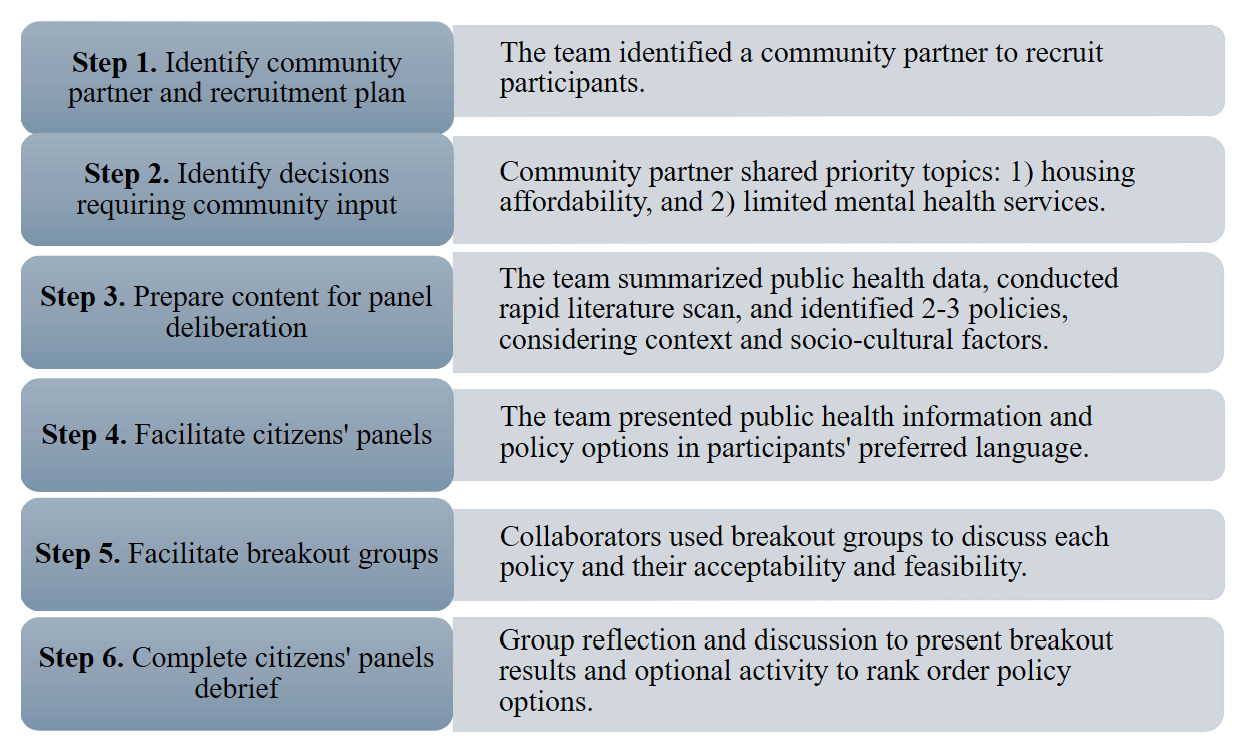
Subica and Brown introduce citizens’ panels, an approach to engage community members to review evidence on interventions addressing local health concerns and to discuss which approaches may be most effective given citizens’ knowledge of local circumstances (Subica & Brown, 2020). They describe the following steps for conducting citizen panels: “(1) identify community partner, (2) establish community sample and recruitment plan, (3) identify decisions requiring community input, (4) prepare content for panel deliberation, and (5) facilitate citizens’ panels” (Subica & Brown, 2020). The objective of this project was to adapt the citizens’ panel approach for rural communities and settings. Figure 1 details the steps we used to implement citizens’ panels.
Step 1. First, we identified a community partner in Merced County. We invited Cultiva Central Valley, a community-based organization (CBO), to collaborate since we had an established partnership through previous collaborations, and the project goal was aligned with their organizational mission. We consolidated steps from the original citizens’ panels by working with the organization’s leadership to recruit their promotoras. In this case, we selected the community partner’s promotoras as the primary participants or ‘citizens’ instead of recruiting additional community members from a broad range of organizations. Our justification was to collectively prioritize the promotoras’ knowledge and experiences, including their interactions and relationships with community members in the region.
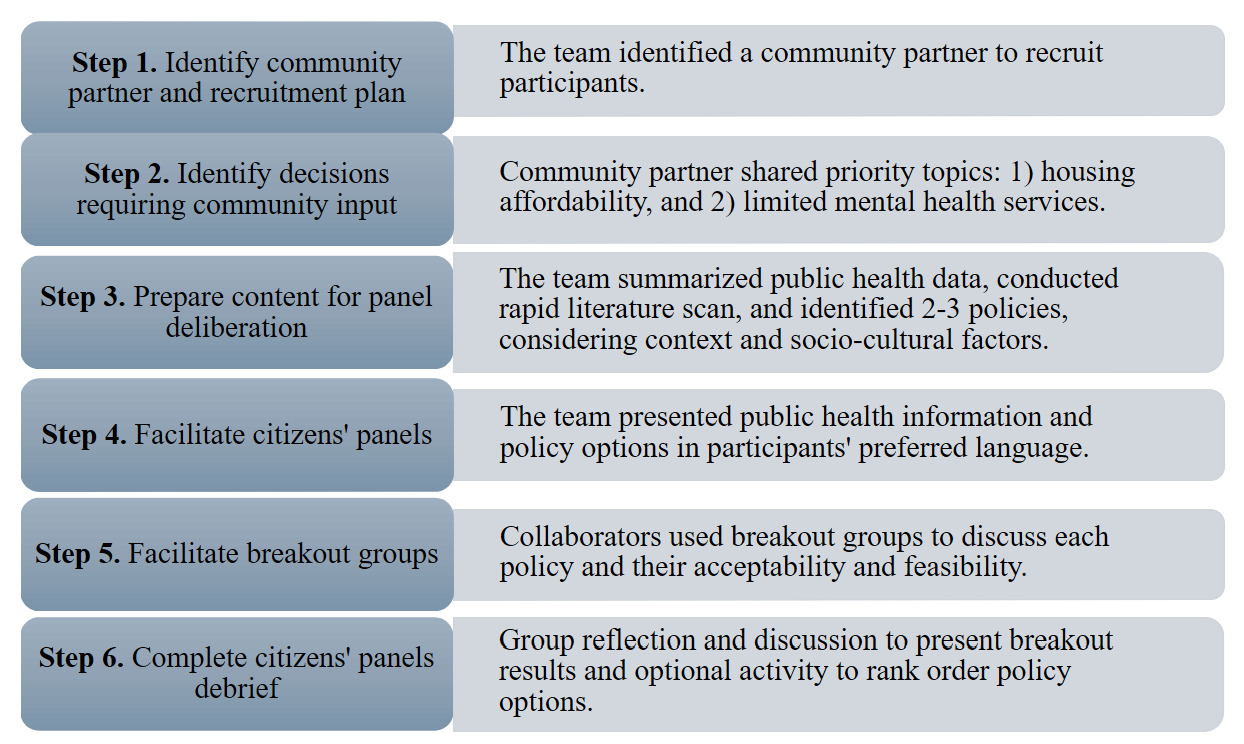
Step 2. Subica and Brown specify that once the target population is selected, researchers must identify the specific decisions for which they need community input, which generally include (1) designing future research and (2) tailoring interventions. To address the first item, the team informally conversed with Cultiva Central Valley’s leadership and promotoras to identify their top health-related concerns. Promotoras identified two issues to prioritize: 1) housing affordability and related matters (e.g., eviction, not getting deposits back), and 2) limited mental health services (e.g., recognition of mental health needs, access to culturally responsive services). They shared that community members frequently reported difficulty finding affordable housing and noted an observed rise in depression and anxiety among Merced County residents since the COVID-19 pandemic.
Step 3. The team summarized relevant public health surveillance data, conducted a rapid scan of existing relevant literature, and identified evidence-based policies and programs to address housing and mental health crises. We prioritized local policies in U.S. cities and towns that were both potentially salient (i.e., implemented in rural communities) and culturally relevant to increase their feasibility and relevance. The goal was to present evidence-based policies that were also, at least partially, aligned with the local socio- economic context and cultural context of the region. For example, in selecting behavioral health policies, we focused on policy initiatives in California jurisdictions with a high percentage of Latino residents since promotoras had shared that it was important to identify culturally responsive solutions, including a higher quantity of bilingual, bicultural services. Merced County is designated as a Mental Health Professional Shortage Area. In 2021, there were 80.7 mental health providers for every 100,000 population (Professional Research Consultants, 2022), which is well below the statewide and recommended levels. Beyond the shortage, there is additional evidence of local concerns regarding whether existing services adequately address the cultural contexts, beliefs, and practices of Latino communities (Magaña, 2021). This was not feasible for all policies, so the team also included policies with high salience and potential to address the identified public health priority.
Policy Options to Address Housing Affordability
The team surveyed local housing policies currently in effect in the U.S. to address housing affordability issues. Table 1 provides a description of each policy with the corresponding jurisdiction. These policy options included the following three policy topics: (1) protecting tenants during and after severe weather events, (2) the right to legal representation, and (3) incentives and rewards for property owners. In selecting and evaluating these options, it was important to consider how Merced County’s rural characteristics — including geographic isolation, a predominantly outdoor agricultural workforce, limited public transportation, broadband gaps, and a scarcity of legal professionals — may shape how each policy would function in practice.
Policy Options to Address Mental Health Shortages
The team surveyed policies to address mental health shortages, particularly culturally responsive providers and/or treatment, currently in place in California to address the mental health shortage issues. Table 2 provides a description of each policy with the corresponding setting. Policy options included: (1) Universal Basic Income (UBI), (2) Project Cal-Well, and (3) Community Mental Health Equity Project from funding (Assembly Bill or AB 74).
Steps 4-6. Steps 4-6 occurred during the citizens’ panels. Overall, we conducted two citizens’ panels. The first occurred in April 2024 and the second in August 2024, with ~25 participants each time. Facilitation strategies emphasized creating an inclusive and respectful environment, encouraging open dialogue, and centering promotoras lived experiences as essential forms of knowledge. To mitigate potential power dynamics that could inhibit open and authentic participation only promotoras were present during the panels — no representatives from the partnering CBO attended.
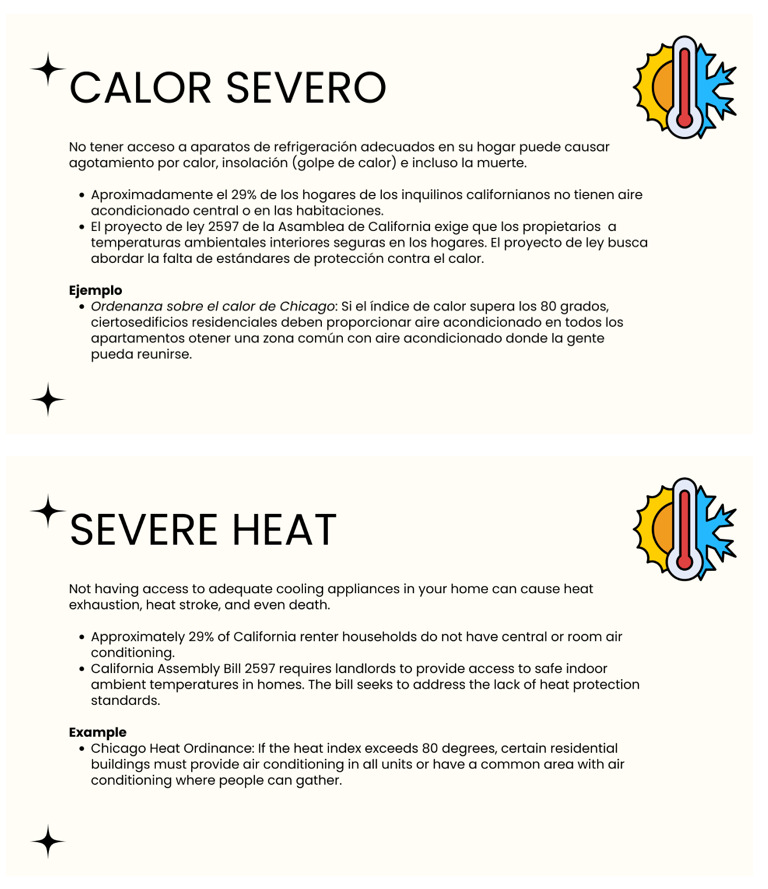
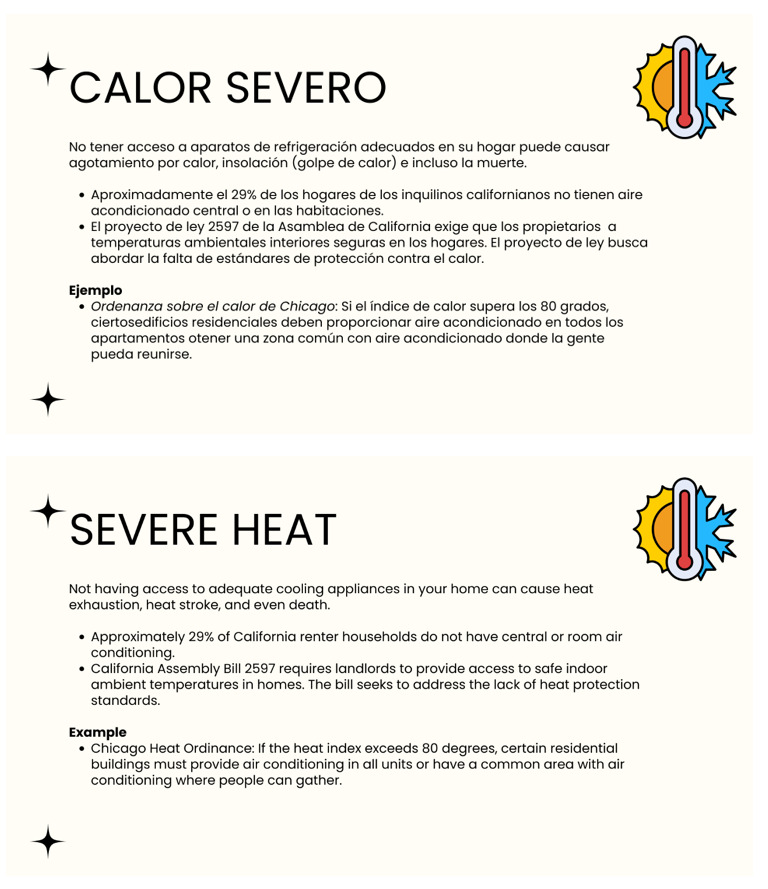
Both citizens’ panels were about two hours in duration and included lunch. Figure 2 provides an example of how the team presented relevant public health data and policy options to address concerns. Then, participants were divided into breakout groups to discuss each public health problem further and to rank each policy option by feasibility for adoption in the county. Presentation slides and materials were prepared and presented in Spanish since a majority of promotoras from the partner group were monolingual Spanish speakers. During the breakout session, the team asked the following questions:
-
How can we make the policies and initiatives presented work in Merced County?
-
How can access to housing/mental health be improved?
-
What types of elements or changes would you like to see to make services culturally appropriate or understandable to you?
-
What types of services would you like to see to ensure housing services/mental health services are culturally appropriate?
-
What services or resources are needed to increase access to housing/mental health services in your communities and with your neighbors/families?
The final step was to regroup with all participants after breakout groups and to ask participants to rank-order policy options based on the policies presented and discussions. We made the rank-order instruction optional after participants expressed difficulty rank ordering the policy options and said they preferred to continue to learn and discuss items. Thus, the additional modification in Step 6 was to make it optional to rank-order policy options and instead, extend the time for reflection and discussion. As a result, rather than relying on a formal ranking, the team drew on a fieldnotes and post-panel debriefing session to identify which policy options generated the most discussion, recurrence, and expressed urgency among the promotoras. These patterns of emphasis across the deliberation served as the basis for understanding prioritization. Below are detailed descriptions of policy options and discussions for each session on housing affordability and limited mental health services, respectively. We illustrate key concerns and discussion points from participants in a rural region.
Promotoras Perspectives on Policy Options
All the policies presented to address regional housing affordability and related matters were positively received by promotoras in the breakout rooms and in the large discussion, without a strong preference expressed for one option. There was a slight preference expressed by some for the right to legal representation, as promotoras shared that community members are not aware that they have the right to legal representation or of regulations that apply to landlords due to language barriers. Specifically, several shared that this information was not often provided in Spanish. They also shared many personal and community members’ stories about landlords not keeping their homes maintained and how renters receive backlash if they report an issue such as mold, a gas leak, or problems with the air conditioning and heating unit. Promotoras expressed how this leaves tenants feeling stuck and forced to live in unsafe conditions because of the affordability and availability of rental properties in the area.
Of the policies presented to address regional mental health shortages, promotoras did not express a strong preference for any single option. However, Project Cal-Well and the Community Mental Health Equity Project received the most support, especially among promotoras with school-aged children and grandchildren. Several said Project Cal-Well and the Community Mental Health Equity Project would complement one another and could potentially reduce disparities, increase cultural humility, and improve access to mental health services among families and children in Merced County. Discussions reflected that participants perceived school, community, and health resources to be limited resources that were part of a larger interconnected safety net of behavioral health services. All were key access points for families to access mental health services. Participants expressed concern with a UBI program, specifically that residents might become dependent on these new funds long-term. Some said it was also less feasible to pursue as a policy option among policymakers.
Lessons Learned
Adapting participatory approaches is an important area of focus and inquiry in order to promote cultural relevance, legitimacy, and responsiveness of interventions and policy recommendations. This work describes key adaptations we made to the process of conducting citizens’ panels in response to what our team and community partner learned about implementing citizens’ panels in this specific context and what participatory researchers more broadly might take from our experience to extend existing knowledge about this methodology.
First, we recognized the importance of taking into consideration and being responsive to cultural factors mentioned by community participants, particularly with regard to mental health service needs. Through our engagement, we heard about considerable stigma that still exists around seeking formal mental health services in the Latino community, in addition to the severe mental health provider shortages in this rural region. When preparing citizens’ panels materials and identifying policy alternatives, we emphasized and searched for culturally-responsive policy options. Doing so helped to foster a responsive, supportive, and open dialogue around mental health and to integrate cultural sensitivity into policy design.
Next, the process of formulating and facilitating citizens’ panels—i.e., to bring together community members for structured deliberation and discussion—has inherent value beyond the conclusions or recommendations that emerge from them. The process and act of involving promotoras in policy discussions, particularly in a rural and under-resourced region, can lead to increased awareness of the scope of public health issues (beyond anecdotes) and be the initial step in policy awareness, learning, and discussion, and reflect broader community development, democratic participation, and serve as the foundation for future collaborative policy work (Payán, Lewis, et al., 2022). We learned that participants may express a preference for additional reflection and discussion, instead of the rank-order process, as they process new information. Some promotoras said they viewed health challenges as deeply interconnected, recognizing that mental health and housing are not separate issues, but intertwined aspects of community well-being. Their hesitation to prioritize policies reflects a sophisticated perspective that may view social challenges as complex, systemic problems requiring comprehensive, holistic interventions. Rather than viewing policies as isolated solutions, they understand that effective community support must address the intricate web of social, economic, and cultural barriers that impact individual and collective health.
This work reveals several key insights on the use of citizens’ panel methods for communities in rural settings. First, existing guidance on citizens’ panels utilizes rank-ordering as a voting process to identify community members’ policy priorities (Abelson et al., 2003; Subica & Brown, 2020). Our experience suggests that, with communities navigating multiple systemic challenges, using a rank-order voting process may be misaligned with community members’ values and preferences. When ‘citizens’ view social problems as deeply interconnected, asking them to isolate and rank discrete policy solutions may feel reductive or even contradict their lived understanding of how policy change works. Importantly, the promotoras in this study were familiar with civic and policy processes — they had completed a structured civic engagement training prior to participating in the panels. Their preference for deliberation over rank-ordering should not be attributed to limited policy literacy. Rather, it points to a methodological insight: the nature of the concerns themselves may demand more flexible prioritization approaches. Future research using citizens’ panels methods might use more flexible voting structures or benefit from multiple phases with iterative learning components.
Culturally responsive adaptation of citizens’ panels is underexplored in the methodological literature. While participatory research frameworks broadly call for cultural humility and community responsiveness (Collins et al., 2018), specific guidance on how to adapt citizens’ panel material, facilitation, and policy option framing for rural Latino immigrant communities — or other communities with distinct minimal relationships to health and government is limited. Researchers should treat cultural adaption not as a preliminary step but as an ongoing, iterative process as attending to stigma, language, and the cultural framing of policy options.
Partnering with a promotora group and network offered several advantages, including partnering with established and trusted individuals with deep ties to the community, facilitating recruitment through established relationships, and creating a space where participants shared common experiences and engaged in open dialogue. However, a limitation of this decision is the exclusion of a wider set of community perspectives, such as participants from other CBOs or community members with different lived experiences.
Conclusion
Citizens’ panels, when thoughtfully adapted to a community, generate value that extends beyond policy recommendations. Throughout this engagement, promotoras gained strategic knowledge about locally feasible policy options and identified critical cultural considerations, particularly the need to address mental health stigma within rural, Latino communities. Most significantly, their difficulty in ranking housing and mental health policies reflected not confusion but sophisticated insight: these challenges are deeply interconnected for Latino communities facing multiple systemic barriers simultaneously. This holistic understanding suggests that meaningful progress requires integrated, culturally responsive approaches that honor the complexity of lived experience rather than isolated interventions. By adapting citizens’ panels to embrace this complexity and centering community advocates’ wisdom, we create pathways for more effective, democratically grounded policy solutions that address the intricate web of social, economic, and cultural factors shaping community well-being.