Introduction
This paper presents a critical systemic form of participatory action research methodology, developed over a 36-month period, using a ‘circle of enquiry’ approach to understand the specialized mental health needs of diverse ethnic groups. The ‘Community Participatory Action Research’ (CPAR) Project, running within Gloucestershire from 2022 to 2025, is a One Gloucestershire NHS mental health commissioning team funded longitudinal enquiry into the needs of and barriers to services across diverse and seldom heard communities. The CPAR project commenced by inviting community members to join the project to explore diverse forms of community well-being and mental health. The project leads, Bevan and Broomfield, attended a range of community hubs for diverse ethnic communities across the county to invite participation in the collaborative research environment. Fourteen members from under-represented communities in Gloucestershire applied and were subsequently brought together by the lead researchers into an initial training and enquiry platform: ‘the circle of enquiry’.
Already established as participatory researchers, Bevan and Broomfield wanted to advance our knowledge of innovative methods in community engagement and qualitative participatory enquiry. Our interest was in ‘co-creation’ (Heron, 1996, p. 37), as a deeper form of co-production, which would both elevate participants’ lived experience and create a platform of critical shared reflexivity and awareness across participants in the enquiry. This approach was innovative as we used the distinct model of a community of enquiry and developed this as a platform for a range of creative and holistic health methods, working to build relationships in a longitudinal immersive enquiry rather than a time and task orientated one. Sharing the development of this method with representative community researchers has enabled us to advance it as a form of qualitative research for community engagement and responses in contexts where many hold residual memories of cultural displacement and oppression. The central theme of enquiry is sense of self-worth, transformative self, and self in relation to sense of heritage, being, and belonging.
The circle approach is symbolic, physical, and representative of a cyclic, iterative process of knowledge co-creation. This type of creative synthesis within the community of knowledge holds its own capacity for transformation. Equally, including representative co-researchers enriches the co-design of the community response framework as a further form of experiential co-creation and shared investment. We present the method as a distinct type of research participation for people experiencing race-related forms of mental health and distress. It requires a sharper definition of qualitative approaches in response to community conflict, a way of engaging with deeper emotional aspects of critical enquiry, and new ways of defining terms of mental health and need. Establishing these terms through knowledge creation is a way to embrace cultural diversity and culturally influenced rhythms of community sustainability and health.
The paper starts by introducing the contextual background for mental health experience and collaborative service responses within the UK. We then situate our research within the wider academic landscape, critiquing existing participatory action research in mental health. Finally, we detail and analyse core elements of the circle of enquiry method in relation to our project, and present a model of how these elements sit within a particular ontological system.
Mental health issues and needs in UK
There is no universal consensus on the conceptualisation of mental health as definitions differ across time, cultures, and societies (Galderisi et al., 2015). Drawing on Sealey’s broad conceptualisation, this paper considers mental health as ‘the emotional, psychological and social factors that affect how people think, feel and act, and which either limits their mental health or enables them to improve it’ (Sealey, 2023, p. 92).
The most recently published Adult Psychiatric Morbidity Survey from 2014 reported a long-term trend of steady increases in severe, yet common, mental health disorders such as stress, anxiety, and phobias (McManus et al., 2016). The Mental Health Taskforce (2016) reported mental health conditions as the largest single cause of disability in the UK with an estimated overall cost to the economy of £105 billion a year, which at the time equated roughly to the cost of the entire National Health Service (NHS) healthcare system in the UK. The Mental Health Services Monthly Statistics Dashboard (NHS England, 2024) indicates the number of adults with a serious mental illness accessing community mental health services increased by 20% between January 2022-January 2024. Additionally, the 2024 General Practice Patient Survey (GPPS) reported that 13.5% of GP patients indicated they had a mental health problem (Ipsos, 2024).
Mental health needs, access and experiences of minority ethnic groups
Research indicates that people from minority ethnic groups are at greater risk of developing mental health conditions than those from ethnic majority groups (Mental Health Taskforce, 2016). People identifying as Black are more likely than average to experience a common mental disorder than other groups, with a tendency to screen positively for post-traumatic stress disorder (PTSD), bipolar disorder, and psychotic disorder (Baker & Kirk-Wade, 2024). Refugees and asylum seekers tend to experience more sustained mental health problems than the general population including higher rates of depression, anxiety, and PTSD (Mental Health Foundation, 2023). People from minority ethnic groups also experience barriers to accessing adequate mental healthcare. Suggested reasons for this phenomenon include cultural or social stigma and lack of suitable methods of consultation (Bansal et al., 2022). Studies have found that minority ethnic groups experience different treatment and pathways to mental health support than majority ethnic groups, which serves to reinforce their already disadvantaged position (Bignall et al., 2019). This latter point is relevant to our project as it centralises the need to validate diverse experiences across cultures in terms of mental health re-orientation.
Recent research has also identified that underpinning issues of need, access, and experiences that ethnic minority groups face in relation to mental health are systemic factors of racism, discrimination, and cultural stigma (Winsper et al., 2023). This results in mental healthcare being termed as an ‘epistemic injustice’ (Bansal et al., 2022), framing the systemic barriers our project has highlighted. This is evident ‘particularly among those who attribute their mental illness to experiences of migration, systemic racism, and complex trauma’ (Bansal et al., 2022, p. 1). Okoroji et al. (2023, p. 1) suggest that epistemic injustice is widespread in mental health service-delivery systems and particularly impacts people from diverse ethnic communities. Where such epistemic injustice occurs, this perpetuates and exacerbates the negative mental health outcomes of individuals and groups (Bansal et al., 2022). These findings suggest the need for specialized knowledge of mental health to be a priority focus for minority and under-represented groups, in alignment with our primary project aim.
Participatory action research as a method for mental health
Following Heap et al. (2022, p. 2) we define participation in mental health as ‘the active involvement of people affected by interventions or targeted action (including wider research projects)’. There has been growing recognition that health challenges are as much social as physiological, and this has led to an increase in the use of qualitative and mixed methods in healthcare research. This introduces a concomitant shift from positivism to a more critical and constructionist ontology that recognises the value of learning from the individual and shared experience of the population to the benefit of population health (Cruickshank, 2012). In the UK there has been a notable focus on the importance of co-production approaches in policy and legislation, (Sealey et al., 2022) to the benefit of marginalised and seldom heard voices who are increasingly included in participatory research (Broomfield et al., 2021).
Co-production and Participatory Action Research (PAR) have epistemological similarities in both valuing the knowledge generated through shared activity, between and across experiences, as opposed to through neutral observation of phenomena. PAR is a research approach that involves a community of members who have a shared investment in the subject of enquiry of the research process and in transforming social circumstances. It is increasingly recognised as a valid method of enquiry to investigate and overcome epistemic injustices (Cornish et al., 2023), featuring a distinct type of participation, building largely on Lewin’s (1946) ‘action research’ approach. This type of epistemology has ‘prioritized people’s participation in co-producing knowledge, instead of the positioning of local populations as the subject of knowledge production practices imposed by outside experts’ (Cornish et al., 2023, p. 2). The core principle of PAR, unlike other research approaches, is a belief in the emancipatory potential of the enquiry that occurs because of the focus on the co-production of knowledge, which foregrounds the experiences and perspectives of those with lived experiences. PAR requires the development of sustained community partnerships, distinguishing PAR from those approaches that claim to be participatory but are simply engaged in talking with community dialogues and running focus groups for research participants (Macaulay, 2017). In our terms, aligned to co-production is the concept of ‘co-creation’, taken from Heron’s model of ‘co-operative inquiry’ (1996). Moustakas (1990, p. 52) terms this ‘creative synthesis’, an illuminative form of collaborative knowledge formation.
A key difference between PAR and conventional healthcare research approaches is the distribution of power and agency in the research process. For PAR, power is diffused and shared amongst all participants, resulting in authentic engagement and co-production throughout the process (Duea et al., 2022). Epistemologically, this is reflected in PAR’s multiple iterative cycles (James et al., 2008), which allows involvement, knowledge, analysis, learning and practice to develop. The iterative nature of PAR means that these processes are interlinked, and occurs because, unlike traditional research approaches, PAR is not a once in time method of enquiry but requires long-term, ongoing engagement between parties to facilitate its emancipatory potential. For example, Thomas et al. (2024) identified the importance of prolonged engagement between the participants to enable trust to be built up when attempting to address barriers to issues such as self-stigma and fear. This introduces an intrinsic tension, however, as research leads face the need to respond to potentially highly sensitised dialogues about emotion and distress associated with the experiences being shared. Using this sort of immersive approach requires project leadership skills which can hold the range of emotions that emerge. One of the strengths of PAR for mental health research is that it allows for ongoing dialogue between participants which can enable issues to emerge beyond the typical surface level discussion to a more critical account of reality. It also nurtures the capacity for transformation through enhanced self-awareness and inter-relational synergy in the development of the research enquiry. Transformation in PAR is not limited to co-researchers, but to all involved in the research process, which can lead to the emergence of a new reality or ‘counter-discourse’ which challenges existing ontological conceptions (Fals-Borda, 1987). It is through this counter-discourse that counter-narratives occur which break the monopoly of positivist ‘science’ towards transforming existing oppressive systems and structures (Fals-Borda & Rahman, 1991). Emancipatory research increasingly emphasizes the creation of ‘counter-stories’ (Nelson, 2001), replacing oppressive identity constructs with those which generate respect and ‘narrative agency’ (Baldwin, 2013).
However, it is important to acknowledge here that’ transformation’ is not atheoretical, but exists as a research paradigm among many others; this means that it reflects beliefs that guide actions, of which Merton (2007) identifies 4 key beliefs in the transformative paradigm: ontology, methodology, epistemology and axiology. Applied to this project, this orients its ontology as uncovering the multiple realties of mental health and the ways that some are privileged over others. It is a methodological formation of an iterative ‘cyclical approach that involves an ongoing relationship with the community where the results of one cycle of inquiry feed into decisions about the next cycle of inquiry’ (Mertens, 2010, p. 14). This epistemology establishes respect for an awareness of the lived experiences of participants, especially in relational positions of power and privilege; axiologically undertaking the research in terms of mutual respect and beneficence, with the wider aim of improving the lives of those involved.
The ‘circle of enquiry’
The mental health needs, access issues, and experiences of minority ethnic groups that result from systematic issues or racism, discrimination, and inequality are often unexplored or misunderstood. The focus of the CPAR project in Gloucestershire was to bring these issues to the fore and confront, head-on, epistemic injustices. To this end, we proposed using a more immersive form of community PAR with specific focus on the inter-relational essence within the enquiry. As with Burgess et al.'s (2022, p. 3) use of PAR to ‘reimage’ community mental health services in Columbia, this involves ‘the inclusion of everyday actors, or potential service users, within processes of design and development…through involving everyday community members using a CPAR model, to think through what changes are needed to improve access to and quality of mental health services’.
Bevan, as the primary project lead, developed the circle method as a critical systemic form of community enquiry within a PAR project with young people affected by the psychological strains of conflict in a context of military siege (Bevan, 2021). Her circle method combined the approaches of Heron (1998) and Moustakas (1990) as a dynamic co-designed process that moves between experience and reflection to create a cycle of collaborative learning. Moustakas (1990, p. 47) presents reflective dialogue as the preferred approach to capture this essence of collective human experience through the encouragement of ‘expression, elucidation, and disclosure of the experience being investigated’. In that research project (Bevan, 2021), the aim was to develop holistic methods of response to the contextual features of trauma with young people who could support their peers in adverse community circumstances. The circle approach provided a sense of safety and retreat in a context of threat, and in this CPAR project, we have extended the ontological position that the circle is symbolic, tangible, and representative of a cyclic, iterative process of knowledge co-creation.
Heron’s model of ‘co-operative enquiry’ (1996, p. 36), supports the notion of threads of action research enquiry which build in cyclic, iterative forms of research platforms to reach a place of critical awareness and synthesis. This is enhanced by the heuristic account of Moustakas (1990) which held a parallel interest in co-created knowledge in inter-relational exchange, and through different frequencies of rhythm and flow in the ‘search for human meaning’ (1990, p. 47). The cyclical form of phases of enquiry enabled non-linear, non-hierarchical ‘rhythms’ of enquiry, and underneath this, a growing sense of personal and collective synergy.
Broomfield was invited to co-lead the enquiry in Gloucestershire with Bevan. Broomfield is a speech and language therapist and researcher with expertise in inclusive research practices, including using creativity to enable meaningful engagement with seldom heard voices (Broomfield et al., 2021; Volkmer & Broomfield, 2022). Together, the professional backgrounds and research in different contexts of community engagement of the project leads intersected around creative and holistic approaches to mental health and wellbeing. Our different yet complementary forms of professional scholarship advanced the circle method through the Gloucestershire project, which was extended further in a critical contextual way through the insights and contributions of our diverse ethnic co-researchers.
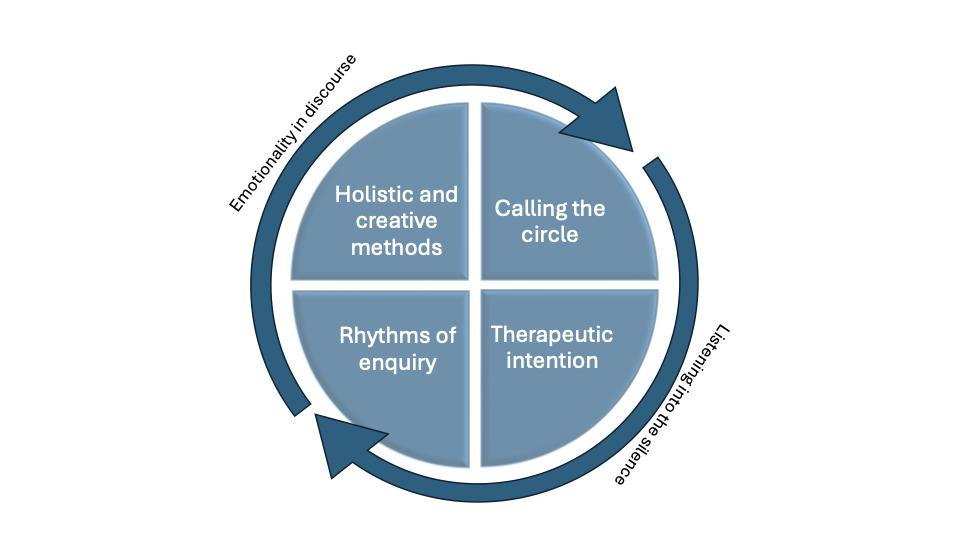
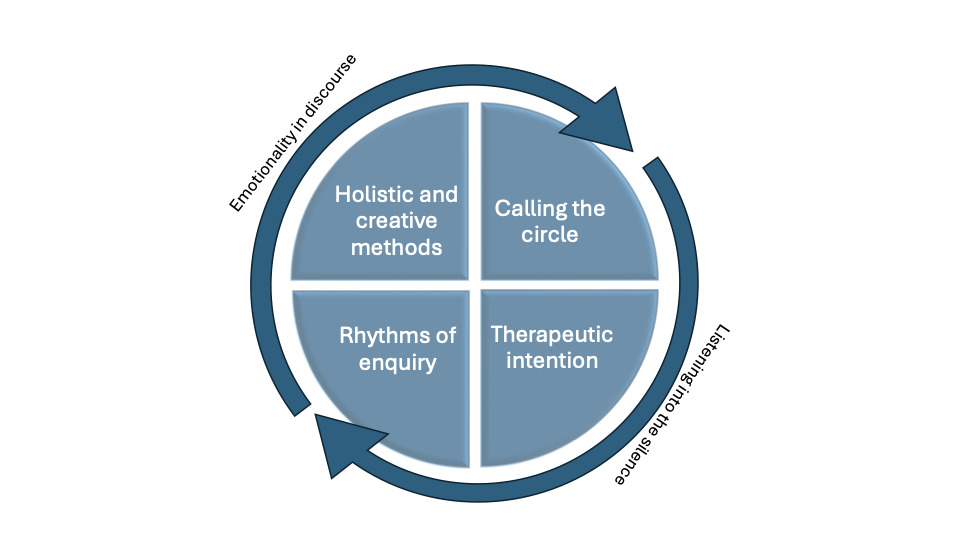
Figure 1 illustrates the four components that guided our circle of enquiry: 1) the ‘art’ of calling the circle, 2) the therapeutic intention as the watchful lens, 3) the focus on different rhythms of enquiry and 4) the use of creative and holistic health methods. These are situated within an ontological framework as a cradle that holds the emotionality of the discourse that people brought into the circle while also listening into the silence. They are also intrinsically linked to PAR’s iterative cycles of diagnose, act, measure and reflect, but in a way that is ‘messy’ (James et al., 2008) rather than linear, which is normal in PAR research. These are discussed in more detail below.
Central elements of the circle
Calling the circle (diagnose)
‘Calling the circle’ is our term for the creation of a tangible circle of people as co-enquirers and co-creators of knowledge. It is an invitation to their curiosity and awareness; to share and build trust through expressions of interest, visions, and concerns. At this stage, the project leads ‘hold’ the circle using actions or activities that reflect facets of community cohesion in terms of sense of belonging and worth, curiosity, and receptivity. The act of calling the circle also has deeper symbolic resonance, holding the potential to echo ancestral traditions of campfire and tribal circles as a meeting place used to explore community traditions and concerns.
The CPAR enquiry worked specifically across diverse ethnic groups with histories of exclusion or misrepresentation. ‘Calling the circle’ has been used as the term to express the initial step into a multi-representative enquiry platform to address these potential under-currents in authentic, highly sensitized ways. Cornish et al. (2023) discuss the needs of accountability and situated expertise in a critical community enquiry platform. This expertise is described as a form of ‘critical reflexivity’ (2023, p. 1) which can address ‘diverse personal experiences of privilege and marginalisation’ (2023, p. 3). The opening of the circle method, therefore, addresses the complexities of power, agency, and disadvantage to establish an authentic, yet ever watchful, form of participative knowledge. It is a distinct strategy that we developed each time our circle gathered, moving into different platforms of enquiry and/or mentorship and concurrently, levels of trust, and inter-action. We always recount, in the opening of the circle, the primary principles that first established our alliance as a ‘memory’ of the allegiance formed between us.
The circle, as a tangible formation, frames an invitation to connect. The circle may initially represent intrinsic power and structures of research authority until it is affected by the different types of energies the members bring into it. The reflexive - therapeutic flow of the circle formation considers the person’s psychological needs and the triggers that may be associated with systemic injustice. The triggers might be physical, emotional, or spiritual, so the circle must be marked out with ‘holistic awareness’ (Bevan, 2021) in ways which address these interests. The circle, therefore, has symbolic resonance for each participant. Conceptualisations of membership and self-worth invite a non-intrusive organic message about mental health and well-being for people who have felt segregated or displaced. In our project, our community co-researchers often shared the sense of memory of connectedness and harmony when coming back into a fresh cycle of the enquiry, thereby validating the use of the circle in symbolic and tangible ways to represent cohesion and transformation.
As our circle method iteratively developed, innovative ways of opening the circle were suggested with opportunities for the community researchers to lead and share these in creative ways. We have, alongside this innovation, developed ways of opening a circle which give a sense of the familiar and established when we have taken this approach into community engagement clusters. One of these features is the ‘one word rhythm’, where each member of the group shares a word that echoes their sense of self in the day. This invites a gentle emotional reflexive tone and also ensures each member has an equal voice as the circle moves around from person to person.
The therapeutic intention (act)
The subject nature of the CPAR enquiry and the psychological impact of trauma and mental distress that occurs in the context of societal instability for diverse ethnic groups required a distinct approach to research practice and attentiveness. During our project, the circle had to be able to hold expressions of mental ill-health and trauma as well as features of community wellness. We approached this with the term ‘therapeutic intention’, a pre-determined recognition of systemic factors deepening the attentiveness beyond that which is already inherent to generic forms of qualitative participative research (Finlay, 2008; Tracy & Hinrichs, 2017). This therapeutic lens is an essence or presence of being in the circle, enabling comfortable silence, respectful listening, and deep embodied empathy. The therapeutic lens aided tangible ways of engendering cross-cultural receptivity. The essence brings with it the capacity to restore self-worth for people sharing experiences of cultural oppression, marginalisation, and racialized trauma.
Holding dual training as health and care practitioners and qualitative researchers, the project leads brought practitioner- researcher perspectives to the circle. These trainings are rooted in attentiveness to individuals and the particulars of their circumstances and are essentially therapeutic in nature. In addition, Bevan is a qualified holistic therapist and could guide how these skills were being utilised in the different meditative and holistic health approaches used in the circle. Crucial to the circle method is a heightened form of reflexivity, which guides an awareness of researcher self in a circular relationship between subject and object and invites a form of therapeutic commitment to each other in a research context (Probst, 2015, p. 37). Reflexivity is also a fundamental component of health and care professional practice. It takes on a new level of significance when placed in the context of a community circle, within specific contextual emotional circumstances.
In the initial circle, when establishing the research environment, it became evident that strong emotions needed to be acknowledged to create an authentic sort of alliance for co-creation. This observation generated the need for transparency about the emotional nature of the critical enquiry, and the role of research project leads in holding this platform. Therefore, the concept of therapy established in the CPAR circle was conceptualised as a form of relational exchange, involving the sharing of individual experiences in response to the sharing of others. Our dual-trained professional backgrounds enabled us to hold a circle that is both transformative and transactional (Radnor, 2002, p. 32). For example, we were able to allow space for individuals to share their experience without responding directly, signposting, or offering overt empathy. Shotter’s theory of dialogism emphasizes the relational, responsive, and emergent nature of communication (Shotter, 2011). We attended to key moments as a form of ‘attunement’ (Shotter, 2011), prioritising those where we felt sharing was deep and affecting and allowing time and silence in which these moments could be processed by the group. This enabled members of the circle to create the responses that they felt were appropriate, often where novelty emerged, and people recognised a different way of seeing their own experiences and the impact that these had on their mental health and wellbeing.
Through collaborative and attuned dialogue sensitive experiences were voiced, heard, and held in a supportive, non-authoritarian manner. Employing activities that are creative and/or founded in holistic health practices allowed participants to engage with their own embodied responses and attend to personalised expressions to find conceptual mutuality and empathy beyond words. The circle, and the way in which it was held by therapeutically skilled researchers, allowed for attunement to occur between and across researchers and community representatives, where knowledge exchange interacts with a therapeutic purpose. The circle members created sufficient trust and space within and amongst the circle to receive expressions of psychological harm without necessitating direct response. In our project, this awareness was built into the circle of enquiry through the three main rhythms (described below), allowing circle members to move from expressions of self and of well-being, to community rhythms of sustainability and vibrancy, and then to a specialized inquiry into the features of trauma and mental strain that occur in people’s specific circumstances.
The focus on rhythms of enquiry (measure)
Our intention to create a deeper form of immersive enquiry across ethnic communities required a design that would hold different platforms of reflective engagement. In our circle formation, we drew on Moustakas’ three stages of ‘incubation’, ‘illumination’ and ‘creative synthesis’ (1990, p. 85) to generate rhythms of enquiry into mental health and wellbeing. Moustakas’ method of heuristic research contributes different rhythms of intuitive exchange as the alliance advances. In our account, this concept of rhythms of enquiry was built into our circle design to mark different stages of advancement in the exchange of intuitive thought and synergy in the research group. In precise terms, the model used three platforms of enquiry over six sessions, as an exploration of how people connect with and express their sense of emotional health around identity and heritage.
-
Platform one ‘incubation’ – calling the circle as an initial enquiry platform, inviting individuals to establish sense of self within an inter-connected formation. Within this, the process of incubation settles as a sense of initial awareness, curiosity and openness.
-
Platform two ‘illumination’ – moving to the heart of the enquiry, as a deeper interactive space with a more critical form of reflective interaction and awareness between individuals. Through this symbiotic process, heightened understandings occur.
-
Platform three – the platform for ‘creative synthesis’, where the personalised accounts of experience established ‘data’ accounts of human experience, validated and advanced through inter-active processes. These accounts were reflected on in an inter-subjective space as a form of co-creation.
Platform one concentrates on establishing the circle rhythm, inviting people to acknowledge sense of self and the inner sense of narrative of identity and belonging associated both with family and culture, but also within their unique sense of personhood. As self is established and received by the community of researchers, this validation enables a deeper platform of self-awareness and the potential to release underlying tensions or traumas. This is platform two, the heart of the circle enquiry, which becomes about the unique path of self-discovery and personhood. The third platform is transitional, supporting people to prepare for a way of holding self after the sessions move to completion, hence moving from the deep personal enquiry into a plane of establishing sense of harmony and celebration. The circle dynamic holds diversity as its central essence hence raises the value of difference and the multi-dimensional, holding uniqueness within a sense of cohesion or co-dependency. As this sense of essence establishes itself, a shared form of awareness becomes a sense of resonance almost like a kinship of care and trust.
Use of holistic and creative methods (reflect)
The CPAR enquiry aimed to shift away from standard or rehearsed narratives about mental health and trauma and move toward new and shared understandings of the concepts, sharpened through creative and/or holistic methods. Each circle included a meditative activity that was either holistic or creative in nature to open the dialogue and generate ways of thinking and responding that were both authentic and novel. The project leads drew on their respective practice-based skills and experience to bring activities to the circle.
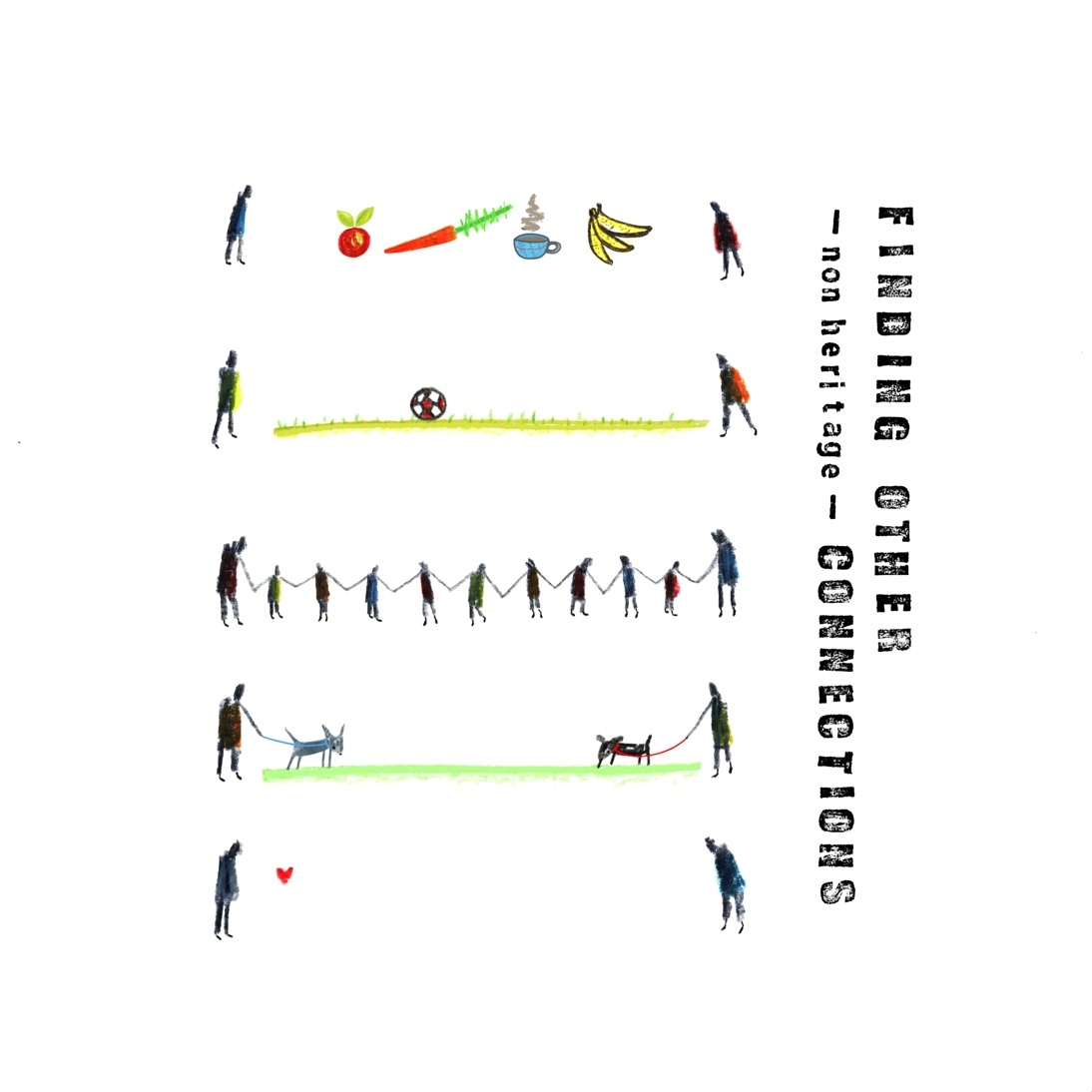
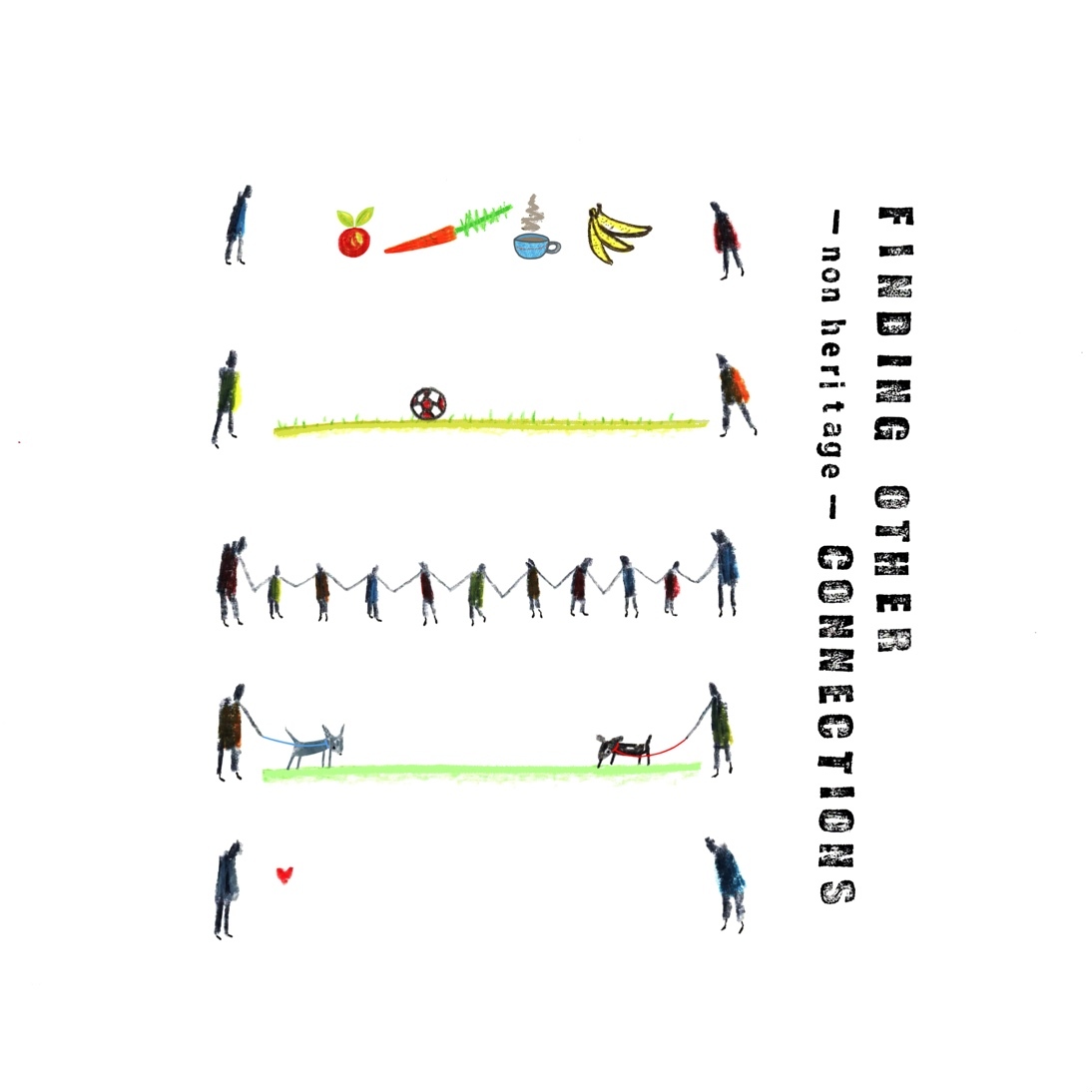
We collaborated with an illustrator throughout the project who documented the circle gatherings through illustrations, responded to specific comments or themes that were emerging through the circle dialogue, and supported the research leads to represent findings in tangible ways. Figure 2 shows an example of an image created by the illustrator in response to dialogue in the circle.
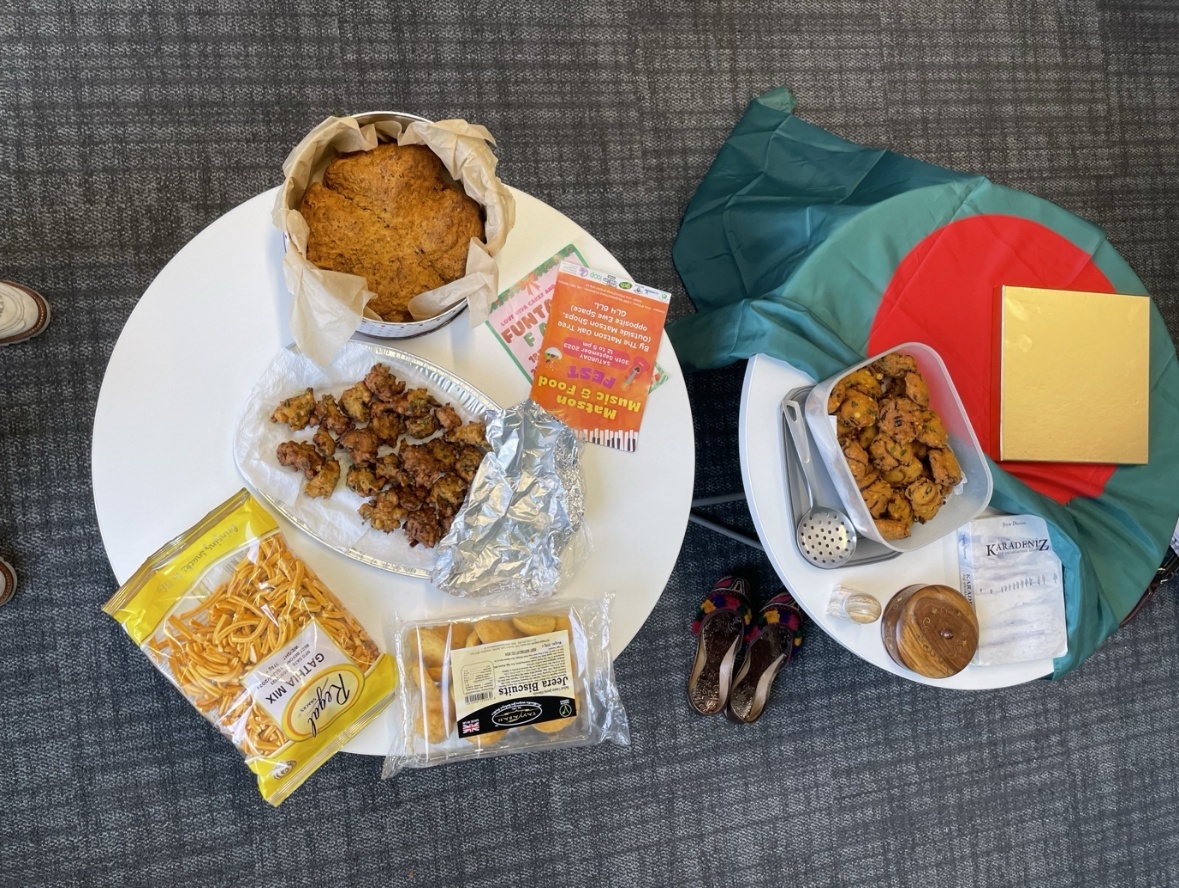
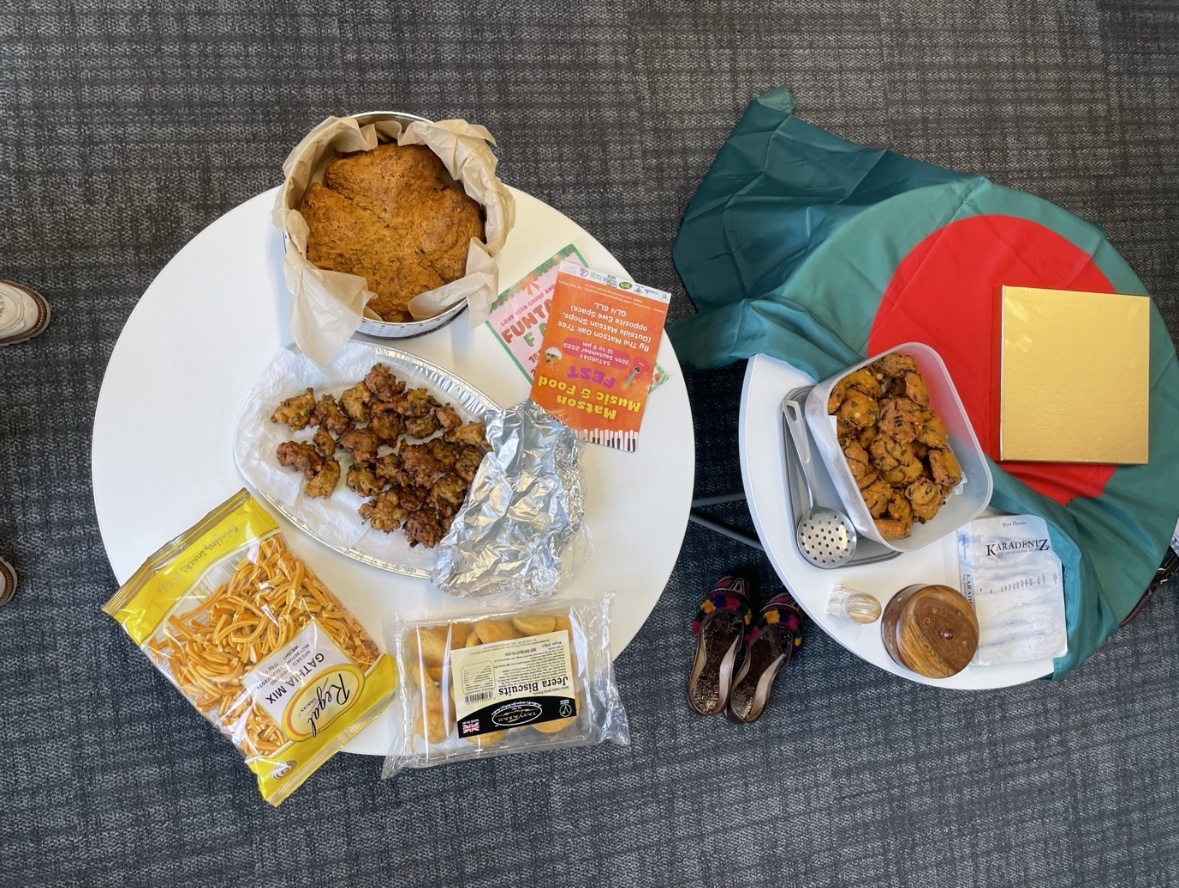
Creative approaches have been identified as being key to the success of co-production as they equalise power and voice, generate a shared sense of ownership, and develop trust and confidence (Grindell et al., 2022). Creative activities were used to engage community researchers with their culture and heritage. For example, we asked CPAR members to visualize a map of the world on the floor and stand on parts that represent their heritage. People chose from a selection of everyday household objects and asked them to describe how they connected them to their cultural identity. They brought in emblems of their heritage such as food, crafts, and books (Figure 3). We further explored mental health through engaging with imagery provided by an illustrator, using reflective illustrations produced by a graphic illustrator, had films produced to represent aspects of the PAR project, and drawings that members produced during circles to tease out different expressions of distress and trauma. These activities allow dialogue to move beyond routine or conventional question-response discourse and to enter a deeper, conceptual level that enables the surfacing of implicit and less tangible corners of experience. Creative activity is both an action and a process. We recognised that both are core components of the circle: engaging in a unifying activity that cultivated the rhythm and synergy across experience, and a process that would foster critical thinking, emotional expression, and fluid, dynamic sharing.
Holistic health is an approach to wellness that considers the whole person – mind, body, spirit, and emotions – as opposed to more conventional symptomatic or diagnostic models of health that dominate Western medicine (Gordon, 1982). There is a growing recognition that a more holistic approach is required to address the increasing burden of mental health challenges (Ribeiro et al., 2024). We incorporated activities from a range of holistic practices, for example, sound healing, dance, xi-gong, breathwork and meditation to open channels through which we explored ideas about synergies between circle members, the embodied communication, active and attentive listening, and the transcendental self. The holistic approaches sought to achieve balance and harmony, mirroring the equilibrium that is inherent to the circle. This brought circle members into the same energetic space, allowing them to focus inwards into both themselves and outwards into the outer environment of the circle. This new realization invited curiosity and the letting go of distractions of previous pre-occupations. The holistic activities also implicitly acknowledged the importance of social connections and the social environment on mental health and well-being, promoting engagement, involvement, and harmony that resonated with the rhythms of the circle.
Ontological framework
The four elements of the circle described above work in synergy and tension in specific ways. The circle allows for the development of a critical discourse, reclaiming words and language that more closely represent the different expressions of mental health and well-being that are drawn from diverse cultural and heritage backgrounds. The circle holds the complex balancing of open and critical discourse with the unfolding emotionality associated with the topic. Creative and holistic health methods also foster connections to the sub-linguistic or metalinguistic experiences, allowing for the exploration of experiences beyond words in a conceptual space that allows for mutuality and connection. These seemingly paradoxical forces working within and across the circle of enquiry are discussed in greater detail to elucidate how the two identifiable primary features of our method work synergistically.
Emotionality in discourse
The circle is symbolic, as it holds the essence of a community of shared interest, based on the intuition and sense of ‘knowing’ that is formed through deep emotional experience. It is a critical platform with two components, as a form of critical emotional awareness, and as a form of critical reflexivity in the receiving of accounts of others. We developed the circle of enquiry method as a distinct mode of interaction which allows for cyclical processes of exchange, growth, and transformation. In our project, the shared intuition and sense of synergy across the group enabled growing composure, curiosity, and investment so that deep bonds were realised. The different aspects of holistic and creative arts and methods used enhanced this sense of synergy.
PAR ethics frequently recognise the impact of emotional investment in the research process for people who might carry current psychological strains. To engage with people across diverse and seldom heard ethnic communities requires recognition of the critical inter-sections of challenge they might face. This is a development which requires researcher leadership and discipline to invite this heightened articulation of raw psychological states, and to make the depth of emotions more visible in the process. These concepts are aligned to the interest of phenomenological theorists such as Heidegger, Husserl, Paley, and Van Manen where phenomenological reflection is drawn from lived experience in a way in which the meaning of deeper existence can be examined. Acknowledgement is made here that this reflects Westernised epistemological worldview (Carroll, 2014), and this risks reproducing the same inequalities of power and privilege that the research is aiming to transform. However, in our account, this type of phenomenological processing is a part of the pedagogy, yet made more distinct within the circle of enquiry approach as a context for inter-subjective reflection (Heron, 1998). This process leaves a space for the emergence of alternative worldviews, particularly those based on interpersonal relationships (Carroll, 2014).
Listening into the silence in the circle
In the circle method, words are highly charged. The specificity of meaning held within words and language is essential for shared understanding and political and social harmony (Peters, 2001). Language and discourse are inherent to the circle method in as much as they allow for the critical engagement with words, to uncover where words have served to repress and divide communities around the subject of mental health and well-being. For example, the word ‘stigma’ was used in the CPAR project with reference to traditional notions of mental health held within many immigrant communities to the UK. The stigma associated with mental health was a significant barrier to people from those communities accessing support services. The circle method also explicitly employs creative and holistic methods that serve to transcend language and word meaning to find conceptual understandings that exist beyond a specific language and reach across diverse representation. Broomfield’s background in speech and language therapy and experience working with people who have complex communication disability provides a theoretical perspective on the circle methods that seeks mutuality beyond words.
Communication and dialogue are typically conceptualised in terms of words, language, conversation, and the cognitive psychological processes that parse these explicit signals during human interaction (Denes & Pinson, 1993). Qualitative research methods, including PAR, are frequently rooted in the principle that people can engage in discussion, based on a shared language to answer questions, debate topics, and reach consensus (Miles et al., 2020). However, for some people words are not always a medium of expression. Sociological theorists such as Habermas, Goffman, and Buber posit that words alone are insufficient for deep interpersonal understanding and provide conceptual understandings that allow us to uncover and surface the forces at play within dialogue. Working in a circle enabled people to see, notice, and engage in the communicative signals beyond speech and language and to enter a dialogue that reciprocated these expressions. Creative and holistic methods used within the circle elucidated how meaning is not assumed but is co-created through action. All the signals that people use as expressions are noticed, listening is active, and mutuality – a place of shared understanding – is navigated within and across the circle. Creative methods are an essential component of creating the conditions in which people can feel heard and that trust between participants and facilitators is achieved.
The circle provides a space in which sharing was nurtured but response was not necessarily provided by one individual in direct reaction to the contribution of another. In a multi-cultural circle, the different nuances of language and terms chosen will have a multi-dimensional edge. In CPAR, it became important to recognise the place beyond words; partly, in terms of accessibility for people sharing in different languages but also to acknowledge that, as deeper emotions emerge, they come from a place beyond the containment of established terms. Creative and holistic health activities used within the circle of enquiry method provide the opportunity for participants to engage with sensitive and emotional subjects at a conceptual level. For example, community researchers annotated the illustrator’s diagrams with personal phrases or experiences that enlivened the pictures from their own experience. A physical groupwork activity invited people to walk alongside one another in silence and reflect on the embodied experience of attended to the motions, pace, and rhythm of their partner. Activities encourage multimodal expressions of experience, and the circle provided a space for holding and hearing these expressions.
Conclusion
The contribution that the circle of enquiry method provides is as an ontological vehicle to guide the formation of critical community engagement platforms for a wide range of contexts. Our CPAR project has enabled diverse representation to be held in a multi-dimensional way. In our context, the circle method enabled a discourse to evolve, in which people have collectively contextualised the often fragmented and isolated journeys of identity, heritage, displacement, and re-orientation. Within the framework of mental health, this led to more precise definitions of the psychological harms, traumas, and related insights associated with such experiences. Allowing the concept of diversity to become the heart of the circle enquiry has redressed the pre-determined conceptualisations of mental health and illness and celebrated different ways of knowing and realisation. It enabled self-realisation and the capacity for transformation to become the foundation for the defining terms of mental health in the project.
This account has presented a different view of reflexivity, aligned to Cornish’s account of ‘critical reflexivity’ (2023, p. 1). In our experience, the moral purpose of the project has become a sustained process of acknowledging the crucial insights drawn from experiences of racialized accounts of trauma and injustice. This form of ‘critical reflexivity’ operates at each advancing stage of knowledge creation, re-examined iteratively across the knowledge community.
We have presented a specialised form of critical reflexivity in engagement with features of mental distress and strain impacted by systemic issues. This is a form of ‘creative knowledge’ where understanding is a more fluid, multi-dimensional flow between the thinking and emotional state. We have observed how the creation of the circle approach, once it holds a ‘creative synthesis’ (Moustakas, 1990), becomes a distinct form of representation and validation. It allows for trauma to be expressed and framed by others who have understood the impact of social injustices at both individual and collective levels. The method is, therefore, an approach which can surface emotions and hold them there in a way that validates and invites a new form of meaning-making. It is an innovative research enquiry method which can work with the constraints people in diverse communities’ experience by embracing difference while also promoting inter-connectedness. The distinct energy arises at the interconnection between the individual and the collective, which allows personal pain to be expressed and held collectively, underpinned by recognition of diverse cultural frameworks of health, well-being, and healing.
We present this account of our method, with four observations:
-
The value of the model is as a universal method, applicable in a wide range of contexts where community practitioners can build a distinct type of research platform shaped in investment with local community interests.
-
It requires the use of representative community researchers to counterbalance aspects of epistemic injustice and nurture diverse viewpoints.
-
Its core purpose is to create a type of encounter which can engage with local mental health needs in circumstances of community tension and fragmentation.
-
The multi-modal framework sets the scene for circle facilitators to shape the types of holistic and creative methods used in a distinct way.
The focus of this paper has been to present the ‘circle of enquiry’ method as a critical systemic form of participatory action research methodology, used in the CPAR project, to understand the specialized mental health needs of diverse ethnic groups. The paper has detailed the way that this innovative qualitative method of enquiry elevates the specialised awareness of lived experience. This is done by using techniques which validate the different traditions, beliefs, and practices of diverse ethnic communities and people affected by systemic isolation and oppression. It is a method which can generate a critical edge to mental health enquiry research in a broad range of contexts. It can also be used to create an immersive environment for the exchange of experience and intuitive thought through the iterative development of a series of participatory action research cycles. This elevates the circle of enquiry method as a progressive form of participatory action research: a universal method of enquiry that can counterbalance aspects of epistemic injustice by using holistic and creative methods in a distinctive way.