
Introduction
Access to safe drinking water remains a critical challenge for marginalised communities in tribal India, particularly the Sahariya, who face systemic inequities, poverty, and exclusion from policymaking. Water scarcity is not only a question of survival but also of dignity, rights, and social justice. My relationship with the water is both personal and political. Having grown up in Rajasthan, drought prone state of India I witnessed the acute struggles of rural communities for safe water access. My father has dedicated his entire life to water conservation and rainwater harvesting, working closely with marginalised rural communities to build sustainable rain water harvesting structures across the region. His organisation’s collaborative work with communities profoundly shaped my early understanding of collective action, self-reliance, and environmental justice. From childhood, I observed community meetings, shramdaan (voluntary labour), and the revival of traditional wells and Johads (water harvesting structures). These formative experiences taught me that water is not simply a physical resource but a foundation for dignity, equality, culture and life itself. My father continues this work today, and his passion for water justice remains the deepest source of my inspiration and academic inquiry.
This study adopts a Participatory Action Research (PAR) approach using Participatory Video (PV) as both a methodological and ethical tool to explore the experiences of Sahariya youth in relation to water access, justice, and community action. PV was chosen not only for its potential to democratise research but also for its alignment with the values of self-representation, collective reflection, and social transformation central to PAR and anti-oppressive practice (AOP) (discussed later).
PV has been increasingly recognised as a decolonising research tool, enabling marginalised populations to articulate their priorities and experiences on their own terms (Nadeau et al., 2022). This study explores PV as both a research method and an advocacy tool to amplify subaltern voices and foster participant-led knowledge production (Kalyanwala, 2025).
While PV holds transformative potential, its ethical application requires careful consideration, especially when participants are vulnerable, lack technical skills, or face risks related to visibility and safety (Gubrium et al., 2014; Shaw, 2016). Within a Participatory Action Research (PAR) framework, this paper studies how Sahariya youth were engaged through PV, highlighting values of self-determination, respect and equity (Mitchell et al., 2025; Sarria-Sanz et al., 2024).
Literature Review
Participatory Approaches and Participatory Action Research in India
Participatory Action Research (PAR) in India has emerged as a significant methodological intervention for addressing deep-rooted social inequalities through collaborative and community-led inquiry. Its core strength lies in the integration of transdisciplinary knowledge and the facilitation of genuine participation across all stages of the research cycle (Nix et al., 2018). Evidence from fields such as housing, public health, water, and anti–bonded labour interventions shows that PAR supports shared problem definition, collective analysis, and locally grounded strategies for change—enhancing both research outcomes and community agency (Nix et al., 2018; Oosterhoff & Burns, 2020).
However, the adoption of PAR within Indian academia and policymaking remains limited. Institutional inertia, entrenched power hierarchies, and a strong preference for positivist and extractive methodologies continue to constrain its wider acceptance. PAR’s emphasis on dialogical cycles, reflective praxis, and co-produced knowledge challenges the conventional researcher–subject divide and promotes approaches that are more contextually grounded and justice-oriented (Kindon et al., 2007; Nix et al., 2018). Barriers also persist in the form of limited institutional resources, inadequate capacity for sustained engagement, and gatekeeping by established disciplinary actors, all of which hinder inclusive and transformative participation. Linguistic, caste-based, and social divides further restrict the meaningful involvement of Adivasi, Dalit, and other tribal communities (Nix et al., 2018; Oosterhoff & Burns, 2020).
Participatory Video in rural India
In the specific context of rural India, participatory video (PV) has shown significant promise as a tool for community involvement but also faces distinct challenges. Rural communities, including women, indigenous groups, and marginalised populations, have been trained to produce videos reflecting their lived experiences, social issues, and cultural traditions, facilitating new forms of community dialogue and social action (Dutta & Ray, 2017; Sudbury, 2018). For instance, PV has been used successfully to revive traditional knowledge about local food and agriculture in Northeast India, enabling communities to visually document and share their practices and concerns, thereby supporting cultural preservation and participatory governance (InsightShare, 2015). Furthermore, PV’s visual and oral nature aligns well with rural Indian contexts where literacy is limited, allowing more inclusive participation (Raju et al., 2025).
However, rural India also highlights specific challenges in PV projects such as infrastructural barriers (limited electricity and internet), resource constraints, and sociocultural norms that may restrict women’s or lower caste groups’ full participation (Benjamin-Thomas et al., 2019; Dutta & Ray, 2017). Ethical issues around filming vulnerable populations are intensified in close-knit rural settings where privacy can be compromised. Moreover, sustaining engagement beyond the initial project cycle is difficult due to limited local capacity and dependency on external funding (Mitchell et al., 2025). Power imbalances between participants and facilitators or NGOs require careful, culturally sensitive facilitation to ensure authentic community ownership and avoid tokenism (Roberts & Lunch, 2015). Overall, rural Indian PV initiatives thrive when embedded in longer-term relationships with a clear focus on local leadership, trust-building, and adaptive methods responsive to local sociocultural dynamics.
The expansion of PAR and PV in India is closely linked to larger efforts toward institutional reform and resource redistribution. Sectoral programmes—such as those focused on housing, water scarcity, bonded labour prevention, and climate resilience—demonstrate that when appropriately supported and scaled, participatory and action-research approaches can generate methodologically robust evidence while amplifying community voices at local, regional, and national levels (IDS, 2019; Oosterhoff & Burns, 2020). Their future development will depend on sustained funding, long-term capacity building, and strengthening networks that recognise community researchers as equal and legitimate stakeholders in the production of knowledge.
Participatory Video and Water Justice
Water is not only a survival resource but also deeply tied to cultural identity, social equity, and environmental justice (Boelens et al., 2018; Mehta, 2014). In contexts where marginalised communities face systemic exclusion from safe water, Participatory Video (PV) has emerged as a powerful medium to voice concerns, document struggles, and advocate for rights (Kindon, 2003; Tacchi & Kiran, 2008). PV allows Indigenous and tribal groups to highlight lived experiences of water scarcity, pollution, and privatisation, thereby challenging dominant development narratives and influencing policy discourse (Chávez et al., 2004; InsightShare, 2024). Linking PV with water justice situates community filmmaking not only as cultural expression but as a political act of resistance, strengthening solidarity and collective agency (Jones et al., 2025; Mistry & Shaw, 2021) This integration underscores how participatory methodologies can transform water from a site of deprivation into a catalyst for dignity, resilience, and empowerment.
Participatory Video as Decolonising method and Subaltern Representation
Decolonising approaches to research emphasise self-determination and control over knowledge production, challenging traditional researcher-participant hierarchies (Chilisa, 2012; Darder, 2019; Smith, 2012). PV provides a platform for subaltern voices, enabling historically silenced communities to document and share their lived experiences (Darder, 2019; Spivak, 1988). Subaltern Studies and decolonial scholarship highlight how subaltern perspectives challenge dominant Eurocentric and colonialist discourses, recover marginalised histories, and illuminate counter-narratives that inform social justice activism (Fraser, 1990; Guha & Spivak, 1988; Masiero, 2022). This approach aligns with critical theory by encouraging ongoing reflection on power, inequality, and social justice within knowledge production (Chilisa, 2012; Kincheloe & McLaren, 2000). Recent assessments of decolonial research practices also point to the importance of qualitative methodologies—such as ethnography and oral history—for capturing the complexity and agency of subaltern groups (Darder, 2019; Masiero, 2022; Smith, 2012).
Ethical Considerations and Anti-Oppressive Practice
The use of Participatory Video (PV) within community research calls for an ethically grounded, anti-oppressive framework that explicitly recognises and challenges systemic power asymmetries between researchers and participants (Dominelli & Campling, 2002; Flicker et al., 2008; Gubrium et al., 2014). Anti-oppressive practice (AOP) situates ethical conduct within a broader social justice agenda by urging practitioners to dismantle structural inequalities such as patriarchy, colonialism, and classism embedded in research relationships (Baines & Edwards, 2015; Dominelli & Campling, 2002). As noted by Dalrymple and Burke (2006), anti-oppressive work must not only describe oppression but operationalise reflexive, participatory processes that challenge power structures while valuing participants lived experiences and cultural standpoints.
This means that PV researchers are called to engage in continuous reflexivity and collaborative negotiation throughout the process—co-designing scripts, filming, and dissemination plans with participants to prevent reinforcing existing hierarchies (Baines & Edwards, 2015; Havig & Byers, 2019). Rather than positioning community members as passive subjects, an anti-oppressive PV approach affirms their epistemic authority and capacity to represent their realities, thus promoting equity, empowerment, and self-determination (Dominelli, 1996; Rodney et al., 2024). Furthermore, as ethical praxis, anti-oppression rejects tokenistic inclusion by redistributing power and resources through solidarity-based relationships. The emphasis is not only on avoiding harm but also on generating transformative spaces for collective voice and resistance (Rodney et al., 2024).
Within this framework, ethical oversight in PV therefore extends beyond informed consent and confidentiality to encompass a sustained commitment to justice, reciprocity, and non-exploitative representation (Kovach, 2021; Potts & Brown, 2015). Employing an anti-oppressive lens ensures that participatory methodologies actively resist reproducing marginalisation while fostering the co-creation of emancipatory knowledge that reflects participants’ autonomy and collective agency.
Skill Development and Capacity Building
Participatory Video (PV) not only documents experiences but also fosters technical and social skills, critical reflection, and advocacy capacity. Evidence suggests that participants in PV experience increased confidence, ownership over narratives, and enhanced community engagement (Davies et al., 2022; Gubrium et al., 2014; Mitchell et al., 2025; Srinivasan, 2012). PV supports leadership and collaborative problem-solving through practical engagement with media production (Rodney et al., 2024). Research conducted during COVID-19 pandemic demonstrates the adaptability of PV processes to remote participation, thereby expanding access and strengthening participants’ agency despite contextual limitations (Marzi, 2023). PV projects also show lasting impacts on knowledge retention, behavioural change, and advocacy actions by enabling participants to refine messages and control their representation (Mitchell et al., 2025; Sarria-Sanz et al., 2024).
Research Design
Theoretical and Paradigmatic Positioning
This study is grounded within a critical research paradigm that interrogates structures of power, inequality, and social justice (Kincheloe & McLaren, 2000; Spivak, 1988). Drawing on critical theory, the research aims to uncover systemic inequities that influence resource access and governance, with a particular emphasis on promoting equity and social transformation. The framework of anti-oppressive practice further guides the methodology by centering respect, equality, and participant empowerment, thereby disrupting traditional hierarchies embedded within research processes and outcomes (Dominelli & Campling, 2002). Complementing these perspectives, subaltern theory provides a lens for amplifying marginalised voices, insisting on self-determination and authentic representation in the co-production of knowledge (Spivak, 1988). Collectively, these theoretical foundations enable a research approach that is both critically reflexive and committed to ethical, emancipatory practice. Reflexivity was also applied for critical reflection on both researcher feelings and participants’ feelings during the participatory video (PV) process in the field.
Reflexivity is crucial in participatory research because it involves not only the researcher’s self-awareness but also acknowledging and understanding participants’ reflexive experiences, which can influence the construction of knowledge and the ethical quality of the research process (Benjamin-Thomas et al., 2024; Rostron, 2024; Yang, 2015). Practicing reflexivity helps researchers consider how their assumptions, social identities, and emotions interact with those of participants, shaping research outcomes and relationships (Hutchison, 2015; Woodward & Ball, 2023).
Furthermore, reflexivity is a foundational principle of the anti-oppressive approach in social work. Anti-oppressive practice demands that social workers continually consider how their own social location, values, and experiences influence the information they gather and the interventions they make (Hutchison, 2015). Iterative reflexivity is vital for recognising and responding to the multiple and intersecting forms of oppression that affect both researchers and participants and for safeguarding the voices of marginalised groups within research and practice.
Self -reflexivity was integral to this research. My professional training—comprising a Bachelor of Social Work with a specialisation in Rural Development and a Master of Social Work from the Tata Institute of Social Sciences, India—provided a strong foundation in community-based participatory approaches. Guided by social work values and principles, my reflexive practice was oriented toward ethical engagement and relational accountability. I was unable to locate explicit guidelines for implementing reflexivity within participatory video (PV) projects. Consequently, I drew upon my professional and personal experiences to scaffold reflexive engagement. This reliance enabled me to establish meaningful connections with participants and maintain sensitivity to issues of power, voice, and representation throughout the research process.
I also recognised my position as an outsider — a woman from an academic and privileged background entering the lived realities of the Sahariya community. This awareness demanded humility and ongoing reflexivity. I was conscious of not imposing my ideas or theoretical frameworks upon participants but instead creating space where their priorities, stories, and expressions could emerge authentically. Drawing on anti-oppressive principles (Dominelli & Campling, 2002; Mullaly, 2010), I aimed to foster a relational, dialogic, and ethical space in which knowledge was co-created rather than extracted.
As Spivak (1988) reminds us, subaltern voices are often excluded or distorted within dominant discourses. This understanding guided my responsibility to “step back” and facilitate rather than dominate, ensuring that the research amplified community perspectives rather than reproducing academic hierarchies. I therefore approached the field not as an expert, but as a co-learner — someone walking alongside Sahariya youth in their pursuit of visibility and justice.
Methodology
This study employed Participatory Action Research (PAR) involving 72 male and female Sahariya youth aged 16 to 25 across three villages. Complementary PAR methods, such as focus group discussions, transect walks, and resource mapping, were utilised; however, Participatory Video (PV) was the primary method explored in this paper. Complementing PAR, PV offers a dynamic, participant-led approach for expressing lived experiences, fostering critical reflection, and catalysing social change (Lunch & Lunch, 2006; Mitchell et al., 2025). PV processes were guided by ethical facilitation that emphasised respect, consent, and participant ownership over content and storytelling, aligning with principles described in foundational PV literature (Gubrium et al., 2014; Shaw & Robertson, 1997). Workshops provided participants with skills in filming and collective decision-making, reinforcing autonomy and ethical practice (Smith, 2012; Srinivasan, 2012). The iterative nature of PV, involving planning, filming, group viewing, reflection, and community screenings, fosters equitable knowledge co-production and empowers marginalised voices to represent their realities on their own terms (De Lange et al., 2012; Roberts & Lunch, 2015).
Although I had previously engaged with participatory tools such as social mapping, transect walks, and storytelling in earlier community projects in India, Participatory Video (PV) represented a new methodological terrain for me. I initially hesitated, concerned that its technical demands might be impractical in Sahariya villages where electricity, internet, housing, water, and roads were scarce. These conditions raised questions about the feasibility of introducing PV as a participatory tool. At the same time, I found myself reflecting on whether my supervisors fully comprehended the depth of resource constraints experienced by the Sahariya community, and how such constraints might shape both the process and outcomes of participatory engagement.
Despite these uncertainties, I decided to propose PV because it aligned with my ethical commitment to participation and I was open to change to other methods and change methods as per the convenience of participants. To my surprise, the community youth responded with enthusiasm. They saw PV not merely as a research tool, but as a medium for ongoing advocacy and collective learning. As one young participant explained during initial discussions, “If we make videos, we can show it to media (journalist) and outside world.” This statement reaffirmed my belief that PV held immense potential for long-term agency and ownership. Also reminded me that some communities do not have access to resources and technologies, but they do understand the importance of that technology and want to use it.
Learning PV became a shared journey. I learned alongside the Sahariya youth — understanding technical aspects of filming, editing, and ethical visual storytelling as we went. I was honest with them that I was not an expert in PV or film making. The process evolved into what Freire (1970) might describe as “co-intentional learning,” where everyone involved — including myself — was both facilitator and learner. I continually asked myself whether my actions aligned with participatory and anti-oppressive principles, reminding myself that the emphasis lay on the process rather than the final video product. To maintain academic rigor, I engaged in regular supervisory discussions to navigate the tension between community accountability and doctoral requirements. At times, I found myself adopting the stance of a community worker rather than a researcher, highlighting the complex interplay between participatory ethics and institutional expectations. This tension constituted a methodological limitation, compounded by structural constraints such as limited fieldwork duration and the absence of financial resources to extend the project into a sustained action initiative.
Data Collection and analysis during PV process.
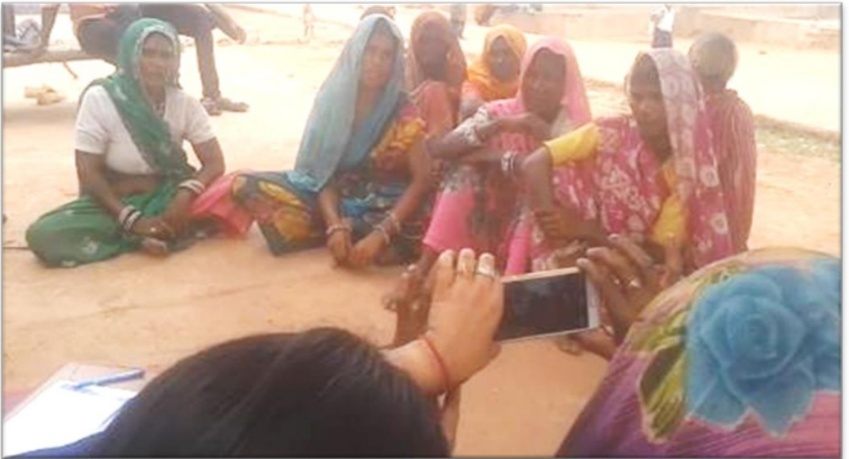
Data collection was organised through group discussions and workshop sessions that introduced the use of mobile cameras for video creation (see Fig. 1). Three villages— Chhipol, Goyra, and Pathari —were purposively selected on the basis of acute water scarcity. Participants were recruited on a voluntary, first-come, first-served basis, with a particular focus on youth, as they are primarily responsible for fetching water for their families in these communities. During initial discussions, participants expressed a strong desire to use video as a tool for advocacy. One youth remarked, ‘If we make videos, we can show our problems to the media and the outside world.’ This sentiment reflected a clear understanding of PV’s potential to amplify their voices and challenge systemic neglect. Their motivation stemmed from lived experiences of invisibility and a yearning for recognition. In total 72 male and female youth participants were part of group discussions and workshops from three villages.
The definition of “youth” followed the guidelines of the Ministry of Youth Affairs and Sports, Government of India, which defines youth as individuals between 15 and 29 years of age (Government of India, 2014). In addition to discussions and workshops, other participatory methods such as transect walks and water resource mapping were employed to document and analyse existing water resources. These processes were also captured through PV, allowing participants to visually represent their lived realities and community knowledge.
To ensure cultural appropriateness and create a safe environment for female participants, separate group discussions and workshops were conducted. However, joint sessions were also organised at the end of the process for the collective screening of the videos, fostering community dialogue and reflection. Workshops were not structured as formal training sessions but as collaborative spaces where participants shaped the direction of learning. Roles such as interviewer, cameraperson, and facilitator were decided collectively, and participants often rotated responsibilities to gain diverse perspectives. This approach fostered ownership and built a sense of shared purpose.
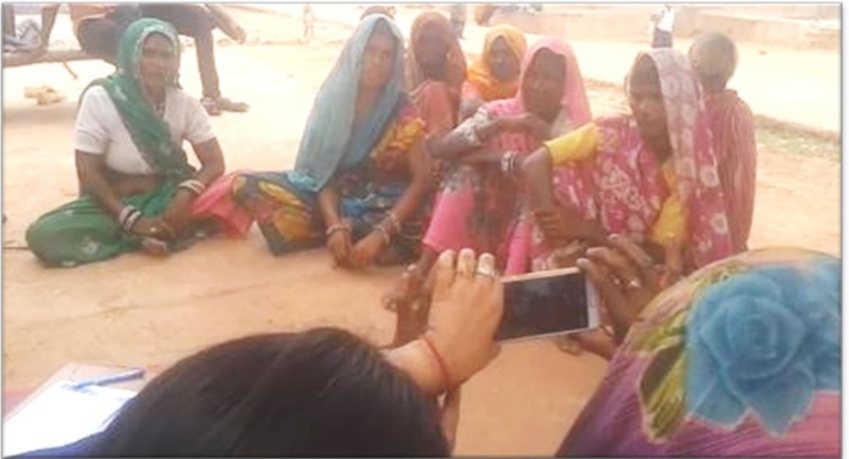
As a researcher, I was deeply aware of the power dynamics inherent in introducing PV to a marginalised community. I approached each workshop not as an instructor but as a co-learner. My own uncertainties about technical aspects of filming with limited technical support became a shared experience with the youth, fostering mutual trust and openness. This reflexive stance helped dismantle hierarchical barriers and allowed the process to evolve organically.
These sessions emphasised both skill-building and ethical awareness to prepare participants for effective engagement in Participatory Video (PV) production (Lunch & Lunch, 2006). Mobile cameras were chosen because they are relatively easy to use and control. While they posed certain limitations, such as restricted storage capacity and lower video quality, the focus of the project was on the participatory process rather than on technical perfection. To ensure data security and continuity, I regularly transferred the recorded material onto a laptop and external drives for backup. Although I maintained control over data storage, this arrangement was necessary, as participants did not have access to smartphones or laptops.
Reflexivity also shaped my ethical cultural practice. A critical moment emerged during the early workshops when several women participants felt shy or anxious about holding a camera. Respecting their comfort meant giving them time, comfort, and training. These decisions were guided by reflexivity. This moment reinforced the importance of reflexive facilitation, where participation is not assumed but carefully nurtured in response to participants’ readiness and context.
Although a notable gap in the literature concerns the absence of explicit guidance on the values and principles that underpin reflective practice and reflexivity in the context of PV project. This lack of clarity presents a methodological challenge, particularly for researchers engaging in participatory video (PV) projects where reflexivity is integral to the research process. In my own experience, determining an appropriate framework to support self-reflexivity was difficult. I drew upon my professional background in social work, applying its values and principles to scaffold my reflexive engagement. However, for doctoral researchers undertaking PV for the first time, the absence of established frameworks and guidelines may hinder their ability to critically navigate reflexive practice. This highlights the need for more robust, context-sensitive resources to support ethical and epistemologically grounded reflexivity in participatory research.
During these workshops, Sahariya youth documented critical community issues—particularly water scarcity, governance, and social discrimination—translating their lived experiences into visual narratives.
The PV process followed three broad stages: pre-production, production, and post-production (De Lange et al., 2012; Lunch & Lunch, 2006). During pre-production, no formal scripts were used, ensuring that narratives remained natural and participant-driven (Srinivasan, 2012). In the production stage, Sahariya youth took responsibility for filming, interviewing, and documenting their realities. Decisions about roles—facilitator, interviewer, cameraperson, and interviewee—were made collectively in focus group discussions across villages. The process was voluntary and flexible, with participants often rotating roles to gain different perspectives. During creating videos and group viewings of raw footage, youth began to identify patterns—such as caste-based control of wells, gendered risks during water collection, and the absence of state accountability. Seeing their own experiences on screen created a deeper analysis. For example, after watching footage of women walking long distance to collect water from well, participants initiated a discussion about the hardship and embarrassment women and children must face to collect water from unsafe paths and sources. They discussed the negligence of the Panchayat members (village level governance) who had not repaired the public handpump for over a year. This collective reflection and participatory analysis (explained in data analysis section) were conducted through iterative focus groups demonstrating how PV moved beyond documentation toward critical consciousness, collective meaning-making and analysis.
A significant point of tension emerged during the post-production phase of the project. Due to time, financial, and technological constraints, as well as participants’ limited interest in engaging with the technical aspects of editing, participants asked me to undertake the final editing of the video. After leaving the field and returning to New Zealand, I facilitated the post-production process, compiling and editing the footage into a coherent narrative. While this was a practical necessity, it raised important methodological and ethical questions regarding narrative control, authorship, and ownership.
In particular, the use of voiceover narration largely delivered by me highlighted tensions between facilitation and representation. Decisions about how to structure the narrative, which footage to prioritise, and how to convey key messages required careful consideration. Although participants had been actively involved in identifying initial themes and creating the content during earlier stages, their direct engagement in the technical editing process was constrained by limited access to digital technologies.
To address these tensions, I adopted an iterative and collaborative feedback process to preserve participant ownership and authenticity. After drafting the initial voiceover script and selecting video sequences, I shared the link of edited material via WhatsApp with a Sahariya community member who had been coordinating with the Sahariya youth throughout the project. I discussed the proposed structure and purpose of the narration, and he consulted with the participants to ensure that the selected scenes and key messages accurately reflected their perspectives. As participants did not have access to computers, this mediated review process was the most feasible way to enable their involvement in post-production decisions.
Following participant feedback and approval, I recorded the narration in English for academic purposes, while retaining participants’ dialogue in their own language and planning for Hindi (One of language understood in Rajasthan) subtitles to ensure accessibility. Although I undertook the technical editing, these steps created opportunities for participant validation and input, helping to align the final output with their intentions. While this approach did not fully eliminate asymmetries in control, it enabled ongoing negotiation and accountability, contributing to a more participatory form of knowledge production under constrained conditions.
The narratives captured reveal the structural realities of water insecurity. For instance, in Chhipol village, male participants described how families travel long distances—often one to seven kilometres—to fetch drinking water, sometimes relying on pits dug near rivers. Women in particular face gendered vulnerabilities, being subject to the control of well owners and risks while walking long distances in unsafe conditions. Crucially, participant involvement extended beyond video making to reflection and participatory data analysis.
Participatory Data Analysis
Participatory data analysis paradigm and approach is quite different from that employed by non-participatory methodologies. For example, it takes place with participants in the context of fieldwork, and not as a separate process carried out by the researcher after data collection. In this study themes emerging from the videos were revisited during focus groups and discussed and triangulated with other participatory methods used in the study, such as the transect walks and resource mapping. This iterative approach not only strengthened the validity of findings but also demonstrated PV’s dual role—as a research method and as a community resource capable of stimulating dialogue, analysis and mobilisation. Data analysis was situated within ongoing cycles of action and reflection, ensuring learning and adaptation throughout the research process. (Kindon et al., 2007).
Knowledge production in this project was shaped by participants’ priorities, even though the level of involvement varied across stages due to practical constraints. Youth identified the issues they wanted to document—such as long walking distances, caste-based exclusion, and water scarcity. While I facilitated the postproduction editing and later organised the data for PhD thesis writing purpose, the themes that underpin this study in the film and thesis emerged from what participants repeatedly emphasised during discussions and filming rather than academic assumptions. Their insights guided both the direction of the video and the subsequent written analysis, ensuring that the knowledge produced reflected community perspectives even within the limitations of access, technology, and time.
In the later stages of analysis and PhD thesis writing, reflexivity helped me confront the tension between academic expectations and community accountability. The process of writing carried its own politics — whose voice was amplified, what was interpreted, and what remained unsaid. I chose to maintain the participants’ original phrasing and metaphors wherever possible, resisting the academic impulse to sanitise or “translate” their narratives. This approach aligned with the ethos of participatory knowledge co-creation, where the authority of interpretation is shared rather than monopolised.
Ultimately, reflexivity in this research was both a methodological stance and a moral compass. It helped me move beyond extractive research logics toward a more relational, accountable, and transformative engagement. It reminded me that anti-oppressive research is not simply about studying inequality but about practising equality in the process of inquiry itself.
Ethical Considerations
This study prioritised rigorous ethical practices to ensure respect, safety, and equity in Participatory Video (PV) research. Written informed consent was obtained from all participants. The primary researcher, alongside the village field coordinator, read the consent forms aloud in the participants’ native language to ensure full understanding and voluntary participation (Gubrium et al., 2014). Throughout the PV process, participants retained control over video content and their appearance, safeguarding privacy and autonomy in line with ethical guidelines for participatory visual methods (Flicker et al., 2008; Lunch & Lunch, 2006). To foster inclusivity, alternative creative methods such as storytelling and voiceovers were used for participants facing vulnerability-related barriers, reinforcing equitable participation (Chilisa, 2012; Smith, 2012). The PV activities were conducted only when participants were adequately prepared and safe, minimising risk and burden. The study received institutional ethical approval from the AUT Ethics Committee, upholding strict research ethics standards.
Findings
This PV project revealed how water insecurity is deeply entangled with gender, caste, and governance inequalities. Beyond generating data, PV acted as a platform for self-representation and critical dialogue, creating spaces where Sahariya voices could be heard on their own terms, and where demands for equitable water policies could begin to take shape (De Lange et al., 2012). This project revealed critical insights into the water situation faced by the Sahariya community, characterised by scarce water resources, limited access to clean water, and systemic neglect in governance and infrastructure development.
Participants documented daily challenges, including long distances travelled to collect water, unequal gendered burdens where women and girls predominantly bear water collection responsibilities, caste discrimination and the resulting impacts on health, education, and livelihood (see below). These narratives highlighted structural inequities and the urgent need for equitable water management policies.
Water Scarcity and Distance
Participants from Chippol village consistently described how far they must travel for drinking water, often spending hours each day walking to wells or rivers. The physical strain and lost time created daily hardships. As one participant shared:
“Every morning, we start before sunrise to fetch water. By the time we return, half the day is already gone. Sometimes we are too tired to do anything else.”
“We dig small pits by the riverbank to find water. It takes one or two hours, and still the water is muddy. But we have no choice.”
These accounts highlighted not only the physical demands but also the opportunity costs of water collection, particularly in terms of lost income, education, and rest.
Gendered Burdens
Water collection emerged as primarily a female responsibility, shaping women’s daily routines and limiting girls’ educational opportunities. As one young girl reflected:
“Sometimes I miss school because I have to help my mother carry water.”
Another female participant from Pathari village explained the intergenerational impact:
“My daughter is small (young in age), but she already helps me carry pots. If she does not, how will we manage? When I am sick my children bring water.”
These narratives revealed how water scarcity intersects with gender inequality, reinforcing the “double burden” of domestic labour and educational disadvantage for women and girls.
Caste Discrimination and Exclusion
Beyond scarcity, participants highlighted the role of caste in shaping access to water.
“If we go to the Yadav (upper caste) well, sometimes he lets us fill water, sometimes he refuses. We never know if today we will be allowed.”
“Even if they allow us, we feel unsafe, we do not know when they will start verbally abuse…sometimes they throw stones us…. We have to run to protect ourselves, sometimes we fall on ground.”
Such experiences underscore that water is not merely a physical resource but also a site of power, deeply implicated in the reproduction of social hierarchies and everyday marginalisation. The issue extends beyond access to clean water; it also encompasses the conditions under which water is accessed. For many women and girls responsible for water collection, the process is fraught with insecurity, fear, and humiliation. Their safety is compromised, highlighting how water security is inextricably linked to personal security, dignity, and the right to live free from harm.
Community Dialogue and Advocacy
During a focus group discussion in Chhipol village, a participant poignantly asked,
"Why is the government ignoring us? Are we not citizens of this country?
This question encapsulates the deep sense of marginalisation felt by members of the Sahariya tribe, highlighting their exclusion from basic rights and entitlements. Participants voiced concerns about systemic neglect, particularly regarding access to safe drinking water, and questioned the discriminatory practices that continue to undermine their dignity and wellbeing.
The discussion also critiqued the rhetoric of community mobilisation, arguing that vulnerable communities are often expected to shoulder the burden of change without adequate support. Such expectations, they noted, place disproportionate pressure on already marginalised groups. Participants called for greater accountability from both government bodies and NGOs, emphasizing the need for meaningful implementation of schemes and equitable distribution of resources tailored to their specific needs.
Community screenings of the PV films became transformative spaces for dialogue. They brought together youth, elders, and local leaders, enabling shared recognition of collective struggles. One participant described:
“When everyone saw the video together, it was not just my problem anymore. It became village problem.”
These screenings also sparked early advocacy efforts. Elders who had previously dismissed youth concerns began engaging in conversations about wells, pumps, and local governance:
“We knew the problems, but when we saw in video, we could not ignore it.”
Skill Development and Critical Reflection
The PV workshops provided youth with practical skills in filming, interviewing, and collaborative storytelling. More importantly, the process fostered confidence and critical awareness. As one participant reflected:
“Government never listens to our problems, but now we can go to media with these videos and share with others.”
The act of seeing themselves on screen deepened reflection:
“When I watched our video, I realised it is not only my struggle. Everyone in our village lives this life. It made me think we need to do something about this problem.”
Through iterative filming and review, participants began to connect individual hardships with structural issues of governance, caste, and rights, emphasis on critical consciousness.
Advocacy through PV
In addition to voicing their concerns, participants from Chhipol village described proactive efforts to address water insecurity. They shared that formal applications had been submitted to government offices, demanding improvements in local water infrastructure and equitable access to safe drinking water. This act of engagement reflects a growing awareness of their rights and a strategic use of bureaucratic channels to seek redress. They also said
“We will submit another application with videos we created to show them real situation.”
Importantly, the participatory video created emerged as a powerful medium for advocacy. Participants shared with me their intention to use the video to communicate their lived realities to government officials, NGOs, and broader audiences. By visually documenting their struggles and aspirations, the video became more than a research output—it transformed into a tool for political expression and collective agency. It enabled the Sahariya community to reclaim narrative control and challenge the annihilation of their experiences within dominant development discourses. Here, PV functioned as both a research tool and a catalyst for community mobilisation (Gubrium et al., 2014; Lunch & Lunch, 2006).
A key methodological strength of PV lies in its visual language. Beyond interviews and dialogue, the videos captured embodied and spatial dimensions of water insecurity—such as long journeys, arid landscapes, practices of water collection—that are difficult to convey through text alone. Scenes of Sahariya youth and children walking long distances or gathering around scarce water sources not only document hardship but also make visible the scale and shared nature of these struggles, generating affective and political resonance.
Participatory video thus allowed participants to construct and communicate their claims through images, movement, and voice, turning lived experience into compelling visual evidence. Unlike conventional qualitative methods that privilege text, PV creates a multi-sensory narrative space that situates personal realities within broader structures of inequality and marginalisation. This form of visualisation is particularly significant for advocacy, as it helps audiences—policymakers, scholars, media, and civil society actors—engage more directly with these issues. In doing so, PV not only tells stories of low access to safe water among Sahariya but mobilises them, strengthening their potential to challenge invisibility, foster recognition, and support claims for social and environmental justice.
Discussion
This study underscores the efficacy of Participatory Video (PV) which can be a robust decolonising and transformative research methodology that fosters participant self-determination by devolving narrative control to marginalised communities. However, for it to do so it requires deep reflexivity, and a significant journey in the approach, on the part of me and in partnership with the community; thus, the learning is carried out collectively. In doing so, it can fundamentally unsettle entrenched hierarchies within traditional research paradigms, aligning closely with the tenets of Subaltern Theory and decolonising methodologies which foreground the autonomous voice and agency of historically silenced groups (Smith, 2012; Spivak, 1988). But only if there is a willingness on all sides to undertake such a brave and significant journey together. By facilitating the reclamation, reinterpretation, and dissemination of locally rooted narratives, PV diverts from extractive research practices, pivoting instead towards emancipatory knowledge production that situates community epistemologies at its core.
The critical paradigm framing this project illuminated participants’ capacity for reflexive engagement with prevailing structural inequities surrounding resource allocation, socio-political exclusion, and governance. Participants’ narratives and collective advocacy underscore PV’s practical potency to catalyse critical consciousness and social justice activism by visibly articulating systemic marginalisation and inequity (Kincheloe & McLaren, 2000). This aligns PV with Freirean principles of conscientisation, whereby education functions as a praxis of liberation and social transformation.
Ethical considerations were integral to the PV process, my social work and community development experiences, captured by the Anti-Oppressive Practice frameworks that prioritised participant agency, safety, and developmental readiness, and as a highly personal and collaborative journey (Dominelli & Campling, 2002). The deliberate incorporation of alternative engagement modalities—such as storytelling, drawings, and voiceovers—ensured that participation remained inclusive and sensitive to individual capacities, thereby mitigating the reproduction of exclusionary dynamics within the research. Such attentiveness reflects a nuanced ethical praxis that recognises vulnerability and difference without compromising participation.
The capacity-building dimension of PV was particularly salient; participants acquired vital technical competencies and developed heightened confidence and communicative agency. These outcomes resonate deeply with Freire’s pedagogy of the oppressed, which advocates the development of critical consciousness as foundational for effective social engagement and self-determination (Freire, 1970). Thus, PV operates dually as an innovative qualitative research tool and a mechanism for community empowerment, fostering environments where knowledge generation and social praxis converge.
Despite these strengths, the study confronted inherent challenges characteristic of participatory and community-based research paradigms. Limited technological exposure among some participants, resource constraints, and safety concerns curtailed fuller engagement for subsets of the cohort. My facilitation of post-production editing, necessitated by practical limitations, introduced tensions vis-à-vis narrative control and participant ownership in the PhD project. Lack of guidelines what can guide your reflective practice or reflexivity in context of PV was another challenge.
Nevertheless, these challenges were managed through rigorous ethical oversight, participatory negotiation, and the integration of complementary methods, previous professional training underscoring the critical importance of reflexivity and adaptability within PV praxis.
This study also contributes to the methodological development of PV by illustrating how reflexive practice grounded in social work and anti-oppressive traditions can be enacted within participatory research processes. In this project, reflexivity extended beyond self-awareness to become an embedded and ongoing practice that shaped decision-making at every stage. It enabled continuous attention to power relations, participant comfort, and contextual constraints, informing the pacing of workshops, adaptation of methods, and negotiation of roles and responsibilities. In this sense, reflexivity functioned as a form of praxis through which anti-oppressive principles were operationalised in practice rather than remaining at the level of intent. It supported a shift towards a more relational and responsive approach, where participation was continuously shaped through dialogue with participants’ needs and capacities. This demonstrates that PV, when guided by sustained reflexive practice, becomes not merely a technical method but an ethically situated and context-sensitive process of knowledge co-creation, particularly in contexts marked by marginalisation and structural inequality.
Unlike conventional qualitative research, where analysis is typically conducted by the researcher after data collection, this study embedded analysis within the participatory video process itself, enabling participants to collectively interpret and validate their experiences.
Overall, this research advances the critical discourse supporting PV as a vehicle for participatory knowledge production that advances social justice, equity, and decolonising praxis, contingent upon sustained ethical commitment, reflexive facilitation, and genuine participant-centered flexibility.
Conclusion and Recommendations
Participatory Video (PV) emerges as a decolonising, participatory, and ethically responsible research tool that effectively amplifies marginalised voices while promoting core principles of self-determination, respect, equality. Although this process can be challenging because of the marginalisation and power dynamics and lack of reflexivity of researcher.
To maximise the transformative potential of PV, key recommendations are proposed. First, thorough assessment of participant readiness, safety, and resource availability is essential to ensure meaningful and equitable participation. Second, facilitation must adhere to ethical and anti-oppressive practice principles, fostering a supportive environment that respects participant agency and diverse needs. Third, PV should be complemented with other participatory research methods such as focus groups, transect walks, and resource mapping, enhancing triangulation and contextual depth. Fourth, comprehensive training and skill-building components are vital to equip researcher and participants with the technical and reflective capacities necessary for engagement and ownership. Finally, fostering ongoing community dialogue is critical to link participant-produced knowledge with broader advocacy efforts, enabling sustained social impact.
When implemented with attention to ethics, equity, and participant self-determination, PV transforms research into a collaborative, empowering, and socially impactful process. This approach holds particular promise for community-based and decolonising research agendas committed to social justice and meaningful change.
Ultimately, this journey reaffirmed my belief that meaningful research can be done with participants through relationships built on trust, respect, and shared purpose.