1. Background
As novel, complex issues emerge within our healthcare systems, there is an urgent need to develop flexible strategies that allow us to appropriately respond and continuously work toward system improvement. Key to such strategies is research that integrates different types of knowledge, including expertise, experiences, and perspectives that have been historically undervalued and, often, ignored. Increasingly, cross-sectoral collaboration and stakeholder partnerships are being recognized as essential toward the improvement of healthcare systems (Enticott et al., 2021). The inclusion of patients and families has been noted as especially crucial in these partnerships, including around improving health systems (McGinnis et al., 2021), developing more equitable medical practices (Pot, 2022), and ensuring rigor in health research (Adhikari et al., 2020; Bird et al., 2020; Jagosh et al., 2012). Although the object of less empirical study in the field of participatory methods, community organizations and community-based professionals may also play a key role as cross-sectoral partners in healthcare system improvement (Mongeau et al., 2007; Olsson et al., 2014).
As the field of participatory methods in healthcare research and improvement has been evolving (Duea et al., 2022; Jagosh et al., 2012; Vaughn et al., 2023; Vaughn & Jacquez, 2020), certain avenues for expansion and critical examination remain. For instance, in a selective narrative literature search, Ocloo and Matthews (2016) noted that participatory methodologies are increasingly being recognized as crucial for healthcare improvement research. However, the authors also highlighted how, in practice, these methodologies are often narrowly-applied and relegated to instances of feedback giving, with partners having limited involvement in planning and decision-making despite this being a priority in the implementation of participatory methodologies (Canadian Institutes of Health Research, 2014; PCORI, 2024). Research has also noted the need for more tangible examples regarding participatory methods and co-production in healthcare improvement and research, with an emphasis on adapting approaches and carefully reflecting on power dynamics in partnerships (Banner et al., 2019; Bergerum et al., 2019; Ocloo & Matthews, 2016). Rolfe and colleagues (2018) propose the qualitative research principle of reflexivity as a guiding principle by which participatory researchers may examine whether their approaches to partnership are meaningful, ethical and equitable. Examining shared planning and decision-making processes in participatory healthcare improvement and research, particularly regarding bigger picture issues, is a particularly salient avenue for reflection, as teams may seek to balance the need for partner safety (for which non-mixed groups has been a recommendation, see Snow et al., 2018) with co-creation principles.
In recognizing the promise and necessity of using participatory approaches in planning and decision-making settings for health system research and improvement, our team at the CHU Ste-Justine Gender Diversity Clinic sought to host an integrated knowledge exchange and priority-setting event. Leveraging the knowledge, network, and multidisciplinary expertise of our practice, we brought together a variety of interest-holders (a term that has been proposed to replace “interest-holders” in healthcare research given its colonial roots (Akl et al., 2024) and includes healthcare providers, researchers, health administrators, community organizations, and patient/parent-partners in our event) for a gathering we call a “Participatory Healthcare Research Summit” in gender identity-related care. The purpose of this event was twofold. First, we sought to improve healthcare and research through sharing expertise, delineating current gaps and priorities for improvement, and planning for the development of capacity-building tools to better address the urgent care needs of trans and gender diverse youth (TGDY; whose gender does not align with that assigned at birth). Second, we aimed for these collaborative processes to foster/strengthen relationships between partners in the field, particularly when it came to patient and community partners. Through these aims, the Participatory Healthcare Research Summit was conceptualized as an opportunity for patient and community partners to fully embody planning and decision-making roles.
Holding a Participatory Healthcare Research Summit in the field of gender identity-related care provides a rich case study for participatory planning and decision-making approaches in other emerging healthcare areas. Indeed, while it is known that gender identity-related care can improve mental health and wellbeing of many TGDY in the short-term (Connolly et al., 2016; de Vries et al., 2011; Pullen Sansfaçon et al., 2019, 2023; Tordoff et al., 2022), long-term evidence is limited. At the same time, the number of TGDY seeking gender-affirming care is rapidly rising (Bauer et al., 2021; Spack et al., 2012), and providing care in a timely and comprehensive manner is increasingly complex. This leaves the field of pediatric gender identity-related care with an urgent need to fill gaps in knowledge and service provision in order to improve care.
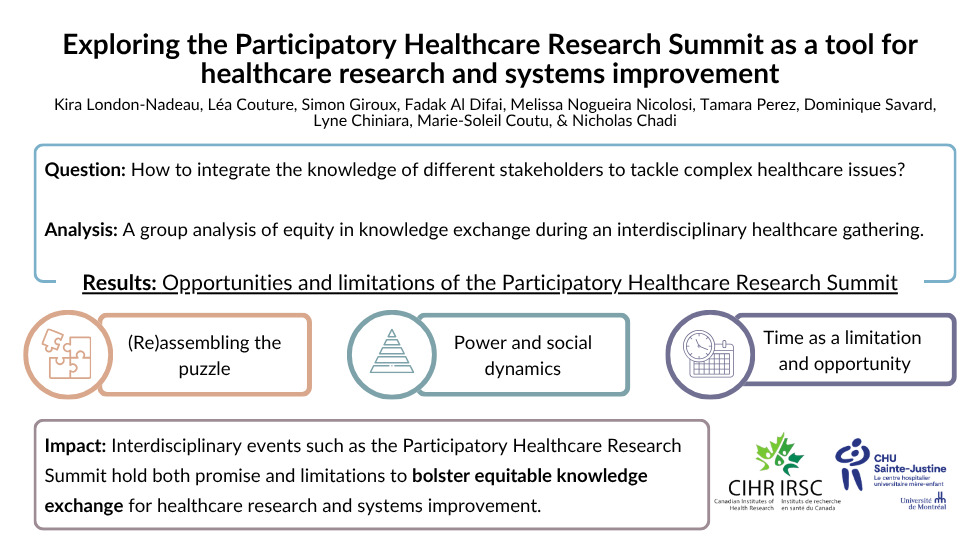
In this piece, we aim to reflect on the opportunities and limitations of holding Participatory Healthcare Research Summits within gender identity-related care and other emerging healthcare fields when it comes to knowledge exchange and equitable partnership in orienting future work. The following sections detail the group reflection we conducted, emanating from our experience as the event’s organizing committee. Our authorship/organizing group includes people with lived experience, although further details are limited to protect their security in the current political climate. We first present the methodology and structure of the Participatory Healthcare Research Summit, followed by our collective reflections as articulated through the lens of epistemic injustice (Fricker, 2007). Within this analysis, we present the key themes that describe the opportunities and limitations of holding a Participatory Healthcare Research Summit as a research tool to integrate the expertise of diverse interest-holders, including often-excluded groups such as community organizations and patient/parent-partners.
2. Methods
2.1 Event description
The CHU Ste-Justine Gender Diversity Clinic’s Participatory Healthcare Research Summit was a hybrid day-long event (online and in-person), based in Montréal, Canada. Activities were designed to promote reflection and discussion, gather data on current needs and experiences, and generate new avenues for research and clinical practice in gender identity-related care. The event also created opportunities for collaboration and the orientation of practical tools that would serve the broader network of pediatric gender identity-related care throughout the province of Québec, Canada. We selected and invited participants based on an environmental scan that identified professionals working in pediatric gender identity-related care, and on our organizing team’s current partnerships. To support patient/parent-partners and community organization representatives in their participation prior to the event, we held a series of individual and group meetings to ensure they felt prepared and comfortable. Certain partners had already been involved in other research and healthcare collaborations and were able to draw from these experiences. Based on discussions during these meetings, we also opted to create a participant booklet that would be sent to attendees ahead of time to help them visualize the event and better prepare. The day’s activities, their format, and their outputs are presented in Table 1.
As Table 1 outlines, the Participatory Healthcare Research Summit was composed of activities including the whole group, small breakout groups and individual activities. The breakout groups were carefully divided ahead of the event to ensure attendees from different areas—healthcare providers and professionals, researchers, health administrators, patient/parent-partners, community organization representatives—were adequately represented in each unit. Given that our organizing team knew most of the participants ahead of the event, this thoughtful and intentional formation of groups was possible. Further, participants provided a short biography ahead of the Participatory Healthcare Research Summit to build the participant booklet, which also informed our decision-making. The event was hybrid (in-person and online) and preliminary allocation to groups was not feasible for online participants. However, it allowed for the inclusion of individuals who were located in rural and remote communities and would have had to either travel for several hours to attend in person or forgo participation.
Small group discussions were facilitated by a member of the organizing team who explained the aim of the activity (to provide 3-5 key points to the broader group), established ground rules for discussion, presented discussion questions and took both content and reflexive notes. At the end of the discussion, small groups agreed on the 3-5 key points they wished to share with the broader group. These key points were collected across groups, and participants individually submitted their top 5 priorities from this list (with the opportunity for write-in additions) to ensure that each participant’s perspective was valued equally.
A total of 29 people attended the event, 22 participating in person and seven online. This included 14 healthcare providers and professionals, one health administrator, two researchers, four patient/parent-partners, and seven community organization representatives. Many participants were trans and gender diverse. From our nine-person organizing team, six were facilitators, one was the event’s emcee, and two contributed their clinical expertise as participants in the day’s activities. We aimed for a total of 25-30 participants to ensure that each breakout group would not exceed five participants. An exception was made for the online group, which included a group of seven participants. Participants were compensated equally, at a rate that accounted for the full-day event, reflecting typical clinician compensation rates and the time required to travel to Montréal for the event. The CHU Ste-Justine Institutional Review Board approved the Participatory Healthcare Research Summit on which this reflection is based (ethics approval #2025-8596). All participants from the Participatory Healthcare Research Summit provided consent for their data to be used for research purposes. However, the analysis presented in this paper is not based on these data, but rather emanates from our group reflection about organizing the Participatory Healthcare Research Summit.
2.2. Analytical procedure
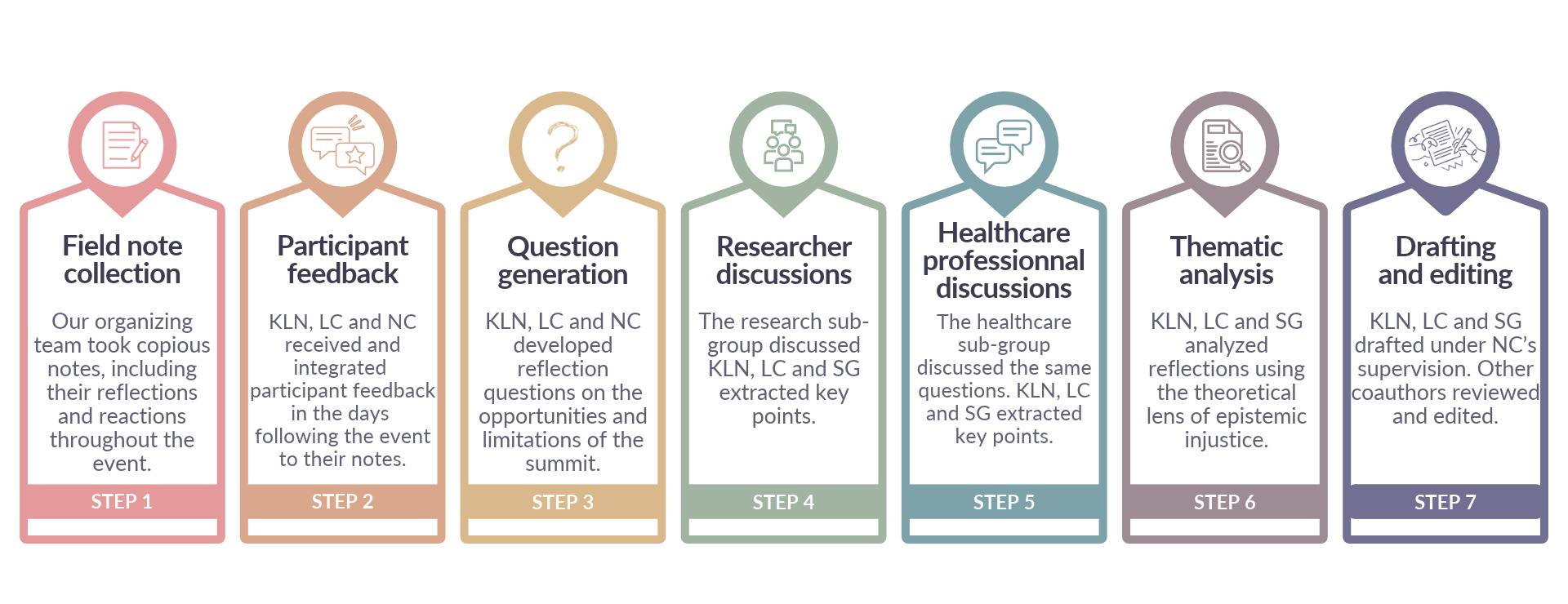
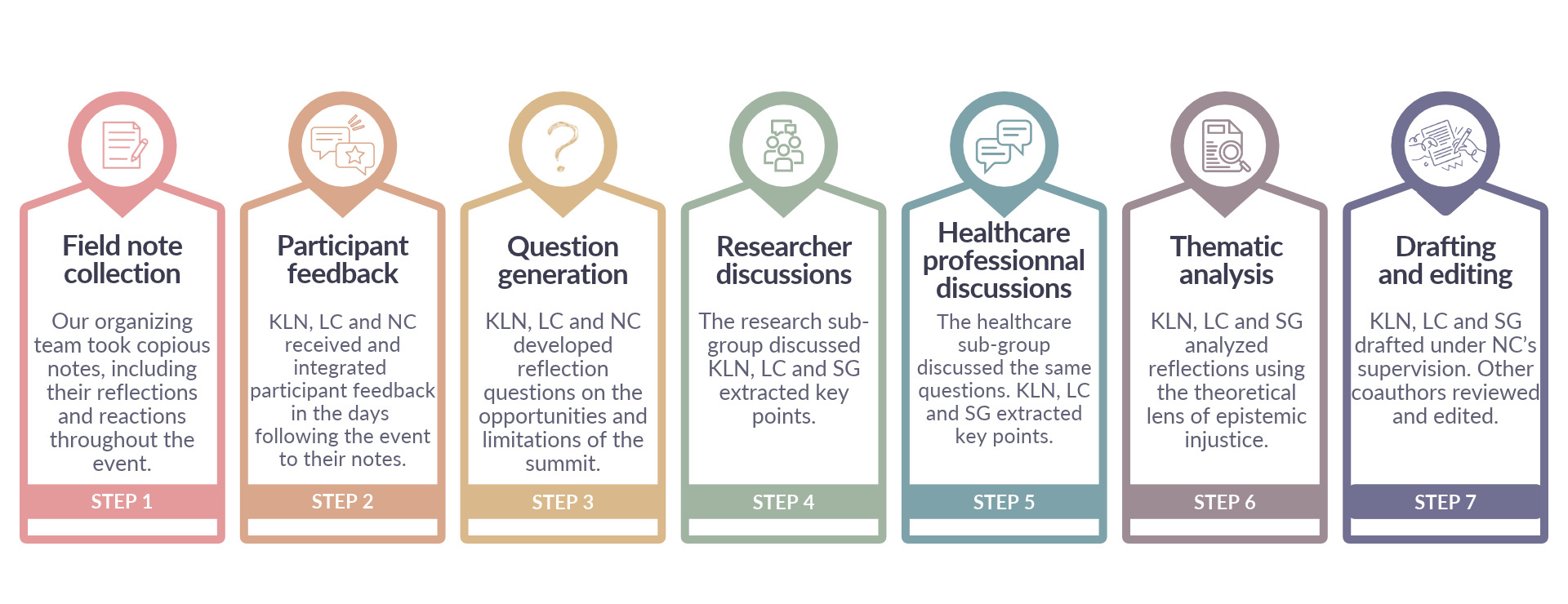
This reflection is written from our point of view as the organizing committee, comprised of researchers, healthcare professionals and individuals with lived experience (categories not mutually-exclusive), all co-authors on this paper. Post event, we sought to gather our reflections about the use of the Participatory Healthcare Research Summit as a healthcare research tool that can integrate diverse sources of expertise to orient healthcare improvement and future research. We first engaged with Participatory Healthcare Research Summit participants, particularly patient-partners, caregivers and community organization representatives, immediately after the event and throughout the following days to gather oral feedback on their experiences. As an organizing committee, we then critically examined the opportunities and limitations of the event using a reflective dialogue approach. This methodology uses a dedicated space (i.e., an intentional moment for group reflection) and a dialogical orientation (where those participating in the exchanges are encouraged to share both their professional insights and their personal, affective experiences) to facilitate in-depth group reflections (Kumagai & Naidu, 2015). Importantly, the objective of a dialogue is not to convince others, nor is it to attain a purportedly objective solution. Rather, a dialogue is a process that seeks to explore a topic through the multiplicity of lenses of those involved. Figure 1 summarizes our iterative process of gathering feedback and conducting small-group reflective dialogues to generate an overall critical reflection on the event’s dynamics of power and knowledge exchange.
2.3. Theoretical approach
We used the lens of epistemic injustice to better understand how knowledge exchange operated within the Participatory Healthcare Research Summit, and how this connects to the value of this event as a participatory research methodology. Originally articulated by Fricker (1999, 2003, 2007), this philosophical and ethical lens highlights how authority and credibility are differentially attributed to various information sources and, by extension, the types of information shared. This is referred to as testimonial injustice and is the main component of epistemic injustice that we will explore in this piece.
Within the realm of healthcare, examining “credible testimony,” or the extent to which we believe what is said by various actors (McKinnon, 2016) is crucial toward better understanding inequities around the knowledge and expertise that is valued and used to advance medical practice and research. Indeed, medical training and theory, along with medical providers themselves, have been privileged as authoritative sources of knowledge over the lived experiences and expertise of patients and caregivers (Carel & Kidd, 2017). This imbalance translates into healthcare providers having considerable epistemic privilege over patients, both in the clinical encounter and in shaping research and the broader narrative around health and care (Carel & Kidd, 2014).
A recent critical and systematic literature review of these issues highlights how various strategies may contribute to rectifying epistemic injustice toward patients (Côté, 2024). Among these, full patient partnerships are seen as a key step toward epistemic justice within healthcare. Beyond simple consultation, Côté (2024) notes that real patient partnership – spanning areas of care, medical education, governance and health research – recognizes that patients and caregivers hold crucial information for the improvement of these areas. Through the rejection of the idea that those with epistemic authority “know what’s best” for oppressed groups, these opportunities for dialogue can promote better power sharing in healthcare (Anderson et al., 2009).
Furthermore, focusing on epistemic injustice through a critical lens on healthcare can help reveal the mechanisms that foster the reproduction of social inequalities within care systems. This process is interwoven with epistemic exclusivity toward Western, positivist ways of thinking, that are transmitted unidirectionally from physicians to patients. Such exclusionary mechanisms systematically undermine socially marginalized communities, including trans and racialized people, people with disabilities, neurodivergent people and those living with chronic illnesses (Bo et al., 2024; Della Croce et al., 2021; Hamed et al., 2022; Hunt et al., 2024; Hunt & Blease, 2024; Xian et al., 2025). This results in the disqualification of lived experiences and may lead to appropriation of knowledge produced within communities, via the decontextualization of knowledge and its redirection toward dominant institutional goals (Myerscough et al., 2024). As such, while opportunities for partnership and dialogue are fertile grounds for rectifying epistemic injustices, they must also be approached with caution in order not to reproduce social power structures by exploiting patient experience to the ends of the institution.
3. Results
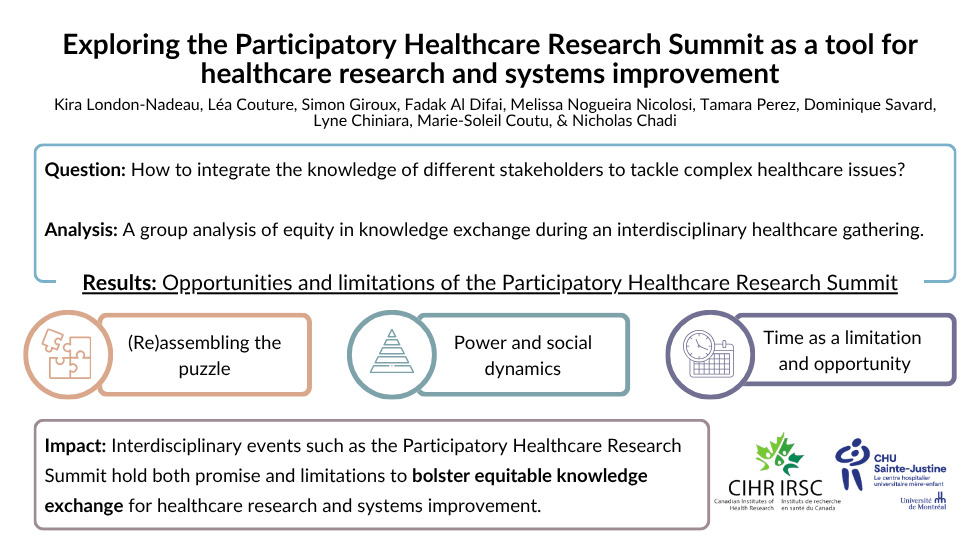
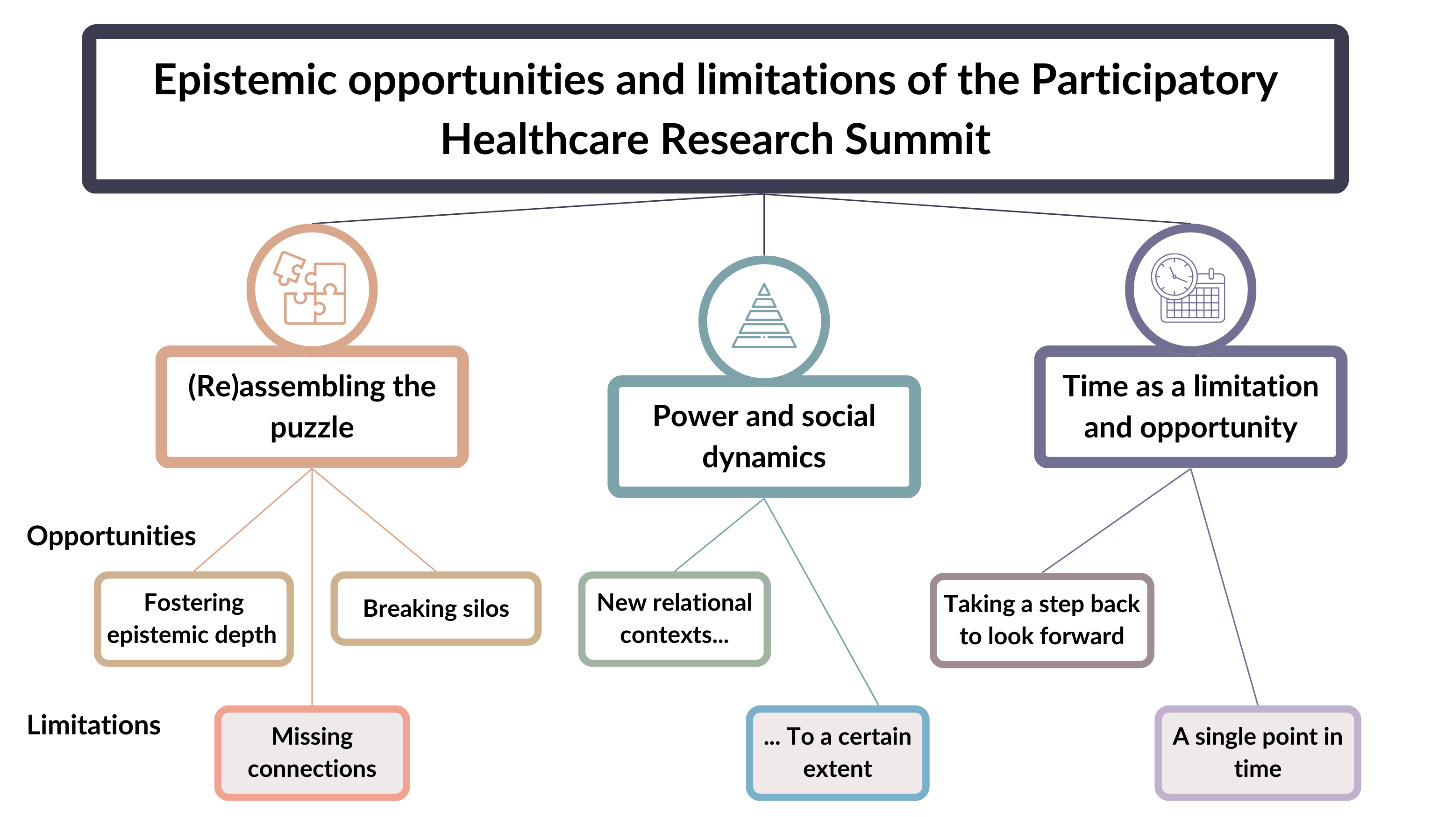
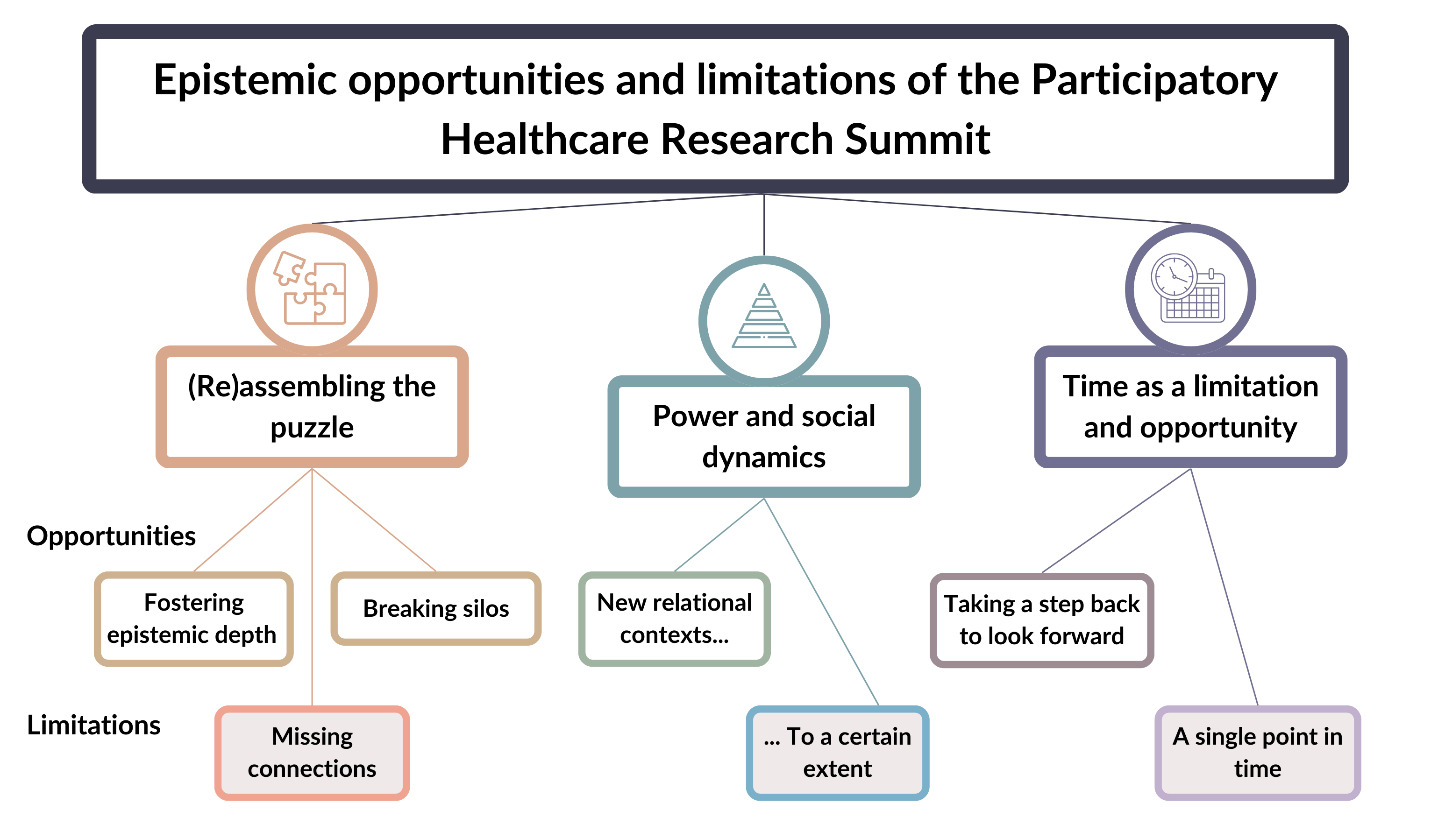
In seeking to explore the opportunities and limitations of the Participatory Healthcare Research Summit when it comes to meaningfully integrating various sources of knowledge to research healthcare needs and avenues for improvement, we generated three overarching tensions that characterized the event: 1) [Re]assembling the puzzle, 2) Power and social dynamics, and 3) Time as a limitation and opportunity. Below, we explore each of these areas and their imperfect contributions toward pursuing epistemic justice within healthcare research and system improvement. Figure 2 presents the conceptual map of our analysis, divided into opportunities and limitations.
3.1. [Re]assembling the puzzle
We found that the Participatory Healthcare Research Summit’s role in bringing participants together was unique in that it made visible the connections of participants within a broader structure of care, a process we called [re]assembling the puzzle. This process offered key contributions toward fostering epistemic depth through diversity in expertise. However, the puzzle that was [re]assembled through the Participatory Healthcare Research Summit remained incomplete. We reflect on each of these points below.
3.1.1 Fostering epistemic depth. We estimate that spending a full day together played a key role in building a diverse epistemic common ground. Indeed, each of the day’s activities contributed to this process, from the presentations that allowed for the group to build an iterative pool of shared knowledge, to the small group discussions that provided participants with in-depth insight into the perspectives of other interest-holders. Importantly, we were aware that trans and gender diverse people broadly, and TGDY in particular, are often excluded from conversations and decision-making about them. As a result, we sought to counter this trend of “pre-emptive testimonial injustice” described by Fricker and Jenkins (2017), by beginning the day with a presentation by a patient and parent partner duo. Not only did this serve to bolster their testimonial credibility, it also provided crucial contextualisation and a backdrop for the rest of the day’s activities, echoing the broader literature around the value of patients’ stories in knowledge exchange (Bergerum et al., 2019), allowing participants to build from mutual understandings that were grounded in lived experiences.
Another enriching component of the Participatory Healthcare Research Summit is that participants’ experiences in gender identity-related care varied greatly in scope. For example, researchers and health administrators may have a wealth of knowledge around the bigger picture of a field, but lack practical insights into the daily issues surrounding clinical care. Further, clinicians and other healthcare providers cultivate a wealth of experiences offering services, but are limited by time constraints and intermittent meetings within the healthcare system. Community organization members are usually able to accompany young people receiving services in more holistic ways, yet are limited to those who engage with community organizations in the first place. In turn, patient-partners bring their full, unique experience as they are the embodiment of an entire trajectory of care. This ability to contribute a complete and holistic view toward care not only expands conversations beyond instances of receiving services, it also helps avoiding reducing patients to the care they are receiving or have received – a critical benefit of patient partnership (Côté, 2024). At the same time, patient-partners’ expertise remains centred on depth rather than breadth. As such, the perspectives shared were highly complementary, and, through discussion, allowed for iterative knowledge building that extends beyond the sum of individual contributions.
3.1.2 Breaking silos. We also heard from participants that the Participatory Healthcare Research Summit played an important emotional role, providing participants with a sense of togetherness and connection that is easy to forget due to the distinct roles they occupy. These understandings may be implicit, but the event allowed participants to make explicit points of connection in their experiences. We attribute this in part to the small size of this event, allowing participants to connect with the full group throughout the day, challenge preconceived notions or assumptions about one another, and break the silos within which participants usually find themselves within and around healthcare. As such, beyond simply bringing people together, the event allowed participants meaningfully engage with one another in a way that valued each contributing role.
We noted this process especially among actors such as healthcare providers and community organizations who usually operate in parallel, but not necessarily in tandem. Through seeing themselves within the constellation of care that was represented at the event, we saw participants go through a process we call “making identity relational.” This entailed participants not only seeing how their work existed within an interdependent network of contributions, but also how their personal/professional identity could be understood through these collaborations. Especially in an emerging healthcare field where the overall network is relatively small, this affective contribution played an important role in the synergy built between Participatory Healthcare Research Summit participants.
3.1.3 Missing connections. There were also limitations to the potential for [re]assembling the puzzle. For instance, we noted that the connections created were particularly noticeable for participants engaging with one another in person, as they were able to better gauge tone, intention and authenticity. They also benefitted from informal opportunities to speak with others in the larger group. As in-person participation was accessible mainly to those in urban settings and living closer to Montréal, the knowledge and experiences shared during the Participatory Healthcare Research Summit may have overrepresented contexts and circumstances of service delivery in large, urban areas. We maintain that the adoption of a hybrid meeting format was crucial for the inclusion of those geographically distant or otherwise unable to join in person. Yet, this inclusion did not seem sufficient to ensure equity in knowledge sharing and networking.
Furthermore, while our relatively small number of participants offered a unique opportunity for proximity and ease of access to share diverse sources of knowledge, it also entailed that the representation of various perspectives remained limited. Embedded in the process of selecting participants for an event is the risk for structural biases that plague healthcare access and research more generally, including a favouring of participants who already enjoy a certain degree of power, privilege, and epistemic credibility. Beyond epistemic considerations, this may also operate on the affective dimension of the event. Indeed, while the Participatory Healthcare Research Summit may have provided a feeling of belonging, it may also have instilled one of exclusion among those who were not invited to participate.
3.2. Power and social dynamics
An explicit aim of ours while organizing the Participatory Healthcare Research Summit was to confront social hierarchies and place all participants on an even footing with regard to epistemic authority. In doing so, we sought to enable mutual sharing of experience and insight between parties representing different experiental backgrounds, and disrupt the status quo of information flow in both clinical and research settings; from the professional to the patient or participant. In this section, we reflect on the extent to which this was possible.
3.2.1 New relational contexts… Confronting this direction of informational flow was central to what we see as a core mechanism through which power and social dynamics between participants can be flattened. In contexts in which participants would normally interact in their everyday work, there are simple dynamics at play: one party (or both, in alternance) seeks to ask questions and the other is tasked with answering. On the flipside, one might provide information while the other listens. Consider a patient going in for an appointment with a physician, a researcher advocating for policy change to a health administrator, or a community organization member leading a workshop to improve medical practice. Each of these interactions positions one party as the sharer and the other as the receiver. However, since questions and prompts were provided by our organizing team, participants were in a new relational context: responding to questions together. We heard from patient-partners that this unique position afforded them with decision-making credibility they had not yet experienced in research and medical spaces.
This also led to the sharing of invaluable context and information. For example, one of our organizing team members reflected on hearing the story of a family to whom they had directly provided services, noting “I would never have known that this is what they were experiencing behind the scenes at the time, or even now a few years later. This is context to which you just don’t have access when you’re in the consultation room.” This is a clear example of what Côté (2024) describes as “epistemic authority reversal” or “mutual recognition as knowers,” which occurs when those who are generally in a position of disseminating knowledge are instead in a position of receiving it. Importantly, our experience of the Participatory Healthcare Research Summit highlighted that healthcare providers were excited to have the opportunity to be in this position.
3.2.2 … To a certain extent. We noticed that power dynamics nonetheless emerged within groups. This was true particularly when it came to certain participants commanding more attention or having particular authority ascribed to their narratives and experiences by others. Many of these dynamics varied by group. In certain groups, “connective leaders” emerged and played an instrumental role in building group coherence and iterative thought processes. Conversely, we noted that groups without such leaders struggled to form synergy, emphasizing the importance of group formation in our event. Specifically, even though we had the advantage of knowing participants ahead of time to create balanced groups to the best of our abilities, by no means was this a fail-safe approach.
3.3. Time as a limitation and opportunity
Another interesting dimension of the Participatory Healthcare Research Summit was the role of time. Below, we examine how holding a full-day event presented a unique temporal context for participants.
3.3.1 Taking a step back to look forward. As a full-day event, the Participatory Healthcare Research Summit offered a great deal of uninterrupted time for participants to explore topics and connections deeply. We describe this as the creation of a “bubble”—a kind of spatially and temporally-delineated moment during which participants can pause, reflect, and take a step back from their usual role within gender identity-related care, especially if present in person. This echoes Kumagai & Naidu’s (2015) description of a dedicated “space” where an intentional break from routine activities is made. In our view, creating this space was a crucial component of fostering meaningful discussions during which participants could stay focused on the moment. This extends to structural considerations around time and availability, as healthcare providers, researchers, and community organizations are routinely overworked due to increasing demands and under-resourcing (Béland et al., 2024; Duong & Vogel, 2023).
This level of immersion allowed participants to gain deep understandings of one another and build collectively on topics generating outputs that will far outlive the day in this “bubble.” This is best exemplified in our Utopia activity, which prompted participants to articulate their vision of an ideal future for pediatric gender identity-related care. This activity was inspired by queer theorising around the mobilising potential of hope (Duggan & Muñoz, 2009; Muñoz, 2009), through which dreaming together can allow us to move together toward better futures—even ones that we cannot quite articulate today. In this way, we can use long-term ideating to build short- and long-lasting momentum.
3.3.2 A single point in time. At the same time, there are limitations to activities occurring within a single day. First, the Participatory Healthcare Research Summit was situated at a specific point in time, which does not allow for participants to share reflections as they develop and may place a disproportionate emphasis on recent thoughts and events. This is likely to shape the knowledge and expertise shared between participants. Second, without a formalized structure to maintain ongoing discussion and exchanges (although participants may carry these on themselves), participants may simply gravitate back toward the silos this event sought to break. Holding regular Participatory Healthcare Research Summits may be a way to mitigate these limitations.
4. Discussion
Our reflection illustrates how Participatory Healthcare Research Summits present key opportunities as well as limitations as a tool for meaningful knowledge exchange in collaborative planning and decision-making efforts for healthcare research and systems improvement. The pursuit of epistemic justice is particularly illuminating in better understanding the imperfect contributions of this type of event. When it came to bringing together various interest-holders, we found that holding a Participatory Healthcare Research Summit was a fruitful way to include, connect, and value many types of knowledge in healthcare research, but that certain perspectives were still missing. We also noted that the event allowed us to flatten, or even invert, certain social and power dynamics, while other such dynamics were simply reproduced within groups. Finally, while our choice to host a day-long event allowed for in-depth immersion into the subject matter, it did not provide an explicit structure for these conversations to continue through time.
The Participatory Healthcare Research Summit also comprised a feasible opportunity for participatory research to move from consultation to more meaningful partnership with patient and community partners, particularly regarding inclusion in “bigger picture” discussions meant to orient future healthcare improvement and research efforts. As an event that strongly adheres to the importance of including interest-holders such as patient-partners and community organizations, the Participatory Healthcare Research Summit may also play a broader role in advancing knowledge exchange within healthcare research and systems improvement. Indeed, conducting such events may contribute toward restructuring epistemic inclusion, credibility, and authority. In turn, this can help shape practices that are based on “new terms, values, and conditions by which people are to recognize one another as thinkers, knowers, and collaborators” (Doan, 2018, p. 19) as a path toward epistemic advancement.
For these reasons, and despite noted limitations, we contend that holding a Participatory Healthcare Research Summit may constitute an effective tool for participatory planning and decision-making as healthcare fields grapple with new challenges. For established healthcare fields, the event’s strengths in consolidating traditionally undervalued sources of knowledge and in providing a dedicated moment for reflection on systems improvement may prove beneficial. At the same time, the promise of Participatory Healthcare Research Summits is particularly apparent in emerging healthcare contexts, of which there are many. For instance, the development of GLP-1 agonist medications has been deeply transforming not only diabetes treatment (Nauck et al., 2021), but also the fields of weight loss (Vosoughi et al., 2022) and certain eating disorders (Radkhah et al., 2025). In conjunction with these medical advancements, many social repercussions related to GLP-1 agonist use are still emerging (Arillotta et al., 2024; Kałas et al., 2025) and concerted efforts that value diverse sources of knowledge, experience and expertise remain necessary to guide research in the field.
Other areas of healthcare have also emerged in relation to widespread access to digital technology and new resulting medical presentations, such as screen (Khan et al., 2024), internet (Mihajlov & Vejmelka, 2017) and social media addictions (Sun & Zhang, 2021), although the field continues to grapple with questions of adequate nomenclature to address and understand these phenomena (Touitou, 2024). In these complex, rapidly-evolving fields, insights from those with lived experience and community-based knowledge are critical. As empirical questions remain and better contextualization is needed, there is a unique opportunity for those with personal or anecdotal knowledge to orient empirical work and approaches to care. Based on our experience, holding a Participatory Healthcare Research Summit can be a generative opportunity to establish such efforts.
4.1. Recommendations
For those who might be interested in holding their own Participatory Healthcare Research Summit, Table 2 outlines our key recommendations before, during and after the event, to support partnership with patient and community partners, and foster the sharing of multiple types of knowledge.
It is of note that our approach toward the Participatory Healthcare Research Summit aimed for feasibility, particularly given time constraints during the planning phase and during the event itself. One advantage of this approach is that it highlights how conducting Participatory Healthcare Research Summits may be accessible to many healthcare research teams, including those with more limited capacity. However, such events also present salient opportunities to conduct more rigorous data collection, particularly for consensus-building and priority-setting activities (see Duea et al., 2022 and McMillan et al., 2016 for guidance on using such methods), which teams may also wish to explore.
4.2. Limitations and future directions
Our group reflection comprises certain limitations. First, due to limited funding during the planning phase, our initial organizing committee did not include a patient partner. Although our later facilitation and reflection group did contain lived expertise, certain planning decisions may have led to similar oversights as the ones we describe in this paper and future Participatory Healthcare Research Summits would benefit from earlier co-design. Another limitation of our reflection is its focus on the organizing committee’s perspectives without a formal structure for input from all attendees. While we sought to collect feedback from all attendees prior to conducting our reflective dialogue process, particularly from patient-partners, caregivers and community organization representatives, there is a clear risk that our reflection does not fully represent the perspectives of participants. Future work seeking to examine the dynamics and outcomes of such events would benefit from the creation of channels for better inclusion of all perspectives, such as feedback forms analysed through rapid qualitative coding (Johnson & Vindrola-Padros, 2017; Vindrola-Padros & Johnson, 2020) and follow-up validation with participants. Furthermore, our reflections were generated based on our experience hosting a single Participatory Healthcare Research Summit, which carries particularities tied to the field of gender identity-related care. The relatively small size of the network in this field and the political valence ascribed to gender identity-related care may have affected our experiences in ways that would not be replicated in other fields.
5. Conclusion
The aim of our reflection was to characterize how Participatory Healthcare Research Summits may operate as a participatory tool harnessing various types of knowledge and connecting partners to orient healthcare research and improvement. In light of its potential to generate novel insights and support network-wide alignment, we contend that this type of event may be particularly beneficial within emerging healthcare contexts. Furthermore, we endorse its underlying principles of cross-sectoral collaboration and patient involvement as important pillars toward better epistemic practices in healthcare research and systems improvement more broadly.
Acknowledgements
We would like to thank those who participated in the Participatory Healthcare Research Summit.