1. Introduction
Historically, qualitative analysis has been under the sole control and input of academics. For example, ethnography as a qualitative method has touted its dedication to the communities involved in the research (Jarzabkowski et al., 2015), yet ethnographic researchers are trained in a “lone ranger” tradition where being in the field and completing analytical work on one’s own is a rite of passage (Erickson & Stull, 1998; O’Reilly, 2009). Oftentimes qualitative research may fail to acknowledge the role of relationships and power among researchers and the communities involved (Bresler et al., 1996; Erickson & Stull, 1998; O’Reilly, 2009; Scales et al., 2008; Thompson et al., 2004). One way to address the power imbalance of the sole researcher and analyst in qualitative research is through team-based approaches.
There are many ways to approach team-based qualitative research. The level of involvement from each team member can vary from the whole team’s involvement at each step of the project to different parts of the work being split up among team members (Bresler et al., 1996; Creese et al., 2008; Hemmler et al., 2022; Saunders et al., 2023). Qualitative research, especially ethnographic work, has commonly relied on a single interpretation of data. However, in team approaches to analysis, each analyst brings their own experiences, worldview, and biases into coding and interpretation, which can potentially cause inconsistencies among the analysis team (Campbell et al., 2013; Giesen & Roeser, 2020). When focusing on the analysis process, much of the literature discusses strategies to build consensus among the analysis team. Collaborative efforts within the team to acknowledge differing interpretations are crucial. This process to construct a shared understanding generally starts with codebook development where team members go through the proposed coding scheme to find points of discrepancy and confusion (Cascio et al., 2019; LeCompte & Schensul, 2013; Macqueen et al., 1998). During analysis, approaches to evaluating the reliability or consistency among coders include a mixture or variation of methods like interrater (or intercoder) reliability and agreement coefficients, negotiated agreement, and coding critiques from the primary investigators and other coders (Campbell et al., 2013; Hemmler et al., 2022; LeCompte & Schensul, 2013; Thompson et al., 2004). Because consensus is a continuous process, reflexivity and communication among the team is central to these strategies.
Adoption of team-based analysis can introduce a range of advantages. This approach allows for large amounts of data to be addressed, and potentially at a faster pace (Beresford et al., 2022; Cascio et al., 2019; Jarzabkowski et al., 2015). Additionally, multiple analysts allow for the triangulation of viewpoints and input from various backgrounds and perspectives (Barry et al., 1999; Bikker et al., 2017; Scales et al., 2008). The multidisciplinary approach “also raises the potential to include community members in the data analysis process” (Cascio et al., 2019, p. 126). However, like any approach, there are potential pitfalls to consider. The process of collaborating and ensuring thorough analysis is time consuming (Bresler et al., 1996; Hall et al., 2005). Moreover, those less involved in data analysis must rely on the analysis team for a comprehensive view of all the data (Bikker et al., 2017). This process of dissemination in turn risks the disembodiment of data from its context and nuance (Scales et al., 2008). Mauthner and Doucet (2008, p. 981) argue these practices separate knowledge forms from their production and the individuals who collect them, analyze them, and “write them up”. Likewise, team-based approaches are not immune to power differentials. Unless these issues are addressed explicitly, the relative status of the researchers — whether it be age, level of experience, training, etc.— can influence whose knowledge is valued (Erickson & Stull, 1998; Mauthner & Doucet, 2008). Furthermore, qualitative research and analysis are typically reserved for researchers trained in academic institutions (Erickson & Stull, 1998), which again perpetuates a lack of participant and community voice in the process. The exclusivity of analysis fosters a power imbalance that can reinforce colonial, hierarchical structures within the research landscape. We would argue that these factors should be considered in any research project, but is especially important when working with Indigenous communities. It is critical that academically trained researchers locate themselves within the research and unlearn their institutional roles in order to acknowledge the legitimacy of different ways of knowing (Jacklin & Kinoshameg, 2008; Koster et al., 2012).
One way to begin to address hierarchical, exclusive, and structurally violent systems present in research is through community-based participatory research (CBPR) principles and approaches (Freire, 2012). Key principles of CBPR are built on ideas of partnership, empowerment, cyclical and iterative processes, co-learning, open communication, cultural humility, and holism (Israel et al., 1998; Jacklin & Kinoshameg, 2008; Williamson et al., 2020). However, because academics dominate the larger paradigm of CBPR, there are risks of perpetuating colonial forms of research on Indigenous peoples rather than with and for Indigenous peoples (Koster et al., 2012; Williamson et al., 2020). Despite its Western cultural context, CBPR’s emphasis on community creates spaces for co-learning and co-creating, and a chance to incorporate Indigenous research paradigms and worldviews (Koster et al., 2012; LaVeaux & Christopher, 2009; Petrucka et al., 2012; Rasmus, 2014).
Indigenous methodologies and research paradigms (Archibald et al., 2019; Kovach, 2021) are essential to CBPR practices in research, and this includes the acknowledgement that all parts of the research process are interconnected, which in turn requires an authentic relationship between the researchers and community (Koster et al., 2012; Kovach, 2010). Connecting Indigenous knowledges with CBPR provides an opportunity to create relational accountability as well as support radical changes to advance the decolonization of both the research and the researchers (Chatwood et al., 2015; Held, 2019; Marsh et al., 2015). Examples of approaches to support this include “ethical space” (Ermine, 2007; Ermine et al., 2004), relational accountability (Wilson, 2008), and Etuaptmumk/Two-Eyed Seeing. Bartlett et al. (2012, p. 335) explain that Etuaptmumk/Two-Eyed Seeing is a gift of multiple perspectives that requires “learning to see from one eye with the strengths of Indigenous knowledges and ways of knowing, and from the other eyes the strengths of knowing of Western knowledges” and that both of these eyes should be used together for the benefit of all. In a review of literature where Etuaptmumk/Two-Eyed Seeing has been applied to data analysis, Rankin and colleagues (2023) outline five major themes central to this application, which are (1) Indigenous community member involvement during data analysis, (2) co-learning during data analysis, (3) visual or symbolic conceptualization to guide data analysis, (4) statement acknowledging Indigenous knowledge during data analysis, and (5) sharing of Traditional stories to guide data analysis. Etuaptmumk/Two-Eyed Seeing is an essential component of data interpretation with Indigenous communities and partners.
There are scant examples in the literature of qualitative analysis conducted with community members (Burgess et al., 2021; Foster et al., 2012; Hallett et al., 2017; Perron et al., 2024). Cashman and colleagues (2008) note the importance of community involvement in CBPR approaches to improving health, but acknowledge the lack of literature regarding the how of community participation in data analysis and interpretation of findings. Despite this paucity in the literature around this topic, an example of community involvement in analysis that informs our approaches includes the development of the Collective Consensual Data Analytic Procedure (CCDAP), a culturally appropriate tool that views the communities as experts and acknowledges the cultural contexts of the data (Bartlett et al., 2007; Iwasaki & Bartlett, 2006; Starblanket et al., 2019). It is evident that qualitative analysis still has a long way to go in terms of addressing power differentials between researchers and participants (Andress et al., 2020; Kothari, 2001; Yan et al., 2024). While important examples exist of research teams taking active steps to decolonize and Indigenize the research process (Au, 2023; Hart et al., 2017; Held, 2019; Thambinathan & Kinsella, 2021), there is a gap in the literature on how to apply decolonial and Indigenous methodologies when analyzing data from community-based research projects. To address this, our team incorporates the tenets of CBPR and Etuaptmumk/Two-Eyed Seeing to move towards a qualitative analysis space that is more relational, decolonized, and Indigenized.
For this paper, we describe the qualitative analysis approach taken at our research center, Memory Keepers Medical Discovery Team (MK-MDT) at the University of Minnesota Medical School, Duluth campus. The MK-MDT incorporates team science, decolonial/Indigenous approaches, and community input and interpretation in its mission to address health equity. The MK-MDT is a University of Minnesota Medical School and state supported investment in health equity encouraging teams to cluster around specific issues and produce innovative science and solutions. MK-MDT is primarily concerned with Alzheimer’s disease and related dementias (ADRD) equity in rural and Indigenous populations. University of Minnesota decolonization efforts and investments in community engagement have been central in developing our research values. Our team works to actively mitigate potential issues of whose knowledge is valued and reflected. To work from an anti-colonial and Indigenized perspective, we center relational accountability and reflexivity of interpretations throughout all parts of the research, including analysis (Marsh et al., 2015; Thambinathan & Kinsella, 2021). MK-MDT is structured to support community-engaged governance and inclusivity. Our analytic approach takes into consideration the viewpoints of senior academic researchers, qualitative data analysts, community-based researchers, an Elder-in-Residence, and community advisory members. By describing our process and structure, we invite researchers to assess their relationship not only to participants but with the analytic process. We seek to add to emergent literature on the specific ways qualitative researchers can incorporate different methodological and theoretical approaches with community partners during the data analysis and interpretation stage to maximize inclusion.
2. Methods
2.1. Identity Location in (Indigenous) Research
We would like to describe the identities and backgrounds of the authors as a way to self-locate and partially explain, as best we can given word limits of academic publishing, our multiple perspectives (Sand, 2023). This is a place for research teams to discuss identities and backgrounds to set the stage for mutual understanding and attention to bias. Kovach and colleagues (2013, p. 491) write that, “self-locating in Indigenous research gives opportunity to explore the influences in our own life, and through the protocol of introduction we immediately bring the research self into our research.” While we are certainly aware of critiques of positionality statements (Gani & Khan, 2024), we value the importance of self-location in order for other researchers to better understand who we are and who we are becoming, as identity is not static (Hurley & Jackson, 2020). We also do this to make it easier for other researchers to highlight and find Indigenous-led and informed scholarship. As a team of both Indigenous and non-Indigenous authors, we do this to share aspects of our life that inform our scholarship.
Kristen Jacklin (she/her) is a white woman descended from early settlers in rural northern Ontario, Canada. She is a medical anthropologist with a critical medical anthropology lens who as an early adopter applying of CBPR approaches with Indigenous communities. She is deeply committed to health equity and social justice with an emphasis on improving social understanding of dementia to positively impact care and outcomes in Indigenous and rural communities. Dana Ketcher (she/they) is a white, cisgender, queer woman of English, Sicilian, and German ancestry. Trained as a medical anthropologist and public health practitioner, health equity and social justice are critical lenses she brings to health research. ADRD research is personally very important to her, as she was a young caregiver for her mother who was diagnosed with frontotemporal dementia while Dana was in college. Melinda Dertinger (she/her) is a white, queer, cisgender woman of European ancestry with roots in present-day rural Northern Minnesota. Her personal and familial ties to rural communities motivate her role in improving rural health outcomes. Along with her commitment to equity, her training in psychology and research methodologies including CBPR drive her dedication to improving brain health equity in partnership with Indigenous communities. Melissa Blind (she/her) is Cree from the Touchwood Hills, Treaty Four region in Saskatchewan, Canada and is a member of George Gordon First Nation. She is trained in Indigenous research methodologies and CBPR. She has a deep cultural understanding of the importance of building and sustaining relationships with Tribal and Indigenous communities and is dedicated to improving culturally safe dementia care. Mikaela Williams (she/her) is a white, cisgender woman who spent most of her life in southwestern Ohio before joining the MK-MDT. She is trained in applied anthropology, though she is relatively new to ADRD research and CBPR approaches with Indigenous communities. She is passionate about health equity and social justice. Josyaah Budreau (he/him) is Anishinaabeg from the Fond du Lac Band of Lake Superior Chippewa in Northern Minnesota. He employs the Two-Eyed Seeing approach with a formal western foundation in applied sociology and the lived experience of an Indigenous person. This unique perspective enables him to seamlessly integrate Western scientific methodologies with Indigenous knowledge systems. His work is driven by a deep commitment to honoring his heritage, addressing health disparities, and fostering a future where Indigenous wisdom and Western practices coalesce to create more equitable and effective health interventions. Karen Pitawanakwat (she/her) is Anishinaabekwe of the Thunderbird Clan Manitoulin Island, Canada. She is a Registered Nurse and CBPR expert with over 30 years of nursing experience working with First Nations families and their care teams and 15 years’ experience as a community-based researcher. She brings with her Anishinaabemowin language and cultural values she was raised with to assist in understanding the needs of the families she works with. Wayne Warry (he/him) is an applied medical anthropologist concerned with rural and Indigenous brain health equity. Over the course of his career, he has experienced the transition from lone-ethnographer and author, through to collaborative research involving multiple and community inclusive authorship that is now common in the social and health sciences.
2.2. Origins of the Community-Engaged Analytic Approach
The community-engaged analytic approach we describe here was developed by senior researchers KJ and WW in Canada between approximately 1990-2016. Originally the approach was grounded in applied anthropological methods centered on praxis (Warry, 1992). As the model grew, the notion of self-determination and community healing began to frame the research and analysis process, which led to greater community collaboration including shared analysis and decision making between the researcher and Indigenous community governance (Warry, 1998). The introduction of CBPR to our work led to the adoption of capacity building as a key principle which in turn led to the involvement of community-based researchers and community partnerships incorporating non-governance committee participation, although still within an Indigenous governance framework (Jacklin & Kinoshameg, 2008). Around 2012, the community-based analytic model described below emerged and was adapted across diverse Indigenous dementia research projects (see for examples: Jacklin et al., 2015, p. 2023; Walker et al., 2019, 2021). With the resources made available at the MK-MDT through an academic-state partnership, the investigators transitioned the model to the United States and with these additional resources it was further expanded and refined, including the development of a community-engaged qualitative data analysis core, specialized training for community-based researchers (Blind et al., 2023) and a formalized model for collaborative analysis.
2.3. Case Study: The ICARE Project
While the analytic approach we describe is one we use across Indigenous and rural projects at MK-MDT, we present specific examples from one of our National Institutes of Health (NIH) funded, multi-sited ethnographic studies, Indigenous Cultural Understandings of Alzheimer’s Disease and Related Dementias - Research and Engagement (ICARE) project (R01AG062307). This research study examines cultural understandings of Alzheimer’s disease and related dementias (ADRD) in partnership with Indigenous communities throughout Minnesota, Wisconsin, and Ontario. Relationships for ICARE were built and established over 18 months during Phase 1 of the project, which was supported by an NIH funded R56 (AG062307). During phase 1, researchers successfully engaged with 10 American Indian/First Nation (AI/FN) communities in three regions: two Chippewa/Ojibwe communities in Minnesota (Miskwaagamiiwi-Zaagaiganing / Red Lake Nation and Gichi-Onigaming / Grand Portage Band of Lake Superior Chippewa); seven Anishinaabe First Nations in Manitoulin District, Ontario, Canada (Wiikwemkoong, Sheguiandah, Aundeck Omni Kaning, M’Chigeeng, Zhiibaahaasing, Sheshegwaning, and Birch Island, represented by three health authorities); and the Haudenosaunee of the Oneida Nation of Wisconsin. Long standing research relationships between investigators (KJ & WW) and the seven First Nations in Manitoulin District helped expedite community engagement and lent credibility with new partners.
2.3.1. Characteristics of the Research Team
Our research team is composed of individuals with diverse backgrounds, disciplines, epistemologies, and levels of training and research experience (Table 1). Multiple team members are involved in some capacity during data collection, interpretation, and analysis, including the investigators, senior research associates, community-based researchers (CBRs), qualitative data analysts, and community advisory group (CAG) members. Additionally, an Elder-in-Residence is located on-site at MK-MDT to provide guidance to team members.
2.4. Study Design
2.4.1. Epistemology, Theoretical Framework, and Methodological Orientation
The current approach at MK-MDT to research, and thus analysis, incorporates the tenets of several theoretical and methodological orientations that ultimately complement and enrich our understanding of dementia as a lived experience. Namely, we incorporate Etuaptmumk/Two-Eyed Seeing (A. Marshall, 2004; M. Marshall et al., 2015), team science, ethnography, phenomenology, health equity/structural violence (i.e., postcolonial lens), the Six Rs of Indigenous Research (Tsosie et al., 2022), and CBPR.
Etuaptmumk/Two-Eyed Seeing serves as the epistemological grounding in our approach to knowledge creation. It is a concept shared in 2004 by Mi’kmaq Elders Albert and Murdena Marshall from Eskasoni, a First Nation in Cape Breton, Novia Scotia (Bartlett et al., 2012; Rankin et al., 2023). Etuaptmumk/Two-Eyed Seeing is a deliberate, iterative, and relational approach that attempts to balance different knowledges, in this case Indigenous and Western, throughout the research project with the intent of producing new knowledge (Martin, 2012). Some researchers describe Etuaptmumk/Two-Eyed Seeing as a way to “disrupt health researchers’ attraction to a singular worldview which continues to privilege Western perspectives” (Sinclaire et al., 2021, p. 57). Work by Wright and colleagues (2019) outlined six key attributes and application procedures that researchers should consider applying Etuaptmumk/Two-Eyed Seeing to their work, including: (1) authentic relationships, (2) reciprocal research, (3) relational accountability, (4) Indigenous involvement, (5) Indigenous methodology, and (6) Western researchers deferring to Indigenous leadership.
Etuaptmumk/Two-Eyed Seeing can work in tandem with the foundational principles and approaches of CBPR, including facilitating collaborative relationships, building on strengths and resources in community, creating a cyclical and iterative process, and disseminating findings and knowledge to all partners (Israel et al., 1998). Specific ethical considerations must be respected when working with Indigenous populations, including: (1) acknowledging historical experience with research and working to overcome the negative image of research; (2) recognizing Indigenous sovereignty; (3) differentiating between legal definitions of community membership and community definitions of membership; (4) understanding Indigenous diversity and its implications; (5) planning for extended timelines; (6) recognizing key champions/leaders; (7) preparing for leadership turnover; (8) interpreting data within the cultural context; and (9) utilizing Indigenous ways of knowing (LaVeaux & Christopher, 2009; Petrucka et al., 2012). While our team collectively chose Etuaptmumk/Two-Eyed Seeing as our framework, it is important to acknowledge that other approaches such as “ethical space” (Ermine, 2007; Ermine et al., 2004) and relational accountability (Wilson, 2008) would work with our described theoretical and methodological approach.
Team science is another lens that informs our epistemological grounding (Börner et al., 2010; Stokols et al., 2008). Team science promotes collaborative and cross-disciplinary approaches to understanding research questions and social phenomena. A team science approach encourages the inclusion of various disciplines, skills, knowledges, and life experiences to address complex, multi-factorial problems (e.g., health disparities) at multiple levels (Holmes et al., 2008). Team science is nicely complemented and further supported by integrating the Six Rs of Indigenous Research, which is a research framework composed of respect, relationship, relevance, reciprocity, responsibility and representation (Tsosie et al., 2022). Establishing and integrating these principles is essential to establishing good relations both within the university-based team and between community partners.
Ethnography is a core anthropological methodology and facilitates the collection of rich and thick contextual information concerning cultural, political, economic and social organizations of communities (Grbich, 2007; LeCompte & Schensul, 2010). Data derived from ethnographic methods allows for the deep contextualization of community and culture. Phenomenology as an analytic approach embedded in ethnography explores in-depth individual lived experiences yet narrowly focused, for example on dementia, that can then be situated in collective circumstances and collective experiences (Katz & Csordas, 2003). Our anthropological approach offers an ethnographic methodology coupled with the phenomenological analytic lens allowing for the lived experience to be explored in the rich context of community life (Grbich, 2007; Johnson, 2016; McGovern, 2017). The lived experience is revealed through the intensive sampling of a small group to explore a particular life phenomenon (Grbich, 2007), in this case the dementia experience. Medical anthropology has a long tradition of using phenomenology within ethnographic methodologies to examine the illness experience/lived experience (Kaufman, 1988; Kleinman & Kleinman, 1991). Sometimes branded “cultural phenomenology,” this model includes the strengths of phenomenological analysis and “engages them in light of the empirical data of ethnography” (Katz & Csordas, 2003). Phenomenology has been argued to be particularly well-suited for work with Indigenous cultures as it utilizes oral traditions of storytelling and narratives (Struthers & Peden-McAlpine, 2005). In addition, a health equity and structural violence framework (Farmer et al., 2006), also known as the “postcolonial lens”, keeps present the need to emphasize partnerships, praxis, historical and present health or health-care contexts, and to ensure research processes and outcomes empower communities (Browne et al., 2005).
2.5. Analysis
2.5.1. Knowledge Co-Creation
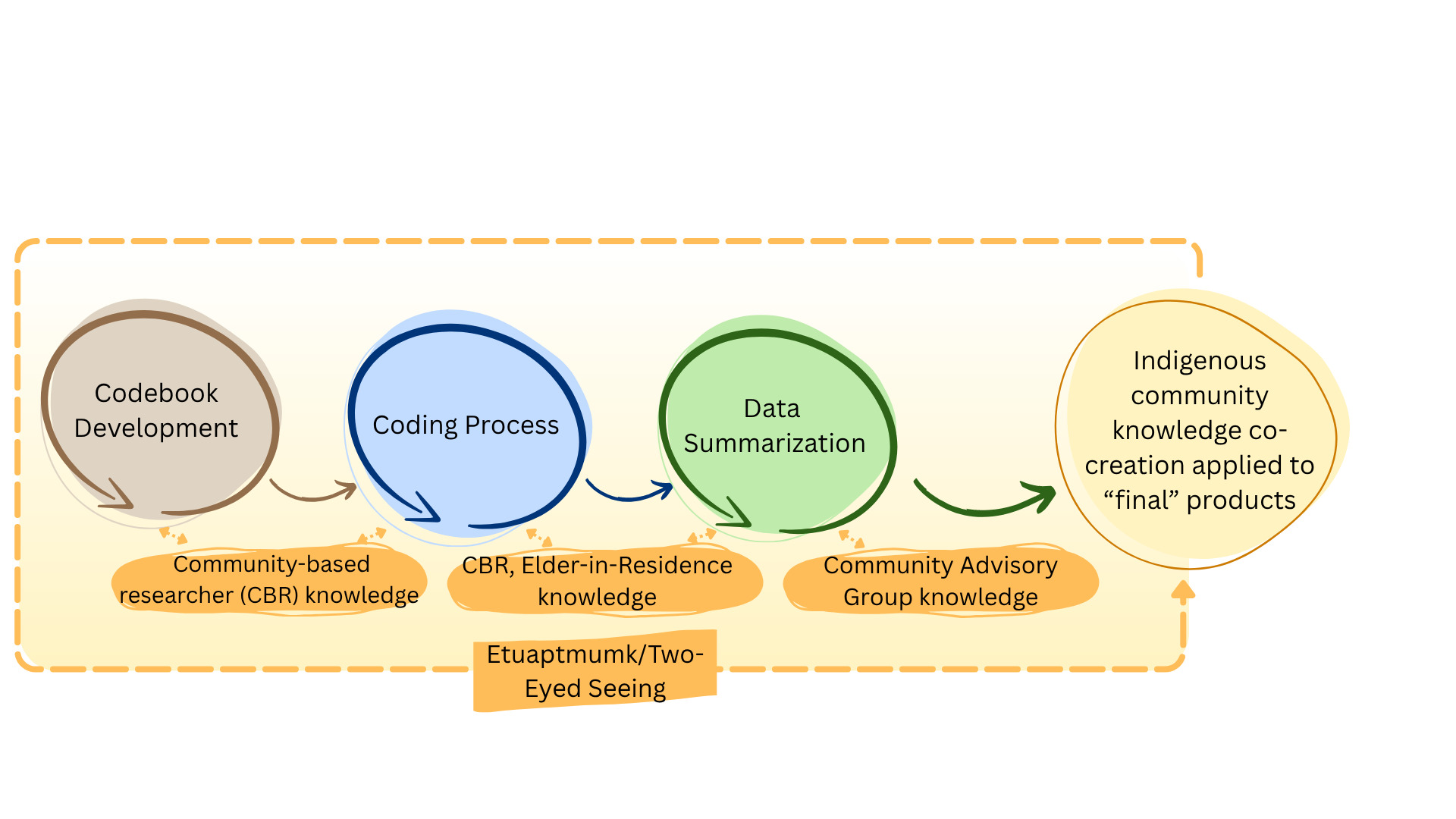
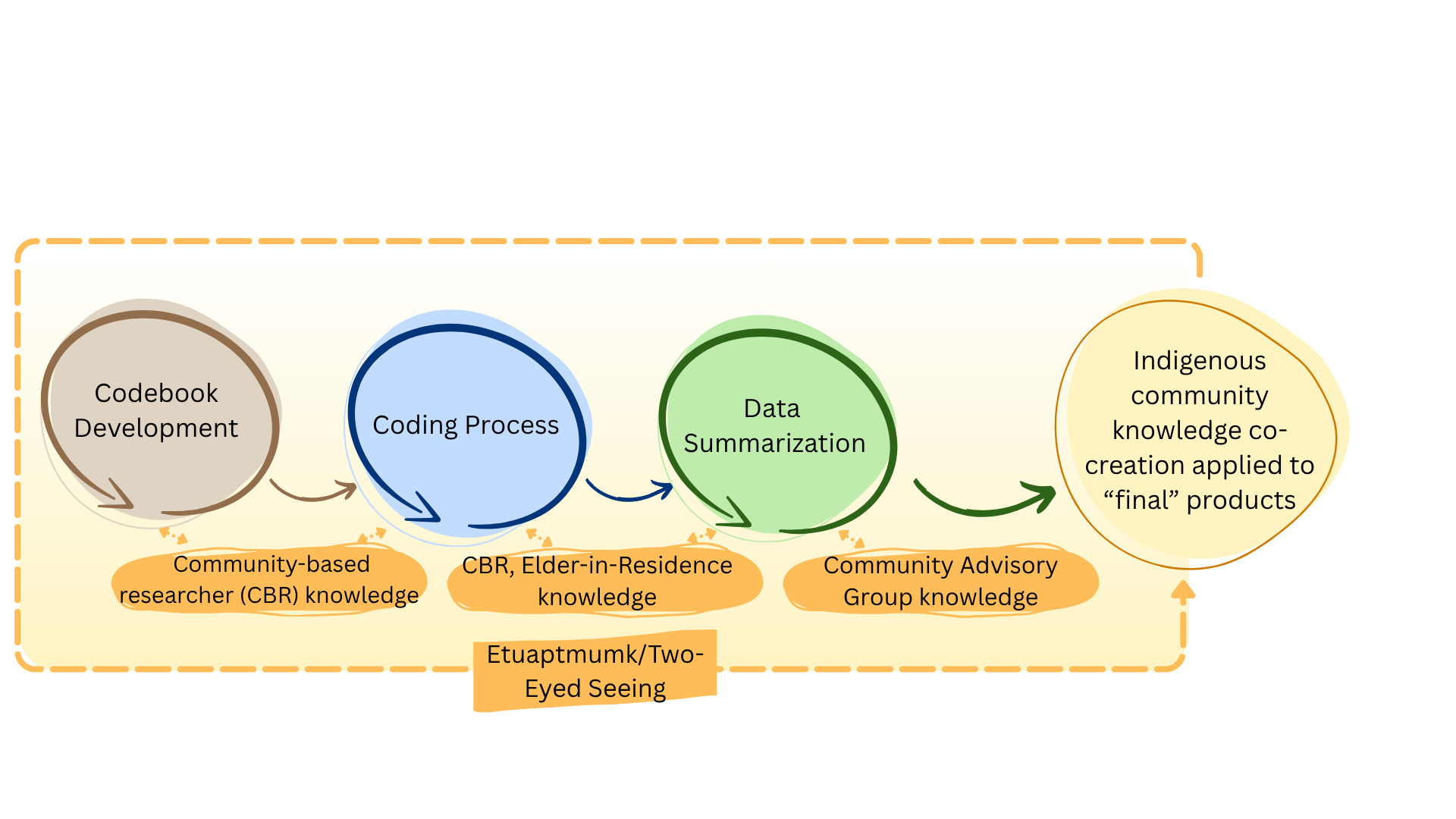
Data analysis is an ongoing and iterative process during which we involve various team members, both community and academic, to accomplish specific data analysis and interpretation goals. Over the life course of a large CBPR ethnographic research project, data analysis can be grouped into three main stages: codebook development, the coding process, and data summarization (Figure 1). Over the course of our data analysis process, we integrate Etuaptmumk/Two-Eyed Seeing in several places (detailed in the text below and Figures 1-4). Indigenous community knowledge, community perspectives, and co-learning is present throughout the data analysis process through relationship building and knowledge co-creation with CBRs, the Elder-in-Residence, and Indigenous CAG members.
2.5.2. Assembling the Data
The core data for the ICARE project consists of interviews and sequential focus groups (Jacklin et al., 2016) which were audio recorded, transcribed, de-identified, and member checked. Data is managed and organized using NVivo software (Lumivero, Version 15). At this stage, Etuaptmumk/Two-Eyed Seeing is supported by CBRs who are intimately involved in the interview process and embed their local knowledge into their approach. For the member checking process, CBRs return to the participants after transcription to verify the accuracy of the data and provide any additional contextual information that may guide analysts’ interpretations of the data. Participants can also remove information they do not want shared. In member checking, we seek to confirm data and interpretation from the participants (Creswell & Plano Clark, 2018). This ensures both accuracy of the data recording as well as checking researcher bias. In addition to direct member-checking with participants as described above, our phenomenological analysis relies on ethnographic methods where CBRs and investigators with long-standing research relationships with the partner communities provide contextual knowledge vital to our interpretations.
The CBRs also provide post-interview summaries (similar to field notes) and participant demographics which are included in the NVivo database for reference. These data help the qualitative analysts better understand contextual factors of the interview, including community and/or personal situations that might be important. Post-interview summaries include information about the setting in which the interview took place, behavior observation, important language or concepts noted by the interviewer, initial key themes of the interview, and any other information the interviewer felt would be important for analysts and other team members to know. This is one of the first steps to incorporating Etuaptmumk/Two-Eyed Seeing, as the CBRs are conducting the initial stage of data analysis. As an example, some interviews with healthy older adult participants were partially conducted in the participant’s first language, Anishinaabemowin[1]. The CBR (KP) who conducted the interviews is a fluent speaker and provided not only translation of the interview but also included the meaning behind the morphemes of the words and the context for how to interpret the word. This additional information provided important contextual information to analysts while interpreting and coding these interviews (Table 2).
2.5.3. Developing a Codebook
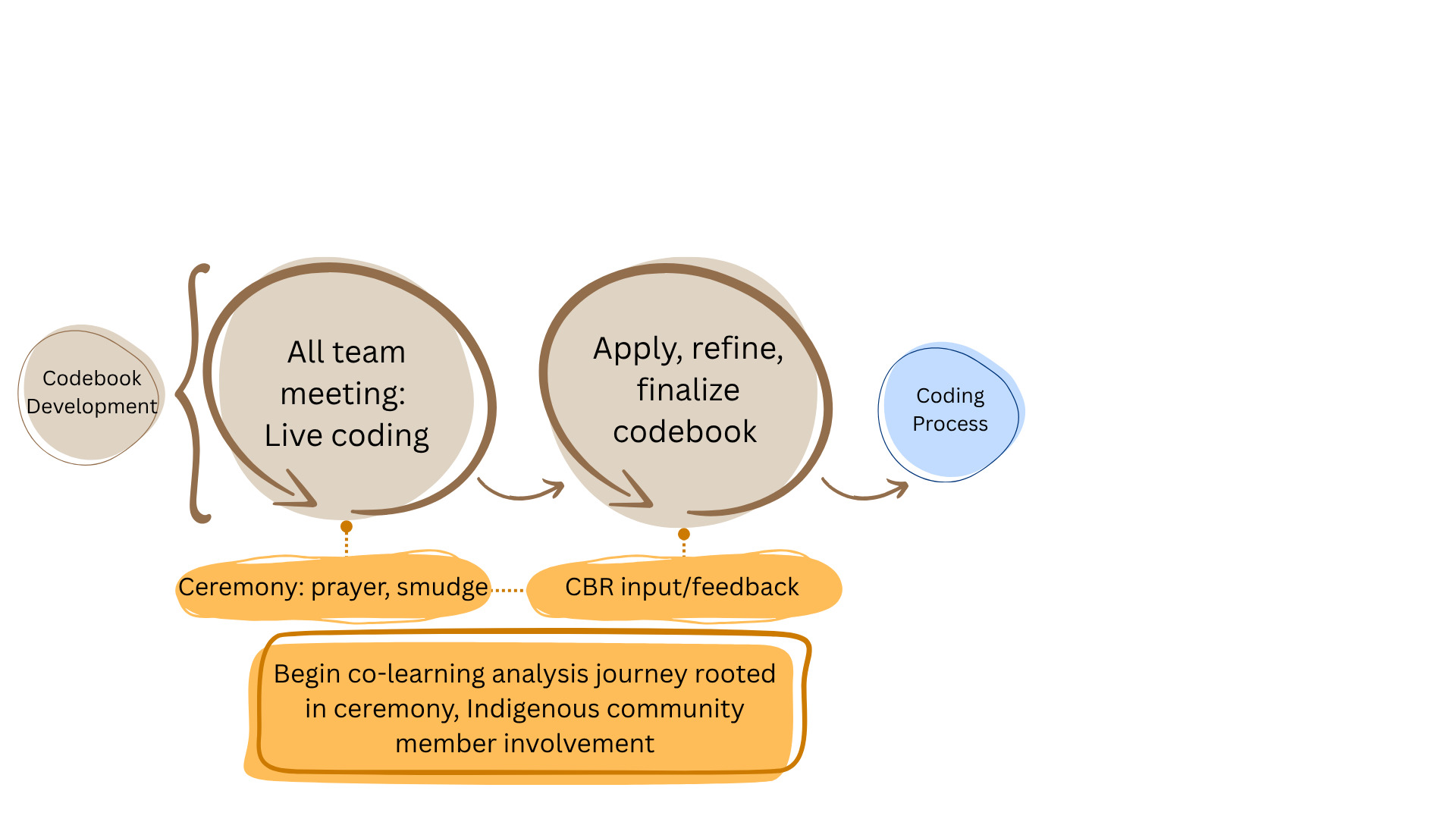
In alignment with our Etuaptmumk/Two-Eyed Seeing approach, initial codebook development was team-based and included all ICARE team members. Our approach is iterative and involves a combination of inductive and deductive approaches, incorporating the interview guide, research questions, relevant theory, preliminary findings from Phase 1 of the project, and live coding of data gathered from a sample of interviews (Figure 2).
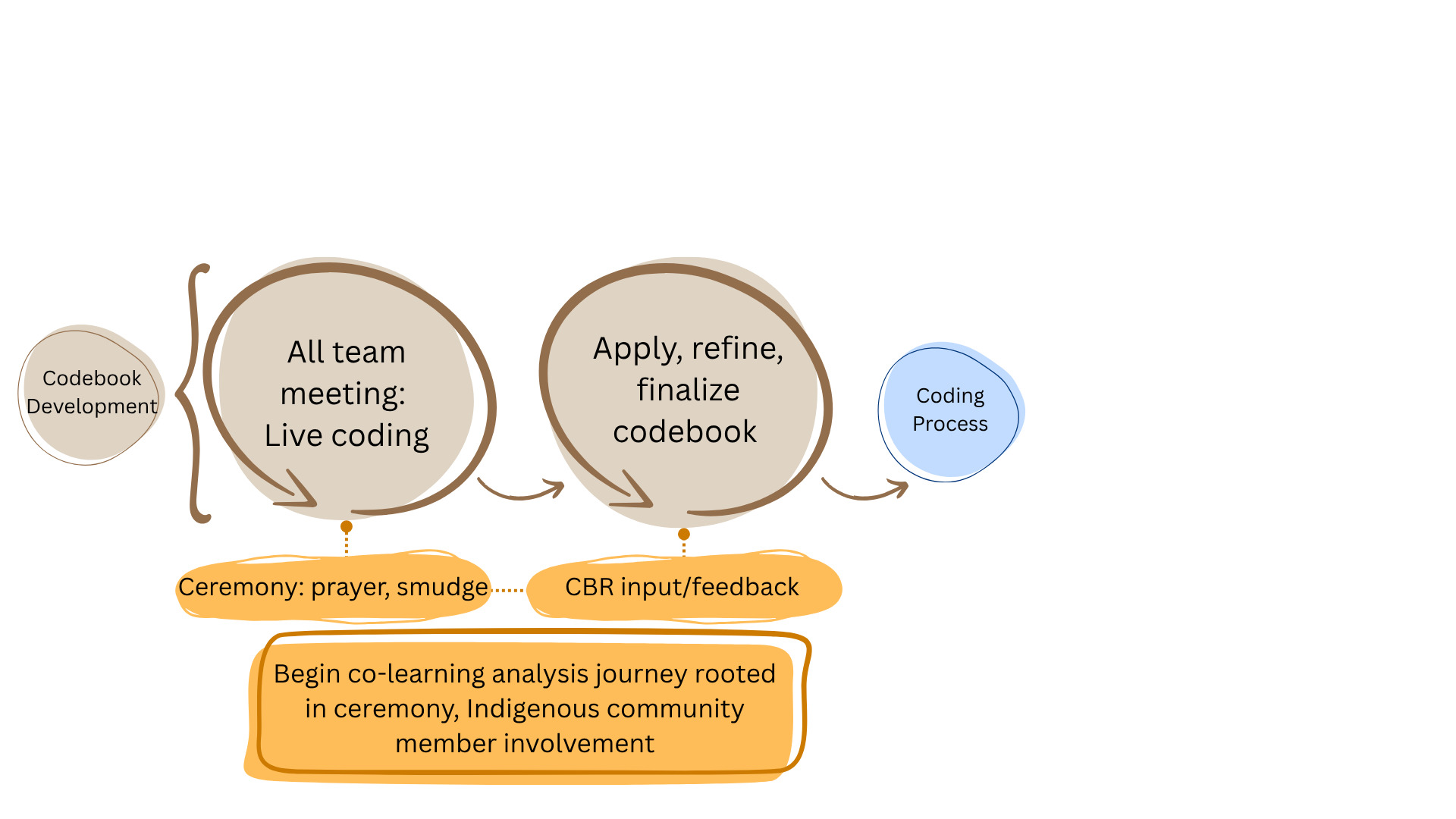
In our case study, our initial review started with a full-day team meeting to discuss the coding and data analysis process and begin the development of a codebook. Meeting attendees included investigators, senior research associates, CBRs, and qualitative data analysts. We offered in-person and virtual options for attendance, with a preference for in-person connection but adapting to individual travel needs. We sought to employ the tenets of Etuaptmumk/Two-Eyed Seeing by fostering co-learning, reflexivity, and team building during this meeting. Specifically, we aimed to (1) aid analysts’ and senior researchers’ understandings of community context and culturally important concepts, (2) identify codes and begin developing an organizational coding structure informed by our research questions and reflective of community understandings and values, and (3) strengthen team relationships, reflexivity, and communication. The meeting began with a traditional prayer and smudging ceremony led by a senior CBR (KP) to open our minds to learn from each other and start the process in a “good way” (Kovach, 2010). The team regularly starts meetings this way so as to honor participation, tradition, and spirit, and therefore acknowledge the sacred endeavor that is the research partnership and process (Flicker et al., 2015). Following a discussion of the goals of the meeting, the full group engaged in collaborative live coding, where we read through a section of transcript together, discussed, and identified key concepts. Sample transcripts were selected by CBRs. We continued this process throughout the day to identify key concepts and initial codes.
Following this team meeting, qualitative data analysts and a senior researcher (DK) reviewed the key concepts and guidance provided during the meeting to draft a coding structure and define codes for the interviews. Once an initial codebook was drafted, it was shared back to the larger team for review and feedback. Analysts addressed all feedback and once the group was satisfied with the changes, the codebook was imported into NVivo.
2.5.4. The Process of Coding
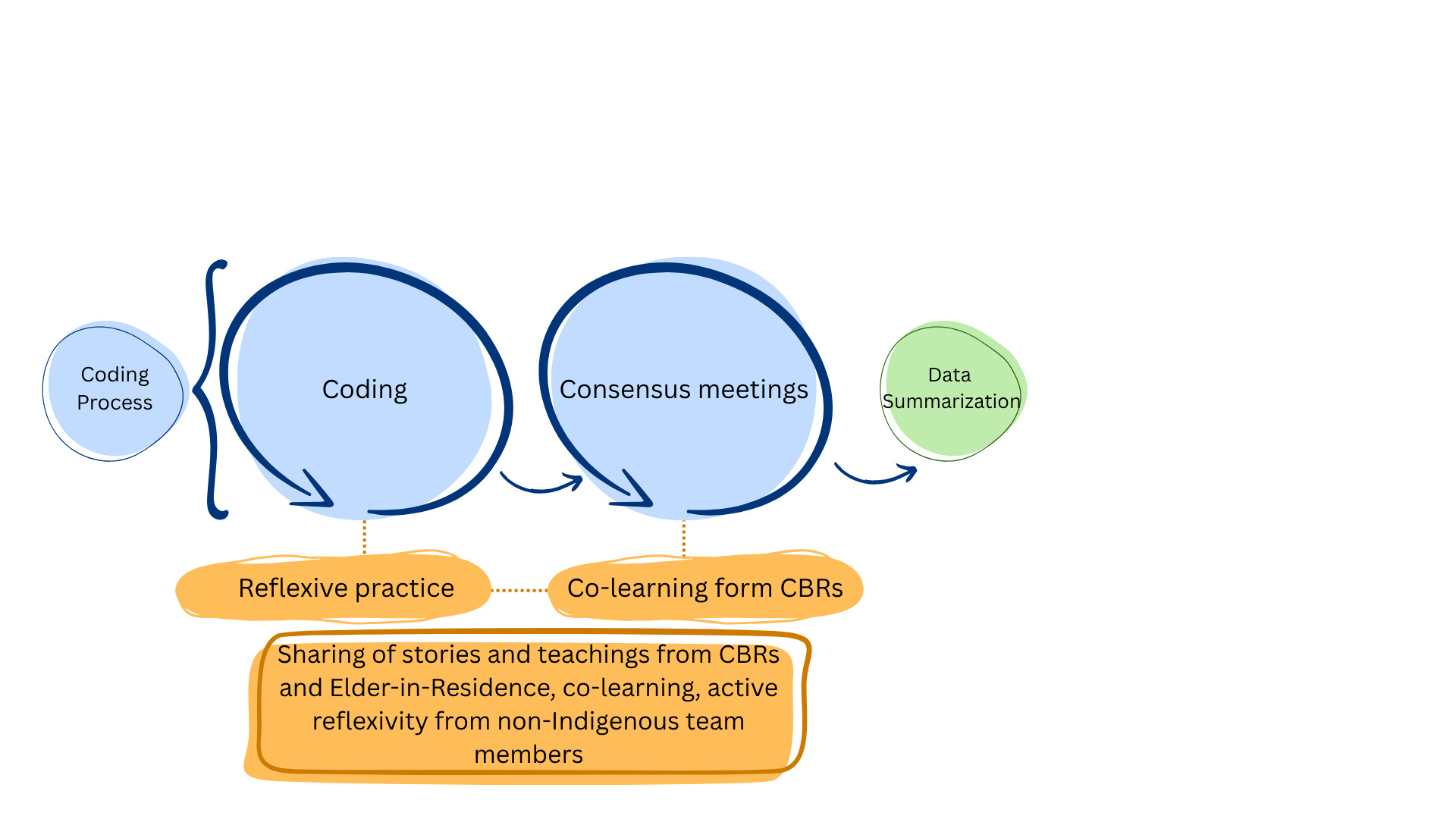
We utilize a team-based coding approach, involving 3-4 analysts. An overview of the coding process can be seen in Figure 3.
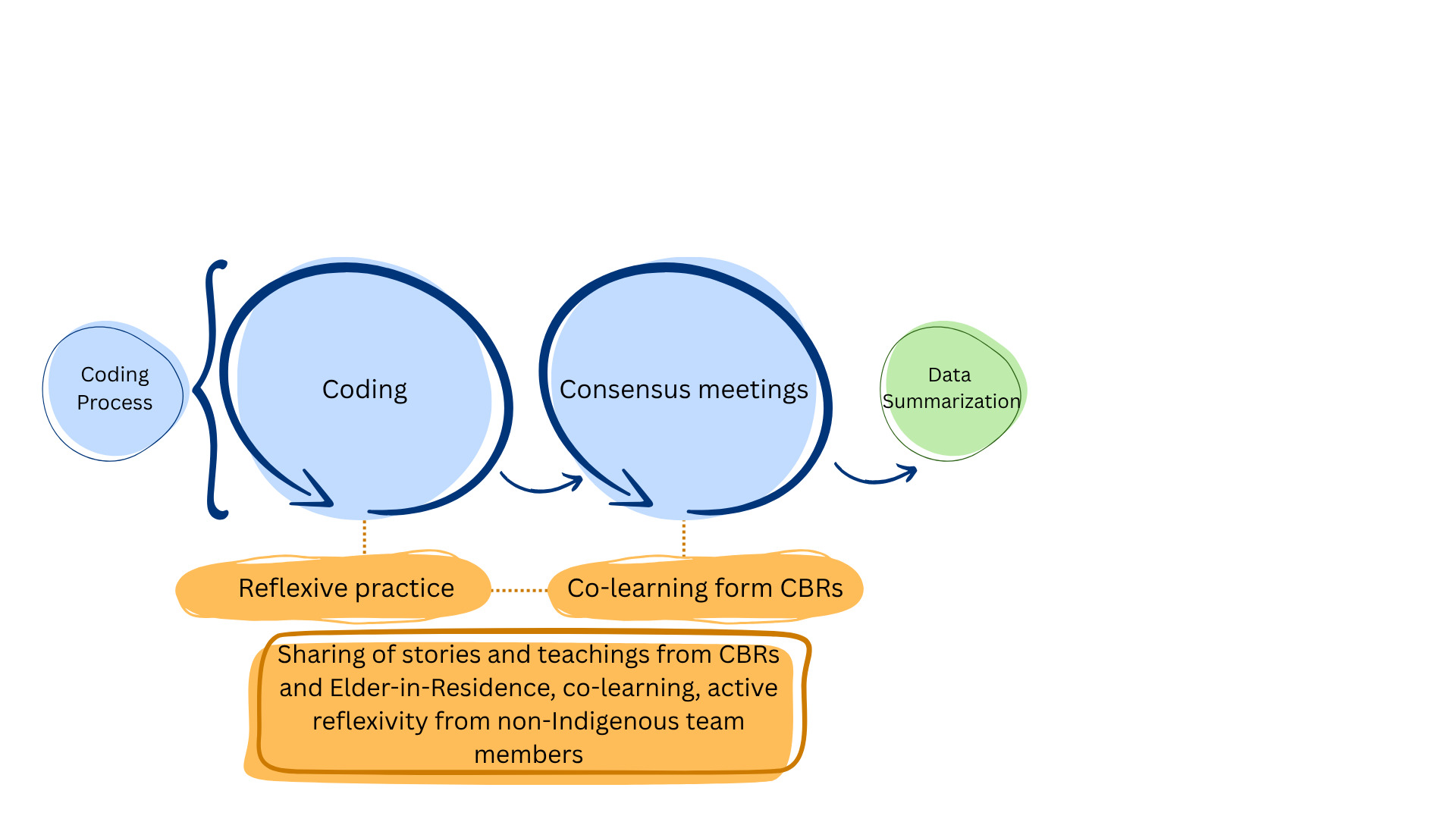
Interviews were assigned to analysts to be coded individually, and a portion (20-30%) were double-coded by two analysts to assess application of the codes. Double-coded interviews were first coded individually by analysts who then meet to discuss their coding during scheduled meetings (consensus building). Consensus building meetings allow for continued evaluation of the codebook, additional interpretation of data, identification of coding disagreements, and assessment of inter-coder reliability. Consensus building meetings provide fertile ground for coding training, self-reflection and reflexivity, and co-learning. Analysts meet to review their individual coding and identify coding disagreements. When analysts disagreed on how to interpret a section of text and/or the application of codes, they used this space to talk through their interpretation and justify their decisions, with the ultimate goal of either a) reaching consensus or b) identifying areas that require further contextual information, typically from CBRs or the Elder-in-Residence. These meetings allow for in-depth interpretation of the data and codes from multiple lenses, which strengthens overall rigor; however, it also requires substantial time and effort. Consensus building meetings last between 1.5-7 hours per interview, which does not include the individual coding and any additional deliberation needed. In addition to the formalized consensus building process, informal in-person discussions take place between team members as questions arise. This could include consultation with the Elder-in-Residence or conversations between coders – resources built into our collaborative team science approach and made accessible through a deliberately designed team science office space. In the event consensus cannot be reached between analysts, questions are brought to other team members for discussion and final coding decisions. Several coding questions were presented to senior researchers and CBRs for clarification.
As an example, when asked the question “How can you tell when someone has a good quality of life?”, one participant shared a rich, 6-page length response filled with strong emotions, moving life experiences, and spiritual encounters.[2] As an analyst coded this interview, they were able to identify some key concepts and apply codes to this passage, but some questions remained about the experiences the participant described and the meaning(s) behind their answer. After an initial consultation with other analysts, our team decided we needed further clarification on this passage from the CBRs in order to (1) inform our understanding of any important cultural or spiritual concepts we may have missed and (2) check our interpretation and coding of the passage. The passage was shared with CBRs for their review, and the CBRs, senior researchers, and data analysts met via Zoom to discuss it collectively. CBRs agreed with much of the analysts’ coding and also shared important knowledge and contextual information not identified in their initial interpretation. For example, one CBR noted a theme of energy and balance running through the passage. Throughout the separate stories shared in the passage, they saw one cohesive story about how a person’s energy and that of their ancestors can affect their ability to live a good life, and how a traditional healer helped this participant connect to these traditional teachings lost through colonization. Additionally, CBRs identified and explained some symbology that impacted analysts’ interpretation and understanding of the data (e.g., a story with a baby crying to symbolize connection to the Spirit World). This meeting not only helped analysts understand concepts and teachings that were not initially apparent to them but also added important cultural understanding that helped shape the way they approached coding future interviews. In addition, it allowed for continued self-reflection, relationship building, and knowledge sharing between the CBRs and data analysts.
During and after the coding of an interview, analysts complete a post-coding summary. Building on prior CBPR models employed by KJ and WW, these summaries evolved from the common qualitative practice of writing analytic memos, an activity done since Phase 1 of the project, to a more structured and targeted method of reflection, space for reflexivity, and overall summarization. In these summaries, analysts are asked to reflect on the interview and write about concepts that support the project’s specific research questions, connections they see across other data they have reviewed, and anything else that stood out or was important to note, including lingering questions or assumptions they may have had during the coding process. Post-coding summaries are shared with senior researchers and investigators to provide a preliminary overview of the data and help guide future analyses and interpretation.
3. Results/Findings
3.1. Data Summarization
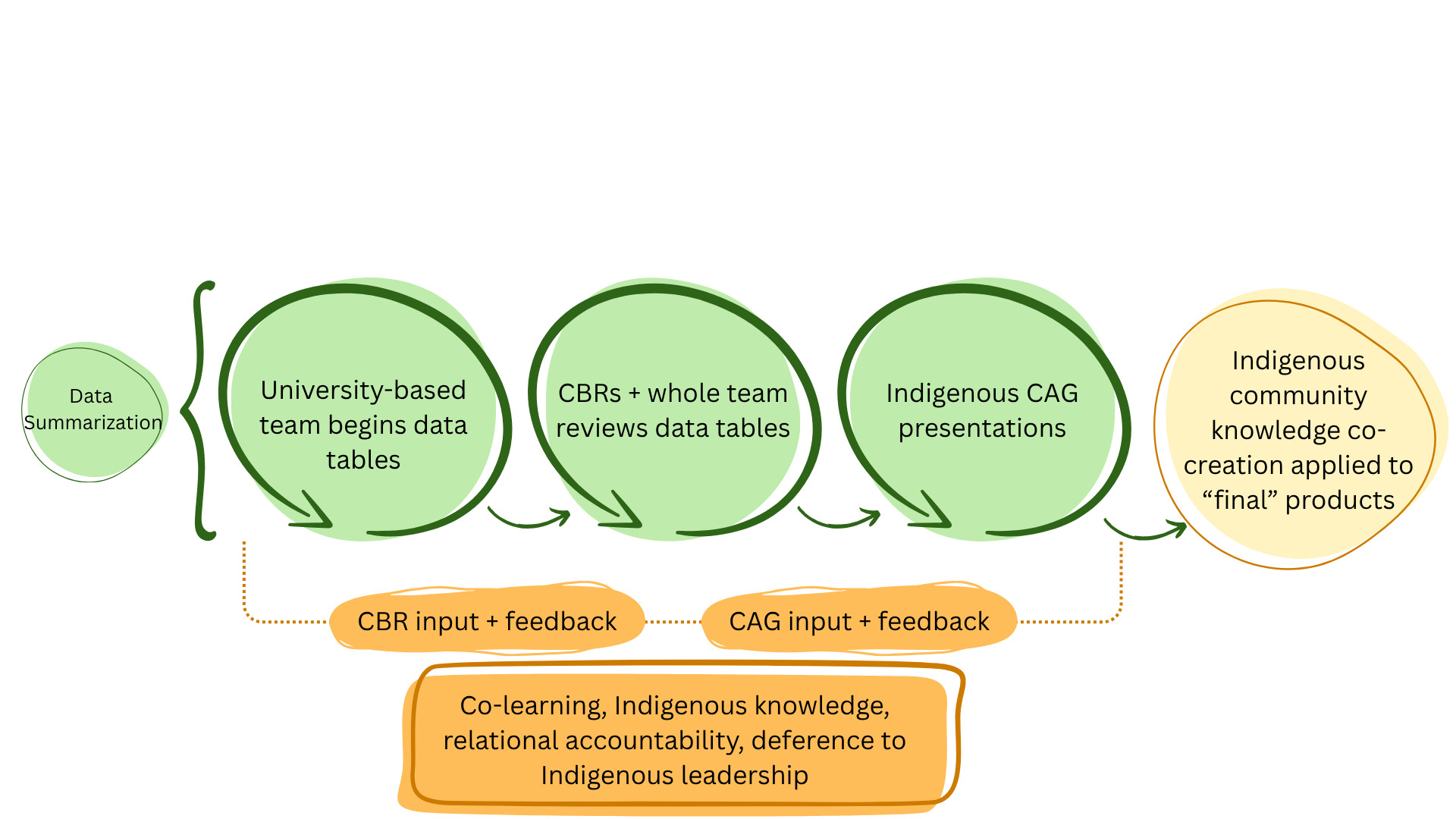
Similar to the codebook development and coding process, any results or findings are discussed in an iterative and cyclical fashion with various research partners (e.g. community-checks); in this case, the community advisory groups (CAGs). Since findings/results are in constant discussion and rarely constitute a “final” product, we will describe this process as our “data summarization” stage (Figure 4).
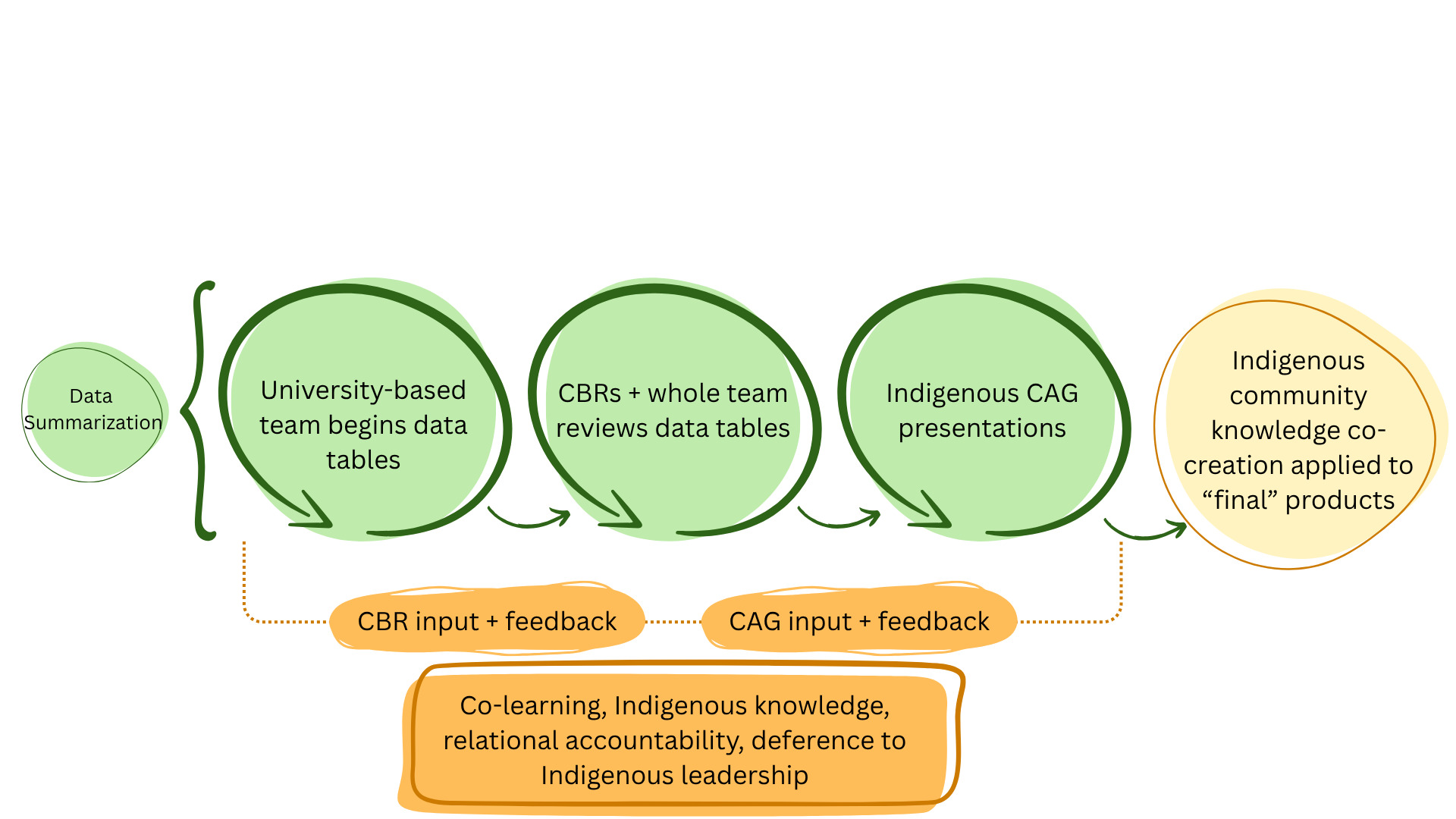
The data summarization process and output(s) can look different depending on the research design, type and amount of data collected, guiding research questions, and overarching project goals. To summarize data for our specific needs, we often prepare documents we refer to as data tables. Data tables are a tool developed by KJ in previous work (e.g., Jacklin et al., 2017) to assist in project investigators’ review and interpretation of complex data sets such as those that can emerge in multi-site projects and/or projects with several interview or focus group participants. The ultimate goal of a data table is to provide a synthesized version of all the data gathered in relation to the research questions, and to assist investigators and other team members with further analysis and interpretation. The tables contain summarized and synthesized data, along with supporting evidence (i.e., exemplar quotes), further driving the analysis from discrete codes towards meaning-making and broader concepts. These tables are made up of a set of columns and rows with sections that vary depending on the analytic model, research questions, and participant group. Data tables move the team beyond codes towards the steps of analysis described by Malterud (2012) as “condensation” (from code to meaning) and “synthesizing” (from condensation to descriptions and concepts).
Like the rest of our approach, the data summarization stage involves multiple team members at different stages. To start, investigators and senior researchers work with analysts to determine the columns (e.g., lived experience, community considerations) and research themes to be explored (e.g., access to community-based health services, doctor’s attitude and approach). These decisions are made to represent the findings based on research questions and theoretical models. Once the general template is approved by the investigators, the analysis team (consisting of analysts and senior researchers) explore and synthesize the relevant coded data to populate the rows of the table, part of the meaning-making and conceptual process. The analysis team then summarizes the data relevant to the columns, identifies common themes and connections in the data, and thus a draft data table emerges that attempts to present a holistic understanding of participants’ lived experience. Once data tables are populated, they are shared with investigators and other team members to begin a discussion of the data, opening analysis up to scrutiny and feedback, and guiding further analytical questions. Presenting findings back to other team members and community members allows for other lenses to be applied to analysis and provides additional checks of interpretation and representation of data. Similar to member checking, we also rely on ‘community-checking’, where CBRs, analysts, and senior researchers present preliminary results to the CAGs, who in turn ensure that cultural context, community perspective, and Indigenous knowledge is present in the analysis.
3.1.1. Example: Presenting Data to Community Advisory Groups to Incorporate Indigenous Knowledge
During ICARE phase 1, one of the agreed upon outputs from the interviews and focus groups were individualized community reports for each participating community, which would summarize and synthesize participant responses as they related to the research questions. These community reports detailed the people involved in the project, the methods and approach of the research, and findings related to relevant themes such as cultural and community understandings of dementia, caregiving, services for people living with dementia and their caregivers, and recommendations to improve dementia care.
The senior researcher (DK) organized and presented the data back to the community advisory groups (CAGs) using PowerPoint over multiple meetings. Presentations lasted between 30-45 minutes for each 2-hour CAG meeting in order to leave time for questions and group discussion. During these presentations, DK presented both raw data (e.g., quotes from participants) and larger themes that were reflective of participant responses. CAG members were asked to reflect and analyze the findings in various ways, considering such questions as: Did the findings reflect their own lived experience/the experience of loved ones/community members? Were there things that were not presented/discussed/left out of the presentation? Were there things that needed to be clarified/expanded on? What stood out or surprised them?
The feedback and analysis from each CAG meeting helped senior researchers further refine the data as they prepared the community reports. Discussion aided and addressed important aspects from Etuaptmumk/Two-Eyed Seeing and CBPR including relational accountability, Western researchers deferring to Indigenous leadership, and interpreting data within the cultural context (LaVeaux & Christopher, 2009; Petrucka et al., 2012; Wright et al., 2019). These meetings provided an important opportunity for community-checks and upholding Indigenous data sovereignty, as there were some data that CAG members did not want to share or wanted to frame in a different way than the senior researchers initially had.
This process was repeated until all data was presented and discussed with the CAG members at each site. Once the CAGs felt comfortable with the findings, the data was put into a draft community report which similarly received iterative consideration, feedback, and discussion. Once the CAG members were satisfied with the community report, they were presented to Tribal/Band Council for review and approval. In this example, a senior researcher led the presentation, but, whenever possible, the CBRs take the lead role. Table 3 outlines some of the principles, tools, and questions that we have described throughout this paper that research teams can incorporate throughout the qualitative analysis process.
4. Discussion
We have described our approach to CBPR qualitative analysis which attempts to counter traditional academic Western approaches to qualitative data analysis by being decolonial and relational. The grounding in Etuaptmumk/Two-Eyed Seeing guides our process to ensure Indigenous knowledge and experience was present and integrated at each stage of the qualitative analysis process. This contribution adds to the small but growing literature on the various processes by which researchers can work in true collaboration with communities, from development of research questions to research outcomes (McQuiston et al., 2005; Morton Ninomiya et al., 2020; Williamson et al., 2020). We argue that this approach ensures that research findings are ultimately much more reflective and inclusive of community perspectives, while also being responsive to community partners’ wants and needs.
We have presented one approach for researchers to adapt to their own project needs and available resources depending on the analytic model and nature of their collaborations. We believe this model is well suited for many qualitative projects, including those that have large datasets via in-depth qualitative data collection techniques such as interviews, focus groups, or sequential focus group data (Jacklin et al., 2016). The approach we have presented was exceptionally well supported by institutional resources and NIH funding at levels that recognize the complexity of conducting ethical research with Indigenous partners. Ideally, more academic institutions and funders will come to recognize and commit to the significant investments needed to ethically engage in community-based Etuaptmumk/Two-Eyed Seeing, ethical space and relational research approaches with Indigenous communities and Nations. However, elements of our approach can be applied to research projects of all sizes. We argue that if researchers are conducting CBPR studies, then researchers must think explicitly about how and when to bring community voices, knowledge, and perspectives to bear witness on qualitative data and analysis. We have provided explicit examples from our own work, relying mostly on principles of CBPR and Etuaptmumk/Two-Eyed Seeing, but there are countless ways this can be accomplished. Examples from our own projects which were carried out with fewer resources can provide further considerations for researchers to review different analytic and collaboration models (see Jacklin et al., 2023; Walker et al., 2019).
As an academic research center that works with Indigenous employees, communities, and partners, it is essential that we actively address power imbalances through both centering community and cultural contexts, as well as using reflexivity around researcher positionality at all stages of the research. For this paper, we have described our approach of incorporating community and cultural context and knowledge as it applies to qualitative data analysis. We have outlined the many steps we take to address potential biases during the interpretation of findings, which works to ensure data outputs are as reflective of community values and experiences as possible. Recognizing and addressing these positionalities is imperative to ensure equitable and respectful engagement that centers Indigenous perspectives and knowledge, especially when the team is large and has non-Indigenous members.
First, we would like to note the importance of several factors associated with team-based coding and a decolonized analysis approach. Team dynamics, including respectful and open dialogue, reflexivity, and power differentials, all shape the process and outcomes. This is true of any team science approach, but particularly when working with a diverse, multi-disciplinary team with varying types of knowledge and experience. Applying an academic Western lens to analysis typically results in levels of hierarchical valuing of knowledge and exclusion of certain voices. Our approach values the knowledge and perspectives of each team member regardless of their “ranking” in the hierarchy. In practice, this requires mutual respect, trust, and openness to other ways of knowing – components that may not necessarily come natural to interdisciplinary research teams and require time and effort to build. To address this, we built structures into our approach to foster these dynamics. Some specific examples include:
-
Beginning team meetings with an Indigenous opening prayer, smudge, and making time and space for relationships and connection
-
Including an Elder-in-Residence
-
Annual team retreats to share data summaries and facilitate team discussion, as well as informal team building and co-learning in culturally-grounded activities
-
Data analysts regularly practice self-reflection through reflexive writing and journal clubs
-
In-person work in shared office space allows for frequent connection and discussion (both formal and informal) between team members (fostering team science)
We also acknowledge that such approaches take time, and it is important to be respectful of individual team members’ capabilities. When planning a team-based analysis approach, project leads should be mindful of which team members should be involved in each stage of the process and how their involvement should look. A team-based approach to analysis, coupled with decolonization, is a mutual, on-going process of exercising critical reflexivity and examining epistemological assumptions (Datta, 2018; Smith, 2008; Thambinathan & Kinsella, 2021). Incorporating this interactive process into our analysis approach is time consuming but absolutely necessary, and ensures community knowledge is central to new knowledge development.
We also must acknowledge the importance of institutional structures and investments to support community participation in research through the reduction of structural barriers. We have shared an approach from a project that was adequately resourced to support a community-based analytic process. For instance, with the original ICARE grant submission the investigators were encouraged to first engage with the R56 (developmental) mechanism to provide limited, temporary research support based on the merit of our original proposal. In our team’s case, the R56 was essential to building research partnership and capacity with communities (Blind et al., 2022; Jacklin et al., 2023), training Indigenous community-based researchers, some for their first research position (Blind et al., 2023), and gathering preliminary ethnographic data. Having the time and resources to devote to building research capacity was essential to the success of the ICARE project overall and would be essential for any researcher attempting to build a large CBPR project with partnering communities. Our experiences are similar to what other researchers have described as important in CBPR work, from supporting space and time for relationship building (Teufel-Shone et al., 2018), providing training for CBPR capacity building (Coombe et al., 2020), to cost considerations (Hoeft et al., 2014). Support from granting agencies to respectfully engage with communities and develop meaningful relationships and trust overtime is crucial to the early stages of any CBPR process with any under-represented population. In our case, support from the funding agency was paired with structural and institutional investment for the specific mission of MK-MDT through a state-university partnership to improve various aspects of patient and population health. This institutional commitment to the removal of structural barriers and commitment to decolonization represent an additional important ingredient to support meaningful engagement through all the stages of research including the analysis of the data. We appreciate that this type of university commitment has enabled the development of many of the structures and processes we’ve described and recognize these might not be commonly available. However, this one unique system of support is one example of how academic institutions can direct funding that assists in breaking down the structural barriers often associated with conducting ethical community-based and engaged research.
4.1. Limitations
With large qualitative datasets, it may be physically impossible for everyone on the team to see all the data. In this case, we risk missing cultural nuances and oversimplifying or homogenizing the data. Non-Indigenous team members must take extra steps to regularly practice reflexivity, decolonize their thinking, actively unlearn cultural biases and concepts, and embrace new ways of knowing. Even though a majority of our analysts are non-Indigenous, we account for this limitation through our team-based, CBPR approach, and active (un)learning through trainings provided by Indigenous leadership and guest speakers. As we detailed throughout this manuscript, we present to and include community member feedback regularly and do not disseminate information that is not approved by all team members and CAGs. We acknowledge that this process is not wholly Indigenized, but look forward to continuing to improve our process as best we are able with our community and academic partners.
Another consideration for this approach is regarding workforce turnover. Turnover limits the efficiency of the CBPR approach for a few different reasons. Though we have gained new team members at a higher rate than we have lost them, when people do leave, they take their expertise and familiarity with the data with them. It also takes time to train new analysts to understand the tenets of our specific approach, develop relationships with community partners, and feel comfortable working both independently and collaboratively. Relationship building and forming positive team dynamics with new team members take time and are important for team-based analysis (e.g., consensus building requires trust among team members and respectful communication during coding disagreements). Additionally, new members who were not present at the start of the project could be missing context that was discussed during earlier stages. More senior team members attempt to pass this knowledge and context on when it is pertinent, but unfortunately, we have not found a way to catalogue and transmit all this information in a way that is easily digestible to new team members.
5. Conclusion
We have presented a community-engaged qualitative data analysis process that attempts to rectify injustices and power imbalances that Indigenous communities have faced by researchers historically. Beginning with a grounding in Etuaptmumk/Two-Eyed Seeing as an epistemological approach to knowledge creation centers the need for Indigenous and non-Indigenous co-creation of knowledge during the analysis process. In our case study of the ICARE project, we demonstrate the successful implementation of a CBPR model drawing on multiple theoretical and methodological approaches and provide examples that other researchers and community members can consider or adapt when working with Indigenous communities or other under-represented populations. This approach allowed us to equalize power relationships, share in co-knowledge production, and decenter Western paradigms. Central to this model is the need to address structural barriers, particularly resource allocation, to support sustainable models of CBPR and long-standing research relationships. Researchers may have differing abilities to address these resource barriers depending on what phase they are in their research career. At the minimum, we hope we have demonstrated to readers the many points where community perspectives can and should be brought into the analytic process, and ways resources can be allocated to support their involvement. We posit that if researchers incorporate this approach, innovative community-based solutions will be revealed which will improve research outcomes and contribute to health equity in historically marginalized populations.
Acknowledgements
We acknowledge that the University of Minnesota Duluth is located on the traditional, ancestral, and contemporary lands of Indigenous people. The University resides on land that was cared for and called home by the Ojibwe people, before them the Dakota and Northern Cheyenne people, and other Native peoples from time immemorial. Ceded by the Ojibwe in an 1854 treaty, this land holds great historical, spiritual, and personal significance for its original stewards, the Native nations and peoples of this region. We recognize and continually support and advocate for the sovereignty of the Native nations in this territory and beyond. By offering this land acknowledgment, we affirm tribal sovereignty and will work to hold the University of Minnesota Duluth accountable to American Indian peoples and nations.
We wish to acknowledge our ICARE research team and partner community advisory boards, councils and groups; all community partners and participants from Gitchi-Onigaming / Grand Portage Band of Lake Superior Chippewa, Miskwaagamiiwi-Zaaga’iganing / Red Lake Nation, Oneida Nation of Wisconsin, and seven First Nations (Wiikwemkoong, Sheguiandah, Aundeck Omni Kaning, M’Chigeeng, Zhiibaahaasing, Sheshegwaning, and Birch Island) in Manitoulin District, Ontario, Canada
Ethical considerations
This article does not report on participant data, but the ICARE project received ethics approval from the University of Minnesota (STUDY00013626), Manitoulin Anishinaabek Research Review Committee (2019-09), and Tribal Council Resolutions from partner sites.
Consent to participate
This article does not report on participant data, but the ICARE study obtains written or verbal informed consent from participants (based on their preference) prior to participating.
Consent for publication
Not applicable
Declaration of conflicting interest
The author(s) declared no potential conflicts of interest with respect to the research, authorship, and/or publication of this article
Funding statement
The author(s) disclosed receipt of the following financial support for the research, authorship, and/or publication of this article: Research reported in this publication was supported by the National Institute on Aging of the National Institutes of Health under award number R56AG062307 and R01AG062307. The content is solely the responsibility of the authors and does not necessarily represent the official views of the NIH.
Data availability
Not applicable
Anishinaabemowin is the language of the Anishinaabeg, which includes the Ojibwe, Odawa, and Pottawatomi.
We have elected not to share direct quotes in this manuscript out of respect to the participant and their stories, as one CBR pointed out in our discussion that the stories shared in this passage are sacred. Indeed, we treat all shared information as sacred, which is why we build in so many member- and community-check points.