
Introduction
Between the years 2020 and 2021, Philadelphia experienced record high homicide rates. The homicide rates peaked past 30-year highs, spiking significantly during the COVID-19 pandemic. 2021 alone logged 562 homicides, the largest annual count ever recorded by the Philadelphia Police Department, surpassing the 500 recorded homicides in 1990. Nearly half of homicide victims were young adults between 18 and 30, showcasing the significance that gun violence has had on young residents in the city (Philadelphia Police Crime Data). As a result, many families were planning funerals, gathering people and most importantly, grieving their losses and making sense of new realities.
These losses have permeated through the communities of Philadelphia for years. However, there aren’t many outlets to express, explore and understand the impacts of loss on young people in Philadelphia. Although crime has gone down, the gun violence rates of 2020 and 2021 have caused serious damage to the collective grief experienced by young adults. As a result, there is a collective stillness that is encountered from a myriad of loss, not just gun violence.
Philadelphia’s young people face, what we have coined, “grief paralysis” – what happens when you’re hit with heavy loss but don’t have the words or tools to deal with it. You feel stuck—like you want to move forward, but the weight of it makes everything hard to face. This is the outcome of the systemic, stacked and persistent losses from community violence, incarceration of loved ones, school closures, displacement, financial insecurity and illness. Mental-health systems rarely name these experiences, while college and low-wage jobs feel like high-pressure, low-return pathways that often dismiss young people’s culture and creativity. Consequently, this impacts well-being, communication, advancement opportunities and capacity to build healthy and sustainable relationships.
This is a current working definition developed at The Wealth and Work Future’s Lab Media Design Fellowship. As part of the Every Voice, Every Vote collaborative, the Fellows strategized ways to communicate pressing needs for Philadelphia’s young people. This conversation culminated into 3 converging topics: economic opportunities for emerging adults, emotional and physical safety and grief paralysis. As fellows continued to engage the public and themselves, in reflective conversation, grief paralysis developed as a crucial conversation point.
We believe young people need new ways to voice and honor their grief without feeling burdened by societal pressures. Starting off, we need to collect first-hand stories from young people—they are the experts of their own grief experiences and their words matter; actively listening to their experiences to identify existing and future opportunities for change.
The Fellows
The Wealth and Work Futures Lab’s Media Fellowship pairs media skills with culturally rooted, non-Western grief care and research capacity building and practice. Weekly “apprenticeship with grief” circles, led by identity-aligned clinician, who uses music, breathwork, movement, and strength-based language to acknowlege and support these feelings of loss. Fellows stage pop-up grief-literacy exhibits with art and media they create.
The Fellowship occurs in 9-month cohorts for 12 hours of paid work per week. Six hours of in-class session time and 6-hours of asynchronous work. The sessions are designed to intersect education, artistic exploration, emotional well-being, and community engagement. All the current Fellows are between the ages of 23-28. Fellows create reflective art, and design a personal wellness strategy–their apprenticeship with grief. During these processes, Fellows host public events to engage in discourse and seek guidance from community members to build on their projects.
Methodology
We asked approximately 30 young people, between the ages of 18-26, about their grief experiences. Participants were recruited via peer networks of the Fellows. This network relied on warm connections including, friends, relatives, neighbors, colleagues and previous Fellows of the program. Most of our research participants identified as Black and/or African American and were cis-gendered males, who grew up in Philadelphia and were current residents. We opted into staying within our current community to have these conversations due to the somewhat sensitive nature of these topics.
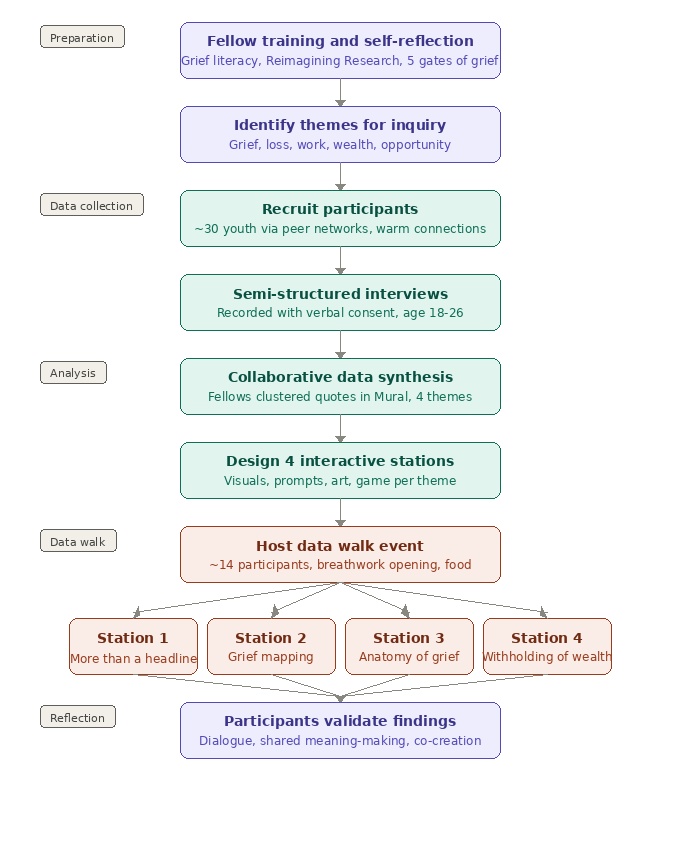
Intentional consent language was integrated into the standard interview protocol. Each participant verbally consented to interviews conducted and recorded by the Fellows. The intent to share recordings with staff and Fellows was clarified to participants. They were also advised of their ability to pause interviews, choose not to answer questions posed or end the interview at any time. The Fellows recorded their responses on our personal devices, and the Research Director uploaded them into a transcriber. By recording the conversations, the Fellows were able to stay more present and later be able to refer to the exact sentiments that were shared. After we completed the conversations, we met as a group to synthesize the data. We each prepared 5-6 quotes that stood out to us as important and then used mural, an online based post it tool, to cluster our quotes under “relationship with Philadelphia,” “narratives about young people,” “wealth, work and opportunity,” and “experience with grief and loss.”
After the Fellows synthesized these four buckets, the Fellows began to prepare for a data walk to invite participants back to share what we heard and deepen the conversation.
How We Prepared
We prepared for our conversations through academic literature, reading, and group and self-reflection. Specifically, we utilized practices from the 5 gates of grief from Francis Weller’s The Wild Edge of Sorrow. We needed to expand our understanding of grief that exceeded past grief paralysis, a topic we became familiar with after engaging with it for an art project. As young people, between the ages of 23-28, we wanted to understand how grief impacted us personally before doing outreach and inquiring about other young people’s grief. We had to prepare to carry ourselves before we carried other people and develop keen active listening skills.
Some of us were also able to participate in a five-week training, Reimagining Research, where we developed new ways to do inquiry and discover knowledge through care and strength-based practices. The Reimagining Research training informed how we chose to navigate power dynamics, consent, expertise, rigor and narrative power within research. This training asked us to question the traditional relationship of researcher and subject. Our participatory approach sought to humanize participants, model shared narrative power regarding data analysis, and value lived experience of participants as expertise. The data walk event was an intentional step to reflect and allow participants to validate conclusions of Fellows and staff. Based on this training, Fellows and staff co-created principles and values as a guideline prior to synthesizing questions. These principles were to be relational, accountable, iterative, emergent, and mindful of power – individual, social, relational, collective and institutional. In effort to center harm reduction, we valued consent as a continuum. We sought to center trust, care practices, systems and context. Also, we chose to find ways to decenter power, urgency, and protocol above people.
Prior to synthesizing interview questions, staff provided instruction and review of definitions of narratives and narrative change. Fellows reflected upon narratives they have encountered about young adults to determine areas of interest for the inquiry project. Grief, loss, work and financial well-being were identified by fellows as key themes to interrogate. Individual and collective brainstorming sessions took place over several weeks to allow fellows to determine what they wished to learn and reflect in the data walk process.
Participatory Data Walk
This project convened a participatory event designed to share and verify findings of the conversations we had with the young people who contributed their stories. Grounded in ideals of non-extractive research, the gathering created space for participants to engage with the themes that had emerged during analysis.
The goals of the event were threefold: to summarize and reflect key themes back to participants for validation; to embody participatory research commitments through collaborative design and facilitation; and to experiment with creative, multimodal approaches to knowledge sharing beyond traditional academic formats.
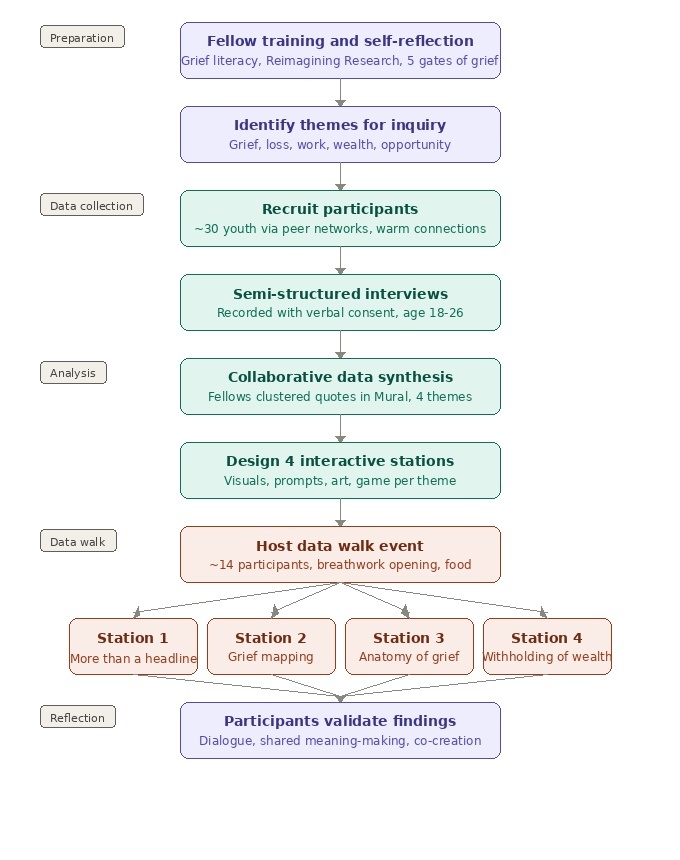
The process unfolded through four interactive stations, each representing one of the core themes distilled from the interviews. Fellows split into working groups to craft the title, visual representation, and engagement prompts for each station. As creatives, the Fellows integrated art-making, visual storytelling, and elements of game design – as both a method of data representation and an avenue for deepening dialogue. The visuals, prompts, and facilitated activities enabled participants to move beyond abstract summaries, instead encountering the research as lived, co-constructed experience.
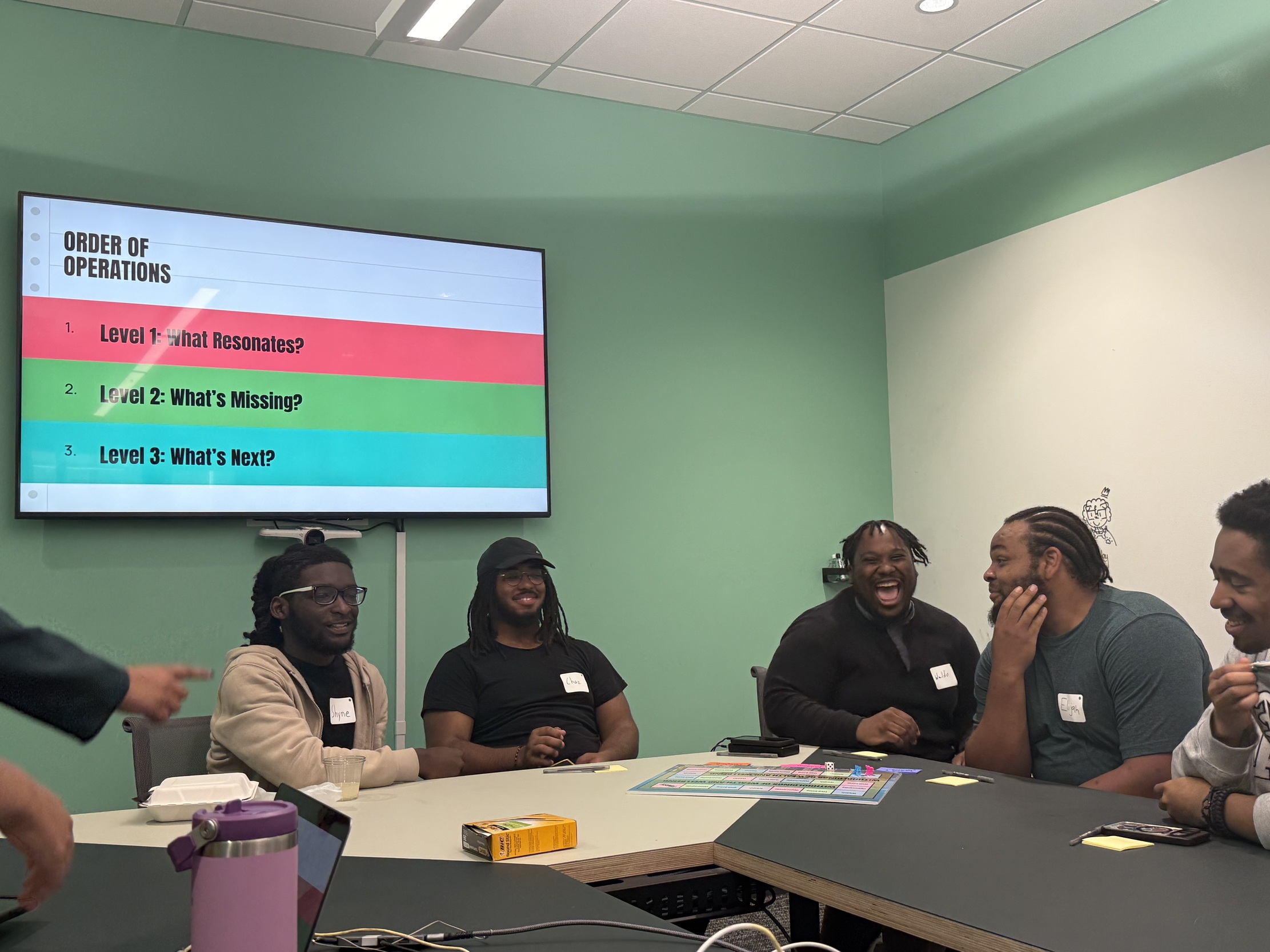
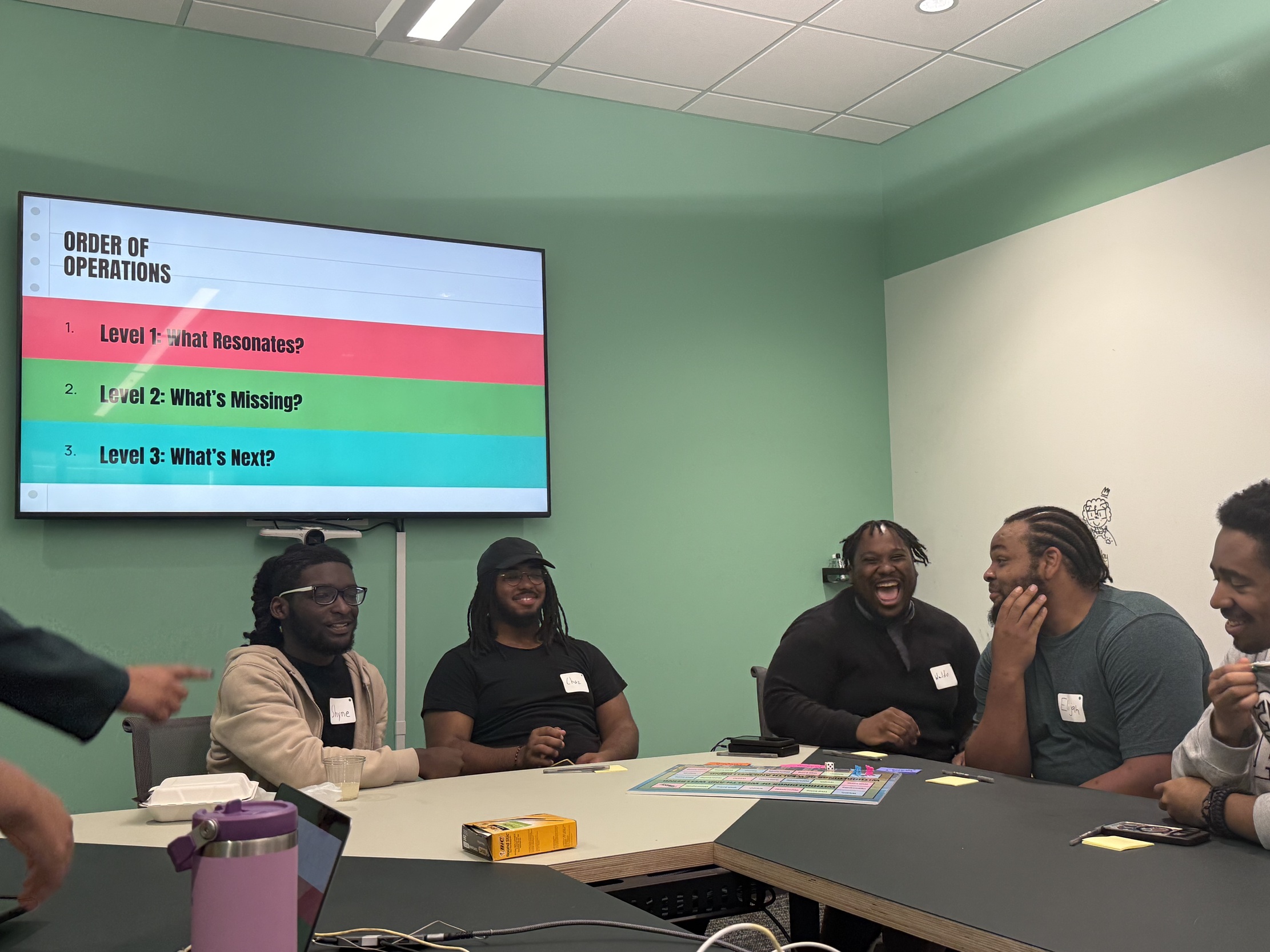
Logistically, the event took place at a co-working space in Philadelphia on a Wednesday evening from around 6-9pm, with attention to welcoming tone, accessible layouts, and nourishment (food and beverages provided). Materials and printed visuals supported the stations, while facilitation roles were distributed among fellows. The stations were intentionally sequenced to guide participants through a reflective arc: beginning with noticing and naming what resonated, moving to identify gaps or absences, and closing with envisioning possibilities for action. The event opened with a grounding breathwork activity, setting a reflective and embodied tone.
Participation included around 14 participants from the cohort of the narrative inquiry interviews. Attendees of the data walk session had the option to consent to photography and signed photo release forms accordingly during event registration. Their presence reinforced the project’s commitment to reciprocity, ensuring that insights were not only drawn from them but returned for dialogue and refinement. As one participant reflected: “Knowing someone else has gone through something similar, that you’re not alone, resonated with me. Sharing grief does so much—you realize you don’t have to go through it by yourself.” Another participant shared, “It opens up conversation. People see their own lives in the quotes, then start connecting them to bigger patterns in the city.” Participants received no compensation for their participation in the interviews or data walk.
Overall, the event demonstrated how participatory design, creative expression, and embodied practices can transform data validation into a collective, relational process – strengthening both rigor and relevance in community-engaged research.
Deepening Understanding Through Participatory Stations
The participatory data walk was designed around four interactive stations, each representing a core theme that emerged from the interviews. These stations invited participants to reflect, add to, and complicate the original findings, producing new insights into how narratives, place, grief, and opportunity shape the transition to adulthood.
Station 1: More Than a Headline
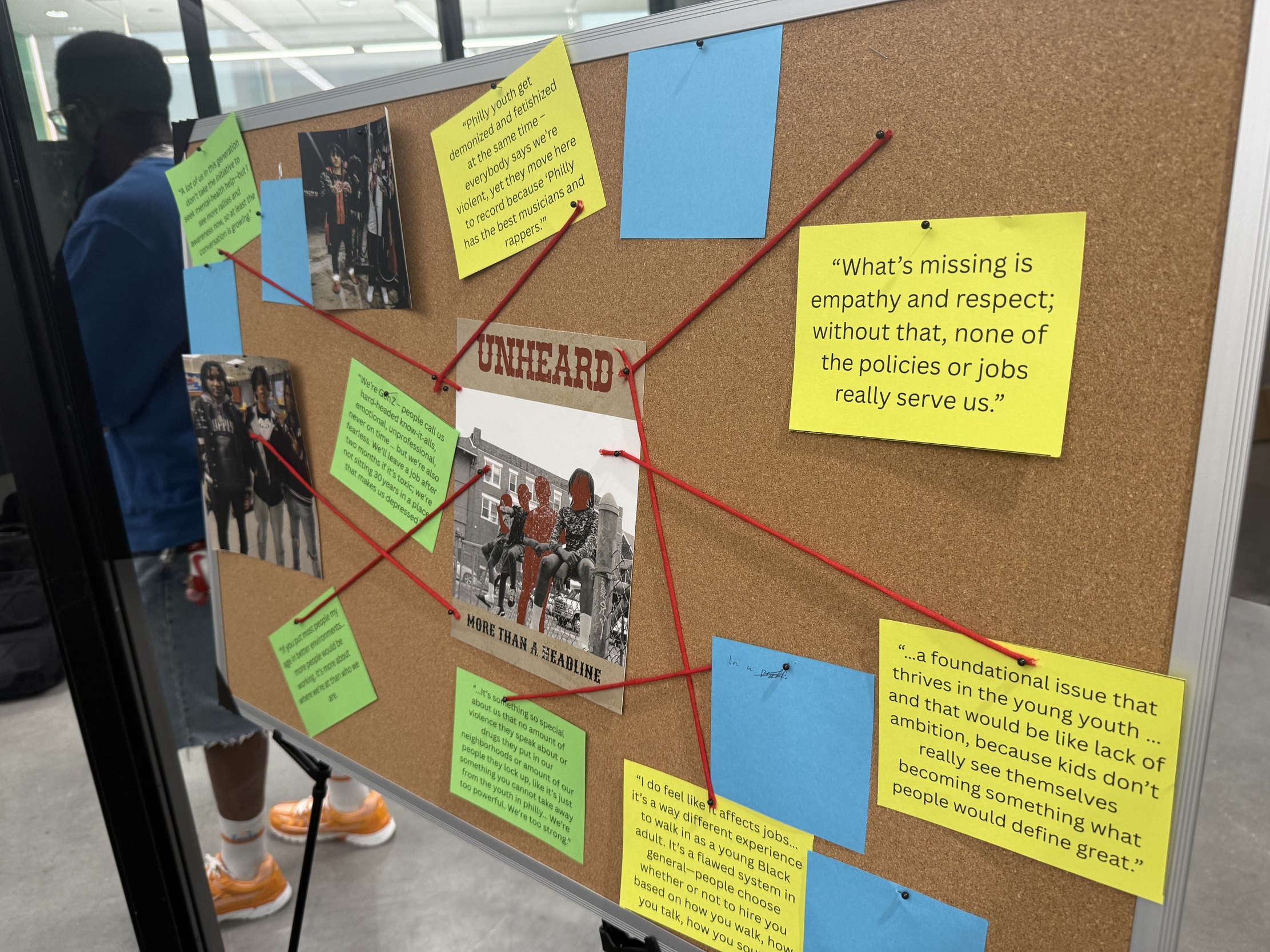
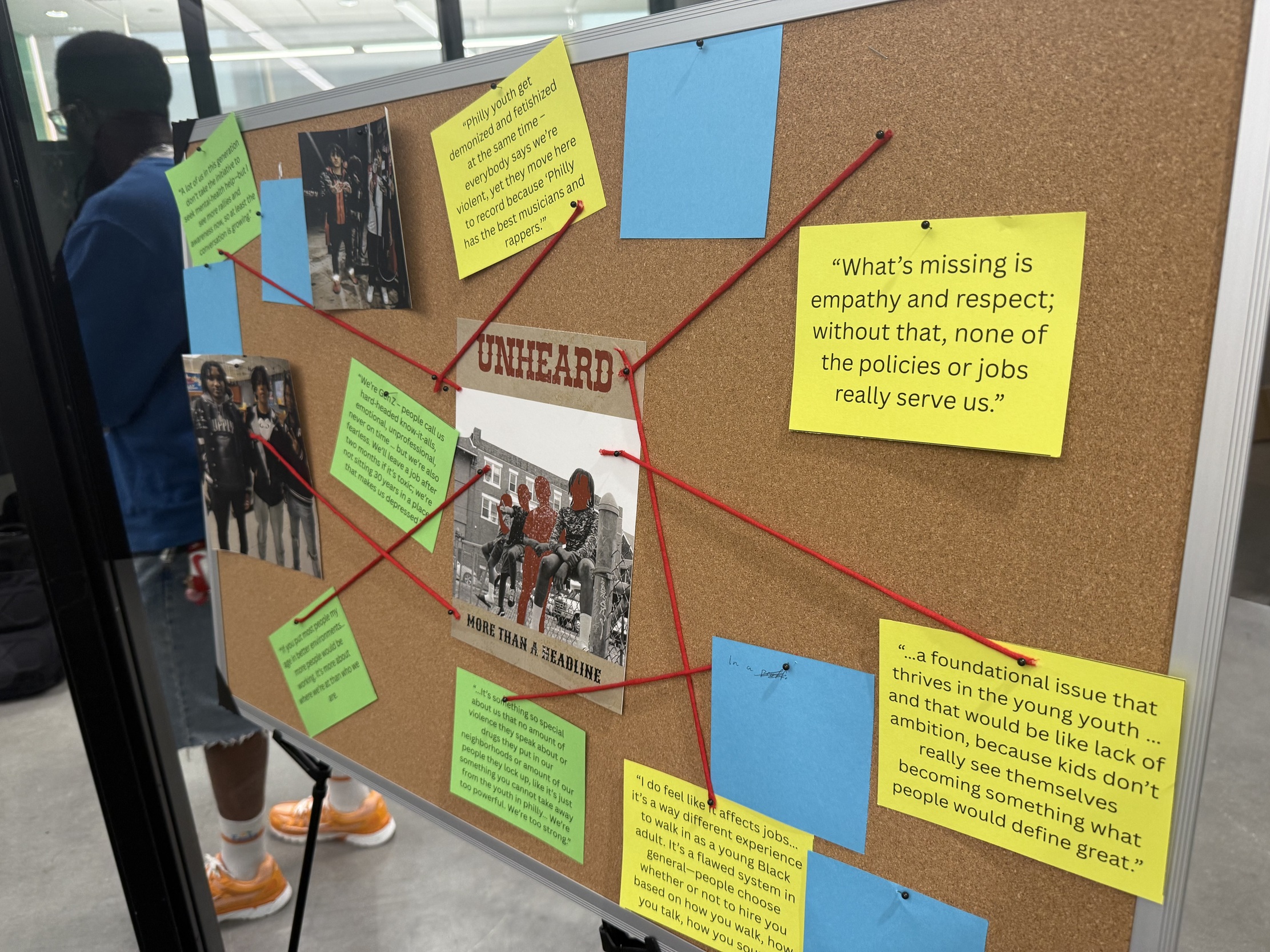
This station presented an evidence board of quotes that reflected the contradictory narratives young people encounter, such as, “Philly youth get demonized and fetishized at the same time.” Positive affirmations sat beside stigmatizing labels, producing a dissonant mix. Participants responded by writing their own narratives, juxtaposing them with existing quotes. This layering revealed how external labels can distort self-perception but also spark determination and purpose. As one person said, “something you cannot take away from the youth in Philly … we’re too powerful.” By drafting new narratives they envisioned and pinning them to the board, participants demonstrated how reclaiming narrative space fosters agency.
Station 2: Grief Mapping
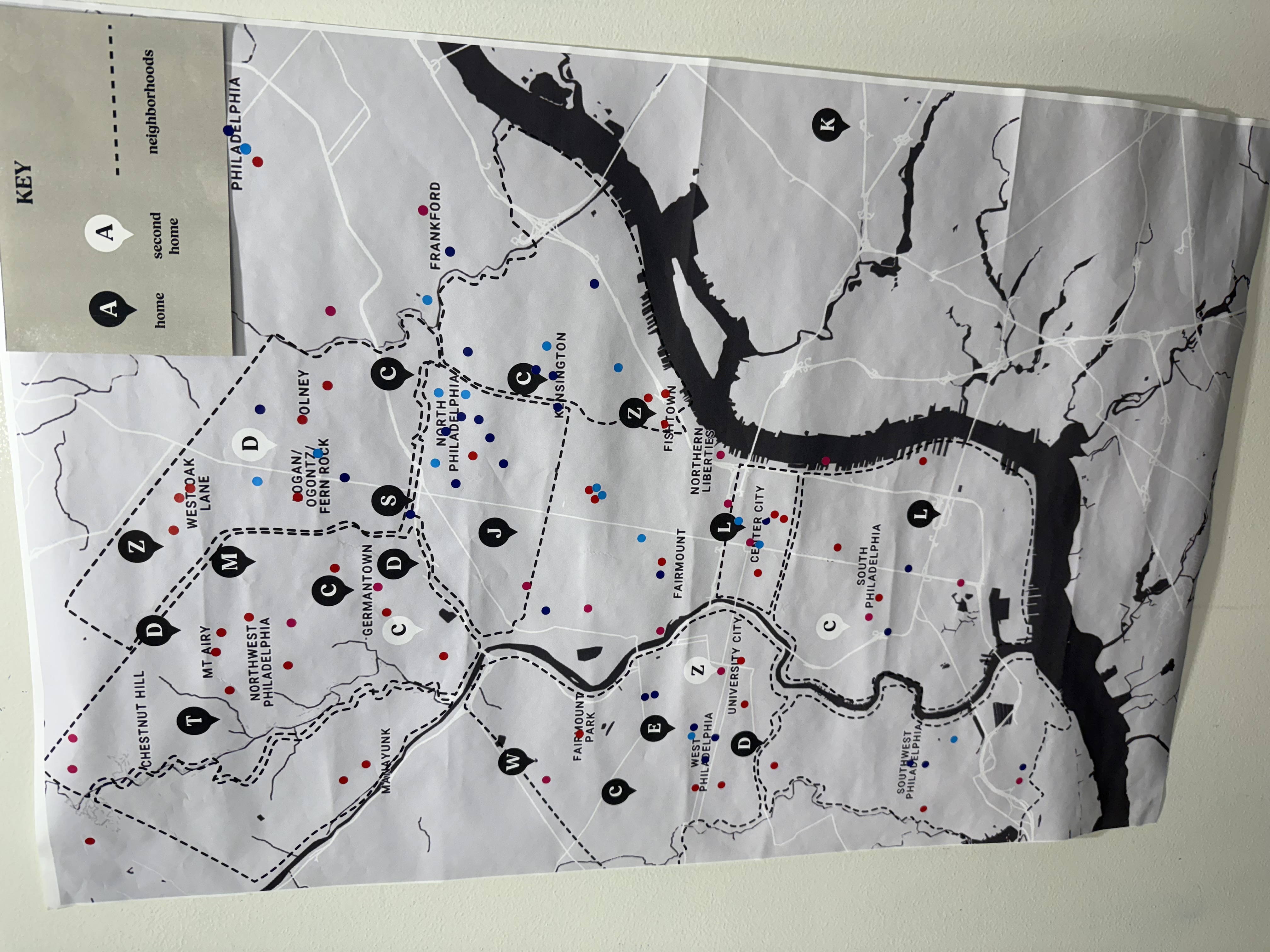
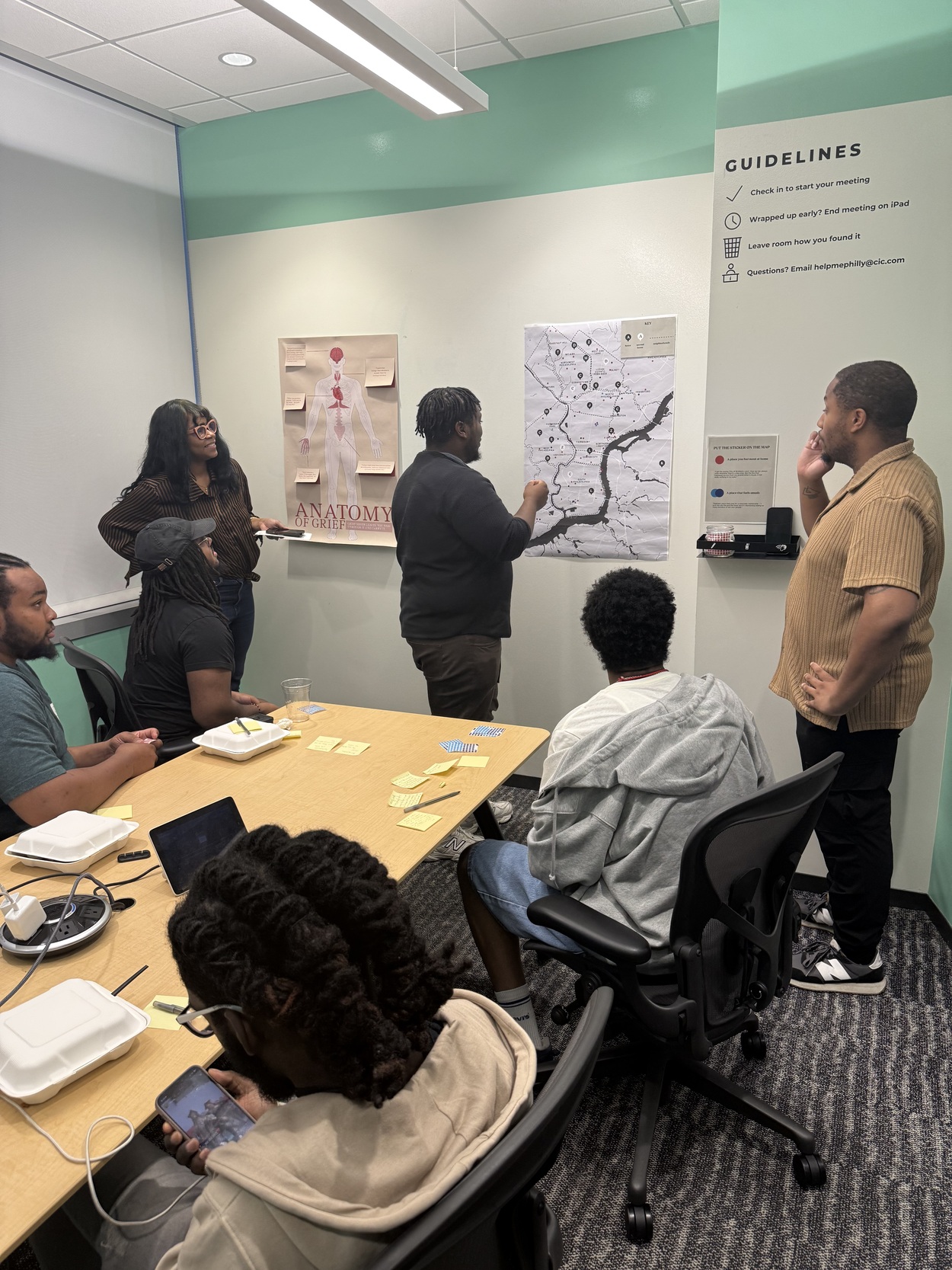
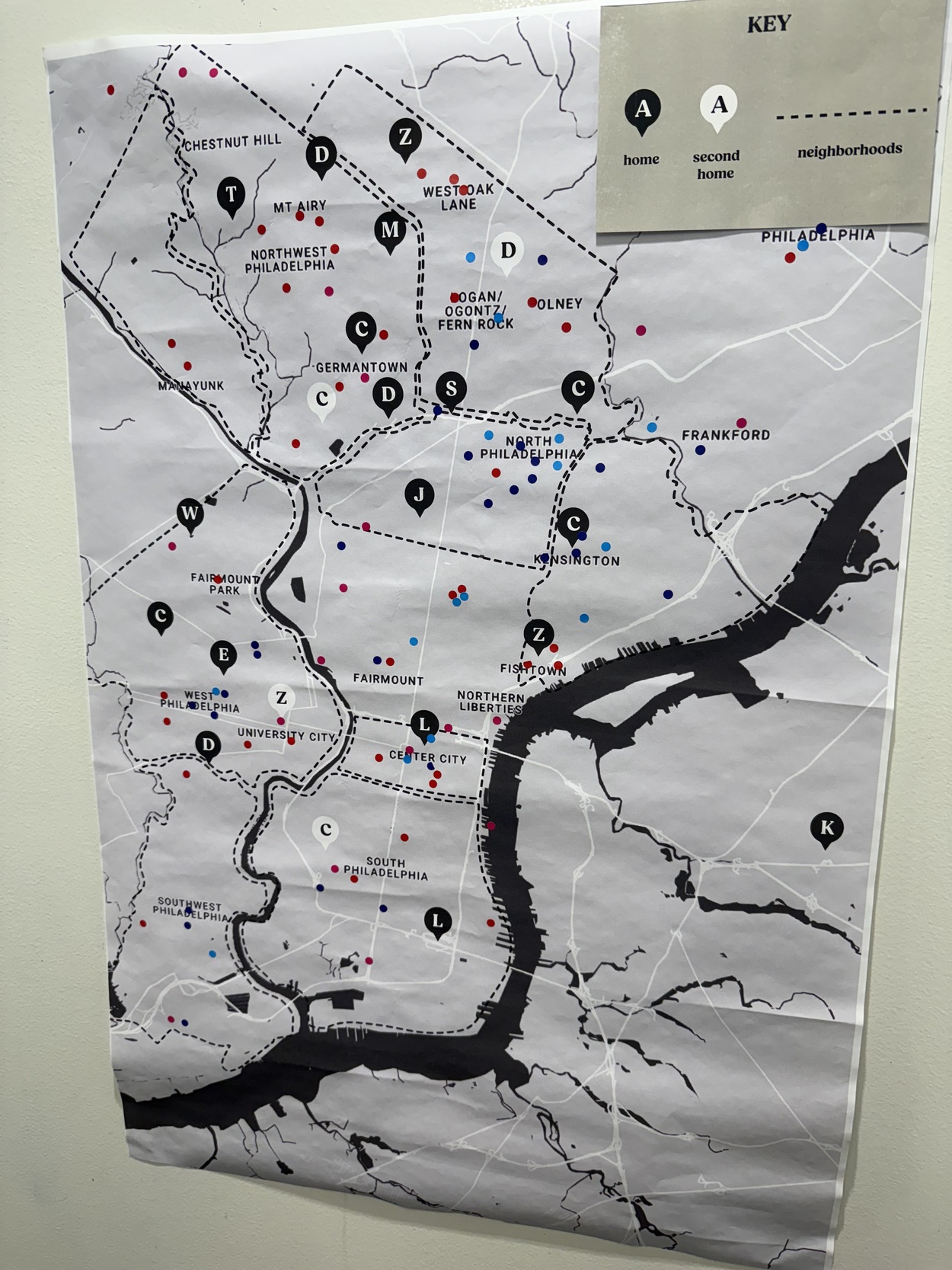
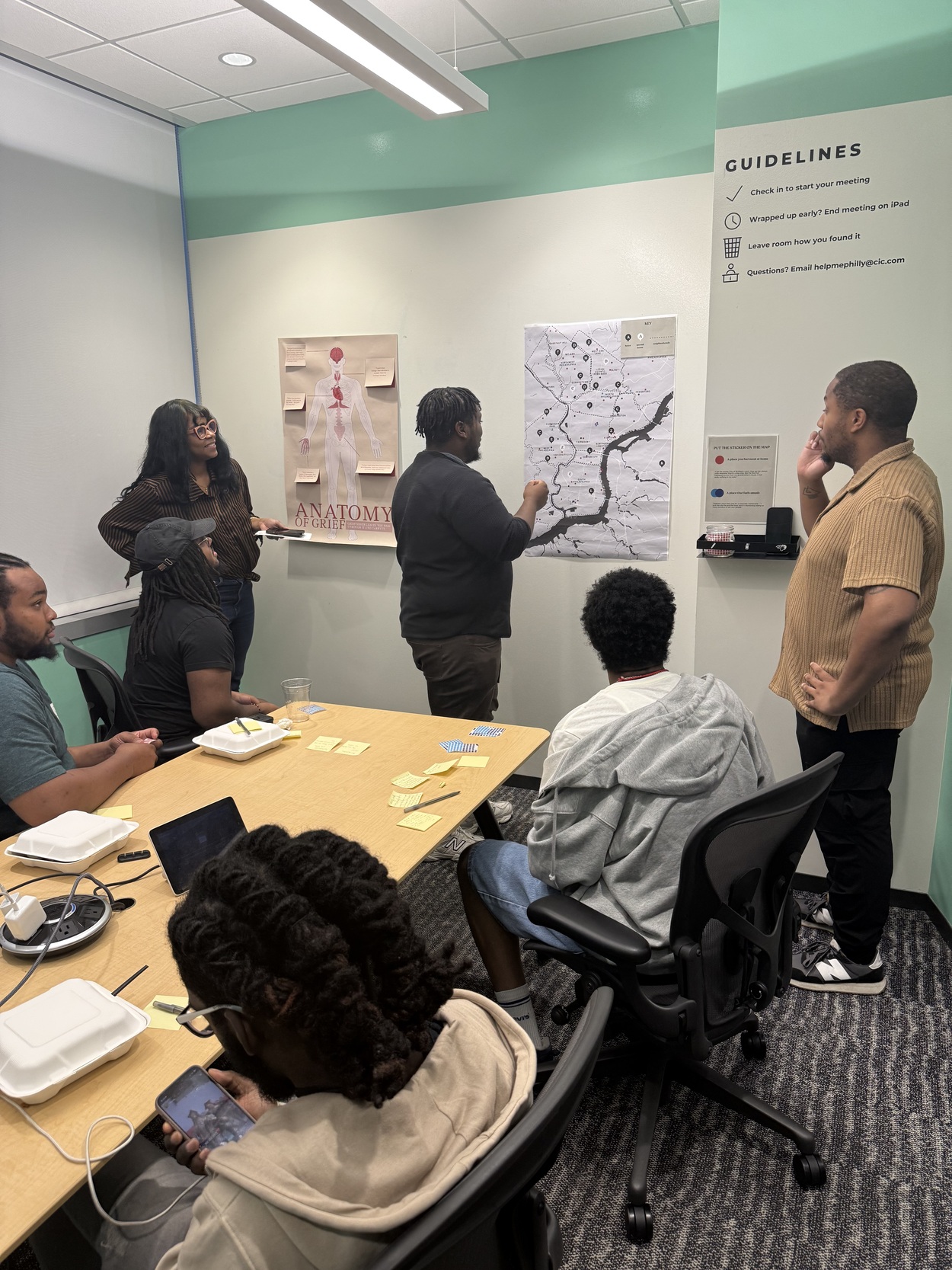
Through a large map of Philadelphia marked with color-coded stickers, participants surfaced the contradictory meanings attached to places. The same neighborhood could simultaneously represent belonging and threat, safety and stigma. This exercise illustrated how Philadelphia is layered with personal and collective grief. As one person put a sticker on the map, they said, “My block can feel dangerous—random gunfire, internet beefs turning violent—but I also see kids playing and neighbors trying to reclaim the summer. It’s a strange mix of grief and joy.” Far from linear, these spatial relationships captured the complex interplay of memory, trauma, and attachment, deepening understanding of how place shapes and is shaped by emotional life.
Station 3: Anatomy of Grief
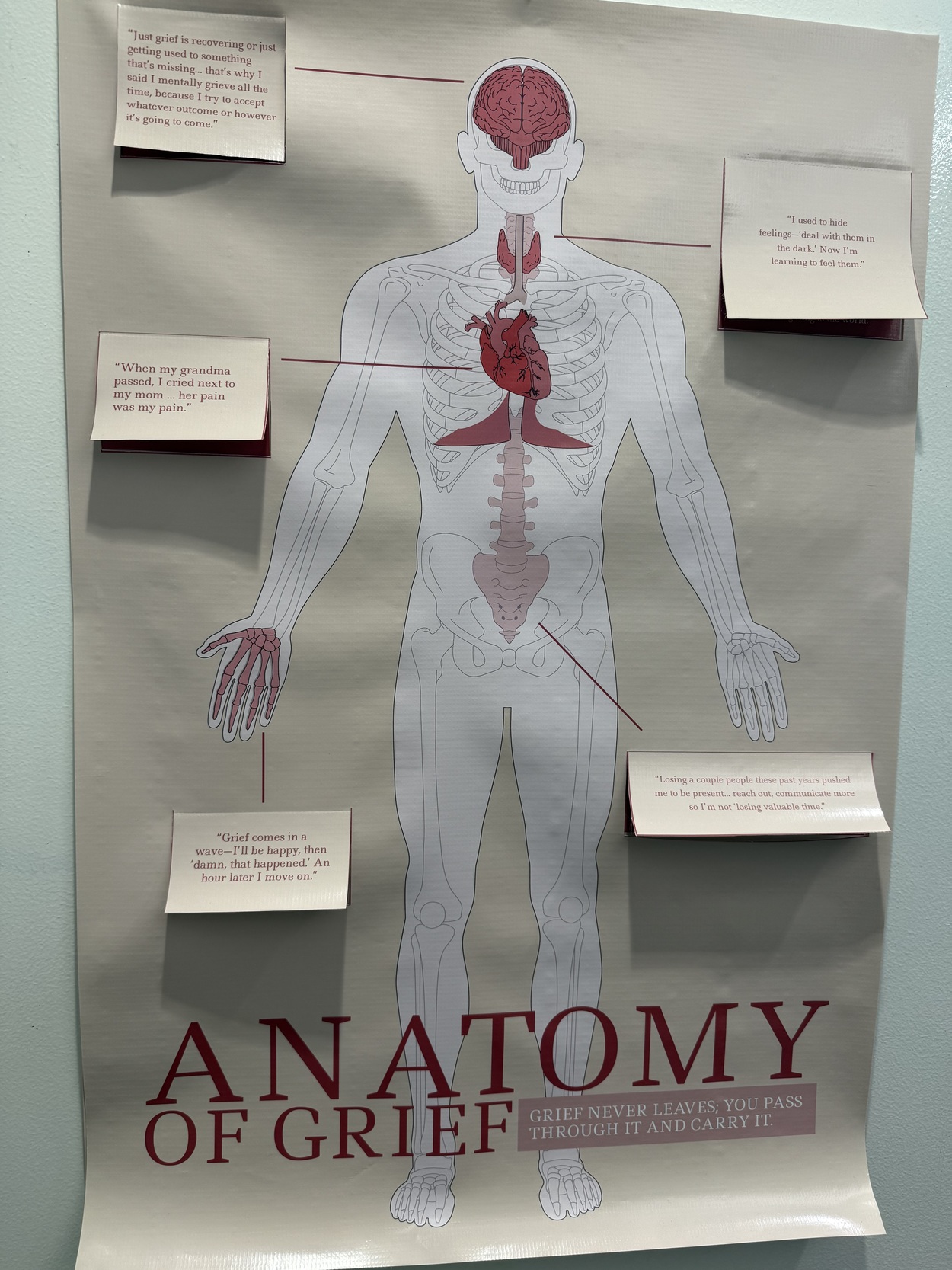
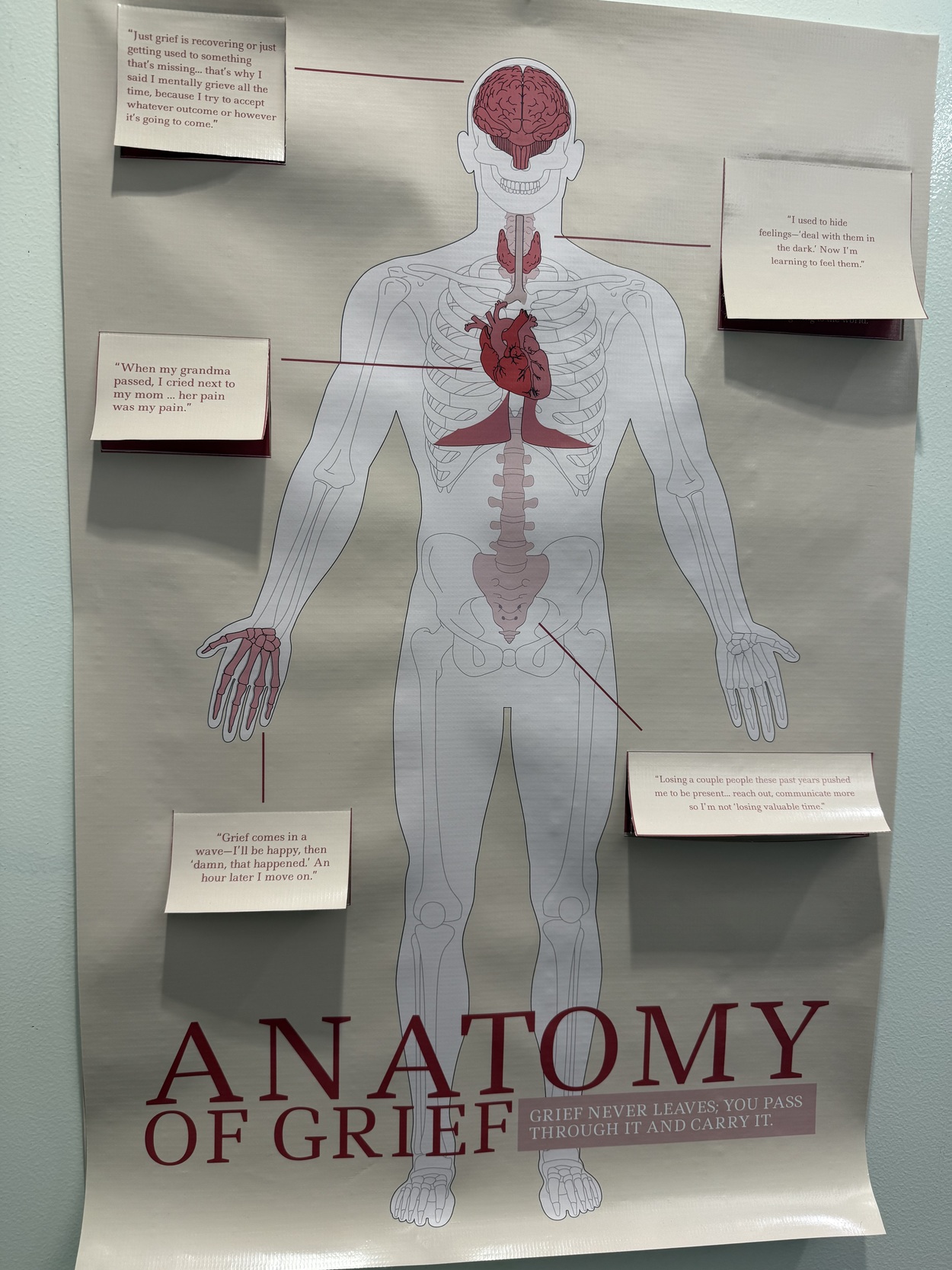
A diagram of the human body served as a canvas for mapping how grief manifests physically and emotionally. Participants added reflections to different body parts, linking personal quotes to embodied experiences. One participant reflected, “I feel other people’s grief in my chest before I notice my own. At funerals for relatives I barely knew, I still cry because everyone around me is grieving. My hands even start to shake; I can’t focus on anything else.” The exercise revealed how grief is internalized in layered and often unspoken ways, inviting recognition of its somatic dimensions. This station underscored that grief is not abstract but lived through the body, altering how young people inhabit themselves.
Station 4: Withholding of Wealth and Wellbeing
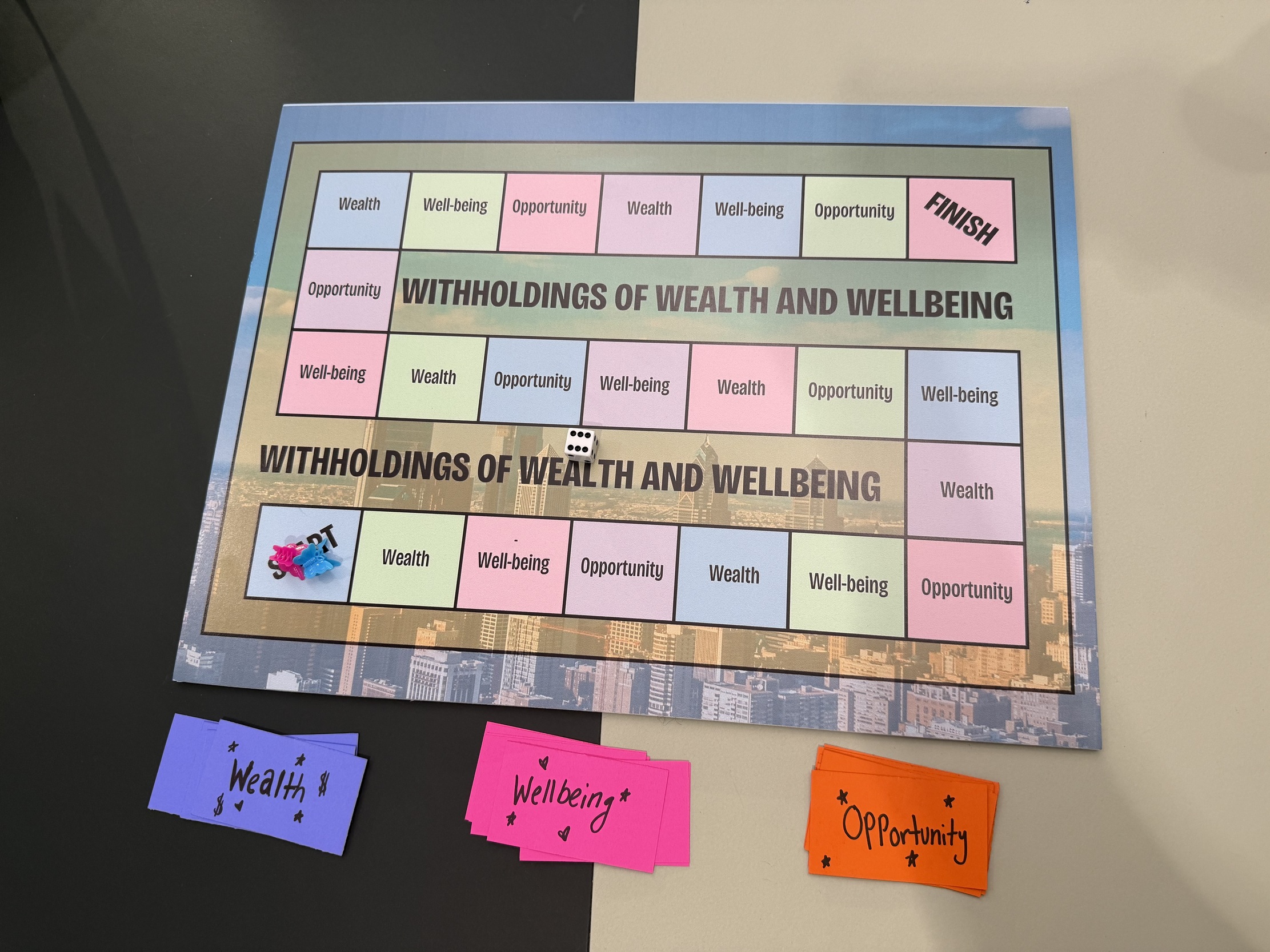
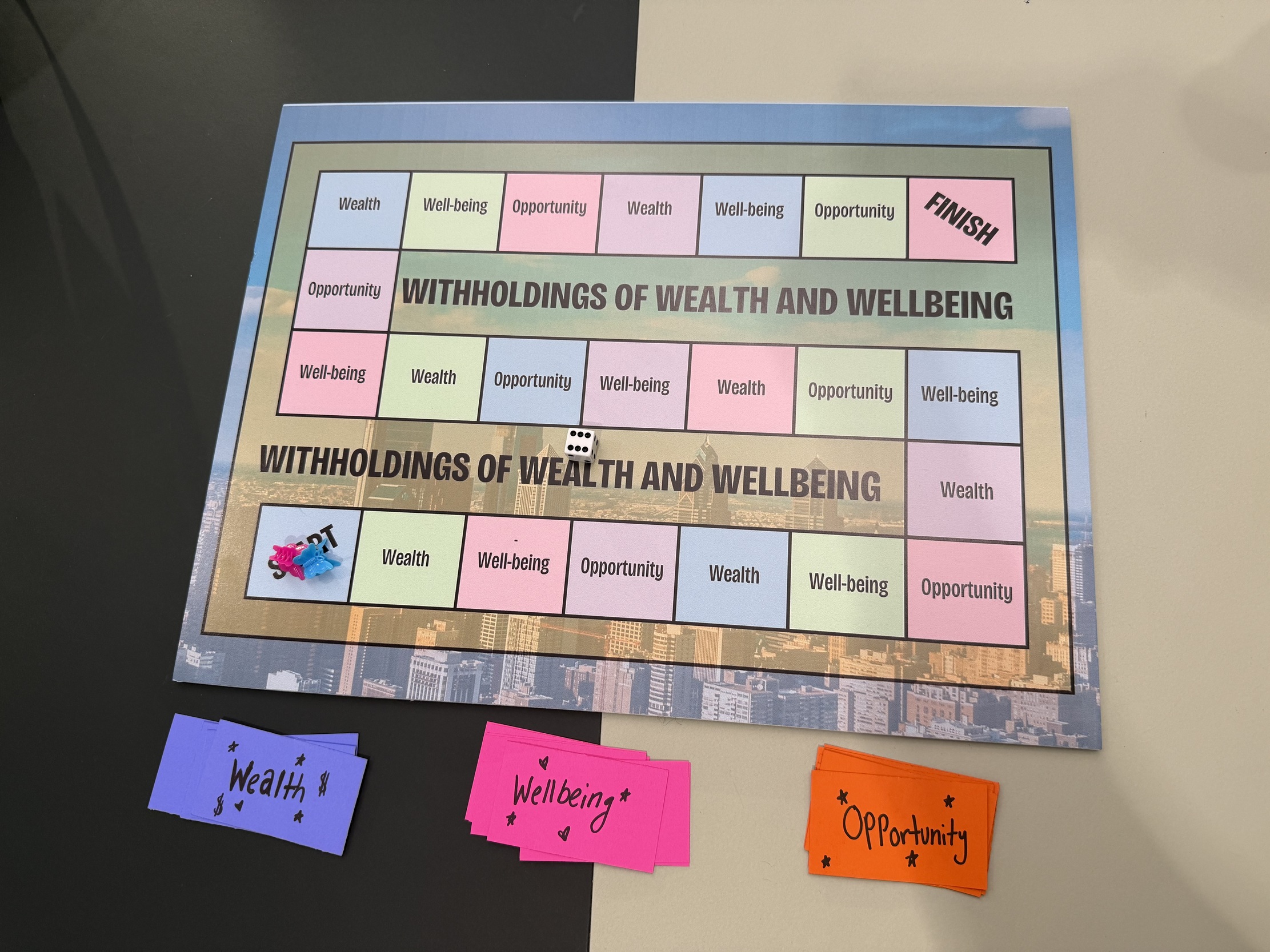
Styled as an interactive board game, this station explored relationships to opportunity, resources, and wellbeing. The board consists of three different categories: wellbeing, opportunity, and wealth. Each space has one of the three categories and has corresponding cards. Participants rolled dice and moved a game piece, landing on a space, pulling the corresponding card, read the quote and answering one reflection question. There were three levels for the game to understand how participants resonated with the content they were interacting with, interrogated what was missing, and imagined the future for this project. Each card held a quote from an interviewee on their perspective on wealth and or access. Because of the nature of the quotes and the questions, often the participants then engaged in open-ended dialogue about their answers and respond to one another. The activity exposed how environmental and communal inequities restrict growth, intensify instability, and compound grief. Insights underscored that the absence of equitable access is not neutral but actively obstructive, shaping trajectories of uncertainty, especially for young people of color in Philadelphia.
Taken together, the stations moved findings beyond abstraction, making themes tangible and relational. By layering personal expression with shared reflection, participants co-created a nuanced picture of young adulthood marked by resilience, contradiction, and possibility. This participatory process not only validated the research but expanded its knowledge base, affirming both individual experience and collective humanity.
Reflections & Lessons Learned
The data walk format worked well in providing a participatory structure that blended reflection, dialogue, and creative expression. Participants responded positively to the multimodal stations, often initiating their own conversations without heavy facilitation. Multiple formats – printed cards, stickers, and other interactive visuals – supported engagement across learning styles and helped anchor abstract themes in tangible experiences. The inclusion of food, a welcoming space, and grounding practices (such as breathwork) further set a tone of care and accessibility.
At the same time, the team recognized challenges. Time was a recurring issue: while participants engaged deeply, they often spent less time than anticipated at certain stations, especially when room layout was a bit tight and participants sometimes hesitated to get up and engage with the stations at the beginning. Some participants hesitated to read quotes aloud, raising important considerations about accessibility and comfort with literacy. Facilitators also noted the emotional load of discussing grief and loss, underscoring the need for debrief circles or an after-care plan to support both participants and staff after such sessions.
Several practical lessons emerged. Budgeting should account for visuals, printing, food, and transport, all of which significantly shaped participant comfort and willingness to attend and engage. Also, small facilitation choices—such as reading quotes aloud, encouraging standing rather than sitting, and rotating group leaders—can make activities more inclusive and interactive. Overall, the Fellows and staff reflected with gratitude on the success of the event, noting that intentional design and care practices allowed for meaningful and more intimate dialogue.
Limitations
This study has several limitations that should be considered. First, the participant sample was limited in size and scope, consisting of just over 30 young people drawn from the researchers’ existing social networks, including friends, family members, and neighbors. While this approach supported trust and openness around sensitive topics such as grief and loss, it also introduces selection bias and limits the generalizability of the findings. Participants may share social, cultural, or experiential similarities that are not representative of young people beyond this community. Additionally, the demographic composition of the sample further constrains the applicability of the results. Many participants identified as cisgender males who grew up in Philadelphia, limiting representation across gender identities and potentially excluding the grief experiences of women, transgender, nonbinary, and gender-expansive young people.
Second, the use of semi-structured, conversational interviews recorded on personal devices and later transcribed may have introduced variability in data quality. Differences in recording environments, transcription accuracy, and interpretation of tone or emphasis could have influenced how participant narratives were captured and analyzed. Furthermore, because the researchers were personally connected to many participants, social desirability bias may have shaped how individuals described their experiences. The data synthesis process also relied on researcher interpretation; while collaborative clustering of salient quotes using Mural supported shared meaning-making, the selection of “stand-out” quotes and the formation of thematic categories reflect the perspectives and positionalities of the research team. Taken together, these limitations suggest that the findings are best understood as exploratory, relational, and context-specific rather than broadly generalizable. Future research could expand the sample, diversify participant demographics, and incorporate additional methods or independent analysts to build on and strengthen these insights.
Implications for Practice & Policy
Our findings highlight the importance of designing participatory practices that expand support for youth navigating rapidly evolving social and economic conditions. Our findings, together with insights from our own experiences, highlight the significance of the following areas in nurturing the mental, emotional, and professional growth of young people.
For community organizations
-
Intergenerational guidance, patience, and understanding are essential to cultivating authentic connections with young people. Story-sharing across age groups—especially narratives of past missteps and resilience—can provide youth with practical blueprints for navigating adulthood.
-
Participants express a longing for Mentorship. Mentorship also acknowledges the accelerated pace of contemporary challenges, ensuring that guidance reflects both long-term wisdom and responsiveness to rapidly changing social, economic, and technological conditions.
-
Cultivating welcoming and encouraging third spaces for young adults to feel safe to fail, ask questions, and exist. So much of emerging adulthood is about transition and we and our peers desire more communal spaces.
For policymakers and funders
-
Mandating and resourcing grief literate practices (offering space for grounding and emotional expression, being aware of the dynamic and complicated nature of grief, not limiting our humanity to uphold systems of oppression) and investing in spaces that support narrative change, can strengthen community well-being and resilience.
-
Resource allocation for youth development—particularly at the intersections of work, wealth, and financial well-being in Philadelphia—can help bridge opportunity gaps and improve educational and economic outcomes for historically underserved and misrepresented populations. These intersections are of importance because they are often markers of adulthood and are being defined and shaped through experiences in emerging adulthood. Having proper resources to guide this transition is crucial because this time period is extremely formative.
Conclusion
This project demonstrates that participatory data walks can deepen collective understanding by transforming research findings into interactive and relational experiences. Next steps include refining facilitation and research practices, expanding intergenerational participation, and exploring how narrative-based methods can inform broader community programming and policy design, especially around grief and youth well-being.
Acknowledgements & Funding
We want to thank the Fellows for their creativity and leadership in designing and facilitating the stations, Nyah, Charlotte, Ares, Craig and Larissa, as well as the Wealth + Work Futures Lab staff, community partners, and collaborators who supported this project. This work was made possible with support from our funders, whose commitment to our work enabled both the inquiry and the event itself.