


Introduction
The purpose of this article is to share our experiences of working on a research study entitled PROSPER (Bradbury-Jones et al., 2025), from now on in the paper, referred to as ‘the study’. The aims of the study were to develop a comprehensive, national profile of VSS [voluntary sector specialist] specialist services for victim-survivors in England, giving voice to service users’ experiences. The outcome was the development of policy and practice recommendations to strengthen the overall service response to victim-survivors of SV [sexual violence]. In this specific article, we consider the contribution of the co-researchers to the project, exploring the joys and challenges therein. There was one principal research question that the co-production element of the research sought to answer, which this article seeks to explore:
What were the unexpected opportunities for learning regarding co-research in the field of sexual violence?
The underpinning theories for the study were feminist, trauma-informed and intersectional. A feminist framework highlights power and gendered inequality in experiences of sexual violence. Within co-research a feminist lens redistributes authority, with survivors acting as knowledge-producers. A trauma-informed stance emphasised trust and safety, collaboration and engagement, with careful attention to avoid re-traumatisation. Lastly, an intersectional framework acknowledged overlapping identities, recognising that lived experience was just one aspect of the co-research team. In addition, to evaluate the co-researcher element, we drew upon The Survivors Voices Charter; a bespoke framework which offered authenticity to the evaluation process (Bradbury-Jones et al., 2025; Perôt & Chevous, 2018). These combined theoretical and conceptual lenses aided our reflections on the study through experiential learning and evaluation. In preparation of this manuscript, we sought firsthand accounts from the co-research team that capture such reflections and the insights gained, and present their voices throughout.
For the purposes of this article, relevant key terms that are integral to this article have been defined. As such, the term ‘co-research’ fits under the umbrella term of ‘Participatory action research (PAR)’ which is “a methodological approach to social science research in which members of the study population participate as co-researchers, usually in collaboration with university-based researchers” (Brown, 2024, p. 1). The similarly applied term ‘Co-production’ is a broad, umbrella term, applied to a wide range of contexts, “Consequently, co-production has been considered a slippery, woolly and muddled concept, the benefits of which may be diminished if the definition is unclear or misapplied” (Nabatchi et al., 2017, p. 2). A clear definition of co-research, as explored in an edited work on Qualitative Research methods, is most relevant to this article, “joint contributors and investigators to the findings of a research project…making them experts…collaborators in the process of gathering and interpreting data” (Given, 2008, p. 600).
There is mounting recognition internationally that participatory, collaborative, lived experience involvement within research is not only fundamental to the integrity of research, but is a moral, ethical, and social imperative (Faulkner, 2004). Correspondingly, there is a burgeoning body of health literature about ‘getting involved’ in lived experience research (Blair et al., 2022; Duea et al., 2022). A collaborative approach strengthens a study, improves participant experience and increases quality, as empirical co-produced research by Taba et al. (2025) showed. The use of co-researchers diversifies the voices and perspectives in research and is likely to produce more actionable findings. Being part of interviews with those who had experienced sexual violence lessened the power differential, with many appreciative of the presence of a co-researcher in interview. Co-production, and the embedding of lived experience co-researchers within research teams has gathered favour as the preferred ‘way to go’ and is advocated by research stakeholders, policy makers and funders:
But the future is not simply about doing more of the same… The practice of co-production which is more often applied to service design and improvement merits further exploration in relation to research as a way to foster partnership, reciprocity and openness. (National Institute for Health Research, 2015, p. 10).
With 40 years of participatory research to analyse, the processes for conducting it, and learning associated with it, are now feeling clearer (Sierra-Martínez, 2025). The engagement of co-researchers could, and perhaps should, become a recognised means of evolving and improving the nature of public involvement in research:
Co-producing a research project is an approach in which researchers, practitioners and the public work together, sharing power and responsibility from the start to the end of the project, including the generation of knowledge. (Hickey et al., 2018, p. 1).
Working in this collaborative way can make the research output more robust and improve the quality of the research paradigm, methodology and findings. However, working in a truly collaborative, co-produced way is not necessarily easy and alongside the promotion of the benefits of working in this way, there are always documented challenges. To further illustrate that co-produced research includes joys and challenges we identified research using young people as co-researchers who also described it as a “balancing act” of “protection and participation” (Rabe et al., 2025, p. 4). The process is fraught with potential risks and pitfalls, particularly concerning power dynamics and ethics. From shared experiences on our study we discovered value in documenting and analysing the process of co-production, extending the learning documented by other researchers, demonstrated via the following quote:
…to inform their application in public health… the development of collaborative co-creation processes that are responsive to the needs of diverse populations, thereby enhancing the overall effectiveness and cultural sensitivity of the outcomes…to promote equity and inclusion…offering a critical resource for planning, conducting, and evaluating co-creation projects. (Agnello et al., 2025, p. 1).
Therefore, in this article, we lay out the challenges that we encountered, but we highlight many joys that we experienced along the way and contextualise this with reference to the wider literature. We add to existing literature on co-production generally – and co-research specifically – by offering an evaluative reflection on the co-produced element of our study. We hope to stimulate awareness and perhaps debate among health research colleagues, particularly those using co-produced methodologies. Through transparency and direct report, we share lessons on how our successes might be emulated and our mistakes avoided.
The challenges and benefits of working with co-researchers within a research team will be experienced differently by members of the team, which is why gathering opinion and feedback from the entire range of stakeholders is key to accurately understanding the joys and difficulties. As a relevant starting point to the inception of a co-researched study, Oliver et al. (2019) offered four key justifications for undertaking co-produced research: (Table 1)
If such tenets of co-research can be made integral to the research paradigm and beyond, they may assist co-researchers in their ambitions to be agents of change. As co-research moves forward, it could translate into a far more nuanced lived-experience voice within commissioning spheres and service provision than there is at present. It is important that all core research team members demonstrate a clear and consistent commitment to co-produced ways of working from the outset. This may mean operating in a new or different framework for them, as they come to truly understand the benefits. It is vital for everyone to recognise the potential, in research teams and research leadership, that is created by the inclusion of co-research. This includes the potential for a deepened understanding of, and respect for, the realities – and messiness - of lived experience.
The broad challenges and risks of co-production
There is a recognition among those involved in organising co-research and those employed as co-researchers, that it is a complex arena (Bradbury-Jones et al., 2025; Faulkner, 2004). As such, our experiences detailed in this article contribute to an ongoing debate regarding how lived experience participation is best facilitated, and there is extant literature providing a discourse on the opportunities and challenges of such research which has been considered as part of writing this article (Crooks et al., 2023). For example, there are ongoing concerns around the potential for, at best, tokenistic, and at worst, harmful patient and public involvement and engagement (PPIE). These concerns were addressed by the NIHR (2015) in their strategic review of public involvement in research. It is through the sharing of actively conducted co-researched studies that learning can inform future co-research endeavours, and common pitfalls be avoided. The addition of lived-experience colleagues to a professional research team creates real risks around perceptions of ability, pre-conceptions around ‘victimhood’, expectations of vulnerability and mental health instability. Even with laudable aims for inclusion of those with lived experience, an ‘othering’ can quickly ensue, which is known to be damaging.
Whilst the danger of feeling ‘othered’ was a pervasive risk in our study, it was not overtly identified although co-researchers alluded to feelings of it. This was rarely intended, and would take the form of protectiveness or sensitive handling of the co-researchers, all intended kindly but representative of difference. The danger in ‘othering’ co-researchers has been reported previously: ‘The othering has the effect of reinforcing the sense of injustice you feel…You find yourself positioned as ‘damaged’’ (Fisher et al., 2018, p. 12). The danger of othering in participative research demands critical consideration to ensure the research process validates all different kinds of voices and addresses knowledge hierarchies. A curious, ‘learning together’ attitude prevents disconnect between the core research team and co-researchers but this is challenging to universally maintain. This is a concept explored by researchers implementing co-research, such as Nordentoft & Olesen (2017, p. 55) who purport that it is only through discussion of “ethical conundrums” that the complexities of co-research can be addressed (Nordentoft & Olesen, 2017, p. 55). One such ethical complexity is the potential to erroneously dichotomise co-researchers with lived experience vs. academic researchers. Such dichotomy risks the assumption that the latter do not also have lived experience (in this case, of sexual violence). Conversely, academic researchers have personal experience of a range of abuses. Co-research does not ignore or negate this. Its distinct feature is the involvement of co-researchers because of their lived experience. The challenge lies in neither privileging lived experience nor research skills, when both are interchangeable and add value.
The drive towards co-research has emerged in response to concerns that the engagement of ‘the public’ has often been restricted to tokenistic advisory or consultative approaches, with the challenge of embedding co-researchers into research activities being largely ignored or deemed difficult. In the past this has seen sensationalist testimonials revealed in research, and invitations to ‘tell your story to help us understand’. This attitude focuses on the isolated value of having lived experience of trauma, which can feel psychologically unsafe and re-traumatising (McGeown et al., 2023). In our study, co-researchers felt valued for their whole intersecting identities, without elevated value for the lived experience narratives they brought. There is a challenge in the way co-researchers are utilised, because increasingly research entails mandated allocation of funds to PPIE which then carries the risk of perpetuating box-ticking public involvement - researchers cognisant that this may be the difference between successful/unsuccessful funding applications. Co-research should add more value than just financial security and offer academic research teams a wealth of new learning opportunities in learning together as a shared team.
‘Whilst the appetite for co-production is growing, there is still much to learn.’ (Bradbury-Jones et al., 2025). There is increasing encouragement for improved survivor involvement in research, and knowledge generated on this topic is gradually being integrated into practice, which other researchers embedding co-research have noted (O’Doherty et al., 2024). Evaluation of co-produced research must be integral without detracting from the primary aim of the co-produced research. Honest reflection is required of research teams in the utilisation of evaluation tools and processes. This will support the development of a body of evidence around best co-production practices. Evaluation that is intentional, creative and impactful and demonstrates how co-production was implemented and what went right, what went wrong, it can inform the team, and other teams, to know how to do things next time. Our experience, as detailed below, aims for far-reaching dissemination of evaluation outcomes and the sharing of co-produced experiential reflections. These are key to addressing a gap between co-production ambitions and co-production realities. With this in mind, we move to discuss our specific experience of co-research with examples.
An overview of our co-produced study
This exploration of co-research focuses on a sensitive research study completed between 2019-2023, which investigated the support provided to victim-survivors of sexual violence by specialist voluntary services in England. The desire to meaningfully employ the voice of lived experience was a core element of the study. This was included in the original funding proposal whereby the research team espoused the following aspirations as regards to how/why co-production would be included:
-
Meaningful co-production wherein the voices of victim-survivors are heard.
-
Empowering to victim-survivors.
-
Obtaining meaningful data.
-
Promoting learning and development of new skills among co-researchers.
To enact this aspiration, six lived experience co-researchers were initially appointed to work alongside the existing academic team (one co-researcher left the project after several weeks due to domestic responsibilities). The role was advertised as a paid position, lasting approximately 18 months, with the desired commitment of 1-2 days per month with flexibility regarding when that time could be worked. The key aspects of the co-researcher role description are presented in Table 2.
The remaining five co-researchers were all women, despite no specification that this should be the case and several attempts had been made to recruit male survivors. In the final year of the study, through securing additional funds for engagement activities, the team appointed a facilitator to work with the co-researchers as a ‘bridge’ or ‘conduit’ between the academic team and the co-researchers (we explore this role more in the discussion). Soon after the co-researchers joined the research team, the entire team accessed training on trauma and responses to trauma, developed and delivered by one of the co-researchers, which ensured shared knowledge and understanding of trauma and created a shared experience for all. A similar co-researched project recognised the place for trauma-training for teams ahead of working with co-researchers, noting that “Trauma-informed care acknowledges the impact of trauma and centres paths for recovery” which fitted with the aims of our study too (Horan et al., 2022, p. 526). Future studies would benefit from also capitalising on the expertise that co-researchers may bring to projects in a similar way, with trauma-informed training as a shared grounding.
In recognition that the co-researchers would bring with them a range of skills and strengths, it was agreed that training for all would be provided to ensure equity of accessibility to the required tasks for the study. This step enabled the challenge of variability in research skills amongst the five co-researchers to be addressed, with each able to state their skills, otherwise, existing research skills might have been negated or assumptions made about prior research experience. To ‘upskill’ the co-research team as needed, a skills audit was undertaken by each of the five co-researchers to identify any gaps in knowledge and training needs. As one co-researcher commented: ‘Self-auditing negated feeling patronised by the existing research team, and reduced feelings of difference, as some of us brought existing research expertise alongside our lived experience.’ Based on the audit, the co-researchers received bespoke and generic training via a draft training plan that was appropriately altered to meet training needs (Bradbury-Jones, 2014). Furthermore, each co-researcher was allocated a research team mentor who was perceived to best fit their character and skills, and all were offered optional monthly mentoring meetings. The majority took up this offer and attended the mentoring meetings with enthusiasm. Mentoring represented a considerable strength of the project, summarised by one co-researcher as: ‘a space to explore the feelings and issues that could not be spoken of in a more public space…you were seen as an individual by your mentor, not one of a group valued for the experience we brought’. In addition, regular group supervision provided a space for the whole research team to gather to disseminate information and share ideas in an equitable manner, thus minimising any ‘us and them’ feelings. The model worked well and could be replicated.
The research was a complex, multi-method study. Following their appointment, the co-researchers were offered opportunities to undertake multiple research tasks, with flexibility to choose. This provided autonomy to the co-researchers, enabled them to work to their strengths and experience, and to gain new experiences and skills. With reference to Table 2, these included - though were not limited to - reviewing and editing participant-facing documentation, reviewing plans and contributing to shaping the victim-survivor-focused recruitment approach, designing interviewing schedules and methods, working on victim-survivor-focused engagement, conducting interviews with victim-survivor participants, data analysis, report and article writing, and other dissemination activities. Of the 31 victim-survivor interviews undertaken during the early phase of the study, 16 involved co-researchers who worked in pairs with a member of the academic team to conduct the interviews. A challenge was in organising interviews when co-researchers were available. On some occasions, interviews took place without one of the co-researchers being included. While this was likely due to time pressures and expediency on the part of the researcher, it risked sending an unintended message of devaluing the input of co-researchers to the generation of data. In comparison, all co-researchers were fully involved in the iterative thematic analysis process and this felt a shared, positive experience where we all learnt together.
Discussion
As already discussed, we evaluated the co-research element of the study using the Survivor Research Ladder devised by Perôt and Chevous (2018, p. 1), an assessment tool developed by Survivors Voices based on principles of a charter that they devised. This framework measures levels of victim-survivor engagement across the research lifecycle, including their involvement in planning, decision-making, data collection and analysis, and dissemination.
Every research team member was involved in the structured evaluation of co-production in our study by using the charter. As the charter was specifically developed for engaging victim-survivors in research, projects and service development, it was already of great relevance to our study. The charter offers seven principles which, when used effectively, help to ensure that organisations are engaging with victim-survivors in research that:
-
Is safe
-
Is empowering
-
Amplifies the voices of victim-survivors
-
Promotes self-care
-
Is accountable and transparent
-
Is liberating
-
Is creative and joyful
The Charter is far-reaching, in that it relates to any work with victim-survivors in organisations in general and is not specifically about research. As researchers who regard the charter as the central tenet of ethical and safe research, we utilised it to reflect on the co-production element of our study. To focus on the principles that related most closely to co-produced research, we synthesised and re-grouped the seven themes into four broad thematic domains. These are: safety and self-care, empowerment and amplification of voice, accountability and transparency and creativity and joyfulness. This allowed us to retain the intent and integrity of the Charter whilst ensuring its applicability to our project. This analytical restructuring is explored in the following four sections which enabled an examination of how the Charter values interacted with co-produced research.
Safety and self-care
The first of our four dual aims, ‘safety and self-care’ was considered to be the bedrock of our research from the outset. Keeping individuals with lived experience safe from harm and ensuring a level of self-care felt vital. Of course, this extended to the wider research team too, some of whom would also have been affected by the sensitive nature of the research or have their own lived experience of sexual violence. The narrative around the Charter reminds us:
All work with all people affected by abuse and trauma needs to look unlike and be the opposite of abuse – otherwise it can inadvertently replicate the dynamics of abuse and cause harm (Perôt & Chevous, 2018, p. 2).
Researching lived experience as part of a sensitive research study is emotionally laboursome. Consequently, support for the entire study team, including those with lived experience is vital to promote mental and emotional wellness. The support offered needs to be meaningful and timely. The co-researchers reflexively considered the safety offered through practical means, with one team member stating: “Sharing lived experience often requires a level of vulnerability and [that] depends on feeling safe. Therefore, fostering safe, compassionate and supportive connections is essential”. Another co-researcher offered a different experience: “I felt it was difficult for me to feel completely safe, with such a big team, having to meet remotely for so long…it only reinforces for me the importance of in-person contact to promote safety…” Yet another reported that they had sensed: “a genuine interest in my wellbeing from every member of the team.” Whilst promotion of safety and self-care is an ethical duty, it can be financially and time-costly to provide a suitable level of support. The provision of support must also be directed by an intention to avoid paternalism - of ‘doing to’. A trauma-informed research study, Bridging Gaps, worked collaboratively with women who had experienced complex trauma, and prepared carefully for this element, providing the following advice:
Ensure those leading the group have appropriate training to understand the impact of trauma, including symptoms of PTSD and complex PTSD, and strategies to support those who are experiencing these symptoms. Consider the need to cost in external clinical supervision for all those involved. (McGeown et al., 2023, p. 1910).
Our study aligned with the viewpoint that to conduct participatory research effectively, Principal Investigators and academic teams must promote regular supervision, provide space for co-researchers to meet and reflect, ensure that access to psychological support is available, and provide a facilitator to mediate difficult or unexpected situations (Skinner et al., 2022). These should all ideally be in place from the start when advertising for and employing the lived experience co-researchers. An abuse and trauma-sensitive approach has the potential to increase the integrity of interpersonal violence research and to improve the safety of co-researchers, researchers, and research participants alike. Done poorly, it could be re-traumatising and/or feel unsafe; but if done well, it could have transformative and healing potential for all those involved (Honey et al., 2020).
Trauma healing can take both time and a convoluted route (Herman, 1992) and is not the primary purpose of partaking in research. Co-researchers with lived experience may enter their research role at different stages of the healing journey and this was apparent on our study. Participation in the research may indeed benefit that healing process, but recognition that each co-researcher is on their own unique path is essential. What ‘works for one’ may not work for another. The establishment of safety and boundaries for all matters, in recognition that “the sharing of experiences may be healing and empowering, or potentially retriggering” (McGeown et al., 2023, p. 1911). When co-researchers bring their experiences to light in the process of the research project, it can be painful and may re-awaken past trauma. A focus on the psychological safety of those sharing lived experience is paramount (Burgess & Choudary, 2021). Equally, those hearing the lived experience of others may be triggered or distressed by what they hear. Acknowledgement of, and sensitivity to, the individuality of each of the co-researchers and their unique routes to recovery is essential. Nonetheless, a level of resilience and the ability to self-reflect is required for co-researchers who choose to undertake a role on a sensitive and potentially triggering project. These are extremely hard to assess or gauge at interview, particularly as resilience and self-reflection may be fluid and changeable. There is therefore an element of having to rely upon a co-researcher’s ability to assess their own readiness for working within such research. Ultimately, during a study, it may be right for an individual to self-protect by stepping away from the role, for a time, or perhaps permanently. This option to step away should always feel possible, without fear of judgement, and accompanied by the provision of appropriate support.
The co-researchers in our study felt that maintenance of their safety and the prioritisation of their self-care were both possible and encouraged. This was because numerous safety measures were in place. They were never asked, at any stage, to disclose abuse details. If a trauma history was shared, it was with autonomy and ownership. Self-disclosure can be risky, but it can also build trust and enable the understanding of another’s perspective. Experiences on our study aligned with other research that promoted similar sensitivity around disclosure (Armstrong et al., 2022). Within our study, disclosure (with autonomy and choice) did indeed deepen relationships when shared by choice. The effect of choice around disclosure is summarised by one co-researcher: “At the heart of the co-researcher role was a strong sense of unity, allyship and connection. This was deeply valued and formed the foundation for trust and compassion, enabling us to bring our lived experiences into the research in an authentic and meaningful way.” Mentors enabled mentees to self-identify needs and share more deeply. They offered a confidential and designated safe space for personalised debriefs and individual, sensitive support. The sessions also provided opportunities for learning and the honing of research skills without fear of feeling ‘less than’ in more public spaces.
As a result of this personalised and needs-led approach, the five co-researchers were able to engage in the study in different ways according to the time they could give and their individual skills and motivations. They were always encouraged to self-determine the level of involvement and commit as much or little as they wanted. Above everything, it consistently felt that wellbeing for all was paramount. This, in turn, permitted and promoted self-care. When co-researchers needed a break or needed to step away from a certain aspect of the study, they were always treated with compassion and respect and provided with ongoing support. Everyone remained mindful of, and alert to, the potential for difficult feelings to arise. Despite the range of proactive support in place, there were times when elements of the research process did feel re-traumatising, for example, when a survivor interview contained themes that co-researchers had experienced too. The co-researchers were respectfully trusted to know how, and what, was best for their self-care and that support was available should they need it.
Increased support for the co-researchers came with the creation of a separate facilitator role for the co-research team. This role was instigated in the latter part of the research because the team secured funding to undertake an arts-based addition to the main study. The facilitator would co-ordinate this work. The co-researchers significantly shaped the job description and person specification of this affectionately named ‘shepherd’, collectively imagining and agreeing the desired values and experience of the person to be employed. The co-researchers knew that the person in the role needed to be sensitive to the nature of the work, respectful of those involved, organised and dynamic, with good communication and collaborative skills. They believed it would be valuable if the ‘shepherd’ also had lived experience of sexual violence, and that they were in a place in their healing trajectory that offered them the resilience and strength required for the role. A potential candidate was interviewed both individually and collectively and was mutually agreed to be the right person for the job. Organically, over several months, the facilitator role took on a dual purpose: Coordinator of the art-work project and pastoral support for the co-researchers. In essence they became a bridge between science and art and academic team and co-researchers. Replicating this role would benefit future research teams.
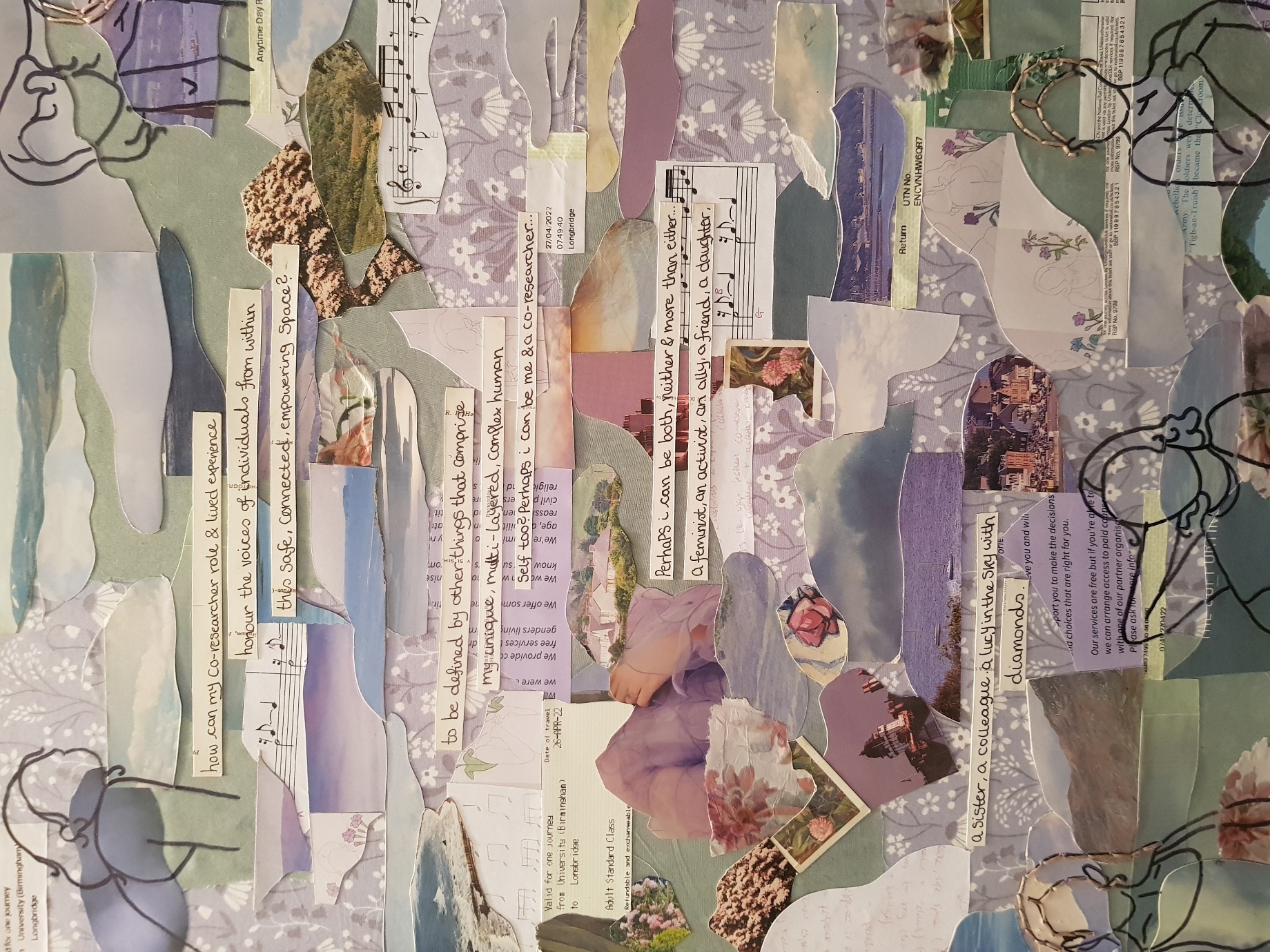
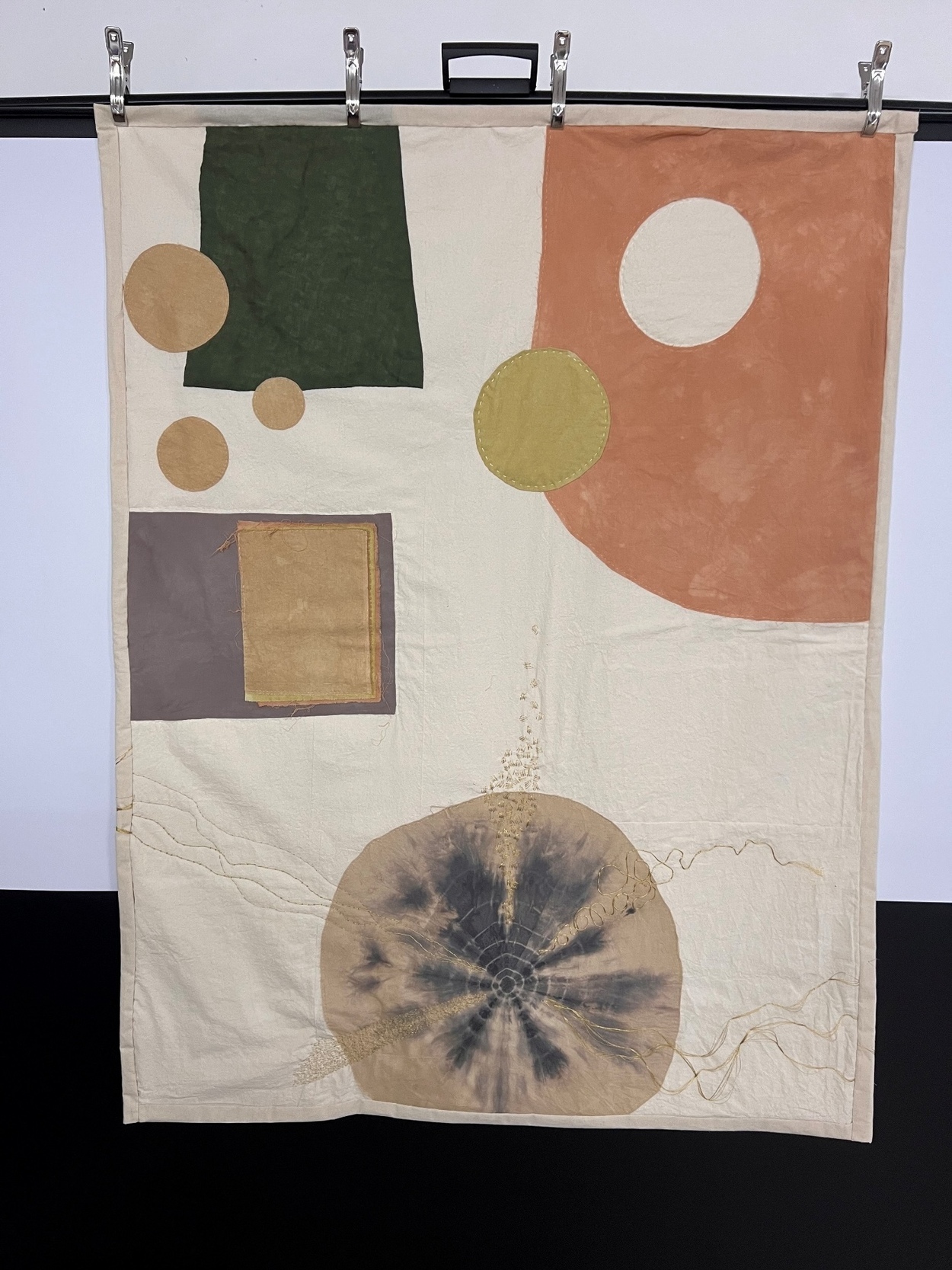
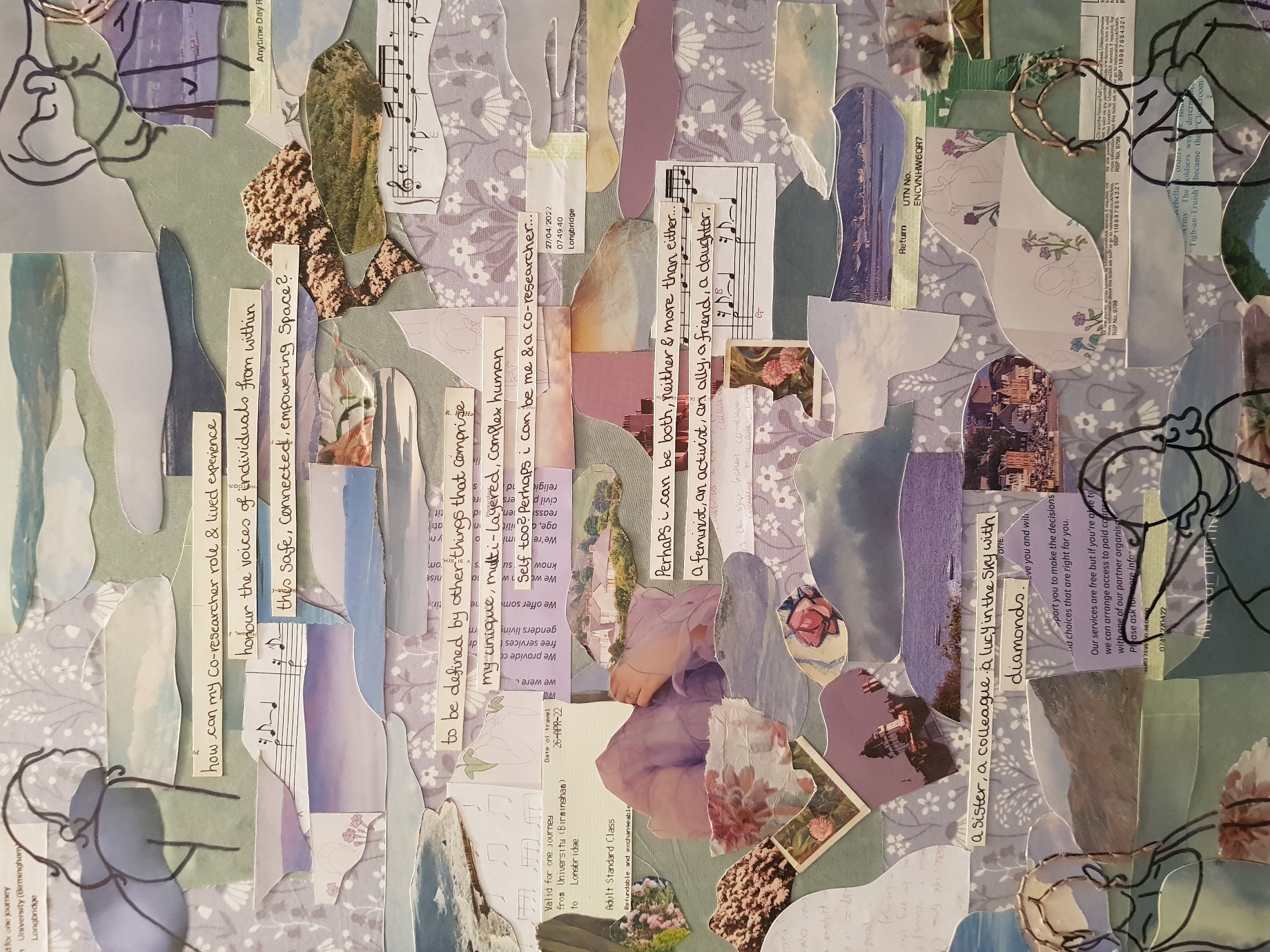
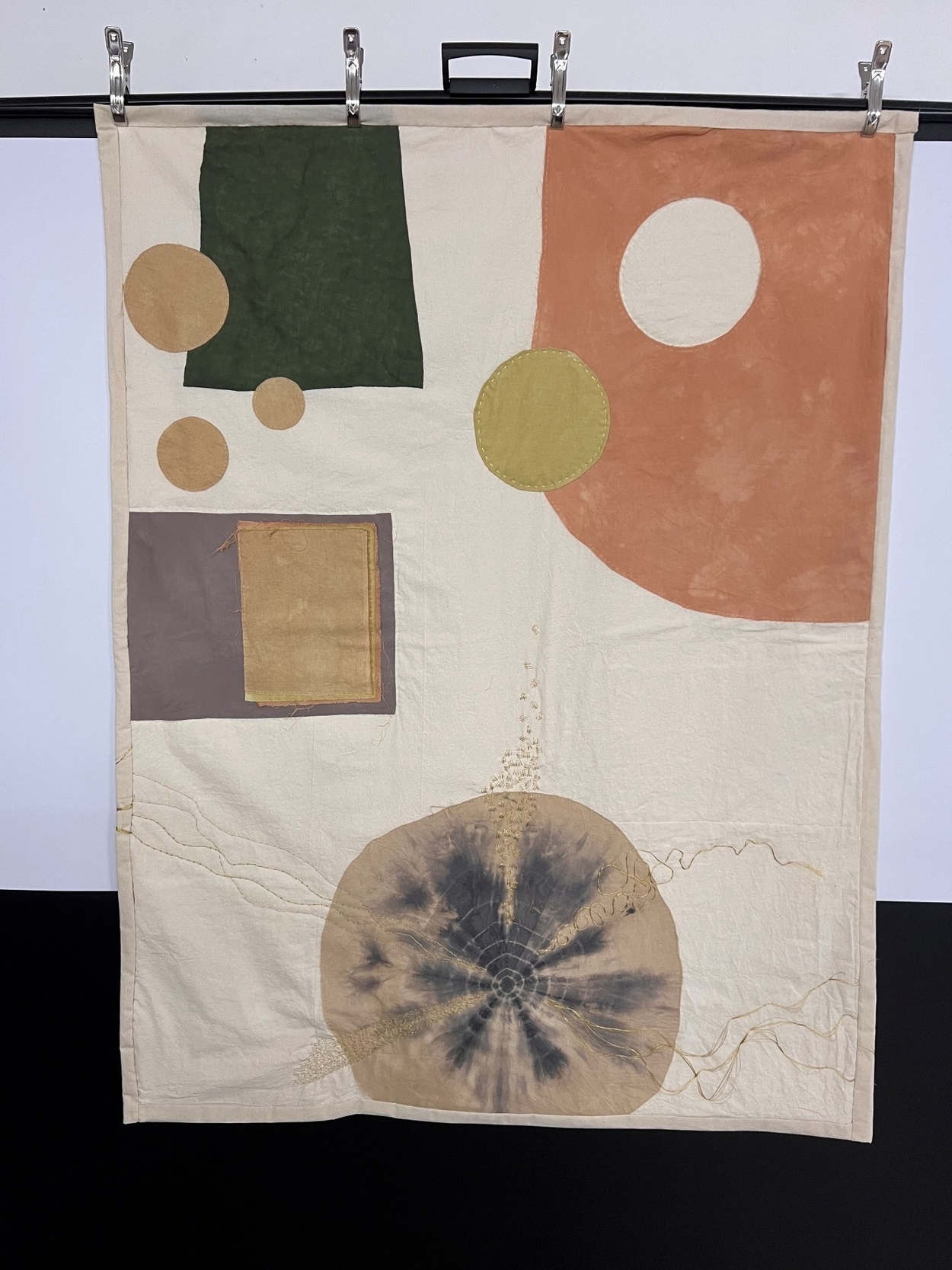
As stated, the research team were successful in obtaining additional funding to conduct an add-on evaluation of the co-research element of the project. It was two-fold, firstly, each co-researcher collaborated individually with an artist to create a piece of artwork that enabled them to reflect on and evaluate their experience of taking part in the research [see photos]. This process took time, not only to find the right artist, but to talk through and reflect with them on the process of being part of the research and considering how these experiences could best be represented in a final piece. One co-researcher struggled to engage in this add-on evaluative project, which highlighted an issue they had grappled with: “as a black woman, the only black woman on this project…I often felt like my experiences as a black woman were often not taken into full consideration when it came to the extended work group pieces…[it] continues to highlight to me the importance of intersection of race and the unique stories of black and brown women when it comes to sexual violence.” This view demonstrates the need to consider the intersecting identities of all those involved in a study, which must pervade all elements of co-research. It equally exposes a challenge, in that methods of evaluation need collaboration to ensure they are reflecting the wishes of all parties in an equitable way.
For most, the evaluation process enabled individual and deep reflection on the journey through our study, using enabled creativity in an intentional way, as one co-researcher explained, “there’s something about being creative…just thinking imaginatively. Trying not to be too literal…being representational about life and where I am and the journey through PROSPER”. The collaborative work with the artist took around three months to complete and used a range of artistic mediums. Each co-researcher also produced a written narrative to accompany their artwork, explaining both the creative process and its meaning. The completed pieces and narratives were presented at a final conference near the end of the project, overseen by the facilitator. The pieces of artwork were all very different but with shared themes around connection, vulnerability, growth, transparency, intersectionality/identity and shared experience. These themes reflected the principles that the charter promoted for effective co-research. Besides individual evaluative projects, there were two shared spaces for reflection; working with an author to create a shared ‘narrative’ of co-researcher experiences in the study and a movement piece which was a visual representation of the journey we had been on. All were presented at a final conference as a powerful, creative evaluation.
Little evidence exists of a facilitative ‘bridging role’ being used in co-research, although a recent, co-created research project with medical students, championed ‘project coordinators’, who fulfilled a similar role, suggesting that filling the gap in this way may be increasingly popular (Han et al., 2025). The candidate possessed all the qualities that the co-researchers had desired, was known to one or two of the co-research team from previous projects and was trusted. On reflection, having someone in a facilitation and co-ordination role from the outset, to be engaged in the interview process for co-researchers and to mediate, advocate and motivate on the study, would have added great value. However, the later appointment did offer the co-researchers the opportunity to help choose ‘their shepherd’ and get the ‘right fit’ once the relationships and trust between the co-researchers had been established.
It was important that the facilitator worked in a trauma-informed and trauma-insightful way. As noted, the co-researchers felt strongly that the facilitator should have knowledge and a good understanding of the impacts of sexual violence. It was important that they knew the myriad ways in which trauma presents as well as an understanding of both the uniqueness and the similarities of recovery journeys. It was also key to the co-researchers in our project, that the facilitator had the ability to ‘see people in 3D’. In other words, they could help draw out those individual, and collective, strengths and skills within the group that were beyond and distinct from their sexual trauma experiences. The co-researchers also wanted someone who brought pastoral support skills whilst simultaneously recognising and valuing the power and potential of peer support. In practice, the appointed facilitator offered a high level of understanding around trauma and healing and provided sensitive and insightful pastoral support, which some co-researchers sought and others did not. In addition to the extensive and embedded support offered by the academic mentors, the co-researchers were supported by the facilitator to think about their own emotional responses to the work, and how best to ensure their emotional safety, offering a layer of support that augmented that of the academic mentors.
As with the co-researchers, the facilitator role had its own unique impact on the facilitator, who had to navigate the complexity of their role which represented a challenge at times. One significant challenge the facilitator faced was the push/pull feeling of being on the periphery of the study, employed in the final stages of it, separate to, but deeply connected to, the co-researcher role, not fully in it but not fully outside of it. Talking about sexual violence had an emotional impact on the facilitator, which was felt as strongly as it might have been by the co-researchers. Despite this, the facilitator worked hard to maintain professionalism and emotional distance to manage the complexity and emotive nature of the work. External support for the facilitator in the form of robust clinical supervision became key to ensuring that there was ample space to discuss the challenges inherent in the facilitator role. Future studies should build this provision into their budgets, as it is essential for supporting the challenges inherent in the facilitator role.
Empowerment and amplification of voice
The safety of co-researchers and the encouragement of self-care in place during the study was largely positive and provided a considered level of support. Whilst this created shared benefit, to the co-researchers and to the research, the co-researcher involvement in some aspects of the research came with an inherent risk of presumption, paternalism and patronisation. The perceived need to amplify the voices of co-researchers could be interpreted as a presumption that the co-researchers had not already had their voices heard. The anticipated need for upskilling could be seen as a presumption that co-researchers needed empowerment, new skills, development, and learning. The term ‘empowerment’ is present in most participatory research papers, with the assumption that this is a desired and laudable aim. However:
It is important to avoid pseudo-partnerships in which students [co-researchers] are misleadingly labelled as partners when they have limited power and influence in decision-making, serving mainly to carry out the instructions…
Empowerment needs to be negotiated and genuinely offered, with a relinquishment of power from research teams and a willingness for co-researchers to assume responsibility. There was a real risk that the academic researchers paternalistically believed they knew ‘what was best’ for the co-researchers. For the most part, empowerment was felt and experienced as genuine by the co-researchers, for example: “Being part of this project has been incredibly empowering… the core team were skilled at asking, listening, hearing, and taking my views on board … empowerment being a core value.” Another co-researcher stated: “I felt a genuine desire from the whole team to really hear what survivors had to say.” Furthermore, empowerment related to intersecting aspects of identity, not privileging co-researcher lived experience: “Whilst our lived experience was the backdrop to our co-researcher roles and there was enormous respect for that at all times, we were valued for so much more - for everything else, besides our trauma, that we brought to the table. For me that was empowering and non-reductionist and so welcomed.” These views demonstrate that empowerment was authentically felt, without tokenism or paternalism, with a challenge to other teams embedding co-research to ensure this is genuine.
A crucial consideration that we discussed and revisited frequently in the study was the assertion that people with lived experience of sexual violence are, contrary to prevailing reductionist stereotypes, much more than their lived experiences. Victim-survivors, as either co-researchers or participants in the study, are three-dimensional human beings who embody a plethora of personal and professional experiences and skills. For those applying for the paid posts as co-researchers, it was entirely possible that they were individuals already feeling empowered, knowledgeable, skilful, seen, and heard. Research informed by the lived expertise of victim-survivors should recognise their multi-layered abilities beyond their abuse experiences (Kennedy et al., 2022; Lambert & Carr, 2018) and avoid playing into individualised ‘sickness’ approaches to harm (Vera-Gray et al., 2021). A constant dialogue with those with lived experience will explicate pre-existing skills, knowledge and understanding and create a basis for joint planning around meaningful involvement in research. Their intrinsic value is communicated by the provision of multiple opportunities to be involved holistically in research, and this can be measured by how those with lived experience ‘feel’ throughout their journey in the research process. Therefore, engaging with how they feel is paramount.
Most of those who took part as co-researchers on the study felt that all aspects of their intersectionality had value: “The experience was empowering and holistic, recognising me as a whole individual rather than solely through the lens of my lived experience. It felt like a genuine privilege to be part of.” Any study where there is a lived experience element immediately contains a risk of tokenism. Box-ticking to show surface level co-production represents an abuse of power. Effective collaboration and participation by those with lived experience can never be perfunctory in nature, but instead demands investment, time and thought to make it effective. A careful and informed approach is needed. True co-production leads to increased and negotiated power for all stakeholders. There is increasing acknowledgement that addressing the inherent power dynamics existent within teams of co-researched projects is crucial to creating co-produced research which recognises and embraces the political, financial and social influences upon such projects:
…we have shown that co-production processes can end up reproducing, rather than mitigating, existing unequal power relations and that they often do not contribute to societal transformation. At the basis of these failures lies a strong tendency to depoliticize co-production. (Turnhout et al., 2020, p. 6).
Potentially detrimental power dynamics within this project were addressed via the provision of non-directive spaces for discussion and reflection. Research team meetings were always inclusive, felt accessible and transparent and helped to dispel any feelings of difference between the research team and co-researchers. Although the research methodology was set out prior to co-researchers joining the study, there was room for co-researchers to have some influence over the direction of the study as it progressed, which created growing feelings of equity and efficacy.
Fundamental to the co-researcher role in our study was to offer a lived experience perspective on all aspects of the research (as presented in Table 2). This was particularly the case in the victim-survivor interviews, with potential commonality of the lived experience of SV. Through this, co-researchers were able to amplify the voices of victim-survivors, whilst simultaneously amplifying their own, leading to a generalised feeling of their involvement ‘making a difference’. The offer of “voice” and “choice” for co-researchers is considered important in collaborative research, and when these are provided and promoted, the healing of trauma may be an outcome (Horan et al., 2022, p. 526). The co-researchers entered the project with differing rationales for taking part and it soon became apparent that none of the co-researchers had anticipated the lasting sense of value they would obtain from their involvement. By creating, or improving, a strong sense of self-worth and value – the co-research demonstrated the antithesis of abuse. All aspects of involvement combined to instil a sense of freedom and connection with others. The co-researchers reported feeling visible and valued and this felt liberating.
Enabling a shift towards empowerment, a lifting of individual and collective voice and a breaking of the silence that abuse creates was a shared aim of all those involved in the research. Encouraging and offering the space for this within the project also brought with it the welcomed acknowledgement that those with lived experience are found within all professional spheres – oftentimes undisclosed and ‘hidden within plain sight’ and that they bring a wealth of skills in addition to lived experience. Working with those with lived experience in a strengths-based manner openly embraces these individuals and their experience without fear of censure, discrimination, or othering. It works against the prevailing force that perpetuates silence.
Accountability and transparency
With an understanding of empowerment and a recognition of the need for careful consideration of ‘giving voice’, we now look at more practical issues around involvement of those with lived experience. Typically, the co-researcher element of a study is not integrated from the outset of a project which represented a challenge. Whilst lived experience perspectives informed the study design and funding application through wider PPI engagement, co-researchers were not employed until the research design was finalised and ethical approval was complete. This was about a year after the study commenced. Whilst it was set up this way through funding restrictions, it could have resulted in co-researchers feeling ‘less than’ or ‘othered’ which risked safety or tokenism explored above. Other researchers (Ramage et al., 2024), have highlighted the need for an overhaul to funding of co-research, perhaps in a way that a project is truly co-researched from inception to conclusion:
When limited resources constrain co-production, the challenge of ensuring genuine, impactful partnership is often more challenging than is generally recognised…changes [are] needed to provide an environment that understands, accommodates and adequately resources co-production. (Ramage et al., 2024, p. 3).
The study was gaining momentum long before co-researchers were engaged. The primary reason for not employing co-researchers earlier was that the academic team made assumptions about co-researchers possibly not being interested in the early-stage work. The challenge in this has been recognised, and the research team have reflected that there would have been considerable gains in involving the co-researchers earlier. This tension seemed apparent to the co-researchers: “decisions had been taken by the core team. This difficult balance between the inclusion of co-researchers, alongside the need to acknowledge that they are not employed and cannot devote as much time to the project seems to me to be a perennial issue.” The challenge lies in addressing the power imbalances directly, as this “can only be resolved, day to day in a dynamic way by highlighting the tensions each time they surface”. In conclusion, all advocate for the involvement of co-researchers at the earliest point possible in a project. Moreover, in an ideal world, funded co-research positions (perhaps from core funding at research establishments) would be available from the very outset of the research design, before project and grants-based funding are secured.
As a result, it took a while for the co-researchers to feel embedded and integrated into the established team of researchers, some of whom knew one another from previous projects. The welcome from the research team was however warm and genuine. It soon felt that the co-researchers were considered as integral to the wider research team as the academics were, which engendered feelings of trust and connection. This was despite the ‘privilege’ of the research world which can (consequently), feel exclusive to those who are not scientists or academics and where success is measured through academic outputs, which, in turn, can devalue the involvement of lay-researchers (Rycroft-Malone et al., 2024). In our study, it soon became clear that there was appetite amongst the co-researchers for involvement with many other aspects of the research. The learning the team particularly took away from this was that it is important not to presume that co-researchers will be less interested in the earlier parts of research – such as setting the objectives, developing funding applications and ethical approvals:
Co-production of a research project should begin from the collective production of research aims and questions. This allows non-academic co-producers to address issues they consider to be of direct importance for their lives; and to frame them in ways appropriate to their knowledge and lived experiences (Bell & Pahl, 2017, p. 106).
It became evident that the co-researchers were in fact keen to participate in all aspects of the project and when the time came expressed a clear desire to engage with data analysis - both qualitatively and quantitatively with the coding and thematic analysis and the writing up of results. Ultimately, there were very few aspects of the research that remained untouched by a co-researcher. The openness and willingness to have co-researchers partake in multiple tasks perpetuated a feeling of genuine transparency. There was little delineation of tasks between those that remained solely the remit of academics and those reserved for co-researchers. The benefits that emerged from this and the learning that came from truly shared involvement proved to be positive and co-directional.
As regards the facilitator role, this was a demanding one and, in many ways, the facilitator became accountable to everyone - the Principal Investigator and the core research team and the co-researchers too. This was a unique space within the team and was used effectively to help communicate and balance issues when they arose. Mediation, empathy and keen listening skills were key to the facilitator role, as was having the ability to implement pragmatic and timely resolution of issues. It soon became apparent that organisational and logistical skills were also essential. This included IT efficiency, having a good network of contacts to draw in third parties for assistance, and the foresight and ability to keep sight of the overall aims and plan accordingly. As these elements fell very much to the facilitator, the co-researchers were free to use their skills to concentrate on capturing learning in real time, without having to consider the ‘nuts and bolts’ of getting things done or having to consider in too much detail how the final outputs (primarily the artwork) would come together.
All co-researchers had other responsibilities (including employment), which limited the time they could give to the study. The facilitator on the other hand, was appointed to ensure that the processes and outcomes for the artwork were met. When any of the co-researchers needed time out – the facilitator liaised with them until they felt able to step back in. The facilitator added great value by adapting and flexing in a variety of directions, based on the needs of the study. By linking with all members of the research team, there was little that was deemed ‘out of scope’ of the facilitator role and their skills were fully utilised as the needs of the project demanded. Sometimes, and perhaps inevitably, this meant there were occasions when boundaries became blurred, and the vastness of tasks appeared overwhelming. Whilst overwhelm is not desirable and must be mitigated through having appropriate support and supervision in place, the blurring of boundaries inherent in the facilitator role should in fact be a desired aim within co-produced research:
Co-production (like other collaborative research traditions) involves a process in which boundaries between academics and non-academics become blurred (Armstrong et al., 2022, p. 1001).
There was a guidance and advocacy element also to the facilitator’s role and within this, a much-needed skill was to be able to constantly switch between considering the bigger picture of the research, whilst retaining focus on the small details, and allowing reflective time to process the challenges of dealing with sensitive subject matter.
Throughout the study and more so near the end, transparency regarding the co-production process, its successes and less successful elements and what was to be learned, came in the form of a comprehensive evaluation. An honest and open-minded appraisal was needed to explore the joys and challenges from both individual and collective perspectives. It is essential to recognise that joys and challenges may be ‘felt’ or perceived as success, or otherwise, in differing degrees by individuals, and especially by those with lived experience who have been invited to become involved in the research by virtue of that lived experience. To encourage participation in the evaluation process by all the research team members, and all co-researchers, the provision of opportunities for confidential input was essential, whilst simultaneously encouraging and enabling open discussion and debate. Given the array of additional commitments, needs and abilities held by the team it was also important that the evaluation methods were flexible and adaptable in a way that ensured representation for all. It was in the evaluation stages of the research that creativity and joyfulness became evident and greatly desired by the co-researchers, and this is more fully explored in the next section.
Creativity and joyfulness
Many research projects regarding victim-survivors of sexual and interpersonal violence have the goal of improving routes to recovery and enabling victim-survivors to live lives full of potential and joy. ‘Joy’ is a rarely identified term in the extant and increasing body of literature on participatory research, although “enjoyment” is referenced (Rabe et al., 2025, p. 6) in relation to working with children as co-researchers. Creativity and joy often go hand in hand, even in research studies with a trauma-focus:
Much of the research we discussed is connected to trauma…Through the creative aspects of this workshop, we were able to make a space for joy…here the purpose was to embrace this humanity, in all its messiness and find the joy of connecting with each other as people and as researchers. (Finding a Space for Joy. Research Culture at Leeds., 2024)
It therefore felt fitting to provide the co-researchers a chance to evaluate their contribution to the research through the creative means, detailed above, alongside contribution to the final NIHR project report and production of a charter for co-researched projects. The undoubted transformative and healing power in creativity is not universally recognised within academic research, nor within therapeutic approaches to those with lived experience of sexual violence. The joy in partaking in the study was evident in one co-researcher’s accounts: “Yes, yes, yes! Being part of PROSPER has brought me great joy and opened up additional creative opportunities. I feel truly grateful for being part of an important piece of research, with a group of principled, smart and fun colleagues.” Evaluation of creative methods in research is relatively new, and needs further development (Phillips et al., 2024). There is a need to challenge attitudes that dismiss creative research approaches and outputs as ‘flights of fancy’ or appropriate to children’s evaluation, and which sometimes require greater justification to ensure that ‘taxpayers’ money is being well spent’.
The separate additional funding that was applied for and allocated to the co-researcher evaluation enabled detailed collective and individual evaluations of the study. Once the individual art projects were completed, the co-research team went on a retreat weekend to present and explore their creative pieces. Each of the five women exhibited their artwork whilst presenting a narrative about the creation of each piece and elaborated on the successes and challenges of participating in the study. As stated above, the co-researchers commissioned a choreographer/dancer and creative writer to listen to the narratives and to see the artworks. From this, a dance and poetic-narrative piece was co-produced, which represented varying aspects of the co-researcher group experience.
For most of the co-researcher group, the whole creative process was a unique opportunity to ‘dig into’ feelings around participation and to delve into the successes and challenges, over time, and in meaningful ways, both collectively and apart. Creativity in co-research is recognised as a fulfilling way to enhance wellbeing and a sense of accomplishment:
…arts-based methods are fulfilling for co-production partners, from the joy of creating, the acquisition of new skills, the forging of connections with other partners through shared creative activities, through self-reflection and insight. (Langley et al., 2022, p. 198)
For others however, it proved more challenging and less joyful. Asking them to connect to their own experiences of the study, which had at times been painful and traumatising, or exposed a lack of research knowledge, made some feel less able to engage in the process. The opportunity to engage in a creative process for this group highlighted that creativity is not always a joyful process for all and can instead create an unwelcome pressure to conform and to engage. It remains important to avoid the assumption that everyone will be equal within, and enjoy, a creative process. Recognition of individuality must prevail over presumed collective enjoyment.
Most of the co-researchers felt it was a privilege to work alongside artists to represent experiences in creative and fun ways. Whilst much sensitive research is emotionally-laboursome, the promotion of creativity and fun as an important outlet provides welcome opportunity to witness the ‘lighter’ side of research. The value of creativity is gradually becoming recognised more widely, as a transformative force:
It is the presence of the creative process that transforms life. If we imagine healing as an energy of creative transformation, then our goal becomes the cultivation of the salubrious force that finds its way to people in different ways. (McNiff, 2004, p. 18).
The potentially sensitive nature and moments of discomfort should however not be a block to becoming involved in a project. Whilst it was undoubtedly emotionally demanding, the opportunity for expressive creativity on the retreat weekend promoted deep-seated and strongly felt connections with others through the sharing of new and exciting experiences. This became a much-treasured by-product of the weekend, even for those members that found the creative elements more challenging. The transformative force was evident from one co-researcher’s perspective: “I found my time as a lived experience co-researcher, healing and reflective.” From another co-researcher: “I had not anticipated the way I would change through the experience of being a co-researcher. It allowed me to own my experience of sexual violence, to know that I cannot change it, but can use it for good…and that is enough.”
We encourage others undertaking sensitive research to remain open to novel and unexpected benefits and respond to these in creative ways so that insights are harnessed for future use:
It is as important to value the impacts of working co-productively that come from the research process as it is of the research findings or outputs. For the research process, some of these impacts will emerge rather than be planned: new relationships, expanded social networks and increased confidence of members of the public may be some examples. In terms of the research findings or outputs, working co-productively will produce knowledge and an end result that will often be different from that produced by a conventional academic process. (Hickey et al., 2018, p. 13).
For those requiring greater scientific evidence of the power of creativity, the body of knowledge around this is rapidly growing within the neuroscience and trauma spheres and can be found if one is willing to look. Bolwerk et al. (2014, p. 1), for example, report that using real-time MRI brain imaging concluded “Our findings are the first to demonstrate the neural effects of visual art production on psychological resilience in adulthood”.
Conclusion
In this concluding section, we reflect on the principal question that we sought to address, in terms of the opportunities for learning regarding co-research. As a whole research team, we recognise that there is significant shared learning from the co-research element of the study and we have worked collectively to identify positive examples for each principle through use of the Survivor’s Voices Charter (Perôt & Chevous, 2018). Our collective experience, from perspectives of the core research team, facilitator role (shepherd) and co-research team has demonstrated that whilst co-research has often been framed in terms of ethical approach, inclusion and justice, which are all necessary to have in place, our experience highlighted something more profound, that co-research, when carefully facilitated, can feel intentionally counter to the dynamics of abuse. This is a substantial outcome of our reflective evaluation on the study.
Additionally, we propose that this article contributes to theoretical development in the field of co-research, as it extends feminist, trauma-informed and intersectional frameworks by demonstrating how these operate in practice using the example of a large, national study. Specifically, we propose that co-research in the context of sexual violence can be understood not just as participatory or inclusive, but as a commitment to ethics that addresses power imbalances, restores fragmented identities and holds trauma experiences sensitively to invert abuse dynamics. This shifts existing theoretical framing of co-research from a model of inclusion to one of intentional relational transformation where voice, safety and trust are central theoretical principles. We suggest that future co-produced research should explicitly model aspects of our own co-research as a space which fully engages with the joys and challenges of co-research, recognising its dual role in generating knowledge but also fostering conditions that may support empowerment. In some cases, co-research may hold a wonderful gift, a restorative and healing potential for co-researchers.
It is our aim that each future co-produced research study will have something unique to offer in terms of learning – because projects, and the individuals ‘at the table’ will be unique. It is important to continue to add to the pool of knowledge and understanding regarding co-research and to share openly and honestly our experiences and evaluations. We recommend that transparent, honest and critical evaluations by co-research teams about their co-research experiences are added to the body of knowledge in this area. In this way, co-produced research can continue its strides towards becoming a well-informed and fully inclusive norm.