Introduction
Alarm bells are blaring on economic, political, social, and ecological fronts, indicating that many of our institutions are not well. This paper examines how creative, participatory, hands-on practices, radical love, and care can open up spaces to find meaning, connection, and agency in this messy moment.
Participatory Action Research (PAR) is the foundation of our work providing students, educators, and community members with skills to pose critical questions and engage in participatory and creative practices that lift up and map root causes, challenges, lived experiences, and potential solutions of social issues that directly concern them. As members of the Action Research Network of the Americas’ Youth Participatory Action Research Community (the ARNA YPAR ARC), our international, intergenerational collective engages in formal and informal research to unpack and advocate for issues, concerns, possibilities, and dreams aligned with STUDENT EXPERIENCES. The group itself is a form of resistance against the isolation we often face in higher education and the dehumanization we see, feel, and struggle to disrupt both in and outside of our institutions.
YPAR is defined as “the practice of mentoring young people to become social scientists by engaging them in all aspects of research, from developing research questions and examining relevant literature to collecting and analyzing data and offering findings about social issues they find meaningful and relevant” (Mirra et al., 2016, p. 2). This is also about engaging young people as co-researchers and supporting them to use their lived experience to create new knowledge (Stickney et al., 2025). This, in turn, ensures YPAR helps participants understand their inherent power to make change (Ayala et al., 2018). Scholars across YPAR literature offer different models and stress different aspects of the process, with some exploring more adult-led processes (Mirra et al., 2016; Yang, 2009) and others arguing for more youth-led actions (Irizary & Brown, 2014; Torre et al., 2008; Tuck et al., 2008). As a collective, our group is interested in building trust and community between young people and adults, so youth feel comfortable naming problems in their schools and communities. Adults, then, play a role of mentor and supporter, following young people’s lead while also being accomplices and critical partners, both helping the project move forward and raising important considerations along the way. In essence, we seek to bring to life theoretical and empirical YPAR findings from Kirshner (2015), Ayala et al. (2018), and Zion et al. (2025) in an intergenerational, international online connective space. During our work together, we identified the following key PAR tenets as crucial for community building, knowledge production, and changemaking:
-
Taking a collective approach: Engaging in research with, not on folks is an important aspect of PAR work. Grounding the work in a collective approach includes check-ins, honest conversations, brainstorming, reflection, research, and feedback loops with students. Engaging in dialogue, action, and reflection is grounded in Freire’s (1970/2005) concept of praxis.
-
Centering student lived experiences: Students are the “lived experts” on our team, directly interacting with and affected by their environments. Given the challenges many students face, our approach is trauma-informed, creating and tending spaces where educators and students can more fully show up, bringing their strengths and struggles. By centering insider knowledge, PAR “asserts all people’s right to research” (Fine & Torre, 2021).
-
Taking an asset-based approach: As the “lived experts” in their own lives, we celebrate youth strengths to counter adultism and society’s deficit view of young people. Thus, PAR practices act as “a humble gesture towards knowledge justice” (Fine & Torre, 2021). Students inherently bring an abundance of knowledge (Moll et al., 2006) and community cultural wealth (Yosso, 2005) into PAR projects. An asset-based approach aligns with Freire’s (1970/2005) ‘problem posing’ vision for education. A much-needed adjustment to the ‘banking’ approach of many educational institutions today.
-
Centering the intersection of identities: Given the strengths and struggles of each student, intersectionality is a guiding force for the research design, taking into account youth lived experiences at the intersections of race, social class, gender, sexuality, national status, ability, etc. In addition, we critically reflect upon our own intersectional identities to better understand our positionality in relation to power, privilege, and oppression.
-
Challenging the status quo: PAR provides tools to challenge antiquated systems never meant to work for youth. A key component is creating spaces for students to collectively leverage artmaking, creative mapping, and other participatory tools to critically examine what is not working, while also imagining learning environments where youth needs are seen, heard, and celebrated (Radina & Schwartz, 2019; Rivera-McCutchen, 2021; Stephens, 2024).
With the polycrisis, and immense amount of uncertainty and chaos in this current moment, we find ourselves leaning more heavily on creative, art-based, and adjacent practices to realize these PAR tenets. In this messy moment, the arts create a bridge to have honest conversations. In addition, “bodies are not the only designators of oppression, but all oppression is enacted on the body” (Taylor, 2018, p. 81). Art provides a means to disrupt, uncover and share with others the ways in which we or folks we are in solidarity with experience oppression. Therefore, art acts as a powerful mode of resistance, providing space to engage the body in liberatory praxis through creativity and imagination.
Rather than presenting a single study, this article draws together several examples of arts-based participatory practices implemented in higher education and youth-centered learning environments: mural-making, international video dialogue, media beholding, photovoice, and blogs and painting. By examining these practices collectively, we identified how artistic practices support key dimensions of participatory action research: building relationships, sharing power, expanding forms of expression, promoting critical engagement and social justice, and encouraging imagination. Together, these examples illustrate how arts-based interactive practices can humanize pedagogies centering student experiences while strengthening the collective and reflective dimensions of PAR.
Mural Making: Art as Community Building
I (Rachel Radina) use various artistic representations in all of my classes and PAR projects. Art is a powerful expression of resistance that can light the path to liberation, it expresses the lived experiences and realities of youth, tapping into different ways of knowing and being. There is a deep connection between the creative process and vulnerability. It requires showing up, taking up space, and taking risks; “vulnerability is the birthplace of love, belonging, joy, courage, empathy and creativity” (B. Brown, 2012, p. 34). When we use art as a medium for social struggle we join a long history of folks who have used art to “recreate out of the disorder of life that order which is art” (Baldwin, 1962, p. 7). Art can communicate what we may not yet be able to articulate. Creativity and imagination are powerful tools that can be used to “talk back” to the oppressive conditions that seek to stifle our ability to move forward in solidarity (hooks, 1989). As expressed by Kelley (2002), “the map to the new world is in the imagination” (p. 2). bell hooks (2010) describes imagination as a powerful tool and a mode of resistance. Tapping into our imaginations through art is a way to uncover a collective consciousness, allowing us to envision different ways forward.
PAR is not one thing and does not merely serve one purpose. PAR spans boundaries that other approaches to research and pedagogy may not or cannot. It fosters a space for the “not yet” and to lean into what Robin D. G. Kelley (2002) calls “Freedom Dreaming.” It is a space for radical love and resistance (Radina & Schwartz, 2019). However, to create space to dream and stretch our imaginations beyond the present moment and conditions, we must trust one another. Engaging with youth about issues impacting their lives requires a great deal of trust. One way to build trust is to be vulnerable with one another and lean into the discomfort of disclosure. We engage in vulnerability when we share parts of ourselves with students. We humanize both ourselves and our students and in doing so, we work to create what Baldwin (1962) calls “a more human dwelling place,” thus cultivating a more authentic space in classrooms and communities. Brené Brown (2012) powerfully states, “What we know matters, but who we are matters more. Being rather than knowing requires showing up and letting ourselves be seen” (p.16). There are many ways to ensure students can bring their whole selves into our classrooms. One way to build a more inclusive and humanizing space is through individual and collaborative art.
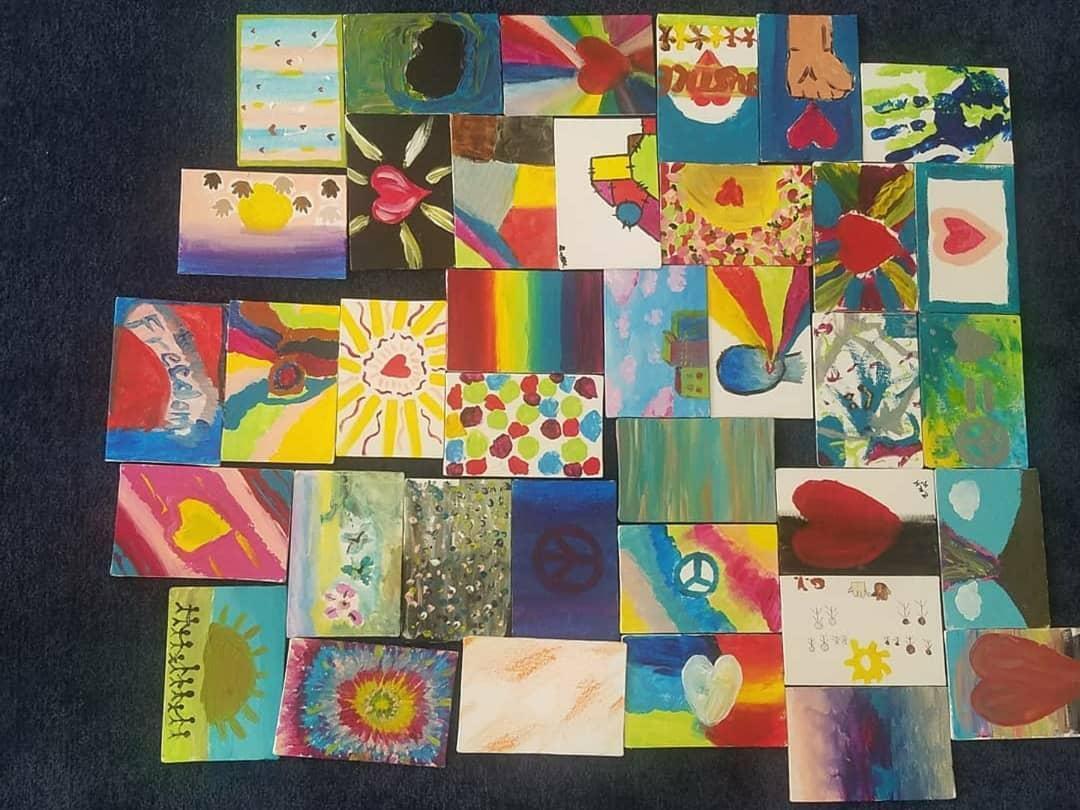
One art project I have used in various settings is a theme-based collaborative mural. This process was introduced to me by a brilliant colleague and friend, Dr. Esther Maria Claros Berlioz. I will share one example from a cohort of college students engaged in a year-long PAR project. At the beginning of their PAR journey, they spent the weekend getting to know one another and engaging in critical dialogue about the work ahead. On the first night, we asked the students to create an individual art piece representing their conceptualization of social justice. The steps we used to engage in this activity are as follows:
-
Students respond to a theme-based prompt centered on social justice: Take the next 5-10 minutes to reflect on how you personally define social justice. Consider what has shaped and formed your definition.
-
Afterwards, we engage in a conversation about social justice and what it means to us.
-
Students are then given small canvases, paint, and paintbrushes so they can express their conceptualization of social justice through art.
-
Once the art pieces are completed (and the paint is dry) we begin a process of putting the pieces together.
-
Students are asked to arrange their art pieces into one large mural.
-
One-by-one, students come up and share something about their piece and place it within the space provided for the mural. Once this process is complete, you can either take a picture and let students take their individual pieces or affix the individual art pieces to a piece of wood or other medium so it can be displayed. In this case, we chose to save the art piece through a photo.
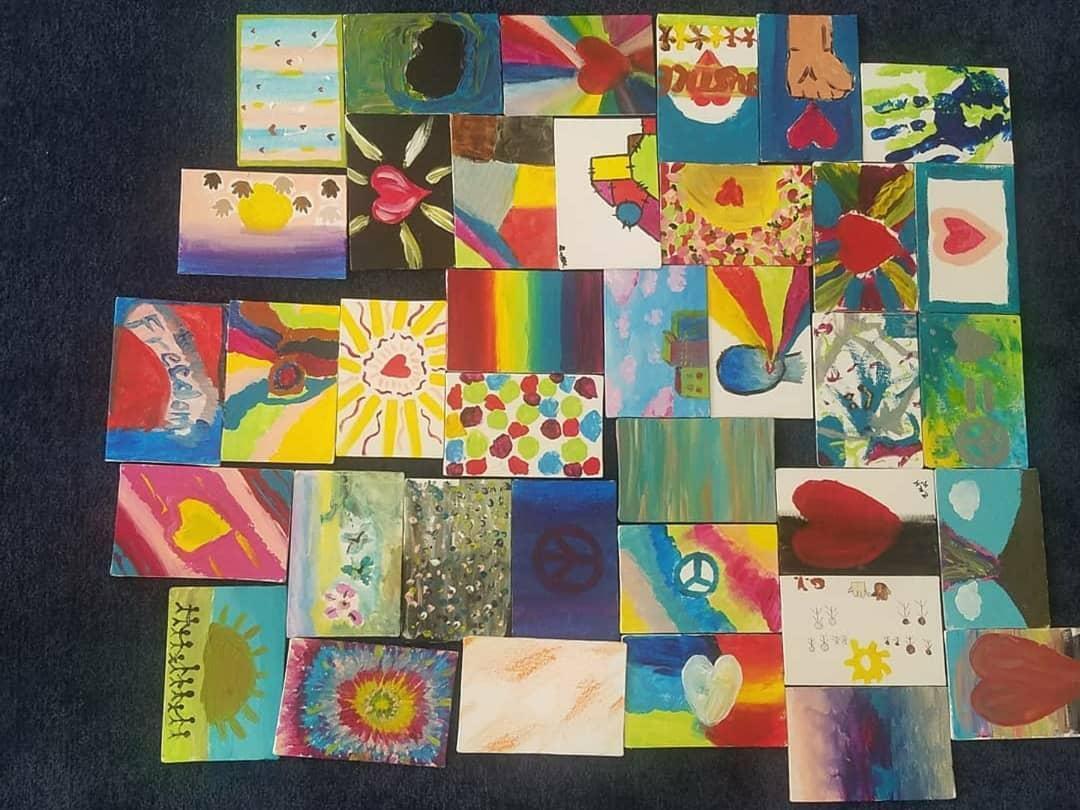
When describing their individual pieces, many students shared the meanings of the colors and the placement of the images. Although some look simplistic, the students’ thoughtfulness was evident in how they described the intricate details of their art. It’s also important to note that many of the students were fearful of this activity, stating they were not artists. Engaging in this activity required vulnerability, and sharing the meaning of their artwork was emotional and moving. This activity drew the group closer together and opened space for meaningful conversations over the weekend retreat. In addition, the mural making process taps into two of the tenets of PAR identified in the introduction by collectively creating art and centering the lived experience of students by asking them to share their conceptualization of social justice.
This activity is a great way to facilitate a discussion about social justice or any other topic. I have also used this activity to unpack how folks conceptualize community. The co-creation of art based on a shared vision is a powerful way to express the intention of a group. This also taps into different ways of knowing and expression. When we choose to engage in “traditional” ways of knowledge production, we risk leaving folks out of the conversation. Art opens up space to include folks with different means of communication and can disrupt language barriers within a group. Cultivating and deepening a sense of community is a foundational step when engaging in PAR. Community can also be created in the virtual space: tapping into the possibilities of transnational collaborations, building relationships, and expanding means of expression to mirror the PAR community we have created among our collective.
International Video Dialogue: Building Transnational Community
PAR is about connection, as young people interact with each other, develop relationships with adults, and explore researcher-participant dynamics within their own inquiry (Stickney et al., 2025). As the COVID-19 pandemic illuminated, physical connection is not always safe, feasible, or possible. Still, youth longed for community and connection during the Pandemic (Hipolito-Delgado et al., 2021). Online video platforms can be a valuable tool throughout the PAR process, specifically in forming community, conducting research, and capturing reflections on the action research process. While the pandemic and its shift to online learning provided a logical sandbox to play with online video in PAR activities, we are interested in leveraging the technology to connect youth researchers from different parts of the world, working in different time zones, and speaking different languages.
Research Context
In 2023, we (Dane Stickney and Konstantinos Sipitanos) engaged in a project linking youth doing action research in the United States and in Greece (Stickney et al., 2023). We asked the youth to record a video in which they introduced themselves, shared a synopsis of the YPAR project, and discussed the external (or systems) change that resulted, as well as any internal (personal) shifts. While the youth engaged in vastly different projects and achieved varied impacts, they developed mutual respect for each other’s approaches and methods. The fresh, international connections also appeared to energize youth researchers in both countries, injecting a jolt of excitement into their work.
Online Videos in Action
Through the ARNA YPAR community, youth in Colorado and Greece expressed interest in interacting with each other. After securing student assent and parental consent, we leveraged Flipgrid for this project. The site allowed us to privately invite participants, meaning videos could only be seen by project participants. At the time, Flipgrid was a free product, but it has since been absorbed by Microsoft and is now fee-based. If done again, we would ask youth to record files on their phone and upload to a secure, private online drive shared only with consented participants.
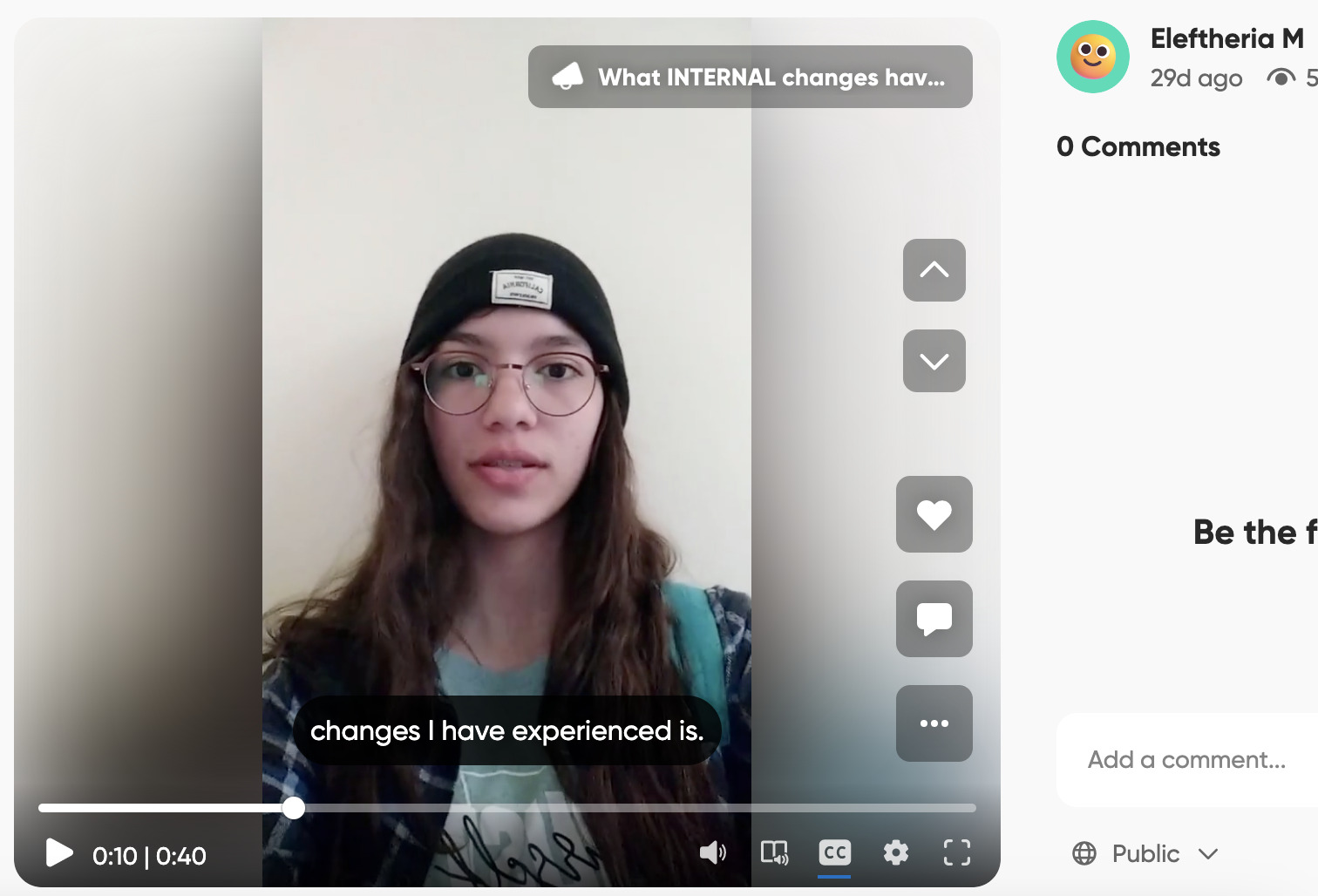
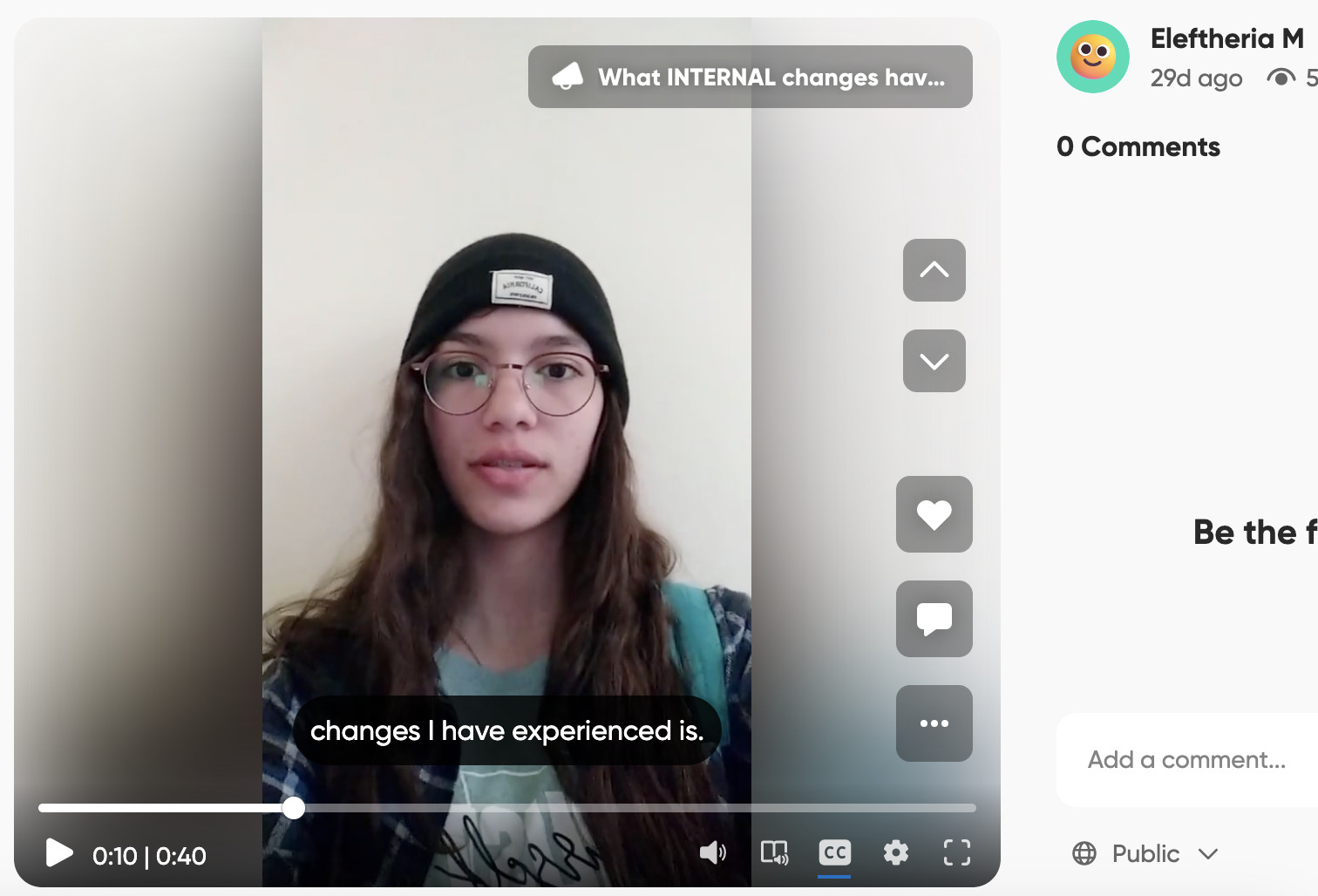
Next, we wanted the youth to introduce themselves and their work in one prompt. Then, we asked only two additional questions. What external changes have you made through YPAR? We gave examples like changing school policy or working with elected officials to lower speed limits on a street. Then, what internal changes have occurred by doing YPAR? We asked them to think about things that shifted in “their heads or their hearts,” like feeling more self-confidence. We asked youth to respond to each of the three prompts with a 3-minute limit for each video.
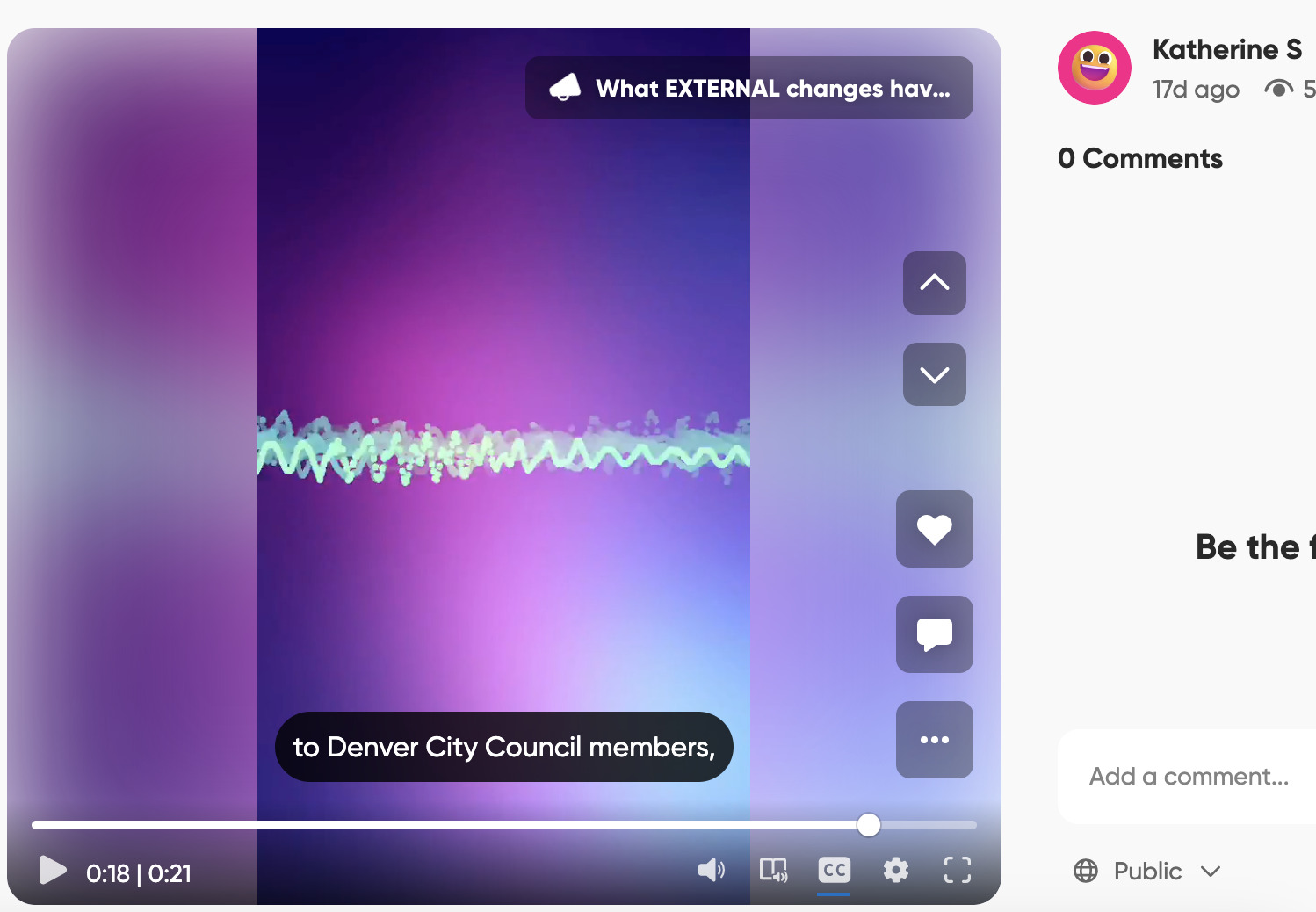
We gave the youth two weeks to respond to the prompts and engage with each other’s videos, responding accordingly. Youth could record video responses to one another or type written comments in response. Students reported that they appreciated the soft timeline. It allowed them to casually watch each other’s videos and workshop their own responses. While translation options were available, the Greek students chose to speak in English. Again, extra time and unlimited recording attempts were welcomed support for the youth speaking in their second (or third or fourth) language. Youth could also watch the videos an unlimited number of times, which was a useful support across language and culture. Additionally, the young respondents could make artistic choices about how to appear in their videos. Options included showing their own, unaltered image, choosing an avatar (with cat ears or dog noses), or projecting a soundwave graphic that oscillated as they spoke. They could also choose to share their full real name or pseudonyms. Their voice, however, was unaltered in their responses.
As a means of joint analysis with international scholars and youth participants, we collectively watched all the videos, noting patterns and themes, resulting in three key findings about the effectiveness of video in facilitating interpersonal connections. First, the answers about external changes were the most vague. European students spoke about general social issues (education, infrastructure, etc.) while the US students spoke about a transportation project they had just completed. Second, the question about internal changes proved more powerful and insightful. One American student said:
I have changed a lot due to YPAR. I personally have gained a lot of confidence. I love who I am now because I have made these changes. Because of YPAR, I am a lot more vocal about my emotions. I am much more vocal about who I am and how I feel. YPAR, in a sense, saved me because I was able to make it where I was not afraid. I, because of YPAR, fixed the things I needed to fix and made myself feel safe.
A Greek student shared:
I believe that knowing each other is very good for both countries because we communicate with people that are living so far, and also we improve our English. The benefits of sharing our work are that we have similar projects and it is more interesting working with people from other countries because you learn new things. You learn about different cultures, and you make new friends.
Finally, the youth seemed very comfortable sharing via online videos, and they expressed that their fluency with social media and technology was a large factor. The videos prompted students to connect across different countries, time zones, and cultures. This does, of course, implicate adults, who may lack the same kind of online fluency, to keep up with the ever-changing technological world.
Looking forward, while this powerful project underscored the potential of online videos bringing young people together, we realize it was more of a reflective exercise. Adults also chose the modality and set the questions. In the future, we would like to leverage online videos as a youth-led way to collect interpersonal data in their own research inquiry. We would like to see them draw upon their own expertise to choose an appropriate platform, develop their own research questions, and hold each other accountable for responding. Online videos can connect youth during times of turmoil but also across distance, time, and language.
.png)
Connecting online through videos is one way we use creativity to tap into YPAR’s transformative potential. The online connections expand traditional forms of expression, using video and various filters or alterations to allow youth across distance and culture to share their lived experiences in a way that feels personally authentic. In this regard, online videos are a tool that can drive relationships between young people who would not have normally interacted. While technology can certainly pose threats and risks to the YPAR process (we are especially concerned with social media, AI, and forms of digital surveillance), online videos proved a fun and generative approach. Next, we share another creative, participatory example of how media images can be used to sharpen interpretive skills and develop both individual and collective critical consciousness and engagement with social justice topics.
Beholding Media in Our Media Saturated World: A Springboard for Honest Conversations
PAR methods operate at several levels. There are methods used for formal PAR projects, and then there are the everyday inquiry practices that can be implemented in the classroom and other settings for the purpose of diversifying participation, critical thinking, and collective engagement and action. This section centers on the latter, an everyday PAR inquiry practice. PAR stands out as a method for enlisting multiple stakeholders in reflection, engagement, planning, design, and action (Kulick, 2025; Kulick et al., 2023). While these methods have a strong foothold in community organizing, they also have great potential in the classroom for students to collectively unpack and produce knowledge in this messy moment. I (Rachel Kulick) unpack the creative practice of beholding media as a springboard for students to be “with the mess” of these charged times and potentially process aspects of the mess into something generative.
This work emerged from a Contemplative Practices Fellowship. I was drawn to the notion of “beholding an image.” Could students behold media they consume regularly as a portal to more presence of mind, heart, and body? I had no idea how it would play out as I worried this practice could backfire in reinforcing and increasing the already massive media diet of most university students. At the same time, media literacy is powerful in meeting students where they are as a springboard to critically unpack thoughts, emotions, experiences, and imagination in a more fluid, interactive manner than more traditional teaching, learning, and research approaches.
I started this approach with a class called Media and Education through which students develop skills in media literacy to critically evaluate how messaging of race, class, gender, age, nationality, and other social forces infuse media representations, and reinforce, complicate, and/or resist dominant culture. With a focus on the contemplative intervention of beholding and deep listening, I set the aim/hope that students acquire hands-on skills in how to actively see, behold, listen, and critically think about a media piece. This practice can provide a space for students to sharpen their interpretations of media experiences through multiple levels of learning, including the content, bodily experience, self-reflection, and the socializing implications of the media piece.
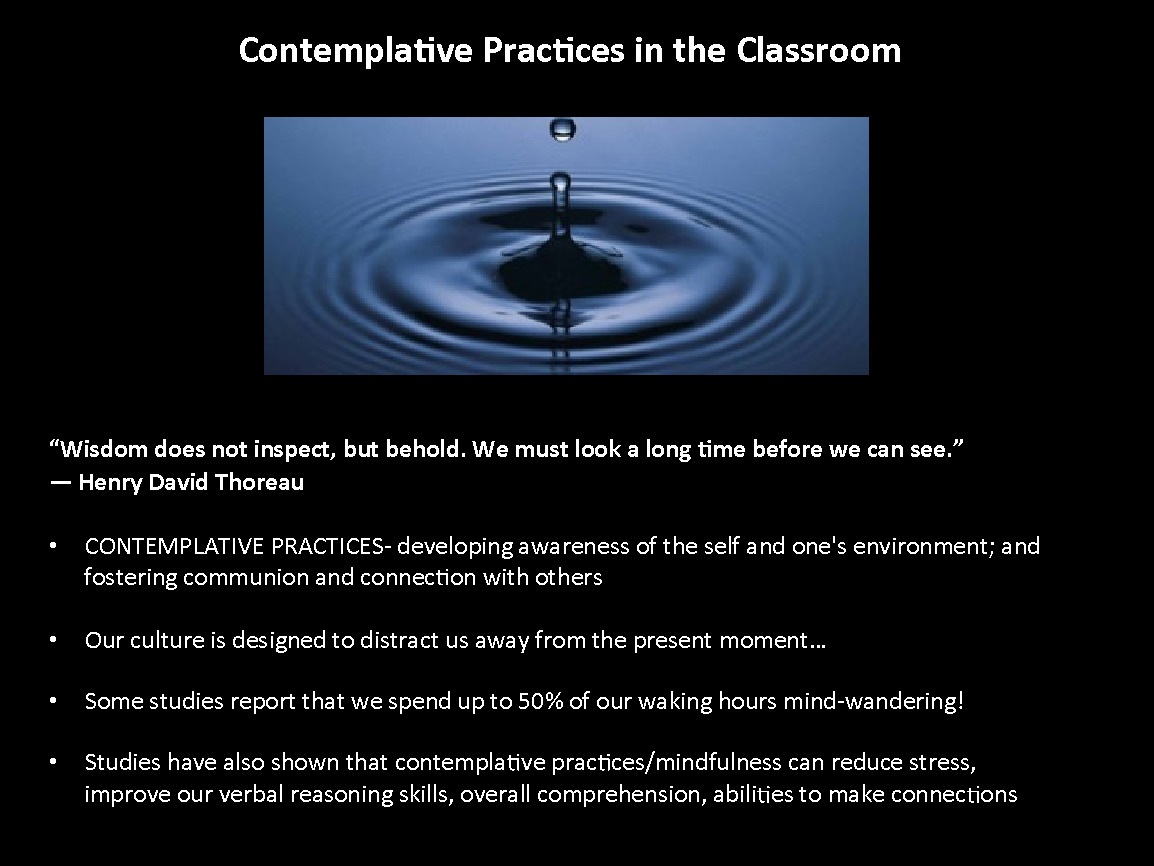
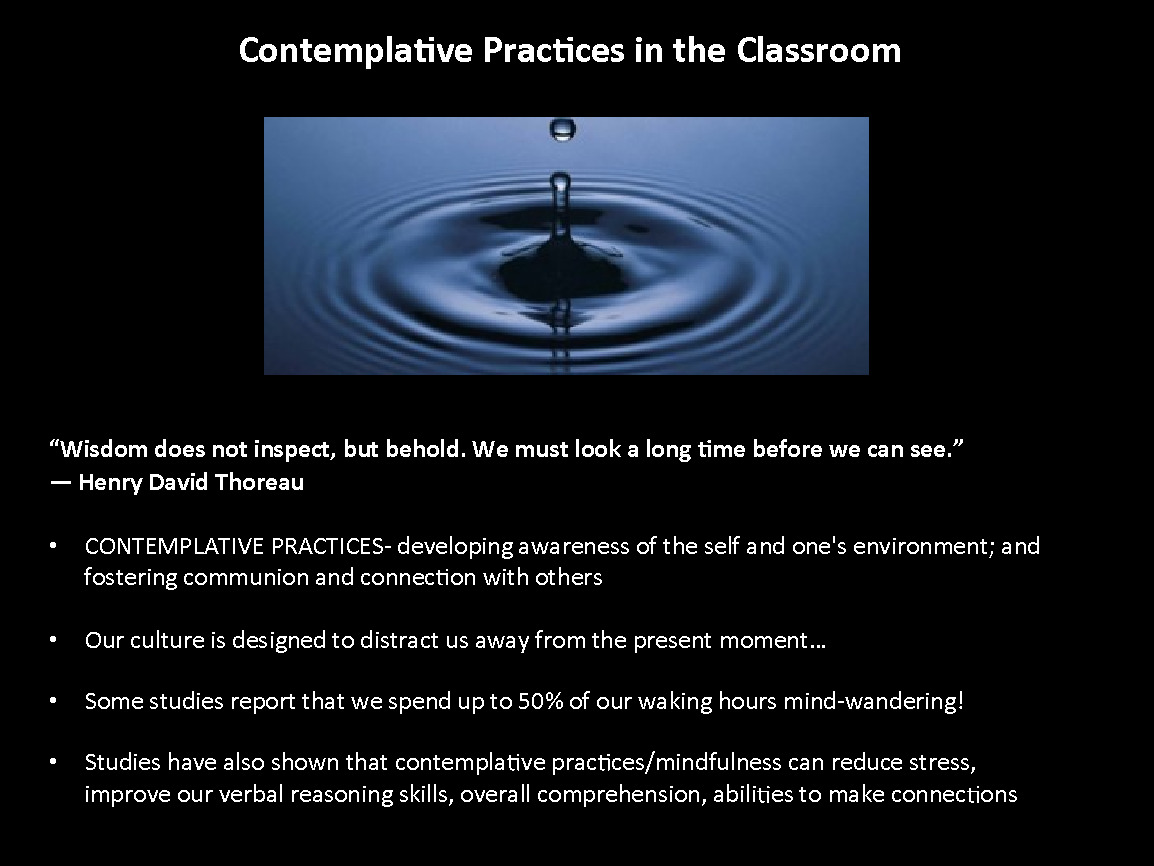
Since the training, this practice has become a touchstone in most of my classes. I introduce students to the notion of contemplative work in the classroom using the following slide to explore the possibility of “beholding an image,” to potentially slow down and take a deeper inventory of what we see and hear in our media-saturated society (See Figure 4).
From there, I used the following format to behold a media piece:
- PART 1: I am going to take you through a guided exercise in beholding with a focus on the images you will be observing for the next 10 minutes.
SEEING: Focus on the image, what do you see? Pay attention to the forms, shapes, lines, colors.
CONTENT: Focus on the content, what are you noticing?
FEELING: Pay attention to your body. Are there any specific bodily experiences you are having? What are you feeling? Do any specific feelings come up?
EXPERIENCE: How do these images remind you of something important in your life?
-
PART 2: Next, students have a few minutes to journal their intellectual, somatic, emotional, and other responses to the image.
-
PART 3: Students work in deep listening groups of 3 to share their responses.
-
PART 4: Full class discussion of image, insights, and their reflections on the process.
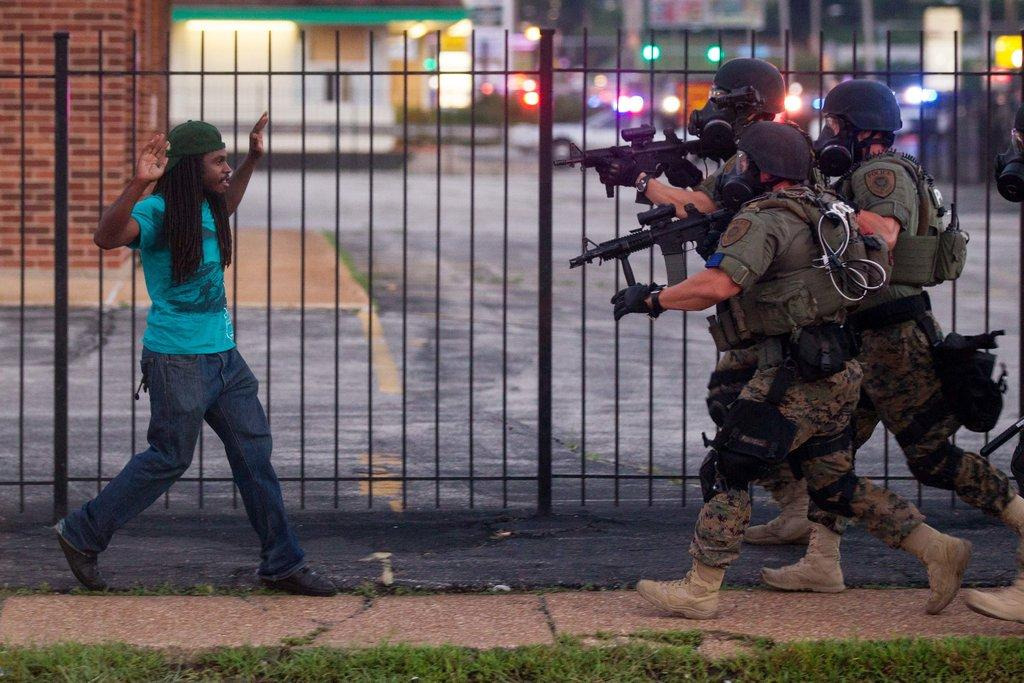
To illuminate how this unfolds in the classroom, I want to zoom in on how we used this format to behold a highly circulated image from the Ferguson protests in response to the police killing of Michael Brown (See Figure 5). In this image, a mass of police officers in military gear with assault rifles, masks, body armor, and camouflage attire approach a man with his hands up.
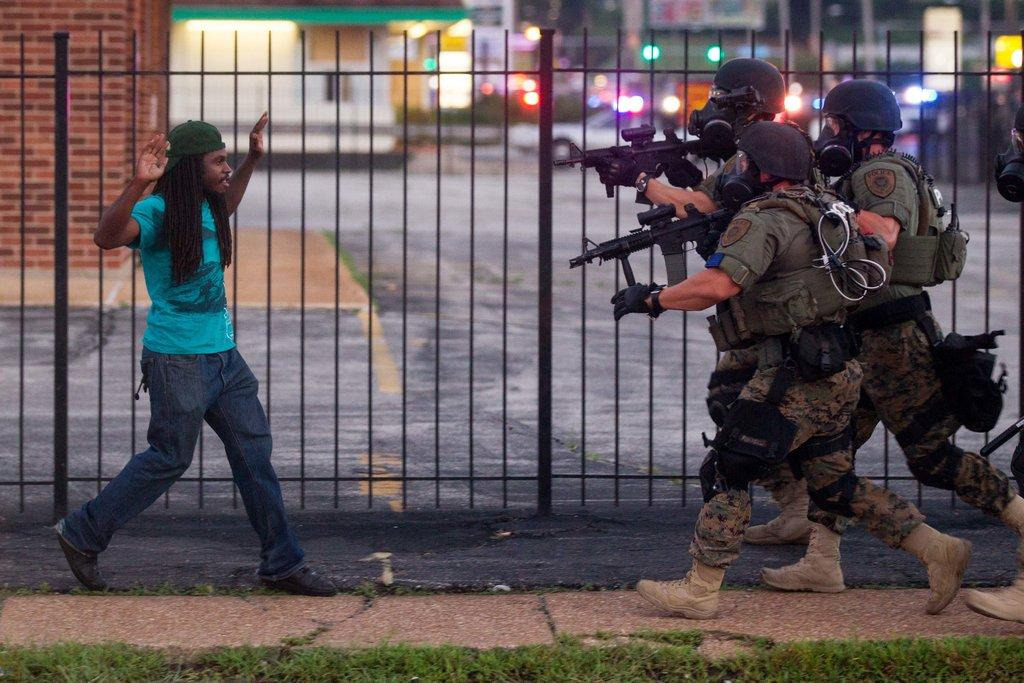
The image prompted a rich discussion which included watching footage of a White police officer, Michael Slager, shooting and killing Walter Scott, a 50-year-old Black man in North Charleston, South Carolina. The two pieces represented an interesting juxtaposition as students had more background information to interpret the Scott footage. With the Ferguson image, I provided students with limited context, which resulted in many students indicating they needed more information to make sense of what was happening. This request signaled they were beginning to develop some critical informal PAR inquiry skills insofar as they were NOT immediately jumping to stereotypes and assumptions. Here is a sampling of student free-writes from the exercise
First thing that comes to mind when I look at this image is the power of racial dominance. Here’s this black man put in a vulnerable situation. Who doesn’t seem to be a threat at all, other than his skin color. Being attacked and harassed by these fully armed police officers. The gate in the background brings idea of imprisonment/jail. Representing control and where black men belong. Which explains why they are the highest people incarcerated in America. Race plays a big role in it.
When I see this image, I look at it and I am affected by it because I can’t believe that our society has become so about white power. Even though it has been years since slavery and Jim Crow laws, we still act this way. I am white so I will never be able to truly understand what it is like to be judged by my skin tone. I will never truly understand the struggles people face everyday.
For whatever reason, this exercise was very hard for me to feel any sort of emotion or allow my brain to slow down and only focus on the image. I find my meditation through regular exercise and taking care of my body doing something like this is hard for me when I can’t connect with the image, especially I was thinking about all the other things going on…It was just very hard for me to get to the core of my feelings today
In general, the beholding practice yielded rich reflections and conversation. The image and footage were a springboard for students to engage in Paulo Freire’s (1970/2005) notion of problem posing and praxis-based learning. Problem posing is a key ingredient in any PAR project. And for the purposes of PAR inquiry practices, the classroom can shift into a space where students have more agency and interest in sharing multiple and often differing perspectives.
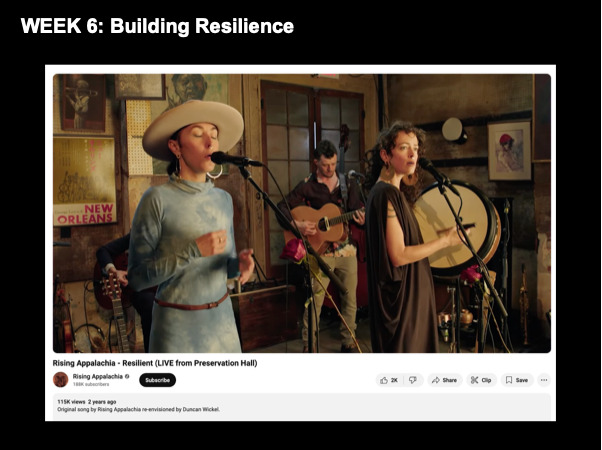
Fast forward to the spring of 2025. I used this beholding practice with students in my class, Principles of Sustainability. I handed out the lyrics and played the video/song, Resilient by Rising Appalachia to introduce the concept of resilience (See Figure 6).
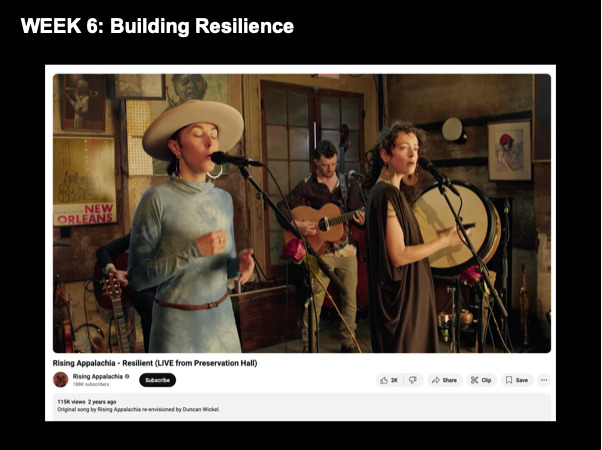
Students wrote and shared about a number of verses that resonated. We spent some time on the verse, “My voice feels tiny and I’m sure so does yours but put us all together we make a mighty roar.” Many students expressed feelings of overwhelm, powerlessness, outrage, and anxiety in this political moment with the Trump presidency and administration. Drawing from Brene Brown’s take on grounded theory, beholding this song was a space for students to explore the possibilities of emergent thinking. For Brown, grounded theory involves:
-
"Acknowledging that it is virtually impossible to understand grounded theory methodology prior to using it,
-
Developing the courage to let the research participants define the research problem, and
-
Letting go of your own interests and preconceived ideas to “trust in emergence” (2025).
Creative practices such as beholding a media piece are more poised than conventional research methods to set the terms of an informal PAR inquiry, problem posing, and emergent thinking process as participants and students draw from within themselves and their experiences. Brene Brown’s recent work on empathy asserts that people cannot step into another person’s shoes. For her, empathy is about listening and believing another person’s experience without judgement or the need to fix them. This applies to beholding practices as a portal for critical engagement while honoring multiple experiences and perspectives. Another way to honor different experiences and intersectional identities is through the use of Photovoice.
Photovoice as Methodology
Photovoice originated as a participatory action research method in the early 1990s, using visual images captured through photography, this approach has historically been employed with marginalized populations to document and communicate community concerns and problems, with the goal of fostering dialogue and promoting change. It is utilized in areas such as youth leadership development (Madrigal et al., 2014), environmental education (Sprague et al., 2021), and student learning research (Ciolan & Manasia, 2017). Beyond its role as a research methodology, photovoice can also serve as a powerful teaching tool, particularly in creating spaces for critical discussions about issues affecting marginalized populations in contemporary society and classrooms (Bazemore-Bertrand, 2021; Edwards et al., 2012; Schell et al., 2009). As an action researcher, I (Michelle Vaughan-McGovern) was drawn to integrating photovoice into my graduate-level global foundations course to facilitate critical conversations with my students about global issues that affect students and classrooms both locally and internationally.
Course Context
To contextualize the use of photovoice as an arts-based instructional strategy, it is helpful to provide background on the course. Foundations of Global Education is designed to explore the nature and scope of global education, examine how diverse national cultures influence educational practice, analyze international responses to common educational issues, and investigate how global social problems are represented in curricula. As a fully online course, sparking meaningful dialogue within discussion boards can be challenging, photovoice provides a unique vehicle for students to share their perceptions and interpretations of global issues, moving beyond opinion statements and centering their lived experiences.
Photovoice in Action
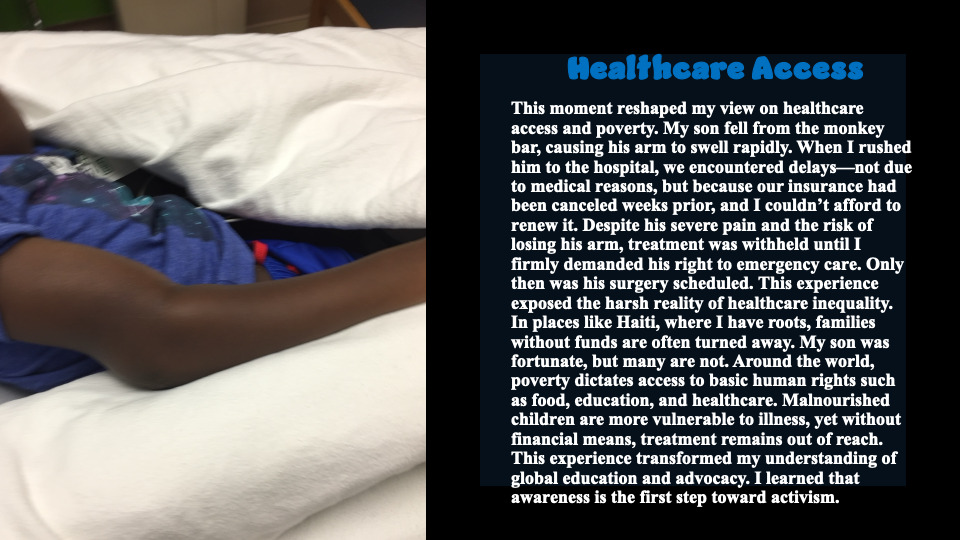
In this course, students complete five photovoice assignments based on the following themes: globalization, poverty and hunger, environmental concerns, gender equality, and children’s rights. Before the first photovoice assignment, students engage in a preparatory module that includes readings on the methodology (Edwards et al., 2012; Schell et al., 2009) and viewings of documentaries such as The PhotoVoice Film and Photovoice: From Snapshots to Civic Action. Students are then asked to submit two original photographs accompanied by detailed captions that explain their connection to the theme. These are posted to a discussion board where students interact and comment throughout the week. Incorporating multiple photovoice assignments serves two purposes: it enables the instructor to provide feedback applicable to subsequent assignments, and allows students to learn from peers’ approaches, deepening their own application of the methodology. As an example, one student’s submission for the poverty, hunger, and disease module combined personal experiences with healthcare access, reflections on her family’s experiences in Haiti, and a discussion of how these insights shaped her perspective on awareness and advocacy in addressing global issues.
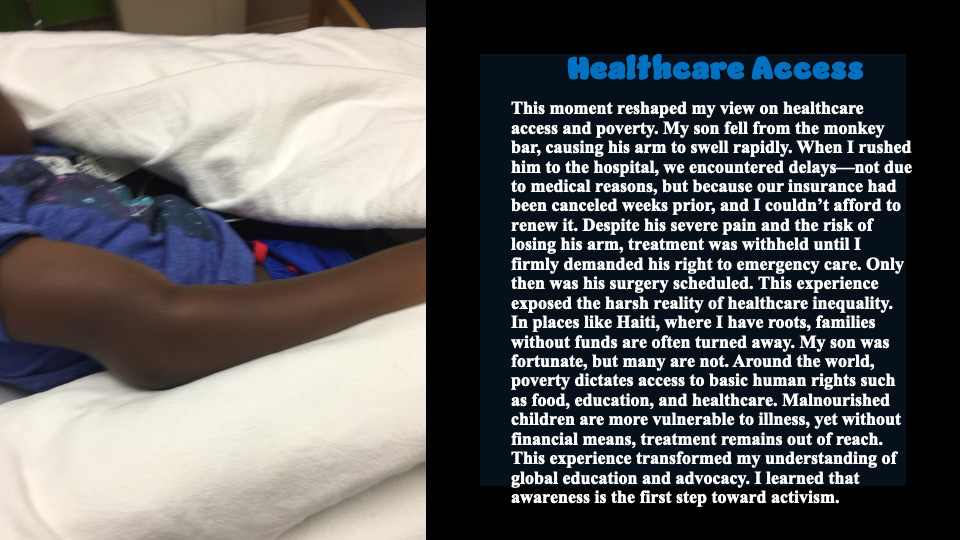
To illustrate how these assignments foster connection and critical conversation, the following is a peer’s response to that post:
The story you tell is enlightening and challenging. The fact that financial constraints might prevent access to healthcare, which is so necessary, is heartbreaking. Emergency care shouldn’t have to be fought for, especially when a child’s health is involved. As you noted with Haiti, your story brings to light a reality that far too many individuals encounter, not only in the United States but also around the world. Unquestionably, poverty and access to fundamental human rights are related, and your story of overcoming adversity to become an advocate is motivational. The first step is, in fact, raising awareness, and anecdotes like yours aid in the drive for urgent change. I appreciate you sharing your story.
One of photovoice’s core objectives is to inspire action from the dialogue generated by shared images. To embody this principle in teaching, I include a culminating assignment called The Future of the World. In this assignment, students articulate concrete actions they can take within their classrooms or educational contexts after completing the course. This is a meaningful opportunity for me, as an educator, to see how the course content and conversations shape students’ paths toward advocacy and peace. At the end of the course, a student shared how our time together influenced their own teaching goals.
I believe by allowing my students to see similarities and differences between themselves and children their age in different parts of the world, their cultural awareness will be increased and this can help to develop their respect for norms and customs that are not a part of their own. The goal is to intentionally create a shift from seeing each other as separate from them, rather to highlight our unique differences while seeing a common identity between ourselves and others from around the world.
Across the examples shared, we see several patterns emerge that reflect the key tenets of PAR introduced earlier. These artistic practices intentionally centered students’ lived experiences and the intersection of their identities, while adopting an asset-based lens that positioned participants as knowledge creators. Working collectively, students engaged in dialogue and interpretation that challenged dominant assumptions and questioned the status quo. With these PAR tenets as a guiding framework, the next examples demonstrate how creative practices were used across contexts to center students’ lived experiences and continue to challenge dominant narratives.
Blogs and Paintings: Participatory Tools in Higher Education
This section presents another participatory practice that unfolded in higher education. Unlike more established and creative methods like Photovoice, the approach described here centers on the use of blogs and paintings. Both became powerful tools for student reflection, dialogue, and expression, helping to link theory with lived experience. Blogs enabled students to articulate their voice in a dialogic digital space, while paintings provided a non-verbal, embodied meaning-making form.
Broader Context
The action took place at the National and Kapodistrian University of Athens in the Department of Early Childhood Education (TEAPI), Greece’s prominent faculty of education. From their third year onward, students participate in extensive practica and thematic weeks on issues such as intercultural education, gender, social inequities, and museum pedagogy. This environment provides fertile ground for experimenting with action research. Accordingly, the students participated in a project in the Elaionas refugee camp, constructing a whole supporting program for refugee children and their parents (Androusou, 2020).
Immediate Context and Participants
The practice was implemented in spring 2021-2022 with twelve female students in the elective seminar Critical Pedagogy II. Unlike smaller Universities in Greece, students here did not know each other well, reflecting the more fragmented social environment of Athens. A central part of the project, therefore, was cultivating trust and a safe climate for sharing.
The Practice
The seminar spanned 12 sessions organized into two cycles.
First cycle: Students engaged with major critical pedagogical theorists (Stenhouse, Freire, Bernstein, Giroux, Bourdieu, hooks) through texts and presentations (Aubrey & Riley, 2020). They connected theories with their own school and practicum experiences.
Second cycle: Guest academics and practicing teachers shared approaches such as classroom assemblies, ecological practices, and democratic pedagogy. These visits unfolded as discussions rather than lectures, encouraging students to position their own voices in relation to theory and practice.
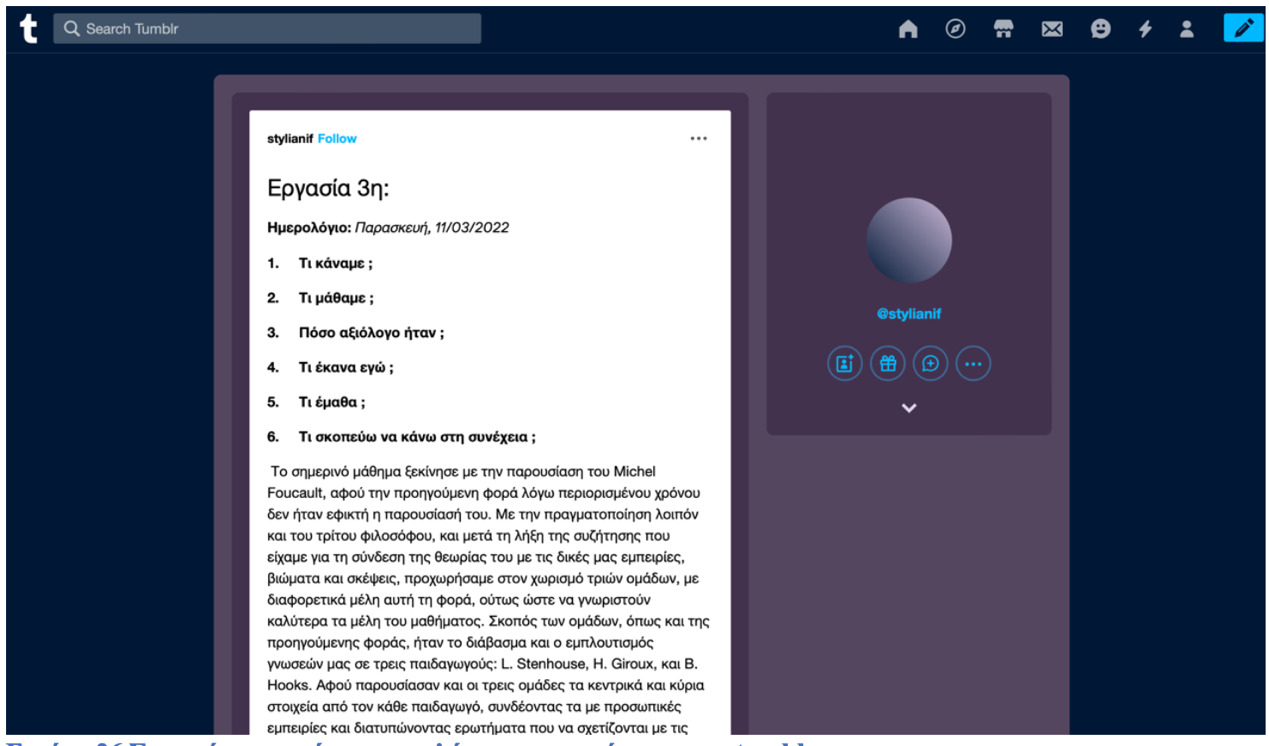
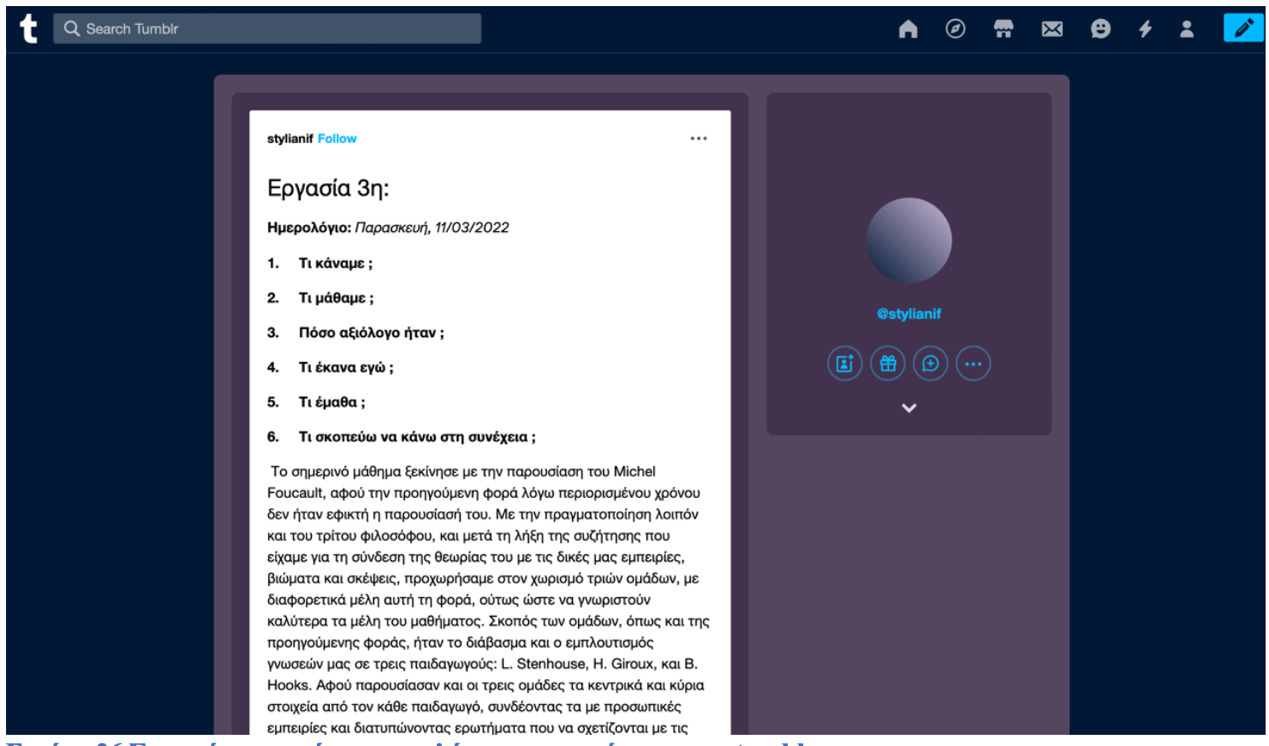
Throughout, students kept reflective journals in the form of blogs in Tumblr. The blogs were treated as methodological tools of action research, not just diaries. Students articulated this in their reflections.
The reflective journal was a central methodological tool of action research. In it we recorded thoughts and emotions. Beyond that, however, we reflected on the course itself and on our own contribution to its development. For it to serve adequately as a research and scientific tool, it was necessary to analyze and gain a deeper understanding of all journals. (Student reflection)
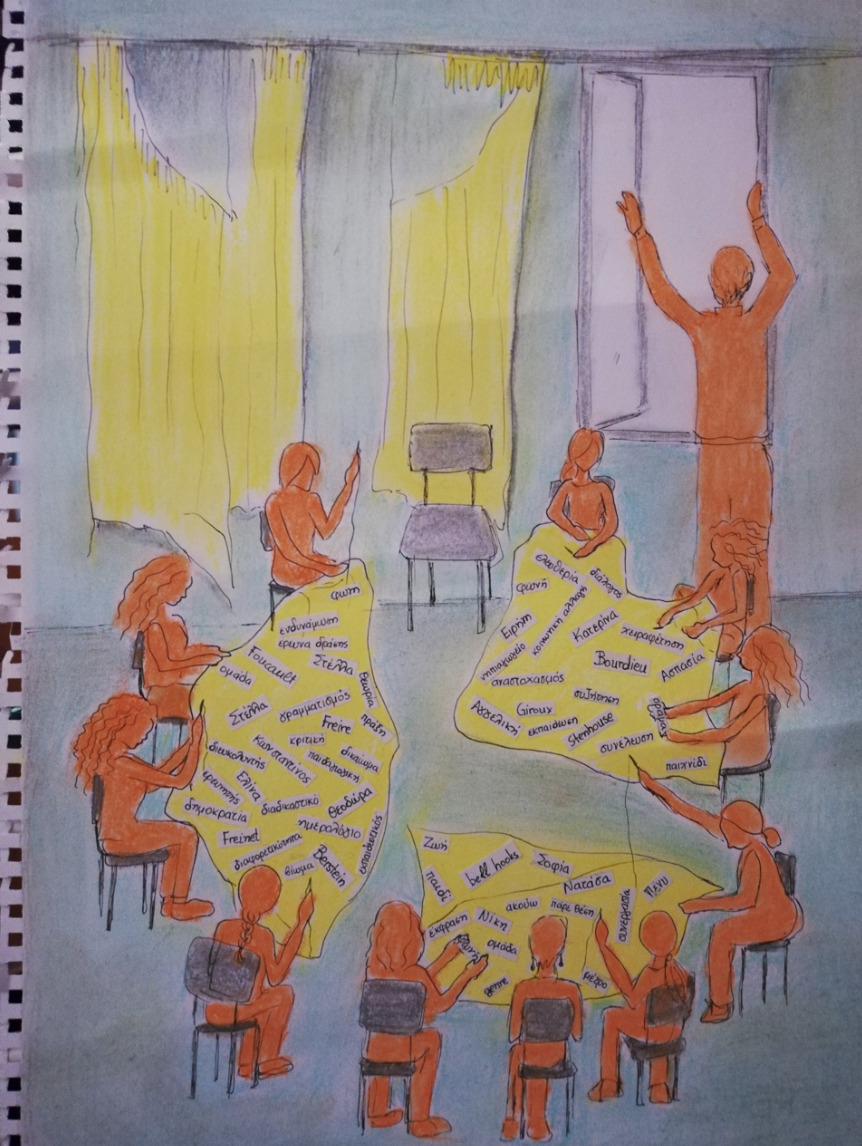
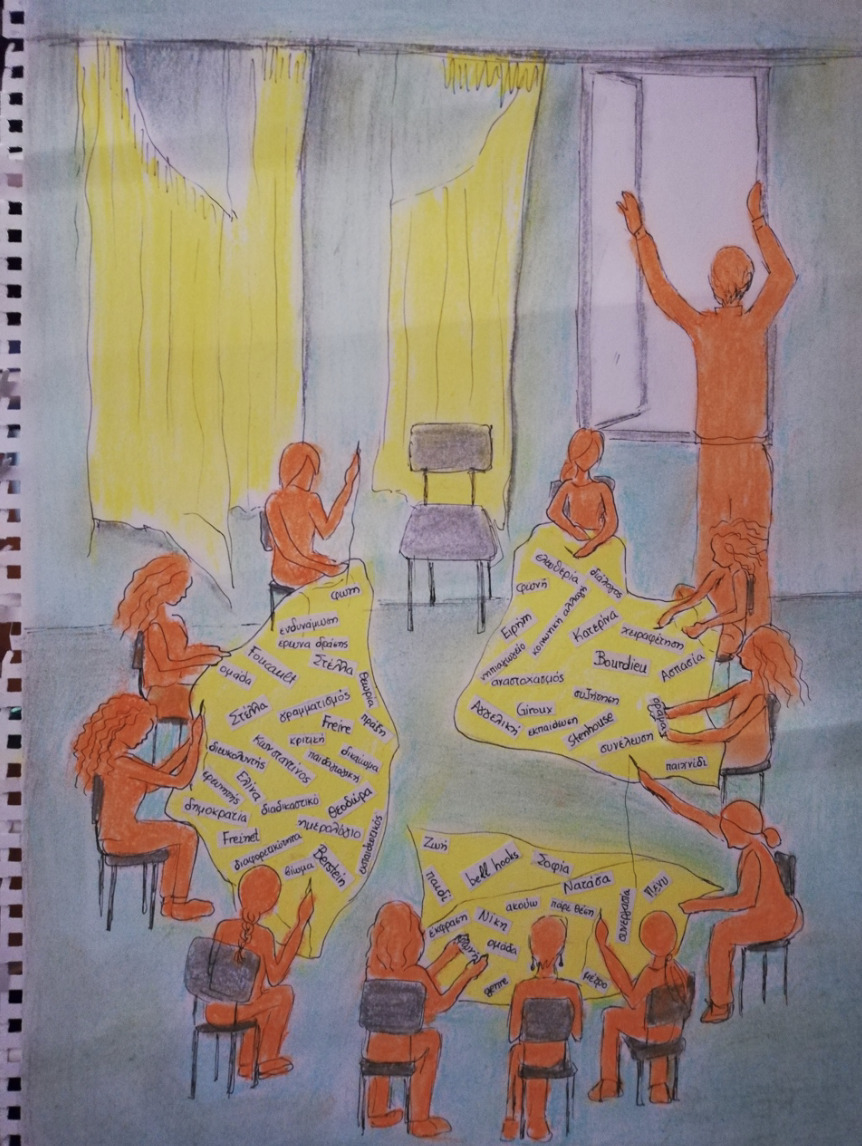
Students also produced paintings that captured their interpretations of the course. The analysis of personal painting became, in their own words, a research tool.
The analysis of a personal painting became a research tool, because through it thoughts and emotions—both personal and collective—were expressed. Each of us could communicate freely through non-verbal means, and later, through critical and reflective discussion, these expressions were transformed into research data. (Student reflection)
Blogs and Paintings in Action
The blogs created a hybrid genre: part academic reflection, part personal narrative. Students processed difficult concepts----such as Bourdieu’s cultural capital----by linking them to family backgrounds or inequalities observed during practica. For example, students identified how access to language practices, parental education, or school expectations shaped their own trajectories in ways that mirror Bourdieu’s theorization of inherited advantage. The digital format supported immediacy and interaction, making reflection dialogic rather than solitary, as students commented on each other’s posts, questioned assumptions, and co-constructed interpretations in ways that reflect dialogic principles in critical pedagogy.
The paintings offered a different modality. One student painted a visual map of the entire course, depicting concepts such as voice, democracy, cooperation, and social change as interconnected images. Paintings revealed affective and intuitive layers of learning, surfacing insights that could not be fully articulated in writing, illustrating that arts-based methods access embodied and emotional knowledge often excluded from academic discourse. Students later reflected on their artworks, interpreting them as representations of their collective journey.
Theoretical Anchors
The practice drew heavily on critical pedagogy (Freire, 1970/2005; Giroux, 1988; hooks, 1994) and action research traditions. Like Photovoice, blogs and paintings empowered participants to document experience and transform it into shared knowledge, through cycles of production (writing/painting), sharing, and collective interpretation in class discussions. From a literacy studies perspective, the blogs illustrate Janks (2010) “paradox access.” By writing in academic forms students gain legitimacy yet mixing personal voice and peer dialogue they resist total assimilation into dominant discourse. The paintings align with arts-based research (Leavy, 2015), which argues non-verbal forms reveal embodied and emotional knowledge often overlooked in text-based inquiry.
Finding and Insights
Several insights emerged from this practice:
-
Voice and Democracy: Blogs supported student voice, not as an isolated opinion but as dialogue and conversation with peers, creating a micro-democratic space.
-
Theory and Practice: Both tools helped students link abstract theory to lived school and practicum experiences, such as connecting Freirean ideas of oppression to observed classroom hierarchies or exclusionary practices.
-
Collective Reflection: Shared analysis of journals and paintings deepened critical understanding and modeled Freirean problem-posing education, as students collectively identified problems, questioned assumptions, and explored alternative interpretations rather than fixed conclusions.
-
Challenging Authority: Students reframed curricular freedom as a possibility, recognizing their agency in shaping educational practice.
-
Embodied Knowledge: Paintings captured affective and intuitive dimensions of learning, validating non-verbal knowledge.
The use of blogs and paintings demonstrates how participatory, arts-based practices can expand what counts as knowledge in higher education. By fostering students’ voice, dialogic reflection, and embodied expression, these tools bridged theory with lived experience and positioned students as co-constructors of meaning. More than assignments, they became research instruments and acts of democratic participation, because students not only produced knowledge but also shaped the direction of inquiry through their contributions and interpretations. In this way, blogs and painting, like other creative methods, humanize learning. They invite imagination, care, and collective agency – qualities essential for participatory action research in the messy moment. Our final method builds on this idea, offering ways for youth to visualize their dreams for more equitable schooling.
Creative Possibilities to Dream beyond the Messy Moment
Youth Participatory Action Research (YPAR) in schools offers young people the opportunity to contribute to school improvement. It is about tapping into their lived experience, learning with and from them to improve their lives and those of their peers. By developing this further to include a dialogic adaptation of YPAR, youth participatory dialogic action research (YPDAR) (McPartlan, 2024), the benefits to young people can be further enhanced. YPDAR supports adults in helping young people conduct action research with their peers. Adults cede control of all aspects of the research to young researchers (YR), including the data collection methods. The work of the adult researcher involves providing support, demonstrating methods, suggesting adjustments, and evaluating processes and outcomes. However, this ultimately enables young people to lead and make their own choices. This is about knowledge democracy and supporting youth to challenge the hegemonic education system that says adults know best. YPDAR promotes the growth of students, as participants and co-researchers, into becoming part of their reality, so that they are integrated into a process creating new theory, new knowledge, and new practice.
Young people are social actors with lived experience and, as such, the real experts in the fields of investigation in both school and life more generally (Cowie & Khoo, 2017; Reid et al., 2005). Their thoughts, feelings, and reflections need to be integrated into the process. Somekh (2002) goes one step further, suggesting that knowledge produced independently of active practitioner participation is only partial knowledge. Therefore, any knowledge created about young people without their involvement lacks integrity, as it has not been grounded in their worlds (Jones, 2004).
Working as the adult researcher on a PhD project, followed by a separate continuation project with a new group of YR, provided me (Dave McPartlan) with the opportunity to implement YPDAR. The project focused on the efficacy of the school’s mental health strategy. The research context is important, as is the rationale for selecting the YR and participants. This work focused on counterculture, aiming to be truly inclusive and ‘fight back’ against the often tokenistic approaches to student voice (M. Brown et al., 2020) prevalent in many UK schools. As such, it was essential that all those recruited were volunteers and could opt out at any time. Both the PhD and follow-up projects followed the same recruitment principles. The opportunity to be a YR was offered to 16-18-year-olds in the school, and all 13 volunteers were recruited. The opportunity to work with the YR as participants was offered to 12-to 15-year-olds from a cohort of economically disadvantaged young people at the school. Once again, all 30 who volunteered took part. The participants were then divided between the YR. Some worked one-to-one, others worked in pairs or small groups.
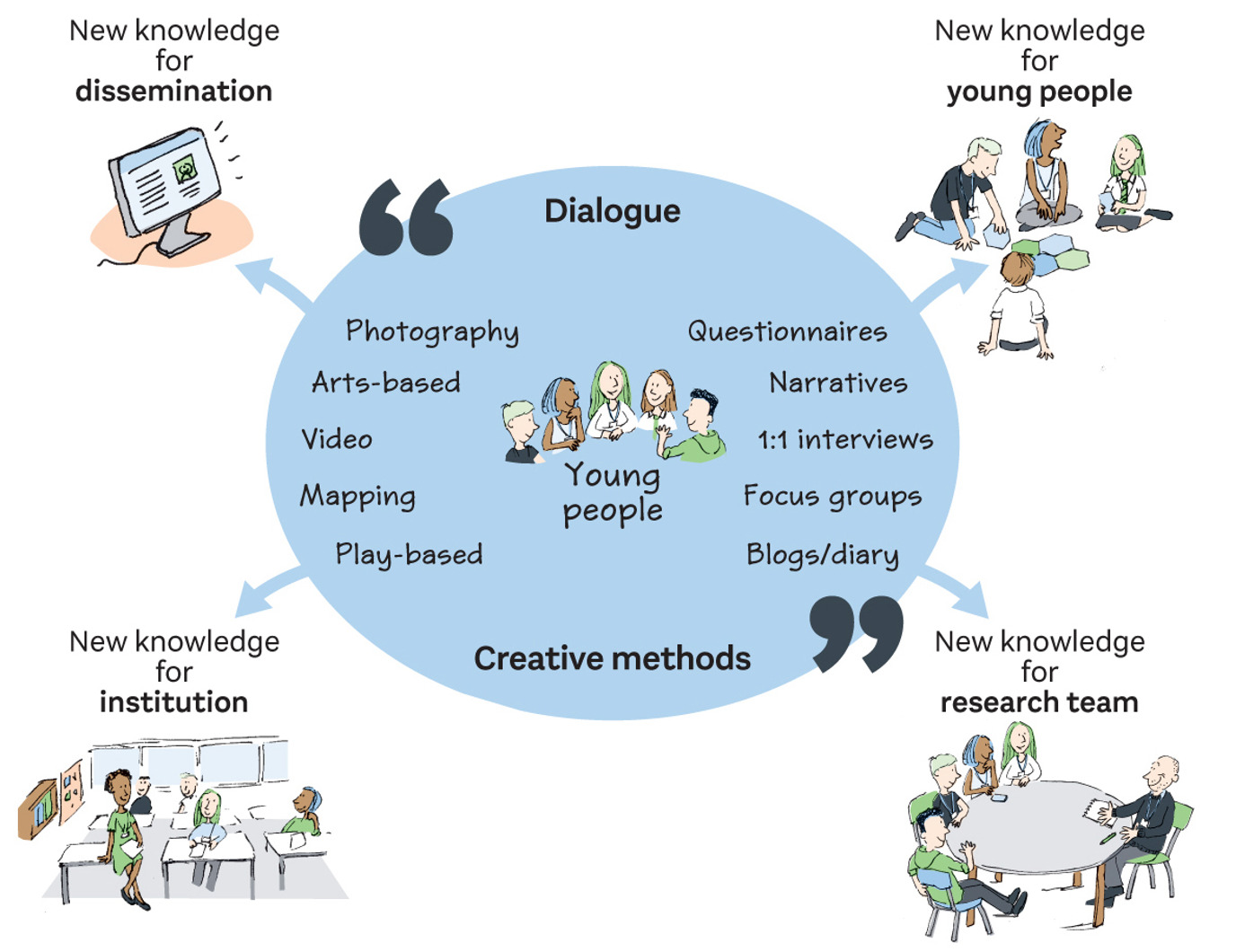
This work was about developing relationships, particularly those between the YR and participants. This was not just about harvesting data and presenting findings; it was about creating opportunities for young people of different ages and backgrounds to share their lived experiences and explore the efficacy of the school’s mental health strategy. The selection of methods was therefore important; it needed to be engaging, fun, and inclusive. The methods were catalysts that sparked relationships. Whilst I had my own ideas about potential methods, I wanted the YR to be in control of these decisions, and I therefore introduced a methodological tool (Figure 10) to stimulate conversation with them. We discussed the research as a means of creating new knowledge and the most efficient way to achieve this. From these conversations, we agreed to focus on creative methods that would stimulate dialogue between the YR and participants.
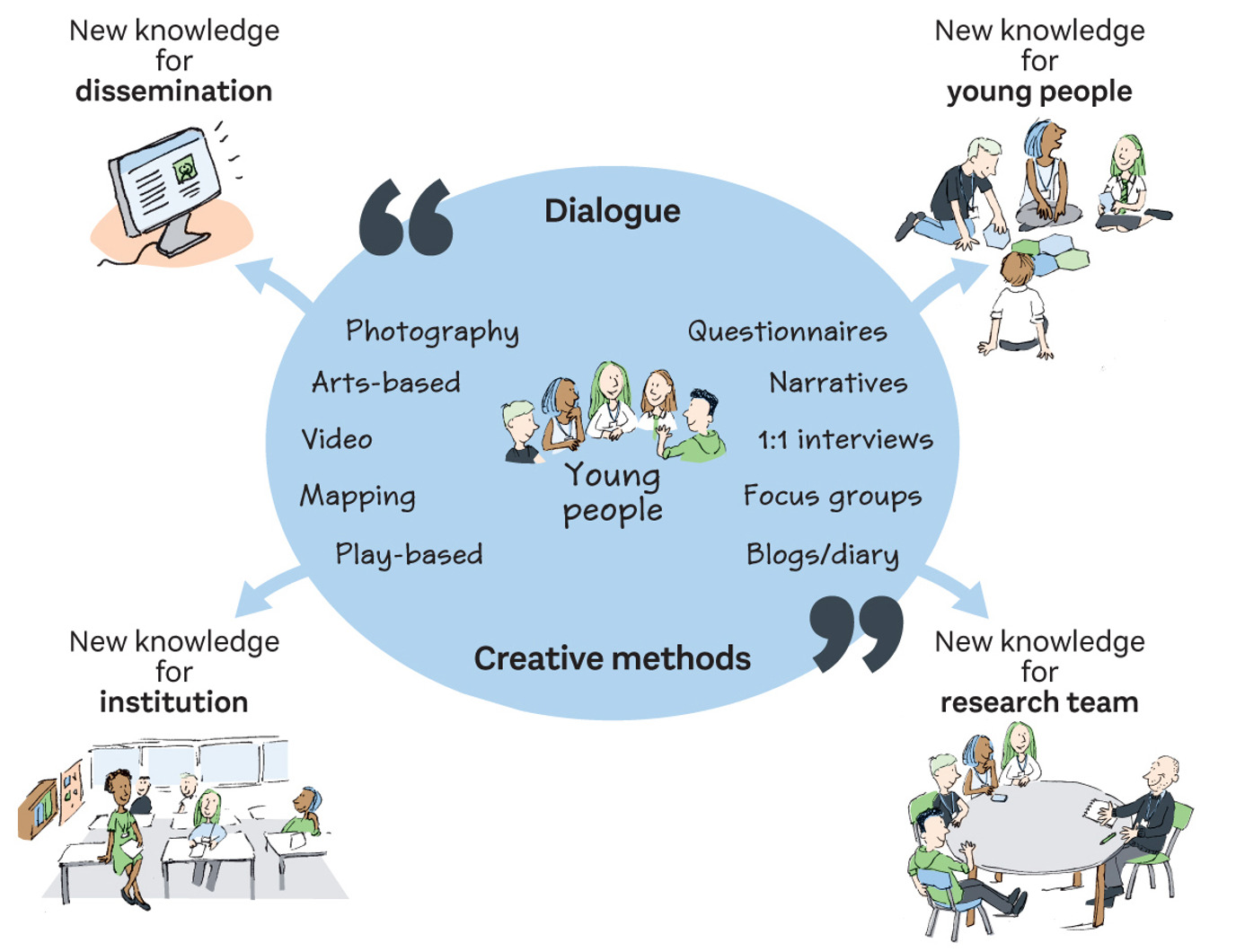
Creative Methods
The selection of ideas came from weekly team meetings, where we met to discuss our progress, successes, and failures. We would also plan forward and decide how to collect data. Sometimes, there was agreement within the group on a specific method, and other times, the YR wanted to take an individual approach. Below is a selection and brief explanation of the methods the YR used during their meetings with participants.
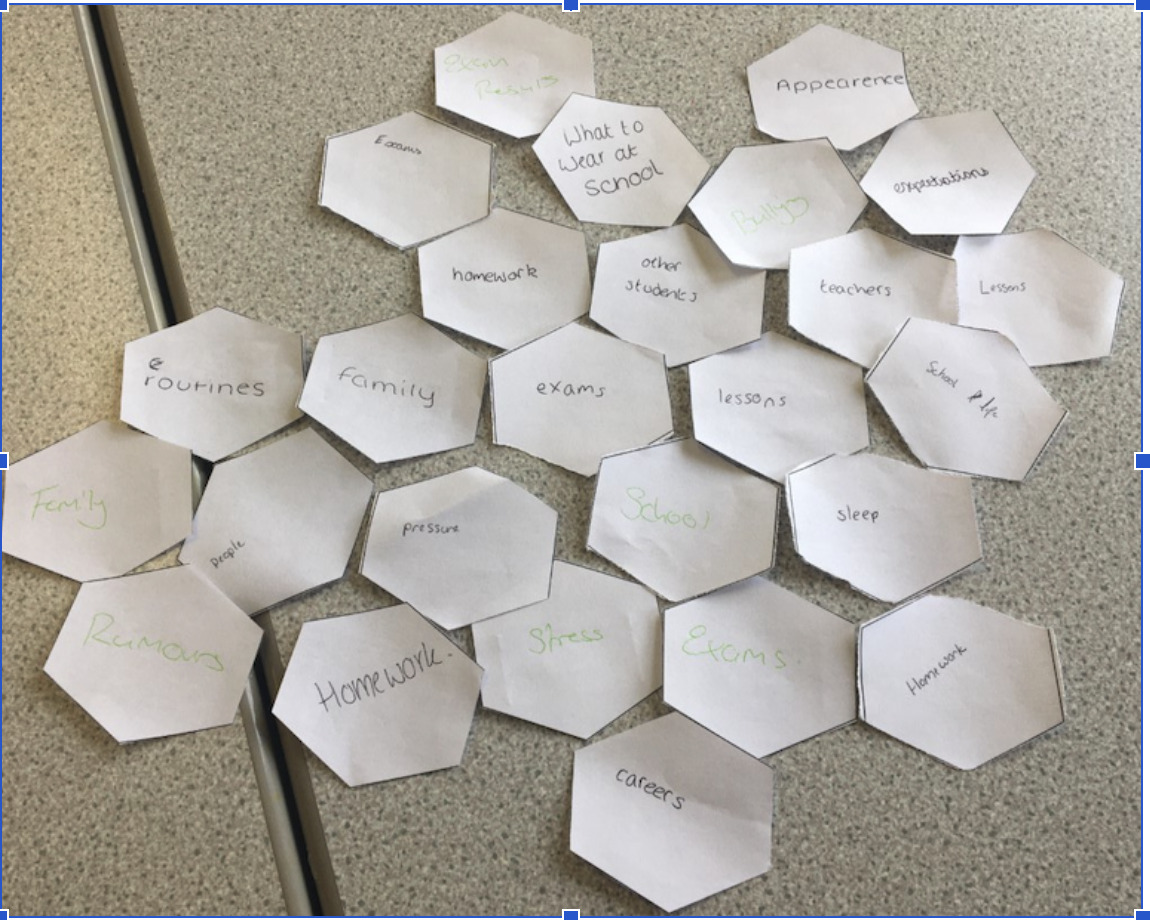
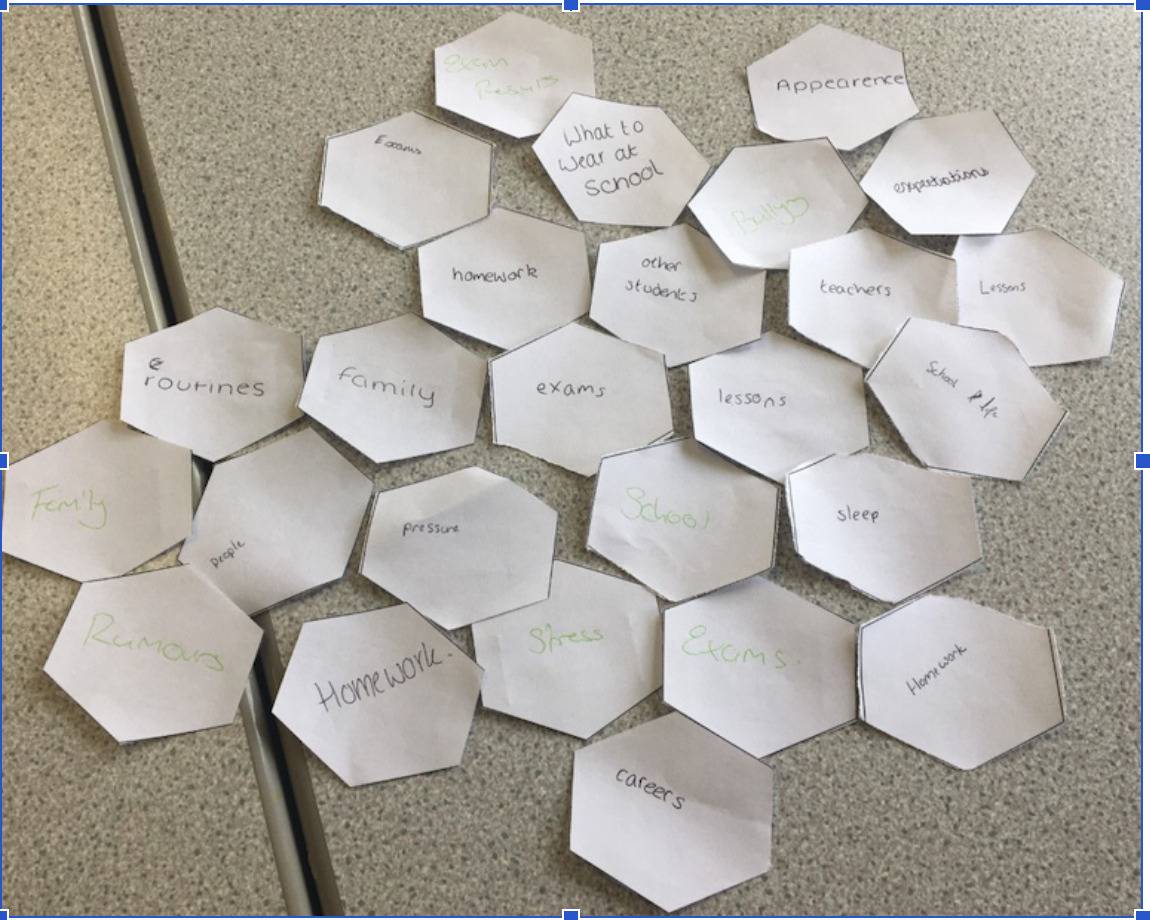
Hexagon exercise
During one of the weekly meetings, I produced blank hexagons, which the YR group used to individually organize their thoughts and ideas. We then developed a group matrix using hexagons to organize our collective thoughts. The following week, one of the groups returned with a photo (Figure 11) of a similar exercise she used with her participants.
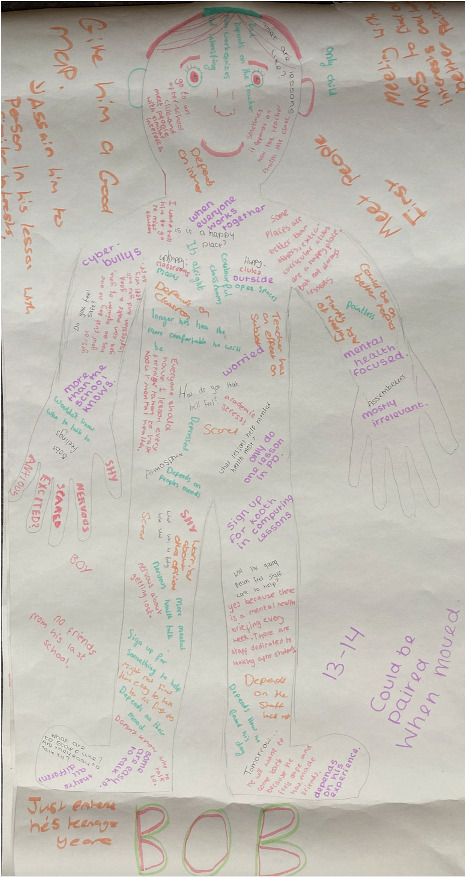
Bob
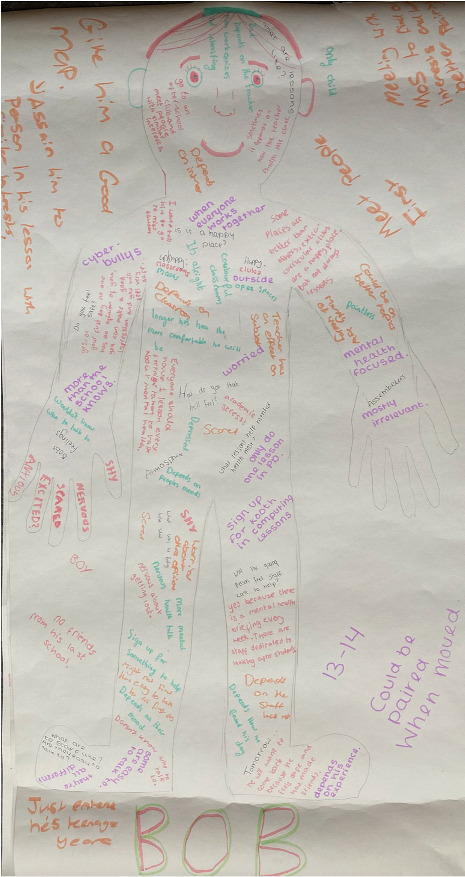
In the initial stages of our work, we explored the mental health challenges a young person starting a new school might face. We decided to use an outline figure by tracing around one of the younger participants. The participants were given different-colored pens to write on the figure and address issues such as how they might feel, what activities might help them, how staff could assist, whether there is mental health-specific support, and so on. Figure 12 is an example of one of the figures the YR called ‘Bob’!
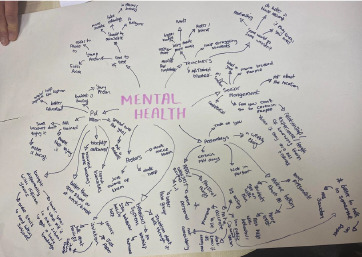
Mind Maps
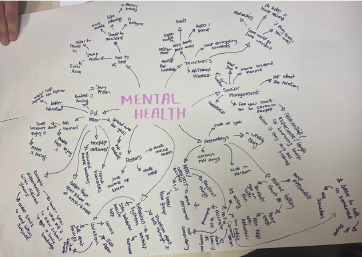
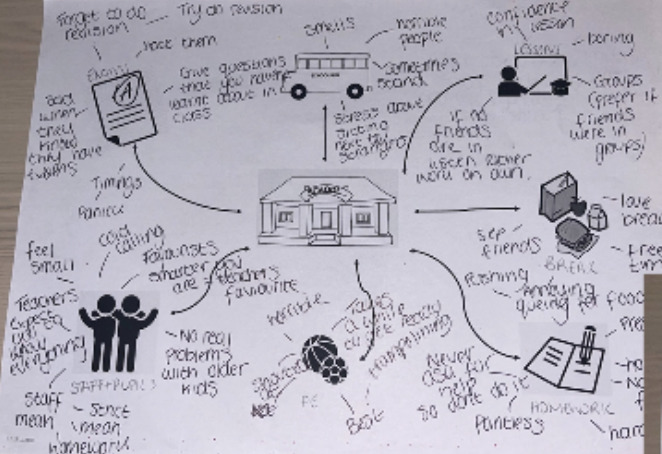
On various occasions, we used mind maps as a way of organizing our thoughts, findings, or ideas. The example below is a summary of the ‘Bob’ exercise from the previous section. We spent one of our weekly meetings drawing together all the different ideas from posters created by the YR and participants. It was an excellent summary document and provided the basis for our analysis of this section of work. The outcome resulted in Figure 13.
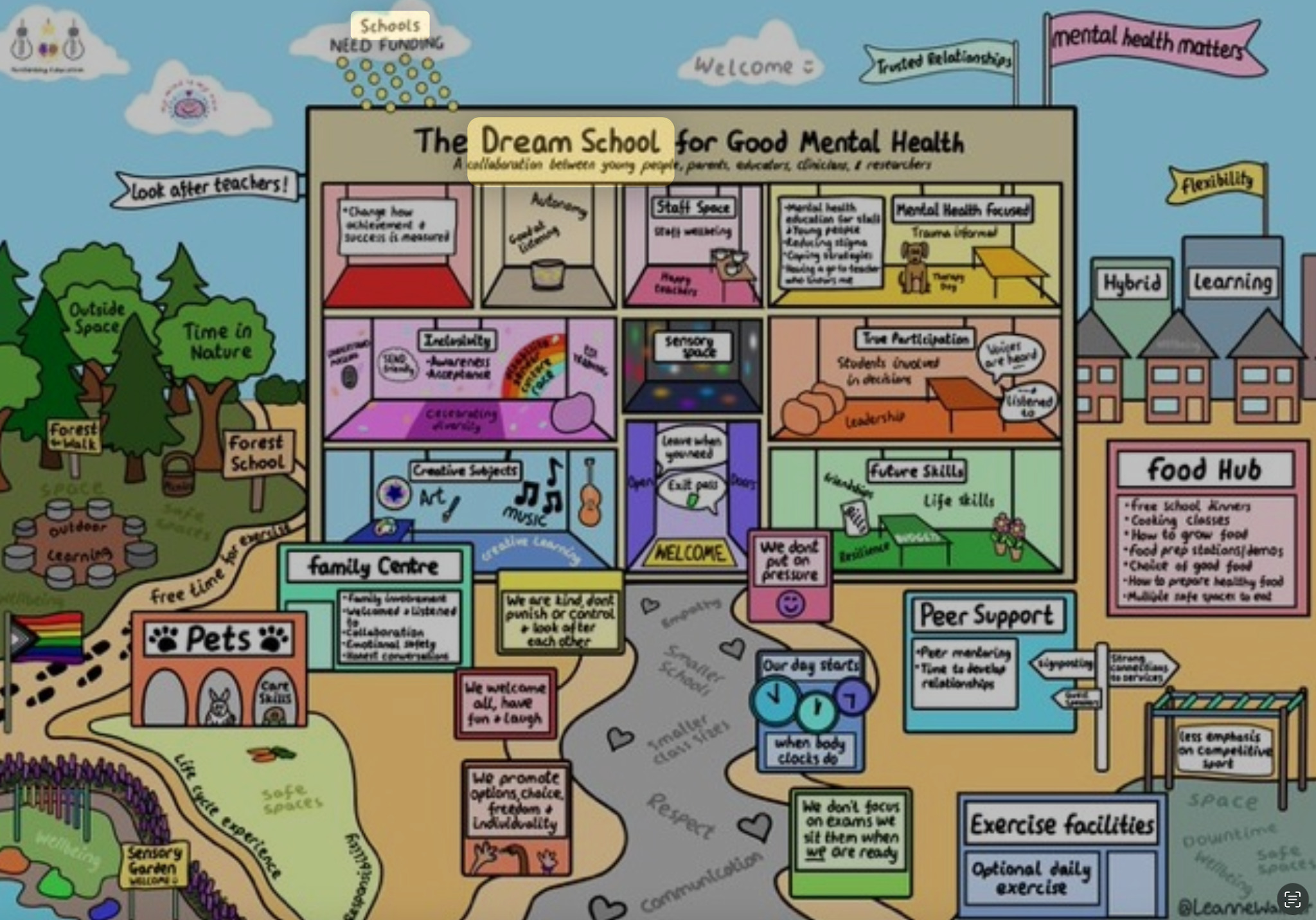
Dream School Activity
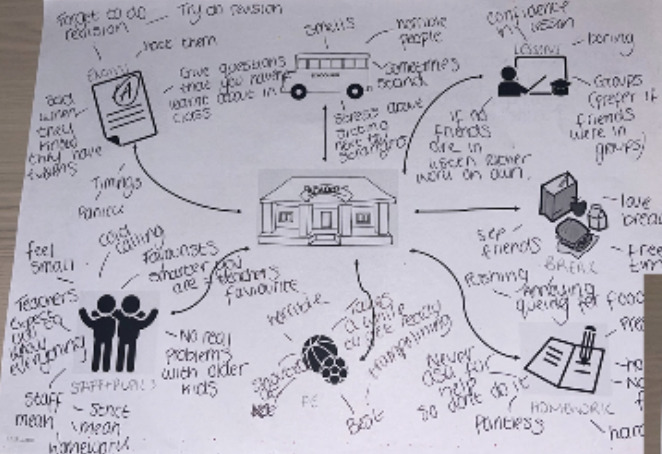
At the culmination of the follow-up project, we introduced a summative activity in which participants were asked to imagine their ideal school. The YR then worked with their groups to get them to draw and annotate what the school would look like. Figure 14 is an example of one of the drawings.
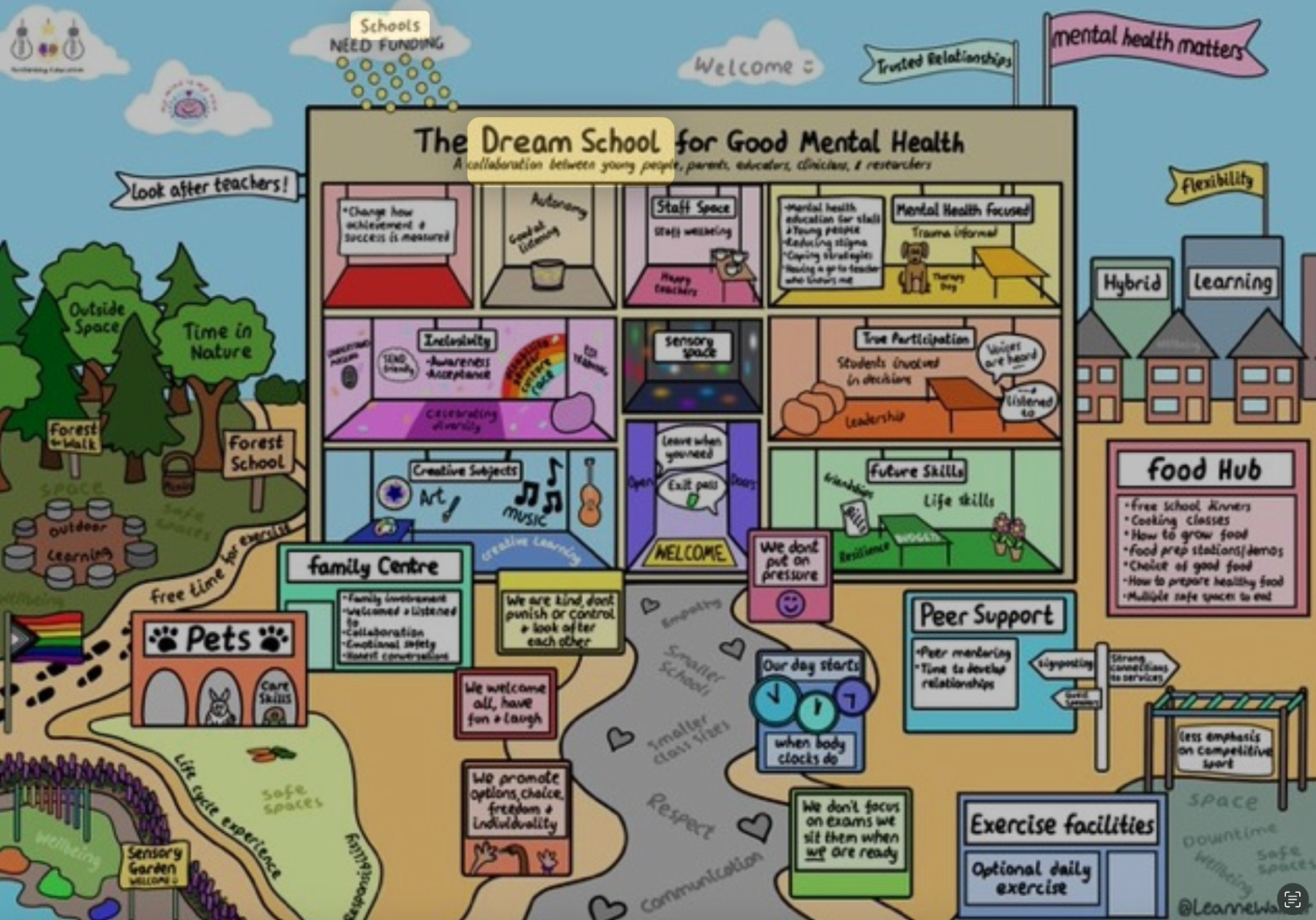
As a follow-up to this activity, members of the research team attended a multi-organizational mental health conference, where they ran this same activity with professionals from education, health, and academia. A professional artist was present in the room and produced a summative document for dissemination (Figure 15).
As an ex-teacher who collaborates with young researchers in schools, I have finally begun to see the potential young people have to contribute to the school improvement agenda. As the examples above demonstrate, their creativity and ingenuity enhance such research.
Discussion: Patterns Across Practices
The main patterns that thread through our practices highlight the liberatory possibilities of PAR projects. Each of our individual activities involved creating trust, engaging in dialogue, tapping into imagination, and taking action. Each method emphasizes seeing students as full human beings — with emotions, bodies, histories, and imaginations. The practices we use also center students’ lived experiences, acknowledging the inherent strengths they bring to this work. Our individual and collective work calls attention to the importance of trust, vulnerability, and care when engaging in PAR projects.
The various activities shared in this paper are examples of embodied and multimodal learning–moving beyond text, as students are invited to engage through images, sound, video, performance, imagination, and silence. Art and media become portals to deeper reflection, dialogue, and presence (e.g., beholding Ferguson protest image, producing a painting, listening to a song, making a video). In addition, the activities lead students to engage in critical dialogue and collective meaning-making. Every practice is dialogic—small group discussions, murals assembled piece by piece, blogs as interactive journals, or asynchronous video exchanges. Critical consciousness is built through sharing, listening, and reflecting together.
Our individual and collective work harnesses imagination as resistance and possibility. Students can dream and envision new worlds (e.g., Dream School, Freedom Dreaming) and use art to “talk back” to oppression (hooks, 1989). Recognizing “the master’s tools will never dismantle the master’s house” (Lorde, 1984)–imagination is used as a tool for both survival and transformation. This work challenges the status quo by disrupting the traditional academic norms of who produces knowledge, how, and for what purposes. Further, these practices resist adultism, deficit views of youth, technocratic higher education, and purely cognitive models of learning. The practices are not ends in themselves. They inform action — whether through policy changes, community projects, social justice advocacy, or re-imagining classrooms.
Conclusion
Our work is humanizing–tapping into trust, vulnerability, care, and centering the lived experiences of students. Our work is participatory by engaging students as co-researchers, co-creators of meaning, knowledge, and community. We ground our work in creativity through art, media, and imagination to engage more fully with one another in this messy and troubling moment. Our work provides tools to grapple with crises (pandemic, racism, displacement, mental health, and well-being) without oversimplifying or erasing complexity. We do this work in hopes these practices can help to cultivate personal growth, build solidarity within and across communities, and disrupt and resist the oppressive conditions that hinder our ability to create more humanizing spaces. PAR is possibility, radical hope, radical love, and collective resistance.
Guiding Principles for Humanizing Higher Education in a Messy Moment
Drawing from the practices and insights shared across this paper, we conclude with a set of guiding principles that distill what we see as most urgent and productive for education in this moment. These suggestions can support humanizing, participatory, and justice-oriented education.
1. Start with relationships - the real ones
At the core of participatory and creative practices is the intentional cultivation of trust. This work begins with how we show up to one another, not just as researchers or students, but as people carrying stories, contradictions, and emotions. Practices such as collaborative art-making, reflective dialogue, and shared storytelling create openings for vulnerability, which in turn fosters connection, empathy, and a deeper sense of belonging.
2. Share the work, and the power
Knowledge production in education must move beyond hierarchical models, towards more democratic forms of engagement. Classrooms can become spaces of dialogue rather than delivery, and research can become something we do with, not on. Sharing authority, student-led research design, dialogic classrooms, or collaborative inquiry, disrupts traditional power dynamics and affirms student agency in shaping knowledge and practices.
3. Make room for more ways of knowing
Not everything that matters can be said in words. Arts-based and participatory methods such as photovoice, painting, videos, and media practices create inclusive spaces in which students are engaged cognitively, emotionally, and physically. These diverse ways of knowing are recognized and valued.
4. Don’t stop at reflection - move toward action
Critical reflection, while essential, is insufficient on its own and therefore the practice is important to be connected with action/praxis. When the students begin to ask “What can we do with this?” something changes and education, in this sense, becomes a site not only of understanding the world, but also transforming it.
5. Hold on to justice - and imagination
Humanizing education requires a commitment to justice. That means listening carefully to the ways power and inequity shape lived experience, and especially listening to whose voices are centered and whose are not. Undoubtedly, this brings discomfort, but also imagination, since it leaves space for dreaming beyond what is. As seen in practices such as “dream school”, students must be supported not only to critique existing conditions but also to envision and enact more equitable futures.
Together, these guidelines underscore a shift from education as transmission of knowledge to education as relationship, from compliance to agency, and from abstraction to lived, embodied experience. In this messy moment, participatory and creative practices offer not a solution or a recipe to fulfill, but rather a pathway grounded in care, collaboration, criticality, and imagination of a better world.