
Introduction
This paper presents the Climate ReAssemblies project (2024–ongoing) in which the authors and fellow citizen-climate-researchers are rethinking citizens’ assemblies on climate change through experimental and collective storytelling. Climate ReAssemblies was conceived as a collaborative infrastructure as part of the Culture and Climate Change initiative led by Renata Tyszczuk at the University of Sheffield.[1] As such, a series of papers capture varying dimensions of the project. This paper presents two completed phases of the project and their underpinning intra-active methods for the interest of researchers and practitioners engaged with participatory practices. It outlines the context of our work – the intersection of citizen engagement on climate change and innovations within deliberative democracy and participatory methods – before elaborating on the challenges that our project has addressed. Two sections – Phase 1, documenting participatory climate futures (January 2024–July 2024), and Phase 2, documenting citizen-policy knowledge exchange (July 2024–July 2025) – share the activities and outputs during each phase. These are followed by empirical findings, reflective discussion and conclusions on the potential for collaborative, reflective and creative deliberation in practices for citizen-policy engagement on climate change.
Background
Context
Although climate change poses a universal threat, the framing of the crisis – and whose knowledge is validated – is fundamentally limited by systemic inequalities in public discourse and participation. A transition to green energy might simultaneously impact a participant based on their class (cost of retrofitting), race (systemic exclusion from policy spaces), and geography (living in historically underinvested neighborhoods). This ‘climate urgency’ and the attendant ‘crisis of agency’ (Tyszczuk, 2014) has led climate policy actors to recognize that citizens should directly participate in climate policymaking to support the effective implementation of climate mitigation and adaptation strategies (C. Harris, 2019). Citizens’ assemblies (as a form of deliberative mini-public) dedicated to climate-policy development have thus become an increasingly prevalent tool of deliberative democracy (Escobar & Elstub, 2025), catalyzing conversations around the real and anticipated crises of the climate emergency, as well as improving the quality and legitimacy of policies by demonstrating inclusion of citizens’ knowledge and views (Lorenzoni et al., 2025).
Challenges
A citizens’ assembly on climate change or Climate Assembly (CA) is typically 80 to 150 citizens selected by random stratified sampling to be representative of the subject population according to key demographics. Despite this and because of the relatively small number of participants, CAs can feel exclusionary in terms of the knowledges and people they include, as well as the places they occur, by treating participants as a homogenous block (e.g., ‘the public’) rather than recognizing distinct, intersecting identities (Curato & Böker, 2016). This can result in failure to represent the views of those citizens who will be most adversely impacted by climate change in the future. To many of those minoritized, imagining what a decarbonized and justly transitioned future would look and feel like in terms of everyday life seems out of reach due to the already stark systemic inequalities they face, as well as their lack of access to the spaces where CAs are taking place. Even with diverse participants, the structured nature of CAs and evidence presented can flatten diverse perspectives into a consensus that may not fully reflect the complexities of local contexts (CAUK, 2020). A heavy reliance on scientific or technical evidence – without sufficient integration of lay knowledge / lived experience (the practical, everyday understanding of how policies impact people’s lives), experiential knowledge (personal stories, values, emotions, and cultural perspectives related to climate change) and indigenous knowledge (place-based and holistic understanding of ecological systems and sustainable living) – can also lead to a form of epistemic exclusion (Cherry et al., 2021).
Moreover, CA practices have become procedural; they are often expert led, externally and linearly designed, and privilege words over other forms of communication (Elstub et al., 2021). Following predefined steps (information provision, deliberation, plenary discussions, voting / consensus building) over allowing for more emergent, citizen-driven explorations of issues, limits possibilities for iterative learning, revisiting topics, or adapting to emergent issues / participant interests. This can constrain genuine deliberation, which ideally should be open-ended and responsive to participants’ evolving understanding and concerns (Boswell, 2021; Elstub et al., 2021). In recent years, attempts have been made to innovate CA practice using arts-based methods, though these experiments have often been restricted to the insertion of minor creative exercises within an overall CA structure that largely remains top-down, inflexible and exclusionary (Involve, 2023). By favoring more instrumental and rigid approaches to their design, existing CA practices miss opportunities for expanded practices of reflective and creative deliberation that address wider populations’ experiences of climate change.
The reality of political processes means that the impact of CAs is often incremental, indirect, or takes a long time. Designing CAs with a clear impact pathway means considering how recommendations made by citizens during the CA process will be taken forward by commissioning bodies and integrated into policy. However, translating CA recommendations into policy can be an unruly process, with various challenges in relation to power dynamics and institutional capacities (including further funding). Often, CAs conclude with a report, but the gap between deliberation and implementation – how recommendations will be formally reviewed, acted upon, or reported back to the public / CA members – makes it difficult to hold the government accountable (Wells et al., 2021). If the commissioning body doesn’t communicate how it will respond to a CA’s recommendations, or if the recommendations appear to be ignored, it can lead to disillusionment among citizens (Lorenzoni et al., 2025; Willis et al., 2025). Further, CAs are often convened as one-off events (or a one-off series of events), reducing potential experience, learning, or iterative pathways for recommendations to feed into policy (Courant, 2022; KNOCA, 2023). Many CA members want to remain involved in climate action post-assembly. However, there’s often little structured support, resources, or channels for them to continue advocating for recommendations or engaging with policymakers, leading to a loss of sustained citizen engagement (KNOCA (Knowledge Network on Climate Assemblies), 2025).
The Project: Climate ReAssemblies
Intentions
In response to interrogations of inclusion and continuity within prevailing CA models, Climate ReAssemblies has sought to explore the potential for democratic innovation (Asenbaum & Hanusch, 2021) in post-assembly, or ‘follow-on’, processes and activities and, in turn, how this can impact who participates in CAs, the contextual appropriateness of solutions put forward, and thus our shared climate future imaginaries. Participatory practices are proving to be invaluable in nurturing climate change action and planning in relation to anticipated future climate-related risks, and in encouraging a diversification and expansion of conceptions of citizenship (Cvitanovic et al., 2019). Our intentions were:
-
to advance a dynamic and imaginative sense of how citizens can prepare for just futures in response to climate change through interdisciplinary and participatory methods;
-
to demonstrate the potential for enhancing collective citizen-policymaker participation strategies in climate policy through interactive storytelling and scenario-making;
-
to address continuity of engagement (follow-on) in deliberative democratic processes (climate assemblies) in relation to climate change;
-
to foster relationships and develop legacy/impact with regional and national-level climate-engaged, policy-active communities, acknowledging underrepresented citizens;
-
to exchange knowledge with policy actors on innovative citizen engagement strategies in relation to climate change and climate policy.
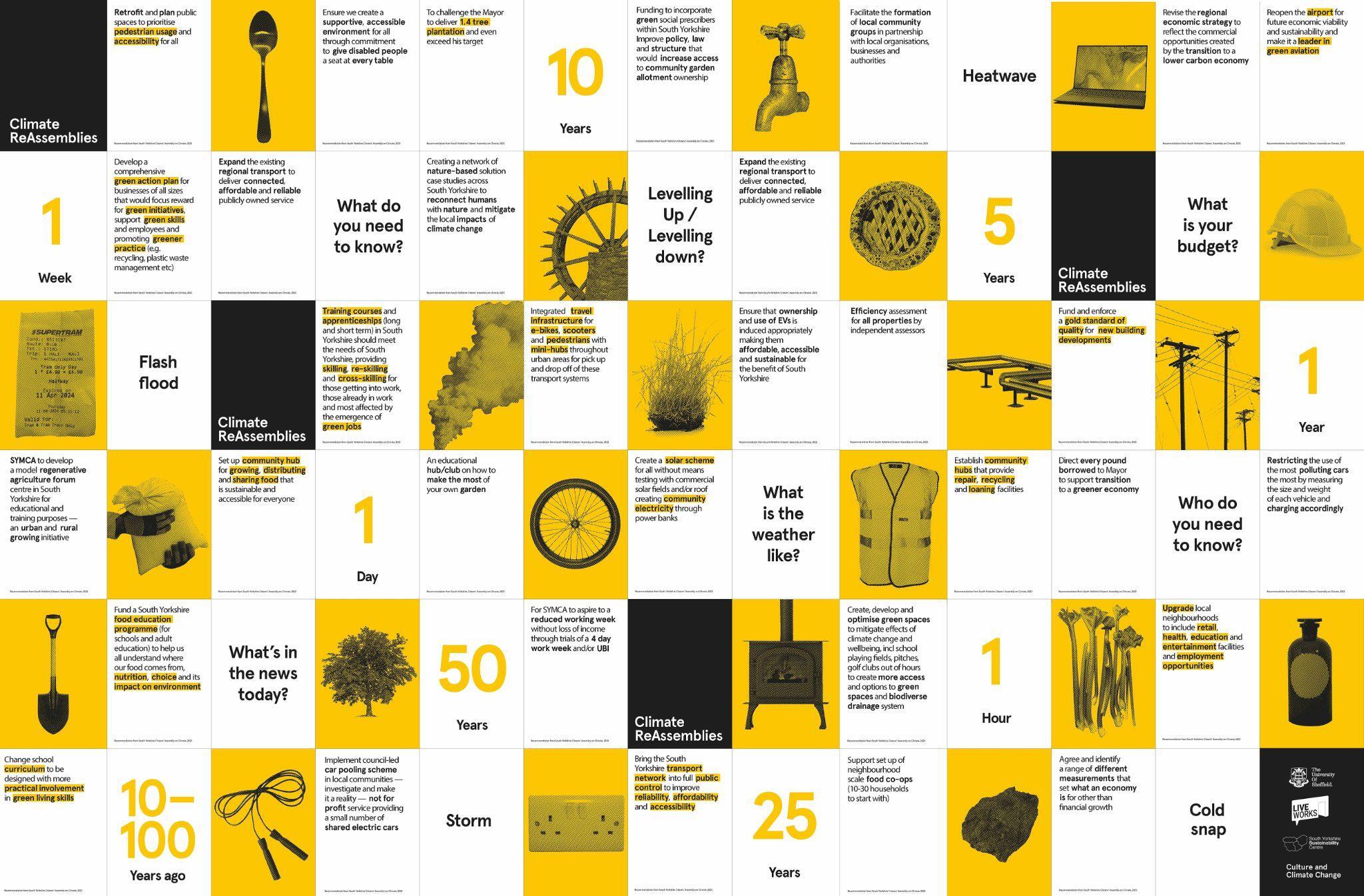
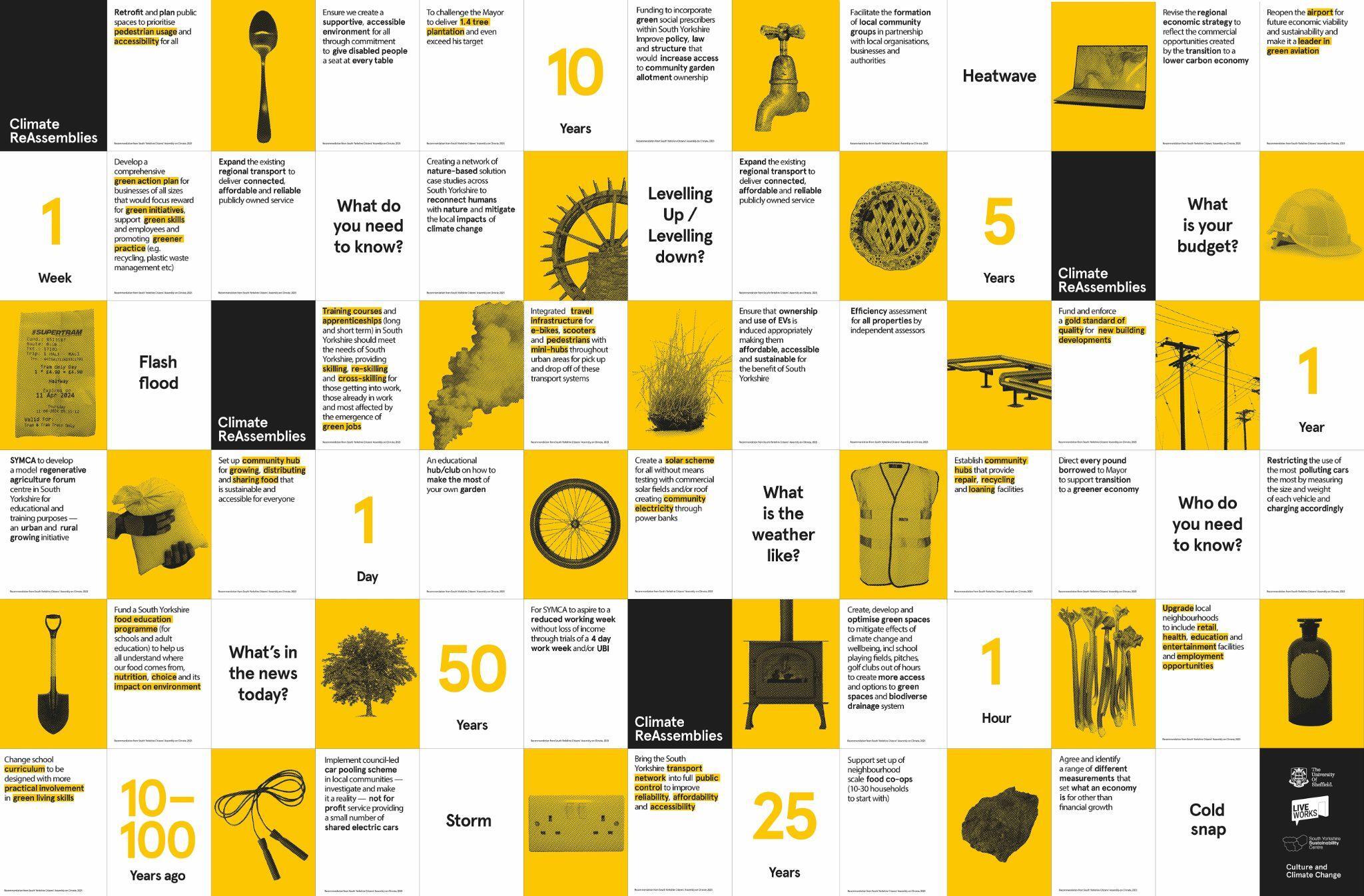
The phases of the project discussed in this paper were centered on the South Yorkshire Citizens’ Assembly on Climate, UK (October–December 2023). Commissioned by South Yorkshire Mayoral Combined Authority (SYMCA), this citizens’ assembly gathered 100 people from across the regions of South Yorkshire over four weekends. Sessions were held at larger-scale corporate and institutional venues in each of the region’s major towns or cities: Rotherham, Doncaster, Barnsley and Sheffield. After presentations, deliberation and consensus-building across four sessions, 33 recommendations were shortlisted before being narrowed down by voting to 14 priorities, to which the commissioning body later responded (SYMCA, 2025). However, their responses overlooked the contribution of citizens and local communities: “rather than use it as a jumping-off point for truly participatory and deliberative democracy […] very little in [the] responses [to the CA recommendations] could truly be said to have been borne out of the work of the assembly,” missing opportunities to “get more communities involved in the development of those ideas” (Sulley, 2025). The recommendations from the South Yorkshire Citizens’ Assembly on Climate (Figure 1), as well as the issues and impacts of climate change facing the region’s communities, formed our starting point.
Methodologies
Participatory collaboration
The research was undertaken in accordance with a participatory ethos: ‘we are all climate researchers’ (Tyszczuk, 2019). This allowed us to challenge traditional hierarchies within research (i.e. of who is the ‘expert’). A Participatory Action Research (PAR) (Fals-Borda & Rahman, 1991; Freire, 1970; Lewin, 1946) cycle structured the inquiry into: planning, acting, observing, reflecting, evaluating, and modifying. This recognized the “necessity of embedding evaluation within process, the impossibility of disentangling outcomes from practice, [and] the situated, embodied and embedded value of the knowledge that is produced” (Facer & Pahl, 2017). It also provided a “structure for listening” (Pahl et al., 2022), while ensuring an orientation towards action that was context-specific and that validated the lived experiences of all contributors (Chevalier & Buckles, 2019).
A combination of collaborative approaches were employed, understood in the project as intra-active methods, that supported ways to pay attention to the co-constituted, dynamic and entangled relationships of climate change deliberations, or ‘climate intra-actions’ (Verlie et al., 2020). The range of participatory methods that can be considered when engaging with communities for collective learning in relation to a common cause (Facer & Enright, 2016) and which ‘normalise the [conceptual] messiness’ (Durose et al., 2022) of co-production, co-design and co-creation, were acknowledged in the research design.
In this spirit, the project’s explorations welcomed a diverse range of academic and non-academic stakeholders – from the fields of communication, politics, architecture, and art practice; from local authorities, community climate-focused organizations, Masters students at the University of Sheffield, as well as communities underrepresented in climate discourse (for example, a local African-Caribbean community group). The project’s design thus reflected a deep commitment to locally based collaboration rooted in a situated, iterative, and creative approach developed around collective, accessible, and inclusive activities with communities of citizen-climate-researchers.
Scenario-making
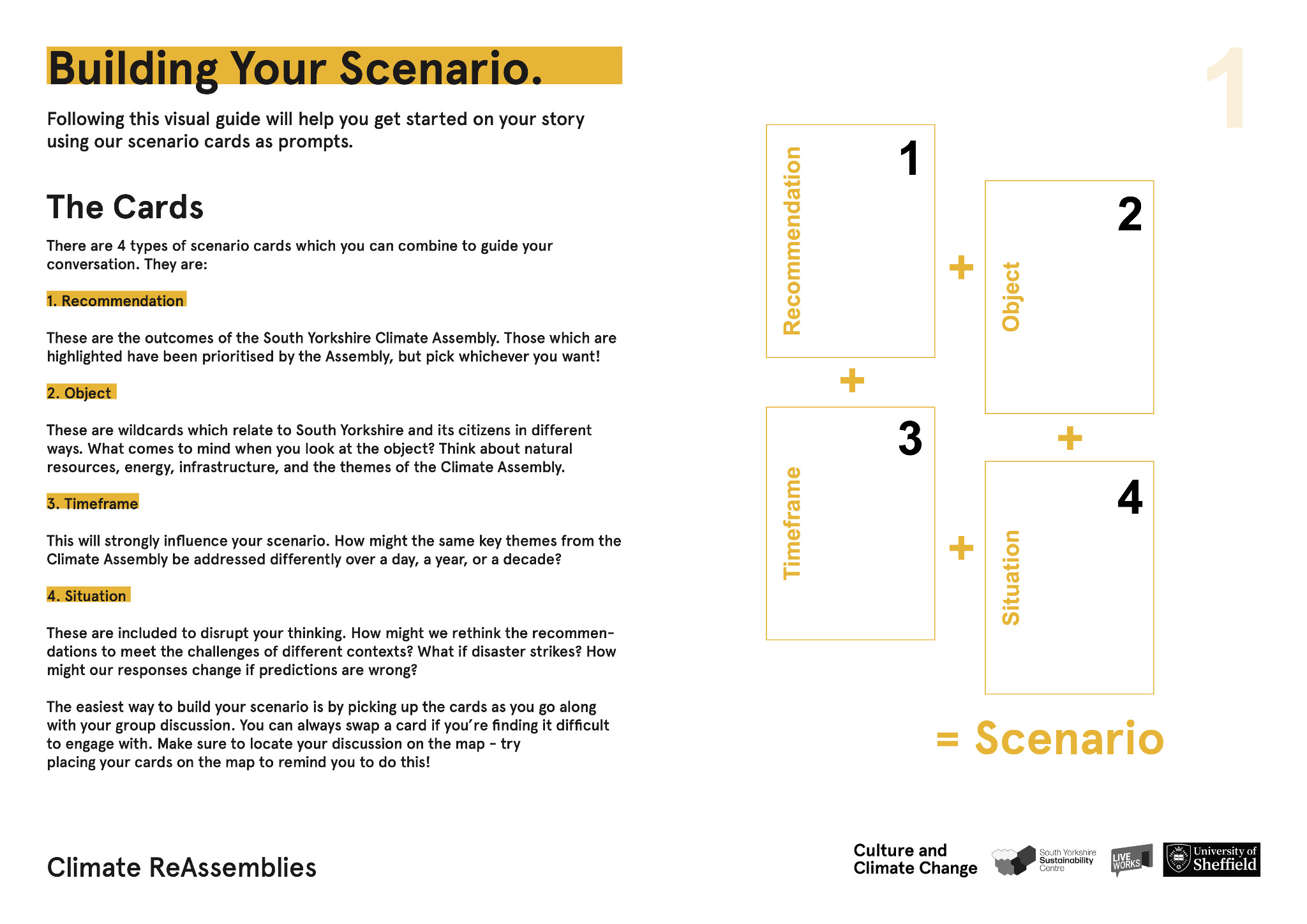
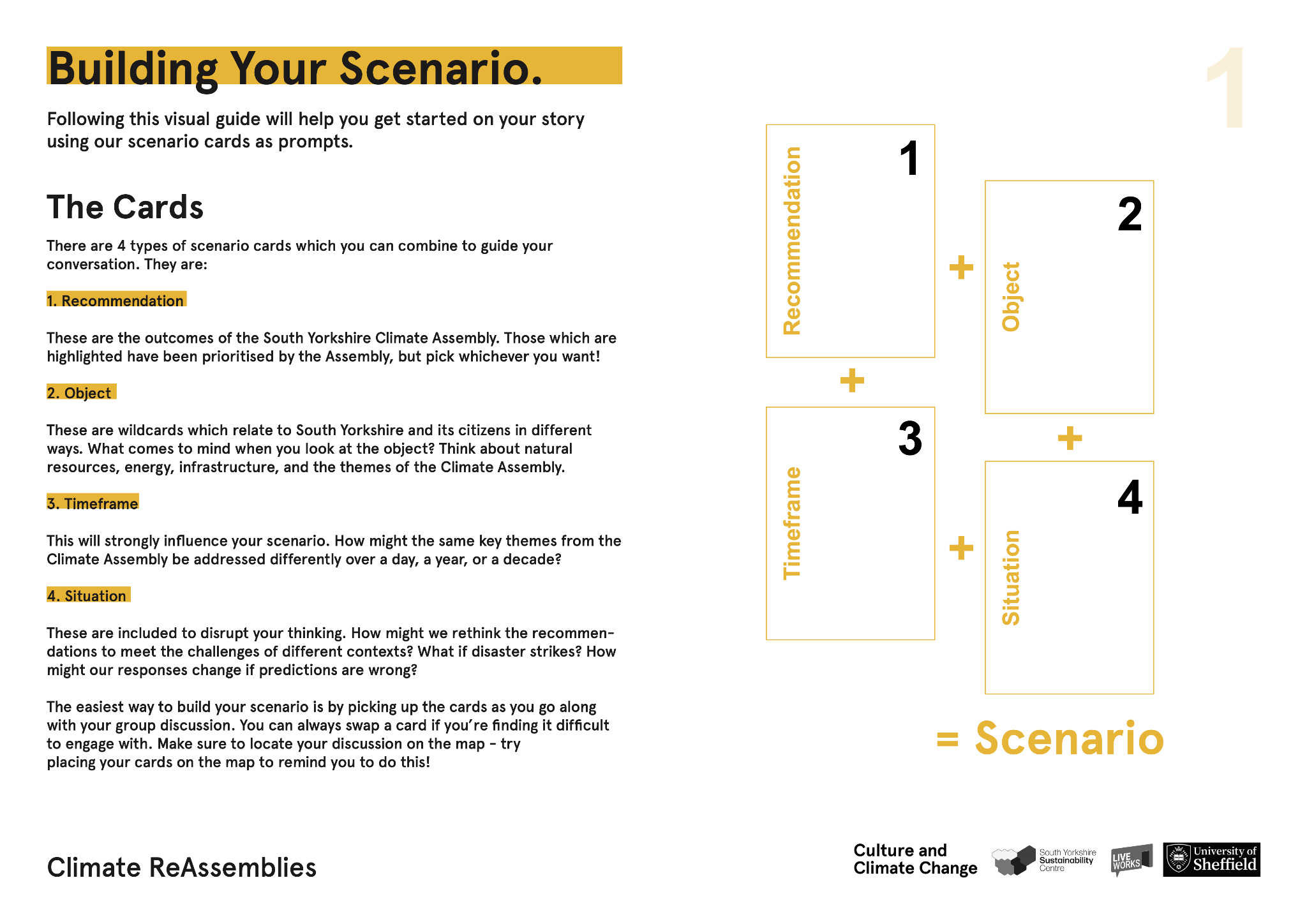
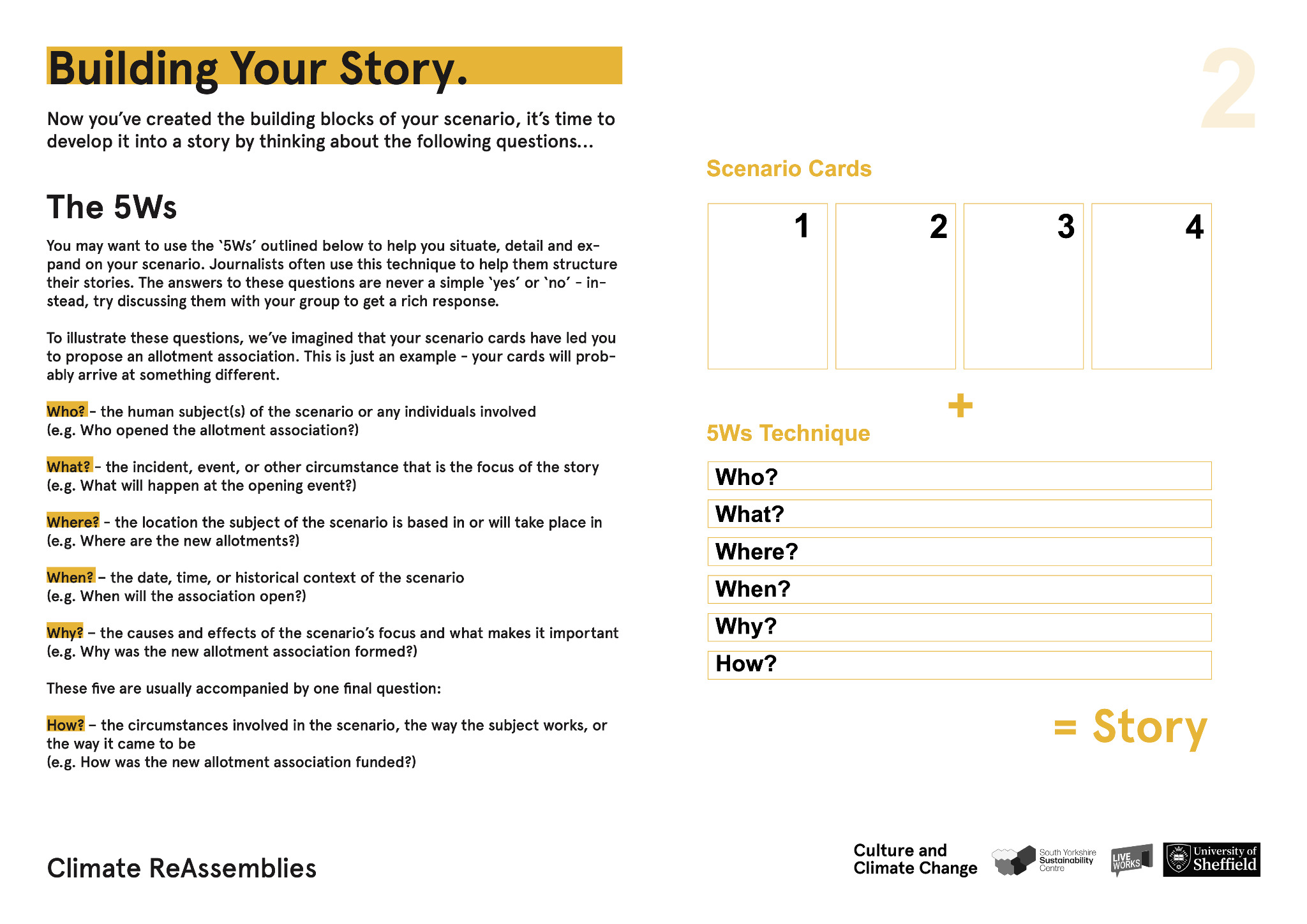
Participatory and speculative scenario-making underpinned the Phase 1 workshops, drawing on the origins of scenarios in the theatre (Tyszczuk, 2021a), and the Theatre of the Oppressed tradition of Boal (1979; aligned with the emancipatory pedagogy of Freire, 1970). The workshops were organized around a scenario-making card game, offering a ‘provisional framework’ as “an invitation to practices of scenario-making that attempt to open up possibilities for as-yet-unimagined futures” (Tyszczuk, 2021a). The four sets of cards reflected the four elements of this framework as follows:
-
a story synopsis (or, in this case, a CA recommendation);
-
props that are makeshift (known within the project as ‘objects’ relating to the local context);
-
a timeframe (in this case, ranging from 1 day to 100 years, with milestones associated with climate goals, e.g. 2050);
-
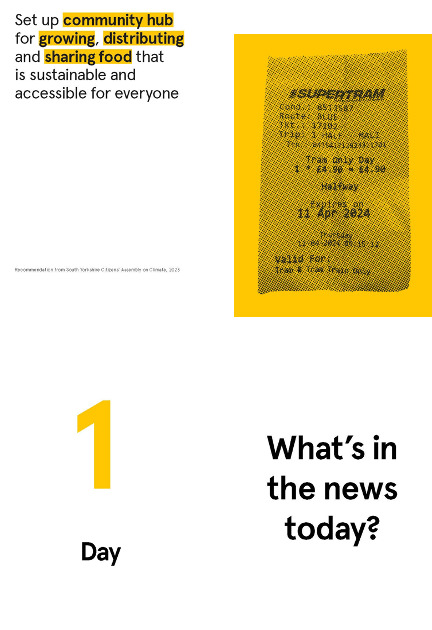
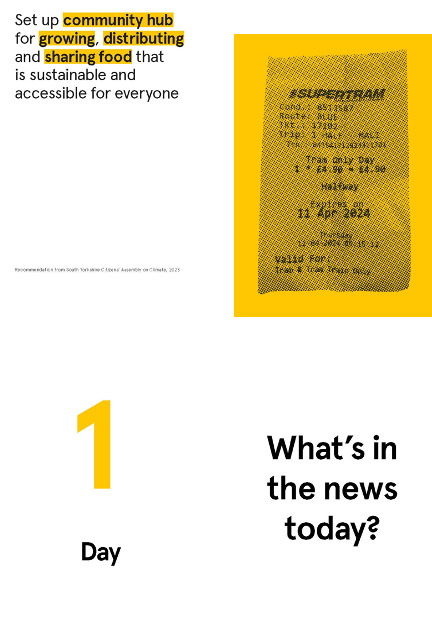
a situation (known within the project as ‘disruptors’ – in the form of characters, contexts, or events, e.g. ‘what’s in the news today?’ – to challenge our thinking).
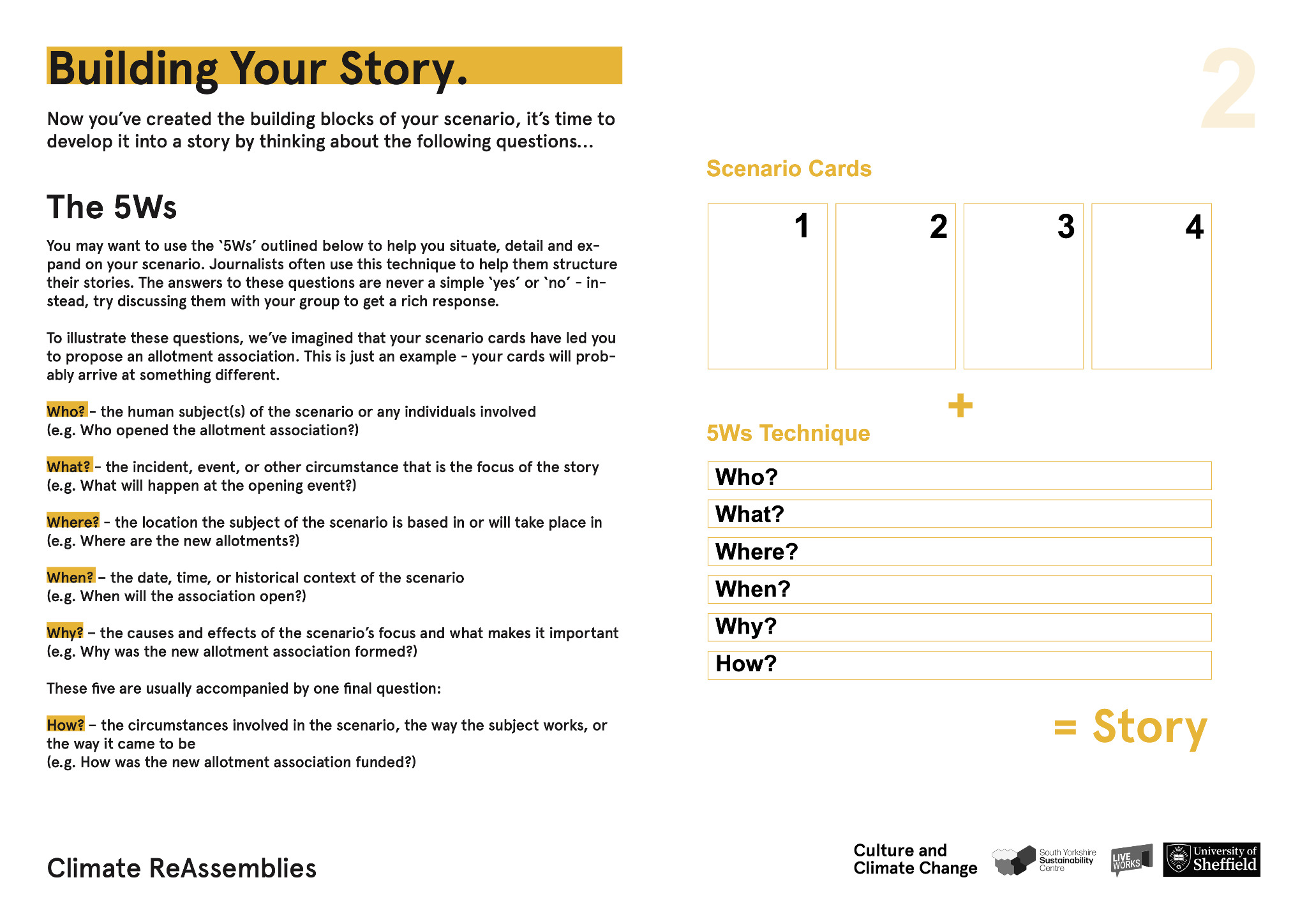
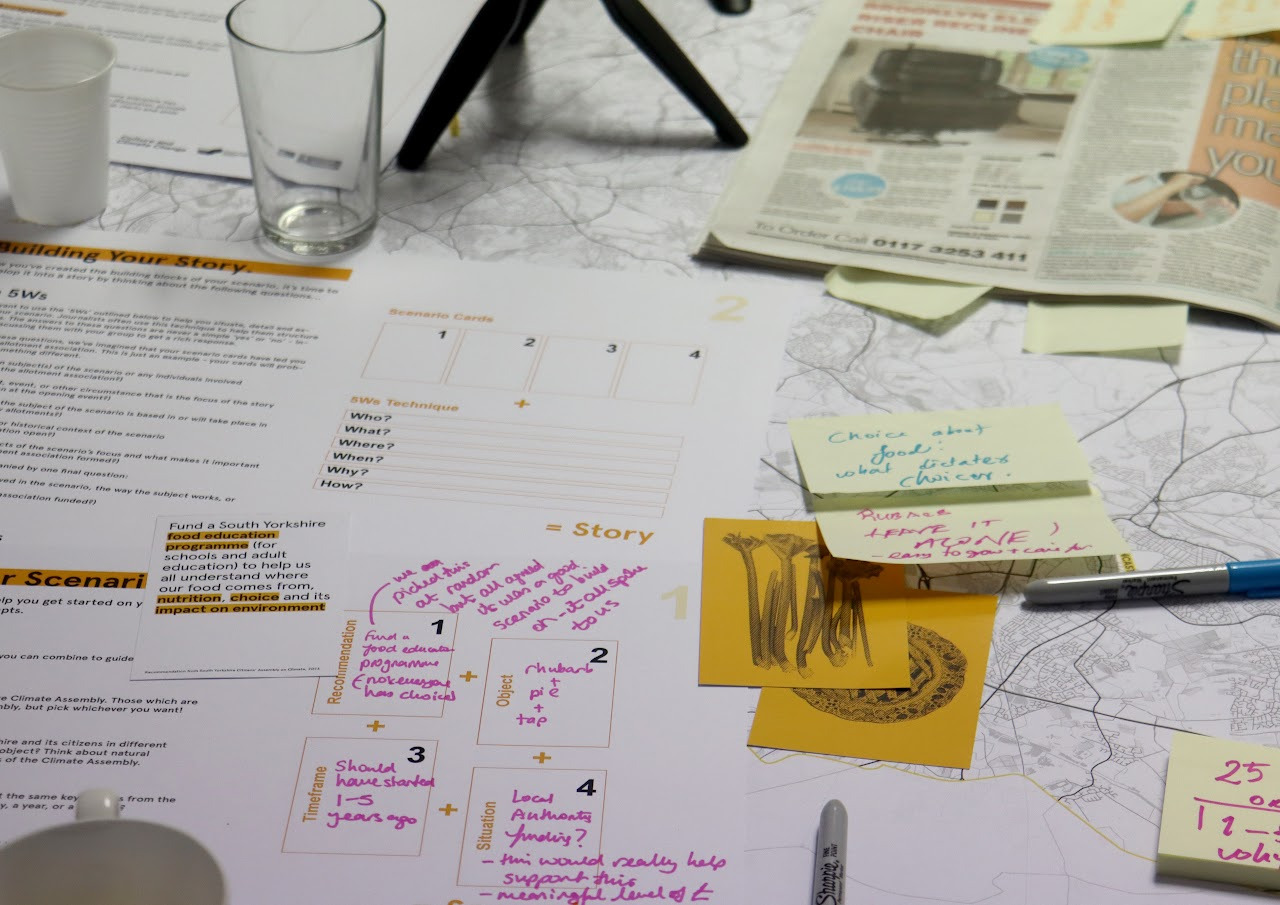
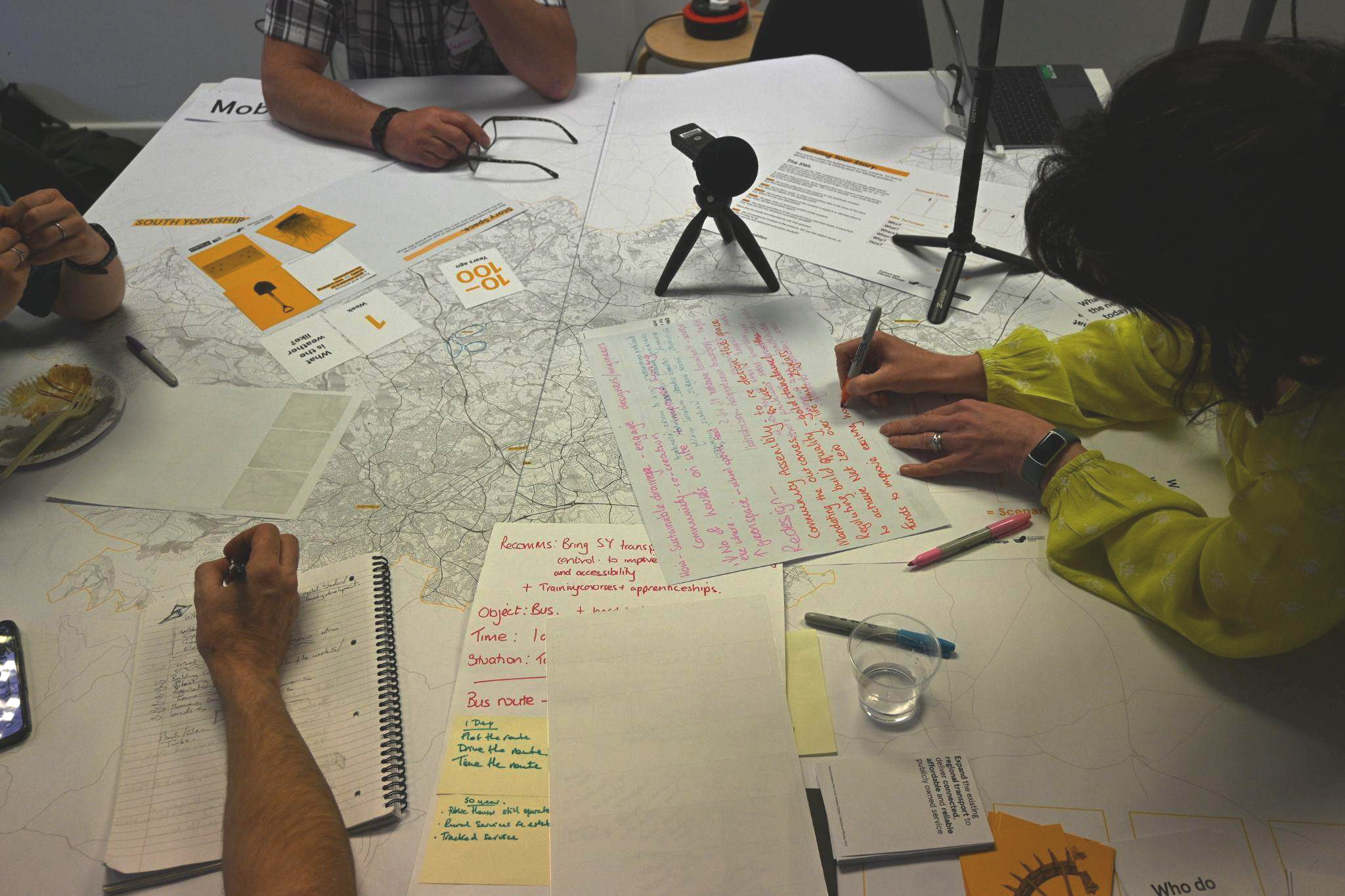
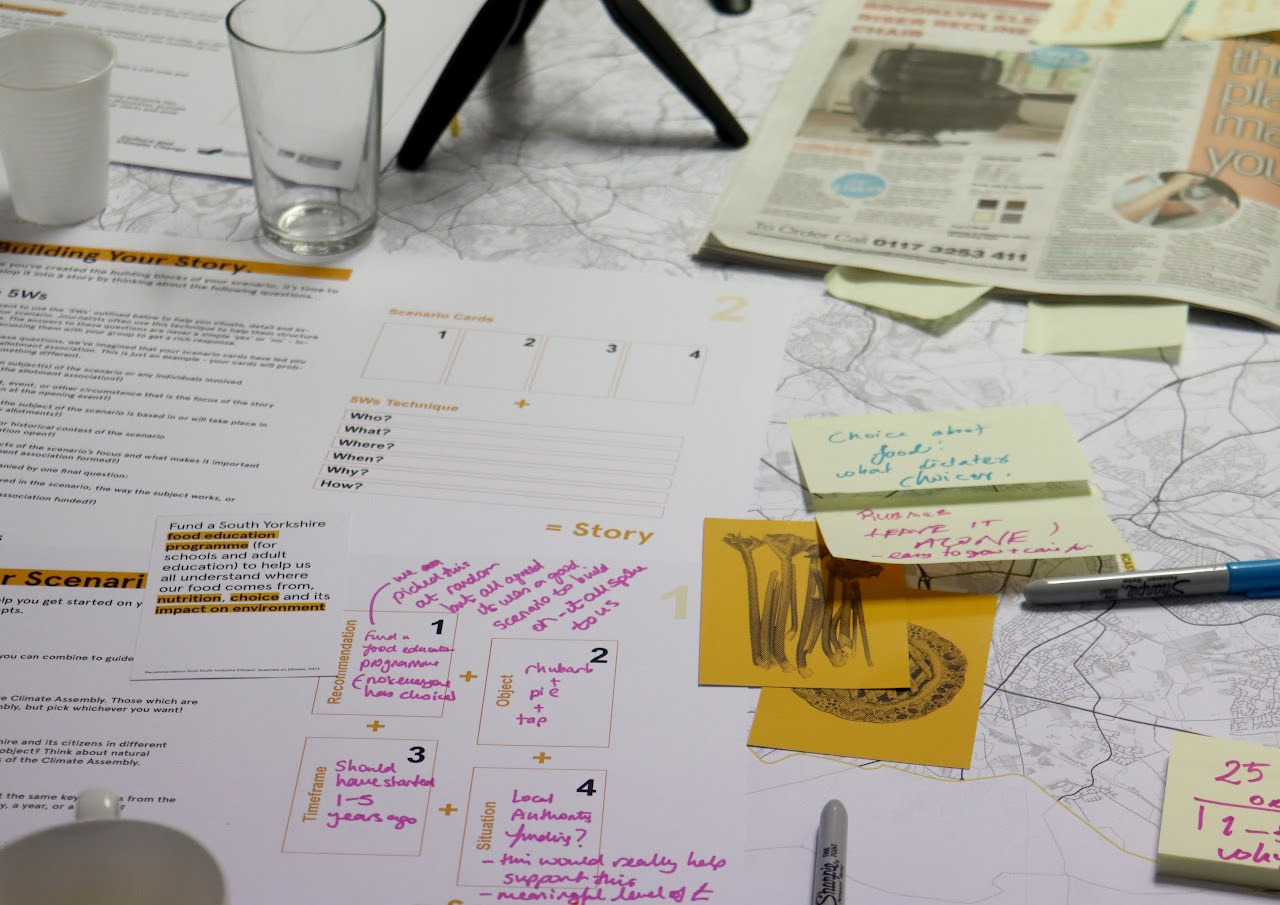
Participants were encouraged to establish a scenario framework in collaboration with others (‘Building Your Scenario’) and then engage in interactive and iterative storytelling based on the collectively selected cards (‘Building Your Story’). Participants were also welcome and encouraged to move beyond these through their own card-making (Figures 2–4). An engagement with scenarios as ‘rehearsed improvisation’ cautioned against ‘scripted’ or ‘directed’ public engagement practices driven by experts, designers, or researchers that corroborate expectations. Instead, collaborative scenario-making was conceived within an anticipatory framework that could make room for working with a multiplicity of perspectives, generating multiple improvised ‘what ifs’, and accommodating as yet unknown and uncertain cultural shifts and futures (Tyszczuk, 2021a).
There has been growing interest in the potential for scenario-based methods to enable wider engagement with democratic processes, though often from a technocratic rather than humanities-based conception of scenarios (with rational analysis, quantification and data-driven models in the tradition of Kahn, 1962; see also: Börjeson et al., 2006; and, Amer et al., 2013, for overviews of scenario planning). Thinking through scenarios from a humanities perspective enables citizens to take on different perspectives to their own, and to consider scenarios of potential climate futures. It allows for the entanglement of multiple timelines, locations, stories and their consequences; it thereby fosters an understanding of the multiple overlapping injustices, exclusions, and oppressions of climate change as intimately entangled – for example, the life of a young person in Sheffield entwined with that of an elder on a climate threatened Caribbean Island. Within the collaborative space of scenarios, the removal of hierarchies (structural, political and economic, and thereby age, ethnicity, and gender-related, imbalances of power) can allow participation from different demographics, and a wider diversity of voices to be heard. Scenario-making can thus foster collective, accessible, and inclusive activities with communities of citizen-climate-researchers, eliminating conventional power imbalances between ‘citizen’ and ‘expert’.
Intra-active citizenship
The project was also conceptualized within the evolving framework of interactive documentary (i-doc), described as “documentary as do-it with others citizenship” (Rose, 2014). An i-doc is a non-linear, multimodal storytelling medium activated through a digital interface that is focused on participation, agency, relationality, and polyphony (Aston & Odorico, 2018; E. Harris, 2025). The Climate ReAssemblies i-doc was conceived to function as:
-
a storytelling environment, allowing citizens to imagine future scenarios;
-
a guide to alternative modes of democratic participation;
-
an archive of resources for citizens.
The i-doc could thereby become an accessible, inclusive, and democratic civic rehearsal space providing opportunities for critical reflexivity (Tyszczuk, 2021a).
While interaction assumes that distinct, pre-existing entities are able to act upon each other, we recognized that, in the context of scenario-making, agencies are not separate but emergent, mutually constituted and co-created through their entangled relationships. As such, the project engaged with the immersive, agency-oriented, and polyphonic and thus brought together ‘intra-active Earth citizenship’ (Tyszczuk, 2021b) and ‘intra-action’ (Barad, 2007), which understands agency not as an individual property but as a dynamism of more speculative relations and transformations. Moreover, in the context of uncertain climate futures, it opened up the potential of modes of ‘climate intra-action’ which re-assert “climate action as a series of unpredictable, experimental, collaboratively enacted reconfigurations of worldly relationships” (Verlie et al., 2020). The project thereby explored how intra-active scenario-making methods – or improvised, collaborative, and iterative worldly reconfigurings – could allow us to imagine more collective, inclusive, and agential climate futures.
Phase 1 – Climate ReAssemblies: Participatory climate futures (January 2024–July 2024)
Building shared understanding and community
For Phase 1 of the project, the recruitment strategy used a mix of purposeful and snowball sampling methods (Parker et al., 2019; Patton, 2014), with targeted invitations to climate-engaged and community-active organisations within the region, especially those whose citizens could be defined as being minoritized in regional climate change policy engagement through the demographic mapping (of gender, age, and ethnicity) of the SYCAC (SYMCA, 2025). Challenges and limitations to recruitment were experienced (see Findings: Challenges and Limitations). Crucially, all participants were fully remunerated (above UK minimum wage) for their time participating in the workshops, with catering provided and travel covered to ensure there were no barriers to attendance relating to transportation.
The positionality of our academic research team was of majority female-identifying, majority ECRs, and majority white (British or Other). As such, we recognized the inherent risk of viewing minoritized participants’ experiences through a dominant racial lens, further necessitating the emphasis on co-production and ceding interpretative power to participants or creative practitioners to prevent any misinterpretation of diverse climate realities. While the team’s composition may have helped flatten traditional patriarchal academic hierarchies – fostering a more relational and communicative environment – we remained vigilant that this did not negate our racialized institutional privilege. As majority ECRs, the team occupied a liminal institutional space. While this allowed for greater methodological flexibility and a less intimidating posture than senior institutional figures, we had to actively mitigate the extractive pressures inherent in early-career academia by ensuring the project delivered immediate, tangible benefits to partners and participants.
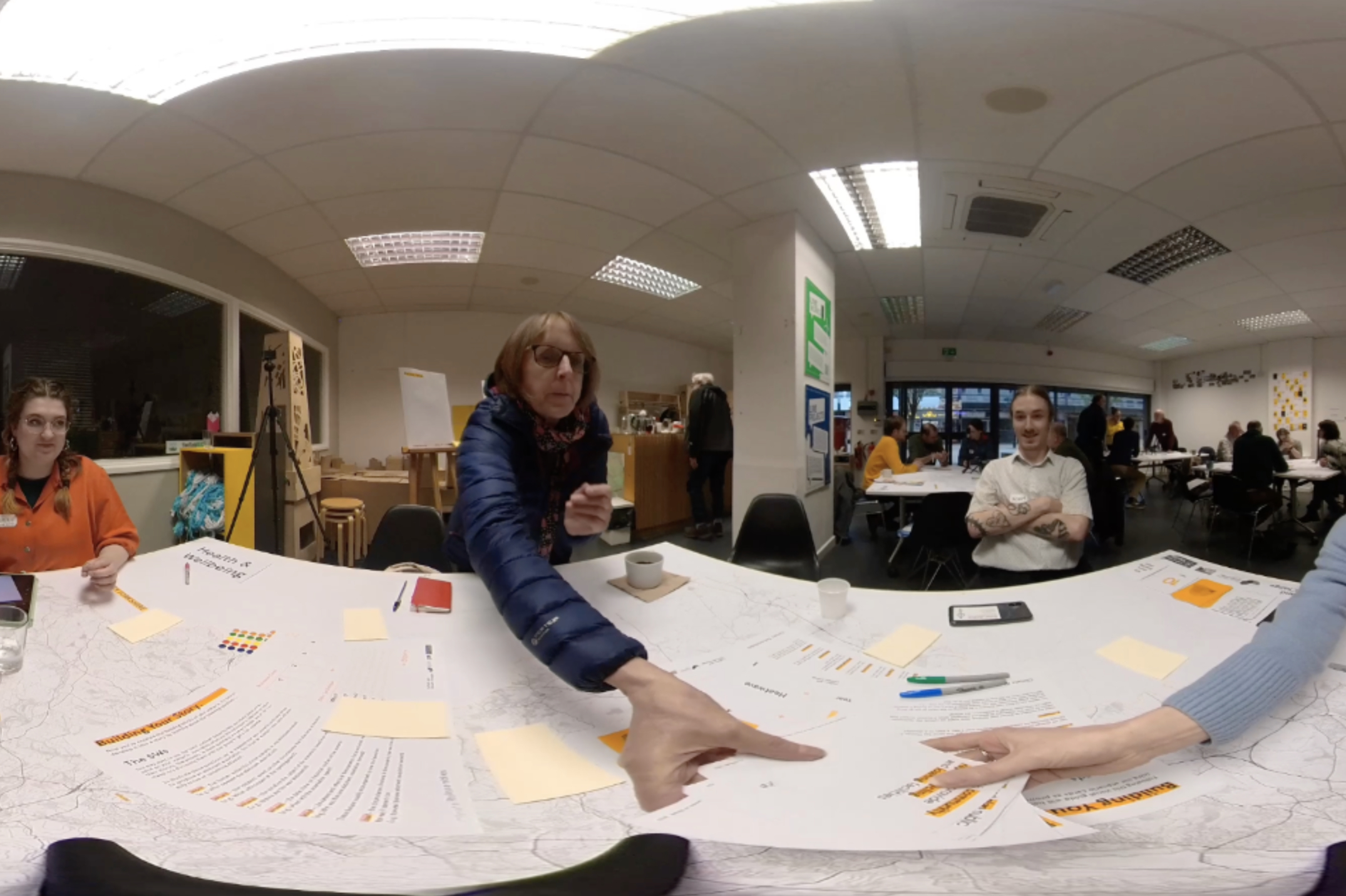
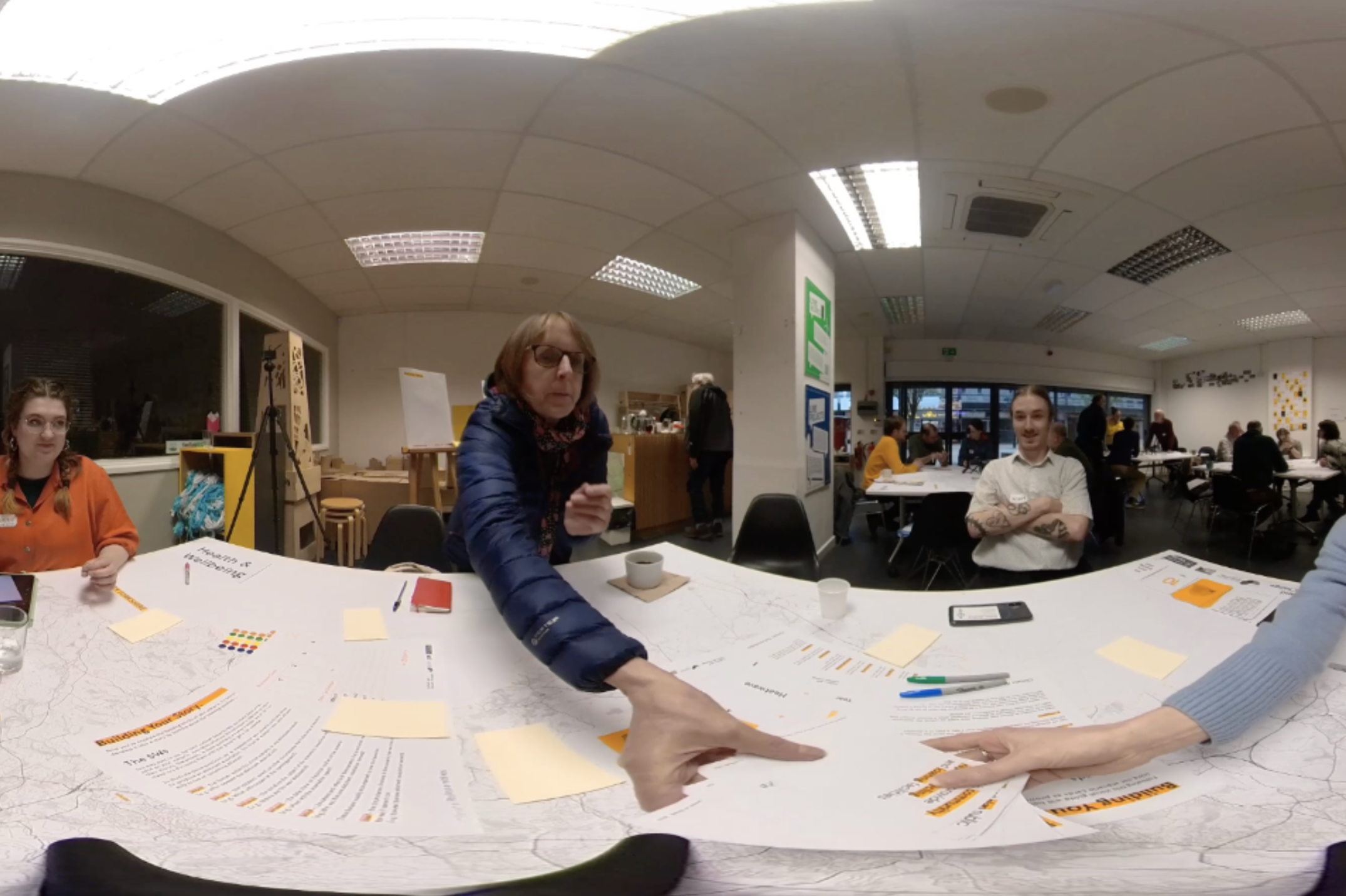
After ensuring compliance with institutional ethics, risk assessment and informed consent procedures, those who had responded to the recruitment call (beyond the 6 members of the academic team and 2 research assistants, 14 citizens attended each session, with 16 different individuals attending in total) assembled across three in-person two-and-a-half-hour workshops. These were held on evenings between April and May 2024 at Live Works, the University of Sheffield’s ‘urban room’.[2] This location provided an ‘in-between’ space that, though technically institutional, was public facing. It allowed for four tables, with approximately 4–5 randomly-allocated participants per table – including a member of the academic project team able to act as a facilitator if required. Informed by the methods, materials provided included: writing equipment, prompt materials (newspaper; regional map tabletop; scenario cards), and worksheets (‘Building your Scenario’; ‘Building your Story’); while audio recorders, 360-degree video cameras, visual notes, and photographs captured discussions and interactions on each table, with anonymisation available if requested.
Within the first workshop, it was important to familiarize participants with the project’s background (i.e. why it was being undertaken), with each other, and with the processes and modes of scenario and interactive documentary-making that would be explored in the sessions – with emphasis that the process of documentation would not be to gather material for data analysis, but rather that the material gathered would be collectively co-evaluated and co-developed into a co-created documentary platform with iterative consent. Through open dialogue of SYCAC and its recommendations, participants’ collective expertise and experiences (i.e. what had brought them to be involved with the project) were shared and from this common aims and expectations for the project within the group were developed. This was supplemented with allowing participants to interact with the scenario-making card game, and to test the scenario-making method by creating future scenarios (Figure 5). The workshop closed with a feed-forward dialogue to encourage reflections from participants that would inform modifications within subsequent activities, a process repeated in the subsequent workshops.
From participant reflections, we recognized that they experienced some difficulties in appreciating the wider context of CAs; thus, we introduced a further component of building shared understanding. The third workshop opened with a presentation from a designer, organizer and deliverer of participatory and deliberative processes such as CAs (see, for example, Wakeford et al., 2008) – framed around the issue of continuity post-CA, followed by Q&A. This provided participants with additional insight into motivations for innovating in deliberative democratic processes.
Collaboratively creating shared, tangible outputs
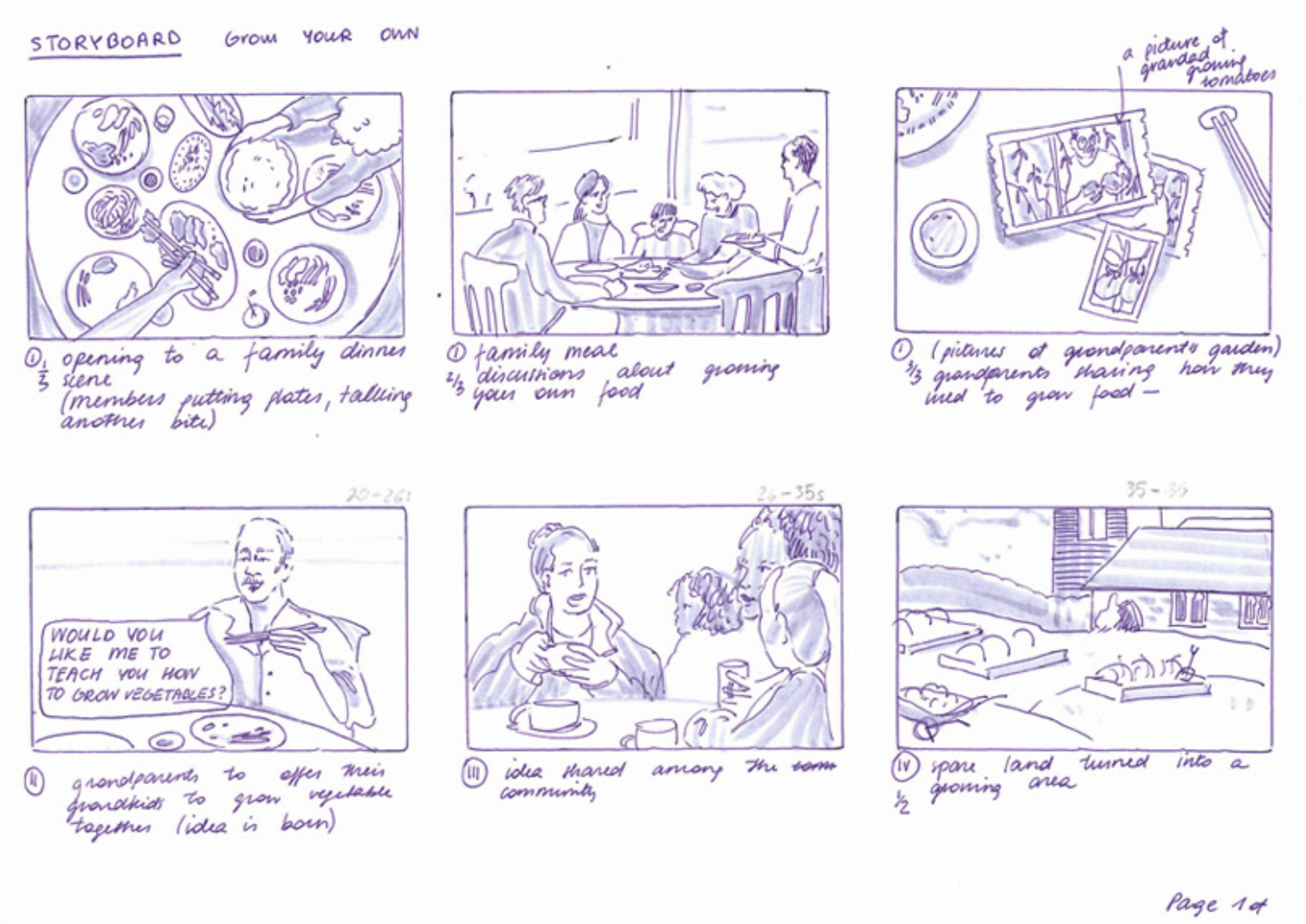
Within the second workshop, dialogues were translated into multiple exercises of scenario-making (Figures 6–7). Through an iterative process of scenario-building and sharing, each table produced 2–3 future scenarios – the product of both longer and quick-fire (5 mins) activities, with the intervention of disruptors such as a ‘what’s in the news today?’ prompt card, or the changing of a timeframe card that the tables could respond to by creating alternative scenarios. This anticipatory framework was designed to build adaptive and responsive capacity within the groups. The final, third workshop then focused on storyboarding activity and the refinement of 1x scenario per table for animation with an illustrator (Figures 8–9). As there was relatively consistent attendance across workshops the final animated scenario could be understood to represent participants’ collective views and experiences.
.png)
.png)
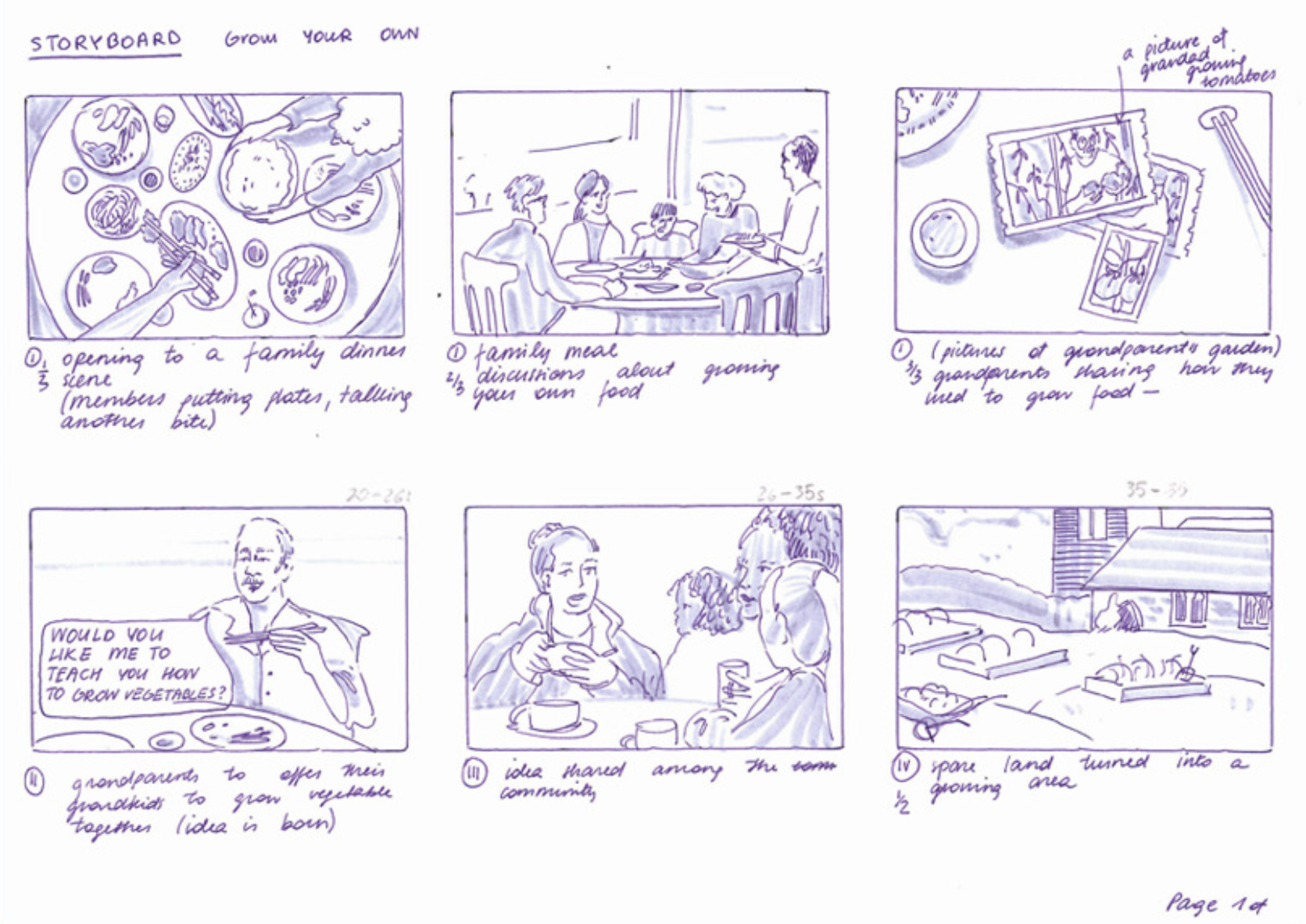
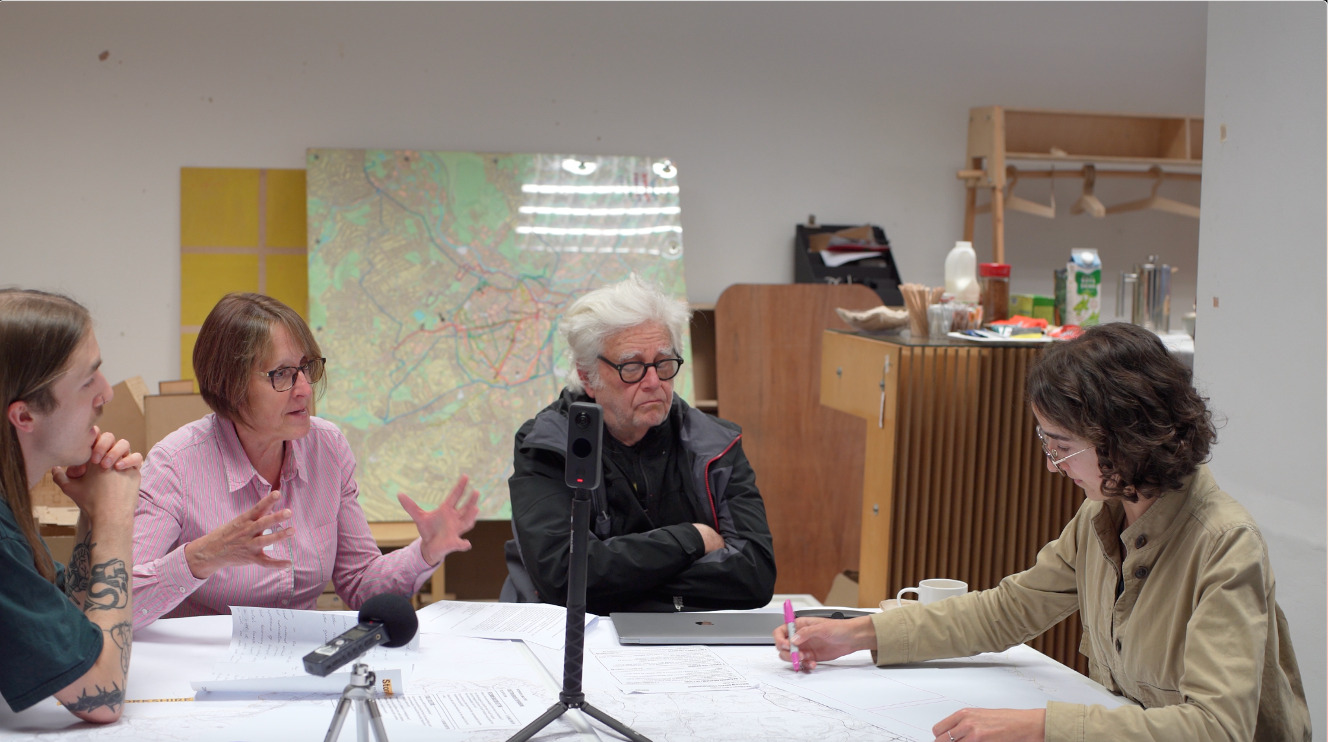
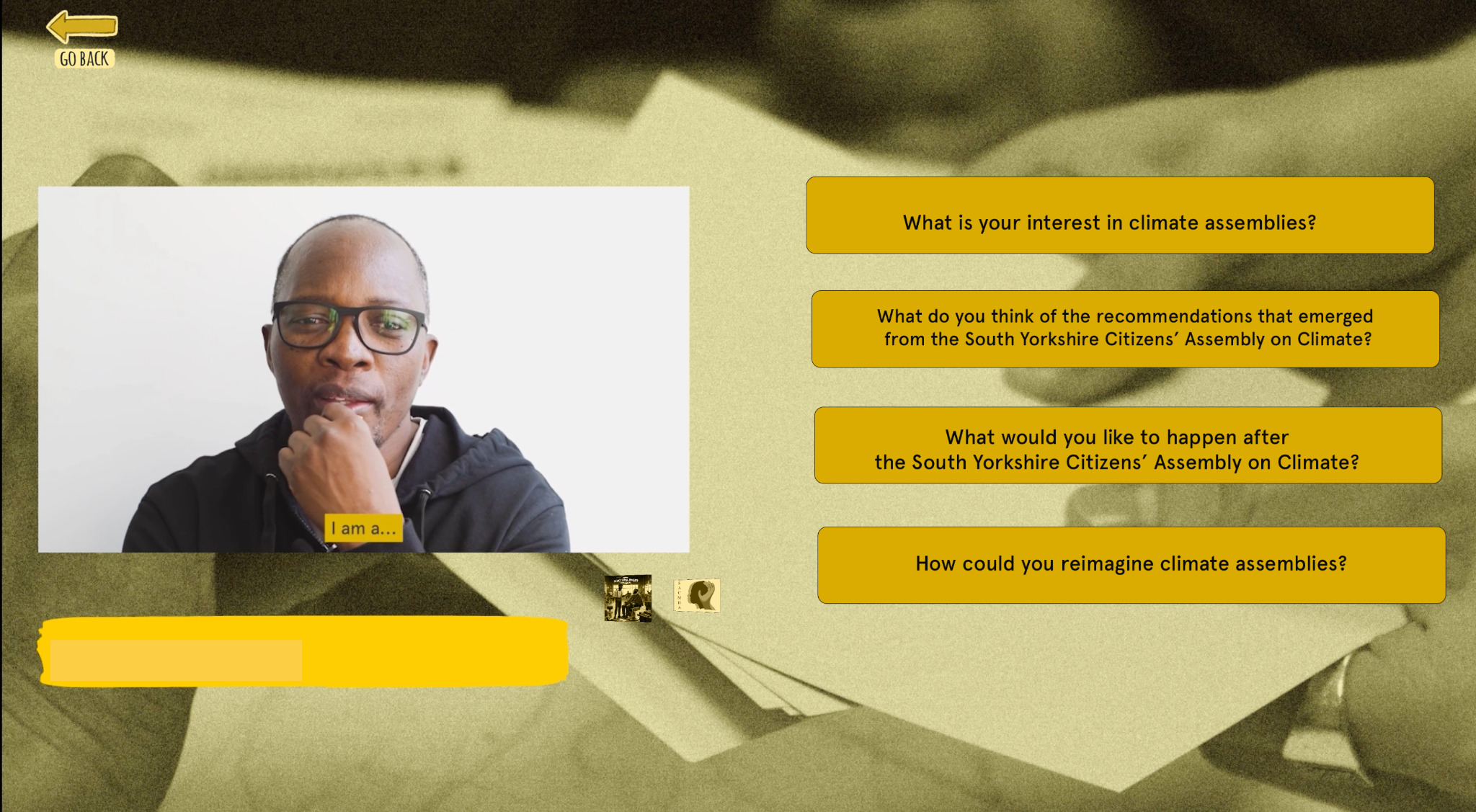
Following the final workshop, two 1hr online sessions (held in the evening, attended by 3-4 participants, 2-3 research team members, and the illustrator, with remuneration) enabled sharing of the designs of both the four scenario animations and the i-doc, with opportunity for reflection, comment, and change. Participants were unfortunately self-selecting, attending based on their capacity and interest; though there was at least 1x participant per scenario to ensure that each had representation from a direct contributor to the story. One participant per scenario narrated a voiceover recording of their scenario’s storyline, added to the animation in post-production. In addition, the majority of participants were interviewed (at the School of Architecture and Landscape, with remuneration) (Figure 10). These semi-structured, filmed interviews enabled the collection of primary qualitative data relating to citizens’ knowledge and views on citizen-climate-policy engagement processes, such as CAs and their follow-up, as well as evaluation of their involvement in the research project (Carrick et al., 2026). Responses were then edited (with consultation and approval from participants) into accessible extracts for the i-doc.
.png)
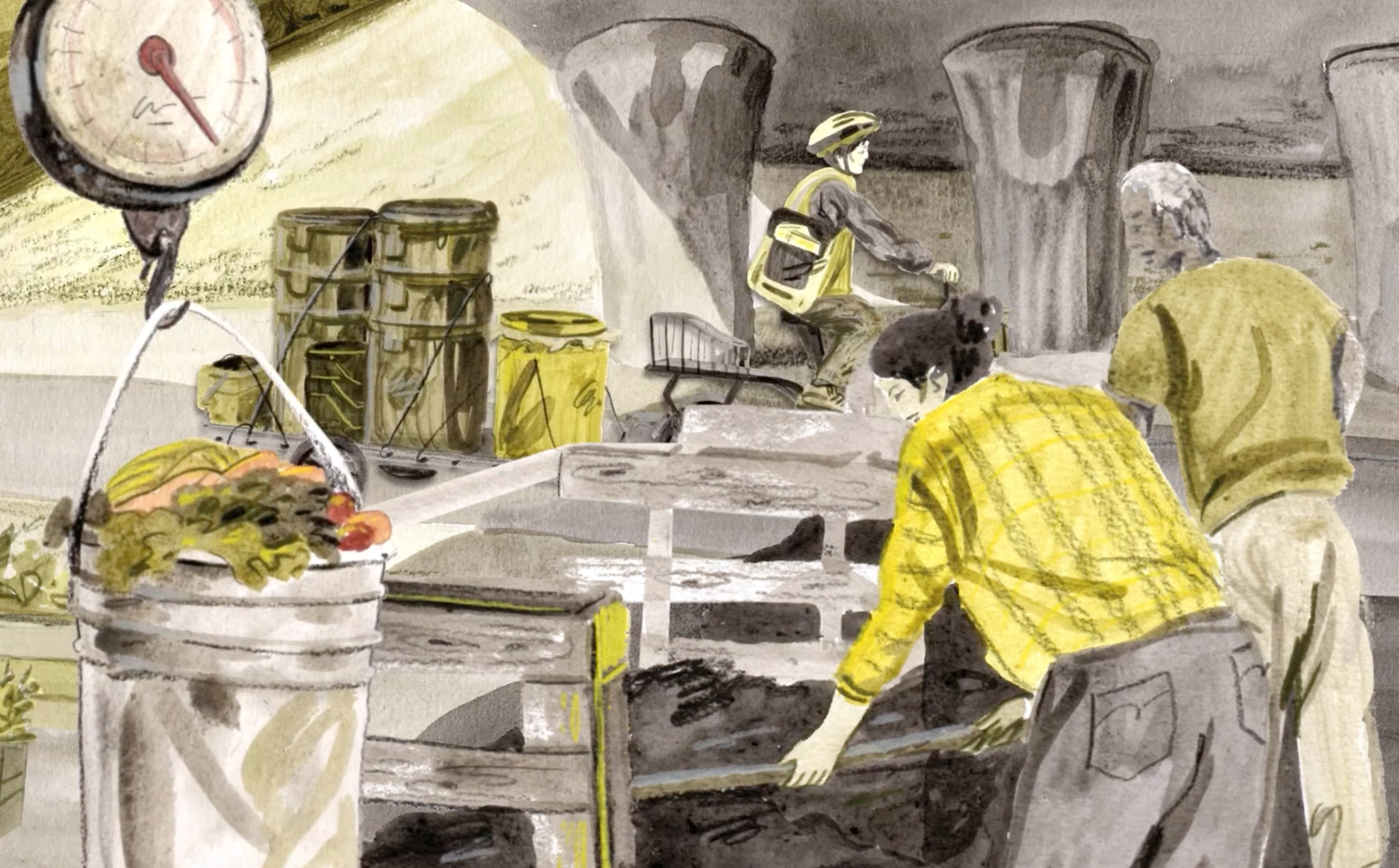
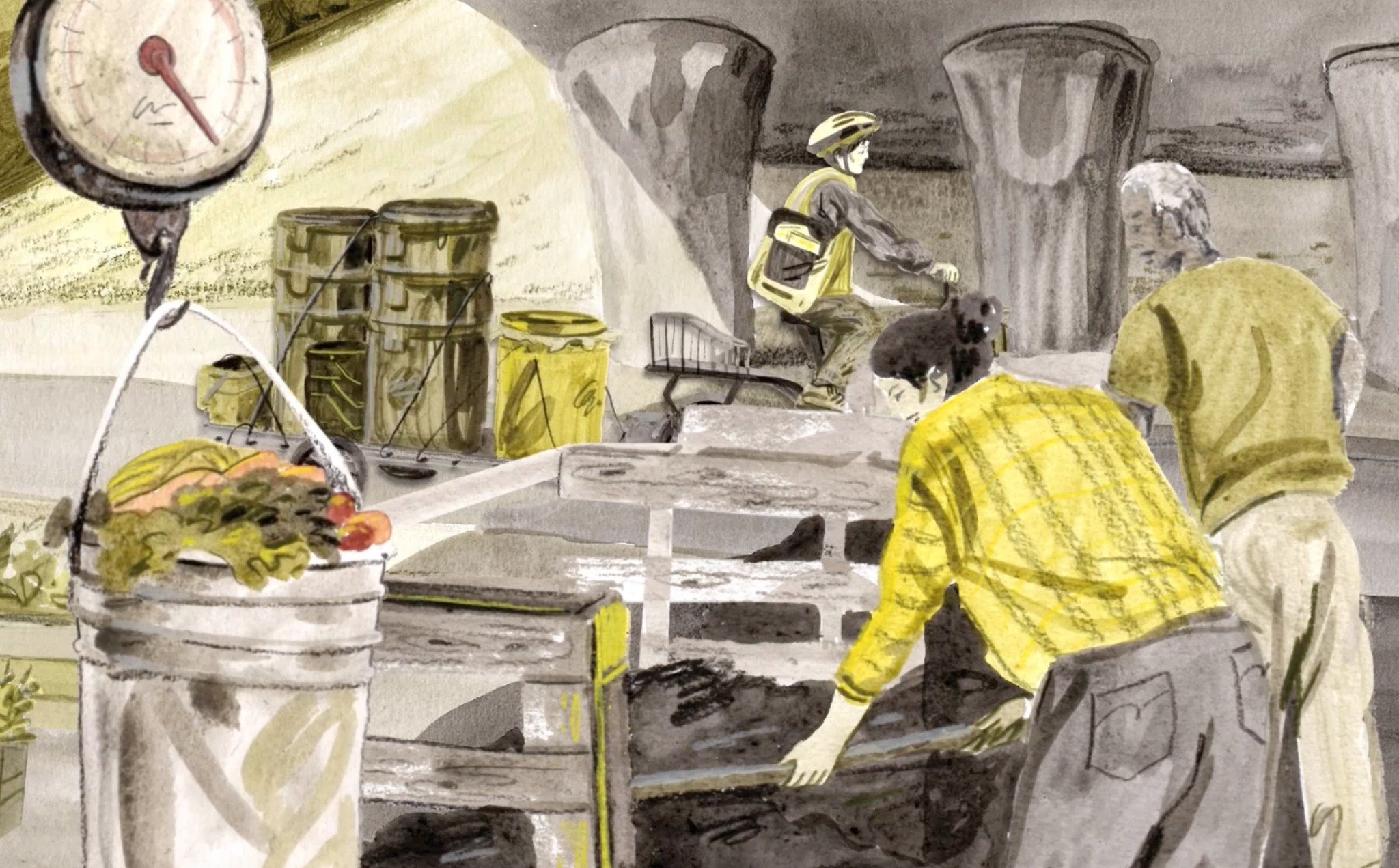
The illustrator, thereafter, transformed the storyboards and narrative voiceovers into animations, which were captioned to ensure accessibility (Figure 11).[3] The chosen visual style and content were, in conversation with participants, evocative without precluding the possibility that others from different contexts might still see themselves and their communities within the narrative. None referenced the recommendation card from which they stemmed directly, allowing for future open dialogue amongst a wider group of citizens without direct relationship to our live case study or immediate regional context.
Reassembling our shared climate futures
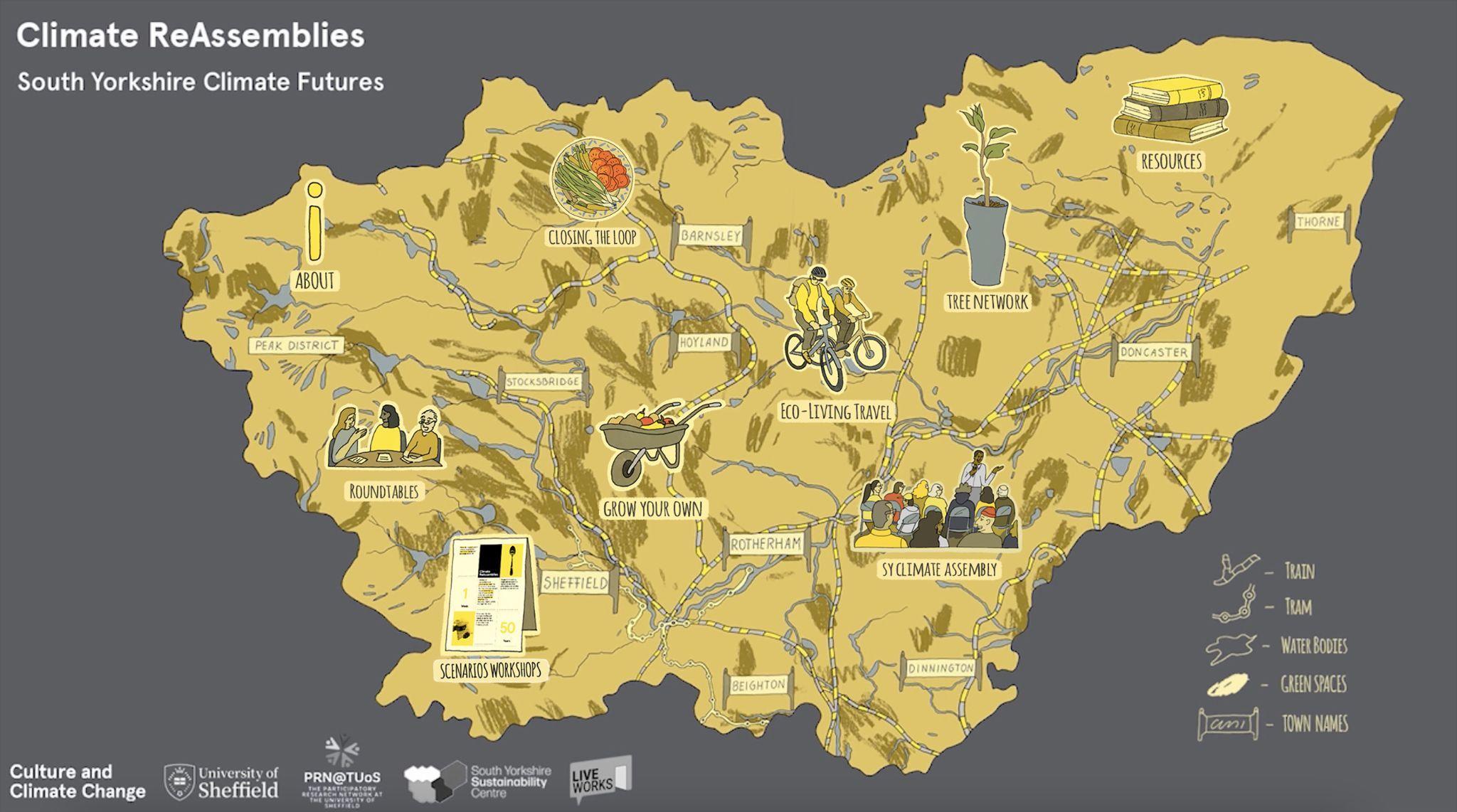
The Climate ReAssemblies i-doc hosts outputs from the workshops and sessions.[4] It includes: four recommendations narratives; 360-degree video footage of table discussions, alongside photo and video documentation; workshop materials including drawings, annotated maps, and storyboards; and additional resources including interviews, Assembly participants’ diaries, and climate policy documentation (Figure 12). The i-doc was made publicly available, offering an accessible platform raising awareness of, and amplifying, the recommendations from SYCAC through the voices, experiences, and expertise of participants in Climate ReAssemblies.
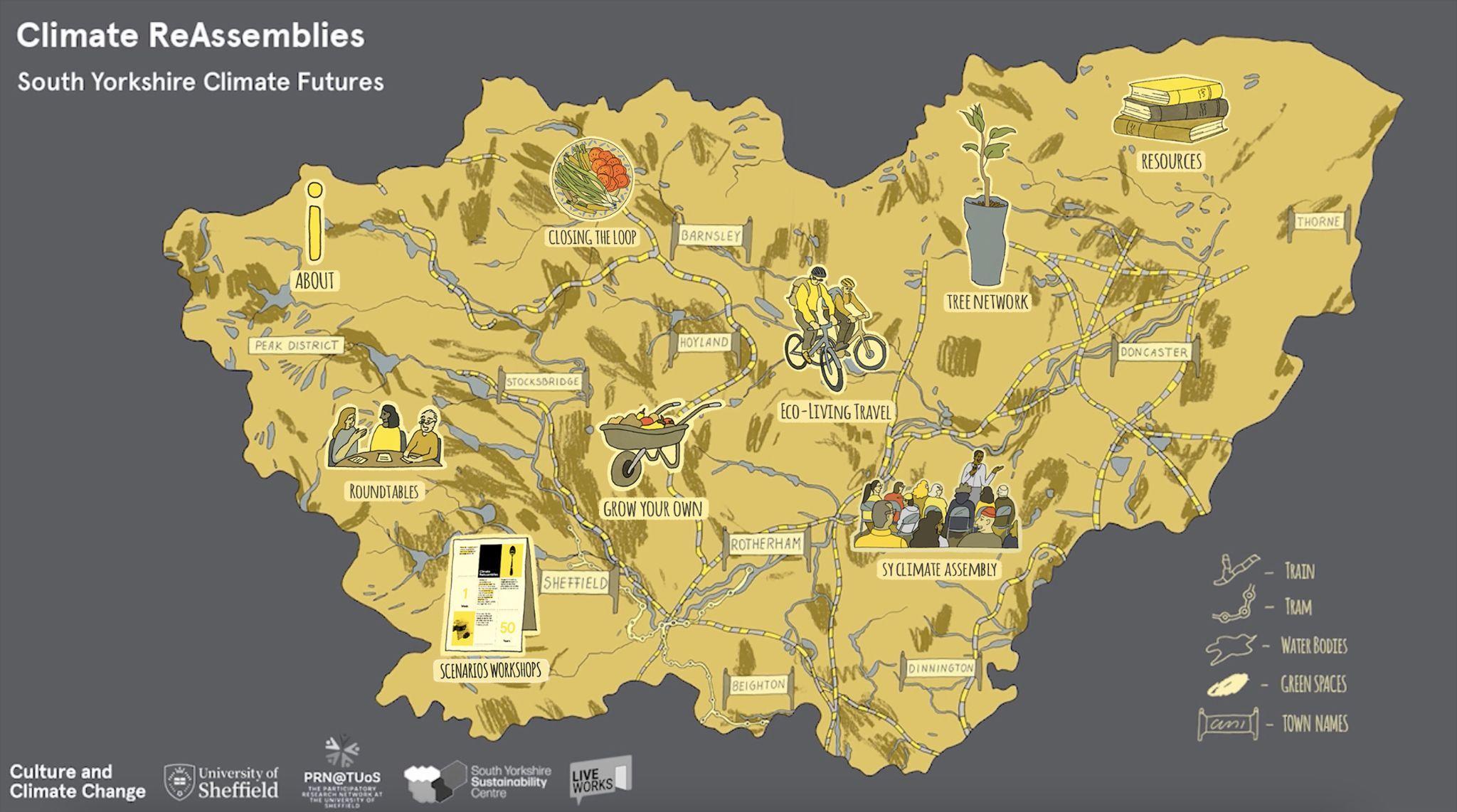
As the i-doc neared its Phase 1 completion, a sharing event was arranged within the workshop space (Live Works), with project participants joined by key additional stakeholders (community actors, policy actors, researchers) of climate and citizen engagement. This allowed the latest version of the i-doc to be shared for collective feedback and sense-making ahead of finalization – with additional film-making to support a Climate ReAssemblies research film[5] – alongside providing an opportunity to collectively reflect on participants’ experiences of the project.
Phase 2 – Climate ReAssemblies: Citizen-policy knowledge exchange (July 2024–July 2025)
What next?
Phase 2 was a collaboration with the South Yorkshire Sustainability Centre (SYSC) – an interdisciplinary research centre made up of three core partners in [institutions omitted] and SYMCA, working together to support just and sustainable transitions within the SY region.[6] Four Policy Roundtables were held with policymakers (from the four regional councils and combined authority) alongside collaborators from Phase 1, across March 18–27, 2025. The School of Architecture and Landscape (an institutional, rather than public-facing, venue) hosted each two-and-a-half-hour session with between 4-6 participants; the majority of participants attended one session only.
The topic of each Roundtable, and thus the broad work area of invitees, tied with each of the four topics of the animated scenarios (and their underpinning recommendations) of Phase 1: food waste management; trees and nature conservation; sustainable food production; and sustainable travel. By directing invitations (once more through purposive and snowball sampling methods) toward those with aligned expertise and remits within each of these areas, discussions within each roundtable could be generous, informed and purposeful (though there was limited representation from minoritized groups, see Findings: Challenges and Limitations). Once more, institutional ethics, risk assessment and informed consent processes were adhered to, with participants given the option for their contributions to be wholly anonymised – which all participants required.
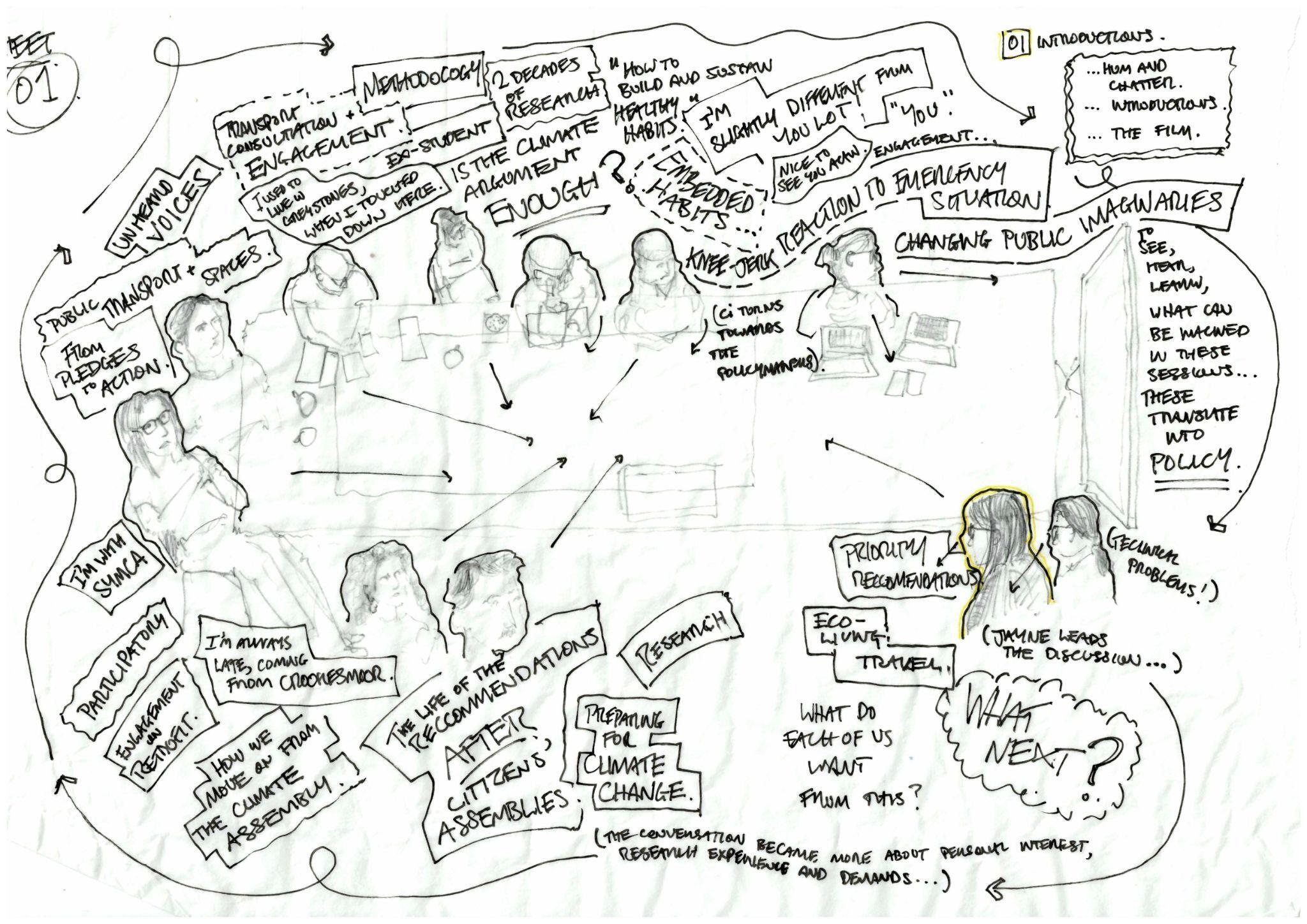
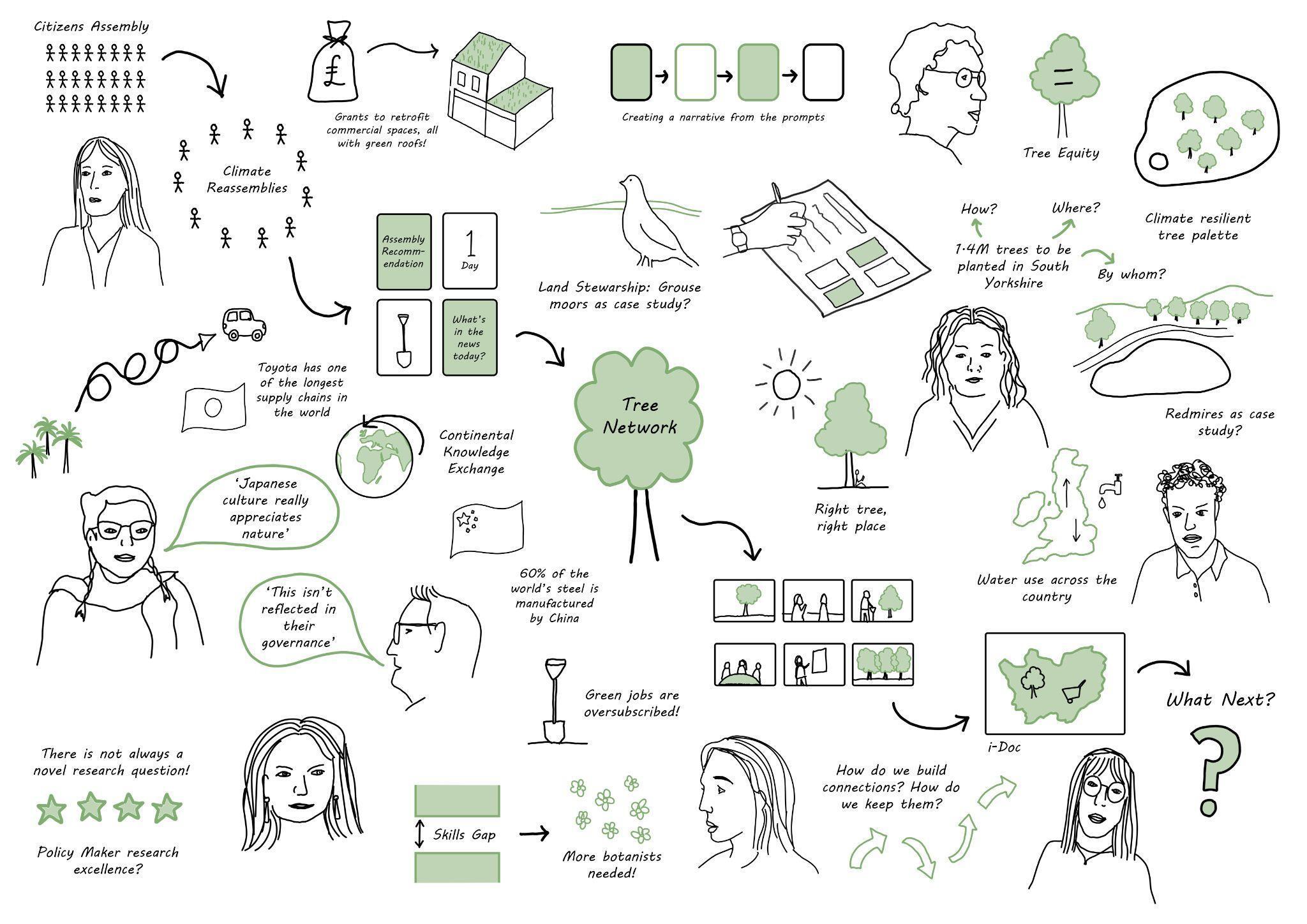
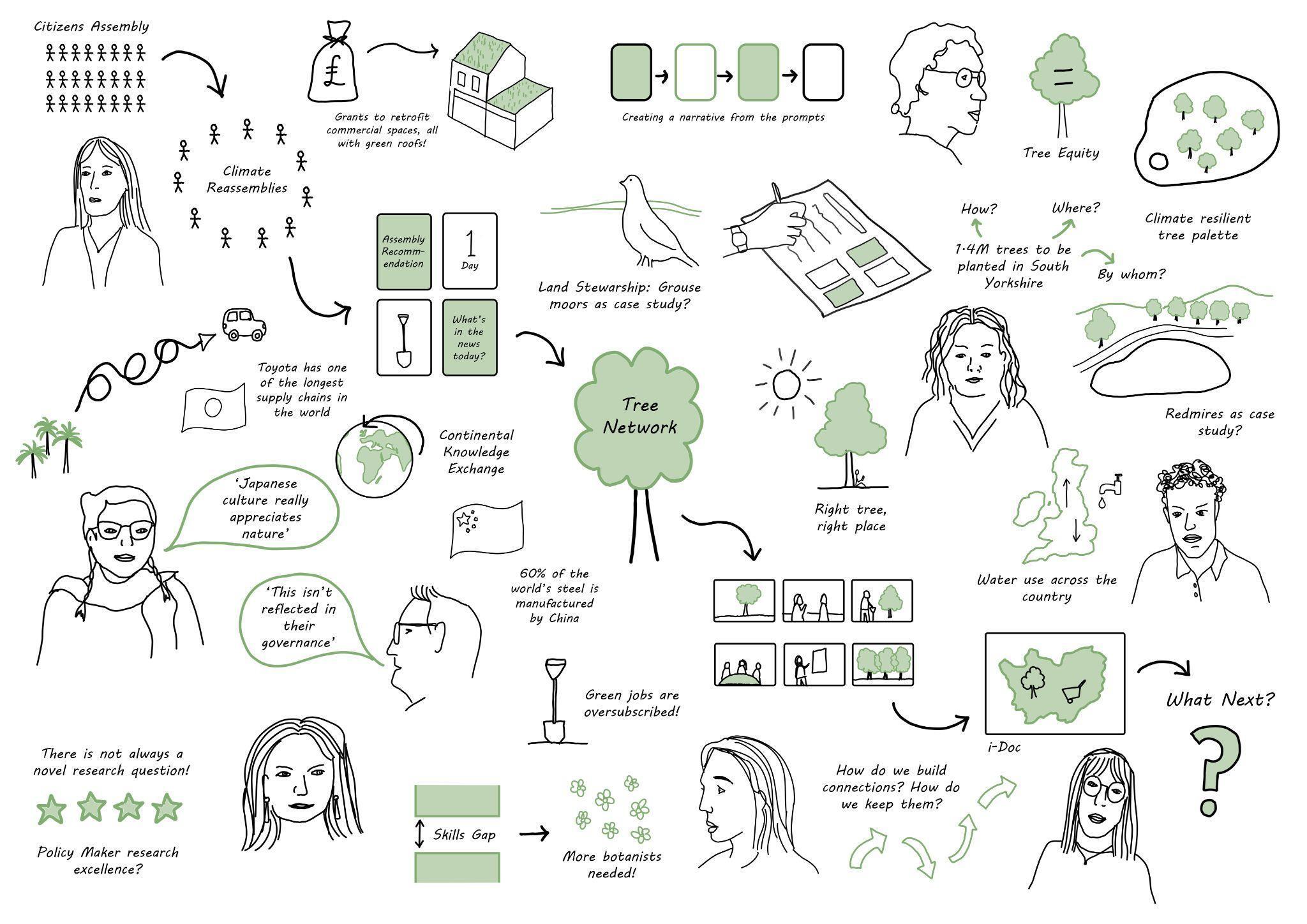
Each Policy Roundtable opened with an outline of Phase 1, before moving toward co-developing aims by asking attendees what they hoped to gain from the session. While feedback was requested at the close of each session, emergent reflections, informal feedback and observation were used to adapt each subsequent Roundtable to benefit engagement – for example, by replacing verbal and visual presentation of Phase 1 by the project team with the dynamic and concise research film. The animated scenario associated with each session’s topic followed, before a short scenario-making activity immersed the policy actors in the same participatory process undertaken by citizens within the Phase 1 workshops. An open dialogue was then held. Prompts for conversation included: What needs to change for the recommendation or story (of the animated scenario) to be part of an iterative, participatory and experimental process? Where and what actions are necessary for a more distributed / localized realization of the recommendation or story? And, What next? Though participants could raise any reflections or provocations for further discussion that they wished. Their thinking could also be informed by: scenario cards (edited and expanded to focus on recommendations and objects aligned to each workshop topic, with additional timeframes dedicated to specific climate goals, and situations reframed towards the audience – such as, ‘What are the policy instruments?’); a tabletop map (abstracted to prompt greater reflection on timelines – today to 2050 – and local-global scale impact thinking); scenario-making worksheets; and note sheets. Throughout the sessions, research assistants made visual notes, capturing key insights from the conversations while maintaining the privacy of individual contributors (Figures 13–14).

Innovating climate citizen-policy engagement
The key outcome of the Policy Roundtables was a Policy Briefing Note shared with all participants, as well as across regional government actors and climate-engaged organizations. It captured the key points of discussion from each of the four Roundtables, followed by 3–7 main takeaways related to each topic, translating the scenario-led dialogues while accounting for current regional policy agendas. The Briefing Note concluded with a list of key findings and recommendations for policymakers dedicated to opportunities for involving a wider group of citizens in the region’s decarbonization ambitions, supporting both local and national climate strategy development and delivery of adaptation and mitigation plans. Actionable recommendations included details on: how this engagement should take place (who, where), accounting for scales of impact (local to planetary); the use of creative methods; and that Local Authorities should seek to connect with other local, regional, national authorities that have engaged in similar activities, in order to explore lessons learned and best practices. These take-aways encapsulated contributions from participants that could then be shared with higher-level policymakers and wider teams.
Findings: Strengths and Contributions
Participatory Power
Participatory research requires a shift from performative inclusion to shared power. Moving beyond theoretical commitments to inclusivity requires a transparent examination of how participatory governance functions in practice. To evaluate how this was operationalized within the project, it was necessary to map the actual distribution of decision-making power across the project’s phases. By tracking roles and responsibilities across each stage, we could better understand the mechanics of co-production.
We found that authentic collaboration in Phase 1 was not a static, equal distribution of power (Appendix: Table 1). Instead, it was a dynamic process where authority shifted according to the expertise of stakeholders. During the conceptualization and governance phases (Design, Recruitment, Facilitation), overall decision-making lay with the academic research team, necessary to meet institutional standards for ethical review, financial integrity, and research rigor. However, recognizing the necessary ethical constraints that limited participant decision-making at this stage, institutional stakeholders (specifically the Ethics and Finance teams) held some influence that shaped the recruitment methodology, defining how we contacted potential participants and how we compensated them for their time – key factors in reducing economic barriers and fostering inclusive participation. By ensuring that the research design was an iterative process, an intentional, fundamental realignment of power dynamics could take place once the workshops began, essential for moving beyond performative ‘consultation.’ During the research activities, the participants assumed the lead decision-making role; they controlled the narrative, decided which local climate issues were prioritized, and defined the ‘scenarios’ and their purpose. Creative practitioners (the illustrator and film maker) were granted authority regarding how participants’ voices were translated into visual outputs, but this was undertaken in consultation with participants and required their approval. This allowed for an iterative, co-creative process where the creatives made interpretative choices that amplified the participants’ experiences. While the academic team led the logistics of sharing findings, participants maintained authority over how their knowledge was presented to external stakeholders, protecting the integrity of their contributions in the public sphere.
For Phase 2, we found a shift to a genuinely co-produced research cycle (Appendix: Table 2). The most significant change was the role of the strategic partner, who held co-equal authority from Initial Design through to Follow-on. This methodological shift influenced the research direction, ensuring inquiries were not just academically relevant but directly responsive to regional sustainability strategies. During the core of the research cycle, the process was highly collaborative, while crucially in the Roundtables themselves participants assumed lead authority. The methodological approach shifted during the interpretive and structuring phases, where decision-making authority was consolidated back to the core partnership of academics and SYSC to ensure rigor, continuity, and alignment with regional policy aims. Furthermore, the elevation of the Institutional Public Engagement team – who broadcast and platformed the research film – in dissemination reveals how the methodological choices in the Policy Roundtables were driven not only by inclusivity but by formalizing institutional pathways to ensure the project’s results would gain traction within regional policymaking.
While the study has employed an intersectional theoretical framework, ethical mandates regarding deductive disclosure (the risk of someone being identified by a unique combination of traits) necessitate the abstraction of specific demographic markers in the findings. A critical intersectional reflection on our own positionality – as a majority white, female-identifying, and early-career research team – revealed inherent power imbalances when facilitating discussions with an ethnically diverse, intergenerational public. Recognizing that our institutional and racial privileges could inadvertently constrain the scope of available discourse, our research design and intra-active methods ceded decision-making authority. By transferring interpretive power to the participants and creative practitioners, we mitigated our own biases and ensured the findings accurately reflected the epistemic pluralism of the community. Ultimately, the evolution of decision-making power across both phases underscores that authentic collaboration is a negotiated, iterative practice. Relinquishing traditional academic and institutional control at critical junctures fostered epistemic pluralism, demonstrating that when citizens are entrusted with authority, the resulting climate discourse is more resilient, inclusive, and democratically legitimate. It proves that embedding shared power into the methodology ensures that locally contingent and minoritized perspectives can meaningfully shape climate policy.
Polyvocality
The collective nature of the activities helped to bridge differing perspectives and build shared conceptual frameworks, leading to more considered dialogue around potential futures. The story-building process compelled participants to identify key motives or catalysts, helping them to recognize and communicate the multifaceted nature of climate policy challenges and their interconnectedness – for example, within the Grow Your Own scenario-making dialogues, that rising temperatures and consequent droughts occurring elsewhere in the world will lead to food shortages and potential conflicts in the UK, raising questions around national food security and local food production policy (Participant A); and, that food education should be intergenerational and ethnically diverse to foster epistemic pluralism for more equitable collective growing (Participant B). The methods thus allowed for the integration of a multiplicity of culturally rooted contributions into the creation and deliberation of climate scenarios, thus enriching our future-thinking processes beyond purely scientific or economic models.
The PAR approach created a safe space for reflection on both individual and collective positions. It also fostered iteration, allowing citizens to build their capacity for adaptability and agility in a reduced-risk environment where they could test and reassemble ideas without adverse consequence. The allowance for continuous reflective dialogue led to a cohesive and collaborative effort, while uncovering opportunities that otherwise wouldn’t have had the space and time to be fully acknowledged. For example, an impromptu sharing from a key policy actor involved in the organization of the live case study at the i-doc sharing event initiated an honest, unfiltered dialogue around the issues and inevitable trade-offs of CAs and climate policymaking processes. Following the sharing event, they shared these reflections more widely (Sulley, 2024, 2025).
The i-doc and its materials explored ideas of how we might allow for shared understandings and foster collective action; it was a speculative and polyphonic space exploring possible pathways for shared climate futures. In co-production, carefully devised guided discussions ensured the integration of expertise and experiences, recognizing that different types of knowledges are valuable, and that an iterative and adaptive process builds trust, understanding of context, and a desire to work respectfully together to generate mutually beneficial outcomes (including new knowledge production). In co-design, professional designers (illustrator, filmmaker, i-doc developer) supported the facilitation of a creative process with citizens, leveraging the creative capacity of the community to generate innovative proposals and new meanings, and thereby an output more relevant and effective for its multiple audiences. In co-creation, participants directly created content (scenarios, interviews), building an understanding of how we could best navigate relationships within the group for mutual benefit, with caution to the potential for the exploitation of unpaid labor and power dynamics between researchers, professional designers and participants. The animations were later shared in a number of public engagement activities, including Festival of Debate (2025) and an exhibition at Sheffield’s Energy Hub (2025).
The Policy Roundtables allowed policy actors a deeper opportunity to become engaged with the project, which we understood would be key for achieving meaningful impact in innovating climate policy-community engagement. They demonstrated the adaptability of scenario-making as a method and activated a relational process going beyond simply disseminating our project findings, instead aiming for mutual benefit. Indeed, following the Tree Network roundtable the combined authority initiated their own citizen engagement processes to address the SYCAC recommendation for the Mayor to plant 1.4 million trees; and, following attendance at the Eco-Living Travel roundtable, the combined authority adapted our scenario-making methods as part of an activity with schoolchildren for the South Yorkshire School’s Climate Education Conference 2026.[7] The dialogues of the Policy Roundtables have thus been dynamic and ongoing: a continuous process of learning, interaction, and relationship stewardship.
Places of Participation
The environment of the workshop sessions – Live Works – meant that contentious issues could be de-personalized, creating a safer space for open deliberation and the exploration of radical ideas without political pressure. For example, reflections from the Grow Your Own scenario-making process and the actions it promoted were that it’s “… something that’s easy to do, organise, practical, yet will make a difference; … [at a] larger scale [of action it’s] harder for you to see how you can make a difference … the majority of people can’t do anything about it … but they can join a local project … so it’s about giving people power to make a difference” (Participant C). The places of participation have since been further experimented with through a pedagogical Live Project, which continued our engagement with the Upper Don Valley Community Energy Group (who had participated in the workshops) by testing nomadic support structures for placing climate policy within the existing community spaces of peri-urban environments. The impacts of Climate ReAssemblies’ place-based experimentations are the subject of a companion research paper (Akbil et al., forthcoming).
In contrast, the location of the Policy Roundtables – the School of Architecture and Landscape – was institutional, perhaps lending a perception of legitimacy. However, the set-up remained informal and collective, with attendees gathered around tables without hierarchy – effectively dissolving professional boundaries and ensuring that contributions carried equal weight. The Roundtables thus transformed from mere briefings into sites of co-production. Consequently, policy was not simply ‘delivered’ to stakeholders, but negotiated through a shared spatial experience that prioritized collective consensus. Despite the ‘institutional weight’ of the setting (which may have risked acting as a barrier to participation), we found that grounded, lived-experience contributions were thus still offered and valued. However, we cannot overlook the tensions evident in using such a venue to host a democratic dialogue and any stifling or minoritization that may have occurred (beyond our direct experience) as a result.
Findings: Challenges and Limitations
Addressing Minoritization and Precaritization
Authentic collaboration extends beyond mere participation; it necessitates shared power, where citizens actively define both the scenarios and their ultimate objectives. Ensuring content is representative is crucial. We strived to engage meaningfully with minoritized groups and, as such, our workshops did have participation from these demographics (in relation to ethnicity, gender, age and class). However, we did experience challenges and limitations, most notably in the absence of minoritized women. This omission creates a critical tension when reading the project through an intersectional lens rooted in Black feminist methodology (Christensen & Jensen, 2012; McArdle, 2021; Mollett & Faria, 2018). It underscores the necessity of navigating the fluidity of power relations that act differently across intersections, demanding more attention and care work at the design phase than we provisioned for (Choo & Ferree, 2010). Ultimately, the project’s time commitment constraints hindered our ability to cultivate the deep trust networks required for such engagement. This reinforces the value of long-term situated collaborations over extractive, short-term sessions. Moving forward, we aim to further diversify participation, including those without any prior engagement in climate conversations.
Collaborative participatory processes also elicit temporal challenges. Since the pilot Phase 1 involved three workshops across three months, there was limited time for the onboarding of participants. Scenario-making can be a complex and time-consuming process, requiring skilled facilitation to manage diverse perspectives and synthesize information. Participants found the abstract nature of future thinking challenging, requiring careful framing and prompting from table facilitators. We also found that access to technology and digital literacy was a barrier for older participants. We sought to overcome this by utilizing shared laptops with facilitation wherever possible within the in-person sessions, but this was regrettably not possible for the remote feedback sessions – we have rectified this in current research by providing opportunity for digital engagement in-person (with access to necessary software, equipment and trained facilitators). Equally, the immediacy of the activities following the CA led to initial misconceptions of the academic research team’s role in relation to the regional government; some participants continually referred to the Workshops as the live case study that we had drawn on. It took some time (beyond our expectations) to re-clarify our position, our capacity (to influence change; to provide resources and support) and our offer to participants.
While we sought to schedule our sessions with consideration of potential barriers to attendance, identifying appropriate times to suit the majority was incredibly difficult. A further recruitment-based issue for the Policy Roundtables concerned the level of policymakers we were able to reach, with only a few higher-level actors (those with most power to initiate action) able to attend. It meant carefully customizing our activities with consideration of how to promote feeding-back to others as much as possible. For example, the Policy Briefing Note was designed to be a digestible summary of take-aways from the Roundtables that attendees could circulate, especially to senior colleagues who could not attend. Even those able to join were perhaps more restricted in their participation as governmental representatives, with their requirement for anonymity providing a very different, and more moderated, participatory nature to the Phase 1 Workshops.
While participatory methods were utilized across the project, participants were not involved fully at every stage of the research process. For example, there was limited participation from citizens in the formulation of the research design or its methodologies (although some local stakeholder groups were consulted during these phases) – a limitation to research democratization and political participation (Heron & Reason, 1997), whereby empowerment can only be at one level (voicing views), and not at a second, higher order (research design) (Heron, 1996). This can be understood twofold: partly, as result of SYCAC still being in progress at the time of the research application and, as such, our not being able to be seen to be directly interfering with an ongoing political process; and partly as an adverse impact of the funding application process, where researchers are required to declare research design and methods prior to engagement. Indeed, we understood it to be unethical to expect significant contribution on a relatively small grant application for a pilot project from non-academics (especially those from charities, community interest companies, social enterprises and co-operatives, as well as creative freelancers) without compensation. This imposes limitations on the intersectional approach, where a lack of resources brings challenges regarding precaritizing citizen researchers. This was mitigated by providing some support, though this may not have been enough to accommodate already precaritized and minoritized groups.
Although the research design occurred with limited prior consultation of prospective participants, the design, methods and approaches were together conceived as a provisional framework for collective scenario-making, allowing them to evolve during the process in collaboration with our participants. Future projects will, though, reconsider approaches to research design, indicating within applications that these aspects would be collectively determined with participants as part of the research process and devising intra-active methods for how we might do so together.
Measuring Impact and Continuity of Engagement
A further limitation we encountered was in relation to the measuring of impact: quantifying the direct impact on policy change is often difficult, as policymaking is a complex process with many influencing factors. The project was disseminated extensively regionally and, to a more limited extent, nationally (through an online Policy Roundtable with national-level government policymakers), while initial steps have been taken to develop pathways toward impact within policy communities. However, to date, substantial evidence of direct policy influence (e.g., policy alteration) has not yet been observed. Ongoing monitoring, measurement, and evaluation will be needed to assess the extent to which stakeholders implement these learnings, to support broader post-CA climate–citizen–policy engagement. We have developed a provisional monitoring framework to ensure practical utility for policymakers and practitioners (Appendix: Table 3).
An additional challenge is the question of how to follow-on from the follow-on and keep the conversation going. With increased distance from the live case study, it becomes difficult to justify continued engagement with the CA’s recommendations. Further, as with any research, we are also reliant on successful application to further funding opportunities to support any additional activities and reimburse collaborators’ commitments fairly. It is a challenge to acknowledge that any project, however impactful, is unable to be indefinitely continued, and to be honest with collaborators about this reality so that we might be able to co-devise a strategy for maintaining momentum or dialogue in other, more community-led, bottom-up ways. This includes consideration of how outcomes and learnings are more widely disseminated to communities. All workshop documentation, including the 360 footage, is deployed within the i-doc, which is publicly available and thus accessible to citizens and the wider community. The long-term hosting of the material online is, however, currently tied to institutional funding and platform provision; the question of transfer of material to communities is not straightforward to answer, as it would mean placing additional burden and costs onto stakeholder communities. We are currently in the process of developing a long-term archiving strategy. While the i-doc and animations were made publicly available (and designed with accessibility to a broad audience in mind), the policy brief was directed toward a policy actor audience only. Forthcoming reports will be directed towards creative practitioner, facilitator, and grassroots actor audiences, respectively. This strategy will ensure that each of these key communities has the opportunity to benefit from the project’s findings.
Finally, one participant highlighted a crucial spatial dynamic, suggesting that attendance may have been improved if sessions had taken place within community-embedded venues (Participant D). Even though our chosen workshop space was intentionally off campus within the city center (thus reducing spatial and transport barriers), it was still viewed as institutional. This disconnect highlights a limitation in our spatial strategy and emphasizes the necessity of co-producing research (and assembly) environments with target communities. It suggests that the physical location of research (and assemblies) holds significant symbolic weight; merely moving away from institutional campuses does not automatically neutralize psychological barriers or perceived power imbalances associated with academic research (or policymaking). In response, subsequent research and pedagogical activities associated with Climate ReAssemblies have prioritized venues that are not only geographically accessible but also culturally and socially integrated into participants’ ongoing daily lives (Akbil et al., forthcoming). Beyond accessibility, these socially integrated venues are ‘low-stakes’ touchpoints where trust is already established and that align with the time constraints of minoritized groups. They can facilitate a ‘situated’ collaboration that remains active long-term, turning participants into co-stewards of the climate transition. By embedding sessions within daily rhythms, we can move away from isolated events toward impact as an observable shift in how climate imaginaries are integrated into community discourse over time. This shift in spatial strategy allows for a more longitudinal approach to sustained engagement and measuring impact, defined by the depth and continuity of relationships.
Discussion
True collaboration means shifting power dynamics so that subjects become active agents, not just sources of content (Rose, 2017). Through the collaborative approaches, participants were able to make their own choices, promoting their sense of ownership over outcomes. Local knowledge and lived experience were valued, enhancing the relevance and depth of explorations, strengthening relationships, and thereby increasing the likelihood of sustained positive change. The polyvocality afforded by these methods thus stimulated a more nuanced understanding of issues and built empathy amongst stakeholders. By giving voice to minoritized contexts or communities, lived experiences otherwise overlooked in policy discussions could be highlighted (Cortés-Selva & Pérez-Escolar, 2016). Though a more robust intersectional approach is demanded to overcome the systemic barriers that prevent minoritized citizens from entering the policy-making sphere. This involves recognizing that different intersections of identity require different modes of recruitment and trust-building, ensuring that the project does not inadvertently replicate the very exclusions it seeks to rectify.
In working with the scenario framework, the project’s intra-active methods made room for the unruly, unexpected, and unacknowledged, where conversely more conventional scenario methods have tended to be too rigid to deal with differences in knowledges, perspectives, and emerging situations (Tyszczuk, 2021a). They thus allowed for more improvisational modes of rehearsing collective futures, responsive to the contexts of different communities. By building narratives around different combinations of place-based and citizen / community-based motivating factors, scenarios encouraged participants to think systemically about how various elements might interact and influence outcomes (in the soft systems thinking tradition – oriented to learning; concerned with process; accepting inquiry as never-ending; emphasizing context and interconnectivity – Ison, 2008). For, “both action research and ecological practice take place locally and within large complex systems […] it is necessary to think globally while acting locally,” to consider the interconnections, where “a system is constituted by interdependent actions and intentions of its elements over time […] subtly changing […] constituted and reconstituted” (Reason & Canney, 2015). Or, we might say, assembled and reassembled. This way of thinking will be crucial for developing policies that are resilient to unforeseen changes, which are especially likely to be encountered through the uncertainties of the climate crisis.
Through the first two phases of Climate ReAssemblies, we have sought to address the critical ‘participation gap’ between climate policy recommendation development and implementation, and the challenge of sustained civic engagement following CAs. By embracing ‘intra-action’ – acknowledging the inherent messiness of collaborative making – we have utilized participatory and speculative methods to develop a more inclusive approach to climate governance. The project has created a platform for interdisciplinary knowledge exchange, offering resource materials that serve as an evidence base for regional policy actors. These tools were designed to improve the plurality of knowledge, people, and place within climate policymaking and implementation. Crucially, this research has revealed how locally contingent issues, debates, and plural perspectives around climate change are at the same time the ground for relation to global threats, consequences, and decision-making processes. The project illuminates these interactions in novel ways while demonstrating new uses of participatory approaches and intra-active media to catalyze positive civic engagement in climate change.
Conclusions and Future Research
Collaborative scenario-making methods can “open up civic space” post-CA and bring diverse groups together to work on shared challenges and aspirations (Tyszczuk, 2021a), broadening engagement, and increasing climate literacy and potentially civic agency. Engaging with scenarios can help communities and policymakers prioritize actions that are beneficial across possible shared futures, generating dynamic outputs (Carrick et al., 2026). However, a clarity of positioning in relation to diverse actors and a strategy for monitoring ongoing impact and the continued engagement of participants requires a reframing of outputs as only the start of a participatory, ongoing deliberation process (Carrick et al., 2026).
In this paper, we have shared the processes and outcomes of the first two phases of Climate ReAssemblies to reveal how intra-active methods offer the potential for reconfigurations of citizen agency within the material and immaterial spaces of democratic policymaking in response to climate change. The project has been a testbed for innovating methods of participation in climate assemblies and an opportunity to collaboratively evaluate and develop strategies that improve continuity and follow-up processes in post-assembly contexts. The legacy of the relationship-building – of both established and new climate-engaged, policy-active communities – fostered by the project is evident in the continuation of partnerships within the next phases, where we are both exploring possibilities for participatory theatre-based methods to improve the engagement of youth diaspora in CAs and the potentials of place-based assembly. Collectively, this work asks how we can nurture equitable and inclusive climate imaginaries that honor lived experience as much as technical expertise. It is in this sense that the project has sought to take care of a multiplicity of possible shared climate futures.
Acknowledgements
Climate ReAssemblies, a Culture and Climate Change initiative, has been supported by: Participatory Research Funding (Research England) (2024); QR-PSF funding (UKRI) (2024–2025); a grant from the Ecological Citizens Network+ (EPSRC, EP/W020610/1) (2026); and funding from the British Academy’s Knowledge Frontiers: International Interdisciplinary Research Projects 2025 (KF25\100465) (2025–2027). With thanks to: all Research Assistants; all Project Partners, Contributors and Consultants; all Workshop Participants; all Live Project students; all Roundtable Participants; all Event Attendees.