
Introduction
Storytelling is an innate human capacity and a fundamental part of many cultures. Through countless generations, stories have allowed individuals to capture and share complex ideas in an accessible and effective manner (Hasse, 2023). Part of what makes storytelling such an effective means of communication is its ability to make the audience feel as if they have been transported into the plot, fostering a deeper connection with the subject matter via their emotional absorption into the characters and their journeys (Slater & Rouner, 2002). Presenting a story through media such as film or theatre can help accentuate this transposition as the additional sensory information, such as imagery and body language, can give audiences more environmental cues to connect with compared to text or sound alone (Baumann et al., 2020). In addition to the integral role storytelling has played in cultures and societies, the use of storytelling in healthcare and health research has been gaining popularity in more recent years (Frank et al., 2015; Gray, 2012; Park et al., 2021).
The observed increase in storytelling in health research is partly due to researchers’ desire to use these media to convey patients’ personal health experiences to the broader public (Park et al., 2021). Chronic illnesses, like diabetes, present challenges that are not always visible to the public, such as managing symptoms, navigating emotional strain, and confronting societal stigma. Storytelling has the potential to make these hidden experiences more understandable to those who lack first-hand experience, possibly breaking down stereotypes and shifting perceptions. The ability to share genuine experiences through stories can lead to more empathetic care from providers and may ignite informed public discourse, as outsiders to the chronic illness experience gain insider knowledge and build a deeper connection with those impacted by illness. The intimate connection that storytelling creates between its audience and subject matter, alongside its educational value, makes it an excellent tool for spreading awareness in health research (Baumann et al., 2020, 2024; Crann & Barata, 2019).
The specific method used to tell or deliver a story depends on the storyteller’s intent or purpose. In the context of health research, approaches taken when creating narratives of personal health experiences can range along Arnstein’s (2007) ladder of citizen participation, whereby the involvement of those with lived experience can range from non-participation, tokenism or consulting, through citizen partnership or ownership (Arnstein, 2007). For example, digital storytelling in the realm of health research takes an approach higher on the ladder of citizen participation as this approach empowers people with lived experience to become directors of their narrative, as they narrate their experiences using accompanying digital images to create short vignettes that share their health journeys (Park et al., 2021; West et al., 2022). Documentaries are another approach to storytelling that have been used to convey the experience of those who live with chronic illness, offering a retelling of events and a window into the daily struggles and triumphs or, patients’ unique experiences within healthcare or research. In terms of the degree of involvement of people with lived experience, there are examples of documentaries across all rungs of the ladder, with some having patients serve as participants who are followed with a camera and have limited input in the portrayal of their journey, all the way to co-produced, participatory documentaries, where patients are in the director’s seat, collecting footage and editing the documentary into a cohesive piece that tells the story they wish to tell about their experiences (Brandt et al., 2016; Hakola, 2021; Stille, 2011).
An underexplored approach to creating a narrative with those who have lived experience of chronic illnesses are fictional screenplays or stage plays. Exploring topics of health in fictional narratives can be powerful, as fictional stories uniquely blend reality with imagination and thereby enrich our understanding of the human experience by examining hypothetical scenarios, promoting critical reflection, and enabling deeper emotional engagement. In these projects, people with lived experience have historically been involved in a limited capacity and consulted as content experts or script consultants (Walton-Wetzel, 2018). Consultation, often considered a more tokenistic approach when consulting Arnstein’s (2007) ladder of citizen participation, is commonly used in popular media productions, where show and film creators consult individuals with lived experience during pitch generations, research for plot development, and scriptwriting (Knight, 2004; Smaglik, 2014; Walton-Wetzel, 2018). It is in these approaches that oversimplified, stereotyping, and inaccurate narratives are sometimes created, potentially perpetuating harm through misrepresentation and stigma (Alexander, 1976; Knight, 2004). However, there are times when professionally trained scriptwriters who use their personal health journeys or those who do not have lived experience but who thoroughly research the topic/experience in collaboration with those who do have lived experience, to inform the development of “fictional” stories, leading to a more accurate and authentic representation of the lived experience (Brandt et al., 2016; Stille, 2011; Walton-Wetzel, 2018), an approach that can be in lined with community-based participatory research (CBPR).
CBPR has emerged as an approach to research that emphasizes co-learning, shared decision-making, and action for social change for and with communities (Israel et al., 2010; Wallerstein & Duran, 2010). CBPR is considered to be in line with citizen partnership or ownership on the ladder of citizen participation (Arnstein, 2007) as it is grounded in valuing and respecting communities’ knowledge about their own health and experiences that can shape both research processes and outcomes. Similarly, the values of arts-based research overlap with the values of CBPR as outlined above, including co-learning and co-creating knowledge between artists and researchers, often times surrounding topics of social importance for underserved and overlooked communities as the arts are often more accessible than other research methods (Barone & Eisner, 2011). For example, CBPR filmmaking with older adults experiencing homelessness has been used to document the search for stability and belonging in later life (Burns et al., 2020), or young people in England and Canada experiencing homelessness to share their lived experiences and document the storytelling process (Roy et al., 2021). These projects illustrate how community-created films can challenge stigma, amplify marginalized voices, and inform more equitable health policies and practices. However, consistent participant partnership and collaboration as done in CBPR throughout a storytelling project for fictional narratives is seldom undertaken in the health literature. This presents a consequential gap in the literature, as those intending to utilize fictional storytelling in a more inclusive and collaborative way may lack resources and examples of others who have partnered with community members to co-create a fictional narrative (Baumann et al., 2020). Given limited published examples of the process of co-creating fictional narratives, our objective is to describe the process and reflect on our experience as community members and academics co-producing a short fictional narrative to depict the challenges of managing diabetes while experiencing homelessness. Our overall aim is to inform readers of possible considerations if they decide to pursue a similar storytelling project, focusing on highlighting the role of people with lived experience and the values of community-based participatory research (CBPR). Since we intend to describe the process of our arts-based project and communicate considerations for other researchers, we have organized our paper without using typical research headings such as methods, results, and discussion. Instead, we opted for a narrative or more descriptive approach to presenting our work and reflections, as done by other authors in arts-based research (Benjamin-Thomas et al., 2024; Harasym et al., 2024; Phillipson-Puna et al., 2024). As such, we will first provide readers with important context of our work by describing who was involved and how, as well as the overall process. We then present our three overarching reflections when creating our narrative story and conclude with a summary and recommendations for future research.
Context: Our Community Based Participatory Research Group
Diabetes is a chronic medical condition that requires intensive self-management, including medication adherence, maintaining appropriate physical activity levels, stringently following a prescribed diet, regularly monitoring blood glucose levels, and following-up with various healthcare providers. For those without stable housing or who may be using housing shelters, being actively engaged in diabetes self-management is described as extremely challenging or impossible, as these individuals face complex financial and social barriers. To address the challenges associated with living with diabetes while experiencing homelessness, we formed the Calgary Diabetes Advocacy Committee (CDAC) in 2021. The CDAC is a CBPR committee of (1) seven co-researchers who have diabetes and lived experience of homelessness in the past ten years (including co-authors JA, RB, BB, JL, and AW), (2) a community peer researcher with relevant lived experience and formal research training as a graduate student (ML), (3) trained and experienced research associates and trainees in health services research and community-based participatory research (ST, WG, TR, NJG, and EKG), and (4) the principal investigator who is a diabetes specialist and health services researcher (DJTC). Details about the committee’s formation and prior activities, can be found elsewhere (Tariq, Grewal, Booth, et al., 2023).
Briefly, CDAC met regularly over a one-year period to discuss barriers to diabetes management while experiencing homelessness. The committee’s overall aim was to bring positive change to the experience of living with diabetes while experiencing homelessness through CBPR. Between the discussions of barriers to diabetes management, co-researchers received research training to build capacity and enable them to co-design a CBPR project with the principal investigator and supporting research staff. Research training consisted of workshop sessions led by research staff and students on research question development, ethics, critical appraisal of research abstracts, recruitment, methodologies and more. More details about the content of this training and process has been published previously (Tariq, Grewal, Booth, et al., 2023). Using a nominal group technique for collective priority setting, the CDAC decided that increasing diabetes awareness and, as a result, reducing experiences of diabetes stigma in shelters was the most meaningful area that would improve the homelessness experience for people with diabetes (Tariq, Grewal, B, et al., 2023). With this priority in mind and the possibility of arts-based approaches, the committee decided to address diabetes awareness and reduce future experiences of diabetes stigma using forum theatre and film.
Process
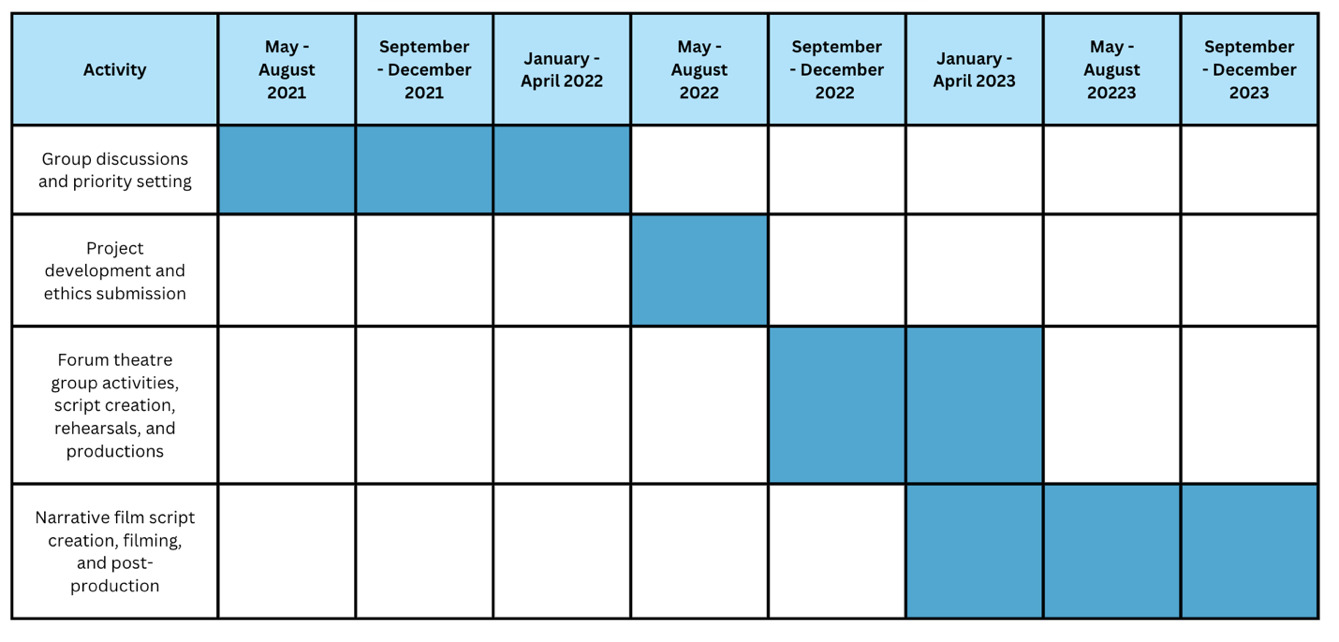
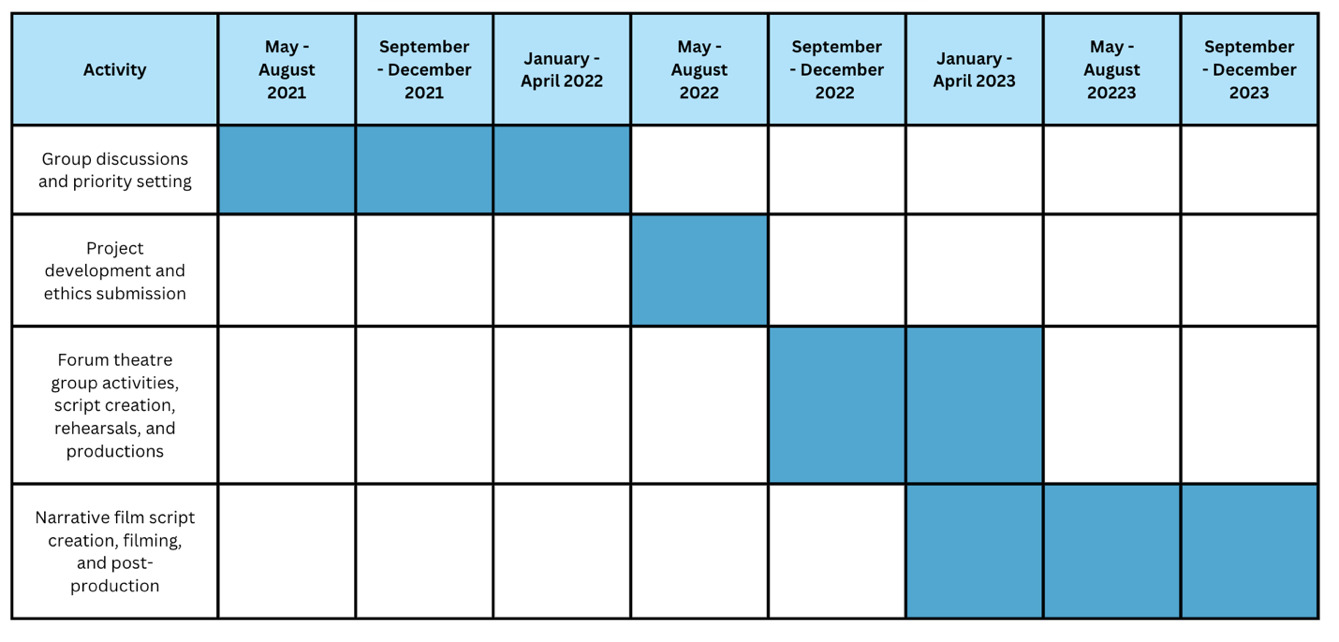
Our forum theatre and filmmaking project occurred over two years with multiple partnerships between the CDAC, an emergency shelter and housing program, and experts in arts-based methods. Throughout the two years, two research associates, co-researchers or peer researcher, or the principal investigator maintained detailed meeting minutes and descriptive and reflexive field notes of meetings (including debriefs), theatre rehearsals and performances, and filming.
Forum Theatre
Between September and December 2022, the CDAC participated in three drama workshops led by a facilitator from a grassroots popular theatre company who had relevant training and experience to lead these workshops. Sessions lasted two to three hours after sharing a meal and occurred in privately booked rooms within a centrally located public library. During these sessions, the facilitator led the committee in community or relationship-building activities to build trust, safety, and communication through games focused on learning names, becoming comfortable with touch, setting boundaries, and active participation. In addition to community and relationship building, the facilitator focused on building other skills needed in theatre, including spatial awareness, memory, and focus. For example, in one activity, committee members sat in a row and, in sequence, would draw a shape or picture (that the facilitator showed them) using their finger on the back of the person in front of them, who would, in sequence draw what he/she felt on the back of the next person. The final person in the row would draw it on paper, which would be compared to the original.
To identify acts of oppression that would be showcased in our forum theatre production, CDAC members had two to three open-ended hour-long discussions about their experiences of perceived diabetes stigma in shelters. Committee members shared details about how they felt (both emotionally and physically), where they were, who was around them, and other descriptive details of these experiences. Similarities and differences between individuals’ experiences were noted and discussed, leading us to create two incidences or ‘stories’ of perceived diabetes stigma, with various fictional characters, including a protagonist (a motivated shelter client who is trying to survive and proactively manage their diabetes) and tangential characters who have little knowledge or understanding of diabetes such as other shelter clients/peers and overwhelmed front-line shelter staff. The first story follows the protagonist as they are judged and questioned by a shelter staff member and two shelter clients for wanting to eat diabetes-appropriate food (i.e., foods low in carbohydrates) at mealtime in the shelter. The second story followed the same protagonist who experienced a hypoglycemic event, was mistakenly assumed to be intoxicated, and was removed from the shelter by the staff.
To create a coherent and compelling script to guide the forum, the committee used these two stories to improvise scenes and generate possible phrases, dialogue, and stage setups. For example, co-researchers decided to add additional scenes of difficulties accessing medication in a shelter after they improvised dialogue for the two initially developed stories of stigma. Additionally, one co-researcher wrote a soliloquy which summarized the emotional and mental distress that one experiences when managing diabetes in shelters. Descriptions of all improvised scenes were shared with a research assistant (NGJ) who has a background in the performing arts and who wrote a traditional, formatted script that included descriptions and dialogue of three continuous acts, each with one to two scenes. The initial draft of the script was iteratively reviewed by the CDAC during three readings and three rehearsals, adapting the script where they deemed necessary, to make it as authentic to the committee’s shared lived experiences as possible.
Filmmaking
From January to April 2023, the CDAC partnered with a scriptwriter/director (SW) and production manager from a local film production company (Pluto Pictures) to transform the forum theatre storyline into a script fit for a screenplay. This process consisted of three distinct phases, including pre-production, production, and post-production, with multiple collaborators involved throughout the entire process, including the front-line shelter staff who had attended the forum theatre production and worked with us on earlier research projects.
Pre-production started with a research associate involved throughout the forum theatre process (ST), completing a month-long scriptwriting class where they produced a synopsis and scene-by-scene outline. This preliminary storyline was primarily inspired by the forum theatre script but also included additional components, such as a shelter staff main character and a scene where the client in the shelter is hospitalized. As the research associate wrote the scene-by-scene, she had consistent conversations with each CDAC member to bounce ideas back and forth. After the initial draft of the scene-by-scene was completed, the CDAC, production manager, scriptwriter/producer, and shelter staff met to discuss and set the film’s goal and review the scene-by-scene. For the first half of the meeting, we had meaningful discussions about the film’s purpose and reflection on the forum theatre process. In the second half, we reviewed the scene-by-scene and determined which characters, locations, and scenes were necessary to include in the film.
With this information, the scriptwriter (SW) from the production company wrote the screenplay’s first draft in two days. The opening 15 minutes of the script followed a new shelter staff member as they navigated the business of a shelter, highlighting the realities of the lack of resources and the ongoing drug poisoning crisis. At the end of the shelter staff’s shift, they find a client who has passed out in the bathroom. Assuming it is a drug poisoning incident, they begin administering naloxone and call emergency services. Audience members are reminded by another staff member at the scene that the client who has passed out has diabetes. At this point in the script, we break away from the narrative fictional script and have sit-down unscripted documentary-style interviews with CDAC members who share their experiences, highlighting the various components of diabetes management and barriers to management in housing shelters. The second half of the film starts with the client who passed out walking up in a hospital bed to meet the new shelter staff member who had found him passed out in the bathroom. The client then tells his perspective of the past day and shares the emotional and physical burden diabetes, and its management has on his life. This initial script was 30 pages overall.
While the script was being finalized, the CDAC and scriptwriter/director (SW) attended the auditions of professional actors and casted individuals who they felt best embodied the story’s characters. Additionally, the production manager completed the logistical work of scouting and booking filming locations, obtaining city permits, completing contracts, and creating a filming schedule. When and where possible, co-researchers were consulted regarding filming locations and casting. For example, when choosing a filming location for the shelter scenes, co-researchers alongside the director, production manager, and partnering shelter staff brainstormed possible sites, including community centers, operating shelters, and other private spaces that would be suitable for filming. Once the director, production manager, or supporting research staff had gathered more information about the sites, the locations were re-presented to the co-researchers, along with information on associated costs and logistics. The co-researchers then selected an overflow site of an existing emergency shelter, which would not only provide the most accurate depiction of their lived experiences but also be logistically and financially feasible within the project budget. In terms of casting, we were unable to find a mutual time between the directors and all CDAC members, so the CDAC nominated one representative to participate in the casting day and provide input on behalf of the group keeping in mind the conversations we had of what the CDAC envisioned for each character and what the actor would embody in their audition. All this pre-production work was completed by the end of May 2023, leading us into our one-week production in June. The film was shot in three locations across Calgary, AB, with an entire cast and production crew (i.e., director and assistant director, producers, gaffer, camera operator, key grip, and wardrobe stylists) of 31 people, as well as 19 background extras. CDAC members and shelter staff were onsite throughout the process to provide their input on the ‘look’ of things, including set design, makeup and wardrobe, and the actors’ body language or tone. Lastly, post-production consisted of working with a professional editor and sound studio who worked with the CDAC to edit the initial rough cut and audio as needed. The film was then screened alongside over 40 panel conversations across Canada and aboard, so audiences (which included the public, shelter front line or hospital staff and boards of directors, local and national advocacy groups, as well as health and social policy decision makers in government) could ask CDAC members questions about the film content or filmmaking process. It was from these conversations that this manuscript was inspired. More details about the screening process and evaluation of the film can be found elsewhere (Reed et al., 2025).
Reflections
We found creating a coherent and compelling narrative using a participatory approach required careful consideration of our aim and objectives in creating and sharing these scripts. We identified three guiding principles which drove our decisions regarding the narrative elements, including i) our purpose of advocacy, ii) our resource capacity, and iii) our intended audience.
1st Guiding Principle: Our Purpose of Advocacy
The combination of education and a call to action in advocacy work is effective, as this approach equips individuals with the knowledge necessary to understand and communicate complex issues, as well as provides them with concrete direction on how to enact that change with their newfound knowledge (Lopez-Baez & Paylo, 2009). An important consideration for any advocacy effort is the emotional impact it has as a person’s emotions can influence how a message is received. Emotions like empathy, hope, and anger can create a deeper connection to the issue, inspiring and motivating audiences to contribute to positive change (Jason et al., n.d.). Considering all these aspects of advocacy work, using fictional narratives as an advocacy tool requires the content to be educational and emotionally inspiring, as well as optimistic so that the audience feels as though there is hope and possibility of change. As we learned about advocacy and considered our goals of increasing awareness and motivating audiences to create change in their personal and work lives to better support shelter clients with diabetes, over time, we came to understand that the themes explored in our narrative needed to strike a balance between education and entertainment, as well hope and despair.
Tone Consideration: Education vs Emotional Impact
When we first approached these projects, our team felt strongly about creating a fictional, entertaining, but still accurate story portraying the realities of living with diabetes in housing shelters. As we did our first read-through of the forum theatre script, we quickly realized that we did not include enough education about diabetes and its management for the audience to fully understand the scenes. The lack of information was problematic as we believed there would be an imbalance of diabetes-related knowledge between CDAC members on stage and the audience - which meant that the audience would be unable to interpret the actions of the protagonist, such as asking for the medication prior to mealtime or the seriousness of not having access to sugar when their blood sugar levels have dropped dangerously.
To fix this, we attempted to incorporate dialogue to communicate information about diabetes and its management. Our goal in incorporating education through dialogue was to avoid an overly educational tone that reminded viewers of uninspiring public service announcements or documentaries that would often retell viewers facts, mimicking a didactic classroom lesson and possibly minimizing the emotional connection with our work. However, during the subsequent script read-throughs of our updated script, we found that many of these information-delivering lines came off as forced and strange as they were overly focused on diabetes-specific information and did not flow with the dialogue as intended. The co-researchers also shared that these moments in the script did not reflect their lived experience as they rarely stated medical and physiological details about their diabetes and its management to others when staying in shelters.
On our second attempt to integrate education into our fictional story, we reduced the amount of dialogue between the protagonist with diabetes and other shelter clients and staff. The few scenes that were left that served as these educational moments were rewritten by co-researchers until they felt authentic in the script. The necessary teachings taken out of the dialogue were incorporated into a ten to fifteen-minute session of ‘diabetes 101’, a short didactic educational session delivered before the first act by the co-researchers and principal investigator on the essential components of diabetes and its management. For example, to provide additional context to the dialogue regarding the protagonists’ low blood sugar mentioned above, we had the information delivered by our committee during ‘diabetes 101’:
We felt this short educational session was a perfect addition to the forum theatre production as it provided necessary educational information but did not compete with the emotionally driven story of the client in the shelter. Audience attending the forum theatre production gave the ‘diabetes 101’ overwhelmingly positive feedback at the end of play, with some pointing out it did not overpower the emotionally driven story of the fictional protagonist and others mentioning that it further strengthened the emotional connection as it forced a realization that the experiences of real people inspired the fictional story being told. Given the positive effect this approach to education, we included a similar session in the film, where the camera breaks away from the fictional story to a sit-down style interview with co-researchers and principal investigator.
Theme Consideration: Hope versus Hopelessness
We wanted each script to reflect the lived experiences of the co-researchers. Over the year, as we held discussions exploring the barriers to diabetes management, it became clear that there were many challenging moments for those living with diabetes while experiencing homelessness creating a sense of hopelessness. The experience of homelessness, as described by the co-researchers and others (Hughes et al., 2010; Vance, 1995), can easily force many to lose hope of their circumstances improving. Part of what contributes to this sense of hopelessness is the ongoing opioid or drug poisoning crisis and environment within housing shelters, which are often overcrowded and understaffed, leading to negative interactions with staff and other shelter clients (Jayatunge, n.d.; Vance, 1995). Similarly, diabetes is reported to be a mentally straining chronic condition as there is no time off from its management. Constant demands of monitoring blood sugar, maintaining appropriate dietary changes and exercise levels, taking medications daily, as well fielding stereotypes and judgement from others about their diabetes can often lead to a sense of isolation and despair (Robinson et al., 2023; Tariq et al., 2024). Chronic stress arising from feelings of isolation and despair can lead to a greater sense of hopelessness, diminishing an individual’s sense of control and motivation over their well-being (King et al., 2010; Nagelkerk et al., 2006).
With these challenges in mind, we wanted to ensure that our scripts authentically captured the realities of living within a shelter and managing diabetes, not shying away from complex topics of drug poisonings and overdoses, food insecurity, a lack of autonomy, severe diabetes-related symptoms, and underfunded shelters at capacity. At the same time, we wanted to be mindful of the possible implications of taking an approach that focused exclusively on challenges and difficulties. Focusing solely on individuals’ difficulties could paint a picture of hopelessness and futility, dampening our advocacy efforts as audiences would be left with little to no drive to take action after the film or theatre production. Even with the intention to prompt change, another consideration was that an overemphasis on negative experiences risked producing a portrayal centred on a community’s suffering and unjustly minimized the strengths and resiliency shown by people with diabetes who are experiencing homelessness. Our committee discussions and reflections on these challenges underscored the importance of framing our advocacy piece thoughtfully, ensuring that the shared stories serve to empower rather than exploit, building hope in audience members so they enact change after engaging with the narratives.
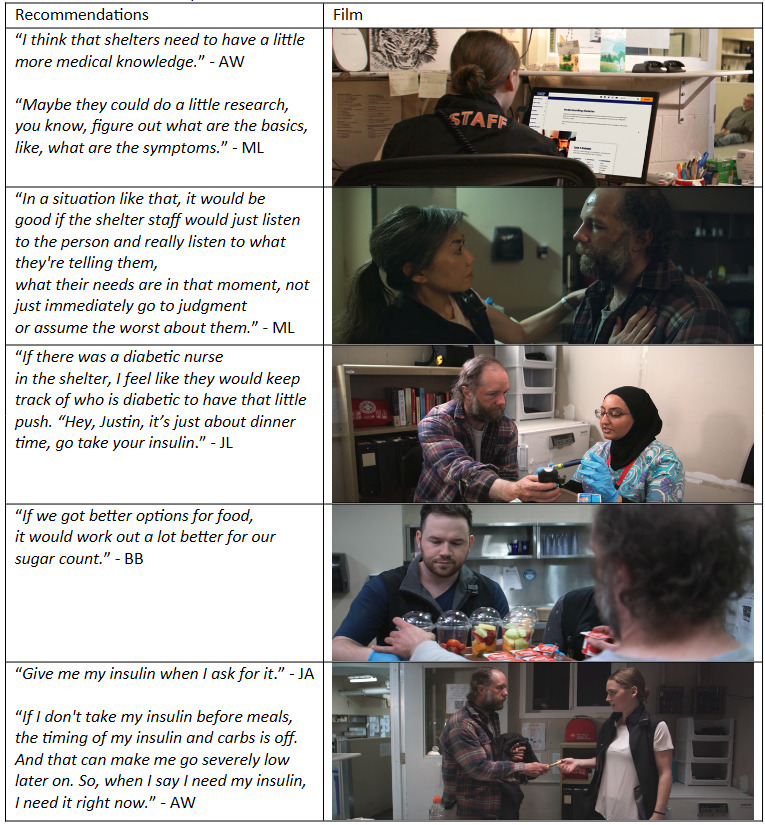
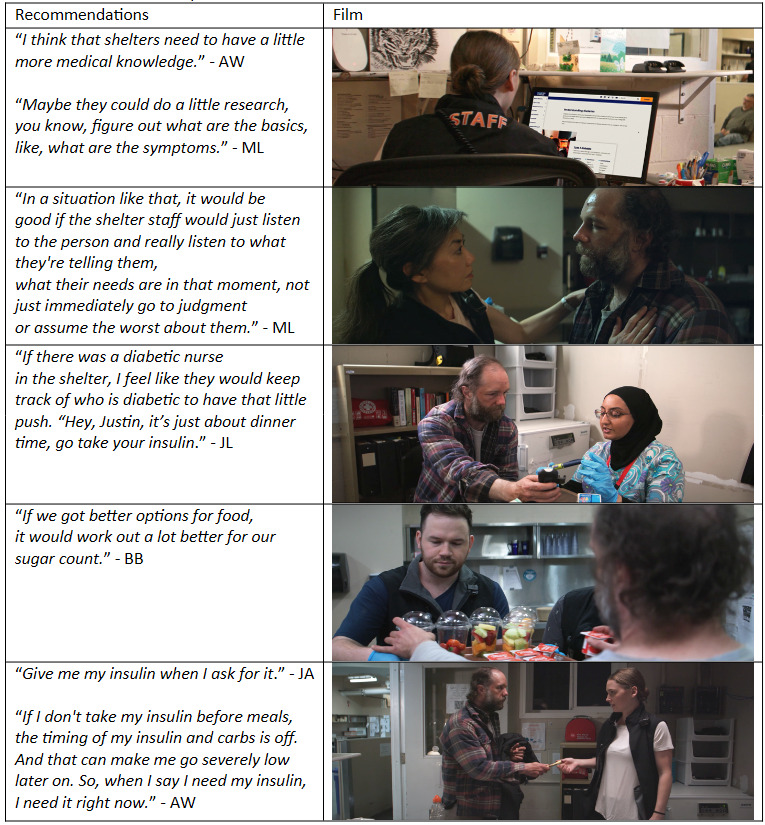
Considering the reflections around the theme and our intention of creating an advocacy tool, Forum Theatre was an appealing arts-based approach to share these stories as the interventions in response to the moments of oppression necessitated hope and change be incorporated into the production. However, achieving this balance became significantly more challenging as we transitioned to the film format. We grappled with how to weave the theme of hope into the script, as creating interventions and multiple alternative endings (as done in forum theatre) into a short film proved overly complex. Ultimately, we incorporated the message of hope at the end of the film, where, after hearing the challenges that led to the protagonist’s acute medical emergency, the supporting shelter staff character visits the protagonist with diabetes in the hospital and asks, “So what can we do?” after hearing the challenges that led to the protagonist’s acute medical emergency due to hypoglycemia. At this point in the film, the viewers are presented with the co-researchers’ interviews on camera and hear them suggest recommendations for shelter staff, so they are better able to support clients with diabetes. While the co-researchers are voicing these suggestions, we see these suggestions played out on screen as alternate moments in the protagonist’s story (Table 2).
At the very end of the film, a clip of the principal investigators interview is shown where he directly addresses the issue of hope and despair, leaving the audience with the theme hope:
“We’re not going to fix that problem tomorrow, but there are things we can do to help. I don’t want us to be fatalistic either, right? To say that’s impossible situation. I can’t solve this. And I’ve seen that. I don’t believe that either. I think that there’s ways to approach that, that we can help over time as well.” - DJTC
2nd Guiding Principle: Our Resource Capacity
As with all other types of research, CBPR requires a base level of funding to provide essential resources to design and implement a project. Adequate funding enables researchers to recognize the time dedicated to the project by community members or lived experience experts with financial honoraria, which our committee and others have found shows respect, builds trust, and sustains long-term relationships (Collins et al., 2018; Fox et al., 2023). Access to funding can also support research and relevant skills training, as well as material resources (such as technology), so people with lived experience can fully engage and participate in designing participatory research projects. Funding for dedicated staff working on a CBPR project can also contribute to the long-term success of a committee’s project as they dedicate significant time to the project and act as a consistent point of contact, fostering trust, communication, and understanding between academic researchers and community members. Additionally, having a dedicated staff member can streamline logistics, manage resources effectively, and provide ongoing support, ultimately leading to a more impactful and sustainable CBPR outcomes. Overall, the availability of funding, time, and human resources directly influences the quality and effectiveness of community partnerships in research efforts.
However, when funding is limited, imagination and creativity become crucial assets. CBPR committees must often think outside the box to maximize available resources, relying on innovative approaches to engage the community, such as leveraging local professionals’ expertise, utilizing existing community spaces, or adapting methods when possible. Such creativity helps overcome financial constraints and can importantly lead to unexpected insights and solutions, possibly enriching the research process and fostering deeper community connections. In our experience, it was primarily the creativity with the story’s plot and pace as suggested by our arts experts (NGJ and SW), along with their diligence in listening and understanding co-researchers’ experiences and desire to incorporate the co-researchers’ perspectives and recommendations when writing and directing, that allowed us to fit our work within our budget and our available resources to co-produce a coherent, community-driven theatre production and short film.
Plot Consideration: Feasibility vs Creativity
In the early stages of our project, balancing creative ambition with limited time served as a point of contention between the CBPR committee and our creative art partners. For both forum theatre and the film, we wanted to expand the plot beyond what was recommended as logistically feasible in the time we had from pre-production to production, as well as in our one to two weeks of rehearsals or production for theatre and film, respectively. In addition to the issue of limited time, we faced financial limitations in what was possible. For example, the initial scene-by-scene of the film envisioned a complex narrative with numerous characters and scenes across the city, each contributing to a detailed exploration of the challenges associated with managing diabetes in a housing shelter and the challenges facing the homeless-serving sector (namely, the opioid crisis). However, as conversations progressed with our experienced filmmaking partners, it became clear that the scope needed to be narrowed for practical and storytelling reasons.
We decided the number of characters and scenes needed to be reduced to work within our limited budget and time to allow the film to focus on the core themes and essential elements that best conveyed the narrative’s message. Shaving the scene-by-scene down to the bare bones included a group discussion with our filming partners, where we reviewed the purpose of each scene and character and their purpose in the story. For example, including a hospital scene was initially considered as costly and possibly out of budget. However, we found it necessary to give viewers the understanding that diabetes is a serious chronic disease that can result in hospitalizations, leading us to ultimately decide to keep it in the script. This refinement process allowed us to maintain a coherent and focused story while staying within the project’s logistical limits. At the end of our group conversations, we narrowed the script down to two main characters (one a shelter staff and the other a client with diabetes) and three settings (the shelter, hospital and two streets). We deemed including two primary characters feasible while allowing us to incorporate the two-point-of-view approach that the original scene-by-scene suggested using a body swap between a shelter staff and client with diabetes.
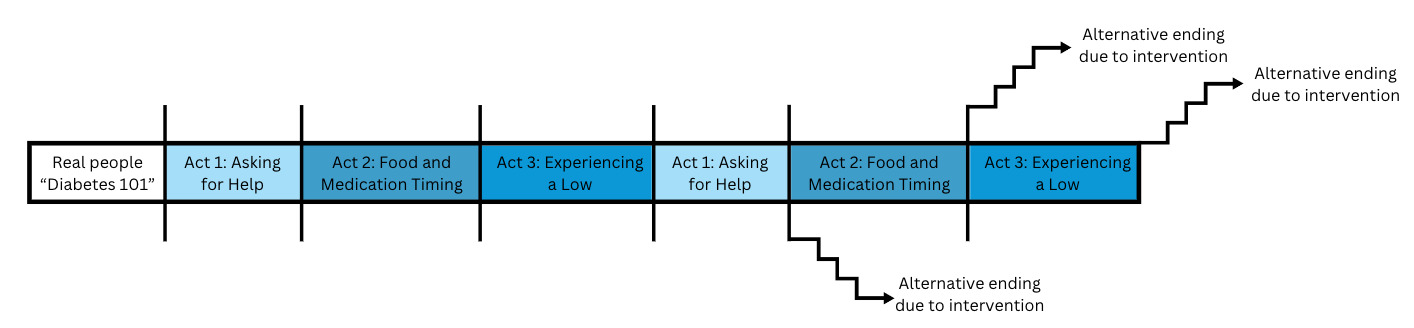
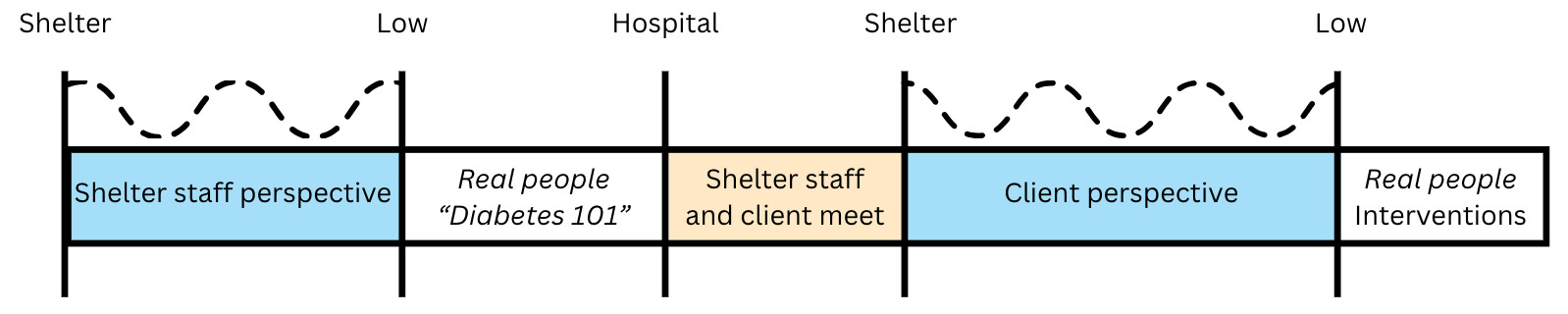
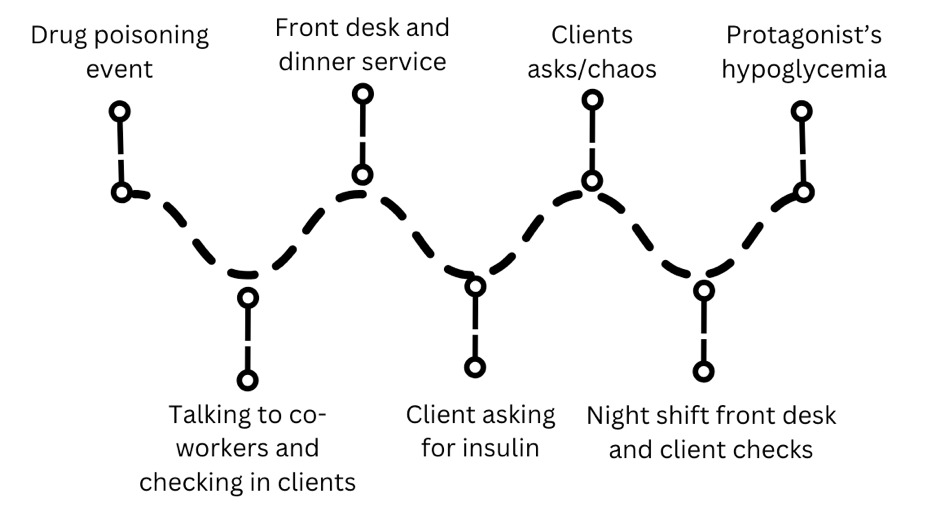
Despite reducing the number of characters and settings, we still had additional issues that impacted shelters we wanted to incorporate into the film, including understaffing, underfunding, and the opioid crisis that were not included in the forum theatre script and that would elongate the length of the film script. Knowing what characters, scenes, and messages were important to the group, the scriptwriter designed a time jump structure with two perspectives of a single day to allow us to shoot a film under 40 minutes in one week (Figure 1). Instead of the sequential structure of forum theatre (Figure 2), which led to multiple alternative realities based on the spect-actor’s interventions, the film starts with the perspective of the shelter staff’s day and then switches to the same day, but from the perspective of the shelter client. In terms of filming logistics, this approach allowed the film to be produced in one week as the director filmed the scenes with the same setup and actors, just focusing on different perspectives.
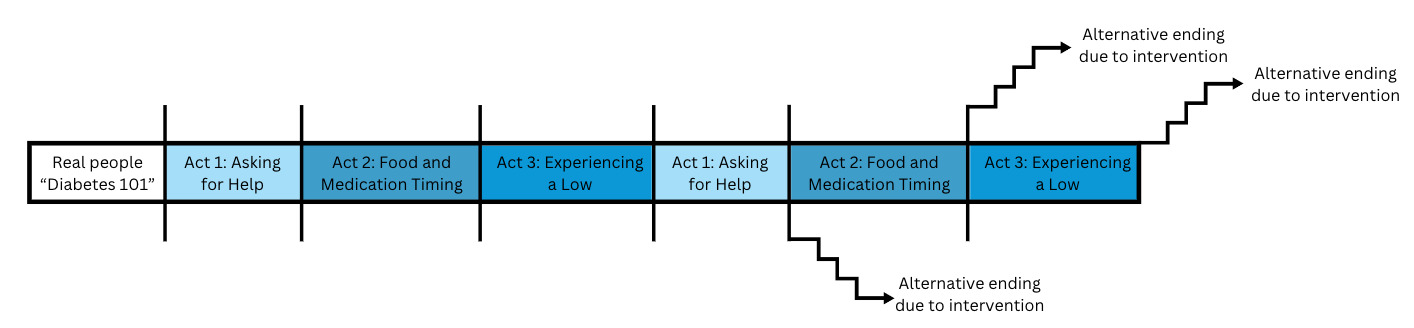
In crafting the plot of our film, we drew inspiration from the sequential nature of forum theatre, which allows for a complete storytelling experience rather than merely presenting isolated moments of oppression. This format enabled us to explore the complexities of our characters’ lives and the systemic challenges they face within the shelter environment. We had the advantage of time, a sufficient number of actors, and space to develop a more nuanced narrative, which informed our approach to the film’s structure. The film was designed to include all the essential components of forum theatre while expanding upon them. We structured the narrative with a clear beginning, middle, and end, incorporating a time jump back to the story’s start to deepen the audience’s understanding of the characters’ journeys. This structure facilitated a rich exploration of the themes we aimed to address, including the intricacies of managing diabetes in an emergency shelter setting and the broader societal issues affecting vulnerable populations.
__where_the_blue_ind.png)
Pace consideration: Feasibility vs Creativity
Pacing in storytelling is the delicate balance of speed and rhythm of events and dialogue that guides the audience’s experience. It involves the timing of events, the development of characters, and the unfolding of the plot. Effective pacing creates tension and anticipation, allowing moments of action to feel exciting and exhilarating while also providing necessary pauses for reflection and emotional connection. A well-paced story seamlessly weaves fast-paced sequences with slower, introspective scenes, maintaining the audience’s interest and ensuring that key moments in the story resonate. Ultimately, proper pacing keeps the audience hooked while contributing to the overall impact of the narrative.
In our experience, pacing was an indispensable tool that the scriptwriters used to balance our narrative’s feasibility and creativity, particularly when portraying complex scenes with multiple characters in a short amount of time. In this context, pacing helped us manage the story’s progression and was used to communicate additional emotional information to audiences about the characters and setting, especially the dynamics of the shelter environment. For example, the fast-paced approach of the first half of the film allowed us to streamline and shorten the amount of time spent on the staff’s perspective while also capturing the chaotic and, at times, overwhelming atmosphere of a shelter, mirroring the urgency and unpredictability that staff and clients navigate daily.
Additionally, we carefully built tension throughout the film through the juxtaposition of urgent, fast-paced situations alongside slow, reflective moments that led up to key emotional moments that increased viewer investment in a short amount of time (figure 3). For example, the story rises in intensity in the film’s first half, ending with the shelter staff finding the protagonist unconscious in the shelter bathroom. By placing the slower paced ‘diabetes 101’ sessions right in this quick, emotionally tense scene, we aimed to give the audience time to process and sit with their emotions in hopes of leading them to reflections that would facilitate a deeper connection to the characters. Overall, the ebb and flow of the pacing of the film helped to highlight the contrasting experiences of low moments versus moments of chaos, enhancing the film’s overall emotional impact, all while staying within our financial and resource constraints.

3rd Guiding Principle: Our Intended Audience
To adapt a story for a specific audience, storytellers must understand the audience’s values, experiences, and preferences. Fostering a sense of validation or relatability with audience members can include recognizing the intended audiences’ unique insights and struggles, emphasizing the intended audience’s importance and impact on others, as well as incorporating unique cultural nuances into the set or character designs by using specific language and cultural references. This is most easily achieved by collaborating with the intended audience and collaborating them as equal partners as done in CBPR. In our case, we decided to collaborate with a local emergency housing shelter and its staff to include their perspectives, values, and shelter-based cultural nuances into the film. This would likely allow us to create a narrative story that would meet our intended impact of improving access to support and reducing judgment of clients within shelters required shelter staff to view the film and resonate with the film’s message. Our primary discussions and decisions between our committee and partnering shelter staff revolved around the narrative’s tone and characters.
Tone Consideration: Humor vs Seriousness
Choosing between a humorous and serious tone can influence audience engagement and the emotional response of audiences. Humor can make sensitive topics more approachable, fostering connection and encouraging reflection by humanizing the plot and characters, making the struggles presented relatable. However, overdoing humor may also introduce too much levity and runs the risk of undermining the gravity of the issues presented in the film. This is especially true for stories following characters facing societal inequities, as a serious tone is often better suited to facilitating appreciation among the audience to understand the gravity of the story and prompt deeper reflection on societal issues. In exploring the tone of our narratives, striking an ideal balance between humor and seriousness was essential for conveying the complexities of shelter staff and clients’ experiences, our primary intended audiences.
During group discussions about the forum theatre script, our committee felt strongly about the script and its delivery to have a primarily humorous tone, as it would alleviate the weight of serious situations depicted in the play and help audience members become more receptive to the story, especially shelter staff who may not want to engage with another story about people experiencing homelessness as they could be emotionally burnt out from their demanding jobs. This approach was also important to the committee as the forum theatre script portrayed many interactions with shelter staff in a predominantly negative light, which reflected genuine frustrations, but needed to be balanced with humor as we did not want to paint them with an overly critical image. The use of humor during forum theatre was well received by audiences who commented on it in their feedback surveys. As a committee, we felt our approach created a collaborative and safe environment where difficult conversations between the committee and the audience could occur more comfortably.
When adapting the forum theatre narrative to film, the committee’s approach to humor met pushback from our partnering art experts, shelter staff, and medical experts. They quickly voiced concerns that making the film lighthearted and humorous might undermine the seriousness of the topic, potentially leading the audience to trivialize the challenges and suffering faced by those with diabetes. While this was not our experience with forum theatre, the committee recognized that the differences between the narrative approaches might have made humor more suitable for forum theatre than film. Additionally, keeping in mind that our intended audience was primarily shelter staff, some committee members and partners shared that forum theatre’s overly humorous tone may not resonate with the shelter staff’s experience and make it more challenging for them to connect with the film. From these conversations, the film scriptwriter aimed to strike the right balance, ensuring that humorous moments provided relief and connection with the story, but the overall serious tone acknowledged and respected the shelter environment, including the struggles faced by both staff and clients. Humor was incorporated by including a shelter client character that brought levity to scenes and some profanity and casual word choices that made the tone less dramatized and serious. Overall, this nuanced approach allows for a richer narrative that brings light to scenes without detracting from the seriousness of the message or the experiences depicted.
Character Consideration: Authenticity vs Stereotyping
Depicting genuine, realistic shelter staff and client characters in our narratives was a principal goal as we co-created the forum theatre and film scripts. We felt our narrative’s credibility and reliability would be strengthened, especially in the eyes of audience members who have similar lived experiences in housing shelters, by producing an authentic portrayal of housing shelters and the people within the shelter. We also reflected on the harms of misrepresenting our committee’s and partnering shelter staff’s lived experiences. Unintentionally incorporating inaccurate or reductive traits in our characters had the possibility of reinforcing harmful stereotypes and perpetuating stigma about people with diabetes and people who work in or use the services of housing shelters. Poor representation would have caused audiences to receive the narratives and label them as stereotypical, oversimplified, and inaccurate, possibly creating a mistrust of us as storytellers and leading audiences to dismiss the narratives.
With this in mind, the committee was particularly vigilant in identifying elements that seemed to misrepresent their experiences, whether it was dialogue that did not reflect a realistic shelter environment or how diabetes was portrayed. The realization that the initial forum theatre script had been authored by a research assistant without diabetes led to some disappointment among committee members. They argued that an authentic portrayal required direct insight into the condition. This prompted collaborative revisions, with co-researchers who had lived experience with diabetes stepping in to rewrite scenes, adjust dialogue, and refine terminology. For example, one co-researcher pointed out that individuals experiencing hypoglycemia would never refer to it as “an episode,” highlighting the importance of using language that genuinely reflects lived experience. Another co-researcher emphasized the need to move beyond the physical impact of hypoglycemia, suggesting that the script should better capture the emotional weight—the despair, frustration, and anger—that accompanies hypoglycemia, and as a result, included a soliloquy about the mental toll these experiences had on an individual. These changes were essential in ensuring the narrative remained authentic to the realities of living with diabetes and experiencing homelessness.
In our initial efforts to authentically represent the experiences of our co-researchers, we inadvertently stereotyped shelter staff as villains. During forum theatre, we reflected less on our intended audience, and this led to shelter staff being depicted in a one-dimensional light, positioning them as clear antagonists to the protagonists managing their diabetes as they were designed to be solely authoritative figures or unsympathetic enforcers of shelter rules and policies around food and medication access, as well as deciding who could access the shelter services. To address this issue, after extensive discussion with our shelter staff and art expert partners, we proposed introducing two main characters who would come to understand each other’s challenges in the film. The shelter staff character grapples with burnout, overcrowding at shelters, and the opioid crisis. At the same time, the client with diabetes faces difficulties accessing food and medication and dealing with the assumptions and judgments about their condition.
Our film scriptwriter embraced this idea and developed characters that captured these complexities. Our committee and partnering shelter staff reviewed the characters’ descriptions, personas, actions, and dialogue, leading to significant revisions. For instance, we adjusted the shelter staff’s backstory to reflect that they were new to the adult housing shelter, with prior experience in family shelters where they had limited exposure to drug-related issues. We also modified their interactions with clients and EMS operators to showcase a range of encounters, including the positive rapport many committee members and shelter staff reported seeing or experiencing between shelter staff and clients. These adjustments helped us better balance authenticity and the risk of stereotyping, ensuring that the characters were multi-dimensional rather than defined by a single narrative. Overall, consulting with those who have the relevant lived experience in order to refine the authenticity of fictional characters enriches the narrative and fosters deeper engagement and empathy among audiences.
Recommendations
Based on our reflections, several recommendations emerge for researchers and CBPR committees exploring the possibility of or who are currently undertaking fictional narrative projects. Overall, we feel that it is important to let a set of underlying group values and principles guide all major decision points. For our group, advocacy, resource capacity, and the intended audience served as guiding principles that ensured our fictional script remained feasible while fulfilling its broader purpose of raising awareness and making a difference for those with diabetes who are experiencing homelessness. With creative work, it is easy to become sidetracked by interesting but tangential ideas; grounding choices in CBPR values and the story that most needs to be told helps maintain focus and impact. Another recommendation based on our experience is to try to integrate knowledge strategically. Not all educational content you hope to communicate will fit naturally into a fictional script and forcing it can compromise authenticity. Information that could not be woven authentically into dialogue was instead delivered in a brief teaching session separate from the fictional storyline. Next, we recommend addressing complex topics responsibly. How issues are depicted shapes audience interpretation, and certain portrayals can unintentionally reinforce stereotypes or contribute to harm. Rather than presenting diabetes and homelessness as insurmountable struggles, our group deliberately incorporated hope and resilience to motivate and inform audiences in line with our goals. Additionally, we recommend embracing imagination as a resource within constraints. Creative flexibility can offset limited budgets and logistical barriers; working with local professionals, using community spaces, or adjusting characters, settings, and other narrative components, such as pacing, are practical ways to sustain both feasibility and narrative coherence. Finally, recognize that collaboration across disciplines and sectors enhances both credibility and richness of the story you tell. Involving healthcare providers, shelter staff, and other stakeholders not only strengthened the trustworthiness of our narrative but also added perspectives that deepened the script beyond what the CBPR group alone could provide. Taken together, these strategies illustrate how fictional narratives grounded in CBPR principles can remain authentic, ethically sound, and impactful in research.
Conclusion
Our experience of co-producing a forum theatre production and film demonstrates that fictional narratives rooted in lived experiences can fundamentally align with the values of CBPR. Community-based or participatory approaches to scriptwriting, filmmaking, and theatre productions can foster a rich, nuanced understanding of the challenges faced by people with lived experiences, especially by tailoring aspects of the storyline to better resonate with the target audience, thereby enhancing the potential for narratives to enact meaningful changes in individual practices and public perceptions that perpetuate stigma or prejudice. Importantly, these creative projects can be reasonably adapted given a team’s financial and resource constraints, all while meaningfully involving people with lived experience throughout the project. It is our hope that our experience and reflections of co-producing a forum theatre production and film with fictional storylines will inspire more researchers to consider utilizing and exploring fictional narratives as an option within research.
Funding Statement
This work was supported by Diabetes Canada 2022 End Diabetes Award and a Partnership Engage Grant from the Social Science and Humanities Research Council of Canada, as well as in-kind funding that was provided by the Calgary Drop-In Centre.
Ethical Statement
The project received ethics approval from the University of Calgary’s Conjoint Health Research Ethics Board (REB20-0164).
Conflict of Interest Statement
The author(s) declared no potential conflicts of interest with respect to the research, authorship, and/or publication of this article.
Acknowledgement
We would like to acknowledge Michele Decottignies from Stage Left as our Forum Theatre expert and Briar Greenhalgh from Pluto Pictures as our film production manager, as well as Dr. Hanan Bassyouni, Dr. Harleen Ghuttora, Fatima Macavinta, Jerod Blake, Danielle Szabo, and Kyle Ovens for contributing to these projects as our medical experts or shelter staff consultants. Everyone’s dedication and passion to empower the committee to tell their stories was evident and helped both projects become possible.


