Introduction
By the end of the 2024-2025 school year, Agua Fria High School’s Black Student Union (BSU) had organized three unique activities to foster transformative anti-racist action and presented at two research conferences (ARNA and SIEEJ). More specifically, we participated in our own Ruby Bridges Walk to School event; partnered with a local literacy nonprofit as part of the civic pathway program and spoke at the city council; and lastly, we successfully organized an out-of-state field trip to Washington, D.C. to visit the Smithsonian’s National Museum of African American History and Culture. It was not until we finalized our Action Research Networks of the Americas (ARNA) presentation that we named artful inquiry as part of our Youth Participatory Action Research (YPAR) methods for enacting school change on campus. At the ARNA conference, we examined how BSU leaders employed three art modalities — digital media, travel, and narrative — to promote a high school club’s anti-racist mission. By the time we attended American University’s Scholarly Institute on Education, Equity, and Justice (SIEEJ), we had fine-tuned our approach to preparing and presenting our YPAR solutions to the conference audience.
When we learned about the Journal of Participatory Research Methods’ special issue call, we took up the challenge to write about how we came across these two research presentation opportunities while also balancing the leadership of a high school club. Our methodical approach is at the heart of this article, and we describe how we got to our three solutions as part of our art-based YPAR project. We will show how our two YPAR cycles were organized around our conference presentation timelines and elicited broader BSU student feedback. We believe this article will offer a unique perspective on how BSU addressed school issues related to culture and climate.
Understanding BSU’s Context Through Its Experts, the Student Leaders
Since the club’s inception at Agua Fria, its primary goal has been to be student-driven and student-led. Early in the semester, Celina, as one of the BSU adult co-advisors (she always worked on a team with 3+ faculty), would model to the BSU officers what community activities and action could look like. From the fall semester onward, Jameir, a junior at the time, played a critical role in demonstrating that BSU was an inquiry-driven space characterized by organic dialogue relevant to students’ daily lives. Linda and Anisa, along with many other supportive students, demonstrated early on that answers are not only generated by the BSU adult advisors in the room; the space was open to many students’ inputs and perspectives. The space was participatory in nature. We share one example in the following pages about how we blended school climate with BSU community dialogue.
A Glimpse into BSU Activities as Community Dialogue
BSU is an after-school cultural affinity club open to all high school students. It was August, and the new 2024-2025 school year was well underway. The week of club rush activities had commenced, and we were at our first all-member BSU club meeting. As part of a community-building activity, Celina facilitated a Four Corners Activity on the whiteboard, building off the last club discussions from the year prior. Each corner on the Canva slide featured a text box with a different theme/item. Within ten seconds, the students moved around the lab equipment and high-top tables to the corner of the room that suited them best. The activity started off with icebreaker questions, like “Which season do you like the best?” However, Celina informed the students in the room that the following prompts would better align with BSU’s mission to engage with the school’s campus climate.
The phrase shows up on the screen, “The best plan to address class microaggressions…” and the four listed options are 1) create a video explaining, 2) change the handbook, 3) make posters, and 4) talk to teachers. Celina started to count off to indicate it was time to move. Jameir, a high school junior new to BSU, kindly asked, “What is a microaggression?” Celina realized it was so implied in the question that she didn’t even think to explain it first, knowing we discussed it last year in BSU. Celina pitched it to the full group, saying something along the lines of “That is a great question. Who knows what it is and wants to explain it?” Both Anisa and Linda supported by clarifying that a microaggression is like a small insult that sounds racist but is often brushed off. The activity proceeded. Navigating difficult community dialogue has been the cornerstone of BSU activities, enabling students to discuss how they feel about school culture. Navigating how teachers felt about discussing race was a central issue on campus, and BSU student leadership was finding ways to address this with the faculty.
Our Local BSU History
Our BSU is at a Title I school in the American Southwest, where predominantly Black and Brown students are enrolled, but certified staff is majority white. Celina was employed at the school prior to enrolling full-time in her PhD program at the start of the 2024-2025 academic year. Even though she was entering her fourth year at the school, from the start of her employment, she witnessed the school system’s challenges with hiring and retaining Black educators. It largely influenced her being recommended for the BSU advisorship. When speaking with school administration, she said she would only take on the role if the club would place an emphasis on partnerships with guest speakers and local organizations to provide much needed representational Black mentoring and leadership common to Black educational spaces (Bell & Sealey-Ruiz, 2023).
We started the academic year as the only cultural affinity club on campus, but shortly after, a Culture Honor Society club emerged, and Agua Fria has a long tradition of cultural affinity clubs, including MEChA (Movimiento Estudiantil Chicano de Aztlan) and Black Culture Clubs (like Black Awareness Club/Harlembi) since 1991 (German, 2026). Our current BSU aimed to do two things: (1) cultivate an appreciation for learning about Black culture and (2) bring attention to racial issues on campus. BSU offered a space for both staff and students to have the much-needed dialogues around race, gender, class, and politics. Topics like the N-word, Pan-African identity, local Black education history, and colorism showcase the breadth of BSU discussions. Along with multiple field trips across the state, visits from guest speakers, and monthly school-sponsored activities, BSU was an active club on campus. BSU had a goal of having its first out-of-state field trip to explore Black History. We knew we wanted to run a club activity focused on helping educators navigate difficult conversations with students.
However, due to the graduation of many dedicated BSU members the previous year, the 2023-2024 academic year proved to be a year of transformation for the club’s student leadership and general body membership. As BSU navigated a growing advising team, changing club classroom locations, and a new student leadership team, we sought not only to speak up on school issues but also to provide relevant solutions. After much consideration, BSU student leaders (Anisa, Linda, Jameir, and Camarion) and Celina bravely co-presented their YPAR project at two research conferences, recognizing the merits of making it their action-oriented event. Navigating the conference themes and their local school club needs, the BSU YPAR research team aimed to answer the following research question.
RQ 1: By the end of the school year, BSU wants to understand: how does dialogue, social media, and traveling foster anti-racist practices or transform K-12 spaces?
Literature Review
For our YPAR project and accompanying research action events (ARNA and SIEEJ), we reviewed two broad areas of literature: (1) current news on Black culture and (2) art-based YPAR studies in high schools. Our decision to focus on these two areas of literature was to showcase the expertise of both youth and adult co-researchers. We strongly believed that the youth co-researchers (Anisa, Linda, Jameir, and Camarion) are experts in their lived realities as BSU student leaders and fully capable of selecting a relevant YPAR research topic (Fine & Torre, 2021).
Current News on Black Culture
Many BSU all-member club meetings discussed current events, such as the racial wealth gap among Paris Olympic athletes. In our BSU officer chats, a meeting among the BSU elected leaders, we discussed how current events provide a lens for addressing school culture and climate comments. Our conversation topics were to help build dialogue among new BSU members, keep each other informed, and invite BSU leaders to stay informed to prepare to run the club meetings. By the spring semester, BSU student officers took the lead in selecting current event topics for BSU club meetings, e.g., Kendrick Lamar’s halftime show, the school-to-prison nexus, and addressing Black male stereotypes.
Since most of the news events were cutting-edge, we played and reviewed the following modalities during club meetings: photographs, TikToks, Instagram reels, YouTube videos, and recent news articles. Additionally, when discussing Black male stereotypes, both authors, Jameir and Camarion, drew on lived experiences and word of mouth, inviting other BSU members to share anecdotes and contribute to the conversation. We see social media as a critical creative medium that BSU leaders can use their critical literacy to engage with. Even though social media or short-form news videos are considered grey literature according to academic standards, for us it was necessary that no information be gate-kept behind paywalls and that it be part of the BSU student leaders’ “For You” social media page, accessible through algorithms. If a story or culture topic became of interest, a BSU student officer would share the item that sparked their interest via a school group communications app, such as Remind or SportsYou, and the BSU leadership team would vote to discuss it at a future club meeting.
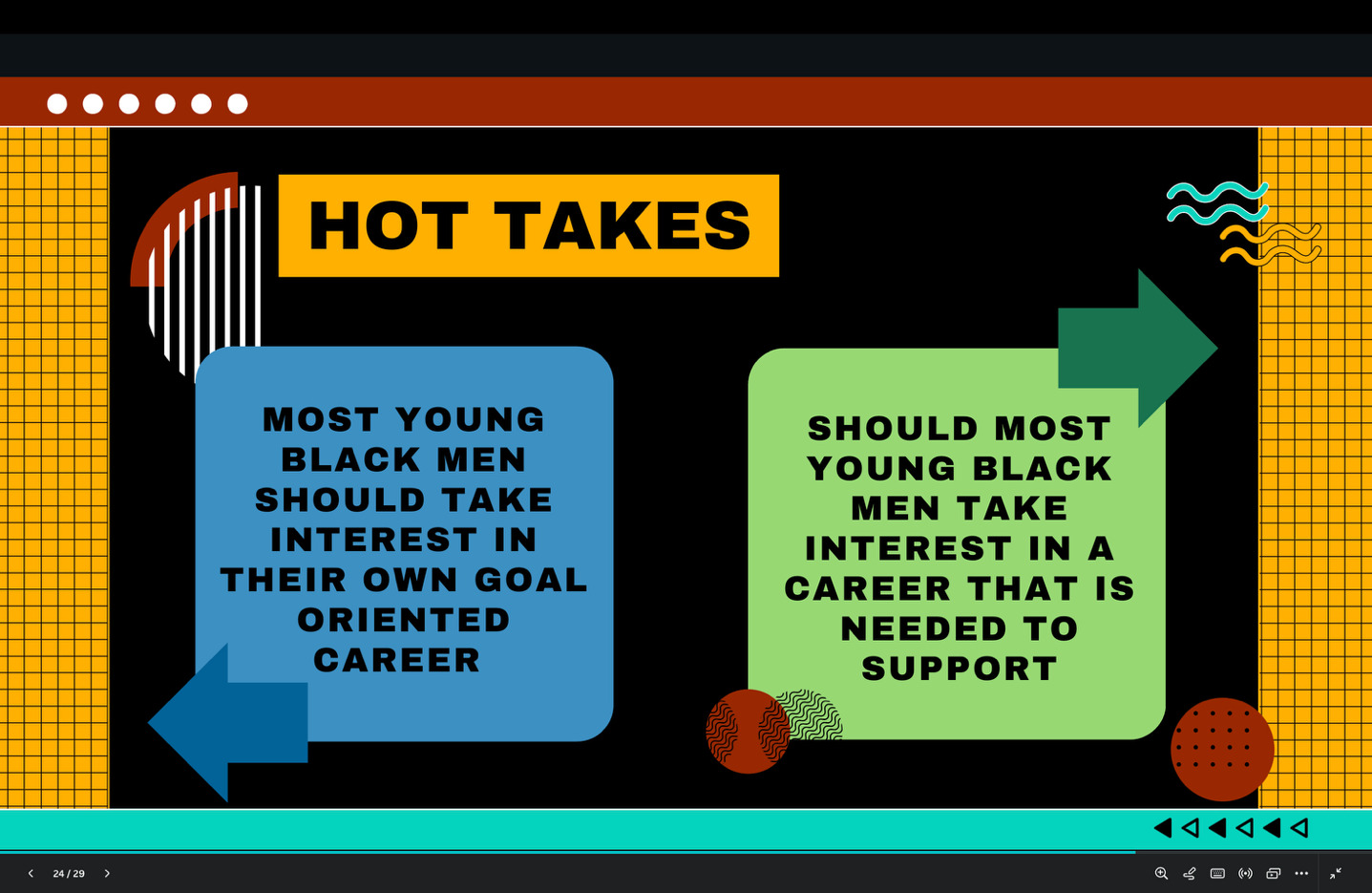
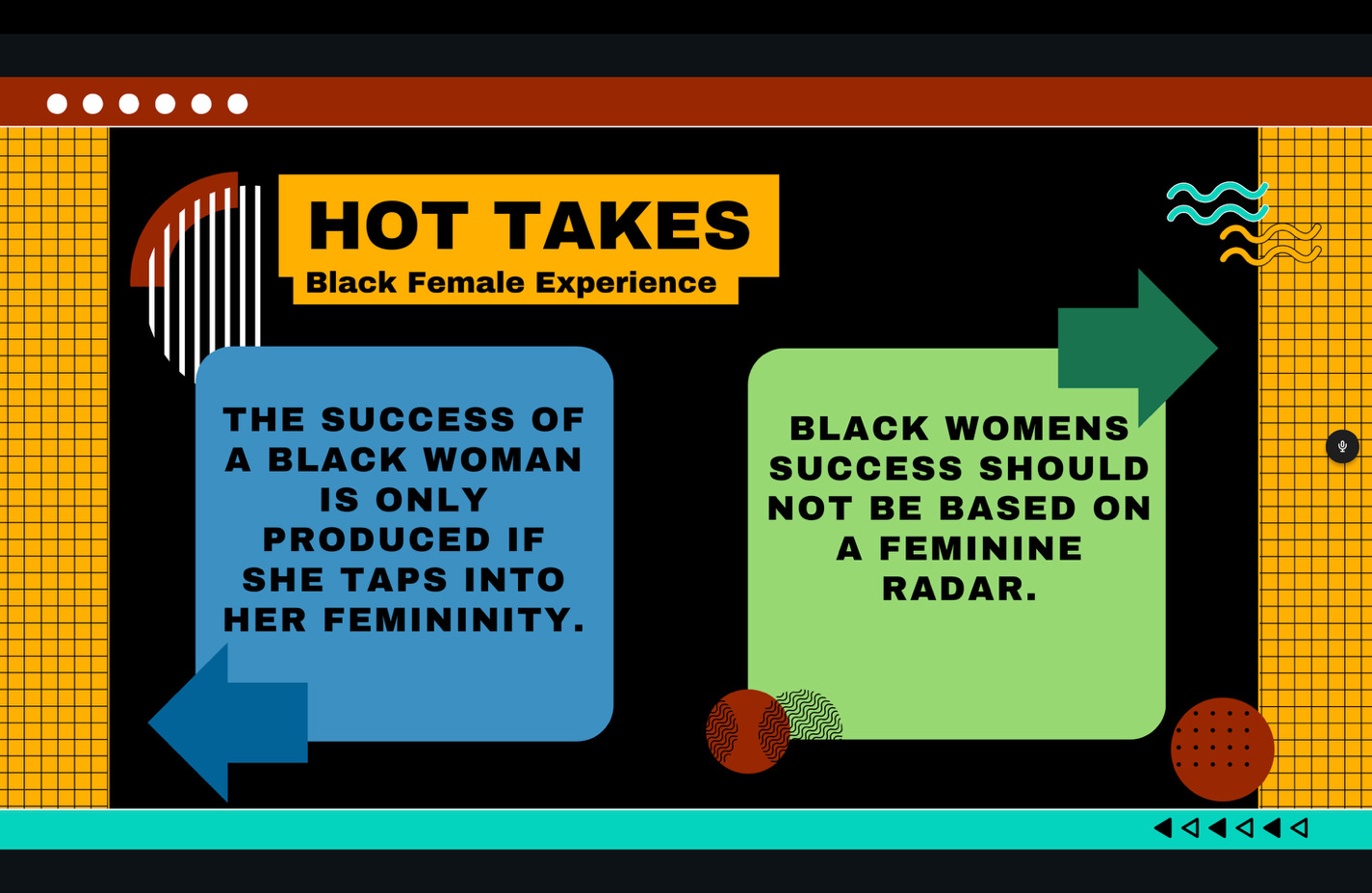
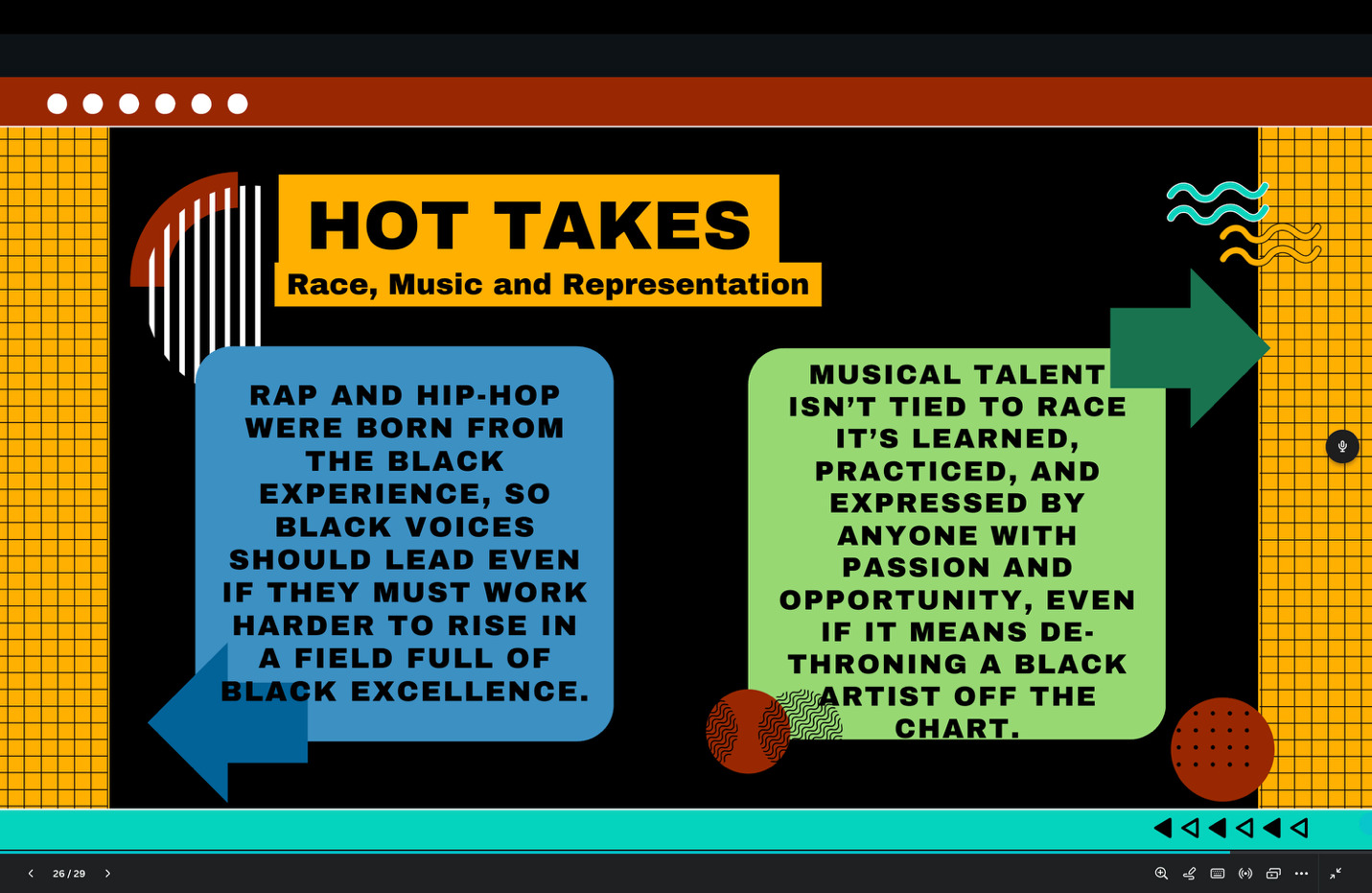
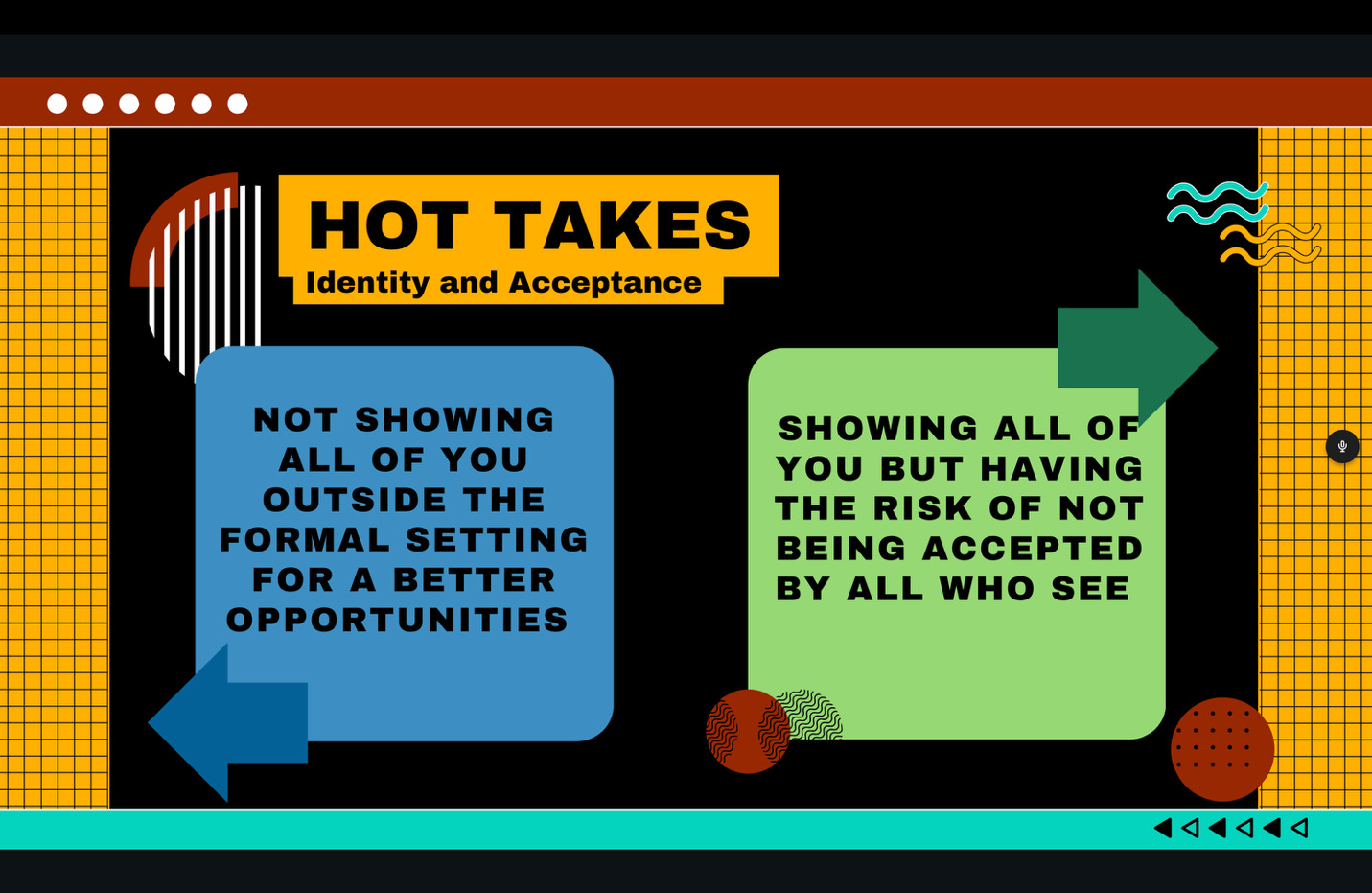
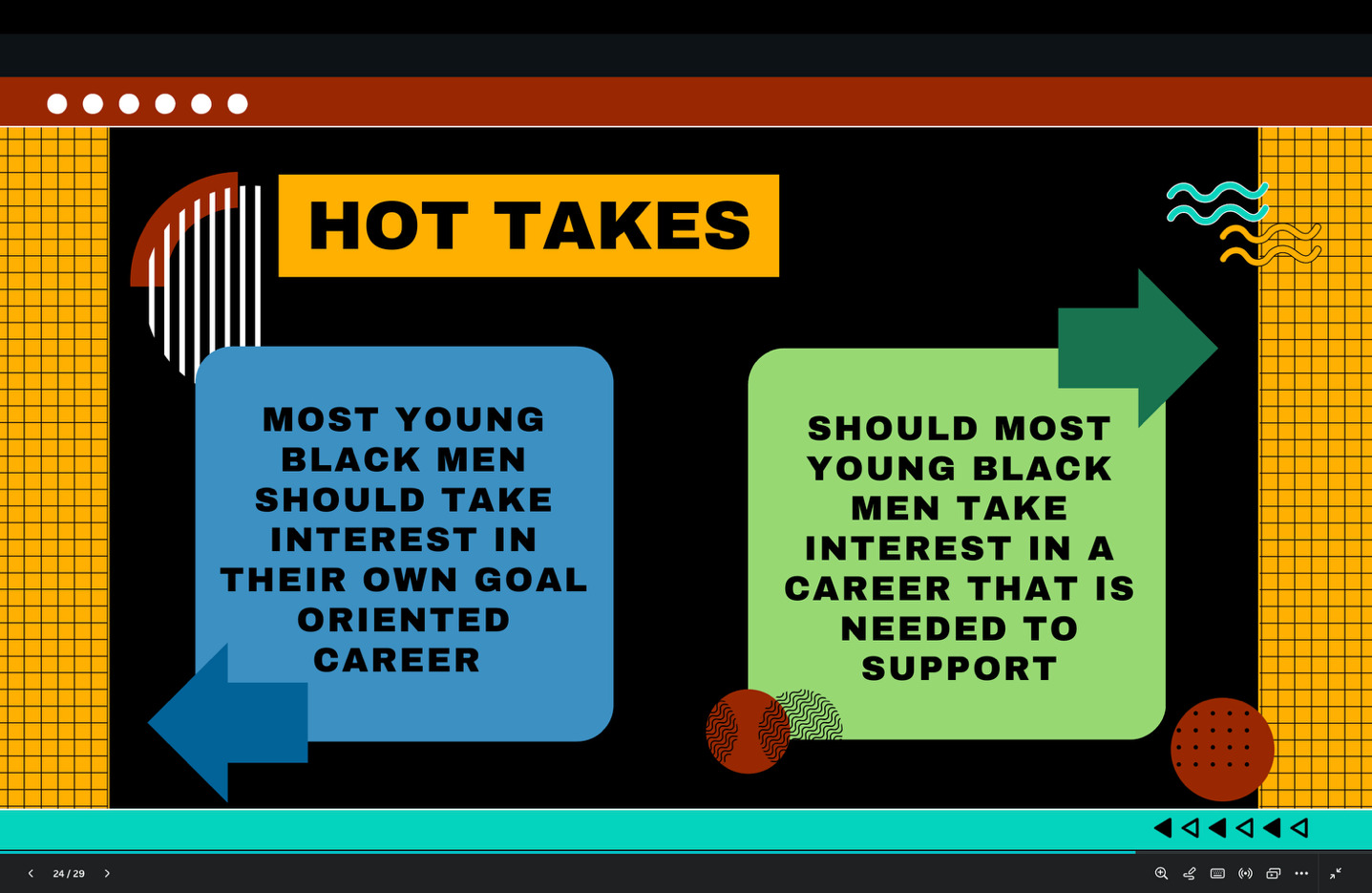
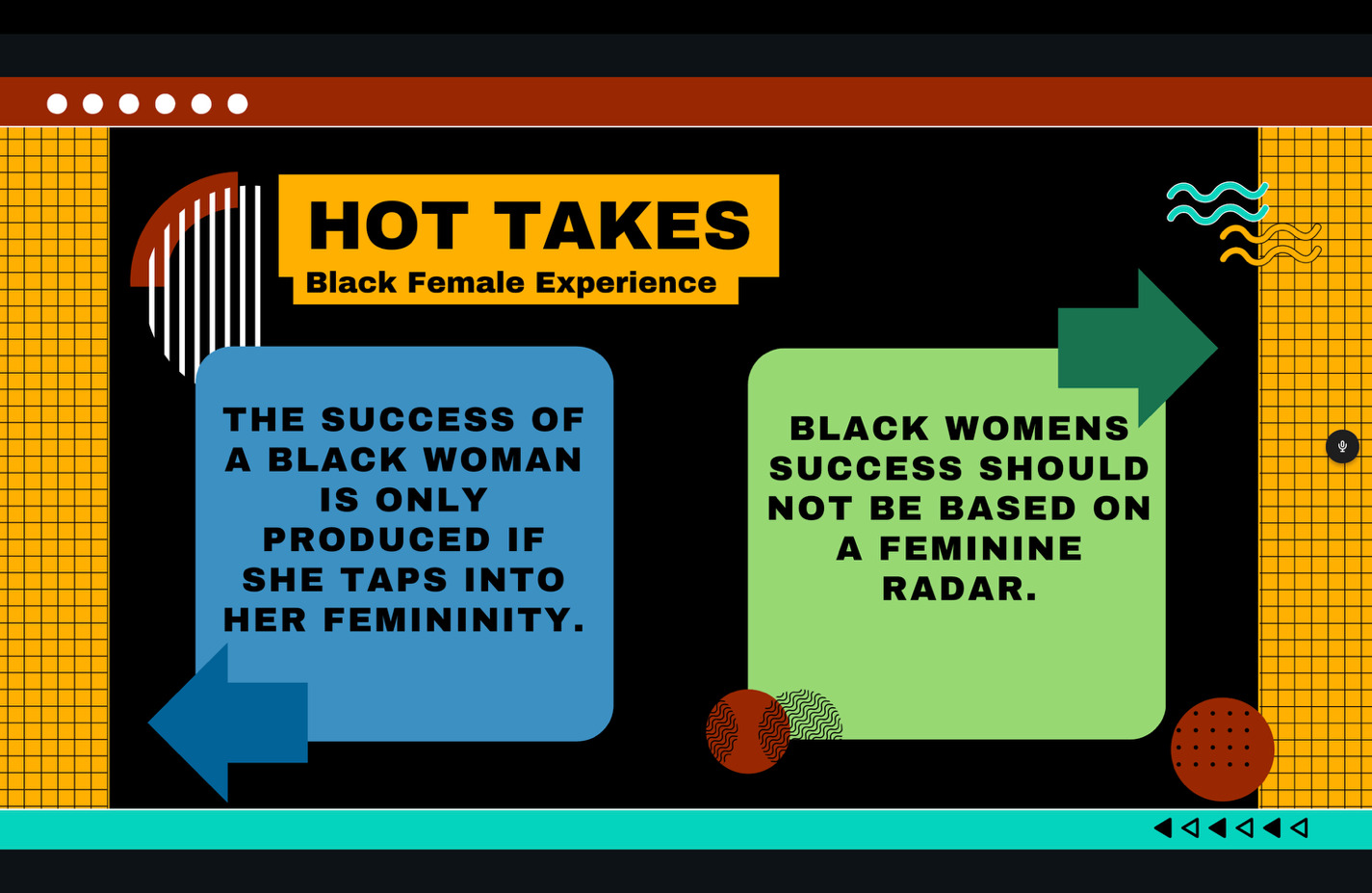
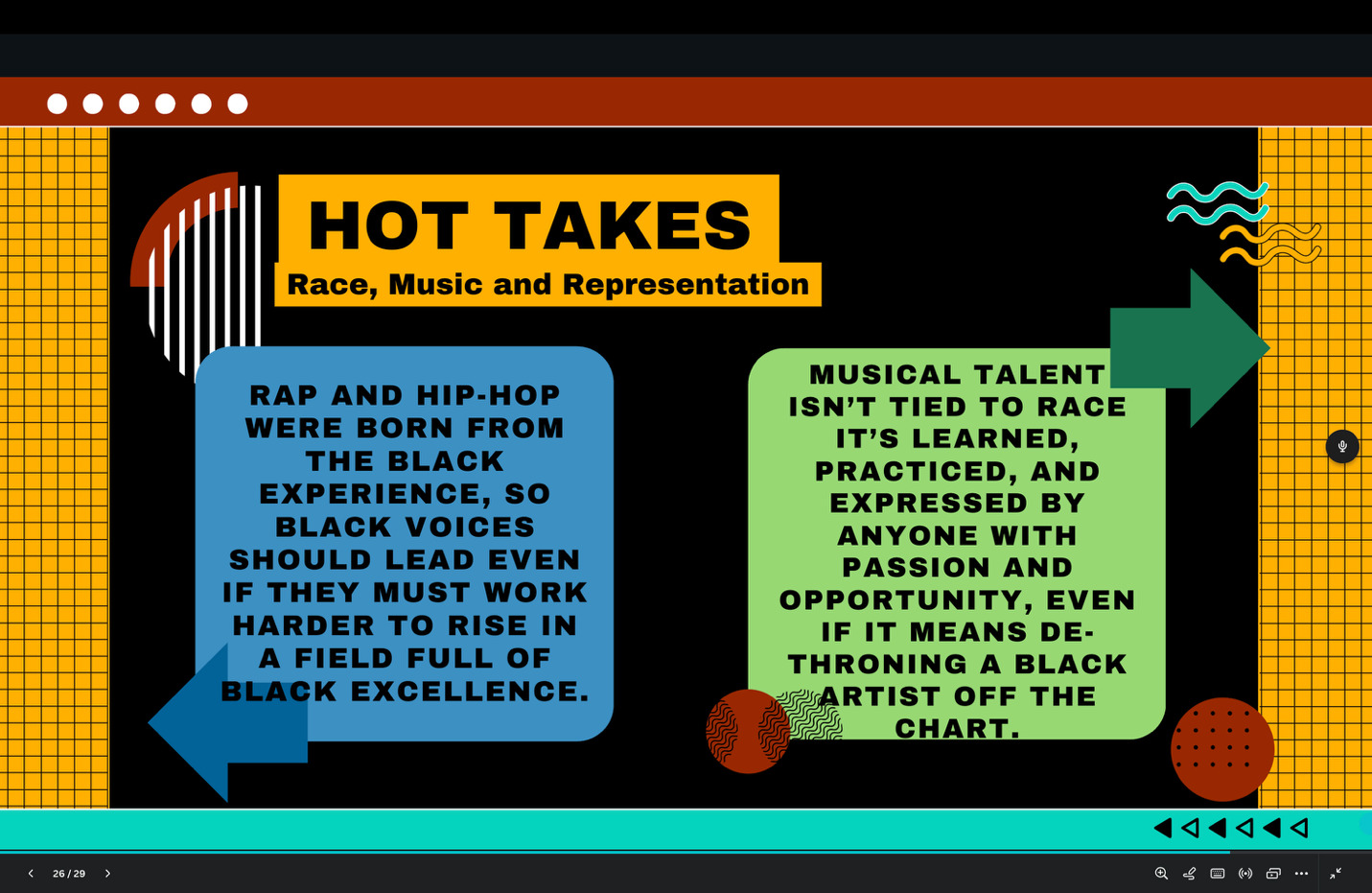
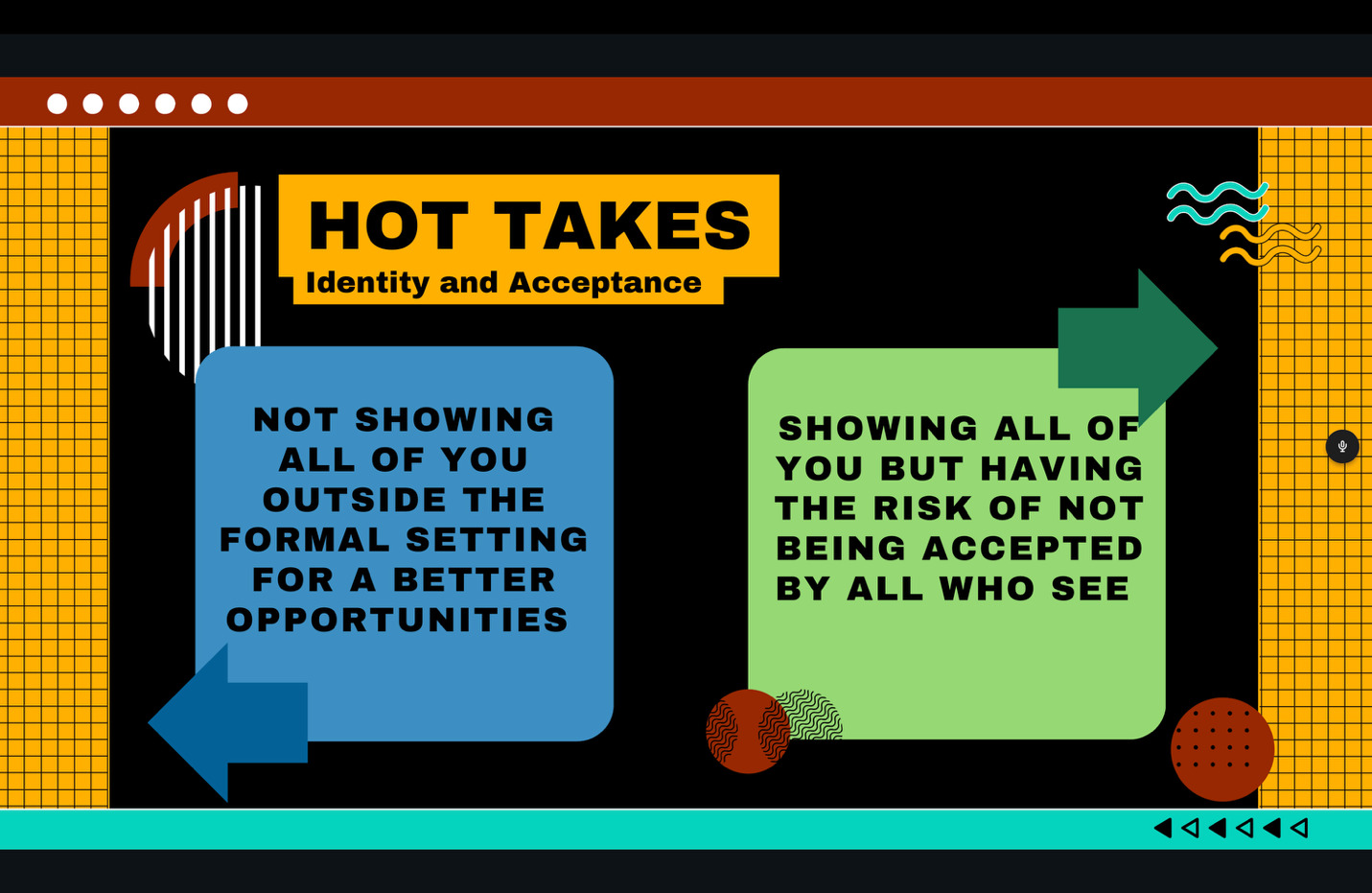
During our YPAR project’s action-oriented events at the conference, we held a Hot Takes BSU discussion activity. Each youth co-researcher selected a culture topic aligned with their unique identities, and Celina advised but gave them the floor to present to the adult conference attendees. Although Jameir led the full BSU activity at ARNA, at SIEEJ, the YPAR research team revised the presentation so that each youth co-researcher led the discussion on the topic they felt most passionate about (this was feedback from our first YPAR cycle, and we tested it out in our all-member BSU club activities between each conference). Anisa spoke about the role of femininity in the success of Black women (informed by her lived experience); Linda spoke about the diversity of hip-hop artists in the rap industry (informed by BSU’s discussion of Kendrick Lamar and readings). Jameir spoke on the societal/familial pressures to select a career (informed by the Black male stereotypes dialogue). Camarion spoke on Blackness and belonging (informed by his lived experiences). Each youth co-researcher consulted their own sub-literature within the broad area of Black culture to prepare their Hot Takes BSU discussion prompt. See Appendix A for the accompanying presentation slides.
Art-Based High School YPAR Project
Due to her PhD coursework, Celina would bring YPAR-related presentations and select articles (Anyon et al., 2018; Cammarota & Fine, 2008; Goessling, 2020; Villenas, 1996) that she had been introduced to in her classes to the BSU club meetings. To ensure these YPAR topics were not delivered in a banking method (Freire, 2018), Celina connected the topics to culturally relevant inquiry discussions. For example, in January, as part of the recruiting strategy for the YPAR project, Celina noted that the L.A. Fires hit close to home and that climate change could be a potential YPAR project idea.
Moreover, she introduced YPAR to the Agua Fria BSU as a research method and as a world-making outlook that requires co-researchers to “inquire and act” (Cammarota & Fine, 2008). In the methods section, we included our own “inquire and act” model to show how we understood the YPAR process (and praxis) to be student-led. Furthermore, part of her YPAR team’s duties in the action-oriented events, Celina described three fundamental elements of YPAR: (1) the young people are the insider researchers (Cammarota & Fine, 2008); (2) research teams (multigenerational) work collectively to systematically address the same problem; (3) stakeholders are intentionally defined and narrowed to meet the needs of the YPAR project. She also stated that art is a form of creative resistance (Domínguez & Cammarota, 2022), aligning with the YPAR team’s central theoretical framework. Additionally, our title is an intentional nod to the article’s title, “The arc of transformation in youth participatory action research: creative expression to creative resistance.”
Given our readings of YPAR literature, three articles formed our methodological foundation for YPAR projects: (1) Ayala and colleagues’ (2017) eight principles of YPAR, (2) Duncan-Andrade and Morrell’s (2008) five steps to the YPAR research process, and (3) the current need for an arc of transformation in YPAR inquiry (Domínguez & Cammarota, 2022). Ayala and colleagues (2017) build off of Rodriguez and Brown’s (2009) three guiding principles of PAR (situated and inquiry-based, participatory, and transformative & activist). They state them as: (1) participation, (2) critical inquiry, (3) knowledge co-construction, (4) power with(in), (5)indigenous cosmologies, (6) creative practices, (7) transformational action, (8) conscientization. Duncan-Andrade and Morrell’s (2008) five-step plan consists of: “(1) identify a problem; (2) analyze a problem; (3) create a plan of action to address the problem; (4) implement the plan of action; and (5) reflect on the plan of action.” (Domínguez & Cammarota, 2022, p. 808) The arc of transformation is about transcending the formulaic steps of YPAR into an inquiry that bridges disciplines, communities, and inquiries. We also consulted the recent literature on art-based YPAR projects to explore how they navigated presenting at conferences and in their respective communities (Domínguez, 2022; Qiu et al., 2021; Winer, 2025; Wright, 2020).
Theoretical Framework
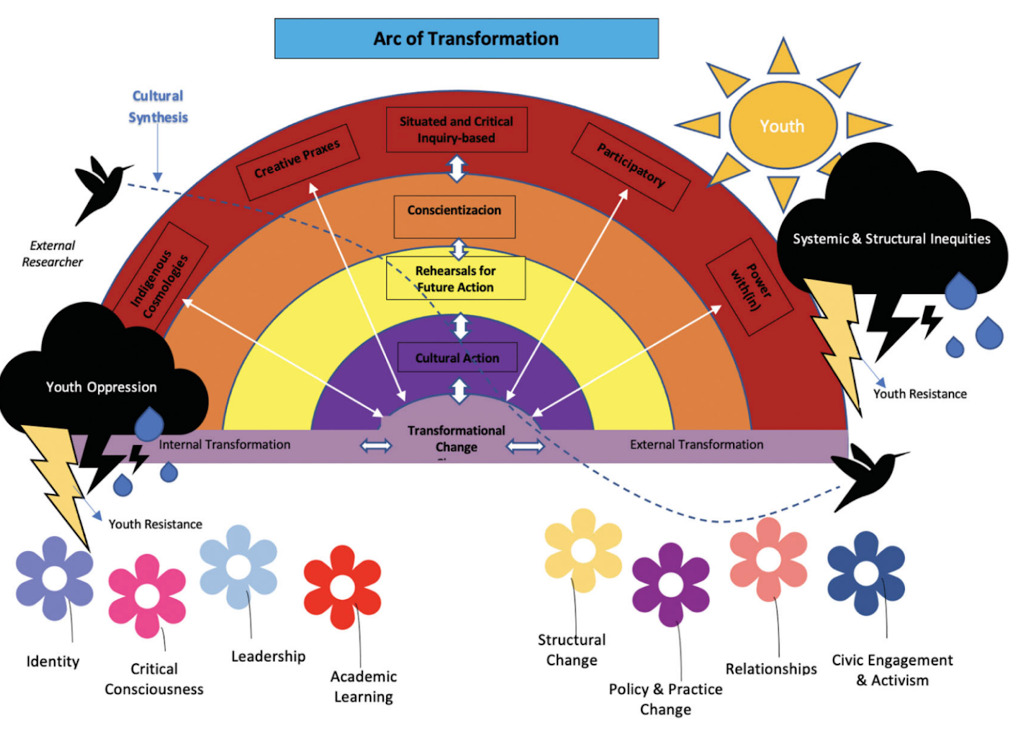
We strongly believe that, to answer our research question, artistic expression enabled us to “reimagine a better world and create radical possibilities for social transformation” (Domínguez & Cammarota, 2022, p. 814). To move beyond creative expression to creative resistance, we all imagined what it would mean to transcend and become more than the confining, oppressive realities we face. Additionally, we agree that “art throughout every stage of the research process has the power and influence to make the complex world [youth] live in more visible, shared, and empathetically understood” (Domínguez & Cammarota, 2022, p. 811). Therefore, we were inspired by Domínguez and Cammarota’s (2022) arc of transformation (see Figure 1) as a methodological guide for exploring the perspectives from which radical possibilities can emerge. Figure 1 is Domínguez and Cammarota’s (2022) conceptual model from their article. It is reprinted here for reference, but it is their intellectual property and must be cited accordingly in their names.
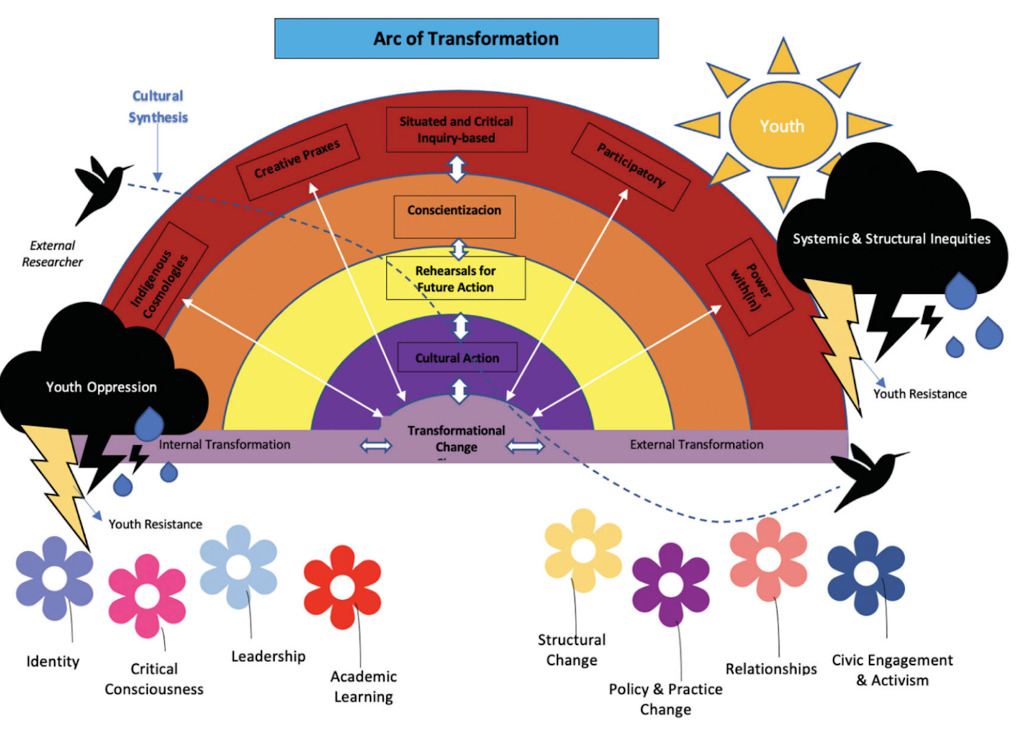
In the article, Domínguez and Cammarota synthesized previous literature to offer a more comprehensive summary of what art-based YPAR entails. The flowers indicate all the benefits of art-based YPAR. The bird symbolizes the external researcher’s fluid role in cultural synthesis, and the rainbow illustrates the different stages of transformational change, both internally and externally; each color offers a distinct arc towards cultural synthesis. We highlight two important takeaways from this figure: (1) youth resistance is essential to creative flourishing, and (2) the arrows on the rainbow indicate the multidirectional, non-linear efforts of YPAR projects. We hold these two takeaways dearly as we reflect on the effects of the school culture change brought about by our own art-based YPAR project. We see that the content and the ultimate YPAR question were deeply influenced by our individual positionality statements, which made up our multigenerational, multiracial coalition. We celebrate our differences across the team.
Positionality
Before introducing ourselves, we would like to thank all the former and current BSU members and mentors who have engaged with us. Their continuous efforts to improve BSU and invest in the club each year lay the foundation for pursuing big dreams, such as out-of-state field trips, more innovative fundraising ideas, and initiatives like writing this paper. We are especially grateful to all the 2024-2025 BSU student officers. Iron sharpens iron.
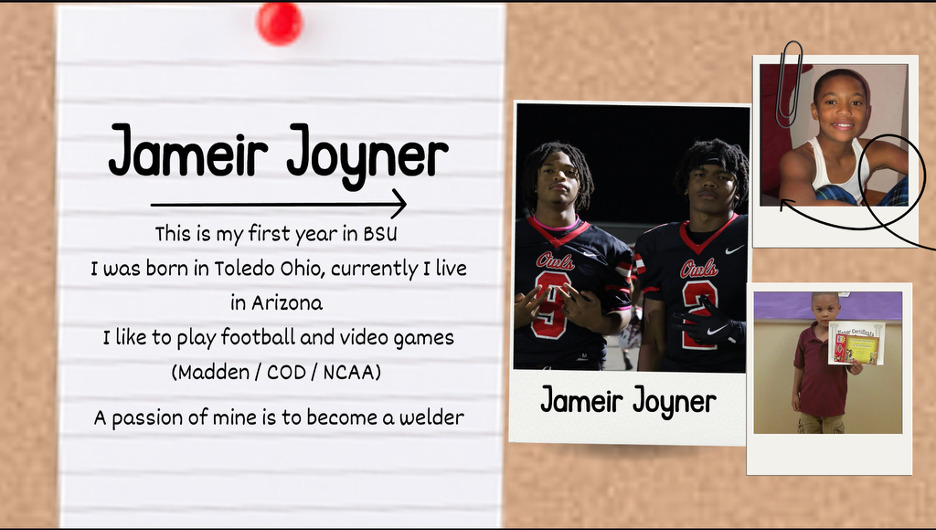
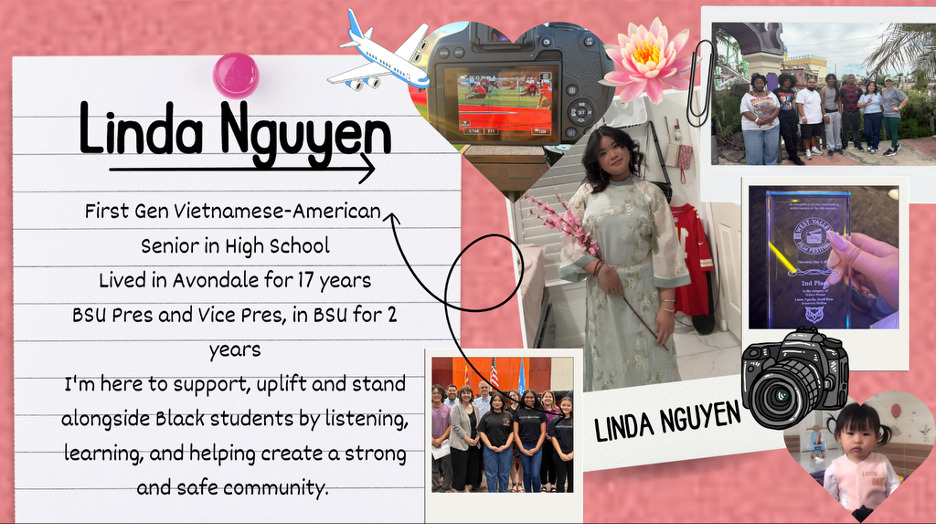
Our individual positionalities largely affect our community engagement work, data analysis, and writing. Over the course of the year, we all gained a better understanding of our worldviews and what shapes them. Each author presented their positionality statement during the research conferences they attended. We offer both a written description of our layered identities and our accompanying presentation slides.
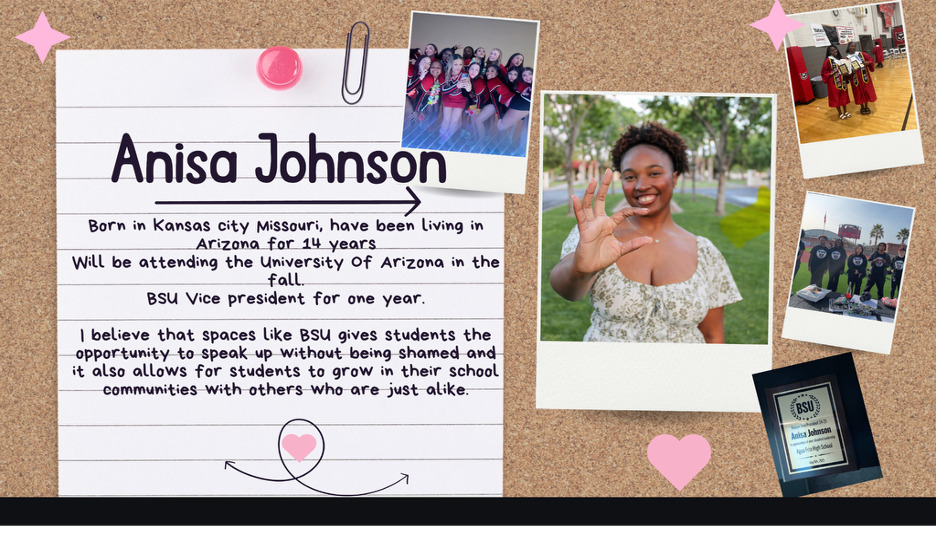
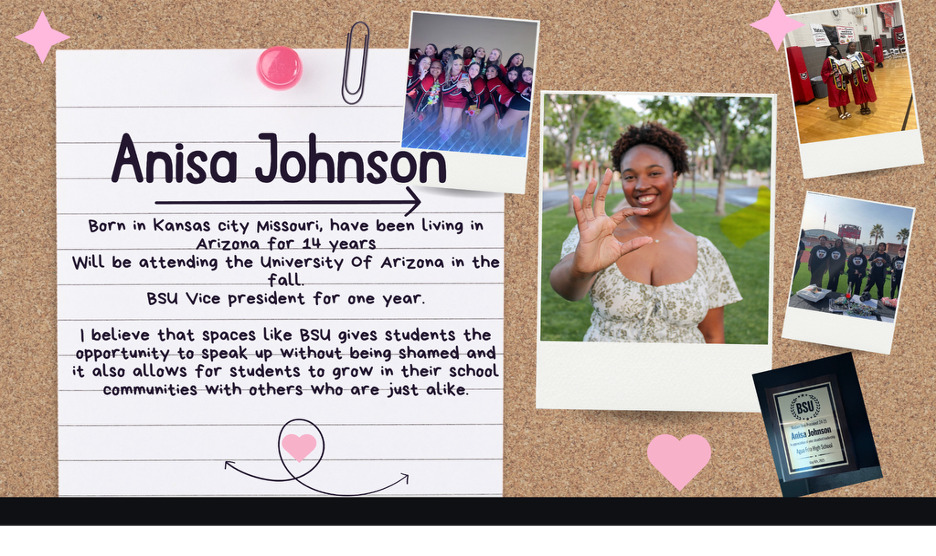
Anisa Johnson is a Black American female high school alumna and a current first-year student at the University of Arizona. She is majoring in psychology, and she served as the 2024-2025 BSU Vice President. Originally from the Midwest, she came to the American Southwest fourteen years ago. In her free time, she enjoyed dancing, pom, and being an active member of the National Honor Society. She is also part of the recent cohort of her city’s civic engagement program, where she researched and prepared public comments to present at the local school board.
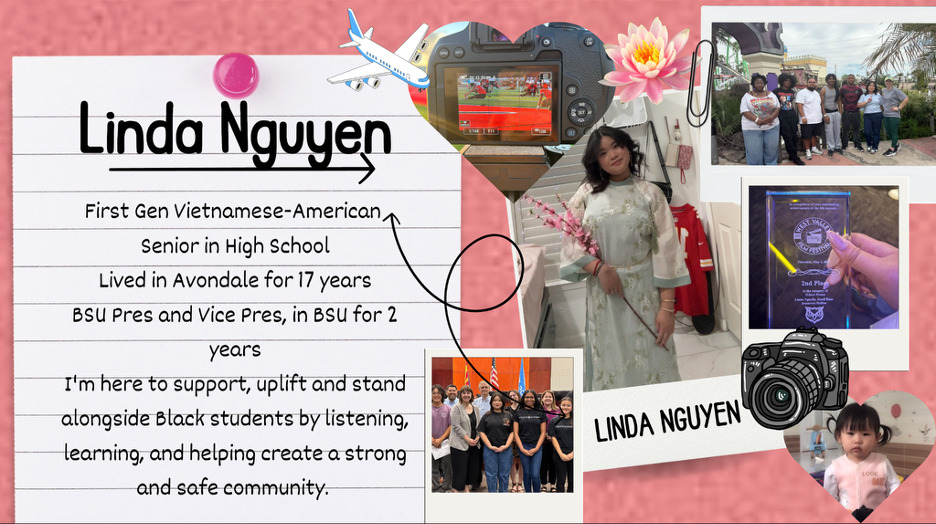
Linda Nguyen is a first-generation Vietnamese American female high school senior with an interest in cinematography and directing. She has lived in the Southwestern city her whole life. She was the 2024-2025 BSU president and served for a semester as the BSU Vice President. This past year, she presented at her local City Council town hall meetings and attended School District Board meetings on behalf of BSU.
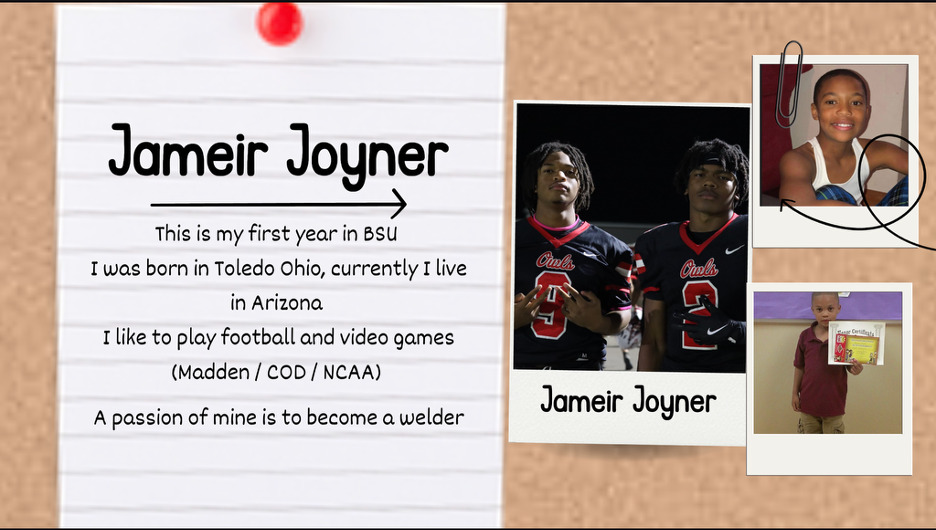
Jameir Joyner is a Black American male high school senior who recently completed his tenure as the 2024-2025 BSU Treasurer. Originally from the Midwest, he moved to the Southwest at a young age. He has represented his high school on both the varsity football and basketball teams and dreams of pursuing a career in welding. The 2024-2025 school year was his first year as part of his high school’s Black Student Union.
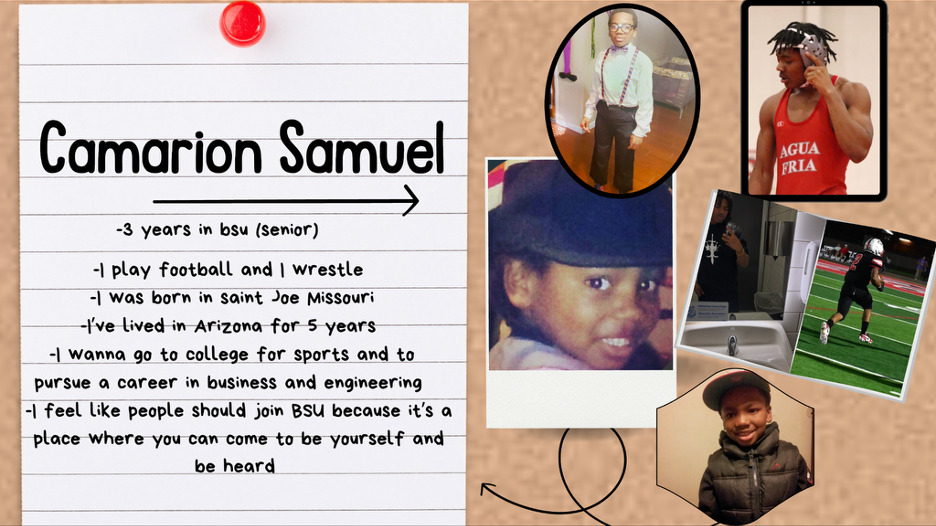
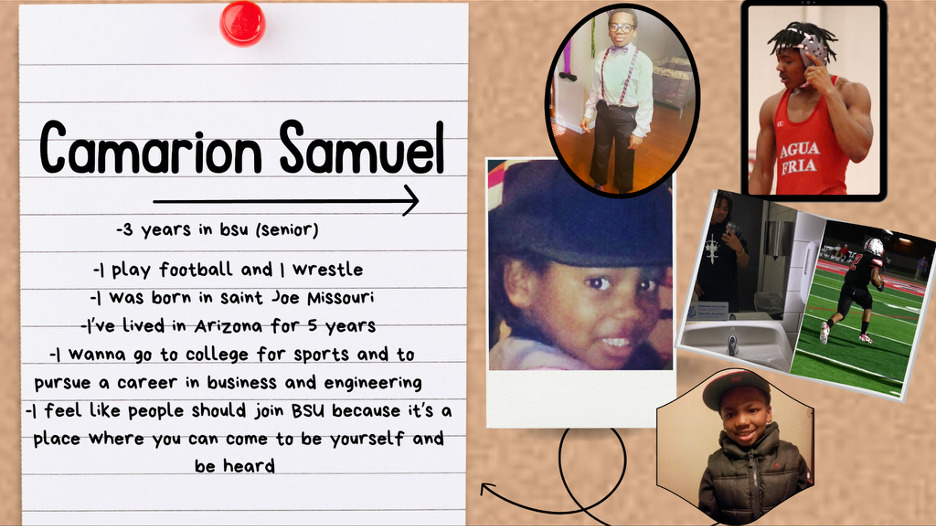
Camarion Samuel is a Black American male high school senior and the 2024-2025 BSU Secretary. His older sisters instilled in him a desire to attend the Black Student Union from the time he was a freshman, even though they were upperclassmen. He also hails from the Midwest but has been in this American Southwestern state for the past five years. Apart from representing the varsity Football team, he was part of the high school freshman-upperclassmen mentorship program. He has been part of BSU all four years of high school.
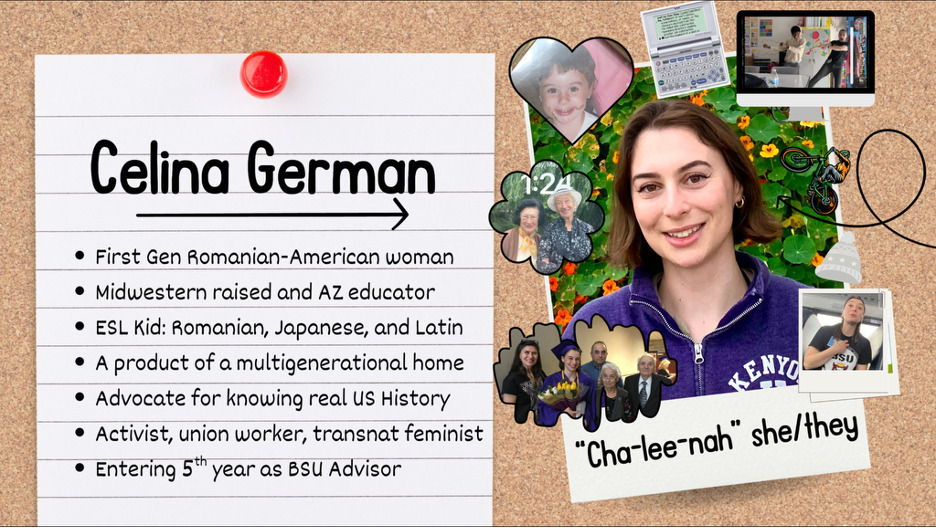
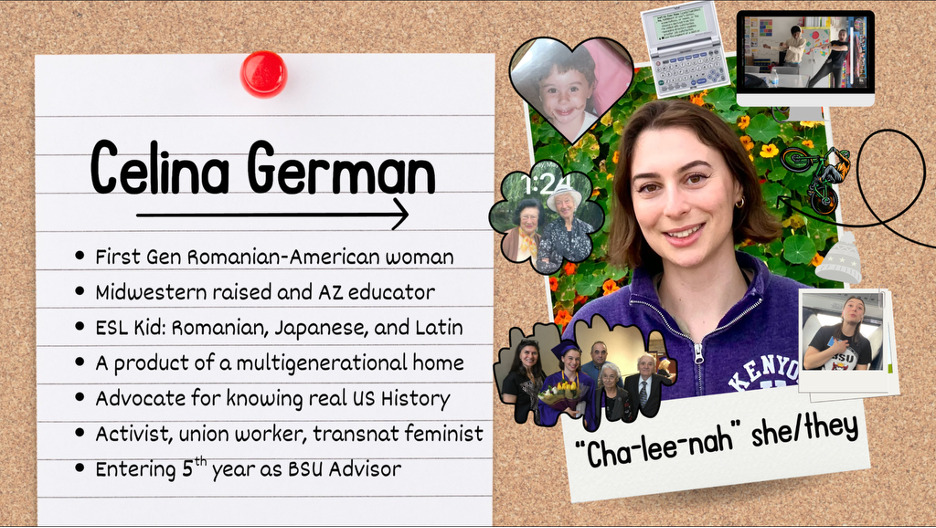
Celina German is a first-generation Romanian American female English educator and a second-year doctoral student. She is in her fifth year as the primary advisor of the K-12 Black Student Union at the school site, where she formerly taught. Throughout her years of advising, Celina has collaborated with the school faculty to develop a multicultural advising model. However, this academic year (2024-2025), her colleagues preferred that she be the only advisor due to their other academic appointments.
The following images are from our SIEEJ presentation. They are in the order in which we presented them at the action-oriented event (see Figure 2).
Methods
Our methodological findings are organized into four parts: (1) knowledge generation, (2) research collection & discussion, (3) findings & analysis, and (4) action. In each section, we provide guidelines for conducting arts-based YPAR projects and for how they can effectively inform student leadership in culturally-affinity clubs. We have included the research timeline for our six-month YPAR project for context (see Table 1).
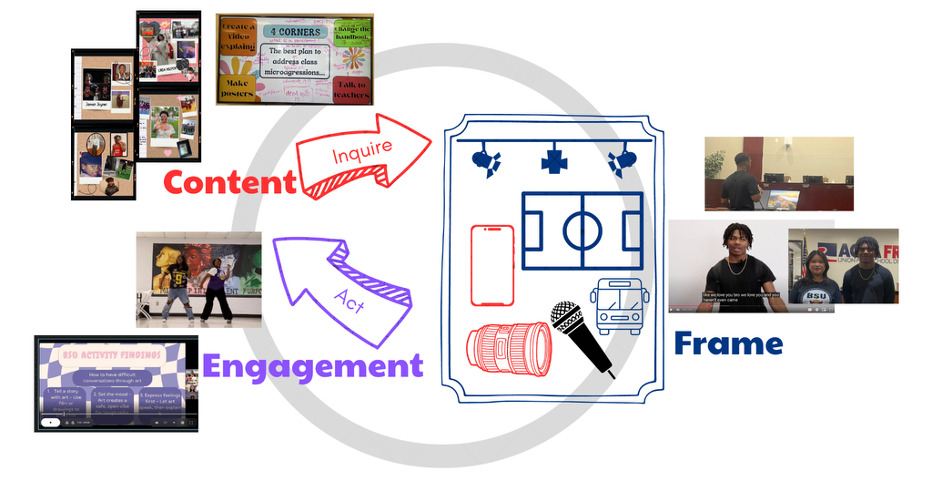
We wanted to include a model of how we saw the YPAR model of “inquire and act” show up in our BSU YPAR project cycles (see Figure 3).
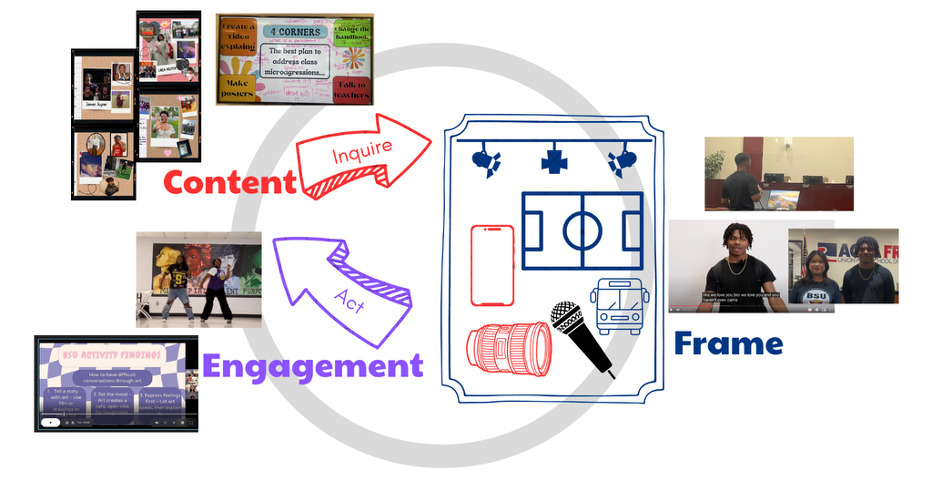
We see the process as non-linear, with three segments in sequence: content, frame, and engagement. We have color-coded the model to show how the blend (purple) is a combination of student input (red) and the school/teaching infrastructure (blue). While there is no single place to start this process, for clarity, we will treat the first step as content when we explain this model. The content is student-driven and shaped by their lived realities. We share how our Four Corners activity exemplifies the teacher scribing students’ input, and the positionality statements are a critical reflection on how BSU leaders shape the outcome of the YPAR project. The frame is the methodological insight we bring to this paper. We don’t see the frame as constricting; it is meant to explain how the structure of the school system, where it is a film club camera lens, a town hall microphone, cafeteria stage lights, or a school football field, they are all containers for the students to utilize to see their art-based participatory methods shine. Not all frames are entitled to the teacher or the structure, and Linda’s film camera was an example of how her knowledge of the structure/system was vital to the frame’s application to the art-based YPAR work. We show a picture of Camarion in the BSU documentary, photos of Jameir speaking at town hall, and Linda and Camarion at the school district office to learn how board meetings are run and how out-of-state field trips are approved. Lastly, we see engagement as the way art-based participatory methods are becoming action-oriented events. We present two photos of equal importance in their creative resistance: a photo of BSU’s spirit week dance performance choreographed by Anisa and Aseelah, and a screenshot from our ARNA Zoom presentation during Linda’s presentation of our YPAR solutions through dialogue. In conclusion, while the adult co-advisor primarily played a role in frame building, the content and engagement were guided by student-informed decisions. Lastly, we include a second table to show a more concrete layout by research stage for each section of our YPAR cycle (see Table 2).
Step One: Knowledge Generation, Creative Resistance as a Mindset
In this section, we report our two pedagogical steps to transition from the BSU advisor/member dynamic to one where all of us are equal co-researchers: (1) dismantling the adult as the knowledge expert and (2) embracing the creative resistance mindset. Through multiple conversations (as mentioned in the introduction), Celina consistently emphasized that successful BSUs were student-led and student-driven and had numerous conversations (most often during officer meetings) with each youth co-researcher about their unique contributions to the BSU’s leadership. Simultaneously, Anisa, Linda, Jameir, and Camarion moved from voicing their roles as elected student officers to advocating as BSU leaders. For example, Anisa, Linda, and Jameir were part of an after-school civic pathway program, which allowed them to make public comments at school board meetings. Linda was invited to present her public comment at the next town hall, in front of the city mayor. Through our discussions about positionality statements and individual knowledge expertise, our collective leadership voice transformed.
Moreover, Camarion, the longest-standing student member among all the youth co-researchers, embodied the mindset of creative resistance. As documented in the BSU documentary, he embodied unapologetic self-acceptance and, in turn, acceptance of others, which was necessary before he could see himself as a BSU leader and co-researcher. We strongly believe that this mindset shift was the second step towards transitioning the co-research dynamic.
During BSU Spirit Week in February, Linda was conducting interviews with BSU members for her documentary project. (Given her background with the film club and career interests, and recent scholarship on digital storytelling (Sharkey, 2023), Celina proposed the idea to her as a creative project to explore, recording the BSU/Black History Month awareness week experience through her eyes; the interview questions, segmenting, editing, and curation were entirely within Linda’s creative license.) On the same day of Anisa’s dance performance with one other BSU student officer, Linda asked Camarion, “What message would you give to someone who is considering joining BSU?” Camarion’s warmth comes through when he says, “We love you, bro, and you haven’t even come [to a meeting] yet.” He continues to explain that the person will be accepted regardless of who they are or how they represent themselves. Camarion’s response embodies a radical acceptance and awareness of everyone’s ability to creatively express themselves, resisting the idea that they will be judged for it at BSU. His mindset laid the foundation for exploring the possibility of the YPAR project within the academic year. Furthermore, it also illustrates that art-based YPAR requires young people not only to see themselves as experts of their own lived experiences, but also as artists able to create whatever their imagination desires, as long as they believe in it. Camarion continues to be a voice of reason that grounds the team, as he stated in the final slides of the research presentations, emphasizing that our next steps involve reminding ourselves of our collective worth in the upcoming academic year. Seeing yourself as an artist and researcher, it provides the confidence to take up the frame, canvas, or research question.
Step Two: Research Collection & Discussion
In our second section, we demonstrate how most BSU-organized activities (field trips, club discussions, invited guest speakers, student leadership development) were data collection opportunities due to our 1) research question lens and 2) opportunities to critically and artistically reflect. As a club that naturally aimed to listen to its members’ issues, we were solutions oriented. However, through multiple discussions, we realized that feedback and responses, both internal and external, could be interpreted as data for improvement. Although BSU did a YPAR problem tree activity in the first semester, many research questions were generated, but few action plans were developed. Anisa, after multiple conversations with the BSU leadership team, expressed interest in learning how to encourage more seniors to return to BSU after the first few months of school. Making a Google Form and sending it to inactive members was one small example of how to receive data on the effectiveness of an informal YPAR plan of action. Additionally, after a few field trips, Celina invited the BSU members to consider a photovoice project, in which they took photos during their trips to explore the concepts of belonging and power. It didn’t have the same resonance as the potential DC field trip that was coupled with the DC research conference.
It wasn’t until the two conferences were clearly identified as knowledge-sharing events that the plan of action fell into place to review how the Hot Takes activity would be crafted, refined, and delivered to conference attendees. The last few months of school, with the accompanying field trips, proved to be crucial in fine-tuning our plan of action. Without our field trip to a college campus to discuss with other BSU clubs, we would not have realized the value of bringing the Hot Takes activity back to our club as a discussion format. Additionally, we invited all BSU members, especially the youth co-researchers, to write their reflections on the value of field trips, guest speakers, and extracurricular meetings in transforming our K-12 BSU space into a more anti-racist environment.
Step Three: Findings & Analysis
Our third methods section illustrates how officer chats provided a space for debriefing and for the thematic analysis of BSU’s progress. Weekly officer chats (which were virtual in the fall and mostly in person in the spring semester) was essential to fostering healing, sustaining trust, and enhancing credibility within our community-oriented research team. During the spring semester, the function of the officer chats (originally just a time to plan the next BSU club meetings and activities) became even more crucial as the youth co-researchers prepared to present their BSU work outside their high school community. After February and the end of Spirit Week, the advising and leadership team alternated the weekly BSU club meetings to bi-weekly meetings, allowing the officers to have longer in-person meetings to discuss their reflections together. Without the officer chats, we wouldn’t have had the opportunity to collectively analyze the patterns occurring in the BSU discussions and identify the cultural topics that held the most value for members.
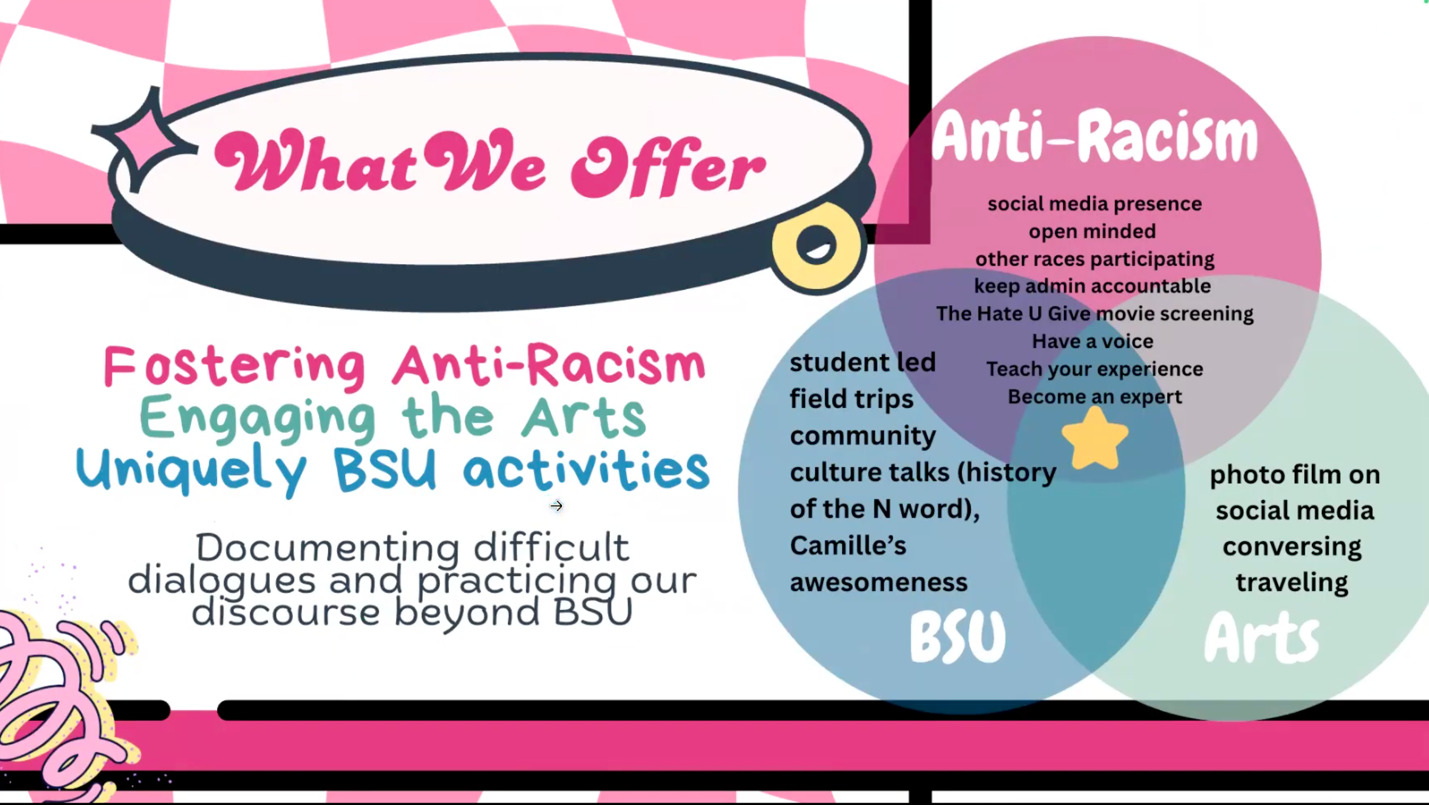
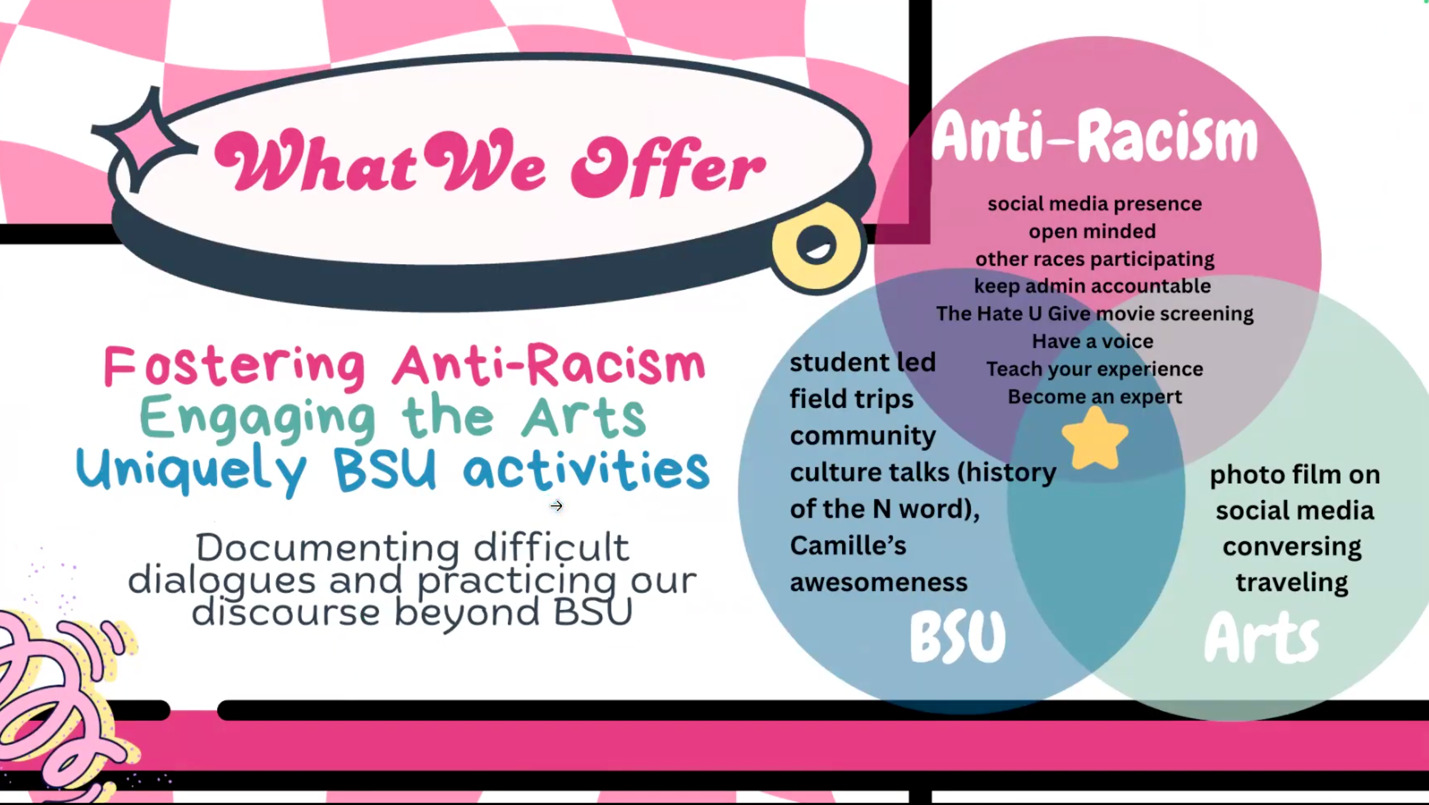
Two weeks before the ARNA conference, during a BSU officers’ club meeting, Celina, Linda, and Jameir led a conversation alongside other students to finalize the key findings. Creating a three-circle Venn diagram with “Anti-Racism,” “BSU Activities,” and “Arts” as the respective categories, we identified overlapping activities, projects, or actions. After an hour and a half, we clearly named our plan of action, “documenting difficult dialogues and practicing our discourse beyond BSU,” as indicated by a star on the slide (see Figure 4).
Step Four: Action
Lastly, we discuss our attempts to present our YPAR findings in various community engagement settings. We completely agree that YPAR action is all about direction and accountability (Fine & Torre, 2021). We realized that to achieve the goals we set for the school year, we needed support from many designated communities. For example, to travel to D.C., we needed approval from the school board because presenting at the research conference was considered an overnight, out-of-state field trip, even though it took place during the summer. When we completed fundraisers to fund field trips, we often spent our lunchtimes selling the product and marketing the club’s importance to other students on campus. It took convincing to create an advising team, and teacher chaperones were also informally expecting to see some progress reports of BSU’s efforts. We realized that as the year progressed, an action-oriented off-campus event would motivate the BSU leaders, but it had the drawback of not being set in BSU’s local community.
When it came to the research conferences, we decided very early on as a team that Jameir would take the lead in presenting the Hot Takes discussion activity. Jameir was so passionate about the Black male stereotypes Hot Takes discussion during BSU a month prior to the presentation that we all agreed his execution of the plan of action would resonate with the conference attendees. After completing the Civic Pathway program, during which he rehearsed his public comment at the city town hall, Jameir spoke about the value of speaking up and leading with his voice. We realized as a group that the opportunity for knowledge sharing was relevant not only to community stakeholders but also to the community presenters.
Results
At both research conferences, Linda reported our findings section by highlighting three approaches to utilize art to have difficult conversations during and outside BSU club meetings: (1) tell a story; (2) set the mood; and (3) express feelings first. We believed that these three approaches would support our plan of action and serve the purpose of our research question. Given our reflections over the year with the BSU (as noted in the Venn diagram), we believed our trial attempts at having difficult dialogue were refined through multiple BSU club meetings (over 30 after-school meetings) and numerous BSU field trips (six travel experiences) to prepare us for our Hot Takes activity discussion. To have hard conversations about race within diverse, multigenerational communities, like classrooms, we found that trust and a sense of comfort could be built through artistic inquiry/dialogue.
Finding 1: Tell a Story
She described the first approach as allowing BSU members to use film (short-form videos or the BSU documentary) or drawings (an ice-breaker club activity) to calmly illustrate the issue. For example, the BSU social media relations chair (a high school senior) vlogged a field trip and shared it on our Instagram. One of the BSU co-historians was a photographer and took many photos of BSU tabling at the multiple school-sponsored events for our community archive. Lastly, Linda’s BSU documentary allowed for the sharing of an authentic BSU story from the interviewed members.
Finding 2: Set the Mood
The second approach demonstrated how art can foster a safe, open atmosphere for difficult conversations. For example, when BSU went on an appreciation walk as part of Ruby Bridges Day, it facilitated a more seamless conversation about school integration. In our BSU conversation afterward, the presence of adult staff questioning why we looked like we were marching (even though we were just a lot of groups walking together across campus) was calmly discussed. Our art-inquiry walk didn’t put us into a hyper-vigilant state, even though the content we discussed (historical reactions to school integration) is traditionally seen as tense. Since the BSU co-researchers could not replicate the art experience of travel virtually in their presentation, the use of Hot Takes (as a form of lyrical art) served as an entry point into creative storytelling for BSU.
Finding 3: Express Feelings First
Lastly, the final approach offered art to express the author’s emotions and then attempt to explain or make sense of them. Both the BSU documentary and the BSU Spirit Week dance performance were examples where the artist expressed before explaining. However, we also used art-based icebreakers at the beginning of multiple BSU club agendas to build community. Examples included one-word descriptions, quick drawings, and unique storytelling prompts related to the day’s BSU topic. We saw that all of these findings were our YPAR solutions to our YPAR project, and, in turn, this affected how the YPAR team thought about participatory, equity-driven school leadership.
Discussion
In their end-of-year interviews with Celina, which was the final research stage, both co-advisor adult mentors, who were consenting participants in this YPAR project, respectfully questioned the true value and impact of the YPAR project on BSU’s overall success. In her end-of-year interview, Anisa reflected on their initial response to being introduced to YPAR, saying, “I was like, oh wow, this is actually really cool.” However, Anisa was honest that the YPAR project didn’t stand out as the most meaningful moment, and the discussions with the other BSU club members had a lasting impact. In conclusion, Anisa stated that the lack of pressure in comparison to other class projects made it an opportunity to learn in depth about a passionate topic. Anisa said, “With the process of YPAR, I feel like it was okay. I’m not on a time crunch. There aren’t many people crowding my space. I do have somebody that I can go to to talk to if I have an issue or run into an issue or need help.” Our end-of-year interview offered a reflection on the YPAR project’s transformation in practice, but not all youth authors were available to participate because it was during summer vacation. Despite all the moving parts and acknowledging YPAR is a never-ending process, we say as we write this article one month out from the end of the YPAR project, some of the positive implications of conducting YPAR for students’ leadership skills and future engagements in research.
Limitations
Given the YPAR project’s short time window, two factors (recruitment and YPAR research cycles) were largely influenced in our research design. Celina prioritized recruiting BSU club leaders, such as those in elected officer positions, over general body members because this was her first official YPAR research project and because she wanted BSU leaders to gain leadership skills from this experience. After establishing our knowledge-sharing event (our two conferences), we realized that our YPAR research cycles would have a short turnaround, with only one opportunity to provide feedback on our plan of action. Our final interview stage was an indication that there needed to be more time at the end of the YPAR project (that didn’t continue past the end of the school year) to close out and hear the young people’s opinions.
The club’s recognition and stability on campus were prioritized over the start of this project. Celina originally had planned to start recruiting for the YPAR project in the fall semester. However, Anisa, a senior new to BSU who had been elected, reminded the leadership team that building community should be prioritized over everything else. For example, during the fall semester, there was a brief pause in consciousness-raising discussions, such as the Four Corners Activity, as the student leaders sought to create a comfortable space for BSU’s new members. Additionally, having a successful BSU Spirit Week and a well-attended Black History Month field trip to the State Capitol preceded the student officers’ participation in the YPAR study. The interested participants came from the select pool of BSU student leaders, and future research with the BSU YPAR project should include more of its general body members in the research design. A more diverse participant pool with a varying level of engagement will influence the location of the knowledge-sharing event to be more local and community-centered.
In true YPAR fashion, we catered our knowledge-sharing experience (Hot Takes discussion activity) to the present community stakeholders (education and action researchers). While we advocated in our call to action for future and sustained engagement. Future research might explore the effectiveness of mentorships and external community connections in uplifting YPAR projects and seeing them through. Only time can tell how much might develop of our school-research partnerships, but if the goal is to improve the educational outcomes of more BSU club members through YPAR projects, there remains more research and community-engaged work to be done in school community stakeholders (like school board members and local site administrators) in implementing systemic changes, as Domínguez and Cammarota’s (2022) arc of transformation inspires YPAR communities to do.
Conclusion
To summarize, this article demonstrates how BSU student leaders stepped into a teaching role, embracing the art of digital media, travel, and rhetoric to keep the club thriving rather than just surviving (Love, 2019). Given our Title I context in the American Southwest, we underscore the urgency and significance of articles like this one that center youth’s voices (Call-Cummings et al., 2024). Therefore, we strongly believe that sharing our experiences can offer readers guidance for their art-based YPAR projects in their local contexts. This article contributes to the scholarly literature on young people’s grit in participatory education leadership, particularly in schools where after-school programs and extracurricular activities are underfunded. In the current sociopolitical climate, where intellectual freedom is at risk, we should listen to today’s changemakers and understand what they need to help their school sites center on Black, identity-affirming excellence. Our most important recommendation is not to get discouraged by the messiness of YPAR projects, but to listen more intently to young people and their dreams.
Author Notes
- In line with Matias and Boucher’s (2021) approach, we chose to capitalize racial markers such as “Black” and “African American.” Even though we are aware of American Psychological Association’s guidelines to capitalize all racial categories, we do not capitalize “white” in our article to decolonize hegemonic narratives of whiteness and not uphold settler colonial logics (Tuck & Yang, 2012). We are intentional about the power dynamics within our multiracial, multigenerational YPAR research team.
- All high school-related terms are pseudonyms to respect the anonymity and (to the maximum possible degree of confidentiality) of all involved. Students have given permission to use the photos presented. Aseelah gave the team permission to use her photo with Anisa.
- Each student reviewed the writing multiple times throughout the process as part of their collaboration in the research project. As they engage in their coursework and navigate their school sites, they are engaged in much-needed YPAR praxis. For that reason, Celina wholeheartedly shares authorship with them, in line with her epistemological orientation, which holds that knowledge is collaboratively generated and governed.
- The idea for the title came from Jameir’s t-shirt that he often wears. He enjoyed wearing his BSU shirt and his Changemaker shirt, which was a recent gift for completing a Civic Engagement Leadership program. It was an after-school program like Black Student Union.
Note: This manuscript was approved under the editorship of Dr. Sara L. Neyer and Dr. Allison J. Lester.