1. Introduction
There are significant challenges in integrating diverse worldviews on local developments related to global crises, particularly in the context of profound inequalities and injustices (Sultana, 2022). Major disparities between hegemonic rationality and widely differing sociocultural contexts (Santos, 2007) outline these challenges, which, as a rule, are also the focus of the quest to democratize and decolonize knowledge production, overcoming epistemicide (B. Hall & Tandon, 2017) and the impossibility of locally reframing planetary challenges.
Extensive and notable experiences of participatory research contribute to a transformative paradigm of knowledge production, seeking to reduce inequalities and equitably involve community and academic partners, co-creating knowledge between Western science and local social practices and epistemologies (Wallerstein & Duran, 2010). However, the engagement of local social actors and the emergence of their contexts of vulnerability do not always allow for fluid debate between what academic researchers consider a problem and what local subjects understand or prioritize as an urgent issue.
This requires innovation and engagement in participatory dialogue to build common meanings and efforts, thereby characterizing a process of social mobilization that aggregates local meanings and priorities (List, 2006; Toledo & Giatti, 2014). Inevitably, global crises such as climate change affect the most vulnerable communities, but how peripheral groups and knowledge understand and interact with their consequences require the construction of hybrid meanings to elucidate the forms of local agency (Börner et al., 2021).
Among participatory methodologies, it is important to recall that Community-Based Participatory Research (CBPR) is closely related to Participatory Action Research (PAR), a tradition widely disseminated in Latin America. Adelman (1993), in revisiting Kurt Lewin’s contribution to action research, highlights its democratic orientation and the inseparability between research and action. Authors such as Fals Borda (2009) and Freire (1970/2005) later expanded this legacy through a decolonial perspective grounded in knowledge co-production, transforming participatory inquiry into a critical and emancipatory praxis. CBPR resonates with this trajectory, sharing similar epistemic foundations while emphasizing the strengthening of communities as collective subjects and the horizontal and intercultural co-creation of knowledge.
CBPR does not simply involve conducting research with communities; it requires building research from within their cultural, spiritual, and political dynamics, through relationships of trust carefully built over time. This entails addressing power asymmetries, adapting methods to local contexts, and recognizing reciprocity and relationality as methodological conditions of inquiry (Wallerstein & Duran, 2010). Complementarily, Ferreira and Gendron (2011, p. 159) observe that CBPR with traditional and Indigenous communities in the Americas begins with the principle that “the functional unit of research is the relationship between the community of interest and the work of the community,” which requires trust, reciprocity, and respect for cultural specificities.
Among the guiding principles in CBPR are equity among partners and community empowerment, grounded in action-reflection and transformative praxis inspired by Freire (Amauchi et al., 2021; Toledo & Giatti, 2014; van den Berk Clark et al., 2024; Wallerstein et al., 2024). This means working collectively to generate tangible short-, medium-, and long-term benefits, always respecting each community’s worldview and social organization. Furthermore, as Freudenberg and Tsui (2014) point out, CBPR can also function as a strategy for political advocacy, connecting scientific evidence and social power at multiple scales, and linking local struggles to broader structural transformations.
Within this process, integrating arts-based tools as a methodological component expands possibilities for expression, listening, and interpretation, connecting to the sensitive, symbolic, and relational dimensions that shape community life. Recognizing their epistemic value not only broadens research horizons but also strengthens communities’ capacity to narrate and envision their own futures (Amauchi et al., 2021; Hammond et al., 2018; Muñoz-Muñoz, 2019; Toledo & Giatti, 2014).
Oral, visual, embodied, and spiritual artistic expressions play a central role—not as illustrative appendices but as legitimate modes of knowledge production and circulation. Singing, storytelling, theatre, painting, audiovisual recording, and performance emerge as languages of thought and memory that strengthen identities, encourage participation, and open appropriate spaces for intercultural dialogue on global issues as they are experienced locally (Olazabal et al., 2024). As Hammond et al. (2018, p. 5) affirm, arts-based methodologies with Indigenous peoples “should be understood as research practices in themselves, not merely as tools for communication or illustration.” In the same vein, Muñoz-Muñoz (2019, p. 14) demonstrates that “the revitalization of Afro-descendant and Indigenous oral traditions in Central America produces alternative epistemologies and acts as resistance to Western hegemony, transforming orality and performance into spaces of political and cultural agency.”
The choice of artistic methods in articulation with CBPR stems from the work carried out with Indigenous communities whose philosophies of life are deeply rooted in spirituality and in their own narratives of origin (Galante, 2022). In this context, resources such as drawings, songs, sketch maps, and audiovisual records fostered horizontal dialogue between academic and cosmological languages, expanding shared reflections on memory, identity, territory, and governance. More than facilitation strategies, these tools constituted an analytical pathway sensitive to the dimensions of orality, spirituality, collective memory, and community-based forms of organization (Bernardo Neto, 2021).
The results discussed in this article emerge from two participatory research processes developed in distinct Indigenous contexts, each guided by different substantive questions. On the one hand, in the Gunadule case (Panama), the research focused on the water–energy–food nexus (World Economic Forum, 2011), examining its meaning and expression in community life. On the other hand, in the Mbya Guarani case (Brazil), the study centered on the notion of tembi’u ete (true food), understood as a relational category that articulates territory, health, spirituality, and the reproduction of life (B. F. D. Carvalho, 2025; Guarani, 2021).
At a broader level, this article reflects on how participatory research within Indigenous territories can contribute to addressing contemporary planetary challenges, especially from an environmental justice perspective, where issues such as climate change must be reframed beyond dominant discourses toward more plural understandings and actions (Sultana, 2022). In this sense, the two research processes examined here not only offer pathways for rethinking global issues such as food security, health, and sustainability through distinct Indigenous epistemologies, but also reveal how sustainability becomes possible when cognitive exclusion is overcome and diverse ways of knowing coexist under conditions of epistemic equity (Giatti et al., 2021).
Rather than revisiting those substantive findings as such, this paper focuses on the methodological lessons that emerged from both processes as they were developed through participatory practices and artistic languages. From this perspective, the article examines how, in both cases, research became an exercise in epistemic democracy, in which science was carried out with communities rather than on or for them. By systematizing these two trajectories, the paper seeks to show how artistic and spiritual practices fostered trust, shared interpretation, and intercultural co-creation of knowledge, contributing to ongoing discussions on arts-based participatory methods.
In the following sections, we present the principles guiding the researchers’ approaches to community engagement, as well as the techniques consolidated throughout the process—such as culture circles, Nhemboaty (collective conversations/assemblies) among the Mbya Guarani, Onmagged Nega (Community Assembly House) among the Gunadule, and the use of singing, audiovisual media, sketch maps, and collective walks. These practices are presented as transferable methodological possibilities, provided they respect cultural protocols and ensure the centrality of communities as co-authors of knowledge.
2. Methodology
2.1. General Principles: Art and Participatory Approach
Collaborative ethnography draws on traditions such as Participatory Action Research and Community-Based Participatory Research, in which scholars and community members work together throughout the research process. Rather than treating people as research “subjects,” collaborative ethnography positions them as partners and co-producers of knowledge (Campbell et al., 2018).
In this study, the research experiences, conceived as collaborative ethnography and articulated through collective action-reflection processes, are grounded in the principles of popular education, allowing methodologies to emerge from within the territory rather than being imposed externally. In this sense, collaborative ethnography is understood not only as shared engagement in fieldwork, but also as a relational and cyclical process in which methods, interpretations, and forms of expression are co-constructed with participants throughout the research process. This choice resonates with the Latin American tradition of Participatory Action Research (PAR), which conceives knowledge as a political, relational, and emancipatory process (Fals Borda, 2009; Thiollent, 2011; Wallerstein, Giatti, et al., 2017; Wallerstein et al., 2024).
The incorporation of techniques based on oral, visual, embodied, and spiritual arts sought to activate processes of listening, collective memory, and territorial expression. These languages were not used as illustrative resources, but were recognized as forms of knowledge production capable of revealing sensitive, symbolic, and relational dimensions that conventional research methods often fail to access (Hammond et al., 2018; Lenette, 2022; Muñoz-Muñoz, 2019; Thomas & Cumberbatch, 2024). More recently, Olazabal et al. (2024) have emphasized that art-science approaches hold the potential not only to communicate, but also to co-create local imaginaries and deglobalize universal adaptation discourses, making them meaningful within specific community contexts.
The trajectories of participatory research were structured through the researchers’ initial engagement with community processes, local forms of deliberation, and ancestral knowledge systems. This articulation made it possible to create spaces in which knowledge production through visual arts—photographs, videos, and sketch maps—became intertwined with everyday experience. As Iseke and Moore (2011, p. 19) point out, “it is as much about the processes of community relationship-building as it is about the digital products and research outcomes,” since it involves collaborative exchanges that generate tangible benefits for communities. In this sense, methodological choices were not defined solely in advance by the researchers, but were progressively shaped through community practices, priorities, and forms of collective deliberation.
The participatory approach adopted here understands research as part of a relational fabric in which knowledge is sung, walked, dreamed, and sown. In both contexts (Brazil and Panama), it was sustained by an ethical-political stance grounded in autonomy, reciprocity, and respect for the temporalities and modes proper to each community. Thus, participation was not understood as mere inclusion in an external process, but as the affirmation of a way of being and knowing capable of questioning hegemonic epistemologies.
In this sense, methodologies anchored in cultural traditions and artistic practices strengthened autonomy and collective knowledge production, functioning as epistemological languages through which memory circulates and community-based responses emerge (Prates et al., 2022; Turner, 1993). Similarly, Marzi (2021) shows that participatory visual methodologies—such as remote participatory video developed during the pandemic—can challenge traditional hierarchies by enabling participants to assume greater control over recordings and narratives. Simple technologies, such as smartphones, when articulated with Freirean principles of action-reflection, expand participants’ autonomy and redistribute power within the research process.
2.2. The Mbya Guarani Case – Baixada Santista, Brazil
In Indigenous contexts, conducting research requires engagement with culture, attention to cosmology, and openness to the transformations that emerge throughout the process. In the Mbya Guarani case, the study was carried out in Tekoá Nhanderekoá, located in Itanhaém, on the southern coast of São Paulo State, in the Baixada Santista region of Brazil.
Mbya Guarani territories are situated within the Atlantic Forest, known to them as Ka’ (forest). Between the sea and the Serra do Mar lies Tekoá Nhanderekoá, a community that expresses a collective search for autonomy and reconnection with places indicated by ancestral memory. Mbya presence in this region reflects the continuity of Guarani territorial pathways linking villages across southern and southeastern Brazil (Pissolato, 2004).
The researcher’s engagement began before the formal study through a prior bond with the community. This connection facilitated understanding of local social and cultural dynamics and helped position the research as supportive of collective struggles related to rights, health, and territory. At the same time, repeated conversations were necessary to ensure that the proposal remained aligned with community priorities, temporalities, and expectations (B. F. D. Carvalho, 2025).
The methodological approach required sustained presence in the territory and participation in Nhemboaty (collective conversations/assemblies), Nhemongarai (ceremonial practices), and community work. Around twenty participants—Indigenous and non-Indigenous, including youth, adults, and children—took part in the process. The research was collaborative, intercultural, and intergenerational, combining presence in the territory, culture circles, participation in collective gatherings, and audiovisual production carried out with participants. These activities were progressively built and collectively validated.
Recordings were conducted predominantly in the Mbya Guarani language. Through collective reflection, participants decided that words and narratives should be documented in their own language in order to avoid losses of meaning in translation into Portuguese. This choice not only generated research material but also preserved the epistemic integrity of Mbya categories, meanings, and forms of narration, while contributing to the strengthening of Tekoá Nhanderekoá and the valuation of its knowledge systems.
Culture Circles were adopted as one of the participatory strategies in this process. Rooted in Popular Education, they were developed by Paulo Freire in the 1960s as dialogical spaces for reflection and collective learning. As such, they strengthen expression, identity, and critical consciousness, and remain consistent with collaborative knowledge production and education as a practice of freedom (Cavalcante, 2016; Freire, 1970/2005, 2020).
Within this process, dialogue with the Mbya Guarani group activated dimensions of their worldview in which orality is central to the transmission of knowledge, memory, and cultural values. Audiovisual resources and sketch maps supported the recording and expression of these experiences. Nhemboaty helped define the stages of documentation, while recordings of songs (Mborai) registered forms of knowledge related to spirituality, sacred food (tembi’u ete), and good living (teko porã). Documenting these expressions in the Mbya language supported intergenerational transmission and reinforced Mbya Guarani tradition, identity, and spirituality (B. F. D. Carvalho, 2025).
2.3. The Gunadule Case – Gunayala, Panama
The Comarca Gunayala, territory of the Gunadule Nation, extends along the Caribbean coast of Panama and encompasses 51 communities distributed across islands and mainland areas. Among them is Dubwala, located near the border with Colombia, where this research on the Water–Energy–Food Nexus (WEF) was developed (Morales et al., 2024).
The study was built on relationships developed through years of coexistence and collaboration with the community, focusing on the interdependencies that shape the WEF nexus in relation to community governance—dimensions directly affected by the climate crisis affecting the territory (Dannenberg et al., 2019; Delgado & García Sánchez, 2025; Felipe Pérez & Tomaselli, 2021; Morales, 2020).
This process included recurring visits, participation in community events, and continuous dialogue with local leaders, ensuring that the research remained grounded in mutual trust, respect for cultural protocols, and community legitimacy (Castillo, 2005b; Foyer et al., 2024). In this context, the researcher’s position was shaped by long-term coexistence and collaboration, which facilitated access and trust while also requiring continuous reflexivity regarding mediation, responsibilities, and the interpretation of community-based knowledge.
Gunadule communities are characterized by the centrality of the Onmagged Nega (Community Assembly House), a ceremonial and political space for collective singing, deliberation, and dialogue that brings together the entire community—from the Sagla and Argar, traditional community leaders, to families, youth, and women. It was within this space that discussions took place on how the research could contribute to autonomy and territorial governance. Rather than displacing local decision-making processes, the methodology was integrated into the flow of community assemblies, respecting cultural protocols and ensuring collective evaluation and authorization at each stage (Castillo, 2005a; Foyer et al., 2024).
Fifteen adult participants—men and women from the community of Dubwala, all over eighteen years old and residents for more than five years—took part in the study. The group was defined by local leadership in order to reflect a diversity of social roles, including farmers, fishers, caregivers, young adults, and community representatives. Activities were conducted in Dulegaya, the language of the Gunadule people, and took place in community spaces such as the Onmagged Nega, Nainu (the Gunadule agroforestry system), and family gatherings. These arrangements reinforced the collective and intergenerational character of the research and reaffirmed the principle that knowledge is produced through listening, reciprocity, and shared participation.
2.4. Methodological Pathways and Analyses
To understand and systematize the data produced across both research processes, we adopted principles of collaborative ethnography, understood as a cyclical and relational process of knowledge production in which researchers and communities co-construct both methods and interpretations (Campbell et al., 2018; Wallerstein, Duran, et al., 2017).
This subsection aims not only to describe the techniques employed, but also to explain how the materials produced were analytically organized, collectively validated, and expanded through visual and arts-based resources. Table 1 synthesizes the main procedures used in the Mbya Guarani and Gunadule cases, enabling a comparative view of the participatory strategies that structured the fieldwork.
The techniques were classified according to their capacity to generate feedback within the participatory research process (Toledo & Giatti, 2014). Here, feedback refers to iterative moments of return, collective reflection, validation, and reorientation through which participants assessed, refined, and re-signified materials, interpretations, and outputs generated during the research. Rather than treating feedback as a later stage, the study incorporated it into the analytical process itself, making revision, discussion, and community authorization part of knowledge production. In this way, these techniques displaced conventional hierarchies of written representation in favor of living, situated, and community-based forms of expression.
Moments of feedback and validation, carried out in Nhemboaty (Mbya Guarani) and Onmagged Nega (Gunadule), connected interpretation to community deliberation and legitimacy. Partial findings were presented, discussed, and collaboratively revised, ensuring continuous learning and collective authorization at each stage (Amauchi et al., 2021; Freudenberg & Tsui, 2014). Across both cases, these dynamics were fundamental not only for legitimizing research conducted “with” communities, but also for shaping methodological pathways as open processes whose directions, questions, and adaptations emerged through sustained dialogue. From this perspective, the researchers’ stance and the sociocultural context of each community were as important as the techniques employed (Wallerstein et al., 2024).
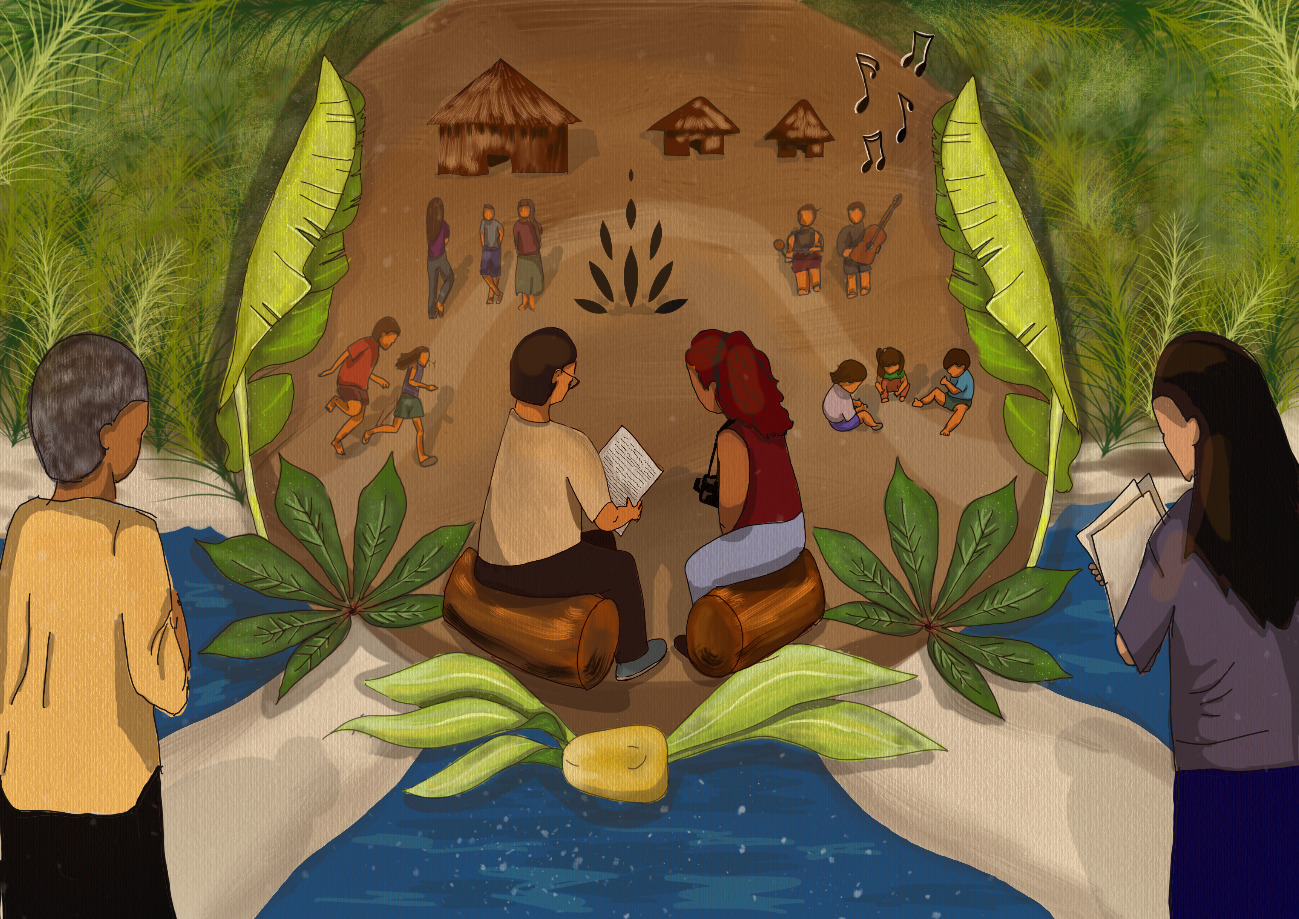
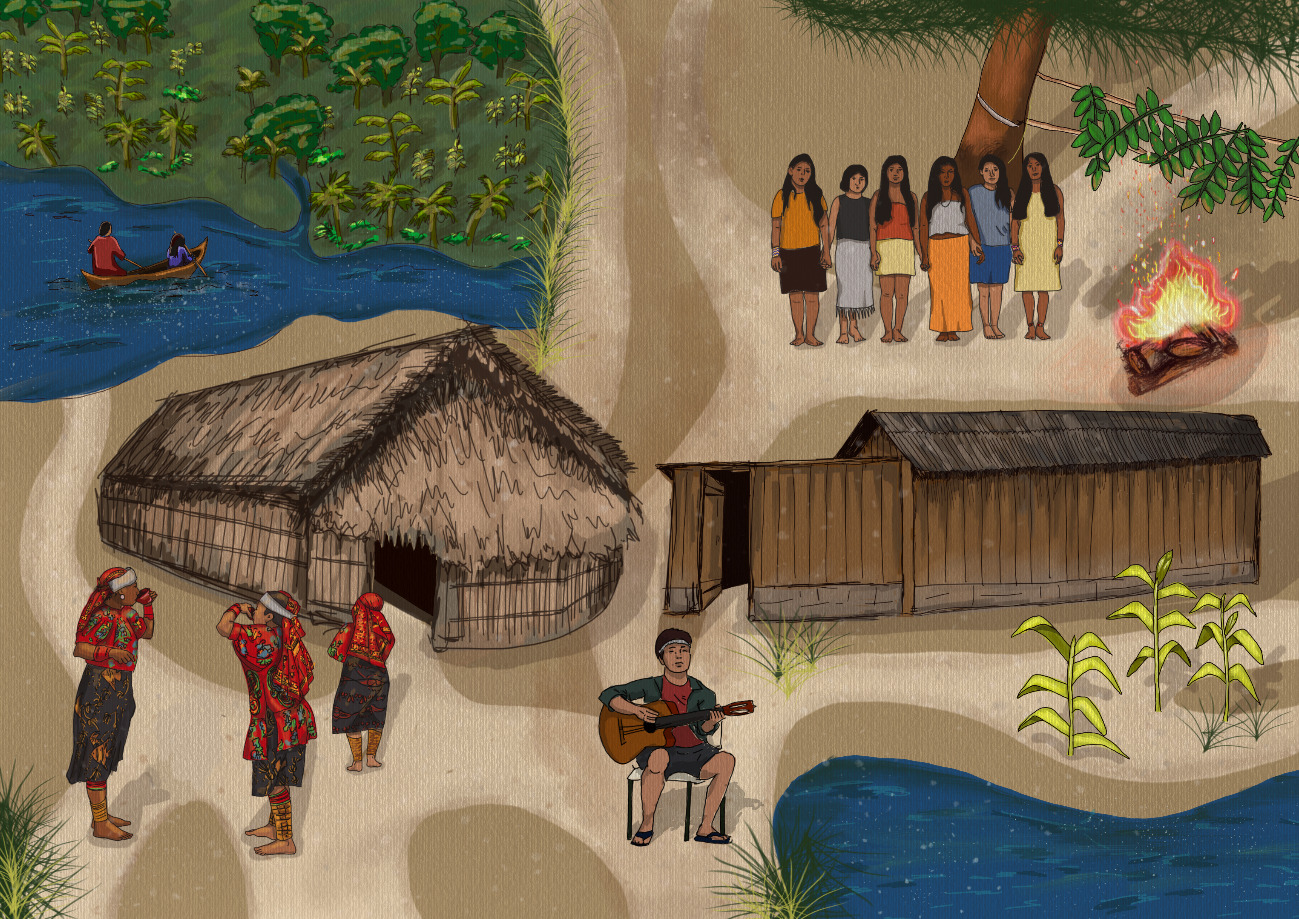
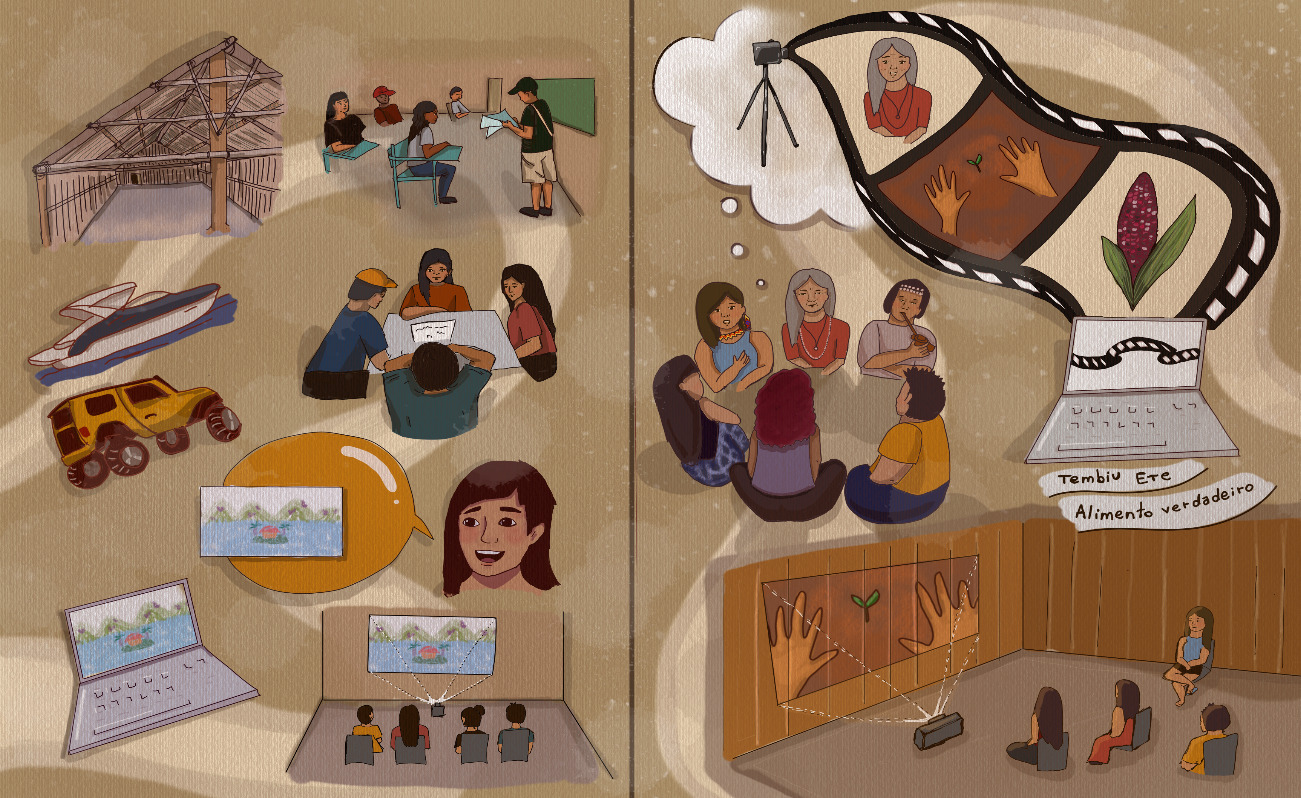
Within this framework, Table 1 summarizes the contributions of these techniques to co-learning and the forms of feedback they generated in each context. Figures 1–3, in turn, should be understood as analytical and communicative resources rather than as mere illustrations. Developed in dialogue with the arts, they translate relational, territorial, and epistemic dimensions of the participatory process into visual form, organize key learnings, support interpretation, and strengthen the return of knowledge to both academic and community settings. As Bashir (2020) and Marzi (2021) suggest, such resources can also strengthen participants’ agency and redistribute control over research processes and outcomes.
The final analysis reflects a collaborative systematization grounded in reciprocity. More than a closing interpretive stage, it reinforced local memories, rights claims, and community-based responses to climate change and planetary crises, while highlighting Indigenous epistemologies as central to more plural, relational, and life-centered forms of science.
3. Results and Discussion
The results did not emerge as isolated data, but as expressions of collective memory produced within shared processes situated in specific territorial and sociocultural contexts (Halbwachs, 1990). The community-based and participatory approach enabled these expressions to be documented, discussed, and reinterpreted through continuous cycles of feedback, giving them a dual status: as cultural manifestations—songs, narratives, performances, images, and ceremonies—and as analytical elements for reflecting on participation, governance, and Indigenous epistemologies.
Across both contexts—the Mbya Guarani and the Gunadule—three complementary patterns became evident: the consolidation of self-determined spaces of decision-making, the centrality of artistic practices as modes of engagement and memory, and the strengthening of intergenerational transmission of knowledge. Together, these elements functioned as living research devices that embedded the study within community dynamics and reaffirmed local autonomy.
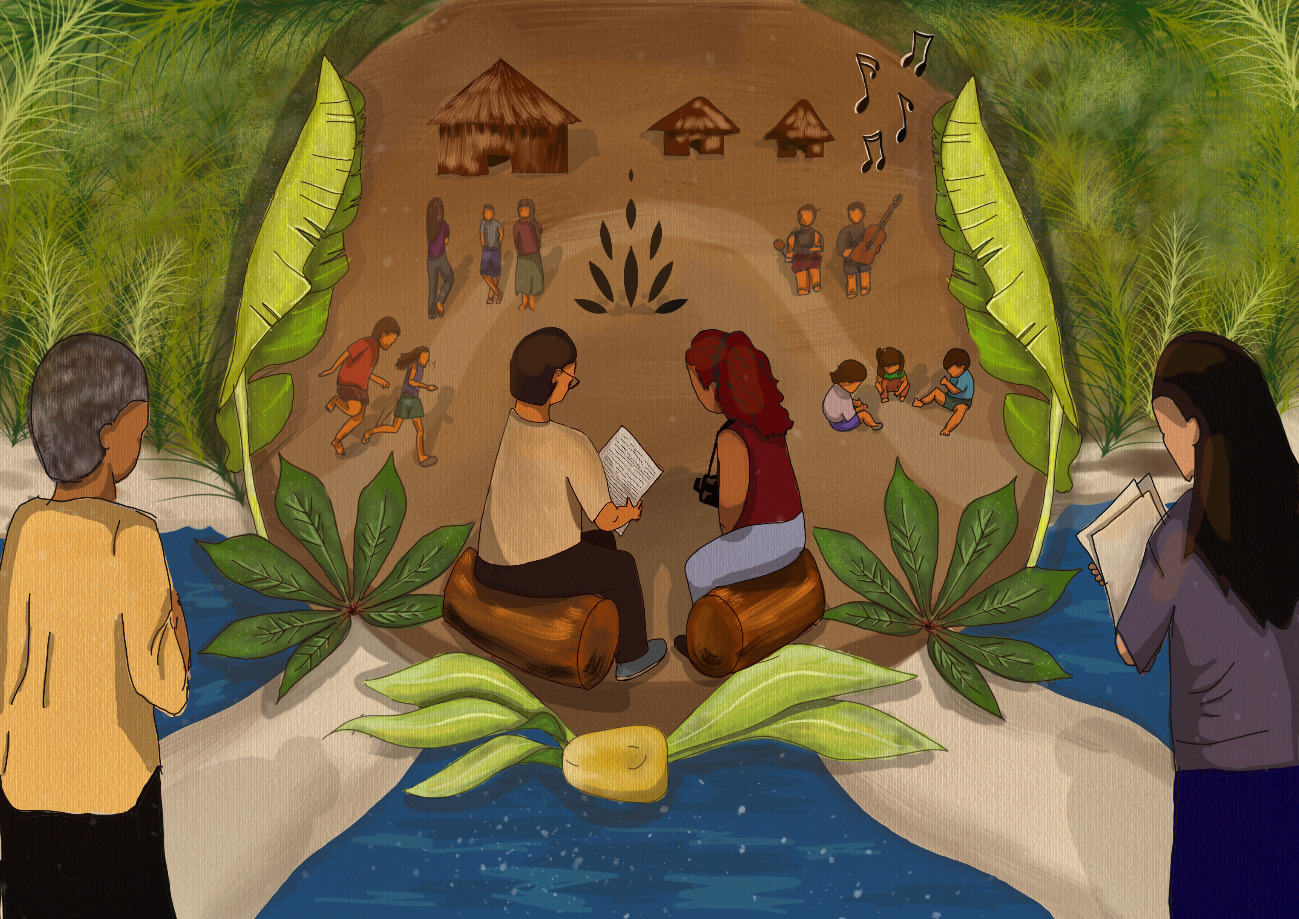
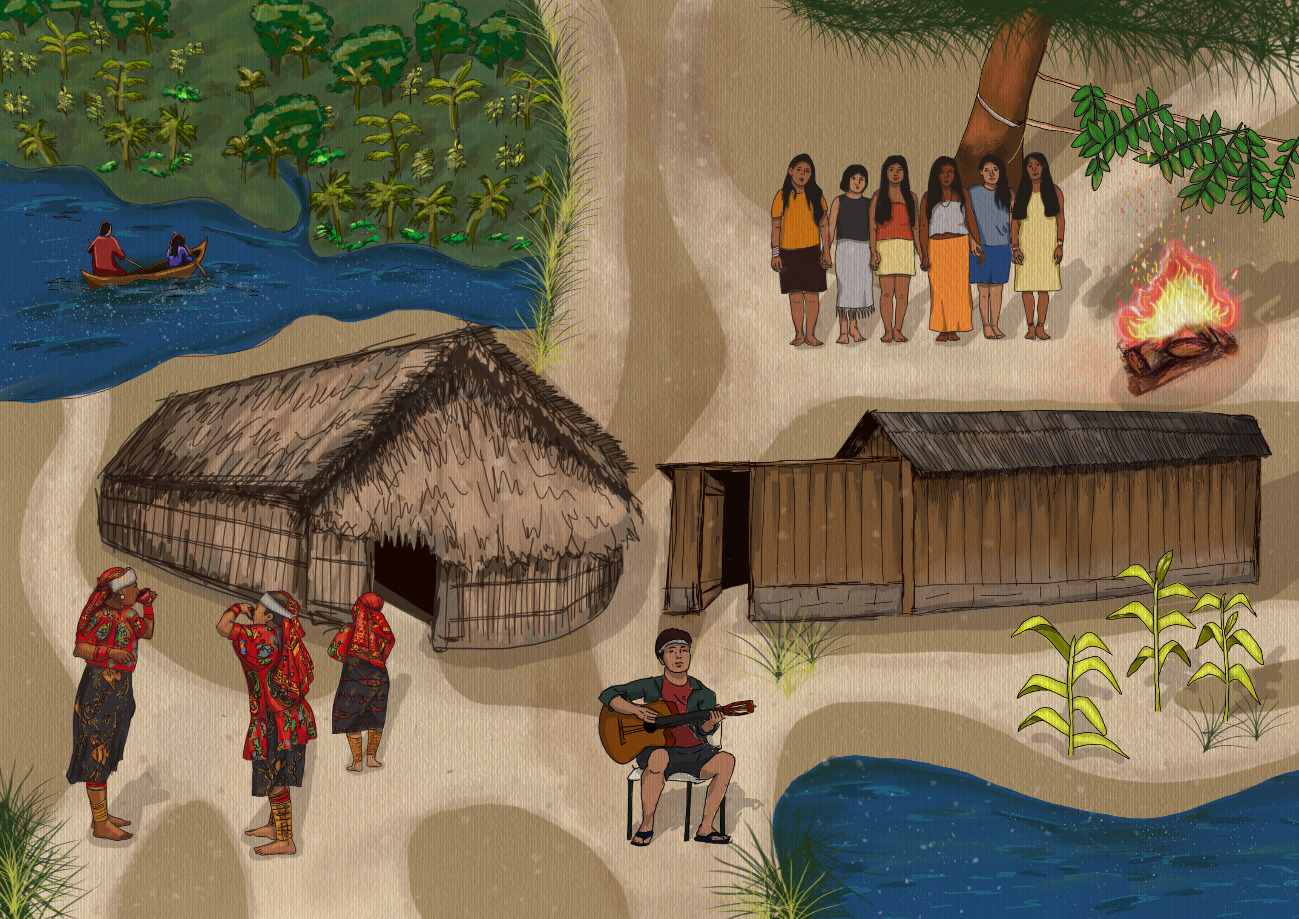
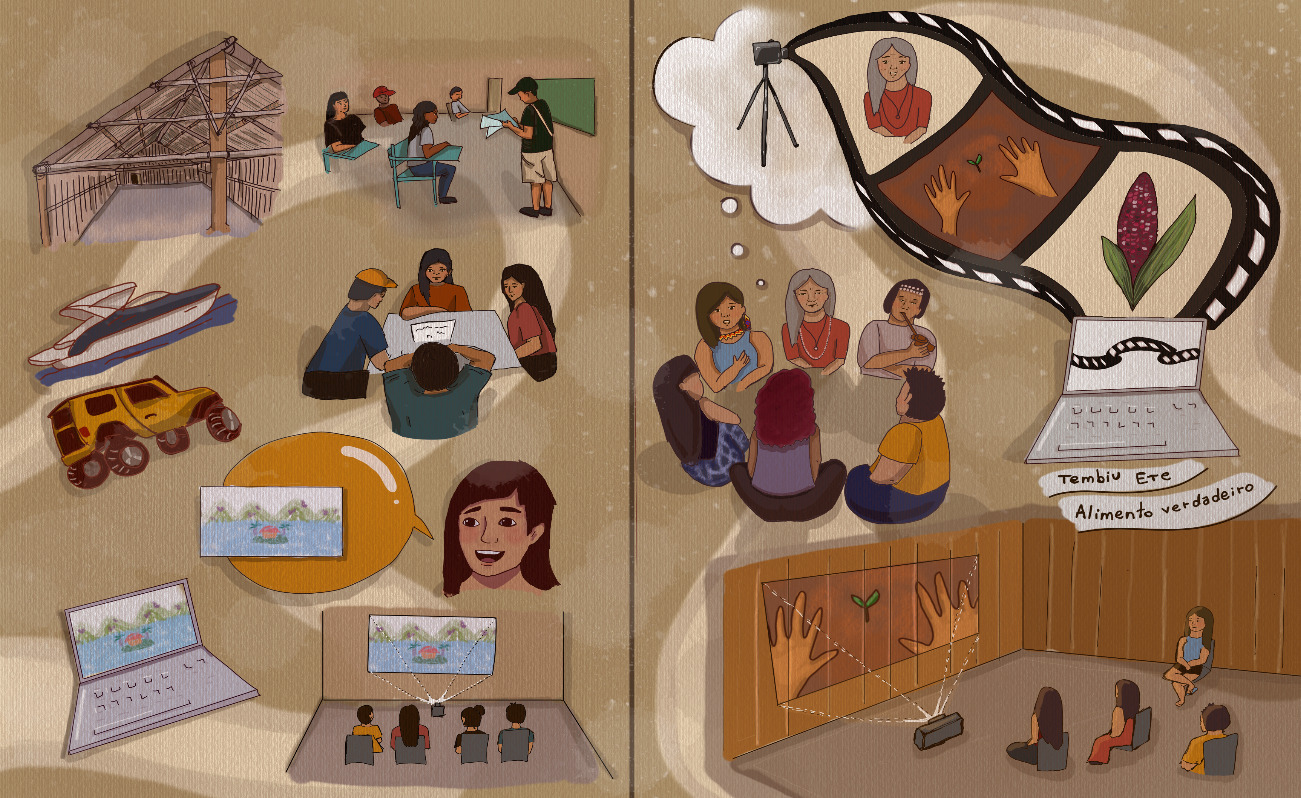
These findings are synthesized in the visual sequence presented in Figures 1–3, which condenses key dimensions of the processes examined here. Figure 1 highlights the relational and ethical conditions that made the research possible, especially trust-building, reciprocity, and sustained community engagement. Figure 2 emphasizes the community-based spaces through which dialogue, governance, and collective validation took shape. Figure 3 brings into focus the role of artistic and visual languages in sustaining memory, intergenerational transmission, and methodological co-creation. Although these figures do not derive directly from participatory stages, they offer a visual synthesis of the narrative pathways co-constructed with the Mbya Guarani and Gunadule peoples. In this sense, they function as instruments of both scientific communication and community feedback, systematizing the research trajectories and findings while also offering communities a tangible return through which shared learnings and collective journeys are recognized (Lenette, 2022; Scher et al., 2023; Thomas & Cumberbatch, 2024; Toledo & Giatti, 2014; Wallerstein, 2020).
Taken together, these methodologies not only challenged hegemonic epistemologies but also offered practical and ethical pathways for other participatory contexts. Three aspects are particularly significant: continuous feedback and collective reflection as principles of legitimacy; time as a structuring condition of research; and artistic languages as legitimate modes of knowledge production, translation, and circulation.
The following sections examine these dimensions in greater detail, moving from the relational and ethical conditions that sustained the research, to the community-based spaces in which knowledge and governance were articulated, and finally to the role of artistic languages in supporting memory, transmission, and collaborative methodological invention.
3.1. Relational and Ethical Dimensions of Research
The engagement within the Mbya Guarani and Gunadule contexts revealed that the legitimacy of research does not depend solely on academic techniques but, above all, on relationships of trust, reciprocity, and respect for cultural protocols. This understanding emerges from distinct trajectories: some rooted within the territory itself; others built gradually from outside. Such differences shape not only modes of entry, but also the meanings attributed to the research process.
For those who investigate from within, the point of departure is their own trajectory, marked by familial, political, and spiritual ties. Research becomes intertwined with community commitment and with the responsibility to return knowledge as part of a collective cycle. For those who come from outside, the path begins differently: it involves revisiting records, engaging with local organizations, and building trust gradually over time. Rather than establishing a hierarchy between these positions, these trajectories reveal different forms of responsibility, access, mediation, and interpretation within the research process.
As Eloy Terena (2020) observes, the Indigenous researcher does not “go into the field” in the classical sense, because they already inhabit that field and remain continually shaped by and accountable to it. The non-Indigenous researcher, by contrast, must learn how to enter, ask permission, and acknowledge the limits of their position. In both cases, the territory is not a neutral backdrop, but a living instance that demands listening, patience, and respect for its own temporalities.
In practice, these differences materialized in everyday gestures. In Tekoá Nhanderekoá, for example, the trust built over time led one researcher to be invited to translate public cultural grant calls under the Paulo Gustavo Law—a Brazilian 2022 emergency measure created during the COVID-19 pandemic to support cultural projects (Brasil, 2022). This collaboration enabled the community to deliberate collectively on the relevance of such calls. In Dubwala, by contrast, the arrival of researchers was marked by a different request: to write letters to the regional director of education advocating for the creation of secondary schooling.
These episodes show that researchers’ commitments vary according to their relational position. Those who belong to the territory more often assume direct political and educational roles; those who come from outside are more often called upon to act as cultural and institutional mediators. In both cases, however, research becomes inseparable from commitment to community life.
From this recognition emerges the ethical commitment of research. As Barreto (2021), an Indigenous anthropologist from the Upper Rio Negro, argues, knowledge is not produced through external techniques but through relationships of reciprocity and respect for the spiritual protocols that guide the body as a dynamic and ever-transforming reality. In a similar vein, Bashir (2020) reminds us that qualitative research with vulnerable populations becomes legitimate only when it acknowledges asymmetries and builds an “ethics of reciprocity” that embraces fragility, listens to silences, and avoids instrumentalizing people’s stories (Amauchi et al., 2021).
This principle permeated the experiences described here, in which engagement in community spaces was understood not as mere data collection, but as an ethical-political commitment aimed at avoiding the reproduction of vulnerabilities. More than a methodological procedure, this ethics of reciprocity constitutes the substance of the research relationship itself: to do research is, above all, to listen, to be present, and to share responsibility.
Finally, this ethics of reciprocity extended beyond community relationships to include compliance with formal ethical review processes, reaffirming that legitimacy emerges when institutional and cultural protocols coexist in dialogue. All research activities were therefore conducted in accordance with both national and community ethical standards. The Mbya Guarani study received approval from the Brazilian National Research Ethics Committee (Comitê de Ética em Pesquisa), under Certificate of Ethical Presentation for Appreciation (CAAE) 70532523.4.0000.5421, No. 6.492.646. In the Gunadule case, research authorizations were formally granted by the Instituto de Investigación y Desarrollo de Kuna Yala (IIDKY), Permit No. 050-11/23, and by the Instituto Patrimonio Cultural del Pueblo Guna (IPCPG), Permit No. 023/24. Together, these authorizations ensured that the research respected both institutional and cultural governance systems, expressing a dual ethical accountability—to academic institutions and to the communities themselves—that sustains collaborative work.
3.2. Spaces of Knowledge and Community Governance
In both the Mbya Guarani and Gunadule contexts, research did not develop at the margins of traditional deliberative structures, but rather within the communities’ own dynamics of reflection, authorization, and collective decision-making. Recognizing these structures as legitimate spaces of knowledge governance ensured that the research remained grounded in local modes of deliberation, listening, and reciprocity.
Among the Mbya Guarani, the Opy (prayer house) constitutes the primary space of welcome and authorization, where one arrives, presents oneself, and asks permission before proceeding to gardens, rivers, and ceremonies. It is also the setting for gatherings and rituals that bring together spiritual orientation and collective deliberation. Within this context, the Nhemboaty—monthly assemblies—served as key spaces for the ongoing governance and monitoring of the research, each opened by the Mborai, the sacred chant that spiritually guides dialogue.
During these moments, the Xeramoi and Xejary Kuerey shared narratives about tembi’u ete (true food), reaffirming the sacredness of maize, cassava, sweet potato, and honey. These narratives, both spiritual and practical, oriented cultivation practices and reaffirmed the unity between body, territory, and spirituality. In this way, the Nhemboaty became a living house of knowledge in which research acquired meaning by aligning itself with Mbya epistemology and intergenerational forms of transmission.
Another essential aspect was sustained dialogue, a condition for the process to remain genuinely collective, relational, and accountable to community rhythms rather than being externally imposed (B. L. Hall, 1979; Wallerstein & Duran, 2010). Within this logic, the Nhemboaty played a decisive role as a space where elders guided younger generations, collective matters were discussed, and the continuity of knowledge was reaffirmed. These assemblies functioned as living methodologies of intergenerational transmission through which research gradually became part of community life, allowing knowledge to circulate as a practice of care, continuity, and collective reflection (Macedo, 2009, 2017; Turner, 1993).
In Gunadule territory, the Onmagged Nega occupies a similarly central place in community life. It is there that the Sagla, families, youth, and women gather to deliberate on collective matters and reflect on how the research might contribute to autonomy and territorial governance. The oral narratives transmitted by elders not only preserve cosmology, but also recount origins, memories, and teachings about migrations, rivers, islands, forests, and cultivation, thereby guiding environmental care and informing the direction of the research itself.
Within the Onmagged Nega, spoken word and chant function as living modes of knowledge, connecting spiritual, political, and ecological dimensions of understanding. More than a venue for research, this Community Assembly House operated as a principal site of legitimation, listening, and collective interpretation. The assemblies held there were not only forums for decision-making, but also epistemological institutions in which oral narrative, spirituality, and collective reflection were interwoven as foundations of knowledge production.
Another key dimension in the Gunadule case was Unaed, a principle associated with time, reciprocity, and the collective maturation of knowledge. As Castillo (2001, p. 36) explains, Unaed expresses “a Gunadule way of understanding time not only as chronology but as a cultural category that guides reciprocity, patience, and the collective maturation of knowledge.” In Dubwala, Unaed shaped the rhythm of dialogue and co-learning, orienting the pace of relationships and the shared development of understanding (Castillo, 2005b). It also framed the movement from the Onmagged Nega toward Nainu (agroforestry plots), rivers, fishing canoes, and ceremonial spaces, where fieldwork unfolded as a process of spiritual and methodological co-learning. From this perspective, knowledge required time, return, and territorial validation: it became fully meaningful only when it circulated back to the community and was recognized there.
Taken together, the Opy, Nhemboaty, Onmagged Nega, and Unaed express different languages of a shared philosophy of knowledge governance: the understanding that knowing is a collective, spiritual, and relational act, completed only when it returns to the community as reciprocity and living memory. These experiences suggest that, in other contexts, engaging seriously with community-based decision-making structures may provide a fertile methodological pathway for strengthening the legitimacy, ethical grounding, and transformative potential of participatory research.
3.3. Artistic Languages, Spirituality, and Intergenerational Transmission
One of the most significant dimensions of the methodological process was the integration of artistic languages, which made it possible to engage younger generations while simultaneously strengthening the intergenerational transmission of knowledge. Two experiences are especially illustrative in this regard: audiovisual production with the Mbya Guarani people and the development of sketch maps in Gunadule territory.
Among the Mbya Guarani, audiovisual documentation emerged through a gradual process of invitation, collective listening, and authorization. The researcher responsible for this work was invited to accompany meetings, ceremonies, and everyday activities, but filming did not begin with the simple introduction of a technique. Only after community consent and the consolidation of mutual trust did it become possible to carry out filming and workshops. Videos and photographs thus became pedagogical and political tools that strengthened youth participation, reinforced identities, and created living archives of songs, ceremonies, and community practices.
The audiovisual production also helped foreground the sacredness of food, placing the representation of tembi’u ete (“true food”) at the center of a broader debate involving territory, spirituality, and collective resistance. In this sense, the knowledge and practices of the Mbya Guarani revealed forms of representation and action that resonate with the perspective of planetary health (Whitmee et al., 2015), particularly insofar as they articulate nourishment, ecological continuity, and the protection of life as inseparable dimensions. These practices may also be understood as protective responses to contemporary threats associated with environmental degradation, malnutrition, and the disruption of local food systems, as well as to the wider global syndemic that links obesity, undernutrition, and climate change (Swinburn et al., 2019). Likewise, Indigenous agricultural practices and the struggle to preserve agrobiodiversity reaffirm their importance as responses to broader conditions of unsustainability and environmental crisis. Through practices of cultivation, ritual, and food transmission, these artistic records made visible how Mbya Guarani food knowledge operates not only as a cultural category, but also as a living strategy of continuity, care, and resistance.
In the Gunadule case, sketch maps were developed as dialogical devices that brought together oral memory, territory, and imagery. Their production involved community gatherings in which collective decisions were made regarding what could and could not be represented, always in accordance with cultural protocols. As in other parts of the research, the process did not consist of “arriving with a technique,” but of building gradual agreements, translating categories and meanings into local language and thought. Each map, accompanied by recorded narratives, became a collective territorial record—at once cartographic and oral—linking image, word, and spirituality.
Discussions on the water–energy–food nexus in Dubwala emerged from concrete concerns such as water scarcity during the dry season, dependence on fossil fuels, and climate-related impacts on fishing and agriculture. The use of sketch maps and community recordings was collectively agreed upon, ensuring that authorship and rights remained with the community. More than documenting these issues, the process became a living archive and a pedagogical tool for memory, identity affirmation, and collective interpretation. In this way, artistic and dialogical forms of expression made it possible to address the nexus not only as an external analytical model, but as a lived and cosmological reality connecting agriculture, fishing, and access to natural resources within the Gunadule systemic vision (Castillo, 2005b; Morales et al., 2024; Toledo & Giatti, 2014).
In both cases, what mattered most was not the final product, but the process of reciprocity through which it was generated: listening, consent, translation, revision, and continuous feedback. Artistic methodology thus functioned as an exercise in relational ethics, in which each record also became a political and spiritual gesture of care toward territory and collective memory. At the same time, these artistic forms were not only vehicles of participation, but also analytical materials through which memory, spirituality, governance, and environmental change could be interpreted collectively.
The dialogue between art and Indigenous epistemologies made it possible to illuminate contemporary challenges related to sustainability, health, and environmental justice by showing how Indigenous peoples understand and manage food systems, natural resources, and the water–energy–food nexus in integrated ways, as part of the protection and promotion of collective well-being (Giatti, 2019). The Mbya Guarani and Gunadule experiences therefore suggest that arts-based methodologies may inspire other participatory contexts, provided they are not applied mechanically. To replicate is not to reproduce techniques, but to recognize principles—reciprocity, continuous feedback, and the centrality of the community as co-author of knowledge.
There are, however, essential challenges to consider: the risk of external appropriation of cultural records, the risk of spiritual meanings being displaced when practices are removed from their original contexts, and the tension between community temporalities and institutional research deadlines. These challenges do not invalidate the approach but reinforce the importance of flexibility, dialogue, and ongoing negotiation over the forms, rhythms, and objectives of the research.
Despite these limitations, collaborative-participatory ethnography revealed fertile methodological horizons. By systematizing data collectively, it strengthened memory, processes of resistance, and strategies for adapting to climate change. More than a procedure for data collection, it emerged as a practice grounded in the inseparability of body and territory, and in the need for knowledge to return to the communities from which it emerges.
4. Reflections, Replicability, and Methodological Horizons
The experiences developed with the Mbya Guarani and Gunadule peoples suggest that art, spirituality, and community governance are not peripheral to participatory research, but central to how knowledge is produced, shared, and validated. In these processes, research moved beyond observation and became a collective pathway of listening, co-learning, and co-creation. Singing, drawing, mapping, and storytelling functioned not only as expressive practices, but as methodological forms through which memory, interpretation, and dialogue were sustained.
These experiences also suggest that the legitimacy of participatory research lies less in predefined instruments than in the quality of the relationships that sustain it. Trust, reciprocity, and respect for community temporalities are not supplementary conditions, but the basis for ethical feedback and shared knowledge construction. From this perspective, replicability should not be understood as the reproduction of fixed techniques, but as the recognition of underlying principles: time as a dimension of knowledge (Unaed); community spaces of deliberation and authorization (Opy, Nhemboaty, and Onmagged Nega); and art as a language of encounter, interpretation, and return.
In this sense, adopting participatory and arts-based methodologies in other contexts requires ongoing negotiation between institutional timelines and community cycles, between academic writing and oral tradition, and between research procedures and local forms of responsibility. It also requires an ethics of presence, in which researchers—Indigenous or not—recognize themselves as part of a broader relational fabric and remain accountable for returning what has been learned in forms that remain meaningful within the territory. Here, return is not limited to delivering results back to communities, but involves sustaining circulation, memory, and shared interpretation so that knowledge remains alive within the territory.
More broadly, these experiences point toward plural and decolonial methodological horizons capable of challenging the universalizing claims of modern science. By recognizing Indigenous knowledge as epistemologies in which body, territory, and spirit coexist, research expands from a technical act into a political and democratic process of co-learning. In this context, art functions as a mediator between worlds, connecting the visible and the invisible, the communal and the planetary. Videos, photographs, and sketch maps are not merely records or communication products, but testimonies of community co-authorship, tools of autonomy, and forms of symbolic resistance in the face of contemporary environmental and epistemic crises.
Ultimately, the pathways opened by the Mbya Guarani and Gunadule peoples do not offer a model to be replicated, but inspire a living and relational science: one that listens and returns, recognizes the limits of representation, and remains committed to care. In this sense, inquiry does not end in writing alone, but returns to the territory and to ancestral wisdom, taking the form of song, image, and gesture—living memory that continues to teach.
Acknowledgments and Research Permits ;ck
The authors express their deep gratitude to the Gunadule and Mbya Guarani territories, whose generosity and guidance made this research possible.
We acknowledge with respect the Lekwungen peoples, on whose traditional territory the University of Victoria stands, and the Songhees, Esquimalt, and WSÁNEĆ peoples, whose historical relationships with the land continue to this day. Many of the reflections presented here were nurtured through the Community-Based Participatory Research program at the University of Victoria, especially in collaboration with the Community-Based Research Laboratory (CBRL, UVic), supported by the Emerging Leaders in the Americas Program (ELAP) of Global Affairs Canada.
We also recognize the institutional and community authorizations that made this work possible:
-
Instituto de Investigación y Desarrollo de Kuna Yala (IIDKY, Panama) — Permit No. 050-11/23.
-
Instituto Patrimonio Cultural del Pueblo Guna (IPCPG, Panama) — Permit No. 023/24.
-
Comitê de Ética em Pesquisa, Brazil — Certificate of Ethical Presentation for Appreciation (CAAE) No. 70532523.4.0000.5421, Opinion No. 6.492.646.
This research was supported by the following funding agencies and programs:
-
Secretaría Nacional de Ciencia, Tecnología e Innovación (SENACYT) / IFARHU, Panama — Grant No. 270-2023-005. (L.A. Morales).
-
Emerging Leaders in the Americas Program (ELAP) — Global Affairs Canada. (L.A. Morales).
-
Fundação de Amparo à Pesquisa do Estado de São Paulo (FAPESP, Brazil) — Grants No. 2021/07399-2 and 2021/06897-9, Cosmopolíticas do Cuidado no Fim-do-Mundo.
-
Fundação de Amparo à Pesquisa do Estado do Amazonas (FAPEAM, Brazil) — Calls No. 002/2025. (L. Giatti).
-
Conselho Nacional de Desenvolvimento Científico e Tecnológico (CNPq, Brazil) — Proc. No. 314947/2021-3, Code 001, and Grant No. 309533/2025-2 (L. Giatti).
-
Coordenação de Aperfeiçoamento de Pessoal de Nível Superior (CAPES, Brazil) — Funding Code 001. (B. Freire).
-
Edital Nº 003/2023 Lei Paulo Gustavo – Audiovisual Project Selection Call, Municipality of Itanhaém/SP. (B. Freire).