Introduction: Collage as Research
Arts-based methods and approaches have become increasingly common in Community-Engaged Action Research (CEAR) around the world. In addition to arts-based research (ABR), CEAR can encompass community-based participatory research (CBPR), participatory action research (PAR), participatory geographic information system mapping (PGIS), and other engaged scientific investigation approaches. Corley (2023) presented a definition of CEAR as the range of justice-oriented participatory and action research approaches comprised of:
-
A defined group with a shared geography or identity;
-
Research-informed actions focused on a shared goal or outcome;
-
Meaningful group engagement in scientific inquiry; and
-
Research or systematic investigation of phenomena of group significance.
In addition, CEAR creates knowledge by equitably sharing leadership and control of scientific processes with othered, vulnerable, and marginalized groups to reconcile the gaps between community and institutional knowledge and ways of working. Many scholar-practitioners of CEAR refer to Arnstein’s Ladder of Civic Engagement when assessing this transfer of power (Arnstein, 1969; González, 2019; Vaughn & Jacquez, 2020). However, engaging historically racialized and marginalized groups requires ongoing dialogue to assess changing conditions in community members’ capacity and priorities — the more profound their experiences with inequities and injustice, the more flexible the academic research team must be to collaborate equitably with community members. Scholars argue that ongoing social learning provides a more suitable foundation for guiding, assessing, and iterating engagement and methodology when addressing complex, multifaceted issues like climate change (Collins & Ison, 2009).
Despite debates about the range and depth of engagement in CEAR studies, many aim to transform society by investigating and addressing systems of oppression and injustice through collective action. Notably, CEAR includes a long history of implementing arts-based methods and frameworks to explore human experiences (Coemans & Hannes, 2017; Wang et al., 2017). Some argue for integrating artistic expression with scientific inquiry and lived experiences to transform social-ecological relationships (Heines et al., 2024).
For environmental justice advocates in Providence, Rhode Island, organizing to effect systems change and eliminate environmental racism often involved engaging activists and the public in hands-on, creative endeavors. Organizers created the Racial and Environmental Justice Committee (REJC) to address the environmental racism in the city’s frontline and fenceline communities. Since 2016, the grass-roots coalition has transformed multiple city and state statutes and regulations. When, in 2022, the REJC agreed to collaborate with the Breathe Providence Project at Brown University (“Breathe Providence”) through a resident task force to investigate air quality in vulnerable neighborhoods, action research was unfamiliar to these veterans of systems change.
Methodological innovation was essential to investigate air pollution in Providence, a critical concern for health and environmental advocates, including the REJC. In 2022, the Center for Disease Control reported that Rhode Island had the highest asthma rates in the country, with the city of Providence boasting significant disparities in disease burdens among areas where low-income communities of color resided. These neighborhoods lie geographically adjacent to industrialized areas and major traffic corridors. Since government-operated air quality monitors are located outside these high-emission areas, Breathe Providence introduced hyperlocal neighborhood monitoring to measure, with finer resolution, the diversity of pollutants, including carbon monoxide, carbon dioxide, nitrogen oxides, ozone, and fine particulate matter.
Breathe Providence aimed to support hyperlocal understanding of air quality; the Breathe Providence Resident Task Force focused specifically on the problem of odors emitting from industrial activities in the Port of Providence and its impact on air quality and quality of life. However, in the fall of 2023, the resident task force members also raised concerns over indoor air quality issues at Alvarez High School. Routine testing at the school revealed toxins so intense that it closed several rooms (Machado, 2023b). In other instances, children required hospital visits following exposure to objectionable odors (Machado, 2023a). Despite these and other instances, the odors often failed to be objectionable enough to require further action: monitor readings fell within state and federal standards. The residents felt that regulatory agencies lacked transparency and urgency in addressing the Alvarez situation, which parallels the state’s Department of Environmental Management (DEM) approach to industrial outdoor air quality hazards and resident reports. Between 2021 and 2023, DEM reported that only 3% of resident-reported complaints resulted in a formal objectionable odor finding in or around the Port of Providence. Inspections, if any, often occurred hours to days after a resident filed a complaint.
To address the mismatch between regulatory frameworks and resident experiences, the Breathe Providence Resident Task Force utilized a Political Ecology of the Body (PEB) framework in its CEAR approach. Human geography scholars (Hayes-Conroy & Hayes-Conroy, 2013) introduced PEB to integrate sensory experiences of the body and mind with the interdependent relationships between politics, economics, and the materiality of the built and natural environment. The framework guided the collection of experiential data: the task force’s Community Researchers logged their visceral experiences via journals, spreadsheets, and a publicly available app called “Smell MyCity” (Create Lab, n.d.). The autoethnographic data points included date, time, and location; bodily sensations such as nausea, fatigue, and dizziness; and affective (pleasant/unpleasant) and emotional (disgust, anger, delight, etc.) impressions of the places and experiences in the moments of occurrence.
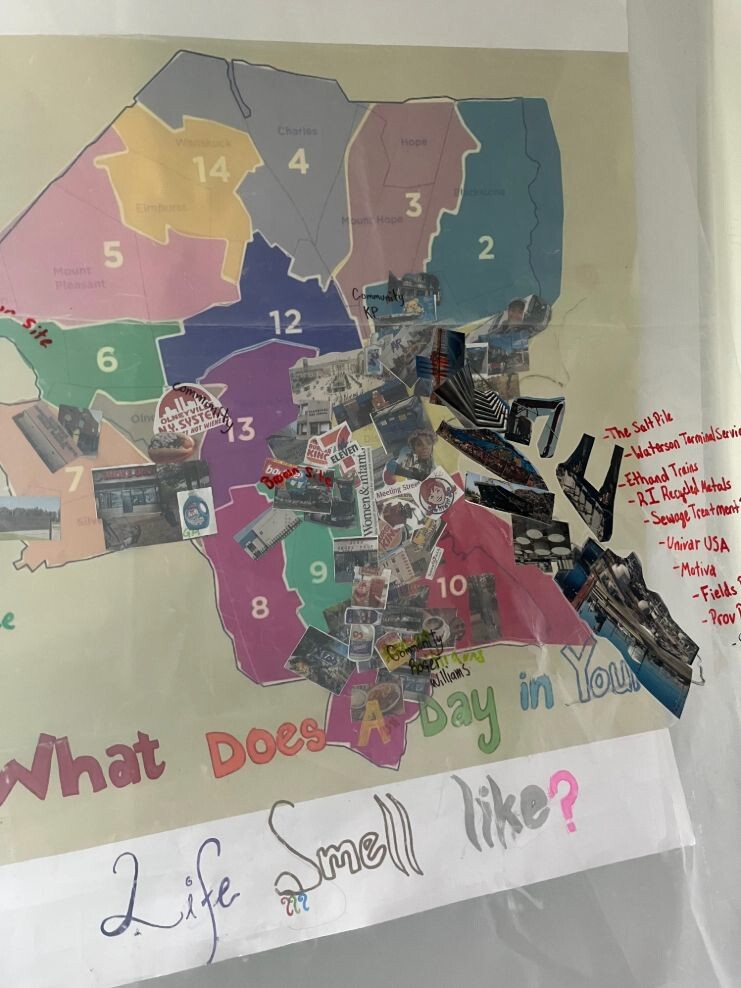
This article describes the Smellage, the product of a collaborative collage-making activity by the Breathe Providence Resident Task Force. The Smellage and its creation contributed to the body of evidence using technical and experiential data to support the community’s ongoing efforts to reform state and local policies and regulations related to air pollution. Creating the Smellage was just one of multiple activities in a CEAR study that was not arts-based research (ABR). However, the arts-based component opened new ways for deepening social learning and community engagement across all research activities while integrating the participants’ existing interests, skills, and ways of working. The participants—mostly experienced organizers—were already recognized community knowledge holders, creators, artists, and visionaries. With poets, visual artists, musicians, and storytellers at the table, it made sense to do something to strengthen everyone’s community research skills and bring out their inner “artivists.”
Breathe Providence Resident Task Force as CEAR
Dr. Meredith Hastings (Primary Investigator) launched Breathe Providence in 2022. The community-scale air pollution monitoring project has deployed 25 low-cost sensors throughout Providence, particularly in vulnerable neighborhoods that have never been represented by the government’s regulatory monitoring network (including the neighborhoods prioritized by the BP resident task force). Each sensor measures a suite of air pollutants (particulate matter (PM2.5), carbon monoxide (CO), nitrogen ox-ides (NOx/NO2), ozone (O3) and a greenhouse gas (CO2)). The original goals of the project included to:
-
Understand the landscape of air pollution and climate-related emissions in Providence, Rhode Island;
-
Advance the science and policy utility of lower-cost air quality monitoring data;
-
Raise awareness of local air quality and support improved policy and local environmental and sustainability initiatives; and
-
Engage Brown University faculty, staff, and students directly in contributing to the City of Providence’s health, wellness and climate related goals.
These goals helped set achievable actions based on a strategy that integrated science, community, and policy to assess and transform environmental processes and conditions across the city.
The Breathe Providence team sought to collaborate with the REJC on achieving these goals. The original project design conceived of community participation. Like in many metropolitan areas, a long and multi-faceted history of de facto political, economic, and environmental racism has sown skepticism among marginalized residents about being part of institutional research (Pirie & Gute, 2013; Ryan et al., 2024; Tran et al., 2025). Given the relevance of the project’s aims to the REJC’s mission to bring racial equity and environmental justice to Providence’s frontline communities, the organization’s staff contacted Dr. Tracy A. Corley (CEAR Scholar) to help align interests of all collaborators and to advise on anti-racist, anti-oppressive research ethics and practices. Dr. Corley also facilitated design of the engagement strategy and activities, which manifested as a Resident Task Force (see Table 1).
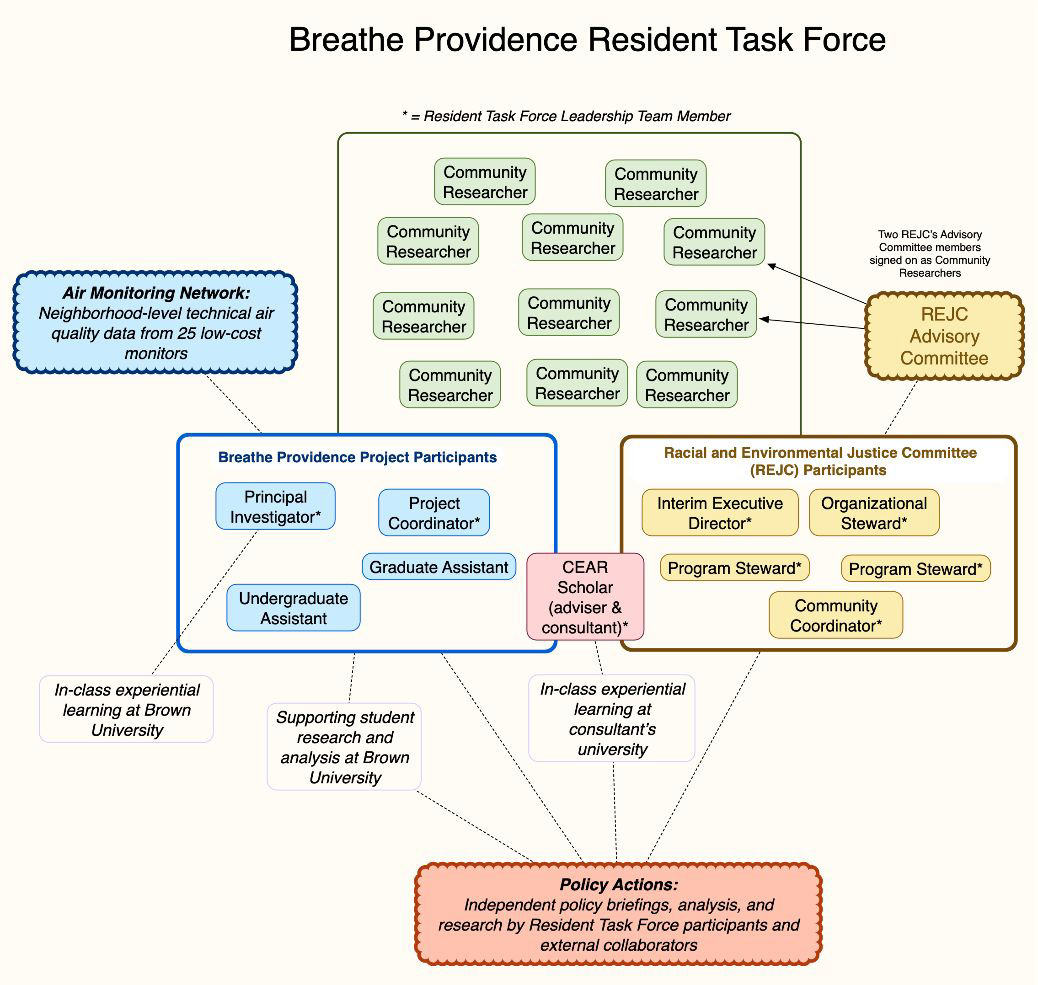
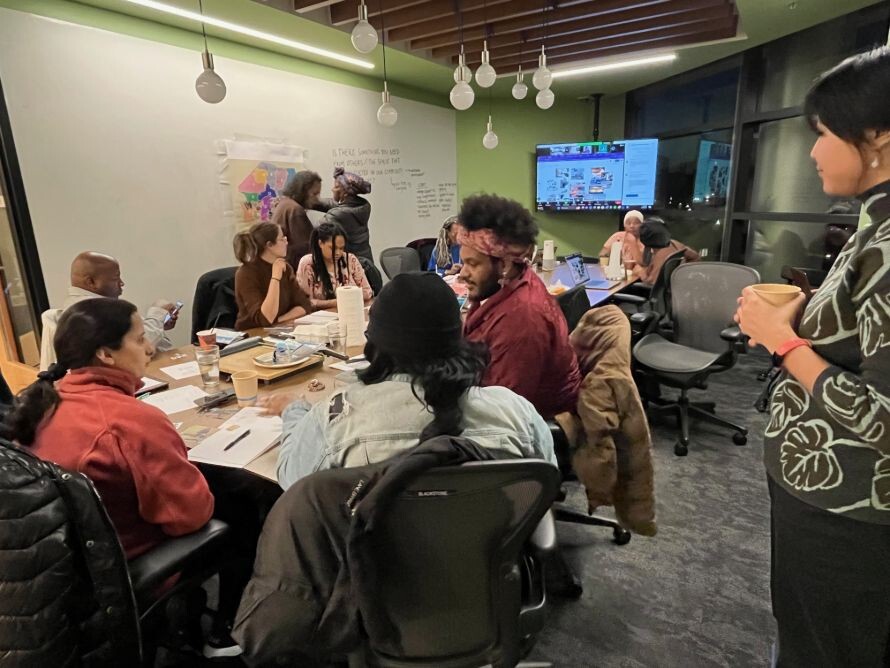
The task force consisted of the Breathe Providence team, REJC staff, the CEAR scholar, and Community Researchers identified and hired by REJC. The task force leadership team, indicated in Figure 1 with an asterisk (*), planned and co-facilitated meetings and activities. The task force convened each month for two hours to design, conduct, and take action on findings from multiple scientific investigations, including Breathe Providence’s air monitoring network. Unless otherwise noted, the in-person meetings were live-streamed using Zoom. Dinner and childcare were provided for in-person participants, and meal delivery gift cards for online attendees. The meeting room included multiple cameras, allowing online participants to see and interact with others and materials in the large conference room. During small group discussions, an online facilitator coordinated activities with virtual participants, but all meetings allowed time for the entire group to synthesize findings and insights.
Between task force meetings, the leadership team met to design the next meeting’s agenda and activities and to discuss potential collective actions outside of regularly scheduled meetings. The original community engagement design included REJC-led action teams on two or three issues based on the research findings; however, existing and emergent community relationships allowed for organic, resident-initiated collective actions that distributed leadership among the community and institutional researchers. These actions produced rich descriptions of insights and experiences that expanded awareness and understanding for all. The task force members and supporting partner organizations deployed additional resources to conduct independent background and mixed methods research, analyze policy, and host small-group meetings with bureaucrats and public officials. The leadership team aggregated information and insights from these diverse efforts to task force meetings for discussion, analysis, ground-truthing, and collective strategy-setting and response.
Power and Participation in Breathe Providence
The leadership team of academic researchers and community organizers structured community engage-ment as collective action through research, where decisions are made collaboratively with Community Researchers. The leadership team rooted the monthly activities in the REJC’s Green Justice Zones curriculum (REJC, n.d.) and co-authorship of the Providence Climate Justice Plan (City of Providence, RI & REJC, 2019), Dr. Hastings’ (Principal Investigator) scientific leadership in earth sciences and atmospheric chemistry, and Dr. Corley’s (CEAR Scholar) expertise in public policy, law, and community-engaged action research approaches. The leadership team convened monthly for planning and in-depth discussions to align the collaborators’ organizing, educational, and research aims. This ongoing social learning (Collins & Ison, 2009) created a varied agenda that centered relationship building to achieve the shared goal of neighborhood-level environmental monitoring and collective action led by those most harmed by poor air quality.
These relationships nurtured an inter-generational resident task force wherein institutional and community researchers co-created a way of being, knowing, and working that honored differences in interests, abilities, approaches, and experiences. These differences included engagement preferences, experiences navigating scientific data and reports, and proficiency with the English language. The REJC recruited predominantly from the communities of Washington Park, South Providence, and Olneyville — three neighborhoods with documented environmental racism resulting from a nexus of conditions: spatial and social segregation, resident health disparities, and high concentrations of environmental pollution (Bullard, 2018; Herrera et al., 2024; Motairek et al., 2023; Pulido, 2017). The participating residents were well aware that these conditions were problems with effects on the health, quality of life, and life outcomes of their families and neighbors. They joined the resident task force as “Community Researchers” to investigate the root and related causes of poor air quality and explore what they could do to help those in power understand that, rather than anecdotes, their experiences were evidence of something terrible in the air in Providence.
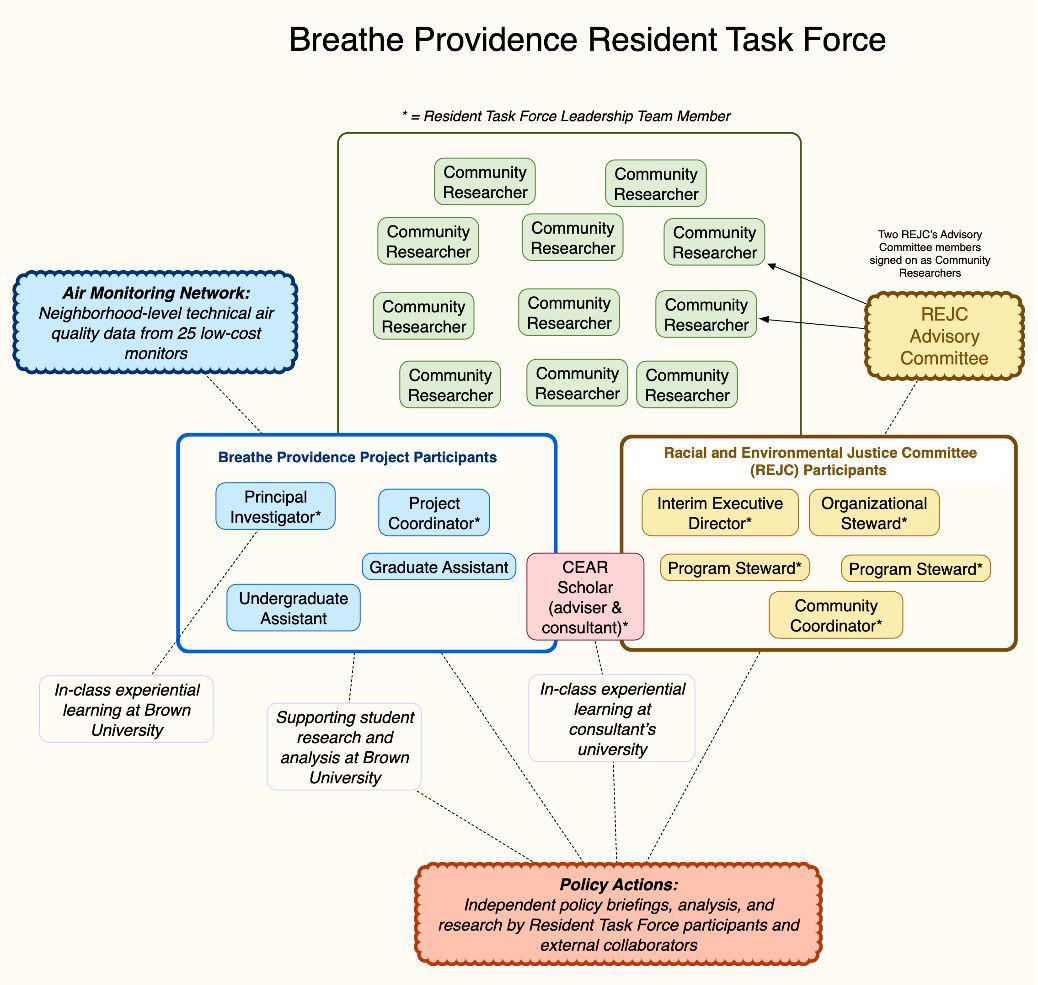
The resident task force consisted of 21 community stakeholders embodying many identities and experiences. The Community Researchers all identified as Black or Brown adults, with ages and gender identities ranging from their late teens to early 70s, including three well-respected community elders. The initial meetings included a Latinx teen (aged 17), who stepped down due to a family emergency. Another Latinx adult male also stepped down due to a work-related conflict. Of the remaining 11, two identified as male and nine as female and one identified as disabled. All but one of the two males and nine females were active organizers on various issues related to environmental justice, including education, housing, civil rights, senior rights, youth advocacy, food justice, and just energy transitions. All but one were proficient in English, and at least three were multilingual. Regular task force attendees also included a multilingual Latinx female or her father to assist with interpretation, translation, and clarification, as well as two Brown University students, a multiracial Black woman and a woman with Asian/Pacific Islander roots, to assist with administration and supplementary research.
The 8-member leadership team included age diversity similar to the Community Researchers (20–79). All identified as either female or gender non-conforming, with a mix of education and ethnic backgrounds. Both Breathe Providence’s Principal Investigator and Project Coordinator identified as white European Americans. All other leadership team members, including the CEAR Scholar, identified as Black or African American, with two of Indigenous North American heritage and at least one with Caribbean roots. Combined, the leadership team and Community Researchers contained at least five artists, including painters and poets. Their socioeconomic statuses, like their ages, varied widely, with many having experienced the health-harming effects of poverty and precarious housing and employment as well as the role of environmental racism in these experiences. At the time of this research, two did not live in the city of Providence, and nearly all were born and raised in the United States.
Given the group’s range of identities and experiences, the REJC staff sought a different approach to keep members engaged and alleviate the heaviness that exploring the harms of environmental racism brought to monthly gatherings. They remarked that when institutional researchers “take” the stories of Black and Brown people and share them in spaces where they have limited or no access, the stories often are not “held in sacredness and with the holistic” understanding required for transformative change to happen. The Smellage was introduced to tap into participants’ overlapping strengths and interests in visual art as a vehicle for sharing and analyzing their own stories.
The Community Researchers also shared that the collaborative process helped the community express and process highly personal, often distressing themes and issues. Through dialogue and storytelling, neighbors and strangers constructed new experiences that allowed them to process trauma and harms while also creating joyful and delightful experiences. Through this co-regulatory art-making process, they forged new stories of resilience and resistance, making meaning from their own experiences with air toxins, harmful odors, and other environmental pollutants. The process also helped the REJC expand their organizing strategies beyond rallies and “showing up.” Co-regulation through learning about environmental hazards and using stories as data, including creating the Smellage, opened new ways for organizing and mobilizing around difficult experiences with environmental racism through research.
The Power of Experiential Data as Knowledge
There is no technical monitor more sensitive than the human nose. Indeed, researchers have documented that the human nose can detect and distinguish more than 1 trillion odors (Bushdid et al., 2014). Yet, policymakers design regulatory frameworks that rely mostly on data from technical monitors. The over-reliance on technical data misses crucial measures that can help institutional and community researchers better understand the complex causes and sources of air and other environmental pollutants. Even more, the disconnect between what technical instruments monitor and residents experience creates a knowledge gap that contributes to public mistrust of scientific reporting, regulatory systems, and institutional processes. The disconnect can also prompt officials and scientists to overlook or disregard life-threatening concerns of marginalized residents, a disposition that deepens distrust.
The disconnect between traditional and experiential knowledge illustrates that, when used alone, technical data do not guarantee that the regulatory system works, especially for poor, under-resourced, and marginalized people. Experiential data is essential to inform how we design policies that respond to air pollution and other environmental problems. For Breathe Providence, both community and academic researchers recognized that experiential data provided a more expansive understanding of what’s in the natural and built environments: experiential data collection and analysis offered a legitimate way to record and monitor pleasant and unpleasant smells that may or may not be pollutants. Only by considering experiential data can we have a better understanding of the truth based on findings and conclusions where people’s experiences are actually represented in the data.
The Smellage created a dataset of resident experiences, reflecting not just what they smelled, but the embodied physical and affective experience of odors as they engaged with people, spaces, and places across the city. The Smellage tied together the holistic experience that the numerical and categorical data can merely hint at. Through the collaborative action of engaged research, residents created an arts-based visual dataset that reinforced the technical data and helped to strengthen the validity and reliability of self-reported data through the Smell MyCity app, journal entries, and discussions. The lively discussions that took place during collage-making helped researchers assess potential changes in sensory experiences over time and across locations. Dialogic interactions and visual representations helped academic researchers compare meteorological and air quality monitoring data to identify what measures might be missing and to build the case for regulators to expand air toxin monitoring and reporting beyond areas of concentrated industrial activity in the Port of Providence.
Other studies have demonstrated how human sensory experiences can yield detailed technical data. In their cataloging of the urban smells that are among the 1 trillion detectable by the human nose, Quercia et al. (2015) described how smell has not been considered sufficiently in urban studies. Building on this research, the Smellage focused on the sensory experiences of Providence residents, namely how the use of their physical and cognitive senses shaped their experiences in places around the city. Using smell, sight, taste, touch, sound, and perception, participants mapped the odors that they experienced in their daily activities. Affective and mental perceiving makes cognitive sensing an important complement of the traditional five physical senses, which work together to shape people’s holistic experiences. In creating the Smellage, Community Researchers discussed how, in their experiences, these six senses influenced one another and, together, created a complete embodied experience of a place that affects physical and mental health and well-being. They also discussed sensory experiences of urban power relations, using smell as a reference point for how inequities manifest in pollution exposures within the built and natural environment across Providence.
Creating the Smellage
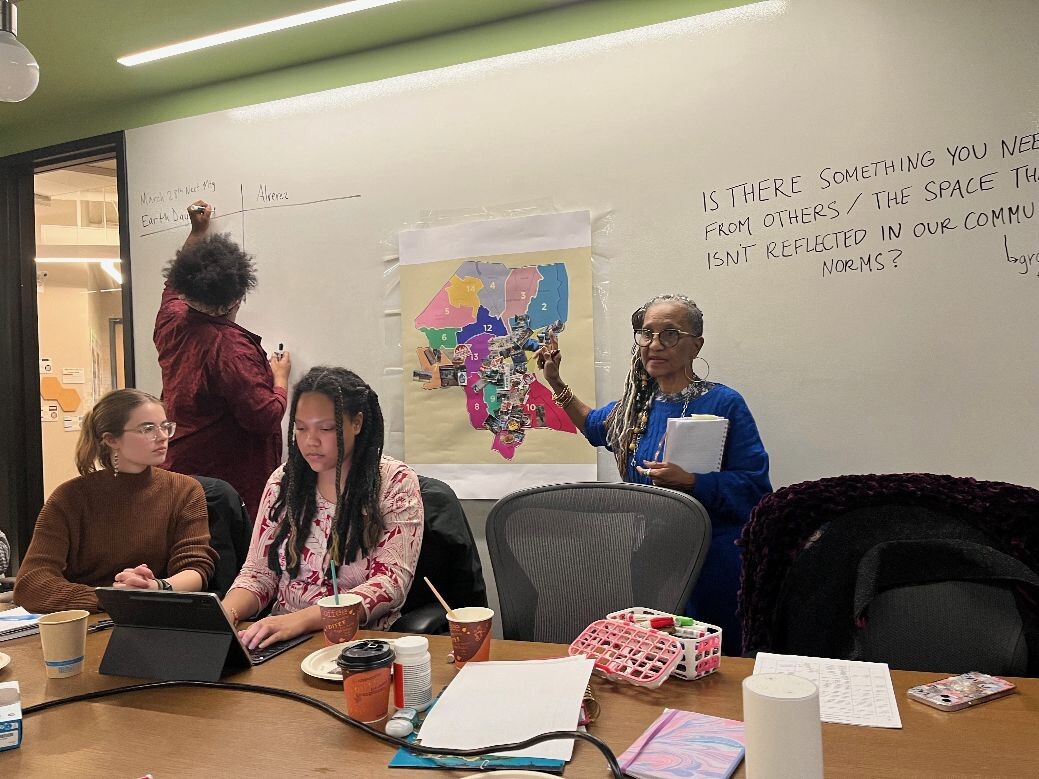
The task force’s experienced organizers highlighted that information is everywhere and data exists many different forms. This understanding inspired leadership team members Jesus Holguin and Jazandra Barrows (REJC Program Stewards) to propose the Smellage as a research activity. They aimed to rekindle fun, youthful experiences that many task force members rarely have in their daily activities. In meetings preceding the creation of the Smellage, the activity’s co-facilitators guided the task force through an exercise to imagine their ideal city. Participants worked in small groups, using their sense memories to describe embodied experiences of moving through a neighborhood that supported good health and wellbeing. In lively discussions, residents envisioned what they heard, saw, and smelled in their environments; smell emerged as a key sensory experience. After discussing and documenting ideal and present-day odors and community conditions in small groups, all attendees reconvened to share their visions and experiences with pleasant and objectionable odors. Rather than words, some used illustrations, laying the groundwork for additional creative, arts-based activities in future sessions.
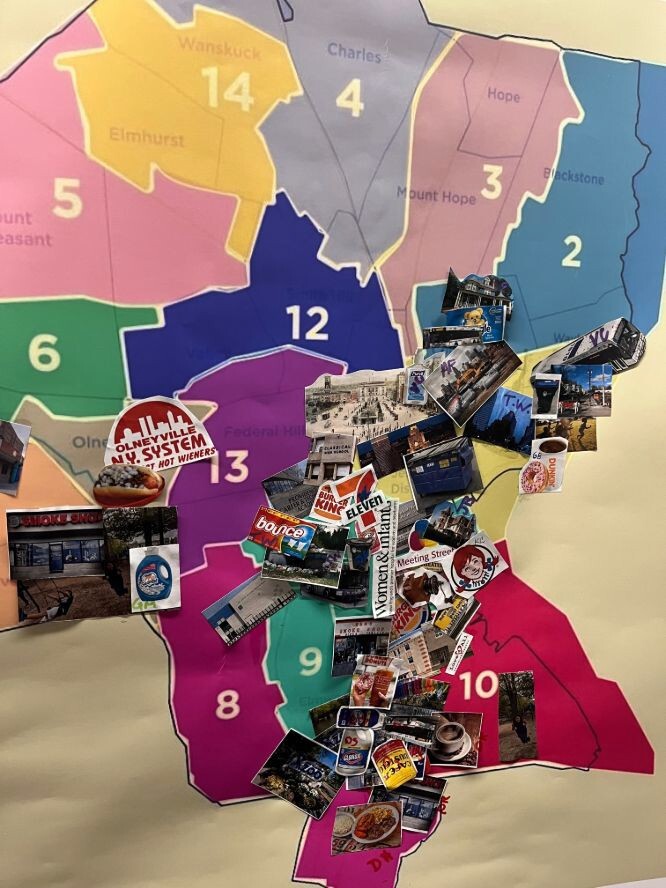
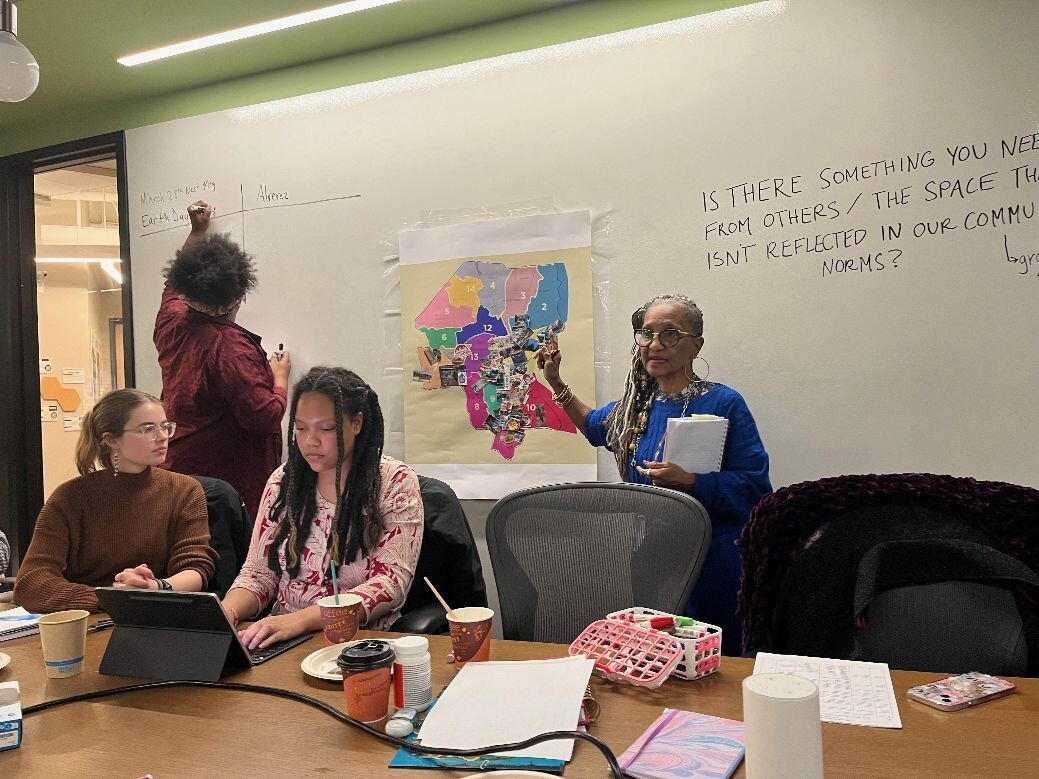
The leadership team used concepts from this exercise to gather images from printed and online materials. The wide range of sensory experiences required hundreds of printed images for the physical collage. Co-facilitators created a poster-sized base map that indicated spaces and infrastructure of social and cultural significance. For example, highways and known industrial landmarks were represented alongside iconic examples like the “Big Blue Bug,” a locally familiar 9-foot-high by 58-foot-long giant insect located next to the highway.
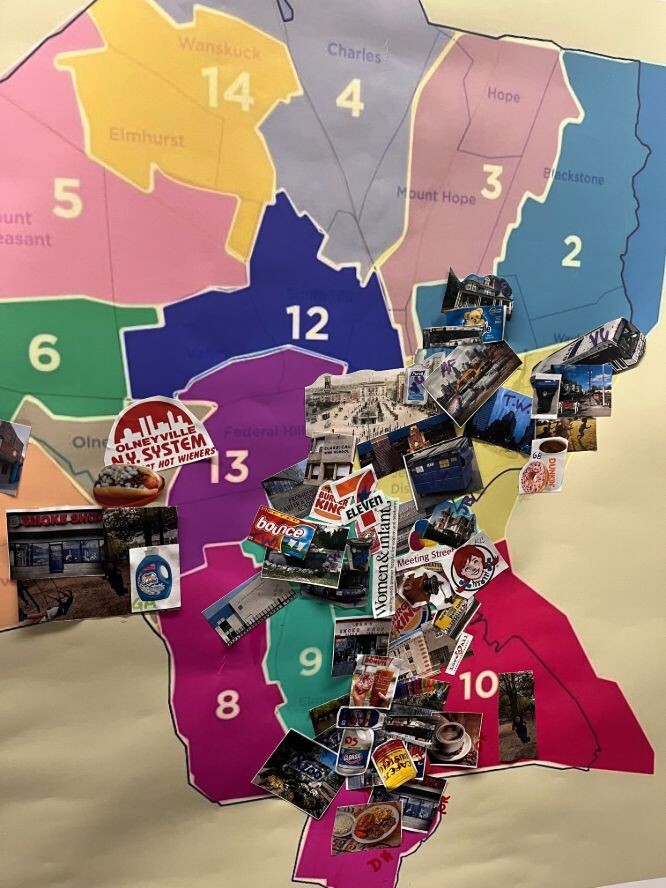

Facilitators aimed to create parallel experiences for in-person and online participants. Although most participants lived full-time in Providence, members chose whether to participate in person or online—even via phone, which added complexity to facilitating the visual project, yet offer flexibility for those juggling co-occurring commitments. Facilitators sourced the original images from online searches, but the images did not transfer to a format that the online group could easily use. Despite these hurdles, the facilitation team adapted with digital and analog solutions to transfer participant insights and concepts to the visual artifact.
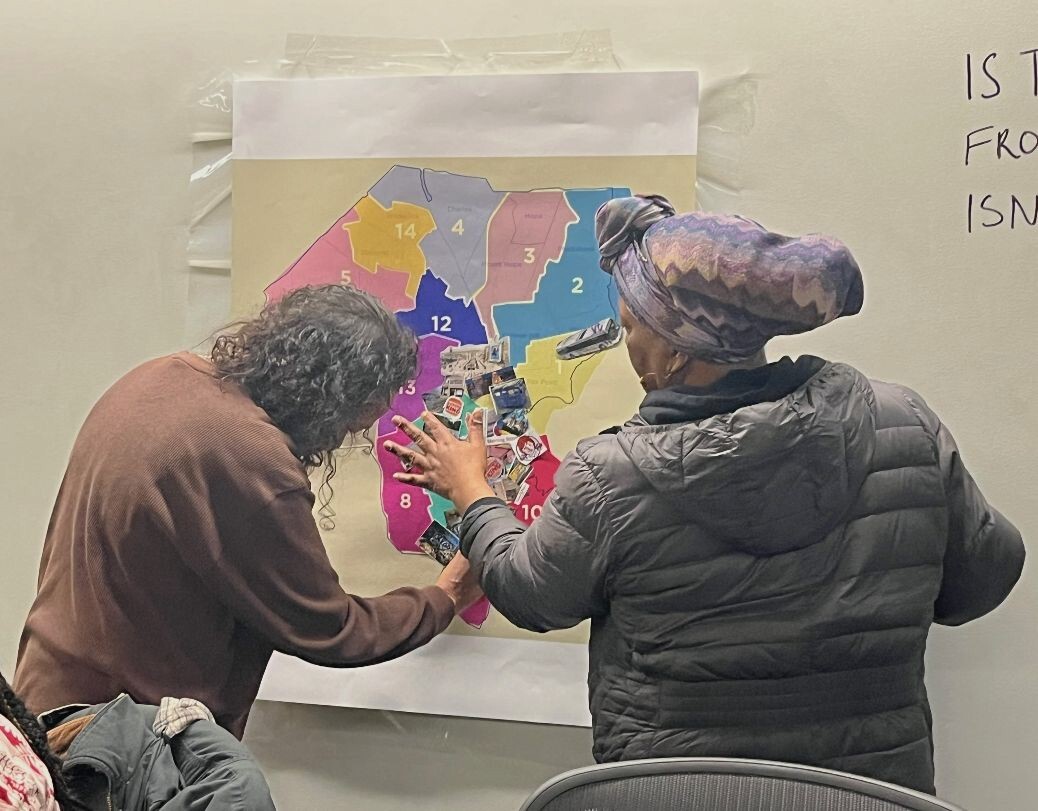
During the two-hour co-creation session, in-person participants gathered around the table to review the base map. The online facilitator pulled and placed images on a Google Jamboard. Everyone pasted images of themselves in their corresponding neighborhoods to literally “place themselves on the map.” This joyous exercise deepened the connection of participants’ bodies to place by pasting a self-portrait into the artwork, surrounded by everyday sensory experiences in their neighborhoods and other areas they visit around the city.
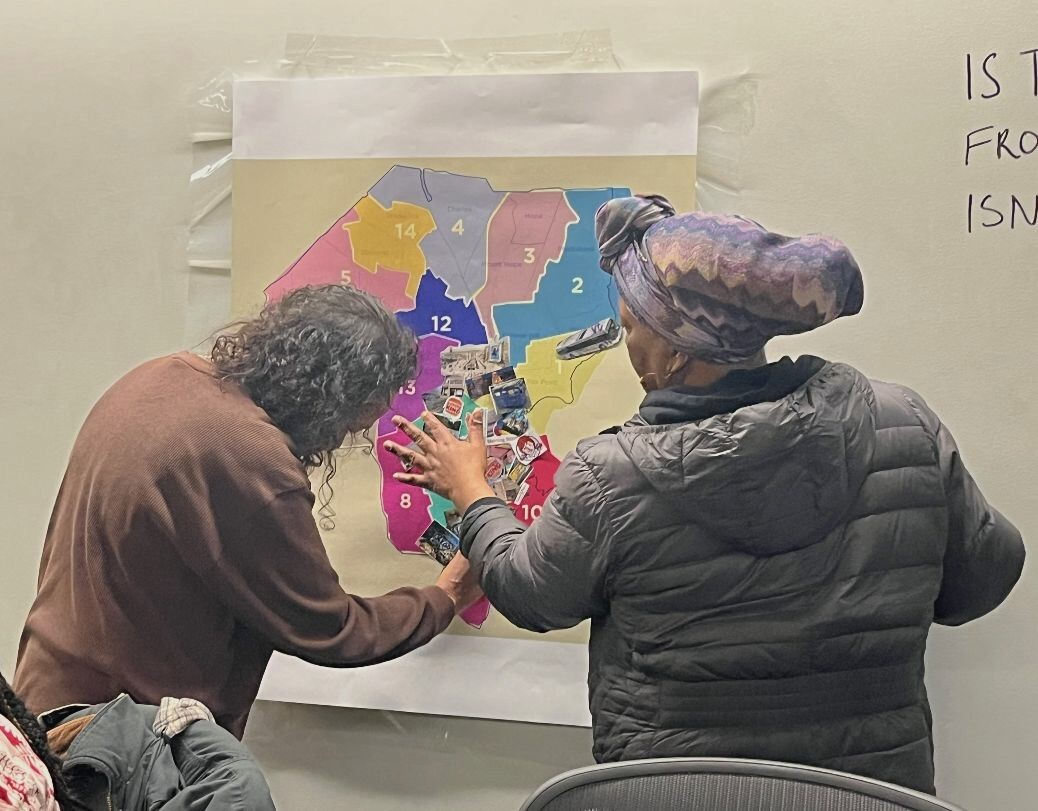
For artivists, the process challenged their usual approach to developing art. The collective creative process required each artist to let go of the outcome. Rather than one artist setting a vision for everyone to fulfill, the Smellage was, according to participants, created organically, in the moment, and without preconceptions.
Online participants used Google and other tools to search for images, noting that few results included people who looked like them. The lack of racial, ethnic, and cultural representation in online databases hindered their ability to find appropriate images to capture the reality of their sensory experiences. To replicate a co-created collage-making activity, artivists must deliberately prepare to overcome the representational gap in mainstream media and materials.
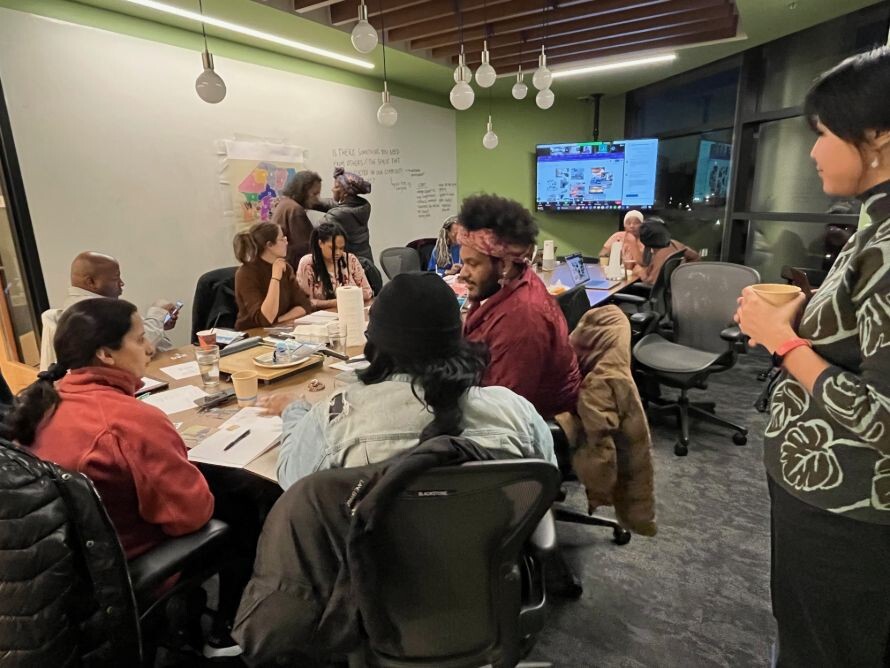
Both in-person and online, the community and academic researchers negotiated where elements belonged on the map, navigating relationships to cultural and infrastructural icons as well as spatial bounds and one another. Through this process, participants reported learning how to pay closer attention to their sensory experiences, realizing that no one was alone in their material or cognitive experiences. As a process of building experiential empathy, the Smellage offered a deeper understanding of other people’s realities and encouraged sociopolitical learning where visceral experiences built a sense of solidarity. Such shared experiences are essential data for shaping public policymaking and regulatory practices that reduce the harms for all.
The Smellage in Action
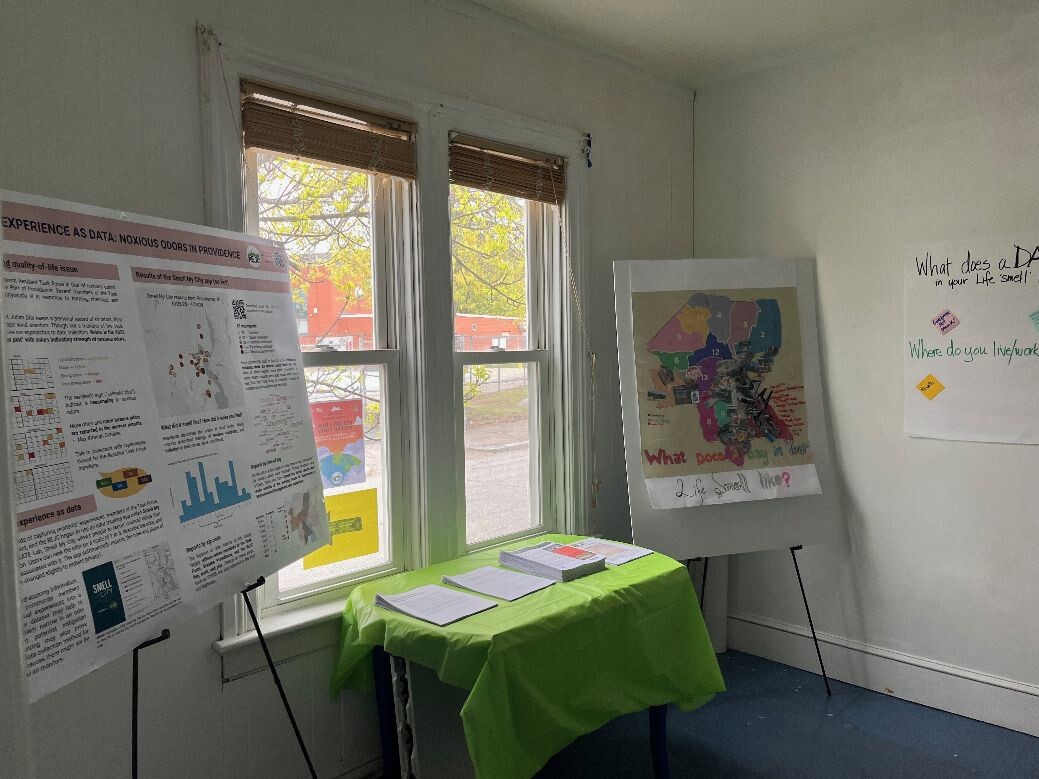
With the task force meeting complete, the Smellage took on a supporting role in the REJC’s environmental advocacy efforts. The academic and Community Researchers documented themes from discussions to create digital overlays of conditions related to community priorities (e.g., land-use types, location of schools). The leadership team presented the Smellage and overlays at a Culmination Ceremony to invite the broader community to review the task force’s findings and interact with research artifacts.
_and_poster_with_smell_mycity_data_displayed_at_the_culm.jpeg)
Physically and cognitively interacting with the overlays helped task force members and the broader community visualize the relationships between complex, co-occurring conditions that converge to produce phenomena impacting people’s pollution exposures and experiences due to industry, planning, and regulatory activities. This interaction helped dispel misconceptions such as 1) no one lives next to polluting infrastructure at the Port, and 2) the people in the communities were to blame for the environmental conditions in their neighborhoods. The Smellage appeared in a gallery exhibition and at events where REJC’s task force members used the artwork to spark conversation with residents, policymakers, and other stakeholders. Residents and policymakers alike could see and touch evidence that much of what was in the air, water, and soil was coming from activities outside of the neighborhood or was present in the ecosystem before the current residential, commercial, and public service areas were planned and developed. The activity encouraged one task force participant to conduct in-depth research on brownfields, revealing that 94 of Providence’s 98 neighborhood schools were built within 500 feet of a hazardous site, and at least 40 schools are located within 500 feet of at least 10 or more retail or industrial hazardous sites. Indeed, the plurality of observations helped demonstrate the similarities in inhabitants’ sensory experiences and perceptions across ghettoized neighborhoods in the city.
Arts in Multi-Method CEAR
The Smellage yielded more than art. As one of multiple methods deployed by the Breathe Providence and REJC researchers, the Smellage helped contextualize and triangulate technical data. It also offered multiple scientific techniques in one activity: collecting data about residents’ visceral experiences and analyzing those experiences, in real time, to make meaning and assess their implications for what it means for a city to provide a healthy human habitat for individual and collective development and well-being.
Unlike technical odor mapping activities, creating the Smellage did not depend on accurate, fine-grained data on location, odor concentrations, particulates, and other measures. Instead, the Smellage sought to understand personal experiences using visual density and creative expression. Supplementary data sources, including the Smell MyCity app, provided more precise data points for quantitative and qualitative analysis of experience based on time, date, and geographic location. Institutional researchers cross-referenced self-reported and publicly available Smell MyCity app data with monitor data and wind direction for greater understanding of the toxins in the air (Blankstein et al., 2026; Breathe Providence Project, 2025).
The technical researchers remarked that incorporating community and mental health in studies of air quality requires different methods. Indeed, the dialogic collage-making activity deepened their capacity for thick description and meaning-making (techniques that are commonly used by qualitative researchers), and provided important context for technical researchers. For the community, this visualization process helped one another create a collective representation of their experiences with smells around the city. The process humanized abstract data and helped decision makers across political, health, and socioeconomic spheres understand the impact of odors in the built and natural environment.
The Smellage also aligned ways of working among community and academic researchers. Experienced activists noted that organizing through research can be a rewarding experience, rather than extractive or draining. By incorporating research into the organizing process, they can create a fun and engaging activities that regenerate and resource everyone. Academic researchers learned how to let go of their adherence to methodological prescriptions, rooted in methods-focused positivist research approaches, and to change how they perceived art and art making in scientific research. Sharing experiences helped chip away at the social, ecological, and ideological distance between community and institutional knowledge-holders.
Collaborative collage-making transferred the power of visual representation from institutional researchers to community artivists and residents. As the Breathe Providence Project continues its scholar-advocacy, participants old and new utilize the collective intelligence, learning, and relationships that have emerged from sharing what they smelled through art.