Dissemination is often treated as the final step of participatory research, yet in rural and under-resourced contexts it can take on a connective quality, building trust and shared decision-making across a project’s life cycle. This article advances a multi-stage approach to dissemination that is integrated from project launch through closure.
Dissemination in Participatory Research
Traditional research models treat dissemination as the final step of inquiry, framing it as a linear transfer of findings from experts to passive audiences. This approach casts knowledge as a finished product and positions communities as recipients rather than co-interpreters, which can reproduce extractive research dynamics and limit opportunities for shared action (García et al., 2020; Uphold et al., 2022).
Participatory and community-engaged research offer a different orientation by treating dissemination as iterative and relational. Planning protocols, documentation tools, and feedback loops embed information-sharing throughout the research cycle and create multiple points for community interpretation (Gollust et al., 2025; Jacquez & Vaughn, 2025). Iterative PAR approaches emphasize returning emerging insights to communities and refining them as new information surfaces (Langdon et al., 2021). Dialogue between researchers and community members guides how different forms of knowledge should shape interpretation and application, grounding the work in local expertise (Bertotti et al., 2012; Nguyen-Truong et al., 2025). When dissemination creates space for shared analysis, communities can correct misunderstandings, add missing context, and build collective ownership of results (Jenkins & Bolshakova, 2024). In this view, dissemination is a way of keeping research accountable to community priorities and equity goals (Langdon et al., 2021).
Multi-Stage and Multimodal Dissemination
Multi-stage dissemination frameworks outline how sharing can be structured across the life of a research project. Iterative healthcare dissemination models show us that feedback loops are essential to implementation science (Yousefi Nooraie et al., 2021). For example, the Consolidated Framework for Implementation Research positions dissemination within a continuous cycle of planning, execution, reflection, and adaptation (Damschroder et al., 2009). Similarly, formative evaluation models highlight interim dissemination as a way for teams to assess feasibility, adjust interventions, and strengthen contextual fit before final reporting (Mendel et al., 2008). In participatory contexts, these stages can create natural points for returning to communities with emerging results to clarify priorities.
Multimodal research and its dissemination expand the accessibility and reach of participatory work. Visual, narrative, and performative methods, from photovoice exhibits to community forums and story-based digital media, enable participation across literacy levels, languages, and generations (Mooney et al., 2023). When designed collaboratively, multimodal outputs serve both as communication tools and as resources for ongoing analysis and community planning (Van Leeuwen, 2020). These approaches create opportunities for communities to question interpretations, add missing context, and guide the direction of subsequent action.
Emergent and iterative models show that analysis, communication, and implementation often unfold together, blurring the boundaries between stages of a project. This literature treats dissemination as a process that develops alongside data interpretation rather than after it (McDavitt et al., 2016). Participatory projects that engage community partners in two-way feedback and reflection show greater relevance and uptake, particularly when dissemination products are revised based on local interpretation (Stewart et al., 2023). Taken together, multi-stage and multimodal approaches help unsettle rigid project phases and make dissemination more accessible, creating more consistent opportunities for communities to influence how findings are interpreted and used.
Rural and Under-Resourced Contexts
Rural communities often have strong social ties that are an asset to participatory research processes (Henning-Smith et al., 2025; Spears et al., 2025). However, rural residents are often geographically dispersed, and participation may require significant travel time for gatherings that are routine in more urban settings. Dissemination strategies must be designed for the practical realities of distance, connectivity gaps, and dispersed populations (Pineo et al., 2022). Additionally, barriers to dissemination in rural communities may come from prior experiences with outside researchers and local cultural dynamics. Communities that have experienced extractive research in the past may view dissemination as a pro forma requirement rather than a genuine opportunity for collaboration (Díaz-Puente et al., 2008). Smaller populations and overlapping social networks can heighten confidentiality concerns, limiting how openly people feel comfortable sharing data (Moloney et al., 2025). Trust is often contingent on visible reciprocity, including researchers returning results promptly, adapting materials for local use, and maintaining communication beyond project completion (Garney et al., 2015). Dissemination frameworks that emphasize ongoing dialogue can rebuild confidence and strengthen data use within rural collaborations (Mathias et al., 2025).
Rural communities also offer cultural assets that can enhance dissemination when approached intentionally. Residents’ deep place attachment can make churches, schools, and civic groups important channels for circulating information (Díaz-Puente et al., 2008). Multimodal approaches such as community radio, print newsletters, traveling exhibits, and participatory storytelling capitalize on existing networks and accommodate varying literacy and technology levels (Delafield et al., 2016; Schlechter et al., 2021). Embedding dissemination within familiar community settings turns it from information transfer into a participatory practice that strengthens local agency. Doing so also reduces travel burdens and creates repeated opportunities for residents to engage with and interpret emerging findings across dispersed rural areas.
Community Development and Dissemination
Dissemination is shaped by the community spaces where it occurs, and people engage more fully when those spaces are familiar, accessible, and trusted (Rong et al., 2025). Schools, libraries, parks, and civic centers often serve as these community anchors, creating settings where residents encounter information and deliberate together (Oldenburg, 1999; Rong et al., 2023). Community development practices also offer spatial and creative ways to share emerging findings. Design charrettes, participatory mapping, public exhibitions, and model-building workshops translate data into visual and tactile forms that community members can interpret, question, and revise (Cochrane & Corbett, 2018; Sanoff, 1999). These artifacts, including maps, storyboards, models, make information concrete and support dialogue about shared priorities. Research in participatory and ecological design shows that such hands-on, place-based collaboration can deepen local ownership and lead to lasting improvements in community environments (Hester, 2006; Hou, 2010).
Sharing research findings at many stages in locally meaningful settings lowers barriers to participation and increases the likelihood that diverse stakeholders will contribute to interpretation (Reardon, 2006). Research on rural revitalization confirms that when dissemination is anchored in place-based community processes, it strengthens engagement and increases the chances that findings will translate into durable community improvements (Seguin-Fowler et al., 2022). As a result, dissemination becomes a practical component of community development itself, rather than simply a mechanism for reporting results.
Youth as Important Dissemination Partners
Young people are often excluded from community development processes because traditional engagement and dissemination practices, like public meetings, planning workshops, and government consultations, are structured around adult schedules, transportation access, and civic norms (Checkoway, 2011). Meeting adults “where they are” often means civic spaces; meeting youth where they are typically requires entering schools, youth programs, and creative environments that align with their daily routines. Youth participatory action research (YPAR) demonstrates that when invited through accessible pathways, young people can play meaningful roles in interpreting and sharing research findings (Cammarota & Fine, 2008). YPAR often prioritizes visual and creative methods, including mapping and design, which can make dissemination more accessible and engaging across ages and literacy levels (Domínguez & Cammarota, 2022; Ozer, 2017). These formats also encourage intergenerational dialogue by allowing adults to engage with youths’ lived experiences as legitimate forms of community knowledge (Anyon et al., 2018).
Youth-led dissemination can influence community decisions: when young people present findings to planners or local leaders, their insights can shape design priorities and resource allocation (Anderson et al., 2024; Ozer et al., 2020). Research on youth–adult partnerships further shows that iterative opportunities to share interpretations with adults strengthen youths’ civic identity and collaborative problem-solving skills (Zeldin et al., 2013). In this way, intergenerational, multi-stage dissemination ensures that youth perspectives inform community development processes.
Dissemination as a Pathway to Action
Taken together, this literature highlights the importance of multi-stage, place-based, and intergenerational dissemination strategies in community development, especially in rural contexts. In what follows, we draw on a participatory planning initiative in Grundy County, Tennessee. The project sought to identify local priorities for improving health and connectivity across the South Cumberland Plateau, a rural Appalachian region facing both economic transition and new development pressures.
The Grundy County Health Equity Planning Process
This project was supported by a Healthy Built Environment Grant from the Tennessee Department of Health, a program designed to help communities improve health outcomes through planning, design, and built-environment strategies. The grant funded a two-year, cross-sector partnership among four core groups. The South Cumberland Community Fund (SCCF) a regional philanthropic organization that supports community development across the South Cumberland Plateau, led local coordination, community outreach, and facilitator recruitment. The Civic Design Center, a Nashville-based nonprofit community development firm, provided architectural, planning, and design expertise. Their team led the site analysis, created design materials, and facilitated the participatory design components of the project. Grundy Safe Communities Coalition (GSCC), which focuses on substance use prevention, supported outreach, local engagement, and neighborhood-level connections. GSCC’s youth coalition, Students Preventing Addiction and Raising Knowledge (SPARK), collaborated on all youth-focused aspects of the grant. Finally, The University of the South contributed research design, data collection and analysis, evaluation planning, and project management. Together, these partners guided the project through a set of connected phases of listening, sharing back, and acting on emerging insights (see Table 1).
During winter 2023, the project team laid the groundwork by conducting site analyses and training local liaisons in preparation for community-led conversations about health equity across the Plateau. In spring 2024, adults participated in mapping dinners held in each town, where they identified local assets, needs, and priorities for improving health in the built environment. These early themes were then shared back with residents during summer 2024 through visual displays and structured verbal surveys at public events, marking the first stage of the multi-stage dissemination process.
A separate youth track began in winter 2025 through Dream Town workshops in PreK–8 classrooms, where students imagined healthy, connected communities using creative media. In spring 2025, the SPARK Design Studio served as a mid-stage dissemination activity, enabling high school students and design professionals to translate Dream Town themes into preliminary built-environment proposals. The final stage of dissemination occurred in summer 2025, when youth and adults came together at a county-wide event to reflect on findings and co-develop next steps for the Health Equity Plan.
Project Preparation
The project began with a countywide planning meeting in fall 2023 that brought together project partners, local mayors, civic leaders, and representatives from tourism, public health, schools, and local trail organizations. During this session, partners outlined the goals and timeline for the Healthy Built Environment planning process, discussed approaches for recruiting and training local facilitators, and reviewed how mapping activities would function within the Community Conversations. Local leaders also offered practical guidance on anticipated assets, needs, and participation barriers to make sure the listening process would be both inclusive and responsive to community priorities.
Following the grant kick-off meeting, the design team conducted a site analysis along the route of the Mountain Goat Trail. This analysis helped deepen understanding of local geography, infrastructure, and historical context and informed the base maps that would later guide small-group discussions. It also helped identify potential venues and focal points for the upcoming Community Conversations in each town.
Local facilitator recruitment began soon after. Using existing community networks, SCCF invited residents known for their local engagement, faith leaders, nonprofit directors, small business owners, and others, to serve as conversation leaders. Twelve facilitators were ultimately selected to represent the range of perspectives and social ties across the county. A two-hour training session prepared facilitators for their roles. Led by the Civic Design Center, the session introduced the design charrette process, outlined facilitation strategies for small-group mapping, and provided guidance on collecting and recording community input. The training also addressed logistics such as compensation, event promotion, and strategies for reaching residents unable to attend in person.
Throughout this phase, SCCF managed local logistics and community outreach, while university partners focused on research design, data management, and coordination with the design team. These early steps established the relationships and facilitation capacity needed to launch data collection through Community Conversations in spring 2024.
Adult Data Collection: Community Conversations
The first phase of community data collection centered on a series of design charrettes, locally branded as “Community Conversations,” held across the project’s five focus towns: Coalmont, Gruetli-Laager, Monteagle, Palmer, and Tracy City. These sessions were designed to center the voices of residents, offering them the tools and space to envision a healthier and more connected future for their communities. Each gathering included shared meals, small-group mapping, and collaborative design exercises. Events were held in accessible local venues such as community centers and town halls, and intentional recruitment strategies were used to maximize reach. Facilitators and project partners promoted the events through social media, local news outlets, and print flyers distributed through churches, libraries, and schools. SCCF’s listserv and word-of-mouth outreach from attendees expanded participation, so that each Conversation was better attended than the last. Each session provided free childcare and a meal to reduce barriers to attendance. Across all five towns, the events collectively reached over 200 residents, representing a broad cross-section of ages, occupations, and community roles.
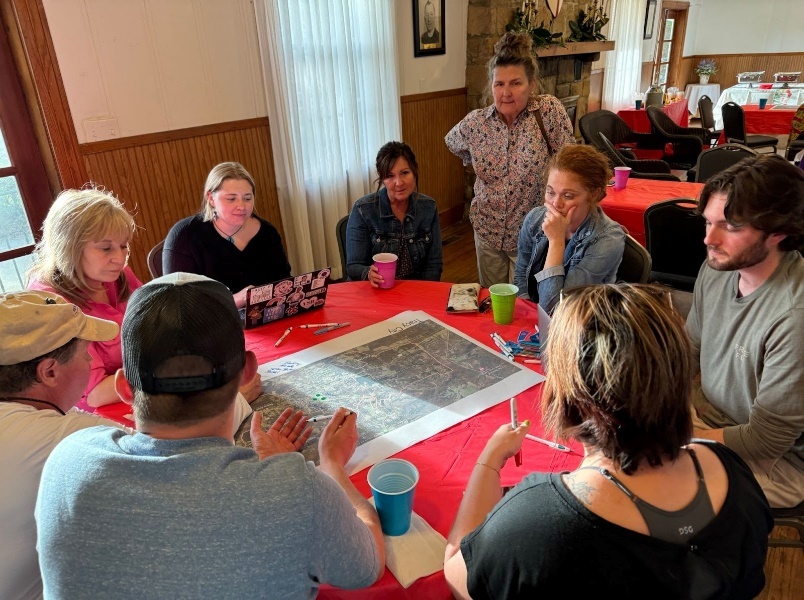
At each Conversation, trained community liaisons served as table facilitators, guiding participants through asset mapping, identification of health-related challenges, and brainstorming of physical improvements that could promote well-being. Facilitators worked from a common guide that provided sample prompts and timing for each stage of discussion (see Appendix A). Sessions opened with an icebreaker, such as asking participants to share their favorite place in the community, before transitioning into mapping activities that identified local assets and challenges. Residents marked existing strengths in green and areas of concern in red, then added aspirational ideas for new or improved spaces directly on the maps using colored dots and sticky notes (see Figure 1). Facilitators encouraged participants to think about specific places and practical changes that could improve health, safety, or connectivity. The process emphasized respectful dialogue and inclusion, and gave participants multiple ways to contribute, including speaking, writing, and placing dots on the maps.

Each facilitator was paired with a university research assistant so that the facilitator could focus on leading discussion and engaging participants, while the research assistant documented the conversation and maintained visual records of the maps. At the start of each session, research assistants briefly explained their role in note-taking and photography and clarified that no identifying information would be shared with design partners. This partnership allowed facilitators to focus on building trust and momentum at each table, while research assistants made sure that qualitative data were captured accurately and consistently across sites.
Data collection was both visual and narrative. University research assistants photographed completed maps, transcribed notes from each discussion table, and compiled observations into both raw and synthesized datasets. These materials were shared with the design team alongside a county-wide Google My Map that geolocated comments and design ideas. All materials were digitized and stored on secure university servers. This process enabled the Civic Design Center to identify spatial and thematic patterns across the county and to visualize residents’ priorities in relation to existing infrastructure. The resulting dataset were central to the project’s initial dissemination phase, in which visual renderings of community-generated ideas were returned to the public for feedback and refinement.
Initial Dissemination: The Design Feedback Survey
The next phase marked the project’s first major opportunity to return findings to the community. This stage focused on sharing back what residents had expressed during the spring Community Conversations and showing how the design team had interpreted those ideas. Using the mapped assets, challenges, and aspirations identified by residents, the Civic Design Center created a set of draft design renderings for each focus town. These visual proposals illustrated community-generated ideas such as expanded parks, community markets, safer crossings, and new gathering spaces.
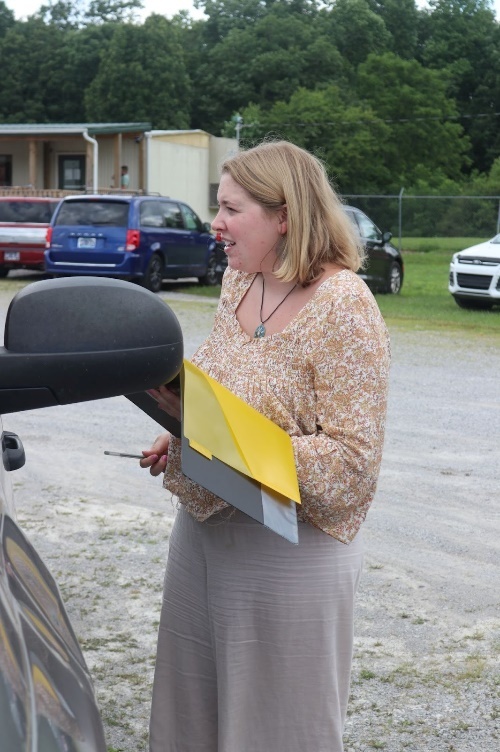
Once the draft designs were completed, university student researchers developed a brief oral survey to use to collect community feedback on the designs (see Appendix B). The survey was intentionally conversational, designed to help residents engage directly with the design renderings (see Figure 2). Each interaction began with a short explanation of the project, how the draft designs were created, and a verbal consent statement clarifying that participation was voluntary and that no identifying information would be shared outside the project team. Student researchers then guided residents through several town-specific statements, such as “Downtown Tracy City should have an expanded park area,” with response options ranging from strongly agree to strongly disagree. Open-ended questions followed, prompting participants to share additional thoughts about the design concepts and the barriers to health they experienced locally.

Surveys were conducted in accessible, high-traffic community settings, including libraries, food distribution sites, and summer meal pick-up programs. The survey link was also shared online through SCCF’s digital platforms and emailed to Community Conversation participants. Across in-person and online formats, approximately 200 residents provided feedback.
Following data collection, the research team compiled and analyzed responses, producing a Design Feedback Survey Report summarizing both quantitative trends and qualitative themes. Across the four towns, residents expressed strong support for the proposed concepts while offering thoughtful refinements to make sure they met local needs. Participants emphasized the importance of fresh food access, substance use prevention, healthcare availability, and safe recreational spaces for youth and families.
These insights were shared directly with the Civic Design Center, who revised their renderings based on community feedback. Through this iterative process, dissemination functioned as a form of translation, moving ideas from the first phase into design proposals, returning them to the community for interpretation, and using that feedback to strengthen the next stage of planning.
Youth Data Collection: Dream Town Workshops
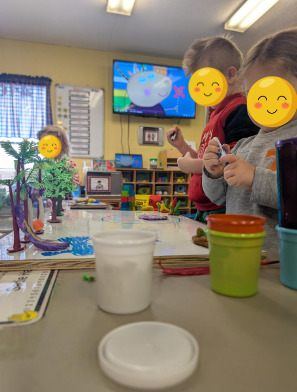
To ensure that young people’s perspectives were represented in the Healthy Built Environment planning process, the project team conducted a series of Dream Town Workshops across all PreK–8 schools in Grundy County. These workshops functioned as a youth participatory data collection process, giving students the opportunity to imagine their ideal town and identify what makes a community healthy, connected, and vibrant. Activities were co-developed with the Grundy County School District and implemented during regular art classes so that all students could participate. Over several weeks, every PreK–8 class in the county took part, reaching approximately 800 students (see Figure 3).

Each workshop lasted about one hour and followed a consistent structure. Using a visual slide deck adapted for different grade levels, the facilitator introduced the idea of a “Dream Town” by asking students to think about what would make their town a great place to live. Younger students were guided through questions like, “What are the best parts of your town? What would make it even better?” while older students explored eight youth-derived categories of Healthy Community Spaces, such as socializing, getting energy out, being creative, learning, healing, getting healthy food, living, and getting around. These categories were adapted from Dream City, a youth design project previously conducted by the Civic Design Center in Nashville (see Anderson et al., 2024).
After a brief discussion, students worked collaboratively in small groups to design their Dream Towns using markers, paper, and collage materials provided in their art classrooms. Facilitation emphasized creativity, dialogue, and inclusion. After students completed their towns, each group was invited to present their design to the class. The facilitator called on groups in order (e.g., “Table 3, tell us about your Dream Town”), prompting them to describe what they created and why. During these share-outs, students gathered around each design, asked questions, and discussed similarities across towns.
With the district’s approval, these sessions were documented through photos and audio recordings. Each Dream Town map was numbered, photographed, and paired with an audio recording of the group’s explanation. No identifying information was collected. Audio recordings and photographs were analyzed together so that the visual and narrative components of each design were represented accurately. Research assistants coded the data using a shared framework that reflected the eight Healthy Community Spaces. Each class’s findings were summarized on a slide in a data deck, which synthesized visual and verbal patterns across all grade levels and schools.
This process produced a countywide portrait of how young people envision a healthy Grundy County, highlighting recurring themes such as parks, food access, nature, recreation, and creative community spaces. The synthesized Dream Town dataset became the foundation for the next stage of the project. In the spring, these youth-generated ideas were shared with high school students during the SPARK Design Studio, serving as the primary data for their participatory design process.
Mid-Stage Dissemination: SPARK Design Studio
The next phase of the project involved youth as co-analysts and co-designers. The SPARK Design Studio, held over two sessions in April 2025, engaged members of SPARK, the youth action arm of the GSCC. This group, composed of high school students from across the county, has an interest in how social and environmental factors shape community health and well-being. Their focus on the social determinants of health made them a natural fit for this stage of the project, which invited youth to interpret the Dream Town findings and build upon the ideas generated by younger students to inform real-world planning and design in Grundy County.
The workshop was facilitated collaboratively by partners from the Civic Design Center and GSCC with additional support from university faculty. Each partner circulated among small groups to guide discussion and design work. The sessions took place over two days: an afterschool session on Thursday and a longer design studio on Saturday. The agenda combined orientation, site observation, and collaborative design.
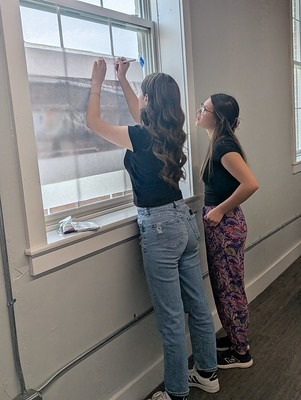
Students began by reviewing the Dream Town data deck, analyzing themes that emerged across grades and schools to identify patterns in how younger children envisioned healthy, connected towns. Using chart paper and markers, participants clustered recurring ideas such as parks, creative spaces, community gathering areas, and safe routes for walking and biking. Next, students and facilitators took a walking tour of Tracy City to observe local assets and challenges firsthand. Using printed maps and observation worksheets, teams documented how existing spaces supported or limited health and connection. Afterward, they reconvened to discuss how their observations aligned with or diverged from the priorities identified by younger students who participated in Dream Town.
The second day of the workshop introduced design principles for healthy rural communities and examples of small-town placemaking. Students then worked in design teams, using trace paper, maps, and drafting supplies to translate Dream Town themes into concrete proposals tailored to Grundy
County’s landscape. Design teams concluded by developing vision statements and presenting their concepts to peers.
Two proposals were selected to represent their collective work: a Teen Recreation Center and Fairground, designed to transform underused land near the county’s high school into a multigenerational gathering space, and the “Everything Trailer,” a mobile unit that would bring games, creative supplies, and educational resources to neighborhoods across the county (see Figure 4). These proposals were documented through photographs and design boards, and the students’ written reflections and vision statements were compiled for inclusion in the Health Equity Plan.

The SPARK Design Studio functioned as a mid-stage dissemination activity, allowing youth to engage directly with the Dream Town findings and translate them into locally grounded design concepts. This stage extended the process of sharing data across generations and added new youth-generated proposals to be incorporated into the next phase of public dissemination.
Final Dissemination
The final stage of the project centered on sharing the full set of project findings back with the community. This phase culminated in a countywide Designing for Health Summit held in June 2025. The summit functioned as a participatory dissemination event, designed to return results, invite cross-generational interpretation, and support planning for next steps. Invitations were distributed through the same channels used earlier in the project so that residents who contributed to earlier phases could see how their input shaped the final Health Equity Report.
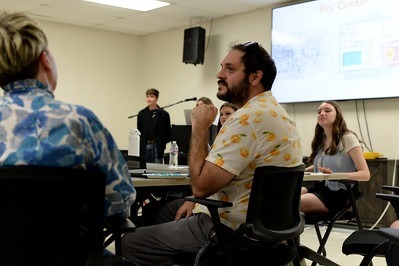
Facilitation responsibilities were shared among project partners from SCCF, the Civic Design Center, the University of the South and GCSS/SPARK. The event began with a shared healthy meal to promote connection, followed by short presentations summarizing each phase of the project, from the Community Conversations and youth Dream Town Workshops to the SPARK Design Studio (see Figure 5). A SPARK student emceed the event, coordinating speaker transitions and facilitating a Q&A session. Large-format maps, photos of student designs, and slides summarizing the Health Equity Report were displayed throughout the event to make results accessible and visually engaging for attendees.

After the presentations, participants engaged in facilitated table discussions led by the same community liaisons who had guided the earlier Community Conversations. Each table used a shared discussion framework designed to connect reflection with forward planning. Prompts included: "What part of today’s presentations resonated most with you?" and “Where do you see opportunities to take action or support ongoing efforts?” A third prompt encouraged participants to think about scale and feasibility: “If you had $5,000, $15,000, $50,000, or $1 million, what would you do to increase health equity in Grundy County?” These dollar amounts corresponded to upcoming South Cumberland Community Fund grant opportunities and longer-term investment levels, helping residents link their ideas to actionable funding pathways. While no formal notes were collected, the discussions provided an informal assessment of local priorities and surfaced potential project ideas for future implementation.
The Health Equity Report, which brought together findings from all phases of the project, was shared digitally with attendees and community partners. The report marked the summit as both a final opportunity to share results and a starting point for community-led action. The evening’s design, which mixed visuals, open discussion, and brainstorming about next steps, helped make the findings easy to understand and use. This final stage reinforced that dissemination returns knowledge to the community in ways that build ownership and momentum for action.
Strategies and Implications for Practitioners
The following strategies reflect what the project team learned about using dissemination as an ongoing process of engagement rather than a final step. Drawn from both effective practices and moments when plans unfolded differently than we expected, these reflections offer practical guidance for designing dissemination as a relational and iterative practice (see Table 2).
Designing for Trust and Accessibility
From the outset, the Healthy Built Environment Grant and our planning project was structured to make participation easy, familiar, and worthwhile for residents of Grundy County. Each stage of dissemination was designed to meet people where they already gathered: at community centers, schools, libraries, and youth programs, instead of asking them to come to unfamiliar spaces. Meals and childcare were provided at evening sessions, community liaisons were compensated for their time, and high school students were paid as youth researchers. These practices reflected a commitment to accessibility not just as a logistical concern but as an ethical one: participation in local planning should be possible and valued for everyone, regardless of age, schedule, or circumstance.
That same commitment guided how different age groups were engaged. Adult residents were invited to mapping dinners that balanced formal facilitation with informal conversation, while younger children participated through art-based workshops held during regular school hours so every student could contribute. High school students were reached through SPARK, an existing group already focused on health and prevention. Designing dissemination through these existing networks reduced barriers of entry and helped ensure that findings reflected the lived realities of those who might not otherwise attend community planning meetings.
Even with these efforts, early sessions reminded the team that accessibility also depends on how a project is framed and understood. The first Community Conversation brought unexpected tension when many residents voiced opposition to the Mountain Goat Trail, a multi-use trail that served as the geographic focus of the grant. Although the trail was already funded and partially built, participants worried it would bring outsiders and change the character of their town. For many, the trail symbolized decisions made elsewhere rather than opportunities for local input.
This moment surfaced a critical lesson: accessibility requires trust. In response, the facilitation team clarified the project’s scope, emphasizing that while the trail’s construction was outside the team’s control, residents could directly influence how surrounding spaces would promote health and connection. References to the trail were removed from later facilitation materials, and local facilitators participated in a follow-up training to help them guide conversations toward community-driven priorities. Attendance remained strong, and the discussion tone shifted as participants better understood where and how their input could shape outcomes.
These experiences revealed that accessibility required more than reducing burdens through meals, childcare, compensation, and familiar locations. Each of those mattered, but the conflict around the Mountain Goat Trail showed us that even when logistical supports were in place, people would not feel welcomed into the process if they were unsure about the project’s purpose or the boundaries of their influence. To be truly accessible, we also had to communicate transparently, align the process with local values, and demonstrate through our actions that residents’ voices would shape the work.
Building Iterative Dissemination Loops
From the beginning, the project was designed to be iterative. The planning grant offered a rare opportunity to slow down and create a process that invited feedback at multiple points instead of treating community input as a single event. The project team knew that iteration would be essential, given the mix of local and external expertise involved. The Civic Design Center brought professional design capacity but limited knowledge of Grundy County, while local partners understood the context deeply but were less experienced in design. An iterative dissemination model allowed both kinds of expertise to inform the process and kept the project responsive as it unfolded.
In practice, iteration was built into the design in several ways. Adult residents contributed local insights through Community Conversations, which were then translated into visual renderings. Those renderings were shared back with residents in the summer through oral surveys, giving participants an accessible way to review and respond to the design team’s interpretations. Youth were also brought into the cycle as both data producers and interpreters, elementary students through the Dream Town Workshops and high school students through the SPARK Design Studio. Each stage translated community knowledge into a new form, returned it for reflection, and used that feedback to refine the next phase.
Adults, youth, design professionals, and local project partners all played distinct but connected roles. Adults identified priorities rooted in lived experience; youth reimagined those ideas through creative and design-based methods; and professionals helped visualize those concepts in ways that could inform policy and investment. This multi-stage dissemination approach blurred the boundaries between data collection, engagement, and action.
This process surfaced one of the project’s clearest lessons: that iteration can reveal errors that would otherwise go unnoticed, but it does not guarantee that they can be fully corrected within a short project cycle. A striking example occurred in Coalmont, where residents expressed interest in expanded green space but differed on where a new park should be located. With limited local knowledge and no clear consensus, the design team selected what appeared to be an open parcel beside the community center. When the rendering was shared back during the Design Feedback Survey, residents immediately identified the parcel as the community helipad, a vital resource in a rural county with no major hospital.
The mistake underscored why iteration mattered, but it also exposed its limits. The team had only a few days to conduct oral surveys, and there was no time to revise the maps and return with corrected images. Instead, researchers had to ask participants to imagine the park in a different, more appropriate location while using the flawed rendering as a reference point. Although residents were generous and understanding, the experience was uncomfortable. The team wished they had caught the error earlier and had the time to conduct an additional round of dissemination with accurate visuals.
This moment highlighted that even well-designed iterative processes can be constrained by time and funding. Iteration strengthened the project’s accuracy and credibility, but it could not fully compensate for tight timelines that limited the team’s ability to correct and re-check visual materials. Nonetheless, the experience reaffirmed that participatory planning benefits most when dissemination is treated as an ongoing method of sense-making—and that genuine iteration requires the flexibility to slow down when unexpected insights emerge.
Connecting Generations Through Dissemination
One of the project’s central commitments was to make that participation in the planning process spanned generations. Too often, community planning efforts separate youth and adult input or treat youth engagement as symbolic. Instead, this project approaches intergenerational work as a methodological strategy to connect ideas across age groups so planning remains rooted in both current realities and future aspirations. Each dissemination stage was designed to build on the last, linking the perspectives of children, youth, and adults into an evolving conversation about health and place.
The Dream Town Workshops invited every elementary and middle school student in Grundy County to imagine their ideal community through art, color, and storytelling. By embedding this activity in existing art classes, the project reached nearly 800 students, an entire generation of young residents who are rarely asked what they valued in their built environment. Their ideas highlighted themes such as access to parks, safe places to play, gathering spaces for families, and community creativity. These collective youth visions were then passed along to SPARK, whose high school members served as interpreters and co-designers during the next phase of dissemination. SPARK students reviewed the Dream Town findings, connected them to principles of healthy design, and translated them into proposals.
This intergenerational structure engaged a wide range of participants and produced a layered understanding of place. Younger children contributed ideas unfiltered by feasibility, while older youth and adults helped contextualize and adapt those ideas to the county’s geography and resources. Adults who later attended the Designing for Health Summit saw their own priorities reflected alongside youth-generated ideas. This alignment deepened the sense of shared ownership. Dissemination, in this way, became a form of dialogue between generations, where ideas evolved through reciprocal interpretation.
Even so, the process revealed the difficulty of maintaining continuity once a grant cycle ends. While the Dream Town ideas directly informed the SPARK Design Studio, there were limited opportunities to share those designs back with the younger students who had inspired them. Invitations to school leaders were sent, but returning to classrooms or re-engaging youth during the summer was not feasible within the grant’s timeframe. The team hopes future iterations of this work will create new opportunities to close that loop. Notably, SPARK has since received a local grant to fund their “Everything Trailer,” one of the design concepts generated through this process. This is the first infrastructural improvement to come out of the planning grant, and it is an exciting development that illustrates the momentum youth can carry beyond the project timeline and the value of intergenerational dissemination in catalyzing ongoing action.
Balancing Flexibility and Local Relevance
The planning project unfolded through a carefully structured series of stages, each with defined goals and plans. That structure was essential for coordinating multiple partners, maintaining engagement across a two-year timeline, and making sure that every town and age group had a clear entry point for participation. Detailed planning documents, facilitator training, and shared visual templates helped keep the process organized and replicable across settings. This structure provided the backbone of the project, allowing a multi-town, multi-partner collaboration to operate with consistency while still centering community input.
Flexibility proved just as critical as planning. The team quickly learned that strong facilitation materials were only useful if they could be adjusted to fit the moment. Early meetings and facilitator training, for example, used the term “charrette,” a word common in design circles that refers to an intensive, fast-paced planning workshop aimed at generating design ideas. For most residents, however, the term was unfamiliar and sounded jargony and technical rather than inviting. Local facilitators were instrumental in identifying this disconnect and advocating for a more accessible term. The team adopted “community conversation” instead, a small but meaningful change that signaled openness and helped residents feel that the process belonged to them. Similar revisions followed as facilitators refined wording in their prompts, replaced design jargon with plain language, and drew on local examples to make questions relatable.
The same attention to relevance shaped the youth engagement process. The Dream Town Workshops were modeled after Dream City, a program developed in Nashville (see Anderson et al., 2024), but were adjusted in small but meaningful ways to fit the rural context of Grundy County. The project team and local liaisons worked together to adapt the framing materials, replacing photos of Nashville with images from the South Cumberland Plateau and renaming the activity from “Dream City” to “Dream Town.” That change in language, though subtle, carried weight. It signaled that this process was about their communities, not a borrowed urban model, and helped students see themselves reflected in the project.
This balance between structure and adaptation was central to maintaining both consistency and authenticity across stages. The structured elements, including agendas, facilitator guides, and visual aids, ensured that each conversation contributed usable data to the overall plan. The adaptive elements, including changes in phrasing, pacing, and emphasis, made the process feel organic rather than scripted. That same spirit of adjustment carried through later stages as well. When youth workshops revealed a need for more hands-on creative materials, those were added. When high school students needed extra time to understand basic design principles, the schedule was modified to include guided examples.
Over time, adaptation became a measure of responsiveness rather than deviation. The project’s most productive moments often emerged when facilitators stepped slightly away from the script to follow community energy or clarify meaning. This flexibility built credibility with participants, showing that their reactions shaped the process itself. It also reminded partners that dissemination is not a one-size-fits-all method but an evolving practice that must remain sensitive to language, timing, and context. In participatory planning, structure establishes the framework for inclusion, but adaptation keeps it human.