Introduction
From 2019-2023, a research team based out of a university in British Columbia, Canada partnered with an Action Group of people living with dementia to conduct a four-year interdisciplinary research project with the aim to better understand the perspectives of people living with dementia regarding the concept of social citizenship. Social citizenship has been defined “as a relationship, practice or status, in which a person with dementia is entitled to experience freedom from discrimination, and to have opportunities to grow and participate in life to the fullest extent possible” (Bartlett & O’Connor, 2010, p. 37). People living with dementia have identified dementia-related stigma as both a pressing concern in terms of its significant impacts on their daily lives (O’Connor et al., 2018), and an important research priority (Canadian Dementia Priority Setting Partnership, 2017). As such, our intent was not to simply describe the perspectives of people living with dementia, but to put social citizenship into practice with a specific focus on reducing dementia stigma and promoting social inclusion (Bartlett & O’Connor, 2010).
Our research (hereafter referred to as the Flipping Stigma in Dementia project) involved an Action Group of people with lived experience who collaborated extensively with the research team throughout the course of the study (O’Connor et al., 2023). Given the action-oriented purpose of the project, and our intent to engage closely with people with dementia themselves, Participatory Action Research (PAR) was an appropriate methodological fit. Coming from a transformative paradigm, PAR focuses on supporting social change in collaborative and empowering ways (Brydon-Miller et al., 2011; Schneider, 2012). PAR provides opportunities for people to actively take part in research processes from the beginning right through to the end of a project (Higginbottom & Liamputtong, 2015), which means that knowledge development and exchange can be integrated into each stage of the study. It carries potential to shift taken-for-granted power relationships, and builds on people’s strengths and capabilities, which made it particularly suitable for this study addressing stigma and social inclusion in the context of dementia (O’Connor et al., 2023).
There is a growing movement toward the greater involvement of people with dementia in health and social sciences research where they serve in collaborative and advisory roles, as research partners, and co-investigators (Bethell et al., 2018). It is argued that this kind of “patient and public involvement” improves the quality of research, bringing greater authenticity and credibility to the knowledge being generated, and increases its impact (Jull et al., 2017; Rolfe et al., 2018). However, there has been relatively little empirical evidence to support these claims, especially in the context of dementia research (Bethell et al., 2018; Middleton et al., 2021). In addition, the knowledge mobilization potential of PAR has not been explored in-depth, particularly in the context of research involving people living with dementia. Our purpose with this paper is to address this gap by showing how the involvement of people with dementia contributed to effective and innovative research outputs and knowledge mobilization.
We begin with an overview of the project, explaining who was involved and how they worked together. We go on to describe the project’s main outputs and the subsequent knowledge mobilization phase of the project and conclude with a critical reflection on the processes that fostered effective engagement of people with dementia in PAR. While this paper is meant to be a narrative of the knowledge mobilization process in the research study, we note that more complete details of the project are also included in previous publications (Landy et al., 2025; O’Connor et al., 2023).
Overview of the Flipping Stigma in Dementia Project
This PAR research study was funded by the Canadian Institutes of Health Research and was led by three co-principal investigators (Co-PIs)– a professor of nursing, a professor of social work, and a well-known advocate and researcher living with dementia. The Action Group at the core of the study was composed of people living with dementia in the Canadian province of British Columbia (BC). While the total number of members varied throughout the project, a core group of 10 people were part of the Action Group (4 men and 6 women) for the majority of the course of the study. Thirteen people in total were part of the Action Group (7 men and 6 women). Members were initially recruited through their engagement in community organizations (i.e. the research team shared in-person presentations about the project at dementia cafés, community organizations, and seniors’ social groups in the Greater Vancouver area), word of mouth, and recruitment posters shared throughout Greater Vancouver.
The collaborative work integral to this study consisted of regular Action Group meetings. These meetings began as monthly in-person gatherings at a community centre in Vancouver BC in the summer of 2019, and pivoted to Zoom meetings in April 2020 when social distancing restrictions were mandated due to COVID-19. At this time, group members decided to change the meeting schedule to twice monthly online. Of note, the Action Group had a strong sense of identity as a BC-based group and felt that moving online would provide an opportunity to connect with other dementia advocates outside of the Greater Vancouver area. As such, the Co-PI who lives with dementia reached out to existing contacts of community organizations in different parts of the province to see if they might know of others who could join. This in fact proved to be a fortuitous decision, as the Action Group membership grew and became much more diversified, with members from different and diverse backgrounds joining from the Interior and North of BC. Overall, the Action Group included members representing different types of dementia (and length of time living with dementia), ages, living situations (independent, with a spouse, with family, and in assisted living), living environments (urban, semi-rural, and rural), genders, and race (Landy et al., 2025).
Research ethics approval was secured from the University of British Columbia. All of the Action Group meetings, of which there were over 80 in total over the course of the four years, were facilitated by two members of the research team – one of the facilitators was consistently the Co-PI with lived experience of dementia. Action Group members were not compensated for each meeting they took part in. However, they were provided a gift basket each winter during the holiday season in recognition of their ongoing and collaborative efforts. All meetings, which lasted approximately 90 minutes, were recorded and transcribed verbatim. Initial meetings focused on getting to know one another and sharing stories of what brought members to the project. Initial discussions focused on how members might take action as social citizens to address the social isolation, stigma and discrimination that are associated dementia. As they talked and discussed together in one of the early Action Group meetings, one member said: “…maybe you can start a [tool]kit for advocates, …if there is a session or something, a simple tool like…an ABCD for some people to start with would be excellent.” This was a pivotal moment in the project and set the agenda for the next 18 months where the primary task became to create the Flipping Stigma on its Ear Toolkit that would promote conversation around the practices and supports that could be used to combat dementia-related stigma.
Initially, a document-based toolkit was created by members of the research team using transcripts and meeting notes from meetings where main ideas about what should be in the toolkit were discussed. These main ideas included definitions of stigma and discrimination according to Action Group consensus, and overarching categories of information to be included in the toolkit. Once the toolkit was developed, the remaining two years of the project focused largely on knowledge mobilization. Members remained deeply involved in this work, being motivated by what they wanted others in their communities to know about what it is like to live with dementia and to inspire them to live meaningful lives post-diagnosis.
Project Outputs and Knowledge Mobilization
Development of the Flipping Stigma on its Ear Toolkit
The Flipping Stigma on its Ear Toolkit [flippingstigma.com] is an online resource which provides users with first-hand accounts of personal experiences of dementia-related stigma and discrimination, tips and strategies for combating stigma and discrimination, and opportunities to get to know a bit more about the lives of people who live well with dementia and how they choose to celebrate life. The toolkit is the main output of the Flipping Stigma in Dementia Project and is now featured on the World Health Organization’s Global Dementia Observatory Knowledge Exchange platform and is regularly accessed by people around the world. Since its launch in September 2021, the website has received over 7000 visitors from 60 countries including: Canada, USA, UK, Ireland, Chile, Australia, Namibia, Netherlands, Mexico, South Africa, India and Brazil among others.
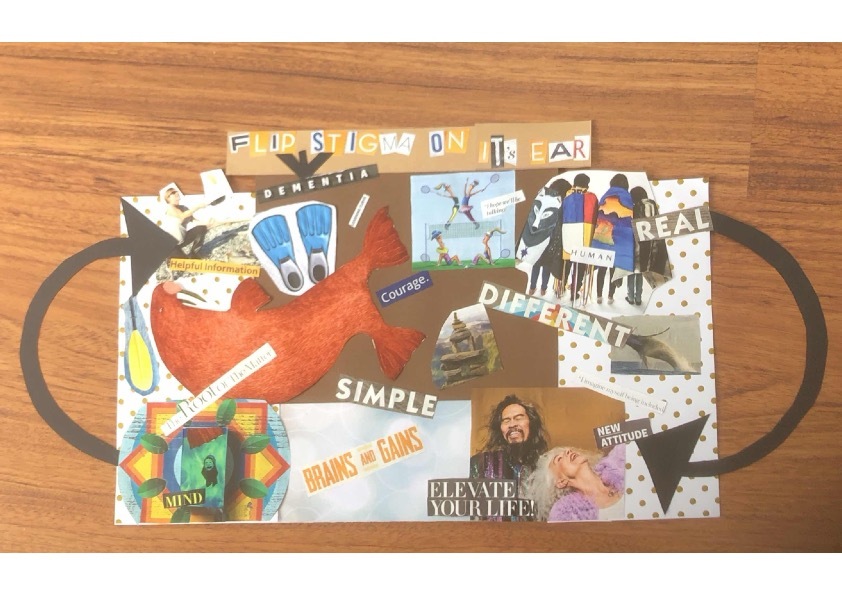
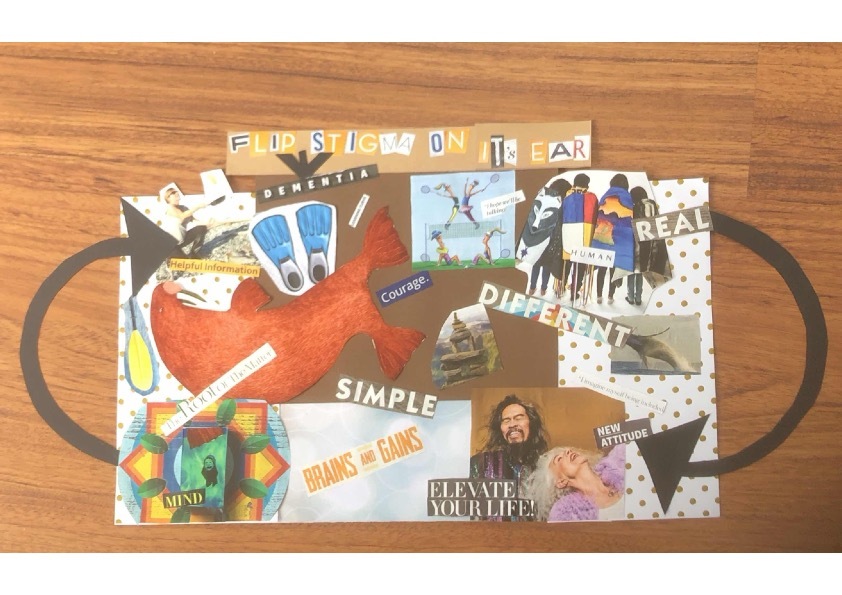
The toolkit is not a product designed by the research team as a translation of what they had heard from the Action Group. Rather, it is the output of an iterative, participatory process that involved people with dementia exploring ideas together in new ways that took place over regular Action Group meetings. For example, as part of the early development of, and brainstorming for what could go into the toolkit, and as a strategy for moving beyond words, two group meetings were devoted to collage making. To prepare, physical materials, including tape, pens, and various magazine clippings were sent to Action Group members for a self-directed collage-making activity that could be done safely at home during the lockdown period of COVID. They were asked what it would look like to “flip dementia stigma on its ear”, and to share their collages at the next Zoom meeting for discussion.
The collages became an important outcome of the project on their own and were presented as part of a workshop at an online design conference where Action Group members spoke about “Art as Activism” (Jackson et al., 2021). See Figure 1 for an example of a collage. While the collages themselves were not included in the toolkit, their creation sparked further ideas about what Action Group members felt that the public should know about dementia-related stigma and how people living with dementia respond to that stigma. The collages also facilitated discussion within the Action Group about how each member found hope, purpose, and belonging in their lives while also dealing with stigma. Finally, one of the collages is featured in the Action Group Guide, a final output of the project which is discussed later in this paper.
As the content for the toolkit was developed and refined over the course of several months in late 2020 and early 2021 the group continued to meet bi-weekly on ZOOM to iteratively develop the content and then brought in a visual artist to help design an interactive website aimed at educating people about the lived experience of dementia. As the toolkit in its website form neared completion, 30-minute individual interviews were held with each of the active Action Group members (at the time, 11) to provide feedback and input to further refine the toolkit. Members were also asked about their goals for the toolkit, possible areas for toolkit dissemination, their overall experience of being an Action Group member, and whether there were particular ways they wished to contribute further to the group.
Dissemination of the Toolkit
Action Group members were involved in important knowledge sharing and mobilizing activities, such as presentations to community groups to share and gain feedback about the toolkit, as well as professional conference and webinar presentations. While Action Group members collaborated on and had a say in the direction of this project from the start, their involvement in knowledge dissemination is another example of how they were authentically involved as main stakeholders in the project. For instance, 9 individual toolkit feedback sessions were organised by the research team with a diverse group of community leaders and stakeholders in various parts of BC. The feedback sessions occurred following the release of the toolkit and took place from March until July 2022. One or two Action Group members were always present at feedback sessions and provided a personalised account of the importance of the toolkit and how it could be used. Feedback from attendees at these sessions was overwhelmingly positive and often highlighted the impact of hearing directly about the toolkit from Action Group members.
Additionally, one of the Action Group members partnered with another BC-based dementia project to utilize the toolkit as a dementia-focused training tool. This member co-facilitated staff and volunteer training sessions at several Vancouver-based community organizations. As a co-creator of the toolkit and a person living with dementia, she was able to deepen the trainees’ engagement with the topic of dementia by sharing her personal experiences and in-depth knowledge of the toolkit. Action Group members also requested media training as a way of gaining experience and confidence for sharing and speaking about the toolkit. A such, a media representative from University of British Columbia attended one of the regular Action Group meetings and provided media training to both the research team and Action Group members. This training provided opportunity for Action Group members to develop communication skills (e.g. how to develop an elevator pitch) that they could use in their own advocacy and efforts to share the toolkit with others.
Development and Sharing of Postcards
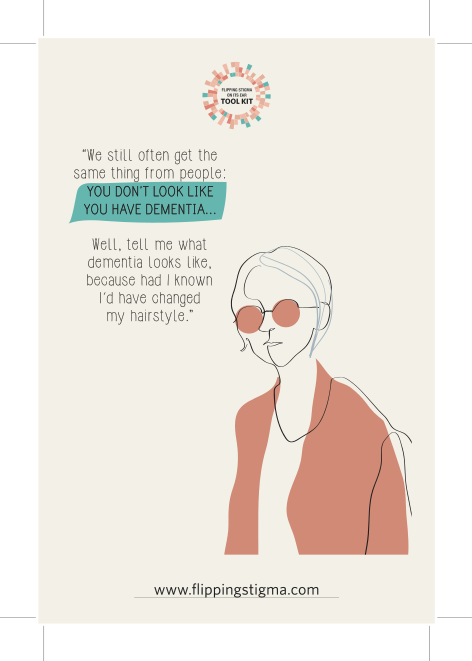
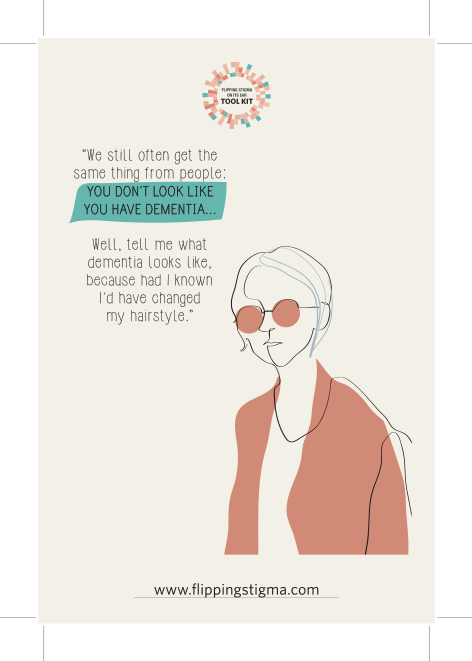
In one of the regular Action Group meetings, a member brought up the idea of developing easy to share postcards to promote the Flipping Stigma on its Ear toolkit. In collaboration with the toolkit’s website designer, the Action Group members chose quotes from previous meetings to be featured on promotional postcards for the toolkit. Each quote was selected based on a significant idea that had been discussed, such as “What does a person with dementia look like?” Ultimately, distinct visual designs were created to accompany three different quotes for three separate post cards. The backs of the postcards also have a QR code that links directly to the online toolkit. These postcards (see example in Figure 2) have been distributed at in-person community gatherings, national and international conferences, and delivered to community organisations who wished to share the toolkit with their own clients. One Action Group member used a previously planned road trip through BC’s interior to share promotional postcards of the toolkit with doctor’s offices, seniors’ centres, and long-term care homes in different communities along the way. After returning from her trip, she reported back to the Action Group that she had made connections with people who could not believe that this information existed and that someone was willing to help them learn about stigma against dementia. As she explained:
“[We] went in the summer, and we took a bunch of [postcards] from Flipping Stigma, and I think we stopped at about eighteen locations… And it was stunning because some people said to me, ‘We don’t get any information about anything,’ some people said, ‘Oh, I’ve never heard of this. What could this be?’ Some people said ‘we don’t have any sort of a dementia support.’ It certainly opened our eyes to what needs to be done in our rural areas…”.
T-Shirt Development
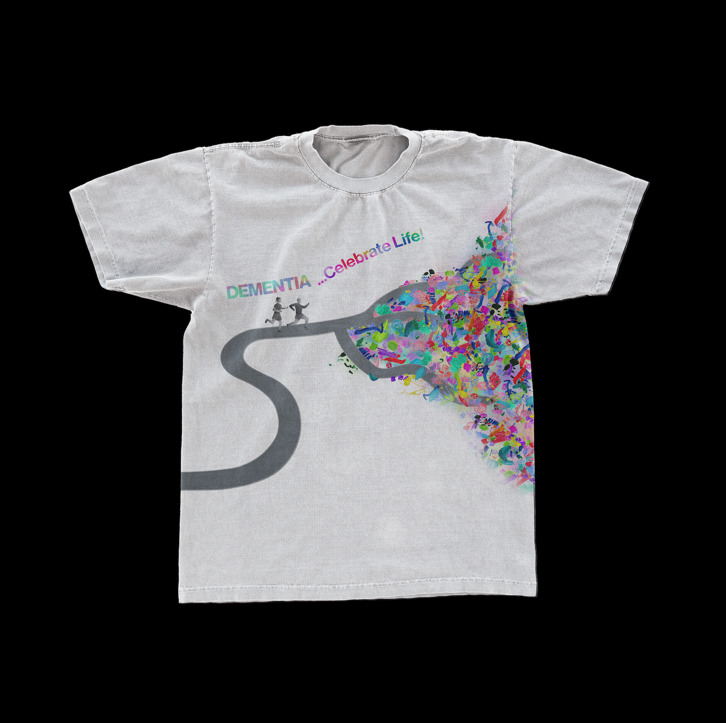
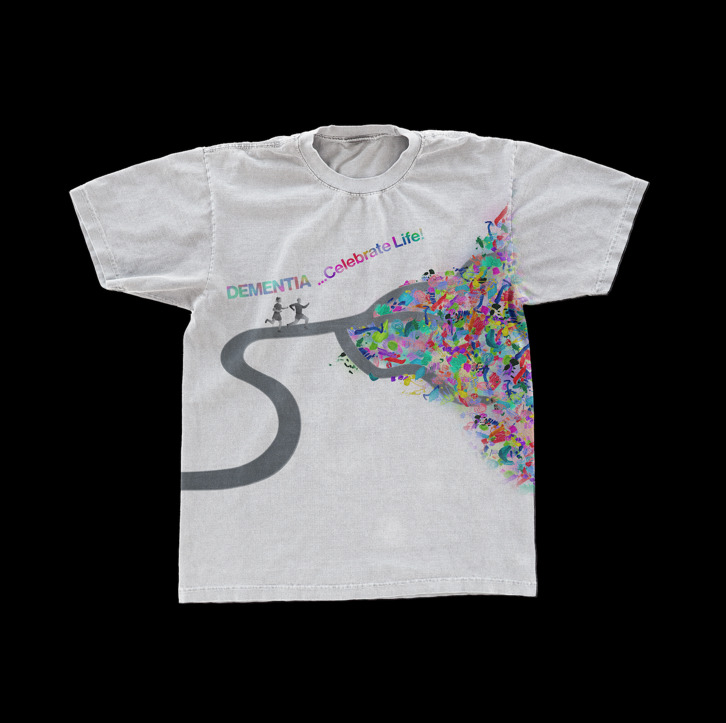
As the toolkit was being developed, the group decided to design a T-shirt that they could wear themselves to spread the ideas they were exploring in regular Action Group meetings. After considerable discussion, they agreed that the importance of celebrating and living life to the fullest after a diagnosis of dementia was the message they wanted to promote. A sub-committee of Action Group members worked with a communication design student from the Emily Carr University of Art + Design to develop a T-shirt featuring the slogan Dementia…Celebrate Life. This was a powerful addendum to the toolkit, as a way to address dementia-related stigma and advocate for living well with dementia. Shirts were printed and distributed to Action Group and research team members to wear. The T-shirts (Figure 3) are also available on the toolkit website for purchase, with funds going to future dementia-related research and advocacy. Action Group members shared experiences of interactions that they have had with others as a result of wearing the t-shirts in public. One member remarked that “…when I wear [the t-shirt] in public, I get a lot of second looks and people read my chest as I go by… it is eye-catching and… sometimes…they see it and they go ‘hmm?’… You get that little twist of the head… It is making an impact.” This member spoke about a particular time that he interacted with a local community member:
“…My notary public…asked me about it and we discussed what the meaning of it was and I… left her with the postcard…about the toolkit and because her father had died of dementia and …she wanted more information on… what the positive aspects of dementia could be… We had a good discussion about it. It went pretty deep in just five minutes.”
The Action Group Guide
As the project began to wind towards a close, the Action Group members realized that important work had been accomplished as a group, and they decided that a guide needed to be developed outlining how a group of people living with dementia worked in conjunction with university researchers to create a cohesive research team and act on their shared ideas. What followed was the development of the Flipping Stigma Action Guide [https://www.flippingstigmaguide.com/], whereby Action Group meetings in the last ten months of the project focused on creating the content for the guide. The guide’s development followed an iterative and collaborative process, similar to the toolkit development, and features tips and strategies for others with lived experience wanting to form an Action Group. The guide is easily accessible via its own website address, as well as through a link on the toolkit website, and is meant to be a free resource to other groups of people wanting to make social and actionable change happen. As part of the knowledge mobilizing work focused on the guide, in the fall of 2023, an Action Group and research team member presented at a patient-oriented research conference in Vancouver, BC, detailing the process of the guide’s development (Sakamoto et al., 2023).
Reflecting on the Process
Successful knowledge mobilization in a research project is strengthened when knowledge users are involved in the research process from start to finish in meaningful ways. The Flipping Stigma in Dementia Project is an example of productive and action-oriented research, where practices of engagement and collaboration have helped to pave the way for meaningful project outputs and knowledge mobilization. Consistent with PAR principles, from the onset there was a focus on shared decision-making in the project between the Action Group and academic research team members. In addition, attention was paid to ensuring that communication practices were respectful and empowering, and that the diverse expertise and knowledges of all involved in the project were recognized. This was achieved by ensuring that Action Group members had opportunity in regular meetings to express their opinions and share their ideas. Overall, Action Group members as people living with dementia were able to take on diverse roles and responsibilities throughout the project, such as co-presenting at conferences and leading knowledge mobilization efforts. This included Action Group members sharing co-authorship for this paper.
These sharing of responsibilities was significant aspect of the project’s PAR approach, allowing for the creation of fluid and flexible roles that responded to their community expertise, lived experience, interests, and needs. However, there were particular nuances and specific factors within this project that likely also contributed to the success of the knowledge mobilization activities that occurred. The following critical reflection is based on discussions that Action Group members had with the research team over a series of several Action Group meetings to unpack the particularities of this project that contributed to its successes in developing action-oriented outputs and knowledge mobilizing activities.
The Action Group as a Safe Space
Notably, the Action Group meetings have been described by Action Group members as a “safe zone” and an accessible, and inclusive space (Landy et al., 2025). While the regular meetings were not meant to be seen as support group meetings for people with lived experience, Action Group members did find the meetings to be supportive spaces in which they felt they could speak freely and openly about their experiences and share their thoughts about the project. During a conversation about what was helpful about the use of PAR methods in this project, an Action Group member shared the following about the co-creation of a safe space:
We help each other along… we’re not really a support group but…we feed off each other and we gain from each other, do you know what I mean?… Like there’s a collective, there’s a collective of, we’re not exactly on the same page, but we are in many ways, so we encourage each other… we thrive, we thrive that way, yeah."
In fact, Action Group members were very open and willing to share their experiences from the beginning of the project and onward. This continued as some members left the group over the years, and new members joined. Interestingly, some members found that the “porosity” of the group, referring to the group’s evolving membership over the years, where people could come and go as they wished, helped to make the space more welcoming. While the permeability of the group could be seen by some as a barrier to creating a safe space, it seemed that group members’ willingness and comfort in sharing their experiences and opening themselves up to others contributed to creating the sense of a safe space overall. It was also helpful that all who joined the Action Group shared in a commitment to creating meaningful change.
Group members were also open to being vulnerable with others in the meetings. As stated by one Action Group member:
Well, we have been fortunate to have a…really unique synergy of both personalities and of people with different types of dementia. …So…we’re…a cutting-edge group because we’ve come together in a cutting-edge format… And I think that’s what we can give others…[is] that this is how you do it, you open to everyone…, respect everybody, listen to everybody, let them…contribute their way that they’re best most comfortable with and listen, listen, listen…"
Overall, the safe and supportive space of the Action Group meetings allowed for a great deal of sharing and of responding to other people’s vulnerabilities (ie: they opened up their inner lives to others trusting that they would be treated with dignity and respect). People with dementia are often categorized as being part of a vulnerable group, which can become a ‘fixed label’ (Luna, 2009). In the Action Group meetings, the sharing of vulnerability, rather than contributing to labelling, became a way to open up discussions of stigma and discrimination, and powerfully, a way to reclaim rights, opportunities and power, especially in the shared work of developing ideas and outputs together. In particular, this shared work resulted in the development of the toolkit.
Serendipity in Purposeful Work
PAR is dynamic by its very nature, and research teams need to be able to be open to adaptation and change (Edwards et al., 2008; Kemmis et al., 2014). Certainly, the work that the group and research team engaged in was purposeful in that the goal from the start was to promote social citizenship and address dementia-related stigma and discrimination, and there was a shared emphasis on creating something tangible and usable to achieve that goal. Nevertheless, while the initial planning and organisation of the project was purposeful, the entire team, including the Action Group, was open to serendipity, in terms of where the shared work would take the group. In particular, the purposeful creation of a safe space which allowed for Action Group members to become vulnerable with one another, laid the groundwork for creativity and serendipitous discussions and ideas. Arts-based methods, such as the group collage activity, also offered an opportunity to open new avenues of exploration and helped facilitate new ideas and paths to shared understandings.
From the outset of the project, the research team had envisioned an action-oriented outcome as part of the project’s PAR focus. What this would look like however was unclear, especially at the beginning of the project. The form it took, first as the Flipping Stigma on its Ear toolkit and then as the Action Group Guide, went well beyond what was initially planned and/or conceptualized. Moreover, the development of the guide only occurred because the Action Group were central to the work, and as a result, the project finished up with final products to share with the world that emphasized the possibilities inherent in action-oriented projects where people with lived experience are empowered. The organic processes that characterize the Flipping Stigma in Dementia project while intentional, are important methodologically when considering the purposefulness of PAR in engaging and partnering with research partners in transformative ways (Bethell et al., 2018; Brydon-Miller et al., 2011).
Despite the positive and generative outcomes of co-developing the toolkit and Action Group Guide, the process of development could be challenging at times, for both the Action Group members and for the research team. Being open to changes in direction and to ideas not originally intended for exploration (e.g. the development of the toolkit) can seem counterintuitive in research work, when timelines and deliverables are often planned out carefully in advance. At times it could feel that there was lack of clarity, and for Action Group members, visualizing the toolkit while still in the planning stage was not always easy. These challenges were addressed by paying close attention to the dynamics in the group meetings, and in ensuring that each meeting was well-facilitated, as discussed in the next section.
Team Dynamics and Facilitation
PAR requires research team members to evaluate and carefully consider their positionality and understandings of power (Littman et al., 2021). The collages were not only an important catalyst for moving the work of the project into a productive space but also changed the dynamics of the partnership and collaboration between the Action Group and the research team in interesting ways. As one of the Action Group members explains, “it was 'them and us”’ at the beginning of the project. However, when the collage activity took place, people with lived experience really took the lead, and as described by an Action Group member “we were the ones teaching the research team members”. While for most, the collage-making activity marked an important evolution for the overall team’s dynamics, it should be noted that this particular activity was not a catalyst for all members. One member in fact left the group as a result of this activity. In the end, the most powerful catalyst for the Action Group members was seeing the actual toolkit taking shape. Until it was concretely presented to members in its website form, it remained a vague idea to them until they could “see it” in a developed form. As mentioned, this period of time in the toolkit development phase was challenging for both the Action Group members and researchers, as research team members endeavoured to bring about a tangible product that did justice to the Action Group’s ideas and perspectives. In this sense, the presentation of the developing toolkit in Action Group meetings was an important aspect of regular meeting facilitation and planning, where the facilitators took the time to present the different aspects of the toolkit to Action Group members as it was developed.
As previously mentioned, throughout the four years of the project, each Action Group meeting was always facilitated by two members of the research team, of whom one was a person with lived experience of dementia. Shared facilitation, particularly with a person with lived experience, provided an important dynamic of a shared and inclusive space to all of the meetings. When facilitators asked the group about their approach to leading the meetings, this prompted comments such as, “I think you know we’ve had very good facilitation so that’s made it easier for us to come up with ideas and… to feed off of each other and just get the process going.” The research team debriefed after each Action Group meeting, and this was an important check-in opportunity for the team to review and reflect on each meeting. The debrief meetings took place online, and often two days after the Action meetings took place. These follow up meetings were integral to the overall research process and provided opportunity to plan for how best to facilitate the next Action Group meeting. A “loose” agenda was also set for the next meeting, in terms of what to focus on while remaining open to possible new avenues of discussion that might come up in the meeting, as part of remaining responsive to the Action Group members.
Journey to Advocacy
Interestingly, most Action Group members in the earlier stages of the project did not feel comfortable with the terminology of advocacy, and did not necessarily feel that the idea of self-advocacy resonated with their experiences. In the early days of the pandemic, the Alzheimer Society of BC (ASBC) stopped all support group meetings for people living with early-stage dementia. Even after support group meetings for caregivers had restarted in an online format, early-stage support groups remained on hold. Action Group members decided to dedicate an Action Group meeting in early 2021 to inviting representatives from ASBC to discuss why it was important that they provide an online meeting space for people with early-stage dementia. Although this did not explicitly generate content for the toolkit, Action Group members were actively advocating and practising much of what they would eventually describe in the toolkit, marking a critical step in their journey to advocacy.
When the toolkit was released in September 2021 and began to impact the lives of people outside of the group, several Action Group members began to identify strongly with the term advocacy, recognizing that they were powerful advocates, not only for themselves but for the greater dementia community. At the core of many discussions about the toolkit was the question of who the toolkit’s content would serve. As part of this journey to advocacy, Action Group members took initiative in understanding their local landscapes and provided examples of different community spaces where the toolkit could be shared and used. Overall, members capitalised on existing relationships and forged new ones with stakeholders in their own local communities, discovering new spaces where the toolkit could have impact. As members grew in their roles as advocates, they helped to widely disseminate the toolkit, contributing to the knowledge mobilization process in important ways. The shift to becoming comfortable with the language of advocacy was an interesting aspect of this study, particularly as research has shown that advocacy can contribute to maintaining a positive self-identity for people living with dementia (Bartlett, 2014b; Weetch et al., 2021). People with lived experience of dementia are powerful advocates and have a critical role to play in the co-development of research knowledge that benefits their lives, and that seeks to actively address dementia-related stigma and discrimination. As such, this project has highlighted the need for more research that critically explores the concept of advocacy in the dementia context (Bartlett, 2014a), particularly within the realm of PAR.
Conclusion
Overall, there has not been much focus on examining how people with dementia have been involved in the knowledge mobilizing aspects of PAR. The key takeaways stemming from this study include considering how a co-created safe space in regular Action Group meetings provided opportunities for Action Group members to collaborate on purposeful work with research team members to co-develop outcomes such as the Flipping Stigma on its Ear toolkit. The project’s outcomes evolved in interesting and surprising ways that had not been originally planned for at the beginning of the study. This can be attributed in part to the facilitation strategies implemented over the course of the study, which were important for a sharing of power with Action Group members and allowed for new avenues of exploration to evolve. Importantly, the Action Group members became more comfortable with the concept of advocacy as the project evolved, whereby many of them extended their advocacy in a myriad of ways that amplified knowledge mobilization efforts. These facets of the project were integral to the success of the project in not only creating the Flipping Stigma on its Ear Toolkit, but in also mobilizing outputs and knowledge that address the ongoing needs of people living with dementia.
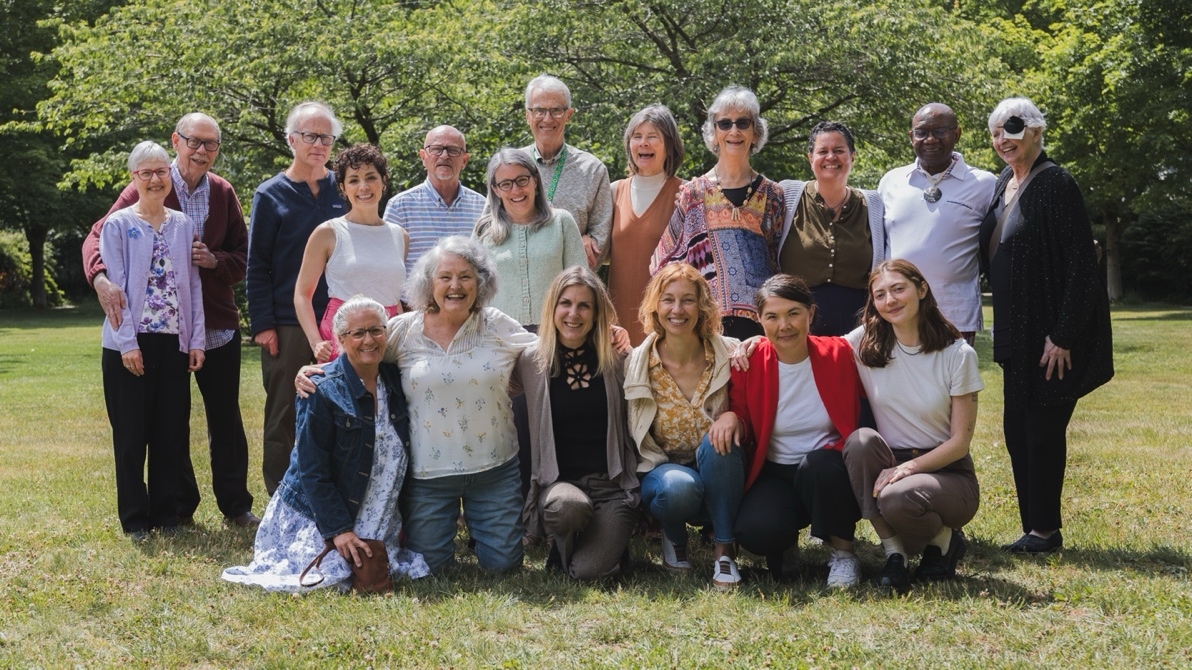
In the final year of the project, in the Spring 2023, an in-person event was held at the University of British Columbia, where Action Group members and the research team came together to reflect on and celebrate the project’s successes. For many, this was a first opportunity to meet one another in person following years of connecting online.
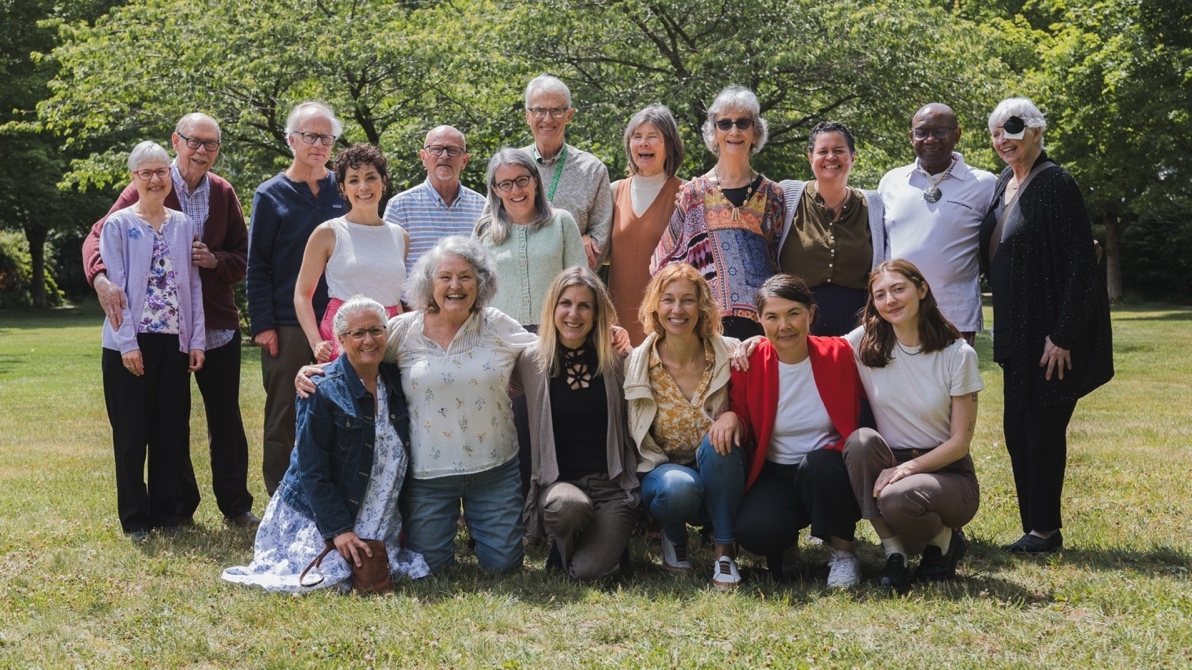
For those who were able to attend, it was an interesting and impactful opportunity to experience the safe and productive space in person, that had been created in the mostly online Action Group meetings over the years. It was also an opportunity to further reflect on the nuances of the participatory and empowering aspects of the project, where Action Group members felt able to come and go, share their vulnerabilities, and remain open to new possibilities for making change happen. This research project has highlighted the possibilities inherent in PAR for people with dementia to feel socially included in the world around them, where dementia-related stigma and discrimination can be positively challenged and addressed, and where people with lived experience can exercise their social citizenship and effect positive social change to improve the lives of others.