
Introduction
This article analyse the use of qualitative and participatory tools, particularly those linked to sensitive mapping, applied to Gibellina Nuova, a city that poses significant challenges in terms of the relationship between its inhabitants and their territory.
Reconstructed after the 1968 earthquake (Badami, 2019), Gibellina Nuova is inspired by the principles of garden cities (Nabila, 2021) and the dynamics that promote cultural and artistic appeal (Grésillon, 2008). Isolated and surrounded by hills, like an ideal city (Choay, 2014), its urban planning reflects post-industrial utopias (Howard, 2013). The city is home to more than seventy works of art, created during the second half of the twentieth century, in a bid to rebuild identity through art and the participation of local residents (Accetta, 2022). Encouraged by Mayor Ludovico Corrao, a number of well-known artists were invited to develop projects in the village during the end of the 20th century and the beginning of the 21st.
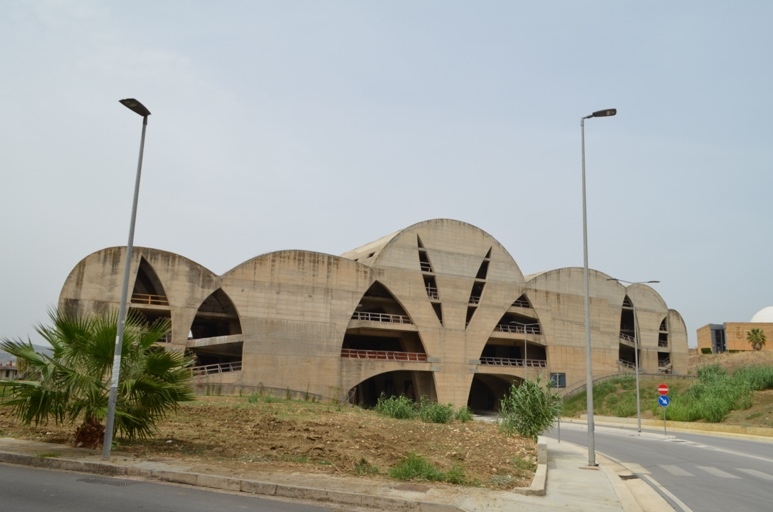
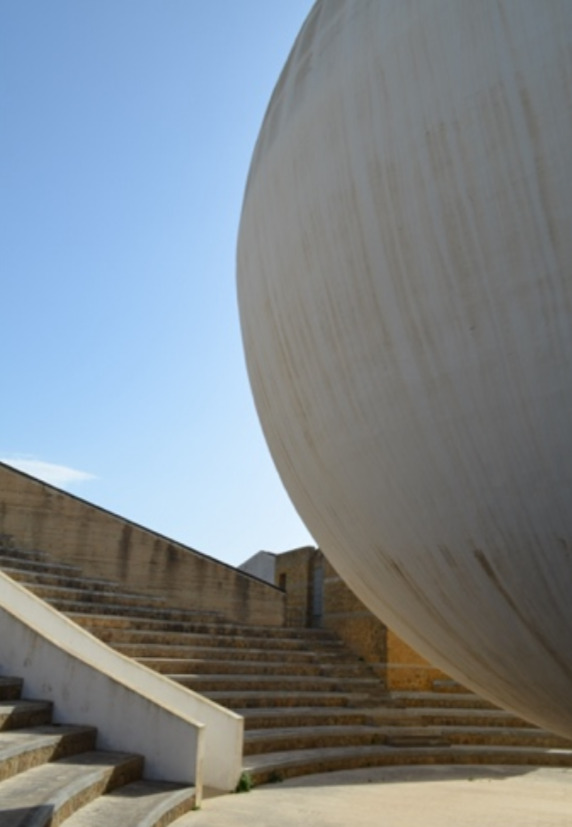
Today, Gibellina Nuova has a distinctive urban fabric, characterised by wide, winding avenues and uniform houses no more than three-storey high, each with a small garden set back from the road. The artworks, mainly architectural and sculptural, with a few two-dimensional examples, are scattered throughout the city, some poorly preserved or unfinished (fig. 1), others, such as the Chiesa Madre (fig. 2), invested with a functional use, in this case religious.
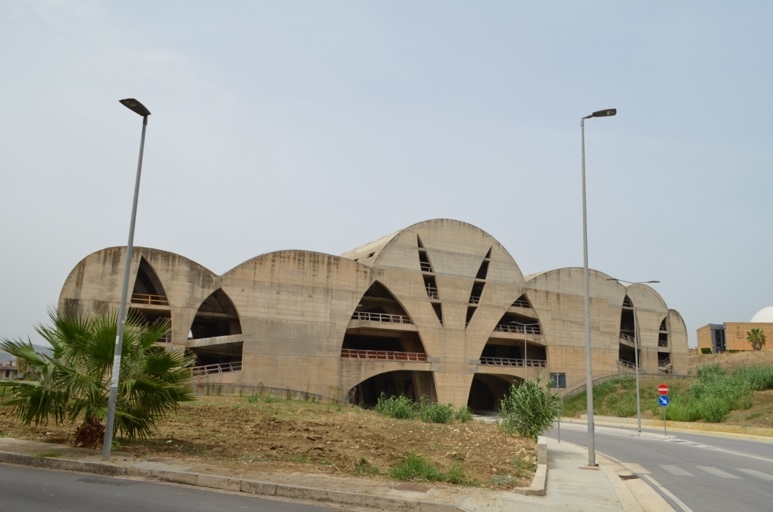
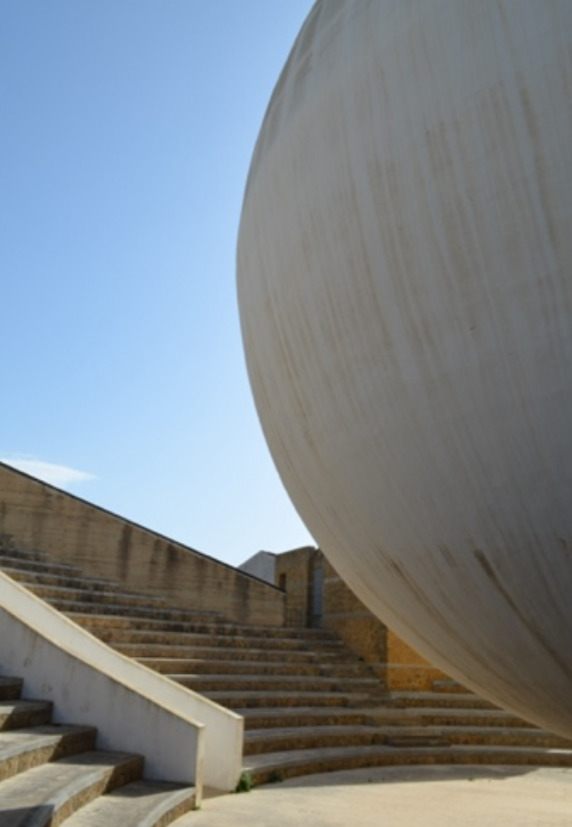
This diversity of structures and meanings suggests that some artworks have closer links with residents than others. Gibellina Nuova is therefore a relevant field of study for analysing the interactions between residents and public art, and because of its particular features it lends itself particularly well to qualitative analysis through sensitive participatory methods aimed at gathering residents’ perceptions based on everyday practices and space related memories.
The methods used in this study in order to gather information linked to the relation between artworks and residents are mainly structured around sensitive mapping and were implemented at different times, with different groups of participants, in order to discover a variety of perspectives and to collect sensitive and collectively held data that may be challenging to access through individual interviews or other not spatialised methods such as focus groups.
This paper investigates how participatory sensitive cartography can reveal the spatial and affective connections between residents and urban artworks, in order to understand the role of public art in shaping a sentiment of attachment.
The methodology and its applications
Sensitive mapping is a methodology aimed at analysing a given environment through unconventional cartography (Aït-Touati et al., 2019), moving away from the classical codes in order to illustrate sensations, visions, memories and feelings of its author (Olmedo, 2017). This methodology is often mobilised in a participatory way and can be considered a creative tool capable to facilitate richer reflections and dialogues between participants and the researcher (Vaart et al., 2018). It is often associated with movement and the stroll, conceived as a moment of drift where the body appropriates the space (de Certeau, 1990) through the senses. This practice is frequently used in urban planning, with the aim of involving residents in the design of new neighbourhoods or the rehabilitation and enhancement of urban spaces (Manola et al., 2016). Various workshops are also devoted to understand the residents’ vision that of their own city, in order to propose new bottom-up driven solutions to the public authorities (Bourdin, 2022). Sensitive cartography as a participatory method is useful to enhance discussions between participants around a common sensitive map of their territory, completed by shared experiences (É. Bailly, 2018). Sensitive cartography is indeed often used in spatial mediation and territorial diagnostics, but it can also have other applications in the arts and culture fields. Sensitive mapping can in fact also be multisensory, in order to integrate smell, sound and touch to the visual representation, enhancing past and present sensations about a place and working directly with perception. The sense of place can indeed be perceived through multisensory mapping, evoking the lived experience of social, cultural, and political issues related to it (Powell, 2010). In sociology, ethnographic multisensory mapping is also a powerful tool to underline the spatial construction of gender, as proved by Deleuze and Guattari (Renold & Mellor, 2013).
Cartography and mapping are sometimes used also in the museum field for the spatial analysis of visitors’ wandering through exhibition routes (Bautista & Balsamo, 2013; Duncan, 2022; Mcwilliams, 2014). Some research also focuses on the sensitive experience, analysing the museum visit using neurological tools, with the aim of creating a personalised cartography of the visit, based on the sensations felt by viewers in front of the exposed artworks (Tröndle, 2014), or through sensitive walks aimed at creating new routes for vulnerable audiences (Lebat, 2022). Although interest in mapping is present in the museum field (Castle, 2009; Kirchberg & Tröndle, 2015), sensitive mapping as a method describing spatialised feelings is less widespread, and an isolated example of an application in this field can be found in Élise Olmedo’s analysis of the collections of the Musée des civilisations de l’Europe et de la Méditerranée (Olmedo, 2021).
Sensitive mapping is indeed a flexible method used in various disciplines and its application can be transposed to other context like post-traumatic cities, where memory and everyday practices are brought to the surface through multisensory spatial exploration and, in the case of Gibellina Nuova, can also be an instrument to understand the role of public art in the construction of spatial affectivity.
In fact, even if the perception of artworks located in the public space is rarely analysed through sensitive cartography, we can mobilise this methodology to highlight the multisensory perception of artworks, conceived as spatial constructions (Lacy, 1995) intrinsically linked to the territory. Possessing their own spatiality (Volvey, 2007), artworks can in fact establish a strong interrelationship with their environment and audience. Mostly, artworks situated in public space participates in a reciprocal process of spatial transformation, simultaneously modelling and being influenced by the environment, and thereby reshaping the inhabitants’ perception of their surroundings. Consequently, if sensitive cartography seeks to explore the perceptions and emotions experienced within a territory and revealed through walking and felling (Feildel, 2018), it must also account for the urban and natural elements that shape these perceptions, included artworks installed in public spaces. Like architectural features (Augoyard et al., 2003), works of art are part of the everyday experiences of the space and can be analysed through sensitive mapping. The characteristics of the methodology, thanks to its adaptability and feasibility without special or expensive tools, make it possible the application to rural and isolated specific contexts like Gibellina Nuova. In particular, interrogating spatial affectivity and attachment through participatory sensitive cartography in post-catastrophic fields can reveal a lost sense of community and build common visions, by working on memory and everyday practices. Urban contexts invested with public art, as illustrated previously, are also an interesting field application to participatory sensitive cartography, where art and the urban are detected through shared imaginaries and routes mapping.
Sensitive cartography and public art in Gibellina Nuova
In order to understand the importance of sensitive cartography in analysing the role of site-specific artworks (Kwon, 2004) in the creation of space and its perception, several sets of participatory workshops have been organised and are underway in the village of Gibellina Nuova.
The aim of the research is to understand how the inhabitants experience the town, in order to identify their sense of belonging and their degree of attachment, and to determine the role of artworks in establishing these feelings, based on the analysis of the sensations they provoke. In this context, sensitive mapping is supported by other methodologies such as observation and comprehensive interviews (Kaufmann, 2016), to create a moment of exchange with the participating residents, and visually capture their relationship with their city. During these workshops, sensitive mapping was not preceded by sensitive walks, in order to work on the memory, the lived experiences and everyday life of the inhabitants of Gibellina Nuova.
Integrating into a specific urban fabric such as that of Gibellina Nuova, which is geographically isolated from the main attractions and does not correspond to the island’s tourist imaginary, is not an obvious task. The success of the study also depended on the positioning of the researcher (England, 1994) in the use of a sensory and participatory approach as a tool of cultural geography (Paterson, 2009). Indeed, an initial phase of adaptation and familiarization with the area was carried out so that the researcher could make the space her own, find landmarks and establish local contacts.
After this adaptation phase, two round of workshops were organized with the help of civil service volunteers, to test the sensitive mapping method in different ways. The workshops were initially designed by the researcher, drawing inspiration from the participatory methodologies developed by Olmedo, Feildel, and Manola, and were progressively adapted to the specific context of Gibellina Nuova. This process took into account the city’s social and spatial specificities, such as the weak presence of people in public spaces and the local distrust toward creative activities dealing with sensitive themes, also observed by Manola (2013). The participants were included in the design of the workshops once the researcher arrived in the field, and helped to adapt the structure of the events to make them more accessible to residents in terms of venue, communication and appeal.
This collaborative approach reflects key principles of participatory research, where knowledge is co-created through mutual learning between the researcher and the participants. The workshops aimed to explore the relationships between the conceived, lived, and perceived space (Lefebvre, 1974), using these categories as a framework to interpret participants’ everyday experiences and emotional connections to the city. Within this process, participants acted as the main producers of situated knowledge, while the researcher assumed the role of facilitator and learner. Thanks to residents’ contribution, the workshops became a safe and reflective space where participants could freely express their perceptions and feelings, reinforcing the participatory objective of generating understandings of their relationship with the art invested space.
In total, 32 residents aged from 13 to 75, took place to one of the organized workshops, allowing for a variety of interesting perspectives in terms of memories and perceptions.
Analysis of the first participatory workshops series
The first round of sensitive mapping workshops took place at several times and locations around the city. Even if it wasn’t originally designed as a distributed workshop, this field oriented solution made it possible to analyse a larger portion of the population in terms of age, gender, and profession, across diverse environments such as the Centre for Economic and Social Research for Southern Italy (CRESM), the town square, and the MOMA bar. Through the collaboration of a civil service volunteer, the CRESM had the role to facilitate the gathering by making its premises available for the very first workshop. The invitation was spread by word of mouth, and the participants were initially Civil Service volunteers and their friends. By moving the workshop outside the walls of CRESM, to Piazza XV Gennaio and the MOMA bar, participation has diversified and expanded. The decision to open the workshop to public spaces was given by the necessity to gather a diverse range of participants profiles, difficult to reach by limiting the workshop to a single closed location.
In this first round, 26 sensitive maps were collected in total from 17 participants, aged between 13 and 75. The participant group was composed primarily of young individuals (tab.1), exclusively residents of Gibellina Nuova, the majority of whom were students, volunteers, or belonged to middle-to low-income categories (tab.2).
During the first workshop, participants were asked to draw their daily journeys on a simplified topographical map of the city and to identify recurring sensations, guiding them towards their memory of urban ambiences (Tallagrand et al., 2021). Every participant was also involved in a conversation with the researcher, based on the comprehensive interview method (Kaufmann, 2016), and the explanation of their sensory map were recorded to complement the data collected visually. Many participants, in illustrating their daily routes, highlighted the presence of certain works of art, excluding many others, and described their routes in relation with them, with phrases such as:
“When I see the star (referring to Pietro Consagra’s Stella del Belice), I feel at home.”
“When I see it (the Stella del Belice), I know I’ve arrived.”
The cartographies presented here (tab.3), representing only a portion of those produced, demonstrate how, through various graphic approaches, the map becomes a medium for conveying the author’s perception of their territory and their affective connection to place (Audas & Martouzet, 2008).This can be more or less descriptive, but always with a strong memory and sentimental component, given by the cognitive process of encoding information firstly by sensory memory and by what is known as iconic memory, which is mainly visual (Lieury, 2021). The maps illustrate that certain artworks are visually embedded in the participants’ imaginative and perceptual experience of their surroundings (Bonetti, 2019).
Data gathered from this first workshop’s round were very heteroclites, including visual, textual and oral information. This complexity led to a multi-level analysis firstly based on objective observation of the maps, highlighting their graphic and symbolic richness and the almost constant presence of certain artworks. This initial level of analysis was then cross-referenced with information gathered from conversations with participants and their mutual exchanges.
The examples below reveal a diversity of styles and approaches, starting with the choice of background map, which indicates the need for each participant to orientate themselves more or less explicitly.
The first map is based on Plutchik’s wheel of emotions (1991), from which the participant draws inspiration to attribute feelings to the spaces in the city she inhabits on a daily basis. In this way, the map becomes a reflection of how the participant experiences space, in her daily relations with the human and non-human actors (Latour, 1994) that characterise her habitat.
The second example, with inventory number CS_022, presents a much lighter map base, less descriptive and with a more complicated orientation. This map is based on the participant’s memories, associated with specific spaces and artworks. In this way, the map depicts a journey through life moments preserved in memory, associated with the practice of the space and the works of art. Sculptures and architectures are here treated in the sense of Krauss (1979), as spatial elements speaking a symbolic language shaped by the meanings and uses of the place where they are installed.
The significance of art spatiality (Volvey, 2007) is evident in the way the artwork interacts with the surrounding space and its inhabitants, emphasizing a close relationship that is both lived in everyday experience and sustained in memory.
Map CS_001 presents an even different background map, where the shape and urbanism of the city are well defined. Here the participant has highlighted his daily journeys and routes, which are often made by car, and for which we could well speak of the landscape of the motorist (A. S. Bailly, 1974) who perceives the city and constructs the landscape through the windows and windscreen of his or her car, touching or glimpsing works that are the most visible and accessible.
The map CS_007 has a light background with no apparent landmarks, because the participant’s aim was not to orientate herself on the map but to describe her intimate vision of the city. Using collage, writing and drawing, she revealed the artworks that were most important to her, placing them with geographical rigour, and adding bits of a song about Gibellina Nuova and the iconography of Alberto Burri’s Cretto, a symbol of the old village’s past. The map demonstrates a strong attachment (Rollero & Piccoli, 2010) to the town, given by its location, its surrounding countryside and the works of art highlighted here for their aesthetic quality and intrinsic message linked to the town’s identity and its rebirth after the earthquake. But also by the sentimental links built up over the course of her life with the places and the people.
The last map analysed in this article for the first sensitive cartography workshop differs from the others in its symbolic intent. The CS_010 map is not in fact intended to describe the daily life or memories of its creator, but to define the city through its symbols, and in particular through the one that not only the local population but also several theorists define as the symbol of the city’s rebirth (Cantavella, 2013; Sanfilippo, 2021). The total superimposition of the Stella over the map of Gibellina Nuova underlines the symbolic association between the artwork, the artist, the city and its history.
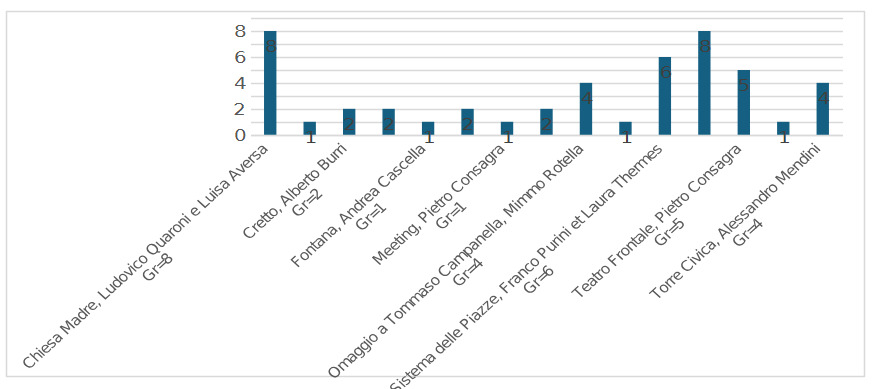
After an individual map-by-map analysis, the 26 productions were analysed using Atlas.ti software, coding the elements present in each of them for a cross-referenced study. The graph below (tab.4) shows the results of the first sensitive mapping workshop, where it results that certain artworks were mentioned by most of the participants, such as the Chiesa Madre and the Stella del Belice, mentioned 8 times, the Sistema delle Piazze, mentioned 6 times, and the Teatro Frontale, mentioned 5 times.
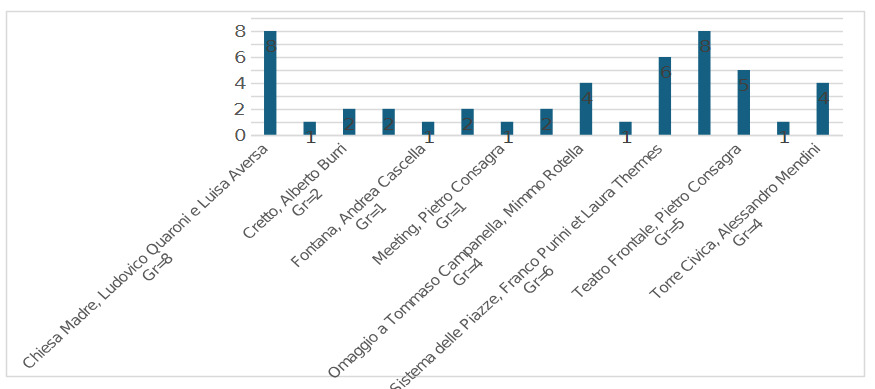
If we focus on the analysis of the recurring artworks, we see that they belong within what Rosalind Krauss defines as the extended field (Krauss, 1979). These artworks do present in fact a tension between their materiality and the landscape, which define them as a new genre of public art (Lacy, 1995) that is impossible to consume as a private experience detached from the social and cultural context of its location. The artworks are inhabited and inhabit space (Sanfilippo, 2021), since they can be crossed, on foot or by car, as in the case of the Teatro Frontale, the Stella del Belice and the Sistema delle Piazze, or experienced from within, as in the case of the Chiesa Madre.
These results indicate that the artworks most frequently cited by participants are those that actively engage with the area and its inhabitants, that are integrated into daily routines and movements, and share similar characteristics in size and visibility. As these structures can be seen from several city’s points of view and their visual accessibility is not obstructed by the surrounding buildings and houses, we can deduce that size and visibility make them easily recognisable markers, with specific characteristics, different from those of their environment (Hasanuddin, 2004). They therefore can be defined as landmarks on the map and for the residents, who often spoke about the sense of ‘home’ (Stitou, 2005) in relation with these artworks as for example the Stella.
These initial results illustrate the importance of a visual and participatory methodology, but above all a spatial one, to understand the relationship between the inhabitants and the territory, mediated by the artistic presence. The maps revealed a deep attachment to the area and fostered reflection and storytelling among the participants, who recalled the emotions evoked by specific artworks in Gibellina Nuova, through illustrating their daily journeys.
Analysis of the second participatory workshops series
The second series of workshops, conducted in collaboration with the Rete Museale e Naturale Belicina and the CRESM, adopted a different structure, aimed primarily at gathering material with a freer iconography while also preventing participants from facing the same challenges of cartographic interpretation observed in the first series. Organised in two parts by the researcher with the help of the CRESM director, the workshop included an initial exploratory phase, in which participants were asked to describe their personal vision of the town of Gibellina Nuova. The questions “When you think of Gibellina, what comes to mind?” and “What image does Gibellina represent for you?” sparked community reflection and structured this second round of workshops.
Over the two days, a total of 15 participants from a variety of backgrounds were registered (tab.5). The association CRESM, hosting the workshop, has been crucial for the communication and promotion of the activity and to guarantee the actual presence of participants of different ages, not only from Gibellina but also from neighbouring towns such as Vita, Alcamo and Salemi (tab.6).
These workshops were organised with the aim of facilitating exchange and participation, in order to understand how the artworks are actually perceived and whether those highlighted during the first experience return to the common imagination during the second workshop, through the creation of mind maps and drawings. The results of this second session will be used to supplement those collected earlier, in order to understand whether the same works mentioned most often in the first workshop are also recurring in a freer representation of the town, based on individual and shared memories.
The first part of the workshop, after some hesitation, was understood and welcomed by all the participants, who leaned into the drawings, exchanging ideas and memories. The images that emerged from this first phase are interesting and consistent with the results of the previous workshop, as shown in table 7.
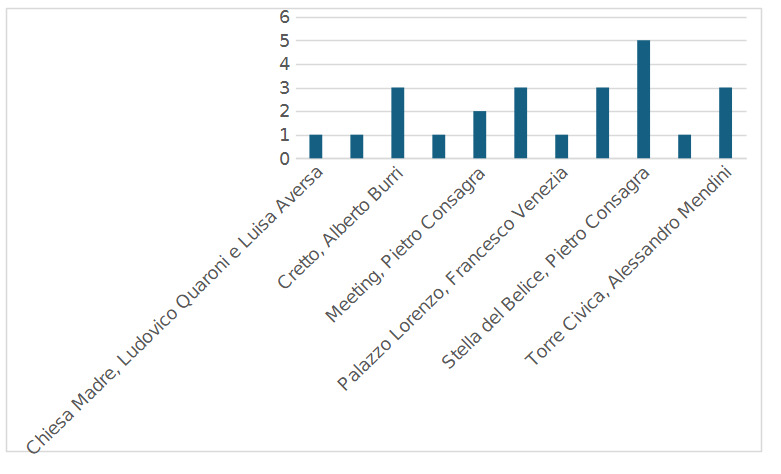
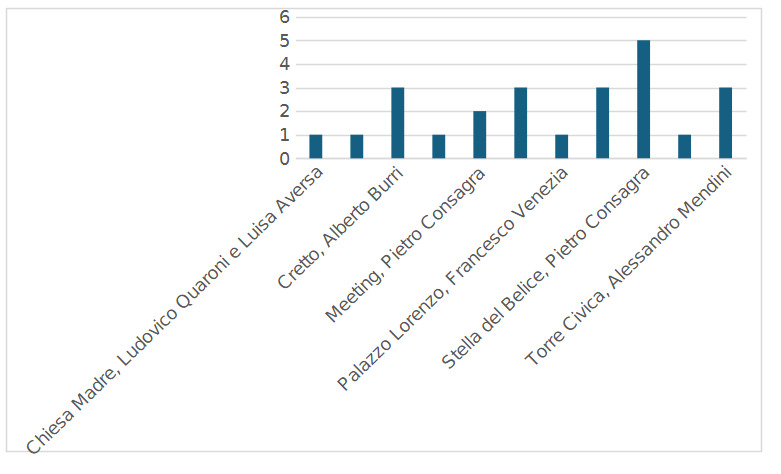
Indeed, out of 14 mind maps, the artwork that appears most frequently, as in the previous workshop, is the Stella by Pietro Consagra (tab.8). This time, elements related to the intimate and personal memory of the place have brought forth new connections and iconographies, such as the Torre Civica and the work Omaggio a Tommaso Campanella by Mimmo Rotella. The Cretto by Alberto Burri also appears frequently as a symbol of the past, frozen in time like a concrete map that conceals the ruins of the old town and immortalizes the trauma of the earthquake.
The goal of this first part of the workshop was to spark the participants’ imagination and prepare them for the next participatory phase.
The second part was organised using the transect tool (Bourdin, 2022), which facilitates exchanges between participants by bringing them together around a map of the city placed on a rectangular table, inviting to movements and changes of perspective. The transect methodology was accompanied by that of photo-elicitation (Alexander, 2013) which, with the help of artworks’ photographs, serves to enhance the visual and sensory memory of the participants. The presence of the map was used to spatialise the interactions between participants and situate their points of view as well as the sensations and emotions they experienced when confronted with certain works of art.
During this moment, residents where involved gathering around the A0 map of the city placed on a table, functioning as a methodological tool similar to the concept described by Tixier (2018). This spatial construction invites interaction and discussion. By observing the map from various perspectives, participants began to orient themselves based on different, personal reference points, such as their homes or the city’s well-known landmarks. The Stella, overlooking the highway, was often used as a key reference point on the map. The exchanges around the map took on a conversational tone and gradually evolved into a collective discussion about how to position the artwork models in their correct locations. Comparing this map-walking exercise to a museum visit, we note that participants approached the task with what Levasseur and Veron (1983) describe as a “butterfly” strategy. Although Levasseur and Veron’s analysis of exhibition experiences typically doesn’t involve a group visit, as simulated in this participatory workshop, we observe parallels in terms of orientation and movement choices, related in our case to the selection and prioritization of artworks placements on the map. Placing a model in the right spot requires individual reflection, then shared discussion and comparison, which is generally absent in museum visits, beeing often solitary experiences (Tröndle, 2014). Exploring a path, virtually or physically, through a space filled with artworks is key to understanding spatial interactions (Beaudoin, 2016) between human and non-human agents.
This second part of the workshop has highlighted the importance of the co-construction of spatial information about perception and everyday practices. Sharing insights helped in fact participants to find reference points for placing the artworks models and to orient themselves within a city they know on multiple levels. Plus, their shared stories and knowledge helped the researcher to understand the various degrees of attachment and the nuances of spatial affection through artworks. Notably, residents of Gibellina Nuova took the lead, because of their richer knowledge of spatial reference points and living with the artworks in their everyday environment, while participants from nearby villages showed knowledge rooted in personal interest or aesthetic appreciation of specific works. This suggests that local residents view the artworks as integrated into the urban fabric, and their sequence for placing the models on the map is primarily guided by spatial logic linked to their daily reference points. For visitors, the order of models placement is mostly influenced by the aesthetic value they attribute to the pieces (Heinich, 1996). Thus, we observe two distinct ways of perceiving contemporary public art: on one hand, local residents exhibit a perception that transcends aesthetic judgment. Their receptiveness to public art is less about technical understanding or knowledge needed to assess the artwork as an aesthetic creation (Corneloup, 2017) and more about its integration as a part of their environment.
Workshops results and participants feedbacks
Participants also shared impressions about the workshops and the co-constructed results. In particular, observing the map filled with artworks models made participants aware of the richness of their local cultural heritage and made them also discussing how sharing information and memories helps strengthen this awareness. Moreover, they recognized the value of changing perspective and seeing the city not merely as a place of routines and habits, but as a landscape of perceptions where artworks shape the way they experience and inhabit it. Also, participants’ impressions regarded their interest in the method as a tool for uncovering spatial affectivity, as well as the challenges they experienced when engaging with the drawing and mapping components of the workshops.
The co-created knowledge during these workshops answered in a multifaceted way to the problematic illustrated in the introduction. Thanks to the diverse data collected through individual and participatory sensory cartographies, complemented by interviews and interactions among participants, the workshops revealed how these sensitive and participatory methods can highlight the relationship between residents and local urban art, as well as how certain artworks contribute to residents’ sense of attachment. By enhancing awareness and inviting participants to reflect on their daily spatial practices, common feelings and shared routes, the participatory workshops, generate insights around a shared understanding of certain artworks as landmarks and a common sense of attachment expressed through a recurring mobilization of the idea of home.
The knowledge created by the participatory workshops in Gibellina Nuova can be compared to others culture-led participatory initiatives, such as the project promoted by the South-East Europe Transnational Cooperation Programme in Cetinje, Montenegro, and Heraklion, Greece (Nared & Bole, 2020). In that study, participatory methods were applied with local cultural practitioners and scholars to identify community-validated strategies for heritage enhancement and the development of innovative approaches.
A similar objective is evident in the example of culture-led urban regeneration discussed by Marucci (2025), where local citizens, artists, social organizations, and public authorities were actively involved. In both cases, participants included professionals, academics, local administrators, and cultural sector workers, united by the common goal of generating innovative, bottom-up practices for heritage and urban regeneration. In these examples, participatory research functioned primarily as a tool for understanding and responding to local needs through direct engagement; however, spatial and heritage perception did not emerge as a central focus of the inquiry, mostly focused on a territorial diagnosis aimed to proposing solutions and strategies.
By contrast, the analysis presented in this paper concentrates more explicitly on the role of perception rather than on proposing immediate solutions. The objective is not to find strategies in order to regenerate Gibellina Nuova itself, but to explore the relationship between its inhabitants and the town’s public art, thereby informing potential future directions. Here, the emphasis is placed on understanding spatial and perceptual relationships rather than soliciting concrete proposals from participants, and this approach is conceived as a necessary preliminary phase for structuring the subsequent stages of the research.
Using participatory sensory mapping to understand the perception of public art and its relationship with residents can also demonstrate the potential transferability of this methodology, which could serve as a tool for cultural mediation and museology of artworks not only exposed in public places but also in cultural institutions. In fact, analysing the movements and routes of museum visitors through participatory sensitive cartography can generate valuable data for curatorial purposes, cultural valorisation, and the creation of sensory-based more inclusive guided tours.
Workshops limits and opportunities
The participatory workshops conducted in Gibellina Nuova reveal several limitations. One key limitation lies in the absence of an active movement component, which is essential for the deep perception of spaces on a subjective and emotional level. Indeed, the notion of inhabiting is interconnected with the concept of movement (Barbaras, 2008), which is integrated into our daily lives and, in diverse forms, belongs to each individual. Movement, as a way of perceiving our environment and its atmospheres (Larbi Messaoud et al., 2019), is a daily act, and sensitive mapping workshops, in their various forms, activate the memory of daily movement, working with it and questioning it through recollection. Wandering, which is essential in analysing exhibition routes (Beaudoin, 2016; Gobbato & Leal, 2022) and in the perception of urban atmospheres (Thibaud, 2015), is approached indirectly in this context, focusing on translating everyday sensations onto the map and exploring the relationship between individuals and artworks through a map-based work.
Another significant limitation of the participatory workshops is the number and type of participants. Difficulty in disseminating information and the use of specific associations as entry points for organizing the workshops led to an unintentional pre-selection of participants. This selective access resulted in sensitive mappings being conducted informally, with facilitators reaching out to people directly, especially retirees and older adults who often remain outside of association networks. As it is important to give a voice to those who haven’t yet been heard, it is also crucial to understand why certain artworks, which are indeed the majority, weren’t mentioned during the workshops. The perspectives of participants naturally highlighted only a limited number of artworks, with prominence determined by location, scale, and physical or symbolic proximity to the participants.
Sensitive cartography, compared with the participatory methods previously described in culture-led territorial projects, presents several ethical challenges. These relate to the pressure of artistic performance and to the vulnerability linked to the emotional act of drawing, but also to the presence of sensitive data such as the localisation of private addresses and the subsequent reinterpretation of the collected material.
To address these challenges, the use of the transect method can help reduce the emotional and expressive pressure of drawing by allowing participants to simply describe or trace paths on the shared map. Additionally, encouraging participants to share only what they feel comfortable disclosing, and avoiding the circulation of sensitive information, is essential for creating a safe space. This can be reinforced by the researcher’s availability for individual conversations throughout the workshop.
The ethical issues related to data interpretation can be mitigated and even turned into opportunities, by reconnecting with participants during the analysis phase. Transforming the maps into conversational tools can stimulate discussion, validate or question findings, and reveal new dimensions of the data. According to Chambers (2006), active participation in validating and interpreting data enhances the authenticity and reliability of results. This transformation of maps into discussion aids encourages dialogue, making the maps interactive objects that reflect the human experience of space. Validating by revisiting participants, strengthens the robustness of the findings while opening space for new perspectives and interpretations. This interaction not only helps to fill potential gaps in the analysis of artworks within the area but also allows for the identification of informal social practices that the initial analysis might have overlooked.
Future Perspectives
The maps and drawings produced by participants during the workshops were collected by the researcher for further analysis, yet their qualitative and interpretive value allows for multiple applications. Firstly, the maps served as effective conversational tools during the workshops, fostering dialogue among participants and facilitating the exchange of perspectives in the field. Secondly, they are being preserved for inclusion in a future exhibition on the perception of Gibellina Nuova, where they will function as complementary artefacts illustrating a participatory interpretation of the city’s spatial and emotional landscape. In this exhibition concept, the maps will not constitute the central focus but rather act as mediating devices through which the inhabitants’ visions and impressions can be understood and shared, situated within a multisensory framework of representation.
Turning the map into a conversational object encourages deeper levels of participation, creating new spaces for exploring spatial perception and the role of urban art in shaping affection and attachment. Further applications of the methodology as a participatory method can also include in the future a first walking part followed by a communal work on a single map by activating the transect method and exploring its deeper possibilities of informing about shared perceptions or divergences and participants’ different viewpoints based on their approach to the map, their previous sensitive walk and their daily spatial activities in the city.
Moreover, futures perspectives about the methodology applications concerns the target audience and the necessity to explore new ways to include underrepresented populations in the analysis, particularly individuals aged 65 and older. These people have experienced both the old Gibellina and the new city rebuilt after the earthquake, so their voices are essential in preserving the collective memory associated with these places, as Wheeler (2014) notes. Their input is invaluable for understanding the new dynamics that emerged with the establishment of Gibellina Nuova. Moreover, those who witnessed these changes can provide insights into Mayor Ludovico Corrao’s project, which aimed to give the new city a territorial identity through art. By preserving collective memory, their presence in the analysis is central, as Wang (2008) underscores, for understanding how a sense of community is constructed.
Collaboration with the city’s older residents will be essential to gather data on collective memory and perceptions of the past and present. In this context, comprehensive interviews will be prioritized over participatory workshops, which have thus far attracted a primarily younger audience, due in part to communication channels like the ProLoco association, which primarily targets those under 30.
Conclusion
In conclusion, the participatory experiences conducted in Gibellina Nuova seek to understand how residents of the city and surrounding areas integrate public artworks into their daily lives and what role these works play in fostering a sense of belonging. Initial findings indicate that this sense of belonging emerges when the city is viewed as a relational whole, connecting artworks and territory. Notably, certain artworks play a specific role, such as La Stella by Pietro Consagra, which, according to all consulted participants, serves fully as both a gateway to the city and a symbol of the Belice Valley (Sanfilippo, 2021).
Participatory sensitive cartographies have been used here as a method for data collection, but they are in fact true conversational objects with a key role for the research development. Insights generated by the workshops have been used as the starting point to understand the collective and affective ambiances of the city, integrating interviews and using the maps to animate and enhance the residents reflexion.
The uniqueness of sensitive mapping as a participatory research tool is the capacity to connect feelings and memories at recognised locations on the map, spatialising sensations and souvenirs. The importance of place and routes identification on the map through the illustration of everyday practices is key to understanding the relation between space and feeling. This identification has been possible only by sharing memories and information among participants in the second moment of the workshop, dedicated to the construction of a participatory map as a result of the personal visions analysed during the preliminary stages of the two workshops.
Sensitive cartography can be an innovative creative participatory tool that have the capacity to build and summarise shared visions. Its implementation as a participatory method depend on the capacity of the researcher to communicate the goals of the workshop. The role of the researcher as a facilitator is key to putting participants at ease and making it easier to translate sensations into graphics. The participation of artists can also help to make the work more expressive. Furthermore, the movement component should not be underestimated, and a group walk can help to better identify atmospheres and sensations, thereby improving the quality of the maps produced afterwards.
Indeed, sensitive cartography does not constitute a self-sufficient or conclusive practice, but one that requires integration with other participatory and affective methodologies as sensitive walks (Christmann et al., 2018), photo elicitation (Alexander, 2013), sketching (Feildel, 2018) and interviews. This combination of tools is essential for creating conversational objects that can convey residents’ perceptions in a structured way, making them meaningful for data collection. Following these conclusions, a more in-depth analysis, engaging a broader range of participants, particularly older residents, will be necessary to complete the perspective provided by the workshop results.