



BACKGROUND
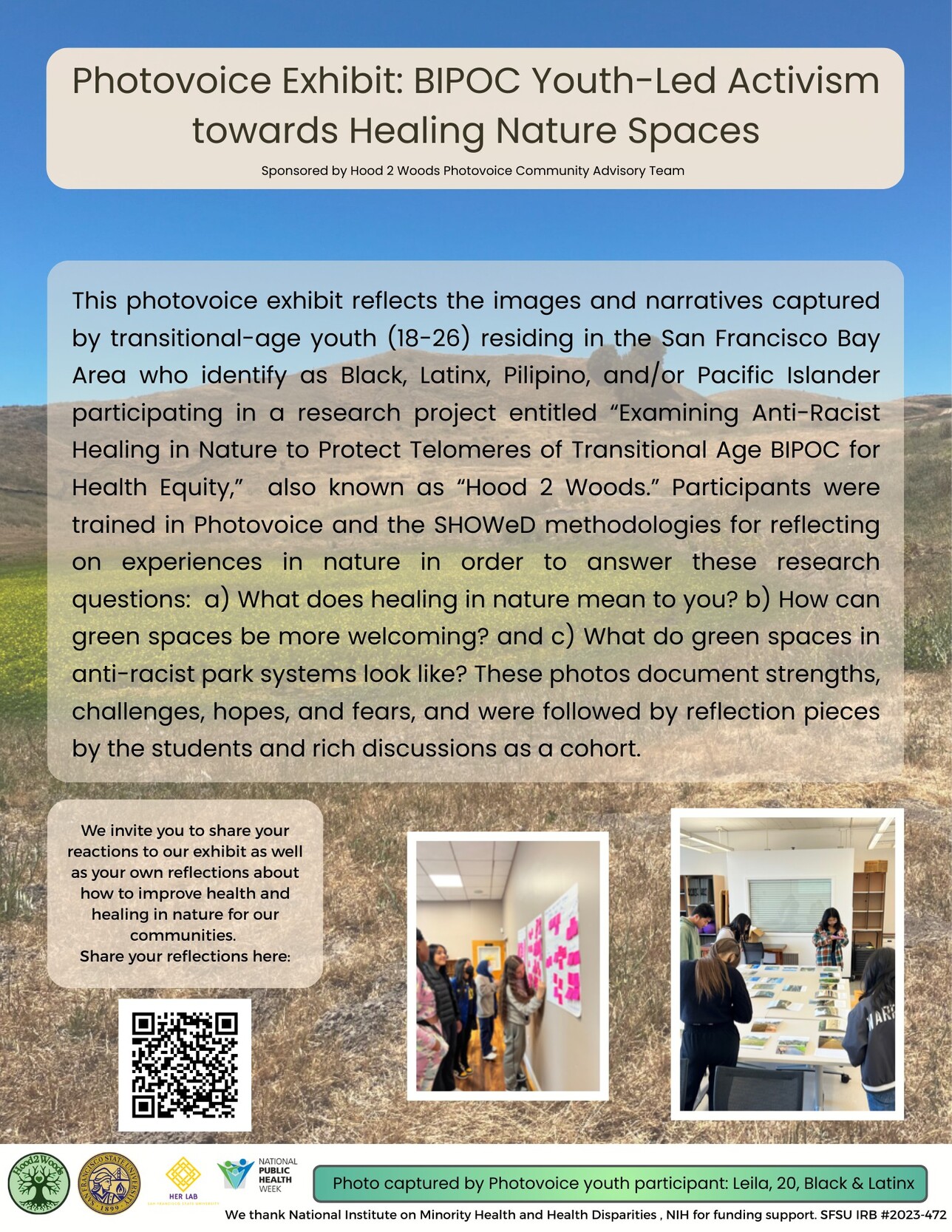
This paper examines the dissemination process of Healing in Nature Study, which used photovoice methodology to investigate how anti-racist green spaces can promote healing among Black, Latinx, and Pilipinx transitional-age youth (TAY) ages 18-26 in the San Francisco Bay Area. The study consisted of two aims. While Aim 1 of the broader Healing in Nature study employed a nature-based intervention to examine biomarkers of stress and psychosocial measures, Aim 2—the focus of this paper—shifted to a community-engaged research (CER) approach centered on documenting participants’ lived experiences in nature spaces, their ancestral and cultural beliefs related to nature, and structural barriers to accessing healing green spaces.
Ford and Airhihenbuwa’s (2010) introduction of Critical Race Theory to the public health community served as a framework for health equity researchers seeking to elucidate racial phenomena while challenging structural racism’s influence on health inequities. Substantial scholarship has emerged applying Ford and Airhihenbuwa’s Public Health Critical Race Praxis (PHCRP) to research practices and analytical frameworks (Boland et al., 2021; Fleming et al., 2023; Major et al., 2025; Petteway & González, 2022). Their approach emphasizes how community engagement and critical self-reflection enrich research processes, and research based on the lived experiences of marginalized communities provides meaningful data for ongoing collective agency. Recent applications have extended this work to various contexts, including youth-focused social determinants of health research that addresses the underrepresentation of communities of color as public health scholars and activists while building critical consciousness among marginalized youth (Petteway & González, 2022), and community-based participatory research that integrates antiracist praxis with community engagement principles (Boland et al., 2021; Fleming et al., 2023) and centers youth perspectives on systemic inequities (Muhammad et al., 2018). Contemporary applications document how youth positioned as co-researchers develop critical consciousness and research capacity (Ferguson et al., 2023; Ozer et al., 2024), with particular attention to ethical practice with vulnerable and marginalized young people (Ratliff et al., 2024).
Despite the intentions of community-engaged research to democratize knowledge production, traditional dissemination practices often perpetuate white, patriarchal norms that maintain existing power hierarchies. Traditional academic scholarship can reproduce scientific racism, where researchers’ “truth” informs policies, policymakers, funders, and decision-makers—often affecting communities not their own (Ford & Airhihenbuwa, 2010). The conventional academic reward system ascribes community-engaged scholarship only a fraction of the value given to traditional research (Charles et al., 2023; Eder et al., 2023; Fleming et al., 2023). White saviorism often drives community-engaged research in the neoliberal university, where researchers from privileged backgrounds position themselves as experts delivering knowledge to marginalized communities rather than facilitating multidirectional knowledge exchange (Charles et al., 2023; Smith, 2012). Furthermore, academic institutions often study communities from a distance, risking telling those closest to the problem what researchers think is best for them, or empowering peripheral decision-makers to implement solutions (Muhammad et al., 2015). Such extractive dissemination approaches reinforce colonial research practices by privileging academic language, peer-reviewed publications, and conference presentations over community-accessible knowledge sharing—serving primarily to advance researchers’ careers while providing limited benefit to the communities whose experiences and expertise generated the findings (Smith, 2012; Wallerstein & Duran, 2006).
This manuscript examines the collaborative dissemination process of the photovoice phase of the Reclaiming Nature Study, which was renamed by the Community Advisory Team “Hood 2 Woods” (H2W), an NIH-funded nature-based intervention study with BIPOC (Black, Indigenous, People of Color) transitional-aged youth. We focus on how decolonial principles and antiracist praxis were operationalized in partnership with study participants to decide how, with whom, and in what ways research results would be shared.

Theoretical Frameworks Guiding Dissemination
Two complementary frameworks guided our research, including the dissemination approach: Public Health Critical Race Praxis (PHCRP) and decolonial research principles. By defining these frameworks in the Background section, we establish the theoretical foundation that informed every dissemination decision documented in subsequent sections.
Public Health Critical Race Praxis (PHCRP)
Ford and Airhihenbuwa’s (2010) PHCRP provides a framework for public health researchers seeking to elucidate racial phenomena while challenging structural racism’s influence on health inequities. Six principles guided our dissemination work: race consciousness, critical approaches, social construction of knowledge, voice, intersectionality, and disciplinary self-critique (see Table 1 for definitions and H2W applications). Ford and Airhihenbuwa emphasize that research grounded in the lived experiences of marginalized communities provides more meaningful data for ongoing collective action. Their framework explicitly connects research processes to action phases where communities use findings to drive change—making dissemination not merely knowledge translation but a component of collective organizing for health equity. We summarize six PHCRP principles that guided our work in Table 1.
Decolonial Research Principles
Decolonial approaches to research recognize that Western research traditions have historically extracted knowledge from Indigenous and marginalized communities while positioning academic researchers as authoritative knowers (Smith, 2012). Three core principles guided our dissemination work (Naidu, 2021; Sims & Naidu, 2024; Thambinathan & Kinsella, 2021). Thambinathan and Kinsella (2021) emphasize that decolonial research requires creating spaces for transformative praxis—where critical awareness translates into changed practices that challenge dominant power structures. Airhihenbuwa et al. (2024), Naidu (2021), and Sims and Naidu (2024) argue that modern academic medicine and public health themselves function as colonial artifacts, making decolonial approaches essential for addressing health inequities rooted in colonial histories. These are summarized in Table 2.
Integration of Frameworks
While PHCRP and decolonial principles emerged from different intellectual traditions, they share fundamental commitments to interrogating power, centering marginalized knowledge, and connecting research to social justice action. We integrated these frameworks by using PHCRP’s six principles as specific lenses for examining dissemination decisions while using decolonial principles as an overarching orientation toward dismantling colonial research structures. For example, our decision to include photo credit rather than anonymize participants drew on PHCRP’s critical approaches principle (questioning taken-for-granted norms) and voice principle (recognizing participants as authoritative knowers) while also enacting decolonial action (disrupting extractive practices that invisibilize community contributions).
The following sections document how these theoretical frameworks translated into concrete dissemination practices through four months of collaborative planning and event implementation.
The “Hood 2 Woods” Project Context
The Healing in Nature study is a mixed-method, multi-phase research project investigating the benefits of nature walks for reducing stress among communities of color. The study explored healing effects of a nature-based intervention for TAY (ages 18-26) who identify as Black, Latinx, Pilipinx, or Pacific Islander and live in the San Francisco Bay Area. The research examined how nature-based walks impact participants’ sleep, physical activity, and perceptions of racial discrimination while also documenting participants’ ancestral and cultural beliefs related to nature. The study’s findings aim to guide the creation of culturally-inclusive, anti-racist green spaces that help prevent the onset of chronic disease and address health disparities.
Photovoice served as a primary community-engaged research methodology, which allows participants to document their experiences from a first-person perspective (Wang & Burris, 1997). Recent scholarship emphasizes photovoice’s capacity as a decolonial methodology, particularly when implemented with Indigenous communities (Vining et al., 2024), migrant and refugee populations (Cubero et al., 2025), and as a framework for anticolonial practice (Fricas, 2022). This work was approved by San Francisco State University’s IRB #2023-472-OTH.
Photovoice Implementation
A participatory photovoice process was used to investigate the intersection of visual images, narrative, and healthy activities in nature among TAY who completed the six-month nature-based intervention in phase one. This qualitative photovoice process aimed to collect data addressing structural-level changes needed to increase nature access for BIPOC TAY, guided by three research questions: (1) What do anti-racist green spaces look like? (2) What does healing in nature mean to you? (3) How do community green spaces make BIPOC TAY feel welcomed or unwelcomed? Two data collection methods were employed: (1) photovoice with corresponding narratives using the SHOWeD method (Wang & Burris, 1997); and (2) focus groups using a facilitator’s discussion guide, where participants shared, discussed, and reflected on how images and narratives addressed the research questions.
Participants attending photovoice orientation meetings received training to use cellphones to photograph what anti-racist green spaces look like, what healing in nature means, and how community green spaces make BIPOC TAY feel welcomed or unwelcomed. Participants submitted up to three photos with corresponding narratives through a Qualtrics survey app, chosen for its familiarity from phase one and security features including Transport Layer Security (TLS) encryption and SSAE-18 audited data centers. Each photo and narrative was linked to an anonymous ID to maintain confidentiality. Participants completed submissions 2-4 weeks after orientation, then participated in group discussions (3-8 participants) co-facilitated by a community researcher from the Community Advisory Team, and an academic faculty researcher. All discussions were audio recorded.
Community Advisory Team (CAT)
The Community Advisory Team (CAT) embodied core participatory research principles by sharing power and decision-making authority across all research aspects, from design to dissemination (Israel et al., 2005). Consistent with equitable partnership, CAT members were transitional-aged BIPOC youth (Filipina/x/o, Black, Latina/x/o, and Pacifica/x/o identities) reflecting the lived experiences, ensuring research is grounded in community knowledge rather than extractive academic frameworks. CAT members serve as co-researchers and peer facilitators, not merely advisors, leading Photovoice training and data collection with participants. This peer-to-peer model recognizes CAT members’ expertise in their own communities and builds research capacity within BIPOC youth networks (Ozer & Douglas, 2013). The deliberate recruitment of CAT members whose identities mirror research participants intended to promote the participatory principle of cultural humility and insider knowledge. This shared positionality creates authentic peer relationships that foster trust, reduce power imbalances inherent in traditional researcher-participant dynamics, and ensure research processes honor the cultural contexts and lived realities of BIPOC transitional-aged youth.
Curandera as Knowledge Authority
Operationalizing decolonial research principles required repositioning community knowledge holders as primary authorities rather than cultural consultants. A Curandera with expertise in ancestral healing practices and Indigenous medicine traditions participated as a co-leader throughout the photovoice research process. Unlike models that position Indigenous healers in advisory roles, her participation structured her as a knowledge authority whose pedagogical expertise shaped how participants understood healing, nature, and the intersection of ancestral wisdom with contemporary health challenges. She facilitated curandera-led sessions where participants engaged with ancestral healing practices connected to their own cultural backgrounds (Filipino ancestral medicine, African traditional healing, Latinx curanderismo); plant medicine and botanical knowledge; land-based ceremony grounded in Indigenous epistemologies; and the role of cultural healing traditions in addressing trauma, displacement, and systemic oppression. This approach positioned traditional healing as legitimate knowledge that fundamentally informed research design, not supplementary content added for cultural relevance.
DISSEMINATION PROCESS AND IMPLEMENTATION
Collaborative Planning
The Community Advisory Team (CAT) met weekly over four months to collaboratively plan all aspects of the dissemination, embodying PHCRP principles of disciplinary self-critique and voice, and the decolonial principles of deliberation and action. Rather than conventional academic hierarchies, the CAT deliberately redistributed power through rotated facilitation responsibilities (all CAT members including high school students, undergraduates, graduate students, and community researchers facilitated meetings), consensus-building processes, and critical deliberation prioritizing collective agreement. The CAT held final decision-making authority over event timing, venue, audience, program structure, promotional strategies, spatial design, and audio QR implementation. The decision to hold the event at SFSU emerged from CAT identification of peer BIPOC students as a priority audience. Spatial design choices—including cultural textiles and windows overlooking nature—reflected CAT members’ intentional design rather than faculty suggestions. CAT members exercised real-time decision-making authority to extend audience dialogue when contributions were rich, demonstrating power beyond planning stages.
Framework Education and Operationalization of Theoretical Principles
Early in the four-month planning period, the research team engaged CAT members in collaborative learning about PHCRP and decolonial frameworks rather than presenting them as predetermined scholarly concepts. During the first two planning meetings, faculty facilitators introduced PHCRP’s six principles (Ford & Airhihenbuwa, 2010) and decolonial action principles (Naidu, 2021; Thambinathan & Kinsella, 2021) through concrete examples from the H2W photovoice project itself. Rather than assigning readings, the team discussed how these frameworks already operated implicitly in participants’ experiences—for instance, how the CAT’s decision to request photo credit instead of anonymity reflected critical approaches and voice principles before those principles were formally named.
CAT members brought their own theoretical knowledge and cultural expertise to framework discussion. For example, one CAT member contextualized decolonial awareness within her lived experience as a Filipina youth, explaining how academic spaces reproduce colonial structures that exclude BIPOC knowledge systems. Another CAT member connected PHCRP’s intersectionality principle to her own experiences navigating multiple marginalized identities. Rather than accepting frameworks as external expertise, CAT members interrogated them: “Does this framework actually reflect what we want to do?” This critical questioning shaped how the team ultimately operationalized principles. For instance, when discussing land acknowledgment practices, CAT members rejected performing a rote acknowledgment statement, instead collectively developing the four-directions practice as embodied, participatory engagement with Indigenous presence and colonial histories.
Importantly, CAT members’ theoretical contributions were not secondary to faculty expertise—they fundamentally shaped which practices the team prioritized and how principles were enacted. When a CAT member suggested that photo attribution might be more powerful than anonymity, she was not implementing faculty guidance but rather articulating her own theoretical commitment to recognizing BIPOC knowledge producers. The team then collectively deliberated about this practice through both PHCRP and decolonial lenses, with CAT members’ lived expertise carrying equal weight as faculty theoretical knowledge.
Principle-Based Practices and Their Implementation
The CAT developed seven principle-based practices that operationalized PHCRP and decolonial frameworks in concrete dissemination activities. For each practice, we describe what was implemented, why (which theoretical principles guided this), and how it was executed.
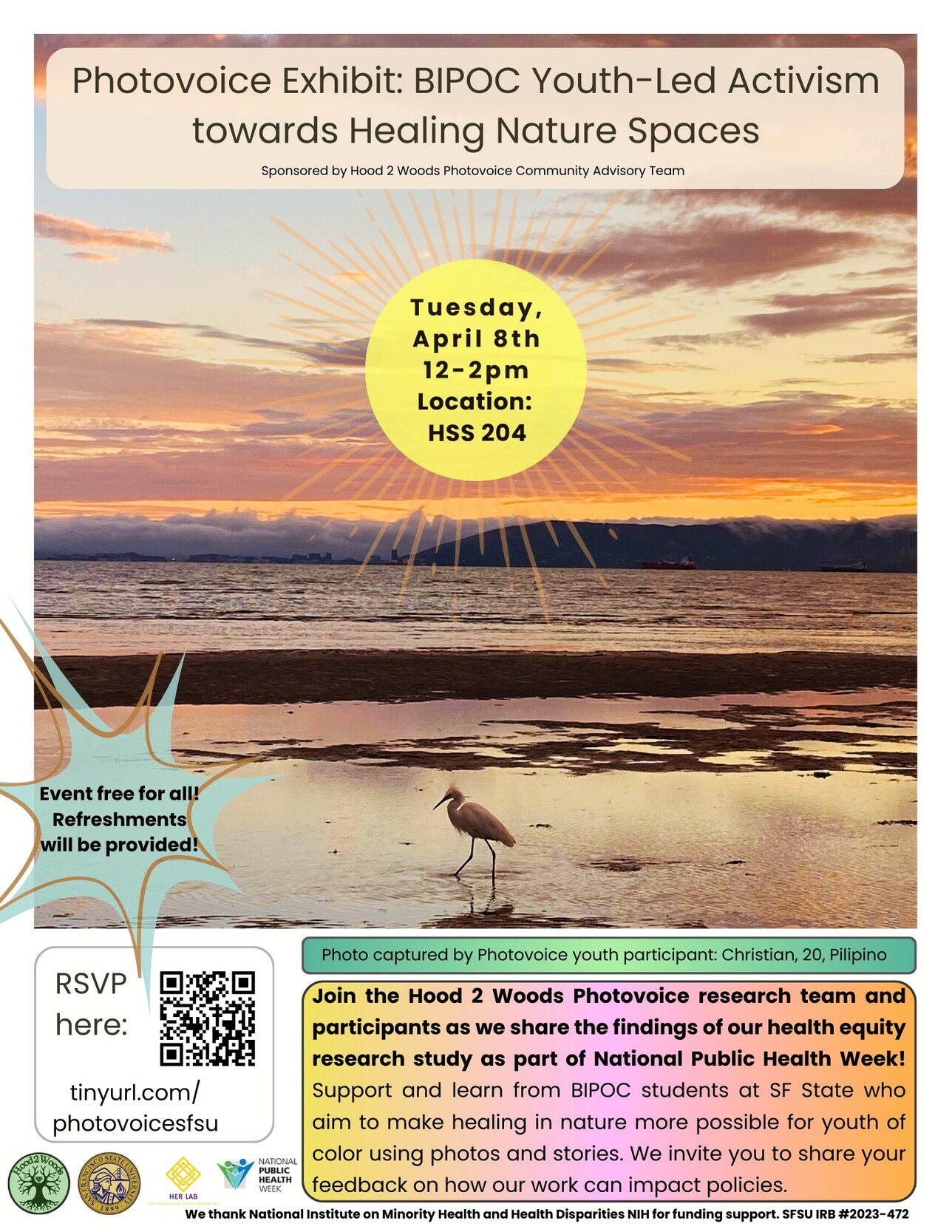
Practice 1: Accessible Venue and Community-Centered Location
What: Held the inaugural dissemination event at San Francisco State University (SFSU) campus during National Public Health Week in April 2025, in a centrally-located building accessible by public transit.
Why: Traditional research dissemination through academic journals, conferences, and presentations to other researchers excludes study participants and their communities due to access barriers (Fletcher et al., 2021). The PHCRP principle of social construction of knowledge emphasizes that communities must participate in knowledge production and circulation, not just serve as data sources. The decolonial principle of action requires actively disrupting exclusionary practices through concrete alternatives. The CAT determined that accessible venue selection was essential to operationalizing these principles.
How: The CAT selected SFSU for several strategic reasons. First, SFSU students are the peers and academic community of photovoice participants, who identified “other BIPOC TAY” as a priority audience during feedback sessions. Second, SFSU is a designated minority-serving institution with 70% BIPOC students and 32% first-generation undergraduates (San Francisco State University, 2025), meaning the venue positioned dissemination within rather than outside participants’ community. Third, the campus location enabled participants to invite classmates who could attend between classes, and the timing during National Public Health Week created educational opportunities for public health students.
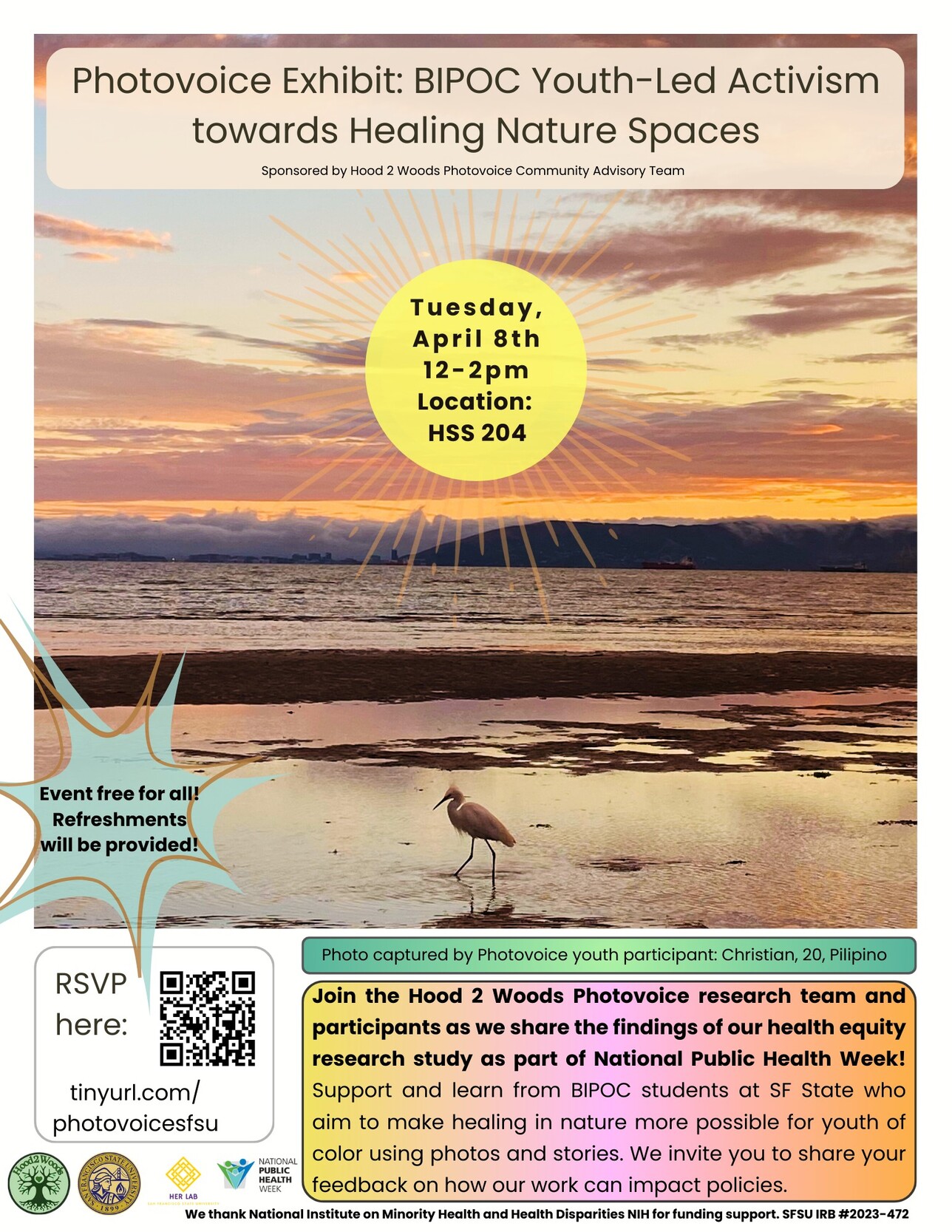
The event room was centrally located and proximate to public transit, facilitating access for students and community members. Promotion used platforms students commonly use (Instagram) and reached campus organizations including the health and wellness center. Printed flyers posted across campus included QR codes linking to an RSVP form that tracked attendance, gathered information about attendee status (student, staff, faculty, community member), and accommodated dietary restrictions. These accessibility measures were consistent with Chen et al.'s (2010) framework for community-accessible dissemination venues.
Community partners–Save the Redwoods League, Kapwa Cultural Center, Instituto Familiar de la Raza, Roadmap to Peace, and Hummingbird Farms–were invited to the event and asked to promote the event among the communities they serve. All partners provide targeted programs for BIPOC communities focusing on nature preservation or health and healing while incorporating Indigenous practices. Aligning with the decolonial principle of action and PHCRP’s action phase, a local city district supervisor was invited to attend, as participants identified during data analysis that policymakers should partner with the H2W project to effect policy changes. While the supervisor was unable to attend, the CAT remains committed to engaging local policymakers in future dissemination efforts.

Practice 2: Photo Attribution to Recognize Knowledge Producers
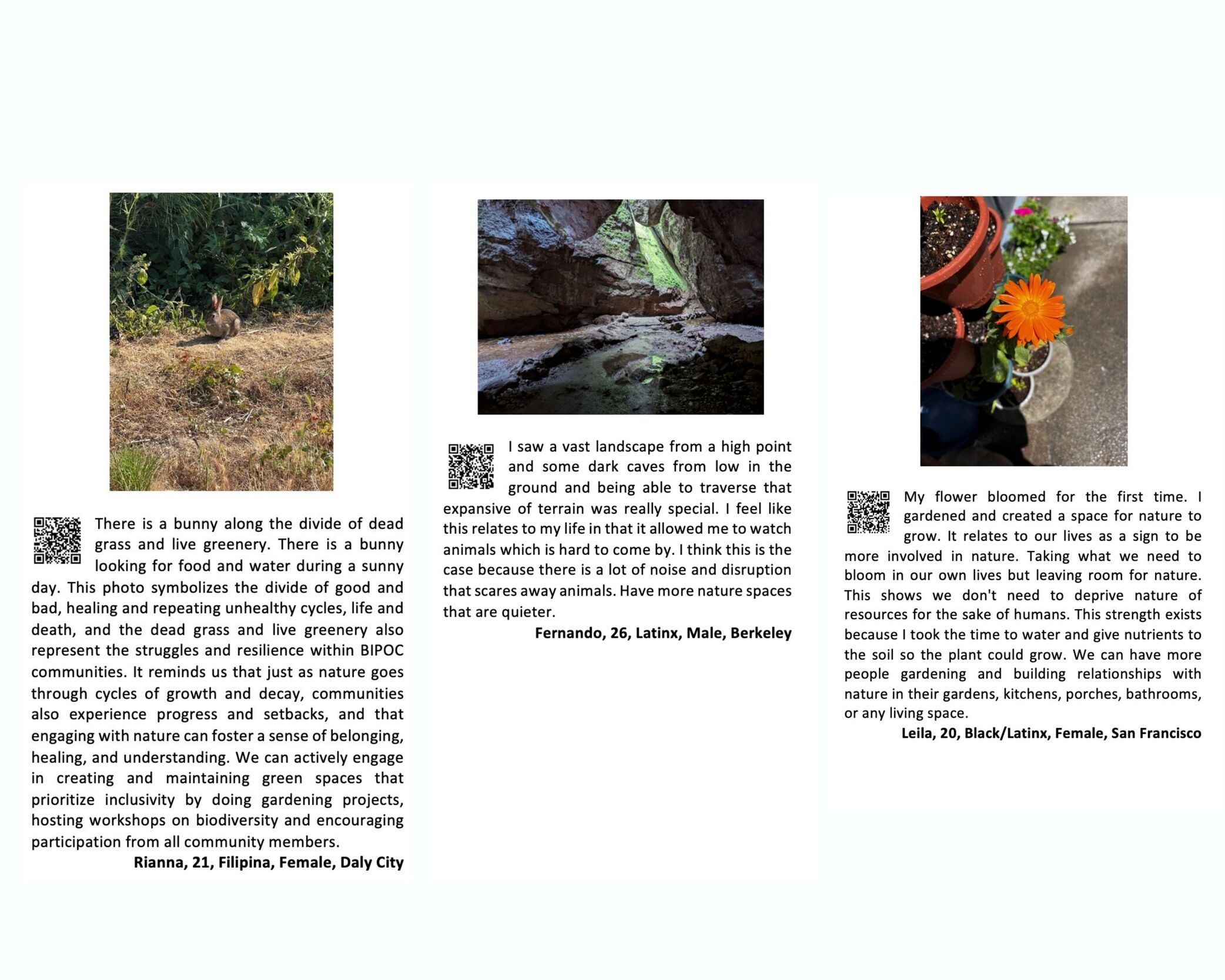
What: Included participants’ first names, ages, ethnicities, genders, and image locations with their photovoice images (with explicit consent), a practice established in decolonial feminist and participatory arts research into public health dissemination, rather than anonymizing all participants (Cornell et al., 2019; Fricas, 2022).
Why: The PHCRP principles of critical approaches and voice guided this practice. Traditional anonymity practices, while intended to protect confidentiality, can inadvertently invisibilize individuals and communities historically excluded from research authorship (Fricas, 2022). The critical approaches principle prompted the CAT to question this taken-for-granted norm: does anonymity protect participants or does it protect institutions by erasing participants’ intellectual contributions? The voice principle emphasizes recognizing participants as authoritative knowledge producers whose perspectives warrant attribution equivalent to academic researchers.
The decolonial principle of action required disrupting extractive practices where researchers gain professional credit through publications while community members whose experiences generated the findings remain unnamed and unrecognized. The CAT determined that photo attribution represented an opportunity to position participants as legitimate knowledge creators rather than anonymous data sources.
How: The CAT engaged in extensive deliberation about this practice, recognizing that not all participants might want attribution and that context matters. The team’s unique position—all CAT members had participated in the photovoice project themselves, most were SFSU students, and they understood the dissemination community—positioned them to critically examine the implications of photo attribution for this specific context.
The CAT developed a consent process where participants explicitly chose whether to include identifying information. Each displayed photograph included the participant’s first name, age, ethnicity, gender, and the location where the photo was taken (e.g., “Maria, 22, Latina, Female, Golden Gate Park”). This re-identifying information allowed attendees to more deeply relate with their BIPOC peers or learn about experiences different from their own. The practice represented what Ford and Airhihenbuwa (2010) describe as a critical approach to existing research practices—interrogating whose interests are served by conventional norms.

Practice 3: Preserving Authentic Voice Through Audio QR Codes
WHAT: Provided audio recordings of participants reading their own photovoice narratives, accessible via QR codes accompanying each photograph, rather than displaying only written text.
WHY: The PHCRP principle of voice, literally interpreted, guided this creative practice. Traditional research dissemination filters community voices through researcher interpretation and written academic language. Audio recordings preserve participants’ authentic voices—their tone, emotion, emphasis, and linguistic choices—creating direct engagement between participants and audiences without researcher mediation. This approach operationalizes voice as more than metaphorical inclusion of community perspectives; it centers participants’ actual voices as the primary vehicle for knowledge transmission.
HOW: Each participant was recorded as they read their photovoice narrative. These audio files were uploaded to a secure platform and linked to unique QR codes. The QR codes were printed and mounted alongside each photograph and written narrative. Attendees could scan the code with their smartphones to hear the participant’s voice describing what they photographed, what it meant to them, and why they chose to share it.
This audio component allowed viewers to engage with the photovoice gallery at their own pace while experiencing the unique voice behind each lens. Attendees reported that hearing participants’ actual voices made the experience more personal and impactful than reading text alone. The audio format also improved accessibility for attendees who preferred auditory over visual information processing.
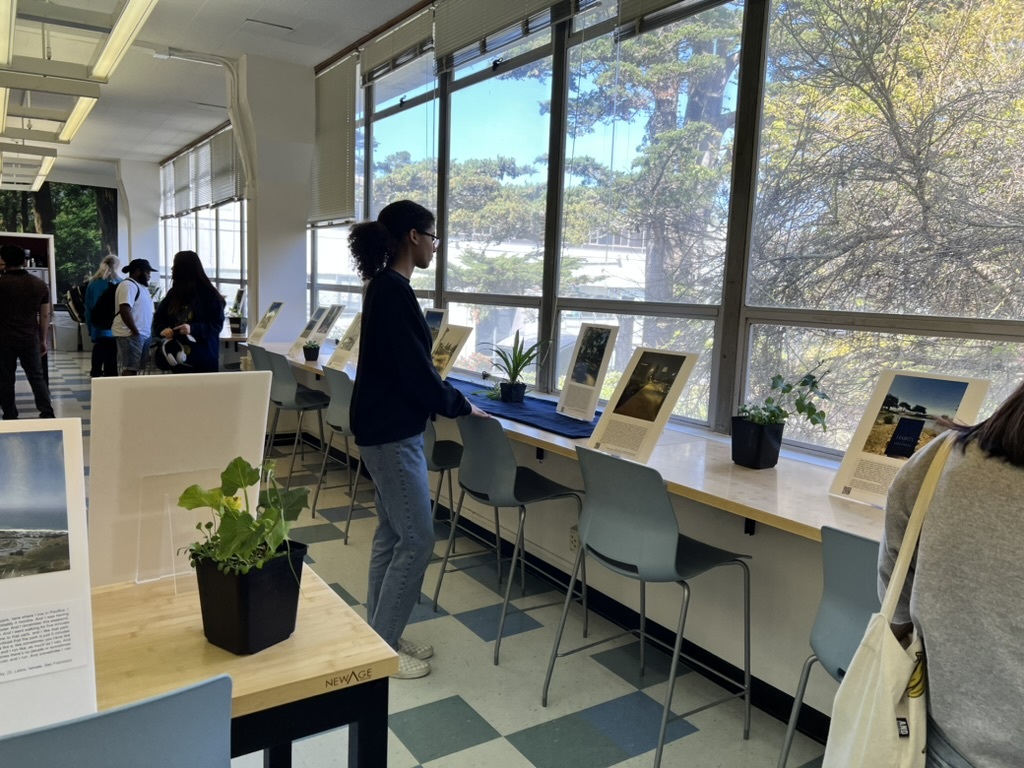
Practice 4: Spatial Design and Cultural Grounding
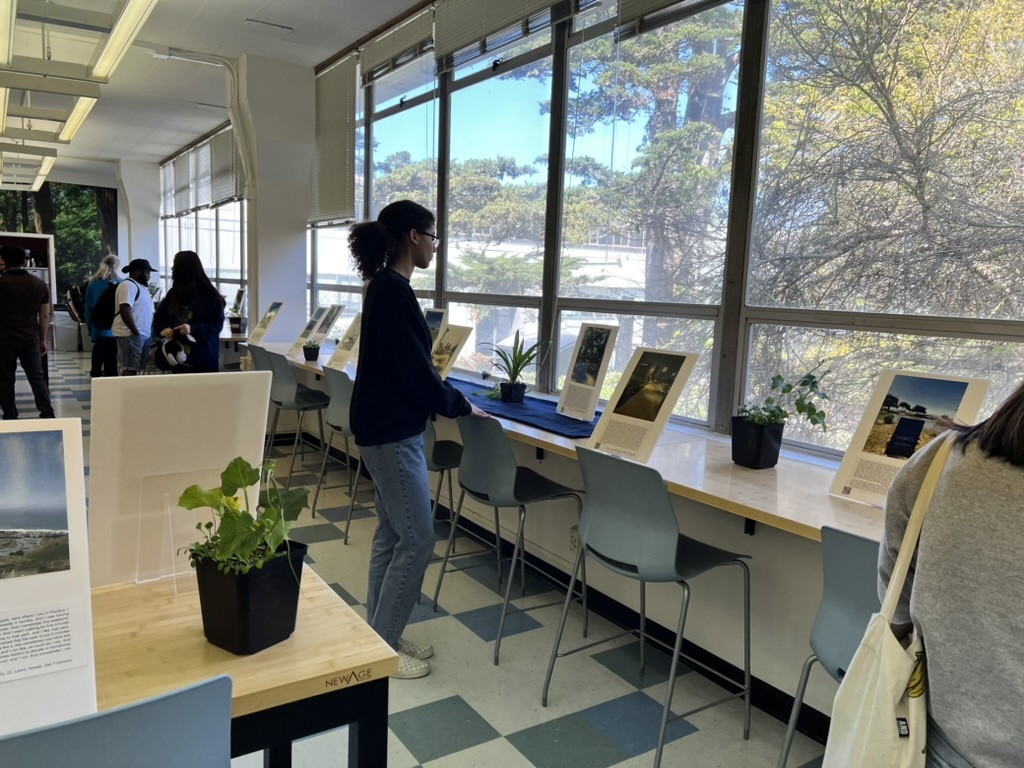
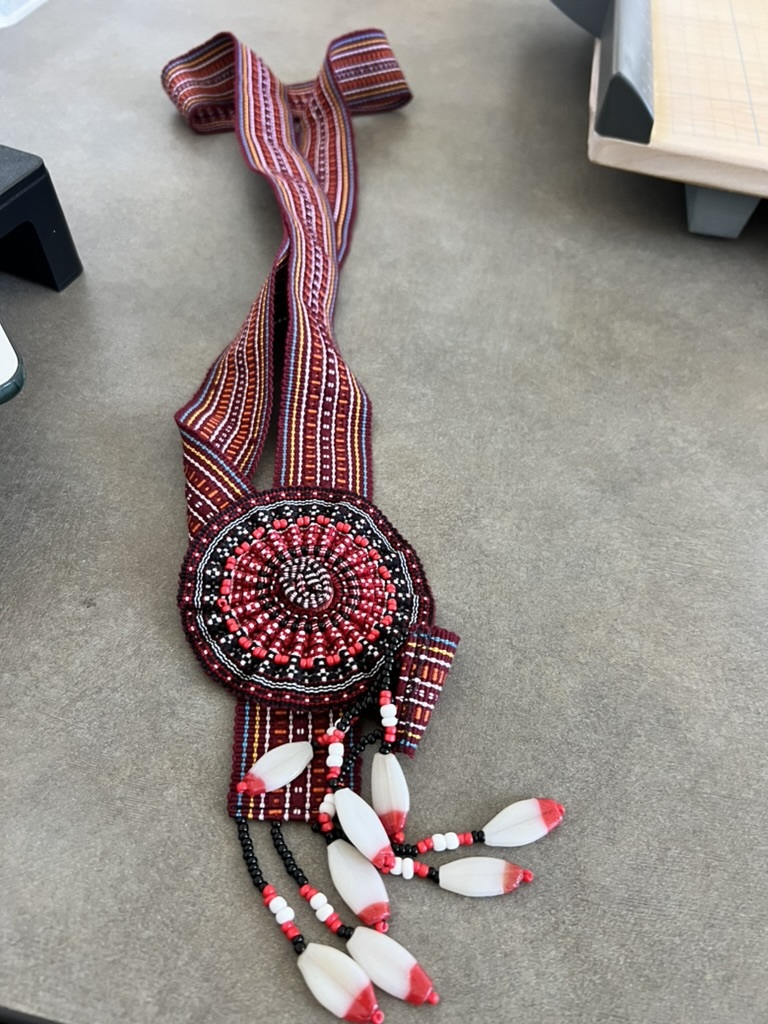
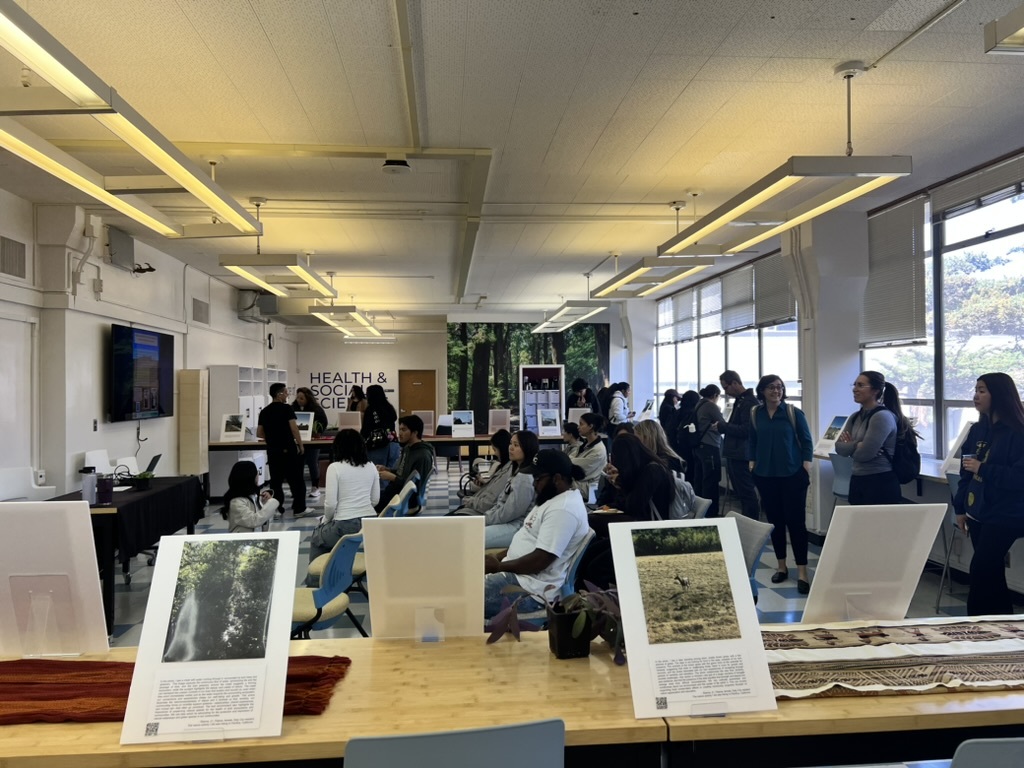
What: Displayed photovoice images on traditional cultural textiles (malong from the Philippines and manteles from Latin America), situated live plants throughout the gallery, and selected space with large windows overlooking nature (trees and open sky).
Why: The decolonial principle of awareness—recognizing colonial structures in academic spaces—informed this practice. Traditional academic presentations use sterile spaces that strip cultural context from community knowledge. The CAT determined that culturally grounded spatial design was essential to embodying decolonial design principles that attend to environment, experience, and radical interdependence (Escobar, 2018). The spatial design aimed to connect the photovoice exhibit’s focus on healing in nature with cultural heritage and create an environment conducive to both individual reflection and collective conversation. The PHCRP principle of race consciousness guided the practice of visually representing BIPOC cultural traditions through textiles rather than using generic display materials.
How: CAT members collected traditional textiles from their own cultural backgrounds: malong (colorful woven textiles from the Philippines traditionally used for clothing, blankets, and ceremonial purposes) and manteles (embroidered tablecloths from Mexico and Peru used in family gatherings and celebrations). Photovoice images were mounted on these textiles for display, creating visual connections between the photographs of nature spaces and the cultural traditions of the participants who created them. Live plants were situated between displayed photographs throughout the gallery space. The CAT deliberately selected a room with large windows that overlooked a courtyard featuring Monterey Cypress trees and open sky, reinforcing the project’s focus on nature as a healing resource for BIPOC communities. The room also included painted images of redwood trees and mountain landscapes on the walls. This spatial design created an environment where attendees experienced nature (through windows and plants) while engaging with participants’ documentation of their nature experiences.

Practice 5: Land Reflection Beyond Acknowledgment
What: Opened the program with a land reflection using Indigenous four-directions practice that invited active audience participation.
Why: While land acknowledgments have become common in academic institutions, they can be perceived as performative—rhetorical gestures divorced from material accountability (Ambo & Rocha Beardall, 2023). The decolonial principle of action requires moving beyond performative recognition toward practices that invite genuine reflection and connection to land and Indigenous histories. The PHCRP principle of critical approaches prompted the CAT to question whether conventional acknowledgment statements serve meaningful purposes or function primarily to make non-Indigenous people feel they have addressed colonialism.
How: A CAT member opened the program by first acknowledging that SFSU is located on the unceded ancestral homeland of the Ramaytush Ohlone, the original inhabitants of the San Francisco Peninsula (Association of Ramaytush Ohlone, n.d.). Rather than ending with this statement, the facilitator then invited the audience to participate in a four-directions practice.
The four cardinal directions are sacred among Native communities across the Americas and are honored in various ways (Greer & Lemacks, 2024). The CAT had established this four-direction practice at every photovoice cohort meeting and integrated it into the dissemination event to ground attendees to the land. Attendees were invited to physically stand and face each cardinal direction (East, South, West, North) while the facilitator offered brief reflections on themes of nature, connection, and healing associated with each direction. This embodied practice invited personal reflection on attendees’ own relationships to land, nature, and the colonial histories shaping access to green spaces. By creating an opportunity for active participation rather than passive listening, the land reflection moved beyond institutional recognition statements toward individual and collective engagement with place and Indigenous presence.
Practice 6: Food as Cultural Practice and Student Support
What: Provided food and refreshments for all attendees as an integral part of the event, not merely as an attendance incentive.
Why: The decolonial principle of awareness—recognizing that Western academic norms often devalue cultural practices central to BIPOC communities—guided this practice. For many cultures of color, food is central to community gatherings and represents practices of sharing, caring, and social cohesion (McKinley & Walters Choctaw Nation of Oklahoma, 2023). Food provision embodied decolonial practice by honoring cultural traditions rather than treating meals as extraneous to “serious” intellectual work.
How: The RSVP form collected information about dietary restrictions and preferences to ensure inclusive food options. The CAT selected foods reflecting the cultural diversity of participants and attendees. Food was available throughout the two-hour event, enabling attendees to eat while viewing the gallery and during the program. This created informal opportunities for attendees to connect with each other, with CAT members, and with photovoice participants in ways that formal presentations do not facilitate. The timing and format of food provision recognized students’ schedules: attendees could grab food and view the gallery even if unable to stay for the full 55-minute program, reducing barriers for students with limited time between classes.
Practice 7: Program Structure Centering Participants
What: Structured dissemination program to center photovoice participants through positionality statements, participant panels, and audience dialogue, with academic researchers providing context rather than interpretation.
Why: Traditional research dissemination centers academic researchers as primary experts who interpret community experiences for audiences. The PHCRP principles of voice and social construction of knowledge required inverting this hierarchy by positioning participants as primary knowledge producers and audiences as co-constructors of knowledge. The decolonial principle of action demanded structures that redistribute epistemic authority rather than merely including participant voices within researcher-controlled presentations.
The program included five components designed to operationalize these principles:
-
Positionality statements by CAT members (faculty, students, community researchers) situated team identities and explicitly acknowledged power, privilege, and social location. This operationalized the PHCRP principles of race consciousness and intersectionality by naming positions (faculty/student/community member) and identities (race, gender, age, immigrant status) rather than presenting the team as neutral or objective. The statements made visible that the photovoice project—focused on BIPOC experiences, analyzed by a BIPOC team, presented to a majority-BIPOC audience—represented intentional centering of BIPOC knowledge production.
-
An overview of the H2W study, photovoice methodology, and how decolonial and antiracist frameworks were operationalized throughout the research process provided necessary context. This overview was deliberately brief (approximately 10 minutes) to reserve most program time for participant voices. Preliminary findings from the photovoice data analysis were shared, including themes about what anti-racist green spaces look like, what healing in nature means to BIPOC TAY, and structural barriers to accessing nature for wellness.

-
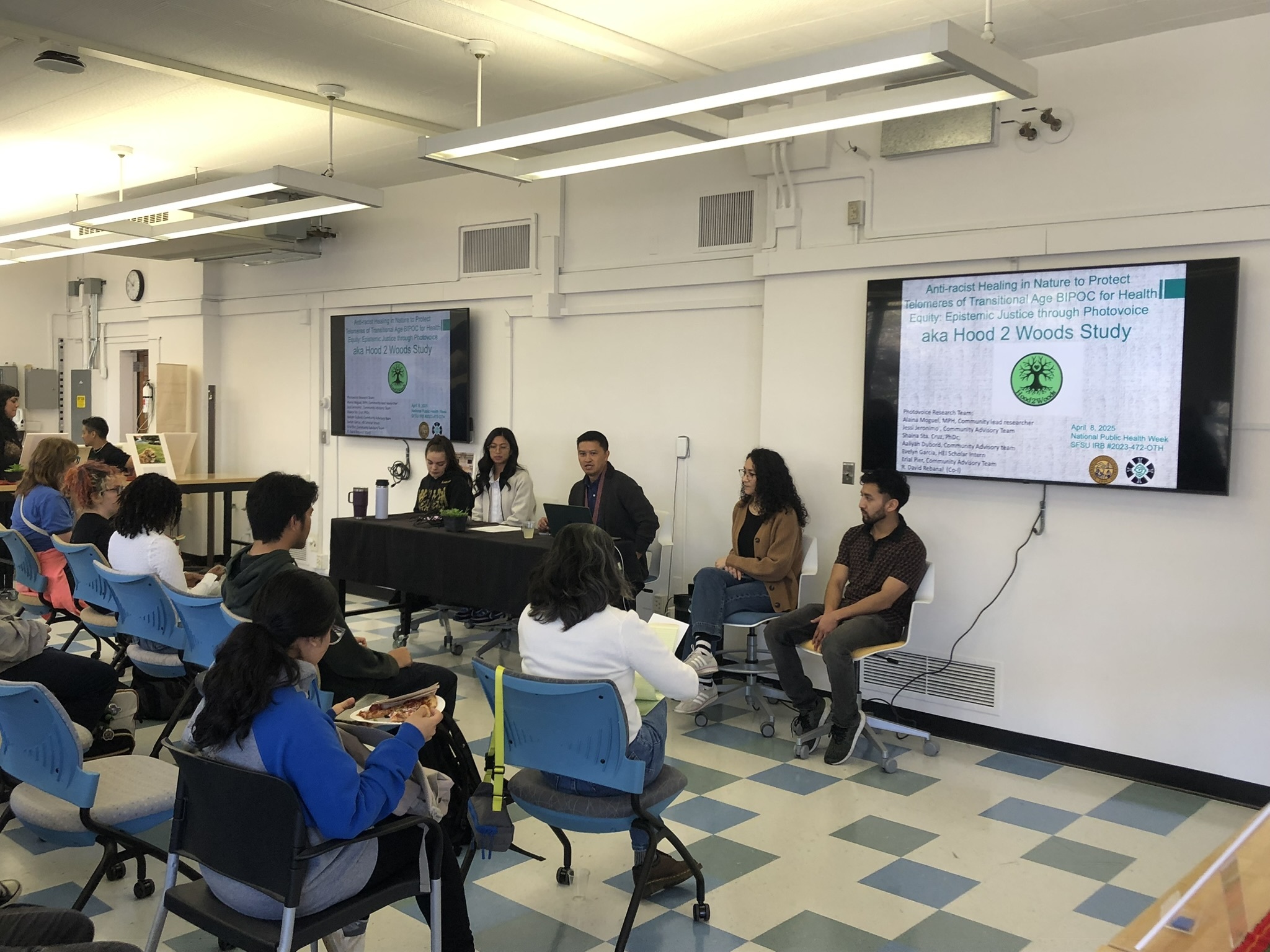
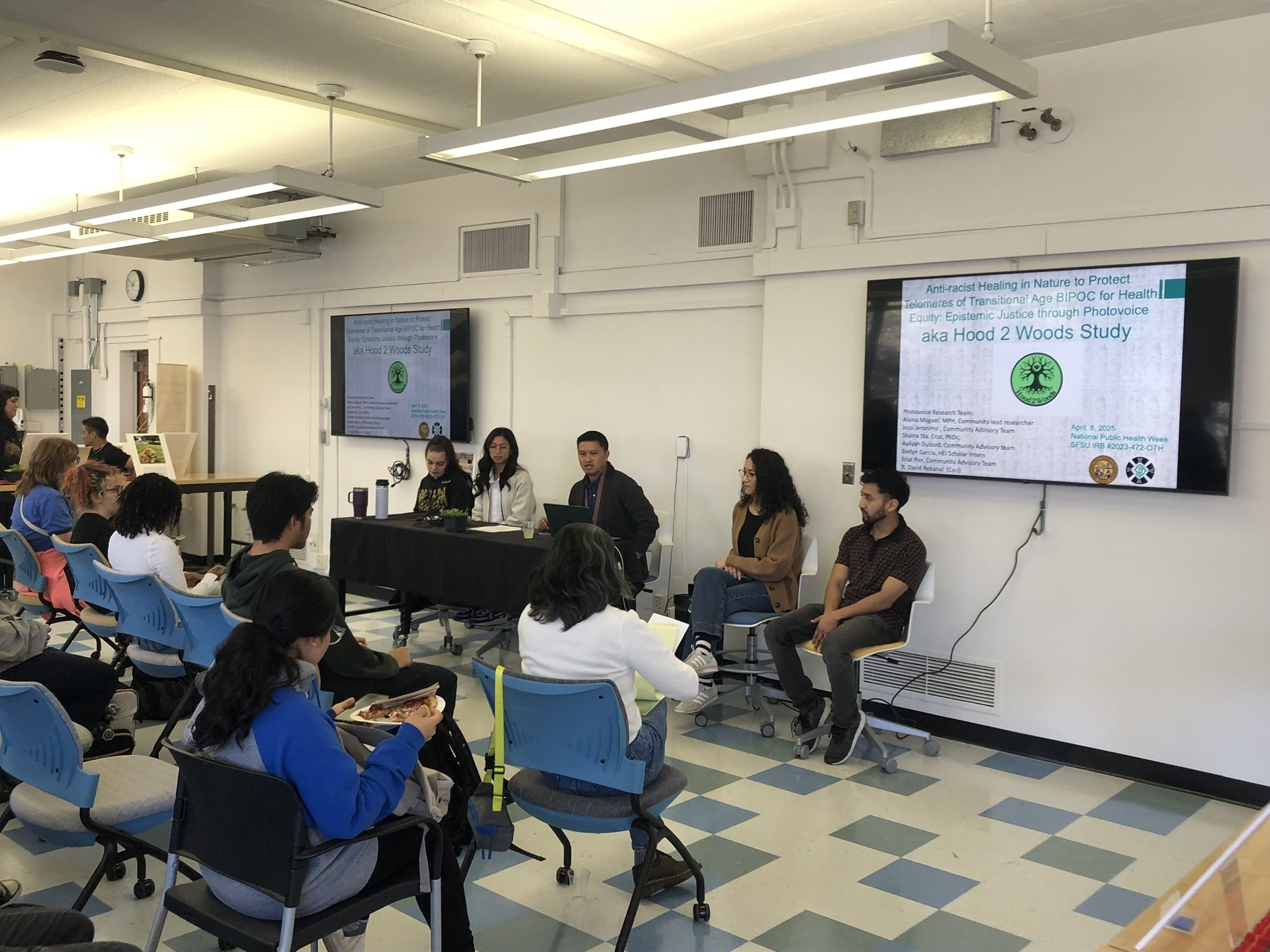
A participant panel moderated by a CAT member who had participated in all cohorts’ data analysis centered photovoice participants as primary experts. Panel participants shared reflections on their experiences engaging in community-engaged research, opportunities for healing and connecting with ancestral traditions through the project, and development of critical consciousness about nature’s role in their personal lives and communities. Participants provided insights about which audiences should learn about the project—ranging from medical providers to wellness centers at public schools to park administrators—positioning themselves as strategists rather than passive subjects of researcher-determined dissemination plans.
-
Audience participation and dialogue invited attendees to share reflections on the photovoice project and respond to the same research questions posed to participants: What does healing in nature mean to you? What do anti-racist green spaces look like? How do green spaces make you feel welcomed or unwelcomed? This structure operationalized the PHCRP principle of social construction of knowledge by engaging audiences as active knowledge co-constructors rather than passive recipients. Attendees contributed their own experiences and insights, which the CAT documented for consideration in future dissemination efforts. Some attendees shared that nature plays a central role in their healing and health practices, while others reflected that they had never previously considered connections between nature access, racism, and health.
-
Attendees were invited to share thoughts about who else should hear about the project and to offer recommendations for policy changes and future dissemination efforts. Large posters at entrance doors displayed information about the H2W project and invited attendees to share feedback via QR codes linking to a Qualtrics survey. This multi-layered engagement strategy—combining QR code individual feedback, in-person community dialogue, and participant panel insights—created an iterative dissemination process where community input directly shapes future efforts.

Event Implementation: CAT Members’ Roles During the Dissemination Event
The dissemination event was held in April 2025 during National Public Health Week, with approximately 70 people in attendance, including SFSU students, staff, and faculty, as well as community members from partner organizations. The two-hour event (12:00 PM - 2:00 PM) was structured to accommodate different levels of engagement: attendees could view the gallery at their own pace, enjoy food, and engage informally with others, with a 55-minute formal program in the middle.
CAT members held primary leadership roles throughout the event. A CAT member opened the program with the four-directions land reflection, setting the tone for audience engagement and centering Indigenous presence. Another CAT member moderated the participant panel, introducing panelists and facilitating dialogue. Panelists offered deeply personal reflections about how the photovoice project affected their relationship with nature, understanding of racism and health, and sense of themselves as knowledge producers. The authenticity and vulnerability displayed created powerful moments of connection. CAT members facilitated the audience dialogue segment, helping attendees process research questions and encouraging connection with participants and each other. Throughout the event, CAT members circulated the photovoice gallery, engaging attendees in conversations about images, providing technical support for audio QR codes, and facilitating connections between attendees and participant-created work.
Multiple audience members approached CAT members and participants after the formal program to continue conversations, request information about future research involvement, and share their own nature and healing stories. Community partners attended and engaged actively in the dialogue portion, with several partners extending invitations for the CAT to present at their organizations.
Funding Crisis as Critical Moment
One month before the inaugural event, the research team learned that funding for the project would be terminated. This unexpected loss occurred after the CAT had invested four months of collaborative planning and preparation. The timing created a critical choice point: abandon the event, or continue without compensation for the labor required to execute it.
CAT members and photovoice participants collectively decided to proceed with the event despite the funding loss. Rather than viewing their participation as contingent on payment, team members contributed unpaid labor during the final month—finalizing logistics, confirming attendance, preparing materials, coordinating with partners, and executing the event. This response revealed the depth of relationships built through sustained collaboration over the project’s duration.
One CAT member articulated the team’s commitment: “as a student, the opportunity to take part in a research project grounded in decolonial and anti-racist principles was empowering… Even when funding challenges arose, our team’s commitment to the community and to each other kept us moving forward.” This reflection captures how the research held personal and community meaning beyond transactional compensation. For BIPOC youth who had experienced being centered as knowledge producers, who had developed skills and relationships through the work, and who recognized the value of sharing findings with their communities, the project represented more than paid employment.
Critical self-reflection and Cultural Humility
After the dissemination event, the CAT met to debrief and engage in critical self-reflection, discussing strengths and opportunities for future dissemination events. The team incorporated a cultural humility approach into collaborative planning and implementation (Tervalon & Murray-García, 1998). While decolonial and PHCRP principles guided dissemination efforts, cultural humility reminds us to remain open to possibilities that we may have missed opportunities to adapt and apply principles to future collaborations.
The CAT discussed several strengths: the accessible venue successfully reached the intended BIPOC TAY peer audience; photo attribution and audio QR codes effectively centered participant voice and authority; the participant panel created powerful moments of connection. Areas for future improvement included: developing more robust strategies for engaging policymakers and decision-makers who can rarely attend campus events; and exploring additional creative formats (video, art installations, storytelling performances) that might reach different audiences. Importantly, the team recognized that this campus-based event represented the first in a planned series of dissemination events with other community partners. Insights and feedback collected will inform and improve future dissemination efforts designed for different audiences and contexts. The iterative nature of participatory dissemination means that each event shares both findings and generates knowledge about effective community-engaged knowledge translation practices.
DISCUSSION
The Hood 2 Woods dissemination event addresses a critical gap in participatory research literature. While substantial scholarship has applied PHCRP and decolonial frameworks to research design, data collection, and analysis, significantly less attention has operationalized these frameworks during knowledge translation and dissemination—particularly with BIPOC transitional-aged youth populations. This work contributes to the small but growing body of work of PHCRP application (Fleming et al., 2023; Petteway & González, 2022) at the dissemination stage by documenting how theoretical principles translate into dissemination practices through systematic integration at every decision point. The preceding section’s detailed documentation of principle-based decision-making—from photo attribution to spatial design to program structure—provides replicable examples for community-engaged researchers seeking to move beyond performative participation toward authentic power redistribution in dissemination processes.
By making explicit the connection between each choice and its theoretical grounding, this work demonstrates that operationalizing equity frameworks requires intentional decision-making at levels often treated as merely logistical. Venue selection, photo attribution, audio format, spatial design, food provision, and program structure are not neutral technical choices but political decisions that either reproduce or disrupt existing power hierarchies. The systematic documentation of our decision-making process—including the deliberation within an all-BIPOC CAT and the rotation of facilitation responsibilities—offers a model for how participatory dissemination can function as both knowledge translation and power redistribution.
Authentic Partnership and the Limits of Transactional Research Relationships
The unexpected funding termination one month before our event revealed fundamental tensions between authentic partnership and institutional research structures. CAT members’ and participants’ willingness to contribute unpaid labor to ensure the event’s success demonstrated that relationships built through sustained collaboration can transcend transactional compensation. While the CAT member who, as a student, reflects on how empowering it was to take part in a research project grounded in anti-racism, this resilience, however, illuminates an uncomfortable truth that demands critical examination rather than celebration: current funding structures and academic reward systems rarely support the relational infrastructure that meaningful community engagement requires (Charles et al., 2023; Eder et al., 2023; Fleming et al., 2023).
This moment taught us that redistributing power requires more than participatory methods applied to discrete project phases. It requires institutional-level commitment to relationship-building as research infrastructure, recognition that community expertise warrants equitable compensation, and acknowledgment that authentic collaboration may require flexibility beyond predetermined project scopes (Wallerstein & Duran, 2006). The peer-to-peer CAT model—where transitional-aged BIPOC youth whose identities mirrored study participants functioned as co-researchers rather than advisors—demonstrated research capacity-building within BIPOC youth networks rather than knowledge extraction to advance academic careers (Ozer & Douglas, 2013; Petteway & González, 2022). Yet the funding crisis also exposed how precarious such models remain within institutional structures that privilege traditional research outputs over sustained community partnership. Manuscript development illustrated similar precarity. While CAT members participated in writing retreats, primary responsibility concentrated with one student and faculty member. We present this limitation honestly: it illuminates how participatory ideals encounter institutional barriers requiring structural change. Recognizing this gap, we re-engaged all CAT members as co-authors during revision, ensuring decision-making authority over how their participation was represented. This experience underscores that genuine power-sharing requires intentional commitment at every phase—including manuscript development and publication, not only during fieldwork and dissemination.
Repositioning BIPOC Youth as Knowledge Producers.
Beyond the specific dissemination practices described in the preceding section, the H2W approach fundamentally repositioned BIPOC transitional-aged youth within the knowledge production hierarchy. Traditional research dissemination privileges academic peer-reviewed publications and professional presentations that provide limited benefit to the communities whose experiences generated the findings—a contemporary manifestation of scientific racism where researchers from privileged positions tell communities what they think is best for them (Ford & Airhihenbuwa, 2010). Petteway and González (2022) explicitly critique traditional photovoice dissemination practices where “outside researchers strip agency–and ironically, voice - away at the final analysis stage.” Our approach disrupted such hierarchy through multiple mechanisms working in concert: photo credit established participants as legitimate knowledge creators warranting public recognition equivalent to academic researchers; audio QR codes preserved narrative authority in participants’ own voices rather than mediated through researcher interpretation; participant panels centered youth perspectives as primary expertise; and collaborative decision-making positioned participants as strategists determining dissemination pathways rather than passive subjects of researcher-determined communication plans.
This repositioning enacted what Fricker (2007) terms epistemic justice—recognizing marginalized communities’ knowledge as legitimate and valuable rather than treating their experiences as raw data requiring academic translation. By creating structures where BIPOC youth controlled narrative framing, determined dissemination content and format, and received public recognition for intellectual contributions, the H2W event directly challenged extractive research traditions where academic researchers build careers studying marginalized communities while those communities receive minimal benefit (Smith, 2012). The decision to include participants’ first names, ages, ethnicities, genders, and image locations (with consent) represented more than methodological choice—it constituted recognition of participants as authors whose intellectual labor warranted attribution.
For participants navigating systems that routinely devalue their knowledge and experiences, being positioned as experts created what several CAT members described as healing and affirmation—outcomes with inherent value beyond traditional research outcomes. Disseminating research with marginalized populations—particularly immigrant and BIPOC youth navigating precarious circumstances—requires explicit attention to ethical protections (Boutain et al., 2024). Our approach prioritized informed consent for photo attribution, data security protocols, and awareness of how public visibility might affect participants’ safety and immigration status, recognizing that dissemination practices are inherently political and can either protect or expose vulnerable populations. This reflection suggests that the process of participatory dissemination itself, independent of the reach or impact of specific findings, holds potential for addressing the epistemic violence marginalized communities experience through exclusion from knowledge production. When a Black participant saw her photograph displayed with her name and heard her voice preserved through audio QR codes, when a Filipina participant moderated a panel as peer facilitator, when a Latinx CAT member facilitated a community dialogue—these moments represented not just dissemination but transformation of who counts as a legitimate knower in academic spaces.
Spatial Justice and Culturally-Grounded Dissemination
The spatial design choices reflected critical geography and environmental justice scholarship demonstrating that place-making is inherently political (Finney, 2014; Pulido, 2000). Creating spaces where BIPOC communities feel welcomed and centered requires intentional disruption of white spatial norms that dominate both outdoor nature spaces and academic environments. The cultural grounding achieved through traditional textiles, live plants, food practices emphasizing communal care (McKinley & Walters Choctaw Nation of Oklahoma, 2023), and active land reflection rather than passive acknowledgment (Ambo & Rocha Beardall, 2023) moved beyond aesthetic choices to embody decolonial design principles that attend to environment, experience, and radical interdependence (Escobar, 2018).
Holding the event on a campus where 70% of students identify as BIPOC and 32% are first-generation college students reduced access barriers inherent in traditional academic dissemination venues and positioned knowledge-sharing within participants’ own community rather than requiring entry into unfamiliar professional spaces (Chen et al., 2010). This choice reflected recognition that dissemination venues are not merely logistical but political—determining who can access research findings and whether dissemination serves knowledge democratization or reinforces existing hierarchies. The approximately 70 attendees included students who could view the gallery between classes and community members from partner organizations serving BIPOC populations, demonstrating that accessible venue selection expands who participates in knowledge circulation.
The deliberate engagement with land through four-directions practice rather than perfunctory acknowledgment represented an attempt to move beyond what Ambo and Rocha Beardall (2023) identify as performative Indigenous recognition divorced from material accountability. By inviting attendees to physically face each cardinal direction and reflect on their relationship to place, we created space for embodied engagement rather than passive witnessing. This practice honored the project’s focus on healing in nature while acknowledging the colonial histories that have shaped both access to green spaces and the production of knowledge about those spaces.
Implications for Practice: Moving Beyond Performative Participation
Four critical insights emerge for researchers implementing participatory dissemination grounded in decolonial and antiracist praxis:
First, authentic shared power requires institutional commitment to relationship-building as research infrastructure, not merely participatory methods applied to discrete project phases. Meaningful partnerships are sustained by relational investments extending beyond transactional compensation—yet current funding structures and academic reward systems rarely support this extended work (Fleming et al., 2023; Petteway & González, 2022). While the CAT’s resilience through funding loss evidenced strong relationships, this should prompt institutional critique rather than justification for underfunding community partnerships. Students and community members contributed unpaid labor, revealing both the depth of authentic partnership and the exploitation embedded in research systems that fail to adequately compensate for community expertise. Researchers must advocate for funding mechanisms recognizing relationship-building as essential research infrastructure rather than supplementary outreach, including grant budgets supporting sustained CAT engagement, institutional policies counting community partnership work toward promotion and tenure, and research timelines that accommodate the slower pace of genuine collaborative decision-making.
Second, operationalizing theoretical frameworks demands concrete decision-making at every level. Who receives dissemination credit? Whose voices are preserved and how? Who determines audiences and formats? How do physical spaces replicate or disrupt extractive norms? Each decision represents an opportunity to either reproduce or challenge existing hierarchies. Researchers must recognize such questions as fundamentally political choices about knowledge authority, not merely technical ones.
Third, evaluating participatory dissemination requires attending to outcomes beyond traditional research metrics. The healing and affirmation participants experienced from being recognized as knowledge producers whose identities would be credited rather than anonymized—holds inherent value, particularly for BIPOC youth navigating systems that routinely devalue their knowledge. Evaluation frameworks should assess epistemic justice outcomes: did dissemination processes recognize community members as legitimate knowers, redistribute authority over knowledge production, and create opportunities for communities to control their own narratives? Traditional questions asking, “how many people attended?” or “did findings influence policy?” miss critical dimensions of participatory dissemination’s value. We must also ask: “did participants experience the process as empowering? Did dissemination practices disrupt or reproduce existing hierarchies? What did community members learn about their own capacity as knowledge producers?” Recent scholarship on epistemic justice in participatory research emphasizes that creating conditions for communities to ‘take knowledge on a journey’ requires structural commitment to power-sharing throughout dissemination (Skelton et al., 2024).
Fourth, the unpredictability and flexibility inherent in community events reflects authentic collaboration and shared community. What might appear as “methodological chaos”— participants arriving late, attendees engaging with the gallery rather than sitting for the program, community dialogue extending beyond planned time, spontaneous conversations reshaping the event’s flow—signals power redistribution. The willingness to cede control over presentation format, timing, and content represents tangible power-sharing that participatory research claims to value but often fails to enact. We must reframe “chaos” as evidence of community ownership rather than as implementation failure.

Understanding of barriers and facilitators across diverse community contexts would support broader implementation, particularly in under-resourced settings. Health equity researchers can examine how different dissemination formats—from community events to arts-based methods to digital platforms—operationalize participatory principles and whether virtual dissemination present different opportunities and constraints for power-sharing compared to in-person events.
CONCLUSION
The Hood 2 Woods dissemination work demonstrates that participatory dissemination is not simply about where research findings are shared, but fundamentally about who holds authority to produce, interpret, and mobilize knowledge—and whether research processes ultimately serve to reproduce or disrupt health inequities rooted in systemic racism. Through six principle-based practices—from photo attribution and audio QR codes to culturally grounded spatial design and land reflection—this work systematically integrated PHCRP and decolonial frameworks into every aspect of dissemination, providing examples for community-engaged researchers seeking to move from performative participation toward authentic power redistribution. The model’s sustainability through an unexpected funding crisis demonstrated both the depth of authentic partnerships built through sustained relational investment and the uncomfortable reality that institutional structures often fail to adequately support the relational infrastructure genuine community engagement requires. For BIPOC transitional-aged youth who participated, being recognized as legitimate knowledge producers—not anonymous data sources—provided healing and affirmation, enacting epistemic justice with implications extending beyond traditional research outcomes.
This inaugural event represents the first in a planned series of dissemination efforts with community partners across Bay Area communities. The principle-based practices framework documented here is adaptable to different institutional contexts while maintaining core commitments to power-sharing, cultural grounding, and centering community voice. Ultimately, this work contributes to scholarship demonstrating that advancing health equity requires not only studying health inequities but fundamentally transforming who produces knowledge, how it is generated, and whose voices hold authority in defining both problems and solutions. Participatory dissemination, when grounded in decolonial and antiracist principles, becomes more than knowledge translation—it becomes a practice of redistributing epistemic power and creating spaces where BIPOC communities’ knowledge is recognized as authoritative and valuable.
Author Contributions
This work emerged from sustained collaboration rooted in shared commitment to health equity, decolonial praxis, and community-centered research. R. David Rebanal, DrPH, MPH conceptualized the study, co-led data collection and analysis, and directed manuscript development. Evelyn García, MPH coordinated manuscript development and provided leadership in dissemination event planning and data collection. Alaina Carly Moguel, MPH, co-led the research. Jessi Jeronimo and Aaliyah Dubord contributed to data collection, participated in early manuscript drafts, reviewed all sections, and provided critical feedback on how their participation and the research process are represented — ensuring this work reflects the voices and perspectives of those closest to it.
Acknowledgments
We are deeply grateful to Yvette M. Robles, whose expertise in ancestral healing practices and Indigenous medicine traditions grounded this work in ways that academic frameworks alone cannot. Her leadership as a knowledge authority — not merely a cultural consultant — was foundational to the integrity of this research. We honor the contributions of Alaina Carly Moguel, Jessi Jeronimo, Aaliyah Dubord, Erial Dior Pierr, Christian Bernal, Gillian Garcia, and Leila Bravo, whose creativity, critical consciousness, and commitment to their communities made the dissemination event not only possible but transformative.
We thank the San Francisco State University Health Equity Institute for supporting this work through a Faculty Scholar Fellowship, and we gratefully acknowledge funding from the National Institute on Minority Health and Health Disparities at the National Institutes of Health (Award #1U-1OD033243-01). This study was approved by the Institutional Review Board at San Francisco State University (IRB #2023-472-OTH).