Introduction
For many Indigenous communities, research has too often been driven by outsiders, serving as a process that extracts knowledge from communities instead of engaging alongside them. In Hawaiʻi, Kānaka Maoli, who are the first people to have inhabited the Hawaiian Islands, continue to navigate the ongoing impacts of these histories, while also re-centering research within ancestral frameworks of ʻike kūpuna (ancestral knowledge), pilina, and ea (self-determination). Within these movements, Indigenous methodologies and community-based participatory research (CBPR) have become powerful frameworks for transforming how knowledge is generated, interpreted, and shared (Smith, 2021). These approaches position research as a relational and reciprocal practice – one that honors community agency, values lived experience, and embeds accountability to the collective rather than the individual researcher (Drawson et al., 2017).
Building upon these foundations, this manuscript presents the Wāhine Research Summit as an Indigenous participatory dissemination framework grounded in relational accountability, co-reflection, cultural practice, and collective meaning-making. Using the summit as a case example, we identify key dissemination mechanisms, lessons learned, and considerations for adapting relational dissemination approaches within other community-engaged and Indigenous research contexts. In doing so, it continues the work of Indigenous research praxis, where communities reclaim narrative sovereignty and ensure that knowledge remains in service to the people and places from which it emerges (Walter et al., 2020). To understand this shift, it is first important to situate it within the broader lineage of Indigenous and community-based research methodologies.
Context and Background
Indigenous Research Methodologies
Indigenous research methodologies are grounded in relationship, responsibility, and respect. They call for research that arises from within the community and remains answerable to the people, land, and ancestors it represents. Wilson (2008) describes this as relational accountability, where the researcher’s responsibility extends beyond participants to include ancestors, future generations, and the natural environment. Within this framework, every stage of research – from design to dissemination – carries an ethical obligation to nurture these relationships and uphold reciprocity. In Hawaiʻi, Native Hawaiian scholars and practitioners continue this lineage of Indigenous inquiry through frameworks grounded in moʻokūʻauhau (genealogy), moʻolelo, and ʻāina-based (land-based) learning. Ledward (2013) describes ʻāina-based learning as an expression of “new old wisdom,” where knowledge and identity are cultivated through reciprocal relationships with ʻāina and community. This view informs how research is conducted, interpreted, and disseminated across the pae ʻāina.
Decolonizing methodologies build upon these principles by challenging Western paradigms that have historically extracted knowledge from Indigenous peoples. Smith (2021) argues that decolonizing research requires transforming not only how knowledge is produced but also how it is carried and shared, reclaiming research as a practice of self-determination. It calls for research that resists deficit-based narratives and instead centers Indigenous values, voices, and worldviews.
In summary, Indigenous research is a living practice, one that is relational, ethical and transformative. When dissemination is viewed through this lens, it becomes more than the act of sharing findings; it is a continuation of relationship and responsibility, ensuring that knowledge returns home to the communities that shaped it.
Community-Based Participatory Research
Community-Based Participatory Research is a collaborative approach to research that actively involves community members, organizational representatives, and researchers in all aspects of the research process. This partnership aims to enhance understanding of a given phenomenon and integrate the knowledge gained with action to benefit the community involved (Israel et al., 1998). CBPR emphasizes equitable participation, mutual respect, and shared decision-making, ensuring that research is conducted with and for communities rather than on them.
CBPR’s principles resonate deeply with Indigenous research methodologies, which are rooted in relational accountability, cultural values and beliefs, and community sovereignty. Both approaches prioritize the active involvement of community members in the research process, recognizing their expertise and lived experiences as central to the generation of knowledge. For instance, LaVeaux and Christopher (2009) highlight how CBPR’s emphasis on collaboration and respect aligns with Indigenous values of community engagement and collective responsibility. By integrating CBPR with Hawaiian epistemology, research becomes not only a tool for understanding phenomena but also a process that sustains cultural values, affirms community authority, and contributes to self-determination.
Participatory Dissemination Framework
While Indigenous methodologies and CBPR emphasize reciprocity, relationship-building, and shared knowledge production, dissemination itself is often still treated as a final stage of the research process rather than an ongoing relational practice. In many academic contexts, dissemination is commonly centered on peer-reviewed publications, conference presentations, and researcher-driven interpretations of findings. Such approaches may limit community access to knowledge and reinforce extractive dynamics in which information is removed from communities without meaningful opportunities for collective interpretation, adaptation, or continued engagement.
Grounded in Native Hawaiian values, Indigenous methodologies, and the principles of CBPR, this approach views dissemination not as the one-way transfer of information, but as a cyclical and relational process rooted in pilina, kuleana (responsibility), reciprocity, collective reflection, and co-created meaning-making. The Wāhine Research Summit served as a community-centered dissemination space where these practices were intentionally woven throughout the gathering to support reciprocal learning, strengthen Indigenous research capacity, and encourage participants to adapt and carry community-driven research practices back into their own communities. Several interconnected practices shaped how knowledge was shared, interpreted, and sustained throughout the summit process.
Relational Grounding Through Pilina
Relationship-building was intentionally prioritized before, during, and after the summit. Rather than positioning dissemination as the delivery of information to participants, the summit created opportunities for participants to build trust, establish shared understanding, and strengthen pilina across communities, disciplines, generations, and lived experiences. Shared meals, overnight accommodations, collaborative activities, and informal conversations were intentionally integrated throughout the summit to cultivate relational accountability and collective care. These relational practices created the conditions necessary for open dialogue, vulnerability, and reciprocal learning.
Co-Reflection and Reciprocal Dialogue
Collective reflection and reciprocal dialogue served as central dissemination mechanisms throughout the summit. Facilitated discussions, storytelling, reflection prompts, and visioning activities encouraged participants to critically engage with the experiences of WPRH while also reflecting on the unique strengths, priorities, and challenges within their own communities. Rather than presenting WPRH as a fixed model to replicate, participants were invited to collectively interpret, question, and adapt the ideas shared throughout the summit. In this way, dissemination became a process of collective reflection and shared meaning-making rather than passive knowledge transfer.
Embodied and Place-Based Learning
The summit also emphasized embodied and place-based approaches to dissemination. Engagement with Moku o Loʻe through snorkeling, walking tours, hana noʻeau (Hawaiian arts and crafts), and collective mālama (care for space and one another) reinforced the understanding that learning and dissemination occur not only through formal presentations but through lived, relational, and sensory experiences. These activities strengthened participants’ pilina to place, one another, and the knowledge being shared. Within Indigenous methodologies, place-based engagement is essential because ʻike (knowledge) is inseparable from relationships with ʻāina, genealogy, and community.
Co-Creation and Adaptation of Dissemination Materials
Dissemination materials were intentionally designed to be accessible, culturally resonant, and adaptable across diverse community settings. Participants engaged with manuals, reflection activities, visual materials, and shared resources that centered both Indigenous research concepts and practical examples from WPRH. Rather than prescribing a singular approach, the materials were intended to support participants in adapting concepts and practices within their own local contexts. This emphasis on adaptation rather than replication acknowledged the uniqueness of each community while encouraging the broader circulation of Indigenous research principles.
Iterative and Ongoing Dissemination
Dissemination extended beyond the three-day summit itself. Follow-up surveys, interviews, community presentations, and continued collaborations allowed dissemination to remain iterative, reflective, and accountable to participants over time. This ongoing engagement reinforced dissemination as a living process that evolves through continued dialogue, relationship-building, and collective action. By sustaining opportunities for reflection and exchange after the summit concluded, dissemination became a continuation of community engagement rather than the conclusion of the research process.
Together, these interconnected practices illustrate dissemination as a participatory and relational process grounded in Indigenous values and collective responsibility. While this approach emerged from a Native Hawaiian context, it also offers one example of how dissemination can be carried out as a reciprocal and community-engaged process that prioritizes relationship-building, co-learning, cultural grounding, and adaptation. The following sections situate this framework within the context of Waimānalo, WPRH, and the Wāhine Research Summit, which served as the living enactment of this participatory dissemination approach.
Community Context: Waimānalo, KKNOW and WPRH
Waimānalo is located on the eastern side of the island of O’ahu and is home to approximately 7,000 residents with one-third being Native Hawaiian. More than 600 Native Hawaiian families live on the Waimānalo Hawaiian Homestead Lands, where intergenerational ties to ʻāina, family, and community continue to shape cultural continuity and collective responsibility." (Andrade, 2022).
Known for its deep aloha, intergenerational knowledge, and close kinship ties, Waimānalo exemplifies what it means to live in pilina with ʻāina and with one another (Antonio et al., 2020). Collaboration with Waimānalo is built not through formal agreements, but through shared meals, collective care, and a shared sense of kuleana. Although Waimānalo experiences ongoing socioeconomic and health inequities (Hawaiʻi Department of Health, 2019) rooted in colonization and systemic marginalization, the community also possesses significant strengths grounded in aloha ʻāina, intergenerational knowledge, cultural practice, and collective care. Waimānalo is home to many cultural practitioners, organizers, and grassroots leaders who continue to advance community self-determination and sustain Hawaiian cultural practices across generations.
One of the grassroots non-profit organizations is Ke Kula Nui o Waimānalo (KKNOW) (Ho-Lastimosa et al., 2020). The mission of KKNOW is to provide a community of practice through collaboration of Kānaka to promote strong and healthy ahupuaʻa (land division from mountain to sea). Grounded in aloha ʻāina and community trust, all programming and research initiatives are culturally grounded, community-centered, and guided by the priorities identified through its community advisory group, the Waimānalo Pono Research Hui (WPRH).
WPRH is a community-academic partnership grounded in Indigenous methodologies and the principles of CBPR (Chung-Do et al., 2022). Formed in response to decades of extractive research practices in Waimānalo and beyond, WPRH seeks to return decision-making power to the community by ensuring research remains responsive to Kānaka ʻŌiwi (Native people) priorities and accountable to community relationships, values, and well-being. All Waimānalo community members are invited to participate in the hui (group) including kūpuna (elders) to keiki (children), reflecting the importance of intergenerational knowledge and collective voice in all stages of inquiry. The WPRH meets monthly to discuss ongoing community initiatives, research projects, and collective priorities.
Over time, the Hui has developed a set of guiding principles and tools for what it calls pono research, or research done with integrity, balance, and in alignment with Native Hawaiian worldviews (Keaulana et al., 2019). Within this approach, dissemination is understood as haʻawi ʻike (the giving and returning of knowledge), emphasizing the responsibility to ensure knowledge remains accountable and accessible to the communities from which it emerges. This grounding in Waimānalo and Indigenous research practice shaped the approach to the Wāhine Research Summit, where dissemination was understood not as a conclusion but as a continuation of relationship-building, collective learning, and community self-determination across the pae ʻāina.
The Wāhine Research Summit
Over time, community leaders outside of Waimānalo approached KKNOW seeking guidance on how to cultivate community-driven research spaces similar to WPRH within their own communities. After years of inquiries and requests for assistance, WPRH obtained funding from the University of Hawaiʻi at Mānoa Center on Indigenous Innovations for Health Excellence to host the Wāhine Research Summit in 2024. The summit was envisioned as a participatory dissemination space that brought together community leaders engaged in research, education, cultural practice and community leadership from the pae ʻāina. Rather than presenting WPRH as a fixed model to replicate, the summit created opportunities for participants to collectively reflect on how such research practices could be interpreted, adapted, and carried within their own local community contexts.
To support this process, the summit intentionally centered relationship-building, collective reflection, cultural practice, and reciprocal dialogue as dissemination mechanisms. Invitations focused specifically on wāhine leaders in recognition of the essential roles Native Hawaiian women continue to hold within community healing, cultural perpetuation, education, and systems change.While participants came from diverse islands, generations, and professional backgrounds, sectors and islands, they were unified by a collective commitment to reclaiming research as a tool for lāhui (nation) well-being, cultural continuity, and community self-determination.
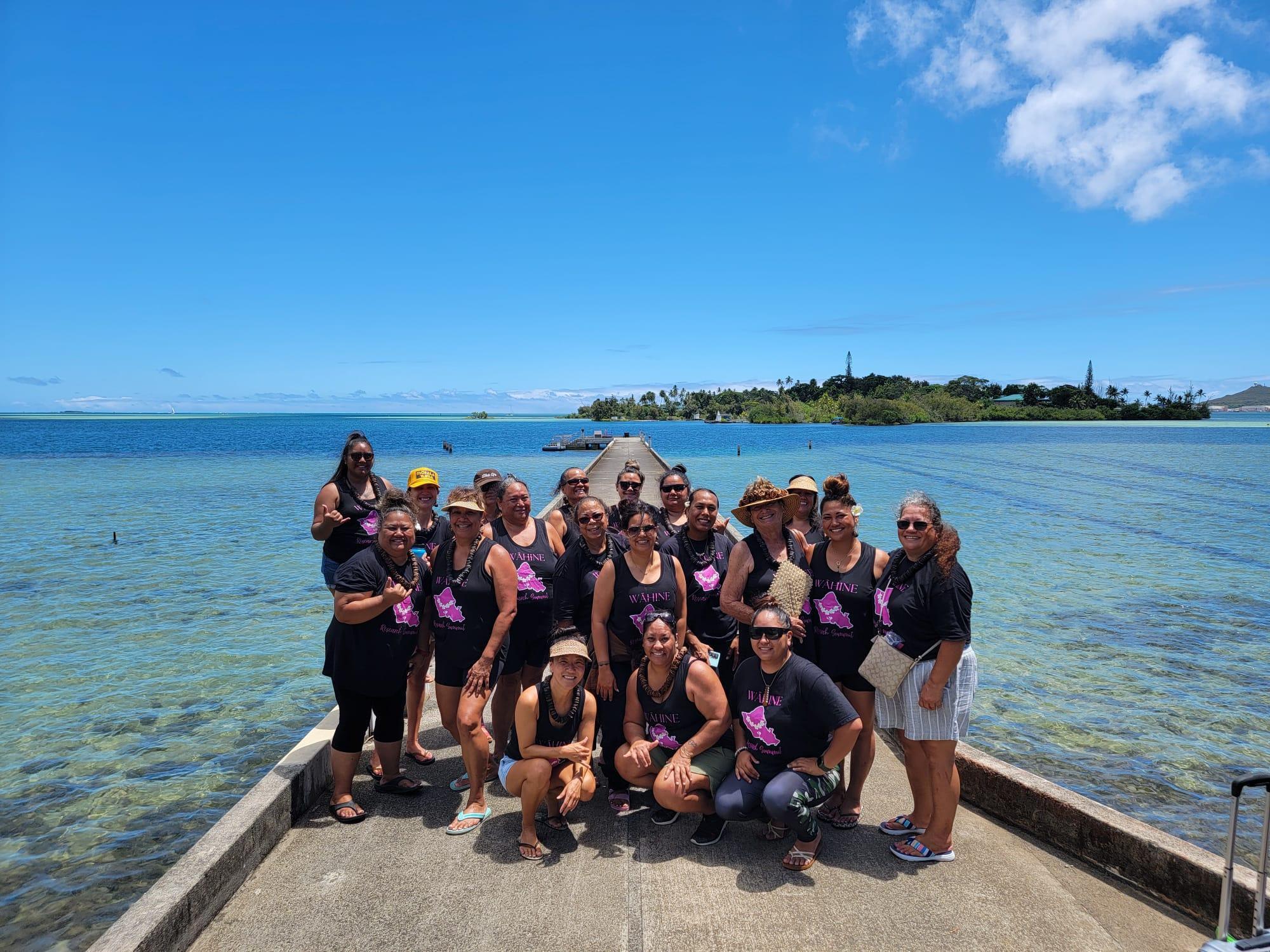
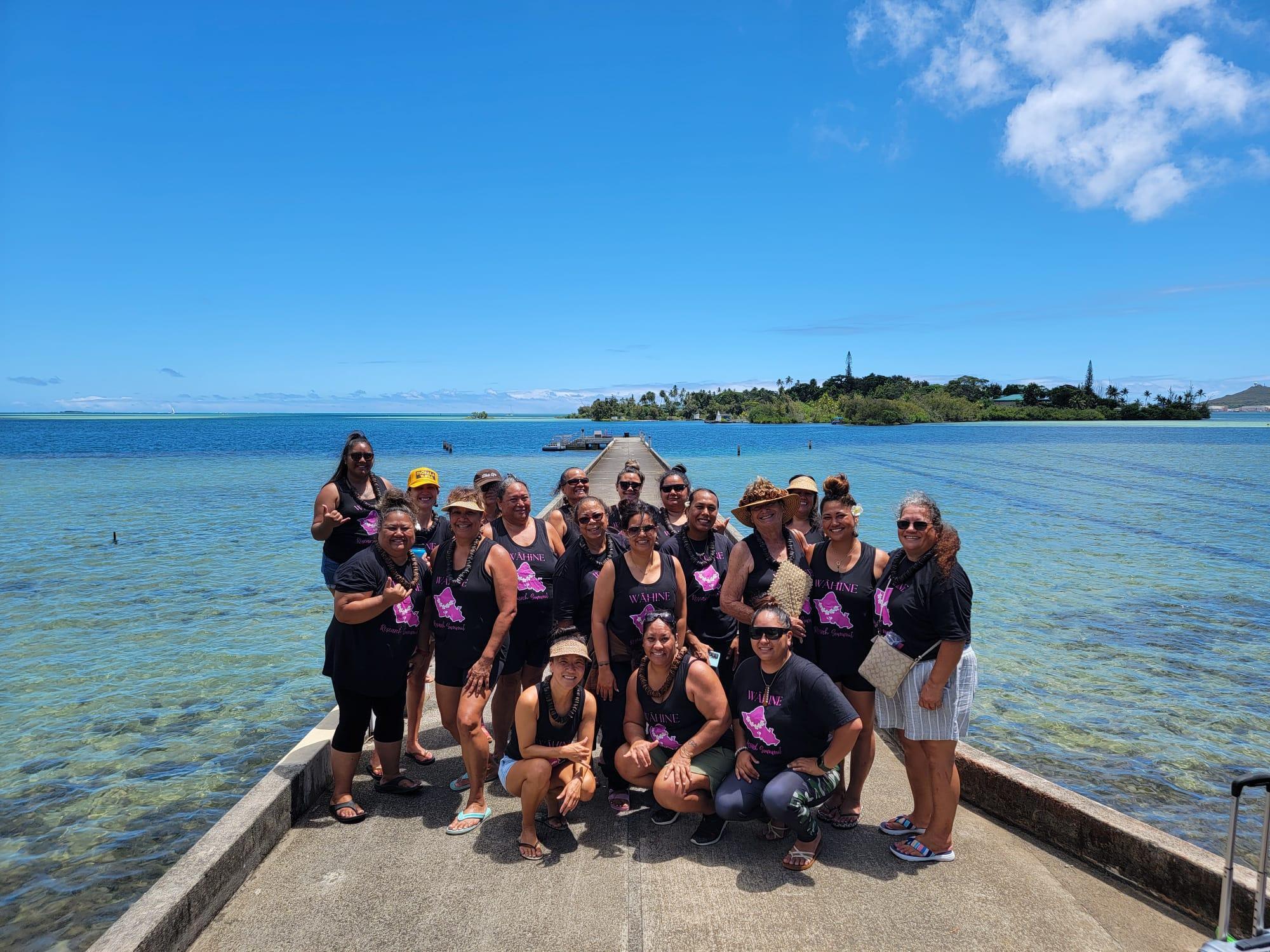
This three-day summit was convened in August 2024 on Moku o Loʻe, in Kāneʻohe Bay Through a collaboration with researchers at the Hawaiʻi Institute of Marine Biology (HIMB). Holding the summit within this retreat-like setting created opportunities for reflective learning, relationship-building, and collective engagement with both place and one another. The setting itself supported the relational goals of the summit by allowing participants to engage in sustained dialogue, shared experiences, and informal exchanges beyond structured discussion spaces.
A total of 18 wāhine between the ages of 18 and 74 from across the pae ʻāina participated in the summit (see Table 1 for demographic information). These wāhine hold essential roles in their communities as researchers, educators, cultural practitioners, and community leaders in areas ranging from environmental restoration, incarceration, education, to behavioral and clinical health for community betterment.This intergenerational and interdisciplinary composition strengthened opportunities for collective learning and the sharing of diverse community experiences, priorities, and approaches to Indigenous research and advocacy.
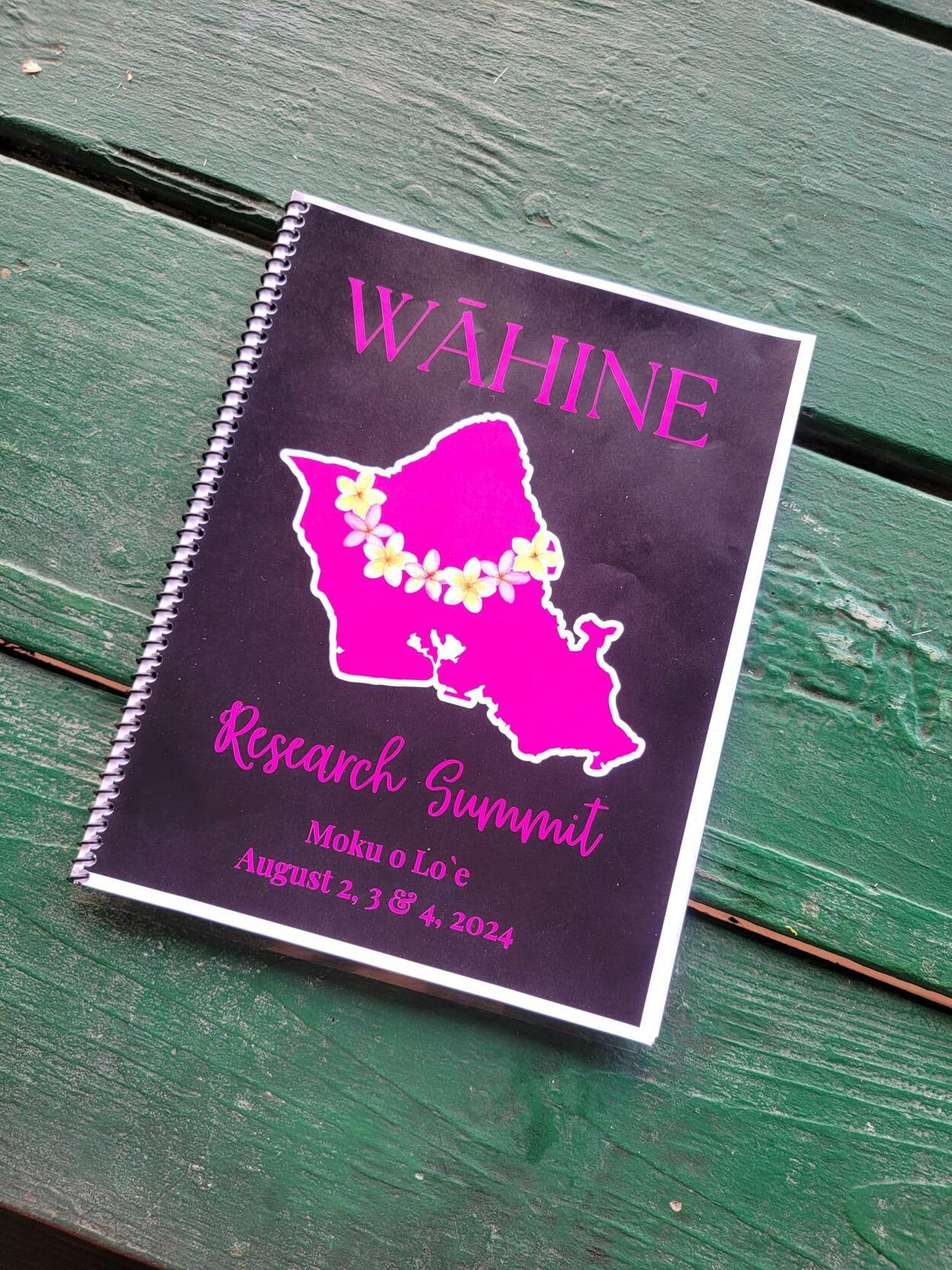
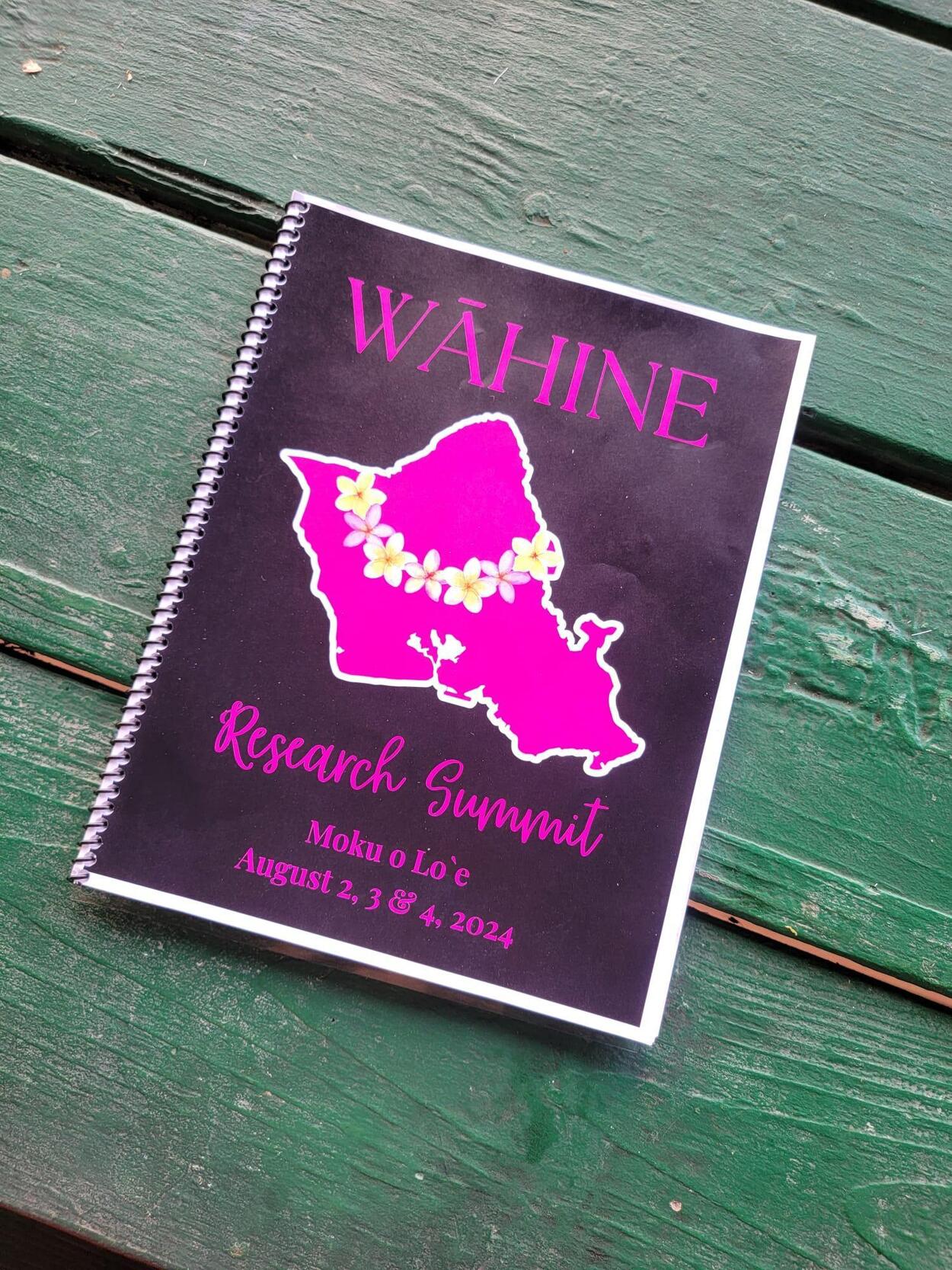
Throughout the three days, participants engaged in reciprocal dialogue, co-reflection, and storytelling as ways of sense-making and dissemination planning. The coordinators of this summit developed a manual to guide the conversations, which contained information about the WPRH, CBPR, Indigenous Research frameworks, reflection questions, and other cultural resources (see Image 1). It also contained a QR code to additional resources including publications on the WPRH. Rather than functioning solely as informational material, the manual served as a tool to support ongoing reflection, adaptation, and continued engagement beyond the summit itself.
Recognizing learning as a relational and collectivistic process, relationship-building was intentionally woven throughout the three day agenda (see Table 2). Shared meals, hana noʻeau (Hawaiian art and crafts), collective preparation of space, and engagement with Moku o Loʻe through activities such as snorkeling and walking tours created opportunities for informal dialogue, reciprocal exchange, and embodied learning. These experiences were not treated as separate from dissemination, but rather as essential components of how trust, pilina, and collective meaning-making were cultivated throughout the gathering. Additionally, integrating hana noʻeau and collective self-care practices acknowledged the importance of restoration, reflection, and cultural practice within Indigenous community work, particularly among wāhine who often carry multiple kuleana within their communities.
Day 1-Establishing Relational Foundations
The first day of the summit focused on establishing relational foundations through introductions, cultural protocols, collective intention-setting, and shared experiences. From the beginning, participants engaged in preparing the shared living space and settling into the summit environment, reinforcing collective responsibility and relationship-building across communities.
Following dinner and completion of the pre-survey, participants reviewed the summit agenda and engaged in hana noʻeau as an initial space for informal dialogue, laughter, and connection building. Summit coordinators then used the participant manual to introduce the history of WPRH, lessons learned from community-driven research in Waimānalo, and guiding principles rooted in Indigenous methodologies and CBPR. Rather than presenting these approaches as fixed models, discussions encouraged participants to reflect on how similar principles could be interpreted and adapted within their own community contexts.
Day 2-Collective Reflection, Storytelling, and Visioning
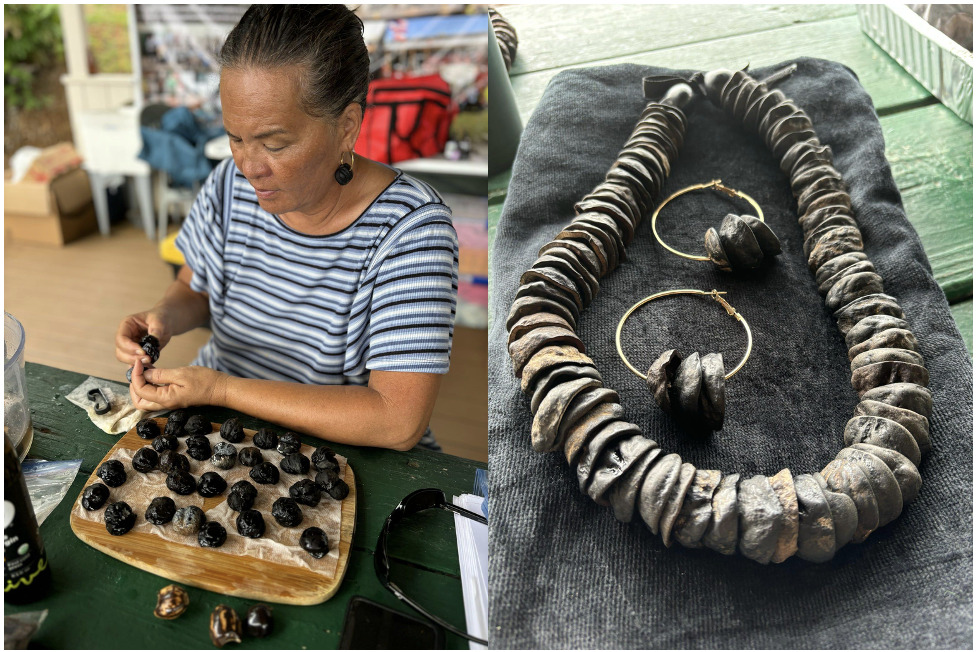
The second day focused on storytelling, shared experiences and strengthening connections with both Moku o Loʻe and fellow participants. Activities throughout the day intentionally blended cultural practice, place-based engagement, and informal dialogue as part of the dissemination process. The morning began with snorkeling and walking tours led by HIMB staff, allowing participants to learn more about the island and research occurring within the space while engaging with one another outside of formal discussion settings. After preparing lunch together, participants learned how to make jewelry out of kukui nuts, taught by one of the attendees (Image 2). Positioning participants as both learners and teachers reinforced reciprocal exchange and highlighted the diverse forms of ʻike and expertise present within the gathering.

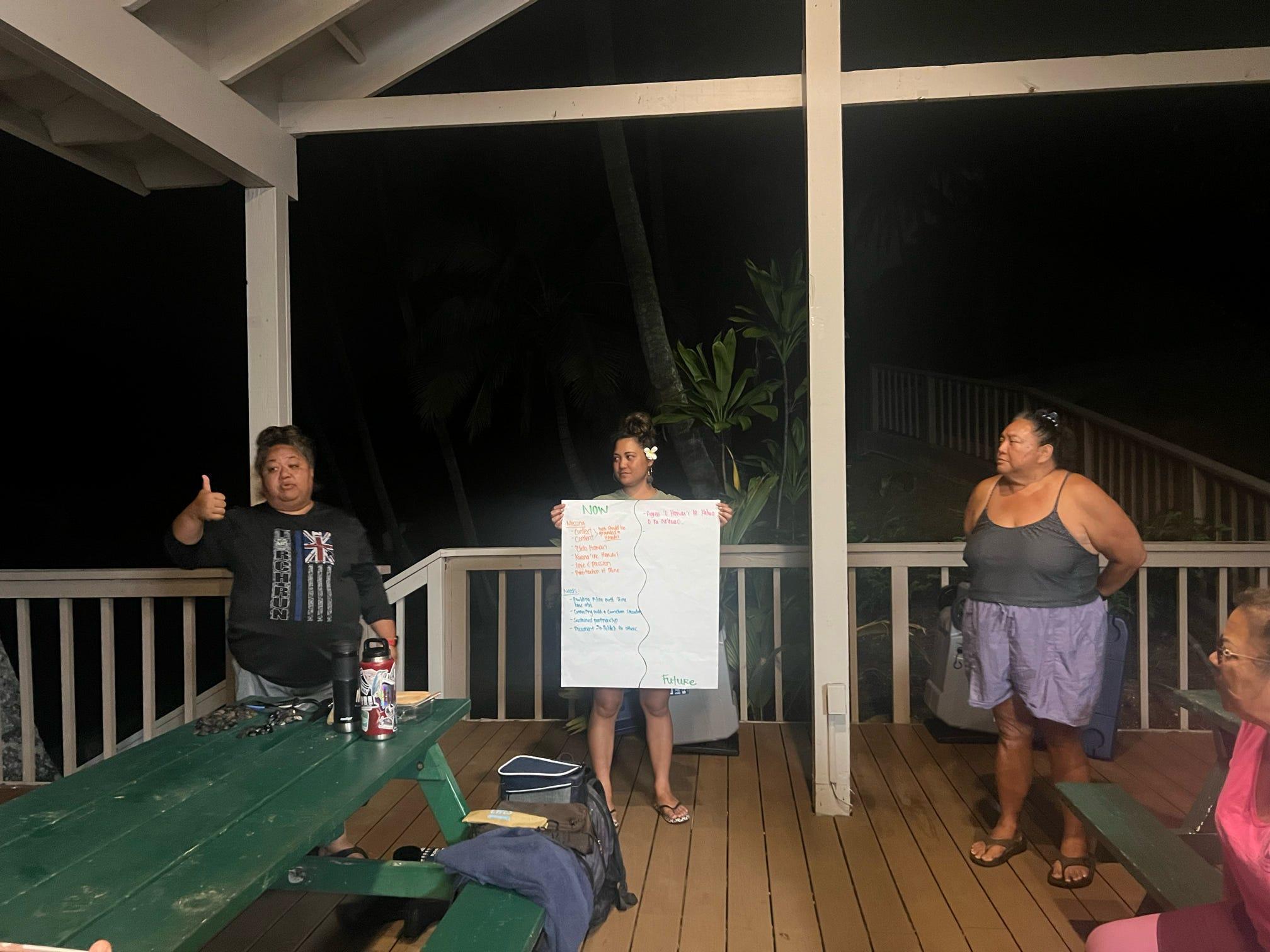
Later that evening, participants engaged in storytelling and facilitated discussions centered on the strengths, priorities, and challenges within their respective communities. Using a set of reflection questions in the manual, participants also completed a visioning activity where they illustrated and shared their hopes for their communities (See Image 3). These activities encouraged participants to identify similarities and uniqueness across the communities while considering how the practices shared through WPRH could be meaningfully adapted within their own community. Rather than positioning participants as passive recipients of information, the discussions created space for interpretation, reflection and collective exchange grounded in each communityʻs relationships, priorities, and cultural context.

Day 3-Collective Action and Ongoing Dissemination
The final day focused on reflection, action planning, and carrying the work beyond the summit itself. Participants revisited key ideas and themes and discussed what actions they can take individually in their own communities and collectively as a Lāhui (Image 4). These conversations reinforced the understanding that dissemination is not a singular event or final stage of research, but an ongoing kuleana grounded in relationship, reciprocity, and continued engagement.
The Wāhine Research Summit served multiple purposes: to expand capacity in Indigenous research methods, to build pilina across place and discipline, and to disseminate the WPRH framework so that it could be adapted and applied in other communities. Importantly, the summit did not treat dissemination as an afterthought. Instead, it embedded dissemination planning into its structure, treating it as a living and relational practice. Through a variety of modalities including a manual, dialogue, hana noʻeau, and relationship-building experiences, the Native Hawaiian values of pilina and collectivism were centered. Thus, participants were not passive recipients of knowledge but co-creators in determining how to carry and share the work in meaningful ways.
Feedback & Dialogue
An essential component of the research process involved facilitating feedback and dialogue. We achieved this through multiple approaches. Immediately after the Summit, participants completed a brief online survey to reflect on their experiences, whether their expectations were met, and how they planned to carry what they learned into their own communities. The responses were overwhelmingly positive with all participants agreeing their expectations were exceeded. As one participant stated,
“Most definitely!!! The knowledge and mana brought by each wahine is amazing. The summit was well organized with personalized engagement and hands-on learning that used materials from our 'aina and Ike shared by wahine practitioners who shared their Ike and passion for our Hawaiian cultural practices. Kau Papa Māori, methodology, aina, framework how to collect data, criteria, Kahua, foundation, doing research by them for them for the well being of their people and our people.”
Another participant stated,
“I plan to continue the work I am already doing but with a new set of eyes. I am interested in doing research with an ʻĀina partner from a healing lens. We have been talking about it but I now see how this research is imperative to the transference of ʻike from our kūpuna to our keiki, for the wellness and healing of our lāhui Hawaiʻi.”
In addition to this online survey, a group of public health graduate students from the University of Hawaiʻi at Mānoa conducted in-depth interviews with each of the participants three months after the Summit to better understand the longer-term impacts of the Summit. The students collaborated closely with the WPRH to design the interview guide and conduct the interviews that prioritized pilina building, transparency, and collective learning rather than data extraction. Before any data collection occurred, students participated in the WPRH meetings to understand Waimānalo’s historical context, research protocols, and expectations for ethical engagement. Interviews became spaces for shared reflection and moʻolelo – a process consistent with Indigenous research methodologies that center relational accountability and reciprocity (Wilson, 2008). This approach transformed conventional research encounters into opportunities for pilina and kuleana, reaffirming the community’s role as co-constructors of knowledge.
Following data collection, preliminary themes and impressions were shared back with WPRH members and summit participants for review and discussion. This feedback loop created opportunities for clarification and mutual understanding. Rather than treating dissemination as a final step, this process illustrated dissemination-in-action — a living dialogue between university students and community members that modeled how research can remain accountable and responsive throughout every phase (Walter et al., 2020). This collaborative process created opportunities for university students to learn culturally grounded and ethical research practices while reaffirming Waimānalo’s leadership in shaping how research is done with and for community, rather than on it.
Impact & Action
The Wāhine Research Summit continued beyond the initial gathering through the ongoing application and sharing of ideas, relationships, and practices across the pae ʻāina. These applications range from developing new community-based initiatives to integrating Indigenous research approaches into ongoing programs and educational spaces. The findings and insights generated through the summit support community priorities and strengthen existing efforts toward collective well-being and Indigenous innovation. The responsibility to carry these recommendations forward is shared among summit participants, research partners, and community organizations. This shared kuleana ensures that the movement remains grounded in collective ownership, reciprocity, and community-defined goals.
Sustainability efforts are also central to keeping this knowledge alive beyond the project itself. Continued dissemination and relationship-building have occurred through participation in national and international spaces. In April 2025, a group of attendees from the summit presented “Wāhine Research Summit: A Community Driven Investment to Recognize and Reframe Research to Advance Indigenous Innovations Across the Pae ʻĀina” at the International Network of Indigenous Health, Knowledge and Development Conference on Reclaiming Indigenous Ecologies of Love (RIEL) in New Mexico (Ho et al., 2025). Additional presentations highlighting Native Hawaiian wāhine-led research—including key findings from the summit—at the Papa Ola Lōkahi conference, ʻAha Hoʻolokahi 2025: Native Hawaiian Health & Well-Being Summit in July 2025 (Ho-Lastimosa et al., 2025). These presentations exemplify the ongoing dissemination and commitment to relational cultivation and the amplification of Indigenous voices in research spaces. They also demonstrated how dissemination, within this framework, remained an ongoing process grounded in relationship, reciprocity, and the continued sharing of ʻike across communities and spaces.
Discussion & Conclusion
The Wāhine Research Summit and its subsequent collaborations demonstrated that dissemination can function as an ongoing relational process rather than a final stage of research. Rather than limiting dissemination to academic publications or final reports, the summit integrated storytelling, dialogue, cultural practice, and shared experiences as ways of carrying knowledge across communities. Through these processes, dissemination became a space for reflection, exchange, and collective learning that honored the kuleana that comes with generating knowledge. This approach reflects Indigenous research methodologies that understand knowledge as cyclical and relational, - continually evolving as it is shared, interpreted, and lived (Wilson, 2008). Several important lessons emerged through this process that may help inform future community-engaged dissemination efforts. First, relationship-building was foundational to how knowledge was shared and carried forward throughout the summit. Shared meals, informal conversations, hana noʻeau, and engagement with place created opportunities for trust, vulnerability, and reciprocal exchange that extended beyond formal discussion spaces. These relational experiences strengthened participantsʻ willingness to openly discuss the strengths, challenges, and aspirations within their own communities. Second, dissemination was most meaningful when participants were encouraged to adapt ideas rather than replicate them. Framing WPRH as one example rather than a fixed model allowed participants to reflect critically on how Indigenous and community-driven research practices could take shape differently across communities throughout the pae ʻāina.
The continuation of this work at the RIEL and ʻAha Hoʻolōkahi conferences extended these relationships beyond Waimānalo, connecting the local efforts of wāhine leaders to broader Indigenous movements of research reclamation and community-led innovation. These gatherings created opportunities to share Hawaiʻi-based insights on Indigenous research praxis while learning from other Indigenous contexts globally. Such exchanges strengthened collective momentum for transforming research systems from within and reaffirm that Indigenous-led dissemination is itself an act of resurgence (Andersen & Walter, 2013).
Ultimately, this project underscores that Indigenous and community-based research does not end with the production of data or reports - it lives on through community conversations, educational spaces, and future collaborations. Dissemination, when approached as kuleana, invites continual engagement and accountability, ensuring that the work remains grounded in ʻāina, people, and ancestral values. In doing so, knowledge continued to be shared, carried, and regenerated within the communities that shaped it (Smith, 2021). By reframing dissemination as a relational process, the Wāhine Research Summit and WPRH illustrate how Indigenous knowledge systems continue to guide ethical and transformative research futures.