Traditional community-engaged research has emphasized the importance of dissemination beyond academic channels, particularly with historically marginalized communities. However, this approach to dissemination is often treated as the final stage and an afterthought of the research process rather than an integrated and participatory function. In this paper, we describe the dissemination strategy of the Iowa Vital Voices Project (IVVP), a community-driven research initiative focused on civic engagement and public health among Latino and immigrant communities in Iowa.
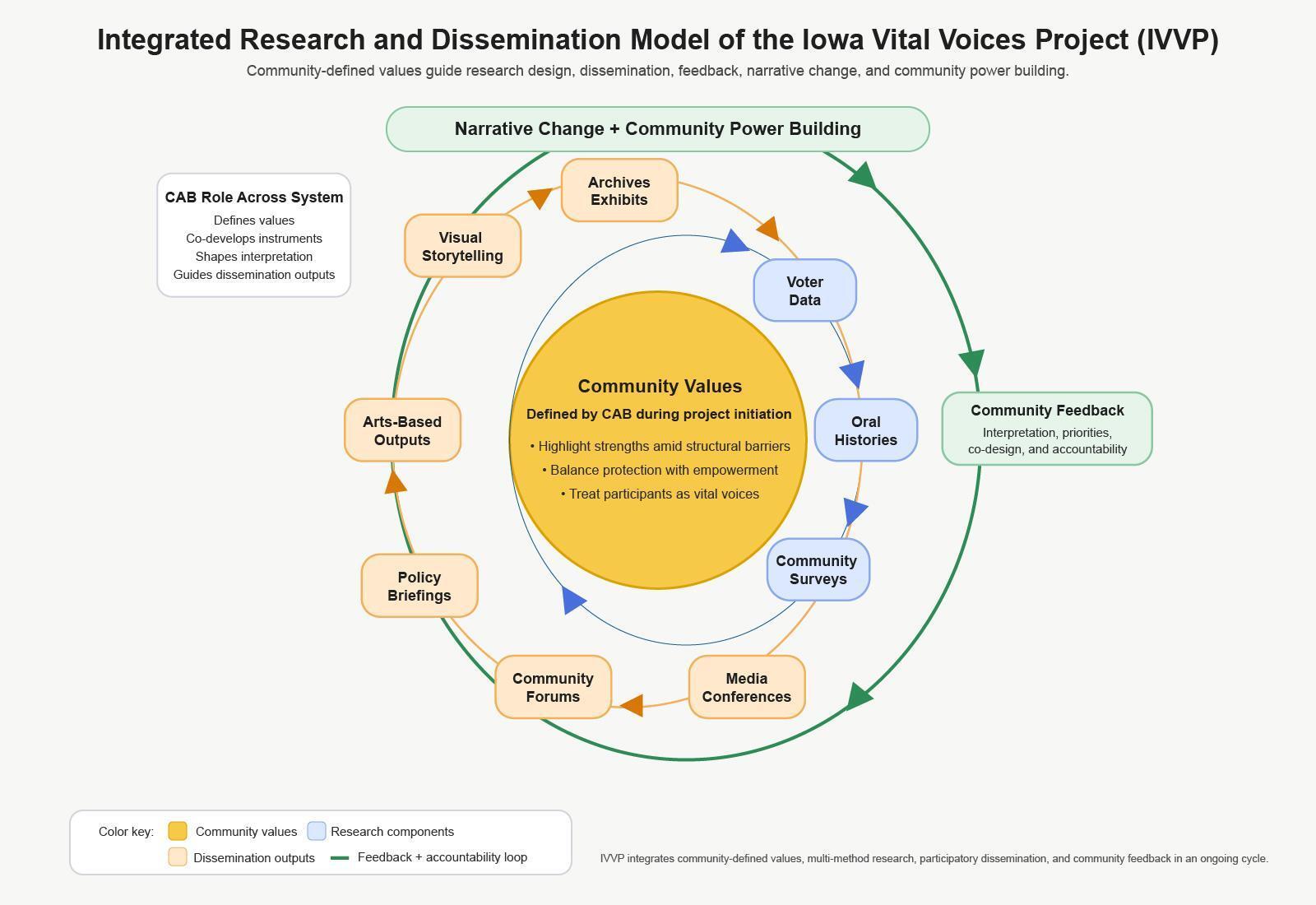
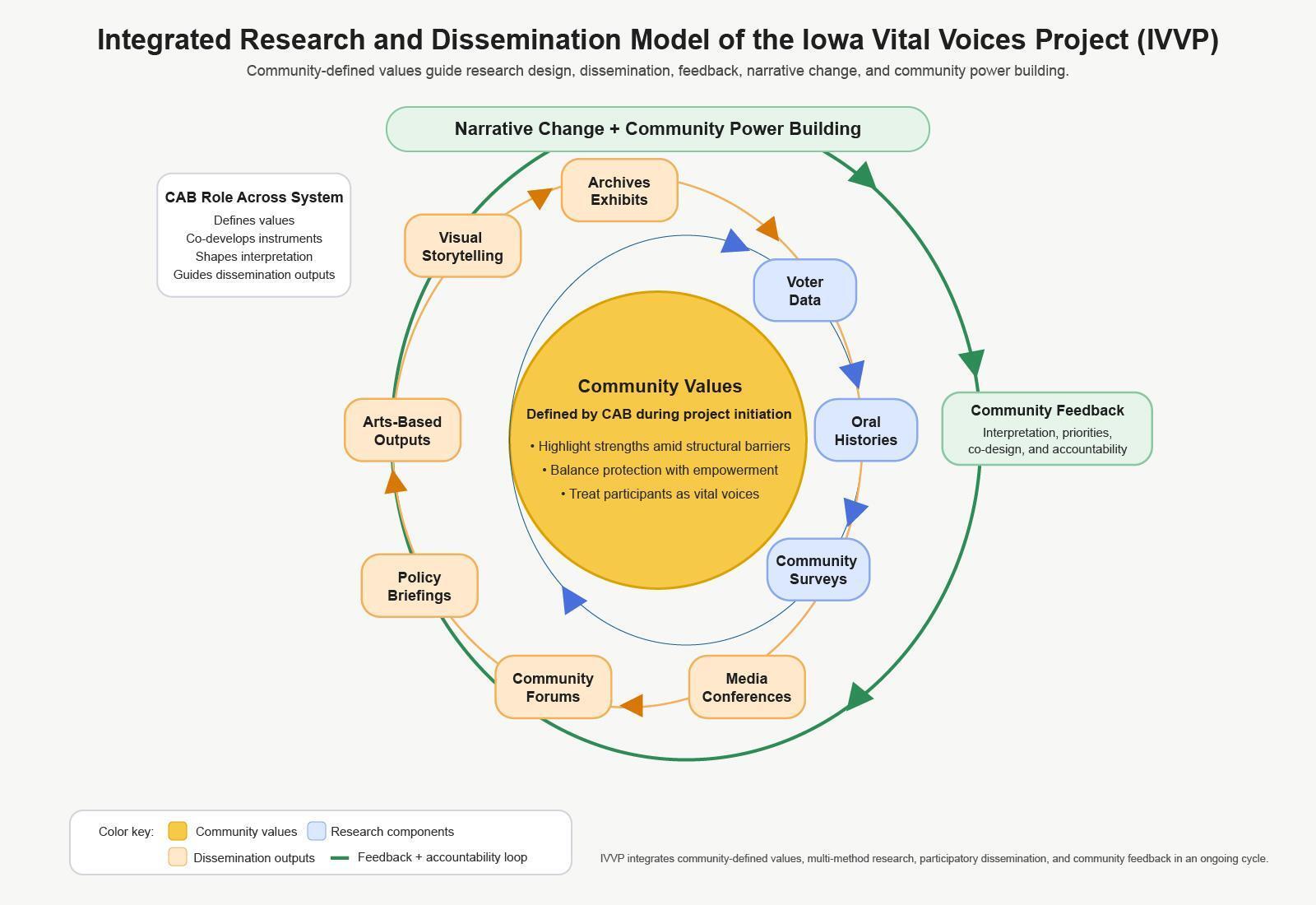
We argue that dissemination can be more than a mechanism for sharing findings, but as an important methodological approach that shapes how knowledge is produced, interpreted, and mobilized. IVVP utilizes this approach by embedding dissemination throughout the research process and guided by community defined values. As shown in Figure 1, rather than treating dissemination as a whole a separate set of activities, our approach positions them as reinforcing processes that center lived experience, support narrative change, and contribute to community power.
There is growing recognition that community power plays a critical role in the allocation of social and structural resources that are associated with population health and health equity (Heller et al., 2024). Community power is “the ability of communities most impacted by structural inequity to develop, sustain, and grow an organized base of people who act together through democratic structures to set agendas, shift public discourse, influence who makes decisions, and cultivate ongoing relationships of mutual accountability with decision makers that change systems and advance health equity” (Pastor et al., 2020, p. 6). power shapes the allocation of resources that constitute (or threaten) the social determinants of health----such as housing, transportation, safe working conditions, or protection from discrimination (Michener, 2022). As such, advancing health equity requires “building power by cultivating the capacity of people who are disproportionately burdened by health inequities and who therefore have the most at stake” (McMurtry et al., 2025, p. 1783).In Iowa, one group disproportionately burdened by health inequities are Latinos, whether they are recent immigrants or members of Latino communities who have called Iowa home for generations. Like many midwestern states, Iowa is the site of rapidly changing demographics. Often thought of as a primarily white, rural state, Iowa’s identity is shaped by generations of diverse residents, including the Latino communities that have lived in rural areas like Fort Madison for over four generations. Immigrant and US-born Latinos constitute 6% of the population and upwards of 25% in select counties. A 2024 report projects that Latinos will constitute 15% of the state’s total population by 2060.
Despite their growing numbers, Latinos living in Iowa continue to face significant barriers to health equity. Latinos have higher rates of poverty and unemployment compared to the state overall and lower rates of health insurance and education (Latinos in Iowa, 2024). In regards to community power, Iowa also has a number of policies that place systemic barriers to political representation for Latinos and other communities, including the English Language Reaffirmation Act of 2002 and a 2021 voting bill (SF 413) that placed numerous restrictions on voter registration, early voting, and requesting absentee ballots. Furthermore, local governments make limited efforts to include communities of color or non-English-speakers in their deliberations or decision making. Latinos in Iowa have a limited political voice relative to their overall or citizen voting age population. Other Latinos in Iowa face language barriers when seeking healthcare, especially in rural areas with limited bilingual healthcare providers (Iowa Total Care, 2025). This can lead to misdiagnosis, inadequate treatment, and difficulty navigating the healthcare system. State and university research shows that Latino Iowans are more likely to need medical care but less likely to receive it, reflecting the broader inequalities in access and quality of care (Park et al., 2014). In communities like West Liberty and across rural Iowa, increased Latino population growth has outpaced the healthcare system’s ability to provide language services, making it difficult for patients to navigate care, understand treatment, and receive timely and accurate diagnosis (Kaiser Family Foundation, 2023; University of Iowa College of Public Health, 2018).
The Iowa Vital Voices Project (IVVP)
The Iowa Vital Voices Project (IVVP) uplifts Latino voices and collects actionable data to advance civic engagement and health in Iowa. It is a partnership between the League of United Latin American Citizens (LULAC----the nation’s oldest and largest Hispanic civil rights organization), and the University of Iowa and led by 3 co-PIs: Julianna Pacheco (College of Liberal Arts and Sciences, Department of Political Science), Nicole Novak (College of Public Health, Department of Community and Behavioral Health), and Nicholas Salazar (League of United Latin American Citizens of Iowa, LULAC).
Our research is focused on solutions to, and remedies for, policies that negatively impact community health for Latinos living in Iowa. We seek to better understand how political power (or lack thereof) contributes to health equity. We center voices from the Latinx community who are most affected by a lack of political representation. We envision an Iowa where all residents feel motivated and empowered to improve their communities, to run for office, and to be civically engaged, regardless of race, language, or place of birth.
Our project and its dissemination are heavily guided by a Community Advisory Board (CAB) of 8 LULAC leaders from 7 councils throughout the state of Iowa.[1] LULAC leaders are intimately familiar with the landscape for civic engagement and voting rights in their specific communities and support their Latina/o and immigrant neighbors in becoming civically and politically engaged. The CAB has been meeting regularly since January of 2023 and was critical to the development and implementation of all research goals, research questions, study design and dissemination approaches. We also have a team of students, called SALUD, which stands for Students Advancing Latino Unity and Democracy, who are active members of the research team.[2]
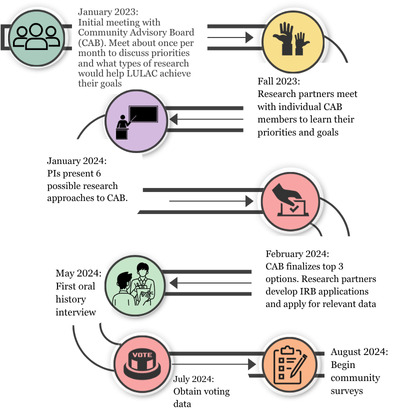
Figure 2 outlines our planning process and timeline with the CAB. We were careful to implement best practices to ensure that CAB members had a substantial, not symbolic, role in all parts of the research process. Our approach was grounded in strong pre-existing relationships among CAB members, who already shared trust, familiarity, and understanding of community priorities through their work with LULAC (League of United Latin American Citizens). Each CAB member represented one of the 20 local LULAC councils established across the state who focus on issues relative to their community and together make up the state charter of LULAC Iowa. Furthermore, a central component of this work was the role of a community-based project leader and the lead author of this paper, Nick Salazar, who was embedded within the community and the research as co-investigator. Most importantly, as a longtime community and LULAC Iowa leader, his relationships with the CAB extended beyond the traditional research structure, reflecting longstanding engagement through organizing, storytelling, and community-based initiatives. This type of relationship between the research and community was critical, as it allowed collaboration to occur outside of institutional barriers, fostering trust, open dialogue, and accountability. As a result, CAB members were more than advisors, they were co-creators with meaningful ownership over the project’s direction and outcomes at every stage. As shown in Figure 2, Consistent with community based participatory research principles, IVVP dedicated the first six months to relationship building and identifying shared community values, which informed all aspects of the project, including research questions, study design, and dissemination strategies. This process led to the development of a multi-method approach consisting of three overlapping studies that centered both narrative change and data collection as reciprocal forms of data collection.

To support its participatory dissemination strategy, IVVP developed a multi-method, community engaged research approach that integrates quantitative and qualitative data collection alongside ongoing community collaboration. This work includes voter analysis, community surveys, and oral histories that are each co-developed with the CAB and grounded in established community values.
This work operates as an interconnected system designed to both generate data and support narrative change. Quantitative analyses identify structural patterns in civic engagement, while surveys and oral histories provide qualitative insight into lived experiences, perceptions of power, and community priorities. These approaches allow research findings to be translated into dissemination efforts that are responsive to the community and grounded in participant voice. This integrated approach allows research and dissemination to function in tandem, with findings continuously informing storytelling, engagement, and advocacy strategies, while community feedback and participation shape ongoing research priorities.
Grounding Dissemination in Community Values
Our dissemination strategy is grounded in community values that were identified by the CAB during the first six months of the partnership and before defining research design or questions. CAB meetings during this time discussed community priorities, past research experiences, and identifying guiding principles for how data, stories, and community voices should be represented to the public. This included guided activities where CAB members listed issues that were most important to them and their local council, and CAB members discussed and compared priority issues to address in each of their communities. It also included frank and honest CAB member feedback on research and dissemination ideas, which fostered discussion about what forms of knowledge and what forms of public education best exemplified the group’s shared values. Through these meetings and discussions, the partnership identified three core values that guide IVVP dissemination: (1) highlighting strengths in the face of structural obstacles, (2) balancing privacy and protection with our commitment to empowerment, and (3) treating research participants as vital voices rather than subjects. Below, we provide examples of how our dissemination products embody these values.
Value 1: Highlighting Community Strengths in the Face of Structural Obstacles
The Iowa Vital Voices Project was founded on the understanding that Latino and immigrant communities in Iowa are defined by their challenges rather than their contributions. While structural inequities continue to shape daily life, the CAB emphasized the importance of shifting focus away from deficit- and damage-based narratives to an asset-based approach that identifies and organizes existing community strengths, knowledge, networks, and cultural resources. Grounding dissemination in this value ensures we do not reinforce incomplete or harmful narratives but instead amplify the power, experiences, and opportunities already present in the community.
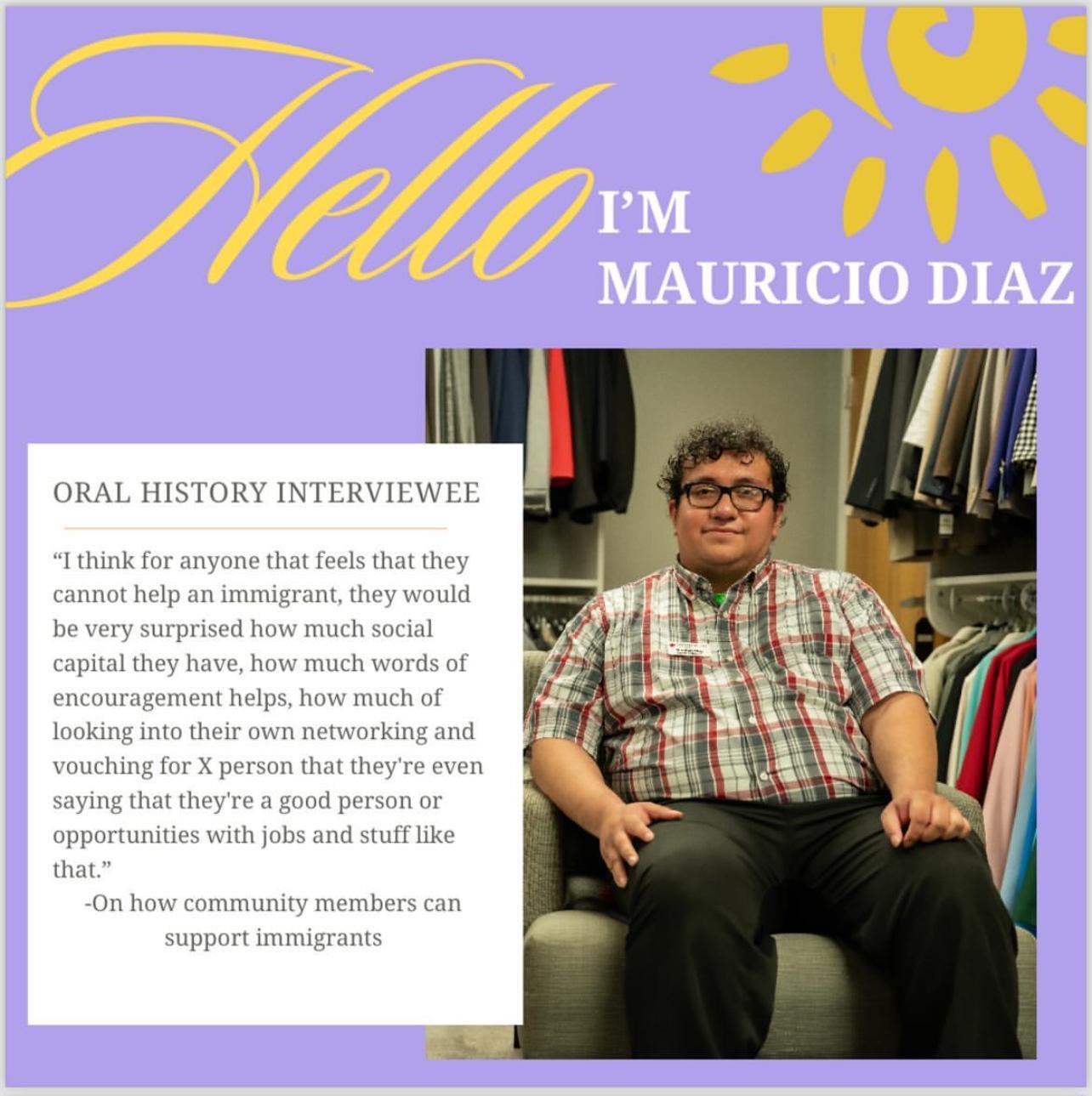
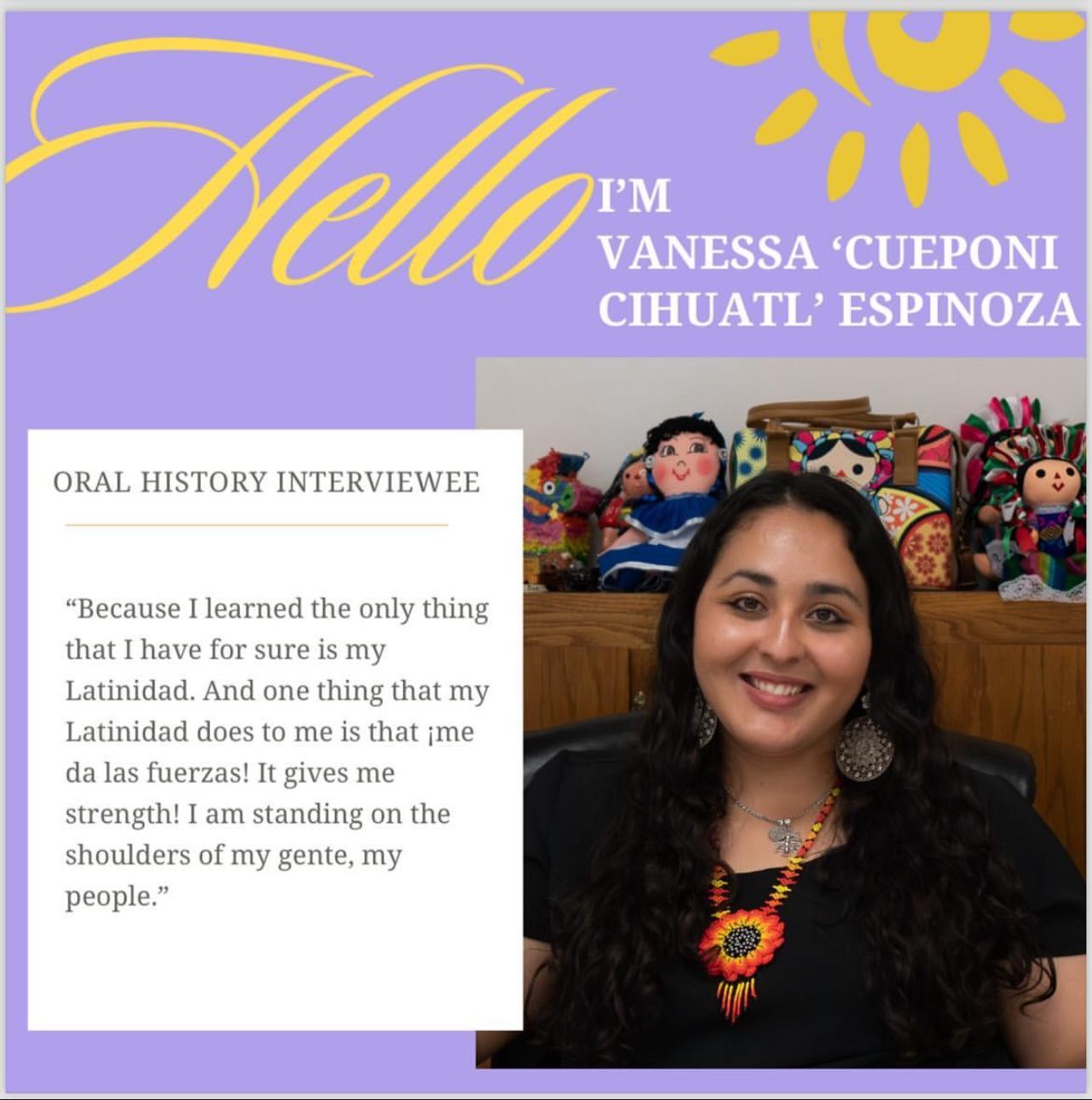
In practice this value requires a strategic, community-first dissemination approach that adapts content, outlets, and timing to community needs,and moments of community concern. A notable example is our response to the 2024 US presidential election. At the time the research team was in the early stages of coding our oral history interview data and discussing the preliminary findings with the CAB. During a meeting following the election, the CAB discussed widespread feelings of fear and uncertainty living under a second Trump administration. In response, our SALUD students took to Instagram to share select portraits and quotes from the oral history interviews to offer reassurance and hope to the community (see Figure 3).
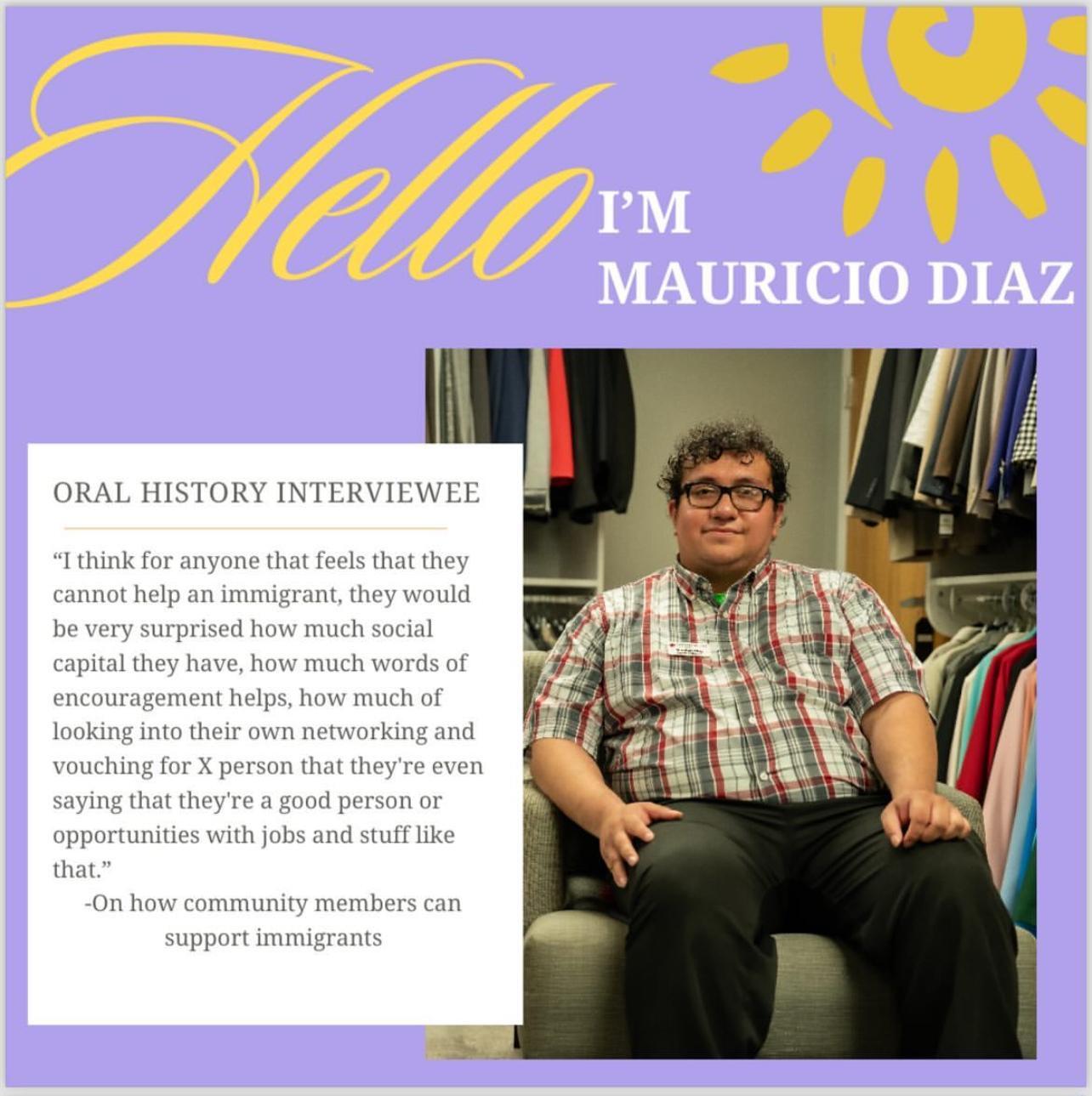

Value 2: Balancing “Privacy and Protection” with “Commitment to Empowerment”
As a community research project focused on empowering community members through research participation and dissemination, IVVP has regularly encountered tensions between the norms of human subjects research ethics, which focus on privacy and protection , and the goals and priorities of the partner organization, which center the agency and empowerment of participants. Navigating these tensions required ongoing dialogue with our university’s Institutional Review Board (IRB), as well as trusted mentors and advisors, to navigate these challenges.
As an example, our project included oral histories, which LULAC hoped to deposit in the Iowa Women’s Archives (IWA), which preserves many LULAC records. However, because our research team had specific interest in civic engagement and political participation and intended to analyze the oral histories with regard to these topics, the IRB also considered it to be human subjects research. The anonymity of participants became a concern: oral histories are typically preserved with names and identifying details attached, whereas human subjects guidance would typically require the removal of identifying details if they are not needed for the research question. Furthermore, we wanted to preserve the option for storytellers to share their story without sharing their name. We worked closely with the IRB and the IWA to develop a two-pronged protocol whereby storytellers could consent to participate in research only (in which case we would not preserve identifying details in any of our research records), or to participate in research and agree to deposit their oral history in the IWA. In the latter case, we still only preserved de-identified records for the research files, while maintaining a separate set of records to be deposited in the IWA. Storytellers could also decline to participate in the research portion and only elect to deposit their oral history in the archives. Lastly, storytellers who elected not to share identifying details could elect to deposit a de-identified version of their oral history in the IWA. In this way, we preserved the storyteller’s agency to define how they shared their story and on what terms.
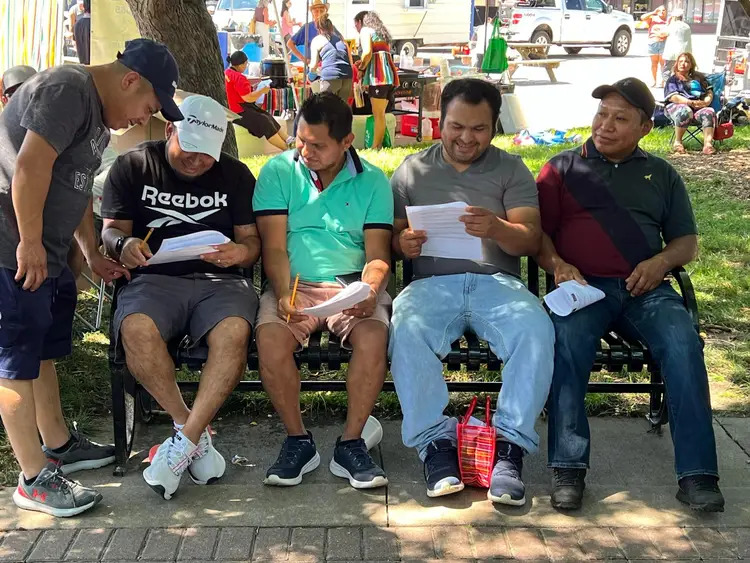
Another example of this tension happened during community survey events, where participants were completing paper surveys at public festivals and gatherings. Following IVVP’s first official survey event at Festival Latino in Washington, Iowa, Nick Salazar shared to Facebook powerful photos he had taken (with permission) of groups of people completing the paper community survey at an outdoor festival (see Figure 4). In his comments on social media, Nick commented on the power of participating in research led by community leaders:

“Unlike the usual experiences where communities are often told what to think or what to do, we are giving people the opportunity to tell US what they are thinking or doing through our community survey. Thank you for using your voice and sharing your valuable insights with us. Your input will be used to make meaningful change in our communities.”
Salazar contrasted this type of research participation with typical community experiences with political leaders, where community members are contacted by campaigns to support particular candidates or policies, and largely ignored at other times. In this framing, the fact of participating in community-led research is meaningful and valuable in itself, even before the results come in.
Co-PI Nicole Novak noted the impact and meaning of sharing these photos, while also noting that traditional human subjects research guidelines would not permit photographs of research participants (under the principle of privacy). This led to a team discussion and a series of conversions with mentors and advisors. We ended up making the decision that these photographs, when taken and shared with explicit permission by the photo’s subjects, were consistent with the values and intention of the project. Factoring into our decision were the facts that: the festivals where surveys took place were public events in outdoor settings, the surveys are anonymous, low-risk and deemed “exempt” by IRB, and the photos would only be taken and shared with the permission of the subjects. In our determination, these photos were joyful and celebrated LULAC’s role in research and knowledge production, which was powerful in itself. Not permitting photos of willing participants was actually an infringement on the research participant’s agency and freedom to make their own decisions regarding their public image and privacy.
Value 3: From Research Subject to Vital Voice
The final community value that drives our dissemination strategy is treating research participants as vital voices. First and foremost, community members who participated in the oral history project are considered storytellers or oral historians, not “subjects,” “participants,” or some other scientific name.
Portraits are one example of how we humanize and respect community members who share their stories. More specifically, taking portraits provides visual/emotional depth of a person’s presence, identity and agency that is not achievable with words. Taking a person’s portrait is an act–in and of itself– of recognition and representation for all Iowa Latinos. Portraits also restore visibility to hidden experiences or faces.
Photography emerged as a significant part of our documentation process. A traditional oral history interview is recorded, transcribed, and archived for future reference. During this process, oral history interviews are usually stored and controlled in the research or at the institution, with little to no influence on how they are visually represented and disseminated. These interviews still achieve their goal of preserving and providing information but are not visually or emotionally encountered, leaving audiences with an abstract view of the storyteller. IVVP expanded on this process by including portraiture as a participatory action to embody voices and bring visual representation to archival and dissemination strategies.
Dissemination Strategies
Drawing on the principles above, our team has pursued a wide range of dissemination strategies. Some have been more conventional academic forms of dissemination, such as departmental seminars, poster sessions on campus, or a presentation at an academic conference. However, equally as important has been forms of dissemination that reach beyond the walls of the academy, drawing on the knowledge of our CAB and community leaders to ensure that dissemination reaches community members and meets community needs, including photography and portraiture, community events, news media, and policymaker engagement. Our CAB member Alma Puga underscored the importance of bilingual dissemination, reminding us that accessibility in language, format, and venue is a core value in participatory research. Guided by these community values, our dissemination strategy has been intentionally flexible, relational, and rooted in cultural and political realities of Latino and immigrant communities in Iowa.
Traditional Dissemination
Our engagement with more conventional forms of academic dissemination served two purposes. We shared our findings in scholarly spaces and built academic support for ongoing community-engaged research at a time when DEI infrastructures were being challenged at universities across the United States, particularly in the state of Iowa (Draisey, 2024). Presenting IVVP in this heightened context was not simply sharing results but an act of academic and community stewardship, advocating that participatory, equity-centered work remains essential to the mission of public health research.
A key part of the research and dissemination was the formation of SALUD, our student research assistant group that emerged organically due to the project’s ongoing momentum. SALUD played a crucial role in dissemination of IVVP findings both on and off campus. Members assisted with event organization, poster design, bilingual materials, community presentations, and held tables at cultural events, health fairs, and student engagement activities. The group became the bridge between university and local communities.
Presentations included campus talks such as the Political Science Departmental Speaker Series, the Department of Epidemiology seminar, and the Obermann Center’s “Wide Lens” Pecha Kucha session. SALUD members participated in research events, such as poster presentations at the Fall and Spring Undergraduate Research Fairs and Research in the Capitol hosted by the University of Iowa’s Office of Undergraduate Research. SALUD also presented at the University of Iowa’s Rural Health Summit hosted by the College of Public Health, where community partners joined in presenting the implications of the project for health equity in small rural communities. We additionally participated in the LNACC 50th anniversary celebration where CAB and SALUD members spoke on a panel about the importance of narrative justice and visibility to Latino Iowans. Project findings were also shared at events including the 2024 American Public Health Association (APHA) National Conference, and RWJF sharing sessions. These academic events help legitimize community-engaged methods within institutional structures, while showing how knowledge is produced and disseminated across university and community lines. While most of the presentations were presented in English, we always included the distribution of bilingual paper materials to distribute.
In most cases, traditional/academic dissemination highlighted the multi-method and participatory nature of the work, including quantitative findings from voter data and our community survey, combined with quotes and portraits from the storytelling and oral history project. In some cases, such as the Rural Health Summit, we focused on findings from specific geographic areas or specific communities.
Community-Focused Dissemination: Photography and Portraiture
Photography and portraiture emerged as a core part of our dissemination as we deepened our oral history practice. Our process for taking portraits is co-created with the storyteller so that they have opportunities to co-create the representation of their story. For instance, storytellers are involved in framing, location, tone, and pose of their portrait. We also make sure to photograph in meaningful contexts such as community spaces, homes, churches or outside so that the idea of community is expressed through the photography. These environments also reflect identity and place. We consider visual aesthetics such as lighting, composition, equipment, use of color and background that helps community the story. We make sure to receive consent for how the portraits are used and have participants approve all final images.
Each portrait session took place immediately after the interview, often in a setting meaningful to the storyteller. It is frequently a church, home, library, or other community space reflecting the themes of their narrative. As an extension of their interview, storytellers were invited to select the location, pose, and tone of the portrait. The visual process was careful and intentional, emphasizing national light and minimal staging to capture raw moments and preserve emotional connection still present from the interview. In some cases, external lighting was introduced to improve ambient lighting conditions or was intentionally incorporated into the creative process. The goal was for the audience to meet each storyteller where and how they wished to be seen.
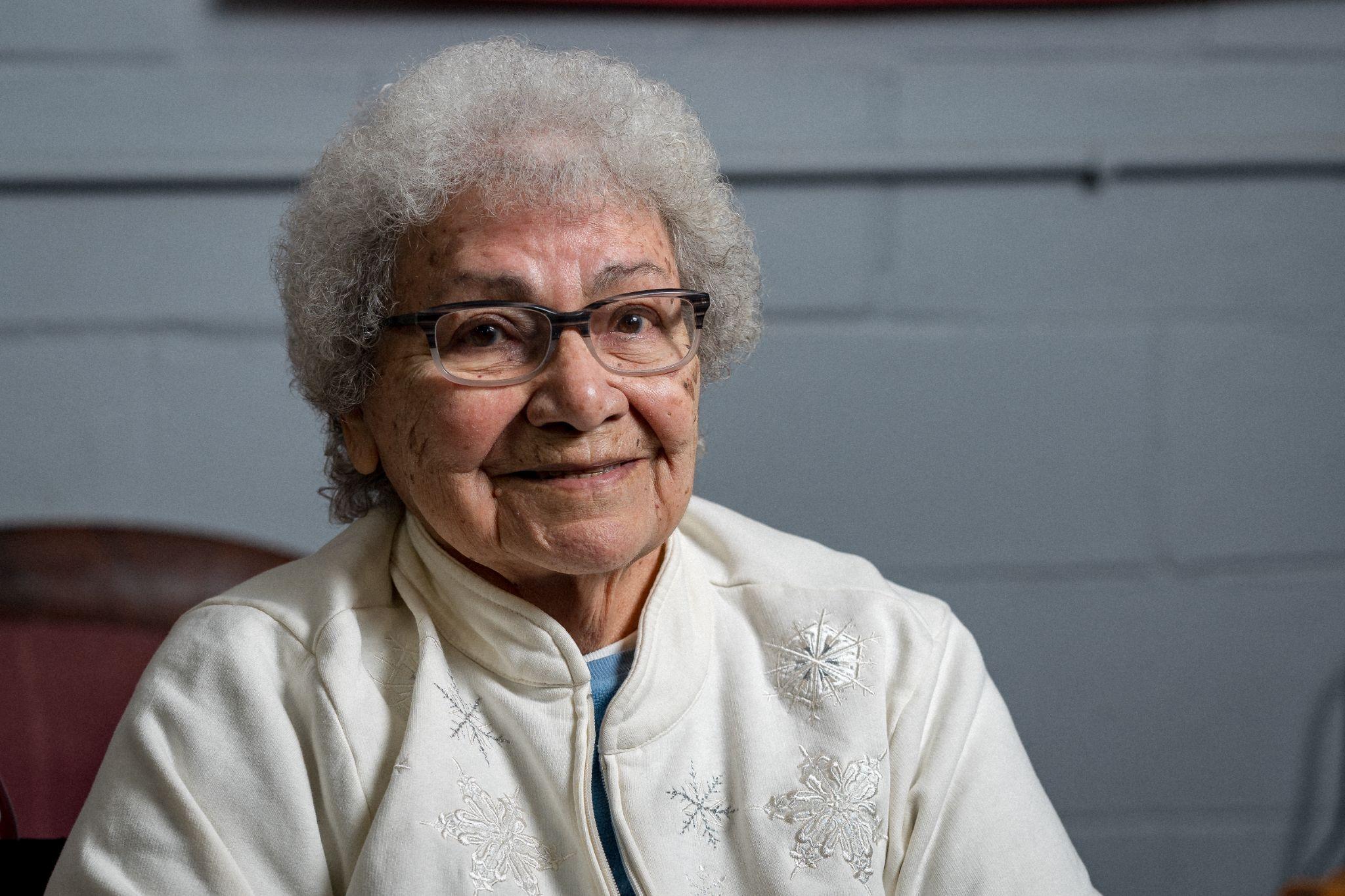
Figure 5 provides an example of how including a portrait with the oral history helps transform participants to vital voices. This portrait was taken after the oral history interview of Ophelia Garcia at LULAC Club in Fort Madison, IA. on March 22nd, 2025. Ophelia is a 97 year old resident of Fort Madison, Iowa who stands as a living testament to the endurance, tradition, and quiet strength of Iowa’s early Mexican-American communities. Born to immigrant parents, father of San Luis Potosí and mother of Terreón, she was raised in segregated Iowa where Spanish-speaking children were placed in separate schools to be “civilized” before being integrated. The most touching part of her interview is when she discusses the history of civic engagement. She says
“We weren’t taught to speak up. We were taught to be respectful, not make waves. You just kept your head down, worked hard, and stayed out of trouble. But now, I see people saying, ‘No, that’s not right,’ or asking questions at school board meetings or city things. I didn’t grow up thinking we had that kind of voice.”

The technical and aesthetic choices in Ophelia’s portrait provide an example of how visual representation functions as an extension of IVVP’s participatory approach. In this instance, the interview took place at the local Fort Madison LULAC club located in the middle of one of the oldest Mexican-American neighborhoods in Iowa. For over 60 years, this building continues to be a place for community activities, parties, and LULAC meetings. Due to the ambient conditions of the building, we had to introduce external lighting into Ophelia’s portrait or risk capturing an underexposed portrait that is neither flattering nor representative of the story being told. We work with the storyteller to capture a raw snapshot of the interview by preserving the ambient and environmental conditions of the space while adding only light necessary to preserve their presence and story. For Ophelia’s portrait, introducing light was not only improving the lighting conditions, it was illuminating her face and the history that has kept the experiences of early Mexican-American residents in the shadows.
The visual and technical choices in Ophelia’s portrait communicate the quiet strength, dignity, and historical depth that define her story. Her portrait was taken exactly where she was sitting when she did the interview. It’s lit with soft directional light that falls gently across her face, emphasizing fine textures, lines, and expressions that show nearly a century of lived experiences. Rather than diminishing these details, the light preserves them, inviting audiences to see the depth of her story. The steady gaze and smile, along with the glasses, bring warmth and quiet strength that was formed through a lifetime of navigating social, political, and cultural boundaries in Iowa. Her expression, soft and resilient, echoes the dual realities she described in her interview of growing up being taught to be “civilized” while also living in a tightly knit community trying to sustain language, culture, and belonging Like several portraits we captured, this one reflects the ongoing themes of persistence, tradition, and survival that visually define their narrative.
The close headshot composition, tight framing from the shoulders up, establishes a sense of intimacy and equal footing between the audience and storyteller. This type of framing is intentional where audiences encounter storytellers at eye level, with no visual hierarchy, reinforcing our commitment to treating storytellers as collaborators rather than subjects, whose face, voice, and story guide our understanding of their history. This mirrors a moment at the end of the interview with Ophelia, going through the audio playback to check on the quality of her interview. As her voice filled the room, she paused and asked if she could hear more. She explained that she had never heard her own voice recorded before. Listening to herself, she laughed, reflected, and showed more emotion than during the interview itself. Like the playback offering the space to witness herself with dignity and power, the portrait functions as a visual affirmation for her story.
Ophelia’s response to hearing her recorded voice for the first time highlights a core principle in our approach, that participatory research is not only about documenting stories but also creating opportunities for people to witness themselves in their dignity. Both the portrait session inviting her to shape how she would be seen and hearing her recorded story for the first time allowed her to engage her own narrative from a position of authority, not marginality. These moments change the power dynamics in research and dissemination as participants transform from subjects into storytellers and authors of their own representation. Experiences like Ophelia’s reveal how visuals and audio are not just research tools but living narratives that affirm identity, agency, and belonging. Through lighting, framing, composition, and presence captured through the image, the portrait becomes more than just a visual reference, it visually encodes lived narratives. For Ophelia, the portrait captures decades of resilience while honoring her role as a living link between early Mexican-American settlement in Iowa and the efforts to preserve and elevate those stories.
Portraits are important to the IVVP because they humanize both the process and the data, which is historically concentrated with traditional research approaches that have a more extractive tone. By integrating photography, IVVP challenged the historical erasures of Latino and and immigrant communities in Iowa through visual representation. This approach is restorative and empowering for communities that have often been minimized or distorted in public narratives. For the research team, portraiture was the practice of treating participants with dignity and ensuring they do not get lost in the data. Portraits reveal the people behind the findings, giving form to the phrase “vital voices”.
Portrait photography also became a central part of our ethical practice. Each participant provided informed consent not only for their interview but the visual representation of their image, with a clear understanding of how and where the materials might be shared. From pre-visualization to post-processing, the storyteller remains involved in every stage of the creative and research decisions. Before the final submission into project materials, each person reviewed and and approved their portrait, an important step that emphasizes agency and co-creation in the research. For many storytellers, seeing their portrait evoked strong emotional reactions and a sense of belonging in the community. Several participants later used their portrait outside of the project, in professional, social media, and lifestyle spaces, suggesting the process empowered them beyond the scope of the research.
The use of photography also expanded the project’s community engagement strategies. Portraits were displayed at community meetings, presentations, exhibits, and online platforms that transformed the research into a visual dialogue. For community participants, seeing themselves and other community members reinforced their pride and connection. For community audiences, the portraits created visual references that bridged language, age, and cultural differences. For general audiences, they offered a visual entry point to see beyond the data and headlines to encounter the lived realities behind each story.
We learned that incorporating portraits with our oral history project deepened relationships and trust between the research team and community members. We reframed documentation as a partnership rather than extraction. Like the interviews and stories, the portraits are co-created representations of lived experience. They challenge traditional norms of data by placing emphasis on aesthetic, emotional, and ethical dimensions of community storytelling. This reimagines and extends the boundaries of research transferring the archives and dissemination products into a living gallery of human experience.
The portraiture process also showed how visual representation functions not only as a method of documentation but as a vehicle for dissemination. The images produced through these sessions become central to how IVVP shared findings with communities, policymakers, and general audiences. Portraits carried emotional weight and cultural meaning, inviting viewers into the research with a sense of urgency and humanity. As storytellers recognized themselves in the project, and as community members recognized each other, the portraits helped shift public narratives away from deficit-based framings towards those grounded in strength and possibilities.
Community Based Dissemination
Our partnership with the IWA provided an opportunity for storytellers to submit their oral history interview and portrait to the LULAC Iowa repository at the archives for preservation and future reference. The IWA has a long history of preserving voices and stories of women and minority communities across the state, so housing the interviews along with the rest of the LULAC and Latino history in Iowa made the most sense. For storytellers, sharing their story and submitting it to the archives was an act of pride and preservation for their language, experiences, and history. This was an important part of the project as 100% of our storytellers so far have opted to have their interview submitted. This partnership with the IWA reinforces the project’s value of narrative justice and strengthens participatory research within the institution.
Dissemination beyond academic audiences was shaped by the community values and political context facing Latino and immigrant Iowans, particularly the need for culturally grounded information where misinformation, underrepresentation, and policy threats shape daily life. Because of this, dissemination efforts were integrated into the agendas and activities of LULAC councils, which worked as both partners and conduits of information. This partnership with LULAC also allowed us to move and absorb parts of the research and dissemination around the political environment.
Regular updates were provided to the local councils and state LULAC, allowing findings to circulate among leaders who were already mobilizing around health, civic engagement, and youth leadership. This included findings from voter data and community surveys, as well as quotes and portraits from the oral history project. Integrating dissemination into LULAC’s routine meetings and programming ensured that information reached alternative networks rather than relying on academic channels alone. This approach also supported LULAC councils in tailoring their advocacy strategies, grant writing, and community programming based on emerging project findings.
Media and Policymaker Dissemination
The project and interim findings became part of LULAC’s talking points in their regular encounters with state legislators, including visits to the offices of Senator Chuck Grassley and Senator Joni Ernst in Washington, DC. LULAC Iowa representatives also share the project at national LULAC meetings. Given the current political context in Iowa marked by immigration, health, and voting rights, policy dissemination was a critical component. Our data-driven stories and findings provided entry points to discuss the lived realities of Latino and immigrant Iowans.
Media outreach also became an important component of statewide dissemination. Project members participated in interviews with outlets such as Iowa PBS (IPTV), Iowa Public Radio, and other local outlets that brought the research to households across the state to share the research, counter deficit narratives and uplift voices.
Pending and Future Dissemination
A final dissemination method co-envisioned with the CAB is a series of cafecitos, or coffee chats, held in key communities throughout the state. These bilingual, celebratory community events will fully embody the participatory spirit of dissemination in the IVVP: we will adorn the room with colorful IVVP materials, including full-size banners with the portraits of storytellers. We will share locally-specific findings from the community surveys and voting data analysis, invite local oral history participants to share their role in the project, and lead a town-hall style discussion about the local environment for civic engagement and political voice. With a mix of celebration, research dissemination, and community organizing, we envision these events as a crowning embodiment of our participatory approach to dissemination.
Lessons Learned
Establish Community Values Before Designing the Research
The most critical lesson from the IVVP partnership was establishing shared values with the CAB before shaping the research and dissemination. During the first six months of the partnership, CAB meetings focused on identifying priorities that would guide how the research would be conducted and how community voices would be represented to the public. These values of highlighting community strengths, balancing protection with empowerment, and treating participants as vital voices, become the anchor for decisions throughout the project. This allowed for a consistent framework for navigating methodological, ethical and dissemination decisions throughout the research. Dedicating time early in defining shared values may help ensure that research design and dissemination remain aligned and are driven by community priorities, not only by academic norms.
Advocate within Institutional Structures to ensure Community Values are Honored in Dissemination
At several points we balanced conventional research norms----which tend to make research participation private and anonymized----with the values that drove our project, which included positive public representation and empowerment. While we respected the wishes of any survey participant or storyteller who preferred to remain anonymous, we also wanted to honor the moments where people wanted to celebrate their participation----for example, by publishing an oral history, or by sharing photos of taking a survey at a community celebration. We were able to achieve this balance through careful and intentional advocacy and discussion with our IRB, the Women’s Archives, and other trusted mentors and supervisors. We clearly articulated the reasons the project team and some participants or storytellers valued visibility and how it alignted with project values. We found ways to proceed that remained compliant with research regulations but also honored the needs and wishes of our CAB and the community our project serves.
Dissemination Should Be Integrated Throughout the Research Process
The second lesson is that dissemination should not be utilized as the final stage of the research process. Instead, dissemination can function as an ongoing and integrated component of community-engaged research. In the IVVP model, dissemination activities such as portraits, social media, community forums, occurred alongside data collection and preliminary analysis. This approach allowed research findings, narratives, and community insights to circulate in real time rather than waiting for formal academic methods at the end of the research. CAB members were often present at public events where work was shared within the community. Integrating dissemination throughout the research also created a feedback and accountability loop with community members and the CAB, which further helped refine and strengthen the research. For community-engaged researchers, viewing dissemination as a continuous process rather than the final product may help strengthen relationships and meaningful engagement.
Storytelling and Visual Media Can Strengthen Research Dissemination
The final lesson from the IVVP partnership is the power of storytelling and visual media as tools for research dissemination. Photographic portraits, oral histories, and visual storytelling helped translate the research experiences and findings into formats that were accessible and meaningful to community members. This allowed participants to see themselves as contributors rather than research subjects. In addition, visual dissemination helped extend the reach of the project through social media, community events, and public exhibits, creating opportunities for broader discussions about civic engagement and community health. For community-engaged researchers, integrating storytelling and visual media into dissemination strategies may help bridge the gap between academic research and community narratives.
These lessons informed the integrated research and dissemination model which illustrated how community defined values, multi-method research, and participatory dissemination can function as an interconnected system supporting narrative change and community power.
Conclusion
The Iowa Vital Voices Project approaches dissemination not as a final step, but as a relational, co-created process woven throughout the entire project. By grounding our strategy in the core values defined by the CAB (highlighting strengths, honoring agency, and recognizing participants as vital voices), we build dissemination practices that resist deficit narratives and instead illuminate the depth, complexity, and resilience of Latino and immigrant communities in Iowa. We integrate oral histories, portraits, community events, surveys, and archival work to create tangible products that both reflect and strengthen community power. We consider dissemination to be an act of civic engagement in itself: a way to elevate lived experiences, shift public narratives, and ensure that knowledge remains rooted in the people who generate it.
While our model of participatory dissemination has emerged in our specific context, we offer it as a blueprint for other collaborative research teams aiming to produce research that is meaningful for the broader community. The approach outlined above broadens who has access to data, strengthens local leadership, shapes policy conversations, and supports communities in defining their own civic futures. As IVVP continues to evolve, the stories, portraits, and collaborative practices that guide it will grow, too. Together, they lay the foundation for a more equitable Iowa in which Latino and immigrant voices are lifted up and recognized as essential to the state’s public health and civic life.
CAB members and councils include Mike Reyes (Davenport), Alma Puga (Denison), Daniel Salazar (Muscatine), Crystal Ambriz (Columbus Junction), Emily De La Mora (Collegiate Chapter at Loras College), Ed Moreno (West Liberty), Joe Henry (Des Moines), and Araceli Vazquez (Columbus Junction).
SALUD members past and present include MPH students Makayla Morales, Natalie Doering, and Jackeline Murillo. Undergraduate students include Brenda Ramirez, Stephanie Rodriguez, Eric Newton, Miriam Khaetov Gallardo, Samantha Cruz, Fanuel Akakpo-Ayewanou, Ramayana Kazazic, Julian Anguiano, Ekhlas Khalil, Marayah Pate, Sophia Schoolen, Marisela Aparicio-Ruiz, Daniela Pintor-Mendoza, Walid Makawi, Jesenia Pesina, Jennifer Cardenas-Hernandez, and Mayra Gomez. All students received compensation, either as hourly workers, scholarships from the Office of Undergraduate Research (OUR) or via a graduate research assistantship. All travel expenses were covered from our grant funds.