Developing meaningful research to solve complex problems, like the impact of housing on mental health, requires dissemination that is responsive to varying stakeholder timelines. While dissemination and knowledge-sharing are essential in creating actionable research for social and political impact, dissemination is often limited to publication in peer-reviewed scientific journals. Despite opportunities to improve research–practice connections, scholarship remains largely unshared with the community, service providers, and decision-makers, resulting in a dissemination gap (Brownson et al., 2018). Interdisciplinary research and community-based participatory research (CBPR) have been positioned as approaches to bridge this knowledge-sharing gap (Blachman-Demner et al., 2017; Stokols et al., 2008).
Unlike a traditional research orientation, a community-based and interdisciplinary research approach values a variety of dissemination products and audiences while acknowledging that time needs to be negotiated. In interdisciplinary teams and CBPR, academic disciplines, institutions, and community groups collaborate on issues of importance, with each partner operating on different timelines. Academic institutions operate primarily under objective time, meaning linear, standardized, and externally regulated by grant cycles, publication deadlines, and tenure schedules. Communities, conversely, inhabit narrative and transcendental temporalities, meaning relational, cyclical, and grounded in seasons, traditions, and lived continuity (Hall, 1984). Time is a negotiated resource required throughout the research process to build a common language and trust, and develop a shared understanding, while working toward sustainable research outcomes (Guerrero et al., 2017; Lucero et al., 2018, 2020).
The friction between academic and community temporalities produces a mismatch between institutional speed and the community’s rhythm of relationship-building, reflection, and knowledge sharing. In many community-academic partnership settings, particularly those involving rural or historically marginalized populations, the demand for rapid project delivery can inadvertently impose external time constraints that erode the right of communities to determine their own pace of participation. Respecting this right requires reframing time as a relational, moral resource rather than a managerial constraint. Practices such as prolonged pre-award consultation, iterative feedback cycles, and flexible dissemination pacing uphold community power (Christopher et al., 2011).
The right to determine participation pace aligns with broader movements toward the sharing of temporal resources, as articulated in critical scholarship as the collective authority to inhabit and express time according to cultural cycles rather than colonial clocks (Rifkin, 2017). Within CBPR, the use of temporal resources is demonstrated through shared decision-making, alignment with community calendars, and acknowledgment of tradition and season as legitimate determinants of project flow and knowledge sharing (Belone et al., 2016). While participatory dissemination is often the culminating event of a project to share outcomes, the design of a study can emphasize the importance of dissemination across the entire direction of the project (i.e., beginning, middle, end, sustained).
Time and Collaboration
Because of academic objective time and the community’s narrative and transcendental temporalities, community-engaged research unfolds within overlapping and sometimes competing temporalities. As a result of this inherent tension, partnerships’ attention toward temporal justice, or the right to determine partnership pace, is necessary (Belone et al., 2016; Christopher et al., 2011). While used in higher education (e.g., Bennett & Burke, 2018; Hou, 2026), temporal justice itself is not yet standardized in CBPR. However, scholars and practitioners implicitly use its logic when examining partnership equity and program implementation.
Grounded in time, temporality, and CBPR literature (Belone et al., 2016; Bruneau, 2007, 2012; Christopher et al., 2011; Hall, 1984; Israel et al., 1998; Rifkin, 2017), chronemic or temporal (Hou, 2026) justice can occur in at least five ways. First, synchrony includes designing research timelines that align with community rhythms rather than enforcing institutional or systems pace. Second, temporal reciprocity recognizes the time communities contribute to relationship-building as scholarly labor. Third, cultural accountability is a deliberate inclusion of cultural and ecological cycles into project milestones and timelines. Fourth includes temporal transparency where institutional time pressures, including wait time for grant reviews, pre-award set-up, institutional, tribal, and community review board approvals, among others, are made visible and negotiable. Finally, temporal sustainability is the planning for post-grant continuity of relationships and benefits. Temporal justice in community-based participatory research foregrounds time as a communicative and distributive resource, examining how temporal norms, expectations, and constraints shape power, participation, and equity within research partnerships.
As indicated, time and temporal demands are foundational challenges for community-academic research partnerships. The purpose of this report is to describe the scaffolding of dissemination products. It also explains how our dissemination process accounted for the five forms of temporal justice in the Latino Housing and Health study, an interdisciplinary CBPR project funded by the Interdisciplinary Research Leaders (IRL) Program, Robert Wood Johnson Foundation. To promote equity in research processes, we intentionally aligned academic and community timelines by prioritizing synchrony over speed, reciprocity over output, and durability over deliverables. In the following sections, we outline our data collection methods, present four key dissemination strategies and products, and explain how the types of temporal justice shaped our dissemination practices.
Methods
The Latino Housing and Health study, 2020-2023, examined the impact of housing instability and its spatial and place-based features on the mental health and functioning of Latino families. Specifically, our research questions asked: 1) What does housing instability look like for Latino families in Washoe County, Nevada, and 2) How does housing instability impact family mental health and well-being? In line with the CBPR approach, a seven-member community advisory and research board (CARB) was developed to guide the research process. CARB members were involved in all aspects of the research process and product development. Each member was engaged during ideation, reviewing, editing, and planning.
The IRL program funded a team of three fellows, one community and two academic partners, who then partnered with the Latino Research Center (LRC) at the University of Nevada, Reno (UNR). The team spanned the disciplines of political geography, education, public health, and community organizing. Commonalities among team members was the commitment that research benefit the community and the use of data for action. Among the team (CARB and IRL members), nearly all (90 percent) self-identified as either Latino or Hispano and a majority (60 percent) were first- or second-generation immigrants. Time considerations were in the forefront because of team composition. Not only because of the sociodemographic make-up but also due to having an interdisciplinary team, as professionals from different fields and backgrounds bring different workflows, expectations, and timelines to the project (Guerrero et al., 2017).
As a community engaged research project, the team drew from Faith in ACTIONN Northern Nevada’s issue platform to ensure the research topic was of community concern. Housing emerged as a priority issue through listening sessions and ACTIONN centrally developed Washoe County’s first affordable housing trust fund in 2017. However, because the listening sessions were open to the general housing insecure community, the impact of housing on Latino families remained unknown. Therefore, the ACTIONN’s listening session approach was adapted to use a culturally responsive dialogic approach.
The study began through a series of five pláticas [‘conversations’] with the Latino community facilitated by the last author who is a bi-lingual English Spanish speaker. Each community conversation welcomed between 8-20 people, who learned about the event from church newsletters. Pláticas were held in the church setting and began with informal conversation, handshakes and warm welcomes. The facilitator is well known in the community and was able to achieve active involvement.
Pláticas represent far more than a simple form of conversation (Ayala Chávez, 2025). This culturally congruent methodology is distinguished by the researcher’s active, reciprocal participation, positioning them as a co-collaborator and co-creator of knowledge rather than a detached questioner. This dialogic approach requires trust and vulnerability, emphasizing shared reflection, emotion, and meaning making between researchers and participants (Carmona et al., 2018; Delgado Bernal et al., 2023). Through their use in research, community organizing, and education, pláticas offer a powerful, human-centered approach to understanding Latin-American and Latino life. They not only provide rich insight into cultural dynamics but also serve as a tool for healing, empowerment, and meaningful social change, demonstrating that powerful knowledge production can be rooted in the most intimate and personal of conversations.
Through the pláticas the complexity of housing, mental health, well-being and family functioning became clear and informed our research design and methods. As an example, mental illness was described as a sign of weakness and a result of lacking faith. There was also a palpable stigma associated with mental health. Housing costs and increasing rent resulted in overcrowding and the inability for individuals to financially help other family members running counter to the value of familismo causing feelings of guilt. A resulting CBPR guided sequential mixed-methods design utilized the following methods. Specific outcomes from these data collection methods are forthcoming and presented here in order of implementation to provide context for the dissemination product discussed in the next section.
-
GIS Census mapping to spatially visualize data on Hispanic/Latino population and key measures of housing insecurity, such as rental rates and housing cost burden, by census tract in Washoe County from 1980-2020.
-
Institutional interviews with 11 Washoe County, NV and statewide organizations that declared housing, health, and/or social justice in their mission statement. Key informants were asked about services provided to Latino residents, Spanish language resources, perception of resources needed, and perceived barriers and facilitators to providing services. Key informants were identified through a website review conducted between February and May 2021. From the website review, non-profit, faith-based, and/or governmental organizations were identified.
-
Individual surveys with items measuring mental health, quality of life, neighborhood functioning, experiences of discrimination, and social (e.g. family size) and economic (housing affordability, household income, etc.) demographics from heads of households. The individual survey occurred prior to the community mapping session. Heads of household were recruited from plática sessions, tabling events at key community events, regular weekend flea markets, ACTIONN events, and Mexican Consulate visits.
-
Eight community mapping sessions (Fang et al., 2016; Parker, 2006) with heads of households focused on zip codes with high Hispanic populations and severe housing cost burden (derived from GIS mapping). While individuals indicated interest in participating in the community mapping event by providing names and contact information, the first session was not well attended. As a result, the team implemented house visits with no-show participants, with their approval. These visits became invaluable and will be discussed below.
The UNR Office of Research Integrity approved all research activity including study plans, materials, and CARB member research training. Drawing from our CBPR design, dissemination science, and team science, a multilevel dissemination plan was developed using a scaffolded temporal approach. While participatory dissemination is often the culminating event of a project to share outcomes, this study emphasized the importance of dissemination across the entire direction of the project (i.e., beginning, middle, end, sustained). To illustrate the scaffolding approach, four dissemination products are presented in the results section. In the results and discussion, we demonstrate how we brought a temporal justice lens to the dissemination process and practice by each product.
Results
Dissemination Products
While the Latino Housing and Health study generated multiple products for a variety of audiences, four exemplary products – an ArcGIS StoryMap, a research brief for decision-makers, house visits and community housing and health resource fair, and fact sheet accompanied by a podcast episode – were chosen to illustrate the time release approach to achieve temporal justice.
ArcGIS StoryMap. An ArcGIS StoryMap was created in early 2021, serving as a public facing project website and the ‘digital hub’ of the project designed to support temporal synchrony by allowing the project to unfold at a pace responsive to community participation rather than a fixed institutional timeline. The StoryMap enabled information sharing that could be accessed asynchronously by participants, community members, stakeholders, and academic audiences, aligning dissemination with diverse community rhythms and availability rather than a single moment of release. ArcGIS StoryMap is a web-based platform for creating interactive multimedia narratives, especially maps. To meet the needs of multiple audiences (participants, community members, stakeholders, academics), we organized the site into three main parts: 1) team introductions and project goals, 2) data analysis dissemination, and 3) service and resource information. First, the site summarized the origins and goals of the project, introduced the team, including fellows, research assistants, CARB members, and academic partners with professional photographs, bios, and statements from the CARB about their reasons for project participation, visit storymaps.arcgis.com/stories/8768439e936a47f7889b4dba93d934c3. The site foregrounded team introductions and project goals, including professional photographs, biographies, and statements from CARB members about their motivations for participation. This design choice reflects a commitment to temporal reciprocity, recognizing the time community researchers invest in relationship-building, storytelling, and governance as intellectual and scholarly labor rather than ancillary participation. The photographs were taken by a CARB member who is a videographer and photographer with the goal of professionalizing and legitimating the central role and time investment of community researchers.
Second, the StoryMap shared the results of our Census data mapping component, specifically three maps by census tract in Washoe County of 1) Hispanic/Latino population change in Washoe County 1980-2020, 2) percentage of Hispanic/Latino renters in 2020, and 3) percentage of Hispanic/Latino residents who are severely housing cost burdened in 2020. These maps were used to geographically situate the research problem of Hispanic/Latino housing insecurity in Washoe County. The StoryMap’s census tract level maps served not only as analytical outputs but as tools of cultural accountability, situating housing insecurity within long-term demographic change rather than treating community conditions as static or episodic. By mapping Hispanic/Latino population change from 1980–2020 alongside current rental status and housing cost burden, the project acknowledged historically grounded patterns that shape present-day community experiences.
Finally, we collated and published a list of health and housing services gleaned from two sources: a published resource list by the UNR LRC and services identified as important by community research participants during our house visits and community mapping sessions. Symbols were used to indicate specific services for non-citizens and those with Spanish-language resources. We provided a link to a separate StoryMap page, which geolocated service provider addresses in an OpenStreetMaps environment. We intended this page to serve as a navigational tool for community members seeking resources and services. The services and resources section was designed with temporal sustainability in mind. By publishing health and housing services the StoryMap extended the project’s utility beyond the research period as it was intended to remain a living resource for community members seeking support, sustaining material benefits after formal data collection and funding cycles concluded.
We chose ArcGIS StoryMaps as our platform for its easy integration of spatial data and a layout that adapts to mobile devices. The site could be accessed on any electronic device, including computers, tablets, and smart phones and watches. We created and maintained both English and Spanish versions of the website. The Spanish version was translated by the fourth author and a partnering CARB member. This created a tension point as the academic team pushed for a quick turn-around, but the reality of translation and interpretation coupled with full time employment required a realistic timeline. The StoryMap was a key recruitment and dissemination tool; we provided a QR code linked to the StoryMap at public engagement and data collection events. The LRC, housed within a university setting but serving as the only one of its kind in the entire state, provided a unique and value-added mechanism by which to build credibility and visibility to the work, including the StoryMap as the digital hub. For example, across numerous network-sharing spaces, the team was able to advocate for the work by asking audiences to view the StoryMap. In some cases, this was as extensive as setting up dialogue meetings with the Interdisciplinary Research Leaders (IRLs) team and respective audiences to further discuss the StoryMap. In other cases, these were opportunities to share with stakeholders that continued dissemination efforts were viable.
The StoryMap was central to our dissemination strategy. It functioned not only as a dissemination tool but also as a temporally just research infrastructure attentive to temporal justice: operationalizing synchrony, temporal reciprocity, cultural accountability, transparency, and sustainability through its design, content, and intended longevity. As of October 29, 2025, the English version of the website had 1493 views and the Spanish version, 43.
Research Brief for NV Legislators. Nevada legislative sessions are held biennially during off-numbered years, creating distinct time-bound opportunities for policy engagement. In recognition of these institutional rhythms, a one-page information sheet was created in 2022 to share the result of the project’s first-phase institutional interview to decision makers. This dissemination strategy reflects a commitment to temporal synchrony, aligning research communication with legislative timelines to enhance relevance, uptake and policy impact. The CARB members pushed for the research brief to be developed quickly to ensure it reached decision makers during the legislative session, putting pressure on the academic team to develop a product for advisory board members to review.
This research brief was created with the understanding that CBPR retains community ownership of knowledge production and an effort to enact social change through critical work that must reach all stakeholders (Collins et al., 2018). In this context, the brief also operationalized temporal reciprocity by ensuring that the time institutional partners invested in interviews was used to inform decision-makers rather than remaining confined to academic dissemination timelines.
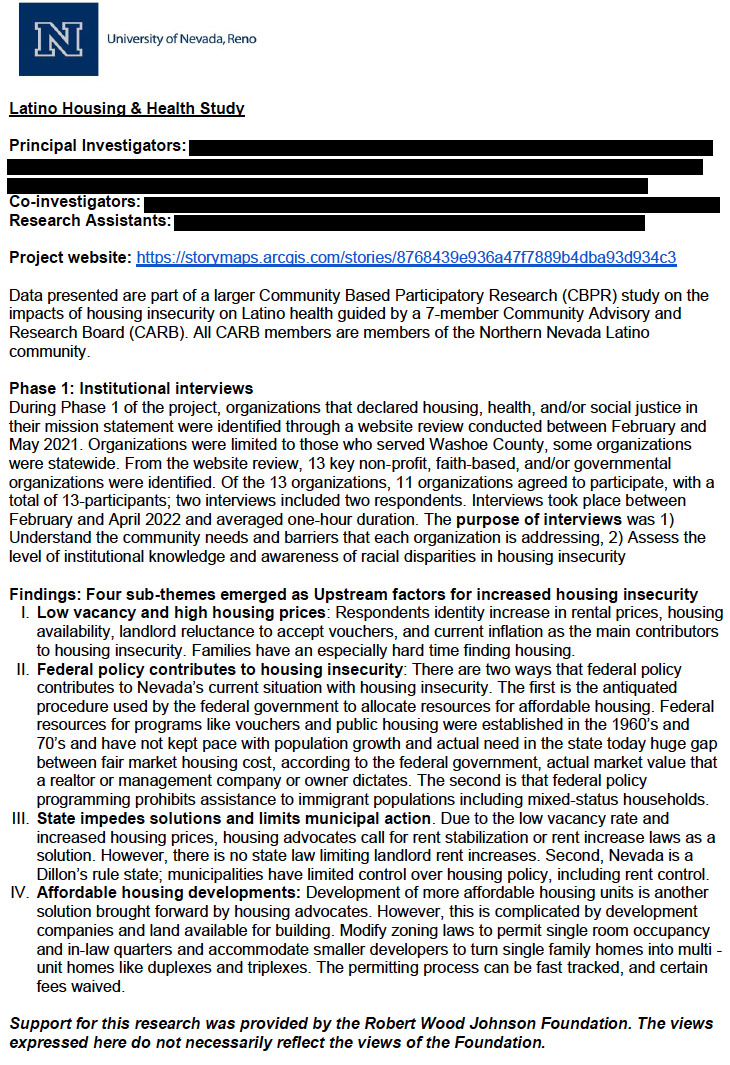
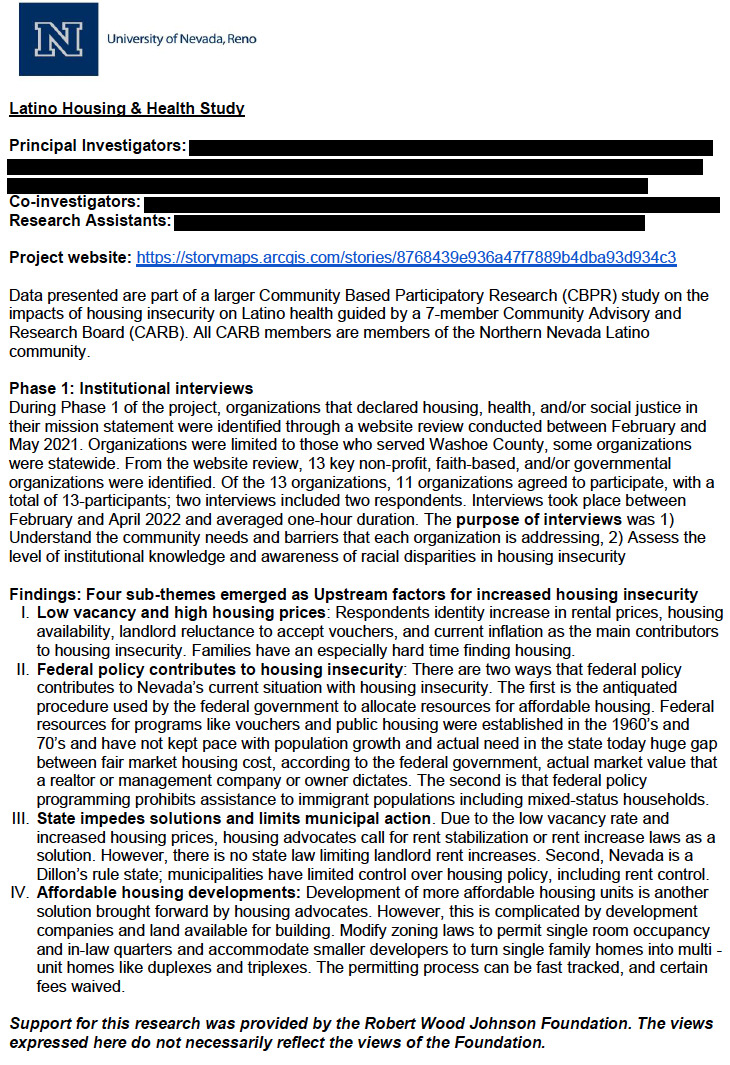
The one-pager was a brief but intentional method, designed with temporal transparency, tailored for legislators to address the findings and purpose of our study on Latino health and housing with an emphasis on possible policy-creation impacts. This approach was attentive to the time-constrained decision-making timelines while preserving the integrity of research findings. The sheet provided a clear overview of the identified conditions for a disproportionate impact on the Northern Nevada community. It emphasized the need for policy interventions to address structural inequities, protect renters, and outlined evidence-based recommendations to support healthier, more stable living conditions. Designed to be accessible and actionable, the information sheet served as a critical tool in bridging research with legislative advocacy at the state and federal levels (see Figure 1)
Sharing Resources through House Visits and Community Housing and Health Resource Fair. The team conducted house visits between 2021-2023 with participants as part of a relationship-centered approach grounded in temporal synchrony. Visits were not an original part of the research design, rather they emerged from our community partners who wanted our research approach to be authentic. These visits were designed to build relationships rather than create transactional research encounters and gather deeper contextual understanding of participants’ housing experiences. Visits were aligned to participants’ schedules, home lives, and relational expectations.
Recruitment began primarily at the Mexican Consulate and through community tabling events at congregations, where interested individuals signed up by providing their contact information. Follow-up calls invited them to participate in house visits, allowing the research team to meet families in their own environments. House visits were structured to build trust and to honor community time as meaningful labor reflecting a commitment to temporal reciprocity. These visits began with short conversations about transportation, school access, and family composition, and gradually expanded into discussions about living conditions, safety, and resource needs. In addition to readying participants for the upcoming community mapping session and observing participants’ living environments, the team provided information on relevant resources, responsive to individual and family needs identified in conversations.
House visits and study outcomes indicated the community had a direct need for more connections to existing community resources. The community housing and health resource fair, held in August 2023 at the end of data collection, emerged as a culminating community event informed by team insights from both the house visits and community mapping sessions. The event operationalized temporal sustainability by translating research into action by sharing key insights on the link between housing conditions and health outcomes, while also offering on-site resources such as housing assistance information, wellness education, access to clinics, and even the state’s Mexican Consulate for support with status.
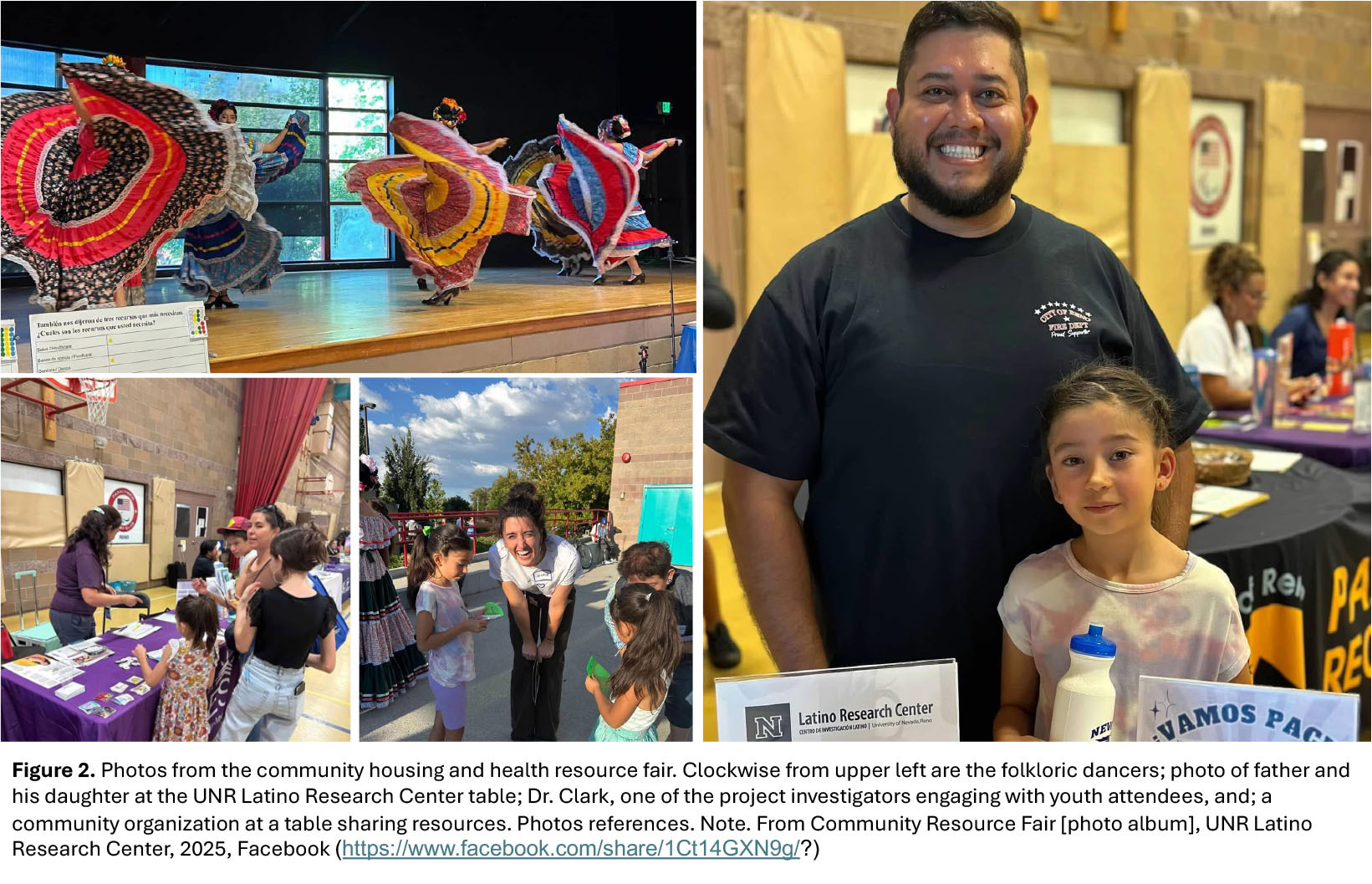
The fair reflected cultural accountability through its design and programming. By partnering with local organizations and service providers, many of whom were identified as important resources by research participants during our community mapping sessions, the fair created a space for dialogue, empowerment, and tangible support. There were 250 meals served, along with folkloric dancing, music, and other fun forms of entertainment to help engage families in the research findings in a proactive and fun method (see Figure 2). This reinforced the commitment to community-informed solutions and equitable access to care and fostered an atmosphere that respected cultural rhythms and communal modes of engagement.

Participants received bilingual resource lists, Costco memberships, and gift cards as tangible expressions of appreciation, further enacting temporal reciprocity by acknowledging the cumulative time, trust, and knowledge contributed throughout the research process. The event also featured branded project T-shirt, designed by CARB members, for the research team that fostered a sense of identity and visibility. The event layout was designed strategically so that attendees would need to pass by the research team’s table, thereby ensuring ongoing engagement and reinforcing temporal transparency by keeping the research process visible, open, and ongoing. The fair, likewise, provided an opportunity to share preliminary data from community mapping sessions in an interactive setting.
Community mapping discussions centered around an interactive and collective mapping activity that asked participants to affix sticky notes with written responses to questions to a series of aerial maps of their zip codes and neighborhoods. The notes reflected aspects of their spatial experience in their home, neighborhood, and city. The interdisciplinary research leaders collected and analyzed these responses in addition to transcripts of a focus group discussion reflecting on the map. We translated the list of responses related to household and neighborhood challenges onto large foam boards and asked attendees to place a sticker next to challenges that resonated with them. In addition to this activity, we set up an exhibit with the Storymap projected onto a screen and a QR code.
The Data Fact Sheet and Podcast. The team developed an at-your-fingertips resource for all community members in 2024-2025, offering a clear and accessible summary of the scholarly findings from our study. This dissemination strategy reflects a commitment to temporal synchrony, recognizing that academic research can often feel distant or difficult to navigate, the fact sheet translated key data points, trends, and recommendations into everyday language, supported by visuals and culturally relevant examples advancing cultural accountability by situating statistical findings within the lived realities of the community. Its purpose was to empower residents, advocates, and local organizations with quick, actionable insights that reflect the lived realities of the community and support informed decision-making, advocacy, and dialogue around housing and health equity. To further expand the reach of our findings, the existing Latino Insights podcast (podcast episode Latino housing security and mental health dated Jun 10, 2025) was used to share the study’s insights through a unique dialogue that reaches scholars, advocates and community members.
The podcast format supported temporal sustainability by embedding the findings within a platform that remains available over time and reaches audiences beyond the lifespan of the study itself. Through dialogue rather than one-directional reporting, the podcast made research outcomes more relatable and engaging for scholars, advocates, and community members alike, reinforcing the project’s commitment to dissemination practices that honor community time, cultural context, and diverse modes of engagement beyond traditional academic channels.
Discussion
Considering Time in Dissemination
ArcGIS StoryMap. Time was an explicit concern and consideration in the design, creation, management, and dissemination of the StoryMap. This product inserted synchrony into the project because we were able to update the map in real time, any stakeholder could see what the project had done and identify what activities were next. As a publicly accessible Spanish and English language digital project hub, the StoryMap facilitated project transparency through the duration and after the end of formal data collection. It served as a passive ‘touchstone’ for participants, recruits, and community members, where other means of communication potentially pose burdens.
For example, in compliance with the Internal Review Board Human Subjects Approval, recruits and participants are provided recruitment and consent scripts which provide investigator contact information in the event of questions or concerns. These scripts are formal, often abbreviated, and require recruits and participants to initiate contact. The StoryMap provided an extended and accessible summary of the project, including information about project investigators and community advisory board members on a range of digital devices. This clear visual allowed community members to glean into the project intentions, involved stakeholders, and more. Essentially, it moved from a space of simply referencing or mentioning to demonstrating an accessible, tangible, and concrete output of the project. The distinction between mere mentions versus having a tangible and concrete dissemination product helps to address our dissemination method to include an integrated dissemination approach that interweaves the intended aims of CBPR (Blachman-Demner et al., 2017).
The StoryMap reinforced the critical values of CBPR with regularity, focusing on the CARB as equal participants, recognizing their involvement and contributions (temporal reciprocity), as well as placing the community at the center of the work (Blachman-Demner et al., 2017). Likewise, this dissemination product created opportunities for reach beyond the centrality of the community. To illustrate, McDavitt et al. (2016) underscored the importance of drawing on established relationships, as well as conducting pre-meetings with gatekeepers. With these elements at the forefront, the team leveraged ACTIONN and the LRC longstanding community relationships to share the StoryMap, particularly during partner-related conversations regarding health and housing, examples of cultural accountability. Even more so, some entities (e.g., gatekeepers), were provided the StoryMap to help provide a preview of the content and share ideas of how further dissemination or use could occur. In those scenarios, this pre-meeting helped to serve as an introductory next step to have the IRLs gain an entry point into further dissemination avenues.
Our first year of grant funding coincided with the COVID-19 pandemic, which precluded all in-person engagement for the first year and hybrid options in subsequent years, following the commencement of the CARB. The Pandemic posed an unanticipated ecological temporality that required adaptation. Again, the StoryMap provided a remote platform for sustained contact between interdisciplinary research leaders, partners, CARB members, community members, participants, and stakeholder organizations during these times of restricted in-person contact. In the early stages of the project, we utilized the StoryMap to communicate and update the project timeline as part of our sensitivity to temporal transparency. Research projects with such an extensive network of collaborators take time; moreover, the project timeline necessarily changes in response to institutional and societal delays or partner and participant needs.
Research Brief for NV Legislators. The legislative world operates on its own distinctive calendar. Communication to decision-makers required temporal transparency because once we were informed about legislators’ visits, the time pressure to create materials was immediate. The state of Nevada holds legislative sessions once every two years; agenda-setting for these sessions is a long-term strategy (Dabelko, 2005). In the interim, research briefs provide important information on pressing social issues that can inform these strategies. Translating research into policy requires time; on the other hand, legislators are often short on time and brevity is required. Our briefs were intentionally short, one-pagers, and focused on the critical points, clear recommendations, and had an at-your-fingertips view of tangible opportunities. Working with the Latino Research Center, which, while non-partisan, maintains direct connections with policy makers and leaders through the institution’s Office of Government and Community Relations, was vital to disseminate the political implications of the work. This relationship served to mediate opportunities whereby legislative visits to the institution allowed for transparent sharing of the one-pager. This included publicly elected officials at the local, state, and federal government. Gollust et al. (2025) affirmed that dissemination science carries important constructs regarding time and sharing of information for a lasting impact. In this way, the one-pager fact sheet was not intended to detail the entire study process, nor was it a completed study; rather, the preliminary findings provided essential needs that evidenced important opportunities for impact, regardless of a completed and much more time-intensive process of systematic research. This further allowed for the suggested differentiated and comprehensive set of experiences that help to further draw on interpretations of the findings (Gollust et al., 2025).
Sharing Resources through House Visits and Community Housing and Health Resource Fair. House visits were conducted to achieve multiple purposes beyond data collection. Mentioned earlier, house visits were a means of slowing the research timeline to give time for trust building that resulted in increased participation. They reassured participants that the research team was legitimate, caring, and committed to reciprocal benefit, rather than merely transactional engagement. These visits are an example of cultural accountability by integrating cultural strategies for relationship building into project milestones.
In addition to time, we thought about space. Trust-building is necessarily slow and facilitated through demonstrated commitment to relationship building. In our house visits, we directly adapted to the temporal and spatial rhythms and calendars of people’s daily lives. These visits created a personal space for participants to ask questions about the project and their participation in a comfortable setting. For the research problem itself, these visits also encouraged participants to share immediate housing challenges like issues with landlords, parking, or neighborhood safety, that could not be adequately addressed in larger group settings. They also enabled the team to map the geographic distribution of participants in northern Nevada, noting proximity to essential services like childcare, transportation, and healthcare. Importantly, the visits illuminated gaps in available resources, particularly in Spanish, prompting the team to compile a bilingual resource list and strengthen connections to culturally relevant support networks. Observing family dynamics and neighborhood contexts, and the temporal and spatial rhythms of daily life provided insights that could not be captured through phone screening alone, helping the team understand each household’s unique situation and confirm participant eligibility through lived realities rather than static criteria.
The method of dissemination for the community housing and health resource fair required essential strategic and logistical planning to support its success. Working with the LRC which has a positive history of community outreach and had very recently implemented a family financial resource fair, the elements of that resource fair were a strong catapult to implementing one that shifted its focus to health and housing supports. Importantly, the resource fair as a dissemination method may be considered a low-pressure experience, but with high impact from outcomes of CBPR, so this was identified as a key effort that would help bridge the scientific research experience with continued work within the community for shared knowledge and valuable experiences (Kumpf et al., 2024).
In doing so, the first essential element was the timing of the event, both within the calendar year, as well as within the day-of offering. It was determined that at the beginning of a school year would help engage more families, and for the day-of experience, the event was offered from 4:00-7:00 PM for several reasons. Many of the schools have an end time around 3:00PM, so it was determined that for routine movement, this could allow for an after-school experience whereby members could engage without it being too out of their way from their routine commute. Additionally, it overlapped with varied family dinner time options to allow for attendees who might have 5:00 PM or later end-of-shift hours.
Within that evening timeframe, the opportunity to also entertain and feed families was an additional element, along with hosting it at a known location. The site location selected was a community center, which was not only a community hub within an area that predominantly served the target community within the study, but it also tended to be a host site for other widely known experiences, such as a mobile visit center for the state’s Mexican Consulate, had nearby community health center, and a women and children’s center - all of which were frequently visited by community members. These supported access to a broader reach by the literal placement of the community resource fair’s chosen site location.
Given its community hub, we noted that embedding food and entertainment was also critical. The free food option served to kindly incentivize attendees for their engagement, while recognizing unique family dynamics. It was acknowledging that we were requesting families to join us within typical dinner hours, and we, therefore, supported their commitment through providing a family meal. The food offering served additional purposes, though. This created an opportunity to contract with a local community-centered food truck, which helped us to integrate a culturally relevant and culturally sensitive lens. Indirectly, this event helped support a local business, but directly, this also helped to expand community reach because the food truck also advertised that they would be providing food at the event. To appropriately track the funding source and ensure transparency, we advertised that the meals would be provided for free for up to 250 families (due to funding limitations). However, we also sought additional partners as sponsors who amplified support, such as with free candy, churros, aguas frescas [fruit-infused drinks], and more. Each family, upon entering the community center, received a ticket to gain access to their meal, and it also helped us track attendees because, having run out of tickets, we had met our intended community reach. They were met and greeted in this way at the entrance of the community center; the resource tables were placed along the walls of the indoor facility, and the food truck was on the opposite side of the community center, which gave visual sight to its neighboring playground area. This also allowed for an intentional pathway as to how the foot traffic experience was strategically planned for attendees. Along with the food experience, the entertainment was strategically sought and embedded within the community resource fair’s agenda.
An additional time-constructed aspect to this dissemination method was the entertainment. The entertainment helped underscore the importance of cultural humility and recognize identity in the work of this project, both essential to CBPR (Collins et all, 2018). Oftentimes, entertainment is placed at the beginning or end of an event. In the beginning, these are introductory for the audience; at the end, they can close out the experience. While we acknowledged these essential logistical aspects, the Latino Research Center intentionally aimed to position the entertainment presentation midway in the community resource fair’s timeline. The showcased entertainment included folkloric dancers, and our engagement with them was also two-fold. First, the folkloric group that was invited to perform is a sizable, well-known community group with many families. With a significant number of children performing, we believed it would further draw in multigenerational families (from the children to the grandparents). Second, the meaningful placement midway on the program agenda was to help ensure that people did not simply arrive at the beginning or end of the event to view the performers; rather, an intentional midway placement could help to draw in more attendees at a steady pace. Certainly, beyond this performance, we included a local disc jockey who played music and made announcements throughout the entire event. During the event, there were several local media professionals who further promoted the event to tie it back to the research study. They did live sessions, community interviews, and photography that reinforced the method of dissemination for our community resource fair.
The Data Fact Sheet and Podcast. The fact sheet was a culminating representation of the entire project. The release of the fact sheet helped to ensure the CBPR process remained, with continued commitment from all members. The fact sheet was no longer a preliminary focus, but it helped to more explicitly note and address critical needs concerning health and housing in the community. Even more, it helped to place it in various settings by the CBPR team and across its network. For the LRC, specifically, the organization helped to remind community stakeholders of the work of the IRL, the importance of its findings, and the continued commitment to help drive change. It gave any community member access to the information in a way that would also be beneficial to that entity. For example, a local radio station could use the fact sheet to draw attention to the need for more resources, or a local journalist could help amplify voices through their broader social media reach. At the same time, it is important to indicate that the fact sheet was not simply a hardcopy paper, but it was also in electronic formatting with the option to use a weblink for broader access. This allowed for placement in the Research Center’s monthly newsletter (with over 300 entities as subscribers), along with the ability to provide one-to-one connections by simply texting it to someone via a link. This flexibility enhances opportunities for more nuanced dissemination than may often be implemented in CBPR.
In this dissemination method, the release of a podcast episode through the UNR Latino Research Center helped to serve as an alternate and supplemental avenue for dissemination. In alignment with the guides of CBPR, this helped to create a balance among digital and non-digital dissemination formats (Marquez et al., 2022). Podcasts have become a relevant tool in dissemination strategies. DeMarco (2022) affirmed that podcasts increasingly have a place in academia. The reach of podcasts is intentionally different than that of an article, which may often have reduced visibility (DeMarco, 2022) whereas a podcast may serve to diversify the dissemination, while still serving as an educational tool for its audience.
While not a dissemination product, the IRL Team and CARB would meet after each data collection and dissemination event to debrief and share thoughts and reflections. We would ask about the things that did or did not work well in the event; what team members heard from participants, items or activities that needed to be redesigned for the next event. These debrief sessions, along with monthly CARB meetings, contribute to the team’s temporal sustainability, planning for post-grant continuity of relationships and benefits.
Conclusion
The Latino Housing and Health study illustrates that dissemination is not a single event but an ongoing, relational process that requires intentional alignment of academic and community timelines. By prioritizing synchrony over speed, reciprocity over output, and durability over deliverables, we reframed dissemination as a shared responsibility rather than a one-sided academic benefit. This approach strengthened trust, enhanced transparency, and ensured that knowledge sharing was meaningful and culturally grounded.
Embedding and being attentive to forms of temporal justice into dissemination practices offers a pathway for more equitable research partnerships, recognizing time as a moral and relational resource as opposed to an institutional constraint. Ensuring communities participate at their own pace affirms their authority in shaping research outcomes. Future CBPR projects should adopt temporal mapping and flexible grant structures to support relationship-building phases and sustained engagement beyond project completion.
We recognize this would require policy and structural reforms to sustain this approach. It would require funding agencies to incorporate flexible relationship-building phases into grant cycles, and universities to revise tenure metrics to reward sustained community engagement rather than publication frequency. These changes would contribute to making time equity a standard in research practice. We encourage researchers, funders, and institutions to adopt temporal mapping, prioritize cultural cycles, and commit to dissemination strategies that honor community timelines. Doing so will not only improve research relevance but also advance equity and trust in the pursuit of change. Ultimately, when academics attune to the rhythms of community life, dissemination becomes a complementary act to designing action.