Background and purpose
Historically, scientific dissemination has focused on academic audiences. Yet, funders, researchers, and community members increasingly advocate for sharing research information with the community (Cunningham-Erves et al., 2020). To effectively translate research into real-world solutions that improve community health outcomes, we must engage community members in all aspects of research, including dissemination. In our practice-based research network’s overarching dissemination strategy, we prioritize community members as an audience segment, alongside our research participants, practitioners, researchers, and policy makers. We set four specific goals for community-focused dissemination: 1) share the results of individual research studies, 2) demonstrate the valuable contributions of community members throughout research processes, 3) develop relationships between researchers and community members, and 4) increase community understanding of research processes.
For this work, our target audience is community members who live in the neighborhoods surrounding our medical school campus in Augusta, Georgia. This community hosts an overrepresentation of healthcare availability and active clinical research, yet it is ranked among the least healthy counties in Georgia (Cafferty et al., 2023). In a previous study in our community, local residents voiced that they rarely saw the outcomes of the research at the medical school (Williamson et al., 2026). In response, our academic-community collaboration developed and implemented a direct-to-community dissemination tactic to share study findings: community research posters.
Scientific posters are a common medium for disseminating research findings to academic peers (MacIntosh-Murray, 2007). We transformed the traditional academic poster into an accessible, community-focused visual presented in community spaces at events such as health fairs. As a tactic to reach community members, we selected in-person poster presentations for their capacity to communicate information with words and images, which can increase audience comprehension (Houts et al., 2006), and for their ability to stimulate active learning through the interaction between poster presenter and viewer (Ilic & Rowe, 2013).
By design, posters are a translation of the original information into a distinct visual product that is not simply a report summary (Burnett & Hoffman, 2025). The translation process from report to poster requires designers to make technical information available and accessible to audiences. In community dissemination, the audience is likely non-expert which requires the designer to translate complex content into plain language and simple visuals (Plain Language Guide Series). Communication science provides actionable approaches for audience-centered design, including audience segmentation, targeting, and tailoring (Kreuter et al., 2000; McGuire, 1981). As communication scientists and community-engaged researchers, we apply communication science approaches with the inclusion and empowerment of audience members, or community members, in the translation process. This paper describes the translation process from report to community research poster.
Community research poster translation process
The catalyst for this participatory dissemination innovation was an Augusta University Institutional Review Board (IRB) initiative to expose neighborhood residents to research activities at the university that began with an IRB-hosted event at a local church in December 2023. Across two years, we developed, implemented, and refined the innovation through a collaboration between HamesNet (practice-based research network) and the HUB for Community Innovation, a local community center. In each iteration, we refined the process to maximize feasibility, sustainability, and community engagement.
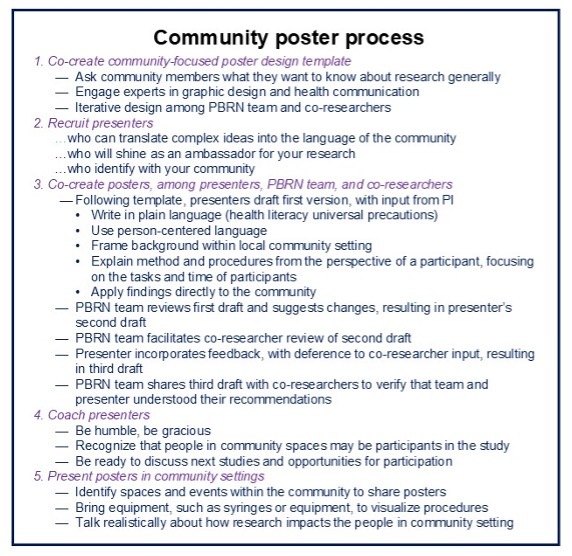
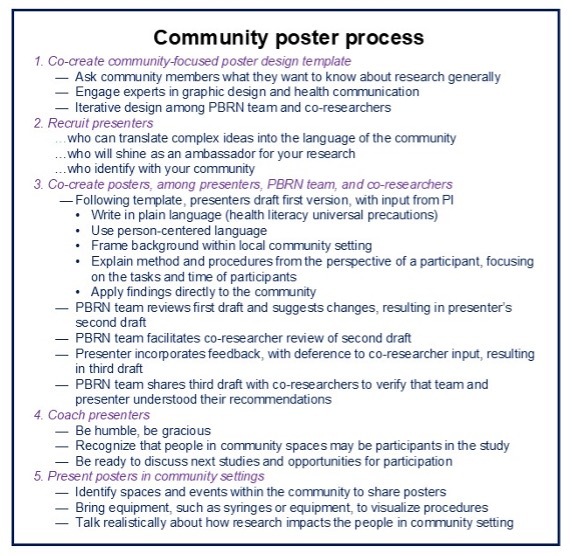
Informed by the National Academy of Medicine’s Conceptual Model for Meaningful Community Engagement (Organizing Committee 2022), the 5-step process includes: 1) co-create a community-focused template, 2) recruit presenters, 3) co-create posters, 4) coach presenters, and 5) present posters in community settings. See Figure 1. This process takes up to 3 months depending on the availability of co-creators to meaningfully participate in the process.
Step 1: Co-create a community-focused template
A template simplifies the design process for designers. It can make posters more accessible for audience members as they anticipate the organization of information within one event. Templates can also create problems for poster users because it allows the designer to not think through each design decision and its appropriateness for the audience (Burnett & Hoffman, 2025). We chose to develop templates before each event to facilitate timely design and force designers to think through choices.
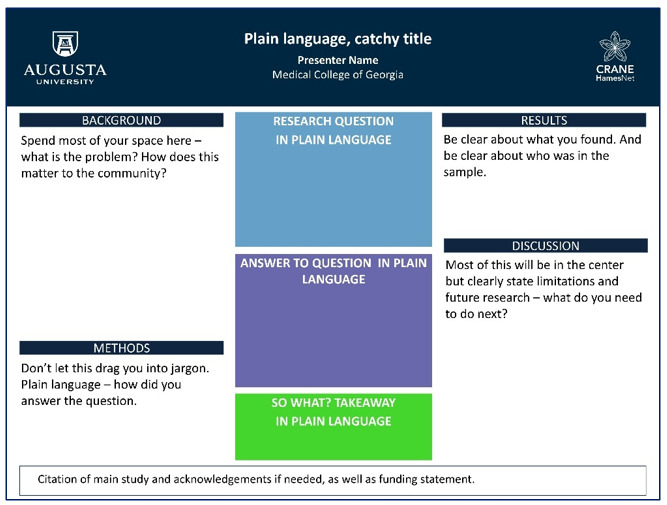
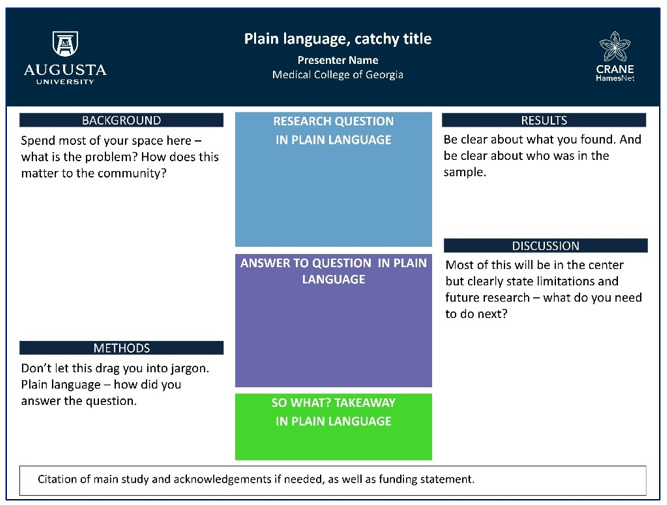
As researchers, we started the process with our pre-existing mental model of research posters (Matthews, 1990). Using the traditional spatial format of research posters, we started with a horizontal plane and a columnar format. We included textual sections for background, methods, results, and discussion, which reflected our normative use of research posters. We created a center column with graphic cues to attract attention to the research question, answer, and application. We included this center column in response to our community-engaged research that revealed what community members want to know about it (Cafferty et al., 2023; Ledford et al., 2025; Williamson et al., 2026). See Figure 2 for the original template we created.
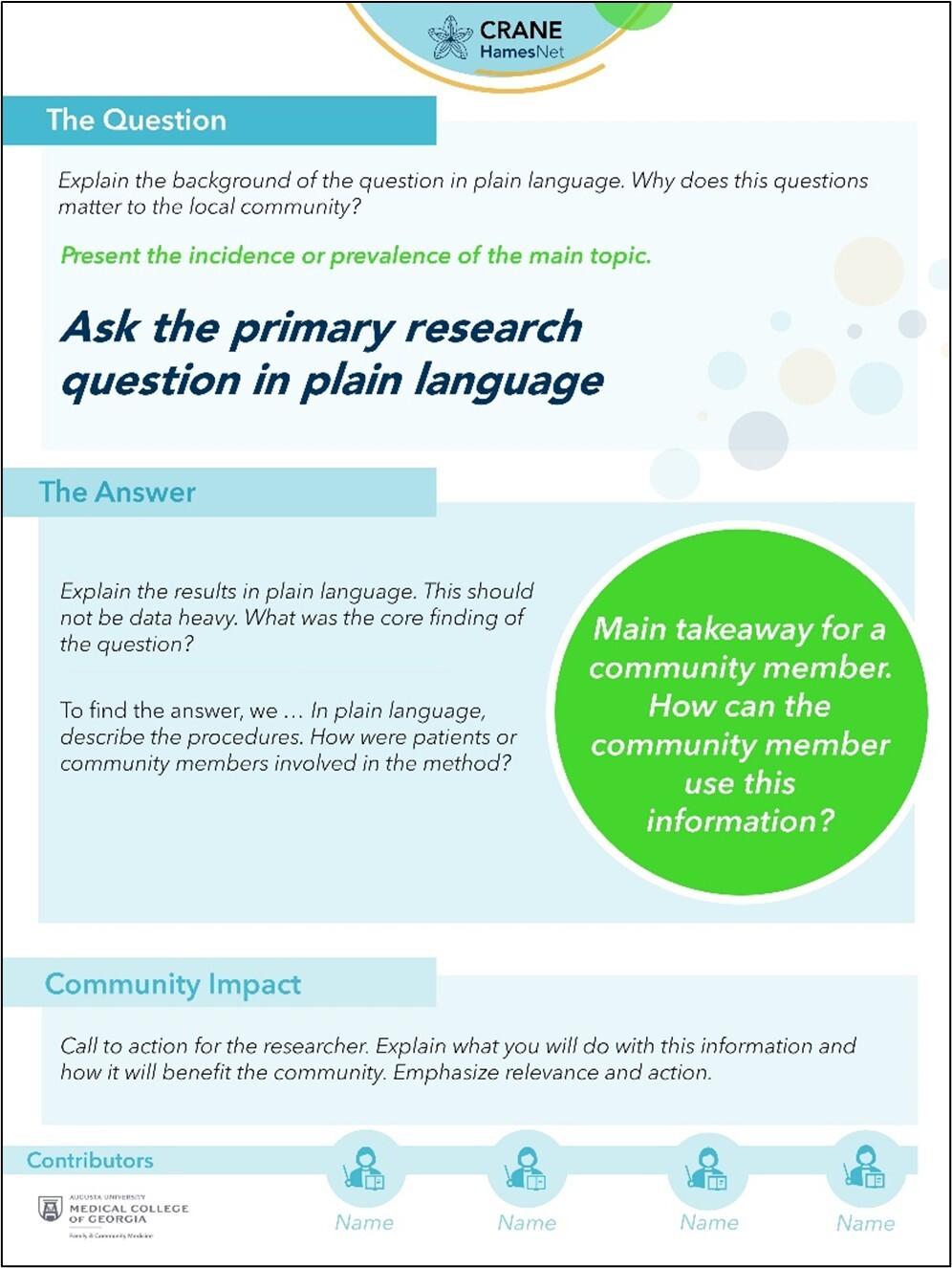
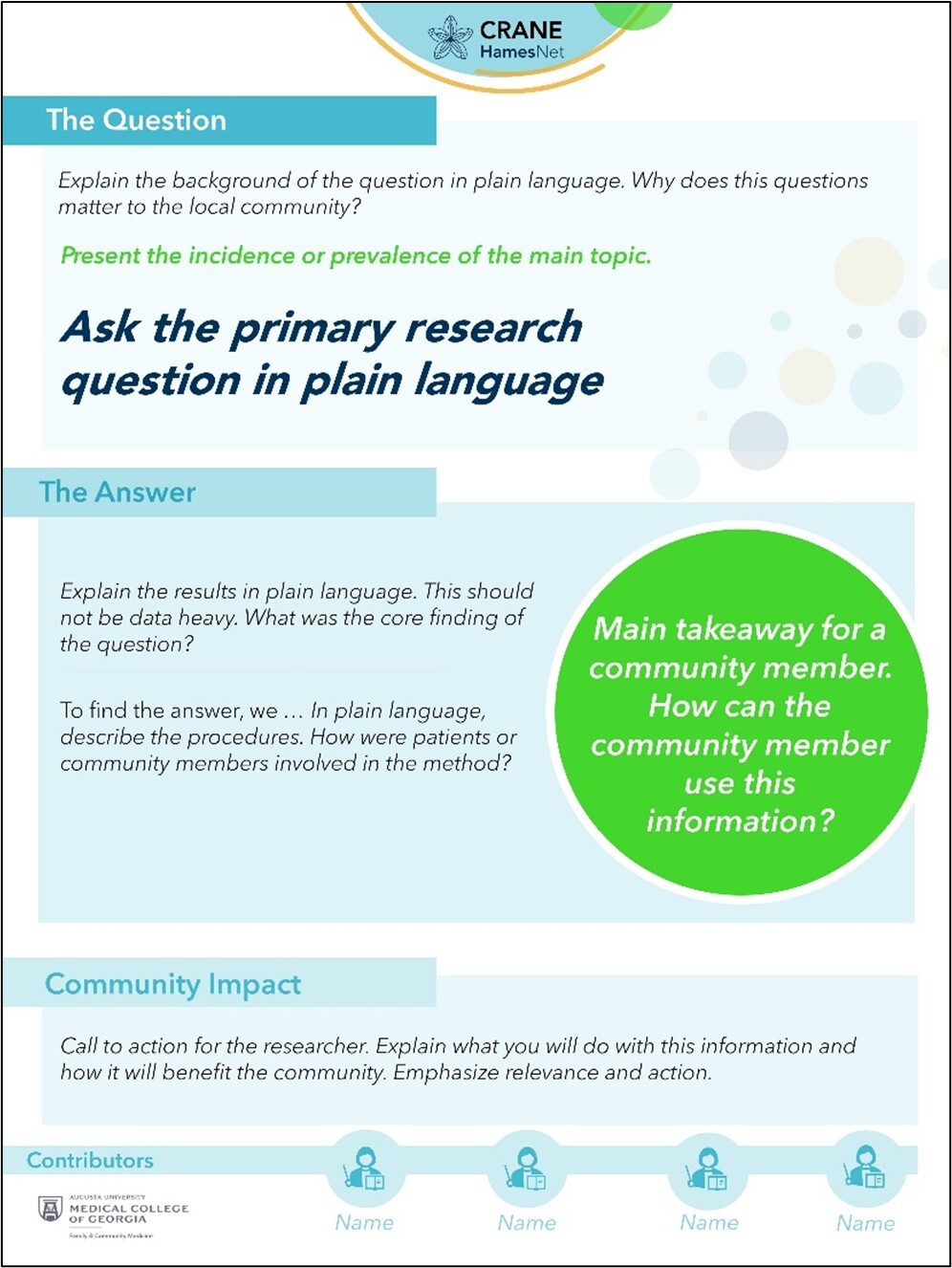
As our team engaged with community co-researchers and community member attendees across the process described here, we continuously refined the template. Through these iterations, we moved further from the traditional research poster. Notably, we shifted to a vertical template. This format facilitates the printing and distribution of handouts that mirror the poster. Second, we simplified the sections of the posters, further focusing content to how the information impacts the community. Figure 3 below presents the current (third iteration) template. After each iteration, we incorporate lessons from community co-researcher inputs into the template and orientation instructions for presenters.
Step 2: Recruit poster presenters
As we built the first template, we deliberated about who would be the most effective communicator to present posters within the community. A community research poster presentation would require a presenter who understood the research study and could describe it in plain language. The presenter also needed to be comfortable talking with people in the community who may have contrary or challenging questions for the presenter. We selected first and second year medical students for their novice understanding of research concepts and jargon. Through an interview process, we select students who are highly skilled at interpersonal communication and interested in community health. Medical students are enthusiastic and motivated to invest time in iterative poster design. Current trends in medical education have incentivized students to maximize their participation in research processes (Elliott & Carmody, 2023). We select up to 10 students to participate in each cohort of presenters.
As we interview students, we identify what research projects they are supporting. At community research poster presentations events to date, students have presented a wide variety of research topics and methods, from a retrospective study of adverse childhood events to a survey study of health implications for college athletes in the Name, Image, and Likeness programs. The role of each student on the research projects has also been variable. Some students supported the research projects in design or data collection stages while other students joined projects when they reached the dissemination stage.
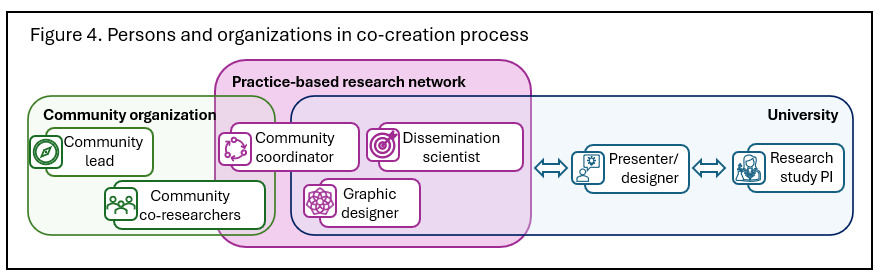
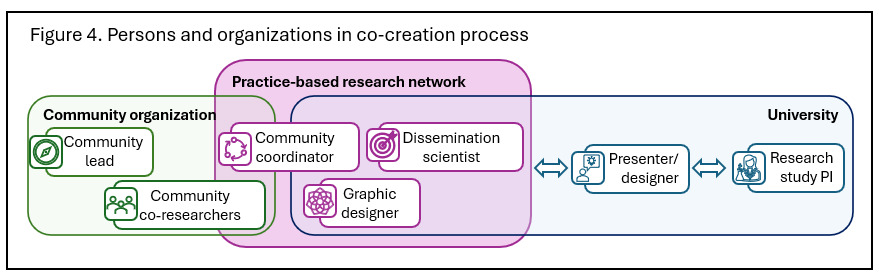
We charge poster presenters with the design and presentation of the poster. Throughout the co-creation design process, poster presenters are the linking pin between the PBRN dissemination team and the research study’s principal investigator (PI) (Graen et al., 1977). Linking pin positions are team members who span two distinct groups (Likert, 1961). Through consistent, meaningful communication, they are integrated members of two teams to facilitate the flow of communication, influence, and resources between the groups to enhance mutual understanding and cooperation. The poster presenter meets regularly with the PI and their research team to understand the research to be presented, while they separately meet regularly with the PBRN team to translate the research report. Figure 4 illustrates the linking pin position and the two teams that link.
Step 3: Co-create posters
Co-creation, a core principle of community engagement (Organizing Committee 2022), is an iterative process in which the research team and poster designer collaborate with community members in the design process. The co-creation process engages the PBRN team, community co-researchers, and the poster presenter. After selection as a presenter, the presenters attend an orientation meeting with the PBRN dissemination scientist who explains the purpose and design of community posters and the template. The presenter drafts the first iteration of the poster, with information from their research study, filing in the text sections of the template. The presenter then meets with the dissemination scientist to brainstorm graphic options to include in the poster.
After the presenter completes the first full draft of the poster, the PBRN team meets to review the poster and discuss potential changes. This team includes a dissemination scientist, a graphic designer, and the community coordinator who is a local community resident with certificate level training in medical assisting. The review focuses on readability, accessibility, and relevance. Team members identify changes to jargon, overly complex ideas, incomplete ideas, inappropriate language and/or images, with a focus on plain language guidelines (Plain Language Guide Series). The team sends recommended changes as pen-and-ink edits to the presenters who then make changes, coordinate approval from the study PI, and resubmit to the team. For example, in a poster describing a new method for refilling intrathecal pumps, the poster presenter initially had multiple instances of highly technical jargon. Across drafts, the poster presenter more clearly defined the mechanism and used the plain language “pain pump” to name the device. After feedback, the poster presenter also included an illustration of where the pump is implanted on a person’s body.
The team then presents poster drafts to our Co-Researcher Activation Network (CRANE) group (Ledford et al., 2025), a group of 9 community members who convene as co-researchers to create solutions in response to local health problems. This group is local residents who attend group meetings 4-6 times per year to talk about what is important to the community and how we can better serve them. The group is not trained researchers or employees of the university, and they are demographically representative of the community. The Community Lead of our partnering community organization facilitates a conversation about each poster. This process is distinguished as co-creation rather than simple feedback solicitation because of our prioritization of the community voice.
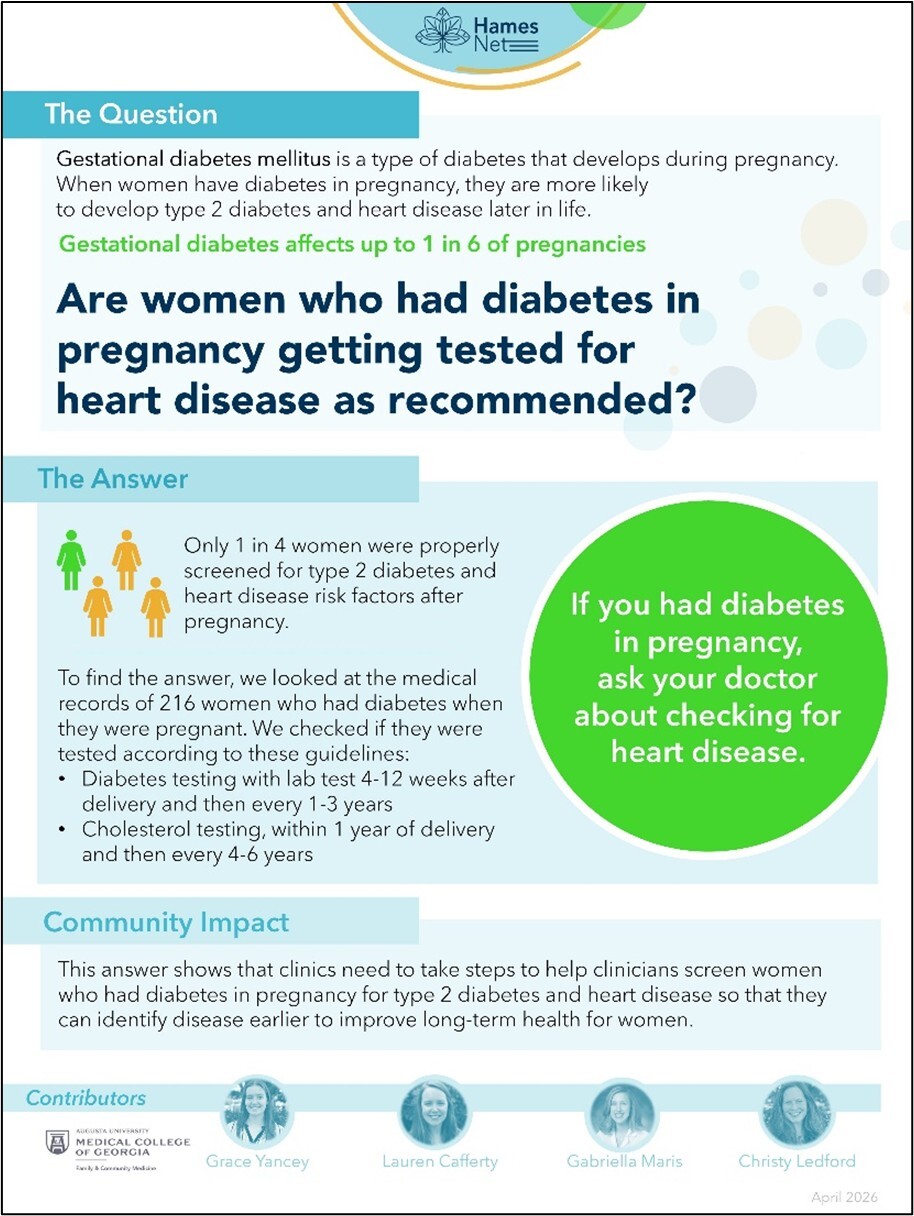
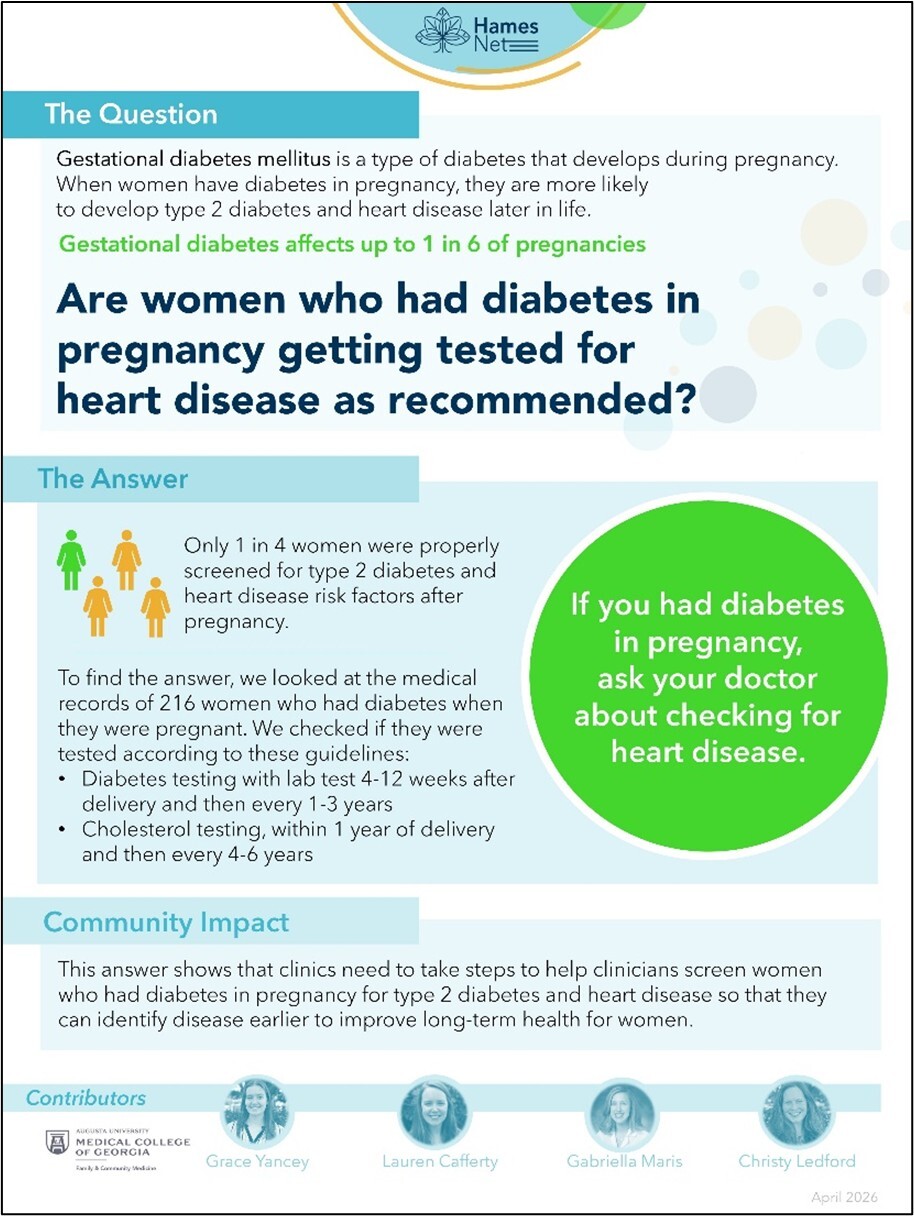
Collaboration requires a receptive attitude toward criticism. Researchers and designers should avoid justifying choices or responding defensively, which may undermine the process of building trust and prove community concerns that researchers ignore them or dismiss their concerns (McDavitt et al., 2016). In line with the principle of co-equal (Organizing Committee 2022), we attend to and honor the information needs and requests of the community coordinator and community co-researchers, standing ready to re-start the design process. Thus, presenters incorporate as many recommendations as possible into the next revision. The community coordinator then reviews the revision to ensure feedback was meaningfully included. She has final approval on poster design. In line with the principle of bi-directionality (Organizing Committee 2022), we also share final drafts with community co-researchers to verify that we understood their suggestions and to demonstrate how we value their input (McDavitt et al., 2016). See Figure 5 for an example of a completed poster.
Step 4: Coach presenters
Only half of a poster presentation is the poster itself. To optimize their effectiveness, presenters need to be practiced at facilitating active learning through their interactions with viewers (Ilic & Rowe, 2013). Even though we select presenters who are highly skilled in interpersonal communication, we still coach presenters on presentation style, with a focus on explaining complex ideas and answering questions.
First, we discuss the overall approach to community dissemination, asking the poster presenter to act humbly and graciously in interactions with community members. We also emphasize that many studies conducted at the university recruited research participants from the local community. Thus, it is possible that community members who see the poster may have been participants in the study described. Second, we teach presenters the principles of explanatory communication (Anderson & Ledford, 2024). Lastly, we encourage poster presenters to talk to PIs about any planned follow-up studies so that they can discuss opportunities for participation with community members.
Step 5: Present posters in community settings
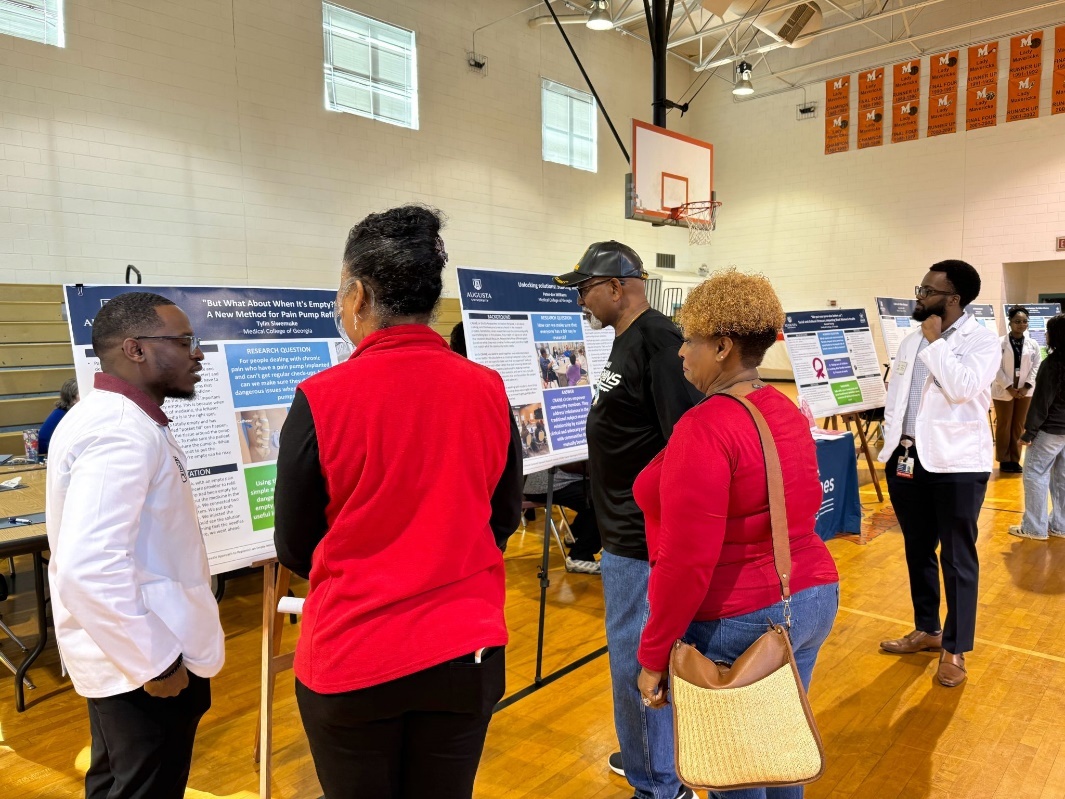
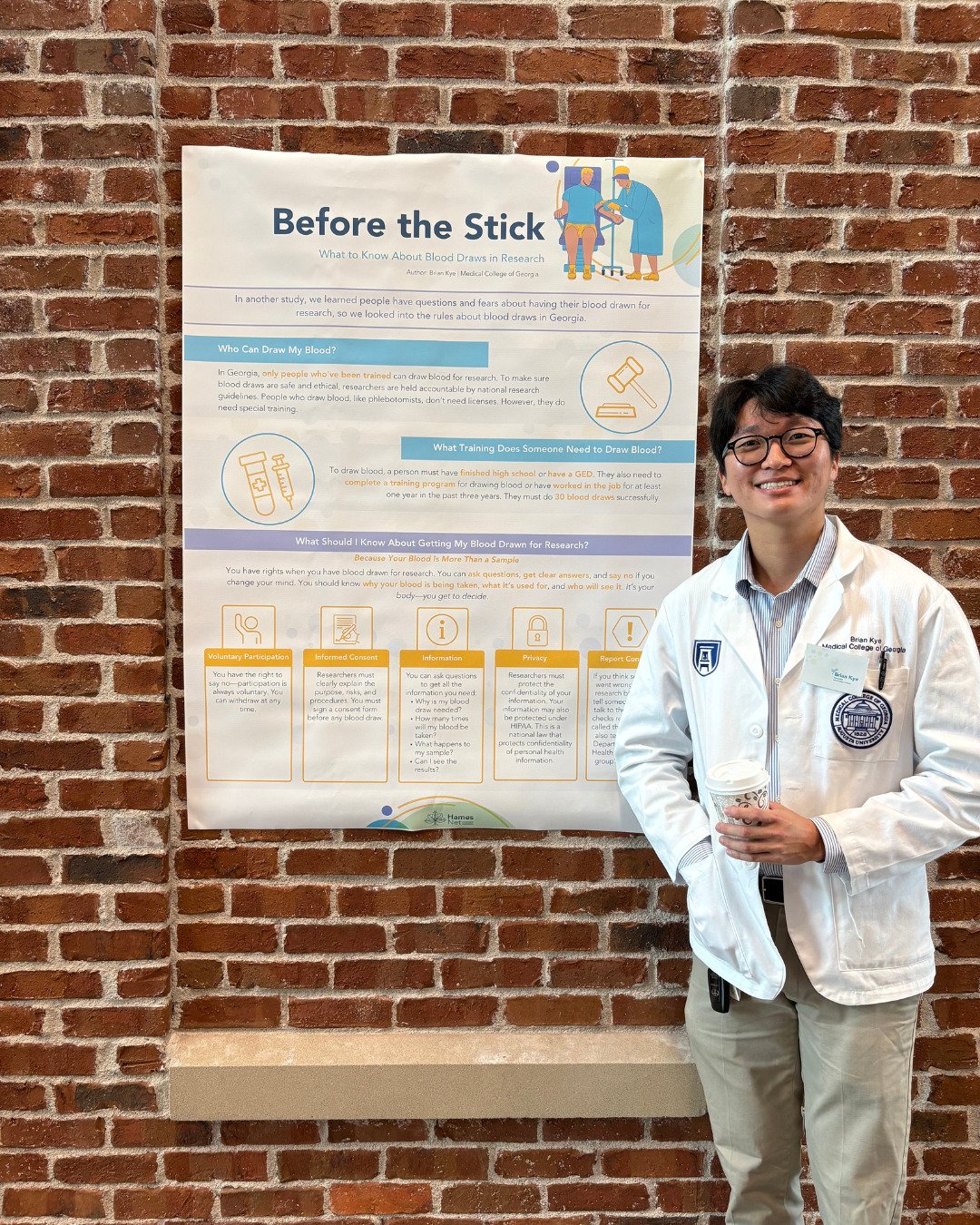
To reach community members with research findings, it is essential to present within community settings rather than remain on university campuses where parking and building access are regular barriers to community attendance. We partner with existing community events such as health fairs, farmer’s markets, and neighborhood celebrations, where we act as an exhibitor. At some events, health screening has been available from other university units or the state department of public health. See Figures 6 and 7.
For each setting, the PBRN team determines the best mechanism for displaying the poster. Depending on the setting, we have mounted the posters to foam board, displaying them on easels, and we have affixed the posters to outer walls. We also encourage poster presenters to bring equipment to demonstrate research procedures, such as vials to illustrate how much blood was used for a trial.

As presenters talk with community members about research projects, we instruct them to talk realistically about how research impacts the people in the community setting. This is more than avoiding overstating findings. It is drawing a direct line from findings to people in the room.

Lessons learned
Since development, our team has replicated and improved the process through three iterations. Presenters have presented a diverse selection of studies (e.g., substance use, pain management, stroke prevention) at three community events, reaching almost 400 neighborhood residents. Across iterations, we have documented lessons learned and made continuous process improvements that resulted in the current process described above. Some of these lessons deserve attention here as researchers consider implementing similar tactics or replicating this process.
Lesson 1: Co-researchers consistently improve research dissemination
The community review process substantially changed posters. The process improved the readability, accessibility, and relevance of the text. Across iterations, the poster sections evolved, driven by community input to rethink the sections. We re-framed the background in the context of the local community (rather than the literature), re-positioned methods from the perspective of a participant (rather than researcher), and re-focused posters on action steps that researchers and community members can take in response to research findings.
The process consistently simplifies complex ideas and removes medical lexicon jargon. As academic researchers, our jargon is so ingrained in our vocabulary that we do not recognize what is learned knowledge rather than common knowledge. Notably, although the academic convention is to use acronyms after a first usage, co-researchers voiced that the repetitive use of acronyms makes them feel like they were not qualified to read the content.
Lesson 2: Templates facilitate translation
The poster template facilitated translation, giving poster presenters a community co-created starting point. Researchers should consider using the templates presented here. However, we recommend that researchers consult with their own community on the form and function of the templates. Just as the template has evolved over time and use within our community, we expect that it could look different in other communities.
Lesson 3: Co-creation requires substantial resources
The process required substantial effort by the PBRN team, co-researchers, and presenters. We began this process with the assurance that our PBRN team has the skills and expertise to conduct this work. Our team included team members with advanced training in communication theory and practice and graphic design. These skillsets enable initial and iterative design work throughout the process. This process also required consistent time and effort from the community coordinator and community co-researchers. Extramural grant funding covered the salary of the community coordinator and subsidized payments to community co-researchers to equitably finance their community engagement.
Beyond effort, this program relies on posters as physical artifacts to communicate findings. The PBRN is headquartered within a university department that owns its own poster printer. This internal resource facilitated faster production and lower costs for the posters themselves.
Lesson 4: Contextual factors built the scaffolding for a successful program
Contextual factors enabled us to overcome common barriers to community dissemination such as lack of institutional support or incentives (Uphold et al., 2022). At the institutional level, community engagement is a named value at our university, which has received the Carnegie Community Engagement Classification. Moreover, this program grew out of work initiated by the university’s IRB. The PBRN team knows that the university supports this effort.
Community dissemination as a practice advances the overall mission of HamesNet (our PBRN) and two of its subnetworks. The CRANE (subnetwork) builds relationships with community members through consistent engagement. The community poster co-creation as well as the presentation days themselves are opportunities for collaborative action in community engagement. The Clinician Academic Development Research Education (CADRE) (sub)network trains medical learners in clinical research.
When we selected medical students as poster presenters, we knew that students had structural incentives to present findings. As structural incentives (such as licensing and board-certification requirements) change, enthusiasm to participate may change. For researchers looking to replicate this work, other groups may be incentivized to act as poster presenters.
At the community level, our PBRN team has strong pre-existing relationships with community organizations. With these relationships, the PBRN team was well positioned to ask community organizations if they would allow community research posters to be displayed at their events.
Lesson 5: Concerted efforts can bridge discipline silos
By leveraging medical students as linking pins to principal investigators, we were able to platform dissemination of a range of research studies, including a diversity of research methods, methodological approaches, and topics. Our program aims to disseminate research findings from across our institution’s research enterprise, bridging discipline silos to the community. This broad programmatic approach facilitates sharing direct dissemination with the community even when the principal investigator did not initially consider sharing results with the local community. Thus, we are pursuing transparency and reciprocity with the community.
Although medical students were the best fit as poster presenters within our university and community, other individuals may be a better fit for other organizations and communities. Researchers should identify who can translate research ideas to the language of the community, who will shine as an ambassador for the research, and who will identify with the community.
Conclusion
Community research posters are a co-created product to share study findings with the community. The process described here is a roadmap for direct-to-community dissemination that can strengthen the reciprocal relationship between university and community. In line with message redundancy (Hsia, 1977) and channel complementarity (Tian & Robinson, 2008), we recommend including this tactic as part of a comprehensive dissemination plan.
Funding: This project was supported in part by a Patient-Centered Outreach Research Institute (PCORI) Eugene Washington PCORI Engagement Award (EASC-COVID-00249).
Acknowledgements: We thank the Augusta University Institutional Review Board leadership and staff for envisioning this important work, and we thank all of the individuals who played a role in sharing research with our neighbors, including students, researchers, and community co-researchers.