Dissemination refers to the distribution of research and evaluation findings to specific audiences with the goal of maximizing its use and benefit to communities (Gollust et al., 2025). Dissemination includes a process of examining knowledge gaps, knowledge synthesis, communication, interaction between different community and research audiences, proactive persuasion, activation of audiences, and research transfer (Baumann et al., 2022). Traditional dissemination has shown gaps in successfully reaching communities that are most affected by social issues examined in research and evaluation. These gaps lead to limited reach, accessibility, utilization, and influence of findings (Uphold et al., 2022). Participatory dissemination can address these gaps by embedding core values and priorities of communities in dissemination strategies. Participatory dissemination—as emphasized in community-based approaches—is a process whereby communities co-construct how findings are shared, interpreted, and applied (Gollust et al., 2025; Valli, 2021). Participatory dissemination includes a range of activities to center community values and priorities: relationship-building, co-interpretation, adaptations for different language and cultural contexts, and ongoing dialogue to understand which strategies work to promote use and relevance (Chiatti et al., 2025). The underlying principle of participatory dissemination is to promote and enhance the utilization and responsiveness of findings by co-developing and implementing plans and activities in partnership with communities. Participatory dissemination has demonstrated benefits in improved understanding of findings, broader reach to community members and increased likelihood of applying findings into action (Gollust et al., 2025; Mosavel et al., 2019; Valli, 2021).
However, guidance on how to conduct participatory dissemination is not well understood and limited in the literature (McDavitt et al., 2016; Mosavel et al., 2019; Valli, 2021). Moreover, how participatory dissemination is conducted in applied settings beyond academic studies is underreported, leaving a gap in understanding how processes happen in real-world contexts. There is also limited guidance on creative participatory dissemination strategies to share findings in ways that are respectful, culturally sustaining, accessible, and beneficial to communities that are marginalized (Lopez & Brakefield-Caldwell, 2005; McDavitt et al., 2016; Vaughn et al., 2013). To address these gaps, the current article provides a conceptually grounded, practice-informed framework for planning participatory dissemination in partnership with communities from marginalized backgrounds. Drawing from multiple case studies and practice-based insights, we demonstrate how the framework can guide co-creation of participatory dissemination strategies using art and storytelling.
Overview on Participatory Dissemination
Like traditional dissemination, there are variations in how participatory dissemination is defined across multiple disciplines (Baumann et al., 2022; Chen et al., 2010; Chiatti et al., 2025; Garnett et al., 2015; McDavitt et al., 2016; Mosavel et al., 2019; Valli, 2021). For the current article, we refer to participatory dissemination as a process that embeds communities directly impacted in (a) collaborative meaning-making and (b) co-production of how to interpret, share and apply findings with broader audiences (Chiatti et al., 2025; Gollust et al., 2025; Valli, 2021). It includes different activities that consist of relationship-building, adaptations, and ongoing dialogue (Chiatti et al., 2025). We also refer to “research” broadly, inclusive of applied evaluations (Wanzer, 2021).
In addition to lack of conceptual consistency, there are gaps in understanding how participatory dissemination is applied and with whom. We view participatory dissemination as grounded in community-based participatory research (CBPR) principles. CBPR principles offer a transformative paradigm for knowledge generation that engages community representatives as critical learning partners–active collaborators embedded in project teams throughout the process. The nine core CBPR principles incorporate trust building, shared power, mutual respect, and mutual benefits to both the research and the community (Israel et al., 1998; Wallerstein et al., 2008, 2019; Wallerstein & Duran, 2010, 2017). Dissemination, as a core principle of CBPR, plays an instrumental role in developing and maintaining community relationships and in promoting social change and action (Bustos et al., 2024; Chen et al., 2010). However, even the CBPR principle does not specify a participatory process to conduct dissemination, leading to variations in how one can apply it. For instance, some studies describe dissemination following CBPR principles as “community dissemination” that target public audiences, yet don’t co-create with community members throughout the process (Chen et al., 2010). Thus, participatory dissemination is a distinct approach that actively engages communities in formalized team roles to co-create strategies. Participatory dissemination challenges extractive research practices, ensuring that community voices shape decisions about how to make sense of data and how to promote access across broader community groups (Gollust et al., 2025; Mayo-Gamble et al., 2022; McDavitt et al., 2016; Purvis et al., 2017).
Participatory dissemination offers many benefits when compared to traditional dissemination (Chen et al., 2010; Garnett et al., 2015; McDavitt et al., 2016; Mosavel et al., 2019; Valli, 2021). Several studies have indicated that engaging communities as critical learning partners in dissemination efforts can increase the likelihood of influencing knowledge, attitudes, and self-efficacy regarding research, as well as participation in adopting recommendations and engaging in future projects (Cunningham-Erves et al., 2020). Engaging communities through participatory dissemination efforts can also foster trust by leveraging the expertise and connections of trusted messengers who reflect the communities (Mayo-Gamble et al., 2022; McDavitt et al., 2016). Of note, empirical comparisons of participatory and traditional dissemination remain limited (Chen et al., 2010). However, existing literature supports the value of participatory dissemination in enhancing cultural relevance, meaningfulness and use of findings.
More guidance is needed on creative participatory dissemination strategies that are effective in engaging communities from marginalized backgrounds. This is consistent with broader characterizations of co-creation with marginalized groups as complex and requiring more reflection and development (Kulmala et al., 2024). Arts-based approaches for participatory dissemination have been successful in increasing the quality of trust, promoting access to knowledge, increasing collective efficacy, and supporting translation of project results into social actions among vulnerable communities (Chung et al., 2009; Goedhart et al., 2021; Leavy, 2015; McDavitt et al., 2016). Arts-based approaches can enhance accessibility and engagement through interactive dialogues (e.g., gallery walks, exhibits). These interactive dialogues make hidden stories, insights, and experiences more visible through accessible communication for diverse audiences (Bruce et al., 2013; Leavy, 2015). Strategies that embody culture, visual art, poetry, performance, storytelling, and other forms of digital media are used to communicate nuance rather than standards (Brown, 2022; Leavy, 2015; Mosavel et al., 2019). Rooted in social justice and community development, arts-based approaches strive for transformation and engage the heart, mind, body, and spirit in the process.
While ideal in theory, creative participatory dissemination using arts based approaches is challenging to implement in practice (Bruce et al., 2013). Challenges often involve time, costs, and additional effort needed to intentionally plan, implement, and evaluate activities (Chen et al., 2010; Garnett et al., 2015; Lopez & Brakefield-Caldwell, 2005; McDavitt et al., 2016). Other challenges may relate to capacity building resources needed to equip partners to be successful collaborators in the process and difficulty of ensuring cultural language of various groups (Chen et al., 2010; Garnett et al., 2015; Mayo-Gamble et al., 2022). Longstanding challenges related to historical mistrust tied to research can also affect the process (Bustos & Wright, 2024; Chen et al., 2010; Garnett et al., 2015; Lopez & Brakefield-Caldwell, 2005; McDavitt et al., 2016; Wallerstein et al., 2019). Few studies examine how to plan ahead in preparation for these challenges and in the context of marginalized communities (Chen et al., 2010; Goedhart et al., 2021; Mayo-Gamble et al., 2022; McDavitt et al., 2016). Action oriented planning for dissemination has been reported as uncommon for community research teams as well as limited in the scope of applied settings (Gollust et al., 2025).
Purpose and Aims
While some frameworks offer guidance on the process of participatory dissemination, little information is reported on the preliminary planning and even less with case examples that apply creative arts-based approaches (Cunningham-Erves et al., 2020; Fernández-Peña et al., 2008; Gollust et al., 2025). This article aims to address this gap by providing a conceptually grounded, practice-informed framework for planning creative participatory dissemination. To develop the framework, the article draws on three cases with communities from marginalized backgrounds in the Pacific Northwest region. Each case demonstrates a participatory evaluation conducted in partnership with community representatives within the context of external contracts. Case 1 is a federally funded arts-based participatory evaluation to understand how to improve collaborations with small businesses. Case 2 is an arts-based audience research study designed to develop a county-wide communication strategy. Case 3 is a participatory research study proposal that was co-developed in partnership with an Indigenous led organization for a competitive state funding opportunity. Cases are focused on different topic areas related to experiences of government contracting for local community-based organizations serving marginalized groups (Case 1), hazardous waste programs that address environmental disparities (Case 2), and uplifting stories of Indigenous stewardship in climate resilience (Case 3). All three cases apply arts-based approaches through storytelling, photovoice and visual arts. Drawing from practice-based insights, we demonstrate the application of the framework across the three case studies.
Methods and Framework
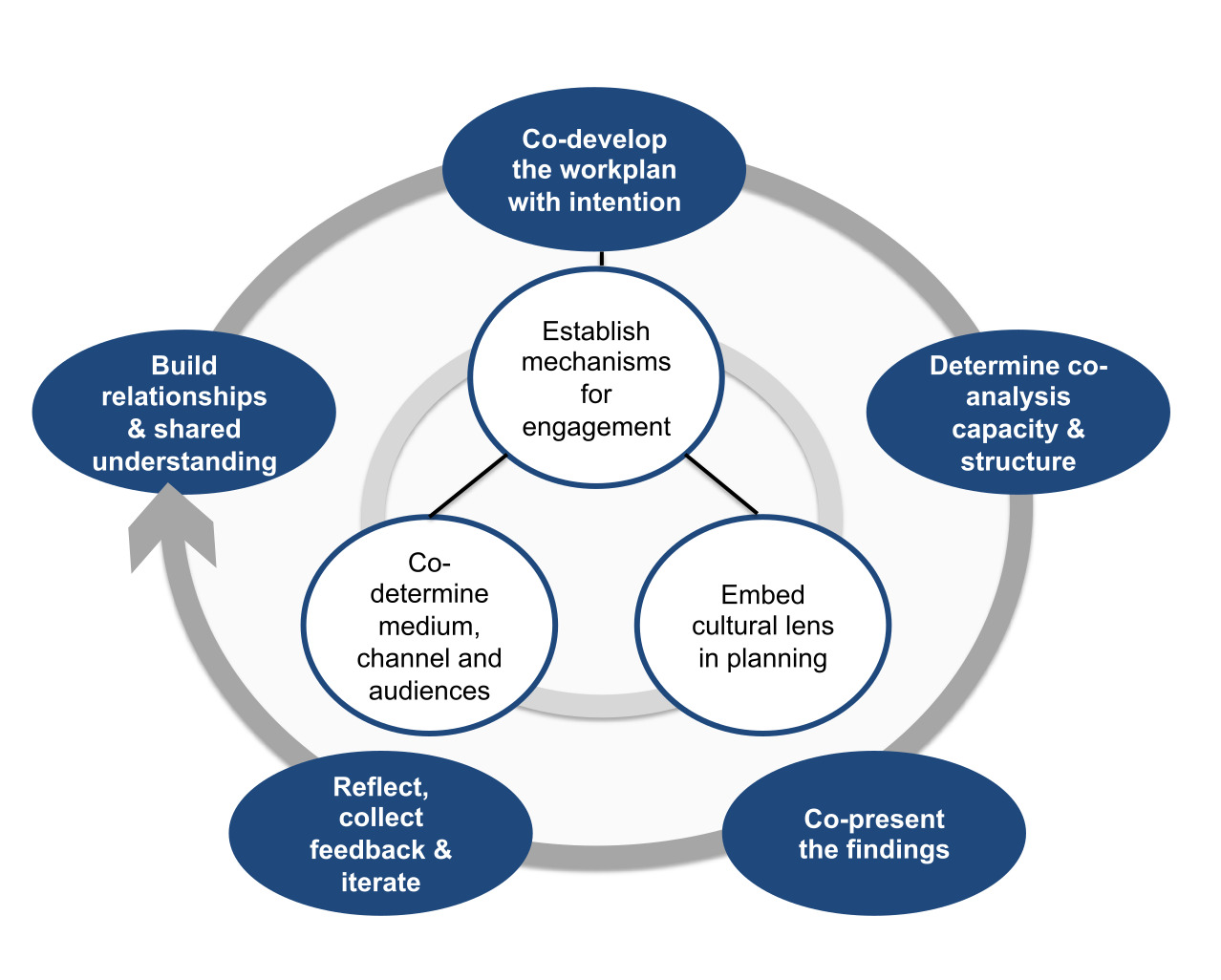
The framework was developed through an iterative, cross case analysis of three evaluation cases applying participatory dissemination with arts-based approaches (Table 1). These cases were selected to show the broad variation and adaptations of dissemination activities that can occur at different project phases. Drawing upon principles from case study approaches, we collectively identified key planning activities, engagement processes, and other strategies used across each case (Yin, 2017). Cases were compared to identify recurring patterns and differences. Through the use of multiple cases, we leveraged principles that strengthen trustworthiness of the findings by underlining common processes and challenges that bind cases together (Miles et al., 2020). Iterative team-based synthesis then organized components into broader domains that were structured into the framework (Figure 1). Grounded in positionality, we embedded team-based reflections to ensure the framework accurately represented practice-based realities across diverse contexts (D’Silva et al., 2016) (see Table 2). For example, we reflected on the value in taking an action oriented approach to planning that leads with intention, early engagement, and initial considerations of resources for project success. Like others, we view dissemination across multiple phases throughout a project, beginning with relationships and requiring ongoing flexibility to accommodate time, capacities and resources.
The resulting framework synthesizes five core processes to planning participatory dissemination based on the case studies and other experiences co-creating with communities. These processes include: build relationships and shared understanding, co-develop the workplan with intention, determine co analysis capacity and structure, co-present the findings, and reflect, evaluate and iterate. Three activities are embedded within the co-develop workplan process: establish mechanisms for engagement, embed cultural lens in planning, and co-determine medium, channel and audiences. The framework is intended to provide structured, yet flexible, guidance for planning creative participatory dissemination strategies.

Team Positionality
Our authorship team reflects applied researchers and evaluators in a non-profit and independent consulting firms. Our work is grounded outside of academia and conducted in partnership with communities–from government agencies, philanthropic organizations, or other community-based organizations. At the same time, we also hold marginalized identities that are shared with the communities we engage. This offers unique vantage points that enhance the quality of the work while also making it more challenging. Our contributions speak to the reality of applying participatory approaches from these perspectives. Brief positionality statements are provided in Table 2.
In the following sections, we describe each process in the framework. We then illustrate the application of the framework across the three cases, highlighting key activities and takeaways.
Build Relationships and Shared Understanding
This component underlines the importance of building relationships with communities to guide planning. We approach communities with intention by listening first to understand their experiences with the issue, their prior engagements in other participatory projects, and their vision for meeting their respective communities’ needs. This translates into planning as we establish a shared purpose, mutual benefits, clearly defined roles, and expectations for how to engage with communities. Activities in this component may include developing a community charter or memorandum of understanding (MOU) to ensure: (1) a collective commitment and shared purpose beyond data sharing, (2) accountability for what we intend to do together, and (3) specify benefits for the research and community. Other activities may include interactive dialogue to listen and learn.
In case 1, the first step of the project was to recruit a community planning committee that reflected BIPOC communities, including Eritrean, Ethiopian, Fijian, and Ñuu Savi. Once recruited, we met with each member individually to ask questions about existing community needs and experiences to initiate trust-building. This was essential for the success of the project because it surfaced hesitations that community members had based on prior experiences working with government agencies. For example, some participants shared experiences where their input was collected, but then there was no follow-up to understand what was done with their input. This indicated that there was a level of distrust we had to navigate throughout the project, given the community’s history with similar efforts done in the past. Taking time to hear these concerns with compassion shaped how we communicated with transparency. We made sure to communicate how we believed our current project would prevent these issues from arising again in partnership with the committee. Committee members were also compensated $360/per meeting for their time and expertise (up to 4.5 hours for planning). We also accommodated their language needs during planning sessions by providing Spanish interpretation services.
Similar activities were carried out in case 2 to understand community context and priorities. Harms from hazardous products disproportionately affect Black, Indigenous, People of Color (Donley et al., 2022). Based on our reviews of prior reports and community feedback, we learned that BIPOC communities had also been overlooked in prior studies conducted by the agency. In response to these gaps, we compiled a list of community-based organizations and community contacts within these communities that had previously worked in environmental projects. These contacts were invited to participate as part of the Community Research Team. Contacts who accepted the invitation made up the 8-person Community Research Team, which included representatives who self-identified as Black, Chinese, Muckleshoot, Ñuu Savi, Samoan or Pacific Islander, Thai, and Zambian. To build on shared understanding, the Community Research Team participated in an orientation where they learned more about hazardous products and project goals. All members were compensated with a $1000 stipend for their time and expertise and provided language needs, as appropriate.
In case 3, we started with introductory calls with the Indigenous-led CBO, including multiple in-person and remote meetings to get to know one another over a shared meal, brainstorm the overall approach, strategy, and role expectations. The initial connection to the CBO was facilitated by a shared connection through a former colleague, which helped enhance trust throughout our engagement. After the first meeting with a CBO leader, we were invited to meet the full team. During these meetings, we both shared an overview of our organizations, history of involvement with Indigenous communities, and discussed how collaborating together could advance our shared mission to serve communities. It was important to come to the meeting with an open mind to listen and learn where opportunities to collaborate were apparent, rather than approach the meeting with an existing structure or project in mind.
Across the three cases, we prioritized building relationships and shared understanding of community needs and priorities by leveraging our learnings from prior collaborations with the same community groups, personal networks serving marginalized communities, and by initiating new connections through in-person events and introductory partner calls. In our discussions, we intentionally listened and responded with authenticity in our partnership, often emphasizing accountability to mutual benefits related to compensation, capacity skills building, and creating strong infrastructures to voice community perspectives. Relationship-building was ongoing as we moved into the next steps of developing the workplan.
Co-Develop The Workplan With Intention
This component aims to determine the goals and learning objectives of the project, intentionally planning for participatory dissemination at the onset. As part of the workplan, we operationalize participation by establishing appropriate mechanisms for meaningful engagement, identifying ways to embed a cultural lens, and determining the audiences, medium, and channel for dissemination. Key considerations in co-developing the workplan may include: (1) time and resources needed for the participatory dissemination strategy, (2) compensation for participation—for both subcontracted collaborators and recruited community members—and (3) ensuring flexibility that accommodates communities’ time, capacities, and resources. Co-developing the workplan also entails balancing and negotiating the competing priorities of the project with those of the communities.
Early engagement of partners in the planning process is considered essential to determine depth and breadth of activities (McLoughlin et al., 2015; Kumar, 2023; Mosavel et al., 2019). This was consistent in our cases. Across the three cases, community partners were involved in the early project stages and throughout, so that partners became more familiar with the project and engaged meaningfully in shaping it. We implemented varied mechanisms that fostered meaningful engagement by:
-
Establishing formal community advisory groups and committees that collaborated on the project
-
Identifying key community-based organizations with established trust and community connections to co-lead outreach and discussions about study findings
-
Convening and facilitating structured workshops, focus groups, feedback sessions, and artist showcases, where community members participated in data collection and analysis in accessible ways
-
Maintaining a protocol for ongoing communications with interested community members for transparency on updates and decisions made
How we established mechanisms for engagement in participatory dissemination was determined by the appropriate levels of participation and activities for community members to engage in. Across the cases, we oriented projects with the Community Engagement Spectrum to reflect on where we are currently along the spectrum and discuss how partners want to be engaged to determine appropriate activities and resources to support the process (International Association for Public Participation, 2019). Different domains across the engagement spectrum may call for different dissemination activities (Brown, 2022; Duea et al., 2022; Key et al., 2019). With participatory dissemination, our goal aimed toward deep work, moving away from the surface level awareness to shared meaning-making of results.
Each case also embedded a cultural lens in planning by anticipating literacy, language, and cultural differences. This required having knowledge about communities and their communication preferences. We relied on partners and local organizations for insights and leveraged learnings that fostered our understanding of communities’ context (described above). Embedding a cultural lens also involved integrating existing community assets into the process. We considered existing resources, such as libraries or local events that may be useful for disseminating findings. We also considered connections embedded in communities that can broaden reach. Throughout, we ensured accessibility to community members by considering their availability, capacity, linguistic preferences, and other support they may require to participate.
In case 1, the community planning committee met four times over the timeframe of 3 months to develop the project’s guiding principles—values written in actionable statements—and advise on the format of the broader community feedback sessions. The meetings were conducted in English and Spanish with culturally affirming facilitators who shared identities with community members. Two arts-based methods were utilized for the planning committee: Five Senses and Found Poetry (Leavy, 2015). Five Senses is an embodiment exercise where you ask an appreciative evaluation question, and offer the five prompts: What would it look like, feel like, smell like, sound like, and taste like. For example, one of our proposed guiding principles was “Inclusive Collaboration.” The appreciative questions included, “What does Inclusive Collaboration Look, Feel, Sound, and Smell Like?” Found Poetry is a narrative method where you ask an appreciative evaluation question, have participants review relevant documents, highlight words that resonate based on the question, and then have them write a poem based on their highlighted words (Watson & Hamilton, 2022). Committee members also provided recommendations for participants to engage in the community feedback sessions and the artists to join in the sense-making process. They then guided the overall approach for outreach strategies.
In case 2, we worked closely with program staff to intentionally plan for participatory dissemination. Program staff had worked previously with the priority communities and provided historical knowledge and context that helped identify language needs, existing capacities for participation, and allocate resources to ensure the photovoice component would be implemented successfully. Program staff also reflected the cultural backgrounds of communities, offering additional insights from lived experiences. This process of co-developing a workplan with program staff, with additional context gathering, offers a different framing for how participatory dissemination can still be done in partnership with those who serve communities. The project embedded English, Spanish, and Thai language accommodations based on these discussions.
In case 3, we aligned the workplan to the needs of the CBO and the research opportunity, ensuring a shared purpose and benefit for research and practice. This entailed slide-decks, brainstorming tools, and written text shared via Google Docs. Through these collaborative discussions, we identified mutual benefits. One benefit related to the opportunity to build research capacity for their staff to conduct future work for their organization. Another benefit related to the opportunity to conduct community based research that was meaningful, focused on uplifting stories from their existing community initiative with actionable data. As such, we determined that the engagement mechanism would include Indigenous staff as co-researchers and an 8-person workgroup of broader Indigenous communities to further guide planning and co-interpretation of the study.
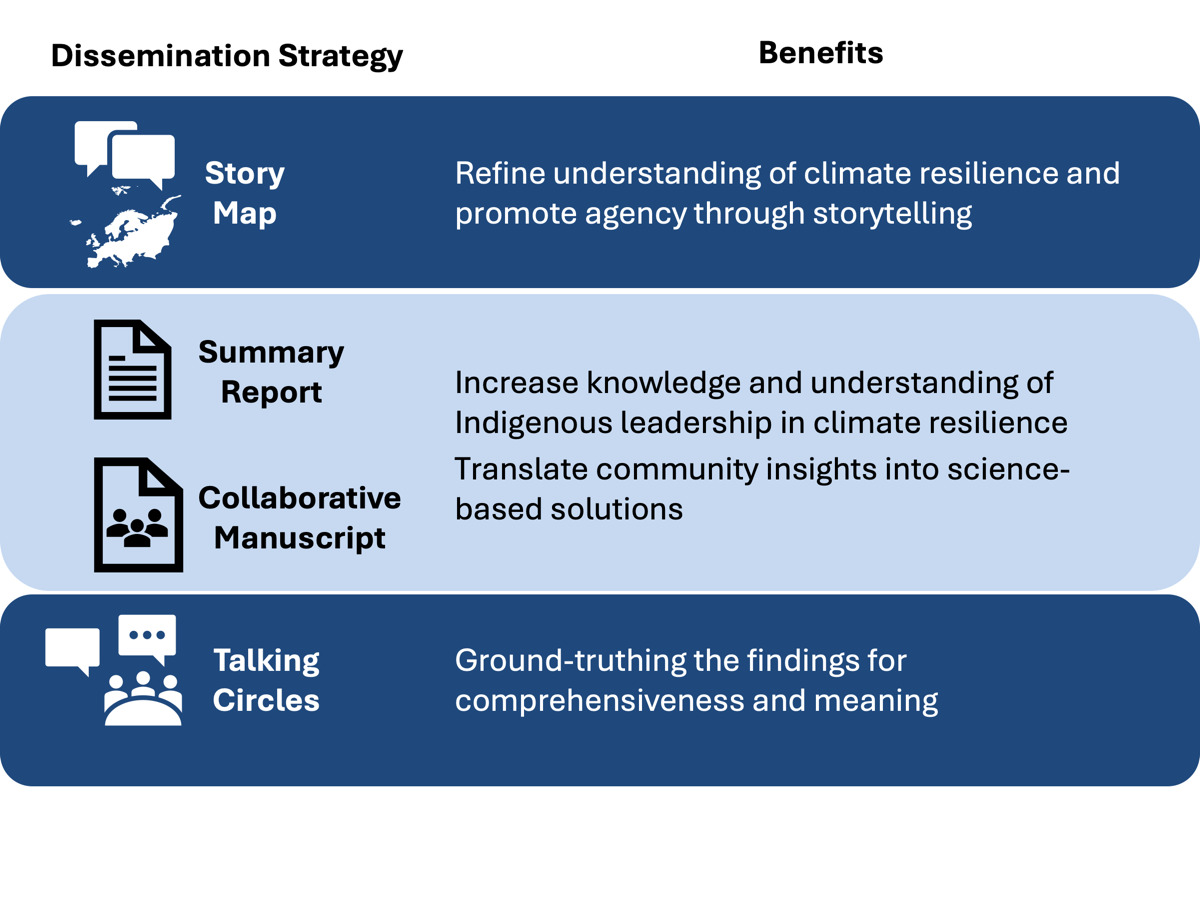
An additional key element of co-developing the workplan was alignment with the CBO’s existing practices, such as compensation structures and expectations for engagement that would be conducted for data collection. We determined that Indigenous Methodologies were needed to embed an appropriate approach to data collection and analysis. For instance, we adapted interviews with the structure of talking circles. We also included a Tribal Data Sharing Protocol (TDSP) to honor Sovereignty and ownership of Tribal data. Together, we decided on dissemination mediums, channels, and audiences. The dissemination activities proposed in the final workplan included a StoryMap, a report, a collaborative manuscript, and talking circles (Figure 2). Other dissemination avenues included a digital archive to reach a broader network of Indigenous communities. Throughout each of these activities, the primary goal was to share leadership with community co-researchers and use storytelling techniques to promote agency and cultural values.

This component illustrates a shared process of collaborating with community partners to shape the workplan, identifying priority audiences, and determining the best way to present the data to make an impact. By collaborating with communities in the design, we developed a diverse range of mediums from reports, posters, story maps, presentations, to art pieces and storytelling exhibits.
Determine Co-Analysis Capacity and Structure
Determine co-analysis capacity and structure refers to how we equip community partners and representatives to engage in data analysis and interpretation. Community partners are rarely engaged as data analysts, even though it is known to improve data analysis outcomes (Bassongui et al., 2024). This leaves a gap in how to do this effectively for participatory dissemination. We have found it crucial to prepare our partners for collaborative analyses and interpretation processes via training, orientations, or providing other types of resources to build their confidence in any co-analysis activity and in meaningfully shaping results. This means that planning for communities to co-analyze requires preparation of capacity building resources to support their success, including:
-
Research trainings on how to conduct qualitative coding and research ethics for interviewing
-
Preparation of interactive data analysis or sensemaking workshops, where community partners collaborate on a facilitated workshop to co-interpret and make meaning of the data together.
-
An overview on findings to review, where we shared preliminary findings and interpretation of those findings with community partners to elicit feedback through public comments for refinements and assess what’s missing.
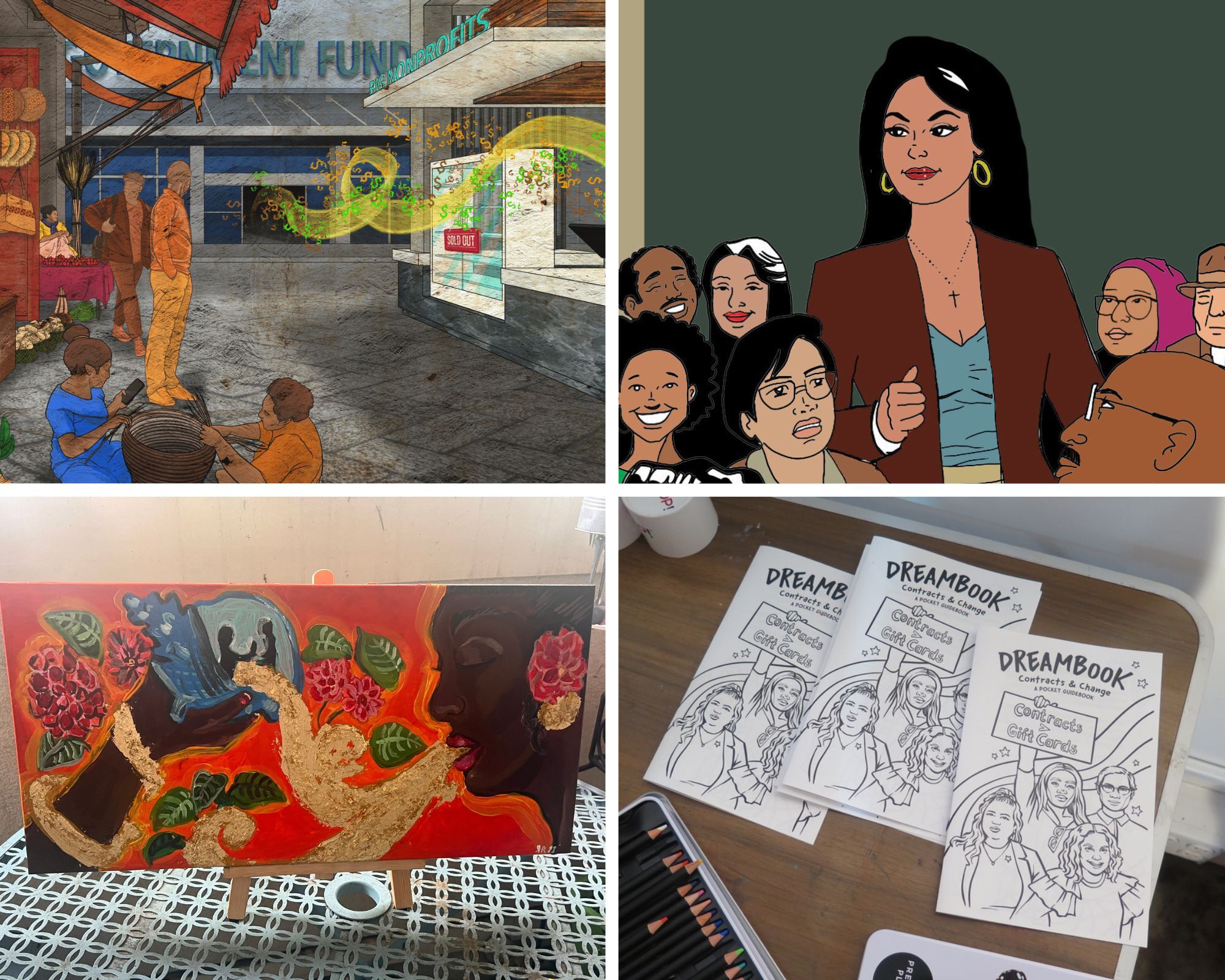
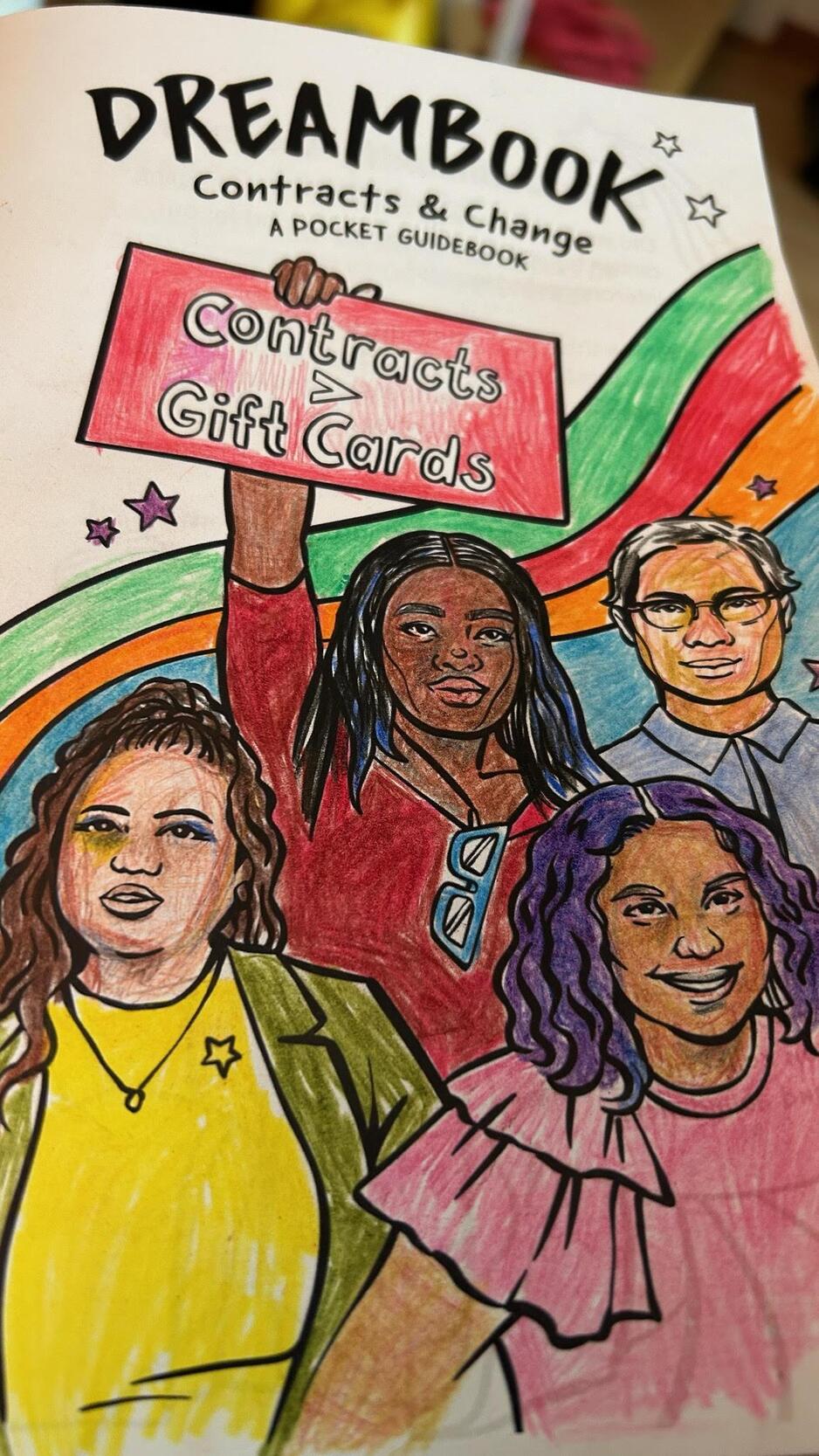
In case 1, multiple in-person and virtual feedback sessions were held. A total of forty-six community members (including committee members) participated and received $150 compensation. Members were identified through personal networks with invites sent via email and word of mouth. The feedback sessions included in-person data collection and live sensemaking utilizing the arts-based method, Narrative Inquiry. Narrative Inquiry is the study of people’s experiences through storytelling (autobiographical to fiction) (Caine et al., 2013; Kim, 2015; Leavy, 2015). The sessions were designed to capture (1) how community members experience the current contracting process, and (2) descriptions of what a more equitable contracting process could look like. Participants responded to the question, “describe a contracting process that feels good,” and then wrote an autobiographical or fictional story based on their lived experiences. As community participants described their stories, four community artists created drawings that encapsulated key emotions (Figure 3). A post-feedback session debrief allowed for further sensemaking with the project team, including the two evaluators and the four community artists. A paid artist coordinator, who was recruited as part of the project team, assisted in troubleshooting and project management for the artists. Together, we conducted thematic analysis and creative sensemaking following the feedback sessions.

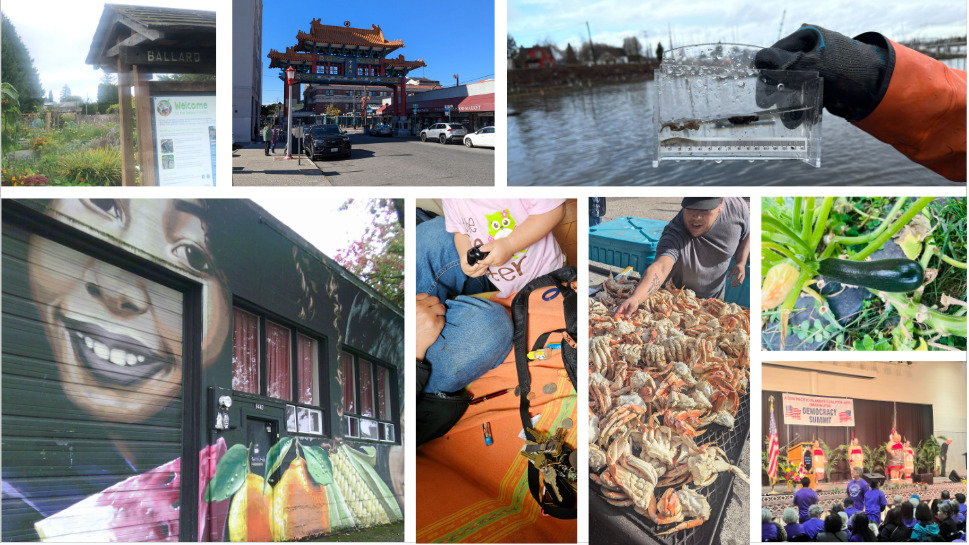
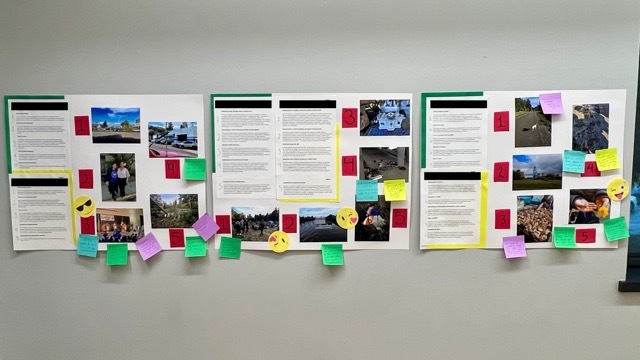
In case 2, the Community Research Team participated in two forms of co-analysis. First, the Community Research Team submitted 126 photos (Figure 4) in response to a set of prompts, along with captions describing their photos (Table 3). The meeting was conducted in English, and interpretation allowed community partners to contribute in English, Spanish, and Thai.
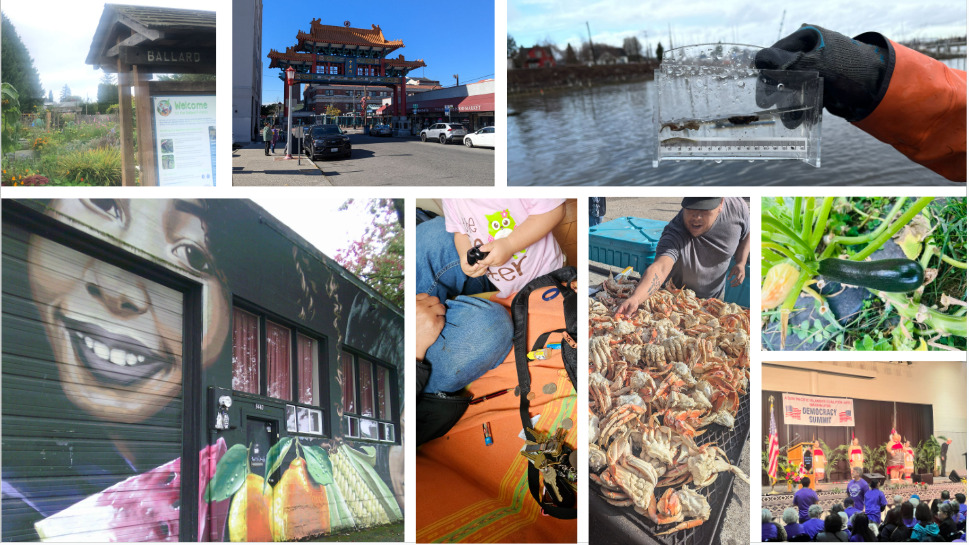
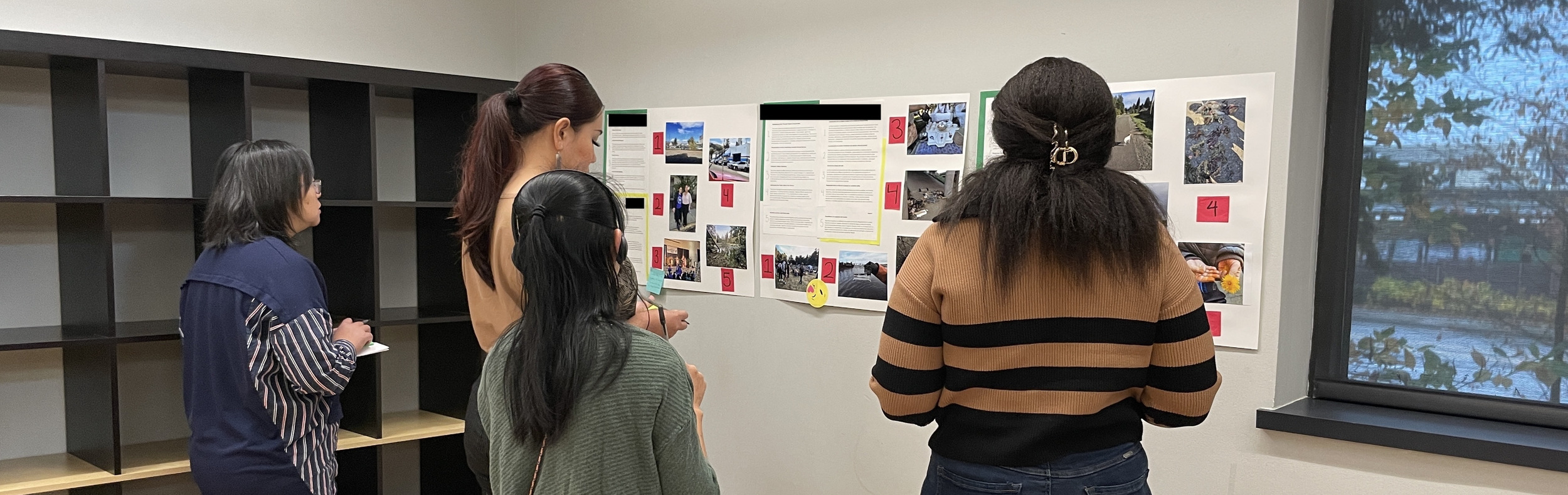
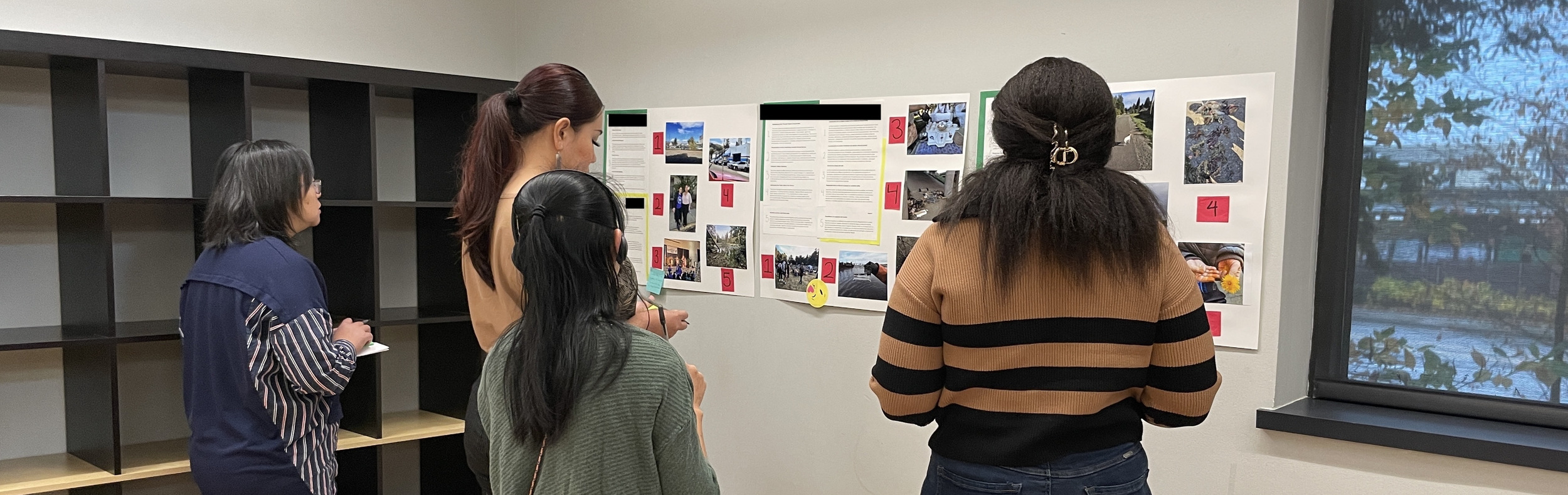
The project team (evaluation consultants and program staff) then conducted a thematic analysis on the captions and identified three key themes relating to what motivates community members to safely use and dispose of hazardous products. To further validate and expand on the preliminary themes, the Community Research Team was engaged in a collaborative sensemaking session where they viewed the selected photos and captions and then refined the themes derived from the photos (Figure 5). Through this process, the Community Research Team added nuance to the existing themes and identified one new theme related to healing and safety.
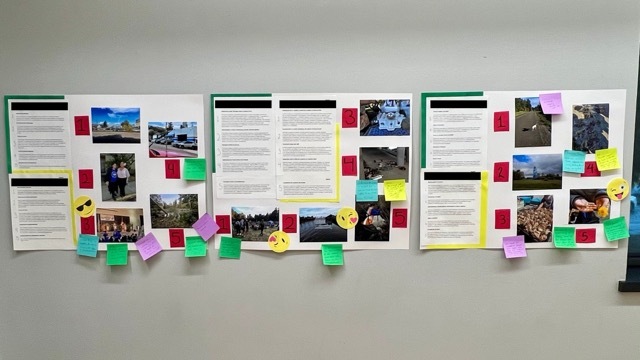
The second form of co analysis included sensemaking with preliminary themes to identify recommendations that can guide future communications and programmatic work for the agency (Figure 6). The report was shared with the Community Research Team, who then had the opportunity to either share feedback and edits directly in the report, or answer a questionnaire with big picture questions about the report. Through these two methods for collecting feedback, we collected comments that led to nearly 30 substantial edits to the report, including the 28 actions that the agency should take to improve their communications and programs.
In case 3, there was intentionality in how we outlined the process of co-analysis. As we co-developed the workplan, we emphasized the importance of collaborative analyses and sharing the data beyond the research with considerations of time, equitable compensation, and other resources. We proposed community co-researchers in analysis paired with a research representative to coalesce perspectives while enhancing the validity of results. We also included a qualitative research training to build staff skills and capacities to participate meaningfully in the project. This was a direct request for support from the CBO that related to mutual benefits in building their capacities.
Co-Present the Findings
This component calls for community partners to have meaningful roles in co-presenting findings as part of the participatory dissemination process. Our experiences in co-presentations ranged from community partners hosting and leading a results presentation at a community event, talking circles at their organization to promote awareness, or even joining conference seminars to provide their expertise and insights on the project findings. We provided support to help community partners prepare for co-presentation, especially when it was a new experience. We made sure community partners understood how the information for presentations was developed and how the findings and interpretation would be used to ensure that they feel comfortable with these implications.
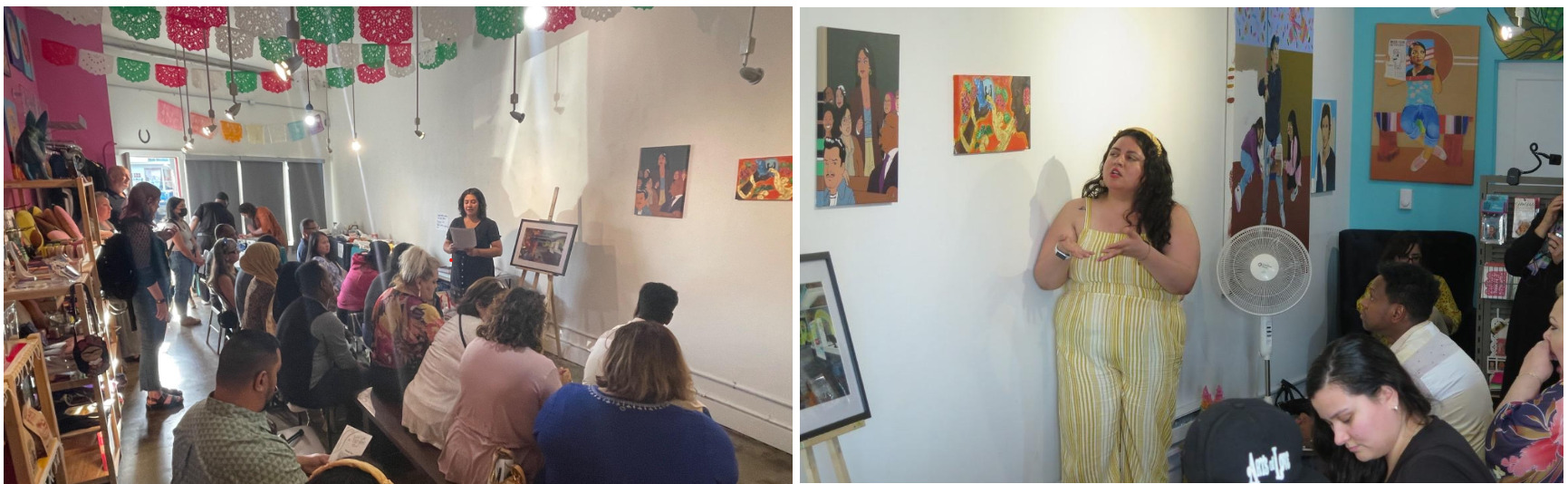
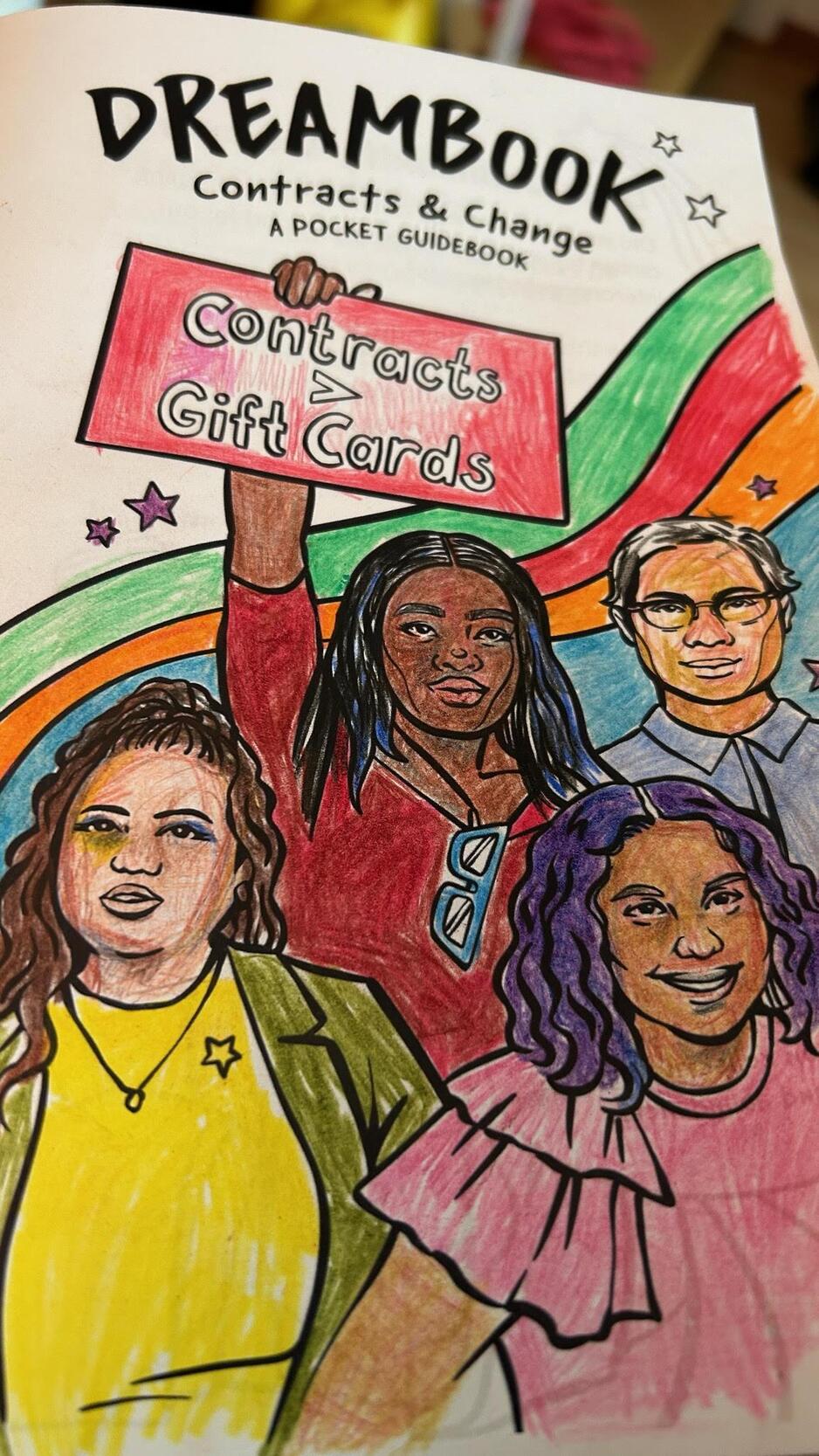
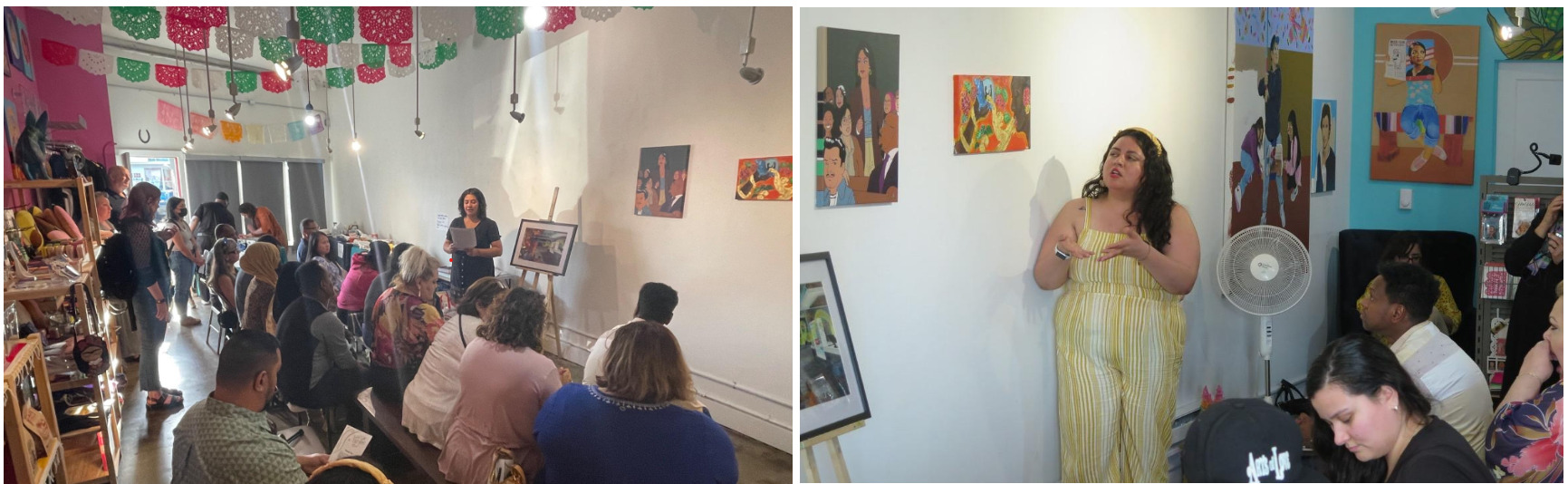
In case 1, findings were co-presented by evaluators and artists at an Evocative Playback Session, which is an embodiment technique where data is translated into an artistic performance or exhibition, to allow for deeper meaning-making (O’Connor & Moreno, 2023). Live interpretation in Spanish and Oromo were offered. Together, we shared overall themes and summarized recommendations that emerged from the feedback sessions. The artists then showcased their artworks, which visually summarized the dreams and aspirations of community members for what a more equitable contracting process could look and feel like (Figure 7). Figure 7 illustrates both the evaluator and community artists engaged in co-presentation of themes and visual takeaways.
In case 2, three of the Community Research Team members co-presented findings to decision-makers from the agency. Of note, all community members from the Community Research Team were invited to co-present, but only three were available. We hosted a preparation meeting for Community Research Team members to select the sections of the presentation that they felt drawn to present about and then helped presenters think about how they would explain their sections in their own words, with a focus on helping decision-makers understand the community perspective on the study’s process and results.
Reflect, Collect Feedback, And Iterate
Throughout the process, ongoing reflections of the participatory process are instrumental in improvement, determining what practices have contributed to success and what challenges present opportunities to iterate in the future. We embed positionality and reflexivity as part of participatory dissemination, recognizing that our lens and experiences may be shaping how we ask questions, interpret information, and engage with communities (Bustos et al., 2024; Bustos & Wright, 2024; D’Silva et al., 2016; Kulmala et al., 2024; Wallerstein & Duran, 2017). Many have advocated for more attention to positionality and context in dialogues between community partners and researchers to mitigate power hierarchies and challenge inherent biases for balanced partnership dynamics (Bustos & Wright, 2024; Kulmala et al., 2024; Wallerstein & Duran, 2017). Reflexivity is tied to positionality, underlining the active practice of checking ourselves and challenging how those assumptions are impacting the process (D’Silva et al., 2016; Taylor-Schiro - Biidabinikwe & Cram, 2021). In our cases, we maintained our positions as ongoing learners, with a willingness to listen to community concerns while also confronting our own assumptions and expectations that may not always align. Several reflective practices were done via remote or in-person team calls and debriefs to build self-awareness and accountability into the process. By embedding these practices, we are able to identify where changes are needed to ensure mutual benefits and inclusive partnership.
In case 1, there was time at the evocative feedback sessions for live feedback gathering and reflection with community members, which allowed for final iterations of the final report. Artists expressed how the experience showed how community voices carry weight. At the end of the project, we held a final meeting to wrap up loose ends and reflect on the overall project experience. Through our reflections, we shared hopes that public health uses the results as a roadmap to put the change that communities want to see into action. We also reflected on the impact of using different mediums to create a space for knowledge generation and promote understanding of shared experiences.
In case 2, the final report included team reflections on the participatory elements of the study. We dedicated additional time for the Community Research Team to build relationships with each other. This was done because the only touchpoint between team members prior to collaborative sensemaking was the orientation meeting. We also identified that providing multiple ways for the Community Research Team to share feedback on the report helped yield meaningful comments that resulted in edits that added richness to the report. We are currently planning for the next phase of the project. A taskforce will create a community engagement strategy based on the project’s results. Given the limited time in the prior phase, we are building in more time for relationship building among taskforce members and planning to incorporate multiple ways for participants to provide input over the course of the taskforce and encourage different styles of processing information and communicating.
In case 3, we had been directly impacted by recent budget changes. After receiving funding notice, we processed and reflected together. At this point, we had invested so much time, resources and hope for the award. Our reflections debriefed on the external challenges we were facing and the opportunities to move forward. In retrospect, time and mutual respect was invested in relationship building through frequent and transparent communication, ongoing updates regarding delays, and continued support of the organization’s mission that allowed us to keep doors open and discuss a future to collaborate in other ways. We have recently found other opportunities of working together.
Discussion
There are limited guidance and practice-based examples on participatory dissemination done in partnership with community members from marginalized backgrounds (Lopez & Brakefield-Caldwell, 2005; McDavitt et al., 2016; Vaughn et al., 2013). This article offers a framework for co-creating participatory dissemination strategies that honor their cultural identities and lived expertise. We presented three case studies to illustrate the real-world application of participatory dissemination from planning to interpretation. Together, our case studies demonstrate how participatory dissemination can be collaborative and beneficial using creative arts and storytelling. The cross case comparisons also show common themes in applying such strategies in practice. Throughout each example, there was a need to start from a place of building trust-worthiness, particularly when there was a history of distrust. Below, we discuss reflections on the participatory process and opportunities that arise when dissemination is a shared responsibility, offering the broader field points of considerations for future project designs.
Lesson #1: Design The Process With People In Mind, But Recognize That It Won’t Be Perfect.
Creative approaches to participatory dissemination aim to center people in knowledge generation (Monnard et al., 2021). This can be powerful in capturing broader community engagement with a multitude of stories to enhance data with lived experiences. However, operationalizing the steps to design the process comprehensively with all perspectives is challenging. For instance, resources needed to accommodate all languages is not possible because budgets and timelines are often set by funders or projects. Community needs may also fall outside of the scope of the work, leading to further misalignments between community and research priorities (Wallerstein et al., 2019, 2020; Wallerstein & Duran, 2017). These tensions are consistent with prior research on participatory dissemination that discusses how communities are not at all singular, making a comprehensive engagement process that incorporates all feedback difficult (Garnett et al., 2015; Valli, 2021). Many studies have discussed consistent challenges in accounting for the needs of all communities involved, such as literacy and cultural differences, goals, priorities, and other individual constraints that may come up in terms of resources, time and capacity (Chen et al., 2010; Lopez & Brakefield-Caldwell, 2005; Monnard et al., 2021). Some work has encouraged approaching participatory dissemination with an explicit focus on the multiplicity of a community to avoid isolating a culture or group and foster collective movement (Garnett et al., 2015; Lopez & Brakefield-Caldwell, 2005; McDavitt et al., 2016; Vaughn et al., 2013). Others have suggested better alignment of engagement opportunities with the motivations and interests of community at the onset (Battaglia et al., 2019; Bustos et al., 2025). Additionally, not all projects will apply participatory dissemination using the same strategies because it is not a one-size-fits-all approach (Brown, 2022). We combine these two bases of tensions and opportunities to encourage the field to stay ambitious in meeting the multiplicity of community needs in language, culture, and other resource accommodations to meaningfully participate, even if it won’t be perfect. Opportunities to learn through those existing gaps will help make the process better in the future. Focus on what you are able to accommodate and adapt, and consider it a step closer to a full participatory dissemination process.
Lesson #2: Do More By Planning Early
Literature has pointed to significant variations in the time and effort that project teams allocate to dissemination, with less details known about how much of that time is dedicated to planning (Vaughn et al., 2013). In applying arts-based approaches to participatory dissemination and leading with relationships in our design, we found that investing more time in the earlier phases of planning with partners can increase the likelihood of the project’s success. This aligns with prior calls that emphasize the importance of planning early for community-based dissemination (McDavitt et al., 2016; Vaughn et al., 2013). Time and resources needed for planning participatory dissemination are one of the most common challenges (Chen et al., 2010; Garnett et al., 2015; Lopez & Brakefield-Caldwell, 2005; Monnard et al., 2021). We acknowledge the ethical constraints of some funding mechanisms that can limit opportunities to compensate community partners for invested time spent on planning. It is important to be mindful of the burden placed on communities when funding is not yet secured. However, we have leveraged other non-monetary resources, such as offering professional development trainings, sharing proposal language to reuse for their applications, access to data platforms or reports, access to events or grant opportunities, and meals. Many of our partners also see the investments made by partnering with us because we communicate mutual benefits upfront. By inviting partners to collaboratively plan out resources, we are able to co-design a workplan and budget that is both mutually beneficial and aligned with what will be needed in practice. This includes setting capacities in place and in need and setting realistic expectations of engagement. We have seen many practitioners get stuck in the ideal theory while ignoring the steps to operationalize. Investing more time into planning at the outset will allow for the development of a right-sized fit approach to enhance research with community insights.
Lesson #3. Be Open To Creative Approaches That Engage Communities in Dialogue
Limited literature explores how to implement dissemination as a two-way dialogue with communities from marginalized backgrounds, particularly in ways that are sensitive to historical mistrust (McDavitt et al., 2016). In Cases #1 and #2, reflections through arts-based data visualization were instrumental in creating an environment that allowed for the emergence of communities’ voices and promoted accessibility to interpret data from a multitude of perspectives. Participants expressed how the experience magnified the weight of community voices through different mediums of acrylic, photos, and dialogue to create shared meaning. Lessons learned in applying these approaches emphasize the critical role of designing around people and culture to resonate with what works for communities. This aligns with prior works that have indicated how sharing power and decision-making not only enhances the validity of results but also promotes capacities for local-level dissemination (McLoughlin et al., 2025). Adapting for people also entails challenging traditional methods that often marginalize groups, not fitting partners into an existing paradigm, and instead fostering dialogue to find opportunities to transform, co-create, and generate spaces. One of our strategies to do this was coming to the table with a willingness to listen, learn and create together. Another strategy included holding accountability as authentic partners throughout the process, balancing power dynamics for inclusive collaboration (Wallerstein et al., 2019). For instance, in Case #3, we communicated how the goal of partnering was to co-create an idea together that aligned with the research team’s capabilities and purpose while also balancing the community-based organizational needs in using data to drive better results for key initiatives. Together, we coalesced a project that planned to uplift an existing initiative with quantitative and qualitative data to broaden success stories. We encourage others to be open to applying suggestions from community members that may have strong implications for transformative impacts.
Lesson #4: Commit To Long-Term Relationships
Building and maintaining relationships with community partners should be viewed as a core component to better research. Consistent with prior works on CBPR, our case studies reinforce the value of ongoing commitments to partners and shift focus on leading with relationships over results (Israel et al., 1998; Wallerstein et al., 2008, 2019; Wallerstein & Duran, 2010). Ongoing commitments required us to be responsive, flexible, and open to dialogue—whether it was for the purpose of learning about communities’ experiences, generating knowledge, or receiving feedback to improve practices. In designing participatory dissemination, we ensured flexibility in the project’s pace to allow for building rapport and a shared understanding with community members. We also faced constraints in having to balance the needs and priorities of the funder, project, or our respective organizations versus the needs for authentic relationship building. We recognize how this work is often done within the guardrails of systems in which we all function that may have more influence over decisions (Bustos & Wright, 2024). However, our lessons encourage others to consider the long-term impact that we leave communities with in regard to the engagement process. How were spaces created for uplifting community voices? How was power shared to listen and learn about stories the data communicates in context? How was value for community expertise demonstrated? When working with communities from marginalized backgrounds, extractive engagement may leave more harm done to communities and more challenges in rebuilding trust. Thus, approaching participatory dissemination requires committing to the long-term investments needed for future relationships, collaborations, and better research that can advance social impact. These investments for long term relationships may entail staff time dedicated for dissemination, partner compensation, more time allocated for capacity and relationship building, barrier reductions (e.g., transportation and childcare vouchers), accessibility support, and dedicated funds for dissemination products that meet communities where they are (beyond manuscripts and conferences).
Conclusions
This article is not without limitations. While the focus is on participatory dissemination, the perspective is largely based on the evaluators as opposed to community partners. Future case studies should consider including reflections from the perspectives of community partners involved in the process. Another limitation relates to the extent of generalizability, as expected with any case study. All the examples were based in Pacific Northwest communities, which may present limitations in application across other contexts. However, the paper focuses on the process of planning for participatory dissemination, which can be easily adapted for different communities and projects. Future studies are encouraged to build on these insights and report reflections on projects done in collaboration with communities from marginalized backgrounds.
Our collective reflections and key insights offer recommendations for researchers, practitioners, and funders on how to design dissemination efforts that are not only inclusive, but transformative for longer term impact. Given that little is discussed on the planning necessary for participatory dissemination and within the context of applied settings, we encourage practitioners to expand on our experiences and illustrate case examples that highlight the ongoing work that goes into relationship and trust building to co-develop a work plan meaningfully (Cunningham-Erves et al., 2020; Fernández-Peña et al., 2008; Gollust et al., 2025). For researchers, our reflections encourage more empirical assessments on the effectiveness of creative dissemination efforts to better understand the effects on community co-researchers (Bassongui, 2024; Valli, 2021; Vaughn et al., 2013). To date, limited studies have systematically examined the role of community co-researchers from marginalized backgrounds in the dissemination process (Goedhart et al., 2021; Mayo-Gamble et al., 2022). Additionally, we experienced benefits of participatory dissemination in improving the level of quality and extent of cultural affirmations in findings to ensure results uplifted assets and lived expertise. Funding structures should consider more flexibility in allocating resources for participatory dissemination activities, such as sensemaking and contracting artists, to invest in sustainable and authentic engagements that create results that matter and resonate with communities that they are designed to serve.
This manuscript contributes a practical demonstration of creative participatory dissemination strategies that honor the unique culture, context, and assets of communities. In order for research to impact communities, it must be joined by proactive dissemination strategies that matter to them and speak to their cultural contexts (Gollust et al., 2025). By sharing our strategies, successes and opportunities, we hope to better equip researchers and practitioners to communicate and translate findings so that community partners, their communities, and institutions will ultimately benefit from the collaborative research process.
Conflicts of Interest
We have no conflicts of interest to disclose.
Corresponding Author
Correspondence concerning this article should be addressed to tbust002@gmail.com
Acknowledgements
The authors acknowledge the time and expertise of community partners and are grateful for the learnings and reflections that inspired this article. To protect confidentiality, individual and organizational names are withheld.