Scholarly podcasts are surfacing as a promising knowledge dissemination strategy for participatory research (Day et al., 2017; Persohn & Branson, 2025; Smith et al., 2021). Further, podcasting may be combined with other multimodal dissemination outputs such as infographics or other media to make research findings more accessible to wider audiences (DeMarco, 2022; Huang et al., 2018; McSween-Cadieux et al., 2025). Although scholarly podcasting - as a genre - is on the rise (Knight & Grimes, 2024), less is known about the ‘behind the scenes’ steps of participatory approaches to podcasting for knowledge dissemination – in other words, podcasting projects developed collaboratively, where larger questions of participation, reflexivity, and community are regularly reflected on and interrogated. An exception to this is Day et al. (2017) who share their collaborative podcasting project with Indigenous and non-Indigenous water experts. Together, they created a long-form podcast episode that served as both a data collection and a dissemination method. As they note, “Podcasting can be more than a communication tool: podcasting can be a method of qualitative data collection, critical inquiry, and knowledge mobilization. When collaborative approaches to design, content, data-gathering, and analysis are used, podcasts can be mobilized as another participatory strategy” (Day et al., 2017, p. 207).
In their scoping review on scholarly podcasting, Persohn and Branson (2025) distinguish podcasts (a product) from podcasting (an action). As Kammer and Sejersen (2024) document, participatory practices have been central to podcasting since their beginnings. Within the field of podcast studies, recent scholarship has moved away from focusing solely on podcasts as artifacts and instead has begun to explore larger processes of care, ethics, researcher positionality, audience engagement, and the importance of paratextual elements (Beckstead, 2025; Beckstead & Llinares, 2025; Cory, 2025). For example, when reflecting on a participatory podcast with migrants, Cory (2025) problematizes “the centrality of podcasts to podcasting research” and argues that focusing “primarily on the end product of a podcast obscures much of the care work and community building that takes place before and after a podcast is recorded” (p.125). In doing so, Cory theorizes around the podcast, to explore the potentials and perils of voice, silence and researcher positionality within the medium.
In this article, we seek to build on this podcast scholarship by clearly documenting our own participatory podcasting ‘steps’ so that others may adapt them to their own project needs. To do so, we present the co-development of a podcast and infographic series on online participatory visual methods, co-produced by the Centre for Community Based Research (a non-profit organization) and Trillium Health Partners (a community & teaching hospital in Ontario, Canada). Participatory Visual Methods (PVM) comprise a range of facilitated methods such as photovoice, digital storytelling, or cellphilming (i.e., short videos produced on a phone in response to a prompt) which invite participants to collaboratively identify, discuss, and analyze issues of importance, via the creation of photographs or videos (Mitchell et al., 2017; Sadati et al., 2024; Switzer, 2018).
In what follows, we describe the ‘behind the scenes’ processes involved in participatory approaches to podcasting as a participatory dissemination strategy. Following this, we discuss the opportunities, tensions, and challenges of podcasting for dissemination, and in closing, reflect on the promise of participatory podcasting by combining podcast studies and PVM scholarship with Chapman and Sawchuk’s (2012) research-creation framework. We position our research-informed podcasts and infographics as bridges between data collection and dissemination – what Mitchell et al. (2017) call “digital artifacts” or “digital dialogue tools” (p.122). Together, podcasts and infographics offer a dynamic and accessible way to share research findings, spark new conversations and ideas, engage participants, and apply research findings through real-world contexts.
Project Context
This initiative stems from a multi-phase Canadian Institutes of Health Research funded study, Adapting PVM to Online and Hybrid Settings with Diverse Communities. PVMs are increasingly being implemented online, and come with a range of opportunities, considerations, and challenges (Fuentes et al., 2025). Our study sought to explore how practitioners were adapting PVM to online settings, in the context of health equity research. In phase one, we interviewed PVM practitioners from Canada, the United States, United Kingdom, and Australia who had adapted photovoice, digital storytelling and cellphilming to online and hybrid settings. By practitioners, we mean individuals who have been involved in the design, facilitation, and implementation of PVM projects. Practitioners in our study were primarily researchers employed at post-secondary institutions, emerging researchers (e.g., post-doctoral fellows or senior doctoral students), and/or experienced freelance practitioners working in community contexts. In phase two, using a case study approach, we conducted interviews and focus groups with community members (i.e., ‘co-researchers’), partners and researchers across three health equity-focused projects that used online/hybrid photovoice and digital storytelling methods. In phase three, we analyzed data from previous phases (i.e., 47 interviews and 3 focus groups) and co-produced a podcast series called "Let me Just Share my Screen" and related infographics. We also hosted coaching sessions on online PVMs with graduate students, emerging researchers, and non-profit organizations. Phases 2 and 3 were overlapping and not discreet (See Table 1).
Participatory Podcasting for Knowledge Dissemination: A Step-by-step Guide
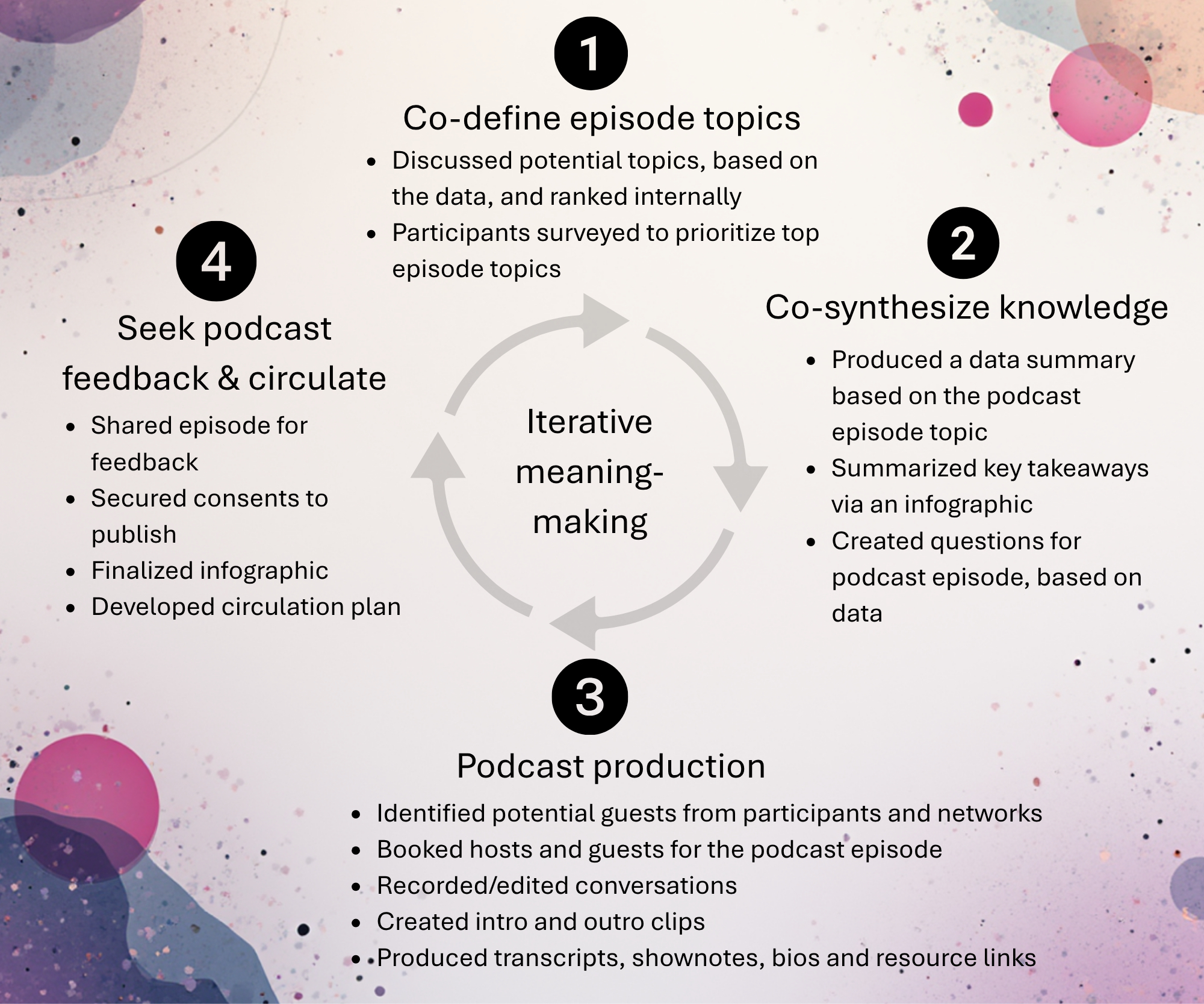
In the Let me Just Share my Screen podcast, we invited PVM practitioners to share their experiences engaging with PVMs, such as photovoice, cellphilming, and digital storytelling in online contexts. Each episode detailed practical tips and ethical considerations to help audiences plan, create, and exhibit online PVM projects. In this section, we outline the steps involved in collaboratively developing this podcast, and related infographics. We explore how we co-determined episode topics, co-synthesized knowledge via infographics, produced podcasts, sought feedback, and circulated resources (Figure 1). Each step was iterative, involving multiple rounds of feedback. Step four refers to feedback we sought exclusively on the podcast. While the overall flow of our process resembles conventional knowledge dissemination cycles (e.g., topic identification, synthesis, production, dissemination), our model also embeds cycles of reflection, reciprocal exchange, knowledge co-synthesis, and creative collaboration throughout.
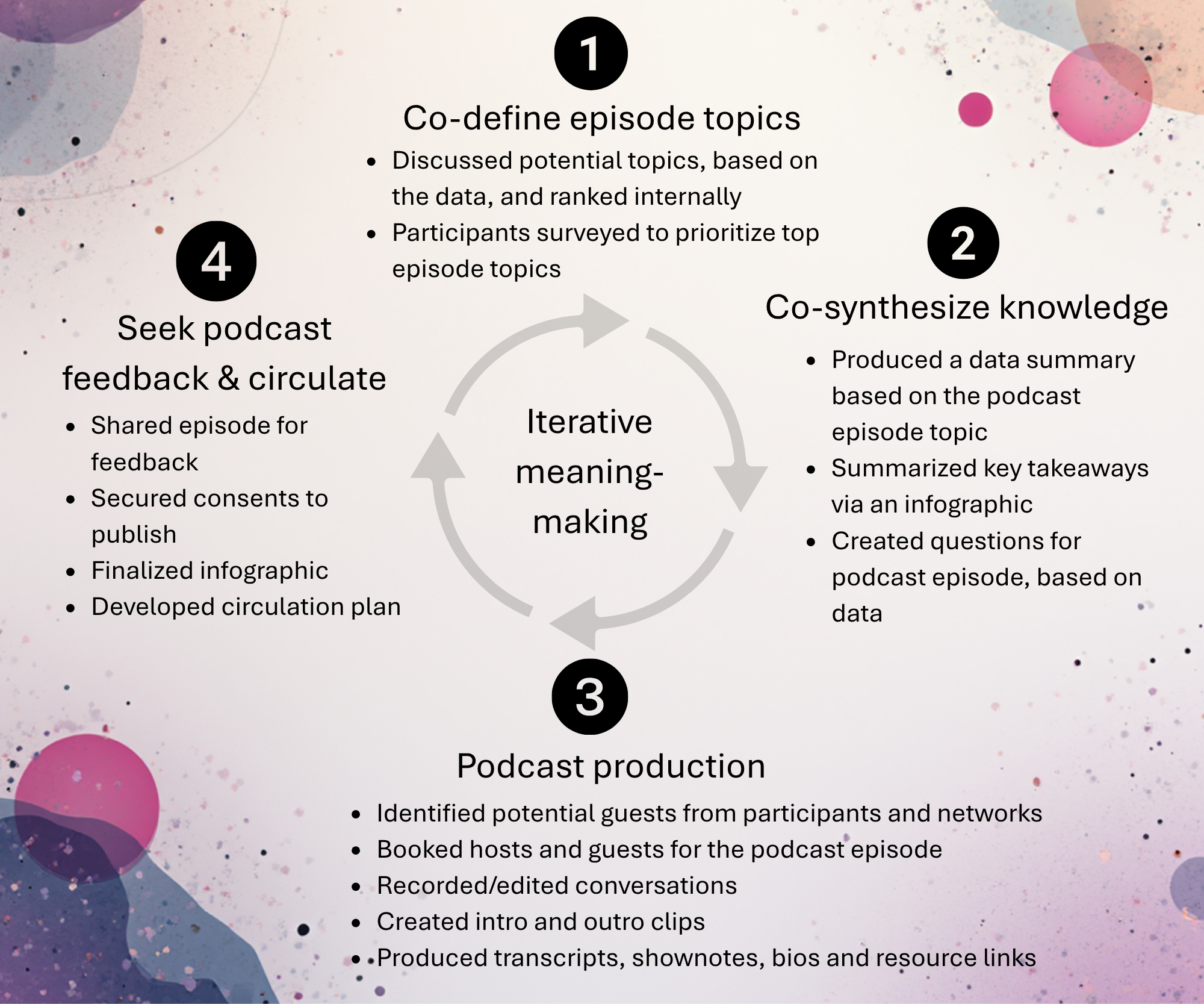
Our project engaged stakeholders in different roles, as described in Table 1. The Centre for Community Based Research (CCBR), a non-profit organization committed to conducting and promoting community-based research and evaluation, and a forerunner in community-based knowledge dissemination strategies, was a leading partner in this study and responsible for phase three activities. CCBR led the day-to-day podcast and infographic activities (authors Martin, Sadati, and Switzer), in close collaboration with the Arts-Informed Methods Research team at Trillium Health Partners, a hospital based in Peel Region, Canada (authors Fuentes and Mansfield), where the study was housed[1]. The study was governed by a larger research team. Authors Burkholder and Ibáñez-Carrasco were research team members and volunteered as guests and/or hosts on one podcast episode (in addition to others). The podcast team (See Table 2) worked closely to consult, involve, and engage PVM practitioners, co-researchers and team members throughout the process.
To promote equitable participation, hosts, guests, and research team members affiliated with a community organization were provided honoraria as a thank-you.
Step One: Co-define episode topics
To identify episode topics, our team met to discuss phase one preliminary findings (i.e., interviews with methods practitioners). Phase two data collection (i.e., case studies on past projects) had not yet begun. A team member (Fuentes) who conducted and analyzed the interviews presented findings to the wider team. From there, we used an online interactive brainstorming application to identify, group, refine, describe, and discuss potential podcast episode topics, based on the data. Once we narrowed ideas, we ranked them into eight salient topics, based on relevance to our research questions, podcast suitability, and team interest. Using the online brainstorming tool had many benefits. It allowed us to work synchronously and asynchronously which ‘slowed’ the pace of decision-making, and responded to varying team capacity levels (i.e., presence at meetings). Further, online brainstorming helped to disrupt power dynamics inherent in ‘talk-based’ discussions whereby one group member might inadvertently influence the larger group. For example, we used the prioritization feature to vote anonymously on preferred topics before discussion. Our team involved people at different career and PVM experience levels, and it was important to account for these hierarchies in our planning process.
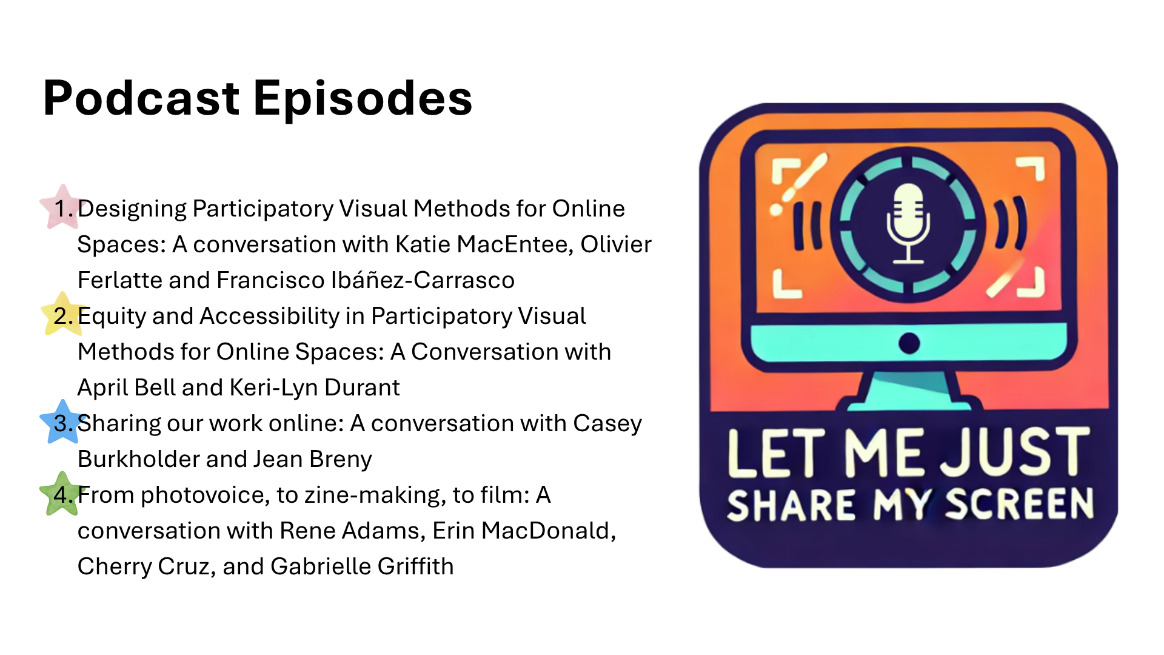
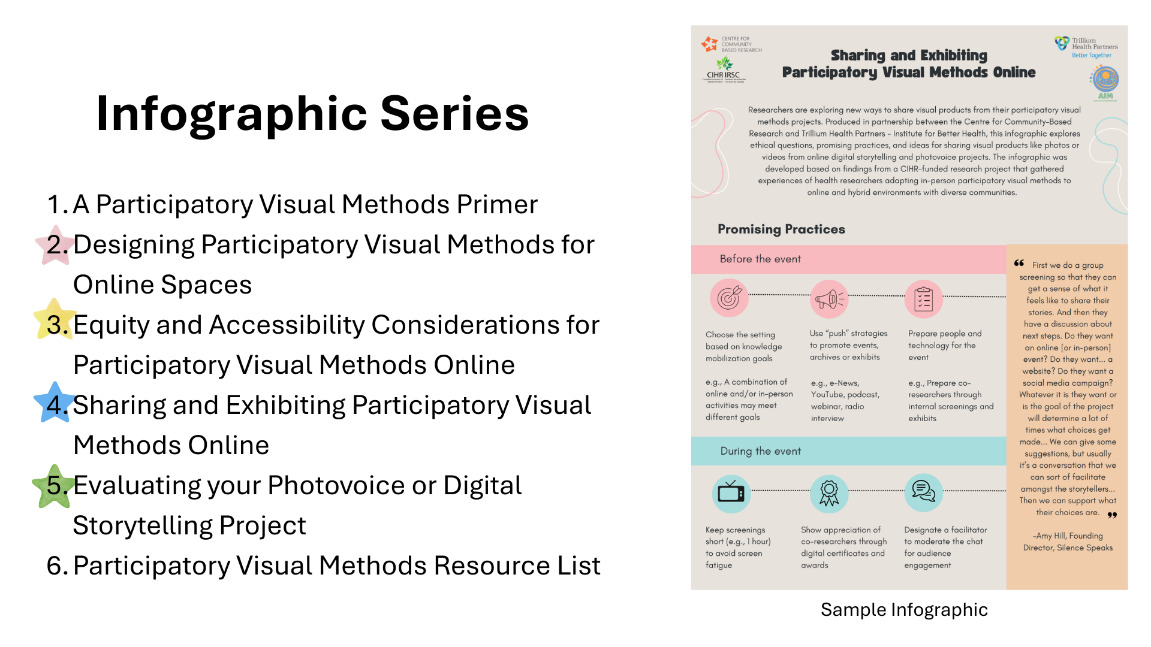
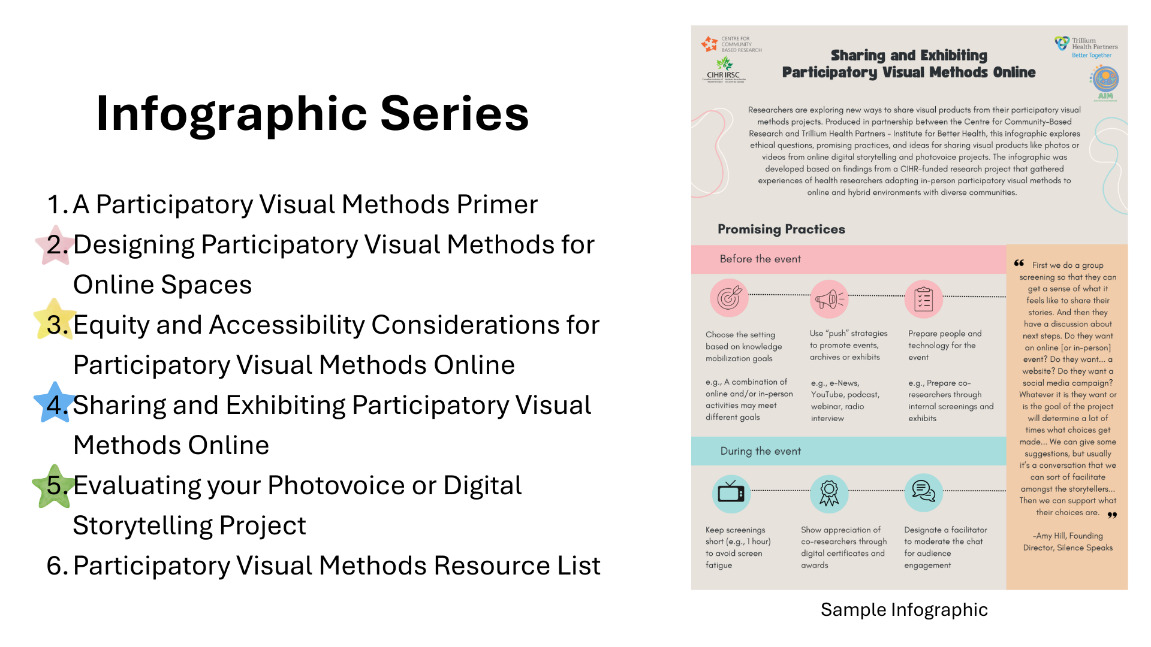
We selected our podcast guests from phase 1 interview participants, past projects and our networks. To ensure we included a diversity of voices and perspectives ‘on air’, we considered diversity with respect to issue focus (i.e., health equity issue), PVM method, career stage, and importantly, larger issues of representation (i.e., race, gender, disability, sexual orientation, age, etc.). Since phase one interviews were conducted primarily with PVM practitioners (mostly affiliated with universities, and/or working as freelance consultants), we envisioned that the podcast would be listened to by other PVM practitioners (working in both academic and community settings), emerging practitioners, and graduate students. We created a short survey with podcast topics and descriptions and invited phase one participants to rank topics based on interest, perceived relevance to the field, and to provide general feedback. Based on the survey, the top three episodes and infographic topics were finalized (see Figures 2 and 3). Our fourth topic was determined and produced later with community co-researchers when phase two was underway. For episode four, we invited podcast guests (i.e., community members) within a single study to facilitate a comfortable conversational space.
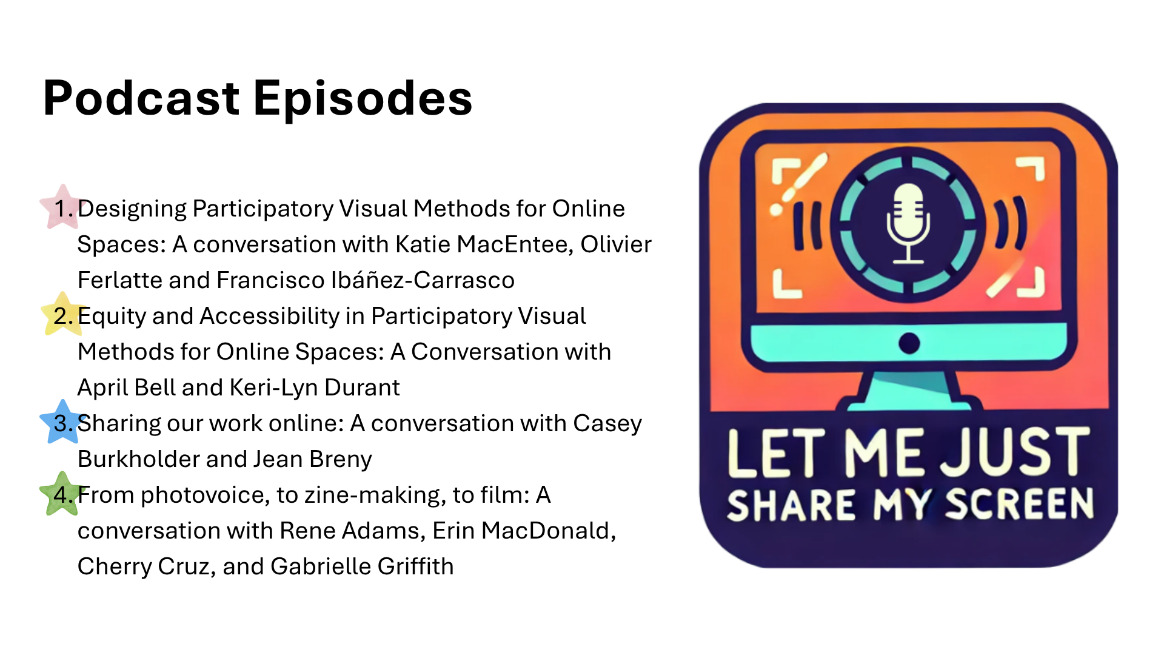
Step Two: Co-Synthesize Knowledge
Each digital artifact served complementary ends. Infographics represented the data visually, and were created with a community, or emerging researcher audience in mind. The podcast extended research findings by inviting dialogue, as informed by the data. We created a short promotional video to accessibly promote the project, and PVMs. Since each digital product presented a unique audio, audio-visual, or visual modality, we needed different knowledge synthesis processes for each. In our team, members leading podcast and infographic development were different from members who conducted interviews and analysis to date. To bridge this knowledge gap, team members responsible for previously coding the data prepared data summaries for each topic (Figure 2-3). Then, another team member reviewed data summaries, with an eye to infographic development (Figure 3) and host podcast questions. Both went through multiple rounds of team feedback. This combined approach allowed us to ground the podcast in the data, while not limiting guests or hosts to prescriptive topics. Since podcasts had multiple hosts with varying levels of data familiarity, the infographics also acquainted hosts with findings in a time-efficient way. Likewise, having another team member synthesize coded data into infographics was a feasible and action-oriented way to integrate a collaborative approach to data analysis with limited resources. Because infographics are meant to showcase findings accessibly and succinctly, the infographic medium (versus that of an academic paper or presentation) also drew our team’s attention to the application of findings for a community or lay audience, which was an important aim of our study. Further, the infographics encouraged us to avoid jargon, reduce text, and consider succinct take-aways; in contrast, the podcast opened space for debate, dialogue, and reflection on important and sometimes irresolvable topics.
Finally, although infographics were drafted prior to podcast production, they were finalized after. This allowed us to make edits based on nuances gleaned during podcast conversations and to cite the work of our podcast guests who graciously offered time and contributions. This adaptive and responsive approach was important given our study topic, project feasibility, and the rapidly changing online landscape and its implications for online PVMs. It also gave us time to secure consent for infographic quotes. Because we interviewed practitioners who had published widely about their work, we gave our interview participants the choice of waiving anonymity and being credited for their ideas in infographics. The short video also went through iterative rounds of team feedback.
Step Three: Podcast Production
Together, we collaboratively developed and recorded an intro and outro script, designed cover art and a title, and sourced music. As Beckstead (2025) argues, these elements constitute paratexts. Without paratexts, there is no way for an audience to engage with, navigate, and/or make meaning from a podcast. When engaging in participatory podcasting, teams ought to factor in time for engaging, navigating, and making these paratextual elements.
We also decided on podcast hosts. Rather than appointing a single host, we invited different hosts for each episode, based on team members’ interest and comfort. Rotating hosts brought in a diversity of voices and hosting styles and aligned well with our participatory approach. Hosts included members from our initial podcast team, wider research team and larger networks. Hosts and guests received conversation questions in advance, and a handout on sound quality tips. Guests and hosts were encouraged to use the questions as a guide and go ‘off script’ as needed. To record, we met for 90 minutes on Zoom, beginning with introductions and contextual information, which helped warm people up and create an environment where everyone felt comfortable. This was particularly important for podcasts where we invited community co-researchers into conversation. We recorded 60 minutes of conversation to encourage free exchange. Then, Martin and Sadati edited these conversations into 30-minute episodes.
For efficiency, a single podcast team member coordinated scheduling, recording, and post-production editing, as well as securing feedback and approvals, and creating supplementary “paratextual” materials such as shownotes, descriptions, and transcripts. Wherever possible, the same member who coordinated the podcast episode also lead-authored infographic development on the same topic. Detailed steps are recorded in Table 3. Many of these steps have been documented by other scholarly podcast literature (Knight & Grimes, 2024), however, what makes them unique is the participatory approach to production. This approach leveraged learnings from other participatory podcasting projects (https://youthresearchlab.org/whypar; www.communityfacilitation.ca) in which a sub-set of the authors had previously and/or concurrently been involved.
Step Four: Seek Podcast Feedback and Circulate
We structured podcast feedback into four stages. The first round happened between a podcast coordinator and another team member, and the second round with the podcast team. This process was repeated until the team felt comfortable sharing the episode with guests for both feedback and approvals. While all guests were invited to provide feedback (and all listened to the episode prior to circulation), we found that most guests did not take us up on this opportunity.
We also sought wider research team feedback on podcasts. After producing our first episode, we hosted a “live listening party” with the research team. We encouraged people to turn off their cameras, listen to the episode live, and provide feedback. While we received enthusiastic feedback about the podcasts’ content, we learned that we needed to provide more contextual information to support audience engagement and reception, as linked to the research. This led to the development of additional paratextual elements (Beckstead, 2025) described in step three. For example, the team helped us realize that we needed to include sub-headings and time-stamps to conceptually organize content, and relate content to research theme-areas. Later, we hosted another research meeting to provide project updates, get feedback on our plan for podcast four and associated infographics, and invite further involvement by joining single podcast team meetings to provide input (see Table 2). Taken together, these strategies encouraged feedback from a large group, all with different experiences with PVMs, varied time capacities, and career levels. This was important in ensuring we drew on a range of diverse experiences and perspectives, with respect to equity, career level, PVM familiarity, and type of affiliation (i.e., community-based or academic).
We posted podcasts and infographics on a website (https://aim4communityhealth.ca/exploring-participatory-visual-methods-online), uploaded the episodes to streaming platforms and created a short promotional video. We disseminated products on a rolling basis through networks, organizational and field-specific newsletters, past project participants, and via our research team. We hosted a research team meeting to intentionally seek feedback on circulation networks and relied on shared documents to track where, when, and how the materials were shared. We integrated the digital resources into our own teaching and work with communities, and encouraged others – such as the research team, guests, hosts, and participants – to do the same. To encourage an even wider uptake of resources, we hosted a series of coaching sessions for community organizations, community members, students, and research teams, to support them in adapting PVMs online.
Lessons Learned: Participatory Podcasting and Iterative Meaning Making
When created together, podcasts and infographics can be an accessible, engaging, and collaborative approach to knowledge generation and dissemination. After completing three podcast episodes and infographics, we collectively reflected on our process. Team members used online brainstorming to digitally dialogue about opportunities and challenges of these dissemination methods for participatory dissemination. These reflections were then refined during manuscript writing. For example, our circular model (Figure 1) helped us see reflection not as an endpoint but as a central element at the core of participatory podcasting —informing how we plan, collaborate, and share future work. Further, making time to dialogue about our process shaped the development of podcast four and coaching sessions (which were being planned at the time of initial manuscript writing). In this way, reflection became practice: a cyclical return that kept the research-creation process alive, relational, and responsive. Below, we share our lessons learned.
Consider Research as Pleasure
A podcast guest, Olivier Ferlatte remarked, “we undervalue pleasure in research” (Ibáñez-Carrasco, 2025, pp. 21, 48). Recording and hosting the podcasts was a deeply enjoyable process. These recorded conversations deepened connections between guests and hosts and extended the research findings in compelling ways. Podcast guests and hosts noted that they rarely have an opportunity to think aloud with others, about online approaches to PVM methods.
Cook (2023) describes scholarly podcasting as “an insurgent method” because it values vulnerability, improvisation, and unfinished thinking that defies academic norms of self-interest (p.12). As Cook explains:
Intimacy opens the door to vulnerability. I think that to be comfortable with both one’s own and others’ sense of vulnerability is a way of developing processes of knowledge creation that are as dynamic and flexible as the things we scholars study (whatever they happen to be). This means thinking about what happens when we bring together multiple, often divergent, voices into discussions, when there are moments of improvisation in what we produce, when the messiness of the method of inquiry is there for all to hear, and when we put ‘unfinished’ work with an unauthoritative tenor out there in the world (p. 12).
Experiencing research as pleasurable disrupts the neoliberal logics of efficiency and production that are so predominant in academic structures (Beckstead & Llinares, 2025). Team discussions and listening sessions became spaces of intellectual play, collective reflection, and pleasurable acts of knowledge exchange that energized our collaboration. Foster (2012) writes about the value of pleasure or enjoyment in the research process, especially for studies employing the arts. Although pleasure in research may be perceived as trivial, enjoyment in an activity can incentivize participation, thereby impacting the quality of the research or outputs produced. Unlike published articles that can feel ‘finished’, both podcast and team discussions felt like spaces to trial out, engage with, and build upon ideas (Beckstead & Llinares, 2025). As a team, we listened and thought alongside our guests and hosts – often while walking around the block – and then dialogued about ideas together. At the same time, engaging with podcasts could be intimidating, especially for people whose first language is different from the podcast recording language. In tribute to the do-it-yourself (DIY) nature of PVM (Burkholder et al., 2025), we embraced a DIY aesthetic and modelled a ‘jump in’ approach. Here we strived to create a kind of balance between our own experience, the scholarly podcast genre, professional podcasts, and team expectations.
Let the Conversation Flow: Cultivate Conversational Spaces for Authenticity
To produce a compelling 30-35 minute podcast, we needed to record at least one hour of live conversation. While the episodes were guided by research-informed questions, it was important that hosts and guests were not strictly bound to a script. Conversations were meant to be organic, and in many cases, hosts also joined the conversation. This aligns with other scholarship (Cory, 2025; McHugh, 2016) which foreground the podcast as a form of relational media, whereby the medium itself can create the conditions for community-building and collaboration. We tried to balance the desire for expansive and deep dialogue by creating a short, cohesive episode around a central theme tied to our research. Based on feedback from our larger team, we also learned that too long of an episode, or one that did not have a clear theme, might alienate or confuse the audience. We also wanted to ensure our podcasts remained accessible for those newer to participatory visual methods, including those working in community-based organizations. This required close attention by the coordinator, host and editor, and the wider team during editing. Teams may benefit from approaching podcast production as not a solo venture, but rather, one that is structured by multiple moments for feedback, by various individuals.
Interrogate Claims of Accessibility and Equitable Knowledge Production
Podcasting and infographics are often promoted as a more accessible way to share research, compared to academic publishing. However, despite open scholarship promises, scholarly podcasts tend to reach smaller audiences and may be inaccessible to “non-expert” listeners if jargon and language accessibility are not considered early on (DeMarco, 2022). Our team grappled with how to present terminology like photovoice, digital storytelling, or cellphilming in ways that wider audiences (i.e., community organizations, students, or emerging researchers) could understand. We wondered: how might people outside the PVM field even find the podcast and infographics? What would they search for?
We also acknowledged that the podcast medium imposed limits. For example, early versions of our ‘intro’ clip included definitions of PVMs. These definitions significantly increased the overall podcast length, and risked audience disengagement. Further, because the first three podcast episodes were meant to extend the research findings from phase one (interviews with practitioners), team members, guests and hosts alike were eager, and excited to jump into rich and provocative conversations that often extended beyond an everyday or non-expert audience. We addressed this tension by adding detailed show-notes, and a transcript for each podcast, and produced a short video with definitions to pair with the products. All infographics were designed for a lay audience in mind, including one infographic with ‘plain-language definitions.’
Finally, podcasting comes with its own access and equity issues. Our guests had access to stable internet, a microphone/headphone, and a quiet place to record. Our first three podcasts were with practitioners who had published widely on their work, and felt comfortable speaking to, and sharing their experiences about PVMs. Our fourth podcast episode sought to amplify community voices by inviting community co-researchers into conversation. Our guests had a shared history and comfort with working together, and access to necessary technology and space. It was also hosted by an experienced community-based practitioner. As team members who often work with communities that experience structural marginalization, we reflected on how future participatory podcast processes may need to be modified to more meaningfully and equitably involve broader community participation. In this vein, Costanza-Chock (2020) cautions that more critical reflection is needed for digital technologies with communities who have limited digital literacy or access, or digital products that highlight vulnerable or politicized narratives. We wonder: how might our podcast process change if the access and equity needs of our guests changed? Or, if our topic was more stigmatized? What if guests and hosts do not have a quiet, internet-stable, and solo place to record? These questions present future areas for research, learning, and reflection.
Finally, over time, our podcast team (n=11) was a mixed group across race, gender, sexuality, experience level, and relationship to research institutions (see Table 2). Our team composition ebbed in size throughout the process. However, at times, the podcast team presented as predominately white, cisgender, and female. We are weary of how white dominance is enacted and reinforced via research structures and fields – including participatory research and podcasting (Charles et al., 2023). In this vein, it was important that we continuously reflect on larger issues of racial equity and the process of knowledge production, and importantly, take measures to actively account for these dynamics.
Prioritize Ongoing Circulation of Products and Ideas
When disseminating podcasts, we quickly learned that uploading our podcast on a widely used streaming platform was not enough. Visibility depends on active sharing. We set aside dedicated time to discuss a communications strategy internally, and we relied on team networks, listservs, and institutional communication and social media channels for initial promotion. Others have noted that audience engagement and podcast listenership require sustained effort and resources, in ways that are not always available to researchers (DeMarco, 2022; Persohn & Branson, 2025). We experienced this challenge firsthand. Dedicated promotion takes time, and without prolonged resources or marketing budgets, getting audiences to actually hear podcasts may be a significant challenge for many.
Gollust et al. (2025) discuss how traditional academic approaches to dissemination do not attend to the power dynamics that are often at the core of community-engaged projects. They argue that research institutions (which tend to be white dominated) conceptualize knowledge dissemination as a ‘communication problem,’ positioning the community requiring the knowledge as being “deficient in their lack of scientific evidence” (p. 230). We were interested in sharing our findings to build capacity in online PVM methods, but we also knew we did not have all the answers. We equally wanted to learn about the messy moments, challenges, or tensions inherent in online PVMs from others. Further, we often reflected on how community organizations often have fewer material resources compared to academically-funded PVM projects; for example, a research study may have resources to host 5 photovoice workshops, but in an organization, 1 or 2 workshops may be all that is possible. We wanted to collectively learn how local community organizations were using these methods in new ways, and with wider audiences beyond academic walls. In response, we hosted no-cost coaching sessions aligned with podcast episode topics for community organizations, students, and emerging researchers interested in learning more about online PVMs. Participants brought their questions, and we discussed them in real-time, while also sharing project resources. These sessions were designed as reciprocal learning spaces that extended the project’s life through dialogue and co-learning. This mirrors a community of practice model (Ibáñez-Carrasco et al., 2020), where ongoing exchange sustains knowledge and connections beyond project timelines.
Reflect on Tensions: Audience, Participation, and Community
Scholarly podcasting is often framed as vehicle towards public scholarship (Cook, 2023). And yet, in our project, we frequently struggled with issues of community, participation, and audience. Aligned with the spirit of participatory dissemination, we continually probed: Who is our audience? Who represents ‘community’, and how? What are the limits of this representation? What does dissemination mean for changing the power structures inherent to knowledge production? What specifically makes the podcasting process participatory? Vaughn and Jacquez (2020) argue that a distinguishing feature of participatory research is power and decision-making. They suggest: “Any research method or tool can be participatory if chosen and/or utilized collaboratively between academic and community” (p.6). Although our research team was comprised of both academic-situated researchers and community-based practitioners, phases one and two of the study were not community-based by design. This was in part because many of the community organizations we worked with did not have the time, or interest, to deeply engage in a study focused on research methods. This is not to say that community members and organizations do not have valuable wisdom to contribute to these conversations. Many community artists and practitioners rely on different terminology to describe their work (see: Martin, 2024). Further, the lead partner of this study, CCBR, is a non-profit organization. In fact, our very team composition and some of the authors’ roles within a non-profit often led us to wrestle with how we might enact a more participatory ethic, given these tensions and the methodological focus of our study.
In response to the challenges described above, we invested substantial resources into phase three (knowledge dissemination) and applied a participatory lens to podcast production. Nonetheless, tensions continued to emerge. Due to project timelines, podcast episodes 1-3 featured PVM practitioners who had adapted projects online. This aligned well with our research phases but led to us inadvertently prioritizing guests with academic credentials who had pivoted their work to online settings during the COVID-19 pandemic. Podcasts episodes 1-3 resulted in deep and lively dives into methodological dilemmas. As practitioners ourselves, we found these exciting to listen to. However, we wondered, do we run the risk of appealing to a more specialized audience and unintentionally alienating those new to the field?
We tried to balance this tension by creating products (i.e., infographics and an introductory video) to appeal to a wider audience. Further, to widen dialogue and include community perspectives, episode four invited co-researchers and community collaborators from phase two to the mic. Again, tensions emerged. As we planned episode four, we cautiously asked ourselves: Are we reifying false binaries between academic and community knowledge? What happens if this is the only podcast featuring community voices? At the time, we worried we might not be able to produce more podcasts without extended resources. Podcast episodes 1-3 (linked to phase one) took more resources to produce than expected; podcast 4 (linked to phase two) was supported by supplemental funding. Similarly, in the spirit of participatory dissemination, we consulted with participants to co-determine initial episode topics; however, research timelines meant we were only able to engage with phase one participants at the time (i.e., practitioners). We hesitated to ask phase two participants to prioritize new episodes, without assurance we could act on their suggestions. This limitation was made more pronounced by the fact the dissemination lead was a non-profit organization that required funding to sustain project work. Other participatory research teams creating a research-informed podcast may want to reflect on the implications of these tensions in their own projects. This brings us to the next learning: time, labour and collaboration.
Plan for the Time and Labour involved in Collaboration
Participatory podcasting demands time, coordination, and care that resists easy quantification. As Persohn and Branson (2025) note, “scholarly podcasting remains labor-intensive and time-consuming, challenging assumptions of ease and efficiency in digital dissemination” (p. 8). While scholarly podcasts are promoted as an economical and time-efficient dissemination medium for the listener, the actual time involved in producing and marketing podcasts is notable (Naff, 2020). We learned that adding a participatory dimension to scholarly podcasting can extend this time commitment significantly. It takes time to co-determine podcast elements, continually request and apply feedback, secure consents, and intentionally circulate to broad (non-academic) audiences. Nonetheless, while it took time to produce the first episode, we found that subsequent episodes required shorter time investments, as we could build on established collaborative processes.
Following the advice of Vaughn and Jacquez (2020) we carefully reflected where and how to obtain feedback and input from participants, and our wider research team in a way that balanced inclusion with feasibility, while also reflecting on the temporal tensions inherent in participatory research (Del Gaudio et al., 2017). For example, when returning to our research team for feedback, we intentionally chose to air the 35-minute podcast episode “live” during a meeting, rather than asking people to listen in advance. This decision resulted in more feedback than might otherwise be possible had we asked people to listen asynchronously prior to meeting. Finally, when we took a new podcast approach with episode four, we invited interested team members and visiting hosts to join our weekly podcast team meeting for efficiency. This was a particularly supportive strategy when seeking feedback from community-affiliated practitioners, with limited time.
Conclusion: Returning to Research as Creation, and Creation as Research
Research creation can take multiple forms of practice, including: research for creation, research from creation, creative presentations of research and creation as research (Chapman & Sawchuk, 2012). This article takes up Chapman & Sawchuk’s research-for-creation and creative presentations of research foci, whereby: (1) the research explores a topic, using data from a study to guide the podcast questions and infographic content; and (2) findings are represented through creative forms – in this case, the conversations sparked during the podcasts, or the application of findings, visualized through infographics. The actual act of producing the infographics and podcast invited researchers and participants to reflect on findings in new ways. Podcasts were not just a creative representation of the research; rather, the insight gained through their participatory production resulted in changing the very research itself. Rather than producing content about research, our podcasts functioned as extensions of the research process itself, integrating feedback loops, participant consent, and iterative synthesis across digital products as objects of, and contributions to research (see also Loveless, 2016.
Throughout our process, we also experienced a strong congruence between PVM, participatory research, research creation frameworks, and podcasting scholarship. In their literature review (Sadati & Mitchell, 2021) suggest that research-creation connects closely to participatory research as it positions the researcher as an active change agent working with interest-holders to explore and improve contexts. Similarly, Wendland (2024) highlights the participatory nature of podcasting; podcasting amplifies diverse voices, supports self-representation and offers asynchronous, user-driven engagement, deepening participation and connection. Finally, as Day et al. (2017) argued, there is a close alignment between the methodological tenets of PVM (i.e., community control, amplification of community voices, and co-creation) and participatory podcasting. Previous scholarship has explored how other creative dissemination methods like illustration similarly facilitate conversations between participants and researchers, especially in professional communities of practice (Switzer et al., 2024; Vela Alarcón et al., 2022). This is in keeping with what Mitchell et al. (2017) has called “digital dialogue tools” (p.122) which enable diverse audiences to both see the issues being raised and engage in dialogue with them, with the aim of facilitating social change. Persohn and Branson (2025) argue that podcasts not only facilitate conversations within an episode, but also lead to wider conversations over time, especially within professional communities, or fields of study. We found this to be true within our own study. As they argue, scholarly podcasts “present an opportunity to share the nature of research as always in progress, always generating new questions to pursue” (Italics ours, p. 15). When combined with a participatory approach, podcasts yield many opportunities for participatory research teams.
And yet, despite the rise of scholarly podcasts, little literature exists on the ‘behind the scenes’ steps of participatory podcasting. In their article, Day et al. (2017) describe their collaborative podcasting process as a decolonial research method (when combined with a decolonial agenda). Their team layered community members’ voices, water sounds, experiences, and stories from Indigenous and non-Indigenous water experts to create a long-form audio documentary, told in three parts. For them, sharing knowledge through “collaborative podcasting” was seen as both a collective benefit and a responsibility: “In weaving together individual stories, reflections, teachings, and research in a narrative form, collaborative podcasting offers an innovative method for telling nuanced and multifaceted stories while fostering dialogue among diverse peoples and groups” (p. 217-218). Our article seeks to build on, and extend this important work. Our podcast project was quite different in focus, scope, genre, and participation ‘level’ compared to their long-form, multi-series podcast series where podcasting was both a data collection and knowledge dissemination strategy in one. This diversity of models suggests that the variety, adaptability, and flexibility of the podcast form is well-suited to participatory research.
More studies on participatory podcasting, would be generative, especially when podcasting by and with a range of communities, and via a diversity of formats and genres. Unlike mainstream podcast production, which typically centers on a single host, editorial control, and streamlined production workflows, our process emphasized co-creation, distributed authorship, and intentional team feedback (Table 2-3). Further, production was embedded within a larger co-determined process (see Figure 1). Every stage—from topic selection to post-production—was collaboratively co-determined to reflect shared decision-making, data alignment, and reflexive team dialogue. However, despite their promise, tensions and trappings remain. Like in PVMs, the role of the researcher is not benevolent (Switzer, 2018), and researcher reflexivity is required to live out the promises of this work (Cory, 2025). Further, without the sustained resources to promote podcasts and infographics, questions arise about how impactful these podcasts are for knowledge dissemination efforts over time, especially in the context of community-based or participatory research, which is already constrained for resources, given the limitations of project grants and funding cycles. It takes time to create and disseminate podcasts, and even more time to do so collaboratively. Finally, the question of who owns and controls streaming platforms, and how they are used spark new ethical dilemmas, especially for participatory research on sensitive, censored, or politicized topics.[2] This is a direct challenge to the principles of participatory research which is premised on principles of community ownership, access, and control. After all, even when co-created, this community-based knowledge is still subject to the extractive logic of technology and proprietary platforms (Srnicek, 2017; Valdivia, 2025).
Despite these challenges, participatory podcasting still holds promise for us (and we hope for readers too). The research-creation process inherent in participatory podcasting loops continuously. Collaborative podcasting, while requiring time, care, and cost, enabled the conditions for connection, reflexivity, and joy. And, as we learned, participatory dissemination is not merely about sharing results; it is about redefining research as relational, messy, creative, and dynamic. Our intention is that this article may offer some concrete strategies and steps for teams wishing to explore these modalities for participatory dissemination. We also invite many other budding participatory podcast projects to adapt and refine these steps for other purposes, research topics, pleasures, and projects. We look forward to learning and listening alongside you.
Acknowledgements
We thank our participants who generously shared their wisdom with us during the study. We also extend our gratitude to Amanda Brotman, Carise Thompson, Shreya Mahajan, Gabrielle Griffith, and Stephanie Lloyd who contributed to the creation of podcasts and infographics, as well was research team members who provided direction along the way. The lead author extends a special thank you to Sherry Ostapovitch (and the Pedagogies of Community Engagement Collective) with whom conversations about podcasting informed this manuscript. Funding for the podcasts and infographics was provided by the Canadian Institute for Health Research, and the Evaluation Capacity Network. Finally, thank you to our listeners – past and future. Thanks for tuning in.
Peel Region is a densely populated area within the Greater Toronto Area. The region is known for its cultural, ethno-racial, and linguistic diversity (Dean et al., 2018). Trillium Health Partners, and the affiliated authors, lead longstanding health equity community-based research projects in Peel.
Platforms like Spotify have been widely critiqued for funneling profits into military AI amongst other racist, facist, and violent actions (Aouirm, 2025; Eqbal, 2025). We see the limitations in calling for the use of these platforms to disseminate our work, when they directly work against the type of futures we are interested in. We join others wrestling with similar incommensurable tensions (see: Halperin & McElroy, 2023). We don’t feel good about it, and we sit with these tensions.