
Introduction
Despite the recognized importance from researchers (Melvin et al., 2020) and calls from participants (McDavitt et al., 2016; Partridge, 2002; Shalowitz & Miller, 2008), dissemination of research findings back to community audiences is substantially lower than dissemination to academic audiences. Several barriers to community dissemination have been identified, including the lack of community dissemination requirements from funding agencies (Chen et al., 2010) and limited researcher knowledge on methods or avenues for lay dissemination (Shalowitz & Miller, 2008). Dissemination to community audiences, however, is one of the guiding ten principles of community-based participatory research (CBPR), an approach to research that aligns community members and researchers as co-creators of knowledge (Israel et al., 1998). In CBPR, equitable partnerships between academic and community partners are created to shift traditional power imbalances between the researcher and the researched (Filler et al., 2021; Hanza et al., 2016; Israel et al., 1998). This approach to research been successfully used to address health inequities, and may improve the quality, relevance, and dissemination of study findings (Filler et al., 2021; Hanza et al., 2016; Israel et al., 1998). Even in CBPR studies, however, results are not always returned to communities (Chen et al., 2010; Yau et al., 2024). Estimates from systematic reviews of CBPR found that 48-84% of studies report results back to community members or the general public (Chen et al., 2010; Yau et al., 2024). Additionally, community partners may be less involved in dissemination efforts; for example, a systematic review of CBPR interventions on mental health outcomes found only 21% of reviewed interventions reported community involvement at the dissemination stage of the research process (Yau et al., 2024). This indicates an ongoing need for more resources and study on disseminating results back to community audiences.
Leveraging educational games, sometimes known as edutainment, is one potential strategy for more effective lay dissemination. Serious games, or games with educational purposes, have been successfully used in different settings, such as school (Julien et al., 2021; Wirenfeldt Jenson & Sandholm Jenson, 2011), archaeology (Mariotti, 2021), and urban design (Demirel & Alanyalı Aral, 2025) to improve health outcomes, develop peer review skills, and even plan cities. Serious games, and the related gamification, or the use of game design elements in non-traditional gaming context, have also been used to enhance research. For example, Albrechtsen recently published a tutorial focused on using participatory games to facilitate community-academic qualitative analysis (2025) and gamification strategies have been used to design platforms for dissemination in academic contexts (Kuo & Chuang, 2016). Despite the many benefits that serious games have for education and learning, however, there has been limited research on how these products can be used to disseminate research results to community audiences.
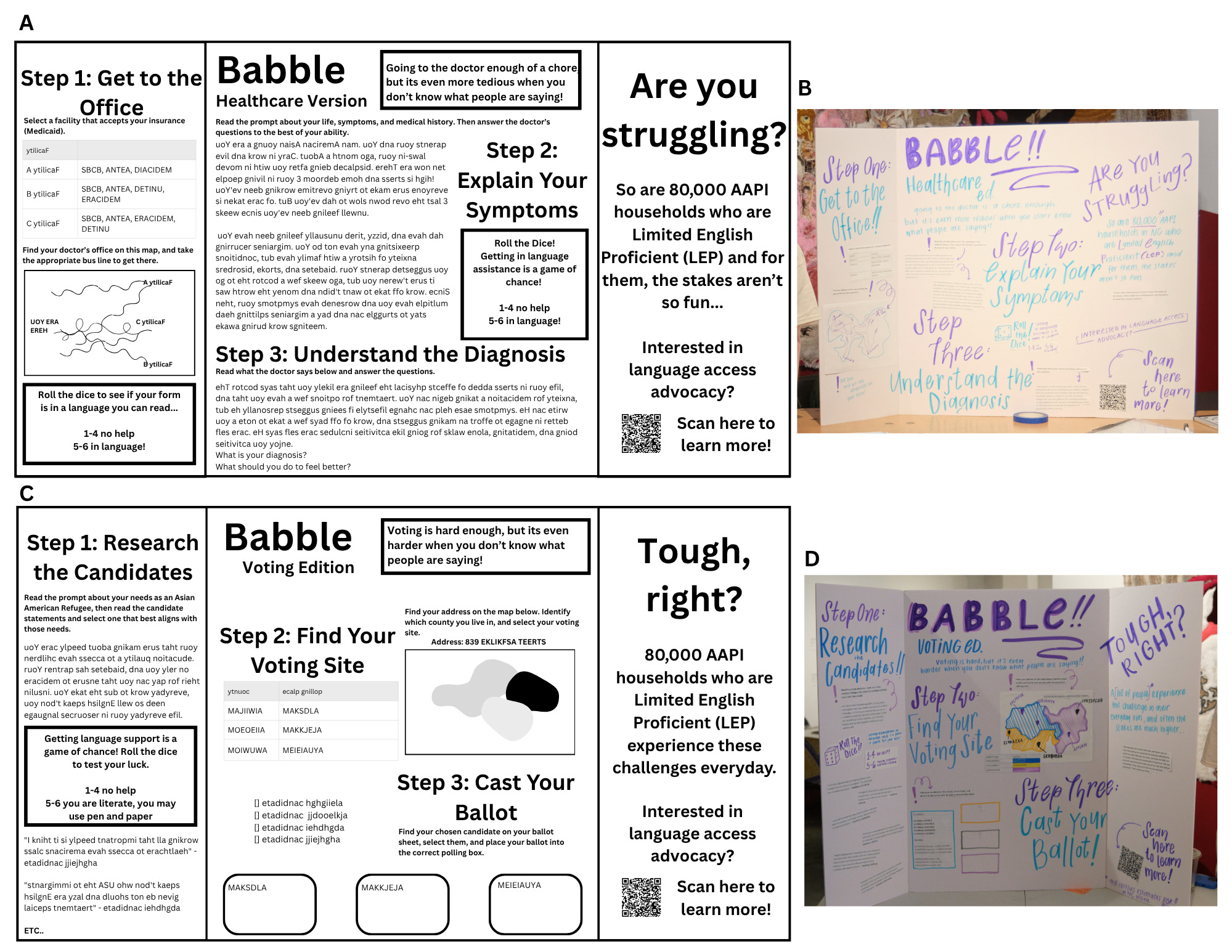
The aim of this paper is to demonstrate how research-based dissemination games can be a powerful tool for lay dissemination, advancing community and academic goals for awareness, engagement, advocacy, and action. Throughout this paper, we will use two research-based dissemination games, created by our CBPR partnership, as case study examples to walk through the planning, design, and implementation process. Figure 1 contains an overview of our games.

Case Study
To contextualize the examples of the research-based dissemination games below, we provide a brief overview of our qualitative CBPR research study conducted by partners at North Carolina Asian Americans Together (NCAAT), University of North Carolina Greensboro, and Wake Forest University School of Medicine. The goals of this research were to understand the lived experiences of limited English proficient (LEP) Asian Americans in NC, assess areas of strength and need, identify barriers and facilitators to care, and collect community-driven recommendations for change. We developed our dissemination strategy and products to raise awareness of LEP experiences among non-LEP community members, increase engagement in NCAAT and other organizations serving LEP communities, and increase participation and support for community-empowering advocacy and action related to language access. We also planned to utilize research results for organizational advocacy and action goals, including providing evidence-based support for NCAAT advocacy work in language justice (e.g., supporting language-access legislation on the local level like state bills HB 371, HB 730, and SB606), and ensuring that organizational efforts aligned with the needs of the community (e.g., continuation of an in-language voter hotline around election season).
Results of the study showed there was a substantial lack of language access resources for LEP Asian Americans in North Carolina. Participants shared detailed stories about how English as their second (or even third) language having impacted their daily lives, including resource access, social relationships, and mental health. Access to interpretation and translation were vital facilitators to care, and the lack of these services in key spaces such as healthcare, governmental services, legal aid, and education was particularly damaging. Participants also shared stories of resilience, such as how they worked together as individuals or communities to overcome barriers due to inadequate language access.
Positionality
The first author (Sucaldito, ADS) is a first-generation Southeast Asian American immigrant who grew up and currently resides in North Carolina. She is privileged as a highly educated individual who speaks English as her primary language. Her racial and ethnic identities may have made it easier for her to build trust with and recruit Asian American community partners and participants while her primary language may have made her less able to reach LEP Asian American participants. These identities also may have affected her insight in similar ways during data analysis. Sucaldito began her public health career as a community partner, working in grassroots and nonprofit groups advocating for Asian American health. As such, her focus on equitable power-sharing and relationship-building stems from her time as a community partner, which profoundly influences her use and practice of CBPR as a now academic researcher working with communities who share many of her identities. She has been present since the conception of the CBPR partnership and participated in project development, recruitment, data collection, analysis, and dissemination efforts.
The second author (Srivastava, SS) is a first-generation South Asian American immigrant who grew up and currently lives in North Carolina. He is multilingual (Hindi, Vietnamese) but speaks English as his primary language and is privileged by caste, class, and education. At the time of this study, Srivastava was employed at NCAAT as their Community Engagement Coordinator. His personal experiences and position at NCAAT may have influenced his perspective when analyzing data. Additionally, he has undergraduate degrees in Psychology and Sociology and is interested in pursuing a career in academia. The combination of his academic, professional, and lived experiences has informed his approach as a researcher and community member, and he highly values and prioritizes community-driven and translational science. Srivastava joined the team in Year 2 of the CBPR partnership and was primarily involved in data analysis and dissemination.
Methods
Step 1: Planning
Intentionally Involve Community at Every Step of the Research Process
The first step of disseminating findings to community audiences is, of course, to equitably involve the community. Ideally, this is a continuation of the community-engaged partnership, which should have included equal-power sharing at every step of the process, starting with research question selection. In our case study, our partnership started three years prior, with academic partners from University of North Carolina Greensboro and Wake Forest University School of Medicine collaborating with NCAAT. NCAAT is an Asian led and founded 501c (3) aimed at creating a more inclusive democracy that represents and supports the growing Asian American population in North Carolina. NCAAT staff members and community leaders contributed to all parts of the research process, including research question and protocol development, participant recruitment, data collection, analysis, and dissemination in both academic and community contexts. The idea for a game-based dissemination product came directly from community partner SS, and the game was designed and implemented with consistent feedback and collaboration from the rest of the partnership. Specifically, NCAAT staff offered suggestions on game subject matter, including recommendations to highlight findings related to voting and to incorporate calls-to-action for their upcoming legislative advocacy day and programming.
Consider how a Research-based game may enhance your lay dissemination strategy
Returning results back to the community is a key tenet of any community-engaged research, particularly CBPR, but just as there are several types of dissemination products for academic audiences, there are a plethora of dissemination products for lay audiences (e.g., op-eds, social media posts, blogs, zines, infographics, and community events). When designing your dissemination plan (ideally utilizing evidence-based planning protocols) (Gollust et al., 2025; Sofaer et al., 2013), consider whether a game makes sense for the subject matter. While serious games have several pedagogical benefits for learning, their play-centered nature may not be appropriate for sensitive research topics, or these games may require age-restriction (e.g., no players below the age of eighteen), significant oversight, or content warnings for appropriate play (Alexander, 2012; Hammer & Turkington, 2021). We encourage researchers to consult with community partners and members to decide whether a game is an appropriate tool for your study, consider any potential harm that research-based dissemination games could have on players, and take appropriate steps to mitigate risks.
In our case, we determined after conversations with community and academic partners that the results of the language access study were appropriate for, and could be enhanced by, research-based dissemination games. Although we determined the risk toward players to be low, we carefully designed the game to lower the potential for negative player outcomes, described further in Step 2 on game design (Germán, 2021; Hammer & Turkington, 2021). Additionally, we built each game with an accompanying game master (GM). Among other roles detailed in Step 2, the GM monitored players for signs of emotional distress, utilized an ongoing consent process where they ensured players knew that the game was voluntary and that they could stop playing at any time (Hammer & Turkington, 2021), and if needed, would connect players to additional support (i.e., a team member certified in mental health first aid).
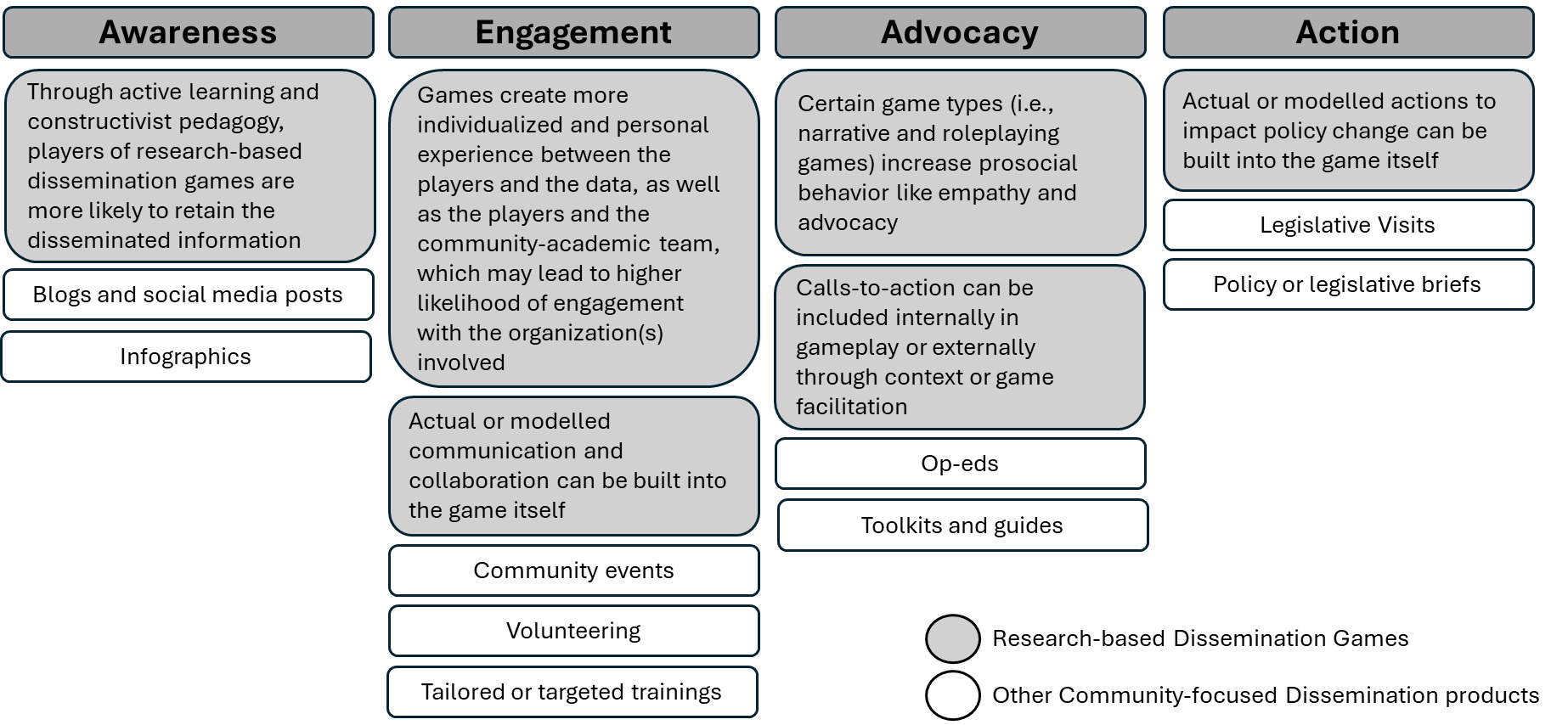
If a game is appropriate, consider how research-based dissemination games may have unique benefits in your dissemination plan (detailed in Figure 2). Could a game help you reach new audiences who don’t or can’t access your other dissemination products, or could a game engage existing audiences in a new way? Can games be used to prioritize or emphasize different partnership goals (e.g., awareness, engagement advocacy, action) compared to other dissemination products?

Prior to creating the games, our partnership had already disseminated results back to the community and participants through blog posts and infographics. The research team ensured that these products communicated research findings in accessible language for LEP community members, including multiple professional and community-certified translations facilitated by NCAAT’s Communication Team. These products, however, existed solely online and primarily reached adult community members already interested in and knowledgeable about language access work. We intended to share these infographics at an upcoming community event but were concerned that these dissemination products may feel out of place or otherwise be ignored in an interactive and family-oriented environment. As such, SS, in collaboration with his colleagues on NCAAT’s Community Engagement team, suggested the creation of a game to make the findings more accessible and enticing to the expected audience. SS took the lead on the initial ideation, which refined with other NCAAT staff and the first author. Ultimately, we decided to create two research-based dissemination games which would be appropriate for community members of all ages and any level of knowledge about language access. Our games focused on language barriers to healthcare and civic engagement, which aligned the most common concerns brought up by LEP research participants during data collection and supported NCAAT’s goals as a civic-engagement focused organization. We believed that the interactive nature of a game would better help community members understand the lived experiences of LEP Asian Americans, making them more likely to engage with and support language equity initiatives done by NCAAT and other allied organizations.
Determine Game Content, Audience, and Game Goals
It is unlikely that your team will be able to incorporate every piece of research data into the game so you may need to make decisions about which results to prioritize. Consider your team’s long-term goals: what impact do you hope your research will have? Who do you wish to engage with your work? Do you wish to increase individual or community awareness? Are you hoping for a change in behavior (e.g., increase skills or ceasing a detrimental health habit) or an emotional reaction? Would you like community members to advocate for policy change, and if so, in what way do you want them to take action (e.g., call their senator, sign a petition)? Identifying these game goals will help you create a product that disseminates results while also increasing the chances that the dissemination has the intended long-term impacts.
The primary goals for our research-based dissemination games were to 1) increase awareness about the experiences of LEP Asian Americans among non-LEP community audiences, 2) create empathy and understanding about struggles caused by language access inequity, and 3) increase community advocacy, action, and support for language equity initiatives. With these goals in mind, the team decided that the game would prioritize disseminating results related to 1) the lived experiences of being a LEP Asian American, 2) the impact of limited English proficiency on daily life and communication, and 3) the important role of language access through interpretation and translation.
Consider Logistics and Accessibility
Identify your available resources, including personnel, cost, and time. Lieberoth (2015) found that both simple and complex game designs effectively increased player engagement and motivation, meaning that research-based dissemination games can be effectively implemented at a variety of resource levels and capacities. In our games, primary planning personnel included the first and second author, with consultation from NCAAT’s Community Engagement team and the second author took the lead on implementation. The co-authors also led evaluation, which consisted of process notes, participant feedback, and GM observations, however, due to limited personnel, outcomes data was initially collected for internal and programmatic purposes and thus, were not systematic. Teams with more resources who wish to measure the efficacy of their research-based dissemination games should consider the benefits of systematic data collection, including pre-post surveys focused on game outcomes and/or structured debrief protocols for GMs (Paige et al., 2015; Tan et al., 2024).
For monetary resources, our partnership had a small budget but relative freedom about what we could purchase. The final cost of our games was $20, which went to purchasing simple and accessible materials, namely trifolds, markers, printed paper, and dice. We also used scrap paper, pens, and clipboards, which our partnership already owned. Excluding planning and development hours, the physical games took a single person an hour each to create (two hours total) with setup taking an additional fifteen minutes.
Next, consider how, where, and when you’ll launch the game, and how you’ll market its release. Where does your community meet? Are there any dates where your audience will already be in one place or primed for research dissemination? Our partnership released our games during NCAAT’s annual community festival, Common Roots, taking advantage of the pre-planned marketing efforts and the guaranteed community audience. The event had seen considerable foot-traffic (500-800 people) in prior years, and the festival’s reputation as fun, family-friendly, and in celebration of shared identity helped make our game appealing to a broad community audience.
Additionally, take some time to consider your audience’s specific needs. We knew that the festival was a family-friendly event, so we needed the game to appeal to both adults and children. Finally, determine how often your game will be available for play. Some games have negligible maintenance costs (i.e., money and personnel), meaning they could be available for community members at any time, while others may require ongoing maintenance and thus may only be available for one-time or limited use. Due to needing at least one staff member to facilitate game play as the GM, our research-based dissemination games are available at in-person events only.
Step 2: Designing the Game
Based on constructivist pedagogy, game-based learning uses active learning techniques where players learn the research results through experience, making meaning and understanding the results through direct interaction (Allsop et al., 2020; Salen & Zimmerman, 2004; Sutton-Smith, 2009). As such, your research-based dissemination game should build opportunities for results dissemination into both the game structure (i.e., design, narrative, and game facilitation) and the player’s interactions with it (i.e., rules, player choice, and competition and incentives). Table 1 provides an overview of game elements, considerations, impacts, and case study examples, which we expand on below.
Game Design
The design of your game sets the stage for players to learn about the results of your research. Game design includes the structure of the game itself and the aesthetic choices that make up the board, pieces, and other game ephemera. Structurally, game type, narrative, player number, challenge level, and how players win the game can be used to achieve game goals and define player experience (Hammer & Turkington, 2021). Aesthetically, consider your audience preferences, your budget, and how aesthetics can advance game outcomes.
Type of Game. The type of game you create will be heavily dependent on your research results. For example, strategy games or building games may work best for results focused on processes (e.g., research on water flow or how slang evolves) while narrative or roleplay games may work best for qualitative studies focused on lived experiences or building empathy (Tien et al., 2025). Our study documented lived experiences using interviews and focus groups, so we used a narrative role-play game design. In both games we created, players stepped into the shoes of a LEP Asian American trying to complete an important everyday activity, specifically seeing their doctor and receiving medical advice for mild migraines or casting their vote in an election. Role-playing games have been shown to increase empathy, which aligns with our dissemination goals (Alexander, 2012), but role-playing games, if not appropriately designed or handled, can also risk retraumatizing players or lead to trivialization or victim-blaming (Alexander, 2012; Hammer & Turkington, 2021). To mitigate these risks, we drew on ADS’s pedagogical expertise to follow best practices for game design with limited potential for potential triggers (Germán, 2021; Hammer & Turkington, 2021). We also ensured an in-person GM was present at all games to provide context, help players debrief, and offer support and resources if necessary (Germán, 2021; Hammer & Turkington, 2021) and had a team member certified in mental health first aid on site and available at all times.
Narrative. Game narrative gives the team the ability to incorporate research results directly through situation and prompt design (Hammer & Turkington, 2021). When developing your game narrative, make sure the storyline creates engaging opportunities to disseminate research results while revealing no personally identifiable information. In our games, players, acting as LEP Asian Americans, had to complete three tasks in their non-native language to win the game. We mimicked the experience of reading a second language by taking multiple pieces of game content and writing them in reversed English. For example, the term “language” became “egaugnal.” This increased the mental burden associated with each step of the game, mirroring the additional translation and interpretation burden experienced by LEP Asian Americans.
We chose the three major tasks in each game (detailed in Table 1) based on their prevalence throughout research findings. For example, transportation was a common difficulty for multiple LEP Asian American participants, with English-only public transportation preventing access to care (i.e., attending doctors’ appointments) or acting as an additional barrier for participants trying to access to social services. Importantly, incorporating this research result (i.e., difficulty accessing transportation) into the game narrative did not place any participant at risk of identification. As such, the task of deciphering a map in the player’s non-native language included in both games. We also lowered the risk for potential emotional distress for players by creating relatively low-stake scenarios (e.g., visiting a doctor for mild migraines and voting an in an election with unnamed candidates) that followed experiential teaching best practices (Germán, 2021).
Number of Players. Your research results may help determine whether you choose to create a single or multi-player game. For example, research results about group dynamics may be disseminated best in a multi-player environment. There may be situations, however, when creating multi-player game formats may be uncomfortable for players (e.g., research games on highly sensitive topics) or the academic partnership (e.g., lack of resources for a multi-player design). In this case, you may need to make creative adjustments to respect your audience’s (and partnership’s) wants and needs. We originally designed our game to be single player, but during implementation, the GM observed that families and small groups who had already expressed interest in the games would decline participation after learning about this game format. In response, the GM created multi-player options for each game so two or more individuals could act collaboratively as one “player.” This made the games more accessible and approachable to the community, particularly families. After this change, the GM observed that many attendees, including children-only groups, adult-only groups, and mixed-age parties, chose the multi-player option, which soon became the most commonly used format. The GM also noted that some attendees who had declined participation for the single-player format returned when the multi-player option was available and some players who first completed the games as an individual brought friends and family to replay the games as a group.
Challenge Level. Depending on the goals of your game and your intended audience, a more challenging game design may either benefit or hinder your dissemination. It is important to weigh the pros and cons of each approach and how it impacts player experience. Challenging games may encourage deeper engagement, but overly challenging games may result in abandonment due to the increased time and effort burden on players. Similarly, excessively simple games may not encourage thoughtful play but may be accessible to a wider variety of people (Lyons, 2015). We encourage researchers, when possible, to pilot test their games with the community partners and members as part of the planning process, to ensure that challenge level is as intended.
In our study, research participants frequently reported feelings of frustration due to being LEP, describing how they had to spend increased time, attention, and emotional labor to complete everyday tasks. To mimic these participants’ lived experiences, disseminate research results to players, and build game narrative, we used reversed English to mimic the experience of playing the game in an unfamiliar language. This intentionally made the entire game, including its situation and prompts, more difficult, disseminating research themes in an interactive way that allowed players to make meaning from their own experiences, contributing to the games’ increased awareness and increased empathy goals. The GM observed that some players abandoned the games after a first unsuccessful attempt, however, most players who did not win on their first try reattempted until they won and processed the game’s difficulties with the GM. Completion of either game took most participants an average of 10-15 minutes (range 3-30 minutes), which was aligned with the planning team’s estimation and prior pilot testing.
“Winning” the Game. Next, consider how your players will “win” or complete the game. As previously stated, awareness and empathy were the intended outcomes of the games created by our partnership, so we utilized a player(s) vs. game design. Specifically, players “won” the game by successfully completing all three tasks, meaning every player could “win” the game regardless of whether other players “won” or “lost.” This structurally underscored our message that language access is not a competition, and all people deserve language equity. Depending on the intended outcomes of your game, you may choose to use a similar player(s) vs. game or player vs. player design.
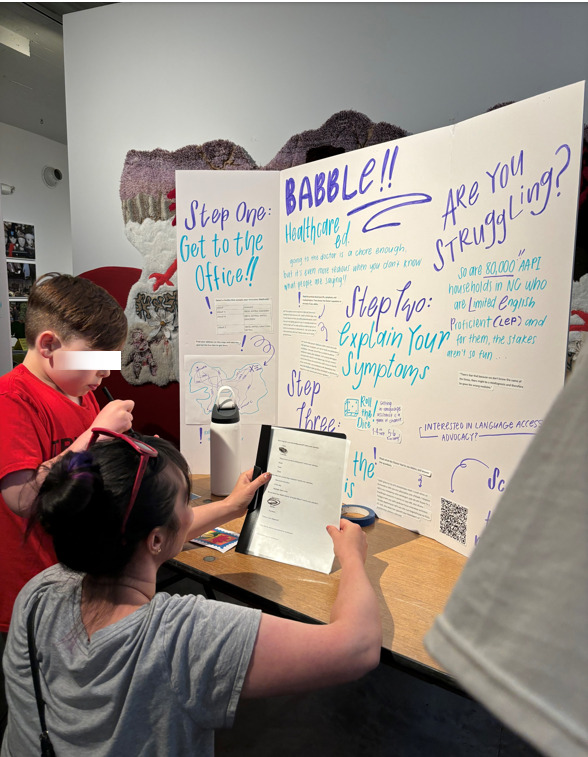
Game Aesthetics. Consider your audience’s preferences when it comes to game aesthetics; ideally, your game should appear approachable, engaging, and visually pleasing. Traditional academic dissemination products (i.e., academic posters and reports) can reinforce traditional researcher-participant hierarchies and discourage collaborative engagement and interrogation. As such, research-based dissemination games, and other community-orientated dissemination products, should step out of traditional “professional” constraints and embrace the use of bright colors, visuals, and simple language (Figure 1 and Figure 3). These adjustments can help make the games more approachable, and when done well can help draw audiences to the game at events and in community spaces. In our games, we used bright colors pulled from NCAAT branding guidelines to create a visually pleasing display that was recognizably affiliated with the organization.

Game Facilitation. We highly recommend that all research-based dissemination games include some form of game facilitation by a GM. Logistically, GMs act as facilitators by setting up games for play, responding to player feedback, and adjusting gameplay in real-time when necessary (making accommodations for children, larger groups, etc.). After gameplay, GMs can also support player reflection and critical thinking through debriefing. This technique from experiential learning theory occurs after a learning experience and uses reflective open ended questioning, including stimulating, clarifying, factual, conceptual, and higher-order thinking questions) to help participants reflect on their experiences, identify lessons learned, and consider practical applications (Dennehy et al., 1988; Johns et al., 2018; Tan et al., 2024). Debriefs have been shown to encourage learning and critical thinking, and support participants as they develop their thoughts, feelings, and beliefs about the learning experience and content. Through debriefing, GMs can help players more deeply consider gameplay and connect it to real-life research results, concerns, and potential action (Dennehy et al., 1988; Tan et al., 2024). GMs can also allow players more in-depth interaction with the study by sharing research results that did not make it into the game, connecting players to other dissemination products, providing further or clarifying information, or helping players respond to study and game-based calls to action.
Lastly, in games with sensitive topics or high likelihood for emotional reactions, GMs act as “emotional checkpoints,” ensuring safe gameplay by checking in, helping players process their emotions, and/or connecting them to help where appropriate. Facilitation guidance has been shown to mitigate risk related to trivialization of research results and traumatization or emotional distress of players in serious games (Germán, 2021; Hammer & Turkington, 2021). GMs can also act as content moderators, ensuring players in multi-player formats follow game-set rules and codes of conduct (e.g., don’t cheat or no derogatory/discriminatory language) (Aguerri et al., 2023; Gillespie et al., 2020). While some studies may be able to build game facilitation into the game itself (e.g., self-guided discussion questions throughout the game, links to study websites, and QR codes for calls to action), live facilitation, in-person or virtual, is best as it allows for the highest depth of player engagement and is supported in educational studies and those on game-based learning (Bado, 2022; Bradley et al., 2020). Games requiring GMs to take on these safety-related tasks should have a detailed protocol for what to do if a player needs support, including a trusted qualified resource to refer players if needed (Johns et al., 2018; Paige et al., 2015). Finally, if your team has bandwidth, GMs may also be trained to collect more detailed feedback from players for process or outcome evaluation analyses before, during, and after gameplay.
Because emotions, particularly empathy and frustration, were expected outcomes of our game, our team decided to have a live in-person GM. Srivastava was the primary GM, however, Sucaldito stepped in as GM during the former’s breaks. Both GMs had previously been trained in debrief and facilitation techniques through their experiences in community organizing and academia (Dennehy et al., 1988; Johns et al., 2018; Tan et al., 2024). During the community partner’s Common Roots festival, the GM encouraged festival attendees to check out the research booth and the accompanying games. Before the game, the GM provided a basic overview and instructions to entice participants, and when needed, responded to attendee questions or concerns. During gameplay, the GM helped clarify any questions, monitored players for signs of emotional distress, kept track of their time, and cheered them on. After the game, the GM encouraged reflection throughout open-ended factual, stimulating, and conceptual questions through a post-game debrief (Tan et al., 2024). They further contextualized gameplay by relating it to study results, and providing players with additional resources related to the research and language equity actions (e.g., infographics, research reports, opportunities to volunteer). For example, multiple potential players shared concern at the game’s difficulty or its “unfair” nature. The GM would then ask open-ended conceptual questions to these players to help them relate in-game experiences to real-life difficulties and inequities experienced by Asian American LEP communities. In case the game-based simulation of language equity elicited emotional distress, the GM monitored players, however, no players appeared to need additional processing or connection to care.
Players’ Interactions with the Game
Choice. Providing players with choices may increase player autonomy, content relevance, and motivation. Choice can be incorporated on multiple levels from cosmetic to structural. We decided to create two different versions of the game, with one version focused on healthcare and one focused on civic engagement. Despite playing through similar narrative structures, players were exposed to slightly different research results in each setting. As such, choosing game setting had a structural impact where the players’ choice changed which research results were disseminated, allowing players to engage with research results that felt most personally relevant. In contrast, a cosmetic choice would be one that does not impact the content or process of research dissemination (e.g., customizing a game character’s name).
Rules. Rules provide the necessary structure for any entertainment, but in research-based dissemination games, these rules can also be used to further dissemination goals. Rules such as power-up mechanics, time limits, and game progression, among others, directly impact game structure, situation and prompt design, and player experience to disseminate results.
Power-ups or penalties are game structures which help or hinder a participants’ game play. In the popular Mario Kart racing game, these appear, respectively, as mushrooms or bananas, which provide players with benefits or detriments to their speed. In research games, power-ups and penalties can be used to creatively represent facilitators or barriers. For example, in our case study, players were asked to roll a six-sided dice at least once in each game to see if they would receive a facilitator to language equity. If they rolled a five or above in the healthcare game, they would be provided with a translated symptom intake form; players rolling below a five were informed there was no interpreter or written translations available, and they must complete a symptom intake form in their second language (i.e., reversed English). In the voting game, players rolling a five or above were informed that they were literate in their spoken language and could take notes when researching candidates for elected office in the voting game. Players rolling below a five were fluent in their spoken language but not educated in its written counterpart, or their spoken language did not have a written counterpart, leaving these players without assistance of any kind. These additions added an element of chance, a common gaming element, while also highlighting multiple themes about language access, namely that language access services were not always available, that translated materials were not accessible to some LEP Asian Americans due to education level, and (for those who received language resources) that thoughtful language access initiatives substantially improved LEP Asian Americans’ ability to complete their goals.
The timing of the game (e.g., are you competing against the clock? Do you need to have a lower or higher time than another player?) should align with your research results and game goals. In our case study, time did not affect whether players could win. We did, however, present player times on a public scoreboard so that players, and observers, could see how the time of players with “power-ups” (e.g. interpretation support) differed from players without “power-ups” (i.e. without interpretation support), showcasing how interpretation acted as an equity tool reduced barriers to care for LEP Asian Americans.
Lastly, determine how your player “wins” or reaches the end. In some games (e.g., Candyland), there is a set path that all players must complete sequentially. This set-up would work well for studies disseminating results about processes (e.g., studies about how the immigration system works). Games that prioritize strategy as a method for success may be used to disseminate results focused on individual or group behaviors mimicking these strategies. In the healthcare version of our game, we designed a sequential game progression with task checkpoints; failure to complete any of the three tasks meant players could not progress further in the game. This aligned with research participant experiences where failure to properly read the bus map would prevent them from getting to the office to fill out a patient history, and failure to correctly fill out a patient history would prevent them from reaching an accurate diagnosis. In contrast, the civic engagement version of the game utilized a checkpoint-less system where failure at previous tasks did not prevent players from reaching the end of the game. This also mirrored participant experiences where their failure to read a district map or adequately research a candidate at the ballot box didn’t stop them from casting a vote but did prevent them from successfully voting for a candidate that supported their views.
Competition and Incentives. Competition can be a powerful tool to tap into the playful and accessibility of games; however, it should be used mindfully so that it does not contradict the research results. Player-vs-player games may work for studies focused on competitive behavior or limited resources. Due to the study’s focus on language equity, we purposefully did not incorporate competition into the game design; this meant all players could win regardless of the actions of other players. We did, however, use competition to incentivize engagement with the game itself by creating a leaderboard of completion times. The GMs observed that several players appeared to take interest in the game due to the visible leaderboard, initially engaging with the booth to ask about the competition and prizes. This created an opportunity for the GM to market the game. After finishing the game, players could choose to add their time to a public leaderboard, which later players could try to “beat.” NCAAT rewarded winners with gift cards after the event. This practice allowed us to use competition to increase the game’s reach without impacting the message of the research results.
Step 3: Implementation
A well-designed and thought-provoking game only succeeds in disseminating research findings if it reaches and effectively engages community members. It is important to consider physical setting, game setup, and the facilitator’s relationships and positionality when trying to encourage participation.
Game Settings and Setup
When trying to engage a lay audience, implement the game within a time and place familiar to the community members and partners. This can help increase attendance and engagement with the event and the game. In addition to date, time, and physical placement, think about other ways you can encourage others to play the game while at your event.
As previously discussed, the inaugural implementation of our research-based games was at the annual and highly attended Common Roots festival held by community partner, NCAAT. Although a last-minute venue change due to rain lowered attendance, the festival still had a turnout of five hundred community members. We set up our games in a high traffic area next to two tables whose content related to our research (i.e., an organization offering low-cost medical services and free health screenings on site and a NCAAT-run booth dedicated to Voter-Education trivia) to increase research and game relevance. To further increase engagement, we included the research-based dissemination games in a festival-wide stamp rally held where attendees received stamps for engaging with specific activities. NCAAT rewarded attendees who completed the stamp rally with free food. Based on stamp rally card submissions, two hundred people played the research-based dissemination game over a 5-hour period. Participating as one of the stops in the stamp rally seemed to encourage festival attendees to interact with the game. GMs observed nearly half of all players sought out the game specifically for the stamp rally. Based on player feedback and GM observation, however, the players’ reasons for engaging with the game did not appear to impact the length or depth of engagement with the research results.
Game Master Relationships and Positionality
Game Master Positionality. Ideal GMs have pre-existing relationships with the community (e.g., trusted and recognized), and have been involved in both the research study as a whole and the planning and development of the research-based dissemination game specifically. Within a strong CBPR partnership, there should be multiple community members who took an active role in research, are familiar with the game design and results, and have strong ties to the community. As previously mentioned, Srivastava served as the primary GM. His role at NCAAT included relationship building and direct service, making him well known to the community, and he was involved in all three steps of game planning, development, and implementation. He also holds many shared identities with community members (i.e., Asian American and multilingual) and had been involved in non-dissemination stages of the research project, such as data analysis. His relationships were beneficial, especially in garnering our first few players, as he was able to greet people in the crowd by name and draw them towards the booth. This led to an initial list of names on the leaderboard, which appeared to increase interest from potential players who were curious about the associated competition and prizes.
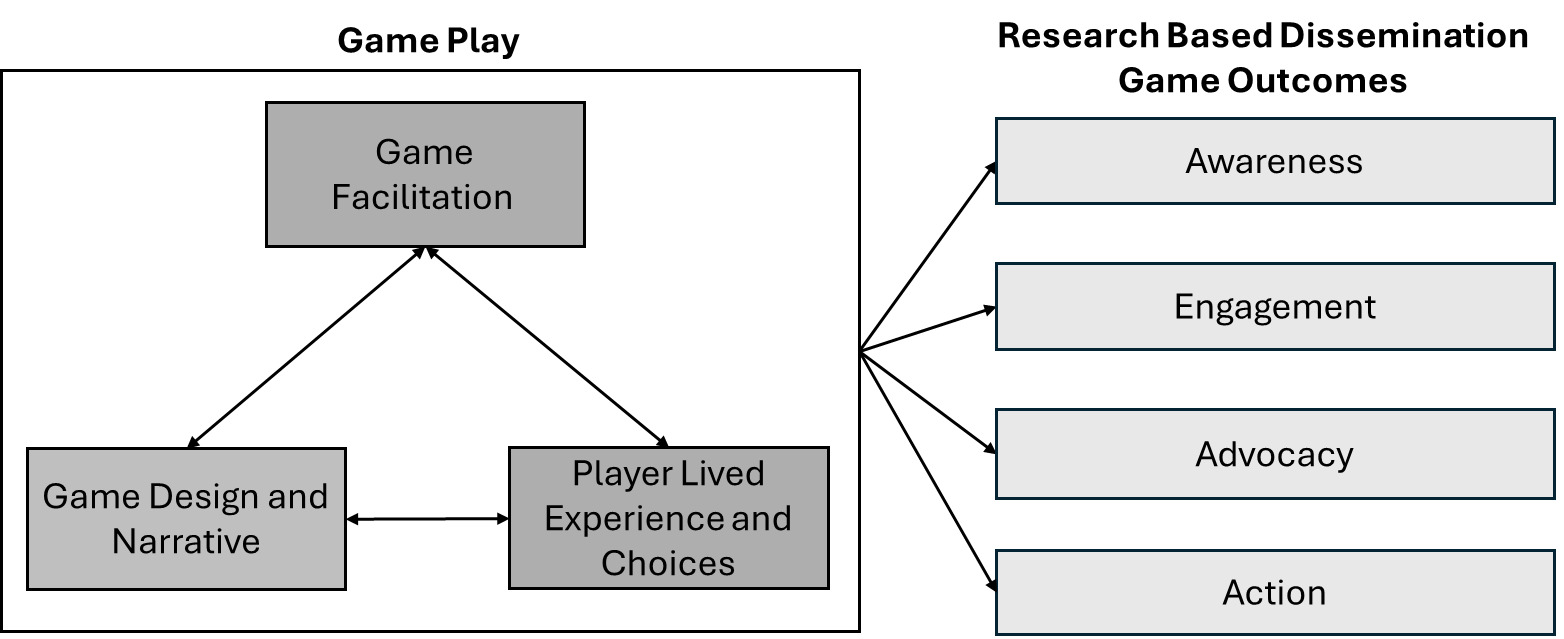
Player-GM Interactions. Research-based dissemination games achieve their game goals (i.e., awareness, engagement, advocacy, and action) through the reciprocal interaction between the game design and narrative, the players’ own lived experiences and choices within the game, and game facilitation (Figure 4). For example, based on their own interests and experiences, a player may choose to play the healthcare version of the game over the voting version of the game. They then use their skills and experience to move through the game, learning research results from the game design and narrative, such as the practical barriers and emotions connected to trying to receive a mental health diagnosis in a non-native language. Before, after, and during gameplay, the player interacts with the GM, who assists them in the process of engaging with and making meaning from the game, which is also impacted by the players’ own experiences.

In our case study, players appeared to respond positively to both versions of the language access game. After post-game debriefs, several players seemed to express new mindsets (e.g., “I never thought about [language access] like that!”) and empathy (“It must be so difficult to go through life as LEP”). Players appeared to connect research findings and study participant experiences to their own personal stories. For example, GM-player conversations included players stating that the game resonated with their own lived experiences or the experiences of people they cared and sharing how English proficiency impacted environments outside of voting and health (e.g., employment and social gatherings). One Asian American player, after completing the game solo, returned with their White American partner, encouraging them to also play the game and “learn what [my] experience is really like.” This couple appeared to use the game as a point of connection and education, with the immigrant player sharing their experiences with their partner and the GM, including how “when I first moved to this country, it was really hard for [me].”
Beyond the disseminated results, players also appeared to engage with the research study and the dissemination method itself. For example, players asked the GM questions about study design, inquired if study participants included specific different ethnicities or communities meaningful to the player, and questioned how LEP experiences intersected with other identities (e.g., education, immigration, and literacy). Some players also made recommendations for future iterations of the game (e.g., requiring players to attempt to write in the “second language”), suggesting deeper thinking about how to best disseminate results through the research-based dissemination game itself. Notably, although most players were adults, a substantial number of players were children. The GM observed that these children appeared to engage with the game at a much higher rate than would be expected from more traditional research dissemination products (e.g., presentations or posters). Many children persevered through multiple attempts and engaged the GM in conversation after play. For example, one child who completed the healthcare game asked the GM “does this this in real life?” and if there was anything they personally could do to help the people in their community.
Lastly, the games appeared to move some players toward action. Several players reported that the games were a fun way to learn about an important civic issue, and that they had interest in volunteering or getting further involved in relevant advocacy and actions. GMs observed that multiple bilingual players currently acting as lay interpreters in the community signed up to volunteer with NCAAT’s language initiatives, and several other players asked to be involved as research participants or staff.
Discussion
Most research prioritizes peer-reviewed publications and other academic products, resulting in countless hours of formal training in academic writing and dissemination. The effective planning, designing, and implementation of dissemination products for community members, however, rarely receives the same attention. In this paper, we discussed how serious games can be leveraged to create engaging and participatory dissemination products for community audiences.
Serious games should be designed thoughtfully for maximum impact and minimized risk. The playful nature of a game may encourage trivialization of research study results, where players flatten, simplify, or minimize serious topics or players. For example, when designing Holocaust-focused serious games, Hammer & Turkington noted several potential concerns related to trivialization, including one-dimensionality, lack of context, over-identification, victim-blaming, and inappropriate fun (2021). Another concern of serious games is traumatization or upsetting experience, where playing the serious game, especially those that involve role-playing, can cause the player emotional distress (Alexander, 2012; Germán, 2021). Studies show, however, that these risks can be successfully mitigated through game design. Facilitation guidance, defining the player experience, and situation and prompt design, all of which were used in our case study, are just some of the techniques that can be used to mitigate the risks above and allow even sensitive topics matters to access the benefits of serious games (Germán, 2021; Hammer & Turkington, 2021).
Serious games are well-suited to the four types of dissemination goals: awareness, engagement, advocacy, and action (Gollust et al., 2025). Despite the education field shifting from passive learning, where students receive information, to active learning, where participants learn through doing and connect experience to knowledge and meaning (Allsop et al., 2020), most methods of returning or presenting results back to community audiences still attempt to raise awareness using primarily passive teaching and learning methods (e.g., reports, websites, and presentations) (Chen et al., 2010). Research-based dissemination games address this gap by using constructivist pedagogy to empower community members to be an active part of the dissemination process. As players, they directly interact with data in a safe and structured space where their choices concretely impact dissemination, from the pace of learning to what results they learn about. Active learning has been shown to increase student interest, engagement, retention, and participation (Allsop et al., 2020; Haidet et al., 2004; Lantis et al., 2010), so compared to passive forms of dissemination, the interactions of a research-based dissemination game may make it more likely that community members will retain results. These active learning techniques may also encourage a player to more deeply engage with the research itself, increasing its salience. In our study, many players spent time with the GM after the game discussing the research and its implications. During this time, the GM used debrief techniques, evidence-based practices from experiential learning literature to promote critical thinking and enhance meaningful learning (Dennehy et al., 1988; Johns et al., 2018; Tan et al., 2024). When combined with the increased time spent with the material through the research-based dissemination game, these games may make players more likely to engage with the community-academic partnership or allied organizations, as seen in our case study where several community members signed up to volunteer or support NCAAT language initiatives after the game. Finally, research-based dissemination games may be particularly beneficial for advocacy and action dissemination goals. Serious games have also been shown to facilitate civic engagement, enhance dialogue, address power imbalances, and potentially promote prosocial behavior (e.g. empathy and service volunteering) (Kahne et al., 2009; Mariotti, 2021; Wanick & Bitelo, 2020) and active learning has also been connected to increased community connectedness (Allsop et al., 2020). As such, players of research-based dissemination games may be more likely to engage in advocacy or action based on research results compared to community members receiving passive dissemination products.
Lastly, research-based dissemination games are extremely practical. Their playful nature makes them accessible to community audiences of a variety of ages, especially youth, and CBPR partners can easily incorporate these games into already established community events and festivals, utilizing existing strengths and resources from the community. Additionally, because the benefits of research-based dissemination games are gained regardless of the complexity of the game (Lieberoth, 2015), this method can be executed at any level of available resources, making it cost-effective to a variety of organizations.
Limitations
As previously discussed, research-based dissemination games may not be appropriate for all topics or venues and are best utilized in tandem with other lay dissemination products. For example, the presented case study successfully disseminated research results to a broad community audience, including adults and children, however, due to resource restrictions and the game’s goal of increasing advocacy among non-LEP Asian American audiences, the games did not disseminate results to the participants or communities directly impacted by the research (e.g., LEP Asian Americans). Instead, we used other dissemination products to return results to LEP Asian Americans, specifically translated infographics and reports for LEP communities and personalized postcards sent to all participants. Lastly, due to limited resources, we were unable to collect systematic efficacy or outcomes data. As such, the data presented here (i.e., process notes, participant feedback, and GM observations collected for internal and programmatic purposes) were not collected systematically and may not represent the experiences of all those who played our research-based dissemination games. Future research-based dissemination games should explore more systematic forms of outcome data collection, such as pre/post awareness surveys or structured debriefing protocols for GMs. These methods are currently being tested by members of the CBPR partnership, including the incorporation of pre/post data collection into gameplay itself.
Conclusions
Research-based dissemination games provide an interactive, family-friendly, and resource-flexible method to disseminate research results to lay audiences. They have the potential to move the needle on community audience dissemination by incorporating active learning principles that empower community members to apply their own life experiences and prior knowledge to the findings, furthering awareness, engagement, advocacy, and action outcomes from community-engaged research.