Introduction
Youth-led participatory action research (YPAR) is an approach to scientific inquiry and social change that engages young people in action research (Ozer, 2016). Although participation ideally spans all research phases, its depth can vary across stages (Bell & Pahl, 2018; Vaughn & Jacquez, 2020). Participatory dissemination is a practice that engages research participants in the interpretation, communication, and dissemination of research results (Valli, 2021).
Participatory dissemination through creative media extends research beyond academic audiences, producing knowledge accessible to young people and their communities (Evans, 2016). Participatory visual and narrative methods, including digital storytelling, performance, and music, invite participants to express their lived experience and to share stories that prompt reflection and dialogue (Gubrium & Harper, 2016; Phelan et al., 2025). These methods position creativity and narrative as both a method and an outcome, emphasizing lived experience as a foundation for understanding and collective change (Frechette et al., 2020; Kawai et al., 2023). Even in researcher-led designs, participatory dissemination allows participants to shape how findings are interpreted and communicated, making them socially meaningful (Swartz & Nyamnjoh, 2018; Vaughn & Jacquez, 2020; Wilson et al., 2010).
Background on the Qualitative Research Project
This participatory dissemination project was part of a qualitative study with adolescent boys and young men in South Africa. In the qualitative study, semi-structured interviews were conducted with 24 participants: 12 adolescent boys (ages 15–19) and 12 male youth mentors from an adolescent health organization, Grassroot Soccer (GRS). Interviews were conducted in isiZulu, Sesotho, and English by a local researcher from the community, and analyzed using reflexive thematic analysis. Full methods and findings from the qualitative study are reported in Barkley et al. (2026); key themes included widespread uncertainty about the term “mental health,” the influence of rigid masculine norms on emotional suppression and help-seeking, and significant stigma and access barriers to mental health services.
The research participants were recruited from GRS programs in Alexandra, Johannesburg, South Africa. Alexandra has an estimated population of approximately 750,000 (SAHRC, 2021). It is a youthful, vibrant community; however, the community experiences overcrowded housing, high unemployment, and widespread poverty (SAHRC, 2021).
Despite well-documented gender differences in mental health and help-seeking (Mayor, 2015; Mokhwelepa & Sumbane, 2025; Riecher-Rössler, 2017), little is known about how adolescent boys and young men in South Africa perceive and communicate about their mental health. Research has shown that adolescents understand and communicate their mental health challenges using non-clinical terminology (Beckman et al., 2023; JHU & UNICEF, 2022), and that understanding people’s mental health perceptions is essential for developing appropriate interventions (Hill, 2000).
This paper describes the participatory dissemination process of producing a song and music video based on research findings in three phases: member-checking and planning, participatory songwriting and stop-motion filmmaking, and a community screening.
Methods
This project used participatory dissemination methods to translate qualitative research findings into youth-generated creative outputs and share them with the wider community. The process began with a member-checking workshop in which preliminary findings were presented to participants to validate interpretations and refine thematic conclusions. Participants then chose a music-based format, and the local researcher worked with them to transform research themes into song lyrics. These lyrics formed the basis for a stop-motion music video that was co-produced through participatory visual methods. The process concluded with a youth-led community screening and facilitated discussion with their peers and family members, who had been invited by the participants. All participants provided informed consent for their inclusion in photographs and the music video, which was intentionally designed for public dissemination through community screenings and social media.
Member-Checking and Planning
The first stage was member-checking, in which data were shared with participants for feedback to strengthen the credibility of the data (Birt et al., 2016; Elo et al., 2014). Member-checking was conducted during a one-day workshop with research participants after the researchers completed preliminary data analysis. Engaging research participants after sharing preliminary findings is a recommended approach, as it allows their expertise to shape research outputs (McKim, 2023). During the workshop, anonymized direct quotes from interviews were shared with participants, who worked in small groups to discuss the quotes, categorize them into themes, and present their “findings” to the group. Energizers were used between sessions to help sustain engagement; examples can be found here: https://www.youtube.com/watch?v=5ZdyIJ8Y3dg&list=PLWvOYvF5xlggYlOUKFP9_BnYK50u0ZZ86
The group discussed different interpretations alongside the researcher-generated themes to explore areas of agreement and divergence, prompting valuable reflection on differing perspectives. Where participant and researcher interpretations diverged, the group discussed differences until a shared understanding emerged, allowing consensus to emerge organically rather than as an imposed outcome. We used a structured process, following these steps:
-
Group work analyzing data. Participants were divided into four equal groups and provided with the interview questions and direct, de-identified quotes that related to specific aims from the qualitative study (i.e., Aim: coping strategies; quote: “I talk to my friend when I’m stressed, but I can’t tell him everything”).
-
Presenting and discussing group work. After two hours of discussing and organizing the quotes into themes, the group presented their findings. The researchers presented their preliminary themes and findings, and the participants discussed them side-by-side with their interpretations.
-
Dissemination brainstorming. Groups discussed and presented dissemination ideas for sharing findings with youth and community members. Participants consistently advocated for engaging, accessible formats (e.g., video).
-
Selecting a research communication output. The group’s preferred dissemination strategy was to create a song and music video as the primary research output, as several group members expressed interest and talents in music and art.
Participatory Songwriting and Stop-Motion Filmmaking.
Turning Themes and Quotes into Lyrics. After member-checking, the researchers developed the idea of structuring the song as a dialogue between a coach and his players. The goal was to transform research findings into lyrics featuring composite characters and scenarios grounded in the data. Initial drafts reworked direct quotes into isiZulu lyrics, balancing fidelity to participants’ words with flow and rhythm. This creative step was possible primarily because the local researcher is a lyricist.
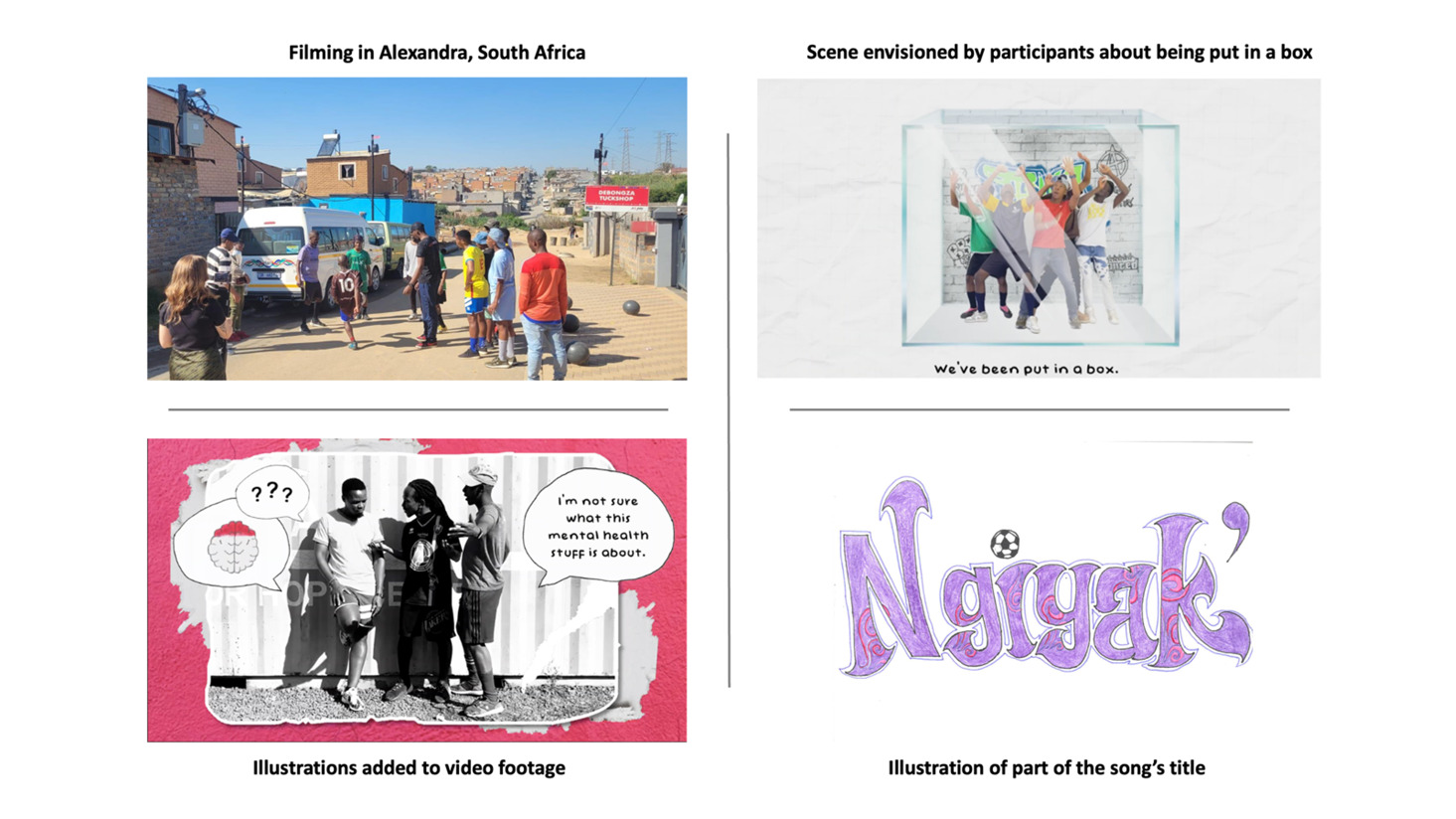
Song Familiarization and Storyboarding. During a three-day workshop, the first half-day was dedicated to participants listening to the song and discussing the lyrics with the researchers. Youth also decided on the song’s title: Ngiyak’Vuma Ntwana (roughly translated into English as: “I Salute You”), taken from the chorus. A preliminary storyboard was developed before the workshop by the researchers and the lead facilitator of the music video production and later presented to the larger youth group. The storyboard was then discussed and refined collaboratively with the participants.
Stop-Motion Animation and Video Direction. The workshop introduced youth to mixed-media stop-motion animation, a technique combining hand-drawn or physically manipulated images with digital video frames, and provided them with an opportunity to contribute to directing the music video. The workshop process followed four major steps:
-
Introduction to stop-motion animation. The professional videographer began by explaining the concept of stop-motion animation, demonstrating the process, and outlining how the workshop would proceed.
-
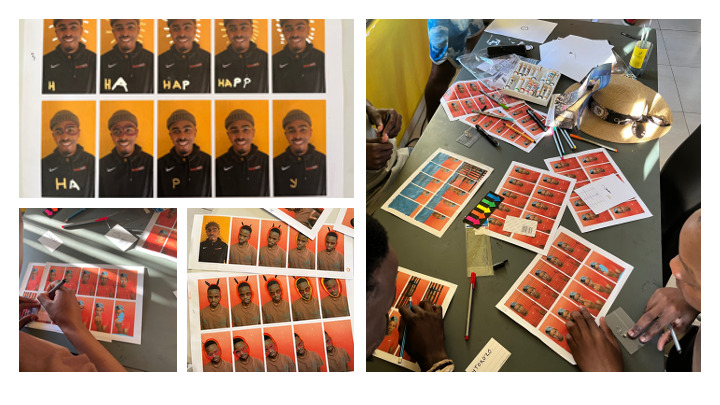
Recording a video. Participants were divided into small groups and tasked with recording short videos on their phones of themselves expressing different emotions.
-
Frame preparation and manipulation. The recorded videos were converted into sequences of frames (30 frames per second), digitally arranged, and printed for hands-on manipulation. Using a variety of art supplies, including paints, acrylic markers, crayons, stickers, glitter, and magazine cutouts, participants altered the frames while considering the animation sequence.
-
Compilation and review. Completed frames were scanned back into the computer, and the facilitator compiled the sequences using Adobe Premiere to create the mixed-media stop-motion animation. Animations from the learning process were also incorporated into the final cut.

In the debrief, participants reflected on how the creative process supported their mental health and reinforced the video’s message. As one participant reflected, “My favorite part of the process was illustrating the digital images. I haven’t drawn in a long time, and it was very calming and peaceful” (Youth Mentor, 31).
Co-Directing. Beyond storyboarding and animation, participants co-directed the music video. As each sequence was filmed, participants directed scenes while the videographer provided technical guidance. Alongside co-directing different parts of the video, one participant with a strong interest in illustration created all the artwork featured in the final production.
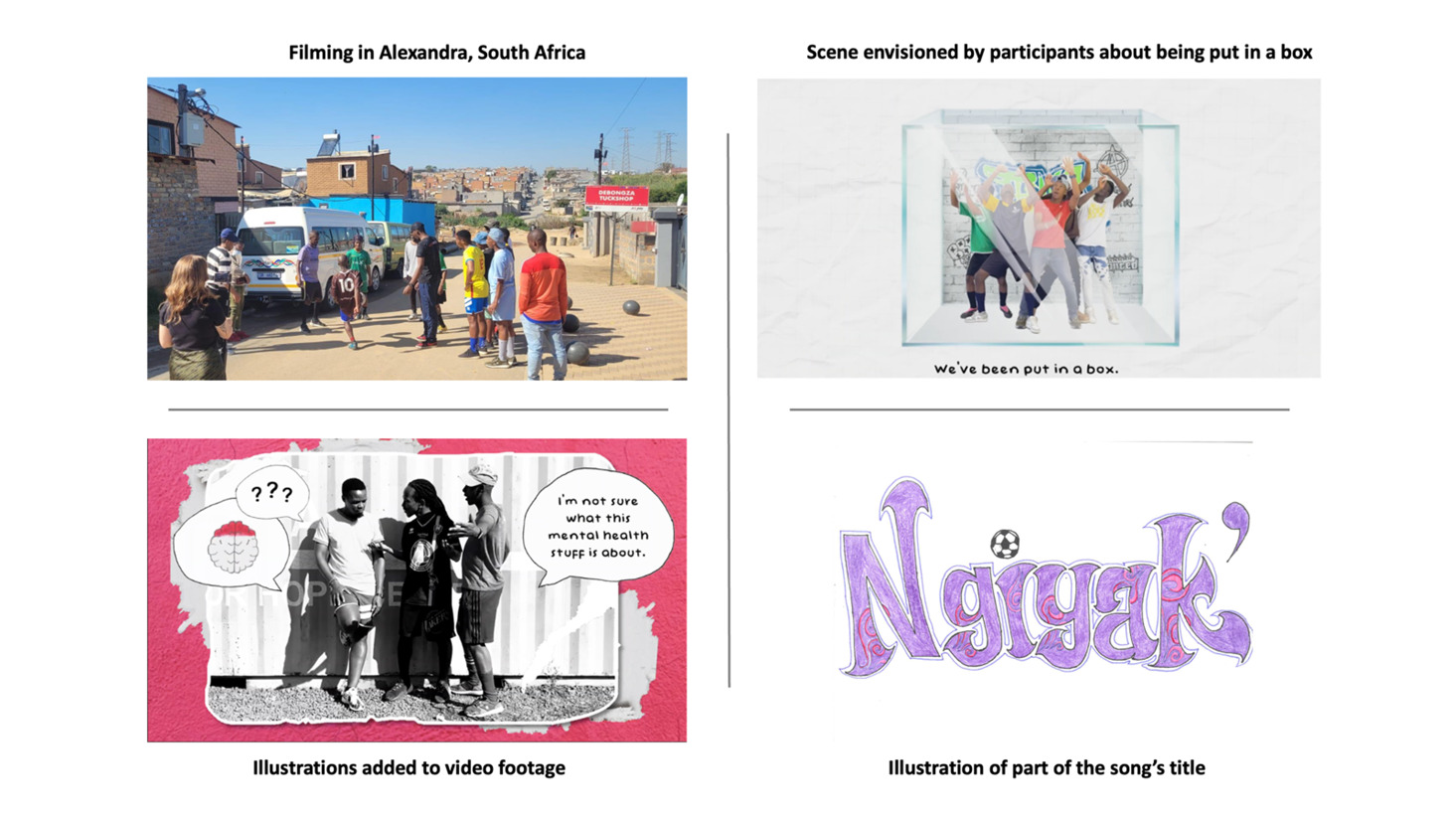
Release and Distribution
Social Media
The final music video and song were released through social media (e.g., GRS’s YouTube channel) and a community screening in October 2025. As one participant reflected, “Making the music video, I learned that we all have feelings, and we are allowed to feel them without feeling bad” (Youth Participant, age 20). Watch the music video here: https://youtu.be/YO6PpYm8buY?si=BmzbtIc2baDvS-03
Community Screening
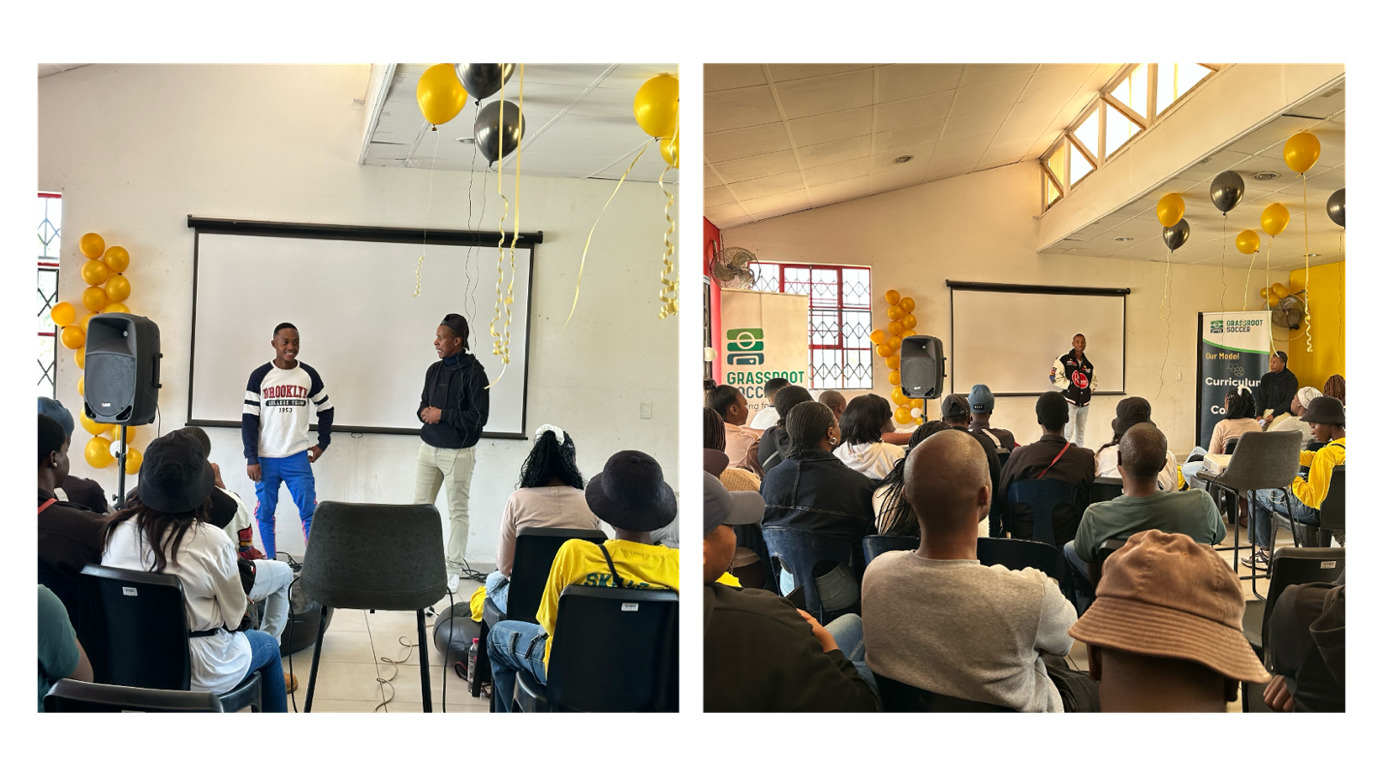
Once the music video was ready, research participants organized a screening for approximately 40 peers and family members they invited. The screening was held at GRS’s community center, and the video was projected on the wall. The screening opened with two viewings of the video to allow the audience to absorb both the visuals and lyrics. Youth participants then took the floor, sharing their experiences of the production process and explaining the meaning of the song and its connection to the research themes. This was followed by a facilitated Q&A in which audience members asked questions and reflected on the themes.

Challenges
Although the participatory dissemination process successfully engaged youth in co-creating research outputs, the initial phases were researcher-led and shaped participant involvement. A professional videographer and music producers were brought in to ensure high-quality outputs, resulting in a product that participants were proud of. However, this reflects a broader tension in participatory research between ensuring output quality and maximising participant ownership; a power dynamic inherent to researcher-led co-production. More time could have been included for participant capacity building to support them in taking a greater leadership role in filmmaking. Additionally, while participants expressed interest in sharing findings through screenings with broader stakeholder groups, including teachers and community leaders, limited resources made this not feasible.
Lessons Learned
A key lesson was the value of leveraging participants’ existing skills. Stop-motion filmmaking was effective because it enabled immediate involvement from all participants, regardless of artistic expertise. Those with stronger creative skills contributed more sophisticated drawings and concepts, while others took roles in narration, acting, or simple illustrations. This flexibility reinforced engagement and ownership. Notably, retention was strong throughout, which we attribute to participants having chosen the dissemination format themselves during the member-checking workshop. The project also demonstrated that professional support does not diminish youth voice; rather, when guided by youth decision-making, technical expertise can enhance the quality and reach of participatory outputs.
Conclusion
This participatory dissemination process transformed qualitative research findings into culturally resonant outputs that promoted discussion, youth ownership, and personal well-being. As one participant noted, “Making the music video put me in a happy mood. And that’s what the song is about; to listen to when your mood is down and you’re not feeling well” (Youth participant, 19). Professional expertise in music and film production enabled a high-quality product that young people valued, while participatory processes ensured authenticity and local relevance. To strengthen sustainability and advance youth-led research dissemination, future initiatives should integrate capacity-building components that enable young people to develop and apply creative and research skills independently.