Community-Based Participatory Research (CBPR) is a partnership approach to research that involves the community in all aspects of the research process, from study design and implementation to interpretation and dissemination of findings (Israel et al., 1998; Wallerstein & Duran, 2006). This research framework is grounded in trusting, equitable relationships between academic and community co-researchers, and is considered a best practice for health research with American Indian and Alaska Native (AI/AN) communities (Beans et al., 2019; Brockie et al., 2017; Burhansstipanov et al., 2005; Fisher & Ball, 2003; Malerba et al., 2018). Researchers engaged in CBPR aim to develop trusting, long-term relationships with community members, study topics that matter to the community, and acknowledge that sustainable solutions to problems must emerge from the community through a bottom-up rather than top-down approach (Beans et al., 2019; Wallerstein & Duran, 2010). A goal of CBPR is to identify and build upon existing strengths, empowering the community to effect change (Beans et al., 2019; Brockie et al., 2017; Wallerstein & Duran, 2006, 2010). Tribal ownership of data and oversight of the dissemination of research findings also are key components of the CBPR framework (Beans et al., 2019; Fisher & Ball, 2003; Israel et al., 1998; LaVeaux & Christopher, 2009).
Because colonization remains a persistent and structuring force shaping the experiences of Indigenous Peoples, research approaches that actively confront and mitigate its ongoing impacts are necessary. Tribal Critical Race Theory (TribalCrit) provides a framework for research that honors tribal autonomy, self-determination, self-identification, and sovereignty, emphasizing the inherent rights of Tribal Nations to govern their lands, resources, and relationships (Brayboy, 2005, 2021). Central to this framework is the recognition that Indigenous communities possess diverse and valid forms of knowledge, including cultural knowledge rooted in traditions and ways of being, academic knowledge gained through formal education, and survival knowledge that reflects adaptability and resilience (Brayboy, 2005, 2021). TribalCrit also highlights how historical governmental and educational policies have worked in tandem to advance assimilation, often undermining Indigenous sovereignty and knowledge systems (Brayboy, 2005, 2021). It asserts that research involving Indigenous Peoples must be community-driven, culturally grounded, and explicitly aimed at benefiting Native communities (Brayboy, 2005, 2021). Conducting research without Indigenous direction risks perpetuating colonial harms, producing work that lacks relevance, and failing to improve the lived realities of Indigenous Peoples. Therefore, meaningful Indigenous involvement in research is not only ethical but essential for generating knowledge that is respectful, accurate, and transformative.
Due in part to a history of research ethics violations in tribal communities, many AI/AN tribes prefer or require CBPR for studies conducted with their people (Burhansstipanov et al., 2005; LaVeaux & Christopher, 2009). Part of the history of unethical research with Indigenous (and other minoritized) communities has involved “helicopter research,” in which researchers have landed in a community, extracted knowledge, and disappeared without regard for the people who provided the data (Fitzpatrick et al., 2016; LaVeaux & Christopher, 2009). In many ways, CBPR is a response to mainstream helicopter research, providing guidelines intended to help avoid the damage researchers have caused in communities. One important principle of CBPR is returning research findings to the community in ways consistent with local and cultural preferences and verifying research conclusions with community members (Israel et al., 1998).
Tribal ownership of data and data sovereignty are foundational principles in CBPR with tribal populations because they center Indigenous self-determination, governance, and control over information about their communities. Consistent with TribalCrit, Indigenous data sovereignty asserts that Tribal Nations have the right to determine how data are collected, managed, interpreted, and shared, ensuring that research aligns with their cultural values, priorities, and knowledge systems rather than externally imposed frameworks (Brayboy, 2005, 2021; Walter & Suina, 2019). Much research conducted in Indigenous communities has produced deficit-based narratives and excluded Indigenous voices from data interpretation, reinforcing harmful power imbalances. In contrast, CBPR emphasizes equitable partnerships, making data sovereignty essential for restoring trust and ensuring that research benefits the community. Tribal oversight mechanisms, such as formal approvals and data governance processes, help safeguard community interests and protect sensitive cultural knowledge while reinforcing sovereignty and accountability (Brockie et al., 2017). By prioritizing Indigenous involvement across all stages of the research process, from design to dissemination, data sovereignty transforms research into a tool for empowerment, supports culturally grounded interpretations of results, and promotes more accurate, meaningful, and actionable findings that advance community-defined goals.
Participatory dissemination of knowledge gained through research is necessary for ensuring that the community’s voices have been heard, that the researcher is truly committed to the partnership and the community’s benefit, and that the research findings accurately reflect the community’s experience (LaVeaux & Christopher, 2009; Walter & Suina, 2019; Woodbury et al., 2019). It is a key ingredient in the CBPR process that helps support the validity of the conclusions drawn and increases the odds that the community benefits from the research. In this manuscript, we share the story of our longstanding CBPR partnership’s approach to planning and executing an interactive findings gathering as part of our participatory dissemination activities and will review the lessons we learned throughout the process.
Community Context
The site of our research is an American Indian (AI) reservation community located in a frontier region of the Northern Plains. The reservation is home to two Tribal Nations, with residents located in five small towns spread across approximately 2.1 million acres. While geographically isolated, there is a great sense of interpersonal and cultural connection, with intricate familial and community ties between and across people from both Tribes and all reservation towns. Community members describe themselves as part of the Buffalo Nation, and efforts to return bison to the land have been both successful and deeply meaningful to the people, who view the buffalo as their relatives and have eagerly welcomed them home. Language revitalization is burgeoning, with both Tribes committed to preserving and restoring their Native languages. Traditional spiritual practices of the Tribes are also thriving after having been suppressed during the era of Indian residential schools and forced assimilation, which unfortunately harmed many people from this reservation as well as their descendants.
Due to the legacy of colonization and resulting disruption in cultural beliefs and practices, the reservation continues to suffer from high rates of poverty and early mortality. Alcohol and other substance use disorders are prevalent on the reservation and constitute a priority area for research and services. As the reservation is located far from an urban area, access to substance use and mental health treatment services is limited. While there are behavioral health services offered through the Indian Health Services (IHS), clinics are overloaded and treatment providers are overworked, resulting in long wait times and fewer treatment options than exist in other regions of the country. Some community members leave the reservation for treatment but often return to substance use once they return to the community and are bombarded with triggers and stressors that initially gave rise to the problem. Moreover, off-reservation treatment programs often neglect cultural connection and traditional healing, which is crucial for recovery in this population. Therefore, the community requested that we engage in a research partnership to develop new treatment options that are grounded in culture to support recovery from alcohol and other substance use disorders.
History of our Partnership
Our academic-community partnership came together in 2014 with the goal of understanding and addressing addiction through collaborative research. Having experienced a recent uptick in methamphetamine trafficking and use, the community was ready and motivated to tackle this issue. The academic and community research partners connected through the introduction of another researcher who had been engaged in a CBPR project focused on sexual and reproductive health; this researcher heard the community partners’ requests for substance use research and invited the first author, a community-engaged researcher with expertise in substance use treatment, to accompany her to the reservation and meet her partners. As a result of this introduction, a new academic-community partnership was born.
Following the initial stages of relationship building, including hiring a local project manager and assembling a Community Advisory Board (CAB) to guide the research, we decided to embark on a series of mixed methods studies to understand the community’s needs and preferences and to identify appropriate intervention targets that may be effective in this sociocultural context. We began with qualitative research, conducting in-depth key informant interviews with tribal members knowledgeable about addiction, recovery, and cultural approaches to healing. Detailed methods and study findings can be found in Skewes and Blume (2019) and Skewes et al. (2019, 2020). Findings from this key informant interview study were the focus of our participatory dissemination approach.
In recognizing the community’s right to learn the findings of studies they participated in, our team made participatory dissemination of our research a priority. First, we had an open discussion with the CAB about the best ways to go about sharing findings with the study participants and with the broader community. In addition to sharing any academic manuscripts with the tribal Institutional Review Board (IRB) and making them available at the tribal college library, our partnership identified a need to disseminate study results in more accessible ways and to a broader audience of community stakeholders. We also wanted to be sure our conclusions were warranted and supported by the community and were exploring ways to vet our findings with the participants and other community members. As oral traditions and storytelling are cultural practices in this community, the CAB suggested that we deliver a presentation in a public forum and invite the participants and other interested community members to attend. Thus, we began planning an interactive findings gathering to present what we learned, seek feedback on our conclusions, and solicit ideas for the next steps in this overarching program of research.
Planning the findings gathering was a collaboration between the academic research partners, the CAB, and the project manager, a well-known and respected elder with expertise in community organizing. Sadly, while we were planning the event, a tragic loss of a young child took place on the reservation. This loss was related to substance use, which was the focus of our research project, and deeply affected the entire community. It also reinforced concerns about addiction on the reservation among community members and spurred motivation to act. Our team carefully considered whether to proceed with the gathering in light of this tragedy, recognizing the deep grief and need for healing that surfaced due to the loss of the child. The community partners wanted to move forward with the gathering but felt that it was imperative to address the loss that had occurred in some way. They suggested that we enlist a Native healer to lead a ceremony to support the child’s family and other community members struggling with grief and to incorporate this healing ceremony into the findings gathering. The project manager recalled attending a ceremony many years ago as part of the Wellbriety Movement (Moore & Coyhis, 2010), and the CAB felt that this would be a useful approach for our purposes. The project manager reached out to the healer to invite him to the reservation. Although not a member of this community, the healer was well-known and respected in the community and graciously accepted the invitation. Our team proceeded with planning the event.
Healing Ceremony and Findings Gathering
Various methods were used to invite community members to participate in the gathering. Study participants received written personalized invitations to attend the community event, as did the family of the child who had passed away. Representatives of social services agencies and other community members also were invited through phone calls and text messages sent by the community partners. Other recruitment took place via word of mouth, and all were welcome to attend—including relatives of the academic partners. The project manager coordinated transportation for tribal members who needed it and helped troubleshoot barriers to participation, ensuring that anyone who wanted to attend was able to do so. One CAB member agreed to serve as the event’s emcee, and a local drum group sang honor songs. The gathering took place at the tribal college campus and had nearly 300 people in attendance.
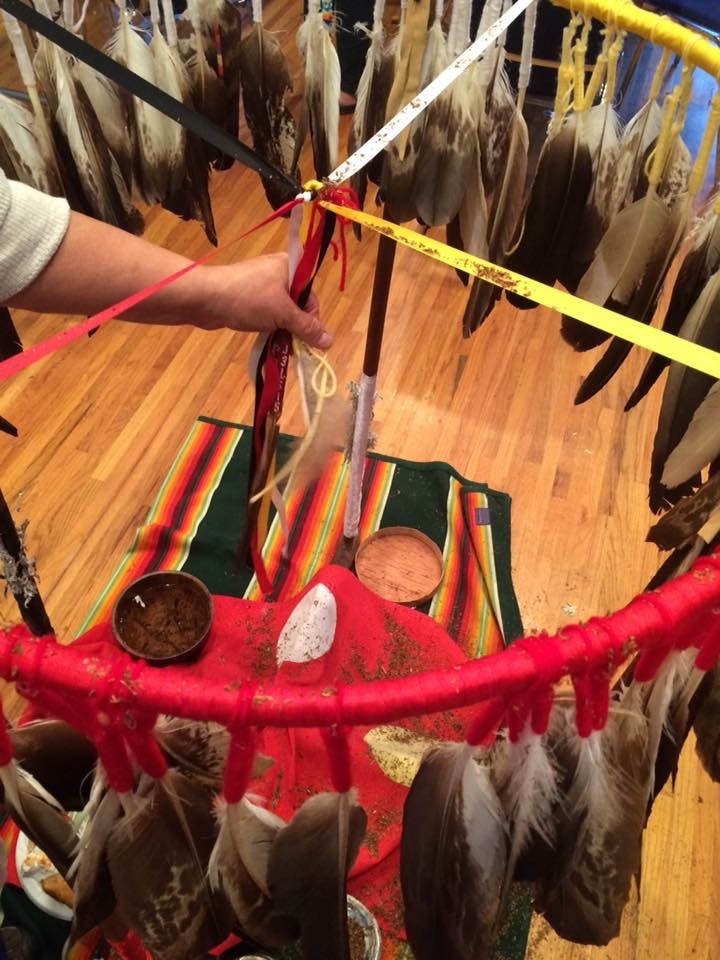
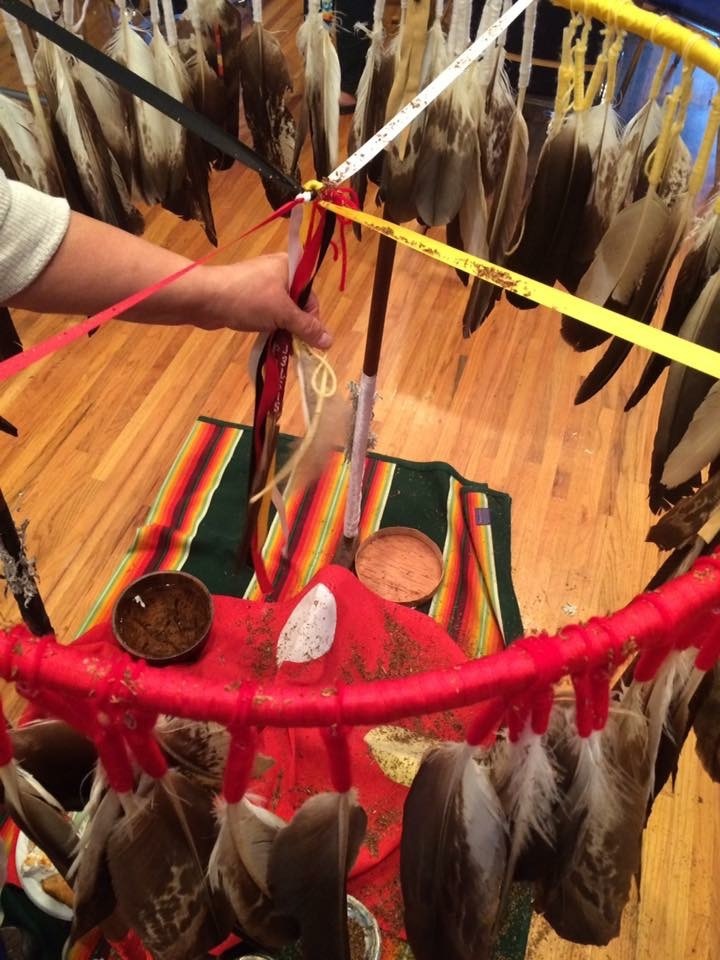
First, the healing ceremony took place. The grieving family of the child who passed was seated in the front and center of the large meeting room. The symbol of the Wellbriety Movement is the Sacred Hoop, which was brought to the reservation by the visiting healer. The Sacred Hoop is a willow hoop adorned with more than 100 eagle feathers, each representing a different Native community in need of healing (Moore & Coyhis, 2010). Everyone in attendance was invited to approach the Hoop to offer tobacco and pray for healing for themselves, the grieving family, and the community as a whole (see Figure 1 for a photo of the Sacred Hoop). During the ceremony, community members offered prayers and support for healing, and many embraced the grieving family, who were overtaken with emotion. Following the ceremony, the healer tied a new eagle feather onto the hoop in honor of the child and her family. Then a community feed took place, during which traditional foods prepared by a local cook were served by youth from the community.
The community feed was important from a cultural perspective and also helped change the tone of the event from the somber tenor of the ceremony to a more jovial atmosphere. After dinner, the academic research partners were formally introduced by the emcee, who explained the purpose of the research study and set the stage for the presentation of findings. The principal investigator opened the presentation by sharing personal experiences that brought her to this line of work, explaining that this project was more than an intellectual exercise but was heart-centered work grounded in lived experience. The presentation that followed began with an overview of the project’s history, background on the key players involved, and a discussion of the short- and long-term goals of the research and progress to date. It also included the questions asked of the key informants and a de-identified description of the study sample. We reviewed the themes that emerged during the interviews, offering many illustrative quotes for each theme. The majority of the presentation was focused on participant quotes, which resonated with the audience. We also provided examples of potential solutions to addiction problems that were suggested by the key informants. The audience applauded for particularly poignant quotes and potential solutions they found appealing. We then solicited feedback on the study findings and asked for suggestions regarding future directions for the project. Community members asked insightful questions and offered recommendations, which were recorded by a graduate student note taker in attendance. They also were invited to share feedback through anonymous paper forms, which were gathered and reviewed after the event. To close the gathering, a raffle was held to honor those in attendance, followed by a closing prayer and song. All participants received door prizes and were sent home with leftover food. Contact information for the research team members was made available, including social media handles to facilitate further connections.
Strengths of Our Approach
The community partners viewed the findings gathering as a success and shared positive feedback from those in attendance. The ceremony was particularly impactful and meaningful for the community, serving as a necessary acknowledgement of the profound loss that had recently occurred. Without such acknowledgement in a sensitive, respectful, and culturally appropriate way, the participatory dissemination event would have seemed out of touch at best and disrespectful at worst. It also helped connect our research to what was happening in the community at the time, which increased the local relevance of and interest in the study findings. It was especially important that a well-known and trusted Native healer was present to lead the ceremony, and that the non-Native partners also participated in the ceremony. Incorporating local spiritual practices or traditions, when appropriate and guided by the community, is an important consideration for participatory dissemination in Native (and likely other) community contexts.
Regarding our dissemination approach, our partnership decided that an oral presentation was an effective way of communicating with this community, given the culture’s oral storytelling traditions. We also provided a written summary of our findings in plain language, which offered community members the opportunity to reflect on the study outcomes and provide feedback in their own time. Although we did not develop video summaries, social media posts, or radio spots to disseminate findings, these would have been other useful dissemination strategies that we will consider in the future. Using multiple forms of dissemination materials (oral, written, images, video) delivered in various formats and venues would have helped reach different audiences from the community and facilitated broader dissemination. Regardless of the medium or strategy, key to successful dissemination is ensuring that all materials are developed using plain language and local terminology to ensure that they are accessible and understandable to various community audiences.
In addition to the healing ceremony and presenting findings in multiple accessible formats, other aspects of our findings gathering that worked especially well included involving elders in the gathering, employing local people and supporting local businesses, hosting a feed, using a well-known community member as the emcee, and offering gifts and giveaways. In this culture, elders hold a special role and are revered for their wisdom and experience. In addition to the project manager and visiting healer, who were elders, our team also included an elder from a different reservation who traveled to the event to help facilitate the gathering. This elder was well-connected in Indian Country throughout the state and was well known and loved in this community. A social worker with decades of experience in health disparities research, she played a crucial role in supporting the development of our research partnership and had been involved in the project from its inception. She also supported bringing the outside healer to the community, as she knew him and his work through informal networks. This elder was involved in helping to recruit the visiting healer, assisting the academic partners in developing and revising the research dissemination materials, greeting the audience members, and comforting those who were grieving. She offered her support if anyone should have a trauma reaction or need additional care and support during the ceremony or the subsequent research presentation. Her nurturing and loving presence strongly benefited the gathering and created an environment of emotional and cultural safety.
Supporting local people and businesses was another strength of our approach. We were fortunate to have grant funding for this gathering that allowed us to offer travel support and stipends to the visiting healer and honoraria for the local emcee, the cooks who prepared the feed, the youth who served the food, the local drum group, and other community members who contributed their time and skills to executing the event. The project manager who led the coordination of the event was a full-time employee of the tribal college with a half-time role on this project, with commensurate salary support provided through a subaward to the college. Approximately 50% of the grant budget was managed by the community, and the tribal college drew indirect costs on the subaward. We also used local businesses to print the event programs and purchase food and supplies, keeping as much money in the community as possible. We aimed to share power and resources in as many ways as we could, which was an important aspect of trust building and aligned with the CBPR framework. Given that this reservation experiences high rates of poverty and food insecurity, this was a notable strength of our dissemination approach and helped demonstrate our team’s shared commitment to an equitable partnership.
The community feed was key to the success of the gathering. As previously mentioned, sharing a meal provided a gentle transition from the solemn tone of the healing ceremony, giving attendees the opportunity to connect with one another before the research dissemination portion of the event. Feeding one’s relatives is central to all ceremonies, events, gatherings, and proceedings in this community. The importance of this cultural custom cannot be overstated, and to our knowledge is true for all Native (and likely many other) communities. Providing food incentivized participation in the gathering, honored the accomplishments of the participants and study team members, and created a collaborative and family-centered environment. In this community, a primary cultural value is “being a good relative,” and in this culture, good relatives feed one another. In an environment where food insecurity is a persistent and troubling concern, providing dinner before the research presentation also helped increase participants’ ability to focus and enabled them to more fully engage with the content and participate in the discussions. Hosting a meal as part of research dissemination likely is compatible with many other cultures, helps demonstrate respect for the community, nurtures and strengthens relationships, and is especially beneficial in low-resource communities with high rates of food insecurity. This aspect of our dissemination approach is highly recommended for other researchers committed to community-engaged scholarship.
In addition to providing a community feed, the emcee who agreed to host the event also facilitated the success of our findings gathering. The emcee was a community member in long-term secure recovery from methamphetamine use disorder who was viewed as an inspiration and pillar of the community. Not only was the emcee a cultural and community leader, he also was a member of the project’s CAB; therefore, he was uniquely positioned to understand the community’s needs and perspectives as well as the purpose and goals of the research project. Moreover, he was incredibly funny, charismatic, and well-liked in the community. A gifted presenter, the emcee introduced the visiting research team members, explained the history of the research collaboration, outlined the goal and purpose of the study, and generally set the stage for the presentation of findings. After the academic partners’ presentation, the emcee contextualized the findings and explained how the research could and would be applied to address the community’s concerns. Having a trusted insider vouch for the academic research partners and for the project as a whole was incredibly helpful and facilitated the success of the gathering.
Additionally, our team received positive feedback from the community for the door prizes and giveaways that were offered at the gathering. We conducted a raffle for prizes with an overarching theme of self-care (e.g., candles, aromatherapy oils and dispenser, blankets, books by Native authors). Gift bags were gifted to all attendees, which included a magnet with a positive and encouraging message, a votive candle, a small bottle of hand lotion, a small packet of tissues, and a stone etched with a hopeful word. Gifting is another cultural custom that is meaningful in this community and is intended to honor people for sharing their time and attention. It is another way to “be a good relative” and helped demonstrate our team’s good intentions and commitment to reciprocity and respect.
Lessons Learned
While many aspects of this findings gathering were a success, we did identify improvements that would strengthen future participatory dissemination efforts. For example, one lesson we learned through this experience was the importance of involving relevant local agencies in the planning and execution of a findings gathering. Although we did invite members of local social services agencies to attend the gathering, we neglected to offer them the opportunity to participate in hosting it. Representatives from the local substance use treatment clinic, for example, were audience members rather than co-hosts and co-presenters. This was a missed opportunity to develop an alliance and collaboration between our research team and other community stakeholders. The event itself and the potential for reaching the broadest possible audience would have been enhanced by the input of representatives from all relevant social service agencies, who could have added valuable perspectives on the findings presented and helped contextualize them, explaining their relevance and applicability in real-world terms. Involving other stakeholders as co-hosts of the event also may have facilitated further conversations and potential collaborations, and helped strengthen relationships between researchers and practitioners, which is necessary for research to have the intended effect of improving public health.
Another key lesson the academic partners learned while planning the findings gathering was to trust the community partners and their process. Many aspects of the gathering were arranged informally through text and social media messages or through chance encounters while out in the community, and many plans were made close in time to the event itself. This was somewhat anxiety provoking at the time for the non-Native partners, who were accustomed to preparing materials and developing agendas with more advance notice. Our team had only been working together for a year and a half at the time of this gathering, and the academic partners were not yet fully aware of the ways of being and doing on the reservation or the power of the “moccasin telegraph.” The community partner who planned the logistics of the event had extensive knowledge of the reservation and experience in community organizing, and reassured the academic partners that the process was unfolding as it was meant to and that it would come together in the end. Indeed, she was right. This was our first experience hosting a large event together, and it helped our team get to know one another better. Notably, it helped the academic partners to develop trust in the community partners’ expertise and way of doing things, even if it differed from what they were accustomed to. This trust has been invaluable in facilitating the research we have conducted together since this event.
Although we did identify areas for improvement, we believe that this findings gathering achieved our overarching goal of disseminating research findings in a respectful, collaborative, accessible, and culturally resonant manner. The gathering provided a powerful opportunity to share research with the study participants and broader community, to nurture and strengthen our partnership, to form new relationships with community members, and to set our intentions for the future of our project. Attendees asked insightful questions and provided innovative suggestions that we took to heart. The feedback we received from the community was invaluable in contextualizing and interpreting the study findings and setting the course for future studies within our overarching program of research. It also helped increase our confidence in the validity of our findings and provided a roadmap for future research collaborations. Next, we offer recommendations for other community-engaged researchers who are considering creative approaches to disseminating research results within a participatory research framework.
Suggestions for Community-Engaged Researchers
While our interactive findings gathering was guided by American Indian community partners and informed by the topic of our research, we believe our participatory dissemination approach would be transferable to other communities and research topics. Suggestions and recommendations for other researchers interested in creative approaches to disseminating research within a community-engaged participatory research framework center around the following ideas: 1) know the community, culture, and customs; 2) connect dissemination to local current events; 3) make research findings accessible to various stakeholders and diverse segments of the population; 4) translate the importance of the research by connecting it to people’s lives, emphasizing the positive aspects of engaging in research (e.g., how the research has changed lives already; how it can change lives in the future); 5) trust the community partners’ expertise and ways of being, knowing, and doing; and 6) be a good relative.
Know the Community, Culture, and Customs
Knowing the community is key to successful participatory dissemination and to a successful CBPR project. In our case, we were fortunate to have received pilot funding that allowed the academic and community co-researchers to develop a strong relationship with one another from the outset of the research project. We also benefited from the involvement of the university research center’s community engagement core. This allowed the academic partners to receive mentoring in community engagement from a Native elder, who provided guidance to the research team from the beginning of the project. Even without such mentoring and resources, investigators can spend time getting to know the community and learning about the local culture and customs. Reading about historical events that have affected people’s lives, spending time getting to know community members, and attending community events are important activities that increase knowledge and awareness. Developing a personal relationship with an insider who can guide the researcher in learning about the community and culture is paramount to a successful research project and to effective participatory dissemination.
After developing a relationship with community partners, researchers should spend time learning about local cultural customs and mores. In the present example, the tribal community’s ways are to gather together, share a meal, and discuss ideas in an open forum. In a Native cultural context, spirituality is deeply ingrained in everything and is an essential element of every type of gathering. Researchers should rely on insiders’ knowledge of appropriate traditions, customs, and ceremonies that are used in the community and attempt to adhere to these cultural traditions as much as possible. We also recommend incorporating aspects of local spirituality in some way, when appropriate and advised by the community partners. However, outside researchers must take the community’s lead in this regard and avoid presenting themselves as “expert” on the community or culture. Even in cases where the investigator is a member of the same group or community in which the research takes place, being a member of an academic research team will position them as outsiders in some respects. Respecting the community partners’ knowledge and authority regarding local customs and ceremonies is of the utmost importance.
Connect Dissemination to Local Current Events
Whenever possible, we recommend connecting dissemination to local current events. Community-based participatory research aims to address problems that the community cares about (Israel et al., 1998; Wallerstein & Duran, 2006, 2010). Researchers should understand the community’s needs, priorities, and goals when formulating research questions and conducting the study, and should be mindful of the motivation for the research when disseminating the results. Communities care about certain problems for good reasons; researchers should be aware of those reasons and consider them throughout all aspects of the study. Connecting dissemination to local current events helps situate the research within the community context and is a respectful way of demonstrating awareness of and empathy for the community’s concerns. If a study is developed in partnership with a community, there likely will always be a local current event that is connected in some way to the topic area. While researchers should avoid capitalizing on misfortune or sensationalizing the findings, when dissemination is appropriately and sensitively connected to something happening in the community, it can help connect the dots between the study and how the results can be used to address a pressing need or problem.
In the present example, the timing of our planned dissemination gathering coincided with a serious tragedy that the community partners felt we should acknowledge directly. This loss was related to our topic area and was on the minds of everyone in the community. We were concerned about addressing the loss in a sensitive and respectful way, but the community partners emphasized the need for collective healing at this time. We carefully discussed the potential risks and benefits of tying our findings gathering to this event, and decided that a ceremony conducted by a renowned healer would benefit the child’s relatives and the community as a whole. Above all, we followed the community’s recommendations regarding whether and how to address the loss. The healing ceremony was well received and set the stage for the dissemination presentation in a good way. Connecting research dissemination to a local current event, when conducted with care and respect, can help elucidate the importance and goals of the research in real-world terms that matter to the community.
Make Findings Accessible to Diverse Stakeholders
At our dissemination event, we made efforts to make the findings as accessible as possible to as many stakeholders as possible. The project manager extended invitations to all study participants and to representatives of various agencies across the reservation to ensure that all interested parties were aware of the gathering. She also worked to arrange transportation for those who needed it and helped any overcome barriers to attendance that arose. These efforts resulted in a large and diverse audience for the gathering, increasing the reach of our dissemination. In the future, we intend to include agency representatives and other stakeholders as co-presenters rather than merely inviting them to attend the gathering. This would have been a helpful power-sharing and relationship-building approach that we failed to consider at the time but will keep in mind in the future. Involving diverse stakeholders in the planning and execution of the event also would have broadened the reach and impact of our dissemination.
We also recommend sharing findings in multiple forms to reach as many community members as possible. In addition to an oral presentation, we provided written summaries of the results and included contact information for the study team with an offer to engage in further discussion with anyone interested in learning more. Being mindful of low health literacy among some community members, we presented the findings in both oral and written forms using plain language and local terminology, and made sure to evaluate the reading level of all dissemination materials to make sure it was appropriate. Even when literacy levels are adequate, simplicity in health messaging is preferred and increases the likelihood of effective communication (e.g., Nutbeam & Lloyd, 2021). Using multimedia approaches to dissemination (e.g., radio, social media, infographics) also would have helped reach a broader audience of diverse stakeholders and community members and is recommended.
Translate the Importance of the Research
The importance and usefulness of research is not always apparent to lay community members. In many tribal communities, health disparities are prevalent and the need for services is clear. The link between health research and the effectiveness of health services is not intuitive; it should not be assumed that community audiences will grasp the usefulness of the research for improving real-life outcomes that they care about. First and foremost, community-engaged researchers should keep the ultimate goal of improving public health in mind as they conceptualize and conduct research. In dissemination activities, it falls upon the researcher to explain how the findings are connected to the community’s concerns and how they can be used to address them.
During our findings gathering, both the visiting healer and the local emcee acknowledged the community’s concerns that inspired the project and emphasized the potential of the research to address those concerns. The emcee, who was a member of the project’s CAB, and the local project manager vouched for the research team’s good intentions and respectful approach to the project. They also helped explain the positive aspects of the research, outlining how it had already changed lives and how the findings could be applied to improve lives in the future. During the dissemination presentation, the academic partners engaged in appropriate self-disclosure to convey their motivation for doing this work and to show empathy and compassion for the community. They outlined the next steps for the research and articulated the goal of using the findings to develop new treatment options for people struggling with addiction on the reservation. Explicitly acknowledging the community’s needs and priorities, clearly connecting the research to these issues, and explicating our team’s plan to use the research findings to develop new services helped increase the community’s interest in and support for the research. It also helped put the findings into context and enhance the audience’s understanding of the results.
Trust the Community Partners
Our findings gathering and our research project in general would not have been possible without the expertise and leadership of the community partners. Our project focused on substance use, a sensitive and potentially stigmatizing topic, and the potential for missteps was great. The project manager and CAB were instrumental in teaching the academic partners how to navigate the community, conduct the study, and disseminate the findings. They vouched for our partnership and our approach to research, helped interpret and contextualize the results, guided us through potentially tricky situations, and co-developed every aspect of our study and dissemination strategy. Community partners advised us to proceed with the findings gathering despite a recent great loss, and helped us do so with sensitivity. They managed many of the logistics of the gathering, including inviting a spiritual healer and planning the ceremony, and mentored the academic partners in how to participate in the ceremony appropriately by explaining the rules and customs of this culture. The community partners reviewed the dissemination materials and presentation slides, offering helpful suggestions and ideas for effective communication with diverse stakeholder audiences. They helped us connect our results to local current events and helped us translate the usefulness of the research to the community. The importance of involving community insiders throughout the process and trusting their knowledge and expertise cannot be overstated.
Be a Good Relative
Engaging in research with tribal communities can be considered a spiritual covenant (Salois et al., 2006). Words are viewed as sacred in Native communities, as are interpersonal relationships. Communicating findings with clarity and compassion and putting relationships at the center of all decision making was our goal in this dissemination gathering, reflecting our collective commitment to this community’s core value of being a good relative. Regardless of the cultural context, researchers would benefit from keeping this value in mind as they engage in research with communities. Being a good relative requires constant reflection on the nature of the partnership and the motivations driving research decisions (Salois et al., 2006). It also requires awareness of power differentials and deliberate efforts to share power and resources for the benefit of the community. What it means to be a good relative in practical terms may vary across cultures and communities, but compassion, trustworthiness, and reciprocity are likely important in all contexts.
In our dissemination gathering, we strove to be good relatives through our commitment to reciprocity. We offered honoraria to the visiting healer and various community members for their contributions, gifted blankets to the emcee and the visiting healer (a custom in this culture), hosted a community feed, and honored the attendees through giveaways. Providing food is a crucial part of any community-based dissemination event and must be done even in the absence of grant funding. We aimed to demonstrate compassion by putting the healing ceremony ahead of our dissemination activities (both in timing and in priority), by sharing personal stories connecting us to the research topic, and by thoughtfully considering how to center and honor the participants’ words in the findings presentation. We also aimed to center our relationships with one another and with the community while planning the findings gathering and throughout the research project more generally. We followed the recommendations of community partners at every step, made genuine personal connections with participants and other community members, shared our personal contact information and social media handles, and maintained contact in various ways after the gathering concluded. These were not merely gestures but were genuine connections that have persisted over time. Showing up with authenticity and a genuine spirit of collaboration not only enhanced the research project and findings gathering, but also fostered growth, wellbeing, and improved the lives of all team members. In this respect, community-engaged research truly is a spiritual practice that has the potential to reach far beyond the anticipated public health outcomes. After all, as our community partners contend, “we are all related,” and how we treat one another matters most of all.
Closing the Circle: Using Research to Effect Change
Participatory dissemination is a crucial component of CBPR consistent with TribalCrit and trauma-informed scholarship, but it is not the end of the story. Research must also mobilize knowledge and advocate for change (Wallerstein & Duran, 2006). In the present example, our findings support the need for activism on several fronts, including efforts to address the epidemic of homicide, violence, and abduction faced by AI/AN women and girls in the U.S. and to increase access to culturally responsive behavioral healthcare in Native communities. While there has been legislation at the national level to address missing and murdered Indigenous people (MMIP), there remains a need for expanded awareness and grassroots activism focused on this issue (Isaacs & Young, 2019; Richardson et al., 2024). Another issue in dire need of attention is expanding access to culturally grounded harm reduction and behavioral health services in Native communities, and calling for an end to the failed War on Drugs that disproportionately harms people and communities of color (Ramirez & Pond Cummings, 2022). Medicaid expansion and increased funding for the Indian Health Service clinics that provide addiction and mental health treatment in Native communities are critically needed to address the problems that gave rise to the tragedy that took place in this community and motivated our research project more broadly (Taylor et al., 2024). Sadly, progress is moving in the opposite direction, with recent and proposed reductions in funding that threaten to further destabilize healthcare services for AI/AN people. Academic-community partnerships like ours are well positioned to contribute to this activism through participatory dissemination of knowledge that supports and advances change efforts. This, too, is what it means to be a good relative.
Conclusion
Our partnership that began in 2014 is still in place and we have completed many research studies together in the years since, including an ongoing clinical trial funded by the National Institute on Drug Abuse. The lessons we learned from our early work together and through hosting this findings gathering have been instrumental in shaping the future of our longstanding program of research. We have grown together in our partnership over the years and are pleased that our early collaborations did indeed result in new substance use treatment services for tribal members.
In preparing to write the present manuscript, some of our original team members met to reflect on our findings gathering and discuss what advice we might offer other community-engaged scholars when deciding how to disseminate research findings. In this discussion, a community partner succinctly stated, “Know the community. Have empathy for the community. Know how to motivate the community.” These interrelated goals require open minds and hearts of all team members; a commitment to engaging in just and equitable partnerships; and, critically, the knowledge, expertise, and vision of insiders who understand both the community and the value of research for improving lives. Through true partnership and genuine commitment to being good relatives to one another, our research can achieve the impact and reach we hope for.