Introduction
Art and its effect on healing can translate across cultures, disciplines, and time (McNiff, 2019). Through the creation of art, people may process their emotions and cultivate a safe space, oftentimes unconsciously. Art therapy is an approach that is often utilized to help people with histories of trauma “work” on themselves, and when performed in a group setting, transcend personal tragedy into a collective sense of identity (Kapitan et al., 2011).
Harlem United Community AIDS Center, Inc. (Harlem United) is a New York City-based nonprofit organization that uses healthcare, housing, and harm reduction to advance health equity. A Creative Arts Therapy (CAT) group is offered weekly to Harlem United clients that are members of the organization’s Adult Day Health Care Program (ADHC) to support them in managing intersecting challenges including living with HIV and other chronic health conditions, having substance use disorder and/or mental health conditions, and experiencing the impacts of persistent poverty.
Art therapy emphasizes that the therapy is held in the process of art making rather than the final product (Malchiodi, 2006). While holding tightly to this truth, in early 2025, we - an art therapist, development professionals, and an engaged community volunteer - wondered if we could challenge art therapy’s traditional model through public displays of CAT artwork. We were inspired by the work of Bird (2018), an art therapist who used a participatory action research (PAR) framework to explore how art created through art therapy could be used to raise awareness about the impact of domestic violence on women and depict how they respond to and survive it. We were similarly inspired by Mejia et al. (2013) who implemented Photovoice, a PAR qualitative methodology that used photographs to elevate the voice of marginalized members of society, in this case U.S.-based Latina mothers, to narrate their lived experience. According to the authors, visual imagery allows participants to “create knowledge and raise questions about relevant community concerns” (pp. 302). Building on these examples, we asked ourselves if public displays of CAT work could achieve a dual function: 1) be a tool for resilience building among CAT clients by reinforcing the impact of art on the healing process and 2) raise awareness in the broader community through storytelling of underrepresented voices (Hartman et al., 2023).
A period of exploration and conversation resulted in Soul Sessions, a two-part event series (a panel discussion and art exhibit) that combined visual arts, personal narratives, and conversation to illustrate the power of art and creativity in relation to mental health and healing. This brief report explores how we developed Soul Sessions using a PAR framework (Fine et al., 2021; “Participatory Action Research,” 2023) including the engagement Harlem United CAT clients as active members of the planning team from the outset. This approach prioritized the clients’ agency in shaping their narratives and ensured that their stories were represented authentically and ethically. It further upheld the integrity of art therapy and invited the broader community into a deeper understanding of their role in building collective resilience.
Methods
Harlem United was founded at the peak of the AIDS crisis in the 1980s; a time when community voice and activism among people diagnosed with HIV deeply influenced the response to the disease. Like PAR, early AIDS activism empowered people with lived experience - those facing extreme stigma and marginalization - to represent their experience as the experts shaping all facets of AIDS related care (Goto et al., 2010; Wachter, 1992). Numerous policies and practices that grew out of that period continue to inform the way that Harlem United implements its programs today. Examples of this include the inclusion of peers (clients) as key members of our program teams, consumer advisory boards that provide regular feedback about our operations, and an ongoing commitment to recruiting and retaining a staff that closely reflects the community served.
Soul Sessions was not conceived of as a traditional PAR project; however, our grounding in the principles of PAR that come out of AIDS activism underscores our daily practice and as such was a driving factor in the way that we conceptualized and executed the event series. At all planning stages CAT clients were empowered as partners; they provided their perspective and direction, ensuring that their voices and stories were central to the final productions. This was all the more essential given that we were pushing the boundaries of CAT; re-traumatization was a possibility we were determined to avoid.
The events had dual purposes which naturally resulted in a healthy tension as we sought to provide a clinical treatment to aid in the participants’ healing process while empowering them to lead the conversation and dissemination of their work. The events further engaged a diverse external audience of clinicians, artists, academics, and curious community members whose backgrounds did not mirror the socioeconomics of the CAT clients. In other contexts, this tension has resulted in poverty porn and tokenism (Axster, 2023), both of which are contrary to the goals of PAR and importantly to the mission and focus of Harlem United. Therefore, of essential consequence was CAT clients’ influence on decisions about if, when, and how they would share space with professional artists, academics, and therapists who were invited to participate on the panel.
The weekly CAT group was used to elicit and gather feedback from CAT clients; we did not want to create an undue burden to participate by asking CAT clients to travel or participate outside of their regularly scheduled group. Additionally, we included input from one CAT client who had enhanced experience with exhibition and art curation. We continuously allowed clients to direct, reframe and shift their engagement; as described below, some clients made the decision not to participate at all. This in no way changed their capacity to participate in CAT groups or to attend Soul Sessions.
Findings
Identifying Artists and Themes
The first step in establishing the events was identifying which artwork the clients wanted to display. Prior to the introduction of Soul Sessions, some CAT clients gravitated towards decorating pre-made paper mâché masks. Masks are often used as a way to explore identity, allow emotions to be shared symbolically, and enable people to express themselves nonverbally (Estrada Gonzalez et al., 2024). The pre-determined structure of the mask also reduces the pressure of creating art from scratch which allows for the inclusion of people who have inhibitions or preconceived notions of their limited artistic abilities (Malchiodi, 2006) and who commonly declare “I am not an artist.” It was not surprising, therefore, that when presented with the questions, what could tie all the artwork together for a cohesive message, and what have you been working on that you would want to showcase, the group selected masks.
While masks were a useful way to include all levels of art skills and bridge a theme that had organically presented itself in the art studio, it was not a theme that matched the artistic style of many clients in the CAT group. Some clients reacted by forfeiting their participation in Soul Sessions all together. Others advocated for an alternative way to be included. This inspired the idea of “featured artists” who would present work that were not masks, but that were meaningful, cohesive, and fit into the theme of identity, as the masks appeared to showcase.
The overarching theme of identity was shared with all CAT clients, and with the greater ADHC client community, three months prior to Soul Sessions, offering clients time to create or refine a mask they had already worked on. Eleven artists submitted their masks for inclusion in the art exhibit and four clients were selected as featured artists. The featured artists each had a distinct style, had developed a small collection of their artwork, and described art making as an integral part of their healing process. Each featured artist selected at least three pieces for the exhibit and attended the panel discussion so they could present their artwork and share their stories with members of the community.
Giving Voice to the Artists
Each artist wrote a short description of their presented art piece to be included in event materials. In just one or two sentences the CAT clients provided powerful context to their art and its connection to their identity. Examples included “Miss Suzie reminds me of my mother and aunt and how they used to wear their hair in a bun because it was so long” and “One side of this mask is my past. One side is my healing…my future is not yet defined.”
Additionally, all CAT clients had an opportunity to participate in a short interview to answer the question: what does art mean to me? By opening the opportunity to all CAT participants, some clients who did not have their artwork presented still had the opportunity to infuse their experience and voice in the events. This helped alleviate feelings of exclusion and expanded the opportunity for empowerment. Their answers were recorded for presentation at the panel discussion.
Art Sales
CAT members considered if and how their art could be positioned for sale and who should benefit from the proceeds (the CAT client and/or Harlem United). There were concerns that selling the art could co-opt the focus of CAT by creating competition or shifting the focus from healing to the monetary value of the art. Yet, considering that their art could be of value to someone outside of the group became a source of empowerment. Clients ultimately decided to sell their art and to benefit directly from the sale. They participated in meaningful conversation with the art therapist on how to set the price. The therapist empowered them not to undervalue their work and to set a price that would be viewed as reasonable and competitive to the event guests. A set of postcards featuring numerous artists’ work and a limited print of tote bags with the image of a painting by a featured artist were also available for purchase.
The Events
The Panel Discussion: The panel discussion was held in an intimate art-space and cultural center just a few miles from Harlem United. The space was selected for its connection to Harlem as a neighborhood and contribution to building community through art. The venue also includes its own art exhibit, which enhanced the overall feel of the event and augmented the clients’ view of themselves as artists.
Artists, art therapists, and other curious minds were invited to this part of the event series. While the event was not closed to CAT clients or their families, the focus was on the broader community and an experienced arts-based audience. A key event goal was to enhance the audience members’ understanding of the CAT client experience and consider their role in building community resilience.
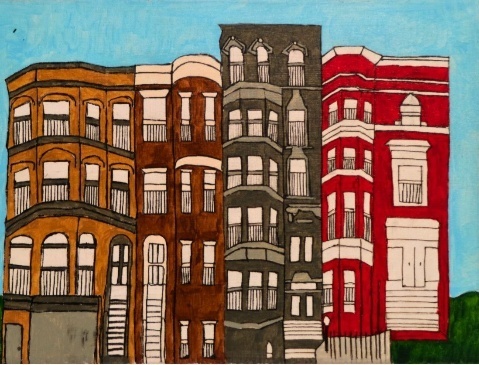
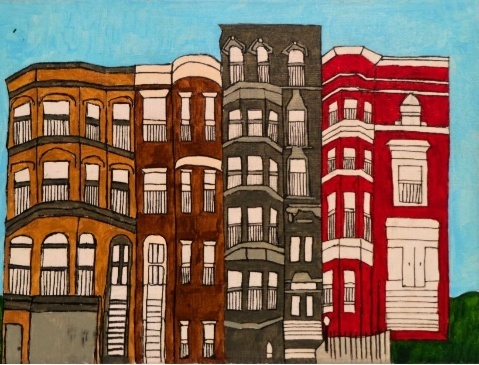
The CAT program’s featured artists were in attendance, and their selected artwork was on view. None of the featured artists wanted to participate on the panel; each however, desired to engage as active participants and to interact organically with others. Before the panel began, they mingled and shared informally about their inspiration and techniques. One featured artist described her painting (figure 1) to a group of onlookers explaining that she paints buildings because they reflect her experience moving with her expanding family and the transitions they made together over time.
The panelists included renowned artists, an art therapist, and a distinguished professor. An Emmy award-winning director facilitated a natural conversation with the panelists about the impact of art on their lives and how they had engaged others including their clients or students in healing through art. The audio recordings of the CAT clients’ responses to what does art mean to me played at planned intervals. The recordings balanced the client voice with that of the professionals and acted as an important unifier between the experiences of the panelists and those of the Harlem United CAT group. Both panelists and featured artists were consistent in their messages: they underscored the soothing aspect and self-regulating nature of making art, the ties between art and community, and the power of art to work through emotions.
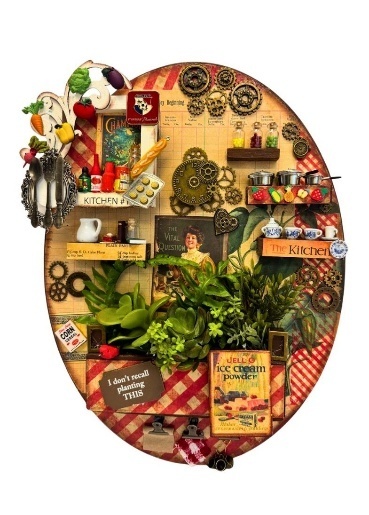
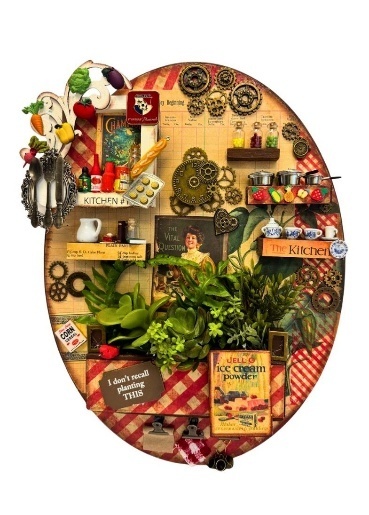
During the question-and-answer period one featured artist spontaneously shared her connection to her piece The Kitchen (figure 2). She explained the trauma she experienced in her home growing up and how she processed that experience by making art that reflected her environment. The first-hand account bridged the gap between the art and the artist.
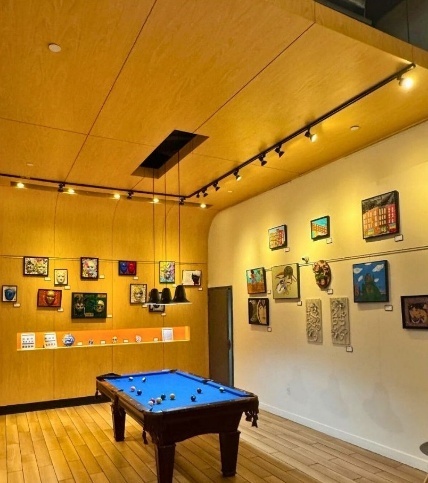
The Art Exhibit: The exhibit opening catered to Harlem United staff, clients (from the CAT group and others) and their friends and families. The exhibit was on view in the gallery space of a boutique hotel chain in the epicenter of Harlem (figure 3). The hotel uses a gallery space in their main lobby to feature local artists throughout the year. This prime, public location expanded the exhibit’s reach and permitted a larger number of people to consider art, healing, and community resilience. During the opening event, after attendees mingled and perused the art, the CAT clients shared their stories and the impact of art therapy on their lives. The mood was celebratory and prideful; CAT clients universally shared the ways in which art helps them heal, cope, and process their experiences. The clients took pictures with their artwork, spoke about their hopes of selling their work, and reflected on their identity as not only clients, but now as artists.

Discussion, Outcomes and Limitations
The atmosphere at both the panel discussion and opening of the art exhibit was that of curiosity, intrigue, and pride. Members of the CAT group verbalized their experiences and the significance of art in their lives. Multiple clients mentioned the therapeutic qualities of art making, such as how it quiets their minds when their emotions are running high. They continued to discuss the event positively for weeks after the events as their peers continued to compliment them and recognize their talent.
Community members who attended also felt inspired by their engagement and feedback was overwhelmingly positive. One woman shared that she was so inspired that she practiced her art the morning after the event for the first time in over a year. Two women formed a friendship and continued to explore art together through their diverse lenses months after. The original agreement with the hotel was to display the CAT group artwork for one month; the exhibit was extended for a second month after multiple hotel guests commented on how much they enjoyed it.
The overall experience contributed to members of the CAT group having the opportunity to reinvent themselves and re-evaluate their trauma and the stigmatizing views of mental health through their art (Potash & Ho, 2011). Art sales particularly provided a powerful opportunity for empowerment. Selling their work transformed the CAT group members from clients with chronic illness, people experiencing poverty or any of the other labels that are often assigned to them by society, into valued artists, entrepreneurs, and positive public contributors. This was especially true because those who purchased the art are people who traditionally hold more power in society, including people with perceived and/or real power over the clients’ actual lives. Among the art buyers were a nurse who provides care in one of Harlem United’s health centers, a professional artist and academic who was on the panel, and the director of the hotel who made one of the final art purchases, having built a deep connection to the piece over the months it was on display.
It is important to acknowledge that while the events produced significant positivity and fulfilled the intended goals – showcasing the duality of raising awareness about the struggles of trauma in marginalized communities while empowering the artists to tell their story their way - there were some outcomes that were not positive. Feelings of insecurity, resentment and jealousy emerged among CAT clients. One client was upset that his mask was not included due to potential copyright issues and blamed the art therapist for the oversight, although discussions were had prior. Competition and insecurity surfaced connected to art sales. One featured artist was disappointed that her work did not immediately sell, and she worried that the prices had been set too high (she did eventually sell multiple pieces some at the original price and some for a reduced price she negotiated independently). Another CAT client, who opted not to participate, felt left out when she realized how successful the event was and expressed her disappointment at the exhibit opening. Although steps were taken to ensure transparency in the decision-making process between the clients, art therapist, and other developmental professionals, strong feelings find a way to come to the surface.
Limitations
CAT clients are often teetering as they process their trauma; healing can be quickly subverted when seemingly small events occur. The art therapist had a challenging role balancing participation as part of the planning team, empowering the clients as partners, and also maintaining her role as their therapist whose duty was to center the clients’ needs. As described, our work was deeply informed by PAR and great effort and intentionality was made to include the clients as partners in each aspect of planning Soul Sessions. However, while this project tried to level the power differentials between staff and clients through application of the PAR framework, there is a natural tendency to gravitate toward recognized roles (such as therapist and client); overturning systemic oppression cannot happen from any single project.
Conclusion
The intentional engagement of CAT clients directly influenced the turnout and success of Soul Sessions. Through these events we illustrated that the therapeutic focus of CAT could be enhanced beyond its traditional focus to move clients beyond their role as clients to becoming artists with ownership of their art and their story. Soul Sessions further showed a unique way to raise awareness in the broader community about the often-underrepresented voices of the CAT clients, and others like them. By showcasing their art and voices, and by weaving their experience with that of professionals in the art and healing world, members outside of the Harlem United community were offered a peek under the mask and were able to understand the universality of art as a critical therapeutic approach. Each piece contained fragments of the hardship, dedication, and sacrifice that it took for the members of the CAT group to be where they are now, authentically and ethically raising awareness about their struggles while empowering the greater community to engage with them as equals and collectively challenge themselves to overcome their hardships.
Soul Sessions showed that the products of art therapy can have a role and important function outside of the clinical setting. Importantly this project reinforced that there is more in common between diverse communities than is often acknowledged and that art’s role in personal healing is universal. At a time when communities are so polarized, art may prove to be a key lever to build understanding and lay a foundation for empowerment and recognized commonality. Other nonprofits like Harlem United, as well as other community groups that particpate in activism and empowerment of marginalized communities, could benefit from engagement in similar projects informed by PAR.