
INTRODUCTION
Community engagement is critical to public health practice yet continues to be challenging and not always implemented equitably, intentionally, or meaningfully with the communities most impacted by health inequities. The Enhancing Equity in Cross-Sector Alignment Through Meaningful Community Engagement research project sought to shift this paradigm by centering Community Health Workers (CHWs) as leaders and co-researchers in fostering authentic engagement and equitable decision-making across public health, healthcare, and social service sectors.
Authentically or “meaningfully” engaging individuals with lived experience is to intentionally connect with them, and to consider and incorporate their strengths, needs, concerns, values, and expectations early in the process- not as an afterthought or at a point where action on that input is no longer feasible (Hamilton Lopez et al., 2012). Meaningful engagement with individuals with lived experience in communities has been shown to enhance a community’s capacity to effectively address health inequities (Rhodes et al., 2018). Additionally, meaningful community engagement can enhance a community’s ability to address its own health needs and health inequities (Ahmed & Palermo, 2010).
Historically, it has been difficult to establish and maintain trust between communities most impacted by health inequities and “outside” organizations such as academic institutions, health care systems, and public health organizations (Adekunle et al., 2024; Ahmed & Palermo, 2010; Charles et al., 2021; Granovetter, 1985). One potential approach to rebuilding and sustaining trust is through the CHW workforce. As trusted members of the communities they serve, CHWs are uniquely positioned to bridge the divide between institutions and communities (R. Logan, 2022; R. I. Logan & Castañeda, 2020; Strater, 2023). Their lived experience, cultural competence, and community presence make them vital partners in advancing meaningful community engagement and building trust (R. I. Logan et al., 2025; R. I. Logan & Strater, 2024; Strater & Logan, 2025).
The American Public Health Association defines CHWs as trusted, knowledgeable frontline health providers who have deep relationships with the communities they serve (Covert et al., 2019). One of the core CHW roles is to advocate for and build the capacity of communities (Matthew et al., 2017). CHWs are bridges into communities, can shed light on community needs and assets, and can foster partnerships with other sectors (R. I. Logan, 2018; Mayfield-Johnson et al., 2014). Additionally, they can inform and facilitate participatory research principles to include meaningful community engagement, mutual learning, action-reflection, and commitment to sustainability (Rodela et al., 2021; Smith & Blumenthal, 2012). CHWs serving in participatory research projects have been shown to not only represent the views of the community on important health issues but also create awareness of the many challenges of communities experiencing inequities, while maintaining an asset-based approach (Gustafson et al., 2018; Wennerstrom et al., 2011).
This study examined how the engagement of CHWs as co-researchers identified and modeled practices to strengthen authentic, equitable collaboration among public health, healthcare, and social service sectors.
METHODS
The research team used a participatory, qualitative approach that positioned CHWs as co-researchers throughout the study. The following sections describe the strategies and methods used to design, implement, analyze, and share findings from the project.
Community Partnerships
The research team partnered with four communities across South Carolina. To identify partners, the team developed some guiding criteria: whether the organization participated in a community coalition of service providers, had been engaging for at least two to three years, and had an available CHW in the area. They also sought diversity in geography (urban vs rural), population of focus, and organizational mission. Three organizations (a county coordinating council, a health coalition, and a youth empowerment initiative) were willing to participate and were selected to move forward with the project.
Hiring & Integration of CHWs into the Research Team
Two CHWs from the Center for Community Health Alignment led the initial proposal development but did not fully build out the research design and methodology until community-based CHWs from the four target communities were onboarded. The community-based CHWs were recruited from the participating community and/or had deep relationships with the community served, actively participated in all team meetings and activities, providing valuable insight into and guiding the direction of project implementation. To document CHW’s experiences conducting the community-engaged work for this project, each was interviewed (n=3) to share their experiences on their lessons learned.
CHW Research Trainings
After hiring the community-based CHWs, they were trained as researchers. The purpose of the research training was not only to ensure that all of the CHWs had a basic shared understanding of qualitative research methods, but also to build the CHWs’ confidence and capacity to engage meaningfully in community-driven research. All of the CHWs who were hired had some exposure or experience with research methods, so training was tailored to build those strengths and fill in any gaps. The four-hour training was broken up across two days and consisted of the following topics: Brief Introduction to Research, Research Ethics, Conducting Qualitative Research, and Analyzing and Drawing Conclusions. In addition, the CHWs took the Collaborative Institutional Training Initiative (CITI) training as required to engage with human subjects.
Community Field Work and Participant Recruitment
Community Leader Interviews. The research team recruited community leaders from the four communities to participate in in-depth one-on-one interviews. Participants were identified based on their experience in and knowledge of the communities where they serve and their community-engaged work. Participants represented perspectives from nonprofits, churches, philanthropic organizations, community volunteers, and elected officials. These interviews provided insight into the best ways to engage community members as authentic partners in health initiatives and programs. Additionally, the information shared by the community leaders helped inform the development of the questions for the discussion guide used for the “Open Mic community conversations.”
Open Mic Community Conversations. In the original research plan, these sessions were called ‘picnic table’ discussions. However, some community partners pointed out the racial connotations to the word “picnic” and suggested the new name, “Open Mic community conversations.” (Hughes, 2021)
The team held two series of three Open Mic sessions in each of the four communities (24 sessions). The sessions explored participants’ current and past experiences with community engagement and identified capacity-building needs that would support their participation in priority setting and decision-making processes with public health, healthcare, and social service organizations in their communities.
The research team designed the Open Mic sessions to offer a relaxed, friendly environment where community members would feel comfortable in sharing their perspectives on community engagement in their respective areas. Sessions were facilitated by CHWs, who were trusted members of the community, which helped create a sense of familiarity and ease. Each session began with a general icebreaker activity to encourage participation and build rapport among the participants. A meal was provided since most sessions were held in the evenings, and participants received incentives at each session to acknowledge the value of their time and expertise. Importantly, CHW facilitators approached participants as experts in their own communities; we were there to learn from them. Additionally, we were transparent about the purpose of the project and clearly explained how the information shared would be used. This approach helped cultivate trust, openness, and candid dialogue throughout the sessions.
CHWs recruited participants by working closely with the community partners and using word of mouth, social media, and flyers. Sessions were held in diverse neighborhoods with individuals from different demographic groups to ensure a range of perspectives. See Table 1.
Session one focused on learning about the local community, components needed to build trust, and perspectives on community engagement. Session two built off of the first, focusing on levels of engagement at the organizational and individual levels, strategies to resolve community challenges, and relationship building. Session three was a member check-in, wherein participants were provided a preliminary summary of sessions one and two and asked for any additional feedback.
Data Analysis
The CHWs participated in the data analysis process for the project. This consisted of helping to prepare the data summaries for the member check-in sessions, reviewing and coding transcripts for themes, and helping develop the codebook. The public health researchers and the CHW research team met regularly to discuss the transcripts and emerging themes.
Community Data Sharing Sessions
Community data-sharing sessions were held in each of the four communities that participated in the research project. The CHW research team developed the format of the events to ensure that the findings were presented in engaging, plain, and culturally appropriate ways that encouraged open dialogue, reflection, and feedback from attendees. The CHWs co-presented the data alongside the public health researchers. Study participants, community-serving organizations, state agencies, local officials, and the community at large were invited to the sessions to hear the project findings and to begin identifying further actions.
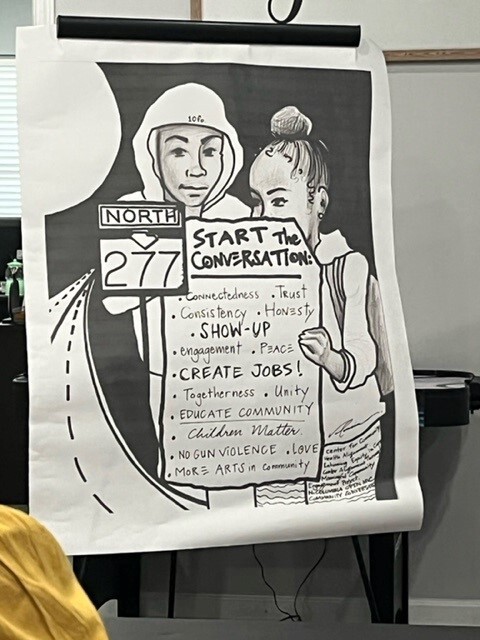
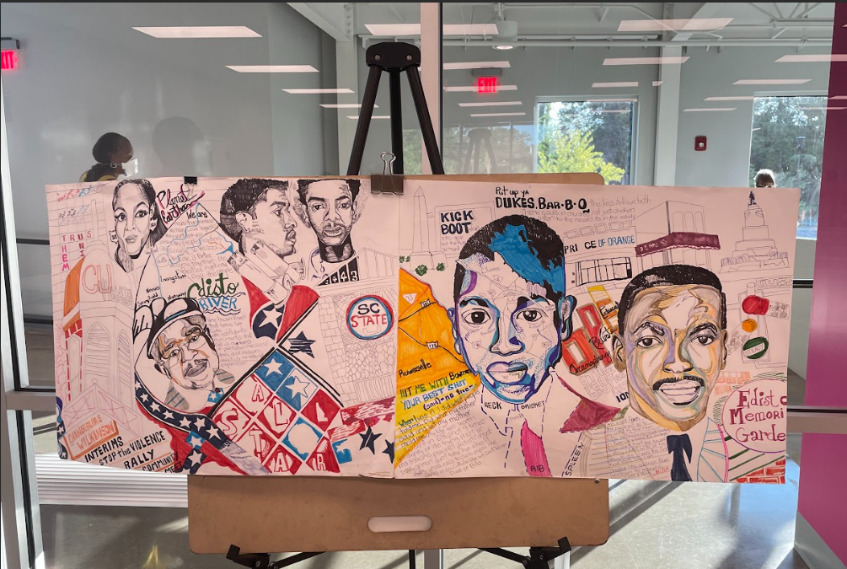
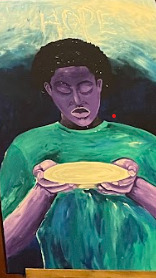
Additionally, four local artists from each community were invited to take part in the community data-sharing events. They received summaries of the data collected from the Open Mic community conversations and created drawings that reflected their interpretation of the findings. Three of the four artists participated, offering a creative and engaging way to share the research results with the communities involved. Figures 1-3 are examples of the artwork.


Data summaries and other information were distributed at each community data sharing event. The data summaries are included.
RESULTS
The Enhancing Equity in Cross-Sector Alignment Through Meaningful Community Engagement research project reaffirmed that trust is the essential building block for community engagement, and trusted individuals are usually people from within the community. Below are the results divided into three sections including: 1) a summary of themes that emerged that should be taken into account when organizations want to authentically and meaningfully partner with communities and community organizations; 2) the inclusion of CHWs as partners in the work, and not just recipients of it or “tokens” and 3) the application tools that emerged from the work, which were primarily developed by CHWs for use in community engagement work.
1) Summary of Themes
These are some of the themes that emerged from the Open Mic sessions related to topics that do not always get recognized or discussed, but that can have an impact (positive or negative) on community engagement work, depending on how they are handled:
-
People, Not Places, Define Community: Participants described community through relationships, connection, and mutual support rather than geography, emphasizing “people I can help” and neighbors who feel like family.
-
Pride, Resilience, and Caring Roots: Residents expressed optimism and a shared sense of responsibility, highlighting community strength and mutual care. It is important that community strengths be uplifted, and not just the issues and challenges that a project is focused on.
-
Violence and Public Safety: Gun violence, crime, and neighborhood disorder were major concerns that overshadowed positive community work. Partner organizations may need to address these issues openly and make space to discuss them or revise timelines or priorities if issues like these are more prevalent in community members’ minds.
-
Declining Pride and Hopelessness: Participants reported apathy and frustration stemming from broken promises and limited progress, which reduced civic engagement; therefore, if an organization wants to partner with a community that has experienced such feelings, organizational leaders may need to engage in open dialogue about their negative experiences first and commit to not making the same mistakes.
-
Youth Engagement Gaps: Communities lack affordable youth programs and transportation; participants stressed the need to listen to youth and provide positive outlets and mentoring.
-
Basic Resource Shortages: Persistent barriers such as limited housing, jobs, food access, childcare, and transportation continue to affect quality of life and engagement. Again, community members stressed that sometimes outside organizations have their own priorities, when the community wants to focus on something else. It is therefore critical to make space to discuss what the community is concerned about, and how those things might be addressed (or not) as opposed to coming in immediately with a pre-defined agenda.
-
Rural Isolation and Uneven Development: Rural residents described service deserts and development that benefits outsiders rather than local communities, driving youth migration.
-
Historical and Structural Racism: Past injustices and systemic inequities continue to shape mistrust and affect engagement. If a community has experienced a major issue that caused extreme mistrust, it’s important to talk about it and show cultural humility in wanting to understand its impact.
-
Distrust of Decision Makers: Participants cited tokenistic engagement, broken promises, and exclusion from decision-making as ongoing barriers to trust. Rebuilding trust will require entities to prioritize transparency and accountability. This process includes acknowledging past wrongdoings (harms), meaningful apologies with action, and committing to working collaboratively with communities in shared decision-making.
-
Division and Limited Capacity: Fragmentation among neighborhoods, time constraints, and competing demands limit residents’ ability to engage collectively.
-
Information and Coordination Gaps: Participants described difficulty navigating resources due to poor communication, siloed efforts, and a lack of coordination among organizations, which points to the need to address how communication and information sharing should happen, based on what the community wants and will respond to.
-
Authentic, Grassroots Engagement through Trusted Messengers: Residents emphasized the importance of listening first, building long-term relationships, and sharing power. This work is most effective when it is done by culturally trusted messengers, such as CHWs, faith leaders, schools, barbers, and local media who use familiar communication channels to build credibility and trust. Engagement grounded in humility, consistency, and follow-through strengthens these relationships over time.
2) The Role and Impact of CHWs
A key theme that emerged was the importance of building CHW capacity to participate in research. CHWs’ strong community relationships enhanced recruitment, participation, and trust among community members. Their credibility and lived experience helped bridge gaps between residents, academic researchers, and partner organizations.
In several communities, participants noted that they engaged with the project because they trusted the CHWs, which in turn fostered trust in the research team. One CHW described the weight of that responsibility in a community where mistrust of researchers was high. She explained that community members were initially frustrated when she approached them about participating, given their distrust of outside institutions. However, she personally invited them and had established trust; they agreed to “give the institution a chance.” She also acknowledged that if the university failed to meet expectations, she would be held accountable. Ultimately, community members had a positive experience, appreciating the inclusive nature of the project, the welcoming setting, and the provision of meals and compensation. Participating in this research project made them confident enough to join future research projects, and some did.
Another CHW similarly reflected on how frontline engagement built trust over time: “having CHWs on the front lines, leading the community outreach, and building and strengthening the relationships…people felt comfortable talking to us, and we had a safe space for them to have those conversations. They trusted us.” In one community, positive experiences with the CHW-led project led residents to join additional research opportunities. CHWs also played a critical role in effectively communicating community needs, concerns, and priorities back to the broader research team, shaping future questions and engagement strategies.
This project highlighted several key lessons for organizations, researchers, funders, and agencies seeking to strengthen community partnerships. First, including people with lived experience is essential for building and sustaining trust between communities and institutions. Whether in research, service delivery, or outreach, having a trusted community voice at the table enhances credibility and connection. Second, understanding the target community, its culture, dynamics, and lived realities is critical. Engaging individuals who know the community firsthand helps bridge relationships with external partners and ensures that engagement efforts are relevant and respectful. Finally, meaningful engagement requires consistency and reflection. Regular check-ins, open dialogue, and responsiveness to feedback are vital to maintaining authentic partnerships and ensuring that engagement remains intentional, equitable, and community centered. A CHW shared their pride about what was accomplished: "[I am proud of] the community’s willingness to come together and engage."
Each CHW emphasized the importance of getting to know the community, which takes time and consistency. For example, one CHW shared their experience with a skeptical community leader who ended up being a champion of the open mic sessions. Through attending and observing the open mic sessions and asking questions, the community leader was able to see the CHW’s intentions and feel comfortable endorsing the open mic sessions. The CHW explained how this leader now considers them a ‘go-to’ in the community: “When she can’t reach [name of community organizer], she calls me. That speaks to her trust in me…calling us to see if we know about a community event….she knows I’ve been working with them, and she felt comfortable calling me.”
Interviews were conducted with the CHW team after the research project about their experiences. One CHW shared that they appreciated the opportunity to lead research efforts in the community. For example, one person shared: “I’ve enjoyed working with this group because we’ve been made part of the research team…I had never thought about it…that we could be a part of the community-based research team…it is groundbreaking and a trend that needs to take flight. It brings me a lot of hope—people light up when we tell them CHWs are part of the research process.” Additionally, CHWs also discussed the community’s appreciation for their leading the research and explained how hopeful the community is about progress, even in the face of prior negative experiences. They also emphasized that community members do want to be engaged and that people need to feel supported and listened to in an intentional way. One CHW suggested that involved community members should be paid while they work alongside organizations.
Consistent with this commitment to authentic engagement, CHWs involved in this project have also contributed to dissemination efforts, including serving as co-authors and collaborators on publications and presentations related to this work. Their involvement extended beyond implementation to interpretation and knowledge sharing, reinforcing the project’s participatory approach.
3) Application: Development of MCE Tools and Strategies
The findings from this project informed the development of the following items to enhance community engagement practice:
Book Chapter
The team published a book chapter, “Meaningful Community Engagement: Going Beyond the Box Checking,” in Aligning Systems for Health: Research Learnings from Across the Nation, highlighting the learnings from the research study. The majority of authors for the book chapters are the CHWs on the team.
PLACE Academy
CHWs from the team designed the “Prioritizing Long-lasting Actionable Community Engagement and Equity (P.L.A.C.E.) Academy” to equip interested stakeholders with the skills and practical tools needed to engage communities authentically. They have conducted two pilot sessions to date. The first included CHWs and community activists to help vet the curriculum. The second pilot engaged participants who more closely represented the academy’s target audience, including leaders from communities, organizations, coalitions, health systems, and research institutions.
Meaningful Community Engagement Assessment Tool
CHWs from the team also developed a practical tool to support organizations in strengthening their approaches to community engagement. It assesses key areas such as relationship building, power sharing, data collection, and funding allocation/equitable compensation. This tool serves as a reflective guide to help organizations identify strengths and gaps, foster dialogue among staff and partners, and develop actionable strategies to strengthen community engagement practices.
CONCLUSION
The Enhancing Equity in Cross-Sector Alignment Through Meaningful Community Engagement project demonstrated that authentic, equitable engagement requires trust, shared power, and collaboration with those most affected by inequities. Integrating CHWs as co-researchers was central to this work, highlighting the power of trusted community voices to bridge gaps between public health, healthcare, and social service systems.
CHWs brought lived experience, credibility, and cultural understanding that strengthened every stage of the research process, from design to dissemination, and helped model a participatory approach grounded in transparency and respect. The project’s tools and strategies offer practical frameworks for advancing equity and building capacity across sectors.
Sustainable improvements in community health will require continued investment in CHW-led, community-driven approaches and cross-sector partnerships built on trust, authenticity, and shared decision-making.
Limitations
One limitation of this study was the turnover of CHWs during the project period, which affected continuity and engagement. This turnover was attributed to the uncertainty caused by the COVID-19 pandemic, the part-time nature of the role, the limited project structure early on, and competing employment or personal responsibilities. High turnover underscores challenges in sustaining CHW involvement in research and highlights the importance of clearly defined roles and more structured support. Additionally, the study was conducted during the 2020 COVID-19 pandemic, requiring the team to pivot from in-person to virtual sessions. This shift may have influenced the level of engagement among some participants. These factors highlight the need to further explore strategies for maintaining CHW participation and retention in research, as well as methods to sustain meaningful engagement in hybrid or virtual settings.
ACKNOWLEDGEMENTS
The project described was supported by Aligning Systems for Health, with funding from the Robert Wood Johnson Foundation. This project represents a partnership between the Center for Community Health Alignment at the University of South Carolina, the Alliance for a Healthier South Carolina, the Arnold School of Public Health’s Core for Applied Research and Evaluation, and the South Carolina Department of Health and Environmental Control.
We also gratefully acknowledge our community partners, the Darlington County Coordinating Council, Tri-County Health Network, North Columbia Youth Empowerment Initiative, and the Spartanburg community at large, as well as the participants who generously shared their time and experiences to make this project possible.