
Introduction
Engaging the public and non-academics in shaping research ideas and agendas helps ensure that research is rooted in lived experience, remains relevant to practice, and supports participatory approaches (UKRI, 2025). While it is recognised as beneficial to have public involvement through a steering group or advisory board within research projects or using the public as co researchers (Arumugam et al., 2023) it can often be neglected during initial discussions around defining the research focus or question (Li et al., 2025). Research ideas and agendas often reflect academic or policy priorities rather than being determined at a grass roots level. Early engagement with the public in shaping research questions is a vital first step and can build on practical expertise and contextual knowledge (Boaz et al., 2018; Eberl & Cruickshank, 2024). As a researcher guided by previous professional experiences working in community development (Altenmüller et al., 2021), I considered these methodological issues particularly important for shaping my future research direction.
Community Focused Schools
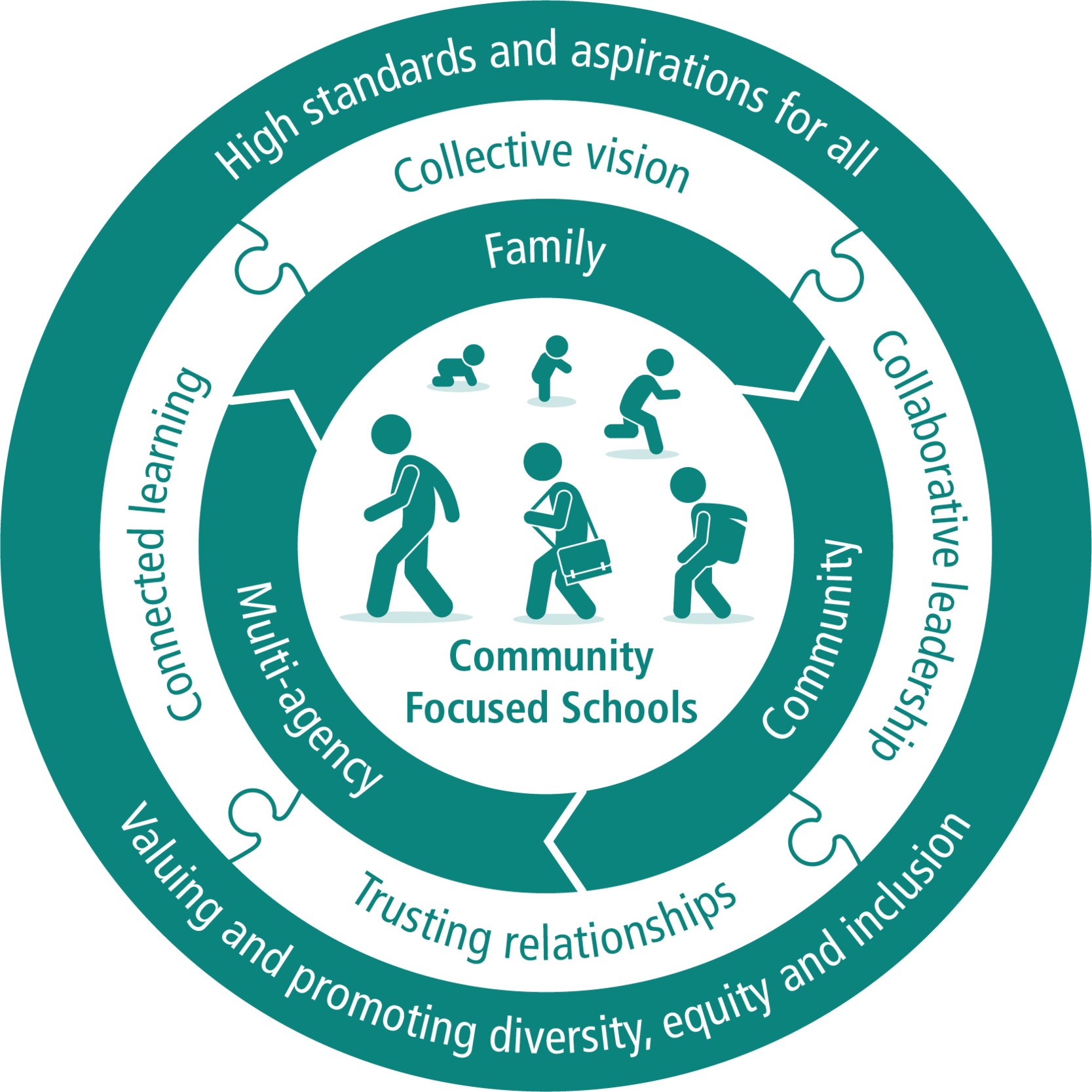
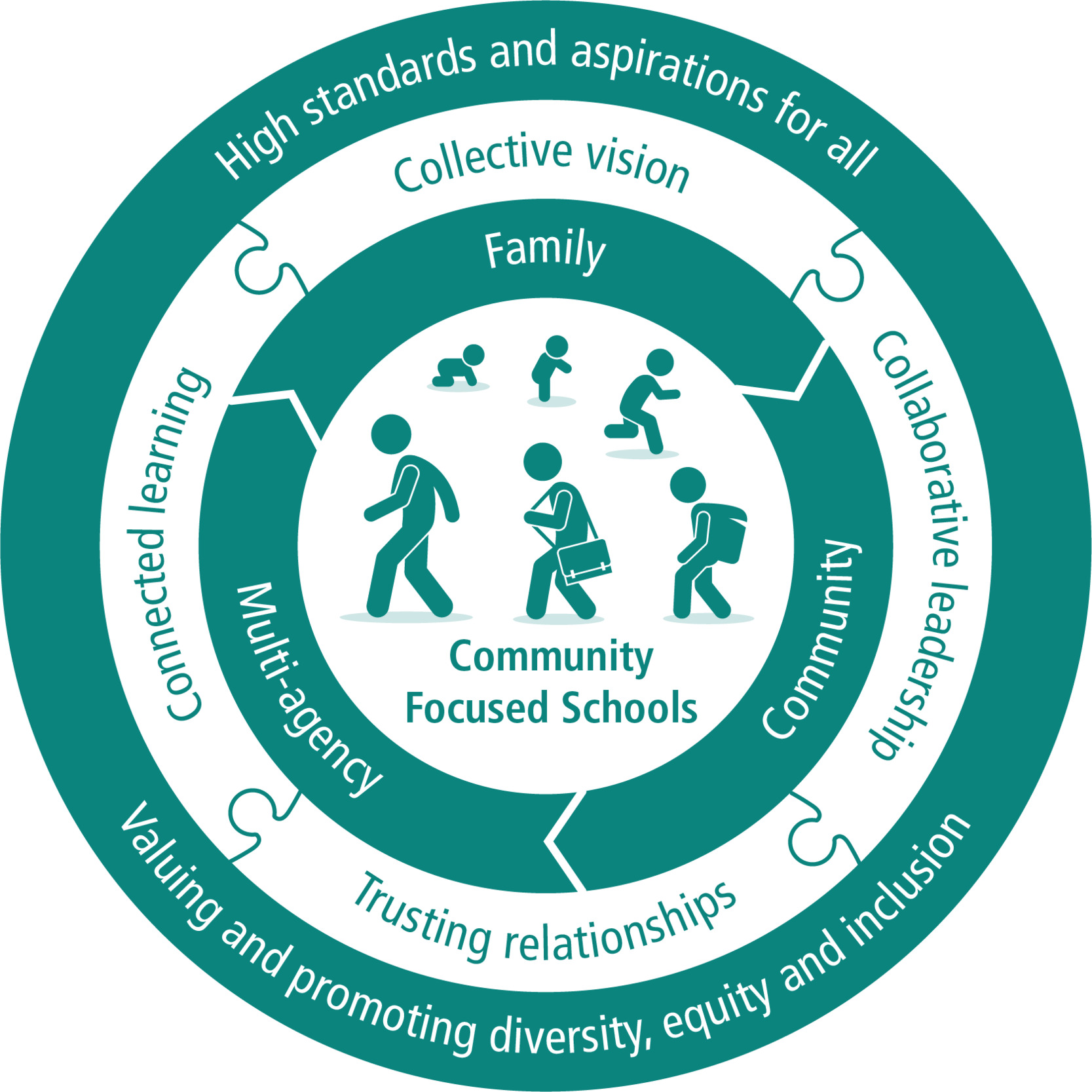
These professional experiences have led to my interest in the expanding international community schools movement, which brings together schools, services, agencies, and communities to work collaboratively to improve outcomes for children, young people, families, and the wider community (Dyson, 2010; Ferrara & Jacobson, 2019; Heers et al., 2016; Tsuji et al., 2025; Welsh Government, 2022). Conceptualised through a variety of different models and frameworks (Kerr et al., 2024; Learning Policy Institute, 2024), this movement continues to evolve and gain interest as a means of strengthening school collaborations, especially during periods of financial austerity (Maynard et al., 2025). Recent community school initiatives across various countries have placed a stronger emphasis on intentional, planned collaboration as a way of supporting children, young people, families, and communities (Children, young people, families, and communities [CYFC]). In Wales, these collaborative and integrative principles are applied through the Community Focused Schools (CFS) strategy (Welsh Government, 2022). This strategy employs a whole-systems approach to foster a collective vision and collaboration with families, communities, and multi-agency professionals to support pupils and the wider community.
Despite policy support for such collaborative models, there has been limited exploration of how practitioners and local professionals can actively shape these priorities, particularly in ways that capture community knowledge and experience. Drawing on these considerations, I set out to design a participatory research exploration and planning (PREP) workshop, aiming to embed these principles from the outset. The workshop provided a space for local professionals and practitioners with lived experience of working in the Community Focused Schools remit to collaborate and reflect on their roles, challenges, and strengths. Participants also contributed ideas for future research. It also aimed to build a network through which the participants could involve the communities they work with in the ongoing research process. This is a crucial connection, as engaging underrepresented or easily overlooked groups can often be challenging for researchers (van der Ven et al., 2022).
Ethical considerations
At the planning stage, guidance was sought from the university’s research ethics committee to ensure transparency and integrity. Research ethics has two dimensions: embedded ethics, which shapes everyday practice, reflexivity, and attitudes (Gardiner et al., 2026; Scher et al., 2023), and procedural ethics, requiring committee approval before data collection (Banks et al., 2022; C. Brown et al., 2020). As the workshop was designed to support the early development of a research proposal, the requirement for formal ethics approval can often be a grey area (Nollett et al., 2024), and clarification was needed. In this case, given that the material was solely intended to inform future research ideas rather than for analysis, dissemination, or publication, full ethical approval was not required at this stage.
Funding and participation
A challenge when delivering participatory workshops or activities, particularly before a research project has formally begun, can be the issue of funding and time (Meadmore et al., 2023). Limited resources can restrict the ability to engage practitioners meaningfully, especially when such activity takes place ahead of a larger funding application. This is a familiar difficulty for early career researchers. To help address this, many universities and organisations offer annual seed funding or small workshop grants. Planning for these opportunities can be advantageous. In this case, university seed funding and a small grant from the Learned Society of Wales (LSW, 2024) were secured. This funding enabled teacher release time, covered travel costs, and provided refreshments, helping to create a welcoming environment and reinforcing the value placed on participants’ involvement.
Participants were invited by email, initially through my own professional contacts and subsequently via snowball sampling (Parker et al., 2019). Invitations clearly outlined the purpose and aim of the workshop, how discussion notes would be used, and that no identifiable data would be recorded. The initial plan was to utilise the multi-agency and community practitioners as conduits to extend the invitation to families; however, this proved challenging. It became clear that these new networks needed to be formed and relationships built first. As a result, a decision was made to plan a second workshop, specifically for service users and families connected to the schools. This second workshop would follow the same PREP format as the first and aimed to broaden participation while mitigating any potential power imbalances that could arise when professional and lay knowledge intersect.
Fourteen participants accepted the invitation to the first workshop with representation from schools, education, youth services, the third sector, family engagement officers, and community focused school managers. Their diversity of backgrounds and experiences ensured rich perspectives and reflected the interconnected nature of work with CYFC.
PREP Workshop structure and delivery
The workshop took place as a full-day, round table session. Given the importance of creating an inclusive and relaxed environment, several factors were considered.
The day began with a brief overview, outlining the aims and principles of the session and opportunities for introductions. This ensured that all participants were fully informed about aspects of disclosure and confidentiality. All participants were reminded that Chatham House rules would be applied to help create an environment of trust (Chatham House, 2025). This rule enables participants to share what they had learn with colleagues’ post workshop, while ensuring the protection of the identity or affiliation of those who contributed.
Round tables were used to encourage discussion, with participants seated in groups of four alongside a facilitator. This setup draws on elements of the World Cafe method, which supports collaborative dialogue through design principles and questions that matter (J. Brown & Isaacs, 2005). To prepare for the workshop, a facilitator meeting was held beforehand to ensure everyone had background knowledge on the topic and an overview of the roles of participants attending. The facilitator role focused on notetaking, guiding conversations through prompts and probes when appropriate, and ensuring all participants had the opportunity to contribute.
The morning consisted of three open ended questions for each table to discuss: (a) What challenges are facing children and young people today? (b) What is your understanding of a community focused school? (c) How can schools increase family and community engagement? Open ended questions encourage richer insights and support engagement, emphasising reflective dialogue and collective sense-making over specific outcomes (Purandare & Patil, 2023). During discussion rounds, participants were also invited to note or sketch ideas on flipcharts. This gave quieter voices a way to contribute without pressure and created visual artefacts that supported later reflection.
In the afternoon after lunch, participants reconvened to review each question. Table highlights were shared and discussed as a whole group, generating deeper insights. Facilitators noted key points for post-workshop reflection. As a natural progression, the group moved on to discuss the final question: (d) What should future research explore? The question was placed in a corner of the room to encourage participants to step away from their tables, talk with others, and review the notes gathered throughout the day. After this activity, the group collectively identified several areas for future research.
Before closing, participants were invited to share their email addresses if they wished, so they could receive a summary of the workshop, stay connected, network, and receive updates on opportunities for further research involvement. They were also welcomed to express interest in joining the steering group that would be established as the project developed.
Reflective Practice
Reflective practice is an important skill for researchers to engage in and embed within their work (Formby, 2026; Gibbs, 1998; Mortari, 2015; Olmos-Vega et al., 2022). While reflection after an event can support learning and inform future practice, researchers must also engage in reflexivity to consider how their values, assumptions, and experiences shape their positionality and influence the research process. This is particularly crucial when using participatory qualitative approaches, as the researcher’s positionality will inevitably shape both the facilitation and reporting of the process (Bergien et al., 2024)
Throughout the design and delivery of the workshop, reflexive notes were kept capturing my subjective experiences of the participatory approach. These notes, alongside an adapted model of reflection (Formby, 2026), facilitated analysis of the workshop and supported learning from the process. A post-workshop debrief with the facilitators provided further peer reflection. Comparing reflexive notes on the workshop enabled triangulation of observations and surfaced shared insights regarding table discussions, group dynamics, participant engagement and how these were navigated. This process also highlighted the value of collaborative reflection in supporting researcher development (Urry et al., 2024).
Planning and delivering a PREP Workshop
To support replication, the table below provides a practical overview of the stages and key tasks involved in planning, delivering, and reflecting on a PREP workshop. These tasks can be used as a checklist or as guidance for implementation.
Key Takeaways for Researchers
This article has outlined the steps taken to design and deliver a PREP workshop, along with insights from reflective practice. Below are some further key takeaways to support researchers.
The planning stage. Engaging people with direct lived experience from the outset ensures research priorities are grounded, relevant, and informed by those closest to the context. PREP workshops can generate rich insights, foster new networks, and enable unexpected collaborations. Careful planning of facilitation methods, question design, and session structure helps shape outcomes by supporting inclusive dialogue and encouraging collective sense-making.
Engaging people with direct lived experience from the outset ensures research priorities are grounded, relevant, and informed by those closest to the context. Where such networks do not already exist, it is advisable to involve someone who has established connections or can support access to relevant communities. Careful planning of facilitation methods, question design, and session structure helps shape outcomes by supporting inclusive dialogue and encouraging collective sense-making.
Ethical considerations. Researchers should plan ahead and seek institutional guidance. Where workshop discussions could inform outputs, obtaining full ethical approval is advisable. Even when formal approval is not required, embedding principles of consent, confidentiality, and transparency builds trust and professional standards. PREP workshops should be framed as exploratory and developmental rather than traditional data collection.
Funding and resource planning. Funding and resource planning are critical. Small grants or institutional seed funding can support meaningful participation by covering release time, travel, and refreshments, demonstrating the value of participants’ contributions.
Workshop delivery. Strong facilitation and peer support are essential. A prepared team ensures smooth delivery, maintains focus, supports inclusivity, and enhances engagement.
Reflexive practice. Reflexivity can enhance research quality. Maintaining reflexive notes and conducting collaborative debriefs support researcher learning and add transparency, rigor, and critical insight to the process.
Conclusion
This article demonstrates how a PREP workshop can embed meaningful participation at the earliest stage of research planning, ensuring that research questions are relevant, grounded in practice, and shaped by those with lived and professional experience. By outlining practical guidance on planning, ethical considerations, funding and resources, workshop delivery and reflexivity, the article provides a clear and replicable model for researchers seeking to adopt this approach. Beyond generating rich insights, PREP workshops also strengthen networks, promote inclusive research cultures, and create opportunities for ongoing collaborations. As such, a PREP workshop offers a practical, adaptable method for supporting participatory research design and shaping future research agendas and direction.