
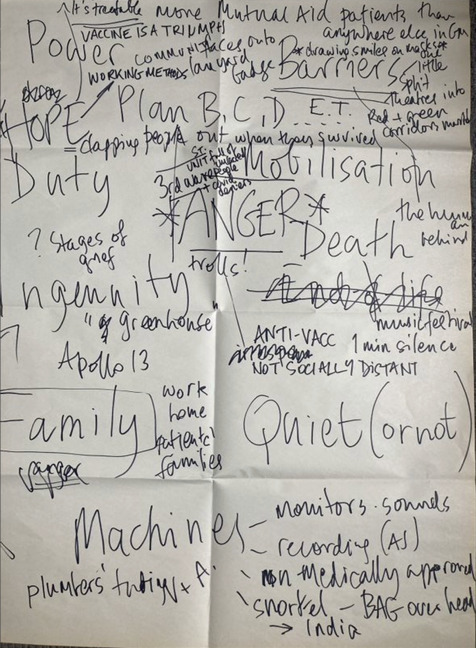
‘The listening composer’ is a community-based collaborative music composition practice in which types of listening are used in the communal creation of a piece of music, with the aim of effectively sharing and communicating the lived experiences of participants in a final, professionally performed, composition. This article describes the methods used in two projects: the first from 2023, entitled Healing Tales, which explored the stories of healthcare workers during the Covid-19 pandemic at the Royal Bolton NHS Foundation Trust, UK. The second, from 2024, was called A Gathered Stillness, and used music and recordings of participants’ voices and environmental sounds to depict their experiences of Quaker worship. Both projects employed listening techniques in combination with a structure derived from Participatory Design (Spinuzzi, 2005).
The Listening Composer is designed to:
-
result in professional-standard musical compositions using participatory methods;
-
make the process of co-creation more transparent;
-
help participants communicate their emotional responses to their lived experiences effectively to a wider audience.
Precedents and models
Precedents can be found in socially engaged practice across many art forms, and in creative advocacy activity, as well as in many forms of community music. A key reference point in theatre is Augusto Boal’s Forum Theatre, in which professional actors devise a theatrical representation of a situation of political or social oppression related by participating members of the audience, and then participants take the role of themselves to seek alternative outcomes for the situation (Boal, 2000). Here the artistic outcome is subsidiary to the social intervention. By contrast, documentary theatre, especially in the form of verbatim theatre, is oriented towards prioritising the dramaturgical process to create a powerful theatrical experience for audiences – perhaps at the expense of inclusivity. Derek Paget quotes David Thacker as saying: ‘Just because you go out and interview real people, it doesn’t mean that you’re going to come up with interesting stuff. Ninety percent of what you get is incredibly boring, it’s platitudinous.’ (Paget, 1987, p. 326). In the projects described below, the process of individual listening to participants revealed nothing that could be called ‘platitudinous’. Thacker’s approach could be seen now as uncomfortably ‘extractive’ (see, for example, Igwe et al., 2022), and the approach taken in the Listening Composer projects was to allow participants to make their own collective judgements as to what would appear in the final script. I would hesitate to claim the project as ‘Arts-based Participatory Research’, however. While the projects, as will be seen, did use arts-based methods to elicit knowledge from the participant group, the artistic output presenting that knowledge to a wider audience was the main aim. Similar projects, such as those described by Phillips et al. as ‘co-production’ of knowledge, would require a much greater degree of methodological rigour than was the case in the Listening Composer projects if they were to make a claim to objectivity (Phillips et al., 2022).
Within community and education projects, collaborative song-writing is a fairly well-established way for a community musician making a socially-engaged intervention in a community. For example, David Denborough describes a method for creating songs for and with specific community settings, which they subsequently sing (in the context, ‘performing’ seems the wrong word since this implies a separate audience, and Denborough’s approach is more in line with Christopher Small’s ‘musicking’ (Small, 1998)). In community-based music projects, if the outcome is seen as over-important, this can generate criticism from community musicians and theorists of community music. For example, Lee Higgins comments about Glyndebourne Opera’s 1995 ‘community opera’ In Search of Angels that some felt ‘it had been produced “on” the people of Peterborough, rather than being created alongside them.’ (Higgins, 2012, p. 48). By contrast, the London Sinfonietta’s Covid-19 period Community Commissions, include in their videos some evidence of methods of community inclusion methods in the commissions, backing up their claim that:
‘Community Commissions is all about engaging the public in commissioning new music and putting them at the centre of the creative process.’ (London Sinfonietta, 2020). The video evidence is not consistently rigorous, and only briefly documented, and we can observe that these commissions came from the Participation & Learning department, rather than the core artistic directorate of the ensemble. Classical music is a little behind theatre in this respect, where community activities tend to be more connected to the core activities of theatres (Arts Council England, 2016, p. 100).
Limitations and Definitions
The projects described assume a definition of musical practice which is rooted in Western Art Music. This entails several culturally limited features, including the division between the act of composing a relatively fixed and final composition, committed to notated form using traditional Western notation in the form of a finalised score, and the subsequent interpretation of this score by a separate group of specialised performers. This division is one which is not normally present in Community Music interventions, which usually have as their performers the participant group themselves (Higgins, 2012). However, I would argue that there is a value to exploring musical expressions where participants are not limited to material they are capable of performing. Here again, ‘music’ is generally being used to mean what is intentionally communicated to the specialist performers for them to interpret – another definition rooted in Western Art Music practice. In practice this does not quite comprehend all the sounding material, since both projects described here included recorded environmental sounds which augment, counterpoint and underpin the scored material.
Underpinning ideas of quality and accessibility
By stating that the projects’ aim is at ‘professional-standard musical compositions’, it must be admitted that the underpinning assumption rest on quite subjective foundations. Moreover, the subject of quality, excellence and judgement have been widely debated, especially in the field of community music, and several writers attempt to escape the seemingly inevitable conclusion that excellence and inclusion are opposite poles (see for example, Camlin, 2014; Henley & Higgins, 2020; Higgins, 2012; Millken, 2023). Henley and Higgins reverse the conventional association of music-as-product with ‘excellence’ and music-as-process with ‘inclusion’: maybe, they say, ‘excellence is a process, leading to inclusion as the product’ (Henley & Higgins, 2020, p. 215). Camlin similarly argues that the values of ‘presentational’ music, normally associated with aesthetic excellence, are in a ‘creative tension’ with the values of participatory music, normally associated with inclusion (Camlin, 2014).
Much of the discussion around quality in community is related to the performing abilities of the participatory group. For example, Wendzich describes a project where there is an explicit division between composer and performer (as in Western Art Music), but it is the capacity of the collaboratively composed music to respond to the technical performing abilities of a student ensemble which is the main criterion of quality, and ‘collaborating composers are in a teacher-like, facilitating, directing, instructing, and reviewing concepts’ (Wendzich, 2022 no p.n.).
Position statement and acknowledgements
I am a classically-trained composer with a track record of commissions and projects that respond in some way to community contexts and a long-standing interest in collaborative forms of music creation. In the first project described here, I remained an outsider to the group of healthcare workers, although the project sprang from a pre-existing friendship with one member of the group. In the second project, my relation with the group was closer – initially as a regular attender at the meeting, and subsequently as a member. Internal funding was received for both projects from the University of Salford, and for the second from Quakers in Yorkshire. Ethical approval from the University of Salford was sought and obtained prior to each project being carried out. In both projects, my role was that of a professional composer with established knowledge of handling and developing musical material, of instrumentation and orchestration techniques, of textural development and of organising long-term structure for expressive effect. I was working as a community musician, but my knowledge and skills as a composer were fully employed to help generate the final score to be performed by the professional ensembles.
I received invaluable help on both projects from many friends and colleagues. Musicians from University of Salford music ensemble ACMG were involved at several stages of both projects, in particular: Ash McAulay, Dave Crawley and Phil Brissenden. Brendan Williams set up and produced the recording of the ensemble sections of the second project. Artists involved in Healing Tales were Chris Clark (conductor) and musicians of the Latitude Ensemble. Adelina Court made the live drawing and Lizzie Owen choreographed it, with Bee Minett also performing choreographed sections. A Gathered Stillness was performed by oboist Rachael Clegg, harpist Lauren Scott, and cellist Svetlana Mochalova, and by the choir of Ackworth School, West Yorkshire. Sound design and diffusion for A Gathered Stillness were by Phil Brissenden.
Research Context: Listening
Discussions of listening occur in many disciplines such as music (Oliveros, 2011, 2022); person-centred education (Rogers, 2014), and healthcare (Daniels et al., 2019). George Perle must be regarded as having prior claim to the term ‘Listening Composer’ but his use of the term is restricted to the perhaps rather unsurprising notion that composers ought to listen to music (Carl, 1991). The concept of ‘listening to a person’ has been explored in medical literature as a means of attaining greater success in diagnosis (see, for example ’t Hart, 2021, and Casal, 2015). One study discusses listening as an intervention aimed at increasing wellness in healthcare workers (Daniels et al., 2019). This study involved the use of psychoanalytic psychotherapists already working in a hospital department who held weekly sessions with junior doctors, and reported benefits to the participants. The idea that listening to a person is analogous to the act of listening in music occurs in several sources, and it is sometimes hard to make the distinction between listening (to music) as analogy, or as concrete reality (see, for example, Parse, 1996). Jonas-Simpson (2001) quotes psychologist Michael P. Nichols – “being listened to means that we are taken seriously…that what we have to say matters” (Jonas-Simpson, 2001, p. 226). In this respect, listening to the musical voices of marginalised sections of the community, be that marginalisation the result of gender, ethnicity, disability, sexuality or any other characteristic, is, in itself an ethical act (Voegelin, 2018). Similarly, composer and conductor Robert Kapilow directly relates the listening in psychotherapy to listening to the music of Beethoven (Kapilow, 2020).
Christine Jonas-Simpson’s studies (2001, 2003) incorporated music in the initial process of ‘dialogic engagement’ with patients in her research by asking them to compose a piece through simple ‘higher/lower’ and ‘louder/softer’ instructions to the researcher, who is both a nurse and a flute player, while keeping the compositions in a simple musical mode. The added value of the musical engagement process claimed by the author of these studies was an enhanced ‘descriptive vividness’ and the musical representations were played while the participants engaged in the dialogic process of describing their experiences of belonging. While Jonas-Simpson found music helpful in her ultimate aim of listening to her patients’ needs, from a musical and participatory point of view, her method is less helpful, since the music is only featured in the initial stage of the project, and is never heard by anyone apart from the participant and the researcher. In Jonas-Simpson’s account, the actual music made by participants is not discussed as having a value in itself (what Camlin and others would call ‘aesthetic quality’), and there is no attempt to use the music - in a public performance, for example – as a means of communicating to a wider audience the lived experience of the participants. Those were not her aims, but it can be inferred from her studies that she found that music is a useful means of ‘opening up’ people’s experiences for scrutiny by researchers.
Research Context: Collaborative Composition
The authority structure of classical music as it is traditionally framed tends to discourage non-specialist contributions (Goehr, 1989), and undervalues distributed creativity as a model (Clarke & Doffman, 2017). As a result, participatory, collaborative and community music making have traditionally been accorded a lower status in the hierarchy of activities of professional classical music ensembles, although increasingly it may well be this activity that secures public funding for the organisation (Humphrey, 2021). Cathy Milliken’s extensive work in the area of community and collaborative composition is detailed in her DMA thesis (Milliken, 2023). I did not know this work when working on Healing Tales and when starting work on A Gathered Stillness, but it has helped retrospectively to frame the ideas of The Listening Composer. Milliken refers to what others call co-creation as ‘Collective Composition’ and refers to the need to ‘let go of my own musical desires, to listen to the desires of others, while identifying the elements of leadership necessary at given moments to facilitate social and artistic processes and relations’ (Milliken, 2023, p. 80). The emphasis in Milliken’s work is on the social dynamics of community music and collaborative composition, and there is relatively little emphasis on the detail of the co-creation of material, meaning that the nuts and bolts of what is decided musically remain less clear. A similar comment might be made about the account of the development of a participatory and interactive opera in Edwards et al. (2019).
Research Context: Participatory Design
When searching for a method to bridge the perceived gap between excellence and accessibility in community-based music activities, I was influenced in particular by Participatory Design. Participatory Design emerged in manufacturing processes in the 1970s where the user experience of workers was thoroughly considered in the design process of new manufacturing processes. Spinuzzi (2005) summarises the approach in this way -
“What distinguishes participatory design from related approaches such as user-centred design is that the latter supposes that the research and design work is done on behalf of the users; in participatory design, this work must be done with the users.”
Participatory Design methods have frequently been used in software design, as we can read in the work of the team behind the Syncphonia app (Hughes et al., 2020). While in software design the success of the design process is indicated by factors such as ease of use and productivity gains, in the projects described in what follows, I regard the communication of emotion as the function of the design, with the composer in the role of designer-facilitator. In retrospect, the model appealed to me as a composer since it allowed for expertise on the part of the composer in the projects described here. I wanted to utilise my hard-won skills and knowledge of music composition, but in a way that allowed the participant group to participate in the creation of the musical and narrative material.
Spinuzzi (2005) summarises the stages of PD project design as follows:
Stage 1: Initial exploration of work, including methods such as observations, interviews, walkthroughs and organizational visits.
Stage 2: Discovery process, where “[t]he goal is to co-operatively make meaning out of the work rather than to simply describe it”, and might include storyboarding or role-playing games.
Stage 3: Prototyping which might include co-operative exercises
At the end of the process, “results are shared in a form users can understand and share”.
The following plan was also informed by recent work in curriculum co-creation, which also faces similar issues of perception of power structures (Galpin et al., 2022).
In practice this apparently simple three-stage design approach was at times replaced by a much more iterative approach, where different sections of the resulting pieces in both projects were at different stages (one part might still be in the ‘discovery process’ stage, while another part might be at the ‘prototyping stage’). This iterative structure perhaps links the approach to Practice as Research methods described by Nelson and others (Nelson, 2013), or Grounded Theory (see Hart, 2019). In what follows, I have abandoned Spinuzzi’s clear temporal distinction between ‘discovery’ and ‘prototyping’ phases, as both actions are often running concurrently with different parts of the whole composition.
Case Study 1: Healing Tales
Context
After the onset of the Covid-19 pandemic in 2020 the contributions of healthcare workers were recognised by the populace of many countries and major cities with weekly applause on doorsteps. Healthcare workers were initially perceived as being on the front line of a figurative conflict against the disease, especially as they were often risking their own lives before the development of vaccines against the disease. Hospitals risked being swamped by cases, and the brunt of the extra work was borne by doctors, nurses and other health professionals. Grateful recognition of this sacrifice did not continue, however. Healthcare workers continued to be overworked in a UK health service threatened by a state of crisis due to funding restrictions and long-term under-investment, and as a result, feelings of stress and isolation were widely reported (Care Quality Commission, 2022). Staff continued to work in extremely demanding conditions, with high levels of Covid infection, but as life in the community outside hospitals and care facilities returned to normal, the additional loads placed on healthcare staff were generally ignored within the wider community. This was the story the first project aimed to explore.
The Process
Initial recruitment of participants January 2023
Bolton Royal Hospital Trust were identified as a partner organisation with the project for the following reasons -
-
The trust has existing strong links with the University of Salford’s Nursing and Midwifery team;
-
Members of staff in the Trust have links with the directorate of music and dance (as former PGR students).
Together with the hospital, we recruited a group of 8 participants through internal advertising and word of mouth within the Trust. The degree of anonymity they would have was to be within their control at all times, but in fact all participants were happy to be identified as co-composers.
The group included front-line healthcare workers (3 consultant grade doctors, 1 bereavement nurse, 1 clinical skills facilitator, responsible for training in new procedures, and 1 anaesthetic practitioner, responsible for maintenance of crucial respiratory machines during the pandemic), and also managerial and administrative staff (1 operation business manager, 2 project managers). The group represented a range of experiences in the hospital during the pandemic, but in other ways was not especially diverse – the group were nearly all women, and there was not much ethnic or cultural diversity within the group. This potentially could have been a result of the terminology used in sourcing participants, such as ‘composition’, ‘arts project’ implying a European cultural background.
February 2023: Initial exploration carried out through individual interviews
I spoke to participants individually about their experiences of working in the hospital at any stage of the Covid-19 pandemic, including the present. We asked participants to think about their sonic environments from the start of the project, including their own use of music as emotional support.
Indicative questions were:
If you were to try to communicate one experience that you had as a carer and as a person, what would you choose? What stands out? What sounds were present? What music helped you through the situation?
The interviews were recorded and then transcribed by me personally, in order to make sure that the participants felt that the composer was really ‘listening’, rather than using research assistants for this stage. I then shared the transcriptions of these interviews with the individuals concerned, so they could check them for accuracy. I asked each participant to identify key elements of their experience that they wanted to communicate to a wider audience.
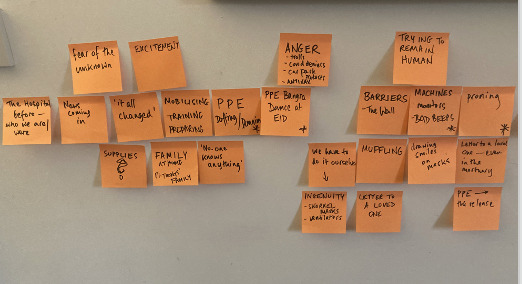
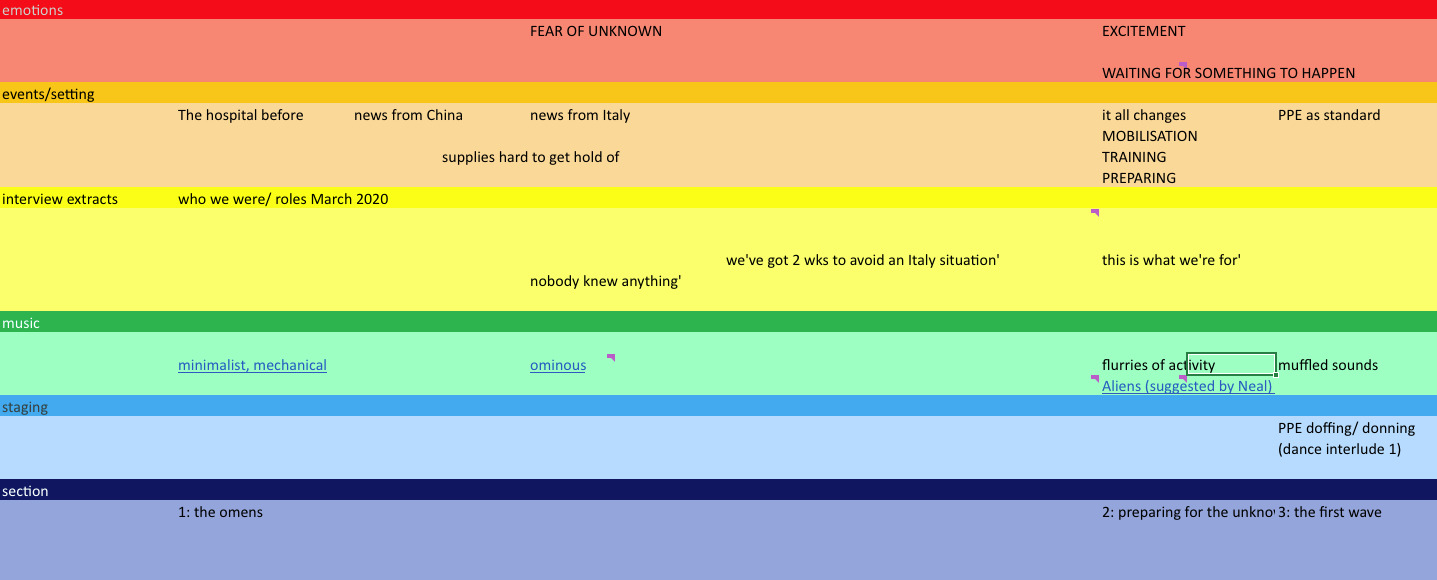
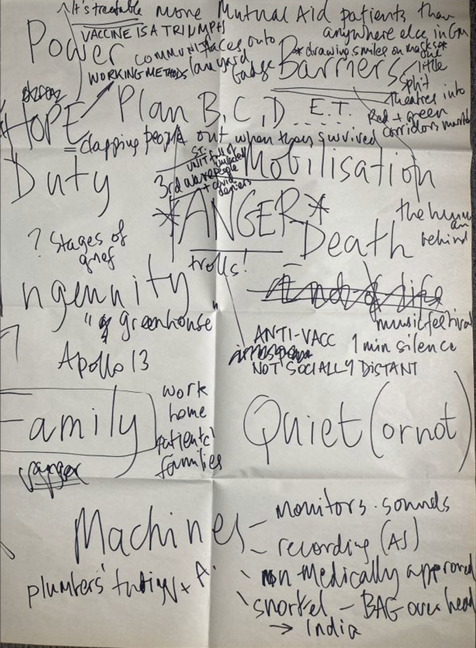
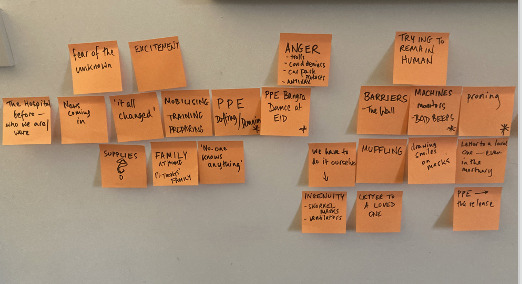
March 2023: Group session 1 - storyboarding of events
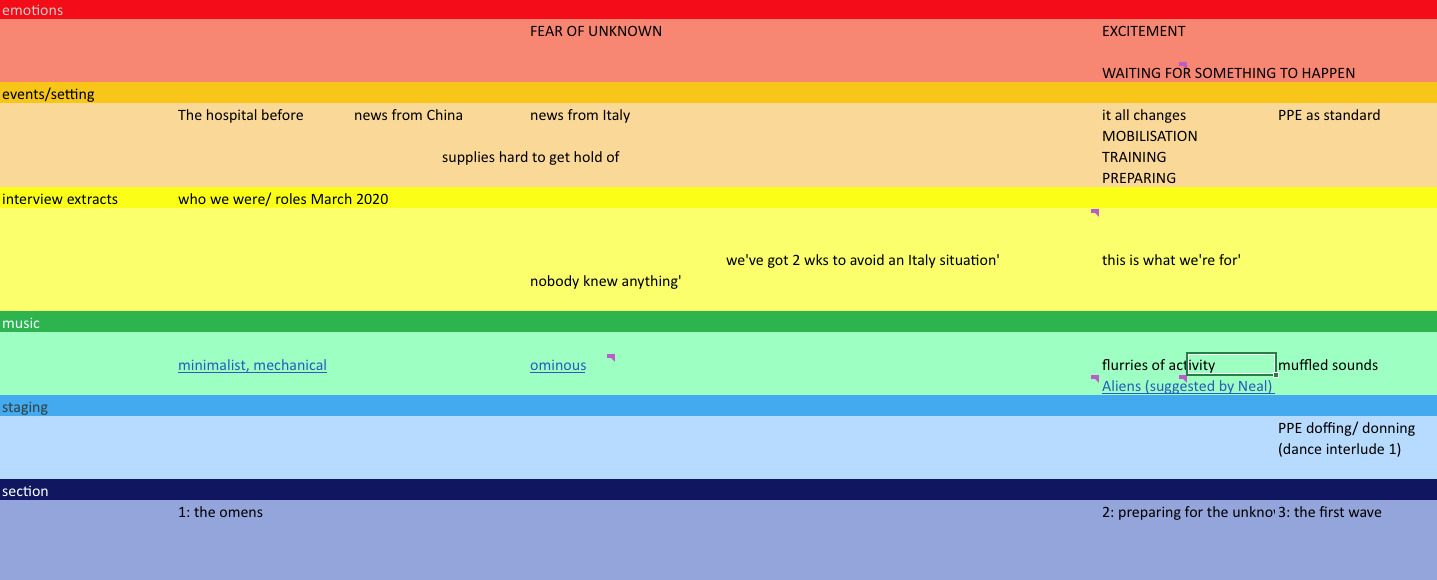
The project brought together participants as a group to share the key elements of their experience that they wished to communicate (identified at the end of stage 1), and these were collaboratively developed into a storyboard, consisting of events, sounds, emotions, and music (the music they had individually identified as the ‘music which got them through it’ in stage 1). The final storyboard document had been envisaged as a dynamic document, with links to music that held meaning for participants. It was shared digitally with the expectation that participants would use it between sessions to make suggestions, and act as a communal ‘mood-board’. In the event, busy healthcare workers had little time to use it in this way, although this document does include participants’ suggestions (Jerry Goldsmith’s ‘Alien’s’ for example), or a song from the musical ‘Frozen’.
Group session 2
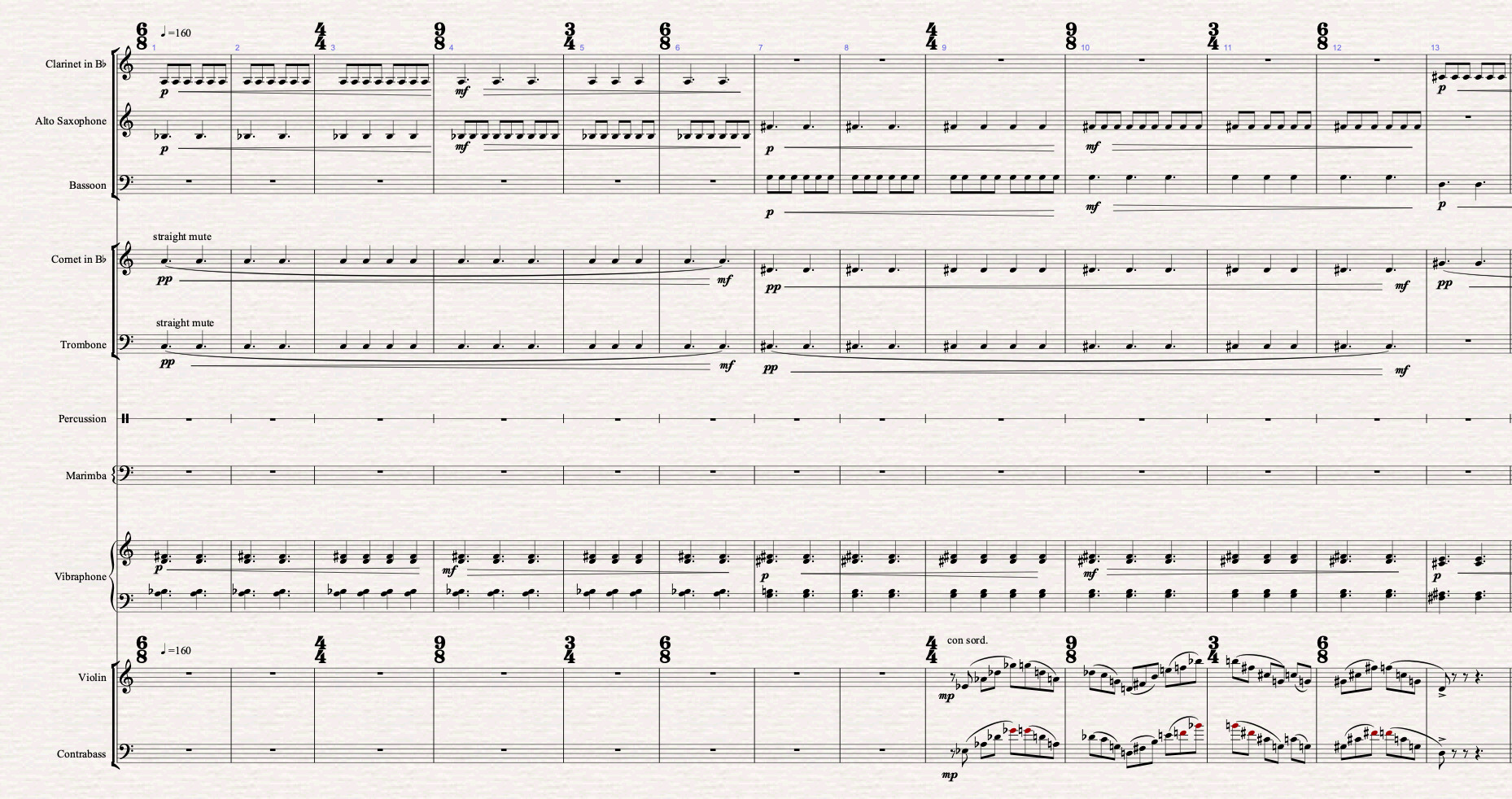
Along with myself, musicians from the ensemble ACMG (Ash MacAulay and Dave Crawley) improvised musical material aimed at representing the emotions experienced by staff during the thematic sections of the storyboard (described in Figure 3 as ‘events/settings’) under the guidance of participants.
April 2023: Group sessions 3 and 4
Digital versions of the music were shared with participants as virtual orchestration. Participants could then feed back, in the group, or individually, especially in relation to the sections of the piece inspired by their own experiences. Several sketched sections were discarded as a result of feedback from participants (see below).
July 2023: Final Performance
A professional performance of the co-created piece with the Latitude Ensemble, conducted by Chris Clark, took place on July 20th 2023 in New Adelphi Theatre, University of Salford, and can be viewed on YouTube at this URL: https://www.youtube.com/watch?v=6MnDkeWISWE&list=PLEaPntLho2_N5eMmtiG4USka1HzprHCBf
In this project, the instrumentation had been determined beforehand because the idea was to pair the new piece with Stravinsky’s Soldier’s Tale, which had been premiered just over a century before, again during the time of an international pandemic (the influenza pandemic of 1919). Hence the seven instruments of the Stravinsky ensemble had already been decided upon. It was my suggestion that an additional instrument be added – alto saxophone – to allow for some richer harmonies.
A key aspect of the piece was the inclusion of voice recordings recounting the verbatim experiences of participants over a musical background, alongside environmental recordings made in hospital wards. The voice recordings were made from a script by friends and colleagues, respecting the wishes of the participants not to have their actual voices included. In the theatre we were able to diffuse both voice recordings and environmental recordings around the audience for an immersive effect.
Evaluation
Following the performance, both participants and audiences were asked to respond to the extent that the stories of the participants were communicated accurately and memorably, and what effect doing this through music had on the communication process.
Agency of participant group in rejecting/approving suggested music for narrative themes
One of the outcomes of this project has been to uncover the extent to which asking people to retrospectively pay attention to - or listen to – their sonic environment helped them to re-engage with their memories, and how important the sound environment is to memory. In the social sciences, a technique of using sound to elicit memory in interviewees is described by Harris (2015), but we found that simply asking participants what their memories of sound and music from the time in question was enough to prompt immersive memory recall of emotional responses to their lived experiences. This, as hoped, on occasion prompted them to reject and amend music that had been suggested through the improvisation - transcription – virtual orchestration, or ‘proto-typing’ process described above.
An example of music that was rejected by participants – especially those who were in clinical roles – was music written to represent the experience of being on the ward in full Personal Protection Equipment (PPE). Several participants emphasised how difficult and uncomfortable wearing PPE was. For example, one participant said:
*In clinical areas everything was muffled, because…you’re trying to talk to people, and you have these respirators that are massive, and really difficult to talk through. And it was exhausting because you can’t see anyone’s face, you’re not quite sure who people are, you’d have our names written on our fronts, and things like this, and really struggling to understand people even though they’re sort of shouting into their masks. And then the noise of all the equipment around you, it was really difficult to communicate with people when they can’t see your face, and they can’t really see your eyes, and you’re sort of yelling as best you can. But yeah, well ICU, it was just an assault on your senses. *
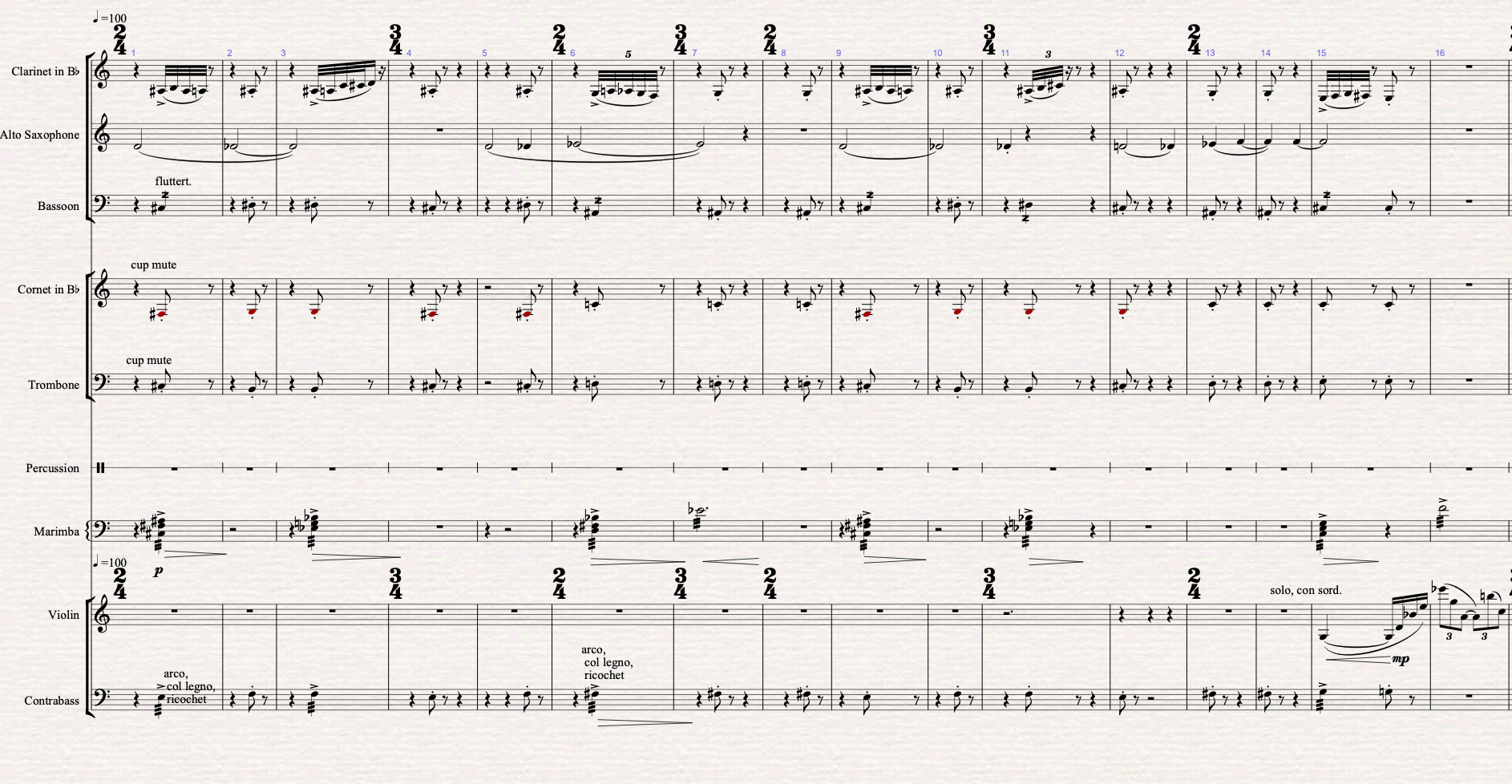
Following the second group session, I suggested a passage to represent this feature quiet clusters and flurries of notes in a modernistic style – most probably originating in the music of Bartók, Ligeti and Kurtág which have been highly influential on me as an individual composer over the years.
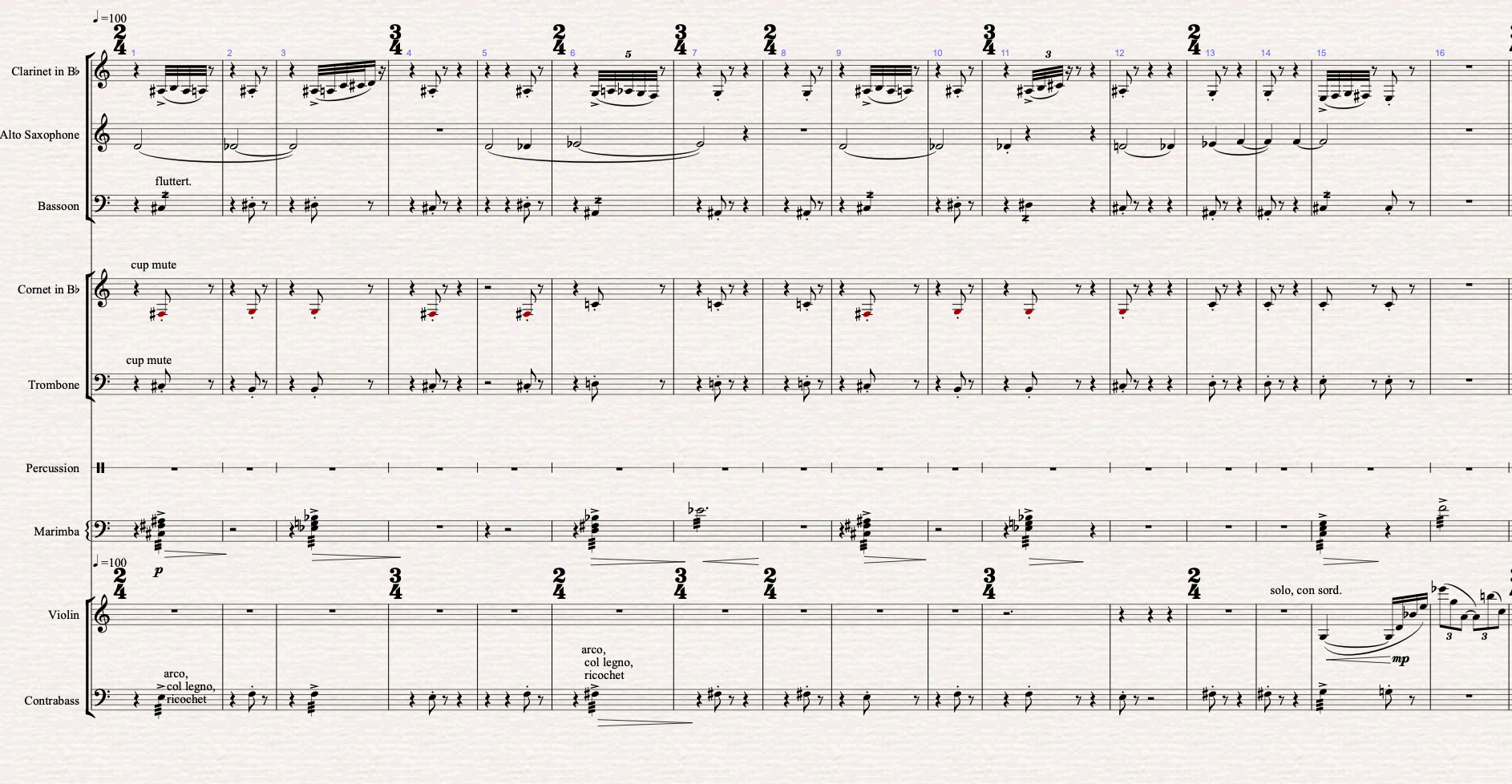
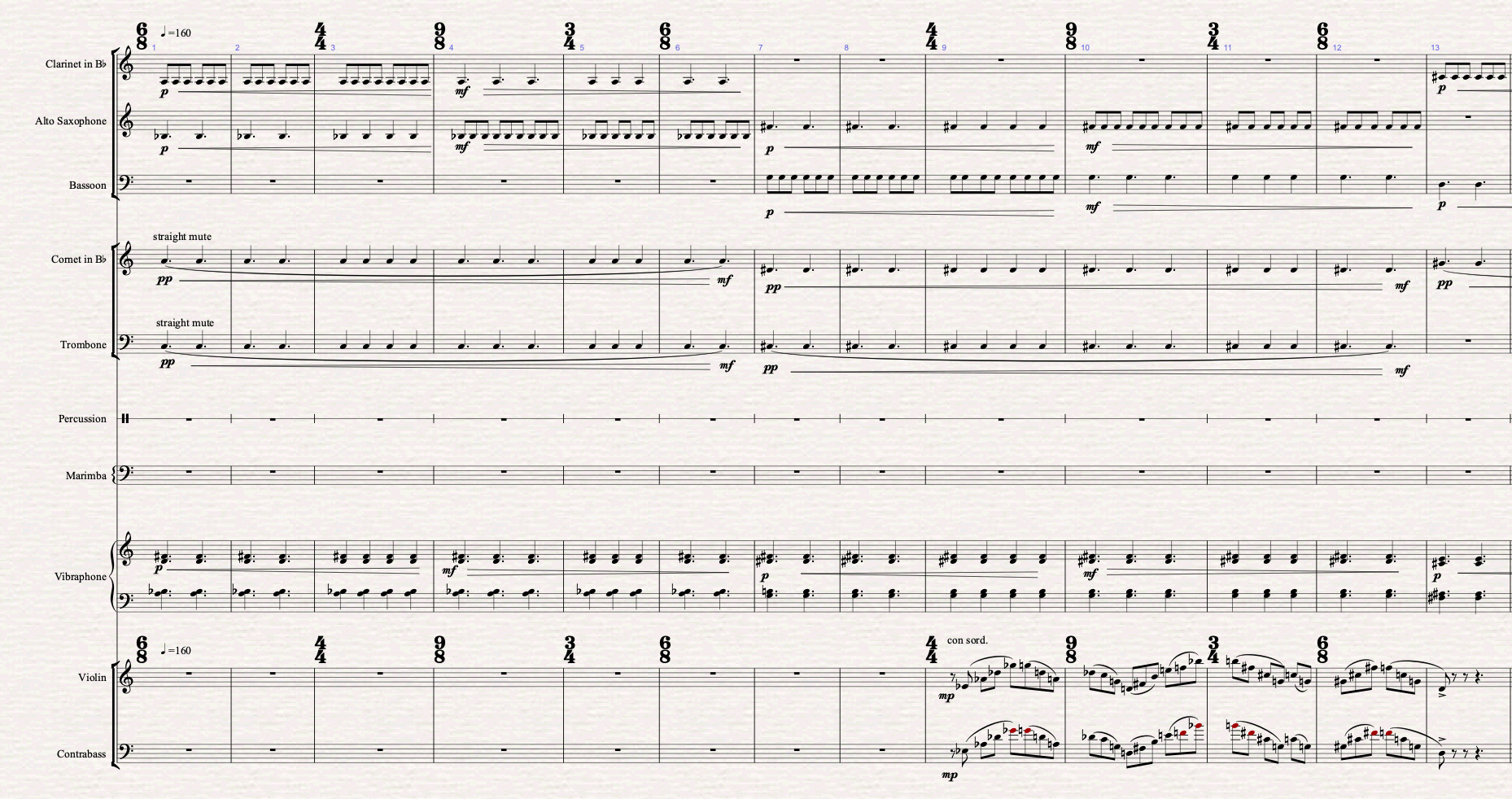
In fact, I had adapted from an existing sketch for another, abandoned, piece. Its inappropriateness was immediately detected by the participants who had described the experience. Their feedback was that it sounded too much like a horror film (an accurate description, given the use of Bartók’s music in films like Stanley Kubrick’s The Shining), and that there wasn’t enough urgency to the section. Participants felt that, despite these obstacles, the department had still functioned efficiently, which the original music had not depicted. I suggested a new texture, with similar harmony, but a more urgent pulse and minimalist surface, and this was subsequently accepted into the final piece. The language used in the discussions tended to the informal, not just because the participants were not formally trained in the technical language of composition, but also because this follows the actual practice of composers and performers in discussing music, even in the relatively formal situation of contemporary classical music.
As a group, the aesthetic discussions about the style of music tended to be limited. Front-line healthcare staff would often be required to cover shifts or have their work patterns changed at short notice, and they were more interested in the narrative of their collective experiences than in making compositional decisions.
In this project, additional visual elements were introduced relatively late on, and while I as project lead consulted the group, they were happy to defer large-scale aesthetic decisions to me as the subject specialist. I wondered if this was because of a culture of deference to specialism within the healthcare system. The visual elements – dance, and the live drawing undertaken by my colleague Adelina Court – were included because I was concerned that a general audience would be expecting a more theatrical and visual experience, given the performance was to take place in an actual theatre.
Evaluation
The project was evaluated using three sources of data: the audience evaluation forms linked via a QR code after the performance of Healing Tales; the participants’ questionnaires, completed after the project was completed; and personal recollection and self-reflection by the project lead.
Roughly 150 people attended the premiere of Healing Tales. Naturally, the audience was pre-disposed to be favourable – many of them attended because friends, family members and colleagues had taken part in the project. The piece was, to some extent, telling the story of the audience as well as the participants. Of the audience group 22 people responded.
Of the 8 participants, 4 completed the participant questionnaire. This was slightly disappointing, but it should be read in the context of overstretched front-line medical staff with many other priorities during a time of industrial action. It had been hard for clinical staff to attend some sessions due to changing work patterns over which they had no control.
Audience responses were very positive. On the crucial indicator of project success, namely, whether the piece communicated to a wider audience the stories and lived experiences of the participants, 86.4% of respondents reported that “music/dance enhanced the stories considerably”, while the remaining 13.6% of the audience respondents stated that “music/dance enhanced the stories slightly”. Qualitative comments included the following -
‘It gave a view I was barely aware of’
‘Excellent way to tell stories with a backdrop of the performing arts’
‘extremely moving and authentic piece of work’
‘a great testimony to the reflections of Bolton staff’
‘It was incredibly touching – I think we’ve tried to forget about everything and just pretend nothing has happened. This piece gave me and other audience members a space to process, and also remind us that it was a shared tragedy – our feelings around it are shared also.’
Negative comments related to some of the different elements of the piece. For example:
‘I didn’t really understand the dancing bit, it was performed well, it just didn’t feel like it needed to be there’
The dance was choreographed by Salford MA student Lizzy Owen, who had attended one of the group sessions and met the participant group beforehand. However, while the participants and creative team were delighted with the dance element, it can perhaps be inferred that the audience were picking up that this element had not been deeply embedded in the participatory process.
Overall, this first Listening Composer project demonstrated some successes. The piece produced was perceived to be of high quality, and it successfully represented the stories of participants using their own words. The initial interviews, their transcription and the creation of a form for the piece using themes which emerged from these interviews were highly successful. Audience responses to the work showed that even those who lived with healthcare workers felt better informed about their loved ones’ experiences after the performance, and the participant group itself reported that the project had been the first opportunity to ‘debrief’ collectively about the Covid pandemic and its effects in the hospital since the ‘return to normal’.
Less successful was the attempt to co-create the actual music with the participants – in retrospect this required more group sessions than either project lead or participants had time for. It did work well to have the participants critique sections of the music which the project lead had sketched in digital form to check that it matched their experience. It also worked to some extent to have references to music mentioned as memories by participants - such as a song from the musical Frozen – embedded within the music, although this was felt to be a pleasing detail rather than key to success of the final piece. Bringing musicians from Salford University’s contemporary music group ACMG to try to improvise music in real time was only partially successful. The division between ‘the music’ and ‘the ensemble’ was not obvious to all participants – Western-trained musicians are familiar with the idea that ‘the music’ might be rearranged for a different ensemble, but this is not always understood by those with less Western musical knowledge.
Participatory Design methods do not require the end-users to be the originators of the design – they must be part of the research and design process, and this can be through testing and approval. In this case ‘testing’ is understood as hearing early versions of the music in digital form. All the responses received from participants said that they had ‘had an input into the final product’ confirming that they viewed the process as participatory.
This first Listening Composer project recorded the experiences of participants– itself an output – and reflected them back, and out to an audience through music. The music added a layer of emotion which an empathetic listener might detect in the original interviews even if that emotional content was not expressed in language explicitly. The participants gained a sense of ownership over the material because they had the chance to exert editorial control and some creative influence.
Subsequently, we identified several ways in which the method could be improved:
-
Initial voice recordings could have been done in a way that allowed the voices of participants to be included where permitted, rather than voiced by actors
-
There should be more group meetings (identified by the participants themselves)
-
There should be more input into the music composition process, rather than just the storyboarding/narrative and in an editorial function
-
The power structure of the project and the ways this operated in the group sessions could have been more considered
-
The participant group was not diverse in its ethnic make-up, or in its gender balance, or reflection of disability.
We set out to address some of these shortcomings in a second Listening Composer project.
Project 2: A Gathered Stillness
Context
A Gathered Stillness began as a commission from a group of Quakers (The Religious Society of Friends) in West Yorkshire, England. Known for their largely silent worship practice, the somewhat paradoxical commission was for a piece of music to celebrate the 400th anniversary of the birth of the founder of the Society of Friends, George Fox. The Listening Composer method seemed appropriate for this commission because of Quakers’ radically non-hierarchical form of worship and decision-making processes.
This would allow us the opportunity to address the points for improvement identified in Healing Tales by
-
including participants’ actual voices in the final performance
-
planning a longer participatory process, allowing for more group sessions, and more opportunity for feedback earlier on in the process
-
examining ways in which more collaboration could take place on the musical level from the outset.
-
learning from Quakers’ decision-making processes, and from their strategic use of silence to enable listening to take place. Quakers’ largely silent worship practice gives them unique experience of listening, and their concept of ‘discernment’ instead of majority voting or consensus was a method of collective agreement that seemed valuable to explore.
We were able to increase the diversity of the participant group in terms of gender balance, and by inclusion of disabled participants. But the nature of the group from whom the participants would be drawn meant that we were unable to address the lack of ethnic diversity in the group. This remains to be addressed in future projects. We also increased the number of participants to 16, and the number of group sessions to 6:
Timeline of Project 2
-
February 2024 14 1-1 interviews, and one joint interview– recorded, transcribed and approved as described in the previous project.
-
March 2024 Group discussion of themes recurring themes and introduction to idea of graphic score
-
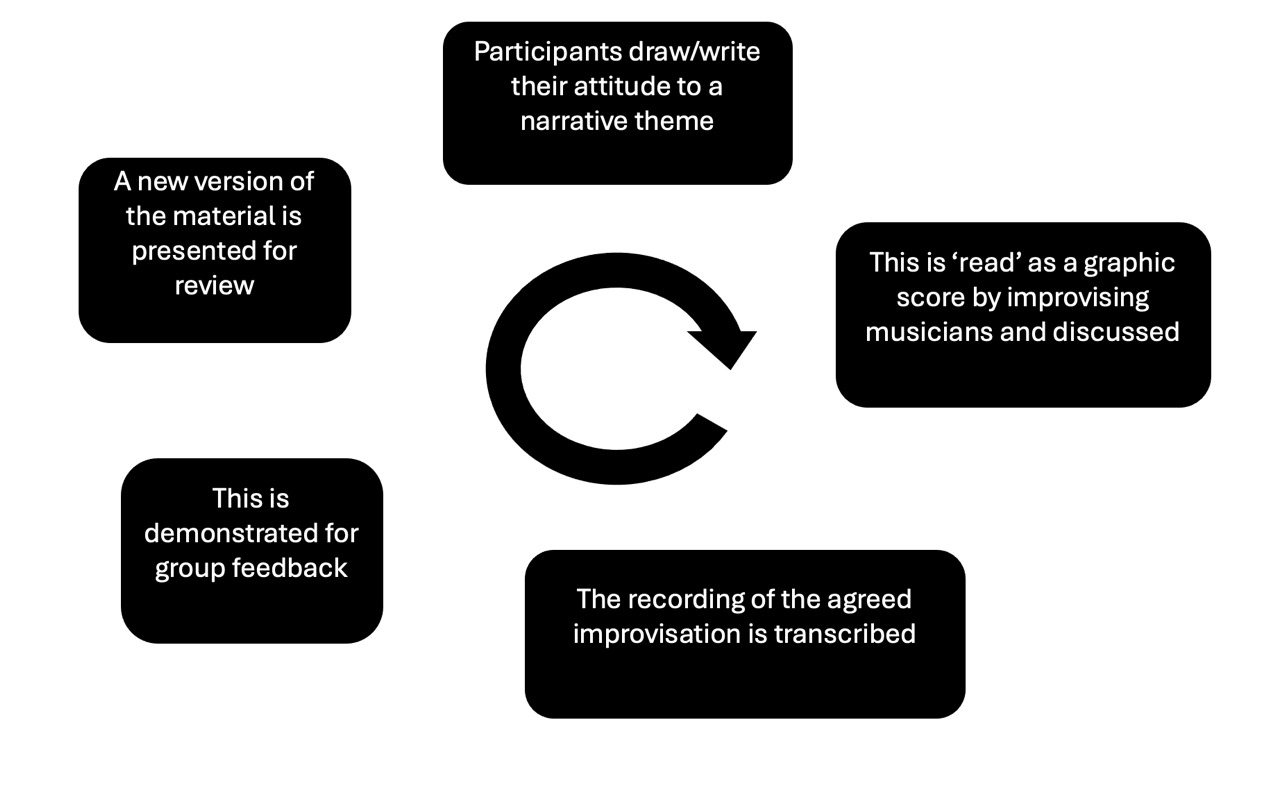
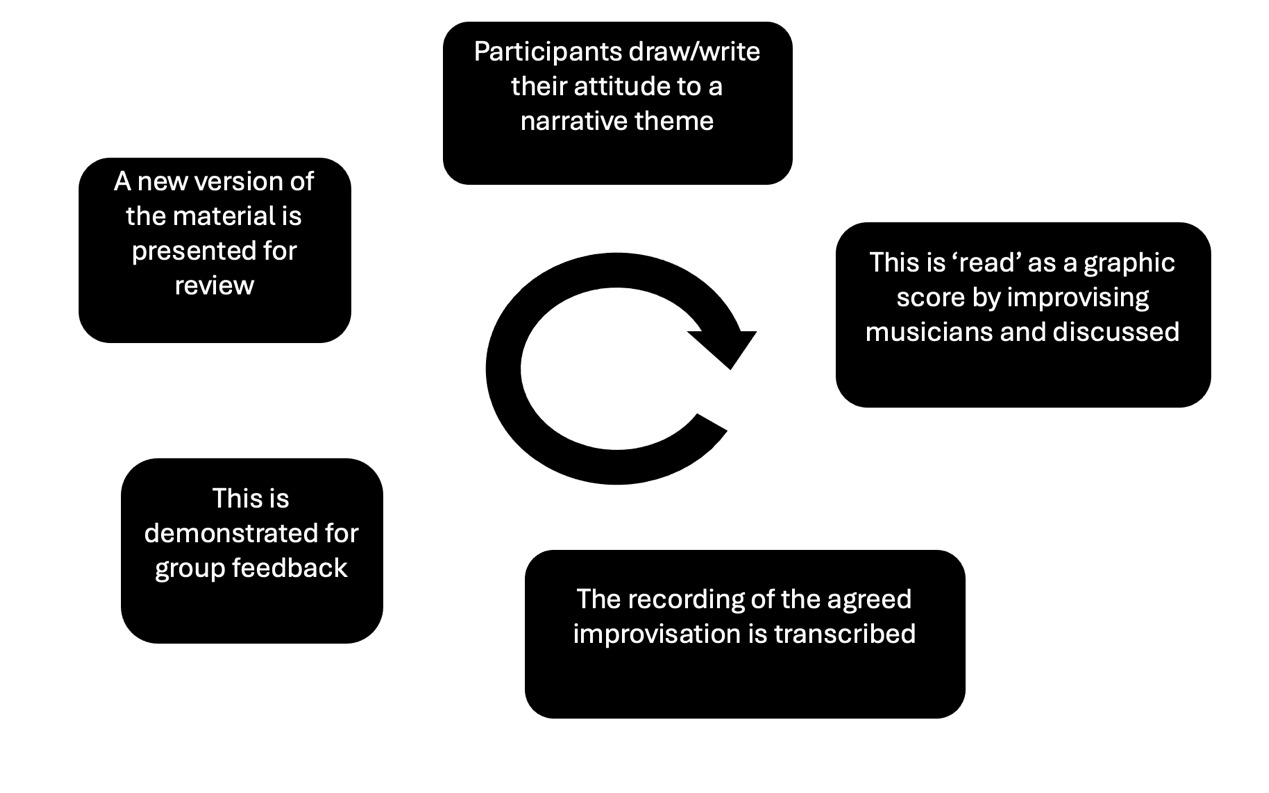
April – July 2024 Co-creation of narrative form. Participants begin to draw/write their feeling about an identified theme. This is ‘read’ as a graphic score by improvising musicians and discussed. The recording of the agreed improvisation is transcribed. A more developed compositional sketch is presented.
The original ‘exploration’ and ‘prototyping’ phases as described by Spinuzzi in this model run concurrently, with one thematic aspect being ‘explored’ while the musical results of a theme explored in a previous session would be prototyped. This generated more variety and was a more efficient working method.
Embedding silence and discernment in the decision-making process
Given Quakers’ non-hierarchical power structures and their distinctive practices in meetings for business, it seemed like a good opportunity to examine what could be learned from these practices and embed them in the Listening Composer method. Accordingly, each group meeting began with a short period of silence of 4-5min. In observing their business practices, Quakers do not vote. Instead, the clerk of the meeting attempts to sum up the discussion in meeting with a written minute which is agreed on (or not) at the time. Adapting this practice, the group regularly verbally agreed what they would, as a group, do next. Notes taken immediately after the group meetings reveal many points at which the group took stock, and I as project lead summed up the group decisions.
Co-creating music
In order to address the shortcoming identified in the last project that the music itself did not have its origin in the participant group, a number of changes were made to the method.
The group determined the musical instrumentation (harp, oboe and cello). The discussion of this was conducted in as open a way as possible, but the project lead’s knowledge of instrumentation - about what was likely to work better – carried some weight. For example, as project lead I questioned the effectiveness of an initial suggestion that trumpet be included as it might risk balance problems. Here as project lead I felt able to influence the outcome because I was speaking from experience: I’d made mistakes in past pieces, and wanted to make sure that the result of this project wouldn’t make similar mistakes. In this, product took precedence over process to a degree, marking this project out as having different values to those of most community music projects. That being said, the group also wished to include musicians from Ackworth School, a Quaker-foundation school in the same Area Meeting as the meeting house where the project took place (Wooldale, near Holmfirth in West Yorkshire), so a section of the piece was created for choir as specified by the participant group in spite of my private misgivings initially about this addition.
Collective writing of a theme using a ‘what note next?’ technique
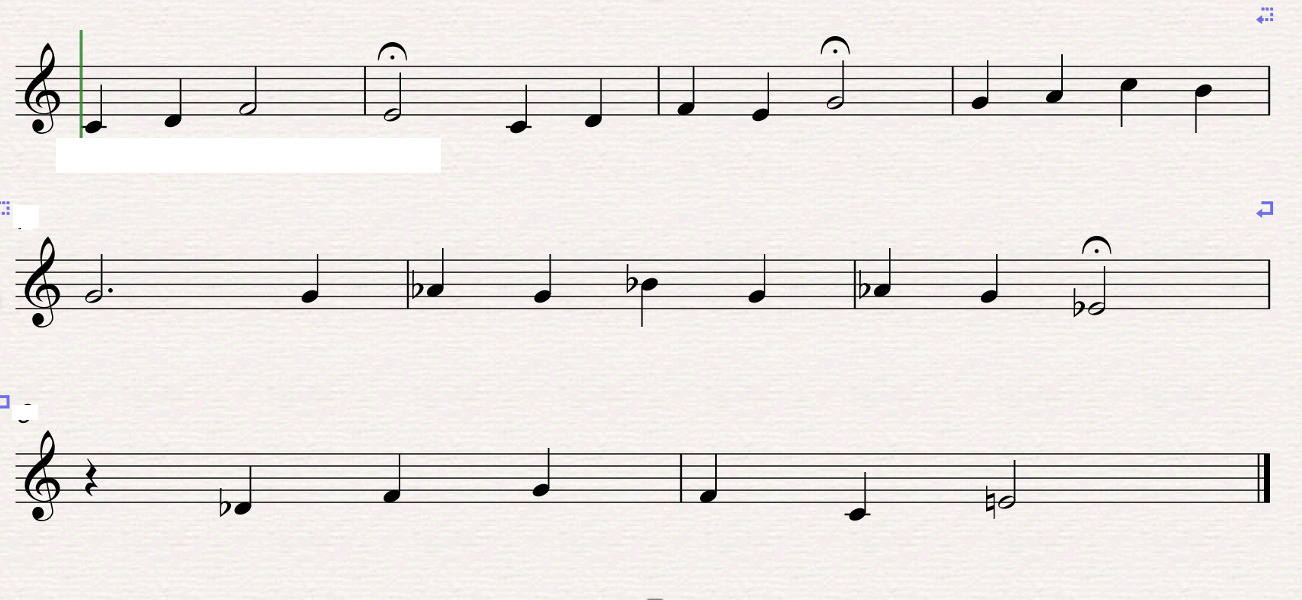
The group determined that the piece should make as much use of a single co-composed musical theme as possible. This was written using a method commonly used in music education, namely, to sing a note and ask the group to imagine a subsequent note; the best option of the emerging subsequent notes, as agreed by the group, is written down by the project lead. The agreed notes are then sung back to the group, and the process is repeated until a finalised melody emerges.
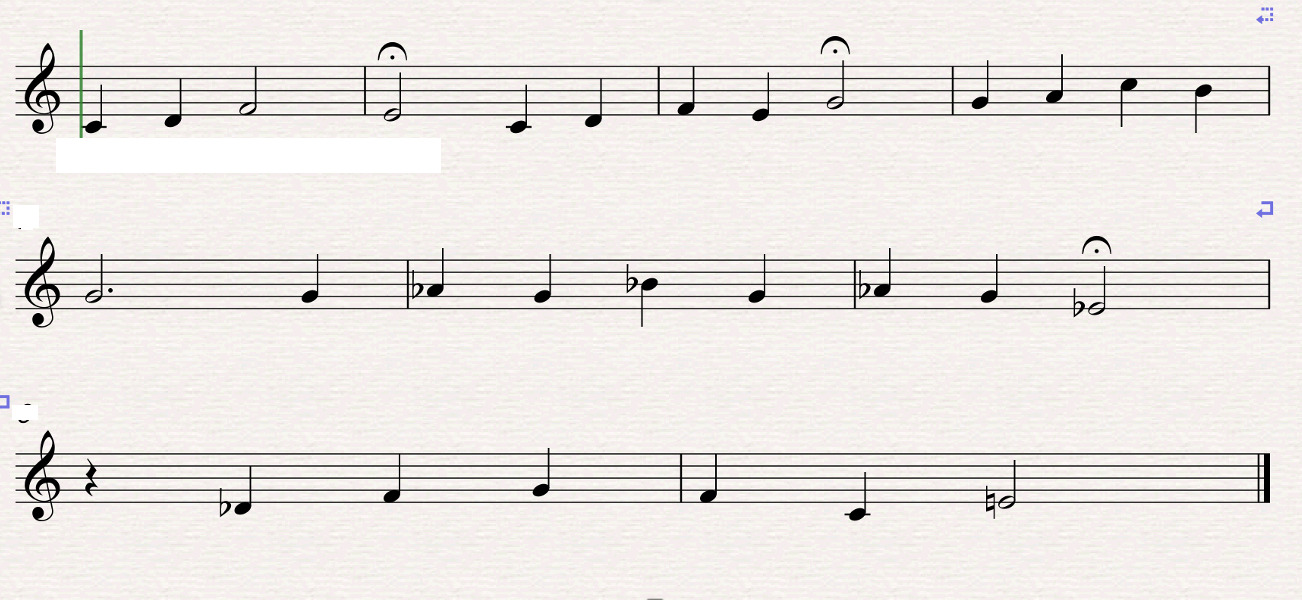
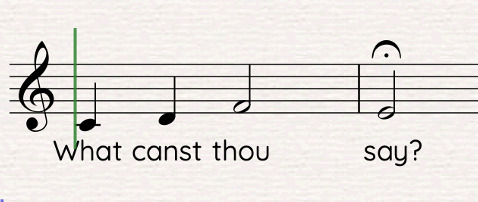
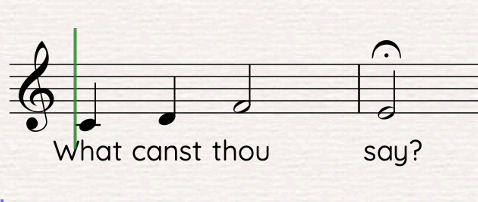
The inclusion of the choir from Ackworth School meant that a key ‘compositional’ decision emerging from the group could be realised – a member of the group noticed that the first few notes of the collectively composed piece could work to the often quoted Quaker text (quoting George Fox) ‘But what canst thou say?’
Use of Graphic Scores
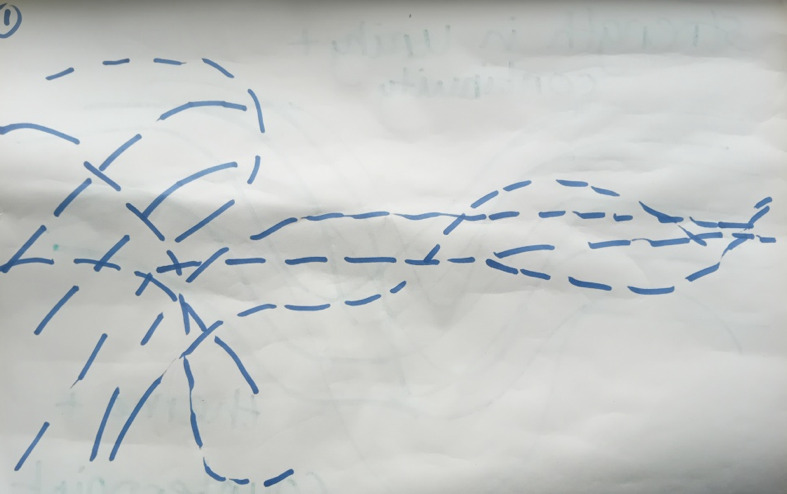
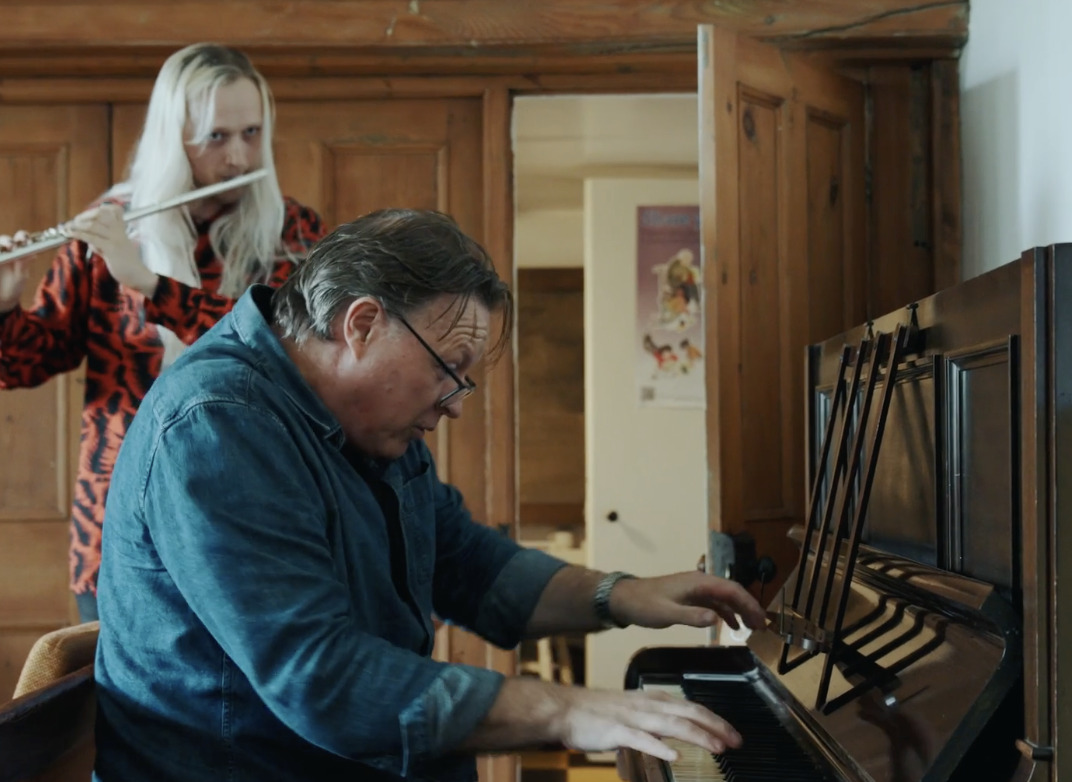
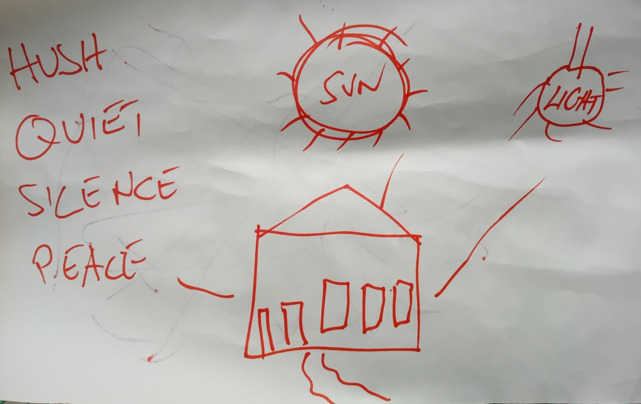
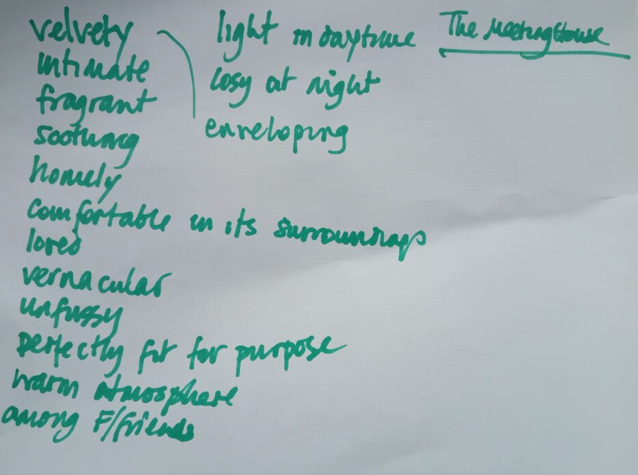
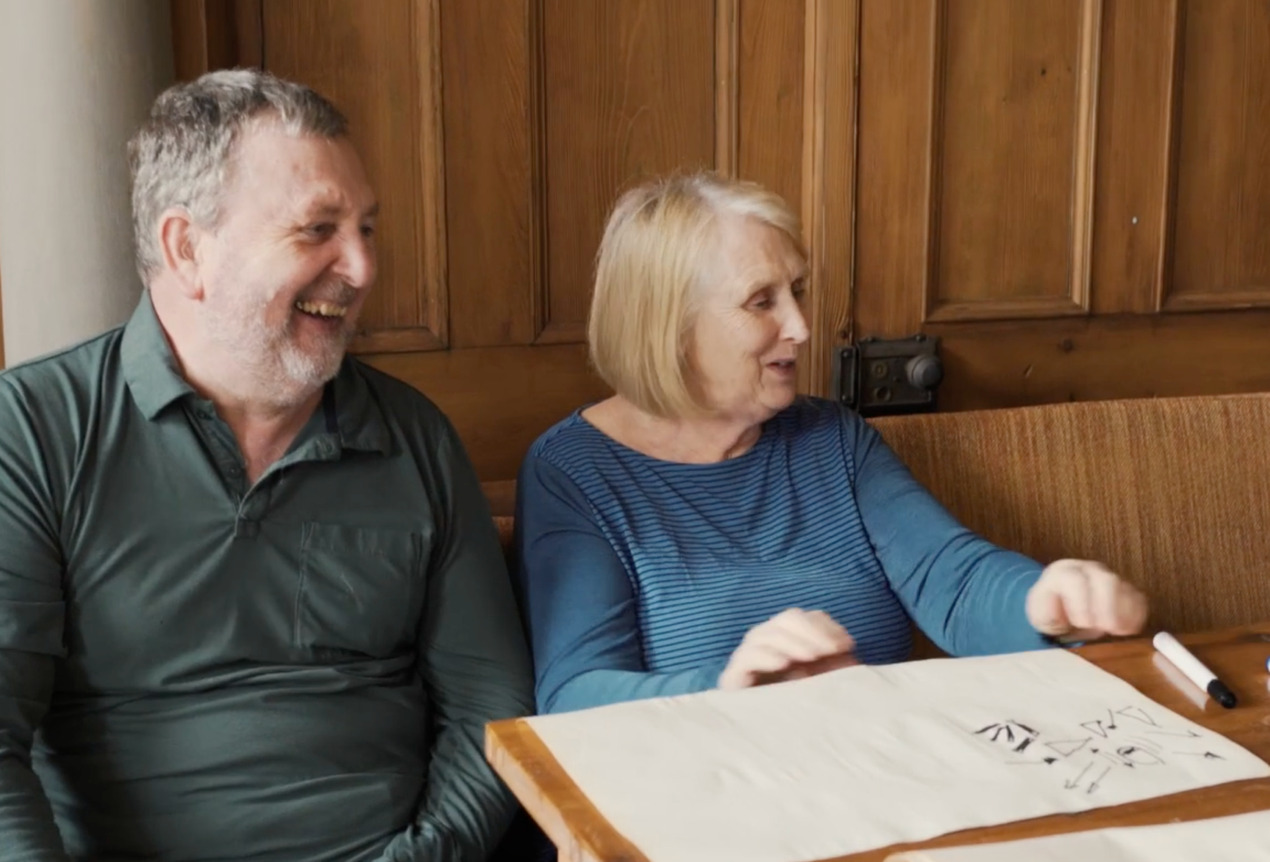
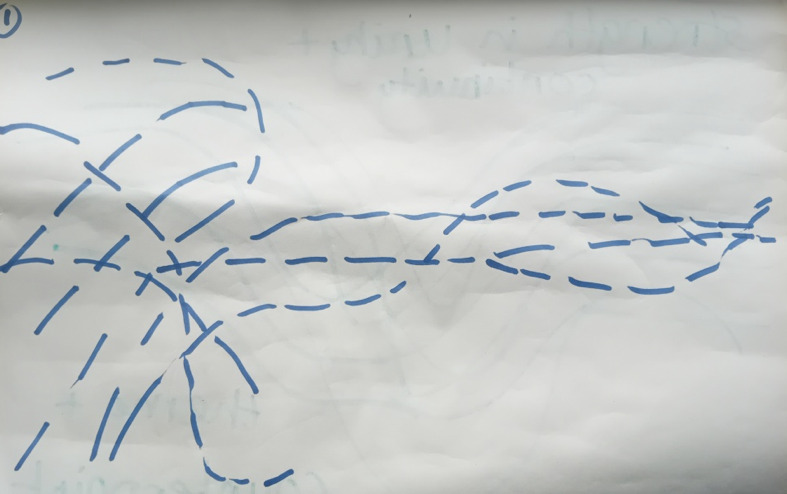
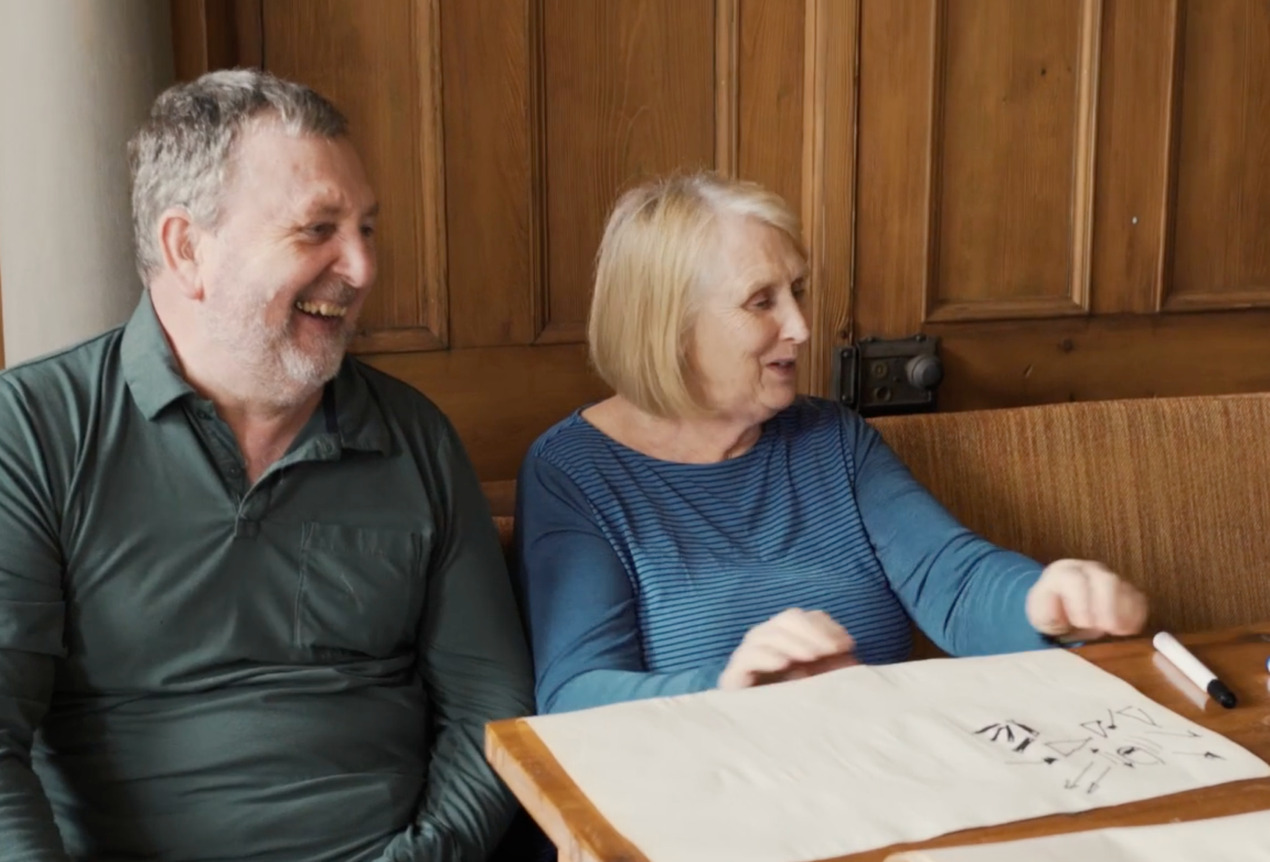
Here, ‘Graphic score’ refers to a form of scoring which uses non-traditional or invented notation to encourage exploration or improvisation on the part of the performer. Often graphic scores are used where a non-standard instrumental or vocal technique is being explored, or where a composer wishes to partially determine the form of an improvisation. My University of Salford ensemble ACMG make extensive use of graphic scores in their work, so it became an obvious way to create material. We used mood-drawing to create ‘emotional pictures’, which could be interpreted as graphic scores. This is a ‘retro-fitted’ version of Lucy Dearn’s ‘Write-Draw’ technique (Dearn & Pitts, 2017). Whereas Dearn used drawing as a way of getting groups of first-time attenders at an orchestral concert to describe the music they were hearing, we used the same drawing techniques as a way of generating musical gestures, which could be interpreted on the spot by me as project lead and my collaborators (Phil Brissenden and Ash McAulay). These musical gestures then were considered by the participant group, and if approved, I went away and transcribed the improvisations, then worked it into material for the chosen ensemble. This was then demonstrated in a virtual orchestrated version (MIDI-controlled) at the next session. Here again it was critiqued by the group.
Often these drawings were immediately legible as graphic scores. The following example was one participant’s interpretation of early Quaker history which developed from initial turmoil in the Civil War into an ongoing search for truth:
_and_ash_mcaulay_(flute)_interpreting_graphic_scores_created_by_the_group_.png)
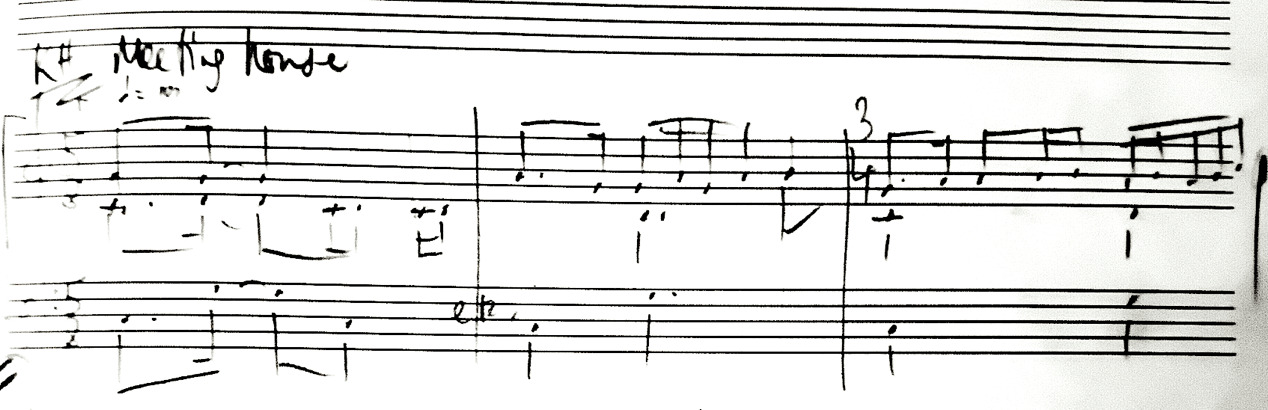
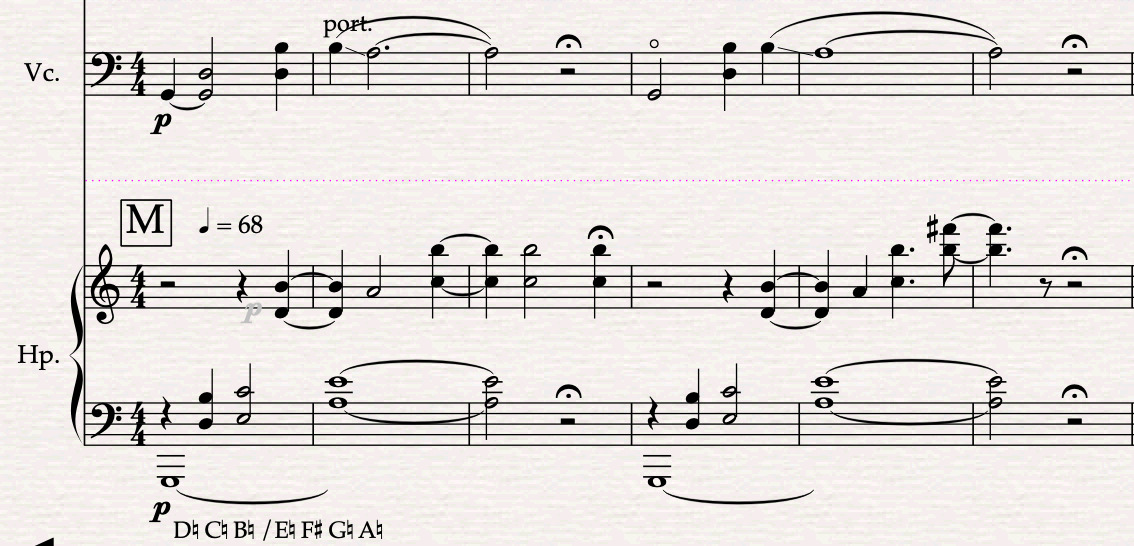
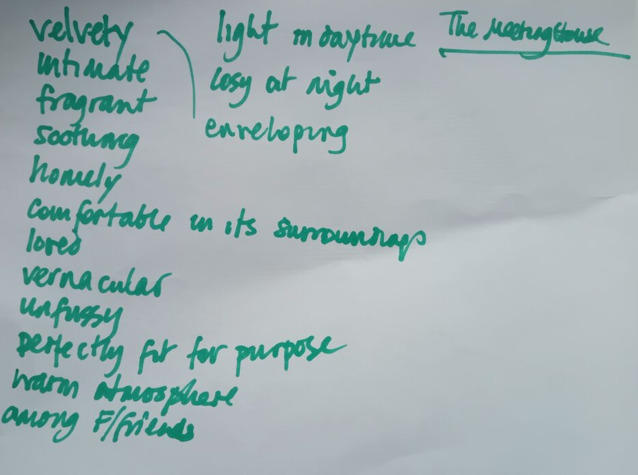
One of the main aims of the project was to communicate to a wider audience what participants felt about their meeting house. The material intended to express this was of crucial importance to the group’s identity, so naturally it elicited much discussion. The group made drawings for interpretation by musicians in Session 4 (June 2024), and in session 5 (July 2024), I brought back a version of the improvised interpretation scored for the trio’s instrumentation which had by now been decided. This was played, using the standard playback facility in Sibelius scoring software (there was no attempt at improving the virtual sounds), and feedback was sought from participants (see scored example):
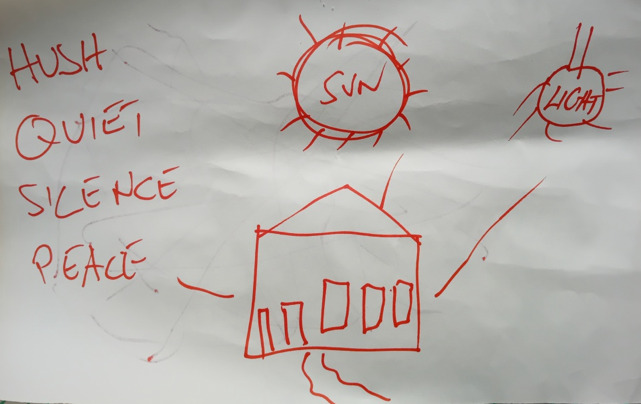
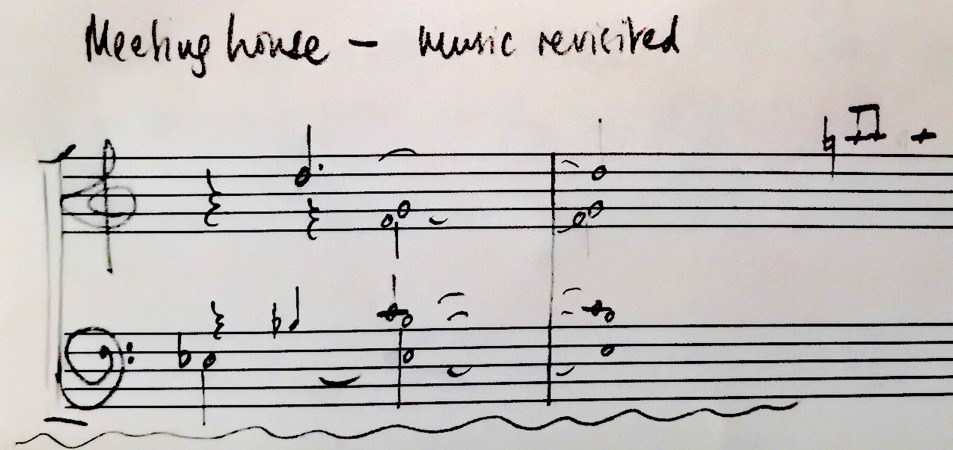
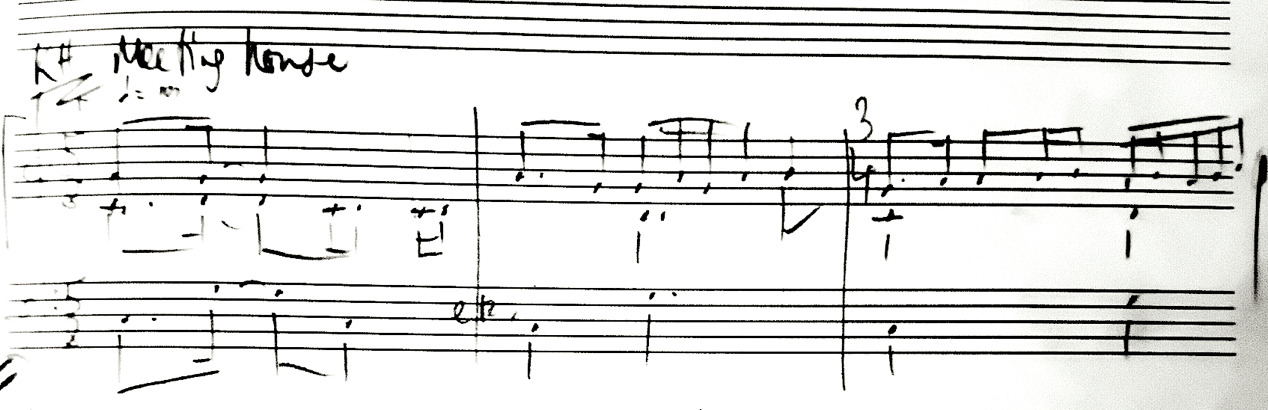
In response to these graphic and verbal scores, we improvised an idea based on simple harmony and I subsequently transcribed this:
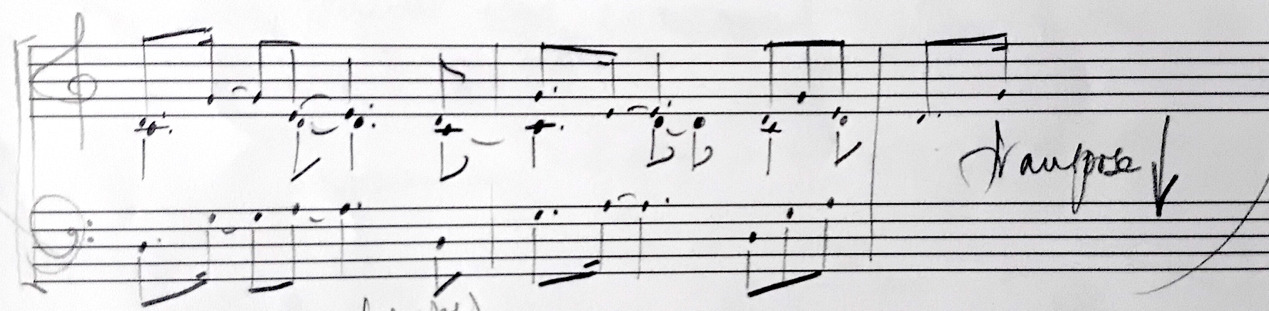
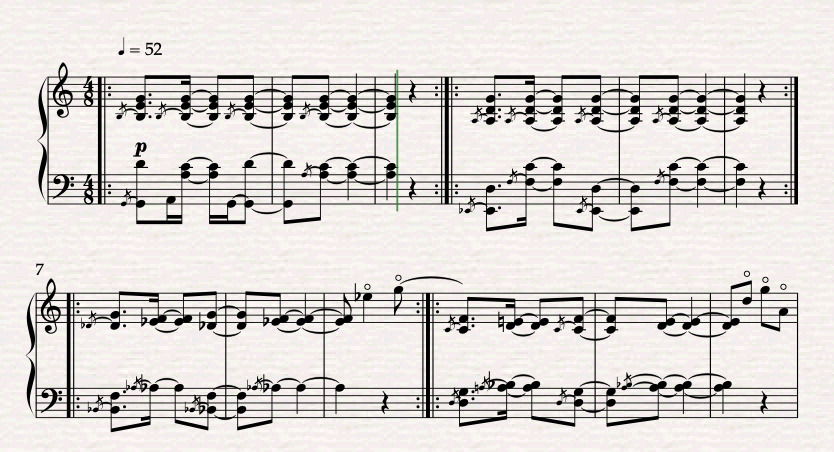
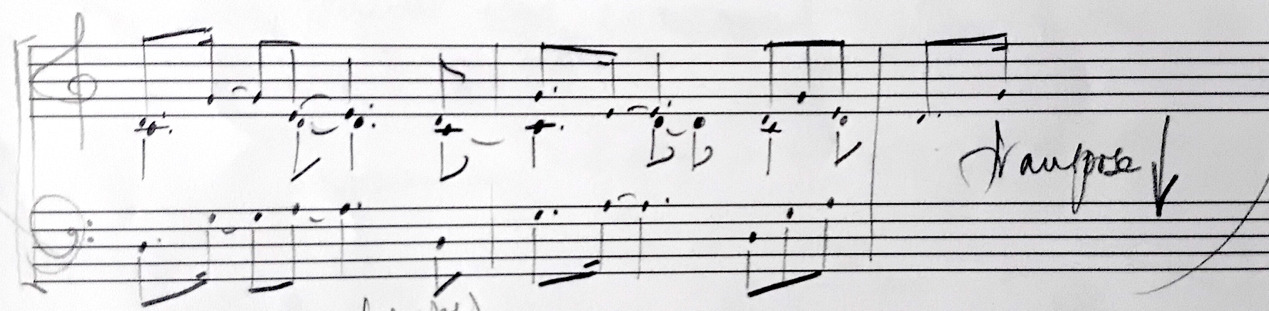
After the session, when working it into a virtually orchestrated version, I made the following note, indicating that the passage should be transposed through a series of chords. In the following session, I played the following digital version to participants:
.png)
The mood of this was initially calm, but it was given something of an unsettling edge by the inclusion of a slightly mysterious-sounding chord (E flat maj 7#11, following on from a G maj 9). The instruction ‘transpose’ indicates (to myself) that this passage should explore a harmonic sequence, and it’s clear that away from the group, I kept wanting to introduce more harmonic variety. But the passage struck the participants as too unsettled to represent their feelings about the meeting house:
‘I liked the sustained chords.’
‘I liked the ending bit, but I thought the earlier part– too much like a dirge…it needs a bit of lightness in it.’
‘…if they weren’t so discordant sounding, would you feel differently if they were still slow, but…?’
‘I don’t know without hearing it.’
After this exchange, Phil Brissenden and I improvised more consonant chords to with one of us calling out the chords –
F6 – C add 9 – Em7 – Dm7 – B flat maj 7 – Gm9 – E m7 flat5 – C add 9
in a simplified texture, but incorporating some of the material of the idea previously presented as digital audio. But again, this was rejected by the group:
‘I liked what you started playing – that had the feeling of welcoming and encompassing – but don’t get too boisterous!’
In this context, I took this to mean that again there were too many chords:
Me: Does everyone agree? (general agreement) It seems as though I’m doing too much harmonically? That’s good to know – you’ll need to hold me back from doing too much!
In response, Phil and I improvised an unfolding texture based on only one chord, which I subsequently transcribed as:
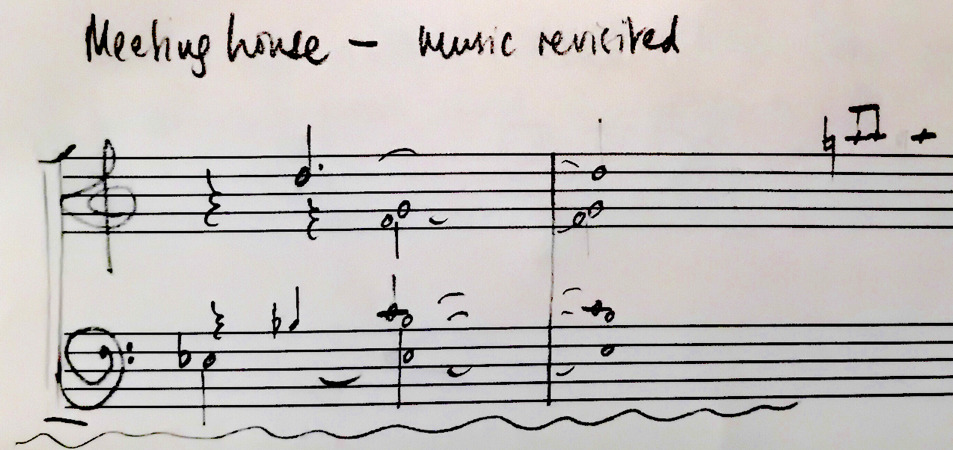
Eventually this passage went into the piece as the final version:
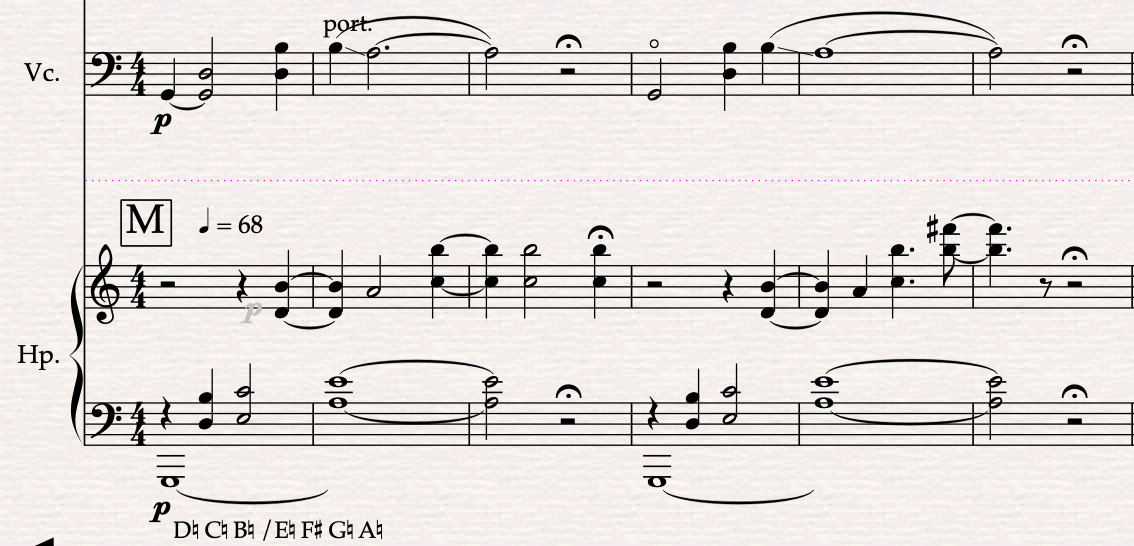
This observation was one of the most important to the remainder of the composition – that this group wanted their meeting house to be represented in very simple musical material. I commented at the time that simple music was often hard to write, whereupon one participant added that it was probably easy to write ‘bad’ simple music. This final version of the meeting house material uses only one chord, gradually unfolding, and non-harmonic notes are kept to a range where they resemble the upper partials of a fundamental note and hence have less of a dissonant quality.
This discussion reveals that when participants were engaged with topics they are emotionally invested in, they were not afraid to say when something was unsatisfactory. This can be compared with the passage representing ‘muffled urgency’ in Healing Tales, where the group felt it was important to represent accurately one of their most distinctive experiences of the Covid period. Because of the importance of the experience to most participants, this led them to voice criticism of the initial ideas presented. Similarly, in A Gathered Stillness, the actual physical presence of the meeting house was felt to be extremely important, and closely allied to participants individual identities and collective identities as Quakers. This importance led participants to voice criticism of the initial ideas presented.
Project Outputs and Evaluation
The piece was performed on September 28th 2024 in the meeting house at Wooldale, and further outputs include: a film interviewing some of the participants which used the music composed as part of the project; a published collection in book form of the interviews on which the piece was based; a CD of the music created and an online stereo mix by Phil Brissenden, which can be heard here: https://www.youtube.com/playlist?list=PLx5flcHuR6C3cEe_4_y8qcXuzLPPPsEYo
Following the performance, a survey of audience members was carried out by the meeting. As the meeting house is small, and audience was further limited by an entire side of the meeting house being occupied by performers, the audience consisted of invited guests only. It was therefore to be expected that the responses would be positive on the whole. This indeed proved to be the case in audience responses – however, with a high response rate of 42 from 75 guests, it seems reasonable to conclude that the enthusiastic tone of responses was widespread amongst the audience – as they could have declined to respond had their experience not been a good one. In addition, it is perhaps worth commenting on the responses to the question on what audience members learned:
‘Quakers’ relationships to their buildings, and their different view on this.
Confirmed the effect of Quakers’ silences
It must feel wonderful to be part of a team creating such a piece
It felt profoundly moving to share this experience with other Quakers and our local community, and to sense such a strong feeling of goodwill and understanding
The power and importance of community. World peace starts with community
George Fox was an inspiring man
That there is a Quaker school in Pontefract
Enlightening composition I have not usually experienced
Collaborative composition works!
Some of the work done by members of this meeting
What a joy it is to work collaboratively
Always good to hear how others experience worship – thank you very much!
Closing my eyes I felt a deeper communion and the beautiful sounds of the instruments revealed ‘a place’
How hard it must be to play the harp
How complex it is to create collaboratively and how worthwhile to hear the end result.
About how Quakers experience their worship – inspiring!
That a truly co-operative creative venture is capable of capturing something almost evanescent and giving it form’
From these comments, we can observe that what the audience learned through the piece aligned fairly well with what the participant group had wanted to communicate - particularly in relation to comments made above on the building, on the experience of silent worship, of collaboration, on Quaker history, and Quakers’ service to the community.
Four weeks after the performance, the group held an evaluative meeting to assess what the participants had felt about the project. Of the original 16 participants, 9 took part in this meeting. Again, the responses to the project were enthusiastic and overwhelmingly positive – noting nonetheless the possibility that some participants who had less positive experiences may have excluded themselves from this evaluative meeting. The evaluation took the form of a focus group, responding to semi-structured interview questions. The initial questions were the following:
Q: ‘If you were to describe the process we went through to a friend, what would you draw to their attention to?’
In their responses to this, participants expressed amazement at the extent to which it had been possible to produce a collaborative piece of high quality, when no-one considered themselves to be qualified musicians. They showed a clear understanding of the process, and noted its originality:
'I’d say that you drew the music out of us, that we didn’t know was there, and we didn’t know that you could do that. But you sort of had that technique that showed us the pictorial […] drawing the music out of us…
‘I explained it to my friend by saying we’d got this blank canvass, and gradually over the course of the weeks, however many people were here gave their thoughts, and from all the thoughts and words, you managed to pick out how you wanted to do the music…’
'I have to say they [i.e. the participant’s friends] were a bit disbelieving at first! 'Wait wait, you drew, like, jaggedy shapes – because we were doing turmoil to begin with - and then he held them up and then he played it, and we said ‘no, no, it needs to be more spikey’ – and they were going ‘What??’ ‘Yeah! It went really well, and then he played it more spikey and it was really good.’
‘I’ve been involved in a number of community arts projects on various scales over my lifetime, and what I think was unique about this was the interview process at the beginning.’
Q: ‘The project is called the Listening Composer, and I suppose one of my questions is ‘did you feel listened to?’’
Multiple voices, immediately]: Yes.
‘All the way along.’
Q: ‘Did you feel involved in the process?’
[Multiple voices] yes.
‘I thought that I …because even though I’d read quite a lot of the transcripts, and heard you play the interviews, I loved listening to them again on the day, and I felt that you brought out the richness of what we’d said, and the joyfulness of it. And that was all enhanced by the wonders of the music, so it wasn’t a sort of dry ‘so and so said this…’, it was a proper performance.’
Q: ‘Did the process have any similarities to Quaker processes of decision making?’
This question reflects my wish as project lead to learn from the participant group about listening practices.
'I would say yes, it had a lot of similarities, because whenever you asked us questions, which you did a lot of the time, you know ‘is this better when I play it like that, is it better?’, there’d always be a pause, and we’d all kind of automatically check inside, wouldn’t we? And then say, ‘Oh yes, or ‘No!’. So yes, exactly, that’s what we do, isn’t it? We check inside about things…’
‘You were a bit like a clerk making minutes. We had a chat and all the rest of it, then you tried to draw it together in a minute. But then you referred it back to us, ‘is that acceptable, friends?’ and you know, adjusted accordingly.’
Q: ‘Did the piece accurately reflect your experience of worship, and did it seem appropriate to a Quaker context?’
’ …we went to the silence, didn’t we? There was silence at the heart of it. And that was important for the whole piece that we had that silence at the heart of it. And, for us, that wasn’t a difficult thing. Well, it was a short time. What was it? Four minutes! That’s a mere bagatelle of silence for us, isn’t it? But it was at the heart of it, and that was important.’
‘I think the spoken words were really like ministry. OK, they were close together, which they had to be, but to me, it was like a collection of Friends’ ministry.’
Q: ‘By the end of the process, did you feel that you’d gained any insight into the compositional process?’
This question is important to ascertain the value of the Listening Composer approach to classical music ensembles who wish to develop audiences with a sense of agency and ownership over the co-created artistic product.
‘Yeah, it did demystify it, because, you know, I can’t sing, although I love music, and appreciate music, which I think is a different part of your brain maybe, but for somebody like me, the thought of….I mean I haven’t even got music ‘O’ level or anything…I’ve got Grade 3 clarinet. Anyway… [Laughter]…I didn’t feel that I had to be very competent as a singer or composer or anything, I could just join in with everybody. So you made it very accessible. You didn’t make us feel like we had to have prior skills. It was about getting what our experience was, the important bits from us, and meeting us halfway, and you did the translating.’
Q: ‘Did you feel that the process had any benefits for you as an individual, and for the meeting as a whole?’
In participants’ answers to this question, they responded positively in both respects -
‘One thing Quakers are very poor at is talking about their Quakerism to each other, and to outsiders as well. This process has got us talking about what we’re about, and what is important to us. So that one single thing is a massive benefit, and if we can continue to talk in that way to ourselves and to others, you’ve just given us a bit of a push in that direction.’
‘I think the important thing, which no-one has really mentioned, is the impact of the event, and how long it will actually impact on your lives for. I think it will be something that will actually impact on you for the rest of your lives.’
Conclusions and Future Directions for the Approach
The idea of the Listening Composer is a simple one, and each individual element has been used to a greater or lesser degree before in participatory and community arts. Everyone has interesting stories to tell, and simply listening to them individually, then sharing the results of that listening in a group, and using that to build first a narrative structure, and then music which amplifies that collective story – this seems to be an effective way of bridging the gap between potential audiences and professional ensembles in Western Art Music. It is effective in acting as a form of creative advocacy, and seems to offer some benefits to participants’ wellbeing. It seems likely that classical music organisations will also be able to benefit from integrating the method into their existing arts outreach and community work to create artistic outputs which authentically represent the voices of the people in the communities they are located amongst while maintaining a commitment to artistic quality.
Areas for future investigation should include
Transferability
The Listening Composer as a practice has without doubt emerged from particular experiences and skills that I have acquired over the years as composer, improviser and musicologist:
-
the slow accumulation of musical material through collective improvisation and discussion - a process developed from dance and physical theatre’s devising -and which has been at the heart of the activity of the University of Salford’s contemporary music group ACMG for over ten years;
-
practice-based research in music composition in primary level education (see Hart & Williams, 2021);
-
interview practice as musicologist.
Possibly there are other elements as well. Thus it would be interesting to compare future projects led by other people – to what extent is the method depend on the personality and experience of the project lead, and how does it change the experience?
Effectiveness in other cultural contexts
An aspect that should be addressed in future Listening Composer projects is the lack of cultural diversity in the project groups thus far. Perhaps in groups from cultures where the composer/performer opposition does not operate, participants may view this activity in a very different way.
Examining wellbeing effects
It is important to emphasise that the Listening Composer method makes no therapeutic claims, and the originators of it are not trained as music therapists. However, as some improvements in wellbeing have been reported, and if a more generalised benefit is observed, then this should be examined more rigorously in future projects.