Introduction
Globally, young persons with disabilities are left behind in access to health care, education, social participation, and employment (Kuper et al., 2014; World Health Organization, 2022).
Youth with disabilities often face structural and attitudinal barriers that limit their access to inclusive and quality education. Discriminatory schooling environments, inadequate support services, and inaccessible infrastructure contribute to lower educational attainment compared to their non-disabled peers (Shandra & Hogan, 2009; United Nations Childrens’ Fund, 2021). Similarly, systemic ableism in the labour market including employer bias, lack of reasonable accommodation, and limited vocational opportunities contributes to higher rates of unemployment and underemployment among youth with disabilities (Banks et al., 2017; Mactaggart et al., 2018).
According to Uganda’s National Population and Household Census, 2014, 14% of the population has a disability, which translates into almost 6 million persons with disabilities, a third of these are children and youth (Uganda Bureau of Statistics, 2019). Despite this significant demographic, persons with disabilities remain underrepresented in research, both as participants and as researchers due to heightened disparities and barriers such as physical inaccessibility, lack of appropriate communication approaches/devices , negative cultural beliefs and practices, lack of relevant training and adequate awareness raising methods and social stigma (DeCormier Plosky et al., 2022; Njelesani et al., 2022; Sakuma et al., 2024). These barriers lead to lack of data on their specific needs, perpetuating inequalities in policy and practice (Isaacson, 2021). Therefore, inclusive research practices are essential for ensuring that all categories of the population, especially the marginalized and vulnerable groups such as youth with disabilities, participate in scientific studies (Isaacson, 2021; Ouellette, 2021). Inclusive research practices ensure that the voices and experiences of all community members are heard, generating data that is representative of the persons with disabilities, leading to more accurate and generalizable findings (Camanni et al., 2023; Isaacson, 2021). This is critical for developing interventions that are equitable and effective. as well as crucial in low-income countries like Uganda, where diverse socio-economic, cultural, and health-related factors intersect.
Calls for the active participation of persons with disabilities in decision-making and research epitomized by the global disability rights slogan, “Nothing About Us Without Us” does emphasize that persons with disabilities should not only be subjects of research but also active contributors and leaders (Kuper et al., 2021; Vega-Córdova et al., 2020). International frameworks, including the UN Convention on the Rights of Persons with Disabilities (CRPD, 2006), explicitly advocate for the inclusion of persons with disabilities in research and policy decisions affecting their lives. Yet, despite these commitments, the inclusion of youth with disabilities as researchers remains limited, especially in African contexts (Lundy et al., 2011). Understanding insights into their experiences and involvement in research is crucial for developing effective, contextually appropriate strategies to enhance participation and inclusion (Chappell et al., 2014; Kuper et al., 2014).
The objective of this study responds to these gaps by co-developing a training program with university-educated youth with disabilities to improve participation, inclusion and leadership in research. The focus on degree-holding youth reflects a deliberate first step in testing an inclusive research training model among individuals with foundational academic and communication skills—allowing for refinement before scaling to youth with diverse educational and socio-economic backgrounds, including those with intellectual disabilities. The programme aimed to challenge the stereotype that persons with disabilities can only be research subjects rather than researchers, and to foster new pathways for their active contribution to knowledge production.
The launch of the disability inclusion research agenda catalysed greater participation of youth with disabilities, shifting their role from traditionally passive research subjects to active researchers. This initiative also aimed to transform attitudes and behaviours toward youth with disabilities in Uganda through a peer-to-peer model. Specifically, it sought to: (1) develop and implement youth-led disability research in Africa, (2) create employment opportunities for youth with disabilities within the research sector, and (3) promote youth-led knowledge sharing and awareness raising.
This paper describes the co-creation, development, and implementation of a training and mentorship programme designed to enhance the inclusion of youth with disabilities in research. It provides an in-depth account of the design process, development of the training manual, and the programme components that promote inclusive research and strengthen the research knowledge and skills of youth with disabilities.
This paper describes the co-creation, design, and implementation of the disability-inclusive research training and mentorship programme, highlighting processes that can be adapted to promote equitable participation of persons with disabilities in research in Uganda and similar low-income contexts
Methods and Programme description
This co-creative innovative research project builds on the African disability framework discourse, developed by Chataika and McKenzie (2013) and Owusu-Ansah and Mji (2013). Our research group developed a peer support youth with disabilities inclusive research training model, adapting the training manual of the Zimbabwean Youth Research Academy (Ferrand et al., 2021; Tembo et al., 2022) and the Ugandan peer to peer support intervention model for disability inclusion ‘Obuntu bulamu’ (Bannink Mbazzi et al., 2020, 2024; Nalugya et al., 2023) with specific focus on involving youth with disabilities in research in Uganda. The training manual was piloted in a capacity building project with fourteen youth researchers in Uganda.
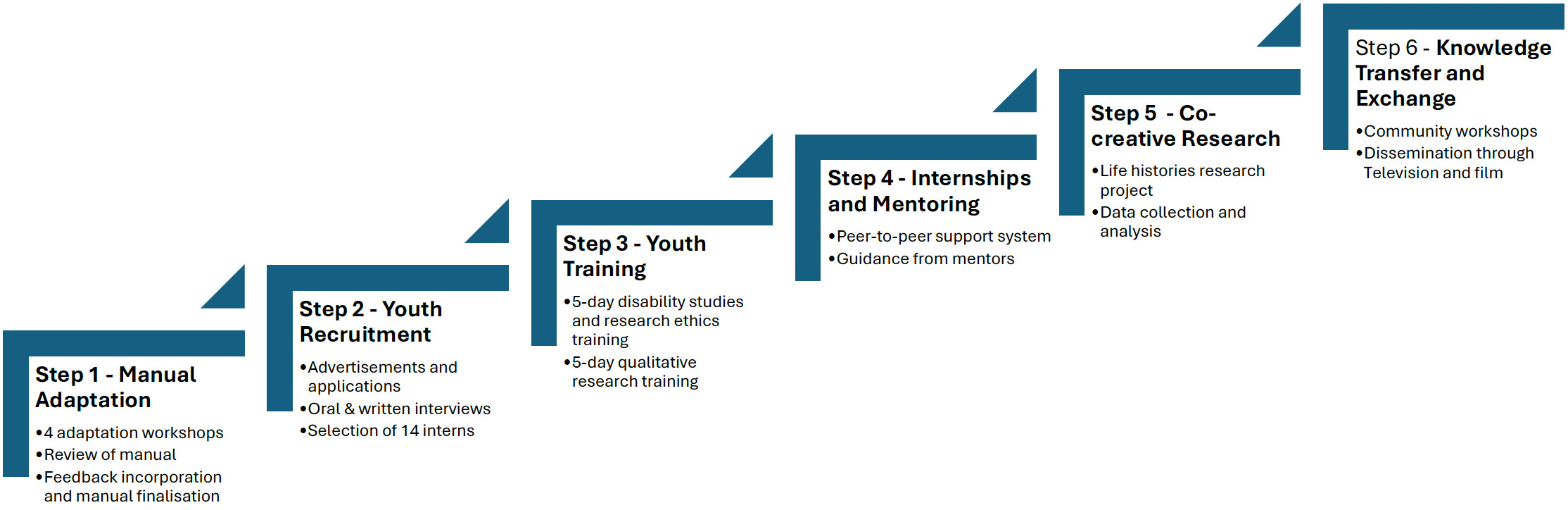
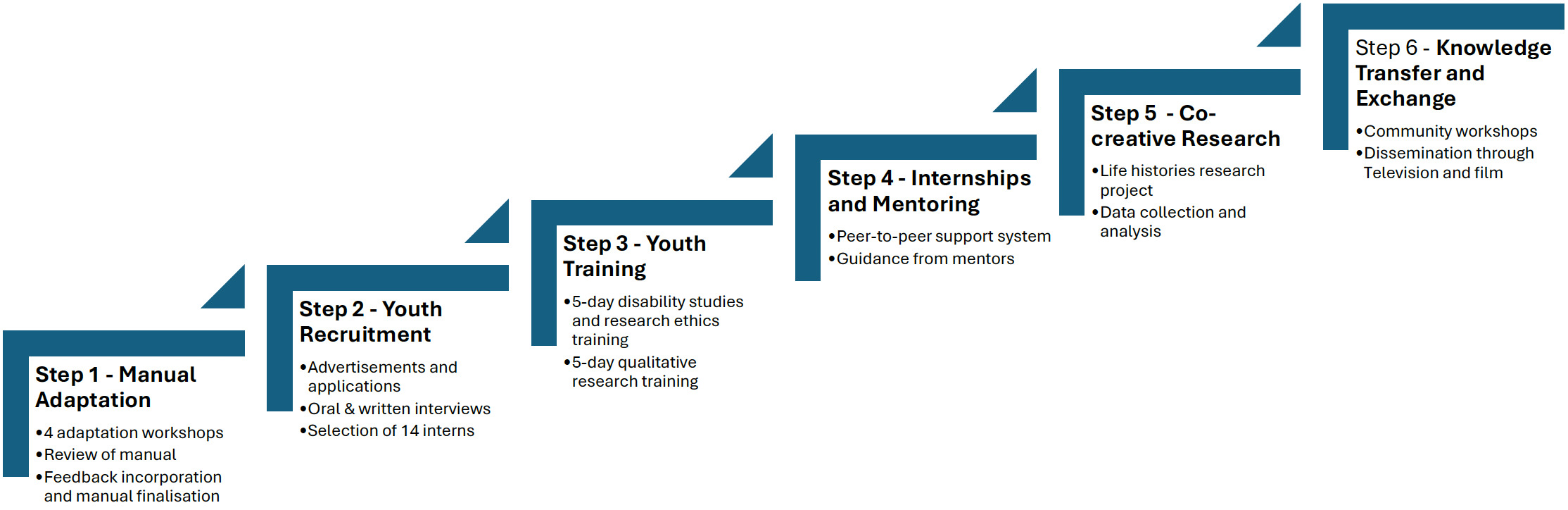
The programme involved six critical steps as shown in Figure 1.
Step 1: Manual Adaption
Between 01/02/2023 and 30/06/2023, we conducted four co-design workshop meetings with health researchers, representatives from organisations of persons with disabilities, health researchers with disabilities and youth with disabilities to develop a training manual aimed at equipping youth with disabilities with essential research skills. The workshops involved a comprehensive review and modification process of the existing Youth Researchers’ Academy (YRA) Training Manual from THRU ZIM (Ferrand et al., 2021; Tembo et al., 2022) to ensure that the manual was tailored to disability research in the Ugandan context. The workshop meetings included colleagues and trainers from the Zimbabwean YRA of THRU ZIM, Child Health Development Centre at Makerere University (CHDC), National Council for Persons with Disabilities (NCPD) and the MRC/ UVRI & LSHTM Uganda research unit. The workshops consisted of a series of participatory activities, including brainstorming sessions and small group exercises. The design workshops provided an opportunity for the trainers to discuss and agree on the key components of the training. In between workshop sessions different members would revise training manual sections and share new drafts with group members for review. To ensure accessibility, all workshop materials were prepared in advance in easy-to-read formats, with sign language interpretation and large-print copies available. Participants were seated in mixed small groups (2–3 persons with disabilities paired with peers without disabilities) to encourage cross-learning.
The Zimbabwean YRA training manual covered all aspects of the qualitative research process (Ferrand et al., 2021; Tembo et al., 2022). The team adopted the overall content of the THRU ZIM training manual and added specific sections focussed on skills building and knowledge needed for the youth researchers to conduct youth-led disability research, e.g. disability theory and disability inclusive research methods. The manual included group work activities to foster teamwork and peer learning, role plays, and games to promote learning through action rather than one-way communication, presentations, or lectures.
The draft manual and plans for training and mentoring were shared with the Disability Research Group’s existing Youth Advisory Committee at the MRC/UVRI & LSHTM Uganda Research Unit. This standing committee was established prior to this study and comprises twelve youth representatives with diverse disabilities, selected through disability-led organizations and networks to advise on disability inclusion across research projects. Members include individuals with both academic and lived experience of disability, as well as prior engagement in disability-related research and advocacy. For this study, the committee was not newly constituted; rather, it was engaged in an advisory capacity to review and provide feedback on the training content and implementation plans. The consultations and collaborative sessions provided feedback changes to the content and structure, which were incorporated into the final draft of the training manual upon consensus by the team. The iterative feedback process included: a) Content review: to evaluate the relevance and comprehensiveness of the compiled material.; b) Structural feedback: creative suggestions on how to organize the manual and mentoring scheme for better usability; and c) Consensus building: to incorporate changes based on consensus to ensure the final manual and mentoring approach to meet the needs of all stakeholders involved.
Step 2: Youth recruitment
Ugandan youth with disabilities along with a peer without a disability were invited to apply together through a competitive application process to foster inclusivity, peer mentorship, and collaborative learning from 03/05/2023-24/05/2023. This approach was designed to promote an enabling environment where both youth with and without disabilities could actively contribute to a disability inclusive research design. By pairing participants, the programme aimed to reduce stigma, enhance accessibility, and encourage meaningful partnerships that reflect real-world, inclusive research settings. Additionally, this model ensured that youth with disabilities had supportive peers while empowering them with greater awareness and advocacy skills, contributing to a more inclusive research community. Pairing youth with disabilities and their peers without disabilities was a deliberate strategy to foster inclusion, mutual learning, and allyship within the training programme. The peers were young people of similar age and educational background who applied jointly with their disabled counterparts, reflecting existing friendships, academic collaborations, or shared professional aspirations.
This pairing model was essential for several reasons. First, it aimed to reduce stigma and promote positive attitudes toward disability through direct, sustained collaboration in research contexts. Second, it enhanced accessibility by enabling participants to support each other in navigating physical, communication, or logistical barriers during training and field activities. Third, the model mirrored real-world inclusive research and workplace environments, where effective teamwork and diverse perspectives are crucial for equitable participation.
Importantly, the programme’s participatory design emphasized co-development and co-design at every stage from identifying training priorities to shaping learning activities and dissemination outputs. The pairs were actively involved in refining content, suggesting facilitation approaches, and adapting tools to ensure relevance and inclusivity. This participatory approach not only strengthened ownership and commitment among participants but also reinforced the principle that inclusive research must be collaboratively shaped by those it seeks to empower. Beyond providing peer support, the peers without disabilities were expected to engage fully in data collection, analysis, and dissemination, deepening their understanding of disability inclusion principles and strengthening their advocacy and leadership skills. In turn, youth with disabilities gained confidence and visibility as co-researchers, while their peers gained practical experience in inclusive collaboration, together contributing to the cultivation of a more inclusive research culture.
The call for applications (appendix 1) was widely disseminated through networks of organizations of persons with disabilities, the National Council for Persons with Disabilities, and health organizations supporting individuals with disabilities.
Inclusion criteria for pre-selection were:
-
Age: Participants should be between the ages of 18 and 30 - a critical transition phase for skill-building, career development, and empowerment where many have at least attained post-secondary and tertiary education in Uganda. In line with Uganda’s National Youth Council Act (2015) and the Uganda Bureau of Statistics (UBOS) definition, youth were defined as individuals aged 18–30 years, consistent with the African Youth Charter (The African Union, 2006; The Government of Uganda, 2015; Uganda Bureau of Statistics, 2019). This age range reflects a critical transition period from post-secondary education to early career development—an important stage for skill-building, empowerment, and professional growth. Individuals below 18 years were excluded as they are considered minors under Ugandan law, often have not completed post-secondary education, and would require parental consent.
-
Disability Status: Participants must have a documented disability, as defined by the Ugandan Disability Act and National Council for Persons with Disabilities as well as functional difficulties on the Washington Group short set of questions. We defined disability status using the two approaches to guarantee alignment with national disability inclusion policies and to ensure that disability identification also considered lived experiences of functional difficulties that may affect participation in employment and research.
-
Education: a bachelor’s degree to ensure that participants have foundational academic knowledge and skills including critical thinking, research literacy, and communication abilities, which were essential for meaningful engagement in the programme. This criterion was selected because the program focused on equipping participants with advanced research and professional skills necessary for meaningful engagement in academic and policy-oriented environments. While we recognize that this may have excluded some youth with disabilities who have had fewer educational opportunities, this initial phase of the program was designed as a pilot to test a model of inclusive research mentorship that could later be adapted for broader educational backgrounds. Additionally, prioritizing individuals with a Bachelors educational background would increase the likelihood of successful employment or further research opportunities after completion of the programme. Future iterations will aim to expand access by tailoring training materials and delivery formats to include youth with varying levels of education.
-
Inclusion criteria for peers without disabilities: These peers/ youth without disabilities were recruited to promote collaborative learning and allyship in inclusive research. Eligible applicants were aged between 18 and 30 years and were required to apply jointly with a youth with a disability. They were expected to possess at least an A-level certificate (with preference for those holding a diploma or bachelor’s degree), demonstrate interest in disability-inclusive research or advocacy, and be available for the full duration of the programme. Fluency in English and familiarity with local languages such as Luganda or sign language were considered advantageous. Recruitment aimed to ensure diversity in gender and socioeconomic background among pairs.
Over 200 applications were received from Ugandan youth with disabilities and their peers without disabilities, reflecting a strong interest in the programme. This also highlighted the demand for inclusive professional development and capacity-building opportunities among young people with disabilities. The selection and short-listing of candidates was conducted on 15/06/2023 in collaboration with the project partners - National Council for Persons with Disabilities (NCPD) and Child Health and Development Centre (CHDC) at Makerere University, considering relative distribution of impairment type, gender, age and social-economic background. In total, 15 pairs, (youth with disabilities and their peer without a disability), were selected for interviews based on the inclusion criteria above and selection criteria outlined below:
Selection criteria:
-
Diversity of disabilities: participants with a wide range of disabilities, including physical, sensory, intellectual, and developmental disabilities, should be included to ensure a diverse representation.
-
Geographic diversity: participants from different parts of the country.
-
Interest and motivation: participants should demonstrate a genuine interest and motivation to contribute to the research study.
-
Communication abilities: participants should have the ability to effectively communicate their thoughts and experiences. This could include verbal, written, or non-verbal communication methods.
The selection criteria emphasized not only merit but also ensured a balanced representation of gender and several types of impairments. This careful consideration aimed to create a diverse and inclusive group of youth researchers. The interview process of over thirty youths was thorough and multi-faceted. Each pair participated in individual interviews, and two group activities were conducted to evaluate their communication skills and ability to work effectively as a team. For example, the group activities included: building the highest tower with a pack of spaghetti and tape and developing a presentation from a proposed research idea and presenting it to the interview panel. The two group activities aimed to gauge the participants’ teamwork, leadership, and communication and presentation skills. Throughout the process, reasonable accommodations were provided to ensure all participants had an equal opportunity to showcase their abilities.
In total, Seven pairs of youth researchers were selected, each consisting of one youth with a disability and one peer (with or without a disability). The youth with disabilities had a range of impairments, including albinism and visual impairment (female, 26), visual impairment (male, 28; male, 29), hearing impairment (female, 28; male, 30), neurocognitive and hearing impairment (male, 30), and a physical impairment (male, 30). Their peer counterparts did not identify as having a disability, except one who had a speech impairment (male, 27). Peers ranged in age from 25 to 30 and included both males (4) and females (3) aged 25 to 30 years (Table 1).
All participants recruited met these criteria and were aged between 26 and 30 years, aligning with the national definition of youth as fully described in the inclusion criteria.
Participant pairing allowed for diverse perspectives and learning opportunities within the peer support model. The youth researchers started the programme 01/07/2023 and provided written informed consent to participate in the programme and the evaluation data collection.
Step 3: Youth training
The training phase consisted of ten days divided into two segments. A 5-day qualitative research training was conducted followed by an additional 5 days of training focusing on disability studies in the month of July 2023 at the MRC/ UVRI & LSHTM Uganda Research Unit premises. The 10-day training was designed to equip young Ugandan researchers, particularly those with disabilities, with foundational and advanced skills necessary for conducting qualitative research in disability-inclusive studies. The first five days (10/07/2023 -14/07/2023) focused on qualitative research methods, ensuring that participants gained a solid understanding of study design, data collection (including life histories and interviewing techniques), and data management (transcription, coding, and analysis). Given the sensitivity and ethical considerations of working with marginalized populations, the training also emphasized understanding the fieldwork dynamics and adherence to research protocols, including Good Data Protection Regulation (GDPR) and Good Clinical Practices (GCP), to ensure ethical research practices.
The second phase of the training - an additional five days (17/07/2023 - 21/07/2023) - focused specifically on disability studies, recognizing that conducting research on disability-related topics requires a nuanced understanding of disability models, rights-based approaches, and the lived experiences of persons with disabilities. This segment of the training aimed to empower participants with the knowledge necessary to conduct research that is not only methodologically rigorous but also ethically and socially inclusive. Interactive techniques, such as role plays, peer-led mini-teaching sessions, and reflective journaling, were employed to reinforce learning and foster participant engagement.
Step 4: Internships and mentoring
To create a supportive learning environment, the internships were organized using a peer-to-peer support system, matching a youth with disabilities with a youth without disabilities as youth researchers. This method is in line with the Obuntu bulamu philosophy which emphasizes the importance of connection, respect, and shared accountability (Bannink Mbazzi et al., 2020; Nalugya et al., 2023). Matching young people as peers, instead of placing one in a helping role, promoted collaborative learning and reciprocal assistance. This arrangement not only allows both to develop skills through shared teaching but also increases understanding and confronts prejudices. It fosters a more comprehension of one another’s abilities and backgrounds, promoting cooperation, compassion, and diversity.
To ensure that the peer-to-peer model fostered genuine reciprocity rather than reinforcing unequal power dynamics, the programme was grounded in participatory and rights-based principles. The pairs were engaged as co-learners and co-creators, each bringing valuable lived or learned expertise to the process. The curriculum included joint reflection sessions on ethics, positionality, and allyship to promote equitable collaboration and critical self-awareness. Furthermore, persons with disabilities played key roles in programme facilitation and mentorship, ensuring that disability perspectives shaped both the process and the learning environment. This approach framed inclusion not as charity or awareness-raising, but as shared capacity-building and a collective reimagining of inclusive research practice.
The pairs were supported by their mentors from the MRC/UVRI & LSHTM Uganda Research Unit, and Makerere University, promoting professional growth in a fair and all-encompassing way. In practice, this involved creating equitable and accessible learning environments through several strategies such as provision of reasonable accommodations (e.g. accessible materials, transport support, flexible scheduling) to ensure equal participation; active inclusion in dissemination activities, such as co-authoring reports, presenting at meetings, and sharing reflections on inclusion and research practice.
The effectiveness of both the training and internships was evaluated through regular feedback sessions, reflective journals, and debrief meetings with the youth researchers. These processes ensured that participants’ experiences directly informed programme improvement and that professional growth opportunities were equitable, empowering, and inclusive. The evaluation results are published elsewhere.
Step 5: Co-creative research
Upon completing their internships, the youth researchers co-designed and co-implemented a qualitative research project that explored social participation among 31 youth with disabilities in Wakiso district focussing on the barriers and facilitators to meaningful social inclusion in education, employment, and community life. The decision to focus on social participation and to conduct the study in Wakiso was reached collaboratively through a participatory planning process. Wakiso District was selected jointly by the youth researchers and mentors because it represents a peri-urban context with diverse socioeconomic conditions, proximity to the training institutions, and an existing network of disability organizations that could support recruitment and engagement. This participatory decision-making process ensured that the project reflected both the priorities of the youth researchers and the practical considerations for successful implementation.
During the final phase of the training, the youth researchers were invited to reflect on key issues affecting young people with disabilities in their communities. Through facilitated group discussions with mentors from the MRC/UVRI & LSHTM Uganda Research Unit and Makerere University, “social participation” emerged as a priority theme that resonated strongly with their lived experiences and professional interests.
Using qualitative methods, including in-depth interviews and participant reflections, the youth researchers collected data from 31 youth with disabilities to explore barriers and facilitators to meaningful social inclusion in education, employment, and community life. They worked closely with their mentors to transcribe, code, and analyse the data using NVivo. Their joint efforts led to the co-authorship of a manuscript that explains the social participation of youth with disabilities in employment, education, and social activities in Wakiso district.
Step 6: Knowledge transfer and exchange
Additionally, the youth researchers co-created a participatory film documenting their experiences and learnings from the programme. They did this through three participatory workshops in collaboration with a professional film maker. In the first workshop the youth researchers, together with six selected youth participants from the life histories data collection discussed the key messages and audience and created storyboards. Together with the filmmaker they started shooting with the agreed characters and screened the footage for selection and edits in the second workshop. Following inputs from the participants, a final version was drafted and screened, and made accessible with international sign language interpretation, captioning and narrations of visual imagery by the group. In the third meeting the youth researchers made a dissemination plan. The film is available on: https://vimeo.com/951856897?msockid=33ad332f37c36626279320f6365d6780.
The youth researchers actively planned and disseminated the research findings through various innovative platforms and events. They organized a media event which included representatives from national newspapers, radio and television statements as well as community workshops to engage local stakeholders. The youth researchers also leveraged social media to raise awareness about the program and its findings by crafting and sharing messages tailored to diverse audiences on inclusive research. They participated in various radio and television talk shows, using these platforms to reach broader audiences and advocate for disability inclusion.
Beyond national engagements, the youth researchers participated in international youth network events, Friends4R, where they exchanged ideas and experiences with other young leaders on inclusive research. They also presented research findings at high-profile international conferences, including AfriNEAD, the 2024 Community Based Rehabilitation (CBR) and Community Based Inclusive Development (CBID) conference, and the East African Conference on Disability Inclusive Higher Education at Kyambogo University. These activities highlighted their ability to communicate research findings effectively, engage with several audiences, and advocate for inclusive policies and practices.
Through these diverse knowledge exchange activities, the youth researchers demonstrated leadership and significantly contributed to promoting inclusive research and policy discourse. These efforts were integral to building their research capacity while empowering them to actively shape narratives around disability and inclusion at both national and international levels.
Discussion
Co-development of a comprehensive, inclusive training and mentoring program is a critical step toward enhancing the participation of youth with disabilities in research. By equipping them with research skills, mentorship, and implementation opportunities, this initiative bridges the inclusion gaps, empowers young people with disabilities, and strengthens the quality and relevance of the research (Messiha et al., 2025). The programme represents a significant advancement in inclusive research practices by actively involving young people with disabilities—both as co-researchers and participants—who might otherwise have been excluded from health research.
Involving youth with disabilities as co-researchers and participants empowers them to contribute unique perspectives that are essential for producing relevant, high-quality health research (Doyle et al., 2022). By addressing both the skills and accessibility needs of young people with disabilities, the training programme opened avenues for meaningful participation that have often been inaccessible to this group.
Historically, people with disabilities have been underrepresented in health research, partly due to structural and attitudinal barriers, as well as the lack of targeted training programs that accommodate diverse needs (Camanni et al., 2023; Isaacson, 2021; Sakuma et al., 2024). This exclusion can lead to health research outcomes that are not fully representative of or relevant to the experiences of young people with disabilities, thereby limiting the impact and inclusivity of health interventions and policies derived from such research (Camanni et al., 2023; Isaacson, 2021; Sakuma et al., 2024). Our program addresses these gaps by providing tailored training and mentorship, ensuring that youth with disabilities have the support necessary to participate actively and confidently in research settings.
This initiative promotes an inclusive research culture that respects and values the contributions of all youth, regardless of ability. By adopting a co-development approach and working with young people as co-researchers, the programme was able to incorporate direct input from youth with disabilities, ensuring that the training and mentoring resources were accessible, relevant, and responsive to their unique needs (Lundy et al., 2011). This collaborative process not only builds capacity within this group but also fosters a sense of ownership and engagement that enhances the overall research process.
In terms of long-term impact, this inclusive training model has the potential to shift norms within the research community, creating a more inclusive and equitable framework for health research. By preparing and empowering youth with disabilities to engage in research, this programme not only amplifies their voices within health studies but also encourages other research teams to adopt similar inclusive approaches. This shift could help dismantle the systemic barriers that prevent people with disabilities from fully participating in research, resulting in more representative data, innovative insights, and health outcomes that better reflect the diverse needs of all populations.
One of the strengths of our study was the co-development and involvement of persons with disabilities in the creation of the training manual and research process in both the creation of the training manual and the overall research process. Co-development ensured that the training manual was not only theoretically sound but also contextually relevant, addressing the challenges and priorities identified by youth with lived experiences of disability. By involving youth with disabilities as equal contributors, the study embraced a participatory and rights-based approach (Messiha et al., 2025). This also enhanced the credibility, usability of the training manual and strengthened the study’s methodological rigor.
This approach enhances the relevance, acceptability, and effectiveness of interventions by integrating lived experiences and expertise of those directly affected (Bricout et al., 2021; Messiha et al., 2025; Ollerton & Horsfall, 2013; Verhage et al., 2024). Additionally, the programme recruited people with varying types of disabilities and adopted a peer learning model. The co-development workshops successfully generated a comprehensive and inclusive training manual, incorporating the diverse perspectives of people with disabilities, their peers and researchers. The study has limitations worth noting. We recruited youth researchers with a bachelor’s degree, which is fundamental for employment in research, however this excluded youth with intellectual disabilities and more severe multiple impairments such as deafblind persons.
Future Directions
As our research team embarks on new collaborative studies, we incorporate the knowledge and experience gained from this study to inform the on-going longitudinal study to improve inclusion of children and youth with disabilities in health research in East in Kenya, Rwanda and Uganda (2024-2029). In this study, we will generate shifts in understanding how health research in lower income countries can become more inclusive of children and young people with disabilities. Additionally, we will develop methodologies and tools that promote disability inclusion and benefit health research in East Africa.
Conclusion
Inclusive research practices are essential for addressing disparities and improving the overall social, economic, health outcomes of marginalized groups in low-income countries like Uganda. This study was grounded in the belief that young people with disabilities should be actively involved as partners in the development, implementation, and evaluation of youth-focused disability inclusive health research. By co-developing and utilizing a training manual (available on request), the project provided young people with disabilities the opportunity to engage meaningfully in conducting ethical and scientifically rigorous health research. The development of this training manual and program not only strengthened inclusive research practices in Africa but also set a foundation for greater participation, representation, and empowerment of young person with disabilities in future research and policy development.
Acknowledgement
The authors would like to thank the advisory group members, the youth researchers and mentors for their contributions to the development of the training programme. We also thank the Zimbabwean Youth Research Academy (YRA) of THRU ZIM who allowed us to adapt their training manual.
Authors’ contributions
ASS, SS, EK and FBM wrote the first draft of the manuscript. MT, LN, and HM provided critical revision of the article, and all authors gave final approval of the version to be submitted.
Funding
The DIsabled Youth Investigates (DIY): a co-creative research collaboration grant was funded by the Arts and Humanities Research Council UKRI (Grant Reference Number AH/X009335/11) awarded to Femke Bannink Mbazzi. The funders had no role in study design, data collection and analysis, decision to publish, or preparation of the manuscript.
Ethics declarations and consent to participate
The study was approved by the Uganda Virus Research Institute research ethics committee (Ref: GC/127/964) and the London School of Hygiene & Tropical Medicine (Ref: 29531) and the Uganda National Council of Science and Technology (Ref: SS1706ES). All participants were provided with information about the purpose of the study and their rights while participating in the study clearly explained during the consent process. The participants thereafter provided written informed consent to participate in the programme before commencement of any study activities.
Consent for publication
Not applicable.
Data Availability Statement
All relevant data are within the manuscript and its Supporting information files.
Competing interests
The authors have declared that no competing interests exist.