Introduction
“Nothing about us without us”. This is a key motto in the field of disability, which applies equally to research as it does to other spheres of life (Callus, 2021; Nicolaidis et al., 2019; Sergeant et al., 2021). It highlights the relevance of involving the people directly concerned at different stages of research projects through the mobilization of participatory research characterized by the involvement of people with experiential knowledge beyond the simple role of participants (Bertrand & Petiau, 2023; Bigby et al., 2014; Renaud, 2020; Sergeant et al., 2021). These individuals are at the heart of the process, as the academic researcher conducts the research with them rather than on them (Renaud, 2020). The actualization of this type of research can vary significantly, particularly with respect to the roles of the individuals involved, the level of power held by each person, the objectives pursued, and the paradigm within which the process is embedded (Bigby et al., 2014; Lamoureux, 2021; Renaud, 2020).
The use of a participatory approach to conduct research in the field of disability is associated with several advantages that can be actualized differently, depending on the modalities of their implementation and the degree of engagement. This approach promotes research that addresses issues of importance to community members and whose results meet their interests, values, and priorities, while contributing to the development of individual and collective research capacities (Horton et al., 2024; Nicolaidis, 2012; Pellicano et al., 2014; Roche et al., 2021; Sergeant et al., 2021). It also promotes the use of recruitment and data collection methods that are more adapted to the realities and needs of potential participants, notably by considering accessibility barriers and the specific needs of different populations (Bigby et al., 2014; Cargo & Mercer, 2008; Corcuff et al., 2025; Nicolaidis et al., 2013). In addition, the involvement of people with experiential knowledge fosters the production of data with a high level of contextual validity, especially when they are involved in the analysis of results (Cargo & Mercer, 2008; Godrie et al., 2020; Horton et al., 2024). The implication of community interest-holders – as defined by Akl et al. (2024) - also promotes a wider dissemination of results, in addition to facilitating the transmission in more accessible formats of the results and conclusions for the targeted audiences (Bigby et al., 2014; Pellicano et al., 2014; Roche et al., 2021).
However, mobilizing participatory approaches raises issues and requires changes in the practical ways of doing research, which can be challenging for many researchers (den Houting et al., 2021; Nicolaidis et al., 2019). These have been extensively studied and documented, yet they persist and manifest differently, depending on the context and the groups involved. Examples include power dynamics within the research group, language differences between academic and non-academic researchers, as well as difficulties in meaningfully engaging interest-holders in the process and constraints imposed by academic institutions and funding agencies (Bertrand & Petiau, 2023; Godrie et al., 2020; Loignon et al., 2019; Ponic et al., 2010).
Participatory research in the field of disability implies research with people who have diverse abilities, that is, individuals whose abilities diverge from the dominant cognitive, neurological, sensory, physical, or other norms. This includes people who have been diagnosed with autism, with an intellectual disability, or with a physical disability. Engaging with people with diverse abilities can heighten some of the challenges inherent in participatory approaches, necessitating methodological adaptations and thoughtful consideration of process accessibility. For example, the issue of power dynamics that may develop within a research group and influence each person’s opportunities to participate effectively in decision-making (den Houting et al., 2021; Rix et al., 2020) can be even more salient when historically stigmatized individuals – such as people who have diverse abilities - are part of the group. Indeed, the challenge of mitigating power imbalances within a research group stems from the reproduction of broader societal power dynamics within the group itself (Ponic et al., 2010). As a result, their testimonials may be discredited, particularly because the cognitive biases of academic researchers can lead them to invalidate the worldviews of these groups (Fricker, 2007; Godrie et al., 2020; Horton et al., 2024).
Unfortunately, resources available to guide researchers in the analysis and management of these issues are particularly scarce when participatory research is conducted in the field of disability. This is partly because participatory research on disability issues involving people with diverse abilities is emerging and remains marginal, especially with respect to autism (Bertilsdotter Rosqvist et al., 2019; den Houting et al., 2021; Jivraj et al., 2014; Pickard et al., 2022). Academic researchers’ reluctance to involve autistic individuals may stem from perceived communication and collaboration difficulties that they often attribute to autism-related social and communication styles (Hollin & Pearce, 2019; Horton et al., 2024). While several recent studies have focused on the challenges and facilitators of conducting participatory research in the field of disability (e.g., Corcuff et al., 2025; Hewitt et al., 2023; Latulippe et al., 2023), the concrete strategies used to address the challenges or to mobilize facilitators, as well as their strengths and limitations, are rarely reported, making it difficult to replicate these approaches and learn collectively. Moreover, published articles reporting on participatory research processes often lack practical details about the methods used to support both the process and the participants (Pickard et al., 2022; Rix et al., 2020). This article aims to help fill that gap by providing a detailed account of our experience mobilizing a participatory research approach to co-develop an intervention with an organization interested in housing for individuals with diverse abilities.
Study Context
The research project was conducted as part of the community health thesis of the first author of this article. Therefore, the student was expected to remain the principal investigator of the project and the first author of related publications to meet graduation requirements. Meanwhile, the student had already conducted work as part of her thesis, which needed to align with the participatory research work that she was undertaking. This previous work primarily focused on environmental factors influencing the independence of autistic adolescents and adults at home (Marcotte et al., 2023). Building on this, the student sought to collaborate with an organization that works on housing for autistic individuals. The student was connected with the Phare des Îles (https://www.pharedesiles.com/fr/), an organization founded by a group of parents in the Magdalen Islands (Québec, Canada) in 2020, with the mission of developing supported apartments for autistic adults, people with intellectual disability, and individuals with physical disabilities. In the development of their supported apartment project, members of the Phare des Îles’ board of directors had several questions aligned with those of the student, which led them to join forces to carry out an organizational participatory research project.
Organizational participatory research is part of the tradition of participatory research and is influenced by Kurt Lewin’s work on action research, which advocates close collaboration between practitioners and researchers to foster sustainable change (Bush et al., 2017, 2018; Lewin, 1946). Action research, and therefore, organizational participatory research, is linked to the pragmatism paradigm, where theory is used to understand and act on problems encountered in the field, generating practical and relevant solutions (Lamoureux, 2021; Roy & Prévost, 2013). Organizational participatory research involves close collaboration between academic researchers and interest-holders of an organization at each stage of the research process, including employees, managers, and beneficiaries (Bush & Tremblay, 2018). The organizational participatory research approach aims to answer the research questions while providing concrete solutions to the organization’s challenges (Bush & Tremblay, 2018). Thus, among the three drivers of participatory research identified by Cargo and Mercer (2008)—social and environmental justice, self-determination, and knowledge transfer—organizational participatory research is particularly linked to knowledge transfer (Bush et al., 2017).
In accordance with the organizational participatory research approach, a collaborative group was formed to make the major decisions related to the project. This group was composed of representatives of the Phare des Îles and of the research team (the student and her research supervisor). More than a thousand kilometres separate the organization and the people associated with it (Magdalen Islands) from the academic research team (Québec City). Most of the collaboration was done exclusively remotely
The organization’s supported apartment project was in the planning and development stage at the start of the collaboration (Fall 2021). Construction of the building began in the Fall of 2024, with tenants expected to move in during the Winter of 2026. The tenants’ selection process for the Phare des Îles occurred in parallel with the research project and had not yet begun at the start of the collaboration. At the time of writing this article, the collaboration with the Phare des Îles is still ongoing. We are nevertheless taking a step back at this stage to report on what has been done, in the context of the end of the student’s thesis and the initial agreement with the organization for the project. Therefore, the reflections presented below focus on the collaboration that occurred from the start of discussions with the Phare des Îles (November 2021) until the transmission of the results to the organization’s board of directors (January 2025).
Purpose of the Article
Different strategies were implemented throughout the process to mitigate the challenges associated with conducting participatory research in the field of disability and to mobilize facilitators. This article aims to analyze the organizational participatory research experience conducted with the Phare des Îles. The objectives are 1) to describe the strategies implemented, 2) to explain how they unfolded using Tandon’s (2002) participatory research framework as well as their perceived effects, and 3) to share the key lessons learned from this experience.
Methodological approach
To analyze the experience conducted with the Phare des Îles, the student adopted a reflective approach throughout. Her reflections were greatly enriched by feedback from members of the collaborative group representing the organization and by discussions with her research supervisors. Committing to this reflective process was also intended to ensure that the research process remained aligned with the project’s goals, the commitments made to the organization, the team’s values, and Wright’s (2018) quality criteria for participatory research projects. Given that the members of the collaborative group representing the organization were considered as participants for this specific objective within the broader project, the project received a certificate of ethics approval from the ethics committee for sectoral research in rehabilitation and social integration of the Centre intégré universitaire de santé et de services sociaux—Capitale-Nationale (#2023-2593).
Positionality
The doctoral student had some experience as a research assistant in participatory projects related to disability, but was coordinating and leading such an approach for the first time. She was accompanied and supported by her supervisor and co-supervisor of research, both of whom have extensive experience in participatory research in the field of disability and with populations living in poverty, respectively. Building on these previous experiences, the team ensured that all interest-holders (i.e., the partner organization, its representatives involved in the project and the academic research team) benefited throughout the process and from the results obtained. Concerned with the power dynamics inherent in collaborative approaches, they also paid close attention to the sharing of decision-making power. Maintaining bonds of trust was central, requiring transparent communication and a reflective posture to minimize power asymmetries and ensure ethical and respectful collaboration. These concerns align with the research team’s values, including self-determination, inclusion, respect for individuals and their well-being, justice, and equity.
Characteristics of the Collaborative Group Members
The representatives of the Phare des Îles, who comprised the collaborative group, included four women and two men with varying degrees of involvement or connection to the organization. There was one employee of the organization, two board members, including one relative of a prospective tenant, and one community member. There were also two prospective tenants, one of whom was autistic, while the other had developmental coordination disorder, and one parent of a prospective tenant with intellectual disability.
Data Collection
Logbook entries were completed by the student when key decisions related to the research process were made, as well as at any other time deemed relevant to the objectives of the reflective process aimed at analyzing the experience conducted with the Phare des Îles. The type of logbook kept corresponds to what Baribeau (2005) referred to as a journal of research practice, explicitly characterized as a data collection tool that allows the researcher to “see themselves as someone else” (Baribeau, 2005, p. 111, free translation).
A virtual comments and suggestions box was created to document the perspectives of the six members of the collaborative group representing the organization. Other tools had been considered, such as collective logbooks or additional meetings. However, these were deemed too demanding in terms of time and commitment for the group members. As a result, an online form created using the Forms application in the Microsoft 365 suite was chosen for its simplicity and accessibility. It remained available throughout the project, allowing people to enter their comments by name or anonymously. The individuals concerned had access to the form and could use it at any time, and were particularly encouraged to use it after each working meeting.
The student also conducted a one-on-one interview with each of the six members of the collaborative group representing the organization. In the Fall of 2022, halfway through the research project, the student travelled to the Magdalen Islands, notably to meet the members of the collaborative group in person and conduct these interviews. The purpose of the interviews was to gather their perspectives on the project’s progress, including aspects they appreciated, areas for improvement, and suggestions. A summary of the information collected during each interview was recorded in the student’s logbook.
Discussion sessions between the student and her research supervisors were also held at key moments in the project, such as when challenges arose during collaboration with the organization, when difficult decisions were made, and when significant project milestones were achieved (e.g., selecting objectives and data collection methods). These sessions helped to fuel the student’s reflections recorded in her logbook.
Analysis of the Experience
The student thoroughly examined all data documented in her logbook, as well as the entries submitted via the comments and suggestions box, and subsequently carried out an inductive content analysis. She then discussed her main conclusions with her supervisors, which helped deepen and enrich the analysis presented in the following sections. Finally, she validated the key findings with the president of the Phare des Îles and an employee who was part of the collaborative group.
Results: Strategies Implemented and Their Perceived Effects
An overview of the strategies used, compared with strategies proposed in the literature, is presented in Table 1. The literature on participatory research (i.e., Loignon et al., 2022), participatory research in the field of disability (i.e., Cascio et al., 2020; den Houting et al., 2021; Nicolaidis et al., 2011, 2019; Poulin et al., 2023; Rix et al., 2020; Sergeant et al., 2022) and organizational participatory research (Bush & Tremblay, 2018) was used to develop this table.
The specific ways in which the strategies outlined in Table 1 were implemented in our project, along with the observed effects, are detailed below, based on the ten steps for conducting participatory research proposed by Tandon (2002). The student relied on these 10 steps to organize and structure the group’s collaborative work. Although the steps are presented sequentially, participatory research processes are generally iterative and there can be back-and-forths between the steps, which was also the case in the project reported here. Some strategies were therefore used across multiple stages of the process, but they are presented at the steps where they were most prominently mobilized.
Request from the Actors in the Problem Situation (Step 1)
The student was seeking an organization that shared her motivations, interests, and values to co-develop a research project. She contacted various organizations in her region. She did not continue to pursue those who did not respond, instead favouring motivated and available partners. During her presentations, she mentioned that she was seeking collaborators. As a result, a counsellor who knew the Phare des Îles suggested making the first introduction. This process lasted about three months. With hindsight, this time frame seems short for finding a partner, but it generated stress due to the imperatives of the doctoral course.
Joint Agreement between the Researcher and Actors in the Situation (Step 2)
A first meeting between the research team and representatives of the Phare des Îles (i.e., the director, the coordinator and a member of the board of directors) was organized to explore the possibilities of collaboration. Each party explained their needs, priorities, values, context and constraints, to identify common concerns to be explored in a research project. Prior to the meeting, the student reflected deeply and discussed with her research supervisors the elements of the agreement that were essential for her, and those for which she was flexible. For example, to ensure that the project carried out in collaboration with the Phare des Îles aligned with the student’s thesis work, interests, and values, it was essential for the project to focus on creating environments that foster the independence at home of autistic adults. Discussions with the organization led to the understanding that the supported apartments would not only be for autistic tenants, but also for tenants with intellectual and/or physical disability. Additionally, it was noted that a significant concern of the board of directors was the social inclusion of tenants in the neighbourhood. Throughout the discussions, a common concern to be pursued within the framework of the project was envisioned as a possibility: how to ensure that the supported apartments would enable all tenants to be as independent as possible and be fully included in their community. A collaboration agreement was then prepared by the student, based on the discussions held previously, and submitted to the Phare des Îles’ board of directors This agreement outlined the roles, responsibilities, and commitments of each party, as well as the resources to be mobilized and the project timelines. The board of directors agreed that the organization engage in an organizational participatory research project around these themes, under these conditions.
Thus, the student’s initial questioning was broadened to better consider the needs and context of the organization. This certainly contributed to the Phare des Îles agreement to collaborate on the project and was also viewed positively by the student, who felt that the work she would do would be handy to them. However, this brought challenges, including the need to reimmerse herself in the literature to learn about the new themes included in the project.
Small Group Responsible for Research Cycle (Step 3)
A collaborative group, composed of representatives from the Phare des Îles and the research team, was formed to make significant decisions related to the project.
Group Formation
The president of the Phare des Îles identified and solicited individuals who met the desired profiles: an employee of the organization, two members of the board of directors, two prospective tenants, and a parent. All of them agreed that the student contacted them to organize an individual meeting, where she specified the expected involvement and confirmed their interest. Entrusting this selection to the president was strategic, since she knew the organization’s actors well and could bring together a group of motivated people who would work well together. Her bonds of trust facilitated adherence but also raised ethical issues, including the risk that some individuals might feel pressured to comply out of fear of disappointing her, damaging their relationship, or even jeopardizing their employment. This risk was exacerbated in the context where tenants had not yet been selected to live at the Phare des Îles. The president of the organization was therefore in a position of power. Individual meetings with potential group members and the student mitigated these issues. During the meetings, she ensured that involvement was voluntary and did not impact tenants’ selection, while exploring the motivations of participants to ensure intrinsic commitment. A period of reflection of a few days was proposed before confirmation, which could be communicated to the student or to the organization’s president, according to the person’s preference.
Explanation of the Involvement Required
When people were approached to join the group, it was necessary to present to them concretely the commitment that this would entail, allowing them to make an informed choice. However, this was difficult, mainly because the project was to be developed in collaboration with the group members, making it challenging to explain in advance what would be done concretely within the project framework and how long it would take to complete. The difficulty in understanding the role of a collaborator in a research project, which is distinct from that of a participant, also made it challenging for some members to grasp the type and level of involvement expected of them. The fact that the Phare des Îles’ supported apartment project was also under development at the time contributed to confusion among some who struggled to distinguish between these two processes. To explain the expected involvement as clearly and concretely as possible, a visual support was used during the meeting. It was announced that a minimal contribution would be requested, which involved participating in four virtual meetings of the collaborative group, each lasting two hours, spread over approximately one year. Additionally, there may be other opportunities for contributions along the way, such as participating in data collection and presenting project-related findings. Presenting involvement this way gave group members confidence because they were committing to something that seemed reasonable and well-structured. Some of them mentioned, among the elements that motivated their involvement, that they felt they had little to lose because the initial commitment did not require a significant amount of time or resources. Nevertheless, mentioning that additional involvement would be offered in due course allowed for adjustments as the project evolved.
Finally, unforeseen events on both sides—such as the student’s maternity leave and delays in selecting tenants for the Phare des Îles—necessitated adjustments to the project and collaboration methods. The adjustments focused on timelines and were all explained to the group members.
Financial Compensation
Another aspect presented to prospective members of the collaborative group was how their time, contributions, and expertise would be financially compensated. Although the project was conducted as part of a thesis and received no specific funding for compensation, the student and her research supervisor managed to secure some modest funds. Thus, to recognize the members of the collaborative group’s contributions while remaining realistic within the context of the project, the initial agreement stated that the members of the group committed to the Phare des Îles (i.e., the members of the board of directors and the employee) would not receive financial compensation, as their involvement was part of their duties at the Phare des Îles. The other members (i.e., prospective tenants and parents) received financial compensation of $60 CAD for their involvement in each meeting of the collaborative group.
The management of compensation and the reasons behind it were explained to all group members in a clear and transparent manner, which seemed essential to avoid tensions and maintain a harmonious collaborative dynamic. This approach did not raise any particular questions among the group members. Although financial compensation seemed to be appreciated by the members who received it, the fact of receiving it—or not—was not mentioned as an element affecting motivation or commitment to the project.
Pleasant Atmosphere Conducive to Exchanges
It seemed important to create a collegial working atmosphere during the collaborative group meetings so that each person felt welcomed, comfortable and accepted in sharing their legitimate ideas. It was also hoped that the meetings would enable group members to get to know each other better and develop positive personal connections, thereby strengthening their sense of belonging to the project and fostering cohesion within the group. It was also to fulfill the wishes of certain group members, who mentioned that they were motivated to join the project to connect with others involved with the Phare des Îles.
The individual meetings between the student and the members of the collaborative group, initially held to confirm interest in getting involved, helped create personal connections between them. These bonds were strengthened during the student’s visit to the Magdalen Islands, during which she met individually with each member of the group. Icebreaker activities were also conducted during the first two group meetings to allow members to get to know each other better on a personal level. These activities did not occur at subsequent meetings because they required time, which was limited due to the few meetings being scheduled. It remained challenging in virtual meetings to replicate the informal conversations that often occur naturally at the beginning and end of in-person meetings.
Guidelines
The student also clarified the guidelines on how to work together and on the possible use of data. Initial discussions on the subject had taken place during the initial agreement with the organization and during individual meetings with each member of the group. These discussions informed the student’s proposal of the guidelines during the first meeting of the collaborative group. This proposal was then slightly adjusted in light of discussions within the group and was accepted by all members.
Although the guidelines had been well established from the beginning, it was nevertheless sometimes difficult to apply some of them. For example, it was agreed that members would try to limit themselves to three minutes’ speaking time. However, it was challenging to reframe when a member spoke for several minutes, both to avoid stifling or insulting them, but also because ideas relevant to the project frequently emerged from these longer interventions. On the other hand, these lengthy interventions reduced the speaking time of other members, and some indicated during the interviews conducted halfway through the project that this could lead to disengagement and irritation. The person mainly concerned was subsequently offered individual meetings before the group meetings to support them in keeping their contributions more concise and focused. This strategy is detailed below.
Joint Design of Research (Step 4)
As planned, the group met four times to make the major decisions related to conducting the research project. These decisions included the choice of intervention to be co-developed more precisely within the project framework and the methods for data collection. These meetings were led by the student and co-facilitated by her research supervisor. Different strategies were mobilized to support the collaborative work.
Preparatory Video Clips
Video clips of the student, each lasting 20 to 30 minutes, were sent to the group members one week prior to the meetings. In these clips, the student summarized the elements discussed at the previous meeting and explained the developments that had taken place in the project since then. She also announced the topics of discussion for the upcoming meeting and provided helpful information for planned decision-making. The student’s presentation was visually reinforced by slides that succinctly summarized the key points discussed verbally.
Members mentioned that they had viewed these videos and enjoyed them because they allowed them to reflect on the ideas they wanted to share before the meeting, thereby supporting their involvement in decision-making. They also mentioned that it was easier to integrate their viewing into their daily lives, compared to reading a report and an agenda, for example, since they could watch them while doing other things (e.g., cooking). The clips also had the advantage of being more accessible than written documents in terms of literacy. Additionally, they helped optimize the meeting time for exchanges and discussions, as the key information points had already been communicated. Finally, since the collaboration began before the student had met the members in person and in a context where meetings were conducted remotely, the use of the clips may have helped create personal connections more quickly.
Decision-making Method
To properly consider the perspectives of team members in decision-making while proceeding within the allotted time for the project, a decision-making method was developed. Initially, a free discussion was held around a given theme to collect as many ideas as possible within the group. Then, the student relied on the ideas shared to make concrete proposals in the video clip sent to members. At the next meeting, the members discussed the proposals and made decisions. This approach likely contributed to the group feeling adequately guided throughout the process. Indeed, several group members mentioned that they appreciated the student offering a framework, structure, and direction for collaborative work. The student felt that this method was a good compromise to take into account everyone’s perspectives in decision-making while remaining effective.
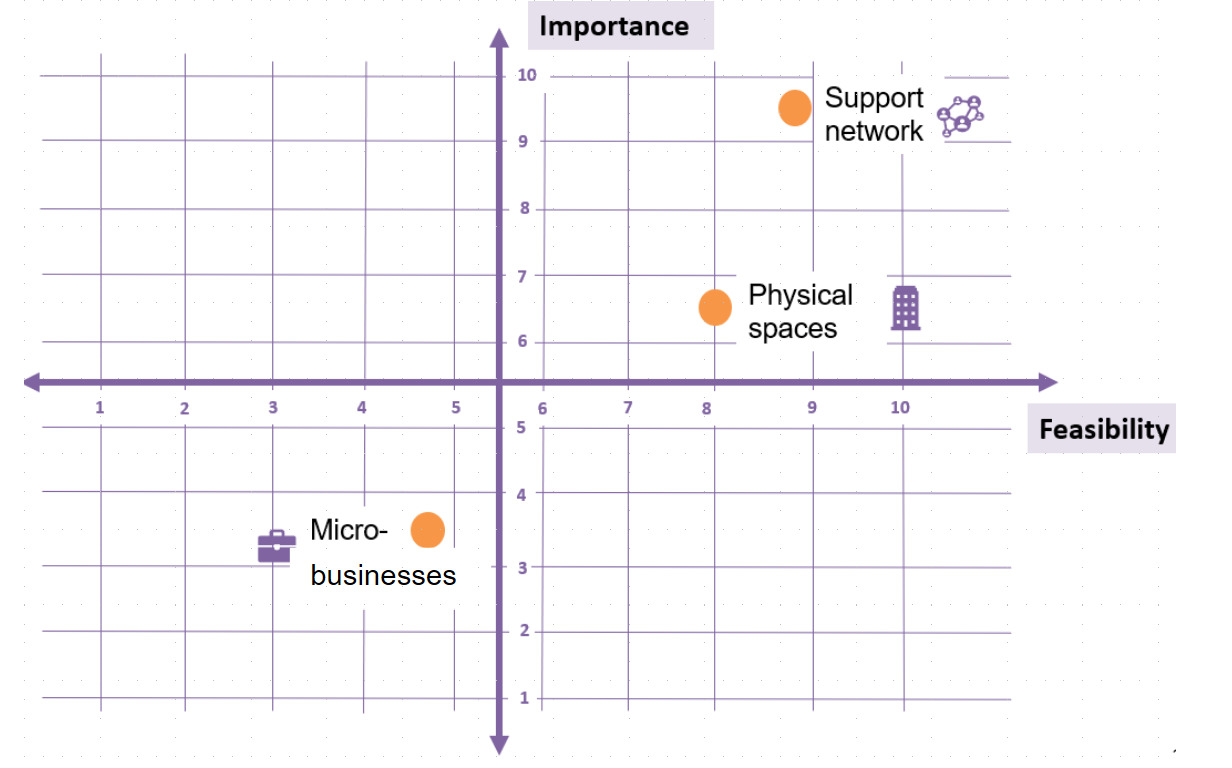
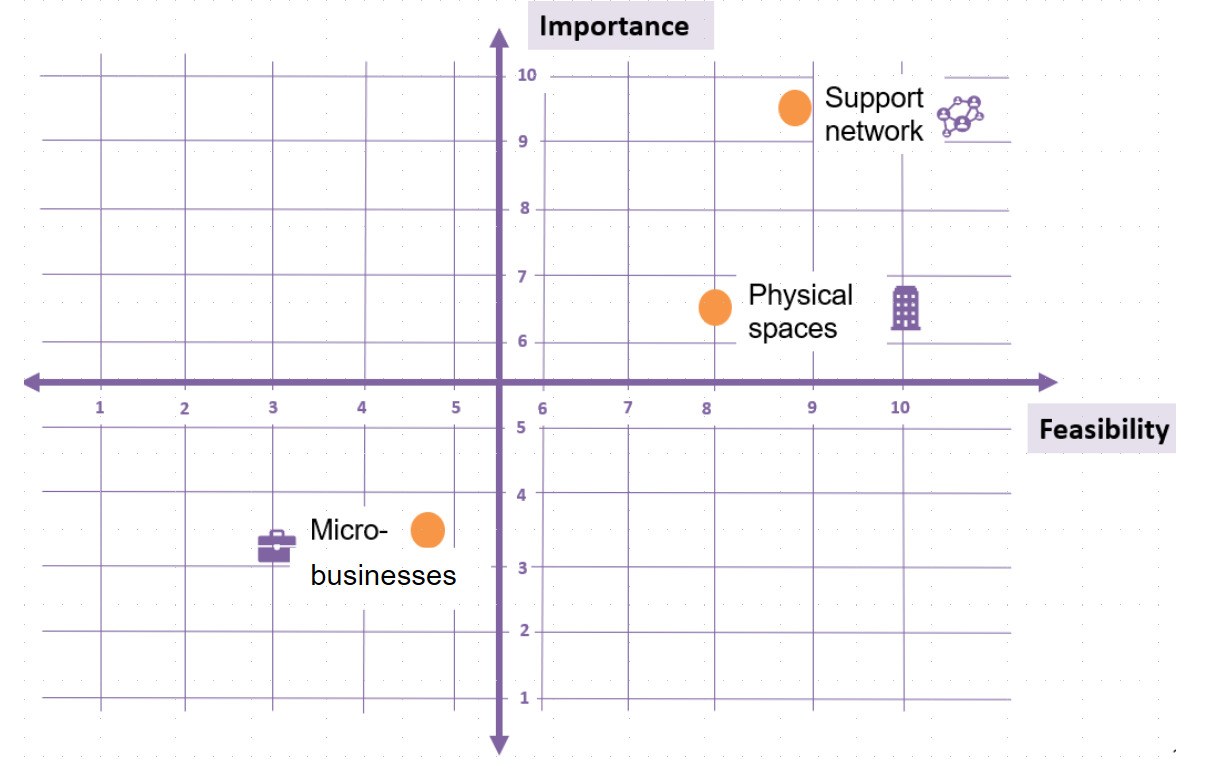
For example, the method was used to choose the intervention to be co-developed within the project framework. As a first step, the group members shared all their ideas on creating environments that would support the independence and inclusion of tenants. These discussions allowed the student to identify three concrete proposals in the clip sent before the next meeting, namely focusing on the co-development of support networks, the co-development of microbusinesses, or the co-creation of guidelines for the development of the Phare des Îles’ physical environment. At the next meeting, members shared their perspectives on these three proposals. Then, they participated in an exercise inspired by Chevalier and Buckles’ (2013) Contribution and Feasibility activity. The exercise consisted of first filling out an anonymous online questionnaire in which group members were asked to situate, on a scale of 1 to 10, the importance and feasibility of exploring each of the interventions within the framework of the research project. The averages of the scores could then be inserted in a graph with importance and feasibility axes (see Figure 1). This graph shows that the co-development of support networks was the most important and feasible intervention to pursue in the research project. The student also ensured that no member of the group had a completely different perspective that the average could have masked. To confirm that the group was moving forward with the co-development of support networks as a goal, the five-finger method was used (described in the next section).
A similar approach was followed to choose the data collection methods. It was decided to hold a community forum in the Magdalen Islands, as well as interviews with the tenants who would be selected to live at the Phare des Îles. However, significant delays in tenant selection meant that interviews could not be conducted. Instead, it was agreed that data collection would continue in collaboration with two other residential settings in Québec by organizing two additional community forums. This allowed the gathering of information complementary to that obtained during the forum held at the Magdalen Islands, although less specific to the organization’s context.
Five-finger Method
This method, proposed by the Academic Autistic Spectrum Partnership in Research and Education (AASPIRE) (Nicolaidis et al., 2011), was used to determine whether the group was progressing in a specific direction or whether further discussions were necessary. This method accommodates diverse participation styles and may prevent more vocal participants from dominating the conversation. It consists of calling for a vote at key moments during teamwork. Each person shows the number of fingers corresponding to their position with respect to the direction discussed: one finger if they agree; two fingers if not enthusiastic but still approve; three fingers if unsure and in need of more information; four fingers if they do not like or approve of the idea but can accept it; five fingers if they totally disapprove. The group moves forward when everyone shows one or two fingers; otherwise, discussions continue and new ideas are generated.
Interviews with members of the collaborative group revealed that some of them did not fully understand the answer options and that there were too many choices. The method was eventually dropped, with verbal validation being sought instead on whether it was necessary to continue discussions before deciding on the direction to follow.
Shared Notetaking
During discussions, notes were taken on a shared screen in the Jamboard app by the meeting co-facilitator. This application was chosen to facilitate the movement and grouping of ideas. This facilitated meetings by allowing for the synthesis of the named elements and enabling records of the discussions to be kept. Some members of the group said they appreciated this strategy because it helped them follow the flow of discussions. However, one member of the group mentioned that the note-taking was distracting, mainly because different colours were used, and the elements were not always well-aligned. The way in which the notes were taken was subsequently adjusted in light of these comments.
One-on-one Meetings
From the beginning of the collaborative work, all group members had the opportunity to request an individual meeting, but none of them did so. Nevertheless, the student offered them at certain opportune times. For example, a one-on-one meeting was suggested for a member who was absent from a meeting to inform them of the key discussions that had taken place, gather their perspectives, and maintain their engagement. On another occasion, a one-on-one preparatory meeting was suggested to a member to help them keep their contributions more concise before a team meeting, but the member did not follow up. To preserve the relationship, the student preferred not to insist on it. However, before the final group meeting, a one-on-one session was held with this person, which helped them organize their ideas and express them more clearly in the meeting. The student was thus able to involve them more effectively and strategically relaunch their contributions.
Possible Presence of a Family Member
All group members were offered the opportunity to participate in meetings accompanied by a family member whose role was to support them during their participation. Both prospective tenant members used this strategy. To this end, one of the members invited a parent to specific meetings to help them understand certain discussions and manage their speaking time. The other member was accompanied by a relative, who was also a member of the collaborative group, to all the meetings. This relative assisted the person by interpreting their words for the other group members. The prospect of this duo participating in meetings together, when they were two distinct members of the group, initially raised concerns about how at ease they would be expressing different ideas. However, this does not seem to have been an issue according to the student’s observations, since these two sometimes expressed opposing ideas. Also, the prospective tenant member did not hesitate to correct the relative when they did not adequately explain their words to the rest of the group. However, one member of the group shared that they sometimes had difficulty distinguishing the source of the ideas, as they sometimes shared their own ideas and sometimes those of their relative.
Multiple Possible Communication Methods between Meetings to Discuss Practical Aspects of the Research Project (e.g., scheduling the next meeting)
Different ways of communicating among group members and the student were proposed at the start of the collaboration to accommodate each person’s habits and preferences (e.g., email, phone, text message, Messenger). Although all members initially stated that they preferred email, Messenger was ultimately used with some members to facilitate exchanges. This communication channel facilitated the exchange of voice messages, which was easier for some than writing or reading an email. In addition, Messenger fosters the exchange of brief messages, which work better than email for those who answer yes, no, or a “thumbs up”.
Although the flexibility of using different ways of communication was an advantage for the group members, it sometimes became complex to manage. The student often had to send multiple messages, and follow-ups were also more complicated. Additionally, as Messenger is typically used in the personal sphere, the student perceived that its use for professional projects raises concerns. For instance, while it is easy to close a professional email account in the evening or over the weekend, a personal Messenger account is a different matter. Messages received outside of working hours can create a sense that one’s personal space is being invaded. A lack of response can also be perceived negatively when the sender sees that the person is connected and has read the message. This reinforces the importance of ensuring that people are comfortable using the platform and establishing clear guidelines for collaboration (e.g., response times). Creating and using a professional Messenger account could also be considered in this context.
Feedback Mechanisms
The methods used to collect data for this article also served as feedback mechanisms for the research process. The purpose of the comments and suggestions box and the interviews with group members was to collect their feedback on the project and on ways of working together, to make necessary adjustments.
The comments and suggestions box was used only once by a group member, despite the student reminding them of this possibility to express themselves at the end of each meeting. During the interviews, the group members explained that they did not feel the need to use it because they were able to say what they needed to during the meetings. The interviews also helped identify potential changes in how we work together better to meet the individual needs and preferences of group members. In addition to the changes to the shared notetaking method described above, it was also decided to shorten the meetings to 1 hour and 30 minutes (from 2 hours). Some members said they found it hard to stay focused for so long in the evening, even after taking a break, or struggled to fit such a long meeting into their family’s schedule, given their other obligations. Everyone was also reminded that they could turn off their camera at any time during the meeting, since a member of the group had expressed that having their camera on was distracting. Following this clarification, the person felt more comfortable turning off their camera during meetings.
However, it was necessary to balance adjustments to the ways of working together with respect for the initial agreement with the group. This led to disappointment for a member who had suggested several changes during the interview that could not be made, even though the reasons for not implementing them were explained. For example, this person suggested creating a Facebook group to bring together all members of the collaborative group and allow them to discuss themes before work meetings. This suggestion was not followed up on because it would have considerably increased the group members’ workload, even though they had expressed comfort with the current workload.
Joint Data Collection (Step 5)
Members of the collaborative group interested in getting involved in data collection contributed to the community forum held at the Magdalen Islands. Different forms of involvement were proposed to them. Three acted as facilitators, animating the breakout discussions and reporting key ideas to the larger group. Two others helped with logistics (set-up, time management, snacks). Due to the distance, they were unable to participate in the other two community forums, where representatives from other residential projects took over. To prepare them, a 15-minute video clip produced by the student detailed the process, expectations and ethical aspects (e.g., confidentiality). They were also invited to arrive earlier at the forum for a reminder and a question period.
The preparation process, designed to be simple and accessible, achieved its goal. However, the facilitators adopted a more reactive approach than anticipated by the student who had envisioned a more classic researcher role, where the person collects data, relaunches questions, brings participants back to the research objective when discussions stray from it, invites people to explore their ideas in depth as needed, and ensures that everyone who wants to speak has a chance to do so. Instead, they mainly reacted to the ideas shared, answered questions, and took notes. This facilitation method had the advantage of making the discussions pleasant and relaxed for the participants, but it meant they were not always aligned with the research objectives; it also meant that some ideas the student thought could have been explored in more depth were not.
Joint Data Analysis (Step 6)
A meeting with the collaborative group was held a few weeks after the forum held in the Magdalen Islands. Group members who attended the forum were asked to share the important ideas they thought were discussed, as well as the ideas that surprised them. Group members who were absent from the forum were able to respond to these ideas and ask questions. The student’s synthesis of the key ideas shared was then presented to them, and they were invited to comment on it. This validation process enabled some code adjustments and a deeper, more nuanced understanding of the ideas shared during the forum.
Sharing with Actors in the Problem Situation (Step 7), and the Development of Change Plans (Step 8)
A discussion workshop was organized with the Phare des Îles’ board of directors. The purpose of this meeting was to share the main results from the forums and to discuss courses of action based on them. This workshop enabled the board of directors to identify courses of action to be implemented in the short term, as well as when the Phare des Îles was built, to support the establishment of support networks.
Members of the collaborative group who were not members of the Phare des Îles’ board of directors were invited to participate in the workshop, but none of them did. The hypothesis that some of them now feel less engaged in the project is plausible, given that more than two years have passed since the group’s last meeting. This hypothesis was reinforced by the fact that the construction of the Phare des Îles and the selection of tenants occurred in parallel with the research process, which may have influenced the level of commitment of members toward the organization and, by extension, the research project.
Implementation of Change Plans (Step 9)
Support networks can be established in due course, that is, when the Phare des Îles is built and the tenants reside there. Although this step is not part of the student’s thesis, the student has committed to supporting the Phare des Îles in this implementation, and the organization has shown great interest in this regard. This could lead to a new research project, depending on the parties’ wishes and availability at the time.
Consolidation of Learning (Step 10)
Strategies were applied throughout the project to help consolidate the learning of the collaborative group members, the organization, and the student. To this end, the clips sent to the group members included a synthesis of the previously discussed elements. In addition, the student, the organization’s employee, and the members of the board of directors who were part of the collaborative group conducted frequent follow-ups with the organization’s president to keep her informed of the project’s progress. Individual interviews with group members and completing the logbook were also opportunities for the student to consolidate her learning.
Discussion of the Key Lessons Learned
Key lessons regarding participatory research in the field of disability emerge from the reflective process, which will guide future participatory research planned by the team. We share them here to contribute to broader reflection on conducting participatory research and to inform the thinking of other teams pursuing similar approaches.
Navigating the Balance between Structure and Flexibility
A notable observation is that several strategies were implemented to ensure the research process was structured and efficient, particularly in achieving results within the given deadlines. At the same time, there was a strong desire to remain flexible and continuously adapt to the evolving realities on the field and the emerging needs of collaborators. Indeed, the social, organizational, and contextual dynamics evolved during the project, requiring regular adjustments to maintain partners’ commitment and the relevance of the approach. The search for efficiency can undermine the objectives of true co-construction and shared decision-making; hence, the importance of continuous communication to clarify expectations and roles in the evolving project context. The present project is, therefore, characterized by the search for balance between the implemented structure and maintaining flexibility.
This point is also highlighted by Conder et al. (2011), who conclude that it is essential to plan the participatory process well while preserving maximum flexibility. Flexibility in the process is often considered essential, as it enhances the accessibility of research, enables the design of a process that accounts for participants’ preferences, and helps reduce exclusion (Hewitt et al., 2023; Loignon et al., 2022; Rix et al., 2020). In addition, it enables the researcher to adapt to the realities of the partners while navigating methodological developments, thereby maintaining the necessary balance between community acceptability and scientific rigour (Aurousseau et al., 2020; den Houting et al., 2021). This highlights the complexity of the role of the researcher engaged in a participatory approach, who must both structure the process and ensure they do not exercise excessive directive power. To accomplish this, it is necessary to develop skills beyond those typically acquired during academic training, such as building trust with partners, engaging in dialogue, and managing interpersonal relationships and power dynamics among group members (Aurousseau et al., 2020; den Houting et al., 2021).
However, this balance is likely to change over time as the bond of trust with the organization strengthens. For this first collaboration with the organization, it was considered essential to further structure the process to reassure the organization and the members of the collaborative group about the involvement required by the project and the expected results. The student felt that she had to somehow “prove herself” to the partner. However, with this first experience of collaboration, which enabled the organization to undertake a research project, it would probably be possible—and even desirable—for the balance to shift more toward flexibility in a future project, thus promoting even more marked co-construction. This evolution of collaboration patterns as partners work together over the long term has been highlighted by other authors (e.g., den Houting et al., 2021; Dong et al., 2023).
Responding with Agility and Prioritizing Relationships when Faced with the Unexpected
On several occasions during the process, factors beyond the student’s control forced her to take a step back and set aside her expectations. Along these lines, insecure but ultimately fruitful delays were encountered, for example, at the stage of establishing a partnership with an organization. As other authors have noted (e.g., Pickard et al., 2022), experience demonstrates that relationships play a crucial role in participatory research, although they necessitate a significant time investment. In addition, unforeseen events that were initially perceived as negative for the project occurred, such as the inability to conduct the scheduled interviews with the tenants. This decision was made primarily because the tenants had not yet been officially selected to live at the Phare des Îles, and we were concerned that interviewing prospective tenants about life at the Phare des Îles could raise false hopes and create confusion or ambiguity, which could have a negative impact on their well-being. This unexpected event ultimately opened new perspectives for the project by enabling the organization of two additional community forums. Overall, this was positive for the project, as it allowed us to collect data complementary to that collected during the forum on the Magdalen Islands, and initiated new collaborations with two other organizations.
To overcome the challenges encountered, it was necessary to accept the detours and remain resilient. However, this does not mean being passive and letting things go without taking action; instead, it means adjusting to detours rather than trying to stay on the initial course at all costs. This aligns with the findings of Aurousseau et al. (2020), who state that the researcher must be prepared to deal with uncertainty and accept detours while remaining aligned with the objectives and, if necessary, refocusing the approach. To accomplish this, it is essential to remain vigilant, be agile, and capitalize on opportunities as they arise. To truly demonstrate agility, it was crucial to be prepared to adapt the research protocol according to the circumstances. This implied, of course, several requests for amendments to the ethics committee, as well as the acceptance that many work hours would be lost due to these adjustments. For example, the student worked hard on creating and validating the interview guide, which ultimately was not used.
In all these moments, when uncertainty and unforeseen events led to adjustments, the well-being of autistic people and of people with intellectual disability, as well as the maintenance of good relations with the organization, remained top priorities. In connection with this second aspect, this implied returning to the initial motivations that had pushed the organization to commit to the project. It was a question of ensuring that, whatever new directions were taken, it would be possible to respond to them. This also applied to the elements deemed essential by the student in the original agreement.
Having the “luxury” of modifying the process in this way, however, requires evolving in a context and within structures that allow for such delays and adjustments along the way. Like other authors (e.g., den Houting et al., 2021; Dobel-Ober et al., 2024; Dong et al., 2023; Fletcher-Watson et al., 2019), we advocate for the time and resources needed to carry out participatory research, particularly in the field of disability, to be better taken into account by academic structures and research funding agencies.
Striving for Universal Design of Research Processes
Another observation that emerged from the process presented is that several strategies initially put in place to better meet the needs of tenant members with diverse abilities were appreciated and proved helpful for all members of the group. For example, all members appreciated the pre-meeting clips, which helped them recall previous discussions and prepare their ideas for the upcoming meeting. Although initially designed to facilitate tenant member involvement, other members also found this format to be easier and more enjoyable to incorporate into their routine than written materials. In addition, to avoid stigmatization, everyone was allowed to be accompanied to meetings by a family member, to turn off their camera or to benefit from an individual meeting between meetings.
This experience highlights the importance of adopting a universal design approach when developing research processes. This approach encourages the design of environments, communications, services, processes, and others that are accessible, understandable, and usable by as many people as possible from the outset, without the need for individual accommodations or adaptations (Kerroumi & Forgeron, 2021). Universal design requires creativity and innovation to provide inclusive and equitable experiences for everyone. Other authors have drawn on the principles of Universal Design for Learning in developing training on conducting participatory research (e.g., Dong et al., 2023; Sergeant et al., 2021). In a context where the full inclusion of non-academic individuals in research processes remains a challenge, drawing on the principles of universal design to develop these processes seems a promising approach. To accomplish this, it is recommended that project team members be trained in the principles of universal design, the importance of inclusivity and good practices for interacting with people of diverse abilities and backgrounds (e.g., age, cultural background, socio-economic status). The authors also hope that the strategies presented in this article will help inform the design of inclusive research processes.
Ensuring Collaboration Benefits all Interest-holders
Unexpected benefits were identified during the research process reported in this article. In addition to helping the organization develop its residential project, the research project also offered opportunities for visibility and outreach. Press articles and radio interviews were conducted to highlight the collaboration between the organization and the university, and presentations highlighting the organization’s contribution were made. The research project also enriched the organization’s community life through the forum that mobilized community members around the residential project. In addition, the commitment to the process provided an excellent opportunity for the members of the collaborative group to gain a deeper understanding of the Phare des Îles’ project, to influence its development, and to meet new people from diverse backgrounds.
This perspective aligns with the work of other authors who have highlighted additional advantages of participatory research compared to traditional research (Bush et al., 2017; Nicolaidis et al., 2011). These benefits include positive impacts for organizations as well as for research collaborators, whether they come from academia (e.g., partnership skills development, new funding and publication opportunities) or represent the organization (e.g., skills development, leadership building, creation of new relationships) (Bush et al., 2017; Nicolaidis et al., 2011). These observations suggest that highlighting these additional benefits is promising when establishing new partnerships with organizations, thereby fostering greater adherence and motivation to engage in organizational participatory research approaches.
Engaging in a Reflective Approach
Given that no universal method exists for supporting participatory research processes, and that each must be tailored to its specific context, this reality fosters a process of trial and error, continually generating situations that call for improvisation. It is therefore essential to adopt a reflective approach when participatory research approaches are mobilized, to prevent pitfalls, maximize benefits and, above all, ensure that no one is harmed (Bertrand & Petiau, 2023; Roy & Prévost, 2013; Tang Yan et al., 2022). In this regard, it is essential to create spaces where all those involved in the process, including those outside the academic community, can provide feedback. This requires academic researchers to adopt a posture of humility and, depending on partners’ previous experiences, to provide tools to help them engage in reflective approaches.
Engaging in a reflective approach is crucial in the context of organizational participatory research, a type of research that raises the particular ethical issue of having both a partnership with an organization and with the members of a collaborative group. This can lead to tensions, as the process brings together people in different positions within the organization, thus transforming meetings into places where power and influence games can develop and be articulated (Savoie-Zajc, 2012). This was accentuated by the approach taken, as the supported apartment project was under development, the selection of tenants was ongoing, and the organization’s staff was unstable. In this context, the student’s commitment to a reflective approach enabled them to identify specific issues and respond to them proactively and effectively.
Conducting Participatory Research as a Doctoral Thesis: A Challenge
Following this experience, the student drew similar conclusions to those of Klocker (2012), namely that numerous challenges are associated with conducting participatory research in a doctoral thesis. Some authors even question whether it is possible to conduct truly participatory research that genuinely involves power sharing, especially in contexts where reconciling the individualism inherent in doctoral studies with the collectivism of participatory research is challenging (Klocker, 2012). As Aurousseau et al. (2020) point out, conducting participatory research at the doctoral level involves confronting the classic challenges of participatory research while the student is also learning. Some challenges are related to institutional barriers, such as the requirement to submit a research proposal in advance, which is usually the doctoral examination, even though the participatory research process is non-linear (Gibbon, 2002). The timing constraints and university calendar, the lack of training to conduct participatory research and the difficulty of reporting on an iterative process linearly in a research paper, such as a thesis, have also been raised by several authors (Gibbon, 2002; Klocker, 2012; Savoie-Zajc, 2012).
Klocker (2012) challenges the dominant discourse that discourages the use of participatory approaches at the doctoral level, arguing that there are ways to overcome these issues. The experience described and reported in this article confirms this stance, highlighting the various strategies employed to support the participatory research process in a doctoral context. In addition, the challenges encountered and the need to overcome them were a formative experience for the student, who wishes to continue using participatory research approaches in her postdoctoral career. To train researchers who can conduct participatory research and mentor students using these approaches, it is essential to support Ph.D. students in implementing participatory research.
Various factors that contributed to the overall positive experience were identified. These include the fact that the student obtained funding to conduct graduate studies over several years, which allowed her to devote herself entirely to her research project and reduce the stress of the unexpected. Her Ph.D. was in community health, a field where participatory research is already well integrated (Tang Yan et al., 2022). Additionally, she benefited from the supervision and support of research supervisors with extensive experience in conducting participatory research, including in a doctoral context. This was of great importance, as the support of academic mentors is essential in the success of this type of doctoral thesis (Tang Yan et al., 2022). Consequently, for students – and researchers - wishing to embark on the adventure of participatory research, it is recommended to anticipate the challenges, to remain attentive to those that present themselves, to seize all opportunities that occur and to bring together as many favourable conditions as possible so that the experience is both formative and positive.
Conclusion
The authors do not claim to have designed the perfect project, but they humbly wish to share the processes they followed and the lessons they learned, hoping these insights will inspire other teams and inform their reflections. In future projects, we will continue to examine the strategies employed to support research processes critically and to adopt a reflexive stance. We also intend to involve partners more substantively in this reflection. In the present project, their feedback contributed meaningfully to the student’s reflexive process; however, a deeper engagement of partners in such reflective work would be beneficial moving forward, as it would allow for their perspectives to be represented more directly and authentically. We also hope that our sharing will encourage other teams conducting participatory research in the field of disability to share their experiences, to contribute to the advancement of knowledge and practices in this field.
Acknowledgments
The authors of the article would like to thank the project’s partner organization, the Phare des Îles, the members of the collaborative group, and the funding organizations that awarded a scholarship to the student: Vanier Canada Graduate Scholarship (CIHR); Fonds de recherche en santé du Québec (https://doi.org/10.69777/297783); Fonds de recherche inclusion sociale; Équipe Participation sociale et villes inclusives; Institut universitaire en déficience intellectuelle et en trouble du spectre de l’autisme. The authors would also like to thank the Réseau de recherche en santé des populations du Québec for their financial support, which covered the costs of translating the article from French to English, as well as the translation company that performed the translation work.