
Introduction
Insufficient attention has been paid to how adult researchers build youth’s capacity for research in methodologies where youth are positioned as researchers. This includes the methodologies of community-based participatory research (CBPR) and youth participatory action research (YPAR), where research capacity building is often referred to as the “training” that youth receive from adults (Jacquez et al., 2013; Luguetti et al., 2023). The problem with conceptualising youth capacity building to undertake research as “training” is that youth are positioned as passive recipients of predefined knowledge and skills, the acquisition of which are seen as a prerequisite for youth to realise the identity of researchers. Given that CBPR and YPAR are participatory methodologies, the conceptualisation of research capacity building as “training” is problematic as it undermines the value of youth becoming researchers in the first place. In the context of CBPR, this paper rejects the practice of youth research capacity building as “training” to explore pedagogical approaches to building youth’s research capacity that align with their participatory methodologies.
CBPR is “a partnership of students, faculty, and community members who collaboratively engage in research with the purpose of solving a community problem or effecting social change” (Strand et al., 2003, p. 3). For this CBPR project, the initial partnership was between our university research team (faculty) and the leadership team of a local community centre (community members), facilitated by our university’s community research grant scheme to which the community centre had applied. We discussed and agreed the broad research focus, which was to “reimagine” the community centre to improve its efficacy within the local community and beyond. It was at this stage that youth partners from the community centre’s youth group were invited to participate as researchers in the project. Based on Calvert et al.'s (2002) 3 stages of youth involvement in CBPR - identification, implementation, and presentation of project - we acknowledge the participatory limitations for youth in this project. Whilst youth were not initially involved in project identification, they did participate, however, in the refining of this first stage and were active participants in stages 2 and 3.
In this paper, we use the work of Bernstein (1975, 1990, 1996, 2000) to theorise stage 2 (implementation) of the CBPR project, addressing a gap in the literature to explore how “weakly framed” pedagogical approaches to youth research capacity building in a community centre setting can build youth’s capacity for research in a participatory way. In doing so, we exemplify how research methodologies that involve youth in researcher roles, including CBPR and YPAR, should pay more attention to the ways in which research capacity building is facilitated in order to remain true to participatory principles and to maximise the potential impact of the research undertaken by youth.
Literature Review
The problem of youth research capacity building in CBPR and YPAR
Capacity building in participatory research is defined as the process by which the skills, infrastructure, and resources of individuals, organisations, and communities are developed (Monteith et al., 2019). However, capacity building is often understood as “training” and the acquisition of predefined knowledge and practical skills (Kenny & Clarke, 2010). As Luguetti et al. (2023) argue in the context of YPAR, this understanding of capacity building serves to position youth as passive recipients of knowledge and skills and is in direct tension with the principles of participatory research with youth.
Luguetti et al.'s (2023, p. 1479) response is to argue for the importance of “critical capacity building”, where building youth capacity for research is underpinned by empowerment and linked to “social justice, activism, and democracy”. Luguetti et al.‘s (2023) paper focuses on the importance of adults working with youth by utilising dialogic approaches to develop the critical consciousness of participants to understand the world around them (Freire, 2017). In this paper, we uphold the importance of critical capacity building and engaging youth in discussions about social structures and social inequality. At the same time, we also deliberately focus on critical capacity building as it relates to youths’ capacity to conceptualise, design and implement their own research projects that lead to change - in this instance in relation to the re-imagining of their community centre.
As indicated at the start of this paper, research involving youth as researchers in community settings tends to be articulated as one of two inter-related methodologies: CBPR or YPAR. YPAR is differentiated from CBPR in that it involves youth “constructing knowledge by identifying, researching and addressing social problems through youth-adult partnerships” (Anyon et al., 2018, p. 865), whilst CBPR involves research that is driven and undertaken by a wider “partnership” involving youth alongside community members and the university (Strand et al., 2003, p. 3). In both CBPR and YPAR research, a lack of attention has been paid to youth research capacity building beyond a conceptualisation of this capacity building as training and predefined skills (Kenny & Clarke, 2010).
To start with CBPR, whilst there has been a focus on the nature of partnership building between stakeholders in a review of CBPR literature (Brush et al., 2019), there has been less of a focus on research capacity building between partners involving youth. However, Jacquez et al.'s (2013) earlier review does begin to identify how children and adolescents are positioned in this process. Of the 15% of the included CBPR studies involving children and adolescents, 84% were found to involve youth either “designing or conducting the research” (Jacquez et al.'s, 2013, p.183). In relation to our research focus, the “or” in this categorisation obscures how research capacity building took place and the extent to which youth were able to design their own research projects. Jacquez et al.'s (2013, pp. 184–5) inclusion of two “exemplar projects” perhaps indicates that youth’s role in the design and implementation of their projects was minimal: the first project involved youth in “research training”, where they “learned research skills” predefined by adults; and the second project involved the “research team completely redesign[ing]” youth’s intervention (p.185). Acknowledging the way in which stage 2 of CBPR (Calvert et al., 2002) appears to be largely controlled by adult researchers, Jacquez’s et al. (2013, p. 185) conclude that they identified a “lack of description of research methodology” in most of the included studies. Where research methodology is described in CBPR, it tends to position youth as passively adopting research methods deemed appropriate for them and their projects by adult researchers. An example of this is Walsh et al.'s (2008) CBPR project where youth implement “photovoice” as a research method following “training” from adult researchers and where the critical justification for project design is provided by the adult researchers and not the youth themselves.
In terms of YPAR, Cullen and Walsh’s (2020) review takes a more general view of capacity building by focusing on relationships and power and the need to promote empowerment of youth through facilitative processes. There is no specific consideration, therefore, of how to build youth’s capacity for research project design. Similarly, Malorni et al.'s (2022, p. 9) scoping review focuses on relational practices that facilitate dialogue, promote power sharing, and develop collective identity with youth researchers rather than capacity building for research project design. In line with this focus on relational practices in YPAR literature, Anderson et al. (2020) focus on the importance of building relationships in US school contexts. Notably, and perhaps unsurprisingly given the school contexts of the included studies, relationship building is conceptualised as a precursor to youth being “taught” research methods and positioned as passive recipients of predefined knowledge and skills (Anderson, 2020, p. 250). Whilst Luguetti et al.'s project (2023) seeks to empower youth through a dialogic process of critical capacity building, the focus upon building youth’s capacity for research project design is once again absent. Indeed, two of their included studies refer to the development of research knowledge and skills as “training”, without acknowledgement of how this conceptualisation of capacity building might undermine their ideal of adult researchers facilitating youth critical capacity building. In line with our specific focus on building youth’s critical capacity to design and implement their research projects, only Anyon et al. (2018, p. 875) allude to the need to consider how research skills and knowledge are taught in order to maximise the participatory potential: “YPAR programme manuals/ curricula may need to emphasise adherence to a set of techniques more than particular content on, say, social science research methods.”
Youth research capacity building as technique: the case for weakening classification and framing
We focus on youth research capacity building as technique not training through deliberate pedagogical practices that seek to empower youth in the design and implementation of their research projects rather than positioning them as passive recipients of knowledge. To theorise capacity building technique with youth in the context of CBPR, we draw upon the work of Bernstein, whose considerable contribution to the field of pedagogic discourse (1975, 1990, 1996, 2000) provides a way of illuminating how power and control operate within a learning context through the dialectic of “classification” and “framing”.
For Bernstein (2000), classification is about power: what is deemed to constitute the knowledge and skills that need to be acquired by the learner as well as who decides this. Classification operates on a spectrum: weak classification erodes boundaries between knowledge and skills belonging to disciplines; strong classification upholds boundaries. In relation to our project and the knowledge and skills youth need to acquire to become researchers, CBPR and YPAR literature implies a tendency for adult stakeholders to adopt strong classification. For Bernstein (1990), this strong classification would consequently require youth to develop specialised consciousness to achieve the “recognition rule” and understand what they need to acquire to become researchers.
In terms of the interrelated concept of framing, this is about control and relations within the boundaries of classification. Framing is “the degree of control teacher and pupil possess over the selection, sequencing, pacing and evaluation of the knowledge transmitted and received in the pedagogical relationship” (Bernstein, 1975, p. 88). In relation to this project, as well as suggesting strong classification, CBPR and YPAR literature implies a related tendency for adult stakeholders to adopt strong framing, where the adult has high levels of control over the selection, sequencing, pacing and evaluation of the knowledge transmitted to youth through research capacity training. For Bernstein (1990), this strong framing would require youth to adopt a highly specialised voice to achieve the “realisation rule” and embody a youth researcher identity.
As well as illuminating power and control in pedagogic discourse in youth research capacity building, Bernstein’s theoretical work was appealing to us because of the radical potential inherent to the dialectic relationship between classification (power) and framing (control). This is because power, in the form of strong classification, can be altered through changes in control through weak framing (Bernstein, 1996, p. 19). Whilst this dialectic has been illuminated as strongly classified and strongly framed in school settings (e.g. Hoadley, 2006), working with youth in an informal education setting where youth “have chosen to be” (Jeffs & Smith, 1996, p. 2) gave us more freedom to weaken framing and, in turn, classification. In relation to our project, what might be considered by adult stakeholders to be the skills and knowledge required for youth to become researchers, could, we felt, be altered through weak framing, where youth could exert control over the selection, sequencing, pacing and evaluation of the knowledge transmitted, drawing upon their own experiences and interests in their research project design and implementation. This shift in control and power could, we also felt, allow youth to participate in the construction of the rules of recognising and realising the skills and knowledge required to become youth researchers.
Research questions
Our project involved us working in partnership with youth to build research capacity and implement a project to “re-imagine” the community centre where their youth group was based. Disrupting the concept of youth research capacity building as “training”, we reflected upon our technique of a deliberately weakly framed pedagogy. This enabled us to explore two research questions:
-
What does a pedagogy for weakly framed youth research capacity building look like?
-
How can the pedagogic relationship between adults and youth be navigated through weak framing to enable youth to recognise and realise a youth researcher identity?
Methodology
Local Context and Youth Researchers
The community centre where the CBPR project took place is located in the north of England in the city of York. Whilst most of York is relatively affluent, the council ward in which the community centre is located is economically and socially deprived. According to the Indices of Multiple Deprivation (IMD), it is amongst the three most deprived wards in York, both overall, and in relation to measures of ‘Living Environment’ and ‘Health and Disability’ (City of York Council York Open Data, 2019). Children and young people who live in the ward are more likely to be more economically deprived than their peers in more prosperous areas of the city (City of York Council Business Intelligence Hub, 2022), leading to a ‘double disadvantaging’ (Bolton & Dessent, 2024) of children and young people in these communities, who suffer from poorer outcomes across a range of key quality of life indicators. In terms of education outcomes, across reading, writing and maths, lower percentages of York’s Disadvantaged cohort achieved the Expected Standard benchmarks than the National Average (Bolton & Dessent, 2024). The ward is in the bottom five in York for attainment against benchmarks for 14–16-year-olds and is the lowest performing for 7-to-11-year-olds (City of York Council Business Intelligence Hub, 2022).
Table 1 gives key information about the youth group we worked alongside for the project. Typical of informal education, the number of young people attending fluctuated each week, with the 8-17 group being best attended and the 13-17 group being least attended. Each session was led by 2 youth workers, supported by a range of volunteers. The youth workers prepared a distinct activity for each week, with which young people could choose to engage, as well as food, drinks and other recreational activities. Those who volunteered as youth researchers are listed in Table 1.
Participatory ethnography and action research
Whilst facilitating weakly framed youth researcher capacity building, as adult researchers with our own research questions, we drew upon the principles of participatory ethnography (Ntelioglou, 2015). Participatory ethnography aims to understand the experiences of the community and engage them as cocreators of knowledge whilst “reimagining participant–researcher relationships through a focus on deep hanging out” (Ntelioglou, 2015, p. 535).
From the outset, we explained to the youth group that, in addition to supporting their own research projects, we would like to keep detailed research journals to help us reflect on what was working and how participation was unfolding. Considering Kapoor, Ambreen and Zhu’s (2023) emphasis on power and agency in ethnographic notetaking when researching with young people, we introduced this aspect as a form of “shared storytelling” about the project rather than external observation, emphasising that the young people’s comfort and confidentiality were our priority.
Isobel (Author 1) and Charlotte (Author 2) regularly attended youth sessions between December 2023 and February 2024, as a process of “deep hanging out” (Wogan, 2004), establishing rapport and building trusting relationships with the young people. This initial engagement was essential for explaining the aims of the community centre research project and our own research project, fostering an atmosphere of openness, and building towards the recruitment of youth researchers (Cahill, 2007) at the end of February.
Between February and May 2024, we then built upon the relationships we had formed to facilitate capacity building with those who had volunteered as youth researchers. We explained to the youth researchers that our role as adult researchers was to help them design and implement their research project and to capture their research processes in our own research. In line with our weakly framed and weakly classified approach, we collaborated with the youth researchers to identify key areas of interest in relation to their project and explore a range of appropriate research methodologies and methods they could plan and implement. Furthermore, we provided support in navigating ethical concerns and methodological decisions, ensuring youth researchers were empowered to determine the direction of their projects (Kellett, 2011; Mullick et al., 2013).
Isobel and Charlotte used research journals to record ethnographic observations and conversations with the youth researchers to gain a deeper understanding of their research capacity building. In line with Phillippi and Lauderdale’s (2017) contextual recommendations, fieldnotes were written immediately after each session, following a consistent structure that included: (1) contextual notes (who was present, what activities occurred), (2) descriptive notes (dialogue, actions, environmental details), and (3) reflective notes (initial interpretations, emerging ethical issues, and our own reactions). This approach ensured that our ethnographic records captured both what happened and our positional and emotional responses (Gertner et al., 2021). Isobel and Charlotte reviewed excerpts of these journals with each other to ensure alignment in focus and ethical awareness. Collecting data in this way allowed us to capture how the youth researchers interacted with one another, ourselves, and their participants, as well as how they made sense of their evolving roles as researchers and their ethical responsibilities (Loveridge et al., 2023). We shared our reflections on their development as researchers through informal conversations, meaning that the data we collected was also a tool for youth empowerment. As well as participatory ethnography, our methodological approach also aligned with principles of action research, as we continually reflected upon and adapted our own pedagogic practices with the youth researchers. This reflexive orientation meant that our ethnographic engagement was not solely descriptive but cyclical and developmental: observations informed immediate adjustments to how we facilitated sessions, which in turn became new data for reflection (Malorni et al., 2022). In this sense, our methodology combined participatory ethnography and action research to examine and refine the pedagogy of weakly framed capacity building as it unfolded in practice. Thus, this dual stance supported not only data collection but real-time adaptation of pedagogy, in line with reflexive youth participatory research practice (Khawaja et al., 2024).
Ethics and adult researcher reflexivity
Institutional ethical clearance was provided by the university, and our application was underpinned by British Educational Research Association’s Ethical Guidelines (BERA, 2024). Due to the nature of the research project, our presumption was Youth Researchers were able to consent rather than assent (Twum-Danso Imoh, 2024). That said, we held the young people’s safety and well-being as essential, so whilst we asked the children to consent, we also liaised with the community centre’s safeguarding lead and provided written information and consent for parents and carers about the project.
Underpinned by our intentional use of weakly framed capacity building, we took an ongoing “interactive narrative approach” (Mayne et al., 2015) to consent. This involved us continually differentiating between their research project and our research project, with conversations focussing on the relationship between the two. We discussed how our research project was underpinned by the ethical principle of beneficence and how, by both implementing and researching into capacity building, we wanted to help them with their project and develop their skills and knowledge as researchers. It also involved negotiating specific ethical issues and procedures. For example, in line with our research question 2, youth researchers were reminded throughout of their right to withdraw from the project. We discussed how the withdrawal of data was more complex if it was part of a collective conversation, but how they could exercise their right to engage and disengage during each group session as they saw fit.
Reflexivity, as a core element of participatory ethnography and action research, played a significant role in our ethical practice. Ethical reflexivity required us to consistently reflect on our positionality (Kellett, 2011; Loveridge et al., 2023) and how our roles as adult researchers might shape power dynamics with the youth researchers.
As researchers, we initially occupied clear positions as outsiders. Isobel is a white early-career academic with experience of qualitative research and Charlotte is a white senior academic with expertise in participatory and community-based research. Neither author lives in the local area of the community centre; although Isobel lives nearby, we were conscious that our affiliation with the university positioned us as outsiders with institutional authority (Holmes, 2020).
At the same time, our sustained engagement with the youth centre and its staff – attending sessions weekly, joining informal conversations, and participating in activities – created moments of insider familiarity. These shifting positions shaped how young people perceived us: sometimes as trusted adults; and at other times as “researchers from the university” (research journal entry January 2024). Our shifting positionalities – oscillating between outsider and partial insider – mirror the dynamic frameworks emerging in recent positionality literature (Chhabra, 2020; Yip, 2024). Recognising this dynamic, we used our fieldnotes to interrogate how our presence influenced interactions, and we discussed occasions where our well-intentioned guidance risked reinforcing adult authority. This reflexive practice helped us recalibrate our facilitation to maintain a weakly framed stance in which control and decision-making rested primarily with the youth.
Iterative data analysis
The data we collected included research journal entries, which were both reflective and reflexive, capturing our observations and informal conversations with youth researchers, and reflections on our own positionalities as adult facilitators. Additional data included artefacts produced by the youth researchers for their projects, such as interview schedules, consent forms, and research information sheets.
In line with action research, data analysis was iterative and ongoing, taking place throughout the project rather than solely at its conclusion. Each youth group session acted as part of a reflection-action-reflection cycle (Ntelioglou, 2015) in which observations informed pedagogical decisions, and these decisions in turn generated new data. After each session, Authors 1 and 2 recorded detailed fieldnotes and reflective commentary in their journals; these were discussed in weekly debriefs and shared with Authors 3 and 4. Through these discussions, we identified emerging patterns related to youth participation, autonomy, and ethical awareness, and used these insights to inform subsequent facilitation. This cyclical approach enhanced methodological rigour by embedding analysis within practice, ensuring that interpretations were continually tested against real-time interactions and refined through dialogue across the research team. This form of progressive focusing (Lincoln & Guba, 1985) enabled both responsiveness to context and ongoing peer debriefing – core strategies for enhancing credibility in qualitative inquiry.
Following the completion of fieldwork, we undertook a systematic synthesis of all data to consolidate and refine the insights that had emerged across the action cycles. At this stage, our process aligned with the three analytical phases described by Miles, Huberman, and Saldana (2020): immersion, coding, and theme development. During immersion, Authors 1 and 2 revisited their journals and artefacts alongside contextual discussions with Authors 3 and 4. Coding was initially broad and exploratory, with inductive codes emerging directly from the data. As analysis progressed, these were refined through team dialogue into a working code list, which provided consistency across the data set while allowing flexibility for new insights to surface.
The process was abductive, involving repeated movement between empirical material and Bernstein’s theoretical concepts of framing, classification, and pedagogic discourse. By iteratively moving between data, reflection, and theory, we sought to establish what Lincoln and Guba (1985) term trustworthiness. Analytical saturation was understood not as a numerical endpoint but as the point at which successive reflection-action cycles generated no substantially new understandings of participation or pedagogy, demonstrating conceptual sufficiency rather than data exhaustion.
This combination of ongoing analytic cycles and systematic synthesis ensured transparency, reflexivity, and theoretical coherence, satisfying both action-research principles and expectations of qualitative rigour. The resulting three overarching themes capture the dynamics of weakly framed and weakly classified capacity building. Given the interdependence of data generation and interpretation, the Findings and Discussion are presented together below.
Findings and Discussion
Weak framing and youth researcher participation: the importance of fluidity and choice
At the start of the project, we provided the young people with the opportunity to voluntarily participate, fostering a sense of ownership and autonomy. In line with the longstanding principles of informal education (Jeffs & Smith, 1996), and with our focus on developing a technique of weak framing, we reflected upon the need to ensure that the young people had ‘the freedom to come and go as they wish[ed] … without pressure or expectation of constant involvement’ (research journal entry January 2024). This flexibility was vital, we felt, in allowing youth to engage in ways that felt comfortable to them, reinforcing the participatory nature of the project (Mayne et al., 2018). Our reflections led to us introducing ‘lanyards’ as a symbol of involvement, and, over the next two weeks, young people signified their intention to participate as youth researchers in and during each session by decorating and wearing their lanyard. As captured by Isobel at the start of research capacity building, ‘Maeve asked whether she had to wear her lanyard to count as a researcher today’ (research journal entry February 2024). Maeve’s question encapsulates how her participation and researcher identity were understood as choices to be enacted moment-by-moment rather than as fixed statuses. After reflecting upon ‘confusion’ in the first session, we also made it clear that lanyards should only be worn during research activities, ensuring a clear demarcation both between youths’ different identities in the community centre and the decision to participate as a youth researcher.
The fluidity of youth researcher participation continued throughout their research projects and was complemented by our conscious reflections to enact weak framing through giving youth researchers control and choice over their research project design. To facilitate choice, we initially engaged those youth researchers who had chosen to wear their lanyards in mind mapping ideas for potential research methodologies and methods they could use for their project. Their ideas captured on their mind maps were both traditional and non-traditional: ranging from ‘interpretive dance’, based on their experiences at the community centre, to ‘surveys in schools’, ‘interviews’ with a variety of stakeholders, and ‘suggestion boards and boxes’ placed around the community centre. Through this weakly framed process, we were able to co-create their research project design, allowing the youth researchers control over their projects in a way that aligned with their interests.
Reflecting upon their methodological interests, Isobel and Charlotte decided to create one-page Research Methods Guides. Our use of the Guides was weakly framed, enabling youth researchers to learn about the research methods that interested them ‘at a time that suited them’. Accordingly, during the planning phase, we placed the Guides on a table, allowing youth researchers to access methodological information when they were ready and motivated to do so. This gave youth researchers control to participate in their capacity building during what we identified as ‘high-intensity moments’ in the youth centre, such as when they could only engage briefly before leaving for other activities.
Whilst the content of the Guides was written by Isobel and Charlotte and was, therefore, more strongly classified, our design of the content of the Guides was always ‘responsive’. For example, after Evie, Delilah, and Maeve expressed an interest in creating a dance based on their experiences, we drew upon Charlotte’s prior knowledge of arts-based research (Leavy, 2018) to prepare a Guide for them about ‘dance as a method of ethnographic research’, which they were able to access one Monday evening prior to engaging in other activities.
In line with our reflections on the need for fluidity in weak framing, we noted that some youth researchers chose not to participate in all phases of the research, preferring instead to contribute to specific stages, such as data collection or research design. For example, whilst Evie, Delilah, and Maeve were interested in creating an interpretive dance and undertook the planning phase for their dance, they ultimately decided not to participate in collecting data to interpret for their dance. These decisions were individual as well as collective, with one youth-researcher explaining, ‘I’ll help next week when I’m not so tired from school’ (research journal entry March 2024). Collective and individual control over when and how to engage reflected a key feature of our emerging weakly framed pedagogy: agency over pacing and participation. This variability led us to reflect upon how informal education, unlike formal education, allows for flexibility in capacity building to accommodate youth researchers’ diverse interests, time constraints, and levels of engagement at different points in their projects (Franks, 2011).
As the project progressed, Isobel and Charlotte reflected upon how weak framing allowed youth researcher participation not only to fluctuate across research stages but also ‘within individual stages’. Evie, Delilah, Maeve, and Lucy, for example, contributed briefly and intermittently, engaging for as little as five minutes in one session. Specific events in the community centre, such as food-related activities, were key triggers for shifts in their participation, as they would momentarily prioritise social activities over the research process. In one session, Alfie had been engaging in designing surveys for about half an hour when curry was served; he disengaged to enjoy his curry with other youth session attendees, explaining he would “be right back, but, you know, curry!?” (research journal entry March 2024). Once Alfie had finished his curry, and offered to get us some too, he re-engaged and finished his survey design. As we had already reflected in our research journals, these moments necessitated ‘adjustments’ to our approach, requiring us to be ‘responsive to [youth researchers’] shifting levels of interest and availability’ due to the myriad of activities taking place in the community centre (research journal entry February 2024). As explored in the second theme below, whilst at times we were tempted to intervene to keep the momentum of their project, our project focus helped us to appreciate how important it was for us to ‘respect their choices’, and ensure that youth researchers’ engagement with the project remained voluntary (research journal entry February 2024).
Another example of the youth researchers’ control over and fluidity of participation came during the data collection phase. Alfie, Charlie, and Lucy had decided to conduct interviews with other young people, staff members, volunteers, and local community stakeholders, including the Mayor, city councillors, and a probation officer. We worked with them to co-design consent forms and interview schedules, which they tailored to suit different interviewees. Despite this group of youth researchers all being highly involved in co-designing the interview, when it came to undertaking the interviews, there was variability in participation: Charlie and Alfie chose not to attend all the interview sessions, while others took different roles. For example, Lucy chose to act as a chaperone for the community stakeholders, ensuring they were in the right place and prepared for the interviews. Similarly, Sarah and Emily, who had not initially planned to participate, took on the responsibility of conducting interviews, using the co-designed materials. This fluidity in participation illustrates that when adult facilitators provide a flexible approach to participation, youth researchers can take ownership of their project and begin to find roles for themselves that match their interests and skill sets.
The importance of choice and fluidity of participation led Isobel and Charlotte to reflect how adopting a weakly framed approach to youth researcher capacity building created ‘pockets of participation’ (Franks, 2011, p. 15), whereby youth researchers had the control to engage ‘in ways that were meaningful to them’ (research journal entry April 2024). While traditional participatory research models can become more strongly framed in capacity building (Cullen & Walsh, 2020) by expecting involvement at every stage (Anyon et al., 2018), we found that by supporting youth researchers to engage on their own terms, we were able to involve a wide range of participants throughout the project. As Charlie expressed in a conversation with Isobel, ‘I am happy to do an interview, but I don’t want to do analysis, no offence’ (research journal entry from April 2024). This malleability not only empowered the young people but also enhanced their sense of ownership over their project as a whole and the research process.
The evolving pattern of intermittent yet self-directed participation exemplifies the technique of weak framing in practice: pacing, sequencing, and evaluation were determined by youth rather than adults. By loosening control over the timing and organisation of capacity building tasks, the adult facilitators enabled young people to exercise the recognition rule (Bernstein, 2000) – understanding when and how to act as researchers within a flexible pedagogic space. The elasticity of framing allowed participation to fluctuate without loss of legitimacy, transforming moments of disengagement into evidence of agency rather than deficit.
Navigating adult-youth power relations in weakly framed capacity building
As explored above, central to the notion of weakly framed capacity building are fluidity and choice, where the structure and scope of engagement in research projects are both flexible, allowing young people to shape their involvement on their own terms. This approach places a strong emphasis on maintaining the autonomy of young participants while also ensuring that their capacity to contribute meaningfully to the research is nurtured. In this context, we understood from our prior experiences and reading that building trust and offering opportunities for participation without coercion are crucial for fostering genuine engagement and addressing potential power imbalances.
From the outset, we were keen that youth researchers’ involvement should stem from a place of genuine interest, not external pressure or manipulation (Cahill, 2007). However, we reflected that this ‘line between encouragement and coercion’ can be difficult to draw, particularly when working with young people who may feel ‘a sense of obligation to engage with adults’ (research journal entry February 2024). For instance, when undertaking analysis and checking themes with youth researcher in relation to their projects, they initially seemed less interested until: ‘Ben raised an eyebrow and commented, ‘So, do we get to mark you for this part?’ Everyone laughed’ (research journal entry from May 2024). Humour, such as this moment, broke down hierarchies, allowing young people to test and play with adult authorities in ways that kept participation voluntary. In this environment, we continually reflected upon the importance of carefully managing adult-youth power relations, ensuring that youth researchers always felt their participation was a choice.
Key to helping us to achieve a balance between adult-youth power relations was our prioritisation of building rapport and trust with the youth participants through a 3-month ‘deep hanging out’ phase (Wogan, 2004). Rather than presenting ourselves to the young people as adult researchers with a specific research agenda, ‘deep hanging out’ allowed us to establish informal relationships with the young people in a way that built rapport and trust. By engaging in various community centre activities together, from ‘playing games’ to ‘simply spending time with the group’, by the time we came to introduce the project, we felt confident that the young people understood that their ‘participation as youth researchers’ was not only voluntary but welcomed ‘without expectations’. The trust we built during this phase of ‘deep hanging out’, therefore, helped mitigate potential power imbalances, allowing young people to make subsequent independent decisions about their involvement in their research projects. As noted in a research journal entry from March 2024, ‘Sarah took the lead on developing interview questions, telling us [adult researchers], ‘We’ll [youth researchers] draft them and then check in’. The group then nodded and started discussing questions.’ This kind of peer negotiation demonstrated that trust was leading to genuine autonomy; youth researchers could coordinate among themselves before seeking adult input.
Isobel and Charlotte were continually conscious that the CBPR project had an externally imposed timeline of 10 months, with Isobel employed as a Research Assistant by the university for that period. We reflected how this externally imposed timeline was potentially in tension with our technique of enacting weak framing through ‘deep hanging out’ and youth researcher choice. However, despite the pressures of an imminent report deadline, we made a conscious decision to dedicate a significant portion of the project timeline to this rapport-building phase to promote voluntary participation. Once youth researchers began their project, we consciously decided to view their ‘moments of disengagement … not as setbacks’ but as ‘positive indicators of the autonomy the youth researchers had in the process’ of weakly framed capacity building (research journal entry February 2024).
By respecting youth researchers’ right to disengage, we strove to maintain the ethical integrity of the project, ensuring that participation remained voluntary and that adult-child power relations remained balanced as participation was grounded in the young people’s genuine interests (Aberese-Ako, 2017). This meant that our approach to ethics was an ongoing ‘interactive narrative’ (Mayne et al., 2015) rather than a one-off event (Miller & Boulton, 2007). Having built rapport and trust, we became increasingly attuned to non-verbal cues relating to disengagement and non-participation. Charlotte observed, for example, how Lucy would ‘intermittently engage’ with the research, participating for ‘short bursts’ and signalling when they ‘no longer felt interested’ by ‘fidgeting or expressing uncertainty’ (research journal entry from April 2024). Such non-verbal cues indicated a shift in consent, and we responded by offering youth researchers the space to step back without judgment or pressure.
As highlighted by Govaerts and Fensham-Smith (2024) in relation to a youth researcher providing non-verbal clues that they no longer wished to present their project to an online audience, the ability to recognise and respond to these shifts in engagement is key to navigating adult-child power relations. Rather than pushing youth researchers to stay engaged or making them feel guilty for disengaging, we reflected upon the need to respect their decisions, ensuring that the research process remained fluid and flexible. This was a direct application of our conscious technique of weakly framed capacity building, where engagement was adaptable and dependent on youth researchers’ comfort and interest, rather than on the researchers’ predefined expectations.
Alongside this, during moments of ‘low engagement’ when youth researchers ‘chose not to participate in research activities’, we also decided to deliberately keep a presence in the group, joining in with other activities, such as crafting (research journal entry March 2024). While these ‘informal moments’ did not contribute directly to data collection, we reflected that they played a ‘crucial role’ in fostering ongoing trust, rapport, and collaboration. By being consistently present and showing that we valued the young people’s autonomy, we were able to create a supportive environment where they could freely choose when and how to engage in the research process.
The ability of youth researchers to question, often with humour, and redirect adult guidance, reflects the redistribution of power that the technique of weak framing makes possible. Within Bernstein’s (2000) terms, framing was loosened so that regulative discourse – how power and control operate within pedagogic relations – was shared rather than imposed. This flexibility allowed youth to re-negotiate authority through everyday interactions, turning the pedagogic relationship itself into a site of co-construction. In this way, weakly framed capacity building fostered a more dialogic and democratic exchange between adults and young people.
Facilitating the recognition and realisation of youth researchers as critical thinkers
In line with reported outcomes for youth researchers in informal education settings (Dobson, 2023), we found that young people’s capacity for critical thinking was significantly developed. Central to the development of critical thinking were our roles as facilitators, responding to the discussions and actions of youth researchers to encourage them to take ownership of their projects. As an example, Lottie, Lyla, and Chloe designed a ‘suggestion board’ for their project and took the initiative to write their own information sheet for participants. In line with the long-held tenets of informal education, undertaking this task prompted ‘dialogue’ (Jeffs & Smith, 1996) between Lottie, Lyla and Chloe, which Isobel captured in their research journal as including: ‘Who should be allowed to participate in the project?’; ‘Should the participants’ answers be anonymous?'; ‘Do participants need to be involved in every part of the project, or can they choose when to take part?’ The questions from these impromptu conversations about the nature of participants and the nature of their participation evidence the critical thinking of the youth researchers as they discussed the implications of their decisions to understand how they could frame their research in an ethical way.
Having produced an information sheet for their ‘suggestion board’, Isobel responded by encouraging the group of youth researchers to consider their target audience. This led Lottie, Lyla, and Chloe to think about ensuring their research method was inclusive, with Lyla then deciding that their language needed to be ‘simple’ and ‘straightforward’ to ensure that their peers would be able to access the information without feeling overwhelmed by excessive detail (research journal entry from April 2024). They also reflected that they wanted the information sheet to be more ‘visual’ and ‘appealing’ for their target audience, again demonstrating a critical awareness of how to include participants in research (research journal entry from April 2024). Accordingly, they selected a ‘colourful image of multi-coloured people standing together’ to represent the inclusive environment they envisioned for their research, with Lottie explaining they wanted their project in the community centre to feel ‘like a big family’ (research journal entry from April 2024)
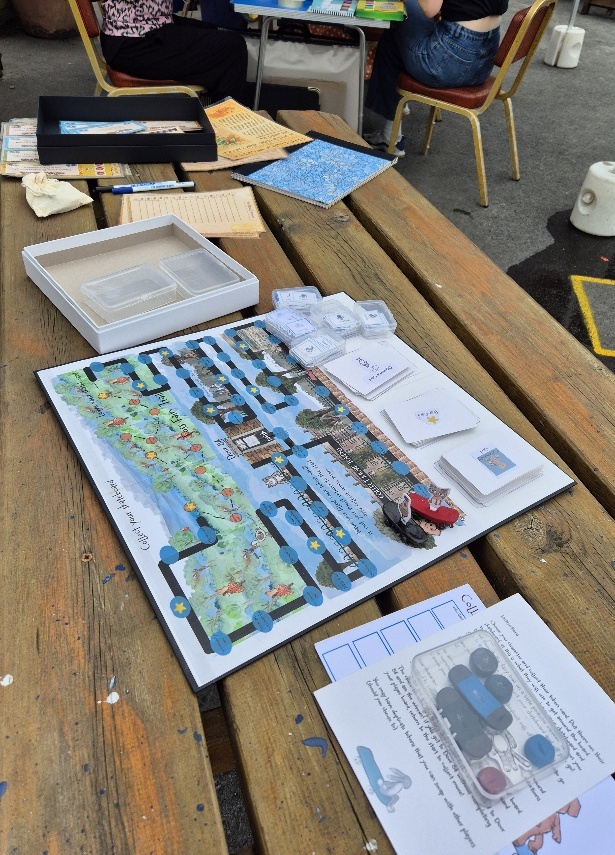
Aware of some of the youth researchers’ interest in board games from our ‘deep hanging out’ and reflecting upon the quality of their discussions around ethics, Isobel and Charlotte suggested that the youth researchers could create a ‘Research Ethics Board Game’ (Figure 1). Charlie, Ben, Lucy, and Alfie were highly motivated by this, and they worked with Isobel and Charlotte to co-create a board game that allowed them to explore the nuances of research ethics, including the ethical implications of their decisions in terms of consent, privacy, confidentiality, and the potential risks of their research on participants. Their key concept for their game was for ‘players’ to be ‘researchers’, whose primary challenge was to ensure that ‘informed consent of their participants’ was ‘ongoing’ throughout their research. For example, during board-game testing, Alfie suggested: ‘If you don’t check [for consent] again, you should have to go back to the start, or something’ (research journal entry from May 2024). Isobel and Charlotte reflected how the game’s design process was particularly valuable in helping the young people explore the temporal and dynamic nature of informed consent. Through game design, participant characters had the opportunity to ‘withdraw their consent at any time’: as ‘researchers’ move through the game, they designed scenarios where participants might want to ‘stop’ their involvement or ‘change their minds’.
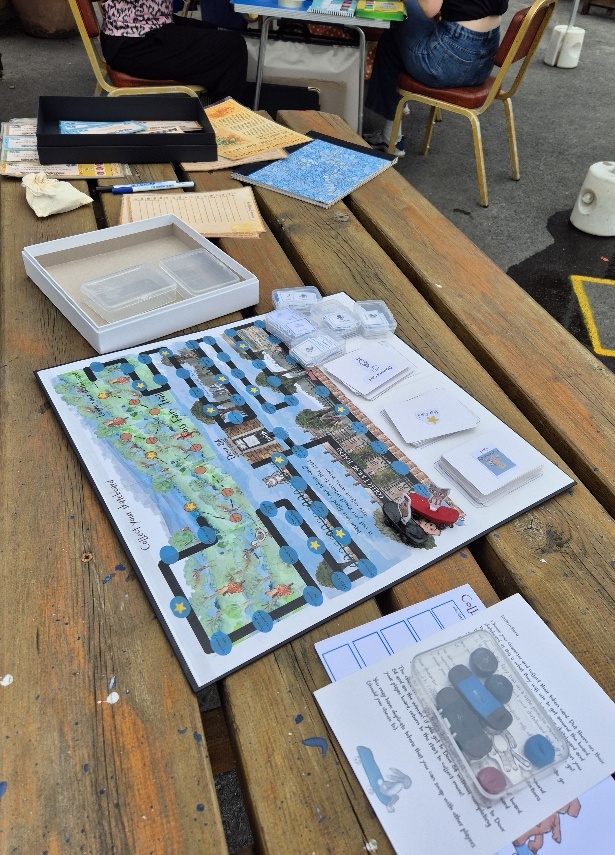
In relation to thinking about research ethics and researching with participants, discussions and the unplanned co-creation of the board game meant that our weakly framed approach to capacity building addressed the deficit in many CBPR and YPAR projects (Cullen & Walsh, 2020) by ensuring that capacity building was also critical in relation to including participants and conceptualising consent. The emergence of youth-led ethical reasoning illustrates how our technique of weak framing supported the development of Bernstein’s realisation rule – the ability to act as critical and ethical youth researchers within a self-defined research context. By refraining from prescribing what ‘ethical behaviour’ should look like, adult facilitators created conditions in which young people could define, test, and revise their own understandings of consent, inclusion, and representation. Weak framing thus enabled critical capacity building: ethical insight grew not through instruction but through negotiation and creative experimentation.
Conclusion
Across the three themes, our findings demonstrate how weakly framed capacity building reconfigures the pedagogic relationship between adults and youth by loosening the boundaries that ordinarily regulate participation, authority, and ethical reasoning. In Bernsteinian terms, weakening the framing of sequence, pacing, and control enabled young people to enact the recognition, regulative, and realisation rules of research practice – learning when to participate, how to negotiate power, and how to act ethically – thereby transforming capacity building into a collaborative and critically reflexive process to become youth researchers.
While the technique of weak framing enabled young people to navigate participation, power, and ethics with increasing autonomy, it also revealed the structural boundaries that persisted through the project’s externally defined aims and timelines. Recognising these constraints allows us to situate the study’s contributions and within the practical realities of CBPR whilst also contributing to YPAR literature. Based on our research, we are able, therefore, to outline the following key principles for the technique of weakly framed capacity building with youth researchers in informal settings:
-
Where adult facilitators are not already familiar with young people, we recommend an extended period of ‘deep hanging out’ (Wogan, 2004) to build rapport and trust between adult facilitators and youth researchers.
-
In developing a technique of weakly framed capacity building, adult facilitators should engage in action research to maximise youth researchers’ control within and across all stages of their projects. Whilst the resulting choice and fluidity can be difficult to manage where adult facilitators are under constraints (e.g. time), this will help to ensure youth researcher participation is voluntary and authentic.
-
In relation to the technique of weakly framed capacity building, fluidity of participation can be achieved through providing accessible information to youth researchers, like our Research Methods Guides, which, although strongly classified, should always respond to young people’s emerging research interests, and which they can access at a time that suits them.
-
In relation to research ethics, youth researchers may be particularly interested in discussing ethical issues. This gives opportunity for adult facilitators to use their judgment to join in the discussions to enable youth both to recognise and realise critical thinking skills as a key facet of their youth researcher identities. It also gives the opportunity for adult facilitators to draw upon the wider interests of the youth researchers to suggest activities, like creating a board game, which deepen critical discussions, enabling these identities to be realised.
-
Weakly framed capacity building, therefore, has the potential to equalise power relations between adults and youth, shifting classification of knowledge towards critical capacity building (Luguetti et al., 2023).
-
Finally, adult facilitators should embody the principles they want the youth researchers to understand. We found that our embodied ethical principles influenced the youth researchers’ discussion and their explicit understanding of research ethics, particularly in relation to consent and voluntary participation.
Given the potential for using weakly framed capacity building with youth researchers in areas of social disadvantage to develop critical thinking skills required by the global economy (Dobson, 2023; OECD, 2021), further research into the technique of weakly framed capacity building is needed. This research could focus on developing our pedagogical principles by undertaking research into weakly framed capacity building in informal educational settings where youth are leading their projects in the form of YPAR. The youth-led nature of YPAR projects could mean that weakly framed capacity building is an even better fit than it was with our partnership project.
More challengingly, further research could also look to translate these pedagogical principles to formal educational settings. This would enable understanding of how and if youth researchers in mainstream school institutions, where learning is predominantly commodified by ‘accountability systems’ (Theriault, 2021, p. 13), could benefit from engaging in a weakly framed approach to capacity building.
Acknowledgements
We would like to thank York St John University’s Institute for Social Justice and Professor Matthew Reason for their support with this project.